
DGT test · 534 questions
The road and its lanes · Page 3 of 11
Carriageway, lanes, hard shoulder and road types: where you drive and how lanes are used on motorways, dual carriageways and streets.
Questions in this topic, with answers
534 questions, 50 per page, with the correct answer and the explanation. Page 3 of 11.
¿Tienen prioridad los ciclistas en un carril bici?
Do cyclists in a cycle lane have priority?
- ASí, deben ser respetados al cruzar una víaYes, they must be respected when they cross a road
- BNo, deben ceder el pasoNo, they must give way
- CSolo si hay semáforoOnly if there are traffic lights
ExplanationCyclists in a cycle lane have priority.
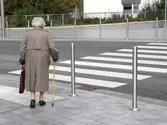
¿Qué dificultad presentan con frecuencia los personas mayores al cruzar una calzada?
What difficulty do older people often have when crossing a carriageway?
- ANo perciben correctamente la velocidad a la que se aproximan los vehículos.They do not judge correctly how fast vehicles are approaching.
- BCalculan peor las distancias que los niños.They judge distances worse than children.
- CTienen un campo visual más reducido que los jóvenes.They have a narrower field of vision than young people.
ExplanationWith age, some visual and mental abilities may decline, which makes it harder to judge the speed and distance of approaching vehicles correctly. That is why drivers must take extreme care when there are older people around.
Si empuja o arrastra su motocicleta por una vía interurbana, ¿por dónde debe circular?
If you are pushing or pulling your motorcycle along a road outside built-up areas, where must you go?
- APor el arcén izquierdo, si existe.On the left-hand hard shoulder, if there is one.
- BPor la calzada, porque al no ser peatón no puede ir por el arcén.On the carriageway, because you are not a pedestrian and cannot use the hard shoulder.
- CPor el arcén derecho, si existe.On the right-hand hard shoulder, if there is one.
ExplanationAnyone pushing or pulling a two-wheeled moped or a similar vehicle on foot counts as a pedestrian, but must keep to the right (Article 122.2.a of the General Traffic Regulations (RGC)). On a road outside built-up areas, they will use the right-hand hard shoulder if there is one and it is usable.
En una autopista dentro de poblado, ¿por qué carril debemos circular?
On a motorway (autopista) in a built-up area, which lane must we use?
- APor el carril que mejor convenga a nuestro destino.The lane that best suits our destination.
- BPor el carril de la derecha como norma general.The right-hand lane, as a general rule.
- CPor cualquiera indistintamente.Any lane, it makes no difference.
ExplanationWhen driving on a motorway, whether in or outside a built-up area, we apply the rules for motorways. As a general rule, we drive in the right-hand lane.
Circulando con un ciclomotor por una carretera convencional sin arcén, ¿qué parte de la vía usarás?
Riding a moped on a conventional road without a hard shoulder, which part of the road will you use?
- AEl carril de la derecha.The right-hand lane.
- BLa parte imprescindible de la calzada.Only the part of the carriageway that is strictly necessary.
- CEl carril que mejor convenga a mi destino.The lane that best suits my destination.
ExplanationIf there is no hard shoulder or it is not usable, we must ride on the part of the carriageway that is strictly necessary.
¿Puede un coche con remolque circular por el carril VAO (vehículos de alta ocupación)?
Can a car towing a trailer use the HOV lane (VAO, high-occupancy vehicles)?
- ASí, cuando el remolque sea ligero.Yes, when the trailer is light.
- BNo.No.
- CSí, cuando lo ocupen el número de personas exigido.Yes, when it carries the required number of people.
ExplanationHOV lanes (VAO) are restricted by Spanish rules to certain types of vehicle. Specifically, cars towing a trailer are not allowed in these lanes, according to Article 35 of the General Traffic Regulations (RGC). So the correct answer is «No», since neither light trailers nor cars towing trailers are allowed to use these lanes, whatever the number of occupants.
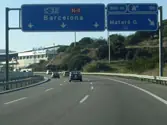
¿Por dónde debe transitar si sufre una avería en una autopista y circula a velocidad anormalmente reducida sin perturbar la circulación?
If your vehicle breaks down on a motorway (autopista) and you are travelling at an abnormally low speed without disrupting traffic, where must you drive?
- APor el arcén derecho y abandonaré la vía por la primera salida que encuentre.On the right-hand hard shoulder, and I will leave the road at the first exit I come to.
- BPor el carril derecho y abandonaré la vía por la primera salida que encuentre.In the right-hand lane, and I will leave the road at the first exit I come to.
- CPor el arcén derecho,sin necesidad de abandonar la vía por la primera salida.On the right-hand hard shoulder, without having to leave the road at the first exit.
ExplanationDrivers who, because of an emergency, have to drive on a motorway (autopista) or dual carriageway (autovía) at an abnormally low speed, that is, below 60 km/h, must leave it at the first exit. In addition, if they seriously disrupt traffic, they must use the right-hand hard shoulder, if it is wide enough and passable. If they do not disrupt traffic, they must use the right-hand lane.
En poblado, ¿por dónde circularemos con nuestra motocicleta con dos carriles delimitados en nuestro sentido?
In a built-up area, where should you ride your motorcycle if there are two marked lanes in your direction?
- APor la izquierda.On the left.
- BPor la derecha.On the right.
- CPor el carril que mejor convenga a nuestro destino.In the lane that best suits your destination.
ExplanationIn a built-up area, if there are two marked lanes in your direction, you may use the lane that best suits your destination. This means you may choose the left or the right lane, depending on where you are going.
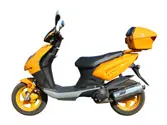
En una vía interurbana, ¿por dónde circulará un ciclomotor?
On an interurban road, where must a moped ride?
- APor el arcén, pudiendo ir en columna de a dos.On the hard shoulder, and it may ride two abreast.
- BPor la calzada, como el resto de vehículos.On the carriageway, like other vehicles.
- CPor el arcén, si es suficiente y transitable.On the hard shoulder, if it is wide enough and passable.
ExplanationMopeds must ride on the hard shoulder, as long as it is wide enough and passable. When it is not, they may ride on the carriageway, always keeping as close as possible to its right-hand edge.
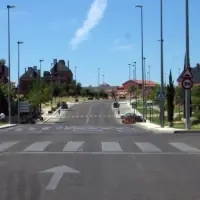
¿Cuál de éstas es una vía pública dentro de poblado?
Which of these is a public road inside a built-up area?
- AAutovíaDual carriageway (autovía)
- BTravesíaTravesía (stretch of road through a town)
- CAutopistaMotorway (autopista)
ExplanationA travesía is, by definition, the stretch of a road that runs through a built-up area, so it is always a public road inside a built-up area. Legally it is not considered an urban road, but the 50 km/h limit applies on it. Motorways (autopistas) and dual carriageways (autovías) are roads that normally run outside built-up areas.

Conduciendo un turismo con remolque, ¿podremos circular por un carril habilitado en sentido contrario al habitual a consecuencia de unas obras en la calzada?
When driving a car with a trailer, may we use a lane opened in the opposite direction to the usual one because of roadworks on the carriageway?
- ASí.Yes.
- BNo, salvo que lo autorice un agente de tráfico.No, unless a traffic officer authorises it.
- CNo.No.
ExplanationIf the lane is opened in the opposite direction to the usual one to keep traffic flowing, a car with a trailer may not use it; but if it is opened because of roadworks, it may.
¿Qué vehículos no podrán circular por una autopista?
Which vehicles may not use a motorway (autopista)?
- ALas motocicletas.Motorcycles.
- BLos vehículos articulados de más de 3500 kg de MMA.Articulated vehicles with a MAM of more than 3500 kg.
- CLos ciclomotores.Mopeds.
ExplanationMopeds may never use motorways (autopistas) or dual carriageways (autovías).
Las carreteras convencionales son en general...
Conventional roads are generally...
- AMás seguras que las autopistas, porque por ellas se circula a menos velocidad.Safer than motorways, because speeds on them are lower.
- BMás inseguras que las autopistas y autovías.Less safe than motorways (autopistas) and dual carriageways (autovías).
- CIgual de seguras que las autopistas y autovías, pues la seguridad depende únicamente del conductor.As safe as motorways and dual carriageways, because safety depends only on the driver.
ExplanationConventional roads are less safe than motorways and dual carriageways because you may meet pedestrians, cycles, animals and level junctions there, and vehicles travelling in the opposite direction use the same carriageway, so they may cross into the other side.
Por el arcén de una autovía pueden circular....
The following may ride on the hard shoulder of a dual carriageway (autovía)...
- ALos ciclomotores.Mopeds.
- BLas bicicletas cuyos conductores sean mayores de 14 años.Bicycles ridden by people over 14.
- CLos vehículos de tracción Animal.Animal-drawn vehicles.
ExplanationBicycles, mopeds and animal-drawn vehicles may not use dual carriageways, but Article 38 of the General Traffic Regulations (RGC) allows cyclists over 14 to ride on the hard shoulder of dual carriageways, unless a sign prohibits it.
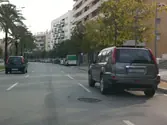
Dentro de poblado, en una vía con tres carriles para el mismo sentido y delimitados por marcas viales, ¿por qué carril se debe circular?
In a built-up area, on a road with three lanes in the same direction marked by road markings, which lane should you drive in?
- ADebemos circular por el carril de la derecha y solamente cambiar de carril para adelantar.We must drive in the right-hand lane and only change lanes to overtake.
- BPor el carril que mejor convenga a nuestro destino.The lane that best suits our destination.
- CDeberemos circular solo por el carril derecho o por el central.We must drive only in the right-hand or centre lane.
ExplanationIn built-up areas, if there is more than one lane in the same direction and they are marked by road markings, you may drive in the lane that best suits your destination. It is not necessary to drive in the right-hand lane. If the lanes are not marked by longitudinal lines, there are considered to be as many lanes as motor cars (other than motorcycles) can fit side by side. In that case, we must drive in the right-hand lane.
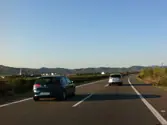
En este tramo de autopista el vehículo negro no quiere adelantar. ¿Puede circular por el carril izquierdo?
On this stretch of motorway (autopista), the black vehicle does not want to overtake. Can it drive in the left-hand lane?
- ANo.No.
- BSí.Yes.
- CSí, si circula a la velocidad máxima permitida.Yes, if it is driving at the maximum permitted speed.
ExplanationOn roads outside built-up areas you must always use the right-hand lane. On one-way carriageways with more than one lane in the same direction, you may use the other lanes when you intend to overtake, and stay in the lane you used to go on overtaking other vehicles, provided you do not disturb the vehicles behind you. Once you have finished overtaking, you must return to the right-hand lane. If the vehicle in the picture does not intend to overtake, it must return to the right-hand lane and drive in it.
Cuando desde una vía sin pavimentar nos incorporamos a una vía pavimentada...
When we join a paved road from an unpaved road...
- Anos detendremos para ceder el paso.we will stop to give way.
- Bpasaremos por tener prioridad.we will go ahead, because we have priority.
- Ccederemos el paso a los vehículos que circulen por la vía pavimentada.we will give way to vehicles travelling on the paved road.
ExplanationWhen driving on an unpaved road and joining a paved road, we must give way to those travelling on it, although it is not always necessary to stop.
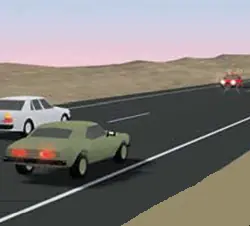
El conductor del vehículo blanco quiere volver rápidamente al carril derecho porque ve un peligro. ¿Qué debe hacer el conductor del vehículo verde?
The driver of the white vehicle wants to return quickly to the right lane because they see a danger. What must the driver of the green vehicle do?
- AAumentar la velocidad para que desista de realizar la maniobra.Speed up so that the other driver gives up the manoeuvre.
- BNada, porque no tiene ninguna obligación.Nothing, because they have no obligation.
- CReducir la velocidad para facilitarle el retorno al carril.Slow down to help the other vehicle return to its lane.
ExplanationUnder Article 86.2 of the General Traffic Regulations, a driver who is about to be overtaken must not speed up, and must slow down if a danger arises once the manoeuvre has started, helping the overtaking vehicle to return to its lane.

En esta carretera convencional ¿por dónde circulará un ciclomotor?
On this conventional road, where will a moped travel?
- ALo más cerca de la derecha posible.As close to the right as possible.
- BPor el medio del carril para que se le vea mejor.In the middle of the lane, so that it can be seen better.
- CLos ciclomotores no pueden circular por este tipo de carreteras.Mopeds may not use this type of road.
ExplanationIf the road has no passable hard shoulder, the moped must use the smallest possible part of the carriageway.
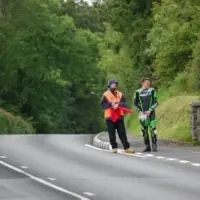
¿Pueden unos peatones hacer autostop en una autovía?
May pedestrians hitchhike on a dual carriageway (autovía)?
- ASí, en todo caso extremando las precauciones.Yes, in all cases taking extreme care.
- BSí, pero solo en las explanadas de las estaciones de peaje.Yes, but only in the open areas at toll stations.
- CNo.No.
ExplanationUnder Article 125.1 of the General Traffic Regulations (as worded by RD 518/2026), pedestrians may not travel on motorways (autopistas) or dual carriageways (autovías), except in the cases in Article 130, and may not ask for lifts on any stretch of them, including the open areas at toll stations.
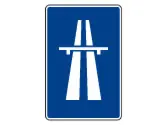
En una autopista, ¿cuándo se puede circular por el arcén?
On a motorway (autopista), when may you drive on the hard shoulder?
- ACuando hay muchos vehículos circulando.When there are a lot of vehicles on the road.
- BNunca.Never.
- CCuando por emergencia o avería se circule a velocidad anormalmente reducida.When, because of an emergency or a breakdown, you are driving at an abnormally low speed.
ExplanationDrivers of vehicles with a maximum authorised mass of no more than 3,500 kg who, for emergency reasons, are driving at an abnormally low speed and seriously disrupting traffic must drive on the right-hand hard shoulder, or on the smallest necessary part of the carriageway. If they are not disrupting traffic, they must drive in the right-hand lane. When these drivers are on a motorway or dual carriageway, they must leave it at the first exit.
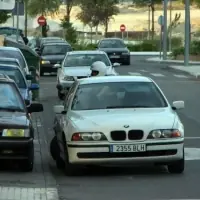
¿Por qué lugar exacto de la calzada deben circular los vehículos?
Exactly where on the carriageway must vehicles travel?
- AJustamente por el centro del carrilRight in the centre of the lane
- BLo más cerca posible del borde derechoAs close as possible to the right-hand edge
- CLo más cerca posible del carril izquierdoAs close as possible to the left lane
ExplanationAll vehicles must travel on the right of the carriageway and as close as possible to its right-hand edge, keeping the necessary side distance from vehicles in the other lanes.
Como norma general ¿por dónde circularán los animales por una carretera?
As a general rule, on which part of a road will animals travel?
- APor la derecha.On the right.
- BPor la izquierda si es un animal solo y por la derecha si es un rebaño.On the left if it is a single animal and on the right if it is a herd.
- CPor el centro de la calzada, para que los vean los conductores.In the middle of the carriageway, so that drivers can see them.
ExplanationUnder Article 127.1 of the General Traffic Regulations (RGC), animals travel on the right-hand hard shoulder or as close as possible to the right-hand edge, and herds never take up more than the right-hand half of the carriageway. Only as an exception, and for greater safety, may a single animal be led on the left.
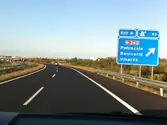
¿Qué carril o carriles podrá utilizar un camión de más de 3500 kg. De MMA, que circula por una autopista con tres carriles para cada sentido?
Which lane or lanes may a lorry with a MAM of more than 3500 kg use on a motorway (autopista) with three lanes in each direction?
- APor el derecho normalmente, pudiendo utilizar el resto para adelantar.Normally the right-hand lane, and it may use the others to overtake.
- BPor el derecho y el inmediato para adelantar.The right-hand lane, and the next one to overtake.
- CPor el que más convenga a su destino, si los carriles están debidamente delimitados.The one that best suits its destination, if the lanes are properly marked.
ExplanationWith three or more lanes in their direction, lorries, vans and special vehicles with a MAM of more than 3,500 kg, and combinations of vehicles more than 7 metres long, must use the lane on their right; they may use the next lane as an exception, but never the others. In both cases, they may leave the right-hand lane only when traffic or road conditions make it advisable, provided they do not hold up another, faster vehicle behind them.
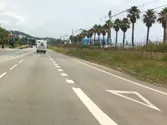
¿Para qué sirve el carril de aceleración?
What is the acceleration lane for?
- APara incorporarse a la vía a una velocidad adecuada a las circunstancias de la circulación.To join the road at a speed suited to the traffic conditions.
- BPara incorporarse lentamente a la vía.To join the road slowly.
- CPara alcanzar 120 Km/h antes de incorporarse a la vía.To reach 120 km/h before joining the road.
ExplanationAs its name suggests, an acceleration lane gives you a stretch that is long enough to speed up in it and join the main road at a speed suited to the traffic conditions.
En una vía de doble sentido, ¿por qué lado se debe rodear una isleta?
On a two-way road, on which side must you go around a traffic island?
- APor el lado derecho.On the right-hand side.
- BPor el lado izquierdo.On the left-hand side.
- CPor el lado derecho o por el lado izquierdo, indistintamente.On the right or the left, either way.
ExplanationThe General Traffic Regulations state that on two-way roads traffic keeps to the right. When the road is divided by a traffic island, each lane keeps its usual direction of travel, so vehicles must stay to the right of the island. Only where specific road signs or markings allow it may you pass the island otherwise.
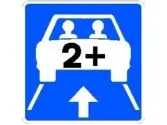
De los siguietes vehículos, ¿cuál de ellos no puede circular por un carril VAO?
Which of the following vehicles may not use an HOV lane (VAO)?
- AUn ciclomotor con acompañante.A moped with a passenger.
- BUna motocicleta.A motorcycle.
- CUn turismo.A car.
ExplanationThe use of lanes for high-occupancy vehicles (VAO) is limited to motorcycles, cars and dual-purpose vehicles; it is therefore prohibited for lorries, articulated vehicles and vehicle combinations, including cars with trailers, as well as for pedestrians, cycles, mopeds, animal-drawn vehicles and animals.
Si va en moto por una autovía con tres o más carriles, ¿está permitido usar el carril más a la izquierda?
If you are riding a motorcycle on a dual carriageway (autovía) with three or more lanes, may you use the far left lane?
- ASí, cuando las condiciones del tráfico o de la vía lo aconsejen.Yes, when traffic or road conditions make it advisable.
- BSolo cuando el tráfico esté muy denso.Only when traffic is very heavy.
- CNo, solo puede usar los carriles derecho y central.No, you may only use the right and centre lanes.
ExplanationOutside built-up areas you normally drive in the right-hand lane, but the others may be used when traffic or road conditions make it advisable, without hindering vehicles behind (Article 31.1 of the General Traffic Regulations (RGC)). The restriction to the two right-hand lanes applies to heavy lorries and long vehicle combinations, not to motorcycles.
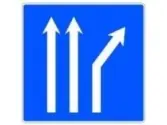
En una autopista, cuando la calzada se bifurca hacia la derecha y usted desea continuar por la vía principal, deberá...
On a motorway (autopista), when the carriageway splits off to the right and you want to stay on the main road, you must...
- AMantenerse en el carril izquierdo si la señalización no indica otra cosa.stay in the left-hand lane unless the signs indicate otherwise.
- BDesplazarse al carril que continúa por la vía principal, siguiendo la señalización.move into the lane that continues along the main road, following the signs.
- CCircular siempre por el arcén hasta superar la bifurcación.always drive on the hard shoulder until you are past the split.
ExplanationWhere a motorway splits, you must follow the signs and move in good time into the lane for the route you have chosen.
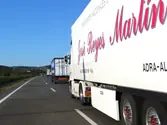
Un camión de más de 3.500 kg circula por una calzada interurbana con 3 carriles para el mismo sentido, ¿por cuál podrá circular?
A lorry of more than 3,500 kg is travelling on a carriageway outside built-up areas with 3 lanes in the same direction. Which lanes may it use?
- APor el carril de la izquierda.The left-hand lane.
- BPor cualquiera de los 3 carriles.Any of the 3 lanes.
- CPor el derecho y el contiguo.The right-hand lane and the one next to it.
ExplanationOn one-way roads outside built-up areas with three or more lanes, lorries, box vans and special vehicles with a MAM of more than 3,500 kg, and combinations of vehicles more than 7 metres long, must drive in the right-hand lane. As an exception they may use the next (adjacent) lane, but never the others.
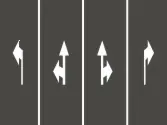
¿Por donde deberá adelantar a un tranvía que circula por el centro de una vía de doble sentido de circulación?
On which side must you overtake a tram running in the middle of a two-way road?
- APor la derecha o izquierda indistintamente, ya que se trata de una vía urbana.On either the right or the left, because it is an urban road.
- BPor la derecha del tranvía necesariamenteOn the right of the tram, necessarily.
- CÚnicamente por el lado izquierdo.Only on the left.
ExplanationAs a general rule, overtaking is done on the left, except: vehicles that are signalling that they intend to turn left or stop on that side; in built-up areas, on roads with more than one lane in the same direction marked by longitudinal lines; on two-way roads, trams running in the middle of the carriageway.
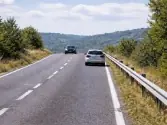
¿Por dónde debe circular en un cambio de rasante de reducida visibilidad?
Where must you drive on the brow of a hill with limited visibility?
- APor dónde más convenga a mi destino.Wherever best suits my destination.
- BDejando completamente libre la mitad de la calzada que corresponda a quienes puedan circular en sentido contrario.Leaving completely clear the half of the carriageway used by traffic that may come the other way.
- CPor la izquierda, aunque se invada parte del centro de la calzada.On the left, even if it means going onto part of the middle of the carriageway.
ExplanationOn the brow of a hill with limited visibility, it is essential not to go into the space of vehicles coming the other way, because you cannot see whether any are coming. So we must drive leaving the half of the carriageway for the opposite direction completely clear, respecting the centre line and staying safe. Driving on the left or wherever "best suits" you would greatly increase the risk of a crash.
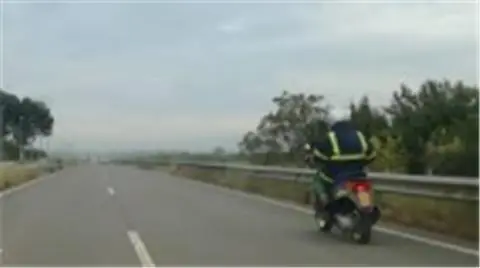
En una vía interurbana sin arcén, ¿por dónde debe circular un ciclomotor?
On a road outside built-up areas with no hard shoulder, where must a moped be ridden?
- APor el centro del carril derecho.In the centre of the right-hand lane.
- BPor el carril derecho, ocupando la parte imprescindible de la calzada.In the right-hand lane, using only the part of the carriageway that is strictly necessary.
- CPor el carril izquierdo, ocupando la parte imprescindible de la calzada.In the left-hand lane, using only the part of the carriageway that is strictly necessary.
ExplanationIf there is no hard shoulder, or it is not usable and wide enough, a moped must be ridden in the right-hand lane, using only the part of the carriageway that is strictly necessary, as close as possible to the right-hand edge (Article 36 of the General Traffic Regulations). It must not be ridden in the centre of the lane.
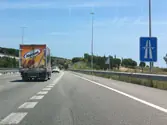
Circular por un carril de aceleración a mayor velocidad que los vehículos que circulan por la autopista y sobrepasarlos, ¿se considera un adelantamiento?
Driving in an acceleration lane faster than the vehicles on the motorway (autopista) and passing them: is this considered overtaking?
- ANo.No.
- BSí, si se realiza fuera de poblado.Yes, if it happens outside a built-up area.
- CSí, tanto dentro como fuera de poblado.Yes, both inside and outside built-up areas.
ExplanationDriving faster in an acceleration lane, just like doing so in a lane reserved for certain vehicles only, is not considered overtaking.
¿Un vehículo con remolque podrá utilizar un carril VAO?
May a vehicle with a trailer use an HOV lane (VAO)?
- ASí, si el remolque pesa menos de 750 kg de mma.Yes, if the trailer's MAM is under 750 kg.
- BSí.Yes.
- CNo.No.
ExplanationNo, vehicles with trailers are not allowed in HOV lanes (VAO).
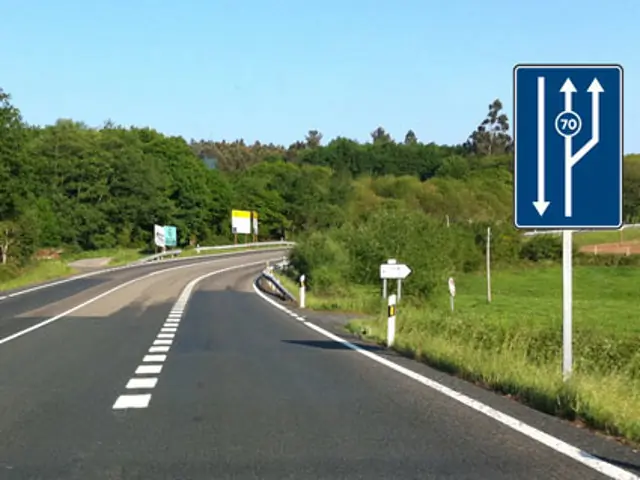
En la vía de la fotografía, ¿qué carril debe utilizar normalmente?
On the road in the photo, which lane must you normally use?
- AEl carril más a la derecha.The right-hand lane.
- BCualquiera de los carriles en mi sentido de circulación.Any of the lanes in my direction of travel.
- CEl carril central, siempre que mi velocidad sea igual o superior a la indicada en la señal.The centre lane, as long as my speed is the same as or higher than the one shown on the sign.
ExplanationOutside built-up areas, on carriageways with more than one lane in the same direction, you normally drive in the right-hand lane and use the others when traffic or road conditions make it advisable (Article 31.1 of the General Traffic Regulations). Going faster than the speed shown does not oblige you to change lanes.
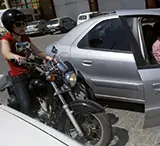
Los ocupantes del vehículo van a bajarse, ¿por qué lado deben hacerlo?
The occupants of the vehicle are going to get out. On which side should they do so?
- APor el lado más próximo al borde de la vía, como norma general.On the side nearest the edge of the road, as a general rule.
- BPor el lado derecho siempre.Always on the right-hand side.
- CPor ambos lados.On both sides.
ExplanationAs a general rule, you should get out on the side nearest the edge of the road, and only when it can be done safely: this avoids opening the door into the carriageway and entering the area where other vehicles are travelling.
Una motocicleta ocupada únicamente por el conductor, ¿podrá circular por un carril VAO?
Can a motorcycle with only the rider on board use an HOV lane (VAO)?
- ANo, será necesario que esté ocupada por el conductor y el pasajero.No, it must carry the rider and a passenger.
- BSí.Yes.
- CNo, las motocicletas no pueden usar carriles VAO en ningún caso.No, motorcycles can never use HOV lanes.
ExplanationMotorcycles may use an HOV lane (VAO) even with only the rider on board. They may not use it when they are towing a trailer.
Si por causa de avería su turismo queda inmovilizado en una autopista, ¿puede ser remolcado por otro turismo?
If your car breaks down and is stuck on a motorway (autopista), may it be towed by another car?
- ASí, excepcionalmente, y siempre en condiciones de seguridad, hasta el lugar más próximo donde pueda quedar inmovilizado sin entorpecer la circulación.Yes, exceptionally and always in safe conditions, to the nearest place where it can be left without obstructing traffic.
- BSí, pero sólo cuando el conductor del vehículo remolcador sea titular del permiso que autoriza a arrastrar remolques.Yes, but only when the driver of the towing vehicle holds the licence that allows towing trailers.
- CNo, porque sólo debe realizarse por otro vehículo específicamente destinado a este fin.No, because it must only be done by another vehicle specifically designed for this purpose.
ExplanationTowing a broken-down car must only be done by a vehicle specifically designed for this purpose. Tow vehicles are designed to handle the loads and the necessary safety conditions, avoiding risks to traffic.

En una glorieta con tres carriles de circulación, ¿desde qué carril debe situarse un conductor para abandonarla?
On a roundabout with three lanes, which lane must a driver be in to leave it?
- AEn el carril derecho.The right-hand lane.
- BEn el carril central.The central lane.
- CEn cualquier carril, siempre que no interfiera en la trayectoria de otros vehículos.Any lane, as long as they do not get in the way of other vehicles.
ExplanationOn a roundabout with several lanes, you must leave from the outer, or right-hand, lane. This makes the manoeuvre safer and more orderly and avoids needlessly crossing other vehicles' paths. A driver in one of the inner lanes must gradually move out to the outer lane before leaving the roundabout. Leaving from another lane could get in the way of other road users and create risky situations. So the general rule is to be in the right-hand lane to leave, unless the signs or the road layout specifically allow the manoeuvre to be done another way.
En autopistas está prohibido circular a los...
On motorways (autopistas) the following are forbidden:
- Avehículos que transporten mercancías peligrosas.vehicles carrying dangerous goods.
- Bvehículos con remolque.vehicles with a trailer.
- Cvehículos que no puedan alcanzar 60 km/h en llano.vehicles that cannot reach 60 km/h on the flat.
ExplanationOn motorways (autopistas) and dual carriageways (autovías) it is forbidden to drive at less than 60 km/h (Article 49.1 of the General Traffic Regulations), so vehicles that cannot reach that speed on the flat may not use them. Vehicles with a trailer or carrying dangerous goods are allowed on them.
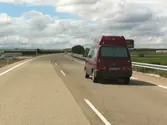
Debido a una avería, un turismo circula por una autopista a velocidad anormalmente reducida, sin interrumpir la circulación. ¿Por dónde debe circular hasta la próxima salida?
Because of a breakdown, a car is travelling on a motorway (autopista) at an abnormally low speed, without disrupting traffic. Where must it travel until the next exit?
- APor el arcén derecho para obstaculizar lo menos posible.On the right-hand hard shoulder, to cause as little obstruction as possible.
- BPor el carril derecho sin invadir el arcén.In the right-hand lane, without moving onto the hard shoulder.
- CNo puede seguir circulando porque no llega a la velocidad mínima de la vía.It may not continue, because it cannot reach the road's minimum speed.
ExplanationDrivers of vehicles with a maximum authorised mass of no more than 3,500 kilograms who, for emergency reasons, are travelling at an abnormally low speed and thereby seriously disrupting traffic must travel on the right-hand hard shoulder, or on the smallest possible part of the carriageway. If they do not disrupt traffic, they must travel in the right-hand lane.
En una vía dentro de poblado, ¿por qué carril circulará un camión de 3500 kg?
On a road in a built-up area, which lane will a 3,500 kg lorry use?
- APor el carril que mejor convenga a su destino.The lane that best suits its destination.
- BSiempre por la derecha.Always the right-hand one.
- CPor el primero o segundo carril, solamente.Only the first or second lane.
ExplanationIn built-up areas, if there is more than one marked lane in the same direction, we may use the lane that best suits our destination.
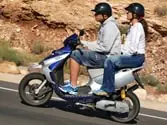
¿Por dónde circulará un ciclomotor fuera de poblado?
Where must a moped ride outside built-up areas?
- APor la derecha de la calzada.On the right of the carriageway.
- BPor el arcén.On the hard shoulder.
- CPor el centro de la calzada.In the middle of the carriageway.
ExplanationOutside built-up areas, a moped must use the hard shoulder if it is passable and wide enough; if not, it must use the part of the carriageway that is strictly necessary.
¿Un vehículo mixto adaptable podrá circular por un carril VAO?
Can a convertible dual-purpose vehicle use an HOV lane (VAO)?
- ANo, solo lo podrán utilizar turismos y motocicletas.No, only cars and motorcycles may use it.
- BSí.Yes.
- CSolo en el caso de que vaya conducido por una persona de movilidad reducida.Only if it is driven by a person with reduced mobility.
ExplanationAs a general rule, BUS-HOV (BUS-VAO) lanes may be used by two- or three-wheeled motorcycles, cars, buses with a maximum authorised mass of more than 3,500 kg, articulated buses and convertible dual-purpose vehicles carrying the number of occupants set for each stretch. All other vehicles and vehicle combinations are prohibited, including cars towing trailers, cycles and mopeds. However, they may also be used, even with only the driver on board, by: - the authorised types of vehicle if they display the V-15 sign (reduced mobility badge); - two- or three-wheeled motorcycles; - buses with a maximum authorised mass of more than 3,500 kg and articulated buses; - vehicles classed as taxis under the use criteria in Annex II of the General Vehicle Regulations, with an external roof light and a valid taxi licence; - police, fire, civil protection, rescue and ambulance vehicles on an emergency call, and maintenance crews for the road's facilities and infrastructure; - vehicles with environmental badges (CERO, ECO, B and C) may use the BUS-HOV lane only when road signs say so.
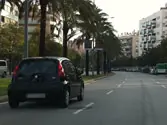
Dentro de poblado, ¿por qué carril circularemos?
In a built-up area, which lane will we drive in?
- APor el que más convenga a nuestro destino.Whichever best suits our destination.
- BPor el de la derecha siempre.Always the right-hand one.
- CPor el que más convenga a nuestro destino, solo en el caso de que estén delimitados.Whichever best suits our destination, only if the lanes are marked.
ExplanationIn built-up areas we will drive in the lane that best suits our destination, provided the lanes are marked. When they are not marked, we will drive in the right-hand lane.
En general, ¿qué clase de vías son más seguras?
In general, which type of road is safest?
- ACarreteras convencionales.Conventional roads.
- BAutopistas y autovías.Motorways (autopistas) and dual carriageways (autovías).
- CTravesías.Travesías (stretches of road through a town).
ExplanationMotorways (autopistas) and dual carriageways (autovías) are usually safer than other roads because there is no oncoming traffic, there are no sharp bends, and so on.
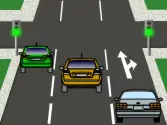
Si circulamos por el carril central en una vía de tres carriles para el mismo sentido, ¿podremos desde dicho carril cambiar de dirección hacia la izquierda?
If we are in the centre lane of a road with three lanes in the same direction, can we turn left from that lane?
- ASí, puesto que nos encontramos en el carril central.Yes, because we are in the centre lane.
- BNo, nos colocaremos en el carril de la izquierda.No, we must move into the left-hand lane.
- CSí, si señaliza la maniobra con antelación suficiente.Yes, if you signal the manoeuvre early enough.
ExplanationIf we are on a one-way road with three lanes, to turn left we must move into the left-hand lane, unless the turn has been designed or signed to be made in a different way. On two-way roads with 3 lanes, the centre lane is used to turn left.
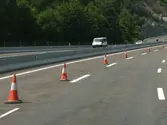
Si por obras en la calzada, se ha abierto un carril en sentido contrario al habitual. ¿Puede circular por él un turismo con remolque?
Because of roadworks on the carriageway, a lane has been opened in the opposite direction to normal. May a car with a trailer use it?
- ASí, pero solo, cuando el remolque es ligero.Yes, but only when the trailer is light.
- BSí, cuando no lo prohíban otras señales.Yes, when other signs do not prohibit it.
- CNo, sólo pueden hacerlo turismos y motocicletas.No, only cars and motorcycles may use it.
ExplanationLanes opened in the opposite direction to normal to keep traffic flowing may only be used by motorcycles, with or without a sidecar, and cars. However, when they are opened because of roadworks, all vehicles allowed on that road may use them, including cars with trailers, unless this is expressly prohibited.
Está prohibido que los vehículos circulen en paralelo por el arcén, excepto...
Vehicles are forbidden to ride side by side on the hard shoulder, except...
- Alos que circulen muy despacio.those travelling very slowly.
- Blos ciclomotores y las motocicletas.mopeds and motorcycles.
- Clas bicicletas.bicycles.
ExplanationUnder the General Traffic Regulations, vehicles using the hard shoulder are generally forbidden to ride side by side, except bicycles, which may ride two abreast. This exception allows bicycles, which are lighter vehicles without an engine, to share the space more safely and efficiently, especially in traffic. The article that regulates this aims to protect cyclists while keeping traffic flowing efficiently.
All topics
- Definitions
- Documents and penalty points
- The driver's condition
- Duties of drivers and pedestrians
- Vehicle safety devices
- Vehicle controls and equipment
- Vehicle lights and horn
- Traffic signs, markings and signals
- Speed and distances
- Manoeuvres
- Right of way
- Carrying passengers and loads
- Driving safely in difficult conditions
- Vehicle mechanics and maintenance
- Road accidents and first aid
- Defensive and eco-driving
Independent app: not affiliated with or endorsed by the DGT (Spain's Directorate-General for Traffic) or the Ministry of the Interior. The official exam is booked with the DGT and taken at its test centres. The questions here are practice material; the DGT's official question bank is not public.
Basado en datos de la Agencia Estatal Boletín Oficial del Estado (https://www.boe.es). Textos consolidados de carácter meramente informativo. La AEBOE no patrocina ni respalda este sitio.
Parte de las preguntas procede de los tests de la revista «Tráfico y Seguridad Vial» de la DGT, reproducidos con indicación de la fuente.