
DGT test · 534 questions
The road and its lanes · Page 9 of 11
Carriageway, lanes, hard shoulder and road types: where you drive and how lanes are used on motorways, dual carriageways and streets.
Questions in this topic, with answers
534 questions, 50 per page, with the correct answer and the explanation. Page 9 of 11.
Dentro de poblado, por una calzada de 3 carriles sin delimitar, ¿por qué carril se tendrá que circular normalmente?
In a built-up area, on a carriageway with 3 unmarked lanes, which lane must you normally drive in?
- APor el que más convenga a mi destino.Whichever best suits my destination.
- BPor el carril de la derecha.The right-hand lane.
- CPor el carril central.The centre lane.
ExplanationIf the lanes are not marked, we must drive in the right-hand lane. When the lanes are marked, we will drive in the lane that best suits our destination.
¿Podrá circular una bicicleta por una autopista?
May a bicycle be ridden on a motorway (autopista)?
- APor una autopista sí, por una autovía no.On a motorway (autopista) yes, on a dual carriageway (autovía) no.
- BSí.Yes.
- CNo.No.
ExplanationA bicycle may never be ridden on a motorway (autopista), but it may be ridden on a dual carriageway (autovía).

¿Por dónde circulará una bicicleta por una vía urbana?
Where must a bicycle ride on an urban road?
- APor el arcén, si éste mide más de 4 metros.On the hard shoulder, if it is more than 4 metres wide.
- BPor el carril bici si lo hubiese.In the cycle lane, if there is one.
- CPor el arcén.On the hard shoulder.
ExplanationUnder Article 153.1 of the General Traffic Regulations (RGC) (as worded by RD 518/2026), on urban roads, if there is a cycle lane or a dedicated track, cyclists should use it in preference, and it is compulsory when the authority says so with the R-407a sign, like the one in the picture. If there is no cycle lane or dedicated track, bicycles must ride on the carriageway.
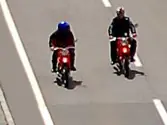
¿Circulan correctamente estos ciclomotores?
Are these mopeds being ridden correctly?
- ANo, porque circulan en paralelo.No, because they are riding side by side.
- BSí, porque circulan por la calzada y no por el arcén.Yes, because they are on the carriageway, not on the hard shoulder.
- CSí, porque son vehículos autorizados, igual que las bicicletas.Yes, because they are authorised vehicles, like bicycles.
ExplanationAccording to Article 36.2 of the General Traffic Regulations (RGC), as worded by Royal Decree 518/2026, mopeds may not ride side by side, either on the hard shoulder or on the carriageway. Only bicycles may ride two abreast.
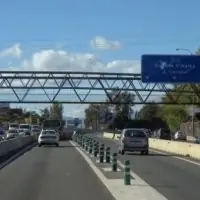
¿Podrá utilizar un carril VAO un turismo que transporta a cuatro personas con remolque?
May a car carrying four people and towing a trailer use an HOV lane (VAO)?
- ASí.Yes.
- BSólo si el carril no está ocupado.Only if the lane is not busy.
- CNo.No.
ExplanationThe use of an HOV lane (VAO, high-occupancy vehicles) is limited to motorcycles, cars and adaptable mixed-use vehicles. So mopeds, animal-drawn vehicles, cars with trailers and animals are not allowed to use it. That is why in this case, since you are towing a trailer, you cannot use this lane.
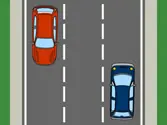
Dentro de poblado en una calzada con doble sentido de circulación y tres carriles separados por marcas longitudinales discontinuas, ¿qué carril usaremos para cambiar de dirección hacia la izquierda?
In a built-up area, on a two-way carriageway with three lanes separated by broken longitudinal lines, which lane will we use to turn left?
- AEl carril de la izquierda.The left-hand lane.
- BEl carril central.The centre lane.
- CEl carril de la derecha.The right-hand lane.
ExplanationBoth in and outside built-up areas, on two-way carriageways with three lanes separated by broken longitudinal lines, you must drive in the right-hand lane and never in the one furthest to the left. On these carriageways the centre lane may only be used for overtaking and for turning left.
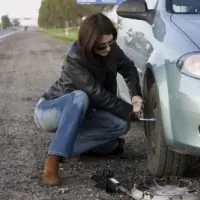
Si circulando se le pincha una rueda debe...
If you get a puncture while driving, you must...
- Aabandonar inmediatamente el vehículo, cualquiera que sea el lugar en que se encuentre.leave the vehicle immediately, wherever you are.
- Bcontinuar el viaje hasta el taller más próximo.continue the journey to the nearest garage.
- Cinmovilizar rápidamente el vehículo fuera de la calzada, o en lugar seguro.quickly bring the vehicle to a stop off the carriageway, or in a safe place.
ExplanationYou cannot drive safely with a flat tyre: you must move the vehicle off the carriageway and leave it in line with the parking rules whenever possible (Article 130.1 of the General Traffic Regulations) or, if not, stop it on the right-hand hard shoulder. Carrying on to the garage or abandoning the vehicle just anywhere is dangerous.
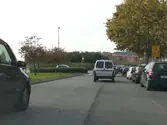
Dentro de poblado, en una vía con dos carriles no delimitados para el mismo sentido, ¿por cuál deberemos de circular?
In a built-up area, on a road with two unmarked lanes in the same direction, which one must we drive in?
- APor el carril de la derecha.The right-hand lane.
- BPor el carril de la izquierda.The left-hand lane.
- CPor aquel que mejor se ajuste a nuestro destino.Whichever best suits our destination.
ExplanationIn built-up areas you may use the lane that best suits your destination, provided there are at least two lanes in the same direction marked by longitudinal lines. If the lanes are not marked by longitudinal lines, you must drive in the right-hand lane, and may use the others when traffic or road conditions make it advisable.
Un conductor que entra en una carretera por un carril de aceleración, ¿debe asegurarse antes de hacerlo de que no hay peligro?
Must a driver entering a road from an acceleration lane make sure there is no danger before doing so?
- ANo, porque tiene prioridad de paso.No, because they have right of way.
- BSí, y no debe iniciar la maniobra hasta estar seguro.Yes, and they must not start the manoeuvre until they are sure.
- CNo, porque los demás conductores deben facilitarle la incorporación.No, because other drivers must make it easy for them to join.
ExplanationA driver using an acceleration lane must make sure at the start of the lane that they can join without danger, taking into account the position, path and speed of other vehicles, and even stop if necessary (Article 72.4 of the General Traffic Regulations (RGC)). They do not have right of way.
Una calle de poblado tiene tres carriles por sentido. ¿Por cuál carril se debe circular?
A street in a built-up area has three lanes in each direction. Which lane should you drive in?
- ADepende de la velocidad del vehículo.It depends on the vehicle's speed.
- BPor el carril más adecuado para ir a mi destino.The lane that best suits my destination.
- CPor el carril derecho y usar los otros sólo para adelantar.The right lane, using the others only to overtake.
ExplanationAccording to Article 33 of the General Traffic Regulations, on carriageways in built-up areas with at least two lanes in the same direction marked by lines, you may use the lane that best suits your destination, without obstructing other vehicles. The rule of normally driving in the right lane applies outside built-up areas (Article 31).
¿Por dónde circulará un ciclomotor?
Where must a moped ride?
- APor el arcén si existe, es transitable y suficiente.On the hard shoulder, if there is one and it is passable and wide enough.
- BPor la parte imprescindible de la calzada.On the part of the carriageway that is strictly necessary.
- CPor el centro de la calzada.In the middle of the carriageway.
ExplanationUnder Article 36 of the General Traffic Regulations (RGC), mopeds that have no lane or track of their own must ride on the right-hand hard shoulder when it is passable and wide enough. Only if it is not do they use the part of the carriageway that is strictly necessary.
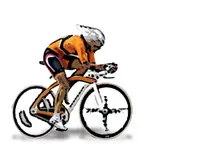
¿Les está permitido a las bicicletas el circular en columna de dos?
Are bicycles allowed to ride two abreast?
- ASí.Yes.
- BNo.No.
- CSí, incluso en los tramos sin visibilidad.Yes, even on stretches without visibility.
ExplanationCyclists may ride two abreast on the hard shoulder or, if there is none or it cannot be used, on the minimum necessary part of the carriageway, but they must ride in single file on stretches without visibility, when they hinder the flow of traffic, and at night or in poor visibility (Article 36.2 of the RGC).
Si circula con su motocicleta por un carril habilitado en sentido contrario al habitual...
If you are riding your motorcycle in a lane opened for traffic in the opposite direction to normal...
- ANo podrá invadir el carril destinado al sentido normal de circulación, ni siquiera para adelantar.You may not move into the lane for the normal direction of traffic, not even to overtake.
- BPodrá circular por el arcén, para adelantar a otros vehículos.You may ride on the hard shoulder to overtake other vehicles.
- CNo podrá superar los 60 kilómetros por hora.You may not go faster than 60 kilometres per hour.
ExplanationWhen you are in a lane opened for traffic in the opposite direction to normal, you must not move sideways into the lanes for the normal direction of traffic, not even to overtake other vehicles. This is for road safety and to avoid collisions with vehicles travelling in the normal direction.
En una calzada de doble sentido de circulación, circula conduciendo su turismo por un carril delimitado por marcas dobles discontinuas por ambos lados. Por tanto, Ud. sabe que circula por...
On a two-way carriageway, you are driving your car in a lane marked by double broken lines on both sides. So you know that you are driving in...
- AUn carril reservado a vehículos lentos.A lane reserved for slow vehicles.
- BUn carril reversible.A reversible lane.
- CUn carril adicional.An additional lane.
ExplanationA reversible lane is a lane whose direction of traffic can change depending on the time of day or the traffic. The double broken lines show that vehicles may use it in either direction, which is typical of a reversible lane. So this option is correct.
Si, por razones de fluidez de la circulación, en una calzada se habilita un carril para ser utilizado en sentido contrario al habitual, ¿le está permitido utilizarlo si conduce un turismo que arrastra un remolque ligero?
If, to keep traffic flowing, a lane on a carriageway is opened for use in the opposite direction to the usual one, may you use it if you are driving a car towing a light trailer?
- ASí, si el remolque va sin carga.Yes, if the trailer is empty.
- BNo.No.
- CSí.Yes.
ExplanationArticle 41.1 of the General Traffic Regulations restricts lanes opened in the opposite direction to the usual one to keep traffic flowing to motorcycles and cars, and prohibits them to all other vehicles, including cars with a trailer, whatever its weight or load.
El conductor de una motocicleta, ¿puede circular por un carril reversible?
May a motorcyclist use a reversible lane?
- ASí, a una velocidad máxima de 80 kilómetros por hora y mínima de 60 kilómetros por hora.Yes, at a maximum speed of 80 kilometres per hour and a minimum of 60 kilometres per hour.
- BNo.No.
- CSí.Yes.
ExplanationReversible lanes may be used by all types of vehicle, including motorcycles, with at least the dipped headlights on by day and by night. The 60 and 80 km/h limits apply to lanes opened for traffic in the opposite direction to the usual one.
Excepcionalmente y siempre que sea seguro, en vías que no sean autopistas ni autovías, ¿se permite remolcar un vehículo con otro que no esté pensado para remolcar?
Exceptionally, and as long as it is safe, on roads other than motorways (autopistas) and dual carriageways (autovías), is it allowed to tow a vehicle with another vehicle not designed for towing?
- ASí, hasta el taller más cercano.Yes, to the nearest garage.
- BNo.No.
- CSí, siempre que no se recorran más de 10 km.Yes, as long as no more than 10 km are covered.
ExplanationNo. A broken-down or crashed vehicle may only be towed by a vehicle prepared and authorised for roadside assistance, such as a tow truck, and not by just any vehicle. The old exception that allowed it to be towed to the nearest place outside motorways and dual carriageways no longer appears in Article 130 of the General Traffic Regulations.
Si hay un atasco en la autopista, ¿se puede circular con un turismo por el arcén?
If there is a traffic jam on the motorway (autopista), may you drive a car on the hard shoulder?
- ASí.Yes.
- BSí, saliendo por la primera salida.Yes, leaving at the first exit.
- CNo.No.
ExplanationYou may not drive a car on the hard shoulder to avoid a queue. Since RD 518/2026, only motorcycles may use the right-hand hard shoulder on stretches that are authorised and signposted, when traffic is stopped by congestion, at a maximum of 30 km/h and in single file (Article 36.3 of the RGC).
Si por una emergencia un conductor se ve obligado a inmovilizar su vehículo en una autopista, ¿puede hacerlo en la mediana?
If, because of an emergency, a driver has to bring their vehicle to a standstill on a motorway (autopista), may they do so on the central reservation?
- ANo, en ningún caso debe dejarse inmovilizado el vehículo a la media.No, the vehicle must never be left stationary on the central reservation.
- BNo; siempre se dejará inmovilizado el vehículo en el arcén derecho.No; the vehicle must always be left stationary on the right-hand hard shoulder.
- CSólo si es necesario y de forma excepcional para no obstaculizar la circulación.Only if necessary and as an exception, so as not to obstruct traffic.
ExplanationOn a motorway (autopista), the general rule is to stop the vehicle on the right-hand hard shoulder when possible. However, in exceptional emergencies, if stopping on the hard shoulder is more dangerous or a greater obstruction, a less usual place may be considered. In any case, the priority is not to interfere with traffic or create extra danger for other road users. Where you stop must always be the safest option in the circumstances. So the central reservation would only be considered as a justified exception.
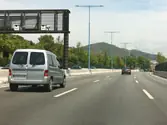
Un conjunto de vehículos, cuya longitud es de 7,30 metros, circula por una vía con tres carriles por sentido de la circulación, ¿qué carriles puede utilizar?
A combination of vehicles 7.30 metres long is travelling on a road with three lanes in each direction. Which lanes may it use?
- ACualquiera de ellos indistintamente.Any of them.
- BEl de la derecha y el inmediato únicamente cuando las circunstancias del tráfico o de la vía lo aconsejen.The right-hand lane, and the next one only when traffic or road conditions make it advisable.
- CSolamente el de la derecha.Only the right-hand lane.
ExplanationOutside built-up areas, when a carriageway has three or more lanes in their direction, drivers of lorries with a maximum authorised mass of more than 3,500 kg, special vehicles that are not required to use the hard shoulder, and combinations of vehicles more than 7 metres long must normally drive in the lane furthest to the right. They may use the next lane to overtake or when traffic or road conditions make it advisable, as long as they do not obstruct a vehicle behind them. The other lanes are prohibited for them.
En una vía de doble sentido de circulación y arcenes, la Autoridad encargada de la regulación del tráfico ha habilitado un carril adicional de circulación en uno de los sentidos. Si Ud. circula por él deberá...
On a two-way road with hard shoulders, the traffic authority has opened an additional traffic lane in one direction. If you drive in it, you must...
- ALlevar encendidas, de día, únicamente las luces de posición para señalizar la situación del vehículo.Have only the sidelights on during the day, to show the vehicle's position.
- BLlevar encendidas las luces de cruce, al menos, tanto de día como entre el ocaso y la salida del sol.Have at least the dipped headlights on, both during the day and between sunset and sunrise.
- CCircular, como máximo, a 60 Kilómetros por hora.Drive at a maximum of 60 kilometres per hour.
ExplanationIt is correct to have the dipped headlights on, both during the day and between sunset and sunrise. This makes the vehicle more visible and helps other drivers see it more clearly, which is especially important in an additional lane opened on a two-way road. So this option is correct.
Circulando por una autopista con tres carriles en el mismo sentido, ¿qué carril usaremos normalmente?
Driving on a motorway (autopista) with three lanes in the same direction, which lane will we normally use?
- AEl carril central, si no molestamos a otros vehículos.The centre lane, if we do not disturb other vehicles.
- BEl carril de la derecha.The right-hand lane.
- CEl carril que mejor convenga a nuestro destino.The lane that best suits our destination.
ExplanationAs a general rule you drive in the right-hand lane, and may use the other lanes when traffic or road conditions make it advisable.
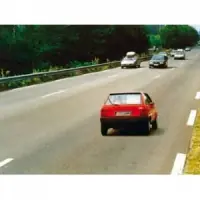
¿Pueden las vías de una sola calzada tener dos sentidos de circulación?
Can single-carriageway roads have two directions of traffic?
- ANoNo
- BSíYes
- CÚnicamente podrán las vías interurbanasOnly interurban roads can
ExplanationRoads can have one or more carriageways, and each carriageway can have one or two directions of traffic. So single-carriageway roads can have one or two directions of traffic, and roads divided into two carriageways have two directions of traffic unless signs show otherwise.
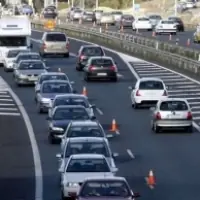
¿Puede un camión con Masa Máxima Autorizada inferior a 3500 kg, circular por un carril habilitado en sentido contrario al habitual?
May a lorry with a maximum authorised mass of less than 3,500 kg use a lane opened for traffic in the opposite direction to the usual one?
- ASí, en todos los casos siempre que lleve encendidas el alumbrado de cruce.Yes, in all cases, as long as it has its dipped headlights on.
- BSí, siempre que dicho carril se haya abierto debido a la realización de obras en la calzada.Yes, as long as that lane has been opened because of roadworks on the carriageway.
- CNo, nunca.No, never.
ExplanationUnder Article 41 of the General Traffic Regulations, lanes opened for traffic in the opposite direction to the usual one are only for motorcycles and cars. But if they are opened because of roadworks on the carriageway, all vehicles allowed on that road may use them, unless this is expressly prohibited.
¿En qué casos circularemos específicamente por la derecha y lo más cerca posible del borde de la calzada?
In which cases must we specifically drive on the right and as close as possible to the edge of the carriageway?
- ACuando circulemos por un carril en sentido contrario al habitual.When driving in a lane in the opposite direction to the usual one.
- BCuando circulemos por curvas y cambios de rasante de visibilidad reducida.When driving on bends and brows of hills with poor visibility.
- CCuando circulemos por una vía dentro de poblado.When driving on a road inside a built-up area.
ExplanationAs a general rule, and especially on bends and brows of hills with poor visibility, vehicles must drive on the right and as close as possible to the edge of the carriageway.
En una vía de tres calzadas...
On a road with three carriageways...
- ALa central será de sentido único y las laterales, de doble sentido.the central one is one-way and the side ones are two-way.
- BLa central, de uno o de dos sentidos según las señales, y las laterales, de uno solo.the central one is one-way or two-way depending on the signs, and the side ones are one-way.
- CLas tres calzadas serán siempre de doble sentido de circulación.all three carriageways are always two-way.
ExplanationUnder Article 44.2 of the General Traffic Regulations (RGC), when a road is divided into three carriageways, the central one may be used for both directions or for only one, permanently or temporarily, as shown by the signs, and the side ones are used for traffic in one direction only.

¿Las bicicletas podrán circular en paralelo?
May bicycles ride side by side?
- ANo, en ningún caso.No, never.
- BSí, pero solamente por el arcén.Yes, but only on the hard shoulder.
- CSí, tanto por la calzada como por el arcén.Yes, both on the carriageway and on the hard shoulder.
ExplanationUnder Article 36.2 of the General Traffic Regulations (RGC) (as worded by RD 518/2026), bicycles may ride two abreast on the hard shoulder and, if there is none or it is not passable and wide enough, on the part of the carriageway that is strictly necessary. They must ride in single file on stretches without visibility, when they affect the flow of traffic, between sunset and sunrise, or in conditions that noticeably reduce visibility.
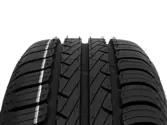
¿Qué debe hacer para que el vehículo tenga un mejor agarre sobre la calzada?
What should you do so that your vehicle has better grip on the road?
- AInflar los neumáticos por encima de la presión recomendada por el fabricante.Inflate the tyres above the pressure recommended by the manufacturer.
- BCuidar que la profundidad del dibujo del neumático nunca sea inferior a 1,6 mm.Make sure the tyre tread depth is never less than 1.6 mm.
- CUtilizar neumáticos radiales en las ruedas delanteras y diagonales en las traseras.Use radial tyres on the front wheels and cross-ply tyres on the rear wheels.
ExplanationThe flat part of the tyre in contact with the road surface is called the tread. It is the part that wears most, so you should check that the depth of its grooves is not less than 1.6 millimetres. If it is, the tyre must be replaced. Deep tread on your tyres is essential for the vehicle to grip the road well.
¿Se permite usar los pasos en la mediana de una autopista para dar la vuelta?
Are you allowed to use the gaps in the central reservation of a motorway (autopista) to turn round?
- ANo, está prohibido.No, it is forbidden.
- BSí, cuando estén abiertos.Yes, when they are open.
- CSí, a menos que una señal lo prohíba expresamente.Yes, unless a sign expressly forbids it.
ExplanationOn motorways (autopistas) and dual carriageways (autovías), the traffic rules forbid making a U-turn on any stretch where traffic runs in one direction only, except at places provided for it. The gaps in the central reservation are designed as guidance features, pedestrian refuges or diversion lanes, and they are not considered to be provided for turning round; unless there are specific signs that allow it, using them to make a U-turn is forbidden. So the correct answer is «No, it is forbidden».
¿Un turismo con un dispositivo ambiental B podrá circular por un carril VAO?
Can a car with a B environmental badge use an HOV lane (VAO)?
- ASí, cuando los paneles de mensaje variable lo indiquen y al menos con dos ocupantes.Yes, when the variable message panels say so and with at least two occupants.
- BSí, cuando los paneles de mensaje variable lo indiquen y al menos con un ocupante.Yes, when the variable message panels say so and with at least one occupant.
- CNo.No.
ExplanationVehicles with only one occupant classed as CERO, ECO, C or B may use HOV lanes (VAO) only when this is shown on the variable message panels at the entrance to these lanes. The vehicles must be identified with the sticker showing their classification, placed in the lower right-hand corner of the windscreen.
¿Se permite a los ciclomotores circular por el arcén en columna de a dos?
Are mopeds allowed to ride two abreast on the hard shoulder?
- ANo, nunca.No, never.
- BSi, siempre.Yes, always.
- CSí, de forma excepcional cuando el arcén sea transitable y suficiente.Yes, exceptionally, when the hard shoulder is usable and wide enough.
ExplanationUnder Article 36.2 of the General Traffic Regulations (as worded by RD 518/2026), vehicles that must use the hard shoulder, including mopeds, are prohibited from riding side by side. Only bicycles may ride two abreast; the old exception that allowed mopeds to ride two abreast on the hard shoulder no longer exists.
¿Una motocicleta está obligada a circular por el arcén si éste es transitable y suficiente?
Must a motorcycle ride on the hard shoulder if it is driveable and wide enough?
- ASí.Yes.
- BNo.No.
- CSí, pero solo en vías con arcén de más de 1,5 metros.Yes, but only on roads with a hard shoulder wider than 1.5 metres.
ExplanationA motorcycle may not ride on the hard shoulder except in exceptional cases, although mopeds are required to do so.
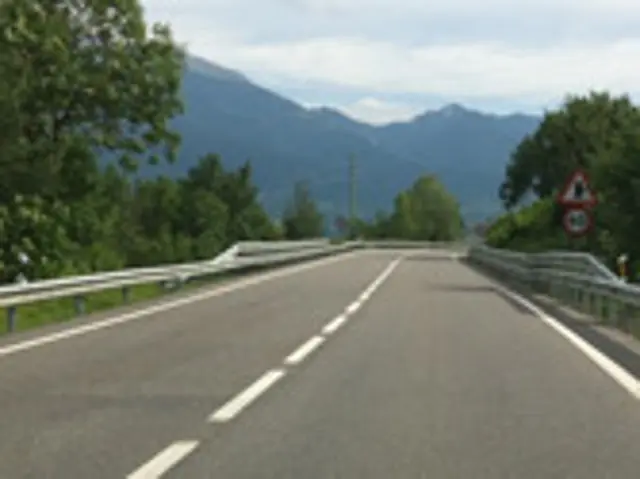
¿Se puede circular en ciclomotor por una vía interurbana sin arcén?
Can you ride a moped on a road outside built-up areas that has no hard shoulder?
- ASí, por la derecha, ocupando solo la parte necesaria de la calzada.Yes, on the right, using only the necessary part of the carriageway.
- BNo, en este caso no se puede circular.No, in this case you cannot ride there.
- CSí, por el centro del carril derecho.Yes, in the middle of the right-hand lane.
ExplanationAccording to the General Traffic Regulations (RGC), mopeds may ride on roads outside built-up areas where there is no hard shoulder, using the part of the carriageway that is strictly necessary. This is because, when there is no driveable hard shoulder that is wide enough, they must take up only as much of the carriageway as they need, for the safety of both the moped and other vehicles. So it is correct to say that you can ride on the right, using only the part of the carriageway that is strictly necessary.
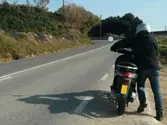
Si arrastra o empuja su ciclomotor por una vía interurbana, ¿por dónde circulará?
If you are pulling or pushing your moped along a road outside a built-up area, where must you go?
- APor el arcén de la izquierda, si lo hay.On the left-hand hard shoulder, if there is one.
- BPor la calzada, ya que al no ser peatón no puede ir por el arcén.On the carriageway, because you are not a pedestrian and may not use the hard shoulder.
- CPor el arcén de la derecha, si lo hay.On the right-hand hard shoulder, if there is one.
ExplanationSomeone pushing or pulling a two-wheeled moped or a bicycle on foot is considered a pedestrian, but for safety they must keep to the right, on the hard shoulder if there is one. Other pedestrians outside built-up areas, on the other hand, walk on the left.
En una autopista, ¿se puede circular por el carril de aceleración a más velocidad que los vehículos del carril normal?
On a motorway (autopista), may you drive in the acceleration lane faster than the vehicles in the main lane?
- ANo, sería un adelantamiento por la derecha.No, it would be overtaking on the right.
- BNo, excepto las motocicletas.No, except motorcycles.
- CSí.Yes.
ExplanationOn a motorway, the acceleration lane is designed to let vehicles joining the motorway reach a suitable speed before merging with traffic in the main lane. It is not forbidden to drive faster than the vehicles in the main lane, because the purpose of the acceleration lane is precisely to make merging easier. The General Traffic Regulations do not expressly prohibit this, so drivers may increase their speed to match the traffic flow, always respecting the speed limits.
En vía urbana, las personas que empujen un ciclomotor por la calzada o el arcén están obligadas a circular...
On an urban road, people pushing a moped on the carriageway or hard shoulder must walk...
- Apor el lado derecho.on the right-hand side.
- Bindistintamente, por cualquiera de los dos lados.on either side, it makes no difference.
- Cpor el lado izquierdo.on the left-hand side.
ExplanationPeople pushing a cycle or a moped on the carriageway or the hard shoulder must do so on the right-hand side, carefully, without needlessly holding up traffic and keeping as close as possible to the outer edge of the carriageway or hard shoulder. They must obey the signs that apply to them. Remember that people pushing a cycle or moped count as pedestrians, whereas people wheeling a motorcycle along count as drivers.
Cuando se circule por un carril VAO no se podrá...
When travelling in an HOV lane (VAO), you may not...
- AArrastrar un remolque.Tow a trailer.
- BSuperar la velocidad máxima de 80 km/h.Exceed a maximum speed of 80 km/h.
- CAdelantar.Overtake.
ExplanationTo use an HOV lane (VAO) you must meet the occupancy requirement, and a vehicle towing a trailer may never use it.

Si por cualquier circunstancia tuviera que realizar la operación de descarga de su vehículo dentro de la vía pública, ¿cómo deberá hacerlo?
If, for any reason, you had to unload your vehicle on the public road, how must you do it?
- ADepositando la mercancía en el arcén o en la zona peatonal más próxima.By putting the goods on the hard shoulder or in the nearest pedestrian area.
- BEfectuando la descarga lo antes posible, evitando ruidos y molestias innecesarias.By unloading as quickly as possible, avoiding unnecessary noise and nuisance.
- CEn ningún caso debe realizarse la operación de descarga dentro de la vía.Unloading must never be done on the road.
ExplanationAs a general rule, loading and unloading must be done off the road. If it is essential to do it on the road, these rules must be followed: - If possible, do it from the side of the vehicle nearest the edge of the carriageway. - Follow the rules on stopping and parking and, in built-up areas, any rules on times and places. - Putting goods on the carriageway, hard shoulder or pedestrian areas is prohibited. - Use the necessary means to do it quickly, avoiding danger, noise and unnecessary nuisance.
Circula por la autopista a una velocidad muy reducida por una avería. ¿Por qué carril debe circular?
You are driving on the motorway (autopista) at a very low speed because of a breakdown. Which lane must you use?
- APor el carril izquierdo.The left lane.
- BPor el carril derecho, si no obstaculiza gravemente la circulación.The right lane, if you do not seriously obstruct traffic.
- CSiempre por el arcén.Always the hard shoulder.
ExplanationIf a breakdown forces you to drive at an abnormally low speed, keep to the right lane as long as you do not seriously disrupt traffic; if you do, a vehicle of up to 3,500 kg must move onto the right-hand hard shoulder if it is usable (Article 36.1 of the General Traffic Regulations). You must also leave the motorway at the first exit (Article 38.2).
En el arcén transitable de una travesía …
On the usable hard shoulder of a travesía (stretch of road through a town)…
- ASe puede parar pero no estacionar.You may stop but not park.
- BNo se puede parar ni estacionar.You may neither stop nor park.
- CSe puede parar y estacionar.You may stop and park.
ExplanationA travesía is the stretch of a road that runs through a built-up area, so it is not a road outside built-up areas (vía interurbana). The rule that you must stop and park off the carriageway, leaving the usable part of the hard shoulder clear, applies on roads outside built-up areas (Article 90.1 of the General Traffic Regulations). On the hard shoulder of a travesía you may stop and park, as long as you do not cause an obstruction.
¿Se puede hacer autostop en la zona de peaje de una autopista?
May you hitchhike in the toll area of a motorway (autopista)?
- ANo.No.
- BSí, siempre que no se cree una situación peligrosa.Yes, as long as no dangerous situation is created.
- CSí.Yes.
ExplanationUnder Article 125.1 of the General Traffic Regulations (as worded by RD 518/2026), pedestrians may not walk on motorways (autopistas) or dual carriageways (autovías), except in the cases covered by Article 130, and may not ask for lifts anywhere on them, including the forecourts of toll stations.
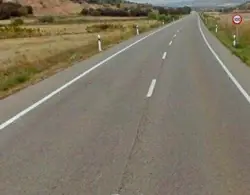
¿Por dónde circulará un vehículo especial con una MMA superior a 3.500 kg?
Where must a special vehicle with a MAM of more than 3,500 kg drive?
- APor el centro de la calzada.In the centre of the carriageway.
- BPor el carril derecho.In the right-hand lane.
- CPor el arcén.On the hard shoulder.
ExplanationUnder Article 30 of the General Traffic Regulations, special vehicles with a maximum authorised mass of more than 3,500 kg must drive on the carriageway, in the right-hand lane, and not on the hard shoulder except for reasons of emergency.
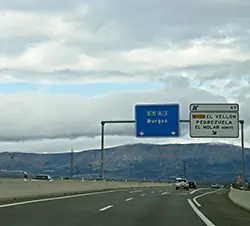
Al abandonar una autovía deberá…
When leaving a dual carriageway (autovía), you must…
- AReducir la velocidad a 60 km/h.Reduce speed to 60 km/h.
- BContinuar por su carril hasta la salida.Stay in your lane until the exit.
- CCircular por el carril de deceleración lo antes posible.Move into the deceleration lane as soon as possible.
ExplanationYou must slow down in the deceleration lane, not on the main carriageway: that is why you must move into it as soon as possible when leaving the dual carriageway (autovía).
En una vía dentro de poblado con los carriles sin delimitar, ¿por qué carril deberá circular?
On a road in a built-up area where the lanes are not marked, which lane must you use?
- APor el carril que mejor convenga a su destino.The lane that best suits your destination.
- BPor el carril de la derecha.The right-hand lane.
- CSi es un camión de más de 3500 kg, sólo por el primero y segundo carril.If it is a lorry over 3,500 kg, only the first and second lanes.
ExplanationOn a road in a built-up area, if the lanes are marked, we may use the one that best suits our destination; if they are not, we normally drive in the right-hand one.
¿Puede circular por un carril VAO un turismo que arrastra un remolque de menos de 750 kg?
May a car towing a trailer of less than 750 kg use an HOV lane (VAO)?
- ASí.Yes.
- BNo.No.
- CSí, si lleva el número mínimo de ocupantes exigido.Yes, if it carries the minimum number of occupants required.
ExplanationThe following may not use the HOV lane (VAO): combinations of vehicles, including cars with a trailer, as well as pedestrians, cycles, mopeds, animal-drawn vehicles and animals.
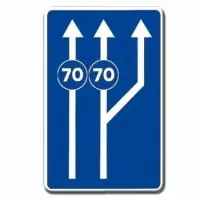
Circula a 80 kilómetros por hora en esta vía. ¿En qué carril se deberá situar?
You are driving at 80 kilometres per hour on this road. Which lane should you use?
- APor el carril central, utilizando el derecho únicamente para facilitar las maniobras de adelantamiento.The centre lane, using the right lane only to make overtaking easier.
- BPor el carril derecho, y utilizaré cuando convenga el resto de carriles según las circunstancias del tráfico.The right lane, and I will use the other lanes when appropriate according to traffic conditions.
- CPor cualquiera de ellos, siempre que mi velocidad supere los 70 km/hora.Any of them, as long as my speed is above 70 km/h.
ExplanationOn this sign the numbers in blue circles are minimum speeds: at 80 km/h you may use any of the lanes, but outside built-up areas you must normally drive in the right-hand lane and use the others when traffic or road conditions make it advisable (Article 31.1 of the General Traffic Regulations (RGC)).
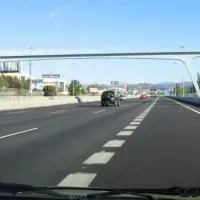
¿Pueden acceder a una autovía los vehículos de las propiedades colindantes?
Can vehicles from adjoining properties access a dual carriageway (autovía)?
- ASi, sin ningún tipo de limitaciónYes, without any restriction
- BSi, pero tienen acceso limitadoYes, but they have limited access
- CNo, bajo ninguna circunstancia se puede accederNo, access is not allowed under any circumstances
ExplanationProperties next to a dual carriageway (autovía) have limited access to it; that is, on the dual carriageway there will be a specific lane leading to the adjoining properties. A motorway (autopista), on the other hand, has no access to adjoining properties.
Un conjunto de vehículos de 7,50 metros de longitud, ¿por dónde debe de circular en una vía interurbana con 3 carriles para su sentido?
Where must a 7.50-metre-long combination of vehicles drive on a road outside built-up areas with 3 lanes in its direction?
- APor cualquiera de ellos.In any of them.
- BSolamente por el de la derecha.Only in the right-hand lane.
- CPor el de la derecha, pudiendo utilizar el inmediato cuando las circunstancias del tráfico lo aconsejen.In the right-hand lane, and it may use the next lane when traffic conditions make it advisable.
ExplanationOn carriageways outside built-up areas with more than one lane for your direction, you normally drive in the lane furthest to your right, although you may use the other lanes in that direction when traffic or road conditions make it advisable, as long as you do not obstruct a vehicle behind you. When such a carriageway has three or more lanes in your direction, drivers of lorries with a maximum authorised mass of more than 3,500 kg, special vehicles that are not required to use the hard shoulder, and combinations of vehicles more than 7 metres long must normally drive in the lane furthest to the right. They may use the next lane to overtake or when traffic or road conditions make it advisable, as long as they do not obstruct a vehicle behind them. The other lanes are prohibited for them.

En esta vía un ciclomotor tiene que circular por...
On this road, a moped must travel on...
- Ala calzada, lo más cerca posible del borde derecho.the carriageway, as close as possible to the right-hand edge.
- Bel arcén.the hard shoulder.
- Cel carril derecho.the right-hand lane.
ExplanationThe driver of any animal-drawn vehicle, special vehicle with a maximum authorised mass of no more than 3,500 kg, cycle, moped, cyclist support vehicle or vehicle for people with reduced mobility must, if there is no road or part of the road specially intended for them, use the hard shoulder on their right, if it is passable and wide enough for them. If it is not, they will use only the part of the carriageway that is strictly necessary.

Si en una carretera convencional no existe vía pecuaria, ¿por dónde circulará un rebaño?
If there is no livestock route along a conventional road, where should a herd of animals move?
- AObligatoriamente por la derecha.On the right; this is compulsory.
- BIndistintamente por la derecha o la izquierdaOn either the right or the left
- CNo podrán circular por dicha carretera.They may not use that road.
ExplanationIf there is no livestock route, animals must move along the hard shoulder on the right. When they have to use the carriageway, they must keep as close as possible to its right-hand edge.
All topics
- Definitions
- Documents and penalty points
- The driver's condition
- Duties of drivers and pedestrians
- Vehicle safety devices
- Vehicle controls and equipment
- Vehicle lights and horn
- Traffic signs, markings and signals
- Speed and distances
- Manoeuvres
- Right of way
- Carrying passengers and loads
- Driving safely in difficult conditions
- Vehicle mechanics and maintenance
- Road accidents and first aid
- Defensive and eco-driving
Independent app: not affiliated with or endorsed by the DGT (Spain's Directorate-General for Traffic) or the Ministry of the Interior. The official exam is booked with the DGT and taken at its test centres. The questions here are practice material; the DGT's official question bank is not public.
Basado en datos de la Agencia Estatal Boletín Oficial del Estado (https://www.boe.es). Textos consolidados de carácter meramente informativo. La AEBOE no patrocina ni respalda este sitio.
Parte de las preguntas procede de los tests de la revista «Tráfico y Seguridad Vial» de la DGT, reproducidos con indicación de la fuente.