
DGT test · 534 questions
The road and its lanes · Page 10 of 11
Carriageway, lanes, hard shoulder and road types: where you drive and how lanes are used on motorways, dual carriageways and streets.
Questions in this topic, with answers
534 questions, 50 per page, with the correct answer and the explanation. Page 10 of 11.
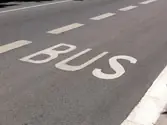
¿Una motocicleta puede circular por un carril bus?
Can a motorcycle use a bus lane?
- ASí, cediendo el paso a los taxis y a los autobuses.Yes, giving way to taxis and buses.
- BNo.No.
- CSí, en caso de tráfico denso.Yes, in heavy traffic.
ExplanationMotorcycles may not use a bus lane. They may only enter it, where it is marked with broken lines, to turn off, if turning is allowed.
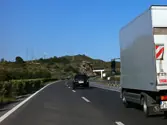
Si después de realizar un adelantamiento en una autopista desea realizar otro, ¿le está permitido seguir circulando por el carril izquierdo?
If, after overtaking on a motorway (autopista), you want to overtake again, may you stay in the left-hand lane?
- ASi, siempre que circule a la velocidad máxima de la vía.Yes, as long as you are driving at the road's maximum speed.
- BSi, cuando no obstaculice a los vehículos que circulen más deprisa detrás suyo.Yes, if you do not obstruct faster vehicles behind you.
- CNo, deberá volver al carril de la derecha.No, you must return to the right-hand lane.
ExplanationIf you want to overtake again, you do not need to return to the right-hand lane, as long as you do not obstruct another vehicle coming up faster from behind.
La circulación por un carril en sentido contrario al habitual...
Driving in a lane in the opposite direction to the usual one...
- Aobliga a llevar encendida, al menos, la luz de cruce.requires at least the dipped headlights to be on.
- Bestá reservada únicamente a los turismos.is reserved for cars only.
- Cno está sujeta a limitación de velocidad.is not subject to any speed limit.
ExplanationAccording to Articles 41 and 104 of the General Traffic Regulations, anyone driving in a lane opened in the opposite direction to the usual one must have at least the dipped headlights on, by day and by night. These lanes are restricted to motorcycles and cars, with a maximum speed of 80 km/h.
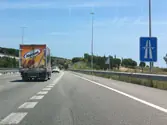
En una autopista, ¿se puede circular por el carril de aceleración a mayor velocidad que los vehículos que circulan por el carril normal?
On a motorway (autopista), may you drive in the acceleration lane faster than the vehicles in the normal lane?
- ANo, se estaría realizando un adelantamiento por la derecha.No, that would be overtaking on the right.
- BNo, salvo las motocicletas.No, except motorcycles.
- CSí.Yes.
ExplanationThe acceleration lane is used to reach a suitable speed before joining the carriageway (Article 72 of the General Traffic Regulations, RGC), so you may drive in it faster than the vehicles in the lane next to it. As it is not a normal traffic lane, this does not count as overtaking on the right.
¿Le está permitido entrar con su turismo al carril bus taxi por la zona de marcas discontinuas?
May you drive your car into the bus and taxi lane where the lines are broken?
- ASí, pero solo para realizar alguna maniobra permitida, como girar.Yes, but only to carry out a permitted manoeuvre, such as turning.
- BSí, cuando tenga que hacer una parada.Yes, when you need to stop.
- CSí, cuando hay tráfico denso.Yes, when traffic is heavy.
ExplanationThe broken line separating a lane reserved for buses and taxis allows other vehicles to use it only to carry out certain permitted manoeuvres, such as turning. You may not enter it to stop or to avoid a traffic jam: stopping in lanes reserved for certain users is prohibited (Article 94.1 of the General Traffic Regulations).
¿Pueden los ciclistas circular en paralelo en carretera?
May cyclists ride side by side on the road?
- ANo, nuncaNo, never
- BSí, en columna de a dos, excepto en tramos sin visibilidadYes, in pairs, except on stretches with no visibility
- CSí, sin límiteYes, with no limit
ExplanationUnder Article 36.2 of the General Traffic Regulations (as worded by RD 518/2026), bicycles may ride in pairs on the hard shoulder and, if there is none or it is not usable and wide enough, on the part of the carriageway that is strictly necessary. They must ride in single file on stretches with no visibility, when they affect the flow of traffic, between sunset and sunrise, or in conditions that noticeably reduce visibility.
En una vía de poblado con los carriles sin delimitar, ¿por qué carril circularemos?
On a road in a built-up area where the lanes are not marked, which lane shall we use?
- APor el carril que mejor convenga a nuestro destino.The lane that best suits our destination.
- BPor el carril de la derecha.The right-hand lane.
- CSi el vehículo pesa más de 3500 kg, solo por el primero o segundo carril.If the vehicle weighs more than 3,500 kg, only the first or second lane.
ExplanationOn a road in a built-up area where the lanes ARE MARKED, we may use the lane that best suits our destination. On a road in a built-up area where the lanes are NOT MARKED, we drive in the right-hand lane.
¿Una bicicleta puede circular por el arcén de una autovía?
Can a bicycle be ridden on the hard shoulder of a dual carriageway (autovía)?
- ANo, en ningún caso.No, under no circumstances.
- BSí, cuando su conductor sea mayor de 14 años.Yes, when the rider is over 14 years old.
- CSí, siempre que lleve casco homologado, sea cual sea su edad.Yes, as long as the rider wears an approved helmet, whatever their age.
ExplanationAccording to Article 38.1 of the General Traffic Regulations (RGC), cyclists over 14 years old may ride on the hard shoulders of dual carriageways (autovías), unless this is prohibited by signs. In addition, under Article 36.1 (as worded by RD 518/2026), on dual carriageways they must always ride on the hard shoulder, without leaving it on downhill stretches.
En una carretera de doble sentido hay un refugio en el centro. ¿Por qué lado se debe circular?
On a two-way road there is a pedestrian refuge in the middle. On which side must you drive?
- APor el lado derecho del refugio.On the right-hand side of the refuge.
- BPor cualquiera de ellos, indistintamente.On either side.
- CPor el lado izquierdo del refugio.On the left-hand side of the refuge.
ExplanationUnder Article 43.1 of the General Traffic Regulations, when there are pedestrian refuges, traffic islands or guidance features on the road, you drive on the part of the carriageway to their right in your direction of travel. Only on one-way roads, or within the part for one direction only, may you pass on either side.
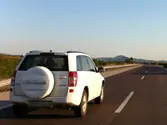
El vehículo que le precede acaba de adelantarle y no se reincorpora al carril derecho, ¿es correcto?
The vehicle in front of you has just overtaken you and does not move back into the right-hand lane. Is this correct?
- ASí, puesto que circula a mayor velocidad.Yes, because it is travelling faster.
- BNo, debería circular por la derecha.No, it should drive on the right.
- CSí, pues el carril de la derecha es para vehículos lentos.Yes, because the right-hand lane is for slow vehicles.
ExplanationOutside built-up areas, on carriageways with more than one lane in your direction, you must normally drive in the lane furthest to the right, although you may use the others when traffic or road conditions make it advisable, provided you do not obstruct any vehicle behind you. So, after overtaking, if the vehicle does not intend to keep overtaking, it must drive in the right-hand lane.
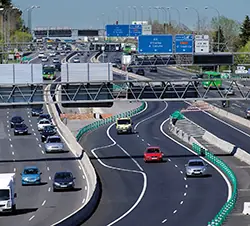
Un ciclomotor ocupado por dos personas, ¿puede utilizar normalmente un carril VAO?
Can a moped carrying two people normally use an HOV lane (VAO)?
- ANo.No.
- BSí, porque van dos personas.Yes, because there are two people on it.
- CSí, si circula por el arcén.Yes, if it travels on the hard shoulder.
ExplanationHOV lanes (VAO) are reserved for motorcycles and for motor cars with the minimum required number of occupants. A moped does not belong to these categories, so it may not use them, even with two people on it.
Excepcionalmente, y en condiciones de seguridad, en vías que no sean autopistas o autovías, ¿se permite el arrastre de un vehículo por otro no destinado a este fin?
As an exception, and when it is safe, on roads that are not motorways or dual carriageways, may a vehicle be towed by another vehicle not intended for that purpose?
- ASí, hasta el taller más próximo.Yes, to the nearest garage.
- BNo.No.
- CSí, siempre que no se recorran más de 10 kilómetros.Yes, as long as the distance is no more than 10 kilometres.
ExplanationNo. Removing a broken-down or damaged vehicle is the job of a vehicle equipped for roadside assistance, such as a tow truck; not just any vehicle can do it. Article 130 of the General Traffic Regulations (RGC) no longer includes the old exception that allowed towing to the nearest suitable place on roads other than motorways and dual carriageways.
¿Es correcto que un tractor agrícola de 3.400 kg de MMA circule por el arcén?
Is it correct for an agricultural tractor with a maximum authorised mass (MAM) of 3,400 kg to drive on the hard shoulder?
- ASí.Yes.
- BNo.No.
- CSolo si circula a menos de 25 km/h.Only if it is going at less than 25 km/h.
ExplanationSpecial vehicles of up to 3,500 kg must drive on the hard shoulder if there is one and it is usable.
En una vía de un solo sentido hay una isleta en el centro. ¿Por dónde se puede circular?
On a one-way road there is a traffic island in the middle. Where may you drive?
- ATanto por la derecha como por la izquierda.Both on the right and on the left.
- BSolo por la parte derecha del refugio.Only on the right of the island.
- CSolo por la parte izquierda del refugio.Only on the left of the island.
ExplanationArticle 43.1 of the General Traffic Regulations requires you to pass to the right of pedestrian refuges and traffic islands, except when they are on a one-way road or within the part of the carriageway for one direction only: in that case you may drive on either side.

¿Cuándo será más resbaladizo el firme de la calzada?
When will the road surface be most slippery?
- ACuando esté lloviendo intensamente durante mucho tiempo.When it has been raining heavily for a long time.
- BCuando empiece a llover después de mucho tiempo sin hacerlo.When it starts to rain after a long time without rain.
- CCuando la calzada esté situada fuera de poblado.When the carriageway is outside a built-up area.
ExplanationWhen it starts to rain after a dry period, the dirt that has built up on the road forms an extremely slippery film of mud, especially when the first drops fall.
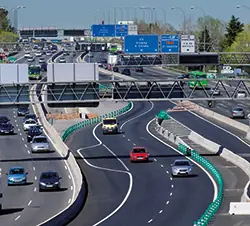
¿Podrá utilizar el carril VAO un turismo ocupado por cuatro personas si lleva enganchado un remolque ligero?
Can a car carrying four people use the HOV lane (VAO) if it is towing a light trailer?
- ANo.No.
- BSolo si el carril no está ocupado.Only if the lane is empty.
- CSí.Yes.
ExplanationThe HOV lane (VAO) is reserved for cars and motorcycles without a trailer that have the minimum occupancy indicated: if the car is towing a trailer, even a light one, it cannot use it.
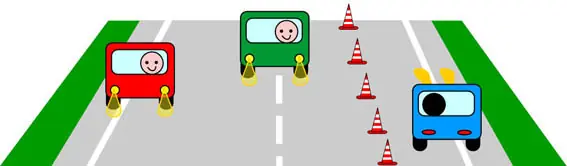
Si circula por un carril adicional, ¿qué debe hacer?
If you are driving in an additional lane, what must you do?
- ACircularé con la luz de carretera.I will drive with the main beam on.
- BLos turismos no pueden circular por los carriles adicionales.Cars may not use additional lanes.
- CCircularé con la luz de corto alcance, o con la de carretera cuando sea necesario.I will drive with dipped headlights on, or with the main beam when necessary.
ExplanationIn a temporary additional lane you must have at least your dipped headlights on, by day and by night, and drive at between 60 and 80 km/h unless signs say otherwise. The main beam may be used when appropriate, as long as it does not dazzle. Cars may use these lanes.
Por trabajos en la calzada, se ha habilitado un carril para ser utilizado en sentido contrario al habitual. Si conduce un turismo que arrastra un remolque ligero, ¿puede circular por dicho carril?
Because of roadworks on the carriageway, a lane has been opened for use in the opposite direction to normal. If you are driving a car towing a light trailer, may you use this lane?
- ASí, pero únicamente para realizar los adelantamientos precisos.Yes, but only for the necessary overtaking.
- BSí, salvo prohibición expresa en contrario.Yes, unless it is expressly prohibited.
- CNo, porque está prohibido.No, because it is forbidden.
ExplanationWhen the lane in the opposite direction to normal is opened because of roadworks on the carriageway, all vehicles allowed on the road under works may use it, unless expressly prohibited (Article 41.1 of the General Traffic Regulations). If it is opened to keep traffic flowing, only motorcycles and cars without trailers may use it.
¿Podrán los ciclistas circular en paralelo por el arcén?
May cyclists ride side by side on the hard shoulder?
- ANo, en ningún caso.No, never.
- BSí, solo para adelantarse entre ellos.Yes, only to overtake each other.
- CSí.Yes.
ExplanationUnder Article 36.2 of the General Traffic Regulations (RGC) (as worded by RD 518/2026), cyclists may ride two abreast on the hard shoulder and, if there is none or it is not passable, on the part of the carriageway that is strictly necessary. However, they must ride in single file on stretches without visibility, when they affect the flow of traffic, between sunset and sunrise, or when visibility is reduced.
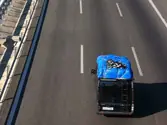
¿Podrá una motocicleta circular por el tercer carril en una autopista?
May a motorcycle use the third lane on a motorway (autopista)?
- ANo.No.
- BSí, si las circunstancias del tráfico o la vía lo aconsejan.Yes, if traffic or road conditions make it advisable.
- CSí, en todo caso.Yes, in all cases.
ExplanationAs a general rule, motorcycles, like any other vehicle, must use the right-hand lane, and they may use the other lanes when traffic or road conditions make it advisable.
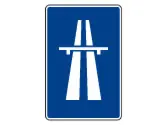
¿Qué vehículos no pueden circular por autopista?
Which vehicles may not use motorways (autopistas)?
- AMotocicletas.Motorcycles.
- BCiclomotores.Mopeds.
- CCamiones de más de 3.500 kg.Lorries of more than 3,500 kg.
ExplanationBicycles, mopeds, vehicles for people with reduced mobility, animal-drawn vehicles, personal mobility vehicles and any vehicle that cannot reach the minimum speed of 60 km/h are prohibited on motorways (autopistas) and dual carriageways (autovías), unless they have express permission. However, cyclists over 14 may ride on the hard shoulders of dual carriageways (autovías), unless this is prohibited by signs for justified road safety reasons. Such a ban will come with a panel showing the alternative route.
Un menor de más de 14 años que circula conduciendo una bicicleta, ¿puede hacerlo por una autovía?
Can a person under 18 but over 14 ride a bicycle on a dual carriageway (autovía)?
- ASí, y también pueden circular por las autopistas.Yes, and they may also ride on motorways (autopistas).
- BNo, está prohibido.No, it is prohibited.
- CSí, excepto que por seguridad, esté prohibido mediante señal.Yes, unless it is prohibited by a sign for safety reasons.
ExplanationCyclists over 14 may ride on the hard shoulder of dual carriageways (autovías), unless this is prohibited for safety reasons by the relevant sign, together with a panel showing the alternative route. They may never ride on motorways (autopistas).
¿Se puede estacionar en la isleta de la autopista?
Can you park on a traffic island on a motorway (autopista)?
- AEstacionar no, pero parar sí.You cannot park, but you can stop.
- BSí.Yes.
- CNo se podrá ni parar ni estacionar.You may neither stop nor park.
ExplanationStopping and parking are prohibited on central reservations, separators, traffic islands and other features that channel traffic.
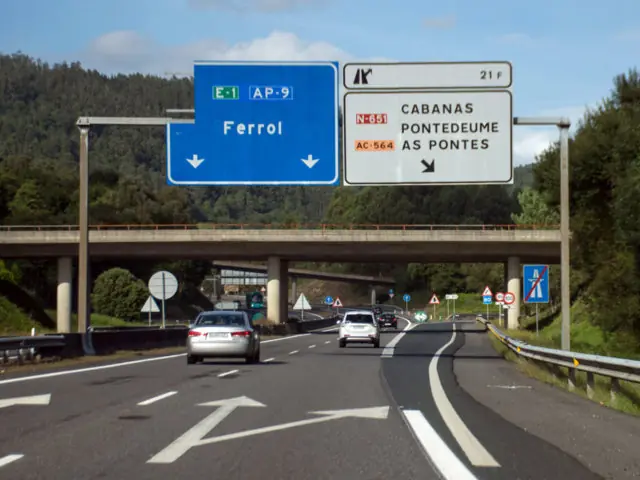
¿Qué se debe hacer al abandonar una autovía?
What should you do when leaving a dual carriageway (autovía)?
- ACircular por el carril de desaceleración lo antes posible.Move into the deceleration lane as soon as possible.
- BContinuar por su carril hasta la salida.Stay in your lane until the exit.
- CReducir la velocidad a 60 kilómetros por hora.Reduce speed to 60 kilometres per hour.
ExplanationTo leave a dual carriageway (autovía), you must signal and move into the deceleration lane as soon as possible, slowing down in it and not in the main lanes, where you would hinder those behind. There is no fixed speed of 60 km/h for leaving the road.
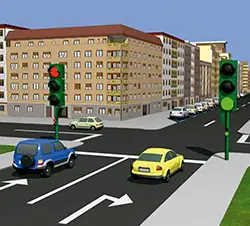
Un conductor se encuentra situado en el carril derecho de esta calzada, ¿puede seguir de frente?
A driver is in the right-hand lane of this carriageway. Can they go straight on?
- ASí; puede girar a la derecha o continuar de frente.Yes; they can turn right or go straight on.
- BSí, porque no existe una señal vertical que prohíba seguir de frente.Yes, because there is no road sign prohibiting going straight on.
- CNo, está obligado a girar a la derecha.No, they must turn right.
ExplanationLane selection arrows painted on the carriageway are compulsory: a driver in the right-hand lane, which is marked with a right-turn arrow, must turn in that direction.
Ud. circula por un carril adicional que se ha habilitado por razones de fluidez. Como norma general, ¿qué obligaciones debe tener en cuenta?
You are driving in an additional lane opened to keep traffic flowing. As a general rule, what obligations must you bear in mind?
- AQue debo circular utilizando la luz de cruce tanto de día como de noche, al menos, y a una velocidad máxima de 80 km/h y mínima de 60.That I must drive with at least the dipped headlights on, day and night, at a maximum speed of 80 km/h and a minimum of 60.
- BQue por dicho carril deben sólo circular turismos y motocicletas.That only cars and motorcycles may use this lane.
- CSolamente que debo utilizar la luz de cruce tanto de día como de noche.Only that I must use the dipped headlights, day and night.
ExplanationIn an additional lane opened for traffic, you must use the dipped headlights both day and night for better visibility and safety. In addition, there is a maximum speed of 80 km/h and a minimum of 60 km/h to keep traffic flowing properly and avoid accidents.
Los camiones con masa máxima autorizada de hasta 3500 Kg, ¿podrán utilizar un carril en sentido contrario al habitual?
May lorries with a maximum authorised mass of up to 3,500 kg use a lane opened in the opposite direction to the usual one?
- ASí, cuando el carril esté abierto por motivo de obras.Yes, when the lane is open because of roadworks.
- BNo, en ningún caso.No, never.
- CSí, siempre.Yes, always.
ExplanationWhen the lane in the opposite direction to the usual one is open to improve traffic flow, lorries may not use it, but they may use it when it is open because of roadworks on the carriageway.
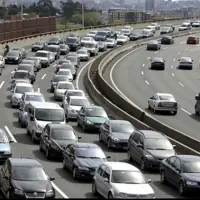
¿En las vías de tres calzadas, por cuál de ellas se suele circular en ambos sentidos?
On roads with three carriageways, which one is usually used for traffic in both directions?
- ACalzada izquierdaLeft carriageway
- BCalzada centralCentre carriageway
- CCalzada derechaRight carriageway
ExplanationOn roads with three carriageways, traffic usually travels in both directions on the centre carriageway and in only one direction on the side carriageways. To know whether a road or carriageway is one-way, the driver must look at the signs.
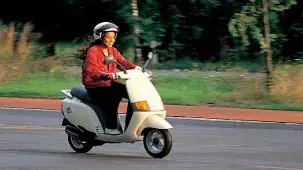
¿Por que carril podré circular con mi ciclomotor cuando circule por una autovía?
Which lane may I use with my moped when riding on a dual carriageway (autovía)?
- APor la derecha.The right-hand lane.
- BPor el arcén.The hard shoulder.
- CPor ninguno.None.
ExplanationArticle 38 of the General Traffic Regulations prohibits mopeds on motorways (autopistas) and dual carriageways (autovías), just as it prohibits bicycles on motorways, animal-drawn vehicles and vehicles for people with reduced mobility. So you may not use any lane or the hard shoulder.
¿Pueden circular dos ciclomotores en paralelo?
May two mopeds ride side by side?
- ASí, si lo hacen por el arcén.Yes, if they ride on the hard shoulder.
- BNo.No.
- CSí, si van en grupo.Yes, if they ride as a group.
ExplanationUnder Article 36.2 of the General Traffic Regulations (RGC) (as worded by RD 518/2026), vehicles that are required to use the hard shoulder, including mopeds, are not allowed to ride side by side. Only bicycles may ride two abreast; the old exception that allowed mopeds to ride two abreast on the hard shoulder no longer exists.
En calzadas de doble sentido de circulación y tres carriles separados por líneas longitudinales discontinuas, ¿podemos circular con nuestra motocicleta por el carril central?
On two-way carriageways with three lanes separated by broken longitudinal lines, may we ride our motorcycle in the centre lane?
- ASí, pero únicamente para adelantar a otros vehículos.Yes, but only to overtake other vehicles.
- BSí, pero únicamente para girar a la izquierda.Yes, but only to turn left.
- CSí, para adelantar o para girar a la izquierda.Yes, to overtake or to turn left.
ExplanationUnder Article 30.1.b of the General Traffic Regulations, on two-way carriageways with three lanes separated by broken markings you drive in the right-hand lane, and the centre lane is used only for necessary overtaking and for turning left.
¿Qué vehículos podrán circular en paralelo?
Which vehicles may travel side by side?
- ALos ciclomotores.Mopeds.
- BLas bicicletas.Bicycles.
- CLos vehículos especiales de menos de 3.500 kg de M.M.A.Special vehicles with a MAM of less than 3,500 kg.
ExplanationUnder Article 36.2 of the General Traffic Regulations (RGC) (as worded by RD 518/2026), vehicles required to use the hard shoulder (mopeds, special vehicles of up to 3,500 kg, etc.) may not travel side by side, except bicycles, which may ride two abreast. They must ride in single file on stretches without visibility, when they affect the flow of traffic, between sunset and sunrise, or when visibility is noticeably reduced.
¿Por qué parte de la carretera deberá circular un ciclomotor?
Which part of the road must a moped use?
- APor la calzada.The carriageway.
- BPor el arcén transitable.The passable hard shoulder.
- CPor donde sea más conveniente.Whichever part is most convenient.
ExplanationA moped must use the lanes or tracks intended specifically for it. If there is none, it must use a passable hard shoulder and, if there is no hard shoulder either, the part of the carriageway that is strictly necessary.
Si no existe una vía, o parte de ella, destinada especialmente a los ciclomotores, estos...
If there is no road, or part of a road, specially set aside for mopeds, they...
- Apueden circular por la autovía.may travel on the dual carriageway (autovía).
- Bpueden circular en columna de dos, usando únicamente la parte imprescindible de la calzada.may ride two abreast, using only the part of the carriageway that is strictly necessary.
- Cdeben circular por el arcén de la carretera, si este fuera transitable y suficiente.must travel on the hard shoulder of the road, if it is driveable and wide enough.
ExplanationAccording to Article 36.1 of the General Traffic Regulations (RGC), if there is no road or part of a road set aside for them, mopeds must use the hard shoulder on their right if it is driveable and wide enough and, if not, the part of the carriageway that is strictly necessary. They may not ride side by side (Article 36.2) or travel on motorways (autopistas) and dual carriageways (autovías) (Article 38.1).
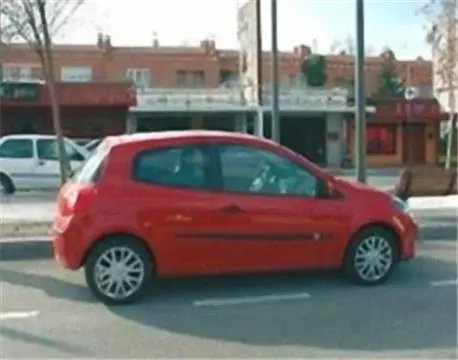
Vehículo es todo aparato...
A vehicle is any device...
- Aapto para circular por las vías públicas.fit to travel on public roads.
- Bque sólo tiene un motor.that only has an engine.
- Cque está en la vía pública.that is on a public road.
ExplanationThe Traffic Law defines a vehicle as any device fit to travel on public roads, with or without an engine: bicycles, mopeds, cars or lorries. It does not depend on whether it is on the road at a given moment.
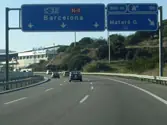
¿Es correcto inmovilizar un vehículo en la mediana de una autovía?
Is it correct to bring a vehicle to a stop on the central reservation of a dual carriageway (autovía)?
- ASi, si se trata de una detención por emergencia y se considera más seguro que hacerlo en el arcén.Yes, if it is an emergency stop and it is considered safer than stopping on the hard shoulder.
- BSi, si dura menos de dos minutos.Yes, if it lasts less than two minutes.
- CSolo cuando no constituya un obstáculo para la circulación.Only when it does not obstruct traffic.
ExplanationIn an emergency stop, such as a breakdown, an accident or feeling unwell, we may stop the vehicle on the central reservation when this is considered clearly safer than stopping on the right-hand hard shoulder.
Un peatón que circule por la calzada o el arcén de una vía fuera de poblado durante la noche deberá ir provisto de...
A pedestrian walking on the carriageway or hard shoulder of a road outside a built-up area at night must carry...
- AUna luz de color blanco o amarillo hacia delante y de color rojo hacia atrás.A white or yellow light facing forwards and a red light facing backwards.
- BUn elemento luminoso retrorreflectante homologado.An approved luminous or retroreflective item.
- CDurante la noche los peatones no pueden circular por la calzada ni por el arcén de las vías interurbanas.At night pedestrians may not walk on the carriageway or the hard shoulder of roads outside built-up areas.
ExplanationOutside built-up areas, at night or in weather conditions that reduce visibility, pedestrians walking on the carriageway or hard shoulder must carry an approved luminous or retroreflective item.

En una autopista urbana, ¿por dónde circularemos?
On an urban motorway (autopista), where shall we drive?
- APor el carril que mejor convenga a nuestro destino.In the lane that best suits our destination.
- BPor el carril de la derecha, normalmente.In the right-hand lane, normally.
- CPor el carril central, normalmente.In the central lane, normally.
ExplanationWhen driving on a motorway, even in a built-up area, we apply the motorway rules on lane use. So we must drive in the right-hand lane and may use the other lanes when traffic or road conditions make it advisable, provided we do not hold up the vehicles behind us.
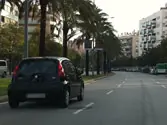
Por una calzada dentro de poblado con tres carriles en el mismo sentido, ¿por qué carril circularemos?
On a carriageway in a built-up area with three lanes in the same direction, which lane should we use?
- APor el que mejor convenga a nuestro destino.The one that best suits our destination.
- BPor el que mejor convenga a nuestro destino, pero solo si los carriles están delimitados.The one that best suits our destination, but only if the lanes are marked out.
- CPor el de la derecha siempre.Always the right-hand lane.
ExplanationIn a built-up area we can use the lane that best suits our destination, as long as the lanes are marked out. If they are not marked out, we must use the right-hand lane.
Circula con su coche por el arcén detrás de un tractor para facilitar que un camión lo adelante. ¿Es correcto?
You are driving your car on the hard shoulder behind a tractor to make it easier for a lorry to overtake you. Is this correct?
- ASí, si el arcén fuera más ancho.Yes, if the hard shoulder were wider.
- BNo.No.
- CSí, pero solo durante el tiempo imprescindible.Yes, but only for as long as strictly necessary.
ExplanationNo. The driver of a motor car must drive on the carriageway and not on the hard shoulder, except for emergencies (Article 30.1 of the General Traffic Regulations). Helping a lorry to overtake is not an emergency: it is enough to stay on the carriageway and leave enough distance from the vehicle in front.
¿Qué vías son más seguras?
Which roads are safer?
- ALas carreteras convencionales.Conventional roads.
- BLas autopistas.Motorways (autopistas).
- CUnas y otras son igualmente seguras.Both are equally safe.
ExplanationMotorways (autopistas) and dual carriageways (autovías) are safer than conventional roads because, among other things, they have no junctions at the same level and their carriageways are one-way.
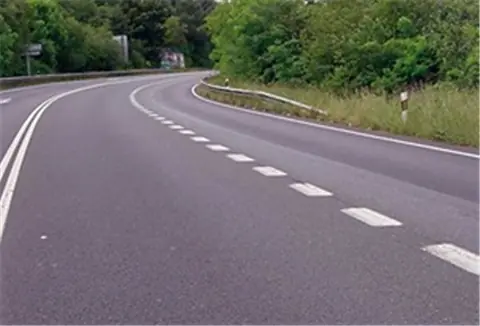
Para el computo de carriles, no se tendrán en cuenta los carriles...
When counting lanes, the following lanes are not taken into account:
- Areversibles.reversible lanes.
- Breservados a determinados vehículos.lanes reserved for certain vehicles.
- Cadicionales.additional lanes.
ExplanationUnder Article 34 of the General Traffic Regulations, when counting the lanes of a carriageway, lanes reserved for certain vehicles, such as bus lanes, and lanes for certain manoeuvres, such as acceleration or deceleration lanes, are not taken into account.
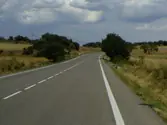
¿Por dónde circulará en una carretera interurbana con un carril de circulación por sentido?
Where must you drive on an interurban road with one lane in each direction?
- APor el carril derecho pegado al eje o la línea central.In the right-hand lane, close to the centre line.
- BLo más cerca posible del borde izquierdo de la calzada.As close as possible to the left-hand edge of the carriageway.
- CLo más cerca posible del borde derecho de la calzada.As close as possible to the right-hand edge of the carriageway.
ExplanationOn an interurban road with only one lane in each direction, the driver must keep as close as possible to the right-hand edge of the carriageway. This rule helps traffic flow and safety, letting other vehicles overtake safely if needed. Keeping to the right also gives vehicles coming up from behind, such as those about to overtake, better visibility and more room to manoeuvre. Keeping away from the centre line is important to avoid collisions with vehicles coming the other way.
Se encuentra un refugio en una vía de sentido único. ¿Por qué lado pasará?
You come to a pedestrian refuge on a one-way road. Which side will you pass it on?
- APor la derecha del refugio.On the right of the refuge.
- BPor la izquierda del refugio.On the left of the refuge.
- CPor cualquiera de los dos lados del refugio.On either side of the refuge.
ExplanationWhen there are refuges, traffic islands or guidance devices on the road, you must drive on the part of the carriageway to their right, in your direction of travel. The exception is when they are on a one-way road, or within the part of the road used by one direction only: then you may pass on either side.
¿Puede circular por un carril VAO un vehículo con 4 personas que arrastre un remolque ligero?
May a vehicle with 4 people on board that is towing a light trailer use an HOV lane (VAO)?
- ASí.Yes.
- BNo.No.
- CSí, si el remolque va vacío.Yes, if the trailer is empty.
ExplanationA vehicle towing a trailer may not use an HOV lane (VAO), even if it meets the occupancy requirement.
Un ciclista que circula por un carril bici tiene prioridad:
A cyclist riding in a cycle lane has priority:
- ASolo sobre peatonesOnly over pedestrians
- BSobre vehículos a motor al cruzar la calzada por paso señalizadoOver motor vehicles when crossing the carriageway at a marked crossing
- CSiempre sobre todos los vehículosAlways, over all vehicles
ExplanationCyclists have right of way when they are riding in a cycle lane that crosses a carriageway at a properly marked crossing.
¿Qué vehículos podrán utilizar el carril reservado para autobuses?
Which vehicles may use the lane reserved for buses?
- ALos autobuses y, en su caso, los demás vehículos cuyo pictograma figure en la señal.Buses and, where applicable, other vehicles whose symbol appears on the sign.
- BLos autobuses y, en todo caso, los taxis.Buses and, in all cases, taxis.
- CTodos los vehículos.All vehicles.
ExplanationThe reserved lane (sign S-51a) is only for the types of vehicle whose symbol appears on the sign. If only the bus appears, only buses use it; taxis or other vehicles may use it only if the sign includes them too.

Un ciclomotor,¿puede circular por el arcén en columna de a dos?
May a moped be ridden two abreast on the hard shoulder?
- ASí, de forma excepcional cuando el arcén sea transitable y suficienteYes, exceptionally, when the hard shoulder is usable and wide enough
- BNo, nuncaNo, never
- CSi, siempreYes, always
ExplanationUnder Article 36.2 of the General Traffic Regulations (as worded by RD 518/2026), vehicles that must use the hard shoulder, including mopeds, are prohibited from riding side by side. Only bicycles may ride two abreast; the old exception that allowed mopeds to ride two abreast on the hard shoulder no longer exists.
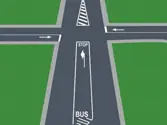
En una calzada con dos sentidos hay un refugio en el centro. ¿Por qué lado está permitido circular?
On a two-way carriageway there is a traffic island (refuge) in the middle. On which side may you drive?
- APor el lado derecho del refugio.To the right of the island.
- BPor cualquiera de ellos, indistintamente.On either side, it makes no difference.
- CPor el lado izquierdo del refugio.To the left of the island.
ExplanationWhen there are refuges, traffic islands or guidance devices on the road, you must drive on the part of the carriageway to their right, in your direction of travel, except when they are on a one-way road or within the part of the road for a single direction. In that case you may pass on either side.
¿En qué circunstancia nos situaremos en el carril de la izquierda para hacer un cambio de dirección a la izquierda?
In what circumstances will we move into the left-hand lane to turn left?
- ACuando la calzada sea de doble sentido.When the carriageway is two-way.
- BCuando la calzada sea de 3 carriles y dos sentidos.When the carriageway has 3 lanes and two directions.
- CCuando la calzada sea de sentido único.When the carriageway is one-way.
ExplanationWe will move into the left-hand lane to turn left when the carriageway is one-way. If the carriageway is two-way, we will move next to the centre of the carriageway or next to the road marking that separates the two directions.
All topics
- Definitions
- Documents and penalty points
- The driver's condition
- Duties of drivers and pedestrians
- Vehicle safety devices
- Vehicle controls and equipment
- Vehicle lights and horn
- Traffic signs, markings and signals
- Speed and distances
- Manoeuvres
- Right of way
- Carrying passengers and loads
- Driving safely in difficult conditions
- Vehicle mechanics and maintenance
- Road accidents and first aid
- Defensive and eco-driving
Independent app: not affiliated with or endorsed by the DGT (Spain's Directorate-General for Traffic) or the Ministry of the Interior. The official exam is booked with the DGT and taken at its test centres. The questions here are practice material; the DGT's official question bank is not public.
Basado en datos de la Agencia Estatal Boletín Oficial del Estado (https://www.boe.es). Textos consolidados de carácter meramente informativo. La AEBOE no patrocina ni respalda este sitio.
Parte de las preguntas procede de los tests de la revista «Tráfico y Seguridad Vial» de la DGT, reproducidos con indicación de la fuente.