
DGT test · 534 questions
The road and its lanes · Page 5 of 11
Carriageway, lanes, hard shoulder and road types: where you drive and how lanes are used on motorways, dual carriageways and streets.
Questions in this topic, with answers
534 questions, 50 per page, with the correct answer and the explanation. Page 5 of 11.
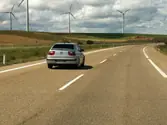
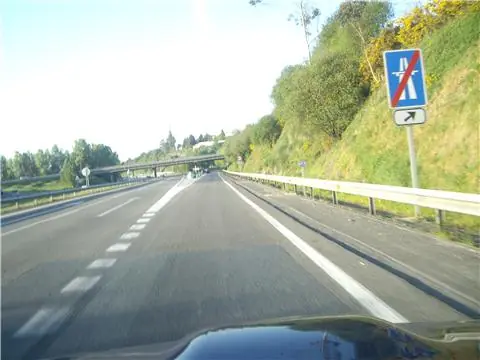
¿El vehículo de la imagen circula correctamente por esta autopista?
Is the vehicle in the picture driving correctly on this motorway (autopista)?
- ASí.Yes.
- BNo.No.
- CSí, porque no le sigue ningún otro vehículo.Yes, because no other vehicle is following it.
ExplanationOn the carriageways of motorways (autopistas) and dual carriageways (autovías) with two or more lanes in the same direction, drivers should normally use the right-hand lane. They may use the other lanes when traffic or road conditions make it advisable, but always without holding up the vehicles behind them. In the picture, we can clearly see that there are no special circumstances for driving on the left, so the vehicle should be in the right-hand lane.
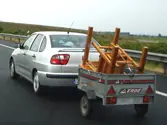
¿Por qué carriles podrá circular un turismo con un remolque fuera de poblado si el conjunto mide más de 7 metros de longitud?
Outside built-up areas, which lanes may a car with a trailer use if the combination is more than 7 metres long?
- APor el que mejor convenga a su destino.The lane that best suits its destination.
- BÚnicamente por el carril de la derecha.Only the right-hand lane.
- CCirculará por el carril de la derecha pudiendo usar el inmediato, cuando las circunstancias de la vía o del tráfico lo aconsejen o para adelantar.The right-hand lane, and it may use the next one when road or traffic conditions make it advisable, or to overtake.
ExplanationCombinations of vehicles more than 7 metres long, on roads with 3 or more lanes in the same direction, should normally use the first lane, and may use the second to overtake or when traffic or road conditions make it advisable; they must never use the third lane.
¿Pueden los ciclistas mayores de 14 años circular por el arcén de una autovía?
May cyclists over 14 ride on the hard shoulder of a dual carriageway (autovía)?
- ASí. Pueden usar el arcén tanto en autovías como en autopistas.Yes. They may use the hard shoulder on both dual carriageways (autovías) and motorways (autopistas).
- BNo. Está prohibido por motivos de seguridad vial.No. It is forbidden for road safety reasons.
- CSí, salvo que señales lo prohíban por motivos de seguridad vial.Yes, unless signs prohibit it for road safety reasons.
ExplanationCyclists over 14 may ride on the hard shoulders of dual carriageways (autovías), unless this is expressly prohibited for road safety reasons with the appropriate signs. This is set out in Article 38 of the General Traffic Regulations, which says that, although bicycles are generally not allowed on motorways (autopistas) and dual carriageways (autovías), they are allowed on the hard shoulders of dual carriageways as long as no sign says otherwise.
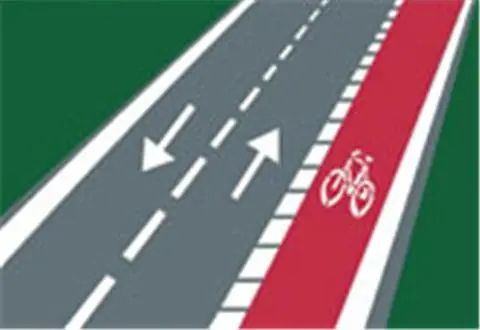
En los carriles reservados para bicicletas está prohibido...
In lanes reserved for bicycles, it is prohibited to...
- Aparar, pero se permite estacionar.stop, but parking is allowed.
- Bestacionar, pero se permite parar.park, but stopping is allowed.
- Cparar y estacionar.stop and park.
ExplanationIn lanes reserved for bicycles, both stopping and parking are prohibited (Article 94 of the General Traffic Regulations (RGC)), because they would force cyclists onto the carriageway and put them in danger. Not even a brief stop is allowed.
En una carretera de tres carriles, el carril derecho está libre. ¿En qué carril debe circular?
On a road with three lanes, the right lane is free. Which lane must you drive in?
- APor el carril izquierdo.The left lane.
- BPor el carril central si la carretera está en un núcleo urbano.The centre lane, if the road is in a built-up area.
- CPor el carril derecho, como norma general.The right lane, as a general rule.
ExplanationOutside built-up areas, on carriageways with several lanes in the same direction, you normally drive in the lane furthest to the right (Article 31.1 of the General Traffic Regulations). The others are used when traffic or road conditions make it advisable; if the right lane is free, you must use it.
Circulando por una vía urbana con más de un carril en el mismo sentido, ¿por dónde circulará el conductor de una motocicleta?
On a road in a built-up area with more than one lane in the same direction, where will a motorcyclist ride?
- APor el carril de la derecha siempre.Always in the right-hand lane.
- BPor el carril que mejor convenga a su destino.In the lane that best suits their destination.
- CPor el carril que mejor convenga a su destino, siempre y cuando los carriles estén delimitados.In the lane that best suits their destination, as long as the lanes are marked.
ExplanationOn a road in a built-up area with more than one lane in the same direction, a motorcycle may use the lane that best suits its destination, as long as the lanes are marked. If they are not, it must keep to the right.
En una calzada de doble sentido, ¿por dónde debe adelantar a un tranvía que circula por el centro?
On a two-way carriageway, on which side must you overtake a tram running in the middle of the road?
- APor la derecha.On the right.
- BPor la izquierda.On the left.
- CTanto por la derecha como por la izquierda.Either on the right or on the left.
ExplanationAs a general rule you overtake on the left, but Article 82.2 of the General Traffic Regulations (RGC) requires that, on roads with traffic in both directions, trams running in the central part of the road be overtaken on the right, if there is enough room and with the greatest care.
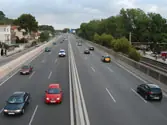
En una carretera de tres carriles en cada sentido, ¿cuándo se puede circular por el carril izquierdo?
On a road with three lanes in each direction, when may you drive in the left-hand lane?
- ASolamente para adelantar.Only to overtake.
- BNunca.Never.
- CCuando los otros carriles estén ocupados y no obstaculice a los vehículos que circulan detrás.When the other lanes are occupied and you do not hold up the vehicles behind you.
ExplanationOutside built-up areas, on carriageways with more than one lane for our direction, we normally drive in the lane furthest to the right, although we may use the others when traffic or road conditions make it advisable, provided we do not hold up the vehicles behind us. With three or more lanes, lorries, vans and special vehicles with a MAM over 3,500 kg, and combinations of vehicles more than 7 metres long, must drive in the right-hand lane; they may exceptionally use the lane next to it, but never the others.
Por una autopista con tres carriles, ¿por qué carril se circulara como norma general?
On a motorway (autopista) with three lanes, which lane shall we use as a general rule?
- APor el que mejor convenga a nuestro destino.The one that best suits our destination.
- BPor el carril de la derecha.The right-hand lane.
- CPor el carril central, pera facilitar las incorporaciones.The central lane, to make joining easier.
ExplanationAs a general rule, we drive in the right-hand lane, and may use the others when traffic or road conditions make it advisable.
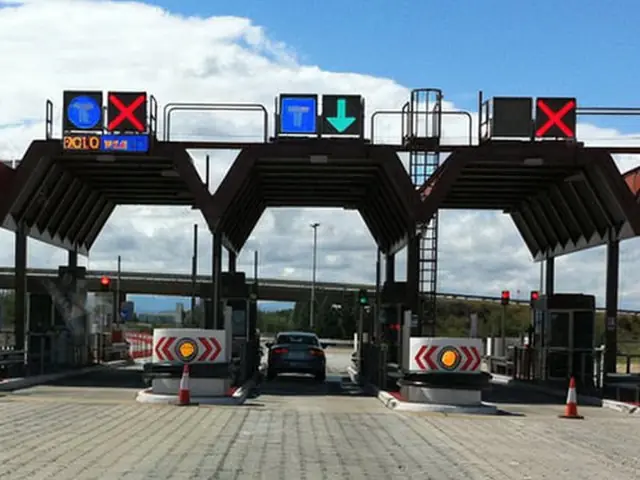
Al llegar a este peaje, ¿por cuáles carriles podemos pasar?
When arriving at this toll, which lanes may we go through?
- APor cualquiera de los tres carriles.Any of the three lanes.
- BSolo por el carril central.Only the centre lane.
- CPor el carril de la derecha.The right-hand lane.
ExplanationOn a toll motorway (autopista), signs may show which lanes are to be used. If only the centre lane may be used, the other lanes are reserved or not available at that moment. It is essential to read and follow the traffic signs in these situations, because they are there to keep traffic flowing safely. Under the General Traffic Regulations, signs showing the specific use of lanes on roads and motorways must be obeyed.
Una 'vía ciclista' es:
A 'cycle route' (vía ciclista) is:
- AUna vía específicamente acondicionada y señalizada para la circulación de ciclos.A road specifically prepared and signposted for cycles.
- BCualquier arcén de una autovía.Any hard shoulder of a dual carriageway (autovía).
- CUna acera cualquiera.Any pavement.
ExplanationA cycle route is designed and signposted for cycles; it includes cycle lanes, cycle tracks on the pavement, separate cycle tracks and cycle paths.

¿Tienen acceso a una autopista las propiedades colindantes?
Do adjoining properties have access to a motorway (autopista)?
- ASi, pero únicamente podrán acceder los vehículos agrícolasYes, but only agricultural vehicles may enter
- BNo, nuncaNo, never
- CSi, pueden acceder a ellas desde su propiedadYes, they can enter it from their property
ExplanationProperties next to a dual carriageway (autovía) have limited access to it; that is, on the dual carriageway there will be a specific lane leading to the adjoining properties. A motorway (autopista), on the other hand, never has access to adjoining properties. So there will be no acceleration or deceleration lane leading to them.
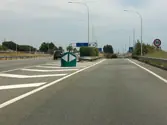
¿Cómo nos incorporaremos a un carril de desaceleración?
How will we move into a deceleration lane?
- ACon la mayor antelación posible.As early as possible.
- BEn el último momento.At the last moment.
- CCuando termine la línea discontinua al final del carril.When the broken line at the end of the lane ends.
ExplanationTo leave a road through the deceleration lane, we must move into it as early as possible, at the start of the lane, and begin to slow down once we are in it.
Los conductores que circulen por un carril reversible deberán...
Drivers using a reversible lane must...
- ALlevar encendida al menos la luz de cruce o de corto alcance.have at least dipped headlights switched on.
- BLlevar encendida al menos la luz de cruce o de corto alcance y circular a una velocidad máxima de 80 km/h.have at least dipped headlights switched on and drive at a maximum speed of 80 km/h.
- CLlevar encendidas las luces de emergencia.have their hazard warning lights switched on.
ExplanationDrivers using a reversible lane must have at least dipped headlights switched on, both by day and by night. The maximum permitted speed is the general one for the road they are on.
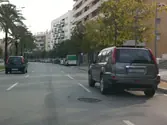
Si circulando por una calzada dentro de poblado con tres carriles para nuestro sentido delimitados por marcas viales, circulamos por el carril de la izquierda, ¿lo hacemos correctamente si queremos girar a la izquierda?
In a built-up area, on a carriageway with three lanes in our direction marked out by road markings, we are in the left-hand lane. Are we doing it correctly if we want to turn left?
- ASí, por ser el carril que más conviene a nuestro destino.Yes, because it is the lane that best suits our destination.
- BNo, debemos circular por el carril de la derecha.No, we must drive in the right-hand lane.
- CPodremos girar a la izquierda desde cualquier carril ya que la calzada es de sentido único.We may turn left from any lane, because the carriageway is one-way.
ExplanationIn this case, as we are in a built-up area and the lanes are marked out, we can use the lane that best suits our destination. If we intend to turn left, the right lane to use is the one on the left of the road. If the lanes are not marked out, we must drive on the right until shortly before the junction, where we move into position to turn left.
La parte de la vía destinada a la circulación de coches es...
The part of the road intended for cars to drive on is...
- Ala calzada.the carriageway.
- Bel arcén.the hard shoulder.
- Cla mediana.the central reservation.
ExplanationThe part of the road intended for cars to drive on is the carriageway, according to the General Traffic Regulations. The carriageway is the part of the road used by vehicles in general, including cars, lorries and buses. The hard shoulder, on the other hand, is the side area intended for emergencies or temporary stopping, and the central reservation is the space that separates the two opposite directions of traffic. So the carriageway is correct, because that is where normal vehicle traffic takes place.
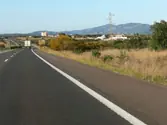
La parte de la vía destinada a la circulación de turismos es...
The part of the road intended for cars to drive on is...
- Ala calzada.the carriageway.
- Bel arcén.the hard shoulder.
- Cla mediana.the central reservation.
ExplanationThe carriageway is the part of the road used by vehicles. It is made up of a number of lanes. The hard shoulder is the part next to the carriageway that is not intended for motor vehicles, except in special cases. The central reservation is the strip running between two carriageways that is not intended for traffic.
¿Podrán las bicicletas circular por una autopista?
May bicycles be ridden on a motorway (autopista)?
- ASí, si el conductor es mayor de 14 años y circula por el arcén.Yes, if the rider is over 14 and rides on the hard shoulder.
- BNo, en ningún caso.No, never.
- CSí, por el carril de la derecha.Yes, in the right-hand lane.
ExplanationA cyclist may never ride on a motorway (autopista).
Circulando por una calzada dentro de poblado con 3 carriles para el mismo sentido, ¿qué carril usaremos?
Driving in a built-up area on a carriageway with 3 lanes in the same direction, which lane will we use?
- AEl que más convenga a nuestro destino.The one that best suits our destination.
- BEl que más convenga a nuestro destino, si están delimitados.The one that best suits our destination, if the lanes are marked.
- CEl de la derecha, salvo para adelantar.The right-hand one, except to overtake.
ExplanationUnder Article 33 of the General Traffic Regulations (RGC), in built-up areas, on carriageways with at least two lanes in the same direction marked by longitudinal lines, you may use the lane that best suits your destination, and must not leave it except to turn, overtake, stop or park.
En una autopista, ¿podemos circular como norma general por el carril izquierdo?
On a motorway (autopista), as a general rule, may we drive in the left-hand lane?
- ASí, si circulamos a la velocidad máxima permitida.Yes, if we are driving at the maximum permitted speed.
- BSí.Yes.
- CNo.No.
ExplanationAs a general rule, we must drive in the right-hand lane. When traffic or road conditions make it advisable, we may use the other lanes in our direction, as long as this does not affect other vehicles coming behind us at a higher speed.
Ud. circula conduciendo su turismo utilizando parte de la calzada y el arcén de una vía fuera de poblado porque se ha habilitado, por motivos de fluidez, un carril adicional circunstancial de circulación. ¿Qué obligación debe cumplir?
You are driving your car using part of the carriageway and the hard shoulder of a road outside built-up areas, because a temporary additional lane has been opened to keep traffic flowing. What rule must you follow?
- ACircular como máximo a 80 kilómetros por hora y como mínimo a 60, como norma general y llevar encendida la luz de cruce tanto de día como de noche, al menos.As a general rule, drive at a maximum of 80 kilometres per hour and a minimum of 60, with at least the dipped headlights on, day and night.
- BSolamente llevar la luz de cruce encendida.Only have the dipped headlights on.
- CNinguna porque no circulo por el carril adicional.None, because I am not driving in the additional lane.
ExplanationWhen you drive in an additional lane opened on the carriageway, you must keep to the speed limits set for it. In this case the maximum speed is 80 kilometres per hour and the minimum is 60 kilometres per hour. You must also have the dipped headlights on, both day and night, to make the vehicle more visible and improve road safety.
No se tienen en cuenta, a efectos de la normal utilización, los carriles...
For the purposes of normal lane use, the following lanes are not taken into account:
- Areversibles.reversible lanes.
- Bespeciales.special lanes.
- Creservados a ciertas maniobras.lanes reserved for certain manoeuvres.
ExplanationWhen counting the lanes of a carriageway and applying the rules on their use, lanes reserved for certain vehicles and lanes for certain manoeuvres, such as acceleration or deceleration lanes, are not taken into account (Article 34 of the General Traffic Regulations).
Si circulamos por una vía de sentido único y encontramos un refugio en el centro de la calzada, ¿por qué lado debemos pasar?
If we are driving on a one-way road and find a pedestrian refuge in the middle of the carriageway, which side should we pass it on?
- APor la derecha.On the right.
- BPor la izquierda.On the left.
- CEs indiferente.It makes no difference.
ExplanationAs a general rule, refuges and traffic islands are passed on the right. But if they are on a one-way road, or within the part of the road used by one direction only, they may be passed on either side, because you do not enter the opposite direction of traffic (Article 43 of the General Traffic Regulations (RGC)).
Al circular por un carril adicional, ¿qué condiciones tendremos que cumplir?
When driving in an additional lane, what conditions must we comply with?
- ASolo utilizar la luz de corto alcance.Only use the dipped headlights.
- BUtilizar la luz de corto alcance y velocidad máxima de 80 km/h y mínima de 60 km/h.Use the dipped headlights and keep to a maximum speed of 80 km/h and a minimum of 60 km/h.
- CCircular como máximo a 80 km/h.Drive at 80 km/h at most.
ExplanationWhen driving in an additional lane, you must use at least the dipped headlights and drive at a maximum speed of 80 km/h and a minimum of 60 km/h.
¿Cuál de estos carriles no se tendrán en cuenta a efectos de la circulación?
Which of these lanes is not counted for traffic purposes?
- ALos carriles reversibles.Reversible lanes.
- BLos carriles adicionales.Additional lanes.
- CLos carriles reservados determinados vehículos.Lanes reserved for certain vehicles.
ExplanationLanes reserved for certain vehicles or for certain manoeuvres are not counted when counting lanes.
¿Cómo nos incorporaremos a una vía circulando por un carril de aceleración?
How will we join a road from an acceleration lane?
- AAcelerando, puesto que gozamos de prioridad de paso.By accelerating, because we have right of way.
- BCerciorándonos al principio del carril de que podemos incorporarnos sin peligro.By making sure at the start of the lane that we can join safely.
- CCerciorándonos al final del carril de aceleración de que podemos hacerlo sin peligro.By making sure at the end of the acceleration lane that we can join safely.
ExplanationTo join from an acceleration lane, we must make sure at the start of the lane that we can do so safely, stopping at the start of the lane if necessary. Then we accelerate to reach a suitable speed at the end of the acceleration lane and join the carriageway.
Si circulamos con nuestra motocicleta, por una vía de poblado con dos carriles para el mismo sentido, sin estar delimitados, ¿por dónde tenemos que circular?
If you are riding your motorcycle on a road in a built-up area with two lanes in the same direction that are not marked, where must you ride?
- APor la derecha.On the right.
- BPor la izquierda.On the left.
- CPor el que mejor convenga a nuestro destino.In whichever lane best suits your destination.
ExplanationAccording to the rules, on a road in a built-up area with two lanes in the same direction that are not marked, you must ride on the right. When there are no lines separating the lanes, you must travel as close as possible to the right-hand edge of the carriageway. Remember that it is important to follow the traffic rules for road safety.

Circulando por una autopista situada dentro de poblado, ¿qué carril usaremos?
Driving on a motorway (autopista) located in a built-up area, which lane will we use?
- AEl carril que más convenga a nuestro destino por ser dentro de poblado.The lane that best suits our destination, because it is in a built-up area.
- BEl carril de la derecha normalmente.Normally the right-hand lane.
- CEl carril central para facilitar las incorporaciones.The centre lane, to make it easier for others to join.
ExplanationEven though the road is in a built-up area, we apply the general rules for driving on a motorway (autopista) or dual carriageway (autovía) outside built-up areas. So we normally drive in the right-hand lane, and may use the other lanes when road conditions make it advisable.
Si no existe una vía o una parte de ella destinada específicamente a ellos, circularán por el arcén...
If there is no road, or part of a road, specifically intended for them, the following must use the hard shoulder:
- Alos coches con remolque.cars towing a trailer.
- Blos vehículos de personas con movilidad reducida.vehicles for people with reduced mobility.
- Ccualquier vehículo en condiciones de tráfico denso.any vehicle in heavy traffic.
ExplanationUnder Article 36.1 of the General Traffic Regulations, vehicles for people with reduced mobility, like cycles, mopeds or special vehicles of up to 3,500 kg, must use the hard shoulder on their right if there is no special road or lane for them and the hard shoulder is usable; if it is not, they must use only the part of the carriageway that is strictly necessary.
¿Puede un coche con remolque circular por un carril que esté abierto en sentido contrario?
May a car towing a trailer use a lane opened in the opposite direction to normal?
- ASí, siempre.Yes, always.
- BSí, cuando se haya abierto para mejorar la fluidez del tráfico.Yes, when it has been opened to improve traffic flow.
- CSí, cuando se haya abierto por obras en la calzada.Yes, when it has been opened because of roadworks on the carriageway.
ExplanationUnder Article 41 of the General Traffic Regulations, lanes opened in the opposite direction to improve traffic flow may only be used by motorcycles and cars, not by cars towing a trailer. If they are opened because of roadworks on the carriageway, all vehicles allowed on that road may use them, unless expressly prohibited.
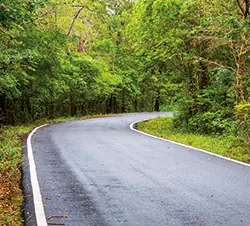
En calzadas con doble sentido de circulación y dos carriles sin delimitar por marcas viales, ¿por dónde se debe de circular?
On two-way carriageways with two lanes that are not marked by road markings, where must you drive?
- APor el centro de la calzada.In the centre of the carriageway.
- BPor el carril derecho.In the right lane.
- CPor cualquiera de los dos carriles si no vienen vehículos en sentido contrario.In either of the two lanes if no vehicles are coming the other way.
ExplanationThe general rule of driving on the right applies: even if the lanes are not marked, you must drive in the right lane, leaving the rest of the carriageway free for the opposite direction and for overtaking.
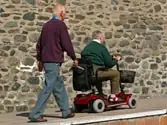
¿Están obligados a circular por el arcén Los vehículos para personas de movilidad reducida?
Must vehicles for people with reduced mobility travel on the hard shoulder?
- ANo, pero pueden circular por el arcén cuando lo crean conveniente.No, but they may use the hard shoulder when they think it is appropriate.
- BSí, en el caso de que no exista vía o parte de la misma que les esté especialmente destinada.Yes, if there is no road or part of a road specially intended for them.
- CNo, dependerá de las indicaciones de los agentes y del tipo de vía.No, it will depend on the traffic officers' instructions and the type of road.
ExplanationAccording to Article 36.1 of the General Traffic Regulations (RGC), as worded by Royal Decree 518/2026, when there is no road or part of a road specially intended for them, vehicles for people with reduced mobility will travel on the hard shoulder on their right if it is usable and wide enough. If it is not, they will use only as much of the carriageway as they need.
¿Está permitida la circulación de ciclomotores por autovías y autopistas?
Are mopeds allowed on dual carriageways (autovías) and motorways (autopistas)?
- ASí, pero sólo por autopistas.Yes, but only on motorways.
- BSí, pero sólo por autovías.Yes, but only on dual carriageways.
- CNo, está prohibido circular por ambas vías.No, they are not allowed on either.
ExplanationArticle 38.1 of the General Traffic Regulations prohibits animal-drawn vehicles, bicycles, mopeds and vehicles for people with reduced mobility on motorways (autopistas) and dual carriageways (autovías). A moped does have an engine, but its maximum speed of 45 km/h is not compatible with these roads.

Cuando los motoristas circulan en grupos grandes...
When motorcyclists ride in large groups...
- Apueden ir todos juntos y ocupar toda la calzada.they may all ride together and occupy the whole carriageway.
- Bdeben circular muy juntos, para que puedan ser adelantados con facilidad por otros vehículos.they must ride very close together, so that other vehicles can overtake them easily.
- Cno deben ir todos juntos, sino divididos en subgrupos distanciados entre sí.they should not all ride together, but split into subgroups spaced apart from each other.
ExplanationWhen a large number of motorcycles ride together, they must split into subgroups of 3 or 4 spaced apart, so that other vehicles can overtake them more easily and safely. They must not ride side by side but one behind the other, slightly staggered to give those behind a better view ahead.
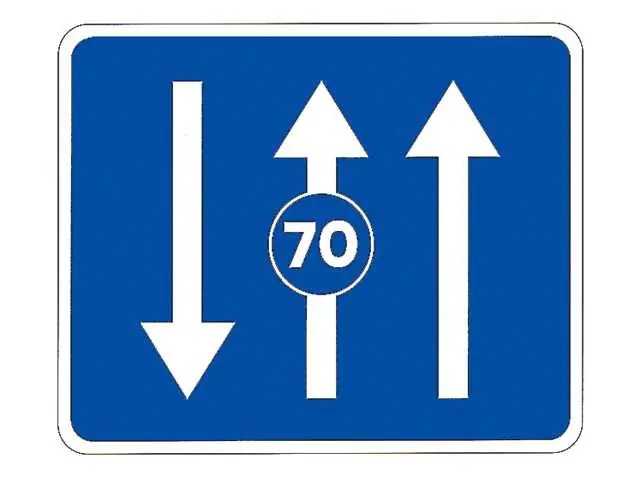
¿Es obligatorio circular por el carril de la derecha?
Is it compulsory to drive in the right-hand lane?
- ASolo cuando circules a menos de 70 kilómetros por hora.Only when you are driving at less than 70 kilometres per hour.
- BSí. Cuando sea posible.Yes. When possible.
- CNo. El carril de la derecha es especial para vehículos lentos.No. The right-hand lane is a special lane for slow vehicles.
ExplanationAs a general rule, you drive on the right and, on carriageways with several lanes in the same direction outside built-up areas, in the lane furthest to the right. The other lanes may be used when traffic makes it advisable, for example to overtake, without hindering those behind.
Dentro de poblado, en una vía de tres carriles para el mismo sentido y delimitados por marcas viales, ¿circular por el carril de la izquierda es correcto?
In a built-up area, on a road with three lanes in the same direction marked by road markings, is it correct to drive in the left-hand lane?
- ANo, deberemos circular por la derecha.No, we must drive on the right.
- BSí, si es el que mejor conviene a nuestro destino.Yes, if it is the one that best suits our destination.
- CDeberemos circular sólo por el derecho o por el central.We must drive only in the right-hand or centre lane.
ExplanationIn built-up areas, if there is more than one lane in the same direction and they are marked by road markings, you may drive in the lane that best suits your destination. It is not necessary to drive in the right-hand lane. If the lanes are not marked by longitudinal lines, there are considered to be as many lanes as motor cars (other than motorcycles) can fit side by side. In that case, we must drive in the right-hand lane.
Para salir de una autovía por el carril de desaceleración, debe colocarse con suficiente antelación en el carril...
To leave a dual carriageway (autovía) by the deceleration lane, you must move in good time into the lane...
- Aa la izquierda.on the left.
- Ba la derecha.on the right.
- Clo más cerca posible de la salida.closest to the exit.
ExplanationTo leave a dual carriageway, Article 77 of the General Traffic Regulations states that drivers must move in good time into the lane closest to the exit and move into the deceleration lane as early as possible. This ensures a safe and smooth transition and reduces the risk of collisions and obstruction on the main road. So it is correct to position yourself in the 'lane closest to the exit' before entering the deceleration lane.
En zona urbana, las personas que empujen un ciclomotor por la calzada o el arcén deben circular...
In an urban area, people pushing a moped along the carriageway or hard shoulder must keep...
- Apor la derechato the right
- Bpor cualquiera de los dos ladosto either side
- Cpor la izquierdato the left
ExplanationOn urban roads, people pushing a moped along the carriageway or hard shoulder must keep to the right-hand side. This is set out in the General Traffic Regulations (RGC), which state that people pushing or pulling a moped must follow this rule for the safety of both pedestrians and vehicles. Keeping to the right helps organise traffic better and reduces the risk of accidents.
Un conjunto de vehículos que mida más de 7 metros de longitud, ¿podrá utilizar el tercer carril en una autopista?
May a combination of vehicles more than 7 metres long use the third lane on a motorway (autopista)?
- ASi, cuando las circunstancias lo aconsejen.Yes, when circumstances make it advisable.
- BNo.No.
- CSolo lo podrá utilizar para efectuar adelantamientos.Only to overtake.
ExplanationWhen the carriageway has three or more lanes in their direction, combinations of vehicles more than 7 metres long must normally drive in the lane furthest to the right. They may use the next lane when traffic or road conditions make it advisable, as long as they do not obstruct vehicles behind them. They may not use the third lane.
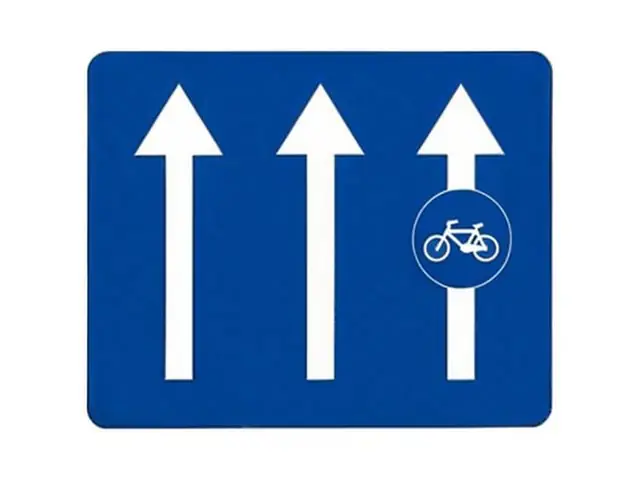
¿Puede un coche circular por el carril de la derecha?
May a car use the right-hand lane?
- ASí, los coches pueden usarlo igual que las bicicletas.Yes, cars may use it just like bicycles.
- BNo.No.
- CSí, si no hay ninguna bicicleta usando ese carril.Yes, if no bicycle is using that lane.
ExplanationThe sign shows that the right-hand lane is reserved for bicycles. A cycle lane is a cycle route intended for cycles, and other vehicles may only use it if the authority allows it and signposts it. A car may not drive in it, even if there are no cyclists at that moment.
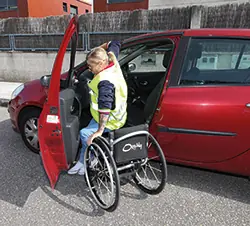
Los vehículos para personas con movilidad reducida, si no existe vía o parte de ella que les esté especialmente destinada...
Vehicles for people with reduced mobility, if there is no road or part of the road specially intended for them...
- Adeben circular por el arcén, siempre que sea transitable y suficiente.must use the hard shoulder, as long as it is usable and wide enough.
- Bpueden circular por autopista.may use motorways (autopistas).
- Cpueden circular por autovía.may use dual carriageways (autovías).
ExplanationUnder Article 36 of the General Traffic Regulations, vehicles for people with reduced mobility, if they have no road of their own, use the right-hand hard shoulder if it is usable and wide enough; if not, they use only the part of the carriageway that is strictly necessary. They may not use motorways (autopistas) or dual carriageways (autovías).
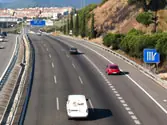
Como norma general, ¿es obligatorio circular por el carril derecho en las autopistas y autovías?
As a general rule, is it compulsory to drive in the right-hand lane on motorways (autopistas) and dual carriageways (autovías)?
- ANo, porque disponen de más de un carril por sentido.No, because they have more than one lane in each direction.
- BEn las autopistas, sí; en las autovías, no.On motorways, yes; on dual carriageways, no.
- CSí, en ambas vías.Yes, on both types of road.
ExplanationOn motorways (autopistas) and dual carriageways (autovías), you must drive in the right-hand lane as a general rule, except when overtaking or in specific situations that require it. This applies to both types of road, even though they have more than one lane in each direction. The centre or left-hand lanes should be used only for overtaking or when heavy traffic makes it necessary. Keeping to the right-hand lane helps traffic flow more smoothly and safely, and it is a legal obligation so as not to obstruct other vehicles.
En una calzada con doble sentido de circulación y tres carriles separados por marcas longitudinales discontinuas, ¿qué carril utilizaremos para cambiar de dirección hacia la izquierda?
On a two-way carriageway with three lanes separated by broken longitudinal lines, which lane shall we use to turn left?
- AEl carril situado más a la izquierda.The lane furthest to the left.
- BEl carril central.The central lane.
- CEn este tipo de calzadas está prohibido cambiar de dirección hacia la izquierda.Turning left is prohibited on this type of carriageway.
ExplanationOn two-way carriageways with three lanes separated by broken longitudinal lines, we drive on the right and never in the lane furthest to the left. The central lane is used for overtaking and for turning left.
El conductor de una bicicleta circulará por...
The rider of a bicycle will ride on...
- ALa calzada.The carriageway.
- BEl arcén.The hard shoulder.
- CLa parte de la vía que le esté especialmente destinada.The part of the road specially intended for them.
ExplanationBicycles must use the part of the road specially intended for them. If there is none, they must ride on the hard shoulder, and if it is not passable, on the smallest possible part of the carriageway.
Un ciclista si circula por el arcén de una autopista, ¿circulará correctamente?
If a cyclist rides on the hard shoulder of a motorway (autopista), are they riding correctly?
- ASí.Yes.
- BNo.No.
- CSí, si es mayor de 14 años.Yes, if they are over 14.
ExplanationBicycles are prohibited on motorways (autopistas). Only on dual carriageways (autovías) may cyclists over 14 ride, and always on the hard shoulder, unless a sign prohibits it (Article 38.1 of the General Traffic Regulations).
Circulando por una autopista urbana, ¿por qué carril debemos circular?
Driving on an urban motorway (autopista), which lane must we use?
- APor el carril que mejor convenga a nuestro destino.The lane that best suits our destination.
- BPor el carril de la derecha, como norma general.The right-hand lane, as a general rule.
- CSólo por el primer y segundo carril, nunca por el tercero.Only the first and second lanes, never the third.
ExplanationOn an urban motorway, that is, a motorway in a built-up area, we apply the general rules as if it were outside a built-up area: we keep to the right and may use the other lanes when traffic or road conditions make it advisable.
Si se le pincha una rueda mientras conduce, ¿qué debe hacer?
If you get a puncture while driving, what should you do?
- ASeguir circulando hasta el taller más cercano.Keep driving to the nearest garage.
- BDetener inmediatamente el vehículo fuera de la calzada o en un lugar seguro.Stop the vehicle immediately off the carriageway or in a safe place.
- CDetener el vehículo en cualquier lugar y abandonarlo de forma inmediata.Stop the vehicle anywhere and leave it straight away.
ExplanationWith a punctured tyre you cannot keep driving safely. You must stop as soon as possible off the carriageway or where it causes the least obstruction, signal the vehicle's presence and not abandon it just anywhere (Article 130 of the General Traffic Regulations).
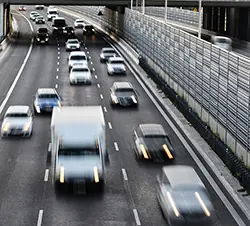
Si conduce una motocicleta por una autovía con tres o más carriles, ¿le está permitido circular por el carril situado más a la izquierda?
If you are riding a motorcycle on a dual carriageway (autovía) with three or more lanes, are you allowed to use the lane furthest to the left?
- ASí, cuando las circunstancias del tráfico o la vía lo aconsejen.Yes, when traffic or road conditions make it advisable.
- BSolo cuando la circulación se encuentre saturada.Only when traffic is congested.
- CNo, solo puede utilizar los carriles derecho y central.No, you may only use the right-hand and centre lanes.
ExplanationOutside built-up areas, on carriageways with several lanes in the same direction, you normally drive in the right-hand lane, but you may use the others when traffic or road conditions make it advisable, without obstructing those behind you (Article 31 of the General Traffic Regulations). This applies equally to motorcycles and cars.
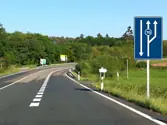
En la vía de la fotografía, ¿qué carril debe utilizar para circular, como norma general?
On the road in the photograph, which lane should you use as a general rule?
- AEl carril situado más a la derecha.The lane furthest to the right.
- BCualquiera de los carriles de mi sentido de la marcha.Any of the lanes in my direction of travel.
- CEl carril central, siempre que mi velocidad sea igual o superior a la indicada en la señal.The centre lane, as long as my speed is equal to or higher than the one shown on the sign.
ExplanationThe sign in the question means that the lane or lanes it is placed over, showing a minimum speed, may only be used by vehicles travelling at that speed or faster. However, if circumstances allow, you must drive in the right-hand lane.
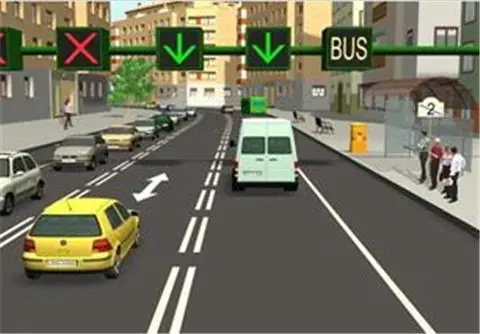
El conductor del turismo amarillo...
The driver of the yellow car...
- Ano puede utilizar el carril por el que circula.may not use the lane they are driving in.
- Bdebe llevar al menos dos ocupantes para utilizar el carril por el circula.must have at least two occupants to use the lane they are driving in.
- Ccircula por un carril reversible.is driving in a reversible lane.
ExplanationThe yellow car is driving in a reversible lane, marked on both sides by double broken lines and controlled by lane traffic lights. It may use the lane as long as it sees the green arrow, with at least the dipped headlights on.
All topics
- Definitions
- Documents and penalty points
- The driver's condition
- Duties of drivers and pedestrians
- Vehicle safety devices
- Vehicle controls and equipment
- Vehicle lights and horn
- Traffic signs, markings and signals
- Speed and distances
- Manoeuvres
- Right of way
- Carrying passengers and loads
- Driving safely in difficult conditions
- Vehicle mechanics and maintenance
- Road accidents and first aid
- Defensive and eco-driving
Independent app: not affiliated with or endorsed by the DGT (Spain's Directorate-General for Traffic) or the Ministry of the Interior. The official exam is booked with the DGT and taken at its test centres. The questions here are practice material; the DGT's official question bank is not public.
Basado en datos de la Agencia Estatal Boletín Oficial del Estado (https://www.boe.es). Textos consolidados de carácter meramente informativo. La AEBOE no patrocina ni respalda este sitio.
Parte de las preguntas procede de los tests de la revista «Tráfico y Seguridad Vial» de la DGT, reproducidos con indicación de la fuente.