
DGT test · 534 questions
The road and its lanes · Page 7 of 11
Carriageway, lanes, hard shoulder and road types: where you drive and how lanes are used on motorways, dual carriageways and streets.
Questions in this topic, with answers
534 questions, 50 per page, with the correct answer and the explanation. Page 7 of 11.
En la calzada hay ciclistas circulando, ¿qué debemos tener en cuenta?
There are cyclists riding on the carriageway. What should we bear in mind?
- AAdelantarlos rápidamente para evitar el peligro.Overtake them quickly to avoid danger.
- BQue el ciclista forma parte de los grupos vulnerables del tráfico.That cyclists are one of the vulnerable groups in traffic.
- CQue no pueden circular por la calzada, han de hacerlo siempre por el arcén.That they cannot ride on the carriageway; they must always use the hard shoulder.
ExplanationIn traffic there are certain groups of people who, because of their characteristics, are more likely to be involved in crashes. Cyclists are one of them.
¿Por qué carril debe circular un turismo con un remolque ligero de menos de 7 metros?
Which lane should a car towing a light trailer less than 7 metres long use?
- APor cualquiera de los dos carriles de la izquierda, porque esa sería la velocidad máxima a la que puede circular.Either of the two left-hand lanes, because that would be the maximum speed at which it may travel.
- BPor el carril de la derecha; no obstante, puede circular por cualquiera de los tres.The right-hand lane; however, it may use any of the three.
- CPor el carril de la derecha, porque es el único permitido para remolques.The right-hand lane, because it is the only one allowed for trailers.
ExplanationOutside built-up areas you normally drive in the right-hand lane, and you may use the others when traffic makes it advisable (Article 31.1 of the General Traffic Regulations (RGC)). Only vehicle combinations over 7 metres long are limited to the right-hand lane and the one next to it on carriageways with three or more lanes (Article 31.2).
Cuando circule por calzadas de poblados con al menos dos carriles reservados para el mismo sentido y delimitados por marcas longitudinales, ¿por dónde circulará un camión con MMA superior a 3.500 kg?
On carriageways in built-up areas with at least two lanes reserved for the same direction and marked by longitudinal lines, where must a lorry with an MAM over 3,500 kg travel?
- APor el carril de su derecha, pudiendo utilizar el contiguo para adelantar.In the right-hand lane, and it may use the next lane to overtake.
- BPor el carril de su derecha.In the right-hand lane.
- CPor el carril que mejor convenga a su destino.In the lane that best suits its destination.
ExplanationOn carriageways in built-up areas with at least two lanes reserved for the same direction and marked by longitudinal lines, drivers of lorries with a maximum authorised mass over 3,500 kg may use the lane that best suits their destination. However, they must not leave that lane except to get ready to change direction, overtake, stop or park.
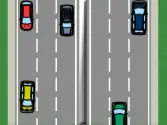
¿Qué carril o carriles podrá utilizar, conduciendo un turismo con remoque cuya longitud total es de 10 m, en una autovía con tres carriles para cada sentido?
Driving a car with a trailer 10 m long in total, which lane or lanes may you use on a dual carriageway (autovía) with three lanes in each direction?
- AEl derecho y el inmediato, para adelantar.The right-hand lane, and the next one to overtake.
- BEl derecho exclusivamente.Only the right-hand lane.
- CEl derecho y el resto para adelantar.The right-hand lane, and the others to overtake.
ExplanationGoods vehicles with a MAM of more than 3500 kg and combinations of vehicles more than 7 m long in total, on interurban roads with more than two lanes in each direction, may only use the right-hand lane, and the next one to overtake; they may not use the third lane or any further lanes.
En una calzada con un arcén transitable y con espacio suficiente, ¿por dónde debe circular un vehículo que acompaña a ciclistas?
On a carriageway with a driveable hard shoulder that is wide enough, where must a vehicle accompanying cyclists travel?
- APor el arcén.On the hard shoulder.
- BPor el centro de la calzada.In the middle of the carriageway.
- CPor el carril derecho para proteger a los ciclistas.In the right-hand lane to protect the cyclists.
ExplanationAccording to Article 36.1 of the General Traffic Regulations (RGC), vehicles following cyclists must use the hard shoulder on their right if it is driveable and wide enough and, if not, the part of the carriageway that is strictly necessary.
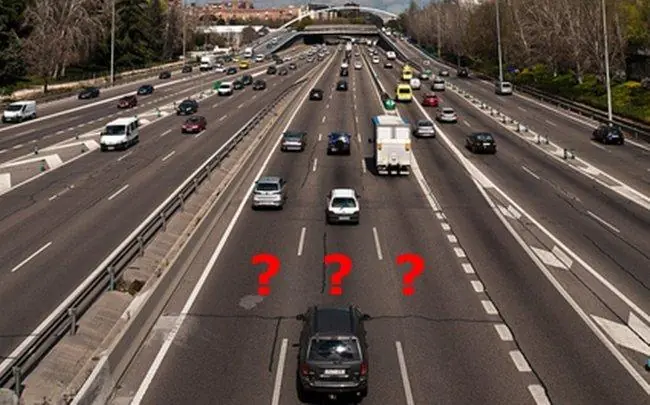
Su turismo con remolque mide 7 metros, ¿puede utilizar el tercer carril (izquierdo) de esta calzada de la autopista?
Your car and trailer together are 7 metres long. May you use the third (left-hand) lane of this motorway carriageway?
- ASí, porque no supera los 7 metros.Yes, because it is not more than 7 metres long.
- BNo, porque debe circular por el de la derecha pudiendo utilizar sólo el contiguo si las circustancias lo aconsejan.No, because it must use the right-hand lane, and may only use the next lane if circumstances make it advisable.
- CNo, porque supera los 6 metros de longitud.No, because it is more than 6 metres long.
ExplanationOn carriageways with three or more lanes in each direction, only vehicle combinations more than seven metres long must normally use the right-hand lane, and they may use the next lane. A car with a trailer 7 metres long does not exceed that limit and may use the left-hand lane like any other car (Article 31.2 of the General Traffic Regulations, as worded by RD 518/2026).
¿Por dónde circularán los vehículos especiales de menos de 3.500 kg de MMA en las vías fuera de poblado cuando exista arcén?
Where must special vehicles with an MAM under 3,500 kg travel on roads outside built-up areas when there is a hard shoulder?
- APor el centro del carril.In the centre of the lane.
- BPor el arcén de su izquierda si es transitable.On the hard shoulder on their left, if it is usable.
- CPor el arcén de su derecha si es transitable.On the hard shoulder on their right, if it is usable.
ExplanationAccording to Article 36.1 of the General Traffic Regulations, special vehicles with an MAM of no more than 3,500 kg, like cycles, mopeds or animal-drawn vehicles, travel on the hard shoulder on their right if it is usable and wide enough; if not, they use only the part of the carriageway that they need.
En una autopista o autovía, ¿se puede utilizar la mediana en algún caso?
On a motorway (autopista) or dual carriageway (autovía), may the central reservation be used in any case?
- ANo, nunca.No, never.
- BSí, para inmovilizar el vehículo por emergencia cuando no es posible hacerlo en el arcén de la derecha.Yes, to stop the vehicle in an emergency when it is not possible to do so on the right-hand hard shoulder.
- CSí, para adelantar cuando los carriles estén ocupados.Yes, to overtake when the lanes are occupied.
ExplanationThe central reservation is not for traffic, but in an emergency, if it is impossible to stop the vehicle on the right-hand hard shoulder, you may stop there as a last resort. It may never be used to overtake.
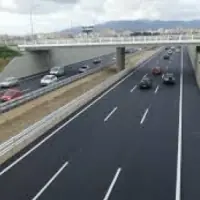
¿Se consideran más seguras las autopistas y las autovías que las carreteras convencionales?
Are motorways (autopistas) and dual carriageways (autovías) considered safer than conventional roads?
- ASí.Yes.
- BNo, porque hay más tráfico.No, because there is more traffic.
- CNo, porque se circula a mayor velocidad.No, because speeds are higher.
ExplanationAs a general rule, driving on motorways and dual carriageways is considered safer than on conventional roads, because the carriageways for each direction are separated. This makes head-on or side collisions less likely, since vehicles travelling in opposite directions do not meet head-on.
Si, debido a una avería, un turismo circula por una autopista a una velocidad anormalmente reducida, ¿por dónde debe circular?
If, because of a breakdown, a car is travelling on a motorway (autopista) at an abnormally low speed, where must it drive?
- APor el carril derecho y, si dificulta mucho la circulación, debe circular por el arcén.In the right-hand lane and, if it greatly obstructs traffic, it must drive on the hard shoulder.
- BPor el arcén para no obstaculizar la circulación.On the hard shoulder, so as not to obstruct traffic.
- CPor el carril derecho, siempre.In the right-hand lane, always.
ExplanationVehicles of up to 3,500 kg that, because of an emergency such as a breakdown, are travelling at an abnormally low speed and seriously disrupting traffic must use the right-hand hard shoulder if it is passable and wide enough (Article 36.1 of the General Traffic Regulations, RGC). If they are not disrupting traffic, they stay in the right-hand lane.
En una autopista situada dentro de poblado, ¿por qué carril circularemos?
On a motorway (autopista) located in a built-up area, which lane shall we use?
- APor el que mejor convenga a nuestro destino.The one that best suits our destination.
- BPor el de la derecha.The right-hand one.
- CIndistintamente por cualquiera de ellos.Any of them, it makes no difference.
ExplanationOn a motorway in a built-up area, we apply the same traffic rules as if it were outside a built-up area. So, under the general rule, we must drive on the right, not in the lane that best suits our destination.

El carril de la derecha es...
The right-hand lane is...
- AUn carril de vehículos lentos.A lane for slow vehicles.
- BUn carril especial.A special lane.
- CUn carril reversible.A reversible lane.
ExplanationWhen the road marking is noticeably wider than usual, it indicates a special lane, that is, a lane intended for certain vehicles, for entering, for exiting, etc.
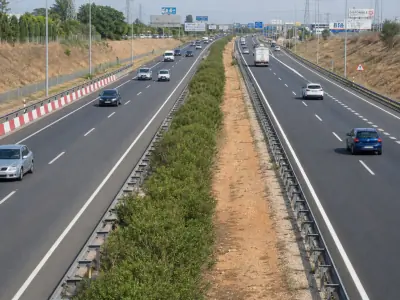
En una autopista, ¿está permitido utilizar los pasos que existen en la mediana para realizar un cambio del sentido de la marcha?
On a motorway (autopista), may you use the gaps in the central reservation to make a U-turn?
- ASí, cuando estén abiertos.Yes, when they are open.
- BSí, salvo que esté expresamente prohibido por una señal.Yes, unless a sign expressly forbids it.
- CNo, porque está prohibido.No, because it is forbidden.
ExplanationOn motorways (autopistas) and dual carriageways (autovías), a U-turn may only be made at places specially provided for it (U-turns on a different level). Using the central reservation to make one is forbidden.
¿Pueden los ciclistas circular por el arcén de las autopistas?
Can cyclists ride on the hard shoulder of motorways (autopistas)?
- ANo, en ningún caso.No, under no circumstances.
- BSí, cuando tengan más de 14 años.Yes, when they are over 14 years old.
- CSí, siempre.Yes, always.
ExplanationArticle 38.1 of the General Traffic Regulations (RGC) prohibits bicycles on motorways (autopistas) and dual carriageways (autovías). It only allows cyclists over 14 years old to use the hard shoulders of dual carriageways (autovías), unless prohibited by signs; on motorways (autopistas) there is no exception.
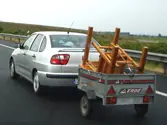
¿Podrá un turismo con remolque circular por un carril habilitado en sentido contrario al habitual?
May a car with a trailer use a lane opened in the opposite direction to usual?
- ANo, en ningún caso.No, never.
- BSí, si es por obras.Yes, if it is because of roadworks.
- CSi, si es por fluidez.Yes, if it is to keep traffic flowing.
ExplanationA car with a trailer may use a lane opened in the opposite direction to usual if it has been opened because of roadworks. If it has been opened to keep traffic flowing, the car may not use it.

¿Las bicicletas podrán circular en posición paralela?
May bicycles ride next to each other?
- ANo, en ningún caso.No, never.
- BSí, pero únicamente por el arcén.Yes, but only on the hard shoulder.
- CSí, tanto por la calzada como por el arcén.Yes, both on the carriageway and on the hard shoulder.
ExplanationUnder Article 36.2 of the General Traffic Regulations (RGC) (as worded by RD 518/2026), bicycles may ride two abreast on the hard shoulder and, if there is none or it is not passable and wide enough, on the part of the carriageway that is strictly necessary. They must ride in single file on stretches without visibility, when they affect the flow of traffic, between sunset and sunrise, or in conditions that noticeably reduce visibility.
¿Qué vehículos pueden usar un carril habilitado en sentido contrario para mejorar la fluidez?
Which vehicles may use a lane opened in the opposite direction to improve traffic flow?
- ACoches y vehículos con remolque de hasta 750 kg de MMA.Cars, and vehicles with a trailer with a MAM of up to 750 kg.
- BVehículos de más de 3.500 kg de MMA y motocicletas.Vehicles with a MAM of more than 3,500 kg, and motorcycles.
- CSólo turismos y motocicletas.Only cars and motorcycles.
ExplanationUnder Article 41.1 of the General Traffic Regulations, lanes opened in the opposite direction to the usual one may only be used by motorcycles and cars; they are prohibited for all other vehicles, including cars with a trailer, whatever the trailer's mass.
¿Puede circular una furgoneta por un carril adicional?
May a van use an additional lane?
- ASí, siempre.Yes, always.
- BNo, nuncaNo, never
- CSí, siempre que lleve encendida la luz de corto alcance.Yes, as long as it has its dipped headlights on.
ExplanationAny vehicle allowed on the road, including a van, may use a temporary additional lane, but always with the dipped headlights on by day and by night and at a maximum of 80 km/h (Article 42 of the General Traffic Regulations).
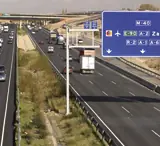
Por una autovía está prohibida la circulación de...
On a dual carriageway (autovía), it is prohibited to drive...
- Aciclomotoresmopeds
- Bvehículos especialesspecial vehicles
- Cturismos con remolquecars with a trailer
ExplanationIt is prohibited to use motorways (autopistas) and dual carriageways (autovías) with animal-drawn vehicles, bicycles, mopeds, vehicles for people with reduced mobility and personal mobility vehicles (PMVs). However, cyclists over 14 may ride on the hard shoulders of dual carriageways (autovías), unless this is prohibited by the corresponding signs for justified road safety reasons. Such a prohibition will be accompanied by a panel showing the alternative route.
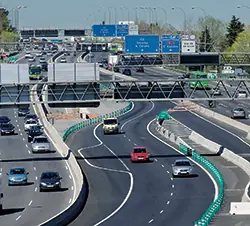
Una motocicleta, ¿puede utilizar normalmente un carril VAO?
Can a motorcycle normally use an HOV lane (VAO)?
- ASí.Yes.
- BNo, solo pueden utilizarlo turismos.No, only cars may use it.
- CSí, pero siempre que en dicho carril no exista tráfico.Yes, but only when there is no traffic in that lane.
ExplanationThe Regulations allow motorcycles to use HOV lanes (VAO) normally, whatever the number of occupants, just like vehicles with the minimum occupancy indicated.
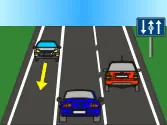
Circulando por una carretera de dos sentidos y tres carriles, dos para mi sentido y uno para el contrario, ¿para qué se utilizará el carril central?
Driving on a two-way road with three lanes, two for my direction and one for the opposite direction, what is the centre lane used for?
- AEl central para los vehículos más rápidos y el de la derecha para los vehículos lentos.The centre lane for faster vehicles and the right-hand lane for slow vehicles.
- BPara adelantar.For overtaking.
- CPara adelantar o cuando las circunstancias del tráfico o de la vía lo aconsejen.For overtaking or when traffic or road conditions make it advisable.
ExplanationYou should normally drive in the right-hand lane. But when traffic or road conditions make it advisable, we may use the other lanes in our direction, as long as we do not obstruct other vehicles following us.
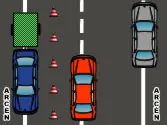
¿Circula correctamente el turismo con remolque por esta vía dotada de un carril adicional de circulación?
Is the car with a trailer driving correctly on this road, which has an additional traffic lane?
- ANo, los turismos con remolque no pueden circular por las vías dotadas de un carril adicional de circulación.No, cars with a trailer may not use roads that have an additional traffic lane.
- BSí.Yes.
- CSí, solo en el caso de que el carril esté habilitado por motivo de obras.Yes, but only if the lane has been opened because of roadworks.
ExplanationAll types of vehicle may use a temporary additional lane, for example a car with a trailer. Note, however, that in the picture it is the red vehicle that is actually using the lane considered additional. Lanes opened in the opposite direction to the usual one to keep traffic flowing are a different case: their use is limited to cars without a trailer and motorcycles.
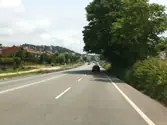
En caso de que no exista parte de la vía que les esté especialmente destinada, circularán por el arcén...
Where there is no part of the road specially intended for them, which of the following will travel on the hard shoulder?
- Alos turismos con remolque.Cars with trailers.
- Blos vehículos para personas con movilidad reducida.Vehicles for people with reduced mobility.
- Ctodos los vehículos en caso de tráfico denso.All vehicles, in heavy traffic.
ExplanationVehicles for people with reduced mobility, animal-drawn vehicles, cycles and mopeds, cyclist support vehicles and special vehicles of up to 3,500 kg must, if there is no part of the road specially intended for them, travel on the hard shoulder, if it is passable and wide enough.
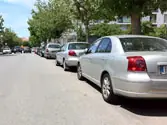
Cuando un vehículo está inmovilizado en el lado derecho de la calzada...
When a vehicle is stopped on the right-hand side of the carriageway...
- Ael conductor podrá entrar o salir por el lado izquierdo, pero con rapidez y precaución.the driver may get in or out on the left side, but quickly and carefully.
- Bel conductor no podrá salir o entrar nunca por el lado derecho.the driver may never get out or in on the right side.
- Cel conductor debe entrar o salir siempre por el lado derecho.the driver must always get in or out on the right side.
ExplanationWhen the vehicle is stopped on the right-hand side, the driver may get in or out on the left side, but must take the greatest care both when opening the door and when getting in or out, especially with regard to cyclists.

¿Los conductores de bicicletas podrán circular por las autopistas?
May cyclists ride on motorways (autopistas)?
- ASí, por el arcén.Yes, on the hard shoulder.
- BSí, cuando sean mayores de 12 años.Yes, if they are over 12 years old.
- CNo.No.
ExplanationCyclists may never ride on motorways (autopistas).
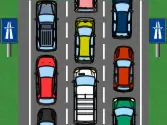
Si está circulando con un turismo por una autopista y la circulación se encuentra saturada, ¿podrá circular por el arcén hasta la próxima salida?
If you are driving a car on a motorway (autopista) and the traffic is congested, may you drive on the hard shoulder as far as the next exit?
- ASí, si está cerca y no tengo que recorrer más de 150 metros.Yes, if it is close and I do not have to drive more than 150 metres.
- BNo.No.
- CSí, si lleva encendidas las luces de emergencia.Yes, if you have the hazard warning lights on.
ExplanationA car may not be driven on the hard shoulder to avoid a traffic jam. Since RD 518/2026, only motorcycles may use the right-hand hard shoulder, on stretches that are enabled and signed for it, when traffic has stopped because of congestion, at no more than 30 km/h and in single file (Article 36.3 RGC).
¿Está permitido que una moto circule por un carril habilitado en sentido contrario?
Is a motorcycle allowed to use a lane opened in the opposite direction to the usual one?
- ASí.Yes.
- BNo.No.
- CSí, pero solo si es una moto de dos ruedas sin sidecar.Yes, but only if it is a two-wheeled motorcycle without a sidecar.
ExplanationUnder Article 41 of the General Traffic Regulations, motorcycles are allowed to use a lane opened in the opposite direction to the usual one, as long as the lane is properly signposted. These lanes are opened to improve traffic flow and are restricted to motorcycles and cars; they are forbidden to other vehicles. The correct answer is «Yes», because these rules specifically allow motorcycles to use such lanes.
Si por avería un turismo queda inmovilizado en una autopista, ¿puede ser remolcado por otro turismo?
If a car breaks down and is immobilised on a motorway (autopista), can it be towed by another car?
- ASí, excepcionalmente, hasta el lugar más próximo donde pueda quedar detenido sin molestar.Yes, as an exception, to the nearest place where it can stop without getting in the way.
- BSí, hasta llegar a la próxima salida.Yes, as far as the next exit.
- CNo, nunca.No, never.
ExplanationOn motorways (autopistas) and dual carriageways (autovías), a broken-down vehicle can never be towed by another car: it may only be removed by roadside assistance vehicles intended for this, such as tow trucks. Improvised towing with a rope or bar at high speed is very dangerous.
El conductor de un ciclomotor, ¿puede circular por un carril para vehículos de alta ocupación (carril VAO)?
May a moped rider use a lane for high-occupancy vehicles (VAO lane)?
- ASí, si lleva un pasajero.Yes, if they carry a passenger.
- BSí.Yes.
- CNo.No.
ExplanationAccording to Article 35.2.a of the General Traffic Regulations, the VAO lane is limited to motorcycles, cars and adaptable mixed-use vehicles, and it is expressly prohibited for cycles, mopeds and personal mobility vehicles, whether or not they carry a passenger.

Al estacionar en vía urbana, ¿por qué lado deben descender los pasajeros del vehículo?
When parking in a built-up area, on which side should passengers get out of the vehicle?
- APor el lado de la calzada.On the carriageway side.
- BSiempre por la derecha.Always on the right.
- CPor el lado más próximo al borde de la calzada.On the side nearest the edge of the carriageway.
ExplanationFor safety, passengers should get out on the side nearest the edge of the carriageway, because if they get out on the carriageway side they may be hit by a vehicle. Depending on which side you have parked on, the side nearest the edge of the carriageway may be the right or the left. On one-way streets in built-up areas you may stop and park on either the right or the left; on two-way streets or outside built-up areas you may only do so on the right.
¿Por qué carril debe ir en una autopista?
Which lane should you use on a motorway (autopista)?
- APor el carril que más convenga.Whichever lane suits you best.
- BPor el carril de la izquierda.The left-hand lane.
- CPor el carril de la derecha, normalmente.The right-hand lane, normally.
ExplanationOn motorways (autopistas) and dual carriageways (autovías) you normally drive in the right-hand lane, and use the others when traffic or road conditions make it advisable, such as to overtake, without hindering those behind you (Article 31.1 of the RGC).
¿Puede un tractor de menos de 3.500 kg (MMA) circular por el arcén?
Can a tractor with a MAM of less than 3,500 kg travel on the hard shoulder?
- ASí.Yes.
- BSí, pero solo en caso de avería.Yes, but only if it has broken down.
- CNo, debe circular por el carril derecho.No, it must use the right-hand lane.
ExplanationAccording to Article 36.1 of the General Traffic Regulations (RGC), special vehicles with a MAM of no more than 3,500 kg, like this tractor, must use the hard shoulder on their right if it is driveable and wide enough. This is not an exception for breakdowns, but the place where they must travel.
Para salir de una autopista nos incorporaremos al carril de deceleración...
To leave a motorway (autopista), we move into the deceleration lane...
- AAl principio del mismo.At the start of it.
- BAl final del mismo.At the end of it.
- CEn el momento que creamos conveniente.Whenever we think fit.
ExplanationTo leave a motorway, we must move into the deceleration lane as soon as possible, that is, at the start of it. When it is an acceleration lane, we continue along it to the end to join the motorway.
En una calzada con tres carriles delimitados por marcas viales y dos sentidos, se podrá utilizar el carril central...
On a two-way carriageway with three lanes marked by road markings, the central lane may be used...
- ASolo para cambiar de dirección hacia la izquierda.only to turn left.
- BPara cambiar de dirección a la izquierda y adelantar.to turn left and to overtake.
- CPara cambiar de dirección a la izquierda, adelantar y cambiar de sentido.to turn left, to overtake and to make a U-turn.
ExplanationOn two-way carriageways with 3 lanes marked by road markings, the left-hand lane must never be used, and the central lane may be used only for overtaking or turning left.
¿Está permitido que las bicicletas circulen en paralelo?
Are bicycles allowed to ride side by side?
- ASí, en columna de a dos, pero en hilera en tramos sin visibilidad o de noche.Yes, two abreast, but in single file on stretches without visibility or at night.
- BSí, siempre que mantengan entre ellas una separación de 1,5 metros.Yes, as long as they keep 1.5 metres apart.
- CNo, deben circular en hilera.No, they must ride in single file.
ExplanationAccording to Article 36.2 of the General Traffic Regulations (RGC), as worded by RD 518/2026, cyclists may ride two abreast on the hard shoulder or, if there is none or it is not driveable, on the part of the carriageway that is strictly necessary, moving into single file on stretches without visibility, when they affect the flow of traffic, between sunset and sunrise, or when visibility is reduced.
Dentro de un poblado, en una vía con tres carriles en el mismo sentido separados por marcas viales, ¿está bien circular por el carril izquierdo?
In a built-up area, on a road with three lanes in the same direction separated by road markings, is it correct to drive in the left lane?
- ANo, debemos circular por la derecha.No, we must drive on the right.
- BSí, si es el carril que mejor conviene para nuestro destino.Yes, if it is the lane that best suits our destination.
- CDebemos circular solo por el carril derecho o por el central.We must drive only in the right or centre lane.
ExplanationIn a built-up area, on a road with at least two lanes in the same direction, drivers may use whichever lane best suits their destination, as long as they only leave it to carry out specific manoeuvres. This is supported by Article 33 of the General Traffic Regulations, which allows the lane that best suits the intended direction to be used on these roads.
¿Por qué carril deberá circular un vehículo en una autopista cuya calzada tenga tres o más carriles para cada sentido?
Which lane must a vehicle use on a motorway (autopista) whose carriageway has three or more lanes in each direction?
- APor el carril situado más a la derechaThe right-hand lane
- BPor el carril situado más a la izquierdaThe left-hand lane
- CPor el carril centralThe centre lane
ExplanationOn motorways (autopistas) with several lanes in each direction you normally drive in the right-hand lane, and you may use the others when traffic or road conditions make it advisable, without holding up vehicles behind (Article 31.1 of the General Traffic Regulations).
¿Podrá un turismo que arrastra un remolque utilizar un carril V.A.O.?
May a car towing a trailer use an HOV lane (VAO)?
- ASí, si se trata de un remolque de menos de 750 kg.Yes, if the trailer weighs less than 750 kg.
- BNo.No.
- CSí, si cumple la condición de ocupación.Yes, if it meets the occupancy requirement.
ExplanationCombinations of vehicles, including cars with a trailer, may not use the HOV lane (VAO), even if they carry the minimum number of people required.
¿Qué vehículo podrá hacer uso del carril VAO cuando viaje solo el conductor?
Which vehicle may use the HOV lane (VAO) with only the driver on board?
- AUn turismo con remolque ligero.A car with a light trailer.
- BUn camión.A lorry.
- CUn turismo que ostente la señal V-15.A car displaying the V-15 sign.
ExplanationAs a general rule, the following may use the BUS-HOV (BUS-VAO) lane: two- or three-wheeled motorcycles, cars, buses with a maximum authorised mass (MAM) of more than 3,500 kg, articulated buses, and adaptable mixed-use vehicles, with the number of occupants set for each stretch. All other vehicles and combinations of vehicles are prohibited, including cars with a trailer, cycles and mopeds. However, the lane may also be used, even with only the driver on board, by: authorised types of vehicle displaying the V-15 sign (reduced mobility badge); two- or three-wheeled motorcycles; buses with a MAM of more than 3,500 kg and articulated buses; vehicles classed as taxis under the use criterion in Annex II of the General Vehicle Regulations, with an external roof light and a valid taxi licence; police, fire, civil protection, rescue and ambulance vehicles on an emergency call, and maintenance crews for the road and its facilities. Vehicles with environmental labels (ZERO, ECO, B and C) may use the BUS-HOV lane only when road signs say so.
Si usted circula por una vía interurbana en una bicicleta, ¿podría circular en paralelo junto a una motocicleta?
If you are riding a bicycle on an interurban road, may you ride side by side with a motorcycle?
- ASí, si ambos circulan por el arcén.Yes, if both are on the hard shoulder.
- BSí, siempre lo más a la derecha posible de la vía y colocándose de uno en uno en tramos de poca visibilidad.Yes, always as far to the right of the road as possible and moving into single file on stretches with poor visibility.
- CNo, ya que está prohibido.No, because it is prohibited.
ExplanationOn interurban roads cyclists may only ride side by side with another cyclist, two abreast on the hard shoulder or, if it cannot be used, on the minimum necessary part of the carriageway. Riding side by side with a motorcycle is not allowed (Article 36.2 of the RGC).
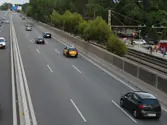
¿Que carril o carriles podrá utilizar el conductor de un autobús de hasta 3.500 kg de MMA y de más de siete metro de longitud, en una vía interurbana con tres carriles para cada sentido?
Which lane or lanes may the driver of a bus with a MAM of up to 3,500 kg and more than seven metres long use on an interurban road with three lanes in each direction?
- AEl derecho, únicamente.Only the right-hand lane.
- BEl derecho y el inmediato, cuando las circunstancias lo permitan.The right-hand lane and the next one, when circumstances allow.
- CEl derecho y todos los demás, cuando las circunstancias lo permitan.The right-hand lane and all the others, when circumstances allow.
ExplanationGoods vehicles with a MAM of more than 3,500 kg and combinations of vehicles more than 7 m long may only use the right-hand lane for normal driving and the next one, for example to overtake. In this question, the bus does not reach a MAM of 3,500 kg and is not a combination of vehicles, so it could use all the lanes when circumstances require it.
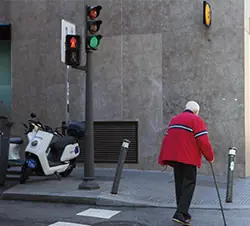
¿Cuál es uno de los problemas que, debido al deterioro de las aptitudes psicofísicas, encuentran muchas personas mayores como peatones en las vías públicas?
Because of the decline in their physical and mental abilities, what is one of the problems many older people face as pedestrians on public roads?
- ATienen mayor capacidad de orientación, sobre todo en calles que no conocen bien.They have a better sense of direction, especially in streets they do not know well.
- BNo aprecian bien la velocidad a la que se acercan los vehículos.They cannot judge well how fast vehicles are approaching.
- CLos bordillos de las aceras están al mismo nivel que la calzada.The kerbs of the pavements are at the same level as the carriageway.
ExplanationWith age, eyesight and the ability to process information decline, so many older people cannot judge well the speed or the distance of approaching vehicles when they cross.
En una autovía con varios carriles por sentido y poco tráfico, por lo general, ¿está permitido mantenerse en el carril izquierdo?
On a dual carriageway (autovía) with several lanes in each direction and little traffic, are you generally allowed to stay in the left-hand lane?
- ASí, porque la vía no está saturada.Yes, because the road is not congested.
- BNo, debe cambiarse al carril de la derecha.No, you must move to the right-hand lane.
- CSí, si no entorpece la marcha de otros vehículos.Yes, if you do not hold up other vehicles.
ExplanationOutside built-up areas, on carriageways with several lanes in the same direction, you normally drive in the lane furthest to the right (Article 31.1 of the General Traffic Regulations). The others are only used when traffic or the road makes it advisable, for example to overtake, and without holding up those coming behind.
¿Un turismo con remolque podrá circular por un carril en sentido contrario al habitual?
Can a car towing a trailer use a lane opened for traffic in the opposite direction to the usual one?
- ANo, en ningún caso.No, under no circumstances.
- BSí, cuando el carril esté habilitado por motivos de obras.Yes, when the lane has been opened because of roadworks.
- CSí, siempre que sea un remolque ligero.Yes, as long as it is a light trailer.
ExplanationLanes used in the opposite direction to the usual one are limited to motorcycles and cars without a trailer. Other vehicles allowed on the road, including those towing trailers, may only use such a lane when it has been opened because of roadworks.
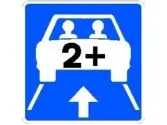
Un turismo ocupado únicamente por el conductor, ¿podrá circular por un carril VAO?
May a car with only the driver on board use a HOV lane (VAO)?
- ANo, siempre ha de estar ocupado por el número de personas que se fije.No, it must always carry the number of people that has been set.
- BSi, ya que está dedicado al transporte de personas.Yes, because it is intended for carrying people.
- CSi, cuando ostente la señal de minusválido, V-15.Yes, when it displays the V-15 disabled badge.
ExplanationAs a general rule, the BUS-HOV lane (BUS-VAO) may be used by two- or three-wheeled motorcycles, cars, buses with a maximum authorised mass of more than 3,500 kg, articulated buses and adaptable mixed-use vehicles carrying the number of occupants set for each stretch. All other vehicles and combinations of vehicles, including cars with trailers, cycles and mopeds, may not use it. However, it may also be used, even with only the driver on board, by: - The authorised types of vehicle if they display the V-15 sign (reduced mobility badge). - Two- or three-wheeled motorcycles. - Buses with a maximum authorised mass of more than 3,500 kg and articulated buses. - Vehicles classed as taxis under the usage criterion in Annex II of the General Vehicle Regulations, with an exterior light unit and a valid taxi licence. - Police, fire, civil protection, rescue and medical vehicles on an emergency call, and maintenance teams for the road's facilities and infrastructure. - Vehicles with environmental badges (CERO, ECO, B and C) may use the BUS-HOV lane only when road signs say so.
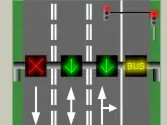
Si circulo por un carril reversible tendré que...
If I am driving in a reversible lane, I must...
- Autilizar el alumbrado de cruce de día y de noche.use dipped headlights by day and by night.
- Butilizar el alumbrado de cruce de día y de noche y, además, la velocidad máxima será de 80 km/h.use dipped headlights by day and by night, and the maximum speed is also 80 km/h.
- Cno podrán circular los vehículos con remolque ni los camiones.vehicles with trailers and lorries may not use it.
ExplanationWhen driving in a reversible lane we must use dipped headlights, both by day and by night, and the maximum speed is the general limit for that road.
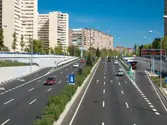
Circulando por una autovía en zona urbana, ¿qué carril deberemos utilizar?
Driving on a dual carriageway (autovía) in an urban area, which lane must we use?
- AEl carril de la derecha.The right-hand lane.
- BEl carril que mejor convenga a nuestro destino.The lane that best suits our destination.
- CEl carril central para así facilitar las incorporaciones.The centre lane, to make it easier for others to join.
ExplanationEven though the road is in an urban area, inside a built-up area, the general rules for motorways (autopistas) and dual carriageways (autovías) apply, so we will use the right-hand lane as a general rule.
En una vía dentro de poblado, ¿por qué carril circularemos?
On a road in a built-up area, which lane shall we use?
- ACircularemos siempre por el carril de la derecha.We always drive in the right-hand lane.
- BPor el carril que mejor convenga a mi destino, estén o no los carriles delimitados.The lane that best suits my destination, whether or not the lanes are marked.
- CPor el carril que mejor convenga a mi destino, tanto si los carriles están delimitados por línea continua como discontinua.The lane that best suits my destination, whether the lanes are marked by a solid or a broken line.
ExplanationWhen driving on a carriageway in a built-up area with at least 2 lanes in the same direction marked by longitudinal markings, you may use the one that best suits your destination.
Al circular por un carril reversible, ¿qué normas se tendrán que cumplir?
When driving in a reversible lane, what rules must be followed?
- ALlevar las luces de corto alcance encendidas, velocidad máxima de 80 km/h y mínima de 60 km/h.Have the dipped headlights on, a maximum speed of 80 km/h and a minimum of 60 km/h.
- BLlevar las luces de corto alcance encendidas.Have the dipped headlights on.
- CVelocidad máxima de 80 km/h y mínima de 60 km/h.A maximum speed of 80 km/h and a minimum of 60 km/h.
ExplanationWhen driving in a reversible lane, the only restriction is that we must use the dipped headlights, by day and by night. The maximum speed is the general one for the road.
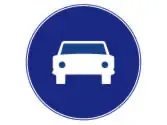
¿Puede circular cualquier vehículo por esta calzada?
May any vehicle use this carriageway?
- ASí.Yes.
- BNo, porque es una vía exclusiva para automóviles.No, because it is a road only for motor cars.
- CSí, excepto motocicletas de dos ruedas.Yes, except two-wheeled motorcycles.
ExplanationThis is sign R-404 «Compulsory carriageway for motor cars, except two-wheeled motorcycles»: it requires those motor cars to use the carriageway at whose entrance it is placed, but it does not prohibit any other vehicle from using it. Two-wheeled motorcycles may use it, although they are not required to.
All topics
- Definitions
- Documents and penalty points
- The driver's condition
- Duties of drivers and pedestrians
- Vehicle safety devices
- Vehicle controls and equipment
- Vehicle lights and horn
- Traffic signs, markings and signals
- Speed and distances
- Manoeuvres
- Right of way
- Carrying passengers and loads
- Driving safely in difficult conditions
- Vehicle mechanics and maintenance
- Road accidents and first aid
- Defensive and eco-driving
Independent app: not affiliated with or endorsed by the DGT (Spain's Directorate-General for Traffic) or the Ministry of the Interior. The official exam is booked with the DGT and taken at its test centres. The questions here are practice material; the DGT's official question bank is not public.
Basado en datos de la Agencia Estatal Boletín Oficial del Estado (https://www.boe.es). Textos consolidados de carácter meramente informativo. La AEBOE no patrocina ni respalda este sitio.
Parte de las preguntas procede de los tests de la revista «Tráfico y Seguridad Vial» de la DGT, reproducidos con indicación de la fuente.