
DGT test · 534 questions
The road and its lanes · Page 6 of 11
Carriageway, lanes, hard shoulder and road types: where you drive and how lanes are used on motorways, dual carriageways and streets.
Questions in this topic, with answers
534 questions, 50 per page, with the correct answer and the explanation. Page 6 of 11.
¿Por dónde pueden circular los animales?
Where may animals move?
- Aúnicamente por vías interurbanas.only on roads outside built-up areas.
- Bpor todas las vías, excepto en autopistas y autovías.on all roads, except motorways (autopistas) and dual carriageways (autovías).
- Cpor todas las vías sin excepción.on all roads without exception.
ExplanationAnimals may use public roads when there is no usable livestock track and they are accompanied, and they must use the alternative road with the least traffic (Article 126 of the General Traffic Regulations). They are forbidden on motorways (autopistas) and dual carriageways (autovías) (Article 128).
Ud. circula por una vía que tiene doble sentido de circulación y tres carriles separados por líneas longitudinales discontinuas. ¿Cuando podrá utilizar el carril central?
You are driving on a two-way road with three lanes separated by broken longitudinal lines. When may you use the centre lane?
- AÚnicamente para cambiar de dirección a la izquierda.Only to turn left.
- BPara adelantar y cambiar de dirección o el sentido de la marcha.To overtake and to change direction or make a U-turn.
- CPara realizar los adelantamientos precisos y para cambiar de dirección a la izquierda.To carry out the necessary overtaking and to turn left.
ExplanationThe centre lane may be used to carry out the necessary overtaking and to turn left. This matches the traffic rules, which allow the centre lane to be used for these manoeuvres as long as they are done safely and in line with the rules of the road.
Si un tranvía circula por el centro de la calzada de doble sentido, lo adelantaremos...
If a tram is running along the centre of a two-way carriageway, we will overtake it...
- APor la izquierda.On the left.
- BPor la derecha.On the right.
- CTanto por la izquierda como por la derecha.On either the left or the right.
ExplanationAs a general rule, overtaking must be done on the left. In some cases, however, we must overtake on the right, for example trams running along the central part of a road with traffic in both directions, which is the situation in the question.
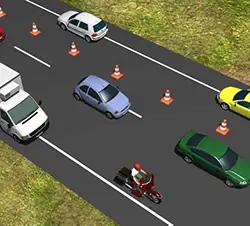
El conductor del vehículo que utiliza el carril adicional...
The driver of a vehicle using the additional lane...
- ACirculará, como máximo, a 100 km/h.Will travel at a maximum of 100 km/h.
- BDeberá abandonar la vía en cuanto le sea posible.Must leave the road as soon as possible.
- CLlevará encendida, al menos, la luz de cruce.Will have at least the dipped headlights on.
ExplanationAnyone using an additional lane must have at least the dipped headlights on, even during the day: it is an exceptional lane and you must be clearly visible to other road users.
¿Por dónde se debe circular en un cambio de rasante con poca visibilidad?
Where must you drive on the brow of a hill with poor visibility?
- AMantener libre la mitad de la calzada correspondiente a los vehículos que circulan en sentido contrario.Keeping clear the half of the carriageway for vehicles travelling in the opposite direction.
- BPor la izquierda, aunque ello suponga invadir parte del eje de la calzada.On the left, even if this means going over part of the centre of the carriageway.
- CPor donde más convenga para llegar a mi destino.Wherever is best for reaching my destination.
ExplanationOn the brow of a hill with reduced visibility, you must drive leaving completely clear the half of the carriageway for those who may be travelling in the opposite direction. This is set out in Article 29 of the General Traffic Regulations, which states that on bends and brows of hills with reduced visibility vehicles must keep to the right and as close as possible to the edge of the carriageway, leaving enough side clearance to pass oncoming vehicles safely. This rule gives vehicles coming the other way enough room to manoeuvre safely.
Cuando los ciclistas circulen por el arcén, ¿podrán abandonarlo si la seguridad lo permite?
When cyclists are riding on the hard shoulder, may they leave it if safety allows?
- ASí, en los descensos prolongados con curvas, salvo en autovías.Yes, on long descents with bends, except on dual carriageways (autovías).
- BNo, si disponen de arcén nunca pueden circular por la calzada.No, if there is a hard shoulder they can never ride on the carriageway.
- CSí, siempre que lo crean conveniente.Yes, whenever they see fit.
ExplanationUnder Article 36 of the General Traffic Regulations, cyclists may leave the hard shoulder and ride on the right-hand part of the carriageway on long descents with bends, when safety allows. On dual carriageways (autovías), however, they must always ride on the hard shoulder.
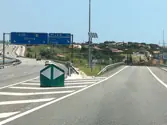
Al tomar una salida en una autopista, ¿dónde disminuiremos la velocidad si la circulación nos lo permite?
When taking an exit on a motorway (autopista), where should we slow down if the traffic allows it?
- AAntes de incorporarnos al carril de deceleración.Before moving into the deceleration lane.
- BUna vez incorporados al carril de deceleración.Once we are in the deceleration lane.
- CNo es necesario disminuir la velocidad al salir.There is no need to slow down when leaving.
ExplanationThe deceleration lane is where we should gradually reduce the vehicle's speed, for greater safety. It is best not to slow down on the main road but in the deceleration lane itself, because it is designed for this.
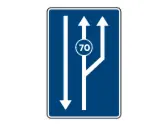
En una vía así señalizada, si circulamos a 90km/h, ¿por qué carril circularemos? ...
On a road with these signs, if we are driving at 90 km/h, which lane shall we use?
- APor el carril central ya que circulamos a más de 70km/h.The central lane, because we are driving at more than 70 km/h.
- BPor el carril de la derecha, pudiendo utilizar el central cuando las circunstancias lo precisen.The right-hand lane, using the central one when circumstances require it.
- CPor el carril de la derecha y no podemos usar el central ya que circulamos a más de 70km/h .The right-hand lane, and we may not use the central one because we are driving at more than 70 km/h.
ExplanationOn a road with these signs, the central lane may only be used by vehicles driving at 70 km/h or more, although, if circumstances allow, you must drive in the right-hand lane.
Los ciclistas en ciudad pueden circular:
In town, cyclists may ride:
- AObligatoriamente por el carril bici, si lo hay.Only in the cycle lane, if there is one.
- BPreferentemente por el centro del carril, si la seguridad lo permite.Preferably in the centre of the lane, if safety allows.
- CLo más pegados posible al borde derecho de la calzada.As close as possible to the right edge of the carriageway.
ExplanationUnder Article 153.3 of the General Traffic Regulations (as worded by RD 518/2026), on roads in built-up areas cyclists will ride preferably in the centre of the lane, as far as their safety and that of other road users allows. Using the cycle lane is preferred, and it is only compulsory when the authority signposts it with sign R-407a (Art. 153.1).
En una autopista circula por el carril izquierdo sin estar adelantando y el carril de la derecha está libre. ¿Es correcta su posición en la calzada?
On a motorway (autopista) you are driving in the left lane without overtaking, and the right lane is free. Is your position on the carriageway correct?
- ASí, porque adapto mi vehículo a las circunstancias del tráfico.Yes, because I adapt my vehicle to the traffic conditions.
- BNo, porque debo circular por el carril de la derecha.No, because I must drive in the right lane.
- CSí, porque puedo utilizar el que más convenga a mi destino.Yes, because I can use whichever lane best suits my destination.
ExplanationAccording to Article 31.1 of the General Traffic Regulations, outside built-up areas, on carriageways with more than one lane in your direction, you normally drive in the lane furthest to the right, and the others are only used when traffic or road conditions make it advisable, for example to overtake. Choosing the lane that best suits your destination is only allowed in built-up areas, and not on motorways (Article 33).
¿Un ciclomotor puede circular por una autovía?
Can a moped be ridden on a dual carriageway (autovía)?
- ASí.Yes.
- BSí, pero solo por el arcén.Yes, but only on the hard shoulder.
- CNo.No.
ExplanationAnimals, animal-drawn vehicles, mopeds and vehicles for people with reduced mobility are not allowed on dual carriageways (autovías).
Si circulando por una vía de sentido único encontramos una isleta en el centro de la calzada, ¿por qué lado debemos rodearla?
If, while driving on a one-way road, we find a traffic island in the middle of the carriageway, which side should we go round it?
- APor la derecha.On the right.
- BPor la izquierda.On the left.
- CPor la derecha o por la izquierda.On the right or on the left.
ExplanationArticle 43 of the General Traffic Regulations (RGC) states that traffic islands and refuges are passed on the right, except on one-way roads or within the part of the road used by one direction only. There they may be passed on either side, because you do not enter the opposite direction of traffic.
¿Quién puede circular por el arcén de una autovía?
Who may use the hard shoulder of a dual carriageway (autovía)?
- ALos peatones.Pedestrians.
- BLos vehículos de tracción animal.Animal-drawn vehicles.
- CLos ciclistas mayores de 14 años.Cyclists over 14.
ExplanationPedestrians and animal-drawn vehicles may not use dual carriageways (autovías). However, Article 38 of the General Traffic Regulations (RGC) allows cyclists over 14 to ride on the hard shoulder of dual carriageways (autovías), unless a sign prohibits it.
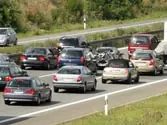
En esta vía, si circula más rápido por el carril de la derecha, ¿se considera adelantamiento?
On this road, if you are travelling faster in the right-hand lane, is it considered overtaking?
- ASí, fuera de poblado se considera adelantamiento, pero no en vía urbana.Yes, outside built-up areas it is considered overtaking, but not on urban roads.
- BSí, se considera adelantamiento tanto dentro como fuera de poblado.Yes, it is considered overtaking both inside and outside built-up areas.
- CNo, porque, en este caso, no se considera adelantamiento.No, because in this case it is not considered overtaking.
ExplanationIt is not considered overtaking when, on congested roads, the vehicles in one lane move faster than those in the next lane, provided that the vehicles take up the whole width of the carriageway and can only travel at a speed that depends on the speed of the vehicle in front of them in their lane.
Una furgoneta, cuya longitud es de 7,30 metros y que tiene una MMA de 3.500 kg, circula por una vía interurbana con tres carriles por sentido de la circulación, ¿Qué carriles puede utilizar?
A van 7.30 metres long with a MAM of 3,500 kg is driving on a road outside built-up areas with three lanes in each direction. Which lanes may it use?
- ACualquiera de ellos, cuando las circunstancias del tráfico o de la vía lo aconsejen y no entorpezca la marcha de otro vehículo que le siga.Any of them, when traffic or road conditions make it advisable and it does not hold up a vehicle behind.
- BEl de la derecha, y el inmediato únicamente cuando las circunstancias del tráfico o de la vía lo aconsejen.The right-hand lane, and the next lane only when traffic or road conditions make it advisable.
- CSolamente el de la derecha.Only the right-hand lane.
ExplanationArticle 31 of the General Traffic Regulations restricts lorries and vans over 3,500 kg and vehicle combinations over 7 metres to the two right-hand lanes. A 3,500 kg van without a trailer is not affected, even though it is 7.30 metres long, and it may use any lane.
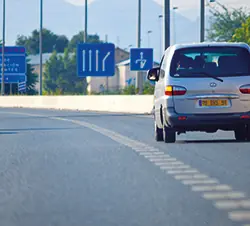
Los vehículos que circulan por la autovía, ¿facilitarán el paso a los vehículos que se incorporan desde el carril de aceleración?
Will vehicles travelling on the dual carriageway (autovía) make it easier for vehicles joining from the acceleration lane?
- ANo, salvo que se trate de vehículos de transporte colectivo.No, unless they are public passenger transport vehicles.
- BSí, pero solo a los vehículos que se incorporen por el lado derecho.Yes, but only for vehicles joining from the right.
- CSí, a cualquier vehículo que se incorpore, en la medida de lo posible.Yes, for any vehicle that is joining, as far as possible.
ExplanationAlthough priority belongs to those already on the dual carriageway (autovía), the rules ask drivers to make it easier, as far as possible, for any vehicle to join from the acceleration lane: this is known as cooperative driving.
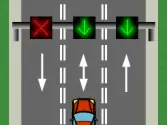
Los usuarios de los carriles reversibles circularán...
Users of reversible lanes must drive...
- ALlevando encendida la luz de cruce o corto alcance tanto de día como de noche.with dipped headlights on, by day and by night.
- BA una velocidad máxima de 80 km/h y una mínima de 60 km/h.at a maximum speed of 80 km/h and a minimum of 60 km/h.
- CLlevando encendida la luz de cruce o corto alcance, tanto de día como de noche, y a una velocidad máxima de 80 km/h y una mínima de 60 km/h.with dipped headlights on, by day and by night, and at a maximum speed of 80 km/h and a minimum of 60 km/h.
ExplanationDrivers using a reversible lane must have at least dipped headlights switched on, both by day and by night. The maximum permitted speed is the general one for the road.
Una motocicleta, ¿puede circular por una vía donde se ha habilitado un carril adicional?
Can a motorcycle travel on a road where an additional lane has been opened?
- ASí, pero sólo puede circular por el carril adicional.Yes, but it may only use the additional lane.
- BSí, pudiendo circular tanto por el arcén como por el carril adicional.Yes, and it may use either the hard shoulder or the additional lane.
- CNo.No.
ExplanationUnder Article 42 of the General Traffic Regulations, when a temporary additional lane is opened, both hard shoulders are used to create two lanes in one direction. A motorcycle may use either the hard shoulder or the additional lane, at a maximum of 80 km/h and a minimum of 60 km/h, with the dipped headlights on by day and by night.
¿En qué carril debe situarse un conductor que circula por una glorieta con tres carriles para salir de ella?
Which lane should a driver on a roundabout with three lanes be in to leave it?
- AEn el carril derecho.In the right-hand lane.
- BEn cualquier carril, aunque pueda cortar su trayectoria a otros conductores.In any lane, even if they may cut across other drivers' paths.
- CEn el carril central.In the centre lane.
ExplanationWhen a driver is about to leave a roundabout, they must first move into the right-hand lane, unless specific signs say otherwise. This keeps traffic orderly and safe and avoids cutting across vehicles that are staying on the roundabout. If road markings or signs allow you to leave from another lane, you may do so without breaking the rules. For example, some roundabouts have specific lanes that lead straight to an exit. In these cases you must follow the path shown by the signs.
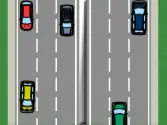
Esta calle tiene tres carriles en cada sentido. ¿Por dónde se debe circular?
This street has three lanes in each direction. Where should you drive?
- ADepende de la velocidad de mi vehículo.It depends on my vehicle's speed.
- BPor el carril más adecuado para ir a mi destino.In the most suitable lane for getting to my destination.
- CPor el carril derecho y por los otros sólo para adelantar.In the right-hand lane, using the others only to overtake.
ExplanationOn urban roads and travesías (stretches of road through a town) with at least two lanes for the same direction, marked by longitudinal markings, drivers of motor vehicles and special vehicles may use the lane that best suits their destination, but must not leave it except to get ready to turn, overtake, stop or park. We do not apply this rule on motorways or dual carriageways in built-up areas. As the question talks about a street rather than a road, it is understood to be in a built-up area, even though it does not say so.
Los ciclomotores tienen prohibida la circulación por...
Mopeds are not allowed on...
- Aautovías, únicamente.dual carriageways (autovías) only.
- Bautopistas, únicamente.motorways (autopistas) only.
- Cautovías y autopistas.dual carriageways (autovías) and motorways (autopistas).
ExplanationArticle 38.1 of the General Traffic Regulations prohibits animal-drawn vehicles, bicycles, mopeds and vehicles for people with reduced mobility on motorways (autopistas) and dual carriageways (autovías). The ban applies to mopeds on both types of road.
En una autopista con dos carriles para cada sentido de circulación, ¿le está permitido a un turismo con remolque circular por el carril izquierdo?
On a motorway (autopista) with two lanes in each direction, may a car with a trailer drive in the left lane?
- ASí, pero sólo para realizar adelantamiento.Yes, but only to overtake.
- BSí, cuando las circunstancias del tráfico o la vía lo aconsejen siempre que no se obstaculice a otros vehículos más rápidos.Yes, when traffic or road conditions make it advisable, as long as it does not get in the way of faster vehicles.
- CNo, en ningún caso, porque un conjunto de vehículos en una calzada con dos carriles para el mismo sentido no puede abandonar el carril de la derecha.No, never, because a combination of vehicles on a carriageway with two lanes in the same direction may not leave the right lane.
ExplanationAccording to Article 31.1 of the General Traffic Regulations, outside built-up areas you normally drive in the right lane, but you may use the others when traffic or road conditions make it advisable, without getting in the way of vehicles behind. The restriction for combinations longer than seven metres only applies on carriageways with three or more lanes in each direction (Article 31.2).
Un turismo ocupado solamente por el conductor, ¿podrá circular por un carril VAO?
May a car with only the driver on board use a HOV lane (VAO)?
- ASí, cuando sea un vehículo no prioritario en servicio de urgencia.Yes, when it is a non-priority vehicle on an emergency call.
- BSí, cuando el vehículo ostente la señal de minusválido.Yes, when the vehicle displays the disabled badge.
- CNo, en ningún caso.No, never.
ExplanationA HOV lane (VAO) may only be used by motorcycles, cars and mixed-use vehicles carrying a minimum number of people. It may also be used by vehicles displaying the disabled badge, whatever the number of occupants.
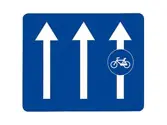
¿Un turismo podrá circular por el carril situado más a la derecha?
Can a car use the lane furthest to the right?
- ASí, los turismos podrán circular opcionalmente mientras que las bicicletas deberán usarlo obligatoriamente.Yes, cars may use it if they wish, while bicycles must use it.
- BNo.No.
- CSí, si no hay ningún ciclo usando dicho carril.Yes, if no cycle is using that lane.
ExplanationThe lane furthest to the right has the sign for a cycle lane or cycle path next to the carriageway, so this lane is compulsory for cyclists and prohibited for all other road users.
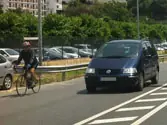
El ciclista de la fotografía, ¿circula correctamente?
Is the cyclist in the photograph riding correctly?
- ASí, pues sólo cuando le adelanta un vehículo debe circular junto al borde derecho de la calzada.Yes, because they only need to ride next to the right-hand edge of the carriageway when a vehicle is overtaking them.
- BSí, pues lo hace junto al borde derecho de la calzada.Yes, because they are riding next to the right-hand edge of the carriageway.
- CNo, pues lo debería de hacer por el arcén, aunque éste no sea transitable.No, because they should ride on the hard shoulder, even if it is not passable.
ExplanationThe road in the photograph has no hard shoulder, which is why the cyclist must ride at the right-hand edge of the carriageway. If there were a passable hard shoulder, the cyclist would have to ride on it.
¿Por qué carril circularemos cuando queramos abandonar la autopista?
Which lane should we use when we want to leave the motorway (autopista)?
- APor el carril más próximo a la salida, para penetrar lo antes posible al final del carril de deceleración.The lane closest to the exit, so as to enter the deceleration lane as soon as possible at its end.
- BPor el carril más próximo a la salida, para penetrar lo antes posible al principio del carril de deceleración.The lane closest to the exit, so as to enter the deceleration lane as soon as possible at its start.
- CNos colocaremos siempre en el carril más próximo al lado derecho para incorporarnos al carril de deceleración al final de éste.We should always move into the lane closest to the right-hand side and join the deceleration lane at its end.
ExplanationTo leave the motorway (autopista), the driver must move into the lane closest to the exit, whether it is on the right or the left, well in advance, and enter the deceleration lane as soon as possible, at its start.
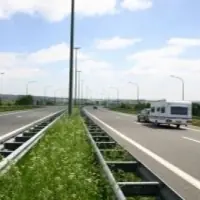
¿Pueden los automóviles circular por la mediana?
May motor vehicles drive on the central reservation?
- ASí, pero a una velocidad inferior a 60 km/h.Yes, but at less than 60 km/h.
- BSí, siempre que lo deseen.Yes, whenever they want.
- CNo.No.
ExplanationThe central reservation (mediana) is the area between two carriageways that is not intended for traffic, and vehicles may not drive on it.
¿Por dónde debe circular un vehículo especial de 4000 kg de MMA en una vía fuera de poblado con tres carriles para cada calzada?
Where must a special vehicle with an MAM of 4,000 kg travel on a road outside built-up areas with three lanes on each carriageway?
- APor el arcénOn the hard shoulder
- BPor la calzadaOn the carriageway
- CNo podrán circular por las vías fuera de pobladoThey may not travel on roads outside built-up areas
ExplanationVehicles with an MAM over 3,500 kilograms travelling on roads outside built-up areas must always travel on the carriageway and never on the hard shoulder. When the road has more than one lane in their direction, they travel in the right-hand lane and may use the lane immediately to its left when traffic conditions make it advisable.
¿Puede un vehículo mixto con solo el conductor circular alguna vez por un carril VAO?
May a mixed-use vehicle with only the driver on board ever use an HOV lane (VAO)?
- ANo. Debe llevar como mínimo el número de personas exigido.No. It must carry at least the required number of people.
- BNo. Ser conductor novel no le permite usar un carril VAO sin más.No. Being a novice driver does not by itself let you use an HOV lane.
- CSí. Si el vehículo muestra la señal de discapacidad, puede usar un carril VAO.Yes. If the vehicle displays the disability sign, it may use an HOV lane.
ExplanationUnder Article 35.2.a of the General Traffic Regulations (as worded by RD 518/2026), vehicles allowed in the HOV lane (motorcycles, cars and adaptable mixed-use vehicles) may use it even with only the driver on board if they display the V-15 sign or the parking card for people with disabilities who have reduced mobility. Being a novice driver gives no right to use it.
¿Puede una motocicleta circular por un carril VAO?
May a motorcycle use an HOV lane (VAO)?
- ASólo si lleva un número mínimo de ocupantes.Only if it carries a minimum number of occupants.
- BNo, en ningún caso.No, never.
- CSí.Yes.
ExplanationHOV lanes (VAO) may be used by motorcycles, cars and adaptable mixed-use vehicles.
En una vía de un carril por sentido, ¿se permite que un conductor adelante a varios vehículos a la vez?
On a road with one lane in each direction, may a driver overtake several vehicles at once?
- ANo, en ningún caso.No, under no circumstances.
- BSolo si puede regresar al carril derecho sin crear peligro en caso de encontrar vehículos en sentido contrario.Only if they can return to the right lane without creating danger if they meet vehicles coming the other way.
- CSí, siempre que adelante a vehículos de gran tamaño.Yes, as long as they are overtaking large vehicles.
ExplanationAccording to Article 84.1 of the General Traffic Regulations, you must not overtake several vehicles unless you are completely sure that, if another vehicle appears from the opposite direction, you can move back to the right without harming or endangering any of the vehicles you have overtaken. It is not prohibited in all cases.

Cuando circulando nos aproximamos a niños o ancianos y pueda preverse su irrupción en la calzada...
When, while driving, we approach children or elderly people and it can be foreseen that they may step into the carriageway...
- ANos detendremos siempre para cederles el paso.We will always stop to give way to them.
- BModeraremos la velocidad y, si fuera preciso, detendremos el vehículo.We will slow down and, if necessary, stop the vehicle.
- CUsaremos las señales acústicas para advertirles de nuestra presencia.We will use the horn to warn them that we are there.
ExplanationWhen there are pedestrians on the part of the road being used, or it can be foreseen that they may step into it, especially children or elderly people, we must drive at a moderate speed and, if necessary, stop the vehicle.

El tractor de menos de 3.500 kg de M.M.A, ¿circula correctamente por el arcén?
Is the tractor with a MAM of less than 3,500 kg driving correctly on the hard shoulder?
- ASí.Yes.
- BSí, pero solamente en caso de avería.Yes, but only in the event of a breakdown.
- CNo, porque debe circular por el carril derecho.No, because it must travel in the right-hand lane.
ExplanationThe driver of any animal-drawn vehicle, special vehicle with a maximum authorised mass of no more than 3,500 kilograms, cycle, moped, cyclist support vehicle or vehicle for people with reduced mobility must, if there is no road or part of a road specially intended for them, travel on the right-hand hard shoulder, if it is passable and wide enough, and if not, use the smallest possible part of the carriageway.
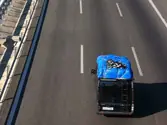
Un camión de más de 3.500 kg que circule por una vía interurbana con 3 carriles para el mismo sentido, ¿por qué carril circulará?
A lorry of more than 3,500 kg is travelling on a road outside built-up areas with 3 lanes in the same direction. Which lane must it use?
- ASólo por el de la derecha.Only the right-hand lane.
- BPor el de la derecha, pudiendo utilizar el contiguo para adelantar o cuando las circunstancias lo aconsejen.The right-hand lane, and it may use the next lane to overtake or when circumstances make it advisable.
- CPor cualquiera de los 3 carriles sin que obstaculice a los demás usuarios de la vía.Any of the 3 lanes, as long as it does not obstruct other road users.
ExplanationOn roads outside built-up areas with three or more lanes in the same direction, drivers of: - Lorries and box vans with a MAM of more than 3,500 kg. - Combinations of vehicles more than 7 metres long. - Special vehicles that are not required to use the hard shoulder (MAM over 3,500 kg). must normally drive in the lane furthest to the right. They may use the next lane when traffic conditions require it, as long as they do not obstruct the vehicles behind them.
¿Puede un ciclomotor circular por una autovía o autopista?
May a moped be ridden on a dual carriageway (autovía) or motorway (autopista)?
- ANo.No.
- BSí, por el carril de la derecha.Yes, in the right-hand lane.
- CSí, por el arcén.Yes, on the hard shoulder.
ExplanationNo. Mopeds are prohibited on motorways (autopistas) and dual carriageways (autovías), even on the hard shoulder (Article 38 of the General Traffic Regulations). Only bicycles ridden by people over 14 may use the hard shoulder of dual carriageways.
Si circulando por una autopista observo que un vehículo se está incorporando desde el carril de aceleración, ¿qué tengo que hacer?
If, while driving on a motorway (autopista), I see a vehicle joining from the acceleration lane, what must I do?
- ACederle el paso.Give way to it.
- BFacilitarle la incorporación.Make it easier for it to join.
- CNada pues es él quien tiene que ceder el paso.Nothing, because it is the one that must give way.
ExplanationWhen a vehicle wants to join from an acceleration lane, we must make it easier for it to join as far as possible, and that vehicle must give way to us.
¿Puede utilizar el carril VAO un turismo con un remolque ligero?
Can a car towing a light trailer use the HOV lane (VAO)?
- ASí, está prohibido sólo para remolques pesados.Yes, it is prohibited only for heavy trailers.
- BNo, está prohibido.No, it is prohibited.
- CSí, pueden circular todo tipo de vehículos, excepto los camiones cuya MMA exceda de 3,500 kg.Yes, all types of vehicle may use it, except lorries with a maximum authorised mass over 3,500 kg.
ExplanationUnder Article 35 of the General Traffic Regulations, the HOV lane (VAO) may only be used by motorcycles, cars and adaptable mixed-use vehicles, and it is expressly closed to cars towing a trailer, whether the trailer is light or heavy.
Los vehículos que circulen por un carril adicional circunstancial deben hacerlo…
Vehicles using a temporary additional lane must do so…
- AA una velocidad máxima de 60km/hAt a maximum speed of 60 km/h
- BUtilizando, al menos, el alumbrado de cruce.Using at least dipped headlights.
- CA una velocidad mínima de 30km/hAt a minimum speed of 30 km/h
ExplanationIn a temporary additional lane you must have at least your dipped headlights on, by day and by night (Articles 42 and 104 of the General Traffic Regulations). The maximum speed in it is 80 km/h and the minimum 60 km/h, unless signs show otherwise.
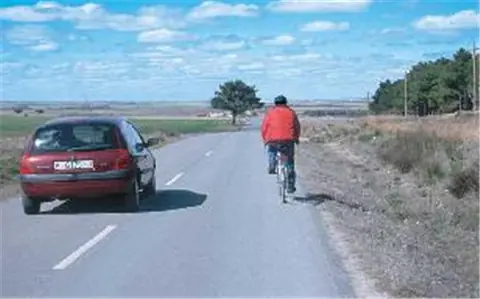
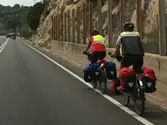
Este ciclista...
This cyclist...
- Adebería circular lo más cerca posible del eje central de la calzada.should ride as close as possible to the centre line of the carriageway.
- Bno debería circular por esa vía, pues no tiene arcén.should not be riding on this road, as it has no hard shoulder.
- Ccircula correctamente.is riding correctly.
ExplanationCyclists must ride on the hard shoulder on their right if there is one and it is driveable; if not, on the part of the carriageway that is strictly necessary, as far to the right as possible. On this road without a hard shoulder the cyclist is riding on the right of the carriageway, which is correct.
Un turismo con remolque circula por una carretera donde por razones de fluidez, ha sido habilitado un carril en sentido contrario al habitual, ¿le está permitido circular por dicho carril?
A car with a trailer is travelling on a road where, to keep traffic flowing, a lane has been opened for traffic in the opposite direction to the usual one. Is it allowed to use that lane?
- ASólo en el caso de que el tráfico esté congestionado.Only if the traffic is congested.
- BNo.No.
- CSí, siempre que circule a más de 60 kilómetros por hora y no sobrepase los 80 kilómetros por hora.Yes, provided it drives at more than 60 kilometres per hour and does not exceed 80 kilometres per hour.
ExplanationUnder Article 41.1 of the General Traffic Regulations, lanes opened in the opposite direction to the usual one to keep traffic flowing may only be used by motorcycles and cars; all other vehicles are prohibited from using them, including cars with a trailer.
Circula por el carril izquierdo y se enciende una cruz roja. ¿Qué debe hacer?
You are driving in the left-hand lane and a red cross lights up. What must you do?
- ACambiar de carril de forma segura lo antes posible.Change lanes safely as soon as possible.
- BDetenerse en el siguiente cruce.Stop at the next junction.
- CDetenerse bajo la cruz roja.Stop under the red cross.
ExplanationUnder Annex I of the General Traffic Regulations (section 4.3, lane signals), a red X-shaped light forbids using the lane shown, and those driving in it must leave it as quickly as possible, changing lanes safely.
En tramos con buena visibilidad y sin aglomeraciones, ¿pueden los ciclistas circular de dos en dos, pegados a la derecha?
On stretches with good visibility and no traffic build-ups, can cyclists ride two abreast, keeping to the right?
- ASí.Yes.
- BNo, siempre por el arcén.No, always on the hard shoulder.
- CNo, siempre en fila de uno.No, always in single file.
ExplanationAccording to Article 36.2 of the General Traffic Regulations (RGC), as worded by RD 518/2026, bicycles may ride two abreast on the hard shoulder and, if there is none or it is not driveable and wide enough, on the part of the carriageway that is strictly necessary. They must ride in single file on stretches without visibility, when they affect the flow of traffic, between sunset and sunrise, or in conditions that noticeably reduce visibility.
Por una vía ciclista, ¿está permitida la circulación de ciclomotores?
Are mopeds allowed on a cycle path?
- ASí, porque es una vía compartida por ciclos y ciclomotores.Yes, because it is a road shared by cycles and mopeds.
- BSí, ciclomotores de dos ruedas, exclusivamente.Yes, two-wheeled mopeds only.
- CNo.No.
ExplanationAccording to Annex I of the Traffic Law, as worded by RD 518/2026, a cycle path is specially designed for cycle traffic, and other vehicles may only use it if the competent authority allows it with signs showing this. Without that permission, mopeds may not use it.
¿Un vehículo con remolque puede circular por un carril habilitado para circular en sentido contrario al habitual por obras?
Can a vehicle towing a trailer use a lane opened for traffic in the opposite direction to the usual one because of roadworks?
- ASí.Yes.
- BNo, salvo que el remolque sea ligero.No, unless it is a light trailer.
- CNo.No.
ExplanationA vehicle towing a trailer may use a lane in the opposite direction to the usual one if it has been opened because of roadworks, but not if it has been opened to keep traffic flowing.
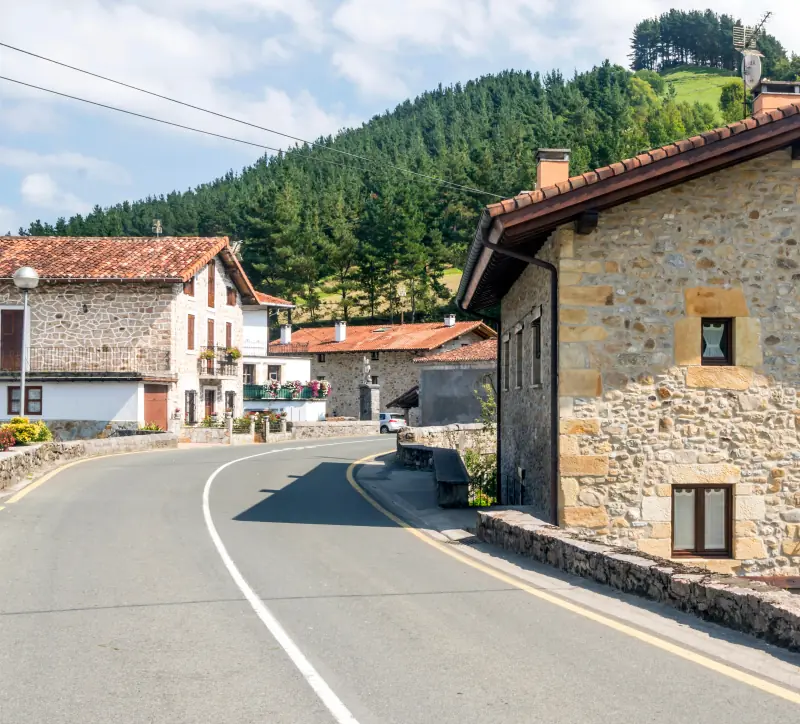
Como norma general, ¿cómo se denomina el tramo de carretera que discurre por poblado?
As a general rule, what is a stretch of road that runs through a built-up area called?
- ACarretera convencional.Conventional road.
- BTravesía.Travesía.
- CAutovía.Dual carriageway (autovía).
ExplanationA stretch of road that passes through a built-up area is called a travesía: it is still a road, but because it runs through an urban area, the limits and rules for built-up areas apply to it.
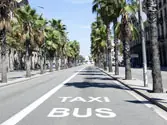
¿Puede circular con su motocicleta por un carril bus?
May you ride your motorcycle in a bus lane?
- ANo, con carácter general.No, as a general rule.
- BSí, pero sólo para adelantar y durante el recorrido indispensable.Yes, but only to overtake and for the shortest distance necessary.
- CSí, en caso de circulación muy densa.Yes, when traffic is very heavy.
ExplanationThe bus lane is a reserved lane (sign S-51a) intended only for the types of vehicle whose symbol appears on the sign, here buses and taxis. A motorcycle may not use it as a general rule, neither to overtake nor because traffic is heavy.
Una línea doble discontinua, ¿qué significa?
What does a double broken line mean?
- ACarril especial.Special lane.
- BCarril adicional.Additional lane.
- CCarril reversible.Reversible lane.
ExplanationA double broken line means that the lane is a reversible lane.
En un tramo de obras, Tráfico decide abrir un carril habilitado en sentido contrario al habitual. ¿Podrá circular un vehículo que arrastra un remolque pesado?
At roadworks, the traffic authority decides to open a lane in the opposite direction to the usual one. May a vehicle towing a heavy trailer use it?
- ANo, este tipo de carril no permite la circulación de remolques.No, this type of lane does not allow trailers.
- BNo, ya que únicamente sería posible si el remolque fuera ligero.No, it would only be possible if the trailer were light.
- CSí.Yes.
ExplanationUnder Article 41 of the General Traffic Regulations, if a lane running against the usual direction is opened because of roadworks, all vehicles allowed on that road may use it, including those towing heavy trailers, unless it is expressly forbidden. The restriction to motorcycles and cars applies to lanes opened to improve traffic flow.
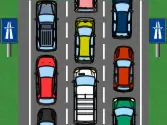
En caso de congestión del tráfico en una autopista, ¿se podrá circular con un turismo por el arcén?
If there is traffic congestion on a motorway (autopista), may you drive a car on the hard shoulder?
- ASí.Yes.
- BSí, abandonándola por la primera salida.Yes, leaving the motorway at the first exit.
- CNo.No.
ExplanationYou may not drive a car on the hard shoulder to avoid a traffic jam. Since RD 518/2026, only motorcycles may use the right-hand hard shoulder, on stretches where this is allowed and signposted, when traffic has come to a standstill because of congestion, at no more than 30 km/h and in single file (Article 36.3 of the RGC).
Ud. circula por un carril destinado al sentido normal de circulación contiguo a uno que se ha habilitado en sentido contrario al habitual. Si ha quedado un solo carril en su sentido de circulación, ¿qué debe hacer?
You are driving in a lane for the normal direction of traffic, next to a lane that has been opened for traffic in the opposite direction to the usual one. If only one lane is left in your direction, what must you do?
- ANada, porque circulo por la parte de la calzada a mi sentido destinada.Nothing, because I am driving on the part of the carriageway meant for my direction.
- BCircular con la luz de cruce encendida, al menos y a una velocidad no inferior a la máxima permitida para la vía.Drive with at least the dipped headlights on and at a speed no lower than the maximum allowed on the road.
- CCircular con la luz de cruce encendida, al menos y a una velocidad no inferior a 60 kilómetros por hora ni superior a 80 kilómetros por hora o inferiores si así estuviera establecido o específicamente señalizado.Drive with at least the dipped headlights on and at a speed no lower than 60 kilometres per hour and no higher than 80 kilometres per hour, or lower speeds if so set or specifically signposted.
ExplanationThis option is correct because it says you must drive with dipped headlights on and at a speed no lower than 60 km/h and no higher than 80 km/h, or lower if so set or signposted. This is important for visibility and safety on a road where there is a lane for the opposite direction.
All topics
- Definitions
- Documents and penalty points
- The driver's condition
- Duties of drivers and pedestrians
- Vehicle safety devices
- Vehicle controls and equipment
- Vehicle lights and horn
- Traffic signs, markings and signals
- Speed and distances
- Manoeuvres
- Right of way
- Carrying passengers and loads
- Driving safely in difficult conditions
- Vehicle mechanics and maintenance
- Road accidents and first aid
- Defensive and eco-driving
Independent app: not affiliated with or endorsed by the DGT (Spain's Directorate-General for Traffic) or the Ministry of the Interior. The official exam is booked with the DGT and taken at its test centres. The questions here are practice material; the DGT's official question bank is not public.
Basado en datos de la Agencia Estatal Boletín Oficial del Estado (https://www.boe.es). Textos consolidados de carácter meramente informativo. La AEBOE no patrocina ni respalda este sitio.
Parte de las preguntas procede de los tests de la revista «Tráfico y Seguridad Vial» de la DGT, reproducidos con indicación de la fuente.