
DGT test · 534 questions
The road and its lanes · Page 4 of 11
Carriageway, lanes, hard shoulder and road types: where you drive and how lanes are used on motorways, dual carriageways and streets.
Questions in this topic, with answers
534 questions, 50 per page, with the correct answer and the explanation. Page 4 of 11.
Al incorporarse a la autopista desde el carril de aceleración, debe...
When joining the motorway (autopista) from the acceleration lane, you must...
- Aacelerar hasta la velocidad adecuada al final del carril.accelerate to an appropriate speed by the end of the lane.
- Bdisminuir la velocidad y detenerse al final del carril, obligatoriamente.slow down and stop at the end of the lane, in all cases.
- Cacelerar hasta alcanzar obligatoriamente 120 km/h al final del carril.accelerate until you reach 120 km/h by the end of the lane, in all cases.
ExplanationUnder Article 72.4 of the General Traffic Regulations, at the start of the acceleration lane you must check that you can join without danger, stopping if necessary, and then accelerate to an appropriate speed by the end of the lane to join the traffic.
En una calzada con un sentido de circulación, en el centro hay una isleta. ¿Por dónde se puede circular?
On a one-way carriageway there is a traffic island in the middle. Where may you drive?
- APor la derecha o por la izquierda, indistintamente.On either the right or the left, it makes no difference.
- BSolamente por la parte derecha del refugio.Only to the right of the island.
- CSolamente por la parte izquierda del refugio.Only to the left of the island.
ExplanationWhen there are refuges, traffic islands or guidance devices on the road, you must drive on the part of the carriageway to their right, in your direction of travel, except when they are on a one-way road or within the part of the road for a single direction. In that case you may pass on either side.
Para que el vehículo se agarre bien a la calzada, ¿qué debe hacer?
What should you do to make sure the vehicle grips the carriageway well?
- AUtilizar neumáticos radiales en las ruedas delanteras y diagonales en las traseras.Use radial tyres on the front wheels and cross-ply tyres on the rear wheels.
- BCuidar que la profundidad del dibujo del neumático nunca sea inferior a 1,6 mm.Make sure the tread depth of the tyres is never less than 1.6 mm.
- CInflar más los neumáticos.Inflate the tyres more.
ExplanationWe must regularly check that the tyre tread is still above the tread wear indicators; otherwise the vehicle will be less stable on the road, will need more metres to stop and will be more likely to go out of control on a wet surface. A depth of at least 2 millimetres is recommended; 1.6 mm is compulsory.
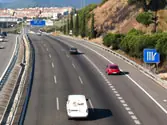
Las autopistas y autovías son...
Motorways (autopistas) and dual carriageways (autovías) are...
- Amás seguras que las carreteras convencionales.safer than conventional roads.
- Bmenos seguras que las carreteras convencionales.less safe than conventional roads.
- Cigual de seguras que las carreteras convencionales.as safe as conventional roads.
ExplanationMotorways and dual carriageways are safer than conventional roads because they have a separate carriageway for each direction, no level junctions, no access from adjoining properties, etc.
Circulando por una autopista después de efectuar un adelantamiento, ¿tendremos que volver al carril de la derecha?
Driving on a motorway (autopista), after overtaking, will we have to return to the right-hand lane?
- ANo es necesario si la autopista posee 3 carriles.It is not necessary if the motorway has 3 lanes.
- BSólo si se acercan vehículos más rápido que nosotros por detrás.Only if faster vehicles are approaching from behind.
- CSí, como norma general.Yes, as a general rule.
ExplanationOutside built-up areas you normally drive in the lane furthest to your right. When traffic or road conditions make it advisable, you may use the other lanes in your direction, as long as you do not obstruct a vehicle following you.
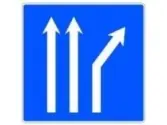
Si pretendemos seguir de frente, ¿por qué carril circularemos?
If we want to go straight on, which lane should we use?
- APor el carril de la derecha.The right-hand lane.
- BPor el segundo o tercer carril.The second or third lane.
- CSiempre por el segundo carril.Always the second lane.
ExplanationThe sign shows that, on this three-lane carriageway, the right-hand lane will split off to the right on the next stretch. So to go straight on we use the second or third lane.
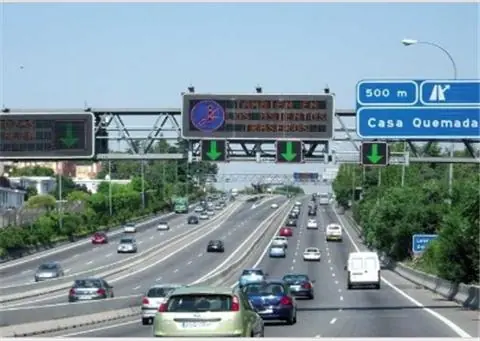
En vías divididas en tres calzadas, la central podrá estar destinada a la circulación en...
On roads divided into three carriageways, the centre one may be used for traffic in...
- Alos dos sentidos o en sentido único, según disponga la señalización.both directions or one direction, as the signs indicate.
- Blos dos sentidos, siempre.both directions, always.
- Csentido único, en cualquier caso.one direction, in all cases.
ExplanationOn roads divided into three carriageways, the side ones are one-way and the centre one may be used for traffic in both directions or in one only, as shown by the signs. It is not always two-way, nor always one-way.
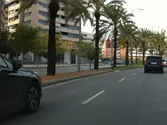
¿Puede un conjunto de vehículos que mide más de 7 metros circular por el tercer carril en una vía dentro de poblado?
May a combination of vehicles more than 7 metres long use the third lane on a road in a built-up area?
- ASí, puede ir por el que mejor convenga a su destino.Yes, it may use whichever lane best suits its destination.
- BNo, sólo podrá circular por el primero y el segundo carril.No, it may only use the first and second lanes.
- CHa de circular obligatoriamente por la derecha.It must keep to the right.
ExplanationA combination of vehicles more than 7 metres long may not use the third lane on roads outside built-up areas, but it may do so in built-up areas. In built-up areas we may use the lane that best suits our destination, unless the lanes are not marked; in that case we must keep to the right and use the other lanes when traffic or road conditions make it advisable.
¿Por qué carril circulará un turismo en una vía urbana con más de un carril en el sentido de su marcha?
Which lane should a car use on an urban road with more than one lane in its direction of travel?
- ASiempre por el carril más próximo al lado derecho.Always the lane closest to the right-hand side.
- BPor el carril que mejor convenga a su destino, estén o no delimitados los carriles.The lane that best suits its destination, whether or not the lanes are marked.
- CPor el carril que mejor convenga a su destino, sólo en el caso de que estén delimitados.The lane that best suits its destination, only if the lanes are marked.
ExplanationOn roads in built-up areas, a car driver may use the lane that best suits their destination, as long as there are at least 2 lanes in their direction marked by longitudinal lines.
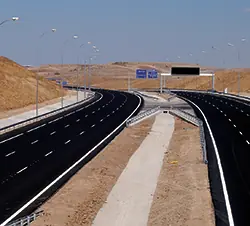
Si debido a una emergencia, un conductor se ve obligado a inmovilizar su vehículo en una autopista, ¿puede hacerlo en la mediana?
If, because of an emergency, a driver is forced to stop their vehicle on a motorway (autopista), may they leave it in the central reservation?
- ANo, en ningún caso se debe dejar inmovilizado el vehículo en la mediana.No, a vehicle must never be left stopped in the central reservation.
- BSolo si fuera preciso y de forma excepcional para no obstaculizar la circulación.Only if necessary and as an exception, so as not to obstruct traffic.
- CNo; siempre se debe dejar inmovilizado el vehículo en el arcén derechoNo; the vehicle must always be left stopped on the right-hand hard shoulder.
ExplanationThe general rule is to move the vehicle onto the right-hand hard shoulder, but in an emergency it is allowed, as an exception, to stop it in the central reservation if this is essential and it avoids obstructing traffic.
¿Cuál de los siguientes vehículos no puede circular por un carril VAO?
Which of the following vehicles may not use an HOV lane (VAO)?
- AUn ciclomotor con pasajero.A moped carrying a passenger.
- BUna moto.A motorcycle.
- CUn turismo.A car.
ExplanationUnder the article that regulates HOV lanes (VAO), their use is expressly restricted to motorcycles, cars and adaptable mixed-use vehicles. A moped does not belong to any of these categories, whether or not it carries a passenger. That is why a moped with a passenger may not use an HOV lane. A motorcycle may use the lane, and so may a car, as long as it meets the definition of a car (a motor vehicle designed to carry passengers).
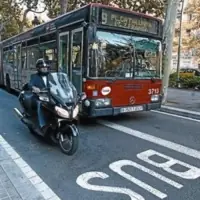
¿A la hora de contar los carriles de una vía se tienen en cuenta los carriles bus o taxi?
When counting the lanes of a road, are bus or taxi lanes taken into account?
- ASi, son carriles como el restoYes, they are lanes like any other
- BÚnicamente se cuentan los carriles de taxiOnly taxi lanes are counted
- CNoNo
ExplanationAs the Traffic Regulations state, when counting lanes for the purposes of the Regulations, lanes reserved for certain vehicles, such as buses or taxis, or for certain manoeuvres are not taken into account, in accordance with Article 34.
En una calzada con tres carriles separados por líneas discontinuas para los dos sentidos, ¿se podrá utilizar el carril de la izquierda?
On a carriageway with three lanes separated by broken lines, for both directions of traffic, may the left-hand lane be used?
- ANo, en ningún caso.No, never.
- BSí, para adelantar.Yes, to overtake.
- CSí, para cambiar de dirección a la izquierda.Yes, to turn left.
ExplanationThe correct answer is "No, never" because on a carriageway with three lanes separated by broken lines for both directions of traffic, the left-hand lane must never be used. Driving in the left-hand lane against the traffic can be extremely dangerous, as we could meet vehicles coming the other way in the same lane. So you must keep to the right-hand lane and use the centre lane only to overtake or to turn left.
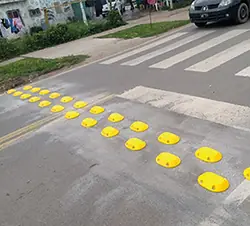
Los resaltos en los pasos para peatones, ¿se consideran obstáculos en la calzada?
Are raised pedestrian crossings (speed humps) considered obstacles on the carriageway?
- ASí, cuando son metálicos.Yes, when they are made of metal.
- BSí, puesto que dificultan el cruce de los pasos de peatones.Yes, because they make it harder to cross pedestrian crossings.
- CNo, siempre que garanticen la seguridad vial de los usuarios y especialmente de los ciclistas.No, as long as they ensure road safety for users, especially cyclists.
ExplanationRaised pedestrian crossings are legal speed-reducing features, not obstacles, as long as they are signed and ensure the safety of users, especially cyclists.
Circula conduciendo una motocicleta y se encuentra con un bache en la calzada. Si no puede esquivarlo o evitarlo, ¿cuál de los siguientes comportamientos sería el más idóneo?
You are riding a motorcycle and come across a pothole in the carriageway. If you cannot steer round it or avoid it, which of the following is the best thing to do?
- AAumentar la velocidad al máximo y desembragar justo en el momento en que se circule sobre el bache.Speed up as much as possible and pull in the clutch just as you ride over the pothole.
- BPonerse de pie sobre los reposapiés laterales y aumentar rápidamente la velocidad.Stand up on the side footrests and speed up quickly.
- CAminorar la velocidad y pasar sobre el bache manteniendo vertical la motocicleta.Slow down and ride over the pothole keeping the motorcycle upright.
ExplanationSlowing down and riding over the pothole with the motorcycle upright is the best option, because it reduces the impact of the pothole and keeps you in control of the motorcycle. Slowing down reduces the force of the impact and stops the suspension from compressing suddenly. Keeping the motorcycle upright also helps you keep your balance and avoid losing stability.
En una autopista, un coche circula sin intención de adelantar y con el carril derecho libre. ¿Puede ir por el carril izquierdo?
On a motorway (autopista), a car is driving with no intention of overtaking and with the right lane free. May it use the left lane?
- ANo.No.
- BSí, si circula a la velocidad máxima permitida.Yes, if it is travelling at the maximum permitted speed.
- CSí.Yes.
ExplanationAccording to Article 31.1 of the General Traffic Regulations (as worded by RD 518/2026), outside built-up areas, on carriageways with more than one lane in each direction, you normally drive in the right lane and the others are only used when traffic or road conditions make it advisable. If you are not going to overtake and the right lane is free, you must use it.
Con la reforma de 2026, las motocicletas podrán, en determinadas condiciones:
With the 2026 reform, motorcycles may, under certain conditions:
- AUtilizar el arcén de forma puntual y con restricciones.Use the hard shoulder occasionally and with restrictions.
- BCircular siempre por el carril izquierdo sin límite.Always ride in the left-hand lane without limit.
- CAdelantar por la derecha sin restricciones.Overtake on the right without restrictions.
ExplanationThe amendment to the Regulations allows motorcycles to use the hard shoulder occasionally in certain cases, with safety restrictions.

Los vehículos destinados a obras y servicios, ¿cómo advertirán de su presencia cuando estén realizando obras de reparación en la calzada?
How will works and service vehicles warn of their presence when they are carrying out repairs on the carriageway?
- AMediante un dispositivo luminoso con una luz rotativa de color azul o rojo.With a light device with a blue or red rotating light.
- BMediante un dispositivo luminoso con una o varias luces de color amarillo auto.With a light device with one or more amber lights.
- CMediante un dispositivo luminoso con una o varias luces de color azul.With a light device with one or more blue lights.
ExplanationWorks and service vehicles are marked with amber lights (V-2 rotating beacon); blue light is reserved for priority (emergency) vehicles such as police, fire engines or ambulances.
En un vía urbana de sentido único, estando los carriles delimitados por marcas viales, ¿por dónde circulará el conductor de un turismo?
On a one-way urban road with lanes marked by road markings, which lane should a car driver use?
- APor el carril que mejor convenga a su destino.The lane that best suits their destination.
- BPor el carril de la derecha, pudiendo utilizar el resto cuando las circunstancias lo aconsejen.The right-hand lane, using the others when circumstances make it advisable.
- CDentro de poblado el uso de carriles no está regulado.In built-up areas, lane use is not regulated.
ExplanationWhen driving in a built-up area where the lanes are marked, we may use the lane that best suits our destination. When the lanes are not marked, we must drive on the right of the carriageway.
No pueden circular por la autopista:
Which of these may not use the motorway (autopista)?
- Amotocicletas.motorcycles.
- Bciclomotores.mopeds.
- Ccamiones de más de 3.500 kg de MMA.lorries with a MAM over 3,500 kg.
ExplanationArticle 38.1 of the General Traffic Regulations forbids animal-drawn vehicles, bicycles, mopeds and vehicles for people with reduced mobility on motorways (autopistas) and dual carriageways (autovías). Motorcycles and lorries over 3,500 kg are allowed on the motorway.
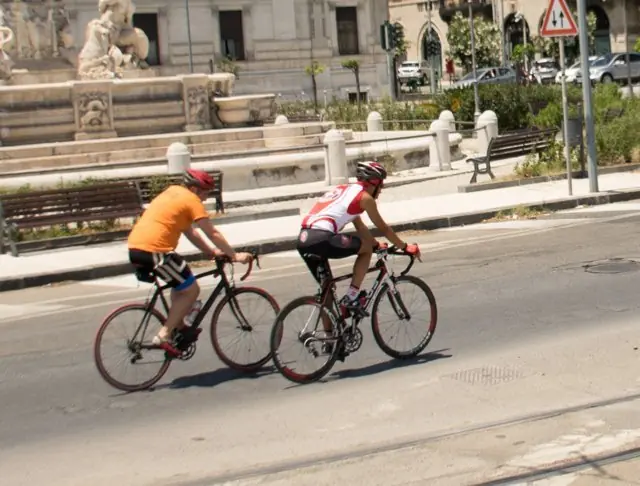
Como norma general, las bicicletas, ¿pueden circular en posición paralela en columna de a dos?
As a general rule, may bicycles ride side by side, two abreast?
- ANo.No.
- BSolo en autovías y siempre que no invadan la calzada.Only on dual carriageways (autovías), provided they do not go onto the carriageway.
- CSí.Yes.
ExplanationArticle 36 of the General Traffic Regulations (RGC) prohibits vehicles that must use the hard shoulder from riding side by side, but makes an exception for bicycles, which may ride two abreast. They must ride in single file on stretches with no visibility, at night, in poor visibility or when they obstruct traffic.
Una furgoneta de hasta 3500 kg que transporta a 4 personas y arrastra un remolque ligero, ¿podrá circular por un carril VAO?
May a van of up to 3,500 kg carrying 4 people and towing a light trailer use a HOV lane (VAO)?
- ASí.Yes.
- BSí, si el remolque va vacío.Yes, if the trailer is empty.
- CNo.No.
ExplanationUnder Article 35.2.a of the General Traffic Regulations (RGC), the HOV lane (VAO) is limited to motorcycles, cars and adaptable mixed-use vehicles, and combinations of vehicles may not use it. A van with a trailer cannot use it, even if it carries the required number of occupants.
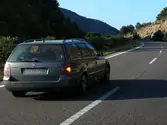
Si circula por una carretera con dos carriles para su sentido, ¿puede permanecer en el carril izquierdo tras efectuar un adelantamiento?
If you are driving on a road with two lanes in your direction, may you stay in the left lane after overtaking?
- ASí, puesto que no hay tráfico en sentido contrario.Yes, because there is no oncoming traffic.
- BNo, hay que volver al carril derecho, excepto si se va a realizar otro adelantamiento.No, you must return to the right lane, unless you are going to overtake again.
- CSí, en cualquier caso.Yes, in all cases.
ExplanationWhen overtaking on carriageways with two or more lanes for the same direction, a driver who is about to overtake again may stay in the lane used for the previous overtaking, but only after making sure they can do so without unduly disturbing drivers coming up from behind at a higher speed.
¿Se consideran los resaltos en los pasos de peatones obstáculos en la calzada?
Are raised humps at pedestrian crossings considered obstacles on the carriageway?
- ANo, siempre que se garantice la seguridad vial de los usuarios y especialmente de los ciclistas.No, as long as the road safety of users, and especially of cyclists, is guaranteed.
- BSí, cuando son metálicos.Yes, when they are made of metal.
- CSí, puesto que dificultan el cruce de los pasos de peatones.Yes, because they make it harder to cross pedestrian crossings.
ExplanationRaised humps at pedestrian crossings are not considered obstacles on the carriageway as long as they meet the basic rules set by the Ministry of Public Works and the road safety of users, especially cyclists, is guaranteed. This is because humps are designed to prevent accidents and make crossing areas safer, not to hinder traffic. The correct answer reflects this rule set out in the General Traffic Regulations.
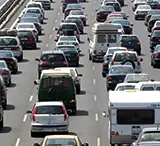
En esta situación de aglomeración, ¿podrá circular por el arcén?
In this congested situation, may you drive on the hard shoulder?
- ANo, está prohibido.No, it is prohibited.
- BSí, si tiene prisa.Yes, if you are in a hurry.
- CSí, para descongestionar el tráfico.Yes, to ease the traffic congestion.
ExplanationThe hard shoulder is not a traffic lane for cars: using it to avoid queues or because you are in a hurry is prohibited; only certain slow vehicles may use it, and in emergencies.
¿Cuando nos colocaremos en el carril de la izquierda para cambiar de dirección hacia la izquierda?
When will we move into the left-hand lane to turn left?
- ACuando la vía tenga tres carriles y dos sentidos.When the road has three lanes and two directions.
- BCuando la vía sea de sentido único.When the road is one-way.
- CCuando la vía sea de dos sentidos.When the road is two-way.
ExplanationWhen the road is one-way and we want to turn left, we will move into the left-hand lane. If the road had three lanes and two directions, we would move into the centre lane.
En autovía, ¿pueden un turismo y una motocicleta circular al mismo límite máximo genérico?
On a dual carriageway (autovía), do a car and a motorcycle have the same general maximum limit?
- ASí, ambos a 120 km/hYes, both 120 km/h
- BNo, la moto va a 100 km/hNo, the motorcycle's limit is 100 km/h
- CNo, el turismo va a 130 km/hNo, the car's limit is 130 km/h
ExplanationCars and motorcycles share the 120 km/h limit on dual carriageways (autovías) and motorways (autopistas).
Al circular por un carril reversible...
When driving in a reversible lane...
- ACircularemos como máximo a 80 km/h y usaremos el alumbrado de corto alcance.We will drive at 80 km/h at most and use the dipped headlights.
- BUsaremos el alumbrado de corto alcance tanto de día como de noche.We will use the dipped headlights by day and by night.
- CCircularemos como máximo a 80 km/h y como mínimo a 60 km/h usando en todo caso el alumbrado de corto alcance.We will drive at 80 km/h at most and at 60 km/h at least, always using the dipped headlights.
ExplanationWhen driving in a reversible lane, by day and by night, at least the dipped headlights must be on. The maximum speed allowed is the one set for the road.
Al circular por un carril reversible deberemos...
When driving in a reversible lane we will have to...
- ALlevar encendida la luz de corto alcance y una velocidad máxima de 80 km/h y mínima de 60 km/h.Have the dipped headlights on and keep to a maximum speed of 80 km/h and a minimum of 60 km/h.
- BLlevar encendida la luz de corto alcance.Have the dipped headlights on.
- CMantener una velocidad adaptada a las circunstancias, con un máximo de 60 km/h.Keep to a speed suited to the circumstances, with a maximum of 60 km/h.
ExplanationWhen driving in a reversible lane we are obliged to have the dipped headlights on, and the speed limit is the general one for the road.
¿Para qué sirve el carril de desaceleración?
What is the deceleration lane for?
- APara que circulen vehículos lentos.For slow vehicles to drive in.
- BPara adelantar por la derecha.For overtaking on the right.
- CPara reducir la velocidad al salir de una autopista.For slowing down when leaving a motorway (autopista).
ExplanationArticle 77 of the General Traffic Regulations states that to leave a motorway (autopista), dual carriageway (autovía) or other road, the driver must use the lane closest to the exit in good time and enter the deceleration lane as soon as possible, if there is one. The main purpose of this lane is to let vehicles slow down gradually and safely before joining the exit road, avoiding a sudden change of speed and keeping traffic flowing. It is not a lane for slow vehicles (crawler lane) or the lane usually used for overtaking.
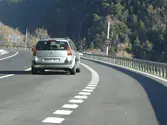
¿Se considera adelantamiento el hecho de que los vehículos que circulan por el carril de aceleración avancen más rápido que los que circulan por el carril derecho de la vía?
Is it considered overtaking when vehicles in the acceleration lane move faster than those in the right-hand lane of the road?
- AÚnicamente cuando superen los 100 km/h.Only when they go faster than 100 km/h.
- BSí.Yes.
- CNo.No.
ExplanationIt is not considered overtaking when vehicles in acceleration or deceleration lanes move faster than those in the normal traffic lanes, or the other way round. The same applies when driving in lanes or parts of the road reserved for certain vehicles. When traffic is so heavy that vehicles fill the whole width of the carriageway and can only move at the speed of the vehicle in front, it is not considered overtaking either.
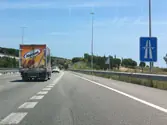
En un carril de entrada a la autopista, ¿cómo circularemos?
How should we drive in a slip road joining the motorway (autopista)?
- ADeteniéndonos antes de la señal.Stopping before the sign.
- BCediendo el paso a los vehículos que circulen por la autopista.Giving way to vehicles travelling on the motorway.
- CAcelerando, porque los que circulan por la autopista han de cedernos el paso.Speeding up, because vehicles on the motorway must give way to us.
ExplanationIn an acceleration lane to join the motorway (autopista), we must match our speed to that of the vehicles travelling on it, giving way to them if necessary.
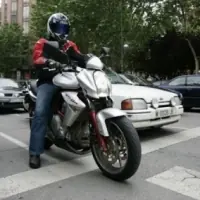
Una motocicleta dentro de un poblado, cuando la vía tiene más de un carril en el mismo sentido, podrá circular por…
In a built-up area, when the road has more than one lane in the same direction, a motorcycle may use…
- AEl carril que mejor convenga a su destino.The lane that best suits its destination.
- BEl carril de la derecha únicamente.Only the right-hand lane.
- CEl carril de la derecha para circular y el de la izquierda sólo para cambiar de dirección.The right-hand lane for driving, and the left-hand lane only for turning.
ExplanationIn a built-up area, on carriageways with at least two lanes marked for the same direction, a driver may use the lane that best suits their destination, as long as they do not obstruct other road users (Article 33 of the General Traffic Regulations). This applies equally to motorcycles and cars, except on motorways and dual carriageways.
¿Qué debemos hacer si circulando por una autopista se incorpora un vehículo que circula por el carril de aceleración?
What should we do if, while driving on a motorway (autopista), a vehicle is joining from the acceleration lane?
- ANada, porque es él quien debe ceder el paso.Nothing, because it is the one that must give way.
- BAcelerar para que se incorpore detrás de nosotros.Speed up so that it joins behind us.
- CFacilitarle la incorporación en la medida de lo posible.Make it easier for it to join, as far as possible.
ExplanationWhen a vehicle is joining a motorway (autopista) from the acceleration lane, we should make it easier for it to join as far as possible, even though it is the one that must give way.
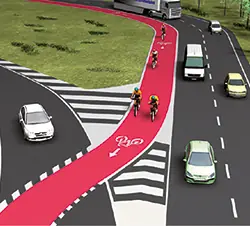
Para incorporarse a la vía principal, un turismo tiene que atravesar un carril bici debidamente señalizado; ¿deberá ceder el paso a los ciclistas que circulan por el mismo?
To join the main road, a car has to cross a properly marked cycle lane. Must it give way to the cyclists using it?
- ASí; los ciclistas tienen prioridad de paso.Yes; cyclists have right of way.
- BNo; el turismo tiene prioridad de paso.No; the car has right of way.
- CSolo cuando los ciclistas circulen en grupo.Only when the cyclists are riding in a group.
ExplanationWhen a vehicle crosses a properly marked cycle lane, the cyclists using it have right of way, whether they are riding alone or in a group. The car must wait until the lane is clear before joining.

En una carretera convencional, ¿por dónde circulará un rebaño?
On a conventional road, where should a flock or herd of animals move?
- APor el arcén de la derecha o el de la izquierda.On the right-hand or the left-hand hard shoulder.
- BUn rebaño no podrá circular, en ningún caso, por una carretera.A flock or herd may never use a road.
- CPor el borde derecho de la carretera en el sentido de la marcha.Along the right-hand edge of the road, in their direction of travel.
ExplanationWhen there is no livestock route (vía pecuaria), flocks and herds must move as close as possible to the right-hand edge of the road.
No se tendrán en cuenta, a efectos de la normal utilización, los carriles...
For the purposes of normal lane use, the following lanes are not counted...
- Areversibles.reversible lanes.
- Breservados a determinados vehículos.lanes reserved for certain vehicles.
- Cespeciales.special lanes.
ExplanationLanes reserved for certain vehicles are not intended for use by all road users, so they are not counted for the purposes of normal lane use. For example, the bus lane, acceleration or deceleration lanes, and lanes for certain manoeuvres.
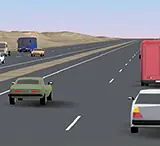
Después de adelantar al turismo y al camión el turismo verde desea seguir adelantando a otros vehículos. ¿Debe regresar antes al carril derecho?
After overtaking the car and the lorry, the green car wants to continue overtaking other vehicles. Must it return to the right lane first?
- ASí, siempre.Yes, always.
- BSí, pero solamente cuando circulen vehículos detrás a más velocidad.Yes, but only when vehicles behind are travelling faster.
- CNo, porque en autopistas no es obligatorio.No, because on motorways (autopistas) it is not compulsory.
ExplanationOn a motorway (autopista) you may overtake several vehicles one after another without returning to the right lane, as long as you do not obstruct anyone. You only have to return first if faster vehicles are approaching from behind and you would be in their way.

¿Un vehículo puede circular por este carril si no dispone del sistema de telepeaje dinámico?
Can a vehicle use this lane if it does not have a dynamic electronic toll system?
- ASí.Yes.
- BSí, pero solo las motocicletas.Yes, but only motorcycles.
- CNo.No.
ExplanationThe sign shows that the toll can be paid either by dynamic electronic toll or by any other authorised means of payment.
¿Cómo actuaremos en un carril de aceleración?
What will we do in an acceleration lane?
- ATendremos en cuenta las circunstancias y los demás vehículos que se acercan.We will take into account the circumstances and the other vehicles approaching.
- BAceleraremos hasta el final y nos incorporaremos sin tener que ceder el paso.We will accelerate to the end and join without having to give way.
- CNos detendremos y cederemos el paso.We will stop and give way.
ExplanationIn an acceleration lane, we must assess the circumstances and the other vehicles at the start of the lane, stopping if necessary. Then we will accelerate to join the main road at the end of the acceleration lane, giving way to the vehicles travelling on the road we want to join.
Los vehículos de personas con movilidad reducida, si no existe una vía o parte de ella destinada especialmente para ellos...
Vehicles for people with reduced mobility, if there is no road or part of a road specially intended for them...
- Apueden circular por autopista.may use motorways (autopistas).
- Bpueden circular por autovía.may use dual carriageways (autovías).
- Cdeben circular por el arcén si es transitable y lo bastante ancho.must use the hard shoulder if it is usable and wide enough.
ExplanationUnder the General Traffic Regulations in Spain, vehicles for people with reduced mobility must use the hard shoulder if there is no road specifically intended for them. This is because the hard shoulder is meant for situations like this, as long as it is usable and wide enough for the vehicle to travel safely.
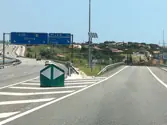
¿Cómo abandonaremos una autopista o autovía?
How will we leave a motorway (autopista) or dual carriageway (autovía)?
- ACircularé con suficiente antelación por el carril más próximo a la salida, penetrando lo antes posible en el carril de deceleración.I will move into the lane nearest the exit well in advance and enter the deceleration lane as early as possible.
- BEsperaré hasta el último momento para incorporarme en el carril de deceleración.I will wait until the last moment to move into the deceleration lane.
- CCircularé por el carril que más me convenga para desplazarme al carril de deceleración en el último momento.I will drive in whichever lane suits me best and move into the deceleration lane at the last moment.
ExplanationWe must move into the lane nearest the exit well in advance, so that we do not change lanes at the last moment and force other drivers to brake.
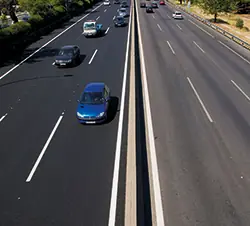
En una autopista con tres carriles para cada sentido, ¿por cuál se debe circular normalmente?
On a motorway (autopista) with three lanes in each direction, which lane should you normally use?
- APor cualquiera de ellos.Any of them.
- BPor el central o el derecho, es indistinto.The centre or the right lane, it makes no difference.
- CPor el derecho.The right lane.
ExplanationOutside built-up areas the general rule on lane use applies: you drive in the right lane, and the others are used only to overtake or when traffic conditions make it advisable.
En vías interurbanas y en calzadas con más de un carril en el mismo sentido, ¿por cuál carril circulará normalmente un automóvil?
On roads outside built-up areas, on carriageways with more than one lane in the same direction, which lane should a motor car normally use?
- APor el carril central.The centre lane.
- BPor el carril derecho.The right-hand lane.
- CPor el carril que más le convenga.Whichever lane suits it best.
ExplanationUnder Article 31 of the General Traffic Regulations, on roads outside built-up areas with more than one lane in the same direction, motor cars must normally drive in the right-hand lane. This keeps traffic safer and more orderly and leaves the other lanes free for vehicles that need to overtake.
¿Podrá ser utilizado normalmente un carril VAO por un ciclomotor ocupado por dos personas?
May a moped carrying two people normally use an HOV lane (VAO)?
- ANo.No.
- BSí, porque van dos personas.Yes, because there are two people on it.
- CSí, si circula por el arcén.Yes, if it rides on the hard shoulder.
ExplanationAs a general rule, the following may use the BUS-HOV (BUS-VAO) lane: two- or three-wheeled motorcycles, cars, buses with a maximum authorised mass (MAM) of more than 3,500 kg, articulated buses, and adaptable mixed-use vehicles, with the number of occupants set for each stretch. All other vehicles and combinations of vehicles are prohibited, including cars with a trailer, cycles and mopeds. However, the lane may also be used, even with only the driver on board, by: authorised types of vehicle displaying the V-15 sign (reduced mobility badge); two- or three-wheeled motorcycles; buses with a MAM of more than 3,500 kg and articulated buses; vehicles classed as taxis under the use criterion in Annex II of the General Vehicle Regulations, with an external roof light and a valid taxi licence; police, fire, civil protection, rescue and ambulance vehicles on an emergency call, and maintenance crews for the road and its facilities. Vehicles with environmental labels (ZERO, ECO, B and C) may use the BUS-HOV lane only when road signs say so.
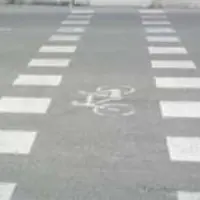
¿Qué indica una vía en la que encontramos dibujada en la calzada una bicicleta?
What does it mean when a bicycle is painted on the carriageway of a road?
- AProhibición de que los ciclos transiten por esa viaCycles are not allowed on that road
- BVía destinada a ciclos y motocicletasThe road is for cycles and motorcycles
- CVía exclusivamente para bicicletasThe road is for bicycles only
ExplanationWhen a road marking showing a bicycle is painted on the carriageway, it means that the road is for bicycles only (not mopeds), and all other vehicles are not allowed on it.
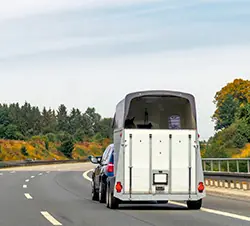
En vías interurbanas con tres carriles para el mismo sentido, ¿le está permitido circular por el carril izquierdo a un turismo con remolque?
On roads outside built-up areas with three lanes in the same direction, may a car with a trailer use the left lane?
- ASí, cuando la longitud del conjunto no supere los 7 metros.Yes, when the combination is no more than 7 metres long.
- BSí, pero solo para adelantar a otros vehículos.Yes, but only to overtake other vehicles.
- CNo, en ningún caso.No, in no case.
ExplanationArticle 31 of the General Traffic Regulations only requires vehicle combinations over 7 metres long to use the two right-hand lanes when there are three or more lanes in each direction. If the car with a trailer is no more than 7 metres long, it may also use the left lane.

¿Tienen permitido las bicicletas circular en posición paralela?
Are bicycles allowed to ride side by side?
- ASí, aproximándose todo lo posible a la parte derecha de la vía, excepto en los tramos sin visibilidad y cuando formen aglomeraciones de tráfico.Yes, keeping as far to the right of the road as possible, except on stretches without visibility and when they cause traffic build-ups.
- BSí, manteniendo entre ellas una distancia mínima de 1,5 metros.Yes, keeping a minimum distance of 1.5 metres between them.
- CNo, en ningún caso.No, under no circumstances.
ExplanationAccording to Article 36.2 of the General Traffic Regulations (RGC), as worded by RD 518/2026, bicycles may ride two abreast on the hard shoulder and, if there is none or it is not driveable and wide enough, on the part of the carriageway that is strictly necessary. They must ride in single file on stretches without visibility, when they affect the flow of traffic, between sunset and sunrise, or in conditions that noticeably reduce visibility.
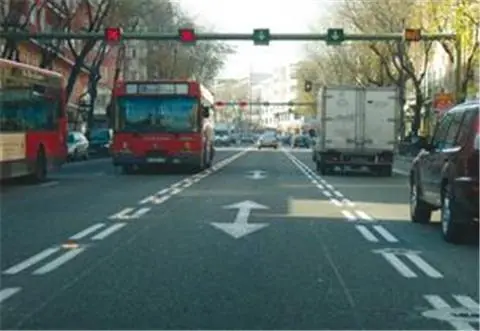
En un carril reversible, los conductores deberán...
In a reversible lane, drivers must...
- Autilizar, al menos, el alumbrado de cruce, tanto de día como de noche.use at least the dipped headlights, both by day and by night.
- Butilizar la luz de posición y circular como mínimo a 60 km/h y como máximo a 80 km/h.use the sidelights and travel at a minimum of 60 km/h and a maximum of 80 km/h.
- Ccircular como mínimo a 60 km/h y como máximo a 80 km/h y utilizar la luz de cruce durante la noche.travel at a minimum of 60 km/h and a maximum of 80 km/h and use the dipped headlights at night.
ExplanationAccording to Article 40 of the General Traffic Regulations (RGC), anyone driving in a reversible lane must have at least the dipped headlights on, both by day and by night. The limits of 60 and 80 km/h apply to lanes opened for traffic in the opposite direction to the usual one.
Al cruzar un carril bici con su vehículo, ¿está obligado a ceder el paso a los ciclistas que circulen por él?
When your vehicle crosses a cycle lane, must you give way to the cyclists using it?
- ASí, siempreYes, always
- BNo, solo si existe una señal específica de ceda el paso para ciclistasNo, only if there is a specific give way sign for cyclists
- CSolo si se aproximan por la derechaOnly if they are approaching from the right
ExplanationYes, always. According to the General Traffic Regulations, cyclists have right of way over motor vehicles when they are riding in a cycle lane, on a cycle crossing or on a properly signposted hard shoulder. When you cross a route reserved for other users (such as a cycle lane), you are entering their safety space, so right of way belongs entirely to them, whether they are approaching from the right or from the left.
All topics
- Definitions
- Documents and penalty points
- The driver's condition
- Duties of drivers and pedestrians
- Vehicle safety devices
- Vehicle controls and equipment
- Vehicle lights and horn
- Traffic signs, markings and signals
- Speed and distances
- Manoeuvres
- Right of way
- Carrying passengers and loads
- Driving safely in difficult conditions
- Vehicle mechanics and maintenance
- Road accidents and first aid
- Defensive and eco-driving
Independent app: not affiliated with or endorsed by the DGT (Spain's Directorate-General for Traffic) or the Ministry of the Interior. The official exam is booked with the DGT and taken at its test centres. The questions here are practice material; the DGT's official question bank is not public.
Basado en datos de la Agencia Estatal Boletín Oficial del Estado (https://www.boe.es). Textos consolidados de carácter meramente informativo. La AEBOE no patrocina ni respalda este sitio.
Parte de las preguntas procede de los tests de la revista «Tráfico y Seguridad Vial» de la DGT, reproducidos con indicación de la fuente.