
DGT test · 691 questions
Vehicle safety devices · Page 14 of 14
Seat belts, child restraints, helmets, head restraints and airbags: when they are compulsory, the exceptions and how to use them properly.
Questions in this topic, with answers
691 questions, 50 per page, with the correct answer and the explanation. Page 14 of 14.
En un turismo, el casco es obligatorio:
In a car, a helmet is compulsory:
- APara el conductorFor the driver
- BPara los pasajeros traserosFor rear passengers
- CNo, no es obligatorio en turismosNo, it is not compulsory in cars
ExplanationHelmets are not compulsory in cars. Under Article 118 of the General Traffic Regulations (RGC) (as worded by RD 518/2026), helmets must be worn by riders and passengers of motorcycles and mopeds, cyclists on interurban roads (and children under sixteen on all types of road) and riders of personal mobility vehicles (PMVs).
Si encuentra a un motociclista herido, ¿debe quitarle el casco?
If you find an injured motorcyclist, should you take off their helmet?
- ASí, debe quitárselo cuanto antes para evitar que se asfixie.Yes, you should take it off as soon as possible to stop them from suffocating.
- BSí, siempre que el herido esté consciente.Yes, as long as the injured person is conscious.
- CNo.No.
ExplanationTaking the helmet off an injured motorcyclist can make a possible neck (cervical spine) injury worse, and the damage may be permanent. It should only be removed by trained people and only if it is essential, for example because the injured person is not breathing; the right thing to do is not to move them and to call 112.
¿Quién está obligado a llevar casco homologado al circular en motocicleta?
Who must wear an approved helmet when riding a motorcycle?
- AÚnicamente el conductor.Only the rider.
- BÚnicamente el pasajero.Only the passenger.
- CTanto el conductor como el pasajero.Both the rider and the passenger.
ExplanationAn approved helmet is compulsory for the rider and the passenger of motorcycles and mopeds.
¿Qué ocupantes de un turismo están obligados a utilizar el cinturón de seguridad, dentro de poblado, si dicho turismo dispone de airbag?
Which occupants of a car must wear a seat belt in a built-up area if the car has airbags?
- ATodos los ocupantes, independientemente de que tengan, o no, airbag.All occupants, whether or not they have an airbag.
- BEstán obligados los ocupantes de los asientos que no tengan airbag, está desaconsejado para los ocupantes de los asientos que tengan airbag.Occupants of seats without an airbag must; for occupants of seats with an airbag it is not advisable.
- CDentro de poblado solamente es obligatorio para los ocupantes de los asientos delanteros, independientemente de que tengan, o no, airbag.In built-up areas it is only compulsory for occupants of the front seats, whether or not they have an airbag.
ExplanationThe airbag does not replace the seat belt: it is designed to work together with it. That is why all occupants must wear the seat belt fastened on any road, in or outside built-up areas, whether or not their seat has an airbag.
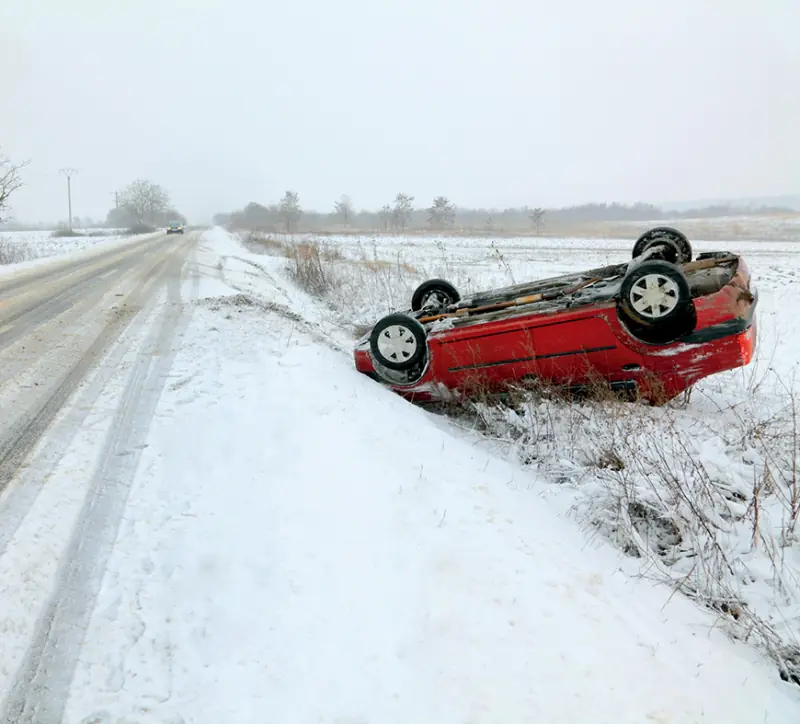
Si tiene un accidente y no lleva puesto el cinturón de seguridad, las posibilidades de resultar muerto en el siniestro son casi el doble en...
If you have an accident and are not wearing a seat belt, the chance of being killed is almost twice as high in...
- Ala plaza del conductor, únicamente.the driver's seat only.
- Blas plazas delanteras, únicamente.the front seats only.
- Ctodas las plazas del vehículo.all the seats of the vehicle.
ExplanationAccording to DGT data, travelling without a seat belt almost doubles the risk of dying in a crash in any seat of the vehicle, including the rear seats, whose occupants are thrown out or crush the people in front.
¿Se puede transportar a alguien en un ciclo construido para ser ocupado por una persona?
May you carry someone on a cycle built for one person?
- ASí, a un menor de hasta 22 kg.Yes, a child weighing up to 22 kg.
- BNo.No.
- CSí, a un menor de hasta 12 años.Yes, a child up to 12 years old.
ExplanationUnder Article 154 of the General Traffic Regulations (RGC) (as worded by RD 518/2026), cycles that by their design cannot carry more than one person may carry children weighing up to 22 kg who can sit up on their own, in additional seats, as long as the rider is an adult.
Al caerse con un vehículo de dos ruedas, el casco...
If you fall off a two-wheeled vehicle, the helmet…
- Aevita la abrasión de la cara y la cabeza al deslizarse por el pavimento.prevents grazes to the face and head when you slide along the road surface.
- Bprotege de golpes en las articulaciones.protects the joints from impacts.
- Creduce las lesiones de la zona lumbar.reduces injuries to the lower back.
ExplanationAs well as cushioning blows to the head, a full-face helmet protects the face and skull from grazes when you slide along the tarmac after a fall. It is not designed to protect the joints or the lower back: for that there are gloves, clothing with protectors and back protectors.
¿Una persona embarazada está obligada a usar el cinturón de seguridad?
Does a pregnant person have to wear a seat belt?
- ASí.Yes.
- BNo, a partir del sexto mes de embarazo.No, from the sixth month of pregnancy.
- CNo.No.
ExplanationPregnant people, like any other driver, must wear a seat belt, unless they have a medical exemption certificate for serious reasons.
Además de poder afectar a la eficacia del cinturón de seguridad, ¿por qué no se debe llevar el chaleco reflectante de alta visibilidad en el respaldo del asiento?
Apart from possibly affecting the effectiveness of the seat belt, why should you not keep the high-visibility reflective vest on the back of the seat?
- APorque es mejor llevarlo en el maletero.Because it is better to keep it in the boot.
- BPorque las bandas reflectantes pueden deslumbrar al conductor del vehículo que nos sigue.Because the reflective strips can dazzle the driver of the vehicle behind.
- CPorque si le da el sol, con el tiempo pierde su función reflectante.Because if the sun shines on it, it loses its reflective function over time.
ExplanationSunlight degrades the retroreflective strips of the vest over time and reduces its visibility. It is best to keep it inside the passenger compartment, within reach, for example in the glove box or under the seat, because you have to put it on before getting out of the vehicle; you cannot reach it in the boot without getting out.
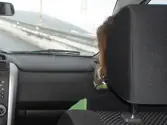
¿A qué altura debe quedar el centro del apoyacabezas?
At what height should the centre of the head restraint be?
- AA la altura del cuello.At neck height.
- BA la altura de los ojos.At eye height.
- CLa altura del apoyacabezas es indiferente.The height of the head restraint does not matter.
ExplanationThe head restraint must support the head, not the neck: its centre should be roughly at eye level and its top level with the top of the head, 4 cm or less from it. At neck height, in a rear-end collision the head would tip backwards over it.
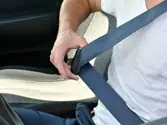
¿Por dónde debe pasar la cinta torácica del cinturón de seguridad?
Where should the chest strap of the seat belt go?
- APor el hombro.Over the shoulder.
- BPor la pelvis.Over the pelvis.
- CSobre la clavícula y por el centro del pecho.Over the collarbone and across the middle of the chest.
ExplanationThe chest strap of the seat belt must go over the collarbone, halfway between the shoulder and the neck, and run down across the middle of the chest. The lap strap must go over the hip bones, always below the abdomen. Once the seat belt is properly fastened, pull the strap slightly upwards so that it fits snugly against the body.
El conductor de un turismo, ¿debe llevar el cinturón de seguridad si el trayecto es corto?
Must a car driver wear a seat belt if the trip is short?
- ASí, siempre.Yes, always.
- BNo, si circula en vías urbanas.No, if they are driving on urban roads.
- CNo, si realiza operaciones de carga y descarga a corta distancia.No, if they are making loading and unloading stops over short distances.
ExplanationWearing a seat belt is compulsory on both urban and interurban roads. Road accidents can happen at any time, and it is better always to be protected. For the seat belt to be effective and do its job, it must be approved, properly anchored, adjusted to fit the body and correctly fastened. A seat that is tilted back too far, or unsuitable cushions, towels or seat covers, can cause submarining, which is when the seat belt cannot hold us in the accident and we slide down under the lap strap.
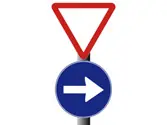
¿Quién es el responsable de que el pasajero de una motocicleta no lleve puesto el casco de protección obligatorio?
Who is responsible if a motorcycle passenger is not wearing the compulsory protective helmet?
- AEl conductor.The rider.
- BEl pasajero.The passenger.
- CEl titular de la motocicleta.The registered keeper (titular) of the motorcycle.
ExplanationThe rider of the motorcycle is responsible if the passenger is not wearing a protective helmet.
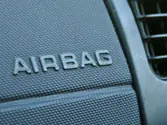
¿Cuándo se tendrá que desconectar el airbag del pasajero?
When must the passenger airbag be deactivated?
- ACuando el pasajero use gafas.When the passenger wears glasses.
- BEl airbag no se puede desconectar.The airbag cannot be deactivated.
- CCuando se sitúe un dispositivo de retención orientado hacia atrás.When a rear-facing restraint device is fitted.
ExplanationWe must deactivate the front passenger airbag whenever we carry a child in a rear-facing child seat; if it cannot be deactivated, we are not allowed to put the baby there.
La parte inferior del cinturón de seguridad debe colocarse…
The lower part of the seat belt must be placed…
- AEn el abdomen.On the abdomen.
- BEs indiferente.It makes no difference.
- CEn los huesos de la pelvis.On the pelvic bones.
ExplanationThe lower (lap) part of the seat belt must rest on the pelvic bones, which withstand pressure well. If it is placed on the abdomen, in a collision it can damage internal organs and make submarining more likely.
Usar pinzas para sujetar el cinturón de seguridad...
Using clips to hold the seat belt...
- AEs conveniente: reduce la presión del cinturón en el pecho.Is advisable: it reduces the pressure of the belt on the chest.
- BEs peligroso: reduce la eficacia del cinturón.Is dangerous: it reduces the effectiveness of the belt.
- CEs necesario: complemento del airbag en vehículos que lo lleven.Is necessary: it complements the airbag in vehicles that have one.
ExplanationClips leave the belt slack: in a crash, the body moves before the strap holds it back, which increases injuries and the risk of submarining. Article 117.1 of the General Traffic Regulations (RGC) requires the seat belt to be worn properly fastened.
Si conduce una motocicleta, ¿es recomendable usar guantes?
If you ride a motorcycle, is it advisable to wear gloves?
- ASí, incluso en verano, para proteger las manos en caso de caída.Yes, even in summer, to protect your hands in a fall.
- BNo, porque pueden dificultar la conducción.No, because they can make riding more difficult.
- CSí, su uso es obligatorio en todo tipo de vías.Yes, they are compulsory on all types of road.
ExplanationUnder Article 118.1.b of the General Traffic Regulations (RGC) (as worded by RD 518/2026), protective gloves are compulsory for motorcycle riders and passengers on interurban roads, but not on all types of road. Even so, it is advisable to wear them always, also in summer, because in a fall your hands are the first thing to hit the ground.
Si la motocicleta tiene una estructura de autoprotección y está dotada de cinturón de seguridad, ¿deberán llevar casco sus conductores?
If the motorcycle has a protective structure and is fitted with a seat belt, must its riders wear a helmet?
- ASí, juntamente con el cinturón de seguridad.Yes, together with the seat belt.
- BLos conductores usarán solo el cinturón de seguridad, pero los pasajeros utilizaran el casco.Riders will only use the seat belt, but passengers will use the helmet.
- CEstarán exentos de utilizar el casco de protección, tanto los conductores como los viajeros.Both riders and passengers will be exempt from wearing a protective helmet.
ExplanationWhen the motorcycle has a protective structure and is fitted with seat belts, its riders and passengers are exempt from wearing a helmet, but they must wear the seat belt on both urban and interurban roads.
¿Existe algún dispositivo de seguridad del vehículo que pueda sustituir el cinturón de seguridad?
Is there any safety device in the vehicle that can replace the seat belt?
- ASí, el airbag del conductor.Yes, the driver's airbag.
- BSí, los asientos traseros.Yes, the rear seats.
- CNo, todos están diseñados para funcionar de forma complementaria.No, they are all designed to work together.
ExplanationThe seat belt can NEVER be replaced by any other device as a passive safety element of the vehicle, because it is essential for protecting the driver and passengers. There are other safety systems that complement the seat belt, such as the airbag, but they will never replace it.
¿En qué plazas del vehículo es obligatorio abrocharse el cinturón de seguridad?
In which seats of the vehicle is it compulsory to fasten the seat belt?
- ASolo en las plazas delanteras.Only in the front seats.
- BEn todas las plazas, tanto delanteras como traseras.In all seats, both front and rear.
- CSolo cuando se circula por autopista o autovía.Only when driving on a motorway (autopista) or dual carriageway (autovía).
ExplanationThe seat belt is compulsory in all seats of the vehicle, front and back, on any type of road.
Conduciendo un ciclomotor, ¿puede llevar desabrochado el casco?
When riding a moped, may you wear your helmet unfastened?
- ANo.No.
- BSíYes.
- CSí, pero solo en vías urbanas.Yes, but only on urban roads.
ExplanationNo, you may not wear your helmet unfastened while riding a moped. You must wear an approved protective helmet, correctly fastened, on both urban and interurban roads. This is to keep the rider safe and prevent possible injuries in an accident.
La cinta torácica del cinturón de seguridad puede provocar lesiones graves durante un accidente si se pone...
The chest strap of the seat belt can cause serious injuries in an accident if it is placed...
- Asobre el hombro.over the shoulder.
- Bsobre el cuello o sobre un pecho.over the neck or over a breast.
- Csobre la clavícula.over the collarbone.
ExplanationThe chest strap must pass over the collarbone, between the shoulder and the neck, and go down across the middle of the chest. If it is placed over the neck or over a breast, it can cause serious injuries in an accident; over the shoulder it may slip and give less protection, but the correct position is over the collarbone.
¿Pueden los niños utilizar un dispositivo de retención orientado hacia atrás instalado en el asiento del pasajero si dicho asiento está protegido con airbag frontal?
May children use a rear-facing restraint device fitted in the passenger seat if that seat is protected by a front airbag?
- ASolamente durante trayectos cortos.Only on short trips.
- BNo, excepto que el airbag frontal haya sido desactivado adecuadamente de forma automática.No, unless the front airbag has been properly deactivated automatically.
- CSí, porque el airbag frontal le protege.Yes, because the front airbag protects them.
ExplanationA rear-facing restraint system cannot go in a seat with an active front airbag, because when it inflates it would hit the child seat and the child's head. It is only allowed if the airbag is deactivated, either manually or automatically.
¿Como deberá colocarse la cinta torácica del cinturón de seguridad?
How should the chest strap of the seat belt be placed?
- ASobre el cuello.Over the neck.
- BSobre el pecho.Over the chest.
- CSobre la clavícula, a medio camino entre el hombro y el cuello.Over the collarbone, halfway between the shoulder and the neck.
ExplanationThe chest strap of the seat belt must go over the collarbone, halfway between the shoulder and the neck, and run down across the middle of the chest. If it is placed over the neck, it can cause serious injuries in an accident.
En un vehículo de 5 plazas incluido el conductor, ¿cuántos menores de edad de estatura igual o inferior a 135 centímetros pueden viajar como máximo?
In a vehicle with 5 seats including the driver's, what is the maximum number of children who are 135 centimetres tall or less that can travel?
- A3 ya que en ningún caso pueden ocupar el asiento delantero.3, because they can never sit in the front seat.
- B4 siempre que todos utilicen un sistema de retención infantil.4, as long as they all use a child restraint system.
- C6 aunque alguno de ellos no utilice un sistema de retención infantil.6, even if one of them does not use a child restraint system.
ExplanationChildren who are 135 cm tall or less must travel in the rear seats with a child restraint system. Only if all the rear seats are taken by other such children may one travel in the front, also with their own system. In a 5-seat vehicle, 3 fit in the back and 1 in the front: 4 at most.
Los conductores de bicicletas tendrán que llevar casco...
Cyclists must wear a helmet...
- ASiempre que circulen por las vías públicas.whenever they ride on public roads.
- BCuando circulen por vías interurbanas.when they ride on interurban roads.
- CCuando circulen por vías urbanas.when they ride on urban roads.
ExplanationCyclists must wear a protective helmet when riding on interurban roads.
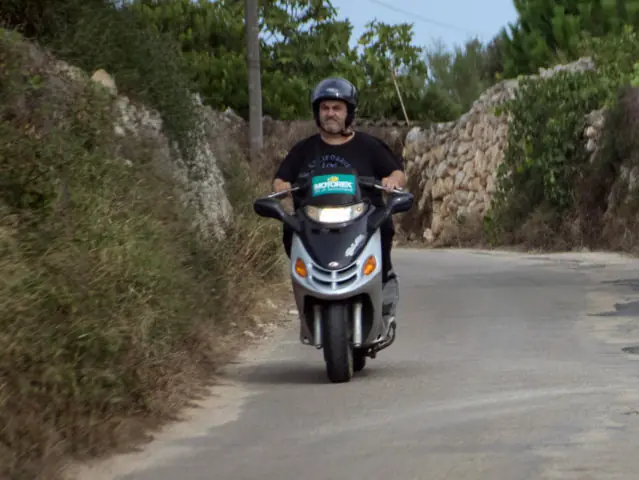
Cuando el casco no tiene pantalla de protección, ¿es conveniente utilizar gafas para protegerse los ojos?
When a helmet has no visor, is it advisable to wear goggles to protect your eyes?
- ANo.No.
- BSí.Yes.
- CNo solo es conveniente, sino que además es obligatorio.It is not only advisable, it is also compulsory.
ExplanationWithout a visor, the eyes are exposed to wind, dust, rain and insects, which can force you to close them or make your eyes water while riding. That is why it is advisable to wear protective goggles, although no rule makes them compulsory.
Como norma general, no están obligados a abrocharse el cinturón de seguridad cuando circulan por una vía urbana...
As a general rule, the following do not have to fasten their seat belt when driving on an urban road...
- Amenores de 16 años.children under 16.
- Bmujeres embarazadas.pregnant women.
- Clos ocupantes de vehículos en servicio de urgencia.the occupants of vehicles on an emergency call.
ExplanationUnder Article 119.2 of the General Traffic Regulations (RGC) (as worded by RD 518/2026), drivers and passengers of vehicles on an emergency call are exempt from wearing a seat belt in built-up areas, but not on motorways (autopistas), dual carriageways (autovías) or conventional roads. The old exemption for on-duty taxi drivers has been removed.
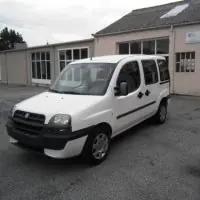
Los asientos de un vehículo mixto tienen cinturones de seguridad. ¿Está obligado el conductor a utilizarlo?
The seats of a mixed-use vehicle have seat belts. Must the driver wear one?
- ASí, en todas las vías.Yes, on all roads.
- BNo, en ningún tipo de vía.No, on no type of road.
- CNo, en vías fuera de poblado.No, on roads outside built-up areas.
ExplanationUnder Article 117 of the General Traffic Regulations (RGC), the driver and the occupants must wear the seat belt on all roads, urban and interurban, as long as the vehicle has one fitted. A mixed-use vehicle is not an exception.
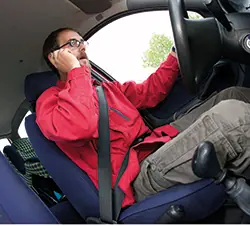
La cinta abdominal del cinturón de seguridad debe colocarse sobre...
The lap strap of the seat belt must be placed over...
- ALos huesos de la caderathe hip bones
- BLos muslosthe thighs
- CEl abdomenthe abdomen
ExplanationThe lap strap of the seat belt must go over the hip bones, always below the abdomen. If it is placed over the belly, in a crash it presses on soft organs and can cause internal injuries; over the thighs it tends to move and the body slides underneath it.
¿Puede un menor de edad de estatura inferior a 1,35m circular en el asiento delantero de un vehículo?
May a child shorter than 1.35 m travel in the front seat of a vehicle?
- ANo, en ningún caso.No, never.
- BSí, en cualquier caso siempre que utilice un sistema de retención infantil.Yes, in any case, as long as they use a child restraint system.
- CSí, excepcionalmente cuando no sea posible instalar en el asiento trasero el sistema de retención infantil.Yes, as an exception, when it is not possible to fit the child restraint system in the rear seat.
ExplanationChildren who are 1.35 m tall or less must sit in the rear seats of the vehicle, always using an approved restraint device suited to their height and weight. There are three exceptions in which children below that height may travel in the front seat: 1. When the vehicle has no rear seats. 2. When all the rear seats are already taken by children in the same situation, so it is impossible to fit all the child seats needed at that moment. 3. When it is not possible to fit child restraint systems in those seats. If they sit in the front seats and the vehicle has a front airbag, they may only use rear-facing restraint systems if the airbag has been deactivated.
El conductor de un cuadriciclo ligero equipado con cinturón de seguridad debe usarlo...
The driver of a light quadricycle fitted with a seat belt must wear it...
- Asolo en vías interurbanas.only on interurban roads.
- Bsolo en vías urbanas.only on urban roads.
- Ctanto en vías urbanas como interurbanas.on both urban and interurban roads.
ExplanationArticle 117 of the General Traffic Regulations (RGC) states that wearing a seat belt is compulsory on both urban and interurban roads for all drivers and occupants of motor vehicles and mopeds that have them fitted. This includes drivers of light quadricycles. So the correct answer is that they must wear it on both types of road, because the rule makes no distinction between types of road.
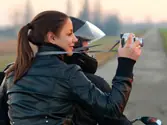
Si el pasajero de una motocicleta no usa el casco, la responsabilidad es del...
If a motorcycle passenger does not wear a helmet, the responsibility lies with the...
- Apasajero.passenger.
- Btitular del vehículo.registered keeper (titular) of the vehicle.
- Cconductor.rider.
ExplanationThe rider is responsible for making sure that passengers on motorcycles and mopeds take the required safety measures. In vehicles fitted with seat belts, the passenger is responsible for not wearing theirs.
En un turismo, ¿es obligatorio utilizar los cinturones de seguridad?
In a car, is it compulsory to wear seat belts?
- ASí, excepto para el conductor cuando efectúe una maniobra de marcha atrás o de estacionamiento.Yes, except for the driver when reversing or parking.
- BNo, cuando el uso del cinturón moleste o reste libertad de movimientos.No, when wearing the seat belt is uncomfortable or restricts your movement.
- CSí, excepto en los taxis.Yes, except in taxis.
ExplanationUnder Article 119 of the General Traffic Regulations (RGC) (as worded by RD 518/2026), in built-up areas only drivers and passengers of vehicles on an emergency call are exempt from wearing a seat belt; taxi drivers, delivery drivers and people accompanying schoolchildren no longer are. The general exemptions remain: the driver when reversing or parking, and people with a medical exemption certificate.
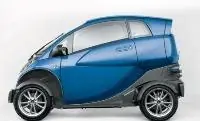
Los ocupantes de un ciclomotor que dispone de cinturones de seguridad están obligados a usarlos ....
The occupants of a moped fitted with seat belts must wear them...
- AÚnicamente cuando circulan por vías que no dispongan de arcén.only when riding on roads without a hard shoulder.
- BSiempre.always.
- CSólo cuando circulan por vías interurbanas.only when riding on interurban roads.
ExplanationUnder Article 118 of the General Traffic Regulations (RGC), occupants of a moped with a protective structure and seat belts are exempt from wearing a helmet, but they must always wear the seat belt, on any type of road.
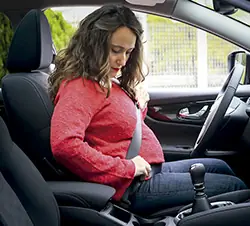
Las embarazadas, ¿están obligadas a utilizar el cinturón de seguridad?
Must pregnant women wear a seat belt?
- ASí, como norma general.Yes, as a general rule.
- BNo, porque es peligroso para el feto.No, because it is dangerous for the foetus.
- CSolo si no les dificulta los movimientos para conducir.Only if it does not restrict their movements when driving.
ExplanationPregnant women must wear the seat belt as a general rule, with the lower strap below the abdomen: when worn correctly, it protects the mother and the foetus. The only exemption is with a medical certificate.
¿A qué altura debe estar el centro del reposacabezas?
At what height should the centre of the head restraint be?
- AA la altura del cuello.At neck height.
- BA la altura de los ojos.At eye level.
- CLa altura del reposacabezas no importa.The height of the head restraint does not matter.
ExplanationThe head restraint must be set at the occupant's eye level to give proper protection in a collision. This is because a correctly positioned head restraint limits the backward movement of the head, reducing the risk of neck injuries, especially whiplash. This requirement is supported by the General Traffic Regulations (RGC), which stress the importance of occupant safety and the correct setting of restraint elements.
Como norma general, ¿podrá un menor de estatura inferior a 1´35m viajar en el asiento delantero?
As a general rule, may a child shorter than 1.35 m travel in the front seat?
- ASí.Yes.
- BNo, nunca.No, never.
- CNo, como norma general.No, as a general rule.
ExplanationChildren who are 1.35 m tall or less must sit in the rear seats of the vehicle, always using an approved restraint device suited to their height and weight. There are three exceptions in which children below that height may travel in the front seat: 1. When the vehicle has no rear seats. 2. When all the rear seats are already taken by children in the same situation, so it is impossible to fit all the child seats needed at that moment. 3. When it is not possible to fit child restraint systems in those seats. If they sit in the front seats and the vehicle has a front airbag, they may only use rear-facing restraint systems if the airbag has been deactivated. When children are taller than 1.35 m, they may sit in the front seat using the adult seat belt.
Un niño de 3 años, ¿puede viajar en el asiento delantero del vehículo?
May a 3-year-old child travel in the front seat of the vehicle?
- ANo, en ningún caso, siempre tiene que viajar en los asientos de atrás.No, never; the child must always travel in the rear seats.
- BSí, con el cinturón de seguridad de los adultos.Yes, with the adult seat belt.
- CSolo excepcionalmente, con un sistema de retención infantil homologado.Only exceptionally, with an approved child restraint system.
ExplanationUnder Article 117.3 of the General Traffic Regulations, a 3-year-old child, who is shorter than 135 cm, travels in the rear in their restraint system. They may only travel in the front if there are no rear seats, if the rear seats are occupied by other children or if the child seats do not fit; with a rear-facing seat, the airbag must be deactivated.
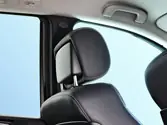
¿Cómo se debe regular adecuadamente la altura del apoyacabezas?
How should the height of the head restraint be adjusted properly?
- AEl borde debe quedar situado entre el límite superior de la cabeza y la altura de los ojos.Its edge should be between the top of the head and eye level.
- BEn función de la comodidad del conductor.According to the driver's comfort.
- CEl borde debe quedar situado entre el límite inferior de la cabeza y la altura de los ojos.Its edge should be between the bottom of the head and eye level.
ExplanationThe head restraint is an important passive safety element that can significantly reduce the chance of neck injuries. Adjusting it properly is vital, in both the front and the rear seats: - The top edge of the head restraint should be between the top of the head and eye level. - There should be no gap between the driver's head and the head restraint, or it should be as small as possible, never more than 4 cm.
El sistema ABS, ¿para qué sirve?
What is the ABS system for?
- APara evitar que se bloqueen las ruedas al frenar de forma intensa.To stop the wheels from locking when braking hard.
- BPara evitar que el coche derrape por exceso de velocidad.To stop the car from skidding because of excessive speed.
- CPara que el vehículo frene más con las ruedas traseras que con las delanteras.To make the vehicle brake more with the rear wheels than with the front wheels.
ExplanationThe ABS braking system stops the wheels from locking and sliding on the road surface during an emergency stop, which would make it impossible to control the steering of the vehicle.
All topics
- Definitions
- Documents and penalty points
- The driver's condition
- Duties of drivers and pedestrians
- Vehicle controls and equipment
- Vehicle lights and horn
- Traffic signs, markings and signals
- The road and its lanes
- Speed and distances
- Manoeuvres
- Right of way
- Carrying passengers and loads
- Driving safely in difficult conditions
- Vehicle mechanics and maintenance
- Road accidents and first aid
- Defensive and eco-driving
Independent app: not affiliated with or endorsed by the DGT (Spain's Directorate-General for Traffic) or the Ministry of the Interior. The official exam is booked with the DGT and taken at its test centres. The questions here are practice material; the DGT's official question bank is not public.
Basado en datos de la Agencia Estatal Boletín Oficial del Estado (https://www.boe.es). Textos consolidados de carácter meramente informativo. La AEBOE no patrocina ni respalda este sitio.
Parte de las preguntas procede de los tests de la revista «Tráfico y Seguridad Vial» de la DGT, reproducidos con indicación de la fuente.