
DGT test · 691 questions
Vehicle safety devices · Page 9 of 14
Seat belts, child restraints, helmets, head restraints and airbags: when they are compulsory, the exceptions and how to use them properly.
Questions in this topic, with answers
691 questions, 50 per page, with the correct answer and the explanation. Page 9 of 14.
¿Puede el airbag ser peligroso en un accidente?
Can an airbag be dangerous in an accident?
- ASí, siempre.Yes, always.
- BSí, si no llevas el cinturón de seguridad.Yes, if you are not wearing your seat belt.
- CNo.No.
ExplanationWearing a seat belt is compulsory under the General Traffic Regulations (RGC). Airbags are designed to work together with the seat belt; if it is not worn, the airbag may cause serious injuries instead of protecting you. This is because the seat belt keeps the occupant in place, so that the airbag can work correctly. So the correct answer is that an airbag going off can be dangerous if you are not wearing your seat belt.
Los conductores de motocicletas, ¿pueden conducir utilizando cascos o auriculares, con fines de comunicación o navegación?
May motorcycle riders ride using a headset or earphones for communication or navigation?
- ASí, porque los conductores de vehículos de dos ruedas no lo tienen prohibido.Yes, because riders of two-wheeled vehicles are not forbidden to do so.
- BSi, cuando se trate de dispositivos certificados u homologados para la utilización en el casco de protección.Yes, if they are devices certified or approved for use in the protective helmet.
- CSí, porque no tienen que emplear las manos.Yes, because they do not have to use their hands.
ExplanationWhile driving, it is forbidden to use mobile phones and any other means or system of communication, except when the communication takes place without using your hands and without wearing a headset, earphones or similar devices. The ban does not cover wireless devices certified or approved for use in the protective helmet of motorcycle and moped riders, for communication or navigation, as long as they do not affect driving safety.
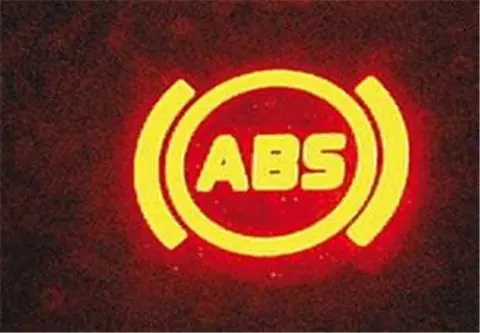
¿Qué es el ABS?
What is ABS?
- ASistema de frenado antibloqueo.Anti-lock braking system.
- BSistema de cierre centralizado.Central locking system.
- CSistema de control de seguridad.Safety control system.
ExplanationABS is the anti-lock braking system: it stops the wheels from locking under hard braking, so the driver can keep steering the vehicle while braking. It does not replace a proper safe distance.
El cinturón de seguridad, ¿es importante su correcta colocación?
Is it important to fit the seat belt correctly?
- ANo, ya que si no lo llevamos actuaría el airbag.No, because if we are not wearing it the airbag would work.
- BSí, pero solo en vías interurbanas.Yes, but only on interurban roads.
- CSí, pues podría producirse el efecto submarino.Yes, because submarining could occur.
ExplanationThe airbag complements the seat belt; it never replaces it. It is important to fit the belt correctly to prevent submarining.
La eficacia del airbag está garantizada cuando se utiliza...
The effectiveness of the airbag is guaranteed when it is used...
- Ajunto con el reposacabezas.together with the head restraint.
- Bel del conductor y el del pasajero.for both the driver and the passenger.
- Cjunto con el cinturón de seguridad.together with the seat belt.
ExplanationThe effectiveness of the airbag is guaranteed when it is used together with the seat belt, as the traffic rules (Código de Circulación) state. The seat belt helps keep the occupant in the right position, which makes the airbag as effective as possible in an accident. Wearing a seat belt is also compulsory and essential for protection in the vehicle.
¿Es obligatorio el uso del cinturón de seguridad en vías urbanas?
Is it compulsory to wear a seat belt on roads in built-up areas?
- ASí, siempre en todos los asientosYes, always, in all seats
- BSolo en los asientos delanterosOnly in the front seats
- CSolo si el vehículo tiene airbagOnly if the vehicle has an airbag
ExplanationThe seat belt is compulsory for all occupants on all roads.
¿Quién es el responsable de que el acompañante en la motocicleta no lleve el casco?
Who is responsible if the passenger on a motorcycle is not wearing a helmet?
- AEl acompañante.The passenger.
- BEl conductor de la moto.The rider.
- CEl titular de la moto.The registered keeper (titular) of the motorcycle.
ExplanationThe rider of the motorcycle is responsible if the passenger is not wearing the required approved helmet, so the rider may be fined.
Los neumáticos del vehículo, ¿son elementos de seguridad activa o pasiva?
Are a vehicle's tyres active or passive safety elements?
- ASon elementos de seguridad activa.They are active safety elements.
- BSon elementos de seguridad pasiva.They are passive safety elements.
- CSon elementos de seguridad secundaria.They are secondary safety elements.
ExplanationTyres in good condition can prevent an accident from happening, so they are active (or primary) safety elements.

¿Podrá viajar un menor de 12 años en los asientos delanteros?
May a child under 12 travel in the front seats?
- ANo, en ningún caso.No, never.
- BSí, si mide más de 1,35 m.Yes, if they are taller than 1.35 m.
- CSí, utilizando el cinturón de seguridad.Yes, using the seat belt.
ExplanationWhat counts is height, not age. Under article 117 of the General Traffic Regulations, a child taller than 135 cm may travel in the front with the seat belt; a child 135 cm tall or less travels in the back in a child restraint system, with some exceptions.
Sobre los airbags, ¿qué afirmación es correcta?
Which statement about airbags is correct?
- AHay que tomar precauciones para evitar daños.Precautions must be taken to avoid injury.
- BNo se recomienda usarlos al mismo tiempo que el cinturón de seguridad.It is not recommended to use them at the same time as the seat belt.
- CSon peligrosos si el conductor usa gafas.They are dangerous if the driver wears glasses.
ExplanationThe airbag works together with the seat belt and never replaces it, and it requires precautions: always wear your seat belt fastened, do not sit too close to the steering wheel or dashboard, do not put objects in front of it, and switch it off if a child travels in the front in a rear-facing seat.

¿Qué cubren los cascos integrales?
What do full-face helmets cover?
- ACubren cabeza y rostro.They cover the head and the face.
- Bcubren la cabeza pero no el rostro.They cover the head but not the face.
- CNo existen este tipo de cascos.This type of helmet does not exist.
ExplanationA full-face helmet completely covers the head and also the face, thanks to the chin guard and the visor. It is the type of helmet that gives the most protection, unlike an open-face (jet) helmet, which leaves the face uncovered.
Si se instala una silla infantil orientada hacia atrás en el asiento del copiloto, el airbag frontal:
If a rear-facing child seat is fitted in the front passenger seat, the front airbag:
- ADebe permanecer activado.Must stay activated.
- BDebe desactivarse.Must be deactivated.
- CNo influye en la seguridad del bebé.Does not affect the baby's safety.
ExplanationWith a rear-facing child seat in the front seat, you must deactivate the front airbag, because if it goes off it could kill the baby.
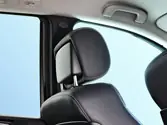
¿Es importante regular adecuadamente el apoyacabezas?
Is it important to adjust the head restraint properly?
- AEl apoyacabezas ya viene regulado de fábrica cuando compramos el coche.The head restraint is already adjusted at the factory when we buy the car.
- BSí, para conducir con más comodidad.Yes, to drive more comfortably.
- CSí, para evitar lesiones cervicales.Yes, to prevent neck injuries.
ExplanationThe head restraint prevents whiplash, which happens especially in rear-end collisions and can cause a neck sprain, one of the most common injuries in road accidents. It is very important to adjust it correctly: the top edge of the head restraint should be between the top of the head and eye level. The gap between the head restraint and the head must be as small as possible and never more than 4 centimetres.
Si el pasajero de una moto no usa casco, ¿quién es responsable?
If a motorcycle passenger is not wearing a helmet, who is responsible?
- AEl pasajero.The passenger.
- BEl propietario del vehículo.The owner of the vehicle.
- CEl conductor.The rider.
ExplanationThe rider is responsible for making sure the motorcycle passenger wears the compulsory helmet: this is one of the cases in which the Traffic Law makes the driver responsible for an offence committed by another person. Helmet use is required by Article 118 of the General Traffic Regulations.
¿Qué conductores están exentos de usar el cinturón de seguridad?
Which drivers are exempt from wearing a seat belt?
- ALos conductores de taxis en vías urbanas e interurbanas.Taxi drivers on urban and interurban roads.
- BTodos los conductores al efectuar marcha atrás.All drivers when reversing.
- CTodos los conductores en vías urbanas.All drivers on urban roads.
ExplanationUnder Article 119.1 of the General Traffic Regulations (RGC), all drivers may drive without a seat belt when reversing or parking, on any type of road. Since RD 518/2026 (Art. 119.2), taxi drivers are no longer exempt in built-up areas; that exemption now applies only to vehicles on an emergency call.
Si remolca un remolque ligero con su turismo, ¿está obligado a llevar entre sus accesorios un extintor homologado en buen estado?
If you are towing a light trailer with your car, must you carry an approved fire extinguisher in good condition among your equipment?
- ANo.No.
- BSí.Yes.
- CSolo cuando circule por vías interurbanas.Only when driving on roads outside built-up areas.
ExplanationUnder Annex XII.2 of the General Vehicle Regulations, combinations of non-special vehicles must carry an approved fire extinguisher in working order. A car towing a trailer, even a light one, forms a combination, so it must carry one on any type of road.
¿Cuál de las siguientes afirmaciones es correcta sobre un menor que viaja en el asiento delantero de un coche?
Which of the following statements about a minor travelling in the front seat of a car is correct?
- ANo está permitido.It is not allowed.
- BEstá permitido, pero siempre debe usar un sistema de retención infantil colocado mirando hacia atrás.It is allowed, but they must always use a rear-facing child restraint system.
- CEstá permitido si mide más de 135 centímetros.It is allowed if they are taller than 135 centimetres.
ExplanationUnder Article 117 of the General Traffic Regulations (RGC), a minor taller than 135 cm may travel in the front seat using the seat belt. If they are 135 cm tall or less, they travel in the back in a child restraint system, and only in exceptional cases in the front.
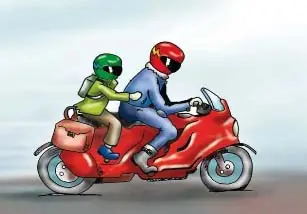
A la hora de elegir un casco, si tienes dudas entre dos tallas, siempre será mejor:
When choosing a helmet, if you are unsure between two sizes, it is always better to:
- AQue el casco baile aproximadamente dos centímetros al moverlo de un lado a otro.Let the helmet move about two centimetres when you move it from side to side.
- BEscoger la talla más ajustada.Choose the tighter-fitting size.
- CElegir una talla más grande.Choose a larger size.
ExplanationThe helmet must fit the head snugly, with no slack: if it moves, in an impact it can shift or come off and stop protecting you. If in doubt between two sizes, choose the tighter one, as long as it is not uncomfortable and does not press too hard.
¿Cuál es la función principal de la carrocería de un automóvil?
What is the main function of the bodywork of a motor car?
- AProporcionar comodidad a los ocupantes del vehículo.To make the occupants of the vehicle comfortable.
- BProteger a los ocupantes del vehículo y proporcionar una estructura resistente.To protect the occupants of the vehicle and provide a strong structure.
- CMejorar la estética del automóvil.To improve the look of the car.
ExplanationThe main function of a car's bodywork is to protect the vehicle's occupants and provide a strong structure. According to § 1 of the consolidated text of the Traffic, Motor Vehicle and Road Safety Law, cars are designed to carry people safely, which means the bodywork must be robust and strong to provide safety in an accident.
El airbag es una bolsa de aire que, en caso de impacto, se infla automáticamente. En el supuesto de que su vehículo tenga instalado este dispositivo, ¿es obligatorio utilizar el cinturón de seguridad?
An airbag is a bag of air that inflates automatically in an impact. If your vehicle has this device fitted, is it compulsory to wear a seat belt?
- ASí, porque el airbag es un elemento que complementa la eficacia del cinturón, pero no lo sustituye.Yes, because the airbag adds to the effectiveness of the seat belt but does not replace it.
- BSí, pero sólo por los ocupantes de los asientos traseros.Yes, but only for the occupants of the rear seats.
- CNo, porque el airbag es un elemento de seguridad más moderno y eficaz que el cinturón.No, because the airbag is a more modern and effective safety element than the seat belt.
ExplanationAn airbag is a safety device that is activated in an impact to protect the vehicle's occupants. However, it cannot replace the seat belt. The seat belt keeps occupants in place and stops them from being thrown forward in a crash. So both devices work together to increase safety. Wearing a seat belt is compulsory, even if the vehicle has airbags.
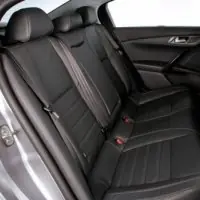
Los reposacabezas de los asientos de atrás, ¿hay que regularlos?
Do the head restraints of the rear seats need to be adjusted?
- AEs indiferente.It does not matter.
- BNo.No.
- CSí.Yes.
ExplanationA vehicle's head restraint must be set at a height where its highest part is level with the top of the driver's head. The head restraints of all the vehicle's occupants must be adjusted in the same way, including those of the rear seats. To know what height to set it at, remember that the centre of gravity of the occupant's head, that is, the height of their eyes, should be level with the centre of the head restraint.
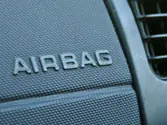
¿Se puede desconectar el airbag delantero del acompañante?
Can the front passenger airbag be deactivated?
- ASí.Yes.
- BNo, está prohibido manipularlo.No, tampering with it is prohibited.
- CNo.No.
ExplanationThe front passenger airbag must be deactivated when carrying a child in an approved child restraint system facing backwards. If the vehicle does not allow the airbag to be deactivated, you cannot carry the baby in that seat with the child seat facing backwards.
Los conductores de ciclomotores, ¿están obligados a llevar casco de protección por vías urbanas?
Must moped riders wear a protective helmet on urban roads?
- ASí, es obligatorio.Yes, it is compulsory.
- BNo, sólo es obligatorio cuando circulen por vías interurbanas.No, it is only compulsory when riding on interurban roads.
- CNo, los conductores de ciclomotores no están obligados a llevar casco.No, moped riders do not have to wear a helmet.
ExplanationThe following must wear a helmet on interurban roads as well as on urban roads and travesías (stretches of road through a town): - Riders and passengers of two-wheeled motorcycles, with or without a sidecar. - Drivers of three-wheeled vehicles and quadricycles. - Riders and passengers of mopeds.
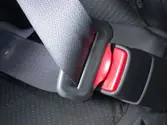
Las normas del cinturón de seguridad, ¿a qué obligan?
What do the seat belt rules require?
- AA llevarlo puesto y abrochado siempre.Wearing it and always having it fastened.
- BA llevarlo en el vehículo y abrochármelo sólo en carretera.Having it in the vehicle and fastening it only on the open road.
- CA llevarlo puesto sin abrochar.Wearing it without fastening it.
ExplanationWearing a seat belt is compulsory for the driver and passengers of cars and of vehicles with a maximum authorised mass of up to 3,500 kilograms used to carry people and goods, whether at the same time or not. To be effective and do its job, the seat belt must: - Be approved. - Be properly anchored. - Be properly adjusted to fit the body. - Be correctly fastened. A badly adjusted seat or seat belt can lead to submarining. This is when the seat belt cannot hold the driver in the accident and their body slides down under the lap strap.
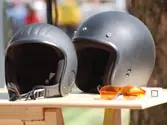
Cuando el casco no tiene visera, ¿es conveniente ponerse unas gafas de seguridad?
When the helmet has no visor, is it advisable to wear safety goggles?
- ANo.No.
- BSí, porque es obligatorio.Yes, because it is compulsory.
- CSí, para proteger los ojos.Yes, to protect your eyes.
ExplanationAlthough they are not compulsory, safety goggles are also recommended. If the helmet does not have a built-in device such as a visor that the rider can lower when they want, it is advisable, for their own safety and that of others, for motorcyclists and moped riders to wear safety goggles that protect their eyes from cold, wind, dust, insects, etc. A single speck of dust or an insect getting into the eye can make the rider lose balance and control of the vehicle and cause an accident.
Los conductores y pasajeros de vehículos que realicen servicios de urgencia, ¿están obligados a utilizar el cinturón de seguridad cuando circulen en poblado?
Must drivers and passengers of vehicles on an emergency call wear a seat belt when driving in built-up areas?
- ALos conductores sí están obligados; los pasajeros no.The drivers must; the passengers need not.
- BNo.No.
- CLos conductores no están obligados; los pasajero sí.The drivers need not; the passengers must.
ExplanationUnder Article 119 of the General Traffic Regulations (RGC), drivers and passengers of vehicles on an emergency call are exempt from wearing a seat belt when driving in built-up areas. They are never exempt on motorways (autopistas), dual carriageways (autovías) or conventional roads.
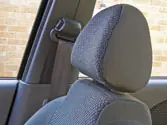
¿Cómo se tiene que regular el apoyacabezas?
How must the head restraint be adjusted?
- ADe manera que el conductor esté lo más cómodo posible.So that the driver is as comfortable as possible.
- BDe manera que el borde del apoyacabezas quede situado entre el límite superior de la cabeza y a la altura de los ojos.So that the edge of the head restraint is between the top of the head and eye level.
- CDe manera que el borde del apoyacabezas quede situado entre el límite inferior de la cabeza y la altura de los ojos.So that the edge of the head restraint is between the bottom of the head and eye level.
ExplanationIt is very important to adjust the head restraint correctly. Its top edge should be between the top of the head and eye level. The gap between the head restraint and the head must be as small as possible and never more than 4 centimetres.
¿Por dónde debe pasar la banda del hombro del cinturón de seguridad?
Where should the shoulder strap of the seat belt go?
- APor el hombroOver the shoulder
- BSobre la pelvisOver the pelvis
- CSobre la clavícula y por el centro del pechoOver the collarbone and across the middle of the chest
ExplanationThe General Traffic Regulations (RGC) and the Road Safety Law require occupants to wear the chest strap of the seat belt correctly fastened. It must run across the middle of the chest, over the collarbone. If it is placed over the shoulder, the belt can press on the armpit area, which can cause collarbone fractures and even limit movement; if it is worn over the pelvis, the area with the most mass is not protected and the belt loses its cushioning function in a crash. That is why the rules require the position over the collarbone and the middle of the chest, the only one that ensures the energy is absorbed correctly and minimises the risk of injury.
Está permitido circular sin el cinturón de seguridad...
Travelling without a seat belt is allowed for...
- Aa las mujeres embarazadas.pregnant women.
- Ba los ocupantes de vehículos en servicio de urgencia, dentro de poblado.occupants of vehicles on an emergency call, in built-up areas.
- Ca los repartidores de mercancías, dentro y fuera de poblado.goods delivery drivers, both in and outside built-up areas.
ExplanationUnder Article 119 of the General Traffic Regulations (RGC) (as worded by RD 518/2026), in built-up areas only drivers and passengers of vehicles on an emergency call are exempt from wearing a seat belt; taxi drivers, delivery drivers and people accompanying schoolchildren no longer are. The general exemptions remain: the driver when reversing or parking, and people with a medical exemption certificate.
¿Cómo nos debemos colocar la cinta abdominal del cinturón de seguridad?
How should we wear the lap strap of the seat belt?
- ASobre los muslos.Over the thighs.
- BSobre el abdomen.Over the abdomen.
- CSobre los huesos de la cadera, por debajo del abdomen.Over the hip bones, below the abdomen.
ExplanationThe lap strap must go over the hip bones (the pelvis), always below the abdomen.
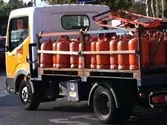
Los distribuidores de mercancías, ¿en qué caso estarán exentos de utilizar el cinturón de seguridad?
In which case are goods delivery drivers exempt from wearing a seat belt?
- ASolo en los mismos casos que el resto de conductores.Only in the same cases as other drivers.
- BEn vías dentro de poblado cuando realicen operaciones frecuentes de carga y descarga.On roads in built-up areas, when they make frequent loading and unloading stops.
- CEn todo tipo de vías cuando realicen operaciones frecuentes de carga y descarga.On all types of road, when they make frequent loading and unloading stops.
ExplanationUnder Article 119.2 of the General Traffic Regulations (RGC) (as worded by RD 518/2026), in built-up areas the seat belt exemption only covers drivers and passengers of vehicles on an emergency call; the old exemption for goods delivery drivers has been removed. The general exemptions of Article 119.1 still apply, such as when reversing or parking.
Si su motocicleta tiene cinturón de seguridad, ¿cuándo debe usarlo?
If your motorcycle has a seat belt, when must you wear it?
- ASolo cuando circule por vías interurbanas y travesías.Only when riding on interurban roads and travesías (stretches of road through a town).
- BEn todo tipo de vías.On all types of road.
- CSolo cuando circule por vías interurbanas.Only when riding on interurban roads.
ExplanationUnder the General Traffic Regulations (RGC), riders of motorcycles fitted with seat belts must wear them on all types of road, both urban and interurban. This is essential for the safety of the rider and passengers, because wearing the belt can reduce the risk of injury in an accident. The rules state that this obligation applies whatever the type of road, so the correct option is that the seat belt must be worn on all types of road.

¿Para qué sirve el reposacabezas?
What is the head restraint for?
- APara conducir más cómodo y relajado.To drive more comfortably and relaxed.
- BPara evitar o disminuir las lesiones de cuello y cervicales.To prevent or reduce neck injuries.
- CPara evitar que los pasajeros de los asientos posteriores irrumpan en el espacio delantero en caso de accidente.To stop rear-seat passengers from being thrown into the front of the vehicle in an accident.
ExplanationThe head restraint is very effective in rear-end collisions, because it greatly reduces the injuries caused by the head moving forwards and backwards, which is known as whiplash.
La cinta torácica del cinturón de seguridad , debe colocarse sobre….
The chest strap of the seat belt must go over...
- AEl hombro.the shoulder.
- BLa clavícula, a medio camino entre el hombro y el cuello.the collarbone, halfway between the shoulder and the neck.
- CEl cuello.the neck.
ExplanationThe diagonal strap of the seat belt must go over the collarbone, halfway between the shoulder and the neck, and the lower strap over the hips. Over the neck it can cause injuries, and on the edge of the shoulder it can slip off in a crash.
En relación con el casco de protección, el motorista debe saber que...
Regarding the protective helmet, a motorcyclist should know that...
- AEs preferible utilizar un casco de tipo jet, sin mentonera.it is better to use an open-face (jet) helmet, without a chin guard.
- BDebe quedar bastante holgado para que cumpla su función protectora.it should be quite loose so that it can protect properly.
- CDebe estar homologado.it must be approved.
ExplanationUnder Article 118.1 of the General Traffic Regulations (RGC) (as worded by RD 518/2026), riders and passengers of motorcycles must wear protective helmets approved under UNECE Regulation No. 22, properly fastened, on all types of road. A loose helmet does not protect properly in a fall.
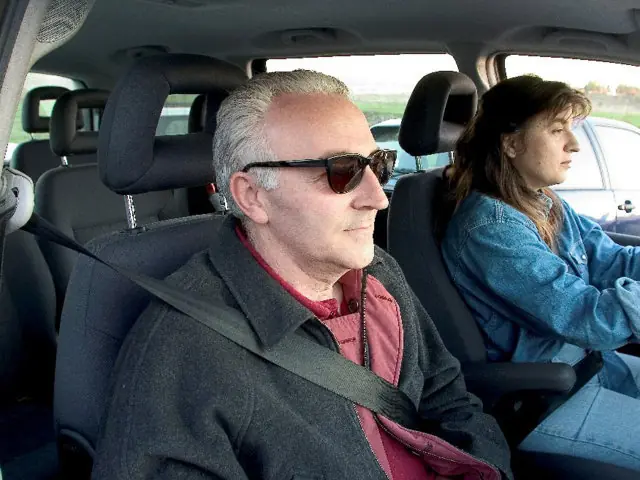
En caso de accidente, ¿es menos eficaz el cinturón de seguridad cuando las cintas no están bien estiradas?
In an accident, is the seat belt less effective when the straps are not properly tight?
- ANo es menos eficaz, pero es incómodo.It is not less effective, but it is uncomfortable.
- BSí. Y puede provocar lesiones aunque esté abrochado.Yes. And it can cause injuries even when fastened.
- CNo es menos eficaz, pero es mejor sustituirlo por otro.It is not less effective, but it is better to replace it.
ExplanationThe seat belt only protects well if the straps are tight and close to the body, with no slack or twists. If they are loose or twisted, in a crash the body moves before it is held back and the strap can cause injuries, even if the belt is fastened.
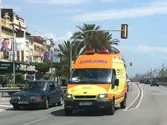
- Si una ambulancia circula en servicio de urgencia dentro de poblado, ¿deben el conductor y los pasajeros llevar el cinturón de seguridad?
If an ambulance on an emergency call is driving in a built-up area, must the driver and passengers wear a seat belt?
- AEl conductor no, los pasajeros si.Not the driver, but the passengers must.
- BEl conductor si, los pasajeros no.The driver must, but not the passengers.
- CNo obligatoriamente ni el conductor ni el pasajero.Neither the driver nor the passenger has to.
ExplanationThe driver and passengers of an ambulance on an emergency call may choose not to wear a seat belt.
¿Cuándo estará correctamente regulado el apoyacabezas?
When is the head restraint correctly adjusted?
- ACuando el borde del apoyacabezas esté situados a la altura del cuello.When the edge of the head restraint is at neck height.
- BCuando el borde del apoyacabezas esté situada entre los hombros y el cuello.When the edge of the head restraint is between the shoulders and the neck.
- CCuando el borde del apoyacabezas esté situado entre el límite superior de la cabeza y la altura de los ojos.When the edge of the head restraint is between the top of the head and eye level.
ExplanationIt is correctly adjusted when the edge of the head restraint is between the top of the head and eye level, and as close to the head as possible, never more than 4 cm away.
Los pasajeros menores de edad que midan entre 140 y 150 cm, ¿Qué tipo de elemento de seguridad pueden llevar?
What type of safety device may child passengers between 140 and 150 cm tall use?
- ASólo el cinturón de seguridad para adultos.Only the adult seat belt.
- BSólo un dispositivo de retención homologado.Only an approved restraint device.
- CUn dispositivo de retención homologado o el cinturón de seguridad para adultos.An approved restraint device or the adult seat belt.
ExplanationChildren taller than 135 cm may use the adult seat belt, although up to 150 cm an approved restraint device suited to their height and weight is recommended. So between 140 and 150 cm, either of the two is fine.
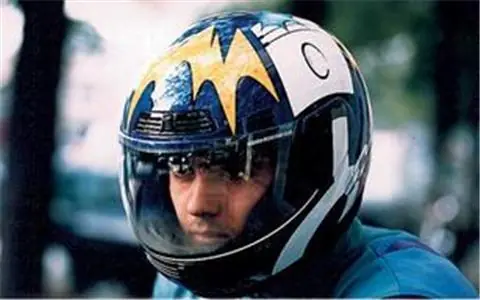
En un casco, ¿qué pantalla es la más recomendable?
Which helmet visor is the most advisable?
- AUna pantalla oscuraA dark visor
- BUna pantalla antivahoAn anti-fog visor
- CUna pantalla polarizadaA polarised visor
ExplanationAn anti-fog visor stops it misting up from your breath or from changes in temperature and humidity, so you always keep good vision. Dark visors, on the other hand, greatly reduce visibility at dusk, in tunnels or in poor light.
El airbag es un sistema de seguridad pasiva que toma mayor relevancia en las colisiones...
The airbag is a passive safety system that is most important in...
- APor alcance.rear-end collisions.
- BFrontales.head-on collisions.
- CLaterales.side collisions.
ExplanationAirbags, especially the most common ones, the front airbags, are very effective in head-on collisions, stopping the occupants from hitting parts of the vehicle.
¿Cuándo hay que desactivar el airbag delantero de un asiento?
When must the front airbag of a seat be deactivated?
- AEn ningún caso.Never.
- BCuando en ese asiento esté sentada una mujer embarazada.When a pregnant woman is sitting in that seat.
- CCuando en ese asiento esté instalado un sistema de retención infantil orientado hacia atrás.When a rear-facing child restraint system is fitted in that seat.
ExplanationYou must deactivate the front airbag of a seat when you fit a rear-facing child restraint system in that seat. This is because airbags are designed to open with great force, which can be extremely dangerous for a child in a rear-facing seat. The rules state that, if a child sits in a front seat in a rear-facing child restraint system, the airbag must be deactivated to prevent serious injuries. This is supported by the current regulations, which aim to keep children safe in vehicles and stress the importance of following the manufacturer's instructions and using restraint devices properly.
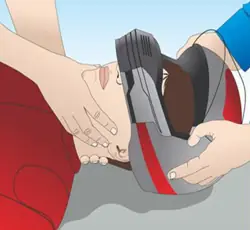
¿Es aconsejable quitar el casco a un motorista que ha sufrido un accidente?
Is it advisable to remove the helmet of a motorcyclist who has had an accident?
- ASí, lo antes posible para evitar asfixias.Yes, as soon as possible to prevent suffocation.
- BSí, siempre que el herido esté consciente.Yes, as long as the injured person is conscious.
- CNo, salvo que sea necesario y se conozca la técnica.No, unless it is necessary and you know the technique.
ExplanationAs a general rule you must not remove the helmet of an injured motorcyclist, because it could make a neck (cervical spine) injury worse. It is only done if it is essential, for example because the person is not breathing, and by someone who knows the technique, holding the head and neck.
Como norma general, ¿los pasajeros de un taxi que presta servicio público pueden viajar sin ponerse el cinturón de seguridad?
As a general rule, may the passengers of a taxi providing a public service travel without wearing a seat belt?
- ASí.Yes.
- BSolo cuando circulen por vías urbanas o travesías.Only when driving on urban roads or travesías (stretches of road through a town).
- CNo.No.
ExplanationUnder Article 119.2 of the General Traffic Regulations (RGC) (as worded by RD 518/2026), in built-up areas only drivers and passengers of vehicles on an emergency call are exempt from wearing a seat belt, so neither the taxi driver nor the passengers are exempt. The only special rule is that, in urban traffic or urban areas of large cities, a taxi may carry people shorter than 135 cm in a rear seat without a restraint device suited to their height and weight.
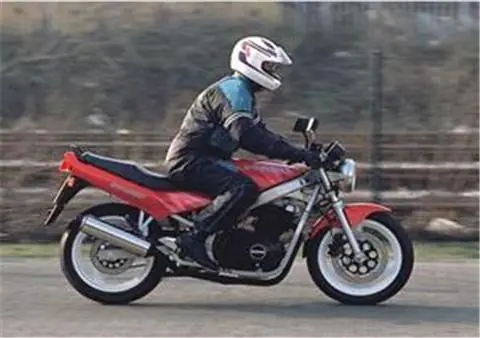
Es recomendable que los guantes que se utilicen para conducir una motocicleta...
Gloves for riding a motorcycle should ideally...
- Apermitan un agarre firme.give a firm grip.
- Bsean reflectantes.be reflective.
- Csean muy gruesos.be very thick.
ExplanationGloves should protect the hands without reducing feel: what matters is that they let you grip the handlebars firmly and work the levers properly. Gloves that are too thick make control harder. In addition, from 1 October 2026 gloves are compulsory on roads outside built-up areas.
En vías urbanas, ¿es obligatorio el uso del casco de protección para los ciclistas?
On urban roads, is it compulsory for cyclists to wear a protective helmet?
- ANo, es opcional para adultos y menores, aunque recomendable.No, it is optional for adults and children, although advisable.
- BSí, es obligatorio para todos los ciclistas, sin importar la edad.Yes, it is compulsory for all cyclists, whatever their age.
- CSolo para los menores de 16 años y quienes circulen en bicicleta por su trabajo.Only for children under 16 and people who ride a bicycle for work.
ExplanationUnder Article 118.2 of the General Traffic Regulations (RGC) (as worded by RD 518/2026), on urban roads a helmet is compulsory for children under 16 and for people who ride a bicycle as part of their job. On interurban roads it is compulsory for everyone, without the old exceptions for steep climbs, heat or medical reasons.
¿El uso del casco es obligatorio en los ciclomotores?
Is wearing a helmet compulsory on mopeds?
- ASolo cuando circulen fuera de poblado.Only when riding outside built-up areas.
- BNo, sus conductores no están obligados a usar el casco.No, their riders do not have to wear a helmet.
- CSí.Yes.
ExplanationMoped riders must always wear an approved helmet when riding, both in and outside built-up areas.
Para una correcta utilización de los cinturones de seguridad, ¿es preciso hacer alguna comprobación cuando se monte en su vehículo?
To use the seat belts correctly, do you need to check anything when you get into your vehicle?
- ASí, revisaré de forma periódica los anclajes y los cierres para ver si están en la debida forma.Yes, I will regularly check the anchorages and buckles to see if they are in proper condition.
- BSí, comprobaré su elasticidad tirando de ellos fuertemente.Yes, I will check their elasticity by pulling them hard.
- CNo.No.
ExplanationIt is important to check the seat belt anchorages and buckles regularly to make sure they are in good condition and work correctly. If the anchorages are damaged or the buckles do not work properly, the seat belt cannot protect the occupant in an accident.

¿Están obligados los conductores de bicicleta a llevar casco en vía urbana?
Must cyclists wear a helmet on urban roads?
- ALos menores de 16 años y quienes circulen en bicicleta por su trabajo.Children under 16 and people who ride a bicycle for work must.
- BNo, ni en vía urbana ni en interurbana.No, neither on urban nor on interurban roads.
- CSí, están obligados todos los conductores por la Ley de Tráfico.Yes, the Traffic Law requires all riders to.
ExplanationUnder Article 118.2 of the General Traffic Regulations (RGC) (as worded by RD 518/2026), on urban roads cyclists under 16 and people who ride a bicycle as part of their job (on urban roads and travesías) must wear a helmet. For all other cyclists it is only compulsory on interurban roads.
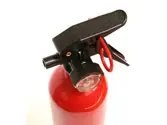
Los turismos que arrastren un remolque ligero, ¿están obligados a llevar entre sus accesorios un equipo homologado de extinción de incendios?
Must cars towing a light trailer carry approved fire-fighting equipment among their accessories?
- ANo.No.
- BSí.Yes.
- CSólo cuando circulen por vías interurbanas.Only when driving on interurban roads.
ExplanationWhen towing a trailer, you do not have to carry a spare wheel for the trailer, but you do have to carry a fire extinguisher. In any case, with or without a trailer, you must always carry: - A hazard warning device (an amber, self-powered device, with batteries, placed on the highest possible part of the immobilised vehicle so that it is as visible as possible). - A spare wheel or temporary-use wheel (for the car) and the tools to change it. - A reflective vest.
All topics
- Definitions
- Documents and penalty points
- The driver's condition
- Duties of drivers and pedestrians
- Vehicle controls and equipment
- Vehicle lights and horn
- Traffic signs, markings and signals
- The road and its lanes
- Speed and distances
- Manoeuvres
- Right of way
- Carrying passengers and loads
- Driving safely in difficult conditions
- Vehicle mechanics and maintenance
- Road accidents and first aid
- Defensive and eco-driving
Independent app: not affiliated with or endorsed by the DGT (Spain's Directorate-General for Traffic) or the Ministry of the Interior. The official exam is booked with the DGT and taken at its test centres. The questions here are practice material; the DGT's official question bank is not public.
Basado en datos de la Agencia Estatal Boletín Oficial del Estado (https://www.boe.es). Textos consolidados de carácter meramente informativo. La AEBOE no patrocina ni respalda este sitio.
Parte de las preguntas procede de los tests de la revista «Tráfico y Seguridad Vial» de la DGT, reproducidos con indicación de la fuente.