
DGT test · 691 questions
Vehicle safety devices · Page 10 of 14
Seat belts, child restraints, helmets, head restraints and airbags: when they are compulsory, the exceptions and how to use them properly.
Questions in this topic, with answers
691 questions, 50 per page, with the correct answer and the explanation. Page 10 of 14.
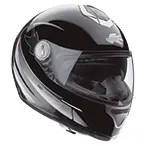
Al elegir un casco para conducir una motocicleta, ¿qué debe tener en cuenta?
When choosing a helmet for riding a motorcycle, what should you consider?
- AQue se pueda sujetar sin tener que llevarlo abrochado.That it stays on without having to be fastened.
- BQue tenga buena ventilación para que no se empañe.That it has good ventilation so that it does not mist up.
- CQue proteja convenientemente de los ruidos.That it gives good protection against noise.
ExplanationA helmet with good ventilation is more comfortable and safer, and it does not mist up, so it is important to check that it has enough air inlets and outlets. You must always wear the helmet fastened, because otherwise it will fly off in an accident and you will be unprotected.
¿Es seguro que un niño vaya de pie entre los asientos en el interior del vehículo?
Is it safe for a child to stand between the seats inside the vehicle?
- ASí es seguro, siempre que se instale una barra para que se sujete.Yes, it is safe, as long as a bar is fitted for them to hold on to.
- BEn caso de accidente, lo más seguro es que vaya tumbado o en brazos de los padres.In an accident, it is safest for them to be lying down or in their parents' arms.
- CNo es nada seguro, y menos si se instala una barra para que se sujete.It is not safe at all, and even less so if a bar is fitted for them to hold on to.
ExplanationIt is not safe for a child to stand between the seats inside the vehicle, especially if a bar is fitted for them to hold on to. This is because it gives no protection in an accident and increases the risk of serious injury. Children must travel in child restraint systems suited to their height and weight, and never in someone's arms, even on short trips.
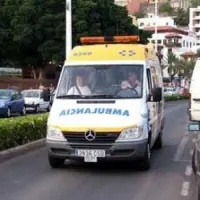
¿Deben los conductores de ambulancia llevar cinturón de seguridad dentro de poblado circulando en servicio urgente?
Must ambulance drivers wear a seat belt in a built-up area when on an emergency call?
- ANo, están exentos de llevarlo tanto el conductor como los pasajerosNo, both the driver and the passengers are exempt
- BEstará obligado a llevarlo el conductor, pero no los pasajerosThe driver must wear one, but not the passengers
- CSí, es obligatorio que todos lo llevenYes, everyone must wear one
ExplanationThe driver and passengers of vehicles on an emergency call, such as an ambulance, are exempt from wearing a seat belt when driving in built-up areas. The exemption does not apply on motorways (autopistas), dual carriageways (autovías) or conventional roads (Article 119 of the General Traffic Regulations (RGC)).
¿Existen airbags de techo o de cortina?
Are there roof or curtain airbags?
- ANo, solo existen airbags frontales de conductor y de acompañante.No, there are only front airbags for the driver and the front passenger.
- BNo, solo existen airbags frontales y laterales.No, there are only front and side airbags.
- CSí.Yes.
ExplanationCurtain airbags are usually located along the sides of the roof, above the windows. Their purpose is to protect in a side impact or a rollover.
El cojín elevador con respaldo es un dispositivo de retención que es apto para la utilización por niños de entre...
A booster seat with a backrest is a restraint device suitable for children weighing between...
- A15 a 25 kg.15 and 25 kg.
- B4 a 12 kg.4 and 12 kg.
- C3 a 8 kg.3 and 8 kg.
ExplanationA booster seat with a backrest is a child restraint system designed for children of about 15 to 25 kg, known as group 2. Smaller children need seats or carrycots specific to their weight and height.
Para que el reposacabezas se ajuste perfectamente, la parte superior debe colocarse...
For the head restraint to fit perfectly, its top should be...
- APor encima de la nuca.above the nape of the neck.
- BPor debajo de la nuca.below the nape of the neck.
- CA la misma altura que la parte superior de la cabeza.level with the top of the head.
ExplanationTo adjust the head restraint correctly, its top edge should be level with the top of the head, and the gap between the head and the head restraint should never be more than 4 cm.
¿El funcionamiento del airbag puede ocasionar daños si no se lleva puesto el cinturón de seguridad?
Can an airbag going off cause harm if you are not wearing a seat belt?
- ASí.Yes.
- BNo.No.
- Csólo si tienes mal regulado el sillón.Only if your seat is badly adjusted.
ExplanationYes: the airbag opens at high speed and is designed to work together with the seat belt. If the occupant is not wearing it, they are thrown forward and hit the bag while it is inflating, which can cause serious injuries.
¿Pueden los menores viajar en los asientos delanteros de un coche?
Can minors travel in the front seats of a car?
- ASí, si miden más de 135 cm.Yes, if they are taller than 135 cm.
- BNo, nunca.No, never.
- CSí, si tienen más de 12 años.Yes, if they are over 12 years old.
ExplanationUnder Article 117 of the General Traffic Regulations (RGC), minors with a height of 135 cm or less must use a child restraint system and sit in the rear seats, except in specific exceptional cases. Those taller than 135 cm may travel in the front using the seat belt.
¿Por qué es recomendable que los conductores de motocicletas utilicen un casco integral cuando circulen por autopistas o autovías?
Why is it recommended that motorcycle riders wear a full-face helmet when riding on motorways (autopistas) or dual carriageways (autovías)?
- APorque no tiene visera, permitiendo una mejor visión del entorno.Because it has no visor, allowing a better view of the surroundings.
- BPorque es más cómodo y fresco, sobre todo en verano.Because it is more comfortable and cooler, especially in summer.
- CPorque ofrece más protección en caso de accidente.Because it gives more protection in an accident.
ExplanationA full-face helmet covers the head and also the face thanks to the chin guard, so it gives more protection in a fall, which is especially important at the high speeds of motorways and dual carriageways. Its visor also protects against wind, insects and rain.
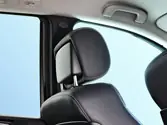
Para regular correctamente el apoyacabezas, la distancia de éste con la cabeza debe ser...
To adjust the head restraint correctly, its distance from the head should be...
- Asuperior a 4 cm.more than 4 cm.
- Bla mínima posible y nunca superior a 4 cm.as small as possible and never more than 4 cm.
- Cla que resulte más cómoda para el conductor.whatever is most comfortable for the driver.
ExplanationThe head restraint should be as close as possible to the head, no more than about 4 cm away, with its top level with the top of the head. If it is further away, in a rear impact the head moves backwards and the risk of neck injury increases.
Los niños deben usar sistemas de retención infantil (SRI) hasta que midan:
Children must use child restraint systems (child seats) until they are:
- A1,25 metros1.25 metres tall
- B1,35 metros1.35 metres tall
- C1,50 metros1.50 metres tall
ExplanationA suitable child restraint system is compulsory for children shorter than 1.35 metres, who must sit in the rear seats. Using one is recommended up to 1.50 metres.
¿Qué función tiene el reposacabezas del asiento de su vehículo?
What is the function of the head restraint on your vehicle's seat?
- ATener mayor comodidad durante los viajes largos y poder estar más tiempo conduciendo sin parar.To be more comfortable on long trips and be able to drive for longer without stopping.
- BEvitar el latigazo cervical en las colisiones por alcance.To prevent whiplash in rear-end collisions.
- CEvitar que la cabeza se desplace mientras conducimos.To stop the head from moving while we drive.
ExplanationThe head restraint prevents the head from being jerked backwards, and the whiplash that follows, in a collision at the back of the vehicle. For it to be correctly adjusted: - Height: the top of the head restraint should be level with the top of the head (its widest part should be at eye level). - Distance: the gap between the head and the head restraint should be as small as possible (never more than 4 cm).
¿Qué ocurre si se explota un airbag con el asiento muy cerca del volante?
What happens if an airbag goes off when the seat is very close to the steering wheel?
- ANada, está diseñado para esoNothing; it is designed for that
- BPuede causar lesiones graves porque la distancia de seguridad es de 25 cmIt can cause serious injuries, because the safe distance is 25 cm
- CSe despliega más suaveIt opens more gently
ExplanationYou must keep a distance of 25 cm between the steering wheel and the driver.
El casco, ¿es un elemento de seguridad activa o pasiva?
Is the helmet an active or a passive safety element?
- APasiva.Passive.
- BActiva.Active.
- CNinguna de las dos respuestas anteriores son correctas.Neither of the two previous answers is correct.
ExplanationThe helmet is considered a passive safety element. This is because its main function is to protect the rider in an accident, reducing the severity of head injuries. Unlike active safety elements, such as the brakes or the lights, the helmet does not prevent the accident from happening, but it works automatically once it has happened to minimise the damage.
¿A qué altura tendremos que regular el reposacabezas del asiento de nuestro vehículo?
At what height should we adjust the head restraint of our vehicle's seat?
- ALa parte central del reposacabezas a la altura de los ojos.With the centre of the head restraint at eye level.
- BLo más hacia abajo posible, a la altura de la nuca.As low as possible, at the height of the nape of the neck.
- CA más de 4 centímetros de distancia de la cabeza.More than 4 centimetres away from the head.
ExplanationThe head restraint reduces the chance of injuring the neck vertebrae, so it is very important to adjust it correctly. Its top should be at head height, its centre at eye level, and the gap between the head restraint and the head should never be more than 4 centimetres.
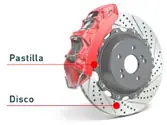
Los frenos, ¿son un dispositivo de seguridad activa?
Are the brakes an active safety device?
- ASí.Yes.
- BNo, son un elemento de seguridad pasiva.No, they are a passive safety element.
- CNo, es un sistema mecánico del vehículo.No, they are a mechanical system of the vehicle.
ExplanationActive safety systems help the driver reduce the chance of an accident happening. They include, for example, the lights, the tyres, the brakes, the suspension and the steering. The function of the brakes is to reduce the speed of the vehicle gradually or, when it is already still, to keep it stopped. They are clearly an active safety element.
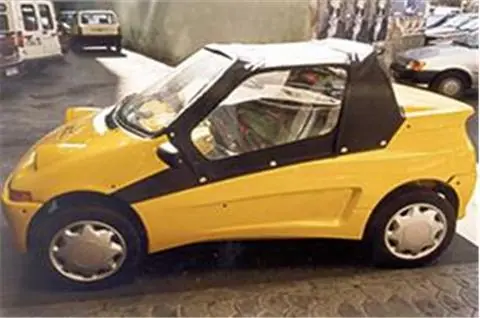
Si conduce un cuadriciclo equipado con cinturones de seguridad, ¿quiénes deben utilizarlos y en que tipo de vías?
If you drive a quadricycle fitted with seat belts, who must wear them and on what types of road?
- ATanto el conductor como el pasajero, en todo tipo de vías.Both the driver and the passenger, on all types of road.
- BSolo el conductor tanto en vías urbanas como interurbanas.Only the driver, on both urban and interurban roads.
- CTanto el conductor como el pasajero, solo en vías interurbanas.Both the driver and the passenger, only on interurban roads.
ExplanationQuadricycles with a protective structure and seat belts do not require a helmet, but they do require the seat belt to be worn. The obligation applies to both the driver and the passenger, on all types of road, urban and interurban.
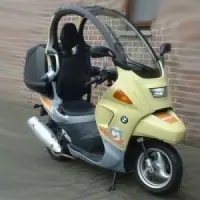
¿Es obligatorio llevar casco protector en una motocicleta con estructura de autoprotección?
Is it compulsory to wear a protective helmet on a motorcycle with a protective structure?
- ASí.Yes.
- BSí, si se conduce en vías interurbanas.Yes, if you ride on roads outside built-up areas.
- CNo, si cuenta con un cinturón de seguridad y está señalado así en la documentación ITV.No, if it has a seat belt and this is stated in the ITV documents.
ExplanationUnder Article 118.1 of the General Traffic Regulations, drivers and passengers of motorcycles with a protective structure and seat belts are exempt from wearing a helmet if this is stated on the vehicle's technical inspection card, but they must wear their seat belts fastened on all types of road.
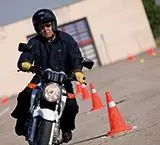
Cuando el casco no tiene pantalla de protección, ¿es conveniente ponerse unas gafas de seguridad?
When the helmet has no protective visor, is it advisable to wear safety goggles?
- ANo.No.
- BSí.Yes.
- CNo solo es conveniente, sino que además es obligatorio.It is not only advisable, but also compulsory.
ExplanationIf the helmet does not have a built-in device such as a visor that the rider can lower when they want, it is advisable, for their own safety and that of others, for motorcyclists and moped riders to wear safety goggles that protect their eyes from cold, wind, dust, insects, etc. A single speck of dust or an insect getting into the eye can make the rider lose balance and control of the vehicle and cause an accident.
¿Los conductores de ciclomotores deben llevar casco en vías urbanas?
Must moped riders wear a helmet on urban roads?
- ASí, es obligatorio.Yes, it is compulsory.
- BNo, sólo es obligatorio en vías interurbanas.No, it is only compulsory on interurban roads.
- CNo, los conductores de ciclomotores no están obligados a llevar casco.No, moped riders do not have to wear a helmet.
ExplanationUnder Article 118.1 of the General Traffic Regulations (RGC) (as worded by RD 518/2026), riders and passengers of mopeds must wear a protective helmet, properly fastened, on all types of road, both urban and interurban.
Los automóviles particulares que arrastren un remolque ligero, ¿están obligados a llevar un extintor homologado?
Must private motor cars towing a light trailer carry an approved fire extinguisher?
- ANo.No.
- BSí.Yes.
- CSólo cuando circulen por vías interurbanas.Only when driving on roads outside built-up areas.
ExplanationUnder Annex XII.2 of the General Vehicle Regulations, combinations of non-special vehicles must carry an approved fire extinguisher in working order. A motor car towing a trailer, even a light one, forms a combination, so it must carry one on any type of road.
El uso del cinturón de seguridad reduce las lesiones porque:
Wearing a seat belt reduces injuries because:
- ARetiene el cuerpo evitando que salga despedido o golpee el interior.It holds the body, stopping it from being thrown out or hitting the inside of the vehicle.
- BImpide que se abran las puertas durante el choque.It stops the doors from opening during the crash.
- CAumenta la potencia de frenado del vehículo.It increases the vehicle's braking power.
ExplanationThe seat belt holds the occupant and stops them from being thrown out or hitting the inside of the vehicle.
Si tenemos que desplazarnos una distancia corta dentro de poblado, ¿podemos llevar a un bebé en brazos?
If we have to make a short journey in a built-up area, may we carry a baby in our arms?
- ASí, no más de 2 kilómetros.Yes, for no more than 2 kilometres.
- BNo.No.
- CSí, si va en el asiento trasero.Yes, if they are in the back seat.
ExplanationUnder Article 117 of the General Traffic Regulations (RGC), children who are 135 cm tall or less must travel in a child restraint system (child seat) suited to their height and weight, also on short trips in town. In a crash, the person holding the baby cannot keep hold of them.
¿Se debe retirar el casco de protección a un accidentado?
Should an injured person's protective helmet be removed?
- ASí, siempre.Yes, always.
- BNo, como norma general, aunque si fuese necesario para atender la respiración de accidentado, se retirará sólo si se conoce la técnica adecuada.No, as a general rule; but if it is necessary to deal with the injured person's breathing, it should be removed only if you know the right technique.
- CNo, salvo si está consciente y para tomar el pulso carotídeo (del cuello).No, unless they are conscious and it is to take the carotid (neck) pulse.
ExplanationAs a general rule, you should not remove an injured person's helmet. However, if it is necessary to deal with the injured person's breathing, it should be done only if you know the right technique, to avoid causing more harm.
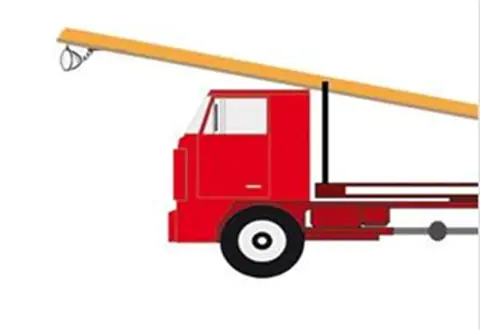
En caso de condiciones meteorológicas que disminuyan sensiblemente la visibilidad, ¿cómo debe señalizar la carga que sobresalga por la parte delantera del vehículo?
In weather conditions that noticeably reduce visibility, how must you mark a load that sticks out at the front of the vehicle?
- ACon una luz rojaWith a red light
- BCon una luz blanca y un dispositivo reflectante también blanco.With a white light and a reflective device, also white.
- CCon una luz blanca.With a white light.
ExplanationUnder Article 15 of the General Traffic Regulations (RGC), a load that sticks out at the front is marked, at night or in poor visibility, with a white light. A red light is for a load that sticks out at the back, and the combination of a white light and a white reflector is for a load that sticks out at the sides.
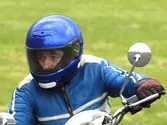
¿El color del casco es importante para la seguridad del motorista?
Is the colour of the helmet important for the motorcyclist's safety?
- ANo.No.
- BSí.Yes.
- CSí, es importante que sea del color más oscuro posible.Yes, it is important that it is as dark as possible.
ExplanationLight, bright and reflective colours are safer because they let other road users see the motorcyclist more easily.
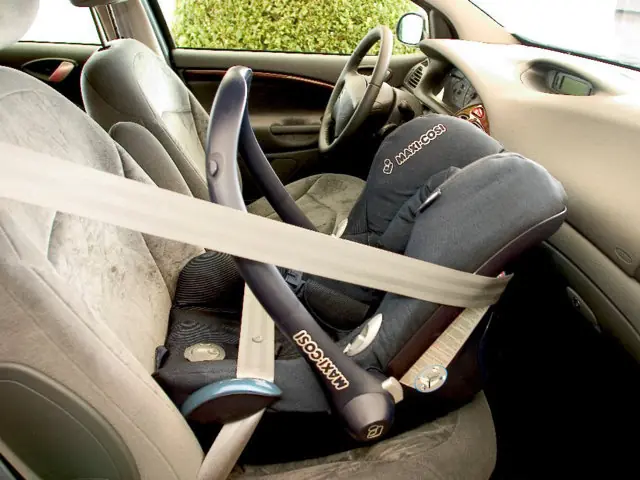
Un menor de edad viaja en el asiento delantero en un sistema de retención infantil que va mirando hacia atrás. El airbag frontal está conectado en ese asiento. ¿Es correcto?
A child is travelling in the front seat in a rear-facing child restraint system. The front airbag is activated in that seat. Is this correct?
- ANo. El airbag frontal debe estar desconectado.No. The front airbag must be deactivated.
- BNo. Los sistemas de retención infantil deben ir siempre en los asientos de atrás.No. Child restraint systems must always go in the rear seats.
- CSí. Porque el airbag frontal lo protege.Yes. Because the front airbag protects the child.
ExplanationA rear-facing child seat may only go in the front seat if that seat's front airbag is deactivated. If it goes off, it hits the back of the child seat next to the child's head and can cause serious injuries. It is not true that the child seat must always go in the back.
¿Cuál es la función principal del cinturón de seguridad en los vehículos?
What is the main function of the seat belt in vehicles?
- AAmortiguar la deceleración del cuerpo, absorbiendo la energía del movimiento del conductor.To cushion the body's deceleration by absorbing the energy of the driver's movement.
- BEvitar las agresiones de objetos externos.To protect against objects from outside.
- CNo es un elemento funcional, sino estético.It is not a functional element but a decorative one.
ExplanationThe main function of the seat belt is to cushion the body's deceleration by absorbing the energy of the driver's movement. This helps reduce the risk of injury in an accident, by stopping the driver or the passengers from hitting parts of the car.
En los ciclistas, llevar casco...
For cyclists, wearing a helmet...
- Ano influye en las lesiones que sufran.has no effect on the injuries they suffer.
- Belimina totalmente la probabilidad de sufrir lesiones en la cabeza.completely eliminates the chance of head injuries.
- Creduce considerablemente la probabilidad de sufrir lesiones en la cabeza.considerably reduces the chance of head injuries.
ExplanationA helmet does not prevent all injuries, but it considerably reduces the likelihood and severity of head injuries. Under Article 118.2 of the General Traffic Regulations (RGC), it is compulsory for cyclists on roads outside built-up areas and, for those under sixteen, on all types of road.
¿Pueden los conductores de motocicletas usar el casco o auriculares para comunicarse o para la navegación?
May motorcycle riders use a headset or earphones for communication or navigation?
- ASí, porque no está prohibido para los conductores de motocicletas.Yes, because it is not forbidden for motorcycle riders.
- BSí, cuando se trate de dispositivos certificados u homologados para su uso en el casco de protección.Yes, if they are devices certified or approved for use in the protective helmet.
- CSí, porque no necesitan emplear las manos para su funcionamiento.Yes, because they do not need to use their hands to operate them.
ExplanationUnder the General Traffic Regulations (RGC), specifically the article on the use of devices while driving, motorcycle riders are allowed to use certified or approved wireless devices built into the protective helmet. This is to make sure that they do not interfere with safe driving and that using them does not require the hands. So the correct answer is yes, they can use them, as long as they are certified devices. This is in line with road safety rules that aim to minimise the risk of distraction while driving.
¿Qué tipo de casco es más eficaz?
Which type of helmet is more effective?
- AEl convencional.The conventional one.
- BEl integral.The full-face one.
- CLos dos.Both.
ExplanationThe full-face helmet is more effective because it protects both the head and the face. Because it covers the whole head, it gives more protection in an impact. Conventional helmets are also allowed, but they do not offer the same safety as full-face helmets.
En caso de accidente, si los ocupantes del vehículo no llevan puesto el cinturón de seguridad, ¿qué riesgo existe si salen despedidos de su interior?
In an accident, if the vehicle's occupants are not wearing seat belts, what is the risk if they are thrown out of the vehicle?
- ALa posibilidad de sufrir una lesión medular o de morir, ya que ésta se incrementa notablemente.The chance of a spinal cord injury or of dying, which increases greatly.
- BEs imposible salir despedido del interior del vehículo en caso de accidente.It is impossible to be thrown out of the vehicle in an accident.
- CNo existe riesgo, ya que es más seguro salir despedido que permanecer en el vehículo.There is no risk, because it is safer to be thrown out than to stay in the vehicle.
ExplanationWearing a seat belt reduces the chance of being thrown out of the vehicle, which reduces the chance of dying or suffering serious injuries.
La parte delantera del vehículo, ¿porqué no debe modificarse?
Why should the front of the vehicle not be modified?
- APorque suele estar diseñada para evitar lesiones a los peatones.Because it is usually designed to prevent injuries to pedestrians.
- BPorque el vehículo pierde velocidad punta.Because the vehicle loses top speed.
- CÚnicamente porque lo prohíben las normas.Only because the rules forbid it.
ExplanationModifying the front of a vehicle is forbidden not only because the rules say so, but also because vehicles are designed so that, if they hit a pedestrian, the injuries are as minor as possible. If we modify this part, we can cause very serious injuries to people in collisions or when hitting pedestrians.
Para ponerte el cinturón de seguridad de tu vehículo¿Deberías de tener que quitarte una prenda de vestir que fuese muy voluminosa?
To put on your vehicle's seat belt, should you have to take off a very bulky item of clothing?
- ANo.No.
- BSí, para que se adapte mejor al cuerpo dicho cinturón.Yes, so that the seat belt fits the body better.
- CNo, basta con llevar el cinturón algo más flojo.No, it is enough to wear the seat belt a little looser.
ExplanationA very bulky item of clothing, such as a thick coat, leaves a gap between the seat belt and the body, so in a crash the belt holds you later and less effectively. That is why it is best to take it off before fastening the seat belt.
¿Cuál es una forma incorrecta de utilizar el cinturón de seguridad?
Which is an incorrect way to wear the seat belt?
- AColocar la banda torácica sobre la clavícula y cruzando el pecho.Placing the chest strap over the collarbone and across the chest.
- BColocar la banda torácica sobre el cuello.Placing the chest strap over the neck.
- CColocar la banda abdominal ajustada sobre los huesos de la cadera y por debajo del abdomen.Placing the lap strap tight over the hip bones and below the abdomen.
ExplanationPlacing the chest strap over the neck is an incorrect and dangerous way to wear the seat belt. The seat belt is designed to hold the body by resting on its strongest areas, such as the collarbone, the chest and the hip bones, which can better withstand the forces of sharp braking or an impact. If the chest strap goes over the neck, it can cause serious injuries there, and it does not hold the body properly, which reduces the effectiveness of the restraint system. That is why the chest strap must always go over the collarbone and across the chest, never over the neck.
Un niño con una estatura de 136 centímetros, ¿qué asientos puede ocupar en un turismo?
A child is 136 centimetres tall. Which seats may they use in a car?
- ASolo los asientos traseros, utilizando siempre un dispositivo de retención homologado en función de su talla y peso.Only the rear seats, always using an approved child restraint suited to their height and weight.
- BTanto el delantero como los traseros, utilizando el cinturón de seguridad para adultos.Both the front and the rear seats, using the adult seat belt.
- CSolo los traseros, utilizando el cinturón de seguridad para adultos.Only the rear seats, using the adult seat belt.
ExplanationChildren whose height is 1.35 m or less must sit in the rear seats of the vehicle, always using an approved child restraint suited to their height and weight. There are three exceptions in which children below that height may travel in the front seat: 1. When the vehicle has no rear seats. 2. When all the rear seats are already taken by children of the same size, so that it is not possible to fit all the child seats needed at that time. 3. When it is not possible to fit child restraint systems in those seats. When children are taller than 1.35 m, they may sit in the front seat using the adult seat belt.
El conductor de una motocicleta que lleva una persona en el asiento trasero…
A motorcycle rider who is carrying a person on the rear seat…
- ADebe utilizar el casco protector y aconsejar al acompañante que lo utilice.Must wear a protective helmet and advise the passenger to wear one.
- BDebe utilizar el casco protector y será responsable de que lo utilice el pasajero.Must wear a protective helmet and will be responsible for the passenger wearing one.
- CDebe utilizar el casco protector y será responsable el pasajero de utilizarlo.Must wear a protective helmet, and the passenger will be responsible for wearing one.
ExplanationBoth the rider and the passenger of a motorcycle must wear an approved, fastened helmet. In addition, under Article 82 of the Traffic Law, the rider is responsible for the passenger wearing it, so the rider is liable if the passenger rides without one.
¿Pueden los ciclistas quitarse el casco en vías interurbanas?
May cyclists take off their helmet on interurban roads?
- ANo.No.
- BEn tramos de subida largos, en condiciones de calor extremo o por motivos médicos.On long uphill stretches, in extreme heat or for medical reasons.
- CSolo en tramos de subida largos.Only on long uphill stretches.
ExplanationUnder Article 118.2 of the General Traffic Regulations (RGC) (as worded by RD 518/2026), riders and passengers of bicycles must wear an approved or certified helmet, properly fastened, on interurban roads. The new wording no longer includes exceptions for long uphill climbs, extreme heat or medical reasons.
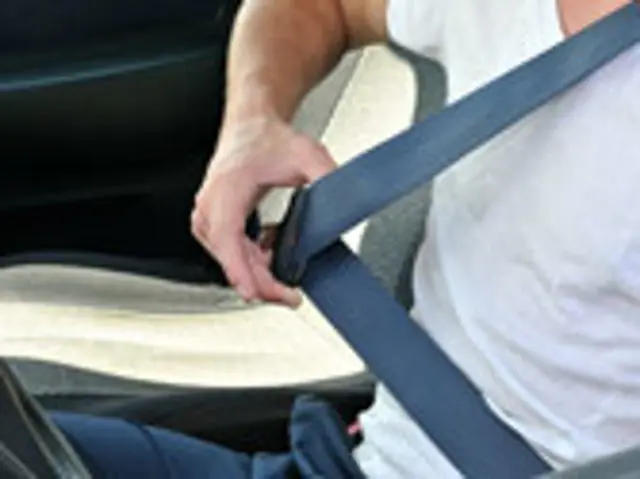
¿Cómo hay que ponerse el cinturón de seguridad?
How should you wear your seat belt?
- AMuy apretado, para estar bien sujeto.Very tight, so you are held firmly.
- BAlgo suelto, para poder alcanzar con facilidad todo el interior del vehículo.Rather loose, so you can easily reach everything inside the vehicle.
- CAjustado al cuerpo, ni muy apretado ni muy flojo, y bien abrochado.Fitted to your body, neither too tight nor too loose, and properly fastened.
ExplanationThe seat belt must fit your body, with no slack or twists, but not too tight, and it must be properly fastened. Article 117.1 of the General Traffic Regulations requires you to wear it properly fastened; a loose belt holds you too late and badly in a crash.
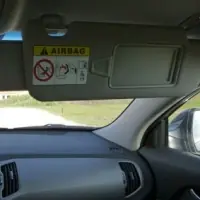
¿Es obligatoria la instalación de un quitasol en el asiento del copiloto?
Is it compulsory to fit a sun visor for the front passenger seat?
- ASi, para evitar el deslumbramientoYes, to avoid dazzle
- BÚnicamente en los vehículos de gran tonelajeOnly in heavy vehicles
- CNo es obligatorio, pero si aconsejableIt is not compulsory, but it is advisable
ExplanationFitting a sun visor for the front passenger seat is not compulsory in any type of vehicle, but it is recommended, because it helps the front passenger see better when the sun shines directly in and prevents dazzle.
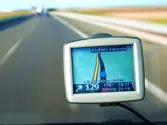
¿Es conveniente colocar el soporte de un GPS cerca de un airbag?
Is it advisable to put a GPS holder near an airbag?
- ANo, si puede obstaculizar su apertura.No, if it may get in the way of the airbag opening.
- BSí.Yes.
- CNo, en ningún caso.No, never.
ExplanationThe airbag is a very safe passive safety system, but to avoid harmful effects we must bear the following in mind: - It complements the seat belt, so they must always be used together. - It is advisable for the airbag to be about 25 cm from the body, and never less than 10 cm. - Avoid placing objects near the airbag or putting your legs on the dashboard. When the airbag goes off, very serious injuries could occur. - When using a rear-facing child restraint system in a seat with an airbag, we must deactivate the airbag.
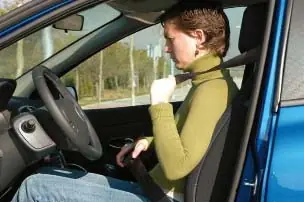
Para llevar el cinturón de seguridad bien colocado y minimizar las lesiones en caso de accidente:
To wear the seat belt correctly and minimise injuries in an accident:
- AEs muy recomendable utilizar ropa voluminosa mientras conduces para que el cinturón no apriete.It is highly advisable to wear bulky clothing while driving so that the belt does not feel tight.
- BDebes colocar el asiento bastante inclinado hacia detrás.You should set the seat well tilted backwards.
- CLa parte superior del cinturón (cinta torácica) debe pasar por la clavícula, entre el cuello y el hombro.The upper part of the belt (the chest strap) must pass over the collarbone, between the neck and the shoulder.
ExplanationThe chest strap must pass over the collarbone, between the neck and the shoulder, and across the middle of the chest, and the lap strap must go over the hips. Bulky clothing leaves slack, and a steeply reclined backrest makes it easier for the body to slide under the belt in a crash.
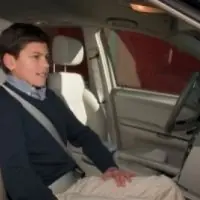
Un niño menor de 12 años y con una estatura de 125 cm, ¿puede viajar en el asiento delantero de un turismo sin un dispositivo de retención homologado?
Can a child under 12 who is 125 cm tall travel in the front seat of a car without an approved restraint device?
- ASí, si el vehículo no dispone de airbag frontal.Yes, if the vehicle has no front airbag.
- BNo.No.
- CSí, siempre que lleve el cinturón abrochado.Yes, as long as they wear the seat belt fastened.
ExplanationChildren who are 135 cm tall or less must use a child restraint system suited to their height and weight and, as a general rule, travel in the back. Only in exceptional cases may they travel in the front, and always with that system, never with the seat belt alone, whether or not the vehicle has an airbag.
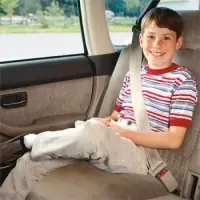
¿A partir de qué estatura puede un menor viajar sin dispositivo de retención infantil obligatorio, utilizando el cinturón de seguridad?
From what height may a child travel without a compulsory child restraint system, using the seat belt?
- AMás de 135 cm, aunque hasta 150 cm es recomendable usar un sistema adaptado.Taller than 135 cm, although up to 150 cm it is advisable to use a suitable system.
- BMás de 120 cm.Taller than 120 cm.
- CMás de 150 cm en todos los casos.Taller than 150 cm in all cases.
ExplanationA child restraint system is compulsory for children who are 135 cm tall or less. Above that height they can use the seat belt, although it is recommended to keep using a suitable system up to 150 cm, so that the strap does not go across the neck.
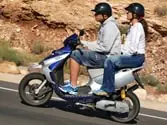
En relación con la seguridad vial, ¿está obligado el conductor de un ciclomotor de dos ruedas sin carrocería a utilizar casco de protección durante la circulación por vías urbanas?
Regarding road safety, must the rider of a two-wheeled moped without bodywork wear a protective helmet when riding on urban roads?
- ASí, el conductor debe llevar casco, pero el pasajero no está obligado en vías urbanas.Yes, the rider must wear a helmet, but the passenger does not have to on urban roads.
- BSí, tanto en vías urbanas como interurbanas, el uso del casco es obligatorio para el conductor.Yes, on both urban and interurban roads the rider must wear a helmet.
- CNo, en vías urbanas el uso del casco no es obligatorio para el conductor de un ciclomotor.No, on urban roads a moped rider does not have to wear a helmet.
ExplanationUnder Article 118.1 of the General Traffic Regulations (RGC) (as worded by RD 518/2026), riders and passengers of mopeds must wear a protective helmet, properly fastened, on all types of road, urban and interurban. The reform removes the old exemption for people with a medical certificate.
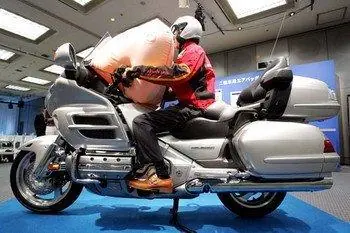
¿Pueden algunas motocicletas llevar sistemas de estabilidad de frenado o airbag?
Can some motorcycles have braking stability systems or airbags?
- ANo, estos sistemas solo están disponibles para los turismos.No, these systems are only available for cars.
- BNo, está prohibido.No, it is forbidden.
- CSí, para evitar accidentes o reducir la gravedad de las lesiones.Yes, to prevent accidents or reduce the severity of injuries.
ExplanationSome motorcycles, usually high-end ones, have braking stability systems, airbags, etc. to give more safety.
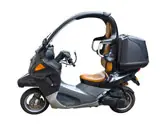
En esta motocicleta, ¿debe llevar casco?
On this motorcycle, must you wear a helmet?
- ANo, no es obligatorio; pero debe llevar abrochado el cinturón de seguridad.No, it is not compulsory; but you must wear the seat belt fastened.
- BSí, el casco es obligatorio pero no el cinturón de seguridad.Yes, the helmet is compulsory but the seat belt is not.
- CSí, y además es obligatorio llevar abrochado el cinturón de seguridad.Yes, and you must also wear the seat belt fastened.
ExplanationWhen vehicles have a protective structure and are fitted with seat belts, and this is stated on the vehicle inspection (ITV) card or on the moped's certificate of characteristics, their riders and passengers are exempt from wearing a protective helmet, and in this case they must wear the seat belt.
Un menor con una estatura no superior a 1´35m, ¿puede ocupar el asiento delantero de un turismo?
May a child no taller than 1.35 m sit in the front seat of a car?
- ANo, nunca.No, never.
- BSí, excepcionalmente cuando el vehículo no disponga de asientos traseros y utilizando siempre un dispositivo de retención homologado.Yes, as an exception when the vehicle has no rear seats, and always using an approved restraint device.
- CSí, utilizando siempre un dispositivo de retención homologado.Yes, always using an approved restraint device.
ExplanationChildren who are 1.35 m tall or less must sit in the rear seats of the vehicle, always using an approved restraint device suited to their height and weight. There are three exceptions in which children below that height may travel in the front seat: 1. When the vehicle has no rear seats. 2. When all the rear seats are already taken by children in the same situation, so it is impossible to fit all the child seats needed at that moment. 3. When it is not possible to fit child restraint systems in those seats. If they sit in the front seat and the vehicle has a front airbag, they may only use rear-facing restraint systems if the airbag has been deactivated. When children are taller than 1.35 m, they may sit in the front seat using the adult seat belt.
¿Qué conductores estarán exentos de usar el cinturón de seguridad?
Which drivers are exempt from wearing a seat belt?
- ALas mujeres embarazadas.Pregnant women.
- BLos conductores de taxis en vías interurbanas.Taxi drivers on interurban roads.
- CLos conductores cuando efectúen la maniobra de estacionamiento.Drivers when parking.
ExplanationDrivers are exempt from wearing a seat belt when parking or reversing, both in and outside built-up areas.
¿Los conductores en algún caso podrán circular sin cinturón de seguridad?
May drivers ever drive without a seat belt?
- ANo, en ningún caso.No, never.
- BSí, cuando realicen la maniobra de marcha hacia atrás o de estacionamiento.Yes, when reversing or parking.
- CSí, cuando se trate de mujeres embarazadas.Yes, in the case of pregnant women.
ExplanationUnder Article 119.1 of the General Traffic Regulations (RGC), drivers may drive without a seat belt when reversing or parking; pregnancy alone does not exempt anyone, only a certificate of exemption for serious medical reasons does. Since RD 518/2026 (Art. 119.2), in built-up areas only drivers and passengers of vehicles on an emergency call are exempt; taxi drivers, delivery drivers and driving instructors no longer are.
All topics
- Definitions
- Documents and penalty points
- The driver's condition
- Duties of drivers and pedestrians
- Vehicle controls and equipment
- Vehicle lights and horn
- Traffic signs, markings and signals
- The road and its lanes
- Speed and distances
- Manoeuvres
- Right of way
- Carrying passengers and loads
- Driving safely in difficult conditions
- Vehicle mechanics and maintenance
- Road accidents and first aid
- Defensive and eco-driving
Independent app: not affiliated with or endorsed by the DGT (Spain's Directorate-General for Traffic) or the Ministry of the Interior. The official exam is booked with the DGT and taken at its test centres. The questions here are practice material; the DGT's official question bank is not public.
Basado en datos de la Agencia Estatal Boletín Oficial del Estado (https://www.boe.es). Textos consolidados de carácter meramente informativo. La AEBOE no patrocina ni respalda este sitio.
Parte de las preguntas procede de los tests de la revista «Tráfico y Seguridad Vial» de la DGT, reproducidos con indicación de la fuente.