
DGT test · 691 questions
Vehicle safety devices · Page 11 of 14
Seat belts, child restraints, helmets, head restraints and airbags: when they are compulsory, the exceptions and how to use them properly.
Questions in this topic, with answers
691 questions, 50 per page, with the correct answer and the explanation. Page 11 of 14.
El cinturón de seguridad del vehículo forma parte de los elementos de seguridad...
The vehicle's seat belt is an element of...
- APasiva.passive safety.
- BActiva.active safety.
- CPrimaria.primary safety.
ExplanationPassive safety elements are those that act during the accident to reduce its consequences, as the seat belt does.
¿Cuántos SRI (Sistemas de Retención Infantil) homologados existen para niños?
How many approved child restraint systems (child seats) are there for children?
- ASolo unoOnly one
- BVarios según peso y edadSeveral, depending on weight and age
- CTodos son igualesThey are all the same
ExplanationThere are several groups, depending on the child's weight and age.
Si se tiene un accidente y no se lleva abrochado el cinturón de seguridad, las posibilidades de morir en el accidente son casi el doble en...
If you have an accident without your seat belt fastened, the chance of dying in the accident is almost twice as high in...
- Atodas las plazas del vehículo.all the seats of the vehicle.
- Bla plaza del conductor, sólo.the driver's seat only.
- Clas plazas delanteras, sólo.the front seats only.
ExplanationThe seat belt is the most important element for protecting occupants in an accident, whatever seat they are in. Not wearing it fastened drastically increases the risk of serious or fatal injuries in all seats, because: - In the front seats, hitting the steering wheel, windscreen or dashboard is much more likely without a seat belt. - In the rear seats, although many people think they are safer, not wearing the seat belt can be just as dangerous. In addition, in an accident, rear occupants can be thrown forward, causing serious harm to themselves and to the people in the front seats.
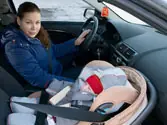
Un niño va sujeto con un sistema de retención orientado hacia atrás en el asiento delantero del vehículo. ¿Está permitido?
A child is held in a rear-facing restraint system in the front seat of the vehicle. Is this allowed?
- ASí, pero el airbag debe estar activado.Yes, but the airbag must be activated.
- BNo.No.
- CSí, pero el airbag debe estar desactivado.Yes, but the airbag must be deactivated.
ExplanationThere are three exceptions in which children no taller than 135 centimetres may travel in the front seat: 1. When the vehicle has no rear seats. 2. When all the rear seats are already taken by other children who are 135 cm tall or less. 3. When it is not possible to fit all the child restraint systems in those seats. In these three cases, an approved restraint system suited to the child's height and weight must be used. Fitting this system facing backwards is not only allowed but advisable. When using a rear-facing child restraint system, we must deactivate that seat's airbag.
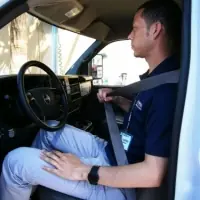
Si su motocicleta lleva instalado un cinturón de seguridad, ¿Cuándo se lo debe abrochar?
If your motorcycle has a seat belt fitted, when must you fasten it?
- ASolamente cuando circula por vías interurbanas y travesías.Only when riding on interurban roads and travesías (stretches of road through a town).
- BSolamente cuando circula por vías interurbanas.Only when riding on interurban roads.
- CEn toda clase de vías.On all types of road.
ExplanationIf a motorcycle has a protective structure and a seat belt, and this is stated on its vehicle inspection (ITV) card, the seat belt is compulsory on all types of road, urban and interurban, and in exchange the helmet is not compulsory (Article 118 of the General Traffic Regulations (RGC)).
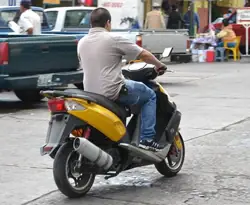
¿Cuántos puntos se detraen por no hacer uso del cinturón o el casco?
How many points are deducted for not wearing a seat belt or helmet?
- A3 puntos.3 points.
- B4 puntos.4 points.
- C6 puntos.6 points.
ExplanationNot using the seat belt, child restraint systems or the helmet means losing 4 points from your licence, as well as a fine. It is one of the offences that were made stricter in the 2022 reform of the points-based licence.
El uso del casco por los ciclistas…
For cyclists, wearing a helmet...
- AReduce hasta tres veces la probabilidad de sufrir lesiones en la cabeza.reduces the chance of head injuries by up to three times.
- BReduce totalmente la probabilidad de sufrir lesiones en la cabezacompletely removes the chance of head injuries.
- CNo tiene influencia en las lesiones que puedan sufrir los ciclistas.has no effect on the injuries cyclists may suffer.
ExplanationA helmet does not remove the risk, but it greatly reduces the chance of head injuries, by up to about three times, in a fall or if the cyclist is hit by a vehicle. That is why it is compulsory for cyclists on interurban roads and for children under 16 on all roads.
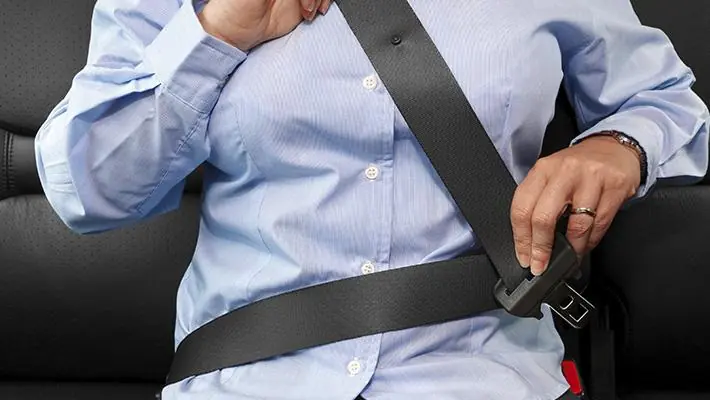
Una vez abrochado el cinturón de seguridad, debe...
Once you have fastened your seat belt, you must...
- Acomprobar que está bien colocado y ajustado al cuerpo.check that it is properly placed and fits closely to your body.
- Baflojar la zona abdominal para mayor comodidad.loosen the lap area to be more comfortable.
- Ccolocar una pinza para ajustarlo.use a clip to adjust it.
ExplanationOnce the seat belt is fastened, pull it slightly upwards so that it fits snugly against your body. Check that it is not caught or twisted at any point. The seat belt must protect you effectively, and for that it must be in perfect condition and correctly placed: - The chest strap must go over the collarbone and across the middle of the chest. - The lap strap must go over the pelvis and the hip bones. - It must fit snugly against the body (using clips is forbidden), and you should avoid driving in bulky clothes, because they reduce its effectiveness. - It is also effective during pregnancy. Submarining is one of the greatest risks of using the seat belt incorrectly. It happens when the seat belt cannot hold the driver in the accident and their body slides down under the lap strap. To avoid it, do not put anything on the seat (towels, cushions, etc.) and adjust the seat and seat belt properly (do not tilt the seat back too far or drive lying back).
¿El airbag protege si las personas no usan el cinturón de seguridad?
Does the airbag protect people who are not wearing a seat belt?
- ANo. Puede causar lesiones graves.No. It can cause serious injuries.
- BSí, solo para el conductor.Yes, only the driver.
- CSí.Yes.
ExplanationThe airbag is designed to work together with the seat belt and does not replace it. In an accident, if the passenger is not wearing their belt, the airbag can cause serious injuries, because the person will move forward without being held back by the belt. This can lead to an excessive impact against the airbag or uncontrolled movement inside the vehicle. Spanish traffic rules require all occupants of the vehicle to wear a seat belt. Not wearing it significantly increases the risk of serious injuries, even if the airbag goes off.
El apoyacabezas, ¿es un elemento de seguridad pasiva?
Is the head restraint a passive safety element?
- ANo, es un elemento de seguridad activa.No, it is an active safety element.
- BSí.Yes.
- CNo, es sólo sirve para conducir con mayor seguridad.No, it only helps you drive more safely.
ExplanationThe head restraint is an important passive safety element that reduces the chance of neck injuries.
Después de sufrir un accidente de importancia, ¿es conveniente cambiar el cinturón de seguridad?
After a serious accident, is it advisable to replace the seat belt?
- ANo es necesario, porque viene preparado para aguantar accidentes.It is not necessary, because it is designed to withstand accidents.
- BSí, porque el mecanismo, o el trenzado, puede estar dañado.Yes, because the mechanism or the webbing may be damaged.
- CSolo si el airbag se ha activado.Only if the airbag has gone off.
ExplanationIn a serious accident the seat belt takes great forces that can damage its mechanism or the webbing, even if this cannot be seen with the naked eye. That is why it should be replaced, so that it keeps protecting effectively in another crash.
Si la parte baja del cinturón de seguridad (la banda abdominal) queda sobre el abdomen...
If the lower part of the seat belt (the lap belt) sits over the abdomen…
- Ase reduce el riesgo de lesiones en el cuello.the risk of neck injuries is reduced.
- Bpuede provocar graves lesiones internas en caso de accidente.it may cause serious internal injuries in an accident.
- Cla conducción sería más cómoda y segura.driving would be more comfortable and safer.
ExplanationThe lap belt must be worn low, over the pelvis, which is the bony structure able to withstand the pressure in a crash. If it sits over the abdomen, in a collision it presses on soft organs and can cause serious internal injuries; the body can also slide under the belt.
La seguridad en un automóvil dependerá…
Safety in a motor car depends on...
- ADe los sistemas de seguridad activa y pasiva.active and passive safety systems.
- BExclusivamente de la carrocería.the bodywork only.
- CÚnicamente del sistema de frenado.the braking system only.
ExplanationSafety in vehicles depends both on the elements that help prevent an accident (active safety) and on the elements that reduce its consequences once the accident has happened (passive safety).
Llevar pinzas colocadas de manera que retengan el cinturón de seguridad, de forma que éste no se recoja automáticamente...
Using clips that hold the seat belt so that it does not retract automatically...
- AEs aconsejable, porque favorece la comodidad del conductor.Is advisable, because it makes the driver more comfortable.
- BEs conveniente, porque aumenta la eficacia del cinturón.Is a good idea, because it makes the seat belt more effective.
- CEstá prohibido, porque reduce la eficacia del cinturón.Is prohibited, because it makes the seat belt less effective.
ExplanationClips that stop the seat belt from retracting leave the strap slack, so in a crash the body moves forward before it is held. The seat belt must fit closely to the body; wearing it incorrectly counts as not using it properly and is penalised.
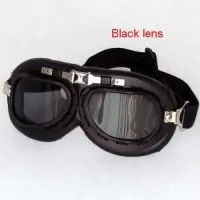
¿Cuál de éstas características deben tener las gafas de seguridad?
Which of these features must safety goggles have?
- ALlevar lentes focalesHave focal lenses
- BTener cristales oscurosHave dark lenses
- CSer antivahoBe anti-fog
ExplanationSafety goggles must have glass lenses, not plastic ones, to avoid reflections from the sun; they must fit the face, be anti-fog and give the widest possible field of vision.
¿Dónde debe viajar un niño de tres años en un turismo?
Where should a three-year-old child travel in a car?
- AEncima de un adulto y a su cargo.On an adult's lap, in their care.
- BEn el asiento trasero con un dispositivo homologado adaptado a su talla y peso.In the rear seat, with an approved device suited to their height and weight.
- CEn el asiento delantero o trasero con el cinturón de seguridad abrochado.In the front or rear seat, with the seat belt fastened.
ExplanationA three-year-old child must travel in an approved child restraint system suited to their height and weight and, as a general rule, in the rear seat. Carrying them in an adult's arms or with only the seat belt does not protect them and is forbidden.
El casco, ¿se incluye entre los elementos de seguridad?
Is the helmet one of the safety elements?
- ASí, únicamente de la seguridad activa.Yes, of active safety only.
- BSí, de seguridad pasiva.Yes, of passive safety.
- CNo, puesto que no es un dispositivo del vehículo.No, because it is not a device of the vehicle.
ExplanationThe helmet is a passive safety element: it does not prevent the accident, but it reduces the severity of head injuries when one happens. Active safety is what helps avoid the accident, such as the brakes or the tyres.
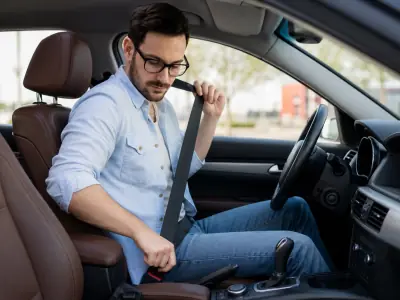
El conductor de un turismo, ¿debe llevar abrochado el cinturón de seguridad cuando realiza un recorrido corto?
Must the driver of a car wear a fastened seat belt on a short trip?
- ASolo si conduce un taxi, tanto en vías urbanas como interurbanas.Only if driving a taxi, on roads both in and outside built-up areas.
- BSí.Yes.
- CNo, cuando circule por una vía urbana.No, when driving on an urban road.
ExplanationYes. The seat belt is compulsory on any journey, short or long, and on roads both in and outside built-up areas (Article 117 of the General Traffic Regulations). From 1 October 2026, not even taxi drivers are exempt in built-up areas.
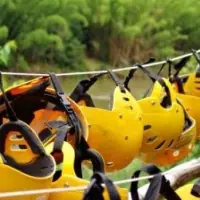
¿Están obligados a circular con casco los conductores de bicicleta en vía urbana?
Must cyclists wear a helmet on urban roads?
- AEs aconsejable, pero no obligatorio para ningún conductor.It is advisable, but not compulsory for any rider.
- BSí, los menores de 16 años y quienes circulen en bicicleta por su trabajo.Yes, children under 16 and people who ride a bicycle for work must.
- CSí, es obligatorio para todos los conductores, pero únicamente en travesías.Yes, it is compulsory for all riders, but only on travesías (stretches of road through a town).
ExplanationUnder Article 118.2 of the General Traffic Regulations (RGC) (as worded by RD 518/2026), on urban roads cyclists under 16 and people who ride a bicycle as part of their job (on urban roads and travesías) must wear a helmet. For all other cyclists it is only compulsory on interurban roads.
El conductor de un taxi, ¿tendrá la obligación de usar el cinturón de seguridad en vía urbana?
Must a taxi driver wear a seat belt on urban roads?
- ANo, si está de servicio.No, if they are on duty.
- BSí, igual que cualquier otro conductor.Yes, like any other driver.
- CNo.No.
ExplanationUnder Article 119 of the General Traffic Regulations (RGC) (as worded by RD 518/2026), in built-up areas only drivers and passengers of vehicles on an emergency call are exempt from wearing a seat belt; taxi drivers, delivery drivers and people accompanying schoolchildren no longer are. The general exemptions remain: the driver when reversing or parking, and people with a medical exemption certificate.
Circulando por una vía residencial, ¿es obligatorio utilizar el cinturón de seguridad en el turismo?
When driving on a residential street, is it compulsory to wear a seat belt in a car?
- ANo, en este tipo de vía no es obligatorio el uso del cinturón de seguridad.No, on this type of road it is not compulsory to wear a seat belt.
- BSí, el conductor estará obligado, aunque no estarán obligados los demás ocupantes del vehículo.Yes, the driver must, but the other occupants of the vehicle need not.
- CSí, estarán obligados a utilizar el cinturón de seguridad todos los ocupantes del vehículo.Yes, all occupants of the vehicle must wear a seat belt.
ExplanationThe seat belt is compulsory for the driver and all occupants on any type of road, urban or interurban, including residential streets. The low speed on them does not remove the risk of injury in a crash.
¿Podrá disponer una motocicleta del dispositivo ABS?
Can a motorcycle have ABS?
- ANo, el ABS es solo para los turismos.No, ABS is only for cars.
- BNo porque está prohibido.No, because it is forbidden.
- CSí.Yes.
ExplanationMotorcycles can have ABS, an anti-lock braking device. It is a great help for staying stable when braking on a slippery surface. More and more motorcycles have it as standard.
¿Cuál será el sistema de retención infantil adecuado para un niño de 5 años?
What is the suitable child restraint system for a 5-year-old child?
- AUna silla en sentido contrario a la marcha.A rear-facing seat.
- BUn cuco de recién nacidos.A carrycot for newborns.
- CUn cojín elevador con respaldo.A booster cushion with a backrest.
ExplanationA 5-year-old child weighs between 15 and 25 kg, so they are in group II and their restraint device will be the booster cushion.
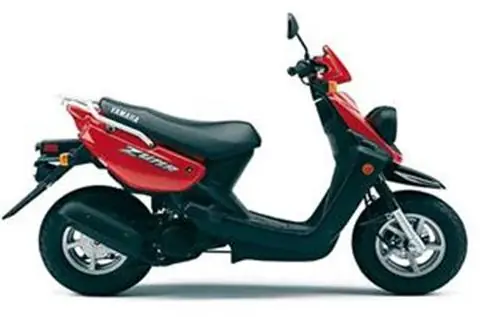
Si conduce un ciclomotor, ¿en qué tipo de vías es obligatorio utilizar el casco de protección?
If you ride a moped, on what types of road is it compulsory to wear a protective helmet?
- ASolo cuando circule por carreteras convencionales.Only when riding on conventional roads.
- BEn todo tipo de vías, pero solo cuando circule a más de 40 km/h.On all types of road, but only when riding at more than 40 km/h.
- CEn todo tipo de vías, tanto urbanas como interurbanas.On all types of road, both urban and interurban.
ExplanationRiders and passengers of mopeds must wear an approved protective helmet on all types of road, urban and interurban, whatever the speed. From 1 October 2026, they must also always wear closed shoes, and gloves on interurban roads.
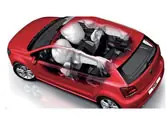
Los airbags, entre otras funciones, protegen de...
Among other functions, airbags protect against...
- Ael efecto submarino.submarining.
- Blesiones oculares.eye injuries.
- Clesiones cervicales y de impactos contra elementos del interior del vehículo.neck injuries and hitting parts of the inside of the vehicle.
ExplanationAirbags complement the seat belt: they cushion the head and chest from hitting the steering wheel, the dashboard or the sides, and reduce neck injuries and impacts against the inside of the vehicle. Submarining is prevented by a correctly worn seat belt, not by the airbag.
¿Se puede circular con los cristales del vehículo tintados?
May you drive with tinted windows?
- ANo, está siempre prohibido.No, it is always forbidden.
- BSí, si están homologados.Yes, if they are approved.
- CSí, si tengo factura de la compra.Yes, if I have the purchase invoice.
ExplanationIf we fit tinted or coloured glass in our vehicle, it must be approved; otherwise, fitting it is forbidden.
¿Algún dispositivo del automóvil puede sustituir al cinturón de seguridad?
Can any device in the car replace the seat belt?
- ASí, el airbag.Yes, the airbag.
- BNo.No.
- CSí, en los asientos traseros no es necesario el uso del cinturón de seguridad.Yes, in the rear seats you do not need to wear a seat belt.
ExplanationThe seat belt is compulsory in both the front and the rear seats. Other elements, such as the airbag, complement it, but never replace it.
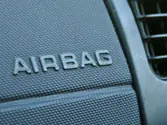
¿A qué distancia nos colocaremos del airbag delantero?
How far should we sit from the front airbag?
- AComo máximo a 10 cm.No more than 10 cm.
- BLo ideal son 25 cm.Ideally 25 cm.
- CComo mínimo a 50 cm.At least 50 cm.
ExplanationThe distance between us and a steering wheel with an airbag should never be less than 10 cm; ideally it should be about 25 cm, to avoid too direct an impact on our body.
¿Podremos desconectar el airbag delantero del acompañante en algún caso?
May we ever deactivate the front passenger airbag?
- ANo, es obligatorio llevarlo siempre conectado.No, it must always be kept activated.
- BSí.Yes.
- CSólo en el caso de que no llevemos pasajeros.Only if we are not carrying passengers.
ExplanationWe must deactivate the front passenger airbag whenever we carry a child in a rear-facing child seat; if it cannot be deactivated, we are not allowed to put the baby there.
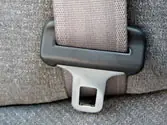
¿Cómo debe colocarse la cinta torácica del cinturón de seguridad?
How must the chest strap of the seat belt be placed?
- ASobre el cuello.Over the neck.
- BSobre el hombro.Over the shoulder.
- CSobre la clavícula.Over the collarbone.
ExplanationThe seat belt is made up of the chest strap and the lap strap. The chest strap must go over the collarbone, cross between the shoulder and the neck, and run down across the middle of the chest.
El sistema de control de estabilidad ESP...
The ESP electronic stability control system...
- Ano tiene mucha importancia en la seguridad activa del vehículo.is not very important for the vehicle's active safety.
- Bpuede lograr una reducción significativa de los accidentes de tráfico.can significantly reduce road accidents.
- Csirve para conducir más cómodo.is for driving more comfortably.
ExplanationElectronic stability control helps the driver regain control of the vehicle if it starts to skid, so it can significantly reduce the number of accidents and victims.
Si su vehículo tiene airbag, ¿es obligatorio llevar el cinturón de seguridad abrochado?
If your vehicle has an airbag, must you wear your seat belt fastened?
- ANo.No.
- BSí.Yes.
- CSólo fuera de poblaciones.Only outside built-up areas.
ExplanationUnder Article 117.1 of the General Traffic Regulations, the driver and passengers must wear their seat belts fastened both in built-up areas and outside them. The airbag is an extra: it is designed to work together with the seat belt and does not replace it. Not wearing a seat belt is a serious offence.
¿Es obligatorio llevar casco en un ciclomotor convencional, sin estructura de autoprotección?
Is it compulsory to wear a helmet on a conventional moped, without a protective structure?
- ASí, siempre.Yes, always.
- BSolo en carreteras interurbanas.Only on roads outside built-up areas.
- CNo, solo cuando el conductor lo considere necesario.No, only when the rider considers it necessary.
ExplanationAccording to Article 118.1 of the General Traffic Regulations (as worded by RD 518/2026), moped riders and passengers must wear a properly fastened protective helmet on all types of road, both in and outside built-up areas. They are exempt only if the vehicle has a protective structure and seat belts and this is stated in its documents, which is not the case for a conventional moped.
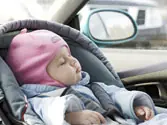
Un menor de 135 centímetros de estatura o menos podrá viajar excepcionalmente en el asiento delantero de un turismo cuando...
A child 135 centimetres tall or shorter may, exceptionally, travel in the front seat of a car when...
- Atodos los asientos traseros estén ocupados por otros menores con sistemas de retención infantil.all the rear seats are occupied by other children with child restraint systems.
- Bel sistema de retención infantil esté orientado hacia delante y el airbag esté desactivado.the child restraint system faces forwards and the airbag is deactivated.
- Cel vehículo no disponga de cinturones de seguridad.the vehicle has no seat belts.
ExplanationUnder Article 117.3 of the General Traffic Regulations, these children may only travel in the front, in their restraint system, if there are no rear seats, if all the rear seats are occupied by other children with restraint systems, or if the child seats cannot be fitted there. With a rear-facing seat, the airbag must be deactivated.
¿Qué sistemas de seguridad pueden perder eficacia si no se abrocha el cinturón de seguridad?
Which safety systems can lose effectiveness if the seat belt is not fastened?
- ALos airbags y los reposacabezas.The airbags and the head restraints.
- BLa suspensión y los amortiguadores.The suspension and the shock absorbers.
- CLos frenos y el ABS.The brakes and the ABS.
ExplanationThe General Traffic Regulations (RGC) require both the driver and the occupants of the vehicle to wear the seat belt fastened (Article 117). If the seat belt is not fastened, several passive safety systems, such as the airbags and the head restraints, become less effective. Airbags are designed to go off in an impact, but if the seat belt is not worn, the occupant can be thrown forward, which can stop the airbag from working properly. So it is essential to wear the seat belt to get the most protection from these safety systems.
Están exentos de usar el cinturón de seguridad...
The following are exempt from wearing a seat belt...
- ALos conductores de taxi tanto dentro como fuera de poblado.Taxi drivers, both inside and outside built-up areas.
- BLos conductores de vehículos prioritarios en cualquier tipo de vía.Drivers of priority vehicles on any type of road.
- CLos conductores que hagan maniobras de marcha atrás o estacionamiento.Drivers who are reversing or parking.
ExplanationArticle 119 of the General Traffic Regulations exempts drivers from wearing the seat belt while reversing or parking. From October 2026 taxi drivers are no longer exempt, and vehicles on emergency calls are only exempt in built-up areas, never on motorways (autopistas), dual carriageways (autovías) or conventional roads.
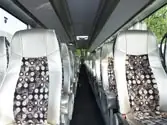
En un autobús cuyos asientos disponen de cinturón de seguridad es obligatorio que lo utilicen...
On a bus whose seats have seat belts, they must be worn by...
- Asólo los pasajeros mayores de tres años de edad, además del conductor.only passengers over three years old, as well as the driver.
- Btodos los pasajeros.all passengers.
- Csólo el conductor.only the driver.
ExplanationThe driver and passengers over three years old in seats fitted with seat belts or other approved restraint systems must use them in vehicles for carrying people with more than nine seats, including the driver's. Passengers must be told about this obligation.
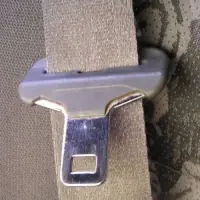
¿Para qué se utilizan las pinzas de presión en los cinturones de seguridad?
What are pressure clips on seat belts used for?
- APara apretar el cinturón y estrechar más al pasajero.To tighten the belt and hold the passenger more tightly.
- BPara dar más estabilidad a la carrocería del vehículo.To give the vehicle body more stability.
- CPara dar más holgura y que el cinturón no vaya tan apretado.To give more slack so that the belt is not so tight.
ExplanationPressure clips are fitted to the seat belt to leave it loose so that it does not press. This is a dangerous practice: with that slack, the body moves before it is held back in a crash and the belt loses much of its effectiveness, so they must not be used.
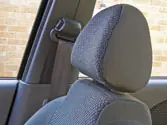
¿Cuál será la distancia correcta entre el apoyacabezas y la cabeza?
What is the correct distance between the head restraint and the head?
- AComo máximo 4 centímetros.4 centimetres at most.
- BComo mínimo 4 centímetros.At least 4 centimetres.
- CNunca a una distancia inferior de 4 centímetros.Never less than 4 centimetres.
ExplanationThe gap between the head and the head restraint must be as small as possible and never more than 4 centimetres.
Un niño de 136 cm de altura, ¿qué asientos puede ocupar en un coche?
Which seats may a child who is 136 cm tall use in a car?
- ASolo los asientos traseros, usando siempre un sistema de retención homologado según su talla y peso.Only the rear seats, always using a child restraint system approved for their height and weight.
- BSolo los asientos traseros, usando el cinturón de seguridad de adulto.Only the rear seats, using the adult seat belt.
- CTanto los asientos delanteros como los traseros, usando el cinturón de seguridad de adulto.Both the front and the rear seats, using the adult seat belt.
ExplanationOnly children who are 135 cm tall or shorter must use a child restraint system and, as a general rule, travel in the rear seats. At 136 cm the child is taller than this, so they may use any seat with the adult seat belt (Article 117 of the General Traffic Regulations).
¿Se podrá desconectar el air-bag del acompañante?
May the front passenger airbag be deactivated?
- ASí, si lleva gafas.Yes, if they wear glasses.
- BNo, no se pude.No, it cannot.
- CSí, si llevamos instalado un dispositivo de protección homologado en sentido contrario al sentido de la marcha.Yes, if we have an approved protection device fitted facing backwards.
ExplanationIf an approved restraint device is fitted facing backwards, we must deactivate the airbag.
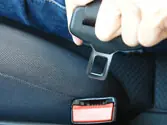
Si llevamos el cinturón de seguridad en mal estado, ¿qué debemos hacer?
If our seat belt is in poor condition, what should we do?
- ASeguir usándolo hasta la próxima ITV.Keep using it until the next vehicle inspection (ITV).
- BNada.Nothing.
- CRepararlo inmediatamente, no podemos circular en esta situación.Have it repaired straight away; we may not drive like this.
ExplanationThe seat belt must always be in perfect condition, both the strap and its anchorages, and positioned so that it fits closely to our body. Otherwise it might do almost nothing to protect us.
El conductor de una motocicleta,¿está obligado a utilizar casco de protección?
Must a motorcycle rider wear a protective helmet?
- ASí, excepto en las motocicletas con sidecar.Yes, except on motorcycles with a sidecar.
- BSí, excepto cuando la motocicleta tenga estructura de autoprotección, lleve cinturón de seguridad conste en la tarjeta de ITV.Yes, except when the motorcycle has a protective structure and a seat belt and this is stated on the ITV card.
- CSÍ, en todas las motocicletas.Yes, on all motorcycles.
ExplanationThe helmet is compulsory on all motorcycles, including those with a sidecar. The only exception is a motorcycle with a protective structure and seat belts, if this is stated on its vehicle inspection (ITV) card; then the seat belt replaces the helmet.
Un requisito obligatorio que debe cumplir todo casco que sea utilizado por un motorista o su acompañante es que sea...
A compulsory requirement for every helmet worn by a motorcyclist or their passenger is that it must be...
- Aabierto, porque es más cómodo y fresco que el integral.open-face, because it is more comfortable and cooler than a full-face helmet.
- Bhomologado.approved (type-approved).
- Cintegral, porque protege más que el abierto.full-face, because it protects more than an open-face helmet.
ExplanationAccording to Article 118.1 of the General Traffic Regulations, motorcycle riders and passengers must wear a helmet approved under UNECE Regulation R22, properly fastened, on all types of roads. It may be full-face or open-face; what the rules require is that it is approved.
¿Están obligados a llevar, debidamente abrochado, el cinturón de seguridad los ocupantes del asiento trasero de un turismo que circule dentro de poblado?
Must the rear-seat occupants of a car travelling in a built-up area wear their seat belts properly fastened?
- ASí, en todas las vías dentro de poblado excepto en las travesías.Yes, on all roads in built-up areas except travesías (stretches of road through a town).
- BSí.Yes.
- CEn el asiento de atrás es aconsejable, pero no obligatorio, la utilización del cinturón de seguridad dentro de poblado.In the back seat, using the seat belt in built-up areas is advisable but not compulsory.
ExplanationYes. Article 117 of the General Traffic Regulations requires all occupants, including those in the rear seats, to wear the seat belt fastened on both urban and interurban roads, including travesías.
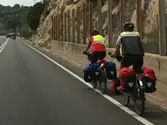
Los ciclistas, ¿pueden quitarse el casco en vías interurbanas?
May cyclists take off their helmet on interurban roads?
- ANo.No.
- BEn caso de rampas ascendentes prolongadas, en condiciones extremas de calor o por razones médicas.On long uphill climbs, in extreme heat or for medical reasons.
- CSólo en rampas ascendentes prolongadas.Only on long uphill climbs.
ExplanationUnder Article 118.2 of the General Traffic Regulations (RGC) (as worded by RD 518/2026), riders and passengers of bicycles must wear a fastened helmet on interurban roads. The reform removes the old exceptions for long uphill climbs, extreme heat or medical reasons.
¿Qué asientos puede ocupar un niño de cinco años, que mide 110 cm., si circula dentro de poblado en un turismo, y no dispone de asiento homologado adecuado a su talla y peso?
Which seats may a five-year-old child who is 110 cm tall use when travelling in a car in a built-up area, if there is no approved seat suited to their height and weight?
- APuede viajar solamente en los asientos delanteros.The child may travel only in the front seats.
- BNo puede viajar en el turismo, ni en los asientos delanteros ni posteriores.The child may not travel in the car, either in the front or in the rear seats.
- CPuede viajar solamente en los asientos posteriores.The child may travel only in the rear seats.
ExplanationA child 135 cm tall or less must travel in an approved child restraint system suited to their height and weight (Article 117 of the General Traffic Regulations). If the car does not have one, the child may not travel either in the front or in the back, even in a built-up area.
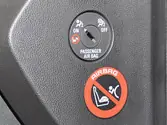
¿Cuándo debe desactivar el airbag frontal de un asiento?
When must you deactivate the front airbag of a seat?
- AEn ningún caso.Never.
- BCuando en ese asiento viaje una mujer embarazada.When a pregnant woman is travelling in that seat.
- CCuando en ese asiento instale un dispositivo de retención para niños orientado hacia atrás.When you fit a rear-facing child restraint system in that seat.
ExplanationThe airbag is a very safe passive safety system, but to avoid harmful effects we must bear the following in mind: - It complements the seat belt, so they must always be used together. - It is advisable for the airbag to be about 25 cm from the body, and never less than 10 cm. - Avoid placing objects near the airbag or putting your legs on the dashboard. When the airbag goes off, very serious injuries could occur. - When using a rear-facing child restraint system in a seat with an airbag, we must deactivate the airbag.
En un accidente de motocicleta, ¿es aconsejable quitarle el casco al motorista?
In a motorcycle accident, is it advisable to remove the rider's helmet?
- ANo, en ningún caso.No, never.
- BSí, como norma general.Yes, as a general rule.
- CNo, como norma general.No, as a general rule.
ExplanationAs a general rule, you should not remove the helmet of an injured motorcyclist, because this could make a neck (cervical spine) injury worse. It is removed only if absolutely necessary, for example because the person is not breathing, and by someone who knows the technique; it is not an absolute ban.
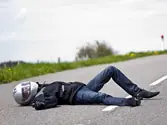
Si se encuentra un motorista accidentado, ¿debe quitarle el casco?
If you find an injured motorcyclist, should you remove their helmet?
- ASí, se le debe quitar lo antes posible para evitar que se asfixie.Yes, it should be removed as soon as possible so that they do not suffocate.
- BSí, siempre que el herido esté consciente.Yes, as long as the injured person is conscious.
- CNo.No.
ExplanationAs a general rule, an injured person's helmet should not be removed. When it is necessary in order to deal with the injured person's breathing, the helmet is removed with a specific technique that keeps the neck (cervical spine) still, and this technique should only be used if you know it well.
All topics
- Definitions
- Documents and penalty points
- The driver's condition
- Duties of drivers and pedestrians
- Vehicle controls and equipment
- Vehicle lights and horn
- Traffic signs, markings and signals
- The road and its lanes
- Speed and distances
- Manoeuvres
- Right of way
- Carrying passengers and loads
- Driving safely in difficult conditions
- Vehicle mechanics and maintenance
- Road accidents and first aid
- Defensive and eco-driving
Independent app: not affiliated with or endorsed by the DGT (Spain's Directorate-General for Traffic) or the Ministry of the Interior. The official exam is booked with the DGT and taken at its test centres. The questions here are practice material; the DGT's official question bank is not public.
Basado en datos de la Agencia Estatal Boletín Oficial del Estado (https://www.boe.es). Textos consolidados de carácter meramente informativo. La AEBOE no patrocina ni respalda este sitio.
Parte de las preguntas procede de los tests de la revista «Tráfico y Seguridad Vial» de la DGT, reproducidos con indicación de la fuente.