
DGT test · 691 questions
Vehicle safety devices · Page 7 of 14
Seat belts, child restraints, helmets, head restraints and airbags: when they are compulsory, the exceptions and how to use them properly.
Questions in this topic, with answers
691 questions, 50 per page, with the correct answer and the explanation. Page 7 of 14.
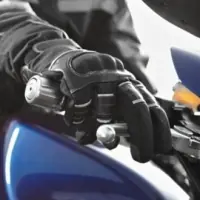
¿Es aconsejable que los conductores de motocicleta lleven guantes?
Is it advisable for motorcycle riders to wear gloves?
- ASólo en vías urbanas.Only on roads in built-up areas.
- BSí.Yes.
- CNo.No.
ExplanationGloves protect the hands from cold and wind and prevent injuries in a fall, when you instinctively put your hands on the ground. In addition, since 1 October 2026, Article 118 of the General Traffic Regulations requires protective gloves to be worn on roads outside built-up areas.
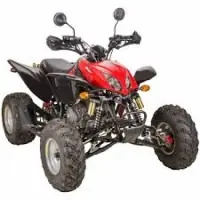
El pasajero que viaja en un cuadriciclo como el de la fotografía, ¿debe llevar casco?
Must the passenger on a quadricycle like the one in the photograph wear a helmet?
- ANo, solamente es obligatorio para las motocicletas y los ciclomotores.No, it is only compulsory on motorcycles and mopeds.
- BNo, en los cuadriciclos solo es obligatorio para el conductor.No, on quadricycles it is only compulsory for the driver.
- CSí, siempre.Yes, always.
ExplanationDrivers and passengers of quadricycles and quads must wear a protective helmet on all types of road (Article 118 of the General Traffic Regulations). They are exempt only if the vehicle has a protective structure and seat belts and this is stated in its documents, which is not the case with a quad like this one.
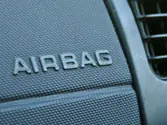
El airbag, ¿sustituye al cinturón de seguridad?
Does the airbag replace the seat belt?
- ANo, es un sistema de seguridad complementario al cinturón.No, it is a safety system that complements the seat belt.
- BSí, si circulamos dentro de poblado, pero no si lo hacemos fuera de él.Yes, if we are driving in a built-up area, but not outside one.
- CSí, en los asientos delanteros que tengan airbag frontal.Yes, in front seats that have a front airbag.
ExplanationThe airbag is a passive safety device that is not compulsory, unlike the seat belt, which is. In a frontal collision, if we do not wear the seat belt, even if the car has an airbag, we can suffer very serious injuries.
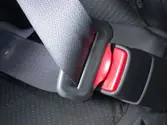
¿Están exentas las embarazadas de usar el cinturón de seguridad?
Are pregnant women exempt from wearing a seat belt?
- ASí porque es peligroso para ellas.Yes, because it is dangerous for them.
- BNo, excepto que dispongan de un certificado de exención por razones médicas.No, unless they have an exemption certificate for medical reasons.
- CSí, si circulan dentro de poblado, pero no si lo hacen fuera.Yes in built-up areas, but not outside them.
ExplanationPregnant women with a medical exemption certificate for serious medical reasons may travel without a seat belt. This applies to anyone else too.
Los reposacabezas y los cinturones de seguridad son sistemas de seguridad...
Head restraints and seat belts are safety systems that are...
- AActiva.active.
- BPasiva.passive.
- CPrimaria.primary.
ExplanationHead restraints and seat belts are passive safety systems: they reduce the consequences of an accident.
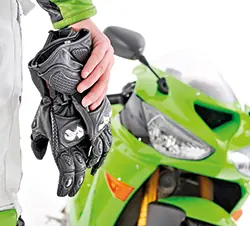
Si conduce una motocicleta, ¿es aconsejable utilizar guantes?
If you ride a motorcycle, is it advisable to wear gloves?
- ASí; su uso es obligatorio en todo tipo de vías.Yes; they are compulsory on all types of road.
- BSí, incluso en verano, para proteger las manos en caso de caída.Yes, even in summer, to protect your hands in a fall.
- CNo, porque pueden dificultar la conducción.No, because they can make riding more difficult.
ExplanationUnder Article 118.1(b) of the General Traffic Regulations (RGC) (as worded by Royal Decree 518/2026), protective gloves are compulsory for motorcycle riders and passengers on roads outside built-up areas, not on all types of road. Even so, it is advisable to wear them always, also in summer, because in a fall your hands are the first thing to hit the ground.
¿Cuándo debe cambiarse el casco?
When should you replace your helmet?
- ACuando los colores pasen de moda.When its colours go out of fashion.
- BCuando cambie de motocicleta.When you change motorcycle.
- CCuando sufra algún golpe, ya que puede haberse dañado.When it takes a knock, because it may have been damaged.
ExplanationA knock can damage the internal structure of the helmet even if it looks fine on the outside, and then it no longer protects properly, so it must be replaced. Under Article 118.1 of the General Traffic Regulations (RGC) (as worded by Royal Decree 518/2026), motorcycle helmets must be approved under UNECE Regulation R22 and properly fastened.

¿Cuál de las siguientes es una de las principales funciones del airbag en caso de accidente?
Which of the following is one of the main functions of the airbag in an accident?
- AEvitar el efecto submarino.Preventing submarining.
- BReducir el riesgo de heridas en la cara producidas por fragmentos de cristal procedentes del parabrisas.Reducing the risk of facial injuries from pieces of glass from the windscreen.
- CEvitar que la columna de dirección golpee al conductor.Stopping the steering column from hitting the driver.
ExplanationThe airbag cushions the impact of the head and face against the steering wheel, the dashboard and pieces of glass from the windscreen. Submarining is prevented by a correctly positioned seat belt, not by the airbag.
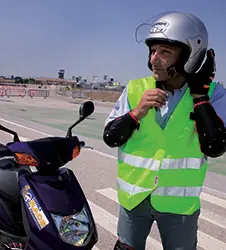
El uso adecuado del casco implica que la correa de sujeción...
Correct use of the helmet means that the chin strap...
- Ano debe abrocharse.must not be fastened.
- Bdebe llevarse correctamente abrochada, para que el casco cumpla eficazmente su función.must be correctly fastened, so that the helmet does its job effectively.
- Cpuede llevarse desabrochada en vía urbana.may be left unfastened in built-up areas.
ExplanationThe helmet only protects you if it stays on your head during the impact: with the strap unfastened or loose, it would fly off in the collision. That is why it must always be correctly fastened, including in town.
Los pasajeros de un taxi, ¿están obligados a utilizar el cinturón de seguridad?
Must taxi passengers wear a seat belt?
- ASí, pero solo cuando viajen en las plazas delanteras.Yes, but only when travelling in the front seats.
- BNo.No.
- CSí, excepto cuando circulen en tráfico urbano, no alcancen los 135 centímetros de estatura y viajen en los asientos traseros.Yes, except when they are in urban traffic, are shorter than 135 centimetres and travel in the rear seats.
ExplanationAll taxi passengers must wear a seat belt. The only exception is for minors 135 cm tall or less: in urban traffic they may travel in the taxi without a restraint system suited to their size, as long as they sit in a rear seat.
La parte abdominal del cinturón de seguridad debe colocarse...
The lap part of the seat belt should be placed…
- Asobre los huesos de las caderas o sobre el abdomen.over the hip bones or over the abdomen.
- Bsolo sobre el abdomen.only over the abdomen.
- Csobre los huesos de las caderas, siempre por debajo del abdomen.over the hip bones, always below the abdomen.
ExplanationThe lap belt must be worn low, over the hip bones and always below the abdomen. If it is over the stomach, in a crash it presses on soft organs and can cause internal injuries; the pelvis, on the other hand, can withstand the restraining force well.
Los ciclistas menores de 16 años, ¿deben usar casco en vías urbanas?
Must cyclists under 16 wear a helmet on urban roads?
- ANo.No.
- BSí.Yes.
- CSolo si circulan por la calzada.Only if they are riding on the carriageway.
ExplanationUnder Article 118.2 of the General Traffic Regulations (RGC), as worded by RD 518/2026, cyclists under sixteen must wear a helmet on all types of roads. Those aged sixteen or over only have to wear one on interurban roads, unless they ride a bicycle as part of their job, in which case they must also wear one on urban roads and travesías.
¿Los pasajeros de un taxi están obligados a usar el cinturón de seguridad?
Must taxi passengers wear a seat belt?
- ANo.No.
- BSí, sólo cuando vayan sentados en los asientos delanteros.Yes, only when sitting in the front seats.
- CSí.Yes.
ExplanationUnder Article 117.1 of the General Traffic Regulations (RGC), the driver and occupants of vehicles must wear a fastened seat belt both in and outside built-up areas, and taxi passengers have no exemption. Since Royal Decree 518/2026 (Art. 119.2), taxi drivers are not exempt in built-up areas either; in urban traffic, a taxi may only carry people shorter than 135 cm without a suitable restraint device if they sit in a rear seat.
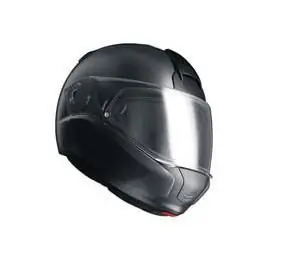
El conductor de un ciclomotor no está obligado a utilizar el casco de protección...
A moped rider does not have to wear a protective helmet...
- AEn vías urbanas.in built-up areas.
- BCuando el ciclomotor disponga de estructura de protección y cinturón de seguridad.when the moped has a protective structure and a seat belt.
- CEn Travesias.on travesías.
ExplanationUnder Article 118 of the General Traffic Regulations (RGC), moped riders and passengers must wear an approved helmet on all types of road. They are only exempt if the moped has a protective structure and seat belts, which they must then wear.
El pasajero de un ciclomotor, ¿debe equiparse con guantes igual que el conductor?
Should a moped passenger wear gloves just like the rider?
- ASí, por su seguridad.Yes, for their safety.
- BNo, sólo el piloto tendría que hacerlo.No, only the rider has to.
- CNo, basta con que lleve el casco abrochado.No, it is enough for them to wear a fastened helmet.
ExplanationAccording to Article 118 of the General Traffic Regulations (as worded by RD 518/2026), moped riders and passengers must wear an approved helmet and closed footwear on all types of roads, and protective gloves on roads outside built-up areas. Gloves protect the hands in a fall.
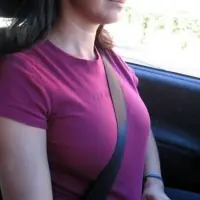
¿Cuál es la finalidad del cinturón de seguridad?
What is the purpose of the seat belt?
- ADar seguridad a los pasajeros para que se sientan mas tranquilos al circularTo make passengers feel safe, so that they are calmer while travelling
- BPrevenir el lanzamiento de los ocupantes al exterior del vehículoTo stop the occupants from being thrown out of the vehicle
- CSujetar el cuerpo de los niños o bebés únicamenteOnly to hold the bodies of children or babies
ExplanationThe main function of the seat belt is to stop the driver and the other occupants, children and adults alike, from being thrown out of the vehicle in an accident.
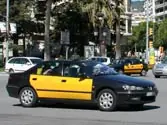
En el vehículo de la imagen, ¿está permitido viajar sin el cinturón de seguridad?
In the vehicle in the picture, is it allowed to travel without a seat belt?
- ASí, en trayectos cortos.Yes, on short journeys.
- BSólo los pasajeros de los asientos traseros.Only the passengers in the rear seats.
- CNo, los pasajeros de todas las plazas están obligados a su uso.No, passengers in all seats must wear one.
ExplanationUnder Article 119.2 of the General Traffic Regulations (RGC) (as worded by Royal Decree 518/2026), in built-up areas only drivers and passengers of vehicles on emergency duty are exempt from wearing a seat belt, so neither taxi drivers nor their passengers are exempt. The only exception is that, in urban traffic or urban areas of large cities, a taxi may carry people under 135 cm tall in a rear seat without a restraint system suited to their height and weight.
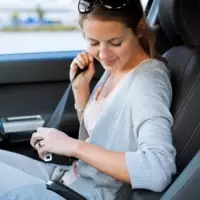
¿Quién está exento de utilizar el cinturón de seguridad?
Who is exempt from wearing a seat belt?
- ALos conductores y los pasajeros de vehículos en servicio de urgencia en vías interurbanas.Drivers and passengers of vehicles on emergency duty on roads outside built-up areas.
- BLos conductores cuando hacen la maniobra de estacionamiento o marcha atrás.Drivers when parking or reversing.
- CLos conductores de taxis en vías urbanas o interurbanas.Taxi drivers, in and outside built-up areas.
ExplanationThe Traffic Regulations state that drivers who are reversing or parking are exempt from wearing a seat belt, because the seat belt can get in the way of doing these manoeuvres properly. The other two answers refer to roads outside built-up areas, and on these roads seat belts are always compulsory for all occupants of any type of vehicle.
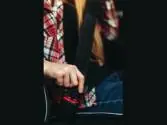
El cinturón de seguridad se deberá de colocar ...
The seat belt must be positioned with...
- ALa cinta torácica sobre los huesos de la cadera.the chest strap over the hip bones.
- BLa cinta abdominal sobre el abdomen.the lap strap over the abdomen.
- CLa cinta abdominal sobre los huesos de la cadera.the lap strap over the hip bones.
ExplanationThe upper part of the belt (the chest strap) must go over the collarbone, halfway between the shoulder and the neck, while the lower part (the lap strap) goes over the hip bones, always below the abdomen. If the lower part is not positioned correctly, the body can slide under it and be thrown out; this is known as submarining.
El airbag del vehículo es un dispositivo de seguridad...
The vehicle's airbag is a safety device that is...
- AActiva.active.
- BPasiva.passive.
- CPrimaria.primary.
ExplanationPassive safety features are those designed to reduce the injuries that can occur in an accident, as is the case with the airbag.
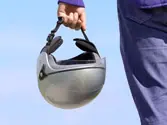
Al comprar un casco, ¿qué debe tener en cuenta?
When buying a helmet, what should you consider?
- AQue esté homologado, además de su talla y el material con que esté fabricado.That it is approved, as well as its size and the material it is made of.
- BÚnicamente que esté homologado.Only that it is approved.
- CLa marca.The brand.
ExplanationUnder Article 118.1 of the General Traffic Regulations (RGC) (as worded by Royal Decree 518/2026), motorcycle helmets must be approved under UNECE Regulation R22 and properly fastened. Also, when buying one, you must choose the right size so that it fits your head closely, and consider the material it is made of.
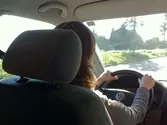
¿Qué tipo de lesiones puede reducir un buen uso del reposacabezas?
What type of injuries can proper use of the head restraint reduce?
- ANinguna, es un elemento de confort.None, it is a comfort feature.
- BLesiones cervicales.Neck injuries.
- CNinguna, es un elemento decorativo.None, it is a decorative feature.
ExplanationThe head restraint is an important passive safety feature that can greatly reduce the chance of neck injuries. Adjusting it correctly is vital, in both the front and the rear seats: - The top edge of the head restraint must be between the top of the head and eye level. - There should be no gap between the driver's head and the head restraint, or as small a gap as possible, never more than 4 cm.
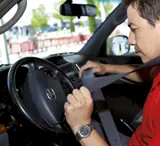
¿Es recomendable revisar el cinturón de seguridad después de sufrir un accidente?
Is it advisable to check the seat belt after an accident?
- ANo, es un elemento de seguridad que no debe cambiarse nunca.No, it is a safety feature that must never be changed.
- BNo, porque se ha probado su eficacia.No, because its effectiveness has been proven.
- CSí, puede haberse deteriorado el trenzado o los sistemas de anclaje.Yes, the webbing or the anchorages may have been damaged.
ExplanationAfter an accident, you should check the seat belts, because the stress they take in the impact may have stretched or damaged the strap, the webbing or the anchorages. A damaged seat belt may not hold the occupant in the next crash and must be replaced.
Una mujer embarazada, ¿está exenta de llevar el cinturón de seguridad?
Is a pregnant woman exempt from wearing a seat belt?
- ASí, a partir del sexto mes de embarazo.Yes, from the sixth month of pregnancy.
- BSí.Yes.
- CNo, pero llevando un justificante médico sí.No, but she is if she has a medical certificate.
ExplanationBeing pregnant does not exempt a woman from wearing a seat belt. Wearing it is especially advisable. However, if she has a medical certificate of exemption for serious medical reasons, she may not wear it.
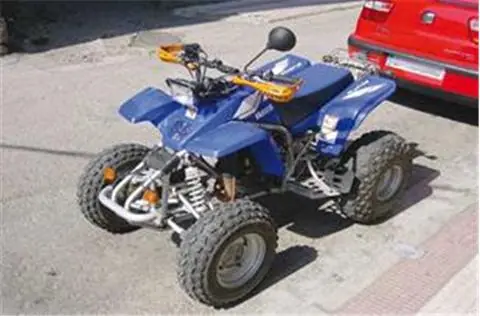
Los ocupantes de un cuadriciclo que no cuenta con estructura de autoprotección, ¿deben llevar casco?
Must the occupants of a quadricycle without a protective structure wear a helmet?
- ASí, tanto el conductor como el pasajero deben llevar casco.Yes, both the driver and the passenger must wear a helmet.
- BEl conductor siempre, para el pasajero su uso no es obligatorio.The driver always; for the passenger it is not compulsory.
- CNo, no es obligatorio ni para el conductor ni para el pasajero.No, it is not compulsory for either the driver or the passenger.
ExplanationUnder Article 118 of the General Traffic Regulations (RGC), drivers and passengers of quadricycles without a protective structure and seat belts must wear an approved helmet on all types of road. They are only exempt if the vehicle has that structure and seat belts.
Para usar correctamente el cinturón de seguridad:
To use the seat belt correctly:
- ANo debe colocar nada en el asiento, para evitar el efecto submarino.You should not put anything on the seat, to avoid submarining.
- BSi es necesario, puede poner un cojín en el asiento para que el cinturón quede a la altura adecuada.If necessary, you can put a cushion on the seat so that the belt is at the right height.
- CNo debe desconectar el airbag, porque el cinturón de seguridad sigue siendo obligatorio aunque el vehículo tenga airbag.You should not deactivate the airbag, because the seat belt is still compulsory even if the vehicle has an airbag.
ExplanationA cushion or any object under the occupant moves the lap strap up above the pelvis. In a crash, the body can slide under the belt (submarining) and the strap presses on the abdomen. The seat must be left clear, and the belt must sit low across the hips.
Si el casco que utilizamos no posee visera, ¿es recomendable llevar gafas?
If your helmet has no visor, is it advisable to wear goggles?
- ASí, para evitar que nos entre polvo en los ojos.Yes, to stop dust getting into your eyes.
- BSí, pero solo cuando se circule por vías interurbanas.Yes, but only when riding on interurban roads.
- CNo.No.
ExplanationThe helmet visor protects your eyes from wind, dust, insects and small stones. If the helmet does not have one, it is advisable to wear suitable goggles on any type of road, so that nothing gets into your eyes and you do not lose vision while riding.
¿Es eficaz el air-bag en caso de que los ocupantes del vehículo no utilicen el cinturón de seguridad?
Is the airbag effective if the vehicle's occupants do not wear a seat belt?
- ANo, y puede provocar lesiones graves.No, and it can cause serious injuries.
- BSí, pero solo para el conductor.Yes, but only for the driver.
- CSí.Yes.
ExplanationThe seat belt and the airbag are designed to work together, so if the vehicle's occupants do not wear a seat belt, the airbag inflating can injure them.
El orden de peligrosidad de las materias y objetos explosivos, de mayor a menor, es...
The order of danger of explosive substances and articles, from highest to lowest, is...
- A1.2, 1.3, 1.4, 1.1, 1.5, 1.6.1.2, 1.3, 1.4, 1.1, 1.5, 1.6.
- B1.1, 1.2, 1.3, 1.4, 1.5, 1.6.1.1, 1.2, 1.3, 1.4, 1.5, 1.6.
- C1.1, 1.5, 1.2, 1.3, 1.6, 1.4.1.1, 1.5, 1.2, 1.3, 1.6, 1.4.
ExplanationAccording to the hazard classification of explosive substances and articles, the correct order from most to least dangerous is: 1.1, 1.5, 1.2, 1.3, 1.6, 1.4. This is because the classification is based on the explosive power and the risk of each category. The number before the point shows the hazard class, and the number after the point shows the division within that class.
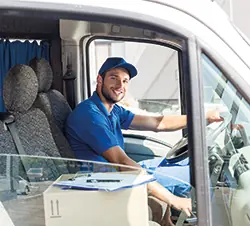
El conductor de un vehículo de distribución de mercancías ¿cuándo podrá circular por vía urbana sin utilizar el cinturón de seguridad?
When may the driver of a goods delivery vehicle drive in a built-up area without wearing a seat belt?
- AEn trayectos cortos, cuando realice sucesivas operaciones de carga y descarga.On short trips, when making one loading and unloading stop after another.
- BEn todo momento; en poblado no tiene obligación de utilizar el cinturón de seguridad.At any time; in built-up areas they do not have to wear a seat belt.
- CSolo en las exenciones generales, como la maniobra de marcha atrás o de estacionamiento.Only under the general exemptions, such as when reversing or parking.
ExplanationUnder Article 119.2 of the General Traffic Regulations (RGC) (as worded by RD 518/2026), in built-up areas the seat belt exemption only covers drivers and passengers of vehicles on an emergency call; the old exemption for goods delivery drivers has been removed. The general exemptions of Article 119.1 still apply, such as when reversing or parking.
¿Podrá un menor de 12 años que mida 1,40 m ocupar el asiento delantero del vehículo?
May a child under 12 who is 1.40 m tall sit in the front seat of the vehicle?
- ANo, los menores de 12 años tienen prohibido viajar en el asiento delantero.No, children under 12 are not allowed to travel in the front seat.
- BNo, porque como mínimo tiene que medir 1,50 m.No, because they must be at least 1.50 m tall.
- CSí, usando el propio cinturón de seguridad para adultos.Yes, using the vehicle's own adult seat belt.
ExplanationWhat counts is height, not age. Under article 117 of the General Traffic Regulations, only children 135 cm tall or less must use a child restraint system and travel in the back; at 1.40 m the child may travel in the front with the adult seat belt.
En un vehículo con sistema ABS, ¿frenaremos de la misma forma que en un vehículo que no disponga?
In a vehicle with ABS, do we brake the same way as in a vehicle without it?
- ANo.No.
- BSí, siempre se frena igual.Yes, you always brake the same way.
- CSí, bombeando el pedal del freno en ambos casos.Yes, pumping the brake pedal in both cases.
ExplanationIn a vehicle with ABS, we press the brake pedal as hard as possible until the vehicle stops completely. When the vehicle has no ABS, we gradually reduce the pressure as the speed drops.
Los niños, ¿cuándo pueden empezar a utilizar los cinturones de seguridad normales?
When can children start using normal seat belts?
- AA partir de una estatura superior a 1,35 m.When they are taller than 1.35 m.
- BA partir de 1,50 m de estatura.From a height of 1.50 m.
- CA partir de 12 años, aunque midan menos de 1,35 m de estatura.From the age of 12, even if they are shorter than 1.35 m.
ExplanationChildren who are 1.35 m tall or less must sit in the rear seats of the vehicle, always using an approved restraint device suited to their height and weight. There are three exceptions in which children below that height may travel in the front seat: 1. When the vehicle has no rear seats. 2. When all the rear seats are already taken by children in the same situation, so it is impossible to fit all the child seats needed at that moment. 3. When it is not possible to fit child restraint systems in those seats. When children are taller than 1.35 m, they may sit in the front seat using the adult seat belt.
¿Cuál es el mejor lugar para transportar a un menor en un vehículo?
What is the best place to carry a child in a vehicle?
- AEn cualquiera de las plazas traseras, con su sistema de retención homologado.In any of the rear seats, with their approved restraint system.
- BEn el asiento central de las plazas traseras, con su sistema de retención homologado.In the middle rear seat, with their approved restraint system.
- CEn cualquier asiento del vehículo, siempre y cuando lleve un sistema de retención homologado.In any seat of the vehicle, as long as they use their approved restraint system.
ExplanationThe best place to carry a child is the middle rear seat, with their approved restraint system fitted facing backwards, if the device allows it.
El cinturón de seguridad debe ir…
The seat belt must be worn…
- ASobre el abdomen para que sea realmente eficaz..Over the abdomen so that it is really effective.
- BBien ceñido para evitar el efecto submarino.Tight, to prevent submarining.
- CHolgado para que la conducción sea cómoda y no aparezca la fatiga.Loose, so that driving is comfortable and you do not get tired.
ExplanationThe seat belt must fit tightly against the body. If it is loose, in a collision the body slides under the lap belt (submarining) and serious injuries result; the lap belt must rest on the pelvic bones, not on the abdomen.
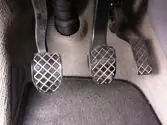
Si al pisar a fondo el freno de un vehículo que dispone de ABS, notamos unas vibraciones en el pedal, ¿qué haremos?
If you brake hard in a vehicle with ABS and feel vibrations in the pedal, what should you do?
- ASoltar inmediatamente el freno.Release the brake immediately.
- BSeguir pisando el freno.Keep pressing the brake.
- CPisar el freno a intervalos.Press the brake at intervals.
ExplanationStrong vibrations in the brake pedal show that the ABS is working, so you should keep the pedal pressed down firmly so that the system keeps working.
Para ajustar correctamente el reposacabezas, la distancia entre este y la cabeza debe ser...
To adjust the head restraint correctly, the distance between it and the head should be...
- Amás de 4 cm.more than 4 cm.
- Blo mínimo posible y nunca más de 4 cm.as small as possible and never more than 4 cm.
- Cla que resulte más cómoda para el conductor.whatever is most comfortable for the driver.
ExplanationFor the head restraint to protect you, your head should be as close to it as possible; the gap should not be more than about 4 cm. If it is further away, in a rear-end collision the head travels further before it is supported and the risk of whiplash increases.
El cinturón de seguridad, ¿es compatible con el airbag?
Is the seat belt compatible with the airbag?
- ASí, ambos sistemas son compatibles.Yes, the two systems are compatible.
- BNo, son incompatibles.No, they are incompatible.
- CNo, salvo que el airbag sea sólo lateral.No, unless it is only a side airbag.
ExplanationYes. The seat belt and the airbag complement each other: the seat belt holds the occupant back and the airbag cushions the impact of the head and chest. The airbag is designed to work with the seat belt fastened, whether it is a front or a side airbag.
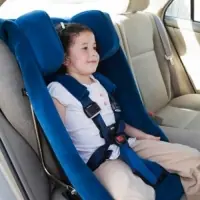
¿En qué posición es aconsejable situar la silla homologada de un bebé?
In which position is it advisable to fit a baby's approved child seat?
- ADe lado, en los asientos traserosSideways, in the back seats
- BEn el sentido de la marchaFacing forwards
- CA contramarcha, con la espalda hacia delanteRear-facing, with the baby's back towards the front of the car
ExplanationIt is advisable to keep the baby rear-facing for as long as possible: in a frontal crash the back of the seat spreads the force over the whole back and protects the neck, which is very fragile at that age. Approved i-Size seats must be rear-facing until at least 15 months.
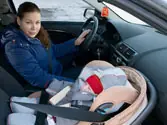
¿Puede un menor de 1,30 m de estatura viajar en el asiento delantero de un turismo?
May a child who is 1.30 m tall travel in the front seat of a car?
- ANo.No.
- BSolo si se coloca en sentido inverso a la circulación.Only if placed facing backwards.
- CSí, si el vehículo no dispone de asientos traseros o estos ya están ocupados por menores.Yes, if the vehicle has no rear seats or they are already taken by children.
ExplanationUnder article 117.3 of the General Traffic Regulations, a child 135 cm tall or less travels in the back in their child restraint system. They may travel in the front only if there are no rear seats, if the rear seats are taken by other children or if the child seats cannot be fitted there; with a rear-facing child seat, the airbag must be deactivated.
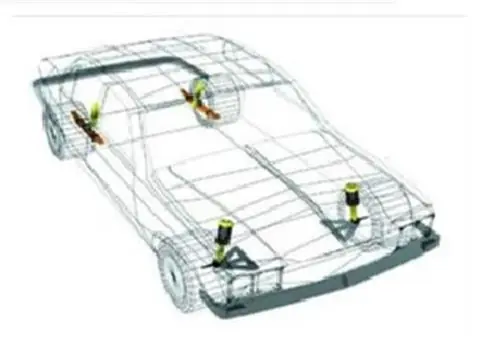
En un turismo,¿cuál es la principal función de la carrocería?
In a car, what is the main function of the bodywork?
- ADotar al vehículo de un aspecto aerodinámico.To give the vehicle an aerodynamic look.
- BSu función es básicamente estética.Its function is mainly aesthetic.
- CProteger a su ocupantes en caso de accidente.To protect the occupants in an accident.
ExplanationThe chassis and the bodywork must protect the occupants, preventing the deformation of the vehicle from injuring them or trapping them inside. This is “passive safety”.
La cinta torácica del cinturón de seguridad, ¿dónde ha de colocarse?
Where should the diagonal (chest) strap of the seat belt go?
- ADebe pasar sobre la clavícula, a medio camino entre el hombro y el cuello, pasando por el centro del pecho.Over the collarbone, halfway between the shoulder and the neck, across the middle of the chest.
- BPor debajo del brazo, a la altura de la cintura.Under the arm, at waist height.
- CApoyada sobre el hombro.Resting on the shoulder.
ExplanationThe diagonal strap must not be placed over the neck or the shoulder. If it is placed over the shoulder, it can slip off during a crash and greatly reduce the belt's effectiveness.
El sistema antibloqueo de frenos ABS...
The anti-lock braking system (ABS)...
- Apermite mantener el control sobre la dirección.lets you keep control of the steering.
- Breduce la distancia de frenado en todos los casos.reduces the braking distance in all cases.
- Chace que el vehículo mantenga su trayectoria.makes the vehicle keep its course.
ExplanationThe ABS anti-lock braking system detects the moment when the wheels lock and slightly reduces the brake pressure, as long as the pedal is kept pressed. This lets the wheels keep turning properly and lets the driver control the steering of the vehicle.
¿Es aconsejable quitarle el casco a un pasajero de moto que ha sufrido un accidente?
Is it advisable to remove the helmet of a motorcycle passenger who has had an accident?
- ASí, lo antes posible para evitar la asfixia.Yes, as soon as possible, to prevent suffocation.
- BSí, solo si el herido está consciente.Yes, only if the injured person is conscious.
- CNo, a menos que sea necesario y se conozca la técnica.No, unless it is necessary and you know the technique.
ExplanationRemoving an injured person's helmet can move their neck and make a possible spinal injury worse. It should only be done if it is essential, for example because the person is not breathing or is vomiting, and by someone who knows the technique, which requires two people keeping the head and neck in line.
Si conduce usted un ciclomotor.¿En qué vías está obligado a ponerse el casco?
If you ride a moped, on which roads must you wear a helmet?
- ASólo en carreteras.Only on roads outside built-up areas.
- BSólo en vías urbanas.Only on urban roads.
- CEn todas las vías.On all roads.
ExplanationMoped riders and passengers must wear a protective helmet, properly fastened, on all roads, both in and outside built-up areas (Article 118 of the General Traffic Regulations). There is no exemption for riding in town or on the open road.
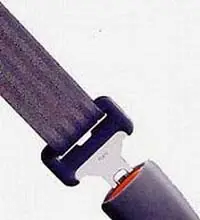
Ud va a estacionar su vehículo en poblado.¿Podría hacerlo sin el cinturón de seguridad puesto?
You are going to park your vehicle in a built-up area. Could you do it without wearing your seat belt?
- ANo, ya que es obligario tanto en poblado como en vías interurbanas.No, because it is compulsory both in built-up areas and outside them.
- BSí, ya que en poblado puedo circular sin el cinturón de seguridad.Yes, because in built-up areas I can drive without a seat belt.
- CSí, ya que para dicha maniobra me está permitido hacerlo sin él.Yes, because I am allowed to do this manoeuvre without it.
ExplanationThe General Traffic Regulations (RGC) allow drivers not to wear the seat belt while reversing or parking. There is no general exemption for driving in built-up areas: once the manoeuvre is finished, you must fasten it.
Las mujeres embarazadas, ¿están obligadas a utilizar el cinturón de seguridad?
Must pregnant women wear a seat belt?
- ANo están obligadas, ya que es más seguro no llevarlo puesto.They do not have to, because it is safer not to wear it.
- BSí; además existen dispositivos que permiten utilizarlo con mayor seguridad para la madre y el feto.Yes; there are also devices that make it safer for the mother and the foetus.
- CEn ninguna circunstancia una mujer embarazada debe utilizar el cinturón de seguridad.A pregnant woman should never wear a seat belt, under any circumstances.
ExplanationPregnant women must wear a seat belt on all types of road, without exception. This is because the seat belt is an important safety element that protects both the mother and the foetus in a collision. Although there are special devices that make the seat belt safer and more comfortable for pregnant women, wearing it is still compulsory.
¿Pueden las motocicletas disponer de ABS?
Can motorcycles have ABS?
- ANo, solo los turismos.No, only cars.
- BSí, pero solo en la rueda delantera.Yes, but only on the front wheel.
- CSí.Yes.
ExplanationMotorcycles can have ABS braking on both the front and the rear wheel.
Excepcionalmente, ¿en cuál de los siguientes casos un menor de edad, obligado a utilizar un sistema de retención infantil, podrá ocupar asiento delantero en un vehículo de cinco plazas, incluida la del conductor?
In which of the following cases may a child who must use a child restraint system exceptionally sit in the front seat of a five-seat vehicle (including the driver's seat)?
- ACuando el menor viaje con un sistema de retención infantil orientado hacia atrás.When the child travels in a rear-facing child restraint system.
- BCuando el vehículo no disponga de airbag frontal o este se encuentre desconectado.When the vehicle has no front airbag or it is switched off.
- CCuando todos los asientos traseros estén ya ocupados por menores de edad de estatura igual o inferior a 135 centímetros.When all the rear seats are already occupied by children 135 centimetres tall or less.
ExplanationUnder Article 117 of the General Traffic Regulations, a child 135 cm tall or less may sit in the front, in their restraint system, if the vehicle has no rear seats, if all rear seats are occupied by other such children, or if no more restraint systems fit. If the seat is rear-facing, the airbag must be switched off.
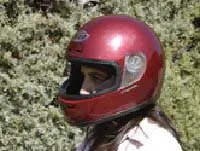
Debemos de llevar el casco abrochado al circular en motocicleta.
Must you wear your helmet fastened when riding a motorcycle?
- Así, ya que es obligatorio.Yes, because it is compulsory.
- BNo, ya que es suficiente con llevarlo colocado en la cabeza.No, it is enough to have it on your head.
- CNo, lo importante es llevarlo puesto.No, the important thing is to wear it.
ExplanationA helmet only protects you if it is properly fastened: if it is not fastened, it can fly off in a fall. Article 118 of the General Traffic Regulations (RGC) requires an approved helmet, properly fastened, on all types of road.
All topics
- Definitions
- Documents and penalty points
- The driver's condition
- Duties of drivers and pedestrians
- Vehicle controls and equipment
- Vehicle lights and horn
- Traffic signs, markings and signals
- The road and its lanes
- Speed and distances
- Manoeuvres
- Right of way
- Carrying passengers and loads
- Driving safely in difficult conditions
- Vehicle mechanics and maintenance
- Road accidents and first aid
- Defensive and eco-driving
Independent app: not affiliated with or endorsed by the DGT (Spain's Directorate-General for Traffic) or the Ministry of the Interior. The official exam is booked with the DGT and taken at its test centres. The questions here are practice material; the DGT's official question bank is not public.
Basado en datos de la Agencia Estatal Boletín Oficial del Estado (https://www.boe.es). Textos consolidados de carácter meramente informativo. La AEBOE no patrocina ni respalda este sitio.
Parte de las preguntas procede de los tests de la revista «Tráfico y Seguridad Vial» de la DGT, reproducidos con indicación de la fuente.