
DGT test · 691 questions
Vehicle safety devices · Page 8 of 14
Seat belts, child restraints, helmets, head restraints and airbags: when they are compulsory, the exceptions and how to use them properly.
Questions in this topic, with answers
691 questions, 50 per page, with the correct answer and the explanation. Page 8 of 14.
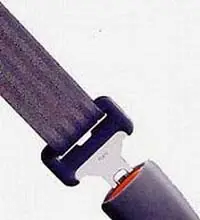
¿Es aconsejable utilizar pinzas para retener el cinturón de seguridad?
Is it advisable to use clips to hold the seat belt?
- ASí, siempre.Yes, always.
- BSí, ya que resulta más cómodo para la conducción.Yes, because it is more comfortable for driving.
- CNo, ya que reduce la eficacia del cinturón.No, because it reduces the effectiveness of the seat belt.
ExplanationNo. Clips that leave the seat belt slack mean that it does not hold the body back in time in a collision, and they increase the risk of injury and of submarining. The seat belt must fit close to the body, with no slack and no devices that change how it works.
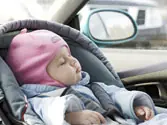
¿Podrá viajar un menor en los asientos delanteros del vehículo?
May a child travel in the front seats of the vehicle?
- ANo, está prohibido siempre.No, it is always forbidden.
- BSí, siempre utilizando dispositivos homologados al efecto, sillitas.Yes, always using approved devices designed for this, that is, child seats.
- CSi su estatura es superior a 1,35 metros podrá viajar en los asientos delanteros utilizando el cinturón de seguridad de los adultos.If they are taller than 1.35 metres, they may travel in the front seats using the adult seat belt.
ExplanationChildren who are 1.35 m tall or less must sit in the rear seats of the vehicle, always using an approved restraint device suited to their height and weight. There are three exceptions in which children below that height may travel in the front seat: 1. When the vehicle has no rear seats. 2. When all the rear seats are already taken by children in the same situation, so it is impossible to fit all the child seats needed at that moment. 3. When it is not possible to fit child restraint systems in those seats. If they sit in the front seat and the vehicle has a front airbag, they may only use rear-facing restraint systems if the airbag has been deactivated. When children are taller than 1.35 m, they may sit in the front seat using the adult seat belt.
La banda abdominal del cinturón de seguridad se coloca en...
The lap belt of the seat belt is placed on…
- AEl abdomen.The abdomen.
- BLa pelvis.The pelvis.
- CEl pechoThe chest
ExplanationThe lap belt must be worn low, over the pelvis, not over the abdomen, to avoid internal injuries and submarining. The diagonal belt crosses the chest over the middle of the collarbone, without touching the neck.
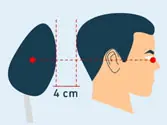
¿A qué altura debe quedar la parte central del apoyacabezas?
At what height should the middle part of the head restraint be?
- AA la altura del cuello.At neck height.
- BA la altura de los ojos.At eye height.
- CLa altura del apoyacabezas es indiferente.The height of the head restraint does not matter.
ExplanationThe head restraint is adjusted so that its central part is roughly at eye level, with its top edge between the eyes and the top of the head. At neck height it does not protect you: in a rear-end collision the head would rotate backwards over it.
En condiciones de baja visibilidad, ¿cómo señalizaremos la carga que sobresale por la parte delantera del vehículo?
In poor visibility, how should we signal a load that sticks out beyond the front of the vehicle?
- ACon una luz blanca.With a white light.
- BCon una luz roja.With a red light.
- CLa carga que sobresale por la parte delantera no es necesario señalizarla.A load that sticks out at the front does not need to be signalled.
ExplanationWhen a load sticks out at the front and the vehicle is travelling between sunset and sunrise or in poor visibility, the load must be signalled with a white light at its end (Article 15 of the General Traffic Regulations). The red light is for a load that sticks out at the rear.
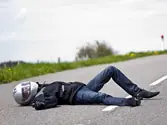
¿Se puede quitar el casco a un motorista accidentado?
Can you remove the helmet of an injured motorcyclist?
- ASí, como norma general.Yes, as a general rule.
- BSí, para darle de beber.Yes, to give them something to drink.
- CNo, como norma general.No, as a general rule.
ExplanationAs a general rule, you should not remove the helmet of an injured motorcyclist. If you have to give artificial respiration, the helmet may be removed, but only with a technique that keeps the neck (cervical spine) still. If you do not know this technique, you should never remove the helmet.

Una persona provista de un certificado médico que le exima de utilizar los sistemas de retención del vehículo, ¿está exenta de llevar abrochado el cinturón de seguridad?
Is a person with a medical certificate exempting them from using the vehicle's restraint systems exempt from wearing a fastened seat belt?
- ASí.Yes.
- BNo.No.
- CÚnicamente fuera de poblado.Only outside built-up areas.
ExplanationUnder Article 119 of the General Traffic Regulations (RGC) (as worded by RD 518/2026), in built-up areas only drivers and passengers of vehicles on an emergency call are exempt from wearing a seat belt; taxi drivers, delivery drivers and people accompanying schoolchildren no longer are. The general exemptions remain: the driver when reversing or parking, and people with a medical exemption certificate.
¿Para qué sirve el apoyacabezas?
What is the head restraint for?
- APara circular de forma más confortable y fatigarnos menos durante la conducción.To drive more comfortably and get less tired while driving.
- BPara reducir la posibilidad de lesiones cervicales.To reduce the chance of neck injuries.
- CPara sujetar el cinturón de seguridad a la altura correcta.To hold the seat belt at the right height.
ExplanationThe head restraint is an important passive safety feature that greatly reduces the chance of neck injuries. It is used on both the front and the rear seats.
¿Dónde está permitido que viaje un niño que no alcance los 135 centímetros de estatura?
Where may a child who is less than 135 centimetres tall travel?
- AEn cualquiera de los asientos traseros utilizando el cinturón para adultos.In any of the rear seats, using the adult seat belt.
- BEn un asiento delantero o trasero, utilizando siempre el cinturón de seguridad para adultos.In a front or rear seat, always using the adult seat belt.
- CEn el asiento trasero, utilizando siempre un dispositivo de retención homologado en función de su talla y peso.In the rear seat, always using an approved restraint device suited to their height and weight.
ExplanationChildren who are 1.35 m tall or less must sit in the rear seats of the vehicle, always using an approved restraint device suited to their height and weight. There are three exceptions in which children below that height may travel in the front seat: 1. When the vehicle has no rear seats. 2. When all the rear seats are already taken by children in the same situation, so it is impossible to fit all the child seats needed at that moment. 3. When it is not possible to fit child restraint systems in those seats. When children are taller than 1.35 m, they may sit in the front seat using the adult seat belt.
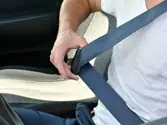
¿Qué personas están exentas de utilizar el cinturón de seguridad en un vehículo?
Which people are exempt from wearing a seat belt in a vehicle?
- ALos conductores y pasajeros de vehículos en servicio de urgencia, en poblado y salvo autopistas, autovías o carreteras convencionales.Drivers and passengers of vehicles on an emergency call, in built-up areas, except on motorways (autopistas), dual carriageways (autovías) or conventional roads.
- BLos conductores de taxis cuando estén de servicio y circulen en tráfico urbano o áreas urbanas de grandes ciudades.Taxi drivers when on duty and driving in urban traffic or in the urban areas of large cities.
- CLos conductores y pasajeros de motocicletas dotadas de estructura de protección y cinturones, si así consta en la tarjeta de inspección técnica.Drivers and passengers of motorcycles with a protective structure and seat belts, if this is stated on the vehicle inspection (ITV) card.
ExplanationUnder Article 119.2 of the General Traffic Regulations (RGC) (as worded by RD 518/2026), drivers and passengers of vehicles on an emergency call are exempt from wearing a seat belt in built-up areas, but not on motorways (autopistas), dual carriageways (autovías) or conventional roads; on-duty taxi drivers no longer are. Occupants of motorcycles with a protective structure are exempt from wearing a helmet, but they must wear the seat belt (Art. 118.1).
Una ambulancia circula en servicio urgente por una vía urbana, ¿están obligados a utilizar el cinturón de seguridad el conductor y los pasajeros?
An ambulance on an emergency call is travelling on an urban road. Must the driver and passengers wear seat belts?
- ALos conductores sí, pero los pasajeros no.The driver, yes; the passengers, no.
- BLos pasajeros sí, pero los conductores no.The passengers, yes; the driver, no.
- CNo.No.
ExplanationArticle 119 of the RGC exempts drivers and passengers of vehicles on an emergency call, such as an ambulance, from wearing seat belts in built-up areas. This exemption does not apply on motorways (autopistas), dual carriageways (autovías) or conventional roads.
Los menores de estatura igual o inferior a 135 cm deben viajar:
Children who are 135 cm tall or less must travel:
- AEn el asiento delantero sin más.In the front seat, with nothing else.
- BCon un sistema de retención infantil adecuado a su talla y peso.With a child restraint system suited to their height and weight.
- CSujetos solo con el cinturón de un adulto.Held only by an adult seat belt.
ExplanationChildren who are 135 cm tall or less must use an approved child restraint system suited to their height and weight.
¿El conductor de un camión debe utilizar el cinturón de seguridad?
Must the driver of a lorry wear a seat belt?
- ASí, los conductores de camiones de hasta 3.500 kg únicamente.Yes, but only drivers of lorries up to 3,500 kg.
- BSí, todos los conductores de vehículos destinados al transporte de mercancías, sea cual sea su MMA.Yes, all drivers of vehicles for carrying goods, whatever their maximum authorised mass (MAM).
- CNo, dentro de poblado pero sí fuera de él.No in built-up areas, but yes outside them.
ExplanationThe driver and the passengers in seats fitted with seat belts in goods vehicles and mixed-use vehicles must wear the seat belt both on urban roads and outside built-up areas.
Como norma general, ¿qué menores están obligados a situarse en los asientos traseros del vehículo utilizando un sistema de retención infantil homologado?
As a general rule, which children must sit in the rear seats of the vehicle using an approved child restraint system?
- ALos menores de 12 años.Children under 12.
- BLos menores de edad de estatura igual o inferior a 135 centímetros.Children who are 135 centimetres tall or less.
- CLos menores de edad de estatura inferior a 150 centímetros.Children shorter than 150 centimetres.
ExplanationSince the 2015 amendment of the General Traffic Regulations (RGC), children who are 135 cm tall or less must travel in the back with their child restraint system (child seat).
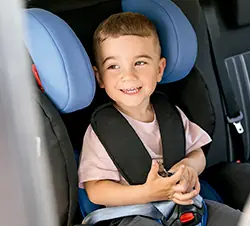
Los menores de edad de estatura igual o inferior a 135 centímetros deberán utilizar sistemas de retención infantil homologados debidamente adaptados a...
Children who are 135 centimetres tall or less must use approved child restraint systems properly suited to...
- Asu talla y edad.their height and age.
- Bsu edad y peso.their age and weight.
- Csu talla y peso.their height and weight.
ExplanationChildren who are 135 cm tall or less must use approved child restraint systems suited to their height and weight, so that the device holds the body correctly in an impact.
Los niños de estatura igual o inferior a 135 cm deben viajar:
Children who are 135 cm tall or less must travel:
- AEn el asiento delantero sin más.In the front seat, with nothing else.
- BCon un sistema de retención infantil adecuado a su talla y peso, normalmente detrás.With a child restraint system suited to their height and weight, normally in the back.
- CSujetos solo con el cinturón del adulto.Held only by the adult seat belt.
ExplanationUp to 135 cm, an approved child restraint system is compulsory, preferably in the rear seats.
En el asiento delantero de un taxi, ¿pueden viajar niños de más de dos años de edad y menos de doce?
May children over two and under twelve years old travel in the front seat of a taxi?
- ASí, en todo caso.Yes, in all cases.
- BNo, salvo que el taxi disponga de asientos de seguridad para menores u otros dispositivos específicos debidamente homologados para ello.No, unless the taxi has child safety seats or other specific devices properly approved for this.
- CNo, en ningún caso.No, never.
ExplanationUnder the law, children over two and under twelve may not travel in the front seat of a taxi unless the taxi is fitted with child safety seats or other specific devices properly approved to keep them safe.
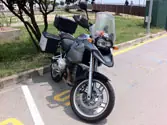
¿Se podrá circular, en algún caso, conduciendo una motocicleta sin casco?
May a motorcycle ever be ridden without a helmet?
- ASí, pero solo en vía urbana, con un certificado médico de exención.Yes, but only on urban roads, with a medical exemption certificate.
- BNo, el casco es obligatorio en todas las motocicletas.No, a helmet is compulsory on all motorcycles.
- CSí, si tiene estructura de autoprotección y cinturones, y así consta en la ITV.Yes, if it has a protective structure and seat belts, and this is shown on the ITV record.
ExplanationUnder article 118.1 of the General Traffic Regulations, the only people exempt from wearing a helmet are occupants of motorcycles with a protective structure and seat belts, if this is shown on the vehicle's ITV (inspection) card, and they must then wear the seat belt. From 1 October 2026 the helmet exemption for a medical certificate no longer exists.
En un coche, ¿es obligatorio usar el cinturón de seguridad?
In a car, is it compulsory to wear a seat belt?
- ASí, excepto el conductor cuando haga marcha atrás o aparque.Yes, except for the driver when reversing or parking.
- BNo, si el cinturón molesta o limita la libertad de movimientos.No, if the belt is uncomfortable or restricts freedom of movement.
- CSí, excepto en taxis.Yes, except in taxis.
ExplanationArticle 117 of the General Traffic Regulations (RGC) requires the driver and occupants to wear the seat belt fastened on any road. Under Article 119.1.a, the driver may go without it when reversing or parking. Discomfort is not an exemption, and taxi drivers do not have a general exemption either.
Los sistemas de retención infantil son obligatorios, con carácter general, para los menores cuya estatura sea igual o inferior a:
As a general rule, child restraint systems are compulsory for children whose height is equal to or less than:
- A125 centímetros.125 centimetres.
- B135 centímetros.135 centimetres.
- C145 centímetros.145 centimetres.
ExplanationThe limit is 135 cm; 125 and 145 cm are wrong values.
¿Dónde es más seguro colocar los sistemas de retención infantil?
Where is it safest to fit child restraint systems?
- AEn el asiento delantero, para poder vigilar al niño.In the front seat, so you can keep an eye on the child.
- BEn el asiento trasero central, ya que sufre menos por los impactos laterales.In the middle back seat, because it is less affected by side impacts.
- CEn el asiento trasero lateral, lo más cerca posible de la puerta.In a side back seat, as close as possible to the door.
ExplanationArticle 117.3 of the General Traffic Regulations requires children shorter than 135 cm to travel in the back in a suitable child restraint system. Of the back seats, the middle seat is the best protected, because it is further from the doors and from the impact zone in a side collision.
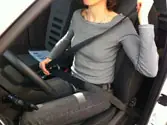
Cuando las cintas del cinturón de seguridad no quedan bien estiradas...
When the seat belt straps are not properly tight...
- Ael cinturón protege mejor.the seat belt protects better.
- Bel cinturón no reduce su eficacia en caso de accidente.the seat belt is no less effective in an accident.
- Cel cinturón pierde eficacia.the seat belt loses effectiveness.
ExplanationIf the seat belt straps are not properly tight, the belt may lose effectiveness and cause injuries in the accident.
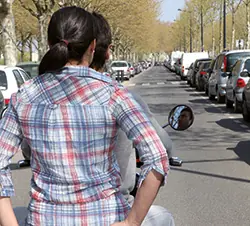
Si el pasajero de una motocicleta no utiliza el casco de protección, la responsabilidad es del...
If the passenger on a motorcycle does not wear a protective helmet, responsibility lies with the...
- Aconductor.rider.
- Bpasajero.passenger.
- Ctitular del vehículo.registered keeper (titular) of the vehicle.
ExplanationThe Traffic Law makes the driver of a vehicle on which both driver and passenger must wear a helmet responsible if the passenger does not wear one. So the rider must make sure the passenger has it on and fastened before setting off.
¿Las personas que tienen un certificado médico de exención están obligadas a llevar abrochado el cinturón de seguridad?
Must people who have a medical exemption certificate wear a fastened seat belt?
- ASolo fuera de zonas urbanas.Only outside urban areas.
- BNo.No.
- CSí.Yes.
ExplanationUnder Article 119 of the General Traffic Regulations (RGC), people with a medical exemption certificate for serious health reasons or disability do not have to fasten their seat belt, because they are exempt from this rule. This applies both on urban and on interurban roads, although they must show the certificate if a police officer asks for it. So the correct answer is “No”.
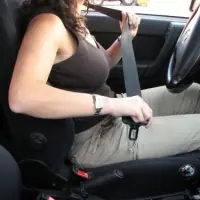
¿Qué característica debe tener un cinturón de seguridad?
What feature must a seat belt have?
- AMala sujecciónPoor hold
- BElásticoElastic
- CExtensibleExtensible
ExplanationA seat belt is a strap of strong fabric, made up of a diagonal band and a lap belt, that holds the driver and the occupants in their seats. The fabric must be extensible (able to stretch) to absorb part of the impact, but not elastic, and it must always hold firmly.
Los chalecos reflectantes de alta visibilidad que se llevan en el vehículo, ¿han de estar homologados?
Must the high-visibility reflective vests carried in the vehicle be approved?
- ASí.Yes.
- BNo es obligatorio que lo estén, pero si muy recomendable.It is not compulsory, but it is highly recommended.
- CLa homologación depende del color del chaleco.Approval depends on the colour of the vest.
ExplanationHigh-visibility reflective vests must be carried in the vehicle as compulsory equipment, and they must be approved.
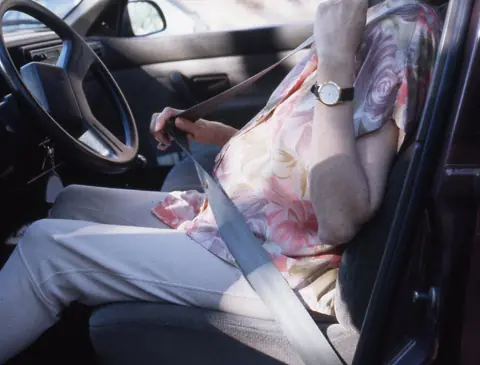
En el cinturón de seguridad, ¿por dónde debe pasar la cinta del pecho?
Where should the chest strap of the seat belt go?
- ASobre la clavícula, un hueso en la parte más alta de las costillas, y por el centro del pecho.Over the collarbone, a bone at the very top of the ribs, and across the middle of the chest.
- BPor la pelvis, debajo del abdomen o tripa.Across the pelvis, below the abdomen or belly.
- CPor el hombro.Over the shoulder.
ExplanationThe diagonal strap of the seat belt must cross the collarbone and the middle of the chest, without resting on the neck or slipping towards the arm. The strap across the pelvis, below the abdomen, is the lower or lap strap, not the chest strap.
Para efectuar un estacionamiento, ¿podemos desabrocharnos el cinturón de seguridad?
When parking, may you unfasten your seat belt?
- ANo, en ningún caso.No, never.
- BSí.Yes.
- CSí, solo en vías urbanas.Yes, only on urban roads.
ExplanationTo carry out a parking manoeuvre you may unfasten your seat belt, because this makes it easier to move and look around.
¿Por qué una silla infantil correctamente instalada es más segura que sujetar al niño con el cinturón del adulto?
Why is a properly fitted child seat safer than holding the child in with the adult seat belt?
- APorque el cinturón del adulto no se ajusta al cuerpo del niño y puede lesionarlo.Because the adult seat belt does not fit the child's body and can injure them.
- BPorque el cinturón del adulto sujeta mejor a los niños pequeños.Because the adult seat belt holds small children better.
- CPorque la silla infantil no requiere anclaje al vehículo.Because the child seat does not need to be anchored to the vehicle.
ExplanationThe adult seat belt does not fit a child's body and can cause serious injuries in a crash; that is why a child restraint system (child seat) is used.
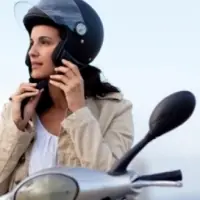
En un casco, ¿es importante la ventilación?
Is ventilation important in a helmet?
- ANo.No.
- BEs importante en verano, durante el resto del año es indiferente.It is important in summer; the rest of the year it does not matter.
- CSí.Yes.
ExplanationA helmet with good ventilation is more comfortable and safer, so it is important to check that it has enough air inlets and outlets.
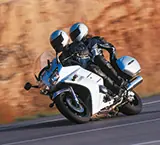
Un traje adecuado para conducir una motocicleta, debe...
Suitable clothing for riding a motorcycle must...
- AEstar muy ajustado al cuerpo para mejorar la estética.fit very tightly to the body so that it looks better.
- BTener colores oscuros.be dark in colour.
- CSer resistente a los golpes y a la abrasión en caso de caída.resist impacts and abrasion in a fall.
ExplanationA rider's gear is there for protection: the clothing must resist impacts and abrasion in a fall and slide. Bright colours, not dark ones, also improve visibility.
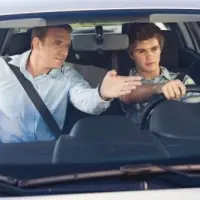
¿Están obligados los profesores de autoescuela a llevar el cinturón de seguridad en su actividad docente por autopista?
Must driving instructors wear a seat belt while teaching on a motorway (autopista)?
- ANo, en ningún casoNo, never
- BSí, siempreYes, always
- CÚnicamente cuando circulen por autopistas sinuosasOnly when driving on winding motorways
ExplanationUnder Article 119.2 of the General Traffic Regulations (RGC) (as worded by RD 518/2026), the exemption for people accompanying a learner driver has been removed, so the instructor must wear the seat belt on all types of road. In addition, on motorways there is no exemption even for vehicles on an emergency call.
Los airbags, entre otras funciones, protegen contra...
Among other functions, airbags protect against...
- Ael efecto submarino.submarining.
- Blesiones oculares.eye injuries.
- Clesiones cervicales y golpes contra el interior del vehículo.neck injuries and hitting the inside of the vehicle.
ExplanationAirbags are compulsory safety devices in vehicles, designed to protect critical areas of the body, such as the neck and chest, in an accident. According to the Traffic and Road Safety Code, their main function is to reduce the impact on the vehicle's occupants in a crash. This is crucial to prevent neck injuries and other harm caused by collisions. So the correct option is the one about protection against neck injuries and hitting parts of the inside of the vehicle.
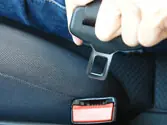
En vías urbanas,como norma general, utilizar el cinturón de seguridad ...
On urban roads, as a general rule, wearing a seat belt...
- Aes obligatorio.is compulsory.
- Bno es obligatorio, aunque sí es recomendable.is not compulsory, although it is advisable.
- Ces obligatorio para los pasajeros, pero no para el conductor.is compulsory for passengers, but not for the driver.
ExplanationOn both interurban and urban roads, wearing a seat belt is compulsory for all occupants of the vehicle, including the driver, unless the vehicle is not fitted with seat belts. This rule is there to protect everyone in the vehicle in an accident or when braking sharply. The seat belt helps keep occupants in place and reduces injuries in a collision, preventing them from being thrown out of the vehicle.
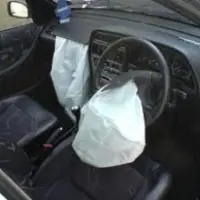
¿En cuál de éstos lugares puede estar situado el airbag?
In which of these places can an airbag be located?
- AEn los cristales lateralesIn the side windows
- BEn el suelo del habitáculo del vehículoIn the floor of the passenger compartment
- CEn el asiento del acompañanteIn the passenger's seat
ExplanationAs a passive safety element, the airbag can be located in the driver's seat and in the front passenger's seat, but never in transparent parts such as the windows or glass of the vehicle, or in the floor. It is always placed in safe places so that it can stop the occupants from hitting parts of the vehicle.
¿Puede viajar un niño de 10 años en el asiento delantero de un turismo?
Can a 10-year-old child travel in the front seat of a car?
- ASí, pero sólo si va conduciendo su padre o tutor.Yes, but only if their parent or guardian is driving.
- BNo, en ningún caso, los niños de edad inferior a 12 años están obligados a viajar en los asientos posteriores de los turismos, en todo caso.No, never; children under 12 must always travel in the rear seats of cars.
- CSí, utilizando el dispositivo homologado de retención que le corresponda según el Reglamento.Yes, using the approved restraint device that applies to them under the Regulations.
ExplanationWhat counts is height, not age. If the child is 135 cm tall or less, they must use the approved restraint system suited to their height and weight and, as a rule, travel in the back; they may travel in the front only in the exceptional cases of Article 117 of the General Traffic Regulations. If they are taller, they may travel in the front wearing a seat belt.
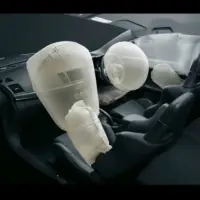
¿A qué otro elemento de seguridad complementa el airbag?
Which other safety feature does the airbag complement?
- AA los cinturones de seguridadThe seat belts
- BAl apoyacabezasThe head restraint
- CA los parachoquesThe bumpers
ExplanationThe airbag is a system that complements the seat belt: it is designed to work with the occupant held in place by the seat belt. Without a seat belt, the body moves towards the airbag while it is inflating and can suffer serious injuries.
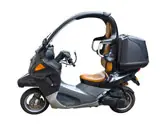
¿En qué caso puede el conductor de una motocicleta circular sin casco?
In which case may a motorcycle rider ride without a helmet?
- ACuando la motocicleta tenga estructura de autoprotección, cinturón de seguridad y así conste en su tarjeta ITV.When the motorcycle has a protective structure and a seat belt, and this is stated on its ITV card.
- BEn ningún caso ya que el casco siempre es obligatorio.Never, because the helmet is always compulsory.
- CCuando circule en vías urbanas a velocidad reducida.When riding on urban roads at low speed.
ExplanationAs a general rule, the rider and the occupants of motorcycles must wear an approved protective helmet. As an exception, if the motorcycle has a protective structure and seat belts, and this is stated on the ITV card, the helmet is not needed, but the seat belts must then be worn.
¿Están exentos los distribuidores de mercancías de usar el cinturón de seguridad?
Are goods delivery drivers exempt from wearing a seat belt?
- ASí, dentro de poblado, cuando realizan operaciones frecuentes de carga y descarga.Yes, in built-up areas, when they make frequent loading and unloading stops.
- BNo, las operaciones de carga y descarga no les eximen de utilizarlo.No, loading and unloading stops do not exempt them from wearing it.
- CSí, en todas las vías, cuando realizan operaciones de carga y descarga a corta distancia.Yes, on all roads, when they make loading and unloading stops over short distances.
ExplanationUnder Article 119.2 of the General Traffic Regulations (RGC) (as worded by RD 518/2026), the seat belt exemption in built-up areas is limited to drivers and passengers of vehicles on an emergency call; goods delivery drivers are no longer exempt. Like any driver, they may only drive without a seat belt when reversing or parking (Art. 119.1).
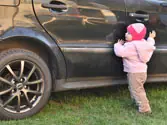
¿Podrá un niño de 130 centímetros de estatura ocupar los asientos traseros del vehículo?
May a child who is 130 centimetres tall sit in the rear seats of the vehicle?
- ASí, con el cinturón de seguridad.Yes, with the seat belt.
- BSí, en brazos de un adulto.Yes, in an adult's arms.
- CSí, con un dispositivo de retención homologado.Yes, with an approved restraint device.
ExplanationVehicle seats are built and designed to carry adults, in both height and weight. When carrying children, a restraint system suited to the child's weight and height must be fitted. That way, in an accident or when braking sharply, the restraint system will work correctly. In vehicles with up to nine seats, including the driver's, children who are 1.35 metres tall or less must use approved child restraint systems properly suited to their height and weight, and must sit in the rear seats. As an exception, they may sit in the front seat, as long as they use approved child restraint systems properly suited to their height and weight, in the following cases: - When the vehicle has no rear seats. - When all the rear seats are already taken by children who are 135 cm tall or less. - When it is not possible to fit all the child restraint systems in those seats. If they sit in the front seats and the vehicle has a front airbag, they may only use rear-facing restraint systems if the airbag has been deactivated. Child restraint systems must always be fitted in the vehicle according to the manufacturer's instructions.
¿Está permitido conducir una motocicleta con el casco sin abrochar?
Is it allowed to ride a motorcycle with your helmet unfastened?
- ANo, en ningún caso.No, never.
- BSolo en vías urbanas, si la velocidad es inferior a 40 km/h.Only on urban roads, if the speed is below 40 km/h.
- CSí, cuando se trate de un casco integral.Yes, if it is a full-face helmet.
ExplanationUnder Article 118.1 of the General Traffic Regulations (RGC) (as worded by RD 518/2026), riders and passengers of motorcycles must wear an approved helmet, properly fastened, on all types of road, whatever the speed or the type of helmet. Wearing it unfastened is not allowed.
¿El color del casco influye en la seguridad del motociclista?
Does the colour of the helmet affect the motorcyclist's safety?
- ASí. Los cascos de colores claros son más seguros.Yes. Light-coloured helmets are safer.
- BSí. Los cascos de colores oscuros son más seguros.Yes. Dark-coloured helmets are safer.
- CNo. El color del casco no influye en la seguridad.No. The colour of the helmet does not affect safety.
ExplanationThe colour of the helmet affects how visible the rider is, especially in low light or poor visibility. Light-coloured helmets are easier for other drivers to see, which can help prevent accidents. This is part of the road safety rules that stress the importance of visibility for protecting motorcyclists, as stated in the Traffic and Road Safety Code, along with the importance of using suitable equipment. So the correct option is that light-coloured helmets are safer.
¿Qué motoristas están exentos de usar el casco de protección homologado?
Which motorcyclists are exempt from wearing an approved protective helmet?
- ALos que circulen dentro de poblado.Those riding in built-up areas.
- BNinguno, todos tienen que llevarlo.None; they all have to wear one.
- CLos que conduzcan motocicletas con estructura de protección.Those riding motorcycles with a protective structure.
ExplanationWhen motorcycles have protective structures and are fitted with seat belts, riders and passengers are exempt from wearing a protective helmet.
El conductor de un vehículo de transporte sanitario que circule dentro de poblado, ¿deberá llevar abrochado el cinturón de seguridad?
Must the driver of a medical transport vehicle driving in a built-up area wear a fastened seat belt?
- ANo es obligatorio pero si aconsejable.It is not compulsory, but it is advisable.
- BSí, en todo caso.Yes, in all cases.
- CNo, cuando lo haga en servicio de urgencia.No, when on an emergency call.
ExplanationUnder Article 119.2 of the General Traffic Regulations (RGC) (as worded by RD 518/2026), drivers and passengers of vehicles on an emergency call are exempt from wearing a seat belt when driving in built-up areas, but never on motorways (autopistas), dual carriageways (autovías) or conventional roads.
El uso del cinturón de seguridad en trayectos urbanos muy cortos:
Wearing a seat belt on very short urban trips:
- ANo es necesario.Is not necessary.
- BEs igualmente obligatorio y protege incluso a baja velocidad.Is still compulsory, and it protects you even at low speed.
- CSolo para el conductor.Is only for the driver.
ExplanationThe seat belt is always compulsory; many serious accidents happen on short trips and at low speed.
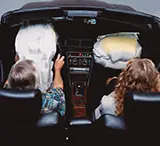
El funcionamiento del airbag, ¿puede llegar a ser peligroso en un accidente?
Can an airbag going off be dangerous in an accident?
- ASí, si no se lleva puesto el cinturón de seguridad.Yes, if you are not wearing a seat belt.
- BSí, siempre.Yes, always.
- CNo.No.
ExplanationThe airbag is designed to work together with the seat belt, not to replace it. If the occupant is not wearing the seat belt, the impact throws them forward just as the bag opens at high speed, and hitting it can cause serious injuries.
Una embarazada, ¿está exenta de usar cinturón de seguridad?
Is a pregnant woman exempt from wearing a seat belt?
- ASí.Yes.
- BNo.No.
- CSí, a partir del sexto mes de embarazo.Yes, from the sixth month of pregnancy.
ExplanationBeing pregnant does not remove the obligation to wear a seat belt. Only people with an exemption certificate for serious medical reasons are exempt.
¿Cuál de las siguientes es una función principal del airbag en caso de accidente?
Which of the following is a main function of the airbag in an accident?
- AEvitar que el ocupante se deslice por debajo del cinturón de seguridad.To stop the occupant from sliding under the seat belt.
- BReducir el riesgo de heridas en la cara producidas por fragmentos de cristal procedentes del parabrisas.To reduce the risk of facial injuries caused by pieces of glass from the windscreen.
- CEvitar que la columna de dirección golpee al conductor.To stop the steering column from hitting the driver.
ExplanationThe airbag is a passive safety device that is activated in a collision. Its main function is to reduce injuries to critical areas of the body, such as the head and chest. By inflating quickly, the airbag helps cushion the impact and reduces the chance of severe injuries, especially to the face and neck, caused by pieces of glass and other dangerous objects inside the vehicle. This is supported by the General Traffic Regulations (RGC), which stress the importance of having safety equipment such as the airbag. So the correct answer is the one about reducing the risk of facial injuries.
En vías urbanas, normalmente el uso del cinturón de seguridad ...
In built-up areas, as a rule, wearing a seat belt…
- Aes obligatorio.is compulsory.
- Bno es obligatorio, pero se recomienda.is not compulsory, but it is recommended.
- Ces obligatorio para los pasajeros, pero no para el conductor.is compulsory for passengers, but not for the driver.
ExplanationArticle 117.1 of the General Traffic Regulations requires the driver and all passengers to wear their seat belts fastened both in and outside built-up areas. There are only specific exceptions, such as when reversing or parking, or with a medical certificate (Article 119).
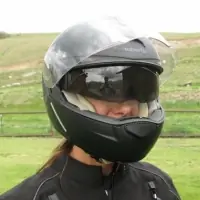
¿Qué se pueden utilizar como gafas de seguridad en una motocicleta para proteger los ojos?
What can be used as safety glasses on a motorcycle to protect the eyes?
- ALa visera del cascoThe helmet visor
- BMonóculosMonocles
- CGafas de solSunglasses
ExplanationThe helmet visor or screen protects the eyes from wind, dust, rain and insects without reducing the field of vision, so it does the job of safety glasses. Sunglasses do not protect as well and darken your vision in tunnels or at dusk.
All topics
- Definitions
- Documents and penalty points
- The driver's condition
- Duties of drivers and pedestrians
- Vehicle controls and equipment
- Vehicle lights and horn
- Traffic signs, markings and signals
- The road and its lanes
- Speed and distances
- Manoeuvres
- Right of way
- Carrying passengers and loads
- Driving safely in difficult conditions
- Vehicle mechanics and maintenance
- Road accidents and first aid
- Defensive and eco-driving
Independent app: not affiliated with or endorsed by the DGT (Spain's Directorate-General for Traffic) or the Ministry of the Interior. The official exam is booked with the DGT and taken at its test centres. The questions here are practice material; the DGT's official question bank is not public.
Basado en datos de la Agencia Estatal Boletín Oficial del Estado (https://www.boe.es). Textos consolidados de carácter meramente informativo. La AEBOE no patrocina ni respalda este sitio.
Parte de las preguntas procede de los tests de la revista «Tráfico y Seguridad Vial» de la DGT, reproducidos con indicación de la fuente.