
DGT test · 691 questions
Vehicle safety devices · Page 5 of 14
Seat belts, child restraints, helmets, head restraints and airbags: when they are compulsory, the exceptions and how to use them properly.
Questions in this topic, with answers
691 questions, 50 per page, with the correct answer and the explanation. Page 5 of 14.
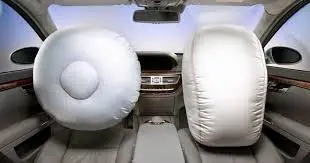
Los airbags frontales son más eficaces en los…
Front airbags are most effective in...
- AAlcances traseros.rear-end collisions.
- BImpactos frontales.frontal impacts.
- CImpactos laterales.side impacts.
ExplanationFront airbags are designed to protect in frontal or near-frontal crashes, which throw the body towards the steering wheel and the dashboard. In side impacts, side or curtain airbags come into action, and in rear-end collisions the head restraint protects you.
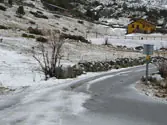
Con hielo en la calzada, si su vehículo no tiene ABS, es preferible...
With ice on the carriageway, if your vehicle does not have ABS, it is better to...
- Ausar el freno de mano.use the handbrake.
- Bevitar pisar el freno.avoid pressing the brake.
- Cpisar el freno a fondo, junto con el embrague.press the brake fully, together with the clutch.
ExplanationThe danger of driving vehicles without ABS (anti-lock braking system) on slippery surfaces is that the wheels lock and you lose control of the vehicle (the steering will not respond). So the brake should only be used when strictly necessary and very gently. Remember that braking distance, the distance the vehicle travels from the moment you press the brake until it stops completely, increases with the weather: up to 2 times longer in rain and up to 10 times longer on ice.
¿Puede ser sancionado por no llevar abrochado el cinturón de seguridad si está realizando la maniobra de estacionamiento?
Can you be fined for not wearing your seat belt while parking?
- ANo, porque estoy exento de utilizarlo para realizar dicha maniobra.No, because I am exempt from using it for this manoeuvre.
- BNo, cuando realice la maniobra únicamente dentro de poblado.No, but only when doing the manoeuvre in a built-up area.
- CSí, porque está prohibido realizar dicha maniobra sin llevarlo debidamente abrochado.Yes, because it is prohibited to do this manoeuvre without the seat belt properly fastened.
ExplanationThe correct answer is 'No': under the rules, a driver who is parking is exempt from wearing a fastened seat belt. This is because the manoeuvre is done at low speed and in a controlled space, which allows some flexibility in using the seat belt.
¿Cuántos puntos puede perder un conductor por no llevar el cinturón de seguridad?
How many points can a driver lose for not wearing a seat belt?
- A2 puntos.2 points.
- B3 puntos.3 points.
- C4 puntos.4 points.
ExplanationNot wearing a seat belt, or wearing it incorrectly, is a serious offence. Under Annex II of the Traffic Law, it means losing 4 points from your driving licence, as well as the corresponding fine.
No utilizar el cinturón de seguridad, el casco o el sistema de retención infantil supone la pérdida de:
Not wearing a seat belt, a helmet or a child restraint system means losing:
- A4 puntos.4 points.
- B3 puntos.3 points.
- C6 puntos.6 points.
ExplanationSince 2022, not using a seat belt, a helmet or a child restraint system (child seat) costs 4 points (before, it was 3).
El airbag es un sistema de seguridad...
The airbag is a safety system that is...
- AActiva o primaria.Active or primary.
- BTerciaria o posterior al accidente.Tertiary or post-accident.
- CPasiva o secundaria.Passive or secondary.
ExplanationAirbags are passive safety devices, because their purpose is to minimise or prevent the injuries that may be suffered in an accident.
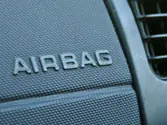
¿Cuál es la distancia ideal a la que debe colocarse con respecto al airbag?
What is the ideal distance to sit from the airbag?
- A10 cm.10 cm.
- B25 cm.25 cm.
- CLa distancia que le permita conducir en una postura cómoda.Whatever distance lets you drive in a comfortable position.
ExplanationThe airbag is a very safe passive safety system. It prevents occupants from hitting different parts of the vehicle directly. Today there are front airbags for the driver and passenger, side airbags, roof or curtain airbags, knee airbags, etc. For effective protection and to avoid harmful effects, keep the following in mind: - It complements the seat belt, so they must always be used together. - The airbag should be about 25 cm from your body, and never less than 10 cm. - Do not place objects near the airbag or put your legs on the dashboard: when the airbag goes off, this could cause very serious injuries. - When you use a rear-facing child restraint system in a seat with an airbag, you must deactivate the airbag.
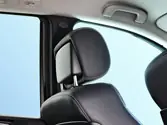
Para un ajuste óptimo, la altura de la parte superior del reposacabezas debe colocarse...
For the best fit, the top of the head restraint should be...
- Apor encima de la nuca.above the nape of the neck.
- Bpor debajo de la nuca.below the nape of the neck.
- Ca la misma altura que la parte superior de la cabeza.level with the top of the head.
ExplanationThe head restraint is an important passive safety feature that can greatly reduce the chance of neck injuries. Adjusting it correctly is vital, in both the front and the rear seats: - The top edge of the head restraint must be between the top of the head and eye level. - There should be no gap between the driver's head and the head restraint, or as small a gap as possible, never more than 4 cm.
El ocupante de un turismo debe llevar el cinturón de seguridad...
A car occupant must wear the seat belt...
- ASolo en vías interurbanas.only on roads outside built-up areas.
- BSolo si viaja en las plazas delanteras.only if travelling in the front seats.
- CColocado y abrochado en todo tipo de vías.on and fastened, on all types of road.
ExplanationCar occupants must wear the seat belt on all types of road, both in and outside built-up areas.
¿A partir de qué altura puede un niño usar el cinturón de adulto?
From what height may a child use the adult seat belt?
- A1,20 metros1.20 metres
- B1,35 metros1.35 metres
- C1,50 metros1.50 metres
ExplanationUnder Article 117 of the General Traffic Regulations, children who are 135 centimetres tall or shorter must use an approved child restraint system suited to their height and weight; above that height they may use the adult seat belt.
¿El conductor de un taxi podrá circular sin llevar abrochado el cinturón de seguridad en una autopista dentro de poblado?
May a taxi driver drive without the seat belt fastened on a motorway (autopista) inside a built-up area?
- ASí.Yes.
- BNo.No.
- CSí, si está de servicio con viajeros.Yes, if on duty with passengers.
ExplanationA taxi driver may not drive without the seat belt fastened on a motorway inside a built-up area. Wearing a seat belt is compulsory both in built-up areas and outside them, and there is no exception for taxi drivers in this case.
¿Puede un niño menor de 10 años viajar en el asiento delantero de un coche?
Can a child under 10 travel in the front seat of a car?
- ANo, hasta los 12 años debe ir detrás.No, they must sit in the back until they are 12.
- BSí, siempre.Yes, always.
- CSí, si mide más de 1,35 metros.Yes, if they are taller than 1.35 metres.
ExplanationAccording to Article 117 of the General Traffic Regulations (RGC), what counts is height, not age: minors who are 135 centimetres tall or shorter must sit in the back with a child restraint system, with some exceptions, while if they are taller they may sit in the front with the seat belt.
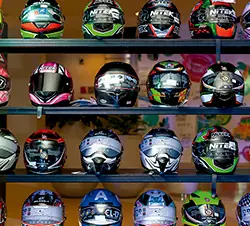
El color del casco de protección de un motorista, ¿puede influir en su seguridad?
Can the colour of a motorcyclist's protective helmet affect their safety?
- ANo.No.
- BSí; los de colores claros o brillantes hacen más visible al motorista.Yes; light or bright colours make the motorcyclist more visible.
- CSí; los de colores oscuros absorben mejor los impactos.Yes; dark colours absorb impacts better.
ExplanationLight or bright helmets make the motorcyclist more visible to other drivers, by day and by night, and being seen in time reduces the risk of a collision. Colour does not affect how well the helmet absorbs impacts.
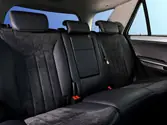
¿Es importante regular los reposacabezas traseros?
Is it important to adjust the rear head restraints?
- ANo, sólo tenemos que regular los delanteros.No, we only need to adjust the front ones.
- BSí, para prevenir lesiones en caso de accidente.Yes, to prevent injuries in an accident.
- CNo, porque son fijos y no se pueden regular.No, because they are fixed and cannot be adjusted.
ExplanationThe rear head restraints must also be adjusted to the height of the occupant's head, because they play an important part in the vehicle's passive safety.
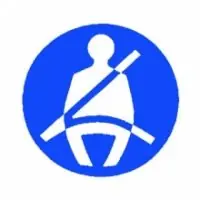
No están obligados a utilizar el cinturón de seguridad, como norma general...
As a general rule, who does not have to wear a seat belt?
- Alos menores de 16 años.Minors under 16.
- Blos ocupantes de vehículos en servicio de urgencia en vía urbana.Occupants of vehicles on emergency duty on roads in built-up areas.
- Clas embarazadas.Pregnant women.
ExplanationUnder Article 119.2 of the General Traffic Regulations (RGC) (as worded by Royal Decree 518/2026), drivers and passengers of vehicles on emergency duty are exempt from wearing a seat belt in built-up areas, but not on autopistas (motorways), autovías (dual carriageways) or conventional roads. The old exemption for taxi drivers on duty has gone.
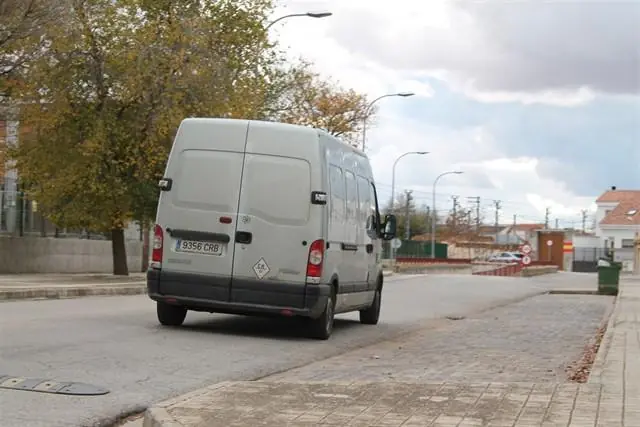
Los conductores de vehículos de carga y descarga, circulando en poblado, ¿tiene obligación de llevar el cinturón de seguridad?
Must drivers of vehicles doing loading and unloading in a built-up area wear a seat belt?
- ASí.Yes.
- BNo, porque estos vehículos no están obligados a llevar cinturones.No, because these vehicles do not have to be fitted with seat belts.
- CNo, porque sólo es obligado en vías fuera de poblado.No, because it is only compulsory on roads outside built-up areas.
ExplanationYes. From 1 October 2026, Royal Decree 518/2026 removes the seat belt exemption in built-up areas for delivery drivers making successive loading and unloading stops. All occupants must wear it fastened on roads both in and outside built-up areas (Article 117 of the General Traffic Regulations).
El uso del cinturón de seguridad es:
Wearing a seat belt is:
- AObligatorio para todos los ocupantes, en vías urbanas e interurbanas.Compulsory for all occupants, in and outside built-up areas.
- BObligatorio solo en autopista.Compulsory only on the autopista (motorway).
- CVoluntario en los asientos traseros.Voluntary in the rear seats.
ExplanationThe seat belt is compulsory for the driver and all occupants on any type of road and in all seats that have one.
Un niño menor de 10 años, ¿podrá viajar en los asientos delanteros de en un turismo?
May a child under 10 travel in the front seats of a car?
- ASí, siempre.Yes, always.
- BSí, si mide más de 1,35 metros.Yes, if they are taller than 1.35 metres.
- CSí, si pesa más de 25 kilos.Yes, if they weigh more than 25 kilos.
ExplanationChildren whose height is 1.35 m or less must sit in the rear seats of the vehicle, always using an approved child restraint suited to their height and weight. There are three exceptions in which children below that height may travel in the front seat: 1. When the vehicle has no rear seats. 2. When all the rear seats are already taken by children of the same size, so that it is not possible to fit all the child seats needed at that time. 3. When it is not possible to fit child restraint systems in those seats. When children are taller than 1.35 m, they may sit in the front seat using the adult seat belt.
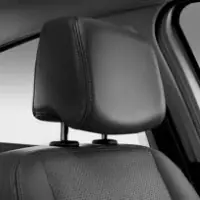
¿Cuál es la finalidad del apoyacabezas en un vehículo?
What is the purpose of the head restraint in a vehicle?
- AEvitar que el conductor mire hacia los lados y se despisteTo stop the driver from looking sideways and getting distracted
- BProteger la cabeza de fuertes movimientos en caso de accidenteTo protect the head from violent movements in an accident
- CPrestar comodidad en la conducción al conductorTo make driving more comfortable for the driver
ExplanationThe head restraint protects the head against violent backward movements in an accident, so it must be at the correct height. Before driving, the driver must adjust the head restraint to their build to avoid a broken neck, so the driver's head restraint is always adjustable.
¿Quién es responsable de que los menores usen el SRI correcto?
Who is responsible for making sure minors use the correct child restraint system (child seat)?
- ASolo el menorOnly the minor
- BEl conductor del vehículoThe driver of the vehicle
- CLos fabricantes del cocheThe car manufacturers
ExplanationThe driver of the vehicle is responsible for making sure all minor occupants correctly use the seat belt or the appropriate child restraint system.
¿Se permite poner cristales tintados no homologados en un turismo?
Is it allowed to fit non-approved tinted windows to a car?
- ASí, pero solamente en las ventanillas traseras.Yes, but only on the rear windows.
- BSí, porque no afectan a la seguridad vial.Yes, because they do not affect road safety.
- CNo, están prohibidos.No, they are prohibited.
ExplanationUnder Article 19.2 of the General Traffic Regulations, fitting non-approved tinted or coloured glass is prohibited in all cases, because it can reduce the driver's visibility. Adhesive films are only allowed under the conditions set by the vehicle regulations.
¿Es importante colocar adecuadamente el reposacabezas?
Is it important to position the head restraint correctly?
- ANo, ya que cumple su cometido en cualquier posición.No, because it does its job in any position.
- BSí, para que pueda cumplir su función correctamente.Yes, so that it can do its job properly.
- CNo, porque es más un elemento de comodidad que de seguridad.No, because it is more a comfort feature than a safety feature.
ExplanationThe head restraint is an important passive safety feature that can greatly reduce the chance of neck injuries. Adjusting it correctly is vital, in both the front and the rear seats: - The top edge of the head restraint must be between the top of the head and eye level. - There should be no gap between the driver's head and the head restraint, or as small a gap as possible, never more than 4 cm.
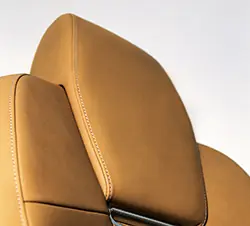
¿Es recomendable regular los reposacabezas del vehículo a la altura de cada ocupante?
Is it advisable to adjust the vehicle's head restraints to each occupant's height?
- ANo es necesario, es solo un elemento de confort.It is not necessary; it is only a comfort feature.
- BSolo es necesario regular el reposacabezas del conductor.Only the driver's head restraint needs adjusting.
- CSí; es un elemento de seguridad que puede evitar lesiones cervicales.Yes; it is a safety feature that can prevent neck injuries.
ExplanationThe head restraint is a safety feature: correctly adjusted to each occupant's height, it stops the head from moving in a rear-end collision and prevents whiplash.
¿Qué tipo de molestias suele provocar el latigazo cervical?
What symptoms does whiplash usually cause?
- ADolores musculares y de cabeza, disminución de la movilidad del cuello, vértigo o mareos, entre otras.Muscle pain and headaches, reduced neck movement, vertigo or dizziness, among others.
- BMolestias en la garganta.Throat discomfort.
- CDolores en las extremidades.Pain in the arms and legs.
ExplanationA correctly adjusted head restraint prevents whiplash, which happens especially in rear-end collisions. It can cause a neck sprain, one of the most common injuries in road accidents, which causes pain and injuries in the neck area. Almost a quarter of accident victims suffer it. For the head restraint to be correctly adjusted: - Height: the top of the head restraint should be level with the top of the head (its widest part should be at eye level). - Distance: the gap between the head and the head restraint should be as small as possible (never more than 4 cm).
En una mujer embarazada, el cinturón de seguridad:
For a pregnant woman, the seat belt:
- ANo debe usarse.Should not be used.
- BDebe usarse, con la banda inferior por debajo del abdomen (sobre las caderas) y la diagonal entre los pechos.Must be used, with the lower strap below the abdomen (over the hips) and the diagonal strap between the breasts.
- CSolo la banda del hombro.Only the shoulder strap should be used.
ExplanationA pregnant woman must wear the seat belt with the lap strap below the abdomen and the diagonal strap between the breasts, to the side.
Una mujer embarazada, ¿tendrá que utilizar el cinturón de seguridad?
Must a pregnant woman wear a seat belt?
- ASí.Yes.
- BNo.No.
- CNo, a partir del sexto mes de embarazo.No, from the sixth month of pregnancy.
ExplanationA pregnant woman must wear a seat belt and has the same exemptions as any other driver. She may only drive without a seat belt if she has a certificate of exemption for serious medical reasons.
¿Es necesario ajustar el reposacabezas?
Is it necessary to adjust the head restraint?
- ANo, ya está ajustado de fábrica.No, it is already adjusted at the factory.
- BSí, hay que ajustarlo tanto en los asientos delanteros como en los traseros.Yes, it must be adjusted in both the front and the rear seats.
- CNo, porque es un elemento fijo y no se puede mover.No, because it is a fixed part and cannot be moved.
ExplanationThe head restraint is a key safety feature of the vehicle, designed to protect the occupants' neck and head in an accident, especially in a rear-end collision. If it is not adjusted correctly, it can cause serious injuries such as whiplash. The head restraint must be adjusted to the person's height: its top edge should be level with the top of the head, and the gap to the head must not exceed 4 cm. Spain's traffic rules (General Traffic Regulations, RGC) require head restraints to always be adjusted before setting off, for maximum protection in the front and rear seats.
¿Es recomendable ajustar los reposacabezas del vehículo al tamaño y la constitución de los ocupantes?
Is it advisable to adjust the vehicle's head restraints to the size and build of the occupants?
- ASí, porque es un elemento de seguridad que ayuda a prevenir lesiones en la zona cervical.Yes, because it is a safety feature that helps prevent neck injuries.
- BNo es necesario, porque es sólo un elemento de confort.It is not necessary, because it is only a comfort feature.
- CSí, pero sólo en vías urbanas.Yes, but only in built-up areas.
ExplanationYes, it is advisable to adjust the vehicle's head restraints to the occupants' build, because this helps keep passengers safe. According to the General Vehicle Regulations, restraint devices such as head restraints must be fitted so that neck injuries are minimised in an accident. Correctly adjusted head restraints can prevent excessive forward movement of the head, which is crucial to prevent serious neck injuries.
¿Está permitido que un niño menor de 12 años viaje en el asiento delantero de un turismo?
Is a child under 12 allowed to travel in the front seat of a car?
- ASí, utilizando el cinturón para adultos si mide más 135 centímetros.Yes, using the adult seat belt, if they are taller than 135 centimetres.
- BNo.No.
- CSí, pero debe utilizar un dispositivo de retención orientado hacia atrás.Yes, but they must use a rear-facing restraint system.
ExplanationThe rule is based on height, not age. A minor who is taller than 135 cm may travel in the front seat using the adult seat belt, although an adapted system is recommended up to 150 cm.
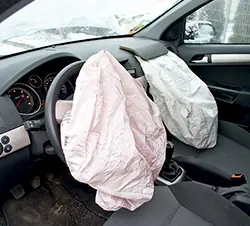
Se debe desactivar el airbag frontal cuando en el asiento correspondiente al copiloto...
The front airbag must be deactivated when, in the front passenger seat...
- Aviaje una mujer embarazada.a pregnant woman is travelling.
- Bse instale un dispositivo de retención infantil orientado hacia atrás.a rear-facing child restraint system is fitted.
- Cse instale un dispositivo de retención infantil orientado hacia delante.a forward-facing child restraint system is fitted.
ExplanationIf a rear-facing child seat is fitted in the front passenger seat, the front airbag must be deactivated: when it deploys, it would violently hit the back of the child seat and could cause very serious injuries to the child.
Respecto al cinturón de seguridad, ¿es totalmente necesario su uso en recorridos cortos?
Regarding the seat belt, is it absolutely necessary to wear it on short journeys?
- ASi el recorrido se limita a vías urbanas, no es necesario abrocharse el cinturón.If the journey is only on roads in built-up areas, you do not need to fasten it.
- BNo, si el trayecto es bien conocido por el conductor.No, if the driver knows the route well.
- CSí, ya que la mayor parte de los accidentes se producen en recorridos cortos.Yes, because most accidents happen on short journeys.
ExplanationThe seat belt is necessary on short journeys because most accidents happen on short trips. Even if the driver knows the route or it is only on roads in built-up areas, you cannot predict when an accident will happen. The seat belt protects the vehicle's occupants in a sudden stop or collision, preventing violent movements inside the vehicle or being thrown out of it. So it is important to fasten your seat belt at all times, however long the journey.
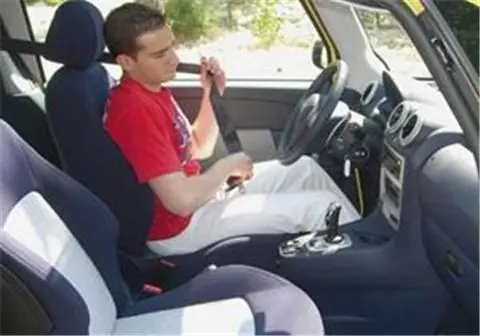
¿Es recomendable revisar el funcionamiento del cinturón de seguridad después de sufrir un accidente grave?
Is it advisable to check that the seat belt works properly after a serious accident?
- ANo, es un elemento de seguridad que no es necesario revisar nunca.No, it is a safety device that never needs to be checked.
- BSí, puede haberse deteriorado el trenzado a los sistemas de anclaje.Yes, the webbing or the anchorage systems may have been damaged.
- CSólo si el cinturón no ha funcionado correctamente durante el accidente.Only if the seat belt did not work properly during the accident.
ExplanationYes. In a serious accident the seat belt takes very large forces, and the webbing, the pretensioner or the anchorages may be damaged even if it looks fine. It should be checked at a garage and replaced if necessary.
¿Se puede desactivar manualmente el airbag delantero derecho?
Can the front passenger airbag be switched off manually?
- ANo. Siempre estará activado, como el del conductor.No. It is always on, like the driver's airbag.
- BNo. Solo se desactiva de forma automática si no hay pasajero.No. It only switches off automatically if there is no passenger.
- CSí.Yes.
ExplanationThe front passenger airbag can be switched off manually in vehicles that allow it. Under Article 117.3 of the General Traffic Regulations, it must be switched off if a child travels in the front seat in a rear-facing child restraint system.
Un vehículo tiene airbag. ¿Es obligatorio ponerse el cinturón de seguridad?
A vehicle has an airbag. Is it compulsory to wear a seat belt?
- ANo, porque el airbag sustituye al cinturón.No, because the airbag replaces the seat belt.
- BEs aconsejable, pero no es obligatorio.It is advisable, but not compulsory.
- CSí, porque mejora la eficacia del airbag.Yes, because it makes the airbag more effective.
ExplanationThe airbag is a very safe passive safety system, but to avoid harmful effects, keep the following in mind: - It complements the seat belt, so they must always be used together. - The airbag should be about 25 cm from your body, and never less than 10 cm. - Do not place objects near the airbag or put your legs on the dashboard: when the airbag goes off, this could cause very serious injuries. - When you use a rear-facing child restraint system in a seat with an airbag, you must deactivate the airbag.
¿Están obligados los conductores y pasajeros de vehículos de emergencia a usar el cinturón de seguridad al conducir en zonas urbanas?
Must drivers and passengers of emergency vehicles wear seat belts when driving in urban areas?
- ALos conductores están obligados a usar el cinturón de seguridad; los pasajeros, no.Drivers must wear the seat belt; passengers need not.
- BNo.No.
- CLos conductores no están obligados a usar el cinturón de seguridad; los pasajeros, sí.Drivers need not wear the seat belt; passengers must.
ExplanationUnder Article 119.2 of the General Traffic Regulations (RGC) (as worded by Royal Decree 518/2026), drivers and passengers of vehicles on emergency duty are exempt from wearing a seat belt when driving in built-up areas, but not on autopistas (motorways), autovías (dual carriageways) or conventional roads. Since the reform, taxi drivers on duty, goods delivery drivers and people accompanying a driving school learner no longer have this exemption.
Si su vehículo dispone de airbag, ¿a qué distancia debe sentarse para que sea eficaz?
If your vehicle has an airbag, how far from it should you sit for it to be effective?
- ALo más cerca posible.As close as possible.
- BA unos 25 centímetros y nunca a menos de 10 centímetros.About 25 centimetres away, and never less than 10 centimetres.
- CA una distancia de un metro.One metre away.
ExplanationFor the airbag to protect you without causing injuries, the driver should sit about 25 cm from the steering wheel and never less than 10 cm, because the airbag inflates with great force. Too close, it can injure you; too far, you cannot handle the steering wheel and the pedals properly.
¿Cuáles son las posibles consecuencias de que los pasajeros en los asientos traseros no utilicen los cinturones de seguridad?
What are the possible consequences of rear-seat passengers not wearing seat belts?
- ANo hay peligro, ya que a baja velocidad los respaldos de los asientos delanteros ofrecen suficiente protección contra lesiones.There is no danger, because at low speed the backs of the front seats give enough protection against injury.
- BSí, es peligroso, entre otras razones, porque en caso de choque representan una amenaza adicional para el conductor y el acompañante.Yes, it is dangerous, among other reasons because in a crash they are an extra threat to the driver and the front passenger.
- CSí, debido a que la eficacia de los airbags se ve disminuida.Yes, because the airbags become less effective.
ExplanationIn an accident, rear-seat passengers who are not wearing a seat belt risk being thrown forward and causing serious injuries to other occupants. The seat belt can be crucial not only to save the lives of those in the rear seats but also to stop them from seriously injuring other passengers.
¿Cómo deberá de transportar a un menor de estatura inferior a 1,35 metros en un turismo como norma general?
As a general rule, how must you carry a minor shorter than 1.35 metres in a car?
- AEn el asiento delantero con un sistema de retención infantil adecuado a su talla y peso.In the front seat, with a child restraint system suited to their height and weight.
- BEn el asiento trasero con el cinturón de seguridad.In the rear seat, with the seat belt.
- CEn el asiento trasero con un sistema de retención infantil adecuado a su talla y peso.In the rear seat, with a child restraint system suited to their height and weight.
ExplanationMinors who are 1.35 m tall or less must sit in the rear seats of the vehicle, always using an approved restraint system suited to their height and weight. There are three exceptions in which minors below that height may travel in the front seat: 1. When the vehicle has no rear seats. 2. When all the rear seats are already taken by minors in the same situation, so it is impossible to fit all the child seats needed at that moment. 3. When it is not possible to fit child restraint systems in those seats. If they sit in the front seats and the vehicle has a front airbag, they may only use rear-facing restraint systems if the airbag has been deactivated.
Un menor que mida 135 centímetros o menos podrá viajar excepcionalmente en el asiento delantero de un turismo cuando...
A child who is 135 centimetres tall or less may, exceptionally, travel in the front seat of a car when...
- Atodos los asientos traseros estén ocupados por otros menores que utilicen sistemas de retención infantil.all the rear seats are occupied by other children using child restraint systems.
- Bel sistema de retención infantil esté orientado hacia delante y el airbag del pasajero esté desactivado.the child restraint system faces forwards and the passenger airbag is deactivated.
- Cel vehículo no disponga de cinturones de seguridad.the vehicle has no seat belts.
ExplanationUnder Article 117.3 of the General Traffic Regulations (RGC), these children travel in the back, and may only travel in the front, in their restraint system, if the vehicle has no rear seats, if all the rear seats are occupied by other children using restraint systems, or if not all the child seats can be fitted there.
¿Un menor de 12 años podrá viajar en los asientos delanteros en algún caso?
Can a child under 12 ever travel in the front seats?
- ANo, en ningún caso.No, never.
- BSí, en caso de que mida más de 1,35 m.Yes, if the child is taller than 1.35 m.
- CSí, cuando vaya acompañado de un adulto.Yes, when the child is with an adult.
ExplanationWhat counts is height, not age. Under Article 117 of the General Traffic Regulations, a child taller than 135 cm may travel in the front wearing the seat belt; a child 135 cm tall or shorter travels in the back in a child restraint system (child seat), with some exceptions.
¿Se puede usar cinturón de seguridad durante el embarazo?
Can a seat belt be worn during pregnancy?
- ANo, porque resulta peligroso para el feto.No, because it is dangerous for the foetus.
- BSí, la embarazadas están obligadas a llevar el cinturón de seguridad.Yes, pregnant women must wear a seat belt.
- CNo es obligatorio dentro de poblado pero sí lo es fuera de poblado.It is not compulsory in built-up areas, but it is outside them.
ExplanationPregnant women must also wear a seat belt, because the risk of injuring and losing the foetus in an accident is higher if they do not. They must place the belt below the abdomen.
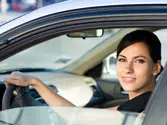
Una embarazada, ¿tendrá que usar el cinturón de seguridad?
Does a pregnant woman have to wear a seat belt?
- ASí, salvo exención médica expresa.Yes, unless she has an express medical exemption.
- BPuede no utilizarlo si le dificulta los movimientos.She may choose not to if it makes it hard for her to move.
- CNo lo tendrá que usar, pues es peligroso para el feto.She does not have to, because it is dangerous for the foetus.
ExplanationBeing pregnant does not in itself exempt a woman from wearing a seat belt, although, like anyone else, she would be exempt if she had an exemption certificate for serious medical reasons.
¿Se puede sustituir el cinturón de seguridad por otro sistema de seguridad?
Can the seat belt be replaced by another safety system?
- ANo se puede sustituir por ningún otro sistema de seguridad.It cannot be replaced by any other safety system.
- BÚnicamente se podrá sustituir por el airbag.It can only be replaced by the airbag.
- CSí, se puede sustituir por cualquier otro sistema homologado.Yes, it can be replaced by any other approved system.
ExplanationThe seat belt can NOT be replaced by any other passive safety feature of the vehicle, because it is essential to protect the driver and passengers. It must be used together with other safety systems, such as the airbag.
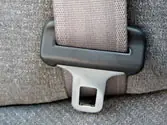
Utilizar pinzas para retener el cinturón de seguridad...
Using clips to hold the seat belt...
- Aes conveniente, porque reduce la presión del cinturón sobre el pecho.is convenient, because it reduces the pressure of the belt on the chest.
- Bes peligroso, porque reduce la eficacia del cinturón.is dangerous, because it reduces the effectiveness of the seat belt.
- Ces necesario, como complemento del airbag, en los vehículos dotados del mismo.is necessary, as a complement to the airbag, in vehicles that have one.
ExplanationUsing clips to hold the seat belt is prohibited, because in an impact they reduce the effectiveness of the belt and increase the chance of the occupant being injured, or of the injuries being more serious. For the seat belt to protect you effectively, it must be in perfect condition and correctly positioned: - The chest strap must pass over the collarbone and the middle of the chest. - The lap strap must be over the pelvis and the hip bones. - It must fit closely to the body (clips are prohibited), and you should avoid driving in bulky clothing, because it reduces effectiveness. - It is also effective during pregnancy. Submarining is one of the biggest risks of misusing the seat belt. It happens when the seat belt cannot hold the driver in an accident and their body slides under the lap strap. To avoid it, do not put anything on the seat (towels, cushions, etc.), and adjust the seat and the seat belt properly (do not recline the seat too far or drive lying back).
Como norma general, ¿podemos quitar el casco a un herido?
As a general rule, may we remove an injured person's helmet?
- ASí.Yes.
- BNo.No.
- CSí, para que respire mejor.Yes, so that they can breathe better.
ExplanationAs a general rule we must not move injured people. If the injured person is a motorcyclist, we will not remove the helmet unless it is essential for resuscitation or for their safety.
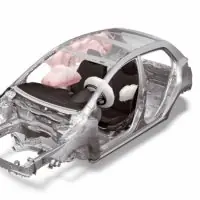
¿Qué función tiene la carrocería como elemento de seguridad pasiva?
What is the function of the bodywork as a passive safety feature?
- AAbsorber la deceleración de las frenadas.To absorb the deceleration of braking.
- BProteger a los ocupantes del vehículo en caso de accidente.To protect the vehicle's occupants in an accident.
- CEvitar que se produzcan accidentes graves.To prevent serious accidents.
ExplanationThe function of a vehicle's bodywork as a passive safety system is to absorb energy in an impact, protecting the occupants' bodies in an accident. Also, in a frontal crash, the bodywork keeps the engine and other parts in place so that they do not enter the passenger compartment.
¿Una persona con un certificado médico que la exime de usar los sistemas de retención del vehículo está exenta de llevar puesto el cinturón de seguridad?
Is a person with a medical certificate exempting them from using the vehicle's restraint systems exempt from wearing a seat belt?
- ASí.Yes.
- BNo.No.
- CSolo fuera de poblaciones.Only outside towns.
ExplanationUnder Article 119.1.b of the General Traffic Regulations (RGC), people who have an exemption certificate on serious medical grounds or on grounds of disability may travel without a seat belt. They must show it when an officer asks for it, and the exemption does not depend on the type of road.
Los SRI deben colocarse preferentemente en:
Child restraint systems (child seats) should preferably be fitted in:
- AEl asiento delanteroThe front seat
- BLos asientos traserosThe rear seats
- CEs indiferenteIt makes no difference
ExplanationChild restraint systems should preferably be fitted in the rear seats. Only in exceptional cases in the front seat, with the airbag disconnected and a suitable child restraint system.
¿Existen los airbag laterales?
Do side airbags exist?
- ANo, sólo existe el frontal.No, there are only front airbags.
- BSí.Yes.
- CSolo en los vehículos industriales.Only in commercial vehicles.
ExplanationThere are various types of airbag, such as front airbags for the driver and front passenger, side airbags, roof airbags and curtain airbags.
El airbag frontal tiene su máxima eficacia en un choque…
The front airbag is most effective in a...
- Afrontolateral.front-side collision.
- Blateral.side collision.
- Cfrontal.frontal collision.
ExplanationThe front airbag is designed to protect in frontal crashes, when the body moves forward against the steering wheel or the dashboard. In side or front-side crashes, side and curtain airbags give better protection.
All topics
- Definitions
- Documents and penalty points
- The driver's condition
- Duties of drivers and pedestrians
- Vehicle controls and equipment
- Vehicle lights and horn
- Traffic signs, markings and signals
- The road and its lanes
- Speed and distances
- Manoeuvres
- Right of way
- Carrying passengers and loads
- Driving safely in difficult conditions
- Vehicle mechanics and maintenance
- Road accidents and first aid
- Defensive and eco-driving
Independent app: not affiliated with or endorsed by the DGT (Spain's Directorate-General for Traffic) or the Ministry of the Interior. The official exam is booked with the DGT and taken at its test centres. The questions here are practice material; the DGT's official question bank is not public.
Basado en datos de la Agencia Estatal Boletín Oficial del Estado (https://www.boe.es). Textos consolidados de carácter meramente informativo. La AEBOE no patrocina ni respalda este sitio.
Parte de las preguntas procede de los tests de la revista «Tráfico y Seguridad Vial» de la DGT, reproducidos con indicación de la fuente.