
DGT test · 691 questions
Vehicle safety devices · Page 2 of 14
Seat belts, child restraints, helmets, head restraints and airbags: when they are compulsory, the exceptions and how to use them properly.
Questions in this topic, with answers
691 questions, 50 per page, with the correct answer and the explanation. Page 2 of 14.
¿Están obligados a llevar casco?
Who is required to wear a helmet?
- Alos conductores y pasajeros de motocicletas, con o sin sidecar.Riders and passengers of motorcycles, with or without a sidecar.
- Bsolo los conductores de motocicletas sin sidecar.Only riders of motorcycles without a sidecar.
- Csolo los pasajeros de motocicletas sin sidecar.Only passengers of motorcycles without a sidecar.
ExplanationUnder Article 118.1 of the General Traffic Regulations (RGC), riders and passengers of motorcycles, with or without a sidecar, as well as those of mopeds, three-wheeled vehicles and quadricycles, must wear an approved protective helmet, properly fastened, on all types of road.
Un casco de tipo integral, ¿resulta más seguro que un casco de tipo abierto?
Is a full-face helmet safer than an open-face helmet?
- AEs más seguro, ya que protege además la barbilla, la parte inferior de la cara y la mandíbula.It is safer, because it also protects the chin, the lower part of the face and the jaw.
- BAmbos son igual de seguros.Both are equally safe.
- CEl casco integral es menos seguro que el de tipo abierto.A full-face helmet is less safe than an open-face one.
ExplanationA full-face helmet is safer than an open-face helmet because it protects not only the head but also the chin, the lower part of the face and the jaw. This gives more protection in an impact or fall, reducing the risk of serious injury to these parts of the face.
Los pasajeros de las motocicletas, ¿están obligados a llevar puesto el casco de protección?
Must motorcycle passengers wear a protective helmet?
- ASí, cuando circulen por una vía interurbana; no, cuando circulen por vía urbana.Yes, on roads outside built-up areas; no, on roads in built-up areas.
- BNo es obligatorio cuando circule por vías urbanas e interurbanas a menos de 20 km/h.It is not compulsory on roads inside or outside built-up areas at less than 20 km/h.
- CSí, en todo tipo de vías.Yes, on all types of road.
ExplanationMotorcycle passengers must wear a protective helmet on all types of road, both inside and outside built-up areas. This is a safety measure to protect them in the event of an accident.
Los asientos de un camión tienen cinturones de seguridad, ¿está obligado el conductor a utilizarlo?
The seats of a lorry have seat belts. Must the driver wear one?
- ANo, en vías fuera de poblado.No, on roads outside built-up areas.
- BNo, en ningún tipo de vía.No, not on any type of road.
- CSí, en todas las vías.Yes, on all roads.
ExplanationThe driver and the passengers in seats fitted with seat belts or other approved restraint systems in goods vehicles and mixed-use vehicles must wear them.
El apoyacabezas se considera un elemento de seguridad...
The head restraint is considered a safety feature that is...
- AActiva.active.
- BPasiva.passive.
- CPrimaria.primary.
ExplanationThe head restraint is a passive safety feature, because it reduces the chance of neck injuries.
Si su vehículo posee ABS, ante una frenada de emergencia deberá...
If your vehicle has ABS, in an emergency stop you must...
- APisar los pedales de embrague y freno a la vez.press the clutch and brake pedals at the same time.
- BNo pisar el embrague hasta que el vehículo esté próximo a la detención.not press the clutch until the vehicle is about to stop.
- CSoltar el freno si se notan vibraciones en el pedal.release the brake if you feel vibrations in the pedal.
ExplanationWhen you brake sharply, there is a danger that the wheels will lock and you will lose control of the vehicle. To prevent this, there is ABS, an anti-lock safety system that stops the wheels from locking under hard braking. In an emergency stop, press the brake and clutch pedals at the same time, so that the engine does not stall and the anti-lock braking system (ABS) does not stop working. When the ABS comes into action, you will feel a slight vibration in the pedal, which is completely normal.
¿Qué debe tener en cuenta al comprar un casco?
What should you consider when buying a helmet?
- AQue esté homologado, además de su talla y el material del que está hecho.That it is approved, as well as its size and the material it is made of.
- BSolo que esté homologado.Only that it is approved.
- CLa marca.The brand.
ExplanationUnder Article 118.1 of the General Traffic Regulations (RGC) (as worded by Royal Decree 518/2026), motorcycle helmets must be approved under UNECE Regulation R22 and properly fastened. Also, when buying one, you must choose the right size so that it fits your head closely, and consider the material it is made of.
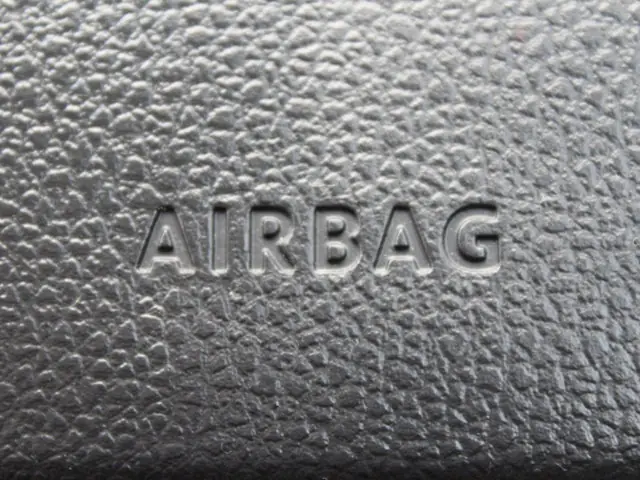
Cuando hay un accidente, ¿qué evita el airbag que les pase a las personas que van dentro del vehículo?
In an accident, what does the airbag prevent from happening to the people inside the vehicle?
- AEl airbag evita el efecto submarino.The airbag prevents submarining.
- BEl airbag evita los golpes dentro del vehículo.The airbag prevents blows inside the vehicle.
- CEl airbag evita el latigazo cervical.The airbag prevents whiplash.
ExplanationThe airbag inflates in thousandths of a second and acts as a cushion between the occupant and the steering wheel, the dashboard or the sides, preventing blows against the inside of the vehicle. Submarining is prevented by a correctly adjusted seat belt and seat, and whiplash by the head restraint.
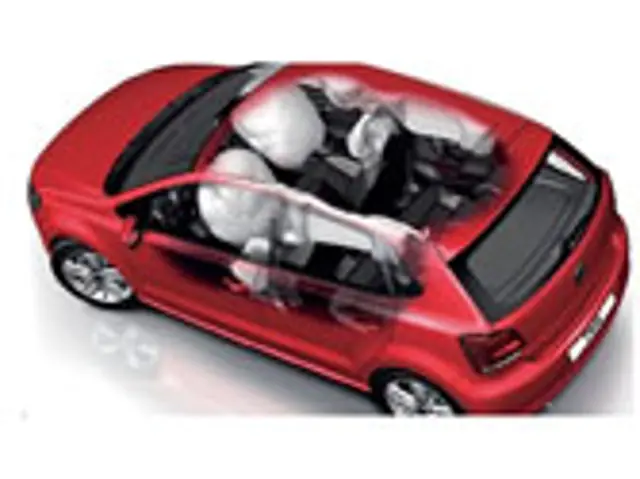
Los airbags son muy seguros, pero...
Airbags are very safe, but...
- Apueden ser peligrosos si el conductor usa gafas.they can be dangerous if the driver wears glasses.
- Bno son compatibles con los cinturones de seguridad.they are not compatible with seat belts.
- Chay que tomar precauciones para evitar efectos adversos.you must take precautions to avoid harmful effects.
ExplanationAirbags are safety systems designed to protect vehicle occupants in an accident. However, it is important to take precautions, such as making sure the occupants wear their seat belts correctly and that there are no loose objects that could be dangerous if the airbag goes off. This is in line with the rules, which stress the proper use of safety systems and the harmful effects that can occur if they are not used correctly, as mentioned in the Traffic and Road Safety Code.
En un turismo, ¿son necesarios los cinturones de seguridad?
In a car, are seat belts necessary?
- ASí, excepto en los taxis.Yes, except in taxis.
- BSí, excepto para el conductor si realiza una maniobra de marcha atrás o de estacionamiento.Yes, except for the driver when reversing or parking.
- CNo, si el uso del cinturón molesta o quita libertad de movimientos.No, if the seat belt is uncomfortable or restricts movement.
ExplanationThe Traffic Regulations state that drivers do not have to wear the seat belt, a passive safety system, while reversing or parking.
¿ A qué distancia debemos colocarnos respecto al airbag?
How far should you be from the airbag?
- ALo más cerca posible.As close as possible.
- B15 cm.15 cm.
- C25 cm.25 cm.
ExplanationThe airbag is a very safe passive safety system. It prevents occupants from hitting different parts of the vehicle directly. Today there are front airbags for the driver and passenger, side airbags, roof or curtain airbags, knee airbags, etc. For effective protection and to avoid harmful effects, keep the following in mind: - It complements the seat belt, so they must always be used together. - The airbag should be about 25 cm from your body, and never less than 10 cm. - Do not place objects near the airbag or put your legs on the dashboard: when the airbag goes off, this could cause very serious injuries. - When you use a rear-facing child restraint system in a seat with an airbag, you must deactivate the airbag.
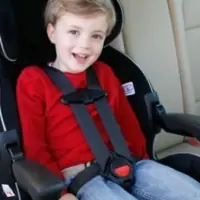
¿Se puede llevar a un niño sin sistema de retención adecuado en su vehículo, como regla general?
As a general rule, can you carry a child in your vehicle without a suitable restraint system?
- ASí, en trayectos cortos en vías dentro de poblado.Yes, on short trips on roads in built-up areas.
- BNo.No.
- CSí, si una persona adulta le sujeta en brazos firmemente.Yes, if an adult holds the child firmly in their arms.
ExplanationUnder Article 117 of the General Traffic Regulations (RGC), children who are 135 cm tall or less must travel in an approved child restraint system suited to their height and weight, also on short trips. Not using one is a serious offence: a 200-euro fine and 4 points.
Si nuestro vehículo está dotado de ABS, en una frenada de emergencia...
If your vehicle has ABS, in an emergency stop...
- Adesembragamos a la vez que pisamos el freno.you press the clutch (disengage it) at the same time as you press the brake.
- Bembragamos a la vez que pisamos el freno.you release the clutch (engage it) at the same time as you press the brake.
- Cfrenamos fuertemente y al final desembragamos.you brake hard and press the clutch only at the end.
ExplanationIf your vehicle has ABS brakes, in an emergency stop it is advisable to press the clutch (disengage it) at the same time as you press the brake fully. This stops the engine from stalling and the ABS from stopping working.
¿Debe una mujer embarazada usar el cinturón de seguridad?
Must a pregnant woman wear a seat belt?
- ASí, pero solo en carreteras.Yes, but only on open roads.
- BSí, es obligatorio.Yes, it is compulsory.
- CNo, no es obligatorio.No, it is not compulsory.
ExplanationUnder the General Traffic Regulations (RGC), especially Article 117.1, all drivers and occupants of motor vehicles must wear approved seat belts, properly fastened, on any type of road, in or outside built-up areas. There is no specific exception for pregnant women; wearing a seat belt is compulsory for everyone travelling in the vehicle, unless the vehicle is not fitted with seat belts. So the correct answer is that a pregnant woman must wear a seat belt.
Los sistemas de seguridad pasiva...
Passive safety systems...
- AEvitan los accidentes.prevent accidents.
- BEvitan o disminuyen los daños.prevent or reduce harm.
- CLas dos anteriores son correctas.Both previous answers are correct.
ExplanationPassive safety systems prevent or reduce harm in an accident. Active safety systems can stop the accident from happening.
¿Se pueden llevar niños en brazos en el asiento delantero?
May children be carried in someone's arms in the front seat?
- ASí, con cinturónYes, with a seat belt
- BNo, está prohibidoNo, it is prohibited
- CSolo sin airbagOnly if there is no airbag
ExplanationIt is prohibited. They must travel in their approved child restraint system (child seat).
Su casco ha sufrido un golpe, ¿puede afectar a su eficacia?
Your helmet has taken a knock. Can this affect its effectiveness?
- ANo, ya que aunque se deteriore algo la estructura del casco jamás llega a dañarse con un solo golpe.No, because although the helmet may deteriorate a little, its structure is never damaged by a single knock.
- BSí, pero solamente si el golpe se ha producido por una caída a una velocidad superior a 30 km/h.Yes, but only if the knock was caused by a fall at a speed above 30 km/h.
- CSí.Yes.
ExplanationA helmet that has taken a knock can lose some of its protective capacity even if no damage can be seen on the outside, because the inner material that absorbs energy becomes deformed. So after a hard knock, it should be replaced.
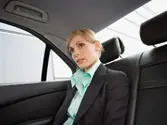
Como norma general, los clientes de un taxi que se encuentre prestando servicio público de viajeros, ¿pueden viajar sin ponerse el cinturón de seguridad?
As a general rule, may passengers in a taxi providing a public passenger service travel without wearing a seat belt?
- ANo.No.
- BSólo cuando circulen por vías urbanas o travesías.Only on roads in built-up areas or on travesías (roads through towns).
- CSí.Yes.
ExplanationUnder Article 119.2 of the General Traffic Regulations (RGC) (as worded by Royal Decree 518/2026), in built-up areas only drivers and passengers of vehicles on emergency duty are exempt from wearing a seat belt, so neither taxi drivers nor their passengers are exempt. The only exception is that, in urban traffic or urban areas of large cities, a taxi may carry people under 135 cm tall in a rear seat without a restraint system suited to their height and weight.
¿Está permitido que un menor de 12 años viaje en el asiento delantero?
Is a child under 12 allowed to travel in the front seat?
- ANo.No.
- BSí, con el dispositivo de seguridad orientado hacia atrás.Yes, in a rear-facing child restraint.
- CSí, con el cinturón de seguridad, si mide más de 1,35 m.Yes, with the seat belt, if they are taller than 1.35 m.
ExplanationWhat counts is height, not age. Under article 117 of the General Traffic Regulations, a child taller than 135 cm may travel in the front with the seat belt; a child 135 cm tall or less travels in the back in a child restraint system, with some exceptions.
Si nuestro casco no dispone de visera, pantalla...
If your helmet has no visor or face shield...
- Ano podemos circular.you cannot ride.
- Busaremos gafas de sol.you should wear sunglasses.
- Cno usaremos nada.you should not use anything.
ExplanationIf your helmet has no face shield or visor, you must protect your eyes somehow, because otherwise they would be exposed to high-speed impacts from stones or insects, which could cause serious injuries. It is not compulsory, but it is highly advisable to protect your eyes with safety glasses or sunglasses.
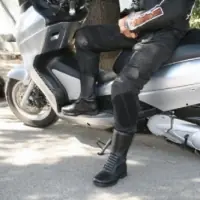
¿Es conveniente que un conductor de motocicleta lleve botas entre su vestimenta?
Is it advisable for a motorcyclist to wear boots?
- AÚnicamente será conveniente en invierno.It is only advisable in winter.
- BÚnicamente será conveniente en verano.It is only advisable in summer.
- CSí, siempre es conveniente.Yes, it is always advisable.
ExplanationBoots protect the foot and ankle in a fall and give a firm footing for working the rear brake and the gear lever, so they are worth wearing in every season. In addition, from 1 October 2026, Article 118 of the General Traffic Regulations requires closed footwear that covers the whole foot.
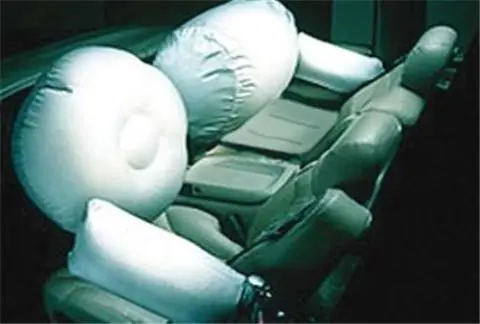
Los cinturones de seguridad y los airbags son sistemas de...
Seat belts and airbags are systems of...
- Aconducción eficiente.eco-driving.
- Bseguridad activa.active safety.
- Cseguridad pasiva.passive safety.
ExplanationSeat belts and airbags are passive safety features: they do not prevent accidents, but they reduce their consequences when they happen. Active safety, such as the brakes, the steering or ABS, helps prevent accidents.
¿Cuál es la función principal de la carrocería en un turismo?
What is the main function of the bodywork of a car?
- AProporcionar comodidad a los ocupantes del vehículo.To make the occupants comfortable.
- BProteger a los ocupantes del vehículo y proporcionar una estructura resistente.To protect the occupants and provide a strong structure.
- CMejorar la estética del automóvil.To make the car look better.
ExplanationA car's bodywork has several important functions, but its main one is to protect the occupants in a collision or other accident. It is designed to absorb and spread the energy of the impact, reducing the risk of serious injury. As well as its safety role, the bodywork also provides a strong structure that helps keep the vehicle intact in various situations, such as driving on uneven ground or in bad weather.
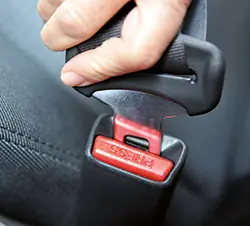
¿Cómo hay que colocarse el cinturón de seguridad?
How should you wear the seat belt?
- AMuy ajustado, aunque apriete un poco, para que sujete mejor.Very tight, even if it squeezes a little, so that it holds you better.
- BFlojo y con holgura, para poder llegar a todo el habitáculo del vehículo.Loose and slack, so that you can reach everything inside the vehicle.
- CAjustado al cuerpo, ni muy apretado ni flojo, y sin que esté retorcido.Close to the body, neither too tight nor loose, and not twisted.
ExplanationThe seat belt must fit closely to the body, without slack and without being twisted: only then does it spread the forces of an impact over the strong parts of the body. If it is loose or twisted, it loses effectiveness and can cause injuries.
Los niños menores de edad que midan menos de 1,35 metros de altura, ¿qué asientos utilizarán como norma general?
As a general rule, which seats must minors under 1.35 metres tall use?
- ACualquier asiento, siempre que lleven un dispositivo de retención homologado.Any seat, as long as they use an approved restraint system.
- BLos asientos posteriores.The rear seats.
- CSolo podrán usar el asiento posterior central.Only the middle rear seat.
ExplanationAs a general rule, minors no taller than 1.35 m must sit in the rear seats.
Para conducir motocicletas es importante llevar el traje de protección que sea...
To ride motorcycles, it is important to wear protective clothing that is...
- ADe material sintético ya que en caso de caída es el que mejor protegemade of synthetic material, because it protects best in a fall
- BDe colores vivos y llamativos para que se pueda distinguir al conductor a suficiente distancia.in bright, eye-catching colours, so that the rider can be seen from far enough away.
- CDe colores oscuros, para así no distraer a los conductores.in dark colours, so as not to distract drivers.
ExplanationProtective clothing for riding motorcycles should be in bright, eye-catching colours so that other road users can see the rider from far enough away. This increases safety, because other drivers can spot the motorcyclist more easily and take the necessary precautions. Dark colours can make the rider harder to see and distract drivers, so they are not recommended in this case.
Si frenando por emergencia con un vehículo dotado de ABS notamos un leve temblor en el pedal del freno, ¿qué tendremos que hacer?
If, when braking in an emergency in a vehicle with ABS, you feel a slight vibration in the brake pedal, what should you do?
- AReducir progresivamente la presión sobre el pedal.Gradually reduce the pressure on the pedal.
- BMantener el pedal pisado con suavidad.Keep the pedal pressed gently.
- CMantener el pedal pisado con la máxima presión.Keep the pedal pressed as hard as possible.
ExplanationA slight vibration in the brake pedal shows that the system is working correctly, so you should keep the pedal pressed as hard as possible.
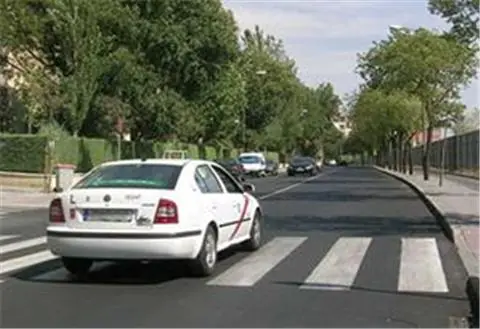
Los pasajeros de este turismo, ¿pueden viajar sin ponerse el cinturón de seguridad?
May the passengers of this car travel without wearing a seat belt?
- ASí, en los asientos traseros de los taxis.Yes, in the rear seats of taxis.
- BNo, es obligatorio en todas las plazas del vehículo.No, it is compulsory in every seat of the vehicle.
- CSólo cuando se realizan trayectos cortos.Only on short journeys.
ExplanationThe seat belt is compulsory for all occupants, in every seat and on any journey, including the rear seats of taxis (Article 117 of the General Traffic Regulations). A short journey is no exemption.
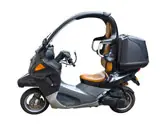
Si su motocicleta lleva instalado cinturón de seguridad, ¿cuándo debe utilizarlo?
If your motorcycle has a seat belt fitted, when must you use it?
- ASólo cuando circule por vías interurbanas y travesías.Only on roads outside built-up areas and on travesías.
- BEn todo tipo de vías.On all types of road.
- CÚnicamente cuando circule por vías interurbanas.Only on roads outside built-up areas.
ExplanationWearing a seat belt is compulsory for the rider and passenger of motorcycles, motorcycles with sidecars, mopeds, three-wheeled vehicles and quadricycles that have a protective structure and seat belts, as stated on the relevant technical inspection card. This obligation applies on all types of public road.
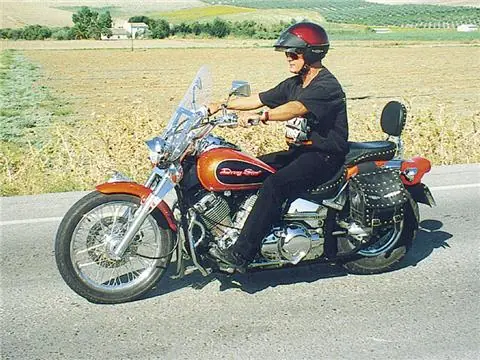
Cuando el casco no tiene pantalla de protección, ¿es conveniente utilizar gafas para proteger los ojos?
When a helmet has no visor, is it advisable to wear goggles to protect your eyes?
- ANo.No.
- BSí.Yes.
- CNo solo es conveniente, sino que además es obligatorio.It is not only advisable, it is also compulsory.
ExplanationA helmet without a visor leaves the eyes exposed to wind, dust, rain and insects, which can make your eyes water or force you to close them while riding. That is why it is advisable to wear protective goggles, although the rules do not require them.
¿Se podrán utilizar pinzas para que sea más cómodo el cinturón de seguridad?
May you use clips to make the seat belt more comfortable?
- ASí, si están bien sujetas al cinturón.Yes, if they are firmly attached to the seat belt.
- BNo.No.
- CNo en el asiento del conductor pero sí en el del acompañante.Not in the driver's seat, but yes in the front passenger seat.
ExplanationIt is prohibited to use clips to reduce the pressure of the seat belt, because they can make the belt less effective.
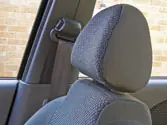
¿Es recomendable la utilización de los reposacabezas en todos los asientos de un turismo?
Is it advisable to use head restraints in all seats of a car?
- ANo, es un elemento que puede ser perjudicial para la seguridad de los ocupantes.No, they can be harmful to the occupants' safety.
- BSí, puede evitar lesiones graves en la zona cervical.Yes, they can prevent serious neck injuries.
- CNo, al ser un elemento decorativo.No, because they are only decorative.
ExplanationThe head restraint is an important passive safety feature that can greatly reduce the chance of neck injuries. Adjusting it correctly is vital, in both the front and the rear seats: - The top edge of the head restraint must be between the top of the head and eye level. - There should be no gap between the driver's head and the head restraint, or as small a gap as possible, never more than 4 cm.
¿Está permitido que un menor viaje en el asiento delantero de un turismo?
Is a minor allowed to travel in the front seat of a car?
- ANo.No.
- BSí, pero debe utilizar siempre un dispositivo de retención orientado hacia atrás.Yes, but they must always use a rear-facing restraint system.
- CSí, si mide más de 135 centímetros.Yes, if they are taller than 135 centimetres.
ExplanationMinors who are 1.35 m tall or less must sit in the rear seats of the vehicle, always using an approved restraint system suited to their height and weight. There are three exceptions in which minors below that height may travel in the front seat: 1. When the vehicle has no rear seats. 2. When all the rear seats are already taken by minors in the same situation, so it is impossible to fit all the child seats needed at that moment. 3. When it is not possible to fit child restraint systems in those seats. If they sit in the front seat and the vehicle has a front airbag, they may only use rear-facing restraint systems if the airbag has been deactivated. When minors are taller than 1.35 m, they may sit in the front seat using the adult seat belt.
Un niño menor de 12 años que mide menos de 1,35 m, ¿podrá viajar en los asientos delanteros?
May a child under 12 who is less than 1.35 m tall travel in the front seats?
- ASí, con el cinturón de seguridad abrochado.Yes, with the seat belt fastened.
- BNo, en ningún caso.No, never.
- CSolo excepcionalmente, con un sistema de retención infantil homologado.Only exceptionally, with an approved child restraint system.
ExplanationUnder Article 117.3 of the General Traffic Regulations, children 135 cm tall or shorter travel in the rear. They may only travel in the front, in their approved restraint system, if there are no rear seats, if the rear seats are occupied by other children or if the child seats do not fit; with a rear-facing seat, the airbag must be deactivated.
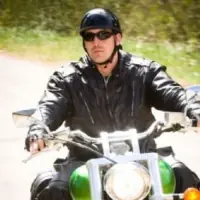
Si se pone un casco sin pantalla o visera ¿es aconsejable ponerse gafas de seguridad?
If you wear a helmet without a face shield or visor, is it advisable to wear safety glasses?
- ASí, para proteger los ojos.Yes, to protect your eyes.
- BNo, porque es obligatorio que todos los cascos tengan pantalla.No, because all helmets must have a face shield.
- CNo, no es necesario.No, it is not necessary.
ExplanationWhen a motorcyclist rides with a helmet without a face shield or visor, it is advisable to wear safety glasses to protect the eyes, see the road better and avoid the dangers they may meet on it. Glasses also stop the sun from shining straight into your eyes when it is in front of you, and stop foreign bodies from getting into the rider's eyes.
¿Es conveniente que el conductor de una motocicleta lleve botas?
Is it advisable for a motorcycle rider to wear boots?
- ASí, siempre.Yes, always.
- BÚnicamente en invierno.Only in winter.
- CSolamente en verano.Only in summer.
ExplanationBoots hold the foot and ankle firmly and protect them in a fall, and they also make it easier to work the rear brake and the gear lever, so it is advisable to wear them in every season. In addition, since 1 October 2026 closed footwear covering the whole foot is compulsory on a motorcycle.
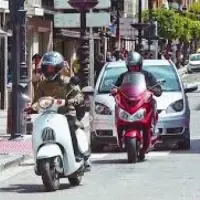
¿Cuál es la carrocería en los vehículos de dos ruedas?
What is the 'bodywork' on two-wheeled vehicles?
- ALos elementos metálicos del vehículoThe metal parts of the vehicle
- BEl vehículo completoThe whole vehicle
- CEl cuerpo del conductorThe rider's body
ExplanationA motorcyclist has no bodywork on their vehicle, unlike a car, for example, so their own body is the 'bodywork' that takes the impact in a collision.
Si el cinturón de seguridad no está bien ajustado aunque esté abrochado...
If the seat belt is not properly adjusted, even though it is fastened…
- ASerá incómodo, pero el cinturón no perderá eficacia.It will be uncomfortable, but the seat belt will not lose effectiveness.
- BEl cinturón perderá eficacia y puede provocar lesiones en caso de accidente.The seat belt will lose effectiveness and may cause injuries in an accident.
- CEl cinturón no perderá eficacia, pero deberá ser reemplazado.The seat belt will not lose effectiveness, but it will have to be replaced.
ExplanationA loose or badly placed seat belt lets the body move before it is held: in a crash the occupant hits the inside of the vehicle or slides under the lap belt, and the belt itself can injure them. To be effective it must fit closely, with no slack or twists.
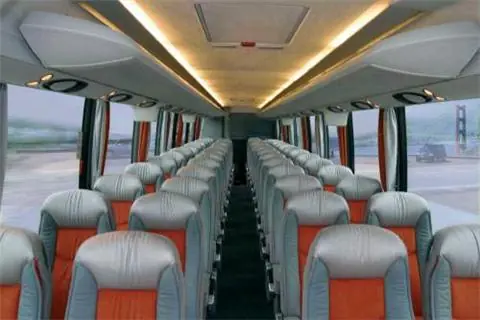
¿Quién debe usar los cinturones de seguridad en un autobús?
Who must wear seat belts on a bus?
- ATodos los pasajeros.All passengers.
- BEl conductor solamente.Only the driver.
- CAdemás del conductor, los pasajeros de más de 3 años de edad.The driver, and also passengers over 3 years old.
ExplanationOn buses with seat belts, the driver and passengers aged three or over must wear them; children under 135 cm must use a restraint system if there is one, or the seat belt if it suits their size. The obligation is not limited to the driver.
Para un uso adecuado del casco, la correa de sujeción…
For correct use of the helmet, the chin strap...
- APuede llevarse desabrochada dentro de poblado.may be left unfastened in built-up areas.
- BDebe llevarse desabrochada.must be left unfastened.
- CDebe llevarse abrochada correctamente para que el casco cumpla eficazmente su función.must be correctly fastened so that the helmet does its job effectively.
ExplanationThe helmet only protects you if it is properly fastened: with the strap loose, it can fly off in a fall and leave your head unprotected. It must be fastened before you start riding and on all types of road, including in built-up areas.
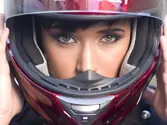
Si al comprar un casco dudamos entre dos tallas, ¿cuál de ellas elegiremos?
If, when buying a helmet, you are unsure between two sizes, which should you choose?
- ALa que nos apriete menos el casco.The one that feels less tight.
- BLa que tenga una holgura con respecto a nuestra cabeza de un máximo de 10 centímetros.The one with a gap of no more than 10 centimetres around your head.
- CLa que nos quede más ajustada.The one that fits more tightly.
ExplanationThe helmet must fit snugly, and you should feel it pressing on your cheekbones, because the inner padding will give a little with use.
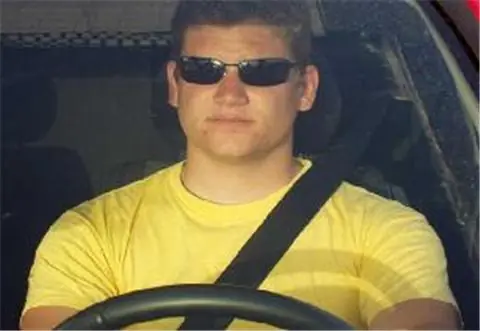
¿Es peligroso no abrocharse el cinturón de seguridad?
Is it dangerous not to fasten your seat belt?
- ASí, porque incluso en un choque a baja velocidad no siempre es posible mantenerse sujeto en el asiento.Yes, because even in a low-speed crash you cannot always stay held in your seat.
- BEn tráfico urbano no, debido a las bajas velocidades a las que se circula.Not in urban traffic, because of the low speeds.
- CSólo es peligroso no abrocharse el cinturón en los asientos delanteros.It is only dangerous not to fasten it in the front seats.
ExplanationNot fastening your seat belt is always dangerous: even in a low-speed crash, the force of the impact makes it impossible to hold yourself with your arms, and the occupant is thrown forward. It is compulsory on all roads, in and outside built-up areas, and in all seats, including the rear ones.
¿Puede una motocicleta tener instalado un sistema de estabilidad de frenado ABS?
Can a motorcycle have an ABS braking stability system fitted?
- ANo, sólo lo pueden tener instalado los turismos.No, only cars can have it.
- BNo, en las motocicletas está prohibido.No, it is prohibited on motorcycles.
- CSí.Yes.
ExplanationThe same technological advances being applied to cars are also applied to motorcycles. These include braking stability systems and airbags for motorcycles.
¿Es peligroso no llevar puesto el cinturón de seguridad?
Is it dangerous not to wear a seat belt?
- ASolo es peligroso no llevar el cinturón en los asientos delanteros.It is only dangerous not to wear a seat belt in the front seats.
- BEn la ciudad, no, porque se circula a baja velocidad.Not in town, because you drive at low speed.
- CSí, porque incluso en un choque a baja velocidad no siempre se puede permanecer en el asiento sin el cinturón.Yes, because even in a low-speed crash you cannot always stay in your seat without a seat belt.
ExplanationYes. Even at low speed, in a crash an occupant without a seat belt is thrown against the steering wheel, the windscreen or the other occupants, in the front and in the back. That is why Article 117 of the General Traffic Regulations (RGC) requires it to be worn fastened on roads inside and outside built-up areas and in all seats.
La carrocería del vehículo es un sistema de...
The vehicle's bodywork is a system of...
- ASeguridad activa.active safety.
- BSeguridad pasiva.passive safety.
- CSeguridad primaria.primary safety.
ExplanationPassive safety aims to minimise the consequences of an accident. The bodywork, which protects the occupants in an accident, is a clear example.
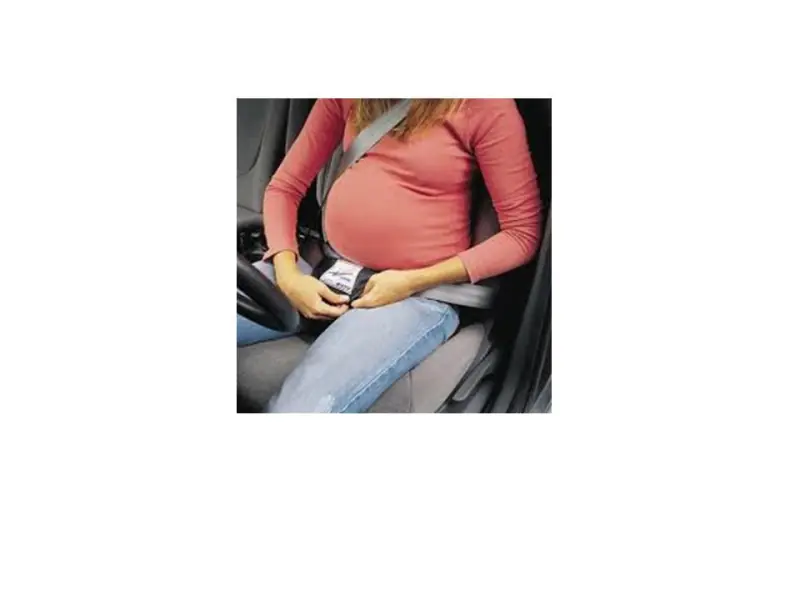
Una embarazada, ¿tiene que usar el cinturón de seguridad?
Must a pregnant woman wear a seat belt?
- ANo, puede no utilizarlo si dificulta sus movimientos para conducir.No, she may choose not to if it makes it hard to move while driving.
- BNo, está exenta de utilizarlo porque es peligroso para el feto en caso de accidente.No, she is exempt because it is dangerous for the foetus in an accident.
- CSí.Yes.
ExplanationPregnant women must wear a seat belt, which also protects the foetus. The lower strap must go below the abdomen, over the hips, and the diagonal strap between the breasts. Only a medical exemption certificate allows you not to wear it.
Los sistemas de retención infantil deben usarse hasta que el niño mida:
Child restraint systems must be used until the child is:
- A1,25 metros1.25 metres tall
- B1,35 metros1.35 metres tall
- C1,50 metros1.50 metres tall
ExplanationChild restraint systems are compulsory for minors under 1.35 metres tall. They are recommended up to 1.50 metres.
La visera del casco de la moto es conveniente que sea...
It is advisable for a motorcycle helmet visor to be...
- Apolarizada.polarised.
- Banti-vaho.anti-fog.
- Coscura, para evitar los deslumbramientos.dark, to avoid dazzle.
ExplanationIt is advisable for the helmet visor to be anti-fog, so that it does not mist up while you ride.
¿Cómo deberá viajar un niño de 3 años en los asientos traseros del vehículo?
How must a 3-year-old child travel in the rear seats of the vehicle?
- ASi no supera los 135 centímetros deberá usar un sistema de retención homologada.If they are no taller than 135 centimetres, they must use an approved restraint system.
- BSi mide 135 centímetros podrá usar indistintamente un sistema de retención homologado o el cinturón de seguridad para adultos.If they are 135 centimetres tall, they may use either an approved restraint system or the adult seat belt.
- CPodrá usar el cinturón de seguridad de los adultos si el vehículo dispone de ellos.They may use the adult seat belt if the vehicle has them.
ExplanationMinors who are 1.35 m tall or less must sit in the rear seats of the vehicle, always using an approved restraint system suited to their height and weight. There are three exceptions in which minors below that height may travel in the front seat: 1. When the vehicle has no rear seats. 2. When all the rear seats are already taken by minors in the same situation, so it is impossible to fit all the child seats needed at that moment. 3. When it is not possible to fit child restraint systems in those seats. When minors are taller than 1.35 m, they may sit in the front seat using the adult seat belt.
¿Es obligatorio el uso del casco, para el conductor de un vehículo de movilidad personal?
Is it compulsory for the rider of a personal mobility vehicle to wear a helmet?
- ASí, pero solo si circula por vía interurbana.Yes, but only on roads outside built-up areas.
- BSí, en todas las vías por las que circule.Yes, on all roads they use.
- CNo, ya que no se trata de un vehículo a motor.No, because it is not a motor vehicle.
ExplanationUnder Article 118.3 of the General Traffic Regulations (RGC) (as worded by Royal Decree 518/2026), riders of personal mobility vehicles must wear an approved or certified protective helmet, properly fastened, whatever the type of road.
All topics
- Definitions
- Documents and penalty points
- The driver's condition
- Duties of drivers and pedestrians
- Vehicle controls and equipment
- Vehicle lights and horn
- Traffic signs, markings and signals
- The road and its lanes
- Speed and distances
- Manoeuvres
- Right of way
- Carrying passengers and loads
- Driving safely in difficult conditions
- Vehicle mechanics and maintenance
- Road accidents and first aid
- Defensive and eco-driving
Independent app: not affiliated with or endorsed by the DGT (Spain's Directorate-General for Traffic) or the Ministry of the Interior. The official exam is booked with the DGT and taken at its test centres. The questions here are practice material; the DGT's official question bank is not public.
Basado en datos de la Agencia Estatal Boletín Oficial del Estado (https://www.boe.es). Textos consolidados de carácter meramente informativo. La AEBOE no patrocina ni respalda este sitio.
Parte de las preguntas procede de los tests de la revista «Tráfico y Seguridad Vial» de la DGT, reproducidos con indicación de la fuente.