
DGT test · 691 questions
Vehicle safety devices · Page 6 of 14
Seat belts, child restraints, helmets, head restraints and airbags: when they are compulsory, the exceptions and how to use them properly.
Questions in this topic, with answers
691 questions, 50 per page, with the correct answer and the explanation. Page 6 of 14.
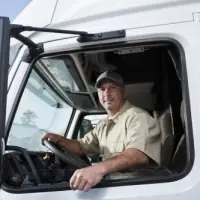
Los asiento de un camión tienen cinturones de seguridad, ¿está obligado el conductor a utilizarlo?
The seats of a lorry have seat belts. Must the driver wear one?
- ANo, en vías fuera de poblado.No, on roads outside built-up areas.
- BNo, en ningún tipo de vía.No, not on any type of road.
- CSí, en todas las vías.Yes, on all roads.
ExplanationIf the vehicle has seat belts fitted, the driver and the occupants must wear them on all types of road, in and outside built-up areas, including in lorries. The obligation only disappears if the vehicle has no seat belts or there is a specific exemption.
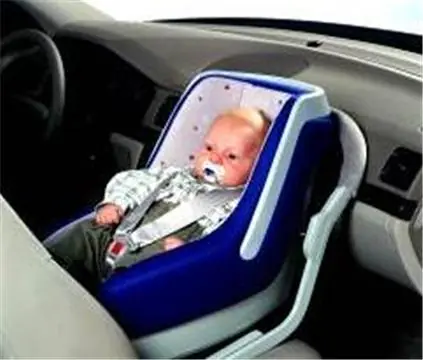
¿Puede viajar en el asiento delantero un menor de 1 año si todas las plazas traseras quedan ocupadas por niños con sistemas de retención infantil?
Can a child under 1 year old travel in the front seat if all the rear seats are taken by children in child restraint systems?
- ANo, porque no debe viajar en el asiento delantero.No, because they must not travel in the front seat.
- BSí, con un sistema de retención infantil adaptado a su talla y peso.Yes, with a child restraint system suited to their height and weight.
- CSí, pero con el cinturón de seguridad.Yes, but with the seat belt.
ExplanationMinors 135 cm tall or less travel in the back with a restraint system, but they may travel in front if all the rear seats are taken by other minors, always with a system suited to their height and weight. If the system faces backwards, the front airbag must be deactivated.
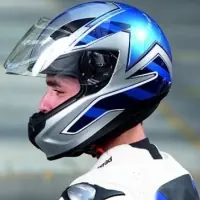
¿Qué dos tipos de cascos de seguridad para motoristas existen?
What are the two types of safety helmet for motorcyclists?
- AConvencional e integralConventional and full-face
- BRegular e integralRegular and full-face
- CLateral e integralSide and full-face
ExplanationMotorcycle helmets fall into two basic types: the full-face helmet, which covers the head and also the face thanks to the chin guard, and the conventional or open-face helmet, which leaves the face uncovered. The full-face helmet gives the most protection.
¿Qué ocurre si un airbag se despliega con el asiento muy cerca?
What happens if an airbag goes off when the seat is very close?
- ANada, está diseñado para esoNothing; it is designed for that
- BPuede causar lesiones graves (mínimo 25 cm)It can cause serious injuries (minimum 25 cm)
- CSe despliega más suaveIt opens more gently
ExplanationKeep a distance of 25 cm from the steering wheel.
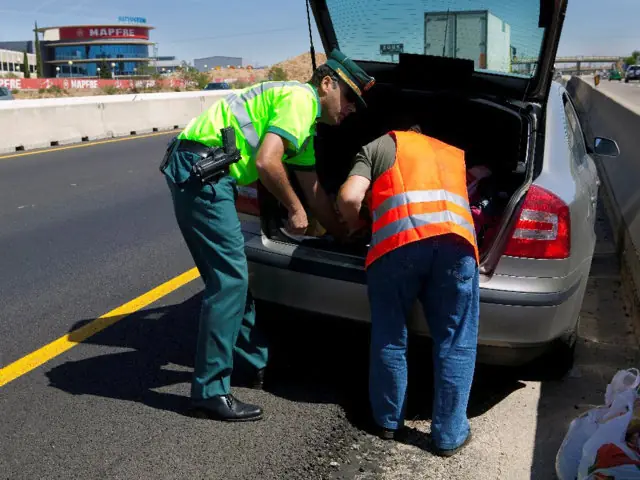
Los chalecos reflectantes de alta visibilidad, ¿deben estar homologados?
Must high-visibility reflective vests be approved?
- ASí.Yes.
- BSolo si son de color naranja; los amarillos no necesitan estar homologados.Only orange ones; yellow ones do not need to be approved.
- CNo es obligatorio, pero sí recomendable.It is not compulsory, but it is recommended.
ExplanationA high-visibility reflective vest must meet the requirements for personal protective equipment, that is, it must be approved, whether it is yellow, orange or red. It is part of the compulsory equipment, and you must put it on when you get out of the vehicle and go onto the carriageway or the hard shoulder of a road outside built-up areas.
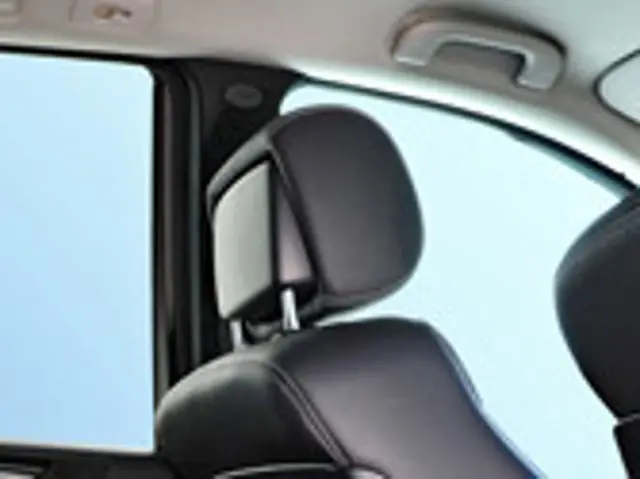
¿Cómo se debe ajustar la altura del reposacabezas?
How should the height of the head restraint be adjusted?
- ALa parte superior del reposacabezas debe quedar entre la parte superior de la cabeza y la altura de los ojos.The top of the head restraint should be between the top of the head and eye level.
- BSegún la comodidad del conductor.According to the driver's comfort.
- CLa parte superior del reposacabezas debe quedar entre la parte inferior de la cabeza y la altura de los ojos.The top of the head restraint should be between the bottom of the head and eye level.
ExplanationThe top edge of the head restraint should be between the top of the head and eye level, and as close to the head as possible. That way, in a rear-end collision, the head rests against it and whiplash is avoided; if it is too low, the head pivots over it.
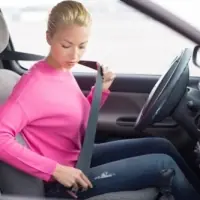
¿El cinturón de seguridad es obligatorio?
Is the seat belt compulsory?
- ANo es obligatorio, solo se recomienda.It is not compulsory, only recommended.
- BSí, solamente en carreteras que conectan dos localidades.Yes, only on roads that connect two towns.
- CSí, es obligatorio en todas las carreteras.Yes, it is compulsory on all roads.
ExplanationAll occupants must wear a seat belt, whatever their seat, apart from a few exceptions set out in the regulations.
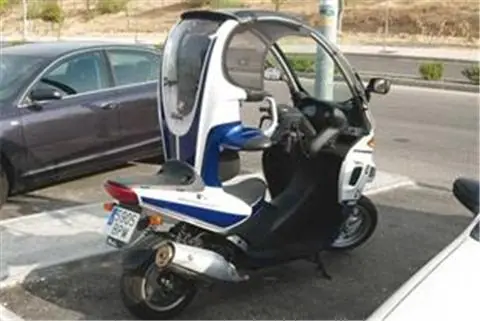
Si su motocicleta cuenta con estructura de autoprotección y cinturón de seguridad, ¿en qué vías deberá llevarlo abrochado?
If your motorcycle has a protective structure and a seat belt, on which roads must you wear the belt fastened?
- AÚnicamente cuando circule por vías interurbanas.Only on roads outside built-up areas.
- BSolo cuando circule por vías interurbanas y travesías.Only on roads outside built-up areas and on travesías.
- CEn todo tipo de vías, tanto urbanas como interurbanas.On all types of road, both in and outside built-up areas.
ExplanationUnder Article 118 of the General Traffic Regulations (RGC), if the motorcycle has a protective structure and seat belts, and this is stated in its documents, its occupants are exempt from wearing a helmet, but they must wear the seat belt fastened on all types of road, in and outside built-up areas.
En poblado, si el turismo que Ud. conduce dispone de cinturones de seguridad en todos los asientos, ¿es obligatorio el uso de dicho cinturón por el conductor y los ocupantes del mismo?
In a built-up area, if the car you are driving has seat belts in all seats, must the driver and the occupants wear them?
- ASólo es obligatorio para el conductor.It is only compulsory for the driver.
- BSólo es el obligatorio para el conductor y los ocupantes de los asientos delanteros.It is only compulsory for the driver and the occupants of the front seats.
- CSí, es obligatorio tanto para el conductor como para el resto de los ocupantes.Yes, it is compulsory for both the driver and the other occupants.
ExplanationThe correct answer says it is compulsory for both the driver and the other occupants. This is because wearing a seat belt is a safety measure that greatly reduces the risk of injury in an accident. The rules aim to protect all passengers, not just the driver.
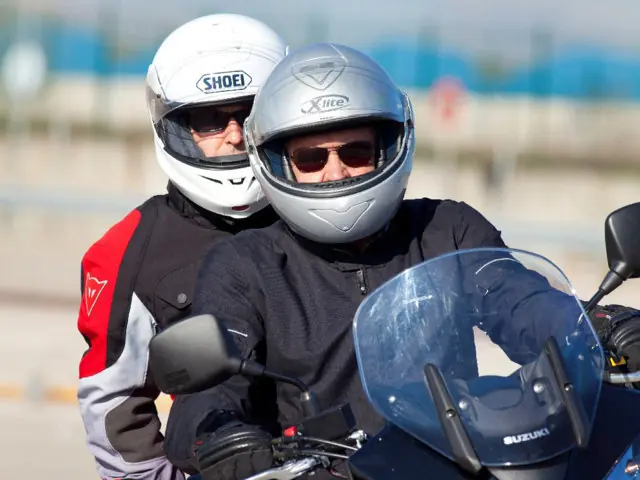
¿Debe usar casco el conductor de una motocicleta que lleva a un pasajero detrás?
Must the rider of a motorcycle carrying a passenger on the back wear a helmet?
- AEl conductor debe usar casco y es el responsable de que el pasajero lo use.The rider must wear a helmet and is responsible for making sure the passenger wears one.
- BEl conductor debe usar casco, pero no es el responsable cuando el pasajero no lo use.The rider must wear a helmet, but is not responsible if the passenger does not wear one.
- CEl conductor no debe usar casco, pero es el responsable cuando el pasajero no lo use.The rider does not have to wear a helmet, but is responsible if the passenger does not wear one.
ExplanationBoth the rider and the passenger of a motorcycle must wear an approved helmet, fastened. In addition, the Traffic Law makes the rider responsible for the passenger wearing one, so the rider is liable if the passenger rides without it.
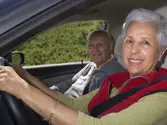
En un turismo, ¿quién está obligado a usar el cinturón de seguridad?
In a car, who must wear a seat belt?
- ASólo el conductor y el acompañante.Only the driver and the front passenger.
- BTodos los ocupantes.All occupants.
- CEn poblado sólo el conductor.In built-up areas, only the driver.
ExplanationAll car occupants, both in and outside built-up areas, must wear a seat belt or an approved restraint device.
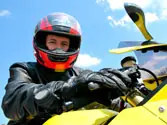
Conduciendo una motocicleta, ¿está permitido llevar el casco desabrochado?
When riding a motorcycle, are you allowed to wear your helmet unfastened?
- ANo, en ningún caso.No, never.
- BÚnicamente en vías urbanas, si la velocidad es inferior a 40 km/h.Only in built-up areas, if the speed is below 40 km/h.
- CSí, cuando sea un casco integral.Yes, when it is a full-face helmet.
ExplanationThe helmet must fit well on your head, must not be tilted back or forward, and the chin strap must always be fastened.
¿Puede colocarse una silla infantil orientada hacia atrás (a contramarcha) en un asiento con airbag frontal activado?
Can a rear-facing child seat be fitted in a seat with an activated front airbag?
- ASí, siempre que el niño lleve además el cinturón.Yes, as long as the child also wears the seat belt.
- BNo, nunca; el airbag podría causar graves lesiones al niño.No, never; the airbag could cause the child serious injuries.
- CSí, es la posición más segura en ese asiento.Yes, it is the safest position in that seat.
ExplanationA rear-facing child seat must never be fitted in a seat with an activated front airbag; you must deactivate the airbag first.
¿Es obligatorio usar un traje integral de cuero para conducir una motocicleta?
Is it compulsory to wear a one-piece leather suit to ride a motorcycle?
- ANo, pero es muy recomendable.No, but it is highly recommended.
- BSí, junto con el casco.Yes, together with the helmet.
- CSí, es obligatorio su uso cuando se circule fuera de poblado.Yes, it is compulsory outside built-up areas.
ExplanationWearing a one-piece leather suit is not compulsory according to the information provided. However, it is recommended, because leather can protect against burns from sliding on the road surface in a fall. Also, suits in eye-catching colours can help riders be seen more easily by other road users.
¿Debe usar casco en una motocicleta provista de estructura de autoprotección y cinturón de seguridad, si así consta en su tarjeta de ITV?
Must you wear a helmet on a motorcycle fitted with a protective structure and seat belts, if this is stated on its vehicle inspection (ITV) card?
- ANo, no es obligatorio; pero el cinturón de seguridad debe ir abrochado.No, it is not compulsory; but the seat belt must be fastened.
- BSí, el casco es obligatorio, pero no el cinturón de seguridad.Yes, the helmet is compulsory, but the seat belt is not.
- CSí, y además es obligatorio llevar el cinturón de seguridad abrochado.Yes, and it is also compulsory to wear the seat belt fastened.
ExplanationAccording to Article 118.1 of the General Traffic Regulations, if the motorcycle has a protective structure and seat belts and this is stated on its technical inspection card, the rider and passengers do not have to wear a helmet, gloves or closed footwear, but they must wear the seat belt fastened on all types of road.
En un accidente, su casco ha recibido un fuerte impacto, ¿puede volver a utilizarlo?
Your helmet took a hard knock in an accident. Can you use it again?
- ANo, porque su estructura puede estar dañada sin que se note externamente.No, because its structure may be damaged without it showing on the outside.
- BSí, salvo que se aprecien daños externos.Yes, unless there is visible damage on the outside.
- CDependerá del material de fabricación.It will depend on the material it is made of.
ExplanationThe helmet may have internal damage that cannot be seen. Even if there is no visible external damage, the helmet's structure could be weakened and not protect you properly in another impact. So it is advisable to replace the helmet as soon as possible after a hard knock.
¿Existen algunos cascos más seguros que otros?
Are some helmets safer than others?
- ANo, si están homologados todos son igual de seguros.No, if they are approved, they are all equally safe.
- BSí, son más seguros los cascos de tipo integral.Yes, full-face helmets are safer.
- CSí, son más seguros los cascos de tipo modular.Yes, modular helmets are safer.
ExplanationFull-face helmets are safer than modular and open-face helmets. Open-face helmets do not protect the face in an accident and often do not protect the back of the neck enough either.
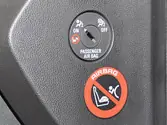
¿Podrá desconectarse el air-bag del acompañante?
May the front passenger airbag be switched off?
- ASí.Yes.
- BNo.No.
- CNo, está prohibido manipularlo.No, tampering with it is prohibited.
ExplanationThe front passenger airbag may, and in fact must, be switched off when we carry an approved rear-facing child restraint system on that seat.
¿Es recomendable abrocharse el cinturón de seguridad llevando puesto un abrigo grueso y acolchado?
Is it advisable to fasten your seat belt over a thick, padded coat?
- ASí, es más cómodo.Yes, it is more comfortable.
- BNo, el cinturón pierde eficacia si no queda ajustado al cuerpo.No, the seat belt is less effective if it does not fit closely to the body.
- CEs indiferente.It makes no difference.
ExplanationWith a thick coat, the belt sits away from the body and, in a crash, the occupant moves forward before the belt holds them, with a higher risk of injury. Article 117.1 of the General Traffic Regulations requires the belt to be properly fastened; to be effective it must fit closely to the body, so it is best to take the coat off first.
¿Para qué sirve la iluminación como elemento de seguridad activa?
What is the purpose of lighting as an active safety feature?
- AProvocar deslumbramiento.To cause dazzle.
- BPermitir ver y ser vistos.To see and be seen.
- CSeñalar una situación de peligro.To indicate a dangerous situation.
ExplanationLighting is an active safety feature because it helps to prevent accidents: it lets the driver see the road and obstacles and makes the vehicle visible to other road users at night, in tunnels or in poor visibility. Used wrongly, it can dazzle.
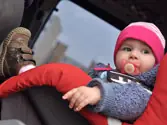
¿Cuál es el mejor lugar para transportar a un menor con sistema de retención homologado?
What is the best place to carry a minor in an approved restraint system?
- AEn cualquiera de las plazas traseras.In any of the rear seats.
- BEn el centro de las plazas traseras.In the middle rear seat.
- CTanto delante como detrás, si el sistema está homologado.Either in front or behind, if the system is approved.
ExplanationThe best place to carry a minor in an approved restraint device is the middle rear seat, facing backwards (against the direction of travel).
¿Cómo se colocará la cinta abdominal del cinturón de seguridad?
Where should the lap strap of the seat belt go?
- ASobre el abdomen.Over the abdomen.
- BPor debajo del abdomen.Below the abdomen.
- CPor encima del abdomen.Above the abdomen.
ExplanationThe lap strap of the seat belt must go over the hip bones, always below the abdomen. Placing it over the abdomen can cause serious internal injuries in an accident.
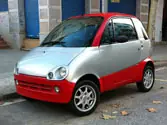
Si un cuatriciclo ligero tiene estructura de autoprotección y cinturones de seguridad, ¿es obligatorio ponerse el casco?
If a light quadricycle has a protective structure and seat belts, is it compulsory to wear a helmet?
- ASí, pero únicamente en vías urbanas.Yes, but only in built-up areas.
- BSí, pero únicamente fuera de poblado.Yes, but only outside built-up areas.
- CNo, si así consta en la tarjeta de inspección técnica.No, if this is stated on the technical inspection card.
ExplanationWhen light quadricycles have a protective structure and seat belts, and this is stated on the relevant technical inspection card or the moped's certificate of characteristics, their drivers and passengers are exempt from wearing a protective helmet, but in this case they must wear the seat belt.
¿Es aconsejable ajustar los reposacabezas de los asientos traseros?
Is it advisable to adjust the head restraints on the rear seats?
- ASí.Yes.
- BSolo si viajan menores de edad.Only if minors are travelling.
- CNo.No.
ExplanationHead restraints protect the neck in a collision, especially a rear-end collision, by stopping the head from being thrown backwards (whiplash). To do this they must be adjusted to the height of each occupant, including in the rear seats, as close to the head as possible.
¿Está permitido que un conductor de 17 años transporte a un menor en una bicicleta o ciclo?
Is a 17-year-old rider allowed to carry a child on a bicycle or other cycle?
- ASí, si conoce al menorYes, if they know the child
- BSí, si lleva cascoYes, if they wear a helmet
- CNo, debe ser mayor de edadNo, they must be an adult
ExplanationUnder Article 154 of the General Traffic Regulations (RGC) (as worded by Royal Decree 518/2026), bicycles and other cycles may only carry passengers if the rider is an adult; children of up to 22 kg who can sit up on their own may travel in additional seats. A 17-year-old rider cannot carry them.
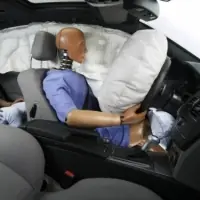
Su vehículo cuenta con airbag. ¿Es necesario ponerse el cinturón de seguridad?
Your vehicle has an airbag. Do you need to wear a seat belt?
- AEs conveniente, pero no necesario.It is advisable, but not necessary.
- BSí, porque mejora la eficacia del airbag.Yes, because it makes the airbag more effective.
- CNo, si se llevan activados los airbags no es necesario el cinturón de seguridad.No, if the airbags are activated, the seat belt is not needed.
ExplanationThe airbag always works as a passive safety system that complements the seat belt, so you must always wear the seat belt fastened. The seat belt makes the airbag more effective, and they must always be used together.
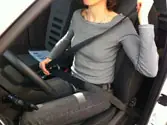
¿Podrán utilizarse reguladores de presión, pinzas, en el cinturón de seguridad?
May pressure regulators (clips) be used on the seat belt?
- ANo, porque anulan los efectos del cinturón.No, because they cancel out the effects of the seat belt.
- BSí, porque la conducción es más cómoda.Yes, because driving is more comfortable.
- CSí, en el supuesto que el cinturón nos quede muy apretado.Yes, if the seat belt is very tight on us.
ExplanationClips reduce the pressure of the seat belt, so in an accident the belt gives more before it locks, and its protective effect is reduced or even cancelled out.
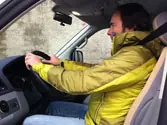
Si nos disponemos a conducir un vehículo y llevamos puesto un plumón, ¿cómo nos colocaremos el cinturón de seguridad?
If you are about to drive while wearing a down jacket, how should you wear the seat belt?
- APor encima del plumón, bien sujeto.Over the down jacket, held firmly.
- BDeberemos quitarnos el plumón ya que el cinturón no sujetaría bien nuestro cuerpo.You should take off the down jacket, because the seat belt would not hold your body properly.
- CNos lo colocaremos como siempre, no afecta para nada la forma de vestir.As usual; what you wear makes no difference.
ExplanationFor the seat belt to be effective and do its job, it must be an approved type. It must be well anchored, adjusted, close to the body and correctly fastened. A seat reclined too far, or unsuitable cushions or seat covers, can make you slide under the seat belt (submarining). The seat belt must fit closely to the body, so it is important to avoid driving in very bulky clothing, such as a down coat.
¿Los pasajeros que viajan en el sidecar de una motocicleta están obligados a llevar el casco?
Must passengers travelling in a motorcycle sidecar wear a helmet?
- ASí.Yes.
- BNo.No.
- CSolo los menores de 7 años.Only children under 7.
ExplanationEveryone travelling on a motorcycle with or without a sidecar, both the rider and the passengers, must wear a helmet.
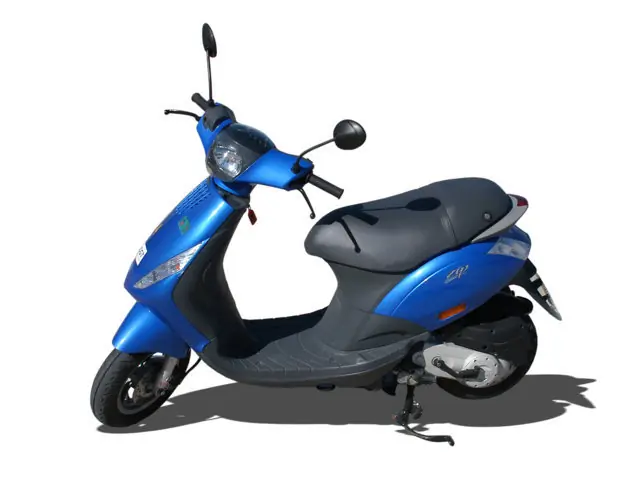
Cuando circulas con este ciclomotor, ¿es obligatorio llevar casco?
When you ride this moped, is it compulsory to wear a helmet?
- ANo.No.
- BSolo en vías interurbanas.Only on roads outside built-up areas.
- CSí.Yes.
ExplanationMoped riders and passengers must wear an approved protective helmet, properly fastened, on all types of road, in and outside built-up areas. From 1 October 2026, they must also always wear closed footwear, and protective gloves on roads outside built-up areas.
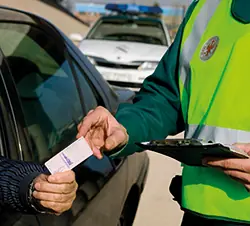
Uno de los pasajeros del turismo que Vd. conduce no lleva puesto el cinturón de seguridad. Si un agente de la autoridad denuncia la infracción, ¿quién es el responsable?
One of the passengers in the car you are driving is not wearing a seat belt. If a police officer reports the offence, who is responsible?
- AEl tomador del seguro.The insurance policyholder.
- BEl pasajero.The passenger.
- CEl conductor.The driver.
ExplanationIf the passenger is an adult, the offence of not wearing a seat belt is theirs and the fine goes to them, not to the driver or the insurance policyholder. The driver is responsible, however, when the person travelling without a seat belt or restraint system is a minor.
¿Le pueden sancionar a usted si le sorprenden efectuando la maniobra de marcha atrás sin llevar abrochado el cinturón de seguridad?
Can you be penalised if you are caught reversing without your seat belt fastened?
- ASí, en vías fuera de poblado.Yes, on roads outside built-up areas.
- BSí, en vías dentro de poblado.Yes, on roads in built-up areas.
- CNo.No.
ExplanationNo. Article 119 of the General Traffic Regulations allows the driver to be without a seat belt while reversing or parking, on any road. Once the manoeuvre is finished, the driver must fasten it.
¿Le está permitido al conductor del vehículo desconectar el airbag del asiento del acompañante?
Is the driver allowed to switch off the front passenger airbag?
- ANo, porque está prohibido.No, because it is prohibited.
- BSí, en caso de llevar el asiento con el dispositivo homologado para transportar a los niños.Yes, when carrying an approved child seat on that seat.
- CSí, cuando el acompañante no lleve abrochado el cinturón.Yes, when the passenger is not wearing a fastened seat belt.
ExplanationUnder Article 117.3 of the General Traffic Regulations (RGC), if a child who is 135 cm tall or less travels in the front seat in a rear-facing child restraint system, the front passenger airbag must be switched off. So in that case the driver may, and must, switch it off.
El casco de los motoristas debe estar:
Motorcyclists' helmets must be:
- ASuelto para mayor comodidadLoose, for more comfort
- BHomologado y correctamente abrochadoApproved and correctly fastened
- CPuede ser de cualquier tipoOf any type
ExplanationHelmets are compulsory for motorcyclists and must be approved (ECE label) and correctly fastened. A loose helmet does not protect properly in an accident.
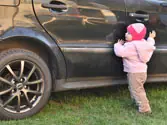
Un menor, como norma general ¿puede viajar en el asiento delantero del vehículo?
As a general rule, may a child travel in the front seat of the vehicle?
- ASí.Yes.
- BNo, si su estatura no supera los 135 centímetros.No, if their height is not more than 135 centimetres.
- CNo, si es menor de 12 años.No, if they are under 12.
ExplanationChildren whose height is 1.35 m or less must sit in the rear seats of the vehicle, always using an approved child restraint suited to their height and weight. There are three exceptions in which children below that height may travel in the front seat: 1. When the vehicle has no rear seats. 2. When all the rear seats are already taken by children of the same size, so that it is not possible to fit all the child seats needed at that time. 3. When it is not possible to fit child restraint systems in those seats. If they sit in the front and the vehicle has a front airbag, they may only use rear-facing child restraints if the airbag has been deactivated. When children are taller than 1.35 m, they may sit in the front seat using the adult seat belt.
¿Está permitido desabrocharse el cinturón de seguridad para estacionar?
May you unfasten your seat belt to park?
- ASí.Yes.
- BSí, pero solo en estacionamientos en línea.Yes, but only when parking parallel to the kerb.
- CNo.No.
ExplanationAs an exception, we may unfasten the seat belt to reverse and to park.
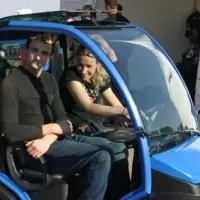
¿Están los pasajeros de cuadriciclo obligados a llevar casco en vía urbana?
Must quadricycle passengers wear a helmet in built-up areas?
- ASí, estarán obligados aunque el cuadriciclo tenga cinturón de seguridad o estructura de autoprotecciónYes, even if the quadricycle has a seat belt or protective structure
- BSí, siempre y cuando el cuadriciclo no lleve cinturón de seguridad o estructura de autoprotecciónYes, as long as the quadricycle does not have a seat belt or protective structure
- CNo, solo en vía interurbana es obligatorio el uso de cascoNo, a helmet is only compulsory outside built-up areas
ExplanationRiders and passengers of motorcycles with and without sidecars, of mopeds, and of three-wheeled vehicles and quadricycles must wear a helmet in and outside built-up areas; for the last two, only when they do not have a protective structure. So if they have such a structure, quadricycle drivers do not have to wear a helmet.
En un cuadriciclo ligero que posee cinturones de seguridad, ¿quién debe usarlos obligatoriamente?
In a light quadricycle with seat belts, who must wear them?
- ANadie.No one.
- BCopiloto y piloto fuera de poblado.The driver and the passenger, outside built-up areas.
- CCopiloto y piloto siempre.The driver and the passenger, always.
ExplanationIf a light quadricycle has seat belts, both the driver and the passenger must wear them, both in and outside built-up areas.
Los conductores estarán exentos de utilizar el cinturón de seguridad...
Drivers are exempt from wearing a seat belt...
- AAl efectuar la maniobra de marcha hacia atrás, dentro de poblado.when reversing, in built-up areas.
- BAl efectuar la maniobra de marcha hacia atrás, fuera de poblado.when reversing, outside built-up areas.
- CAl efectuar la maniobra de marcha hacia atrás, tanto dentro como fuera de poblado.when reversing, both in and outside built-up areas.
ExplanationWhen reversing, both in town and on the open road, drivers are exempt from wearing a seat belt.
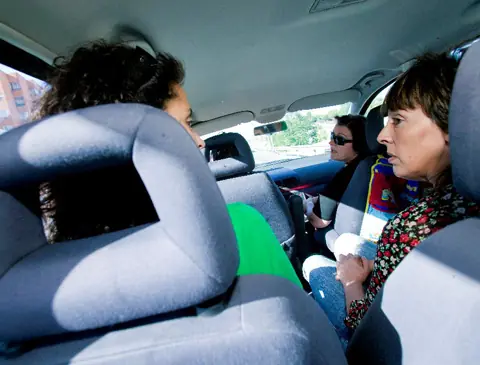
¿Es aconsejable regular los reposacabezas de los asientos traseros?
Is it advisable to adjust the rear seat head restraints?
- ANo.No.
- BSolo si en ellos viajan menores.Only if minors are travelling in them.
- CSí.Yes.
ExplanationThe head restraint protects the neck in a rear-end collision, whatever the seat. The rear ones must also be adjusted to the height of the person's head, whether an adult or a minor; fully lowered, they do not protect.
¿Es aconsejable instalar ‘pinzas’ o reguladores de presión en los cinturones de seguridad en su turismo?
Is it advisable to fit 'clips' or pressure regulators to the seat belts in your car?
- ASí, puesto que dan holgura al cinturón y evitan presiones innecesarias.Yes, because they give the seat belt some slack and avoid unnecessary pressure.
- BNo, ya que anulan la eficacia del mismo.No, because they cancel out its effectiveness.
- CSí, excepto para menores de 12 años que viajen en los asientos delanteros.Yes, except for children under 12 travelling in the front seats.
ExplanationNo, because pressure regulators or 'clips' cancel out the effectiveness of the seat belt. The seat belt is designed to keep the occupant in place during an impact. If its operation is changed, it may not protect you, which could lead to serious injuries in an accident.
En una autopista, ¿qué ocupantes de un taxi deben utilizar el cinturón de seguridad?
On an autopista (motorway), which occupants of a taxi must wear a seat belt?
- ACualquier ocupante.Every occupant.
- BSólo el conductor y los pasajeros de los asientos delanteros.Only the driver and the front-seat passengers.
- CSólo los pasajeros.Only the passengers.
ExplanationIn a taxi on an autopista, wearing a seat belt is compulsory for every occupant. This includes the driver and the passengers in the front and rear seats. The aim is to keep all the vehicle's occupants safe in a collision.
¿Cuándo se debe desactivar el airbag frontal en el asiento del copiloto de un vehículo?
When must the front airbag in the front passenger seat of a vehicle be deactivated?
- ACuando se instale un dispositivo de retención infantil orientado hacia detrás.When a rear-facing child restraint system is fitted.
- BSiempre que se instale un dispositivo de retención infantil en el asiento del copiloto.Whenever a child restraint system is fitted in the front passenger seat.
- CSiempre que viaje un menor en el asiento del copiloto.Whenever a minor is travelling in the front passenger seat.
ExplanationThe front passenger airbag must be deactivated when a rear-facing child restraint system is fitted in that seat. This is because, if the airbag deploys, the force and speed with which it expands could put the child in the rear-facing restraint system at risk. When minors are taller than 1.35 m, they may sit in the front seat using the adult seat belt.
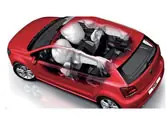
La eficacia del airbag está garantizada cuando se usa...
The airbag is guaranteed to be effective when it is used...
- Ajunto con el apoyacabezas.together with the head restraint.
- Bel del conductor y el del acompañante.both the driver's and the front passenger's.
- Cjunto con el cinturón de seguridad.together with the seat belt.
ExplanationThe airbag is a very safe passive safety system, but to avoid harmful effects, keep the following in mind: - It complements the seat belt, so they must always be used together. - The airbag should be about 25 cm from your body, and never less than 10 cm. - Do not place objects near the airbag or put your legs on the dashboard: when the airbag goes off, this could cause very serious injuries. - When you use a rear-facing child restraint system in a seat with an airbag, you must deactivate the airbag.
¿Es importante que el casco tenga ventilación?
Is it important for a helmet to have ventilation?
- ASí.Yes.
- BNo.No.
- CSolo en verano, para evitar el calor.Only in summer, to avoid the heat.
ExplanationHelmet ventilation is important at any time of year: it stops the visor from misting up, brings in fresh air and reduces heat and sweat, which cause tiredness and loss of concentration. A well-ventilated helmet is more comfortable and therefore safer.
No abrocharse el cinturón de seguridad, ¿es peligroso?
Is it dangerous not to fasten your seat belt?
- ANo, porque tiene pocas ventajas y muchos inconvenientes.No, because it has few advantages and many disadvantages.
- BSí, porque en caso de accidente puede suceder que las lesiones producidas sean más graves.Yes, because in an accident the injuries may be more serious.
- CEn tráfico urbano no, debido a las bajas velocidades a las que circula.Not in urban traffic, because of the low speeds.
ExplanationNot fastening your seat belt is dangerous: in a crash, the body keeps moving at the speed the vehicle was travelling and hits the inside of the vehicle or is thrown out. Even at urban speeds, injuries can be serious, which is why it is compulsory on all roads.
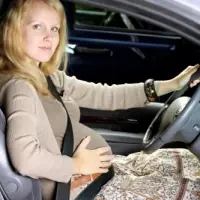
¿Pueden las mujeres embarazadas no estar obligadas a llevar el cinturón de seguridad?
Can pregnant women be exempt from wearing a seat belt?
- ASí, si tienen un certificado médico que las eximaYes, if they have a medical certificate exempting them
- BSí, pueden no llevarlo si así lo desean aunque no tengan certificado médicoYes, they may choose not to wear it, even without a medical certificate
- CNo, las mujeres embarazadas están obligadas a llevarlo siempreNo, pregnant women must always wear it
ExplanationPregnant women must wear the seat belt, with the lower strap below the abdomen, over the hips. They may only travel without it if they have an exemption certificate for serious medical reasons, under Article 119 of the General Traffic Regulations (RGC).
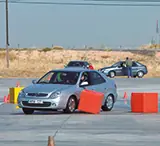
¿Cuál es la función del sistema antibloqueo de frenos ABS?
What is the function of the ABS anti-lock braking system?
- AHace que los neumáticos se desgasten menos.It makes the tyres wear less.
- BImpide el bloqueo de las ruedas durante el frenado.It prevents the wheels from locking when braking.
- CEvita el bloqueo de las ruedas solo en calzadas secas.It prevents the wheels from locking only on dry roads.
ExplanationThe anti-lock braking system, known as ABS, stops the wheels from locking under hard braking, on any type of surface and not only on dry roads. This way the driver keeps control of the steering and can avoid an obstacle while braking.
¿Qué función cumple el ABS?
What does ABS do?
- AAumentar la distancia de frenado.It increases braking distance.
- BDar más potencia a los frenos.It gives the brakes more power.
- CEvitar que se bloqueen las ruedas al frenar.It stops the wheels from locking when braking.
ExplanationThe function of ABS is to stop the wheels from locking when braking, so that braking distance is shorter and you always keep control of the steering.
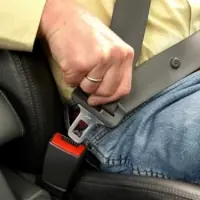
Los pasajeros de este turismo, ¿pueden viajar sin abrocharse el cinturón de seguridad?
May the passengers in this car travel without fastening their seat belts?
- ASí, en los asientos posteriores de los taxis.Yes, in the rear seats of taxis.
- BNo, es obligatorio en todas las plazas del vehículo.No, it is compulsory in all seats of the vehicle.
- CSolo cuando se hagan trayectos cortos.Only on short journeys.
ExplanationThe Traffic Regulations state that the driver and occupants of taxis like the one in the picture must wear approved seat belts, properly fastened, both in and outside built-up areas. As an exception, in built-up areas, taxis may carry people shorter than 135 centimetres without an approved restraint device suited to their height and weight, as long as they sit in a rear seat.
All topics
- Definitions
- Documents and penalty points
- The driver's condition
- Duties of drivers and pedestrians
- Vehicle controls and equipment
- Vehicle lights and horn
- Traffic signs, markings and signals
- The road and its lanes
- Speed and distances
- Manoeuvres
- Right of way
- Carrying passengers and loads
- Driving safely in difficult conditions
- Vehicle mechanics and maintenance
- Road accidents and first aid
- Defensive and eco-driving
Independent app: not affiliated with or endorsed by the DGT (Spain's Directorate-General for Traffic) or the Ministry of the Interior. The official exam is booked with the DGT and taken at its test centres. The questions here are practice material; the DGT's official question bank is not public.
Basado en datos de la Agencia Estatal Boletín Oficial del Estado (https://www.boe.es). Textos consolidados de carácter meramente informativo. La AEBOE no patrocina ni respalda este sitio.
Parte de las preguntas procede de los tests de la revista «Tráfico y Seguridad Vial» de la DGT, reproducidos con indicación de la fuente.