
DGT test · 691 questions
Vehicle safety devices · Page 4 of 14
Seat belts, child restraints, helmets, head restraints and airbags: when they are compulsory, the exceptions and how to use them properly.
Questions in this topic, with answers
691 questions, 50 per page, with the correct answer and the explanation. Page 4 of 14.
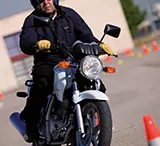
¿Es aconsejable que los conductores de motocicletas lleven guantes?
Is it advisable for motorcyclists to wear gloves?
- ANo.No.
- BSí.Yes.
- CSólo en vía urbana.Only in built-up areas.
ExplanationIn a fall, the hands are usually the first thing the rider puts down: gloves prevent grazes and fractures and also improve grip. They are always advisable, on any road.
El conductor de un ciclo, ¿puede transportar a un menor?
Can a cyclist carry a child?
- ASí, si el conductor es mayor de edad y el menor, de hasta 22 kg, va en un asiento adicional.Yes, if the rider is an adult and the child, weighing up to 22 kg, is in an additional seat.
- BSí, en todo caso, porque el ciclo no es un vehículo de motor.Yes, in all cases, because a cycle is not a motor vehicle.
- CSí, si el menor tiene hasta siete años, aunque el conductor sea menor de edad.Yes, if the child is up to seven years old, even if the rider is a minor.
ExplanationUnder Article 154 of the General Traffic Regulations (RGC) (as worded by Royal Decree 518/2026), cycles may carry passengers if the rider is an adult; single-seat cycles may carry children of up to 22 kg who can sit up on their own, in additional seats.
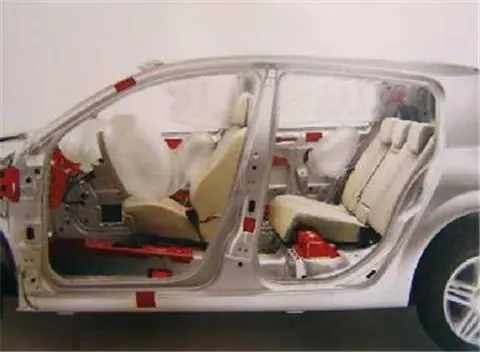
¿Cuál es la función de la carrocería?
What is the function of the bodywork?
- ADotar al vehículo de un aspecto aerodinámico.To give the vehicle an aerodynamic look.
- BSu función es básicamente estética.Its function is basically aesthetic.
- CProteger a los ocupantes.To protect the occupants.
ExplanationThe chassis and the bodywork must protect the occupants, preventing the deformations of the vehicle from injuring them or trapping them inside. This is 'passive safety'.
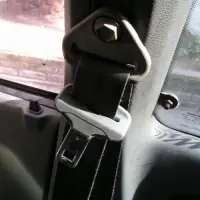
¿Se deben comprobar habitualmente los anclajes del cinturón de seguridad?
Should the seat belt anchorages be checked regularly?
- ANo, no se debe modificar el reglaje que viene de fábricaNo, the factory settings must not be changed
- BSi, pero únicamente podrán hacerlo mecánicos cualificadosYes, but only qualified mechanics may do it
- CSíYes
ExplanationThe seat belt anchorages, that is, the points where the seat belt is attached to the vehicle, should be checked and tested regularly to make sure they are effective and working properly.
Los niños menores de edad, ¿cuándo pueden empezar a utilizar los cinturones de seguridad normales?
From when may children under 18 start using ordinary seat belts?
- AA partir de 1,35 m de estatura.From a height of 1.35 m.
- BA partir de 1,50 m de estatura.From a height of 1.50 m.
- CA partir de 12 años, aunque midan menos de 1'35 m de estatura.From the age of 12, even if they are shorter than 1.35 m.
ExplanationChildren 135 cm tall or less must use an approved child restraint system. From 1.35 m they may use the ordinary seat belt, although up to 1.50 m it is recommended to keep using an adapted device. What counts is height, not age.
¿Se pueden utilizar pinzas para dar holgura al cinturón de seguridad?
Can you use clips to give the seat belt some slack?
- ANo, está prohibido.No, it is prohibited.
- BSí, pero solo en trayectos urbanos.Yes, but only on urban journeys.
- CSí, si circulamos más cómodos ya que el cinturón sigue cumpliendo su función.Yes, if it makes driving more comfortable, since the seat belt still does its job.
ExplanationThe seat belt must be properly fastened and close to the body, but not tight, so that you can drive comfortably. Using clips or other tension adjusters is therefore prohibited, as it can be dangerous for the driver in an accident.
¿Cómo debe viajar un menor de edad que no alcanza los 135 centímetros en el asiento trasero de su turismo?
How must a minor who is under 135 centimetres tall travel in the rear seat of your car?
- AEn el asiento central sujeta con el cinturón de seguridad.In the middle seat, held by the seat belt.
- BSujeta convenientemente con el cinturón de seguridad homologado de los adultos.Properly held by the approved adult seat belt.
- CDebe utilizar obligatoriamente un dispositivo de retención homologado adaptado a su talla y peso.They must use an approved restraint system suited to their height and weight.
ExplanationMinors 135 cm tall or less must use an approved child restraint system suited to their height and weight, also in the rear seat. The adult seat belt does not fit their body and can cause them serious injuries.
¿Están obligados los conductores y pasajeros de los vehículos que realizan servicios de emergencia a utilizar el cinturón de seguridad cuando circulan por una ciudad?
Must drivers and passengers of vehicles providing emergency services wear a seat belt when driving in a town?
- ALos conductores tienen que hacerlo; los pasajeros, no.Drivers must; passengers need not.
- BLos conductores, no; los pasajeros, sí.Drivers need not; passengers must.
- CNo.No.
ExplanationUnder article 119.2 of the General Traffic Regulations (as worded by RD 518/2026), drivers and passengers of vehicles on emergency services are exempt from wearing the seat belt when driving in built-up areas, but not on autopistas (motorways), autovías (dual carriageways) or conventional roads. After the reform, this exemption no longer applies to taxi drivers on duty, goods delivery drivers or people accompanying a driving school learner.
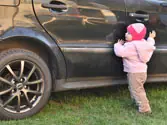
Un menor , ¿puede viajar en el asiento delantero del vehículo?
May a child travel in the front seat of the vehicle?
- ASí.Yes.
- BNo, si es menor de 12 años.No, if they are under 12.
- CNo, si su estatura no supera los 135 centímetros.No, if their height is not more than 135 centimetres.
ExplanationChildren whose height is 1.35 m or less must sit in the rear seats of the vehicle, always using an approved child restraint suited to their height and weight. There are two exceptions in which children below that height may travel in the front seat: 1. If the vehicle has no rear seats. 2. If the rear seats are already taken by children of the same size, so that it is not possible to fit all the child seats needed at that time. If they sit in the front and the vehicle has a front airbag, they may only use rear-facing child restraints if the airbag has been deactivated. When children are taller than 1.35 m, they may sit in the front seat using the adult seat belt.
El uso de las pinzas para retener el cinturón de seguridad es…
Using clips to hold the seat belt is...
- ARecomendable, porque reduce la presión del cinturón sobre el pecho.recommended, because it reduces the pressure of the belt on the chest.
- BNecesario, como suplemento del airbag.necessary, as a supplement to the airbag.
- CPeligroso, porque reduce la eficacia del cinturón.dangerous, because it reduces the effectiveness of the seat belt.
ExplanationClips that keep the seat belt loose are dangerous: they leave slack that delays restraint, so in a crash the body moves before the seat belt acts and may hit the steering wheel or the dashboard. They do not complement the airbag.
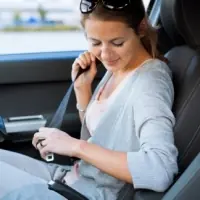
El cinturón de seguridad ¿para qué sirve?
What is the seat belt for?
- APara que el cuerpo no choque contra el volante y el parabrisas.To stop the body hitting the steering wheel and the windscreen.
- BPara apoyar mejor la espalda.To support your back better.
- CPara que el asiento no se mueva.To stop the seat moving.
ExplanationIn a collision, the body keeps moving at the speed the vehicle was travelling. The seat belt holds it against the seat and stops it hitting the steering wheel, dashboard or windscreen, or being thrown out. It is not for supporting your back or holding the seat in place.
¿Cómo debe ir abrochado el cinturón de seguridad?
How should the seat belt be fastened?
- ANi muy flojo ni muy apretado, con unos tres dedos de holgura entre el cinturón y el abdomen.Neither too loose nor too tight, with about three fingers of space between the belt and the abdomen.
- BMuy apretado.Very tight.
- CMuy flojo para que permita la libre movilidad de la persona, sobre todo si se trata del conductor.Very loose, so that the person can move freely, especially the driver.
ExplanationThe seat belt must fit closely to the body, without large slack that would delay restraint in a crash, but not so tight that it is uncomfortable or stops you from moving normally. Wearing it very loose reduces its effectiveness, including for the driver.
¿Cuándo pueden los niños empezar a usar los cinturones de seguridad normales?
When can children start using normal seat belts?
- ACuando miden más de 1,35 m.When they are taller than 1.35 m.
- BCuando miden 1,50 m.When they are 1.50 m tall.
- CA partir de los 12 años, incluso si miden menos de 1,35 m.From the age of 12, even if they are shorter than 1.35 m.
ExplanationUnder Article 117 of the General Traffic Regulations, children 135 cm tall or shorter must use an approved child restraint system. What counts is height, not age: the normal seat belt is used when the child is taller than 1.35 m.
En un cuadriciclo ligero dotado de cinturones de seguridad, ¿es correcto utilizar pinzas para dar holgura al cinturón?
In a light quadricycle fitted with seat belts, is it correct to use clips to give the seat belt some slack?
- ASí, porque la conducción se hace más cómoda.Yes, because it makes driving more comfortable.
- BNo, porque reduce la eficacia del cinturón y el riesgo de lesiones aumenta ante un posible accidente.No, because it reduces the effectiveness of the seat belt and increases the risk of injury in an accident.
- CEs indiferente.It makes no difference.
ExplanationUsing clips to give the seat belt slack is prohibited, because it reduces the effectiveness of the belt and increases the risk of injury in an accident. Clips cancel out the effect of the seat belt, because it is not correctly fastened. So it is important not to use clips and to make sure the seat belt fits well and without slack, for maximum protection in a collision.
La instalación del airbag en un vehículo, ¿sustituye la obligación de utilizar el cinturón de seguridad?
Does having an airbag in the vehicle replace the obligation to wear a seat belt?
- ASí, porque evita el impacto del conductor y pasajeros contra los elementos del vehículo.Yes, because it stops the driver and passengers from hitting parts of the vehicle.
- BSí, porque evita lesiones en el cabeza y cuello.Yes, because it prevents head and neck injuries.
- CNo, porque actúa complementando la protección que ofrece el cinturón de seguridad.No, because it complements the protection given by the seat belt.
ExplanationThe correct answer is that the airbag complements the seat belt, because the airbag and the seat belt work together to give the best possible protection. The seat belt keeps the occupants in place, while the airbag gives extra protection in an impact.
Si circulamos por una vía urbana con un vehículo dotado de air-bag, ¿es obligatorio usar el cinturón de seguridad homologado?
If we are driving on an urban road in a vehicle fitted with an airbag, is it compulsory to wear an approved seat belt?
- ASí.Yes.
- BNo.No.
- CSolo en los asientos delanteros.Only in the front seats.
ExplanationThe airbag is a passive safety system that complements the seat belt, but it never replaces it.
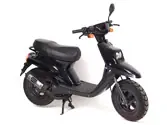
En este ciclomotor, ¿es obligatorio utilizar casco?
On this moped, is it compulsory to wear a helmet?
- ASí, siempre.Yes, always.
- BSolamente en vías interurbanas.Only on roads outside built-up areas.
- CNo, sólo cuando el conductor lo considere necesario.No, only when the rider thinks it is necessary.
ExplanationMoped riders and passengers must wear a helmet, whether they are on roads outside built-up areas or on urban roads and travesías (roads through towns).
Usar el cinturón de seguridad…
Wearing a seat belt…
- ATiene muchas más ventajas que inconvenientes.Has many more advantages than disadvantages.
- BTiene pocas ventajas y muchos inconvenientes.Has few advantages and many disadvantages.
- CEs más peligroso que no usarlo.Is more dangerous than not wearing one.
ExplanationThe seat belt greatly reduces the risk of death and serious injury in an accident, because it prevents you from hitting the inside of the vehicle and from being thrown out. Its advantages far outweigh any disadvantage.
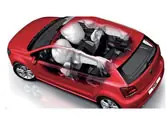
¿Cuál es la finalidad principal del airbag?
What is the main purpose of the airbag?
- ANinguna, es un elemento decorativo.None, it is decorative.
- BEvitar, en caso de accidente, el impacto de los ocupantes del vehículo contra los elementos del automóvil.To prevent the vehicle's occupants from hitting parts of the car in an accident.
- CDisminuir el consumo de combustible.To reduce fuel consumption.
ExplanationThe airbag inflates and deflates in thousandths of a second when there is an impact, protecting the vehicle's occupants from the forces of deceleration and stopping the body from hitting the inside of the vehicle. There are various types of airbag; the most common are the front airbags for the driver and front passenger, side airbags, and roof or curtain airbags.
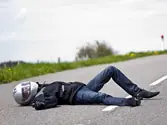
¿Es aconsejable quitar el casco de protección al pasajero de una motocicleta que ha sufrido un accidente?
Is it advisable to remove the protective helmet from a motorcycle passenger who has had an accident?
- ASí, lo antes posible para evitar asfixias.Yes, as soon as possible, to avoid suffocation.
- BSí, siempre que el herido esté consciente.Yes, as long as the injured person is conscious.
- CNo, salvo que sea necesario y se conozca la técnica.No, unless it is necessary and you know the technique.
ExplanationAs a general rule, you should not remove the protective helmet from an injured person. When it is necessary, for example to carry out resuscitation, the helmet must be removed using a specific technique that keeps the neck (cervical spine) immobilised, and this should only be done by someone who knows the technique properly.
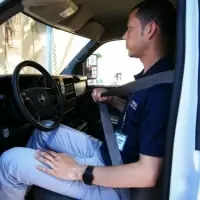
Se encuentra conduciendo un vehículo de distribución de mercancías en una vía dentro de poblado. En qué circunstancia podrá circular sin el cinturón de seguridad puesto?
You are driving a goods delivery vehicle on a road in a built-up area. In what circumstances may you drive without wearing a seat belt?
- ACuando realice sucesivas operaciones de carga y descarga en lugares situados a corta distancia.When making repeated loading and unloading stops at places a short distance apart.
- BEn cualquier circunstancia, siempre que sea dentro de poblado.In any circumstances, as long as it is in a built-up area.
- CSolo en los mismos casos que cualquier otro conductor, como la marcha atrás.Only in the same cases as any other driver, such as when reversing.
ExplanationUnder Article 119.2 of the General Traffic Regulations (RGC) (as worded by Royal Decree 518/2026), in built-up areas the seat belt exemption only covers drivers and passengers of vehicles on emergency duty; the old exemption for goods delivery drivers has gone. The general exemptions in Article 119.1 still apply, such as reversing or parking.
¿Quiénes están exentos del uso del cinturón de seguridad?
Who is exempt from wearing a seat belt?
- ALos conductores al efectuar la maniobra de marcha atrás o de estacionamiento.Drivers while reversing or parking.
- BLos conductores de taxis en vías urbanas o interurbanas.Taxi drivers on urban or non-urban roads.
- CLos conductores y pasajeros de vehículos en servicio de urgencia en vías interurbanas.Drivers and passengers of vehicles on an emergency call on roads outside built-up areas.
ExplanationArticle 119 of the General Traffic Regulations allows drivers to go without a seat belt while they are reversing or parking. Emergency vehicles are only exempt in built-up areas, and taxi drivers are no longer exempt.
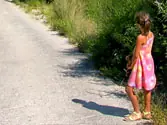
Un menor que mida 1,40 metros, ¿podrá viajar en el asiento delantero del acompañante?
May a minor who is 1.40 metres tall travel in the front passenger seat?
- ASí, pero sólo con un dispositivo de retención homologado.Yes, but only with an approved restraint system.
- BSí.Yes.
- CNo.No.
ExplanationMinors who are 1.35 m tall or less must sit in the rear seats of the vehicle, always using an approved restraint system suited to their height and weight. There are three exceptions in which minors below that height may travel in the front seat: 1. When the vehicle has no rear seats. 2. When all the rear seats are already taken by minors in the same situation, so it is impossible to fit all the child seats needed at that moment. 3. When it is not possible to fit child restraint systems in those seats. When minors are taller than 1.35 m, they may sit in the front seat using the adult seat belt. In this case, as the minor is 1.40 m tall, they may travel in the front seat using the seat belt.
¿Es recomendable que los motociclistas usen guantes?
Is it advisable for motorcyclists to wear gloves?
- ASí.Yes.
- BNo.No.
- CSolo en la ciudad.Only in town.
ExplanationYes. Under Article 118.1(b) of the General Traffic Regulations (RGC) (as worded by Royal Decree 518/2026), motorcycle riders and passengers must wear protective gloves on roads outside built-up areas; in town they are not compulsory, but they are advisable, because they protect the hands in a fall.
Invertir en la seguridad de un vehículo es ...
Investing in vehicle safety is...
- APoco importante, ya que lo fundamental es mejorar las condiciones de la vía.not very important, because the key thing is to improve road conditions.
- BPoco importante, ya que sólo el conductor puede evitar los accidentes.not very important, because only the driver can prevent accidents.
- CImportante, ya que puede contribuir a evitar que se produzca un accidente.important, because it can help prevent an accident.
ExplanationInvesting in vehicle safety is crucial because safety systems, such as brakes, airbags and driver assistance systems, can prevent accidents or minimise their consequences. Although better road conditions and driver attention are important, vehicle safety is a key part of reducing the risk of accidents.
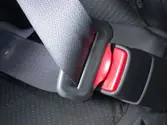
¿Para qué sirve el cinturón de seguridad?
What is the seat belt for?
- ALlegar mejor a los mandos del vehículo.To reach the vehicle controls more easily.
- BEvitar lesiones cervicales.To prevent neck injuries.
- CEvitar ser proyectado fuera del vehículo en caso de accidente.To avoid being thrown out of the vehicle in an accident.
ExplanationThe seat belt holds occupants in their seat in a crash or sudden braking, stopping them from hitting the inside of the vehicle or being thrown out, which is often fatal. Neck injuries are prevented mainly by a correctly adjusted head restraint.
¿Qué sistema ayuda a evitar que los frenos se bloqueen durante una frenada brusca?
Which system helps stop the brakes from locking under sharp braking?
- AEBS (Sistema de frenado electrónico).EBS (Electronic Braking System).
- BAEB (Frenado de Emergencia Autónomo).AEB (Autonomous Emergency Braking).
- CABS (Sistema de Antibloqueo de Frenos).ABS (Anti-lock Braking System).
ExplanationABS, the Anti-lock Braking System, is a vehicle safety system that stops the wheels from locking under sharp braking. When you brake hard, ABS automatically adjusts the braking pressure on each wheel to prevent locking. This lets you keep control of the vehicle and steer, especially in emergency braking. The other options, EBS and AEB, refer to different vehicle systems.
El airbag es un sistema de seguridad que:
The airbag is a safety system that:
- ASustituye al cinturón de seguridad.Replaces the seat belt.
- BComplementa al cinturón, pero no lo sustituye.Complements the seat belt, but does not replace it.
- CSolo protege al conductor si no lleva cinturón.Only protects the driver if they are not wearing a seat belt.
ExplanationThe airbag complements the seat belt; without a seat belt, the airbag deploying can even cause injuries.
¿Cumple alguna función el cinturón de seguridad de los asientos traseros?
Does the rear seat belt have any function?
- ANo, sólo sirve para que no te multen.No, it is only there so that you do not get fined.
- BSólo sirve para no salir despedidos del vehículo.It only stops you from being thrown out of the vehicle.
- CSirve para mantener sujetos a los ocupantes de atrás dentro del vehículo y además evita que estos provoquen lesiones a los demás ocupantes al evitar que salgan proyectados.It keeps the rear occupants held inside the vehicle and also stops them from injuring other occupants, because they are not thrown forward.
ExplanationIn a frontal impact, the chance that a rear-seat occupant fatally hits a front-seat passenger can be up to 8 times higher if they are not wearing a properly fastened seat belt.
El chaleco reflectante homologado debe utilizarse…
The approved reflective vest must be worn...
- ASolo en autopistaOnly on motorways (autopistas)
- BSiempre que se salga del vehículo en vías interurbanasWhenever you get out of the vehicle on roads outside built-up areas
- CÚnicamente de nocheOnly at night
ExplanationIf you get out of the vehicle on a road outside a built-up area and go onto the carriageway or the hard shoulder, you must put on the reflective vest so that you can be seen.
El chasis y la carrocería del vehículo forman parte del conjunto de dispositivos de seguridad...
The chassis and bodywork of the vehicle are part of the set of safety devices that are...
- APasiva.passive.
- BActiva.active.
- CPrimaria.primary.
ExplanationVehicle devices that reduce the consequences of an accident, such as the chassis and bodywork, are passive safety features.
El airbag (SRS) es un sistema de seguridad que:
The airbag (SRS) is a safety system that:
- ASustituye al cinturón de seguridad.Replaces the seat belt.
- BComplementa al cinturón, pero no lo sustituye; sin cinturón puede ser peligroso.Complements the seat belt but does not replace it; without a seat belt it can be dangerous.
- CSolo sirve en impactos traseros.Only works in rear impacts.
ExplanationThe airbag complements the seat belt; how well it works depends on wearing the seat belt.
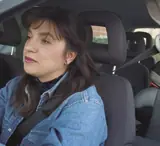
¿A qué altura debe quedar la parte central del reposacabezas?
At what height should the middle of the head restraint be?
- AA la altura de los ojos.At eye level.
- BA la altura del cuello.At neck level.
- CEs indiferente la altura del reposacabezas.The height of the head restraint makes no difference.
ExplanationThe middle of the head restraint should be at eye level and as close to the head as possible. This way it holds the head in a rear-end collision and prevents whiplash; at neck level it does not protect you and can make the injury worse.
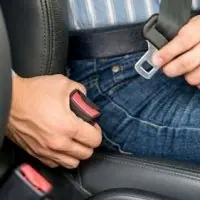
Circulando en un turismo, ¿se puede prescindir en algún momento del cinturón de seguridad?
When travelling in a car, can you ever go without the seat belt?
- AEl conductor no, pero sí los pasajeros que viajen en los asientos traseros.The driver cannot, but passengers in the rear seats can.
- BSí, circulando por vías urbanas.Yes, in built-up areas.
- CNo, excepto el conductor y cuando esté realizando la maniobra de marcha atrás o de estacionamiento.No, except the driver while reversing or parking.
ExplanationThe Traffic Regulations state that all drivers must wear a seat belt, except while reversing or parking, because the seat belt can get in the way of doing these manoeuvres properly. On roads outside built-up areas, seat belts are always compulsory for all occupants of any type of vehicle.
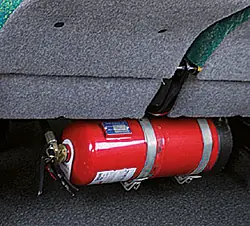
Si arrastra con su turismo un remolque ligero, ¿está obligado a llevar entre sus accesorios un equipo homologado de extinción de incendios en condiciones de uso?
If you tow a light trailer with your car, must you carry approved fire-fighting equipment in working order among your accessories?
- ANo.No.
- BSí.Yes.
- CSolo cuando circule por vías interurbanas.Only on roads outside built-up areas.
ExplanationWhen you hitch up a trailer, the car becomes a vehicle combination, and the General Vehicle Regulations require you to carry approved fire-fighting equipment in working order.
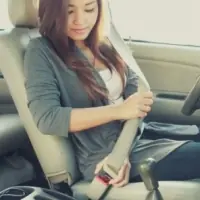
El uso del cinturón de seguridad es obligatorio en vías urbanas e interurbanas para…
On roads in and outside built-up areas, wearing a seat belt is compulsory for…
- AEl conductor y todos los pasajeros de un turismo.The driver and all the passengers of a car.
- BSolamente el conductor.Only the driver.
- CLos pasajeros de cualquier vehículo, pero no el conductor.The passengers of any vehicle, but not the driver.
ExplanationArticle 117 of the General Traffic Regulations requires the driver and all occupants of a car to wear their seat belts fastened, both in and outside built-up areas. Children 135 cm tall or less must also use a suitable child restraint system (child seat).
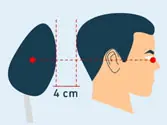
¿Cómo reduce los daños causados en un accidente, el reposacabezas activo?
How does an active head restraint reduce the harm caused in an accident?
- AAproximándose a la cabeza del ocupante, en caso de accidente, reduciendo la probabilidad de sufrir un latigazo cervical.By moving closer to the occupant's head in an accident, reducing the chance of whiplash.
- BAjustando su altura en relación a la estatura del ocupante de forma automatica.By automatically adjusting its height to the occupant's height.
- CAvisando al conductor si el reglaje no es el adecuado.By warning the driver if it is not adjusted correctly.
ExplanationAn active head restraint reduces the chance of whiplash by moving closer to the occupant's head in an accident, which reduces how much the head swings.
Si la pantalla o visor de nuestro casco está excesivamente rallado, ¿qué consecuencias puede tener para la conducción?
If the face shield or visor of your helmet is badly scratched, what consequences can it have for riding?
- AAfecta a la visibilidad del conductor si circula de noche pero no si circula durante el día.It affects the rider's visibility at night, but not during the day.
- BPodrá disminuir la propia visibilidad.It may reduce your own visibility.
- CEn el caso de que el conductor de la motocicleta sea deslumbrado, mejorará y favorecerá la correcta reacción del mismo sobre el control de la motocicleta.If the rider is dazzled, it will improve and help their reaction in controlling the motorcycle.
ExplanationThe correct answer is 'It may reduce your own visibility', because a badly scratched face shield or visor can make the rider's vision less clear. This can affect their ability to see objects and obstacles on the road clearly, which can increase the risk of accidents. It is important to keep the helmet's face shield or visor in good condition so that you can see as well as possible while riding.
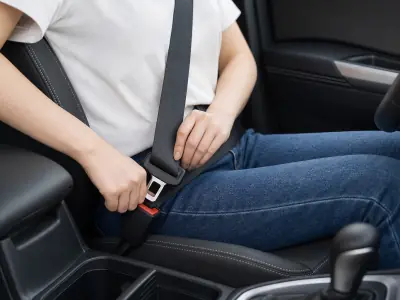
¿Cuál es la finalidad principal del cinturón de seguridad?
What is the main purpose of the seat belt?
- ADar sensación de seguridad y evitar las multasTo give a feeling of safety and avoid fines
- BRetener y proteger los cuerpos de los ocupantes del vehículo en caso de accidenteTo hold and protect the bodies of the vehicle's occupants in an accident
- CMejorar la atención del conductor en la conducciónTo improve the driver's attention while driving
ExplanationThe main purpose of the seat belt is to hold and protect the bodies of the vehicle's occupants in an accident, to stop them from being thrown out of the vehicle or against the windscreen or the steering wheel.
Si un niño mide 130 cm, ¿qué requisito debe cumplir para viajar en el coche?
If a child is 130 cm tall, what requirement must they meet to travel in the car?
- APuede usar solo el cinturón del adulto en cualquier asiento.They may use only the adult seat belt, in any seat.
- BDebe viajar obligatoriamente en el asiento del copiloto.They must travel in the front passenger seat.
- CUsar un sistema de retención infantil adecuado, generalmente en plaza trasera.Use a suitable child restraint system, usually in a rear seat.
ExplanationAt 130 cm (135 cm or less), they need a suitable child restraint system (child seat) and, as a general rule, travel in a rear seat.
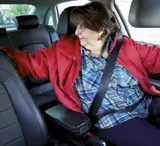
En la maniobra de marcha atrás, ¿está exento el conductor del uso del cinturón de seguridad?
When reversing, is the driver exempt from wearing a seat belt?
- ASí.Yes.
- BSí, pero solo en vías urbanas.Yes, but only in built-up areas.
- CNo, debe llevarlo abrochado siempre.No, they must always have it fastened.
ExplanationYes. Article 119 of the General Traffic Regulations (RGC) allows drivers to drive without a seat belt while reversing or parking, on any type of road. Once the manoeuvre is finished, you must fasten it again.
¿Cuál es la distancia correcta que debe haber entre el conductor y el volante para evitar el impacto directo del airbag contra la cara en caso de accidente?
What is the correct distance between the driver and the steering wheel to avoid the airbag hitting the face directly in an accident?
- ACualquiera , porque no hay posibilidad de impacto.Any, because there is no possibility of impact.
- BUnos 25 centímetros.About 25 centimetres.
- C9 centímetros.9 centimetres.
ExplanationSo that the front airbag does not hit your face directly when it opens, it is best to sit about 25 centimetres from the steering wheel, with your arms slightly bent. Sitting too close increases the risk of injury from the airbag itself.
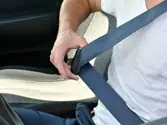
¿Dónde nos colocaremos la cinta torácica del cinturón de seguridad?
Where should you place the chest strap of the seat belt?
- ASobre el hombro.Over the shoulder.
- BSobre el cuello o sobre el pecho.Over the neck or over the chest.
- CSobre la clavícula.Over the collarbone.
ExplanationPlace the chest strap of the seat belt over the collarbone, halfway between the shoulder and the neck, and down across the middle of the chest. The lap strap must go over the hip bones, always below the abdomen.
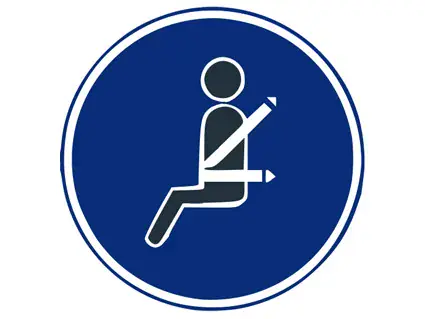
Si su ciclomotor lleva instalado cinturón de seguridad, ¿cuándo debe utilizarlo?
If your moped has a seat belt fitted, when must you use it?
- ASiempre, tanto por vías urbanas como interurbanas.Always, both in and outside built-up areas.
- BSólo por vías interurbanas y travesías.Only on roads outside built-up areas and on travesías.
- CSólo por vías interurbanas.Only on roads outside built-up areas.
ExplanationWearing a seat belt on a moped is compulsory both in and outside built-up areas. This is because the seat belt is an important safety feature that protects the rider and passengers in a collision or sudden braking. So the seat belt must always be used on a moped, whatever the type of road.
Si hay hielo en la calzada y su vehículo no tiene ABS, es preferible...
If there is ice on the carriageway and your vehicle does not have ABS, it is better to...
- Ausar el freno de manouse the handbrake
- Bno pisar el frenonot press the brake
- Cpisar el freno a fondo, junto con el embraguepress the brake fully, together with the clutch
ExplanationWhen there is ice on the carriageway, using the brake can make the wheels lock, especially in vehicles without ABS, which leads to loss of control. For this reason, it is better to avoid pressing the brake so that the vehicle stays stable. This advice comes from the principle of avoiding loss of tyre grip, which is implicit in the General Traffic Regulations (RGC) rules on driving in bad conditions.
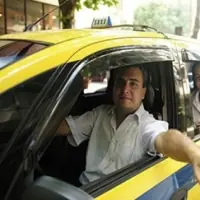
¿Puede un conductor de taxi conducir sin cinturón de seguridad en poblado?
May a taxi driver drive without a seat belt in a built-up area?
- ASí, podrá conducir sin cinturón en vías dentro y fuera de pobladoYes, they may drive without a seat belt both in and outside built-up areas
- BNo, estará obligado a llevar cinturón en todo tipo de víasNo, they must wear a seat belt on all types of road
- CSí, siempre que esté de servicioYes, as long as they are on duty
ExplanationUnder Article 119.2 of the General Traffic Regulations (RGC) (as worded by Royal Decree 518/2026), the seat belt exemption in built-up areas is limited to drivers and passengers of vehicles on emergency duty; taxi drivers on duty are no longer exempt. Like any driver, a taxi driver may only go without a seat belt while reversing or parking.
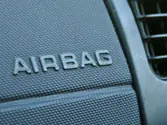
Mientras se realiza un estacionamiento, ¿es fácil que el dispositivo del airbag se dispare?
While parking, is the airbag likely to go off?
- AEste tipo de situaciones dependerán de la marca del vehículo.This depends on the make of the vehicle.
- BSí, el airbag puede dispararse en cualquier momento.Yes, the airbag can go off at any time.
- CNo, puesto que los sistemas de airbag son muy precisos a la hora de determinar cuándo se debe hinchar la bolsa de aire.No, because airbag systems are very precise in deciding when to inflate the bag.
ExplanationModern airbags are very precise in deciding when to inflate the bag, so it is very unlikely that an airbag will go off when it is not wanted, for example while parking.
Están obligados a utilizar casco, tanto si circulan por vías interurbanas como por vías urbanas y travesías…
Who must wear a helmet both on roads outside built-up areas and on urban roads and travesías (roads through towns)?
- ASolamente los conductores y pasajeros de motocicletas de dos ruedas sin sidecar.Only riders and passengers of two-wheeled motorcycles without a sidecar.
- BLos conductores y pasajeros de motocicletas de dos ruedas, con o sin sidecar.Riders and passengers of two-wheeled motorcycles, with or without a sidecar.
- CSolamente los conductores de motocicletas de dos ruedas sin sidecar.Only riders of two-wheeled motorcycles without a sidecar.
ExplanationUnder Article 118 of the General Traffic Regulations (RGC), motorcycle riders and passengers must wear an approved helmet on all types of road, whether or not the motorcycle has a sidecar. The only exemption is for vehicles with a protective structure and seat belts.
Para auxiliar a un accidentado, ¿es aconsejable quitarle el casco de protección?
To help an injured person, is it advisable to remove their protective helmet?
- ASí, porque puede tener heridas en la cabeza.Yes, because they may have head injuries.
- BSí, para facilitarle la respiración.Yes, to make it easier for them to breathe.
- CNo, salvo que se conozca perfectamente la técnica de auxilio.No, unless you know the first aid technique perfectly.
ExplanationNo, unless you know the first aid technique perfectly. Removing an injured motorcyclist's helmet can cause more harm if they have a spinal cord injury. So it is important to know how to do this safely.
¿Cuál es la utilidad del cinturón de seguridad?
What is the seat belt useful for?
- AEvitar los accidentes.Preventing accidents.
- BEvita que salgamos proyectados del vehículo en caso de accidente.It stops you from being thrown out of the vehicle in an accident.
- CDetener el vehículo en la colisión.Stopping the vehicle in a collision.
ExplanationThe seat belt does not prevent accidents, but it reduces their consequences. It stops the vehicle's occupants from being thrown out by the force of the impact.
All topics
- Definitions
- Documents and penalty points
- The driver's condition
- Duties of drivers and pedestrians
- Vehicle controls and equipment
- Vehicle lights and horn
- Traffic signs, markings and signals
- The road and its lanes
- Speed and distances
- Manoeuvres
- Right of way
- Carrying passengers and loads
- Driving safely in difficult conditions
- Vehicle mechanics and maintenance
- Road accidents and first aid
- Defensive and eco-driving
Independent app: not affiliated with or endorsed by the DGT (Spain's Directorate-General for Traffic) or the Ministry of the Interior. The official exam is booked with the DGT and taken at its test centres. The questions here are practice material; the DGT's official question bank is not public.
Basado en datos de la Agencia Estatal Boletín Oficial del Estado (https://www.boe.es). Textos consolidados de carácter meramente informativo. La AEBOE no patrocina ni respalda este sitio.
Parte de las preguntas procede de los tests de la revista «Tráfico y Seguridad Vial» de la DGT, reproducidos con indicación de la fuente.