
DGT test · 839 questions
Vehicle lights and horn · Page 16 of 17
Side, dipped, main-beam, fog and hazard lights, and the horn: when each one is compulsory and when it is forbidden.
Questions in this topic, with answers
839 questions, 50 per page, with the correct answer and the explanation. Page 16 of 17.
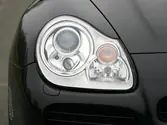
¿De qué color serán las luces de posición del vehículo?
What colour will the vehicle's sidelights be?
- ABlancas por delante y por detrás.White at the front and at the rear.
- BBlancas por delante y rojas por detrás, estando prohibidas las laterales.White at the front and red at the rear; side ones are prohibited.
- CBlancas por delante, rojas por detrás y opcionalmente si las lleva laterales, de color amarillo auto.White at the front, red at the rear and, optionally, if fitted, amber on the sides.
ExplanationSidelights must be white at the front and red at the rear. Side ones are optional, except on vehicles longer than 6 metres, where they are compulsory.
En condiciones de poca luz, el alumbrado...
In poor light, the vehicle's lights…
- Asolo permite ver peligros si se usan las luces largas.only let you see hazards if you use main beam.
- Bpermite percibir posibles peligros con tiempo suficiente para reaccionar.let you notice possible hazards in time to react.
- Cno resulta muy útil.are not very useful.
ExplanationIn poor light, suitable lights let you see and be seen in time, so you notice hazards with enough time to react. That is why Article 106 of the General Traffic Regulations requires you to switch on your lights when fog, rain or other conditions considerably reduce visibility.
¿Los remolques deben llevar luces de frenado?
Must trailers have brake lights?
- ANo.No.
- BNo están obligados, pero pueden llevarlas de forma opcional.They do not have to, but they may have them optionally.
- CSí.Yes.
ExplanationAll motor cars, trailers and semi-trailers must have at least two brake lights.
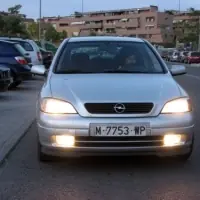
¿Se pueden utilizar la luz de corto alcance y la antiniebla trasera a la vez?
May you use dipped headlights and the rear fog light at the same time?
- ASí.Yes.
- BNoNo.
- CÚnicamente los ciclomotores podrán hacerloOnly mopeds may do so.
ExplanationArticle 15.3 of the General Vehicle Regulations (Reglamento General de Vehículos) states that the rear fog light may only be switched on when the main beam, dipped headlights or front fog lights are also on. So having dipped headlights and the rear fog light on at the same time is normal and correct.
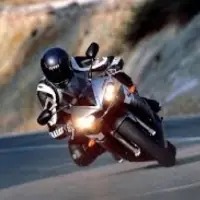
¿Están obligadas a llevar la luz de largo alcance las motocicletas con una cilindrada que no supere los 125 centímetros cúbicos?
Must motorcycles with an engine capacity of no more than 125 cubic centimetres have a main-beam light?
- ANo.No.
- BSí, una o dos luces.Yes, one or two lights.
- CSí, si tienen sidecar; en el caso contrario no.Yes, if they have a sidecar; otherwise not.
ExplanationArticle 16 of the General Vehicle Regulations requires every motorcycle, including those of up to 125 cm³, to have a main-beam (long-range) light. The technical regulations allow one or two to be fitted, whether or not the motorcycle has a sidecar.
¿Puede una motocicleta llevar instaladas luces antiniebla?
May a motorcycle have fog lights fitted?
- ASí, opcionalmente, tanto delante como detrás.Yes, optionally, both at the front and at the rear.
- BSí, pero sólo en la parte trasera.Yes, but only at the rear.
- CNo, las motocicletas no pueden llevar luces antiniebla.No, motorcycles may not have fog lights.
ExplanationAccording to the General Vehicle Regulations, any motorcycle may have fog lights both at the front and at the rear. This is specifically mentioned in the article saying that motorcycles may choose to fit front and rear fog lights, which lets riders improve their visibility and safety in fog or poor visibility. So the correct answer is yes, they may have fog lights optionally.
Si inmoviliza su vehículo durante el día en el arcén, ¿debe señalizarlo?
If your vehicle is immobilised on the hard shoulder during the day, must you signal it?
- ANo, ya que solo es obligatorio señalizar cuando el vehículo se encuentra en la calzada o es de noche.No, because you only have to signal when the vehicle is on the carriageway or it is night.
- BNo, porque el arcén es el lugar adecuado para la inmovilización.No, because the hard shoulder is the right place to stop.
- CSí, utilizando las luces de emergencia y el dispositivo de preseñalización.Yes, using the hazard warning lights and the hazard warning device.
ExplanationThe correct answer is to signal it with the hazard warning lights and the hazard warning device, because when a vehicle is immobilised on the road or on the hard shoulder, other road users must be warned to avoid possible accidents. To do this, switch on the hazard warning lights and place the V-16 hazard warning device. This must be done both by day and by night, because other drivers need to notice the stopped vehicle in good time. Although the hard shoulder is a safer place, you must still signal that you are immobilised.
Si circula por un túnel suficientemente iluminado, ¿qué alumbrado debe usar?
If you are driving through a well-lit tunnel, which lights must you use?
- ALas luces de posición y las de cruce (cortas).Sidelights and dipped headlights.
- BSolo las luces de posición.Only sidelights.
- CLas luces de carretera (largas).Main beam.
ExplanationUnder Article 101 of the General Traffic Regulations, in a well-lit tunnel you must have your sidelights and dipped headlights on at any time of day. Main beam is only for tunnels that are not lit well enough, when there is no risk of dazzling anyone.
Si estacionamos nuestro vehículo en una travesía insuficientemente iluminada, ¿qué luces dejaremos encendidas?
If we park our vehicle on an insufficiently lit travesía (stretch of road through a town), which lights will we leave on?
- ALas de posición o cruce indistintamente.The sidelights or dipped headlights, either one.
- BLas de emergencia.The hazard warning lights.
- CLas de posición, pudiendo sustituirse por las de estacionamiento.The sidelights, which may be replaced by the parking lights.
ExplanationIf we park on an insufficiently lit travesía we must leave the sidelights on. They may be replaced by the parking lights or, when the vehicle is parked parallel to the kerb, by the 2 sidelights on the side facing the centre of the carriageway.
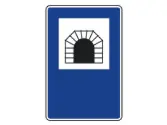
Si nos encontramos detenidos en el interior de un túnel por congestión del tráfico, ¿qué luces deberemos mantener encendidas?
If we are stopped inside a tunnel because of traffic congestion, which lights must we keep on?
- ALas de posición y las de corto alcance.The sidelights and dipped headlights.
- BLas de posición y las de emergencia.The sidelights and the hazard warning lights.
- CSólo las de posición.Only the sidelights.
ExplanationIf a vehicle is stopped inside a tunnel or underpass because of traffic: - The driver and passengers must not leave the vehicle. - The hazard warning lights must be switched on for a short time to warn drivers coming from behind. - The sidelights must be kept on. - The engine must be switched off. - The driver must keep as far as possible from the vehicle in front.
¿De qué color son las luces de frenado?
What colour are brake lights?
- ARojo.Red.
- BBlanco.White.
- CAmarillo.Yellow.
ExplanationBrake lights are red and brighter than the sidelights. They come on when you press the footbrake (service brake).
¿En qué situaciones debe llevar encendida la luz de cruce durante el día?
In which situations must you have your dipped headlights on during the day?
- ASi conduce una motocicleta, en cualquier vía, y si circula por un carril reversible o habilitado para circular en sentido contrario al habitual.If you are riding a motorcycle, on any road, and if you are driving in a reversible lane or a lane opened for traffic in the opposite direction to normal.
- BSólo al conducir una motocicleta o un ciclomotor cuando las condiciones meteorológicas reduzcan la visibilidad.Only when riding a motorcycle or moped, when weather conditions reduce visibility.
- CSiempre que circule por una carretera convencional de doble sentido.Whenever you are driving on a two-way conventional road.
ExplanationAccording to Article 104 of the RGC, during the day dipped headlights must be used by motorcycles on any road and by vehicles driving in a reversible lane, an additional lane or a lane opened in the opposite direction to normal; Article 41 extends this to the lanes next to them. Driving on a two-way road does not require it.
Es recomendable usar las luces de cruce durante el día.
It is advisable to use dipped headlights during the day.
- ANo, porque se consume mucha batería.No, because it uses a lot of battery.
- BSí, porque de esta manera no nos olvidaremos de encenderlas en los túneles.Yes, because that way we will not forget to switch them on in tunnels.
- CSí, porque aumenta la visibilidad del vehículo en todas las circunstancias.Yes, because it makes the vehicle more visible in all circumstances.
ExplanationUsing lights during the day makes the vehicle more visible in all circumstances. It has been calculated that this simple action could save more than 200 lives a year in our country.
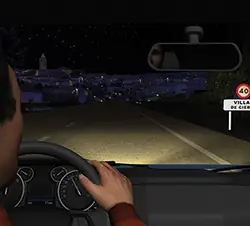
En una travesía, ¿está permitido circular con la luz de largo alcance encendida?
On a travesía (stretch of road through a town), are you allowed to drive with main beam on?
- ANo.No.
- BSí, en travesías insuficientemente iluminadas.Yes, on insufficiently lit travesías.
- CSólo si se circula a una velocidad superior a los 40 km/h.Only if driving at more than 40 km/h.
ExplanationMain beam is prohibited in built-up areas, and for these purposes a travesía counts as a built-up area: main beam dazzles other road users, so dipped headlights must be used whether or not the road is lit.
Circulando por una travesía insuficientemente iluminada, ¿qué alumbrado debemos utilizar?
When driving through an insufficiently lit travesía (stretch of road through a town), which lights must we use?
- AEl alumbrado de carretera.Main beam.
- BSolamente el alumbrado de posición.Only the sidelights.
- CEl alumbrado de corto alcance o de cruce.Dipped headlights.
ExplanationA travesía is a road inside a built-up area, so we will use dipped headlights, whether it is sufficiently or insufficiently lit.
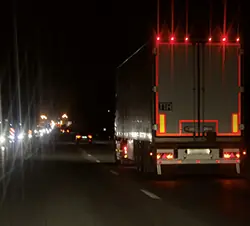
¿Qué es un catadióptrico?
What is a reflector?
- AUn dispositivo que refleja la luz procedente de una fuente luminosa.A device that reflects the light coming from a light source.
- BUna placa de matrícula reflectante.A reflective number plate.
- CUn dispositivo de alumbrado del vehículo.One of the vehicle's lights.
ExplanationA reflector does not give out its own light: it is a device that reflects the light it receives from other sources, such as another vehicle's headlights, to make the vehicle or trailer carrying it visible.
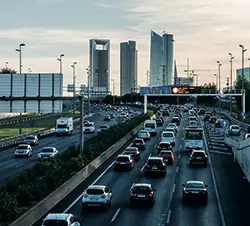
Debido a una retención de circulación tiene que reducir, de modo considerable, la velocidad de su vehículo. ¿Debe advertir, siempre que sea posible, a los vehículos que circulan detrás?
Because of a traffic hold-up you have to slow down considerably. Must you warn the vehicles behind you, whenever possible?
- ASí, con el empleo de la luz de emergencia.Yes, by using the hazard warning lights.
- BSí, con el empleo reiterado de las luces de frenado o moviendo el brazo alternativamente de arriba a abajo.Yes, by using the brake lights repeatedly or by moving your arm up and down.
- CNo, está prohibido hacer advertencias, ya que pueden crear confusión.No, giving warnings is prohibited because it can cause confusion.
ExplanationTo warn that you are slowing down considerably, the Regulations say you should use the brake lights repeatedly or, if that is not possible, move your arm up and down with short, quick movements.
Al circular con su turismo por un túnel suficientemente iluminado, ¿qué luces debe encender con su vehículo?
When driving your car through a sufficiently lit tunnel, which lights must you switch on?
- AÚnicamente las de posición.Only the sidelights.
- BLas de cruce y posición.Dipped headlights and sidelights.
- CLas de carretera o cruce, indistintamente.Main beam or dipped headlights, either one.
ExplanationAccording to Article 101 of the General Traffic Regulations, in sufficiently lit tunnels you must have the sidelights and dipped headlights on at any time. Main beam is only used in insufficiently lit tunnels and when there is no risk of dazzling.
Los dispositivos de alumbrado del vehículo…
The vehicle's lights…
- APermiten ver bien en condiciones de visibilidad reducida.let you see well in reduced visibility.
- BPermitan que seamos vistos por otros usuarios de la vía.let other road users see us.
- CPermiten ver mejor y ser vistos por los demás usuarios.let you see better and be seen by other road users.
ExplanationThe vehicle's lights let us see better and let other road users see us better.
Un turismo que circula desde la puesta hasta la salida del sol: ¿debe llevar las matrículas iluminadas?
A car is being driven between sunset and sunrise: must its number plates be lit?
- ASolo la delantera.Only the front one.
- BSolo la trasera.Only the rear one.
- CSí, tanto la delantera como la trasera.Yes, both front and rear.
ExplanationUnder the General Vehicle Regulations (Reglamento General de Vehículos, Article 16 and Annex X), motor vehicles must have a white light that lights up the rear number plate and comes on with the sidelights. The front plate has no lighting of its own.
Cuando los dispositivos de alumbrado del vehículo se encuentran bien reglados, ¿pueden producir deslumbramiento a los demás usuarios?
When the vehicle's lights are properly adjusted, can they dazzle other road users?
- ANo.No.
- BSí, el alumbrado de corto alcance o de cruce.Yes, the dipped headlights.
- CSí, el alumbrado de largo alcance.Yes, the main beam.
ExplanationEven when properly adjusted, the main beam lights a long way ahead and dazzles oncoming drivers or those ahead. That is why you must switch to the dipped headlights, which are designed to light the road without dazzling.
¿Puede encender la luz de largo alcance cuando hay niebla de noche?
May you switch on main beam in fog at night?
- ASí, en sustitución de la luz antiniebla.Yes, instead of the fog light.
- BNo, está prohibido.No, it is prohibited.
- CSí, aunque no es recomendable porque puede deslumbrar.Yes, although it is not advisable because it can dazzle.
ExplanationDrivers generally think that main beam lights up the road very well and dipped headlights only a short distance. If we switch on main beam in fog, it will only light up the fog and our vision will not improve; it may even dazzle us. That is why it is advisable to switch on dipped headlights or the appropriate fog light.
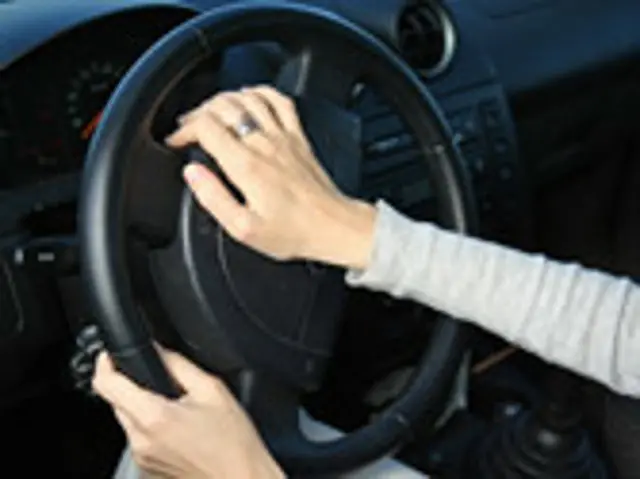
Si es necesario avisar a un ciclista con señales acústicas, ¿cómo debe hacerse?
If you need to warn a cyclist with the horn, how should you do it?
- AEstá prohibido hacer señales acústicas.Using the horn is prohibited.
- BA cierta distancia del ciclista, para evitar que se asuste.From some distance away, so the cyclist is not startled.
- CLo más cerca posible del ciclista, para asegurarnos de que nos oye.As close as possible to the cyclist, to make sure they hear us.
ExplanationThe correct use of the horn towards a cyclist is in Article 110 of the General Traffic Regulations. This article says the horn must only be used as an exception and always in situations where it is needed to avoid an accident. It is also important to warn from a suitable distance so as not to startle the cyclist, in line with the principle of looking after the safety and calm of all road users. So the correct answer is to warn from some distance away from the cyclist.
¿En caso de que un tractor agrícola lleve luces de largo alcance cuántas deben ser?
If an agricultural tractor has main beam headlights, how many must there be?
- ADos o cuatroTwo or four
- BUna situada en el plano central de la parte delanteraOne, in the centre of the front
- CTres, dos laterales y una centralThree, two at the sides and one in the centre
ExplanationAgricultural tractors may optionally have two or four white main beam headlights at the front edges of the vehicle. Main beam is never compulsory for this type of vehicle.
Ud. utilizará las luces de carretera de su turismo en...
You will use your car's main beam on...
- AVías interurbanas insuficientemente iluminadas.insufficiently lit roads outside built-up areas.
- BVías insuficientemente iluminadas, dentro o fuera de poblado.insufficiently lit roads, inside or outside built-up areas.
- CVías interurbanas suficiente o insuficientemente iluminadas.roads outside built-up areas, whether sufficiently or insufficiently lit.
ExplanationMain beam, also called high beam, is designed for use on roads outside built-up areas that are not sufficiently lit. This is because on these roads there is less traffic and visibility may be limited, so it is important to see and be seen. Using main beam in these conditions improves safety by giving a better view of the road and of other vehicles.
¿Qué alumbrado llevaremos en un túnel?
Which lights will we have on in a tunnel?
- AEl de posición.Sidelights.
- BEl de posición y corto alcance.Sidelights and dipped headlights.
- CEl de posición y largo alcance.Sidelights and main beam.
ExplanationInside a tunnel we will use at least the sidelights and dipped headlights. If the tunnel were insufficiently lit, we would use the sidelights with main beam, if the tunnel is outside a built-up area.
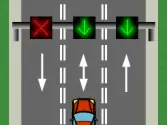
Durante el día, ¿qué alumbrado utilizaremos al circular por un carril reversible?
During the day, which lights will we use when driving in a reversible lane?
- ADurante el día no usaremos ningún alumbrado.During the day we will not use any lights.
- BUsaremos el alumbrado de posición junto al del corto alcance.We will use the sidelights together with dipped headlights.
- CDurante el día podremos utilizar únicamente el alumbrado de posición.During the day we may use only the sidelights.
ExplanationWhen driving in a reversible lane we will always use at least the sidelights together with dipped headlights, and the speed in that lane will be the general limit for the road.
Si durante el día una nube de polvo reduce sensiblemente la visibilidad, además de la luz de posición,¿qué alumbrado deberá utilizar, además de la luz de posición?
If during the day a cloud of dust greatly reduces visibility, which lights must you use as well as the sidelight?
- ALa luz antiniebla delantera o la luz de corto alcance.The front fog light or dipped headlights.
- BLa luz antiniebla delantera y trasera y la luz de corto alcance.The front and rear fog lights and dipped headlights.
- CLa luz antiniebla trasera y la luz de corto o largo alcance.The rear fog light and dipped headlights or main beam.
ExplanationVehicles driving in weather or environmental conditions that greatly reduce visibility must have the appropriate lights on. These may be dipped headlights or the front fog light, which may be used optionally in fog, heavy rain, snow, clouds of smoke or dust, or similar conditions. In especially bad weather or environmental conditions, the rear fog light must be used together with the sidelights and also with dipped headlights, main beam or the front fog light.
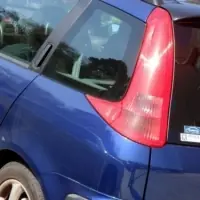
¿Cuál de éstas luces no son de posición e intensidad fija?
Which of these lights are not fixed in position and steady in intensity?
- ALuz antiniebla traseraThe rear fog light
- BLos indicadores de direcciónThe indicators
- CLuces de frenadoThe brake lights
ExplanationA vehicle's indicators are never fixed and steady, because the light they give out always flashes, that is, it switches between on and off. The brake lights and the rear fog light, on the other hand, are fixed and steady.
La luz de estacionamiento debe utilizarse...
Parking lights must be used...
- Aal estacionar en travesías insuficientemente iluminadas.when parking on insufficiently lit travesías (roads through towns).
- Ben las paradas en doble fila.when stopping in double file.
- Cen las detenciones en vías urbanas suficiente o insuficientemente iluminadas.when held up on urban roads, whether sufficiently or insufficiently lit.
ExplanationParking lights may be used between sunset and sunrise, or in weather or environmental conditions that greatly reduce visibility, to signal vehicles parked on the carriageway or hard shoulder of an insufficiently lit travesía. If our vehicle has no parking lights, we may leave on the sidelights on the side facing the carriageway, if the vehicle is parked parallel to the kerb.
Si Ud. circula con su turismo por un túnel insuficientemente iluminado, situado fuera de poblado, deberá llevar encendidas, además de las luces de posición...
If you are driving your car through an insufficiently lit tunnel outside built-up areas, in addition to the sidelights you must have on...
- ALas de corto alcance o cruce y, de forma opcional, las de largo alcance o carretera.The dipped headlights and, optionally, main beam.
- BLas de corto alcance o cruce, obligatoriamente.The dipped headlights, compulsorily.
- CLas de largo alcance o carretera, siempre que no deslumbre a otros usuarios.Main beam, as long as it does not dazzle other road users.
ExplanationIn an insufficiently lit tunnel, when driving at more than 40 km/h, you must have main beam on, except when it has to be replaced by dipped headlights so as not to dazzle other road users (Article 100.1 of the General Traffic Regulations).
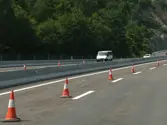
En un carril habilitado en un sentido contrario al habitual, ¿qué luces se deberán utilizar?
In a lane opened in the opposite direction to normal, which lights must be used?
- ALas de posición y corto alcance circulando de noche.Sidelights and dipped headlights, when driving at night.
- BLas de posición, tanto de día como de noche.Sidelights, both by day and by night.
- CLas de cruce o corto alcance, tanto de día como de noche.Dipped headlights, both by day and by night.
ExplanationIn these lanes dipped headlights must be used both by day and by night. It goes without saying that when using these lights we are also using the sidelights, because switching on dipped headlights automatically switches on the sidelights.
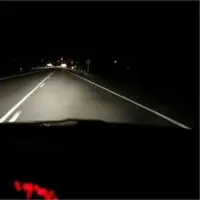
¿En qué vías debe encender las luces de carretera o largo alcance?
On which roads must you switch on main beam?
- AEn las vías urbanas, incluidas las travesías.On urban roads, including travesías.
- BEn las vías interurbanas insuficientemente iluminadas.On insufficiently lit roads outside built-up areas.
- CEn cualquier clase de vía, siempre que sea necesario.On any type of road, whenever necessary.
ExplanationAccording to Article 100 of the General Traffic Regulations, main beam is used at night outside built-up areas, on insufficiently lit roads and at more than 40 km/h, as long as it does not dazzle. It is not used on urban roads or travesías.
Al circular en condiciones de visibilidad reducida, debido a que una espesa niebla cubre la carretera, entre el ocaso y la salida del sol, si un turismo lleva encendidas la luz de posición además del alumbrado de niebla delantero y trasero, ¿lo está haciendo correctamente?
Between sunset and sunrise, visibility is reduced because dense fog covers the road. If a car has the sidelights on as well as the front and rear fog lights, is it doing the right thing?
- ANo, debería apagar la luz de niebla posterior.No, it should switch off the rear fog light.
- BNo, debería encender el alumbrado de corto alcance y apagar la luz de niebla posterior.No, it should switch on dipped headlights and switch off the rear fog light.
- CNo, debería encender el alumbrado de corto alcance, o de largo alcance según las circunstancias.No, it should switch on dipped headlights or main beam, depending on the circumstances.
ExplanationAt night, as well as the sidelights, you must have dipped headlights or main beam on, depending on the circumstances. Fog lights add to these lights but do not replace them. In dense fog, the rear fog light is allowed.
Al circular durante el día con nubes de polvo o humo, ¿qué luces deben utilizarse?
When driving during the day through clouds of dust or smoke, which lights must be used?
- ANinguna, por ser de día.None, because it is daytime.
- BLas de posición.The sidelights.
- CLas antiniebla delanteras o las de corto o largo alcance.The front fog lights, or the dipped headlights or main beam.
ExplanationAccording to Article 106 of the General Traffic Regulations, when clouds of smoke or dust significantly reduce visibility, lights must be switched on also during the day: the front fog light, or the dipped headlights or main beam, which may be used on their own or together.
Podrán emplearse las señales acústicas...
The horn may be used...
- APara advertir al conductor de otro vehículo el propósito de adelantarlo.to warn the driver of another vehicle that you intend to overtake them.
- BPara advertir al conductor de otro vehículo el propósito de adelantarlo, fuera de poblado.to warn the driver of another vehicle that you intend to overtake them, outside built-up areas.
- CPara advertir al conductor de otro vehículo el propósito de cambiar de carril.to warn the driver of another vehicle that you intend to change lanes.
ExplanationThe horn is allowed in the following cases: - To avoid a possible accident, for example on narrow roads with many bends. - Outside built-up areas, to warn the driver of another vehicle that you intend to overtake them. - To warn other road users that you are there when on an emergency call.
Con lluvia muy intensa, ¿podremos utilizar el alumbrado antiniebla delantero?
In very heavy rain, may we use the front fog light?
- ANo, solo lo utilizaremos con lluvia intensa.No, we will only use it in heavy rain.
- BSí, de forma aislada, sin el posterior antiniebla.Yes, on its own, without the rear fog light.
- CSí, y de forma obligatoria el posterior antiniebla.Yes, and the rear fog light as a requirement.
ExplanationIn very heavy rain the front fog light may be used optionally. In the same conditions, the rear fog light must be used.
¿Las bicicletas deberán llevar alguna luz al circular de noche?
Must bicycles have any lights when riding at night?
- ANo.No.
- BSí, únicamente una luz roja no triangular y no intermitente en la parte trasera.Yes, only a red, non-triangular, non-flashing light at the rear.
- CSí, una luz de posición de color blanco delante y otra de color rojo detrás no intermitentes.Yes, a white sidelight at the front and a red one at the rear, both non-flashing.
ExplanationWhen riding at night, bicycles must have a white sidelight at the front and a red sidelight at the rear. These lights must be steady, not flashing.
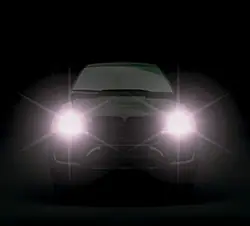
Circula con la luz de largo alcance y se acerca a un vehículo que circula a menor velocidad en su mismo sentido de la marcha; ¿debe sustituir la luz de carretera por la de corto alcance?
You are driving with main beam and approaching a slower vehicle going in the same direction. Must you switch from main beam to dipped headlights?
- ANo, ya que no es necesario ni aconsejable.No, because it is neither necessary nor advisable.
- BSí, para evitar la posibilidad de deslumbramiento a través del espejo retrovisor.Yes, to avoid dazzling the driver through the rear-view mirror.
- CSolo si no tiene intención de adelantar.Only if you do not intend to overtake.
ExplanationWhen approaching another vehicle from behind you must switch from main beam to dipped headlights: main beam would dazzle the driver in front through their mirrors.
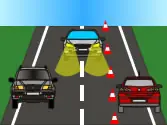
En esta vía solo el vehículo que circula por el carril adicional utiliza el alumbrado de corto alcance. ¿Los demás vehículos circulan correctamente?
On this road, only the vehicle in the additional lane is using dipped headlights. Are the other vehicles driving correctly?
- ANo, todos los vehículos que circulan por esta vía deben hacerlo usando el alumbrado de corto alcance.No, all vehicles on this road must use dipped headlights.
- BSí, solo debe usar el alumbrado de corto alcance el vehículo que circula por el carril adicional.Yes, only the vehicle in the additional lane must use dipped headlights.
- CNo, también deben usarlo los que circulan en su mismo sentido, pero no los del contrario.No, the vehicles travelling in the same direction must also use them, but not those in the opposite direction.
ExplanationBoth the vehicles in the additional lane (the central one) and the vehicles travelling on the hard shoulders must drive at a maximum speed of 80 km/h and a minimum of 60 km/h (or lower if set or signposted), and must use at least dipped headlights.

Las bicicletas, fuera de poblado, ¿deben llevar las luces encendidas?
Outside built-up areas, must bicycles have their lights on?
- ASí, solo de día.Yes, only during the day.
- BSí, de noche y en condiciones meteorológicas adversas.Yes, at night and in bad weather.
- CSi, siempre, de día y de noche.Yes, always, by day and by night.
ExplanationBicycles must use the appropriate lights when riding at night, both inside and outside built-up areas, in tunnels and in bad weather.
En caso de niebla espesa, ¿qué alumbrado antiniebla usaremos obligatoriamente?
In dense fog, which fog lights must we use?
- AEl delantero y el posterior.The front and the rear ones.
- BSolo será obligatorio el posterior.Only the rear one is compulsory.
- CNo será obligatorio ningún alumbrado antiniebla, son opcionales.No fog lights are compulsory; they are optional.
ExplanationThe rear fog light is compulsory in dense fog, but the front one is optional, although we will use at least dipped headlights.
Al conducir con niebla espesa, ¿es correcto llevar encendidas las luces de cruce y las luces antiniebla?
When driving in thick fog, is it correct to have your dipped headlights and fog lights on?
- ANo, porque debe encender las luces largas.No, because you must switch on main beam.
- BNo, porque las luces antiniebla delanteras se deben usar sin las luces de cruce.No, because the front fog lights must be used without dipped headlights.
- CSí.Yes.
ExplanationUnder Article 106.2 of the RGC, in thick fog you must use dipped headlights, the front fog light or main beam, and also the rear fog light. The front fog light is optional and may be used together with dipped headlights, so this combination is correct.
Si nuestro vehículo se queda inmovilizado en una autovía por circunstancias del tráfico, ¿qué alumbrado utilizaremos?
If our vehicle comes to a stop on an autovía (dual carriageway) because of the traffic, which lights will we use?
- ALas de posición.The sidelights.
- BLa luz de emergencia.The hazard warning lights.
- CLas luces de freno.The brake lights.
ExplanationWe must use the hazard warning lights both by day and by night when the vehicle is immobilised on an autopista (motorway) or autovía, even if it is because of the traffic.
En una vía interurbana con poca iluminación, un turismo circula a menos de 40 km/h. ¿Puede circular con las luces de cruce (faros bajos) encendidas?
On a poorly lit road outside built-up areas, a car is travelling at less than 40 km/h. Can it drive with dipped headlights on?
- ASí. Puede usar las luces largas cuando no deslumbren a otros conductores.Yes. It may use main beam when it will not dazzle other drivers.
- BNo. Está obligado a llevar las luces largas.No. It must use main beam.
- CNo.No.
ExplanationUnder Article 101.2 of the General Traffic Regulations, on poorly lit roads outside built-up areas, dipped headlights are compulsory if you are driving at 40 km/h or less and not using main beam. At that speed you may also use main beam if it does not dazzle anyone.
¿Puede Ud. utilizar advertencias luminosas de forma intermitente con las luces de corto alcance o largo alcance, o ambas alternativamente (ráfagas), para avisar a otros conductores de la vía de la presencia de agentes de tráfico?
May you flash your dipped headlights or main beam, or both alternately, to warn other drivers that traffic officers are on the road?
- ANo, porque está siempre prohibido hacer ráfagas con las luces del vehículo.No, because flashing the vehicle's lights is always prohibited.
- BNo, sólo se pueden hacer ráfagas para los casos establecidos reglamentariamente.No, you may only flash your lights in the cases set out in the rules.
- CSí, siempre que no se deslumbre a otros usuarios de la vía.Yes, as long as you do not dazzle other road users.
ExplanationThis is the correct answer because flashing your lights is only allowed in the cases set out in the rules. This means you may not use flashing lights or flash your headlights in general to warn other drivers, because it could cause confusion or dazzle other road users.
Cuando el alumbrado de cruce está reglado más bajo de lo correcto, el conductor puede ver...
When the dipped headlights are adjusted lower than they should be, the driver can see...
- AMás distancia.A longer distance.
- BMenos distancia.A shorter distance.
- CLa misma distancia.The same distance.
ExplanationIf the dipped headlights are adjusted lower than they should be, their beam hits the road closer to the vehicle and lights a shorter distance, so the driver sees obstacles later. If they are too high, on the other hand, they dazzle others.
¿Qué alumbrado debe encenderse al rebasar a otro vehículo en vía estrecha de noche?
Which lights must be on when passing another vehicle on a narrow road at night?
- ALuces de carreteraMain beam
- BLuces de cruce para no deslumbrarDipped headlights, so as not to dazzle
- CLuces antinieblaFog lights
ExplanationWhen meeting another vehicle at night, use dipped headlights.
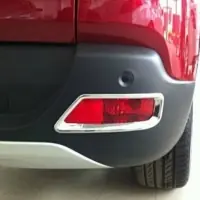
¿Cuantas luces antiniebla traseras estará obligado a llevar un turismo?
How many rear fog lights must a car have?
- ANinguna, la luz antiniebla trasera es opcionalNone, the rear fog light is optional
- BUna en el centro o dos en los bordes exterioresOne in the centre or two at the outer edges
- CUna única luz trasera de color amarillo autoA single amber rear light
ExplanationMotor cars must have one or two rear fog lights. If there is one, it goes on the left or in the centre; if there are two, at the outer edges.
En carretera, usted circula con las luces de cruce debido a una avería. ¿Qué debe hacer?
On the road, you are driving with dipped headlights because of a fault. What must you do?
- AConducir a una velocidad que le permita detener el vehículo dentro de la zona iluminada si fuera necesario.Drive at a speed that lets you stop the vehicle within the lit area if necessary.
- BCircular por el arcén solo si es necesario y de forma segura.Drive on the hard shoulder only if necessary and safe.
- CDetener el vehículo en el arcén si la avería impide continuar.Stop the vehicle on the hard shoulder if the fault stops you from continuing.
ExplanationWhen driving with dipped headlights because of a fault, the rules say you must drive at a speed that lets you stop the vehicle within the lit area if necessary. This is because dipped headlights have a limited range, and the driver must be able to react properly to any obstacle or unexpected situation. The General Traffic Regulations say that poor visibility or incorrect use of lights can lead to serious offences, which makes this precaution vital.
All topics
- Definitions
- Documents and penalty points
- The driver's condition
- Duties of drivers and pedestrians
- Vehicle safety devices
- Vehicle controls and equipment
- Traffic signs, markings and signals
- The road and its lanes
- Speed and distances
- Manoeuvres
- Right of way
- Carrying passengers and loads
- Driving safely in difficult conditions
- Vehicle mechanics and maintenance
- Road accidents and first aid
- Defensive and eco-driving
Independent app: not affiliated with or endorsed by the DGT (Spain's Directorate-General for Traffic) or the Ministry of the Interior. The official exam is booked with the DGT and taken at its test centres. The questions here are practice material; the DGT's official question bank is not public.
Basado en datos de la Agencia Estatal Boletín Oficial del Estado (https://www.boe.es). Textos consolidados de carácter meramente informativo. La AEBOE no patrocina ni respalda este sitio.
Parte de las preguntas procede de los tests de la revista «Tráfico y Seguridad Vial» de la DGT, reproducidos con indicación de la fuente.