
DGT test · 839 questions
Vehicle lights and horn · Page 12 of 17
Side, dipped, main-beam, fog and hazard lights, and the horn: when each one is compulsory and when it is forbidden.
Questions in this topic, with answers
839 questions, 50 per page, with the correct answer and the explanation. Page 12 of 17.
Circulando por la autopista, prevé que su vehículo se va a quedar inmovilizado por circunstancias del tráfico. ¿Cómo debe avisarlo?
Driving on the motorway (autopista), you expect traffic conditions to bring your vehicle to a standstill. How must you warn others?
- AUsando la luz antiniebla trasera y las luces de emergencia.By using the rear fog light and the hazard warning lights.
- BMediante el uso repetido de las luces de freno.By using the brake lights repeatedly.
- CEncendiendo las luces de posición, incluso de día.By switching on the sidelights, even in daytime.
ExplanationUnder Article 109.2.c of the General Traffic Regulations (RGC), the intention to stop the vehicle or brake considerably, even when traffic conditions force you to, is signalled by using the brake lights repeatedly. Once the vehicle is at a standstill on a motorway or dual carriageway (autovía), it must also be signalled with the hazard warning lights.
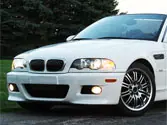
Durante la noche, ¿con qué otro alumbrado utilizaremos la luz delantera antiniebla?
At night, with which other lights will we use the front fog light?
- ACon el de posición.With the sidelights.
- BCon el de cruce como mínimo.With at least dipped headlights.
- CCon el de largo alcance únicamente.Only with main beam.
ExplanationAccording to Article 106 of the General Traffic Regulations, the front fog light may be used on its own or together with dipped headlights and even main beam. At night it is enough to use it with the sidelights, which are always compulsory; you do not have to add dipped headlights.
¿De qué color deben ser las luces de posición delanteras de los tractores agrícolas o motocultores?
What colour must the front sidelights of agricultural tractors or single-axle tractors be?
- ABlancoWhite
- BRojoRed
- CAmarilloYellow
ExplanationAgricultural tractors or single-axle tractors may have 2 or 4 front sidelights, which must always be white.
La luz antiniebla trasera debe utilizarse cuando...
The rear fog light must be used in the case of...
- Auna frenada bruscasudden braking.
- Bheladas durante la nochefrost at night.
- Ccuando hay nubes densas de humothick clouds of smoke.
ExplanationAccording to the General Traffic Regulations (Article 106.2), the rear fog light must only be used when weather or environmental conditions are especially bad, such as dense fog, very heavy rain, heavy snowfall or thick clouds of dust or smoke. Sudden braking or frost at night do not require this light. So the correct answer is thick clouds of smoke.
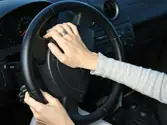
¿En qué vías está permitido utilizar el claxon para evitar un accidente?
On which roads are you allowed to use the horn to avoid an accident?
- ASolo en curvas muy estrechas para advertir al vehículo que circula en sentido contrario.Only on very tight bends, to warn the vehicle coming the other way.
- BEn todas las vías para evitar accidentes.On all roads, to avoid accidents.
- CSolo en las vías situadas fuera de poblado.Only on roads outside built-up areas.
ExplanationThe horn may be used on all types of road to avoid an accident.
Conduce un turismo fuera de poblado durante el día en condiciones meteorológicas que disminuyen sensiblemente la visibilidad. Además del alumbrado de posición, ¿qué alumbrado debe utilizar?
You are driving a car outside built-up areas during the day in weather conditions that noticeably reduce visibility. Apart from the sidelights, which lights must you use?
- ALa luz de cruce y la antiniebla delantera.Dipped headlights and the front fog light.
- BLa luz de cruce o la de carretera o la delantera antiniebla, si la tiene instalada.Dipped headlights, main beam or the front fog light, if fitted.
- CLa luz delantera y posterior antiniebla.The front and rear fog lights.
ExplanationUnder Article 106 of the General Traffic Regulations, when weather conditions noticeably reduce visibility you must use, also during the day, the front fog light or the dipped headlights or main beam. The rear fog light is only added in especially unfavourable conditions.
Si aún no ha salido el sol pero hay buena visibilidad, ¿qué luces debe usar en una vía interurbana?
If the sun has not yet risen but visibility is good, which lights must you use on a road outside built-up areas?
- ALuces de posición y de cruce.Sidelights and dipped headlights.
- BNinguno.None.
- CSolo las luces de posición.Only the sidelights.
ExplanationThe General Traffic Regulations say that between sunset and sunrise, or in poor visibility, vehicles must use the appropriate lights. On roads outside built-up areas with good visibility but before sunrise, you must use the sidelights and dipped headlights (Article 101). This makes sure other drivers can see the vehicle. So the correct answer is that the driver must use both types of light to comply with the rules.
Circulando por una vía interurbana insuficientemente iluminada, ¿qué alumbrado utilizaremos?
When driving on an insufficiently lit road outside built-up areas, which lights will we use?
- APosición y corto alcance.Sidelights and dipped headlights.
- BPosición y largo alcance.Sidelights and main beam.
- CPosición y antiniebla delantero.Sidelights and the front fog light.
ExplanationWhen we drive on an insufficiently lit road outside built-up areas, we must use main beam, always together with the sidelights, except when we could dazzle someone; then we will switch to dipped headlights.
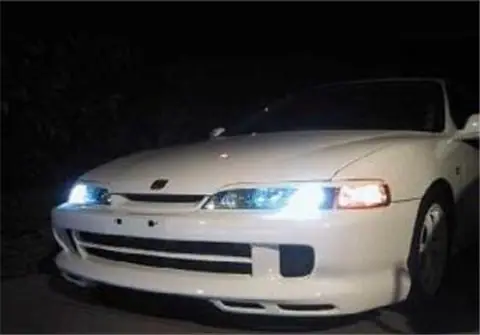
Las lámparas de xenón...
Xenon bulbs...
- Aaumentan la fatiga ocular del conductor.increase the driver's eye strain.
- Bmejoran la iluminación de la vía y reducen la fatiga ocular del conductor.light the road better and reduce the driver's eye strain.
- Ciluminan peor la vía, pero reducen la fatiga ocular del conductor.light the road less well, but reduce the driver's eye strain.
ExplanationXenon or bi-xenon bulbs are smaller and give a light closer to natural light. They light the road better, reduce eye strain and the chance of dazzling other drivers, and also use less power.
Debido a un atasco, tiene que reducir mucho la velocidad de su vehículo. ¿Debe avisar, siempre que sea posible, a los vehículos que le siguen?
Because of a traffic jam, you have to slow down a lot. Must you warn the vehicles behind you, whenever possible?
- ASí, con las luces de emergencia.Yes, with the hazard warning lights.
- BSí, con el empleo reiterado de las luces de frenado o moviendo el brazo alternativamente de arriba a abajo.Yes, by using the brake lights repeatedly or by moving your arm up and down.
- CNo, está prohibido dar avisos, ya que pueden crear confusión.No, giving warnings is prohibited because it can cause confusion.
ExplanationThe General Traffic Regulations, in Articles 53.1 and 109, require the driver to warn others when they must slow down a lot, by using the brake lights repeatedly or by moving the arm up and down as a hand signal. This warning avoids collisions with the vehicles behind. Hazard warning lights are not used for this.

Si aún no ha salido el sol pero existe buena visibilidad, ¿qué alumbrado debe utilizar si circula por una vía interurbana?
If the sun has not yet risen but visibility is good, which lights must you use if you are driving on a road outside built-up areas?
- AEl alumbrado de posición y el de corto alcance.The sidelights and dipped headlights.
- BNinguno.None.
- CEl alumbrado de posición, únicamente.Only the sidelights.
ExplanationThe duty to use lights applies between sunset and sunrise, however light it is: before sunrise, on a road outside built-up areas, you must have the sidelights and dipped headlights on.
La luz de carretera debe cambiarse por la luz de cruce...
Main beam must be switched to dipped headlights...
- Acuando se circule por una autopista o autovía.when driving on a motorway (autopista) or dual carriageway (autovía).
- Bcuando exista la posibilidad de deslumbrar a otros usuarios de la vía.when there is a chance of dazzling other road users.
- Ccuando haya niebla.when there is fog.
ExplanationUnder Article 102.1 of the General Traffic Regulations, main beam must be switched to dipped headlights as soon as there is a chance of dazzling other road users, especially those coming the other way. It does not depend on the type of road, and in fog you use the lights intended for it.
Durante el día, en condiciones de luz suficiente, se circulará con el alumbrado de corto alcance...
During the day, in good light, you will drive with dipped headlights...
- Aen un carril reversible.in a reversible lane.
- Ben carreteras con curvas muy estrechas.on roads with very sharp bends.
- Cen los puentes.on bridges.
ExplanationWhen we drive in a reversible lane, inside or outside built-up areas, we must use at least dipped headlights.
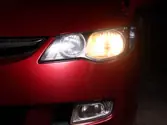
Circula en situación de emergencia de noche por una carretera convencional insuficientemente iluminada a una velocidad inferior a 40km/h y lo hace con el alumbrado de corto alcance, ¿es correcto?
In an emergency you are driving at night on a poorly lit conventional road at less than 40 km/h, with dipped headlights on. Is this correct?
- ANo, debo llevar las luces de carretera.No, I must use main beam.
- BSí, porque no hay ningún otro vehículo en la vía.Yes, because there are no other vehicles on the road.
- CSí.Yes.
ExplanationUnder Article 101.2.b of the General Traffic Regulations (RGC), on poorly lit roads outside built-up areas you may drive with dipped headlights when travelling at 40 km/h or less and not using main beam. Main beam is only compulsory above 40 km/h (Article 100.1).
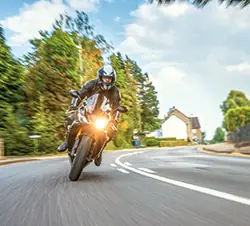
Durante el día, las motocicletas están obligadas a llevar encendida la luz de cruce...
During the day, motorcycles must have the dipped headlight on...
- Acuando circulen por cualquier tipo de vía.when riding on any type of road.
- Bcuando circulen por vías interurbanas, solamente.only when riding on roads outside built-up areas.
- Ccuando las condiciones climatológicas sean adversas, solamente.only when the weather is bad.
ExplanationMotorcycles must always ride with the dipped headlight on, also during the day and on any road: because they are narrow vehicles, this light makes them much more visible to other road users.
¿Cuándo usaremos la luz antiniebla trasera?
When will we use the rear fog light?
- ASiempre que lo consideremos conveniente.Whenever we think it is appropriate.
- BCuando las circunstancias meteorológicas sean especialmente desfavorables.When weather conditions are especially bad.
- CEn caso de lluvia o nieve.In rain or snow.
ExplanationWe will use the rear fog light in very heavy rain, heavy snowfall, dense fog or thick clouds of dust or smoke.
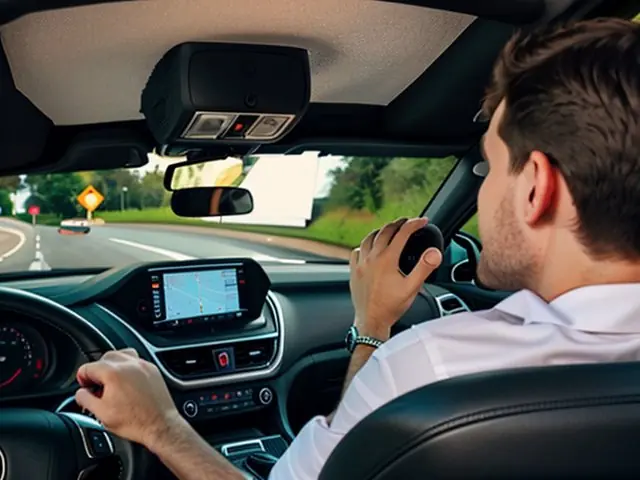
Las advertencias acústicas se pueden utilizar...
The horn may be used...
- Apara advertir el propósito de adelantar únicamente dentro de poblado.to warn that you intend to overtake, only inside built-up areas.
- Ben vías estrechas con muchas curvas.on narrow roads with many bends.
- Cen vías anchas con pocas curvas.on wide roads with few bends.
ExplanationThe horn may only be used as an exception: to avoid a possible accident, especially on narrow roads with many bends; outside built-up areas, to warn that you intend to overtake; or to warn other road users that you are there when on an emergency call.
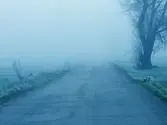
Con niebla densa, ¿puede un turismo circular únicamente con los alumbrados de posición y cruce?
In dense fog, may a car drive with only the sidelights and dipped headlights?
- ASíYes
- BNo, debe utilizar también la luz antiniebla trasera.No, it must also use the rear fog light.
- CNo, debe encender obligatoriamente el alumbrado el alumbrado delantero y trasero de niebla.No, it must switch on both the front and the rear fog lights.
ExplanationWhen driving in fog, visibility is reduced, so you must switch on your lights. In dense fog, you must use the sidelights together with dipped headlights and the rear fog light.
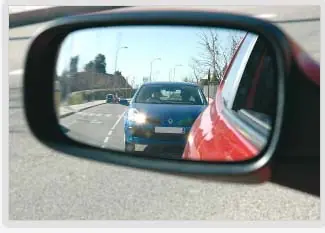
Dentro de poblado, ¿se pueden utilizar los alumbrados de corto o largo alcance alternativamente a intervalos muy cortos?
Inside a built-up area, may you switch between dipped headlights and main beam at very short intervals?
- ANo, está prohibido.No, it is prohibited.
- BDentro de poblado en ningún caso, fuera sí.Never inside a built-up area, but outside it you may.
- CSí, para evitar un posible accidente.Yes, to avoid a possible accident.
ExplanationMain beam may be used by day and by night as warning flashes, at very short intervals and always without dazzling anyone: to avoid a possible accident, when on an emergency call, on narrow roads with many bends and to warn that you are going to overtake.
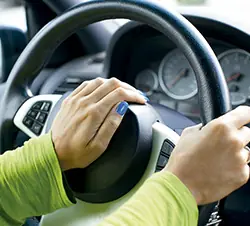
En una vía urbana, ¿debe tocar el claxon para advertir que va a realizar un adelantamiento?
On an urban road, must you sound the horn to warn that you are going to overtake?
- ASí, salvo que se encuentre cerca de un hospital.Yes, unless you are near a hospital.
- BSí, siempre que sea a intervalos cortos y el sonido no sea estridente.Yes, as long as it is at short intervals and the sound is not shrill.
- CNo.No.
ExplanationAccording to Article 110 of the General Traffic Regulations, the horn may be used to warn that you are overtaking only outside built-up areas. On an urban road it is only allowed to avoid a possible accident or on an emergency call, and never without reason.
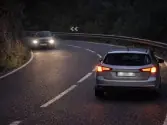
Al cruzarse dos vehículos en una curva cerrada, ¿qué vehículo debe cambiar primero las luces de carretera por las de cruce?
When two vehicles pass each other on a sharp bend, which vehicle must switch from main beam to dipped headlights first?
- AEl vehículo que toma la curva a su derecha, será el primero en sustituir el alumbrado de carretera por el de cruce.The vehicle taking the bend to its right will be the first to switch from main beam to dipped headlights.
- BEl vehículo que toma la curva a su izquierda, será el primero en sustituir el alumbrado de carretera por el de cruce.The vehicle taking the bend to its left will be the first to switch from main beam to dipped headlights.
- CNo importa cuál de los dos sea el primero en sustituir el alumbrado de carretera por el de cruce.It does not matter which of the two is the first to switch from main beam to dipped headlights.
ExplanationBoth vehicles must switch from main beam to dipped headlights so as not to dazzle each other. However, the vehicle taking the bend to the right must do it first, because, due to the shape of the bend, its headlight beam reaches the oncoming vehicle sooner. Switching lights at the right time, depending on each vehicle's position, avoids dazzling and makes passing safer.
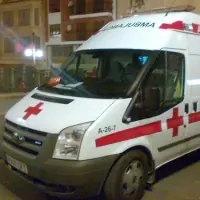
¿A cuantos metros se deben ver las luces de un vehículo prioritario?
From how many metres away must the lights of a priority vehicle be visible?
- AA 10 metros10 metres
- BA 50 metros50 metres
- CA 100 metros100 metres
ExplanationThe lights of a priority vehicle consist of one or two devices at the front of the vehicle that give a flashing or rotating light. The device must be visible from at least 50 metres in all directions, and it may optionally be placed at the rearmost part of the vehicle's roof.
Circulando de día por un carril reversible, ¿utilizaremos algún tipo de alumbrado?
When driving in a reversible lane during the day, will we use any lights?
- ANo.No.
- BSí, el alumbrado de cruce.Yes, dipped headlights.
- CSí, el alumbrado de carretera.Yes, main beam.
ExplanationWhen driving in a reversible lane, by day or by night, we will use dipped headlights.
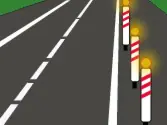
Las luces intermitentes de la imagen, ¿qué indican?
What do the flashing lights in the picture mean?
- AUn carril para ciclos y ciclomotores.A lane for cycles and mopeds.
- BQue no se puede pasar a través suyo.That you may not cross them.
- CSeñaliza un carril para vehículos lentos.They mark a lane for slow vehicles.
ExplanationSteady or flashing amber lights prohibit crossing the imaginary line that joins them.
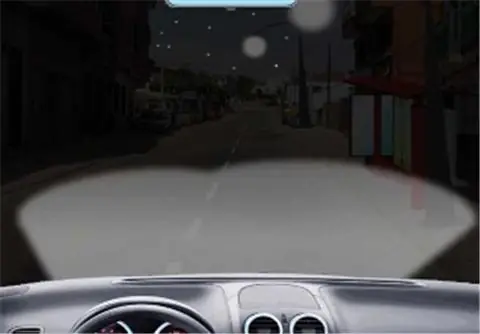
En una travesía insuficientemente iluminada, ¿es obligatorio llevar encendido el alumbrado de corto alcance?
On an insufficiently lit travesía (stretch of road through a town), must you have dipped headlights on?
- ASolo si hay peatones en las proximidades de la calzada.Only if there are pedestrians near the carriageway.
- BSí.Yes.
- CNo, debe usarse el alumbrado de largo alcance.No, you must use main beam.
ExplanationA travesía is the stretch of road that goes through a town. According to Article 101 of the General Traffic Regulations, in a built-up area on an insufficiently lit road you must have dipped headlights on, whether or not there are pedestrians. Main beam is only for roads outside built-up areas.
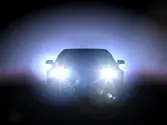
Circulando por una travesía insuficientemente iluminada, ¿podrá utilizar la luz de largo alcance?
When driving through an insufficiently lit travesía (stretch of road through a town), may you use main beam?
- ASí, si no hay peligro de deslumbrar a otros usuarios.Yes, if there is no danger of dazzling other road users.
- BNo, porque está prohibido.No, because it is prohibited.
- CSí, en todo caso.Yes, in all cases.
ExplanationA travesía is inside a built-up area, and when driving inside a built-up area main beam is prohibited in all cases, so we will always use dipped headlights.
Circulando durante una fuerte nevada, ¿qué alumbrado debemos utilizar?
When driving in heavy snowfall, which lights must we use?
- AAlumbrado de cruce o carretera.Dipped headlights or main beam.
- BAntiniebla delantera y el trasero sólo si se posee.The front fog light, and the rear one only if the vehicle has it.
- CObligatoriamente el posterior y el delantero si se posee.The rear fog light, as a requirement, and the front one if the vehicle has it.
ExplanationWhen driving in heavy snowfall you must use the rear fog light; the front fog light is always optional.
¿Al circular por un paso inferior bien iluminado, es necesario encender las luces?
When driving through a well-lit underpass, do you need to switch on your lights?
- ASí, las luces de posición, para advertir a los demás usuarios de mi presencia.Yes, the sidelights, to warn other road users that I am there.
- BNo, porque la iluminación de la vía es suficiente.No, because the road lighting is enough.
- CSí, las luces de posición y las de corto alcance.Yes, the sidelights and dipped headlights.
ExplanationAccording to Article 101 of the General Traffic Regulations, every motor vehicle must drive with dipped headlights on in tunnels and underpasses, even if they are lit. This is because the road lighting may not be enough to see properly and to warn other road users that the vehicle is there. So the correct answer is to switch on the sidelights and dipped headlights.
¿Qué alumbrado deberemos llevar circulando por una vía urbana con lluvia intensa?
Which lights must we have on when driving on an urban road in heavy rain?
- AAlumbrado de posición.Sidelights.
- BAlumbrado de corto alcance.Dipped headlights.
- CAlumbrado de largo alcance.Main beam.
ExplanationIn heavy rain you must switch on your lights, also during the day. On an urban road, the right choice is dipped headlights, which can be combined with the front fog light. Sidelights alone are not enough, and main beam would dazzle people in a built-up area.
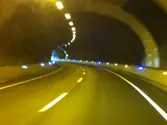
Al entrar en un túnel suficientemente iluminado y situado fuera de una población, ¿qué alumbrado debe encender?
When entering a sufficiently lit tunnel outside a town, which lights must you switch on?
- ASólo el alumbrado de posición.Only the sidelights.
- BEl alumbrado de posición y la luz antiniebla delantero.The sidelights and the front fog light.
- CEl alumbrado de posición y el de cruce.The sidelights and dipped headlights.
ExplanationEvery motor vehicle and moped driving between sunset and sunrise on sufficiently lit roads, inside or outside built-up areas, or at any time of day through sufficiently lit tunnels and other stretches of road covered by the ‘tunnel’ sign, must have dipped headlights on as well as the sidelights. The same lights must also be on in built-up areas when the road is insufficiently lit.
El conductor de un vehículo puede utilizar las señales acústicas para advertir su presencia a otros usuarios...
The driver of a vehicle may use the horn to warn other road users that they are there...
- Asólo en vías urbanas.only on urban roads.
- Búnicamente en vías interurbanas.only on roads outside built-up areas.
- Ctanto en vías urbanas como en vías interurbanas.both on urban roads and on roads outside built-up areas.
ExplanationThe horn may only be used as an exception: to avoid a possible accident, outside built-up areas to warn that you intend to overtake, or to warn other road users that you are there when on an emergency call.
Durante el día, con niebla densa o lluvia intensa, ¿se puede circular con las luces largas encendidas?
During the day, in dense fog or heavy rain, may you drive with main beam on?
- ANo, las luces largas solo pueden encenderse por la noche.No, main beam may only be switched on at night.
- BSí, pero se recomienda usar las luces de cruce.Yes, but it is recommended to use dipped headlights.
- CNo, solo se pueden encender las luces de cruce.No, only dipped headlights may be switched on.
ExplanationDuring the day, in dense fog or heavy rain, main beam is allowed, but it is advisable to use dipped headlights as well, to improve visibility and avoid dazzling other drivers. The rules say that in reduced visibility, using lights (including main beam) is compulsory for road safety. So the correct answer is that you may drive with main beam on, but it is recommended to switch on dipped headlights.
Circulando con lluvia muy intensa, ¿podemos utilizar la luz antiniebla trasera?
When driving in very heavy rain, may we use the rear fog light?
- ANo, solo se puede utilizar con niebla densa o fuerte nevada.No, it may only be used in dense fog or heavy snowfall.
- BSí, se usará de forma obligatoria.Yes, it must be used.
- CSí, se usará de forma opcional.Yes, it may be used optionally.
ExplanationIn very heavy rain you must use the rear fog light. The front fog light may be used optionally.
¿En que momento del día se deberá utilizar la luz de gálibo?
At what time of day must end-outline marker lights be used?
- AAl mediodíaAt midday
- BDurante la tarde y las horas de máximo solIn the afternoon and during the sunniest hours
- CEntre el ocaso y la salida del solBetween sunset and sunrise
ExplanationEnd-outline marker lights must be used by vehicles more than 2.10 metres wide. They must have them on between sunset and sunrise, and when going through tunnels or underpasses.
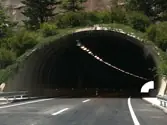
¿Qué alumbrado usaremos para circular por este túnel?
Which lights will we use to drive through this tunnel?
- AComo no hay señal que lo indique no usaremos ningún alumbrado.As there is no sign telling us to, we will not use any lights.
- BUsaremos como mínimo la luz de corto alcance o de cruce.We will use at least dipped headlights.
- CYa que percibimos la salida del túnel, usaremos solamente la luz de posición.As we can see the end of the tunnel, we will only use the sidelights.
ExplanationYou cannot drive with sidelights alone. You always need sidelights plus some other light with them. Dipped headlights are for lighting the road in front of the vehicle at night without dazzling or bothering drivers coming the other way or other road users. They must be on in all motor vehicles and mopeds driving between sunset and sunrise on sufficiently lit roads, inside or outside built-up areas, or at any time of day through sufficiently lit tunnels and other stretches of road covered by the ‘tunnel’ sign. These vehicles must have dipped headlights on as well as the sidelights. The same lights must also be on in built-up areas when the road is insufficiently lit.
¿El alumbrado de su vehículo forma parte de algún sistema de seguridad?
Are your vehicle's lights part of a safety system?
- ASolo las luces de emergencia.Only the hazard warning lights.
- BNo, no es un sistema de seguridad pasiva.No, they are not a passive safety system.
- CSí, es un sistema de seguridad activa.Yes, they are an active safety system.
ExplanationLights are an active safety feature: they help to prevent accidents because they let you see the road and let others see the vehicle and what it is doing. That is why the General Traffic Regulations require you to use them at night, in tunnels (Article 98) and when visibility is reduced (Article 106).
¿Pueden las motocicletas llevar luces antiniebla delanteras?
May motorcycles have front fog lights?
- ASí, todas las motocicletas, con o sin sidecar.Yes, all motorcycles, with or without a sidecar.
- BSí, pero solo las motocicletas con sidecar.Yes, but only motorcycles with a sidecar.
- CNo, las motocicletas no pueden llevar luces antiniebla.No, motorcycles may not have fog lights.
ExplanationAccording to Spain's General Vehicle Regulations, all motorcycles are allowed to have a front fog light. This means it can be fitted on motorcycles whether or not they have a sidecar. The relevant sections of the regulations say that any type of motorcycle may have this light to improve visibility in fog, which is essential for road safety.
¿Se podrá utilizar el alumbrado antiniebla trasero en caso de una ligera nevada?
Can you use the rear fog light in light snowfall?
- ASí.Yes.
- BSí, pero solo durante la noche.Yes, but only at night.
- CNo.No.
ExplanationThe rear fog light may only be used in particularly unfavourable conditions: thick fog, very heavy rain, heavy snowfall or dense clouds of smoke or dust. It is not allowed in light snowfall, because it would disturb the drivers travelling behind you.
¿Cuál es la función del alumbrado como elemento de seguridad activa?
What is the role of lighting as an active safety feature?
- ADeslumbrar con facilidad.To dazzle easily.
- BPermitir ver y ser vistos.To let you see and be seen.
- CIndicar una situación de emergencia.To show an emergency situation.
ExplanationActive safety systems help the driver reduce the chance of an accident happening. They include, for example, lighting, tyres, brakes, suspension and steering. As an active safety feature, the vehicle's lighting system is designed for two very important jobs: to see and to be seen.
¿Está permitido conducir en poblado con las luces largas encendidas?
Are you allowed to drive in a built-up area with main beam on?
- ANo.No.
- BSí, siempre que no deslumbre a nadie.Yes, as long as you do not dazzle anyone.
- CSí, cuando la vía esté mal iluminada.Yes, when the road is poorly lit.
ExplanationMain beam is only intended for use outside built-up areas (Article 100.1 of the General Traffic Regulations). In built-up areas you use dipped headlights, also when the road is not well enough lit (Article 101.1), even if there is nobody to dazzle.
La luz de posición de los vehículos, ¿qué indica?
What do a vehicle's sidelights show?
- AEl lugar que ocupa en la calzada y la anchura del vehículo.Where it is on the carriageway and how wide the vehicle is.
- BQue el vehículo está parado.That the vehicle is stopped.
- CQue el vehículo está circulando.That the vehicle is moving.
ExplanationThe job of the sidelights is to show other road users that our vehicle is there and how wide it is.
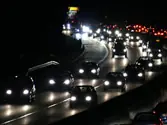
¿En qué vías utilizaremos las luces de corto alcance entre el ocaso y la salida del sol?
On which roads will we use dipped headlights between sunset and sunrise?
- ASólo en las vías urbanas suficientemente iluminadas.Only on sufficiently lit urban roads.
- BTanto en vías urbanas como interurbanas suficientemente iluminadas.On sufficiently lit roads, both urban and outside built-up areas.
- CSólo en las vías interurbanas insuficientemente iluminadas.Only on insufficiently lit roads outside built-up areas.
ExplanationDipped headlights are for lighting the road in front of the vehicle at night without dazzling or bothering drivers coming the other way or other road users. They must be on in all motor vehicles and mopeds driving between sunset and sunrise on sufficiently lit roads, inside or outside built-up areas, or at any time of day through sufficiently lit tunnels and other stretches of road covered by the ‘tunnel’ sign. These vehicles must have dipped headlights on as well as the sidelights. The same lights must also be on in built-up areas when the road is insufficiently lit. Dipped headlights must also be used in any of these cases: - When the vehicle has no main beam and main beam would be needed. - When driving at no more than 40 kilometres per hour and main beam is not being used. - When you could dazzle other road users. - On any type of road, when visibility is much lower than normal, such as in fog, heavy rain, snowfall, clouds of smoke or dust or any similar situation.
Una motocicleta sin sidecar, ¿cuántas luces de corto alcance debe llevar instaladas?
How many dipped headlights must a motorcycle without a sidecar have fitted?
- ADos, obligatoriamente, una delante y otra detrás.Two, compulsorily, one at the front and one at the rear.
- BSolo una delante.Only one, at the front.
- CUna o dos delante.One or two, at the front.
ExplanationA dipped headlight is compulsory on every motorcycle and is always at the front; a motorcycle without a sidecar may have one or two. There is no rear dipped headlight: at the rear there are the position light, the brake light and the number plate light.
¿Cuándo debe un conductor utilizar las luces de emergencia?
When must a driver use the hazard warning lights?
- ACuando el vehículo está inmóvil en la calzada o por emergenciaWhen the vehicle is stationary on the carriageway, or in an emergency
- BCuando llueveWhen it rains
- CAl entrar en un túnelWhen entering a tunnel
ExplanationHazard warning lights are used when the vehicle is stationary on the carriageway or in an emergency.
En carretera, circula con la luz de corto alcance por avería. ¿Qué debe hacer?
On the road, you are driving with dipped headlights because of a fault. What must you do?
- ACircular a una velocidad que permita la detención del vehículo dentro de la zona iluminada en caso necesario.Drive at a speed that lets you stop the vehicle within the lit area if necessary.
- BCircular siempre por el arcén.Always drive on the hard shoulder.
- CDetener el vehículo en el arcén.Stop the vehicle on the hard shoulder.
ExplanationIf the main beam stops working or breaks down during a journey and you have to drive with dipped headlights, you must drive at a speed that lets you stop the vehicle within the lit area if necessary.
Un vehículo de hasta 9 plazas de transporte escolar, ¿deberá utilizar la luz de emergencia en las paradas para recoger o dejar niños?
Must a school transport vehicle with up to 9 seats use its hazard warning lights at stops to pick up or drop off children?
- ASí, sólo cuando sea de noche.Yes, only at night.
- BSí, siempre que realice una parada.Yes, every time it stops.
- CNo, sólo deberán utilizarla los vehículos de más de 9 plazas.No, only vehicles with more than 9 seats must use them.
ExplanationThe correct answer is ‘Yes, every time it stops’, because school transport vehicles with up to 9 seats must use their hazard warning lights every time they stop to pick up or drop off children. This is important to signal the vehicle to other road users and keep the children safe.
Circulando bajo una nevada no intensa, ¿qué luces antiniebla podemos utilizar en nuestro turismo?
When driving in snowfall that is not heavy, which fog lights may we use on our car?
- ASolamente la luz delantera antiniebla.Only the front fog light.
- BSolamente la luz trasera antiniebla.Only the rear fog light.
- CNo podemos utilizar ninguna luz antiniebla.We may not use any fog light.
ExplanationIn snowfall that is not heavy, we may use the front fog light optionally, and the rear one is prohibited. If the snowfall were heavy, we would have to use the rear fog light.
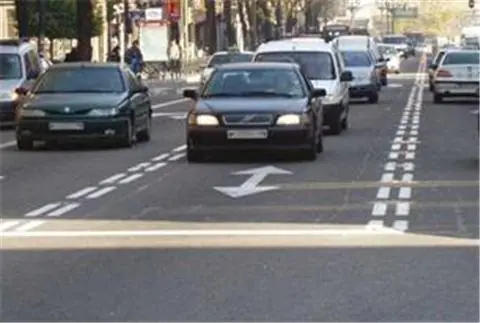
De acuerdo con la señalización, ¿es correcto utilizar el alumbrado del vehículo?
Looking at the road markings, is it correct for this vehicle to use its lights?
- ASí, al menos, la luz de cruce porque el vehículo circula por un carril reversible.Yes, at least dipped headlights, because the vehicle is driving in a reversible lane.
- BSí, porque circula en sentido contrario al habitual.Yes, because it is driving in the opposite direction to normal.
- CNo, porque es de día y las condiciones meteorológicas son favorables.No, because it is daytime and the weather is good.
ExplanationThe double broken lines marking the lane show that it is reversible. According to Article 40 of the General Traffic Regulations, anyone driving in a reversible lane must have at least dipped headlights on, both by day and by night.
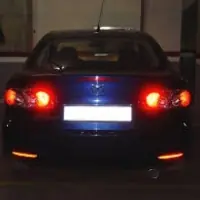
¿Se puede utilizar la luz antiniebla trasera de día?
May you use the rear fog light during the day?
- ASí, pero solo en vías urbanas.Yes, but only in built-up areas.
- BSí, pero solo en condiciones atmosféricas especialmente desfavorables.Yes, but only in particularly bad weather conditions.
- CNo, únicamente de noche.No, only at night.
ExplanationThe rear fog light may be used day or night, but under Article 106.2 of the General Traffic Regulations (RGC) only in particularly bad conditions, such as thick fog, very heavy rain, heavy snowfall or dense clouds of dust or smoke. In good weather or light fog it dazzles, and switching it on is prohibited.
En un túnel poco iluminado, ¿qué luces debe llevar encendidas en su vehículo si circula a 80 km/h?
In a poorly lit tunnel, which lights must you have on if you are driving at 80 km/h?
- ALuces de posición y de cruce; nunca use las luces largas.Sidelights and dipped headlights; never use main beam.
- BLuces largas, siempre que no deslumbren a los demás usuarios.Main beam, as long as it does not dazzle other road users.
- CLuces de posición y luces largas; nunca use las luces de cruce.Sidelights and main beam; never use dipped headlights.
ExplanationUnder Article 100 of the General Traffic Regulations, in tunnels that are not lit well enough and at more than 40 km/h you must have main beam on, as well as the sidelights, and switch to dipped headlights as soon as it could dazzle other road users.
All topics
- Definitions
- Documents and penalty points
- The driver's condition
- Duties of drivers and pedestrians
- Vehicle safety devices
- Vehicle controls and equipment
- Traffic signs, markings and signals
- The road and its lanes
- Speed and distances
- Manoeuvres
- Right of way
- Carrying passengers and loads
- Driving safely in difficult conditions
- Vehicle mechanics and maintenance
- Road accidents and first aid
- Defensive and eco-driving
Independent app: not affiliated with or endorsed by the DGT (Spain's Directorate-General for Traffic) or the Ministry of the Interior. The official exam is booked with the DGT and taken at its test centres. The questions here are practice material; the DGT's official question bank is not public.
Basado en datos de la Agencia Estatal Boletín Oficial del Estado (https://www.boe.es). Textos consolidados de carácter meramente informativo. La AEBOE no patrocina ni respalda este sitio.
Parte de las preguntas procede de los tests de la revista «Tráfico y Seguridad Vial» de la DGT, reproducidos con indicación de la fuente.