
DGT test · 839 questions
Vehicle lights and horn · Page 8 of 17
Side, dipped, main-beam, fog and hazard lights, and the horn: when each one is compulsory and when it is forbidden.
Questions in this topic, with answers
839 questions, 50 per page, with the correct answer and the explanation. Page 8 of 17.
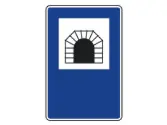
¿Que dispositivo de alumbrado deberá utilizar?, circulando por túnel suficientemente iluminado.
Which lights must you use when driving through a sufficiently lit tunnel?
- ANinguno, ya que está suficientemente iluminado.None, because it is sufficiently lit.
- BLa luz de cruce o carretera, indistintamente.Dipped headlights or main beam, either one.
- CLa luz de posición y de cruce.Sidelights and dipped headlights.
ExplanationSidelights, dipped headlights and the rear number plate light must be switched on by all vehicles driving on urban roads between sunset and sunrise, in bad weather, and at any time of day in tunnels and underpasses.

Si debido a la lluvia intensa, en una vía interurbana no se distingue un vehículo de color negro a 50 metros de distancia, ¿es posible circular con el alumbrado de largo alcance encendido?
Because of heavy rain, on a road outside built-up areas you cannot see a black vehicle 50 metres away. Can you drive with main beam on?
- ANo, está prohibido.No, it is prohibited.
- BSí, porque la vía está insuficientemente iluminada.Yes, because the road is insufficiently lit.
- CSólo se puede encender la luz de cruce y la antiniebla delantera.You can only switch on dipped headlights and the front fog light.
ExplanationA road is considered insufficiently lit when you cannot see a dark vehicle 50 metres away. Outside built-up areas, in these conditions you may use main beam, as long as you do not dazzle other drivers.
¿Puede emplear en su vehículo luces adaptativas?
May you use adaptive headlights on your vehicle?
- ASí.Yes.
- BNo, están prohibidas.No, they are prohibited.
- CSí, son obligatorias.Yes, they are compulsory.
ExplanationWith adaptive headlight technology, when you reach a bend the light beam does not shine in a straight line but follows the curve. Any type of vehicle may use this type of light.
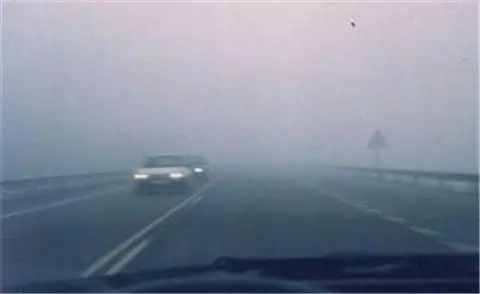
Cuando hay niebla y un turismo no tiene luz especial de niebla, ¿qué luces debe encender?
When there is fog and a car has no special fog light, which lights must it switch on?
- ALuces de posición solamente.Sidelights only.
- BLas luces largas solamente.Main beam only.
- CLuces cortas y las de posición.Dipped headlights and sidelights.
ExplanationIn fog, if the vehicle has no front fog light, you must use the sidelights and dipped headlights. Main beam reflects off the fog, dazzles the driver and makes visibility worse.
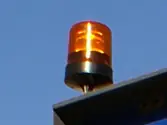
¿Para qué sirve la luz V2?
What is the V-2 light for?
- APara indicar que el vehículo circula en servicio de urgencia.To show that the vehicle is on an emergency call.
- BPara que el vehículo sea más visible.To make the vehicle more visible.
- CPara que el conductor perciba mejor la calzada.To help the driver see the carriageway better.
ExplanationThis signal shows that the vehicle is carrying out a service or activity, that it is stopped or parked, or that it is travelling at no more than 40 km/h. Vehicles under special transport rules may also use it.
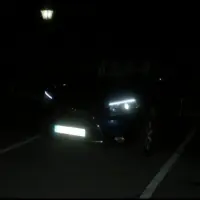
¿De qué color es la luz de posición delantera de un turismo?
What colour is a car's front sidelight?
- ARojoRed.
- BBlancoWhite.
- CAmarillo autoAmber.
ExplanationThe front sidelight is white. Under the General Vehicle Regulations, it shows the presence and width of the vehicle when seen from the front, that is, so that others can see it, not to light up the road.
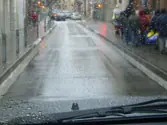
En estas circunstancias, ¿qué alumbrado usaremos?
In these conditions, which lights should we use?
- ANo es necesario usar ningún alumbrado por ser de día.No lights are needed because it is daytime.
- BEl alumbrado de posición.Sidelights.
- CEl alumbrado de cruce.Dipped headlights.
ExplanationIn heavy rain visibility drops considerably, and in these conditions you must use lights even during the day. You must switch on dipped headlights, or the front fog lights, which let you see and be seen; sidelights are not enough.
Circulando con niebla espesa, ¿qué alumbrado llevaremos encendido?
When driving in dense fog, which lights will we have on?
- ALa luz antiniebla trasera y alumbrado de corto alcance.The rear fog light and dipped headlights.
- BLa luz antiniebla delantera y alumbrado de corto alcance.The front fog light and dipped headlights.
- CLas luces de posición y el alumbrado de corto alcance.Sidelights and dipped headlights.
ExplanationFRONT FOG LIGHT: - Fitting and using it are NOT compulsory. - It must be white or selective yellow. - It may be used, voluntarily, in fog, heavy rain, snowfall, clouds of smoke or dust, or similar conditions. - It may also be used on narrow roads with many bends, that is, roads with a carriageway 6.5 m wide or less that are signposted with ‘dangerous bends’ signs. REAR FOG LIGHT: - Fitting and using it are compulsory. - It must be red. - It must be used in DENSE fog, VERY heavy rain, HEAVY snowfall or THICK clouds of smoke or dust.
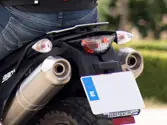
La luz de matrícula, ¿deberá encenderse conjuntamente con el resto de las luces?
Must the number plate light be switched on together with the other lights?
- ASólo con el alumbrado de corto alcance o de cruce.Only with dipped headlights.
- BSe encenderá simultáneamente con el alumbrado de posición.It is switched on at the same time as the sidelights.
- CSe encenderá con un interruptor independiente situado en el salpicadero.It is switched on with a separate switch on the dashboard.
ExplanationWhen the sidelights are switched on, the number plate light must be switched on at the same time. It stays on together with any other lights we use afterwards.
¿La señal de emergencia es obligatoria para los remolques?
Are hazard warning lights compulsory on trailers?
- ANo, solo es obligatoria para los automóviles.No, they are only compulsory on motor cars.
- BSí.Yes.
- CEs obligatoria para los remolques, pero no para los semirremolques.They are compulsory on trailers, but not on semi-trailers.
ExplanationHazard warning lights are also compulsory on trailers and semi-trailers.
¿Se puede circular por una vía interurbana con las luces largas en caso de lluvia intensa o niebla densa?
May you drive on a road outside built-up areas with main beam in heavy rain or dense fog?
- ASí, pero no se recomienda porque el reflejo en la niebla o la lluvia puede deslumbrar.Yes, but it is not recommended, because the reflection in the fog or rain can dazzle.
- BNo, está prohibido.No, it is prohibited.
- CSí, porque en este caso la vía está insuficientemente iluminada.Yes, because in this case the road is insufficiently lit.
ExplanationAccording to Article 106 of the General Traffic Regulations (RGC), you must use lights in poor visibility, such as heavy rain or dense fog. However, main beam can dazzle other drivers because of the reflections in these conditions, so it is not recommended. That is why the correct answer is that you may use it, but with care because of the risk of dazzling.
La luces de gálibo de un camión deben ser de color...
The end-outline marker lights of a lorry must be...
- ARojo las de delante y blanco las de detrás.red at the front and white at the rear.
- BBlanco las de delante y rojo las de detrás.white at the front and red at the rear.
- CAmarillo auto las de delante y rojo las de detrás.amber at the front and red at the rear.
ExplanationThe end-outline marker lights of a lorry must be white at the front and red at the rear. This is because they show the presence and width of the vehicle when it is seen from the front and from behind.
Durante la noche en vía urbana, ¿es obligatorio el uso de alumbrado en una bicicleta?
At night on an urban road, must a bicycle use lights?
- ANo, pues no se considera un vehículo a motor.No, because it is not considered a motor vehicle.
- BSí, el de posición.Yes, sidelights.
- CSolo será obligatorio cuando circule por una vía interurbana.It is only compulsory on roads outside built-up areas.
ExplanationBicycles must use sidelights in the same circumstances as other vehicles.
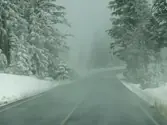
Si circulamos con niebla no espesa, ¿qué luces antiniebla podemos llevar encendidas?
If we are driving in fog that is not dense, which fog lights may we have on?
- ALas delanteras solamente.Only the front ones.
- BLas posteriores solamente.Only the rear ones.
- CAmbas.Both.
ExplanationIn fog that is not dense, you may use the front fog light. The rear one must only be switched on when conditions are especially bad, such as dense fog, very heavy rain or heavy snowfall, because otherwise it dazzles the drivers behind (Article 106 of the General Traffic Regulations).
En rectas y llano, ¿qué luces pueden producir deslumbramiento aunque estén bien regladas?
On straight, level roads, which lights can dazzle even when they are properly adjusted?
- ALas de largo alcance o de carretera.The main beam.
- BLas de posición.The sidelights.
- CLas de corto alcance o de cruce.The dipped headlights.
ExplanationThe main beam lights far and high, so on straight, level roads it dazzles oncoming drivers or those ahead even when it is properly adjusted. Dipped headlights and sidelights do not dazzle if they are properly adjusted.
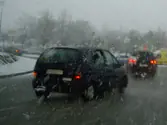
Con lluvia muy intensa, ¿qué alumbrado antiniebla deberá usar obligatoriamente?
In very heavy rain, which fog light must you use?
- AEl delantero.The front one.
- BEl posterior.The rear one.
- CEl delantero y el posterior.The front one and the rear one.
ExplanationWhen driving in very heavy rain, heavy snowfall, thick clouds of dust or smoke, or dense fog, we must use the rear fog light.
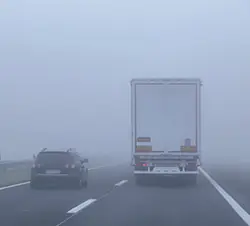
Entre la puesta y la salida del sol, ¿puede encender la luz de largo alcance en caso de niebla?
Between sunset and sunrise, may you switch on main beam in fog?
- ASí, procurando no deslumbrar a otros usuarios de la vía.Yes, taking care not to dazzle other road users.
- BSólo en carreteras con un carril para cada sentido de la circulación.Only on roads with one lane in each direction.
- CNo, está prohibido.No, it is prohibited.
ExplanationBetween sunset and sunrise the night lighting rules apply: outside built-up areas you may also use main beam in fog, on the only condition that you do not dazzle other road users.
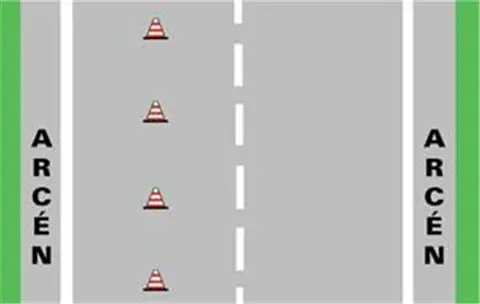
Un vehículo que circula de día por un carril adicional circunstancial, ¿está obligado a llevar algún tipo de alumbrado?
A vehicle driving during the day in a temporary additional lane: must it have any lights on?
- ASí, luces de emergencia.Yes, hazard warning lights.
- BSí, la luz de corto alcance o cruce.Yes, dipped headlights.
- CNo.No.
ExplanationAccording to Article 104 of the General Traffic Regulations, anyone driving in a temporary additional lane, a reversible lane or a lane opened in the opposite direction must have dipped headlights on, also during the day, so that oncoming traffic can see them.
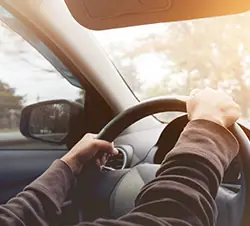
¿Es peligroso conducir cuando los rayos de sol caen de forma directa sobre los ojos del conductor?
Is it dangerous to drive when the sun shines directly into the driver's eyes?
- ASí, pero encendiendo la luz de largo alcance se mejora la visibilidad.Yes, but switching on main beam improves visibility.
- BNo, porque al haber más luz, la visibilidad es mejor.No, because with more light, visibility is better.
- CSí, la visión se ve afectada y es difícil distinguir lo que ocurre alrededor.Yes, vision is affected and it is hard to see what is happening around you.
ExplanationSun from the front dazzles and reduces vision, making it hard to see pedestrians, signs and other vehicles. Use the sun visor or suitable glasses and take extra care.
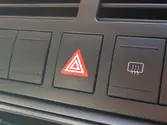
¿Se podrán utilizar las luces de emergencia con el vehículo en marcha?
May hazard warning lights be used while the vehicle is moving?
- ANo.No.
- BSí, cuando se circula a velocidad anormalmente reducida y con peligro de alcance.Yes, when driving at an abnormally low speed and there is a risk of being hit from behind.
- CSí, siempre que se crea conveniente.Yes, whenever you think it is appropriate.
ExplanationHazard warning lights means all the vehicle's indicators flashing at the same time. Their purpose is to warn of the danger caused by the vehicle's position because of an emergency (breakdown, accident, etc.). They must be used in any emergency, whether the vehicle is stopped or moving (breakdown, accident, taking injured people to hospital, etc.), and when the vehicle cannot reach the required minimum speed and there is a risk of being hit from behind.
Fuera de poblado va a entrar en este túnel suficientemente iluminado, ¿debe encender alguna luz en su turismo?
Outside a built-up area, you are about to enter this sufficiently lit tunnel. Must you switch on any lights in your car?
- ANo, puesto que el túnel está iluminado.No, because the tunnel is lit.
- BSí, las luces de posición para hacerme ver por los demás usuarios del túnel.Yes, the sidelights, so that other tunnel users can see me.
- CSí, las luces de posición y las de corto alcance o cruce.Yes, the sidelights and dipped headlights.
ExplanationWhen entering a tunnel, even a lit one, you must switch on the sidelights and dipped headlights. Dipped headlights light up the road and improve visibility, while sidelights help other drivers see you. This is essential for road safety.
En caso de niebla ligera, ¿qué alumbrado está permitido utilizar?
In light fog, which lights may you use?
- ALa luz de corto alcance o la de carretera o la antiniebla delantera si se posee.Dipped headlights, main beam or the front fog light if the vehicle has one.
- BSólo la luz antiniebla delantera.Only the front fog light.
- CLa luz de corto alcance y la antiniebla trasera.Dipped headlights and the rear fog light.
ExplanationAccording to Article 106 of the General Traffic Regulations, in fog you may use dipped headlights, main beam or the front fog light if the vehicle has one. The rear fog light is only switched on in dense fog, not in light fog.
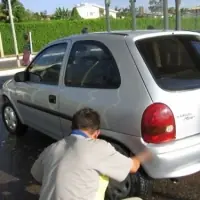
¿Qué acción se debe realizar a la hora de cambiar una rueda?
What must you do when changing a wheel?
- AQuitar el freno de estacionamientoRelease the parking brake
- BEncender las luces de emergenciaSwitch on the hazard warning lights
- CSituar el vehículo en el paso de peatones más cercanoMove the vehicle onto the nearest pedestrian crossing
ExplanationWhen changing a wheel after a puncture or breakdown, you must switch on the hazard warning lights, keep the parking brake on and place the V-16 flashing warning beacon on the highest part of the vehicle (Article 130.4 of the General Traffic Regulations). If the driver gets out onto the carriageway or the hard shoulder of a road outside built-up areas, they must put on the reflective vest.
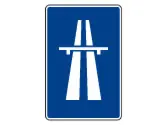
Si un vehículo averiado circula por una autopista insuficientemente iluminada a 40 km/h ¿qué alumbrado llevará?
If a broken-down vehicle is travelling at 40 km/h on an insufficiently lit autopista (motorway), which lights will it use?
- ALuces de carretera.Main beam.
- BLuces cortas necesariamente.Dipped headlights, necessarily.
- CAlumbrado de corto o largo alcance si no hay riesgo de deslumbramiento.Dipped headlights or main beam, if there is no risk of dazzling.
ExplanationVehicles fitted with main beam must use it when travelling at more than 40 km/h: - Between sunset and sunrise, on insufficiently lit roads outside built-up areas. - At any time of day, in insufficiently lit tunnels, underpasses and stretches of road covered by the ‘tunnel’ sign. However, the following will use dipped headlights: - Vehicles that do not have main beam. - Vehicles using main beam that could dazzle other road users. At a speed of no more than 40 km/h, you may use dipped headlights or main beam. Main beam is prohibited when the vehicle is stopped or parked, or inside a built-up area.
Ud. circula en una bicicleta de noche por una vía interurbana insuficientemente iluminada. ¿Deberá llevar alguna prenda reflectante?
You are riding a bicycle at night on a poorly lit interurban road. Must you wear any reflective garment?
- ASí, y serán visibles a 100 metros.Yes, and it must be visible at 100 metres.
- BSí, y serán distinguibles a 150 metros.Yes, and it must be visible at 150 metres.
- CNo, ya que no está regulado.No, because it is not regulated.
ExplanationCyclists riding on an interurban road at night or in poor visibility must wear at least one light-emitting or reflective item visible at 150 metres, as required by Article 118 of the RGC, in addition to the bicycle's lights.
Si circula a una velocidad no superior a 40km/h por una vía interurbana insuficientemente iluminada, ¿Qué alumbrado debe utilizar?
If you are travelling at no more than 40 km/h on an insufficiently lit interurban road, which lights must you use?
- AObligatoriamente el alumbrado de cruce.Dipped headlights, compulsorily.
- BEl alumbrado de cruce, pudiendo utilizar el de carretera si no deslumbra a otros usuarios.Dipped headlights, and you may use the main beam if it does not dazzle other road users.
- CEl alumbrado de carretera en todas las situaciones.The main beam in all situations.
ExplanationOn insufficiently lit interurban roads, the main beam is compulsory at more than 40 km/h. At 40 km/h or less dipped headlights are enough, although the main beam may also be used if it does not dazzle anyone (Articles 100 and 101 of the General Traffic Regulations).
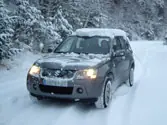
Circulando con fuerte nevada, ¿qué luz antiniebla se debe utilizar?
When driving in heavy snowfall, which fog light must be used?
- ALa luz antiniebla delantera.The front fog light.
- BObligatoriamente la antiniebla delantera y si se dispone de ella la trasera.The front fog light, necessarily, and the rear one if the vehicle has it.
- CLa luz antiniebla trasera y si se dispone de ella también la antiniebla delantera.The rear fog light, and also the front fog light if the vehicle has it.
ExplanationFRONT FOG LIGHT: - Fitting and using it are NOT compulsory. - It must be white or selective yellow. - It may be used, voluntarily, in fog, heavy rain, snowfall, clouds of smoke or dust, or similar conditions. - It may also be used on narrow roads with many bends, that is, roads with a carriageway 6.5 m wide or less that are signposted with ‘dangerous bends’ signs. REAR FOG LIGHT: - Fitting and using it are compulsory. - It must be red. - It must be used in DENSE fog, VERY heavy rain, HEAVY snowfall or THICK clouds of smoke or dust. During the day, the front fog light may be on with just the sidelights, but it may also be used together with dipped headlights or main beam. At night, it must be used at least with dipped headlights. During the day, the rear fog light must be used at least together with the front fog light or dipped headlights. At night, at least with dipped headlights.
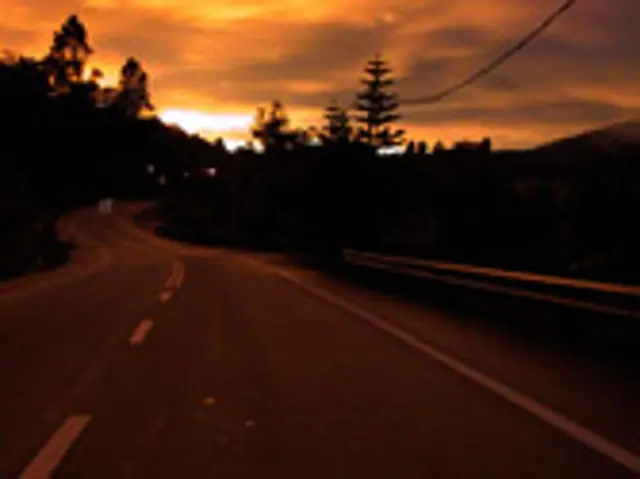
Si su vehículo se queda inmovilizado por la noche en el arcén de una carretera, ¿qué luces debe dejar encendidas?
If your vehicle is brought to a standstill at night on the hard shoulder of a road, which lights must you leave on?
- ALas luces de estacionamiento.The parking lights.
- BLas luces de cruce.The dipped headlights.
- CLas luces de posición.The sidelights.
ExplanationAccording to Article 105.1 of the General Traffic Regulations, any vehicle that is stationary between sunset and sunrise on the carriageway or hard shoulder must have its sidelights on and, where fitted, its end-outline marker lights. Parking lights may replace them only in poorly lit travesías (stretches of road through a town), not on the hard shoulder of an open road.
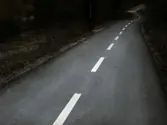
Si por avería circulamos a 40 km/h con el alumbrado de corto alcance por una vía interurbana insuficientemente iluminada, ¿será correcto?
If, because of a breakdown, we are driving at 40 km/h with dipped headlights on a poorly lit road outside built-up areas, is this correct?
- ANo, deberemos usar las luces antiniebla.No, we must use the fog lights.
- BNo, deberemos usar el de largo alcance.No, we must use main beam.
- CSí.Yes.
ExplanationUnder Article 100 of the General Traffic Regulations (RGC), main beam is only compulsory at night on poorly lit roads outside built-up areas when driving at more than 40 km/h. At 40 km/h you may use dipped headlights.
En caso de averiarse el alumbrado de largo alcance mientras circulamos de noche por una vía interurbana...
If your main beam stops working while you are driving at night on a road outside built-up areas...
- ANo podremos seguir circulando.we will not be able to continue driving.
- BCircularemos con el alumbrado de corto alcance.we will drive with dipped headlights.
- CCircularemos con el alumbrado de corto alcance y las luces de emergencia.we will drive with dipped headlights and hazard warning lights.
ExplanationIf main beam does not work because of a fault, we may continue driving, but we must reduce speed so that we can stop within the area lit by the dipped headlights.
¿Para qué sirven los catadióptricos?
What are reflectors for?
- AIndican la presencia del vehículo.They show the presence of the vehicle.
- BPara iluminar mediante una luz la parte trasera del vehículo.To light up the rear of the vehicle with a light.
- CPara indicar la presencia del vehículo solo por la parte posterior.To show the presence of the vehicle only from the rear.
ExplanationReflectors show the presence of the vehicle by reflecting the light that comes from another vehicle. They can be at the front, at the rear or on the sides of the vehicle.
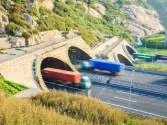
Un vehículo de más de 2,10 metros de ancho circulando en un túnel ¿cuándo debe llevar la luz de gálibo encendida?
A vehicle more than 2.10 metres wide is driving through a tunnel. When must it have its end-outline marker lights on?
- ACuando el túnel sea insuficientemente iluminado.When the tunnel is insufficiently lit.
- BEntre la puesta y salida del sol.Between sunset and sunrise.
- CSiempre, incluso de día.Always, even during the day.
ExplanationEvery vehicle driving between sunset and sunrise, in weather or environmental conditions that greatly reduce visibility, and through tunnels, underpasses or stretches of road covered by the ‘tunnel’ sign, must have its sidelights on. Whenever sidelights are compulsory while the vehicle is moving, dipped headlights, main beam or fog lights must also be used (you cannot drive with sidelights alone; they must always go with other lights). If the vehicle is more than 2.10 metres wide, the end-outline marker lights come on automatically when the sidelights are switched on.
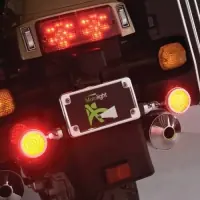
¿Cuantas luces de frenado debe llevar una motocicleta?
How many brake lights must a motorcycle have?
- AUna o dosOne or two
- BDos o tresTwo or three
- CDos obligatoriamenteTwo, compulsorily
ExplanationUnder Article 16 of the General Vehicle Regulations, every motorcycle must have a brake light, and the technical rules allow it to have one or two. It is not required to have two, as cars are.
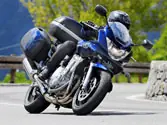
Una motocicleta circulando durante el día, ¿qué alumbrado llevará encendido?
A motorcycle riding during the day: which lights will it have on?
- ASolo el de posición.Only the sidelights.
- BEl de corto alcance.Dipped headlights.
- CDurante el día no es necesario ningún alumbrado.No lights are needed during the day.
ExplanationMotorcycles must always use at least dipped headlights.
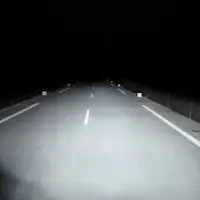
Es obligatorio encender las luces de carretera al circular a más de 40 kilómetros por hora en una vía…
You must switch on main beam when driving at more than 40 kilometres per hour on a road...
- Ainterurbana insuficientemente iluminadaoutside built-up areas that is insufficiently lit.
- Binterurbana suficientemente iluminada.outside built-up areas that is sufficiently lit.
- Cinsuficientemente iluminada dentro de poblado o fuera.that is insufficiently lit, inside or outside a built-up area.
ExplanationAccording to Article 100 of the General Traffic Regulations, at night and at more than 40 km/h you must use main beam on insufficiently lit roads outside built-up areas, unless it could dazzle. It is not used inside built-up areas or on well-lit roads.
Un vehículo a motor que circula de noche por una calle bien iluminada...
A motor vehicle driving at night along a well-lit street...
- ASolo debe usar las luces de posición.must only use sidelights.
- BNo necesita usar ningún alumbrado.does not need to use any lights.
- CDebe usar el alumbrado de corto alcance y las luces de posición.must use dipped headlights and sidelights.
ExplanationArticle 101.1 of the General Traffic Regulations requires every motor vehicle driving at night on sufficiently lit roads, urban or interurban, to have dipped headlights on as well as sidelights. Even if the street is well lit, you need to be seen.
¿Es obligatorio usar luces de cruce en carriles reversibles?
Is it compulsory to use dipped headlights in reversible lanes?
- ASí, siempreYes, always
- BNo, solo de nocheNo, only at night
- CSolo si hay nieblaOnly if there is fog
ExplanationDipped headlights are compulsory in reversible lanes, temporary additional lanes and lanes opened in the opposite direction to normal, at any time of day.
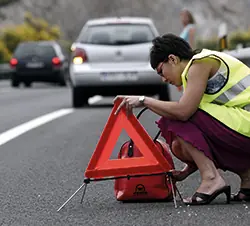
¿Cuándo es obligatorio utilizar la luz de emergencia?
When is it compulsory to use hazard warning lights?
- ACuando se inmovilice el vehículo en una autopista.When the vehicle is immobilised on an autopista (motorway).
- BCuando se reduzca la velocidad en carretera.When slowing down on the road.
- CCuando se estacione el vehículo en doble fila.When the vehicle is double-parked.
ExplanationHazard warning lights are compulsory when the vehicle is immobilised on an autopista (motorway) or autovía (dual carriageway): a stopped car where traffic moves at high speed is a danger that must be signalled.
La luz de largo alcance, ¿puede deslumbrar a otros conductores?
Can main beam headlights dazzle other drivers?
- ANo, si está bien reglada.No, if they are properly adjusted.
- BSí.Yes.
- CSolo a los peatones, no a los conductores.Only pedestrians, not drivers.
ExplanationMain beam headlights will dazzle other road users, so we must switch to dipped headlights to avoid this.
¿Es obligatoria la luz de antiniebla en una motocicleta?
Is a fog light compulsory on a motorcycle?
- ASólo la delantera.Only the front one.
- BNo, son opcionales.No, fog lights are optional.
- CSi se dispone de la delantera estamos obligados a llevar la trasera.If it has a front one, it must also have a rear one.
ExplanationA fog light on a motorcycle is not compulsory; it is optional. This means motorcyclists can choose whether or not to fit one on their vehicle.
¿Qué remolques llevarán luces de galibo delanteros?
Which trailers must have front end-outline marker lights?
- ALos que midan más de 2,10 metros de ancho.Those more than 2.10 metres wide.
- BLos que midan más de 2 metros de ancho.Those more than 2 metres wide.
- CLos que midan más de 1,80 metros de ancho.Those more than 1.80 metres wide.
ExplanationTrailers more than 2.10 metres wide must have front end-outline marker lights, because these lights are compulsory on vehicles more than 2.10 metres wide.
Las luces de corto alcance:
Dipped headlights:
- ADeben utilizarse siempre en vías urbanas insuficientemente iluminadas.Must always be used on insufficiently lit urban roads.
- BSolo pueden utilizarse fuera de poblado.May only be used outside built-up areas.
- CSustituyen a las luces de posición cuando hay niebla.Replace the sidelights when there is fog.
ExplanationDipped headlights must be used together with the sidelights between sunset and sunrise on urban roads, travesías and sufficiently lit roads outside built-up areas, and on insufficiently lit urban roads and travesías. Inside built-up areas, main beam is prohibited.
¿Qué alumbrado utilizaremos para circular en una travesía insuficientemente iluminada?
Which lights will we use when driving through an insufficiently lit travesía (stretch of road through a town)?
- AAlumbrado de corto alcance.Dipped headlights.
- BAlumbrado de largo alcance.Main beam.
- CIndistintamente alumbrado de largo o corto alcance.Main beam or dipped headlights, either one.
ExplanationTravesías are inside a built-up area, so dipped headlights are used there, whether they are sufficiently or insufficiently lit.
Los ciclomotores de dos ruedas llevan catadióptricos laterales (dispositivos reflectantes) de color...
Two-wheeled mopeds have side reflectors (reflective devices) that are...
- AAmarillo auto y de forma no triangular.amber and not triangular.
- BBlanco y de forma triangular.white and triangular.
- CRojo y de forma no triangular.red and not triangular.
ExplanationTwo-wheeled mopeds have amber, non-triangular side reflectors that show their presence by reflecting light. This is set out in the traffic and road safety rules.
Entre el ocaso y la salida del sol, ¿qué vehículos están obligados a llevar encendida la luz de gálibo?
Between sunset and sunrise, which vehicles must have their end-outline marker lights on?
- ALos vehículos cuya anchura exceda de 2,10m.Vehicles more than 2.10 m wide.
- BLos camiones o autobuses.Lorries or buses.
- CLos vehículos destinados al transporte de mercancias.Vehicles used to carry goods.
ExplanationBetween sunset and sunrise, all vehicles more than 2.10 metres wide must have their end-outline marker lights on, whatever type they are. It does not depend on whether they are lorries, buses or goods vehicles.
Circulando por un carril adicional circunstancial, ¿qué vehículos estarán obligados a utilizar al menos el alumbrado de corto alcance o de cruce?
When a temporary additional lane is in use, which vehicles must use at least dipped headlights?
- ASólo los vehículos que circulen por el carril adicional.Only vehicles driving in the additional lane.
- BTodos los vehículos que circulen por la calzada.All vehicles driving on the carriageway.
- CSólo los vehículos que circulen por los arcenes.Only vehicles driving on the hard shoulders.
ExplanationVehicles driving on the hard shoulders and in the additional lane must drive at a maximum of 80 km/h and a minimum of 60 km/h. All vehicles must use at least dipped headlights.
Con lluvia muy intensa, ¿es obligatorio utilizar la luz antiniebla trasera?
In very heavy rain, is it compulsory to use the rear fog light?
- ASí.Yes.
- BNo, sólo es opcional.No, it is only optional.
- CNo, sólo puedo usarla en caso de niebla muy espesa.No, I can only use it in very dense fog.
ExplanationREAR FOG LIGHT: - Fitting and using it are compulsory. - It must be red. - It must be used in DENSE fog, VERY heavy rain, HEAVY snowfall or THICK clouds of smoke or dust. During the day, the rear fog light must be used at least together with the front fog light or dipped headlights. At night, at least with dipped headlights.
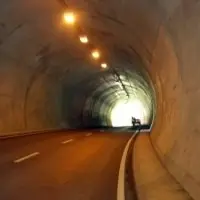
En este túnel bien iluminado, ¿qué alumbrado debe encender?
In this well-lit tunnel, which lights must you switch on?
- ALa luz de posición solamente.Only the sidelights.
- BLa luz de posición y la corta.The sidelights and dipped headlights.
- CLa luz de posición y la larga.The sidelights and main beam.
ExplanationEvery motor vehicle or moped driving between sunset and sunrise on sufficiently lit roads, inside or outside built-up areas, or at any time of day through tunnels, underpasses or stretches of road covered by the ‘tunnel’ sign, must in all cases have dipped headlights on as well as the sidelights.
¿Qué autobuses están obligados por la reglamentación vigente a llevar instalado alumbrado de gálibo?
Which buses must have end-outline marker lights fitted under current regulations?
- ALos que tengan una anchura superior a 1,80 metros.Those more than 1.80 metres wide.
- BLos que tengan una anchura superior a 2,10 metros.Those more than 2.10 metres wide.
- CLos que tengan una anchura superior a 1,60 metros.Those more than 1.60 metres wide.
ExplanationUnder current regulations, buses must have end-outline marker lights fitted if they are more than 2.10 metres wide. These lights show the full width of the vehicle, and they are compulsory on vehicles wider than this.
En esta vía interurbana es obligatorio utilizar la luz corta...
On this road outside built-up areas, you must use dipped headlights...
- Acuando exista posibilidad de deslumbrar a otros usuarios.when you could dazzle other road users.
- Bsólo cuando no se disponga de luz larga.only when the vehicle has no main beam.
- Csiempre.always.
ExplanationOn this insufficiently lit road outside built-up areas we may use main beam, but we must use dipped headlights when we could dazzle other users of the same road or of any other transport route, and especially drivers coming in the opposite direction.
All topics
- Definitions
- Documents and penalty points
- The driver's condition
- Duties of drivers and pedestrians
- Vehicle safety devices
- Vehicle controls and equipment
- Traffic signs, markings and signals
- The road and its lanes
- Speed and distances
- Manoeuvres
- Right of way
- Carrying passengers and loads
- Driving safely in difficult conditions
- Vehicle mechanics and maintenance
- Road accidents and first aid
- Defensive and eco-driving
Independent app: not affiliated with or endorsed by the DGT (Spain's Directorate-General for Traffic) or the Ministry of the Interior. The official exam is booked with the DGT and taken at its test centres. The questions here are practice material; the DGT's official question bank is not public.
Basado en datos de la Agencia Estatal Boletín Oficial del Estado (https://www.boe.es). Textos consolidados de carácter meramente informativo. La AEBOE no patrocina ni respalda este sitio.
Parte de las preguntas procede de los tests de la revista «Tráfico y Seguridad Vial» de la DGT, reproducidos con indicación de la fuente.