
DGT test · 839 questions
Vehicle lights and horn · Page 4 of 17
Side, dipped, main-beam, fog and hazard lights, and the horn: when each one is compulsory and when it is forbidden.
Questions in this topic, with answers
839 questions, 50 per page, with the correct answer and the explanation. Page 4 of 17.
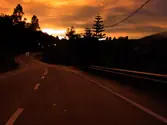
¿Podrá circular desde el ocaso a la salida del sol, sólo con el alumbrado de posición encendido?
Can you drive from sunset to sunrise with only the position lights on?
- ASí, en vía dentro de poblado suficientemente iluminado.Yes, on a well-lit road in a built-up area.
- BNo.No.
- CSí, en travesía suficientemente iluminada.Yes, on a well-lit travesía (stretch of road through a town).
ExplanationYou cannot drive on any type of road with only the position lights; at the very least you must use the position lights with dipped headlights. We must leave them on, between sunset and sunrise or in weather or environmental conditions that reduce visibility: * when stopped on the carriageway or hard shoulder of any road, including tunnels, underpasses or enclosed places; * also when parked: - on a hard shoulder that cannot be driven on, on a road outside a built-up area; - on the carriageway or hard shoulder of a poorly lit travesía; - on the carriageway or hard shoulder of a road in a built-up area, when the lighting does not let other road users see the vehicle from a sufficient distance.
¿Cuántas luces de carretera o largo alcance pueden llevar instaladas los vehículos especiales en la parte delantera?
How many main beam lights may special vehicles have fitted at the front?
- ATresThree.
- BCuatro obligatoriamenteFour, compulsorily.
- CDos o cuatroTwo or four.
ExplanationAccording to the General Vehicle Regulations, special vehicles may be fitted with two or four main beam lights. 'Three' is wrong because the main lights must always be in even numbers, for symmetry and proper visibility. 'Four, compulsorily' is also wrong, because the rule allows just two. So the flexible arrangement of 2 or 4 is the only valid answer.
Un ciclo ¿debe llevar luces durante el día?
Must a cycle have lights on during the day?
- ASí, las de cruce o carretera.Yes, dipped headlights or main beam.
- BSí, las de posición.Yes, the position lights.
- CNo, ninguna.No, none.
ExplanationDuring the day, only motorcycles must have the dipped headlight on when riding on any road.
En una vía interurbana insuficientemente iluminada, un turismo circula a menos de 40 km/h. ¿Puede circular con la luz de corto alcance?
On a poorly lit road outside a built-up area, a car is travelling at less than 40 km/h. Can it drive with dipped headlights?
- ASí, pero puede llevar la de largo alcance cuando no deslumbra.Yes, but it may use main beam when this does not dazzle anyone.
- BNo, debe llevar la luz de largo alcance obligatoriamente.No, it is compulsory to use main beam.
- CNo.No.
ExplanationDipped headlights are used when driving on poorly lit roads outside built-up areas, or at any time of day through poorly lit tunnels and other stretches covered by the 'Tunnel' sign, in any of these situations: - when the vehicle has no main beam; - when driving at no more than 40 kilometres per hour and not using main beam.
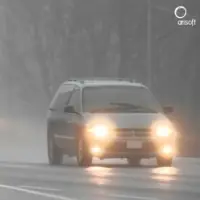
¿Cuál de éstas luces sirven para cumplir la regla de VER en un vehículo?
Which of these lights serves the purpose of SEEING in a vehicle?
- ALuz de gáliboEnd-outline marker light.
- BLuz de corto alcance o cruceDipped headlights.
- CLuz de frenadoBrake light.
ExplanationThe purpose of dipped headlights is to light the road in front of the vehicle at night, so they are among the lights used to see, not to be seen.
Al conducir, ve que se aproxima una ambulancia con la sirena y las luces encendidas. Debe tener en cuenta que...
While driving, you see an ambulance approaching with its siren and lights on. You must bear in mind that...
- ADebe dejarle paso, apartándose a la derecha o deteniéndose si es necesario.you must let it through, moving over to the right or stopping if necessary.
- BDebe mantener su marcha sin variarla, porque la ambulancia le adelantará.you must keep driving without changing anything, because the ambulance will overtake you.
- CSolo debe dejarle paso si circula por una vía urbana.you only need to let it through if you are in a built-up area.
ExplanationUnder Article 69 of the General Traffic Regulations (RGC), as soon as you notice the signals of a priority vehicle, you must take appropriate steps to let it through, normally moving over to the right or stopping if necessary, on any type of road. Do it calmly and without sudden manoeuvres.
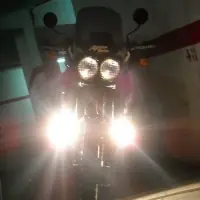
¿Si una motocicleta lleva una única luz de largo alcance dónde deberá estar situada?
If a motorcycle has only one main beam light, where must it be placed?
- AEn el plano longitudinal medio del vehículoOn the vehicle's longitudinal centre line.
- BEn la parte trasera izquierda del vehículoAt the rear left of the vehicle.
- CEn la parte trasera central del vehículoAt the rear centre of the vehicle.
ExplanationOn motorcycles whose lighting system has only one main beam light, it must be placed on the vehicle's longitudinal centre line, and not at the rear left or rear centre.
¿Dónde está prohibido utilizar las luces de largo alcance?
Where is it prohibited to use main beam?
- AEn los túneles.In tunnels.
- BEn las vías urbanas y travesías.On roads in built-up areas and travesías.
- CCon niebla y condiciones adversas.In fog and bad conditions.
ExplanationIt is prohibited to use main beam inside built-up areas, on urban roads and on travesías (stretches of road through a town).
Un vehículo especial sin luces de freno no debe circular a más de...
A special vehicle without brake lights must not travel faster than...
- A70 km/h.70 km/h.
- B40 km/h.40 km/h.
- C25 km/h.25 km/h.
ExplanationUnder Article 48.1.c of the General Traffic Regulations, special vehicles that have no brake lights, are towing a trailer or are single-axle tractors (motocultores) may not exceed 25 km/h outside built-up areas. Other special vehicles are generally limited to 40 km/h.
Las motocicletas están obligadas a llevar encendida la luz de cruce...
Motorcycles must have the dipped headlight on...
- Asólo entre la puesta y la salida del sol.only between sunset and sunrise.
- Bdurante todo el día por cualquier vía.all day, on any road.
- Cdurante el día por vías interurbanas y solo entre la puesta y la salida del sol por vías urbanas.during the day on roads outside built-up areas, and only between sunset and sunrise on roads in built-up areas.
ExplanationAll day long, motorcycles on any road, inside or outside built-up areas, must have the dipped headlight on, whatever the visibility.
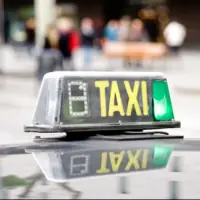
¿De qué color debe ser el alumbrado indicador de libre?
What colour must the 'for hire' (libre) light be?
- ABlancoWhite.
- BVerdeGreen.
- CAmarilloYellow.
ExplanationThe compulsory 'for hire' (libre) light on a taxi shows potential users of public passenger taxi services that the taxi is available for hire. It is a non-dazzling green light at the front right outside of the vehicle, which must be visible from the front, from the rear and from the right-hand side.
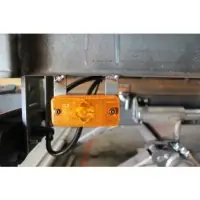
¿Cual es la finalidad de la luz de gálibo?
What is the purpose of end-outline marker lights?
- AIndicar la longitud total del vehículoTo show the total length of the vehicle.
- BIndicar la anchura total del vehículoTo show the total width of the vehicle.
- CIndicar el número de plazas del vehículoTo show the number of seats in the vehicle.
ExplanationThe main purpose of a vehicle's end-outline marker lights is to show other road users the total width of this large vehicle, so that they can see how wide it is and avoid it if necessary.
¿Qué debe hacer un conductor en relación al alumbrado para mejorar la visibilidad con lluvia?
What should a driver do with the lights to improve visibility in rain?
- AApagar todas las luces del vehículoSwitch off all the vehicle's lights.
- BEncender la luz de corto alcanceSwitch on dipped headlights.
- CEncender la luz de largo alcanceSwitch on main beam.
ExplanationVehicles must switch on dipped headlights when weather or environmental conditions greatly reduce visibility, such as fog, heavy rain, snowfall, clouds of smoke or dust, or any other similar weather conditions. The vehicle's lights must never be switched off.
¿Qué alumbrado debe usar si conduce su coche de noche por una vía interurbana con poca iluminación, a más de 40 km/h, sin riesgo de deslumbrar a otros usuarios?
Which lights must you use if you are driving your car at night on a poorly lit road outside built-up areas, at more than 40 km/h, with no risk of dazzling other road users?
- AEl de largo alcance (luces largas).Main beam.
- BEl de corto alcance (luces cortas).Dipped headlights.
- COpcionalmente, el de largo o el de corto alcance.Either main beam or dipped headlights, as you choose.
ExplanationUnder Article 100 of the General Traffic Regulations, at night, outside built-up areas, on roads that are not lit well enough and at more than 40 km/h, main beam is compulsory, unless it could dazzle other road users; in that case you switch to dipped headlights.
Aún es de día, pero el sol ya se ha puesto. ¿Qué luces debe encender?
It is still daylight, but the sun has already set. Which lights must you switch on?
- AEstá prohibido encender las luces durante el día.It is prohibited to switch on lights during the day.
- BSon suficientes las luces de posición.The sidelights are enough.
- CLas luces de cruce (cortas).The dipped headlights.
ExplanationFrom sunset to sunrise you must have your lights on even if there is still daylight (Article 98.1 of the General Traffic Regulations). Sidelights are not enough: in that light you use dipped headlights together with the sidelights (Article 101.1).
¿En qué situación se pueden encender solo las luces de posición entre la puesta y la salida del sol?
In which situation may you switch on only the position lights between sunset and sunrise?
- ACuando circule por una carretera lo suficientemente iluminada.When driving on a road that is sufficiently lit.
- BCuando circule por una calle lo suficientemente iluminada.When driving on a street that is sufficiently lit.
- CPara inmovilizar el vehículo en el arcén fuera de poblado.To stop the vehicle on the hard shoulder outside a built-up area.
ExplanationAccording to Article 105.1 of the General Traffic Regulations, any vehicle immobilised between sunset and sunrise must have only the position lights on (and, where applicable, the end-outline marker lights). This rule applies when the vehicle is parked or stopped, for example on a hard shoulder outside a built-up area. By contrast, while the vehicle is moving, even on well-lit streets or roads, the regulations require dipped headlights and, in poor light, also main beam; driving with only the position lights is not allowed.
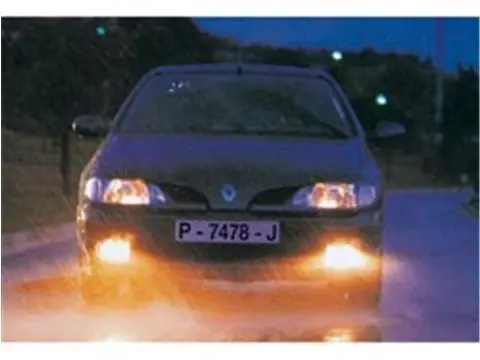
El alumbrado que lleva encendido el conductor de este vehículo en un tramo recto de noche y sin condiciones atmosféricas adversas, ¿es el correcto?
Are the lights this driver has on correct, on a straight stretch at night with no bad weather?
- ANo, debe apagar las luces antiniebla.No, the fog lights must be switched off.
- BSí.Yes.
- CSolo si la anchura de la calzada es inferior a 6,50 metros.Only if the carriageway is less than 6.50 metres wide.
ExplanationAccording to Article 106 of the General Traffic Regulations, the front fog light may only be used in fog, heavy rain, snowfall, smoke or dust, or on narrow roads with many bends that are signposted. On a straight stretch with no bad conditions it must be switched off, because it dazzles.
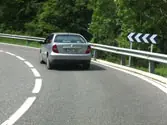
Si dos vehículos se cruzan en una curva llevando encendido el alumbrado de largo alcance, ¿cuál de los dos cambiará antes a corto alcance?
If two vehicles with main beam on pass each other on a bend, which of the two should switch to dipped headlights first?
- AEl que circula por la parte exterior de la curva.The one on the outside of the bend.
- BEl que circula por la parte interior de la curva.The one on the inside of the bend.
- CNinguno de los dos.Neither of them.
ExplanationOn a bend, the headlights of the vehicle on the inside point towards the outside, exactly where the oncoming vehicle is, so it must be the first to switch to dipped headlights. The beam of the vehicle on the outside shines less on the other one, although it must also switch in time.
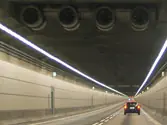
Circulando por un túnel suficientemente iluminado, ¿qué alumbrado usaremos?
When driving through a well-lit tunnel, which lights should we use?
- ASolo el alumbrado de posición.Only the position lights.
- BEl alumbrado de posición y el de cruce.The position lights and dipped headlights.
- CEl alumbrado de posición o el de cruce.The position lights or dipped headlights.
ExplanationWhen driving through a well-lit tunnel, we use the position lights together with dipped headlights.
Circulando con niebla densa, ¿qué alumbrado antiniebla se tendrá que usar?
When driving in dense fog, which fog lights must be used?
- AObligatoriamente el delantero y el posterior.Both the front and the rear ones, compulsorily.
- BEl posterior.The rear one.
- CEl uso del alumbrado antiniebla no es obligatorio en ningún caso, siempre se usará de manera opcional.Fog lights are never compulsory; they are always optional.
ExplanationThe rear fog light is compulsory in dense fog, very heavy rain, heavy snowfall and dense clouds of smoke or dust.
¿Es obligatorio que llevemos en el ciclomotor un juego de lámparas de repuesto en buen estado y las herramientas indispensables para su cambio?
Must you carry a set of spare bulbs in good condition, and the tools needed to change them, on a moped?
- ANo.No.
- BSolo si circula de noche.Only if you ride at night.
- CSí.Yes.
ExplanationNo, it is not compulsory to carry a set of spare bulbs in good condition and the tools needed to change them on a moped.
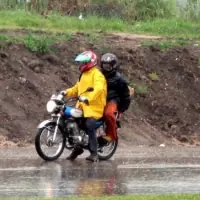
¿Pueden los ciclomotores llevar luz antiniebla delantera?
Can mopeds have a front fog light?
- ASí.Yes.
- BÚnicamente en vías interurbanasOnly on roads outside built-up areas.
- CNoNo.
ExplanationMopeds, two-wheel tractors and cycles are prohibited from having a front fog light fitted. For motor vehicles, on the other hand, it is not compulsory, but they may fit one if they wish.
Un conductor que circula por una vía interurbana con lluvia intensa o polvo que dificulta gravemente la visibilidad, ¿puede utilizar el alumbrado de largo alcance?
Can a driver travelling on an interurban road in heavy rain or dust that seriously reduces visibility use the main beam?
- ASí, siempre que no deba utilizar el alumbrado de corto alcance.Yes, as long as the dipped headlights do not have to be used.
- BSí, pero sólo durante el ocaso.Yes, but only at dusk.
- CÚnicamente de noche.Only at night.
ExplanationUnder Article 106 of the General Traffic Regulations, in heavy rain, fog or dust you must use your lights by day and by night: the front fog light or the dipped headlights or main beam. The main beam may be used if you do not have to switch to the dipped headlights to avoid dazzling.
¿En qué vías debe emplear las luces de largo alcance?
On which roads must you use main beam?
- AEn las vías interurbanas insuficientemente iluminadas.On poorly lit roads outside built-up areas.
- BEn cualquier tipo de vía, siempre que sea necesario.On any type of road, whenever necessary.
- CEn las vías urbanas, incluidas las travesías.On roads in built-up areas, including travesías (stretches of road through a town).
ExplanationVehicles fitted with main beam must use it when driving at more than 40 km/h: - between sunset and sunrise, on poorly lit roads outside built-up areas; - at any time of day, in poorly lit tunnels, underpasses and stretches of road covered by the 'Tunnel' sign. However, dipped headlights must be used by: - vehicles that do not have main beam; - vehicles driving with main beam that could dazzle other road users. When driving at no more than 40 km/h, you can use dipped headlights or main beam. It is prohibited to use main beam when the vehicle is stopped, parked or in a built-up area.
En un carril habilitado en sentido contrario al habitual, ¿qué luces se deben usar?
In a lane opened for traffic in the opposite direction to normal, which lights must be used?
- ALuces de posición y luces de cruce por la noche.Position lights, and dipped headlights at night.
- BLuces de posición, tanto de día como de noche.Position lights, both by day and at night.
- CLuces de cruce, tanto de día como de noche.Dipped headlights, both by day and at night.
ExplanationAccording to the General Traffic Regulations, especially Article 41, vehicles driving in lanes opened for traffic in the opposite direction to normal must have at least dipped headlights on, both by day and at night. The aim of this rule is to make the vehicle more visible and ensure the safety of all road users, as it helps other drivers notice vehicles travelling in a direction that is not the normal one.
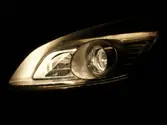
La luz de carretera debe sustituirse por la de cruce...
Main beam must be switched to dipped headlights...
- Aal circular por una autopista o una autovía.when driving on a motorway (autopista) or dual carriageway (autovía).
- Bcuando exista la posibilidad de deslumbrar a otros usuarios.when there is a chance of dazzling other road users.
- Ccuando haya niebla.when there is fog.
ExplanationMain beam must be replaced by dipped headlights as soon as there is a chance of dazzling other users of the same road or of any other transport route, especially drivers of oncoming vehicles; even if they do not follow this rule, we must not switch back to main beam until we have passed them.
¿De qué color será la luz de marcha atrás en un turismo?
What colour will the reversing light be on a car?
- ADe color amarillo.Yellow.
- BDe color blanco.White.
- CDe color rojo.Red.
ExplanationA car will have one or two white reversing lights fitted at the rear.
¿Qué alumbrado deberá llevar encendido una motocicleta durante el día?
Which lights must a motorcycle have on during the day?
- AEl de posición.The position light.
- BEl de corto alcance o de cruce.The dipped headlight.
- CDurante el día no es necesario llevar encendido ningún alumbrado.During the day no lights need to be on.
ExplanationMotorcycles on any road must have the dipped headlight on during the day.
¿Qué alumbrado usará una motocicleta durante el día?
Which lights will a motorcycle use during the day?
- ADurante el día no será necesario ningún alumbrado.During the day no lights will be needed.
- BEl alumbrado de corto alcance.The dipped headlight.
- CEl alumbrado de posición.The position light.
ExplanationWhenever motorcycles are ridden, they must use at least the dipped headlight.
Circulamos con nuestra motocicleta y comprobamos que la lámpara de la luz de corto alcance se ha averiado. ¿Estamos obligados a llevar un juego de lámparas en buen estado?
We are riding our motorcycle and find that the dipped headlight bulb has failed. Are we required to carry a set of working bulbs?
- ANo.No.
- BSí, además de las herramientas indispensables para el cambio de la lámpara.Yes, as well as the tools needed to change the bulb.
- CSí, además de dos bujías de repuesto y un juego de platinos.Yes, as well as two spare spark plugs and a set of contact points.
ExplanationNo, you are not required to carry a set of working bulbs.
Debe cambiar el alumbrado de largo alcance por el de corto alcance...
You must switch from main beam to dipped headlights...
- Acuando aprecie que puede deslumbrar a cualquier usuario de la vía.when you notice that you could dazzle any road user.
- Bcuando circule por una vía interurbana.when driving on a road outside a built-up area.
- Ccuando pueda deslumbrar sólo a los vehículos que circulen en sentido contrario.when you could dazzle only oncoming vehicles.
ExplanationUsing main beam is prohibited when there is a chance of dazzling other drivers or users of the same road or of any other transport route, whether oncoming or drivers of vehicles travelling in the same direction. On roads in built-up areas, main beam is completely prohibited because we could dazzle other road users, such as pedestrians.
¿Qué significado tiene una luz de color amarillo en el tablero de instrumentos?
What does a yellow light on the instrument panel mean?
- AQue los indicadores de dirección están en funcionamiento.That the direction indicators are working.
- BQue las luces de cruce están puestas.That the dipped headlights are on.
- CQue pude existir un fallo del motor.That there may be an engine fault.
ExplanationA yellow light on the dashboard can indicate, depending on the symbol with it, an engine fault, an ABS fault, a problem with the ESP, etc.
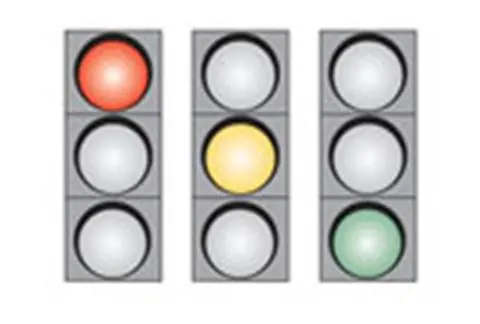
¿Qué luz obliga a detenerse?
Which light requires you to stop?
- ALa amarilla intermitente.Flashing amber.
- BLa amarilla fija.Steady amber.
- CLa verde.Green.
ExplanationA steady amber light requires you to stop just like a red light, unless, when it comes on, the vehicle is so close to the stop line that it cannot stop safely. Flashing amber only requires extra caution, and green allows you to go.
¿Puede mantener encendida la luz de largo alcance cuando efectúe una parada?
Can you keep main beam on when you make a stop?
- ANo, está prohibido.No, it is prohibited.
- BSí, en vías interurbanas.Yes, on roads outside built-up areas.
- CSí, cuando la vía está insuficientemente iluminada.Yes, when the road is poorly lit.
ExplanationUsing main beam is prohibited whenever the vehicle is stopped or parked.
¿Qué luces llevará encendidas una motocicleta circulando durante el día?
Which lights will a motorcycle have on when riding during the day?
- ADurante el día no será necesario utilizar ningún tipo de alumbrado.During the day no lights will need to be used.
- BLas luces de posición o las de corto alcance.The position light or the dipped headlight.
- CLas luces de corto alcance juntamente con las de posición.The dipped headlight together with the position light.
ExplanationMotorcycles must always use at least the position light together with the dipped headlight and, where required, the position light with main beam.
¿Qué luces son obligatorias en un túnel largo?
Which lights are compulsory in a long tunnel?
- ALuces de cruce o carreteraDipped headlights or main beam
- BSolo las de posiciónOnly sidelights
- CNinguna si está iluminadoNone, if the tunnel is lit
ExplanationDipped headlights or main beam in any tunnel.
Si circulando durante la noche nos encontramos con una nube de polvo o de humo que disminuye la visibilidad, ¿qué alumbrado utilizaremos?
If, while driving at night, we come across a cloud of dust or smoke that reduces visibility, which lights should we use?
- AEl alumbrado de largo alcance.Main beam.
- BLas luces de corto alcance o de cruce, no pudiendo utilizar las antiniebla delanteras.Dipped headlights, without being allowed to use the front fog lights.
- CLas luces de corto alcance o de cruce, pudiendo utilizar las antiniebla delanteras.Dipped headlights, with the option of using the front fog lights.
ExplanationWhen weather or environmental conditions reduce visibility, as in this case, where at night we will already be using at least dipped headlights, the front fog light may also be used.
¿Qué alumbrado utilizaremos al circular por una vía suficientemente iluminada dentro de poblado?
Which lights should we use when driving on a well-lit road in a built-up area?
- AEl alumbrado de posición.The position lights.
- BEl alumbrado de posición o el de corto alcance.The position lights or dipped headlights.
- CEl alumbrado de cruce con el de posición.Dipped headlights with the position lights.
ExplanationWhen driving on a well-lit road in a built-up area, we must use dipped headlights together with the position lights.
De noche, es obligatorio señalizar una carga que sobresale lateralmente más de 0,40 metros del borde exterior de la luz de posición delantera o trasera del vehículo.
At night, a load that sticks out sideways more than 0.40 metres beyond the outer edge of the vehicle's front or rear position light must be marked...
- ACon una luz blanca y un reflector blanco por delante, y con una luz roja y un reflector rojo por detrás.with a white light and a white reflector at the front, and a red light and a red reflector at the rear.
- BSolo con un panel reflectante por detrás.only with a reflective panel at the rear.
- CSolo con una luz roja y un reflector rojo por detrás.only with a red light and a red reflector at the rear.
ExplanationUnder the General Traffic Regulations, when a vehicle's load sticks out sideways more than 0.40 metres beyond the outer edge of the vehicle's position lights, the load must be properly marked to ensure the safety of other road users. This marking must include a white light and a white reflective device at the front, and a red light together with a red reflective device at the rear. This is set out in the relevant article on marking loads, ensuring visibility and safety when driving at night or in poor visibility. The answer with white at the front and red at the rear is correct because it meets these requirements exactly.
Vamos circulando y deseamos inmovilizar la motocicleta, ¿cómo advertiremos de nuestra intención a los conductores de los vehículos que circulan detrás si no lo hacemos mediante el empleo reiterado de las luces de frenado?
We are riding and want to stop the motorcycle. If we do not use the brake lights repeatedly, how will we warn the drivers of the vehicles behind of our intention?
- APoniendo el brazo izquierdo doblado hacia arriba con la palma de la mano extendida.By raising the left arm, bent upwards, with the palm of the hand open.
- BPoniendo el brazo izquierdo en posición horizontal con la palma de la mano extendida hacia abajo, si la inmovilización es a la izquierda.By holding the left arm out horizontally with the palm of the hand open and facing down, if stopping on the left.
- CMoviendo el brazo izquierdo alternativamente de arriba abajo con movimientos cortos y rápidos.By moving the left arm up and down with short, quick movements.
ExplanationThe correct answer is moving the left arm up and down with short, quick movements. This is because, when stopping the motorcycle or slowing down considerably, you must give warning, whenever possible, by repeatedly using the brake lights or by moving the arm up and down with short, quick movements.
Las motocicletas que no superan los 125cc, ¿tienen que llevar obligatoriamente instalada la luz de carretera?
Must motorcycles of no more than 125 cc be fitted with main beam?
- ANo.No.
- BSí, una sola luz.Yes, a single light.
- CSí, una o dos luces.Yes, one or two lights.
ExplanationMotorcycles, whatever their engine size, must have dipped headlights and main beam, and each may consist of one or two lights.
La regulación, el funcionamiento y el estado del sistema de alumbrado, ¿hay que revisarlo con frecuencia?
Should the adjustment, operation and condition of the lighting system be checked often?
- ASí.Yes.
- BNo, solo es necesario cambiar las bombillas cuando estén fundidas.No, you only need to change the bulbs when they have blown.
- CNo, con una vez cada dos o tres años es suficiente.No, once every two or three years is enough.
ExplanationThe lights must be checked often: all lights must work, the lenses must be clean and the adjustment must be correct. A blown or badly adjusted light reduces your own visibility and your ability to be seen, and it can dazzle others.
Si Ud. pretende adelantar al vehículo que circula delante, de noche, ¿qué alumbrado deberá utilizar Ud. cuando se encuentre detrás?
If you intend to overtake the vehicle in front at night, which lights must you use while you are behind it?
- ALa luz de largo alcance o de carretera.Main beam.
- BEs indiferente.It makes no difference.
- CLa luz de cruce o de corto alcance.Dipped headlights.
ExplanationWhile driving behind the vehicle you are going to overtake, you must use dipped headlights so as not to dazzle its driver through the mirrors. You can switch on main beam when you are alongside it, if it does not dazzle anyone coming the other way.
Si conduce y tiene dudas sobre la iluminación, ¿qué debe hacer?
If you are driving and are unsure about the lighting, what should you do?
- ASi tiene dudas, encienda las luces de cruce.If in doubt, switch on the dipped headlights.
- BSi tiene dudas, apague las luces para evitar deslumbrar a otros.If in doubt, switch off the lights to avoid dazzling others.
- CSi tiene dudas, encienda las luces de carretera.If in doubt, switch on main beam.
ExplanationWhen in doubt, the safest option is to switch on the dipped headlights: they let you see and, above all, be seen by others without dazzling them. Switching the lights off is never a good option when visibility is doubtful, and main beam can dazzle other drivers.
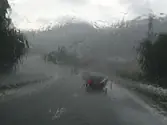
En caso de lluvia intensa, ¿es obligatorio circular con el alumbrado del vehículo encendido?
In heavy rain, is it compulsory to drive with the vehicle's lights on?
- ASí.Yes.
- BNo.No.
- CSolo entre la puesta y la salida del sol.Only between sunset and sunrise.
ExplanationWhen driving on any type of road in conditions where visibility is much lower than normal, such as fog, heavy rain, snowfall, clouds of smoke or dust or any similar situation, dipped headlights must also be used.
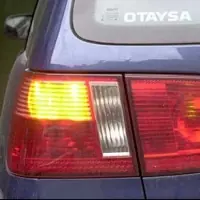
¿Cuantas luces indicadoras de dirección debe llevar un automóvil?
How many direction indicators must a motor car have?
- AUna como mínimo y tres como máximoAt least one and at most three.
- BDos mínimo o número parAt least two, or an even number.
- CTresThree.
ExplanationOur motor car must always have at least two direction indicators, always in even numbers and amber in colour.
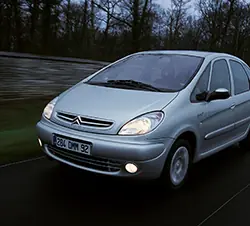
¿Es recomendable realizar un mantenimiento frecuente del sistema de alumbrado del vehículo?
Is it advisable to maintain the vehicle's lighting system frequently?
- ASí, porque circular con una iluminación deficiente incrementa la fatiga visual del conductor y el riesgo de accidente.Yes, because driving with poor lighting increases the driver's eye strain and the risk of an accident.
- BSí, por lo que es obligatorio realizar revisiones mensuales.Yes, so monthly checks are compulsory.
- CNo, solamente cuando tenga que someterse a la inspección técnica reglamentaria.No, only when it has to go through the regulation vehicle inspection (ITV).
ExplanationDriving with poor lights increases eye strain and the risk of an accident: you should check and clean the lights often, although there is no compulsory monthly check.
En un túnel con poca iluminación, ¿qué luces deben llevarse encendidas, como mínimo?
In a poorly lit tunnel, which lights must you have on, as a minimum?
- ASolo las luces de posición.Only the sidelights.
- BLas luces de posición y las de corto alcance (cruce).The sidelights and the dipped headlights.
- CLas luces de posición y las antiniebla delanteras.The sidelights and the front fog lights.
ExplanationIn tunnels you must always have at least the sidelights and dipped headlights on; sidelights alone are not enough, and fog lights do not replace dipped headlights. If the tunnel is not lit well enough and you will not dazzle anyone, at more than 40 km/h you use main beam (Articles 100 and 101).
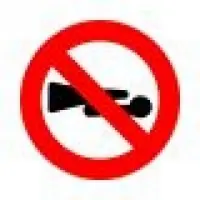
¿Deben los motocultores conducidos a pie estar provistos de claxon?
Must pedestrian-controlled two-wheel tractors be fitted with a horn?
- ASolo si tienen una MMA mayor a 1000 kgOnly if they have a maximum authorised mass (MAM) over 1,000 kg.
- BNo, no es necesarioNo, it is not necessary.
- CSi, todos los vehículos deben estar provistos de élYes, all vehicles must be fitted with one.
ExplanationAll motor vehicles, except pedestrian-controlled two-wheel tractors, must be fitted with a device that produces audible warnings, called a horn.
Cuando llueve intensamente, ¿debe encender las luces del ciclomotor?
When it is raining heavily, must you switch on the moped's lights?
- ASí, tanto de día como de noche, porque la visibilidad queda reducida.Yes, both day and night, because visibility is reduced.
- BNo, solo es obligatorio cuando hay niebla.No, it is only compulsory in fog.
- CSí, pero sólo si es de noche.Yes, but only at night.
ExplanationThe moped's lights must be switched on both day and night when it is raining heavily, because visibility is reduced. This makes the moped easier for other vehicles to see and reduces the chance of accidents.
All topics
- Definitions
- Documents and penalty points
- The driver's condition
- Duties of drivers and pedestrians
- Vehicle safety devices
- Vehicle controls and equipment
- Traffic signs, markings and signals
- The road and its lanes
- Speed and distances
- Manoeuvres
- Right of way
- Carrying passengers and loads
- Driving safely in difficult conditions
- Vehicle mechanics and maintenance
- Road accidents and first aid
- Defensive and eco-driving
Independent app: not affiliated with or endorsed by the DGT (Spain's Directorate-General for Traffic) or the Ministry of the Interior. The official exam is booked with the DGT and taken at its test centres. The questions here are practice material; the DGT's official question bank is not public.
Basado en datos de la Agencia Estatal Boletín Oficial del Estado (https://www.boe.es). Textos consolidados de carácter meramente informativo. La AEBOE no patrocina ni respalda este sitio.
Parte de las preguntas procede de los tests de la revista «Tráfico y Seguridad Vial» de la DGT, reproducidos con indicación de la fuente.