
DGT test · 839 questions
Vehicle lights and horn · Page 10 of 17
Side, dipped, main-beam, fog and hazard lights, and the horn: when each one is compulsory and when it is forbidden.
Questions in this topic, with answers
839 questions, 50 per page, with the correct answer and the explanation. Page 10 of 17.
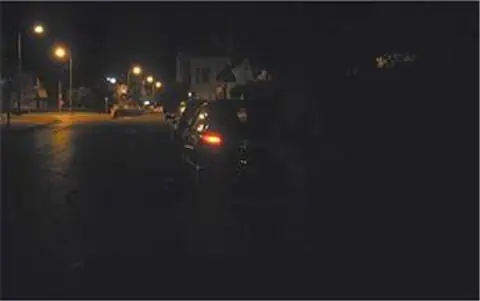
Estaciona en esta travesía insuficientemente iluminada, ¿qué luces debe dejar encendidas?
You park in this poorly lit travesía (stretch of road through a town). Which lights must you leave on?
- ALas luces de posición o las de estacionamiento.Sidelights or parking lights.
- BNinguna.None.
- CLas luces de corto alcance y las de emergencia.Dipped headlights and hazard warning lights.
ExplanationA vehicle stopped or parked at night in a poorly lit travesía must have its sidelights on; these may be replaced by parking lights (Article 105 of the General Traffic Regulations). Dipped headlights and hazard warning lights are not the right lights for this.
Las advertencias acústicas dentro de poblado sólo podrán utilizarse...
Inside built-up areas, the horn may only be used...
- APara evitar un posible accidente.to avoid a possible accident.
- BPara evitar un posible accidente y para advertir que se realiza un servicio urgente.to avoid a possible accident and to warn that you are on an emergency call.
- CPara evitar un posible accidente, para advertir que se realiza un servicio urgente y avisar de nuestro propósito de adelantar.to avoid a possible accident, to warn that you are on an emergency call and to warn that you intend to overtake.
ExplanationThe horn may only be used to avoid an accident, to warn others that we are there, to show that we are on an emergency call and may therefore use the lanes reserved for priority vehicles and, only on roads outside built-up areas, to warn that we intend to overtake.
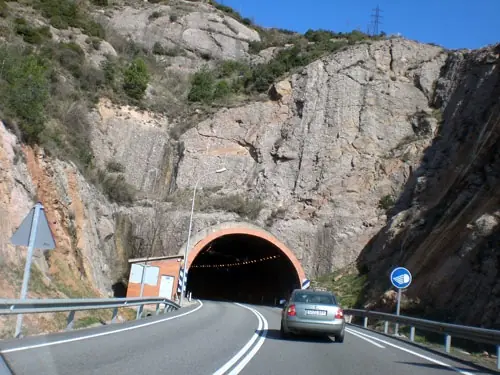
Para pasar por este túnel insuficientemente iluminado a más de 40 km/h, además de las luces de posición, debe utilizar las luces…
To drive through this insufficiently lit tunnel at more than 40 km/h, as well as the sidelights you must use…
- AAntiniebla, porque al estar más bajas iluminan una zona más amplia y aumentan la visibilidad.Fog lights, because they are lower, light up a wider area and increase visibility.
- BDe carretera, que debe sustituir por las de cruce tan pronto aprecie la posibilidad de deslumbrar a otros usuarios.The main beam, which you must switch to dipped headlights as soon as you notice it could dazzle other road users.
- CDe cruce o de corto alcance, siempre.Dipped headlights, always.
ExplanationIn insufficiently lit tunnels, at more than 40 km/h, you must use the main beam as well as the sidelights, and switch to dipped headlights as soon as it could dazzle someone (Articles 100 and 102 of the General Traffic Regulations). Fog lights do not replace the headlights.
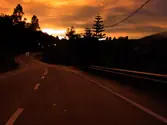
¿Es recomendable utilizar el alumbrado interior de su vehículo, circulando de noche en una vía insuficientemente iluminada?
Is it advisable to use your vehicle's interior light when driving at night on an insufficiently lit road?
- ANo, ya que en estas circunstancias, puede afectar negativamente a la visibilidad.No, because in these conditions it can make visibility worse.
- BSi, porque nos permite ver mejor dentro del vehículo.Yes, because it helps us see better inside the vehicle.
- CSi, se debe utilizar entre la puesta y la salida del sol.Yes, it must be used between sunset and sunrise.
ExplanationThe interior light (courtesy light) lets the driver, when outside light is not enough, find objects such as keys or glasses inside the car or in the glovebox, reach the vehicle documents or read a map, among other things, without dazzling or bothering other road users. Although the Regulations do not expressly prohibit it, for safety reasons it is not advisable to use it when driving on insufficiently lit roads, because the more light there is inside the vehicle, the less you can see outside. It is compulsory for public passenger transport vehicles.
¿Se permite usar señales acústicas en zonas pobladas?
Is the horn allowed in built-up areas?
- ASí, si el sonido no es molesto.Yes, if the sound is not annoying.
- BNo, en zonas pobladas están prohibidas.No, it is prohibited in built-up areas.
- CSí, para evitar un posible accidente.Yes, to avoid a possible accident.
ExplanationIn built-up areas, the horn may only be used as an exception and to avoid possible accidents, as Article 110 of the General Traffic Regulations says. This means that, although horn use is restricted and not general, in some situations it is necessary for road safety, especially on narrow roads or roads with many bends.
¿Por qué alumbrado debe sustituir al de carretera el vehículo que es adelantado de noche cuando la maniobra ya se ha efectuado?
Which lights must a vehicle that is overtaken at night use instead of main beam once the manoeuvre has been completed?
- AAlumbrado de cruceDipped headlights
- BAlumbrado de frenadoBrake lights
- CAlumbrado de posiciónSidelights
ExplanationMain beam must be replaced by dipped headlights as soon as it could dazzle vehicles coming in the opposite direction, or vehicles that have overtaken us once the overtaking manoeuvre is over.
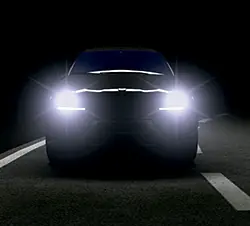
¿Es necesario revisar el funcionamiento del sistema de alumbrado de un vehículo?
Is it necessary to check that a vehicle's lights work?
- ASolo si el vehículo no lleva instaladas luces de xenón.Only if the vehicle does not have xenon headlights.
- BNo, no es necesario.No, it is not necessary.
- CSí; forma parte del mantenimiento preventivo.Yes, it is part of preventive maintenance.
ExplanationChecking the lights is part of preventive maintenance: all lights must work and be properly aimed so that you can see and be seen in any conditions.
Circulando con lluvia no intensa, ¿podremos utilizar el alumbrado antiniebla posterior?
When driving in light rain, may we use the rear fog light?
- ASí, si es de noche.Yes, if it is night-time.
- BSí, junto con el delantero antiniebla.Yes, together with the front fog lights.
- CNo, usaremos sólo el de corto alcance.No, we will use dipped headlights only.
ExplanationThe rear fog light may only be used in very heavy rain, thick fog, heavy snowfall or dense clouds of dust or smoke.
Si un turismo circula en condiciones de niebla no espesa, ¿qué luces de niebla puede utilizar?
If a car is driving in fog that is not dense, which fog lights may it use?
- ASólo se podrían utilizar las delanteras.Only the front ones.
- BSe podrían utilizar tanto las delanteras como las posteriores.Both the front and the rear ones.
- CNo se podrían utilizar ninguna de las dos.Neither of them.
ExplanationThe front fog light may be used in fog, even if it is not dense. The rear one must only be switched on when conditions are especially bad, such as dense fog, because otherwise it dazzles the drivers behind and can be confused with the brake lights.

¿Cual es la longitud máxima que debe tener un vehículo para poder llevar luz de estacionamiento?
What is the maximum length a vehicle can have to be allowed parking lights?
- A6 metros6 metres
- B4 metros4 metres
- C10 metros10 metres
ExplanationParking lights may only be fitted on vehicles up to 6 metres long and 2 metres wide. Longer vehicles, such as lorries, do not have them and use sidelights and, where fitted, end-outline marker lights.
¿Podremos usar la luz antiniebla delantera de forma independiente de la trasera?
May we use the front fog light independently of the rear one?
- ANo, pues al conectar las luces antiniebla se conectan todas a la vez.No, because when you switch on the fog lights they all come on at the same time.
- BSí, puesto que hay supuestos diferentes para usar el alumbrado delantero y el posterior antiniebla.Yes, because there are different cases for using the front and the rear fog lights.
- CLas usaremos a la vez, solo existe un mando único para el alumbrado antiniebla.We will use them together; there is only one switch for the fog lights.
ExplanationThere are different cases for using the front and the rear fog lights, so the vehicle has one switch for the front fog lights and another for the rear one.
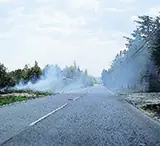
Hay una nube de humo. ¿Debe utilizarse algún tipo de alumbrado?
There is a cloud of smoke. Must any lights be used?
- ASólo si viene algún vehículo en sentido contrario.Only if a vehicle is coming in the opposite direction.
- BSí, la luz antiniebla delantera o la luz de corto o largo alcance.Yes, the front fog light or dipped headlights or main beam.
- CNo, porque es de día.No, because it is daytime.
ExplanationWhen smoke, fog or dust reduce visibility, the Regulations require you to switch on the front fog light or dipped headlights or main beam, even during the day: the aim is to see and be seen.
¿En caso de lluvia podrá utilizarse la luz antiniebla trasera?
May the rear fog light be used in rain?
- ANo en ningún caso.No, never.
- BSí, en caso de que sea lluvia muy intensa.Yes, if the rain is very heavy.
- CSí.Yes.
ExplanationREAR FOG LIGHT: - Fitting and using it are compulsory. - It must be red. - It must be used in DENSE fog, VERY heavy rain, HEAVY snowfall or THICK clouds of smoke or dust.
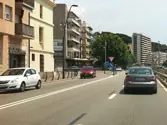
Circulando por una travesía insuficientemente iluminada, ¿qué alumbrado llevará encendido en su vehículo?
When driving through an insufficiently lit travesía (stretch of road through a town), which lights will you have on?
- ALa luz de largo alcance o carretera si no hay peligro de deslumbrar a otros usuarios de la vía.Main beam, if there is no danger of dazzling other road users.
- BLa luz de corto alcance o de cruce.Dipped headlights.
- CLa luz de posición únicamente.Only the sidelights.
ExplanationA travesía is the stretch of road that goes through a town. According to Article 101 of the General Traffic Regulations, in a built-up area on an insufficiently lit road you use dipped headlights. Main beam is only for poorly lit roads outside built-up areas, and sidelights alone are not enough.
¿Qué luces debemos usar para circular entre del ocaso y la salida del sol?
Which lights must we use when driving between sunset and sunrise?
- APosición.Sidelights.
- BPosición y corto alcance.Sidelights and dipped headlights.
- CPosición y largo alcance.Sidelights and main beam.
ExplanationEvery motor vehicle and moped driving between sunset and sunrise on sufficiently lit roads, inside or outside built-up areas, or at any time of day through sufficiently lit tunnels and other stretches of road covered by the ‘tunnel’ sign, must have dipped headlights on as well as the sidelights. The same lights must also be on in built-up areas when the road is insufficiently lit.
¿Puede circular por una vía interurbana con el alumbrado de largo alcance en caso de lluvia intensa o niebla densa?
May you drive on a road outside built-up areas with main beam in heavy rain or dense fog?
- ASí, pero no es recomendable porque el reflejo en la niebla o la lluvia le puede deslumbrar.Yes, but it is not advisable, because the reflection in the fog or rain can dazzle you.
- BNo, está prohibido.No, it is prohibited.
- CSí, porque en este caso la vía está insuficientemente iluminada.Yes, because in this case the road is insufficiently lit.
ExplanationIn bad weather or environmental conditions that greatly reduce visibility, using main beam may not be advisable because it can dazzle us. The best option would be to drive with dipped headlights and the appropriate fog lights.
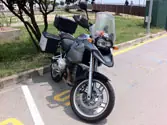
Una motocicleta, ¿puede llevar instaladas luces antiniebla?
May a motorcycle have fog lights fitted?
- ASí, de forma opcional, tanto en la parte delantera como trasera.Yes, optionally, both at the front and at the rear.
- BSí, pero únicamente en la parte trasera.Yes, but only at the rear.
- CNo, las motocicletas no pueden llevar luces antiniebla.No, motorcycles may not have fog lights.
ExplanationFront and rear fog lights are not compulsory on motorcycles.
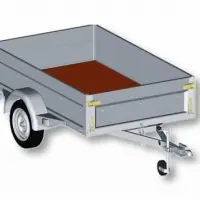
¿Es obligatorio para los remolques llevar la luz indicadora de dirección?
Must trailers have indicators?
- ANo, es opcionalNo, they are optional
- BSí, siempreYes, always
- CSi, pero únicamente en zonas residencialesYes, but only in residential areas
ExplanationIndicators are compulsory on trailers, as the Traffic Regulations say, so that the size and features of the trailer can be seen as well as the vehicle towing it.
¿Qué alumbrado usaremos circulando en estas circunstancias?
Which lights will we use when driving in these conditions?
- AAlumbrado de corto alcance y podremos usar la luz antiniebla delantera.Dipped headlights, and we may use the front fog light.
- BAlumbrado de corto alcance con el de antiniebla delantero y además el antiniebla posterior, aunque la niebla no sea densa.Dipped headlights with the front fog light and also the rear fog light, even if the fog is not dense.
- CLas dos respuestas anteriores son correctas.Both of the above answers are correct.
ExplanationThe front fog light may be used, optionally, in fog, however dense it is. The rear fog light must only be used in dense fog.
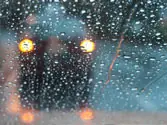
Circulando con lluvia muy intensa, ¿podemos encender el alumbrado posterior antiniebla?
When driving in very heavy rain, may we switch on the rear fog light?
- ASí, de forma opcional.Yes, optionally.
- BSí, de forma obligatoria.Yes, it is compulsory.
- CNo.No.
ExplanationWhen driving in very heavy rain we must use the rear fog light.
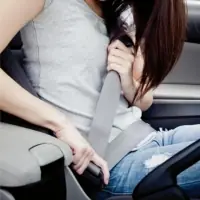
¿Qué se considera como seguridad primaria o activa?
What is meant by primary or active safety?
- ALa que debe tener un vehículo para proteger especialmente a los bebesThe safety a vehicle must have to protect babies in particular
- BLa que debe tener un vehículo para que ocurrido un accidente se minimicen las lesionesThe safety a vehicle must have so that injuries are minimised once an accident has happened
- CLa que debe tener un vehículo para evitar que se produzca un accidenteThe safety a vehicle must have to prevent an accident from happening
ExplanationPrimary or active safety is the safety every vehicle must have to prevent an accident from happening. The vehicle's lights, for example, are an active safety feature, because they help prevent an accident by helping the driver to see.

Un vehículo no prioritario que circule en servicio de urgencia, ¿tiene permitido utilizar las señales acústicas?
Is a non-priority vehicle on an emergency call allowed to use the horn?
- ASí, pero únicamente en poblado.Yes, but only in built-up areas.
- BSí, para avisar de su presencia a los demás usuarios.Yes, to warn other road users that it is there.
- CNo, sólo puede utilizar la señalización óptica.No, it may only use light signals.
ExplanationIf, because of especially serious circumstances, the driver of a non-priority vehicle is forced, with no other option, to carry out a service normally reserved for priority vehicles, they must make sure other road users notice the special situation. To do this they sound the horn intermittently and switch on the hazard warning lights, if the vehicle has them, or wave a handkerchief or similar. In all cases they must obey the traffic rules, especially at junctions.
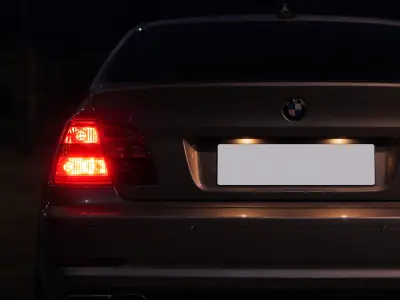
Es la luz de estacionamiento obligatoria para todos los vehículos de 4 metros?
Are parking lights compulsory on all 4-metre vehicles?
- ANoNo
- BSí, pero solo puede ser utilizada durante el díaYes, but they may only be used during the day
- CSí, para todos los vehículosYes, on all vehicles
ExplanationParking lights are optional on all vehicles and never compulsory on vehicles less than 6 metres long. They consist of a white light at the front, a red light at the rear and an amber light on the side. Do not confuse parking lights (optional) with sidelights (compulsory).
¿Qué luces hay que conservar encendidas en una detención en túnel o lugar cerrado?
Which lights must you keep on when you are held up in a tunnel or enclosed place?
- ALuces de posiciónSidelights
- BLuces de cruceDipped headlights
- CLuces de frenadoBrake lights
ExplanationIf you are held up in a tunnel or enclosed place because of a traffic jam for more than two minutes, it is advisable to stop the engine by switching it off and keep the sidelights on.
¿Cuándo está permitido usar las señales acústicas?
When is it permitted to use the horn?
- ASolo cuando circulo por vías urbanas.Only when I am driving on urban roads.
- BCuando circulo por cualquier vía.When I am driving on any road.
- CCuando quiero adelantar fuera de poblado.When I want to overtake outside built-up areas.
ExplanationUnder Article 110 of the RGC, the horn is only used exceptionally: to avoid a possible accident, to warn of your presence in the cases provided for and, outside built-up areas, to let another driver know you are going to overtake them.
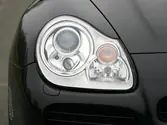
¿Qué luces se tendrán que encender si estamos detenidos en el arcén de una vía interurbana durante la noche?
Which lights must be on if we are stopped on the hard shoulder of a road outside built-up areas at night?
- APosición y corto alcance.Sidelights and dipped headlights.
- BPosición y emergencia.Sidelights and hazard warning lights.
- CPosición y largas.Sidelights and main beam.
ExplanationWe must leave the sidelights on because it is night, and the hazard warning lights because we are stopped.
Si nuestro ciclomotor de tres ruedas dispone de luz de carretera debemos encenderla de noche, por vías...
If our three-wheeled moped has main beam, we must switch it on at night on roads...
- AInterurbanas, suficiente o insuficientemente iluminadas.outside built-up areas, whether sufficiently or insufficiently lit.
- BInterurbanas insuficientemente iluminadas.outside built-up areas that are insufficiently lit.
- CUrbanas e interurbanas insuficientemente iluminadas.inside and outside built-up areas that are insufficiently lit.
ExplanationThe correct answer is roads outside built-up areas that are insufficiently lit. If we are riding a three-wheeled moped that has main beam, we must switch it on at night only on insufficiently lit roads outside built-up areas. On urban roads, or on sufficiently lit roads outside built-up areas, main beam is not needed.
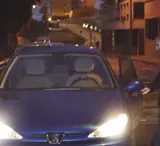
Es obligatorio el uso del alumbrado para los turismos...
Cars must use lights...
- AEntre la puesta y la salida del sol.between sunset and sunrise.
- BDurante el día al cruzar un paso a nivel.during the day when crossing a level crossing.
- CDurante el día en travesías de poblaciones.during the day on travesías through towns.
ExplanationCars must have their lights on between sunset and sunrise, and at any time in tunnels, underpasses and stretches with the ‘tunnel’ sign. Crossing a level crossing or a travesía during the day does not by itself require lights.
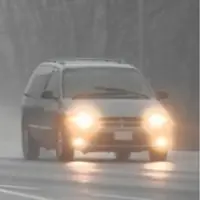
Su vehículo tiene luces antiniebla delanteras. ¿Cuándo debe encederlas?
Your vehicle has front fog lights. When must you switch them on?
- ACuando circulo por un carril adicional.When I drive in an additional lane.
- BCuando hay niebla, llueve o nieva intensamente.When there is fog, heavy rain or heavy snow.
- CCuando entro en los túneles.When I enter tunnels.
ExplanationThe main purpose of our vehicle's front fog light is to give more light on the road ahead when driving in bad weather that reduces visibility, such as fog, heavy rain, snow or clouds of smoke or dust.
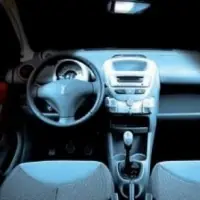
¿Qué tipo de vehículos de los siguientes deben llevar la luz de alumbrado interior obligatoriamente?
Which of the following vehicles must have an interior light?
- ALos camiones de mercancíasGoods lorries
- BLas furgonetas en generalVans in general
- CLos destinados al servicio de alquiler con conductorVehicles for hire with a driver
ExplanationThe interior light is the light used to light up the inside of the vehicle without dazzling or bothering other road users. It is optional on tractors, self-propelled machines and agricultural trailers, but compulsory on vehicles for hire with a driver and on public passenger transport.
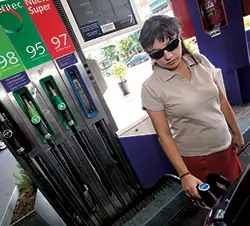
Al cargar combustible es obligatorio...
When refuelling, you must...
- Aparar el motor y apagar las luces del vehículo.stop the engine and switch off the vehicle's lights.
- Bparar el motor y encender la señal de emergencia.stop the engine and switch on the hazard warning lights.
- Cparar el motor y subir las ventanillas del vehículo.stop the engine and close the vehicle's windows.
ExplanationWhen refuelling you must stop the engine and switch off the lights and other electrical systems: fuel gives off flammable vapours and any spark could start a fire.
¿Qué luces debe utilizar un vehículo al circular dentro de un túnel?
Which lights must a vehicle use when driving inside a tunnel?
- ALuces de posiciónSidelights
- BLuces de cruce o carreteraDipped headlights or main beam
- CLuces antinieblaFog lights
ExplanationIn tunnels you must switch on dipped headlights (or main beam if there are no other vehicles).
¿Qué luz obliga al conductor a detenerse?
Which light requires the driver to stop?
- ALa luz amarilla intermitenteA flashing amber light
- BLa luz amarilla fijaA steady amber light
- CLa luz verdeA green light
ExplanationA steady amber light requires drivers to stop, just like a steady red light. When the traffic light shows a steady amber light, the driver must stop the vehicle before the stop line or before the carriageway they are approaching, unless they are so close that they cannot stop safely. This rule, included in the Traffic Code, keeps the road safe.
¿Qué alumbrado utilizaremos un día de lluvia?
Which lights will we use on a rainy day?
- AEl de posición solamente.Only the sidelights.
- BEl de posición con el de corto alcance.The sidelights with dipped headlights.
- CEl de largo alcance solamente.Only main beam.
ExplanationWhen driving in bad weather, you must use at least the sidelights together with dipped headlights.
¿Qué función tiene la luz de estacionamiento?
What are parking lights for?
- ASeñalizar la presencia de un vehículo en zona edificada.To show that a vehicle is there in a built-up area.
- BSeñalizar al automóvil en caso de emergencia.To signal the car in an emergency.
- CSeñalizar la presencia de un vehículo en zona agrícola.To show that a vehicle is there in an agricultural area.
ExplanationParking lights are used to show that a vehicle is parked on the carriageway or hard shoulder of an insufficiently lit travesía. In these conditions they replace the front and rear sidelights.
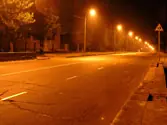
Circulando de noche,por una vía urbana suficientemente iluminada, ¿qué alumbrado usará?
When driving at night on a sufficiently lit urban road, which lights will you use?
- AEl alumbrado de posición de forma aislada.The sidelights on their own.
- BEl alumbrado de posición con el de corto alcance.The sidelights with dipped headlights.
- CEl alumbrado de posición con el de largo alcance.The sidelights with main beam.
ExplanationOn an urban road, whether sufficiently or insufficiently lit, we will always use the sidelights together with dipped headlights. Main beam is prohibited in built-up areas because we could dazzle other road users whom we may not see.
El conductor de un turismo debe circular con el alumbrado de su vehículo encendido...
The driver of a car must drive with the vehicle's lights on...
- Aentre la puesta y la salida del sol.between sunset and sunrise.
- Ben los puentes y pasos a nivel.on bridges and level crossings.
- Ccuando circule por un carril para vehículos de alta ocupación (VAO).when driving in an HOV lane (VAO).
ExplanationEvery vehicle driving between sunset and sunrise must have the appropriate lights on, and also at any time in tunnels (Article 98 of the General Traffic Regulations). In HOV (VAO) lanes you do not have to switch on lights during the day, and bridges or level crossings do not require it by themselves.
¿En qué tipo de vías está permitido hacer ráfagas con las luces de corto alcance?
On which roads are you allowed to flash your dipped headlights?
- ASólo en vías urbanas.Only on urban roads.
- BTanto en vías urbanas como en vías interurbanas.On both urban roads and roads outside built-up areas.
- CSólo en vías interurbanas.Only on roads outside built-up areas.
ExplanationFlashing the dipped headlights is allowed on both urban roads and roads outside built-up areas. This light signal is used to warn other drivers that the vehicle is there or of an immediate danger, and to warn that you are going to overtake. It is important to use it correctly and in moderation so as not to confuse or bother other drivers.
Dentro de un poblado, ¿se pueden alternar las luces cortas y largas a intervalos muy cortos?
In a built-up area, may you alternate dipped headlights and main beam at very short intervals?
- ANo, está prohibido.No, it is prohibited.
- BDentro de poblado en ningún caso, fuera sí.Never in a built-up area; outside, yes.
- CSí, para evitar un posible accidente.Yes, to avoid a possible accident.
ExplanationArticle 109.3 of the General Traffic Regulations allows light warnings, even in built-up areas, by alternating dipped headlights and main beam at very short intervals, for the same purpose as the horn, such as avoiding a possible accident, and without dazzling.
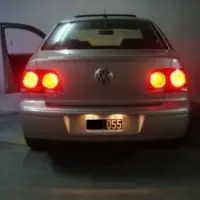
¿De qué color es la luz de posición trasera en los automóviles?
What colour is the rear sidelight on motor cars?
- AAmarillo autoAmber
- BRojoRed
- CBlancoWhite
ExplanationCars must have two red rear sidelights, placed at the outer edges of the vehicle.
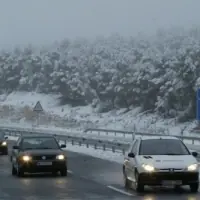
¿Cual es la finalidad de la luz de corto alcance?
What are dipped headlights for?
- ANotificar de la intención de girarTo show that you intend to turn
- BAlumbrar de nocheTo light the way at night
- CAlumbrar de díaTo light the way during the day
ExplanationThe purpose of dipped headlights is to light the road in front of the vehicle at night, so they are among the lights used to see, not to be seen.
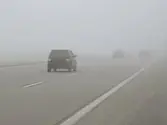
Es de día, hay niebla y no lleva luces antiniebla delanteras. ¿Qué luces debe encender?
It is daytime, there is fog and you have no front fog lights. Which lights must you switch on?
- ALas luces largas.Main beam.
- BLas luces de posición solamente.Only the sidelights.
- CLas luces cortas.Dipped headlights.
ExplanationIf we do not have front fog lights, we must use dipped headlights at any time of day on roads where weather or environmental conditions greatly reduce visibility, such as fog, heavy rain, snowfall, clouds of smoke or dust, or any similar situation.
¿Qué alumbrado utilizaremos al circular por una vía urbana suficientemente iluminada?
Which lights will we use when driving on a sufficiently lit urban road?
- ANinguno, por estar suficientemente iluminada.None, because it is sufficiently lit.
- BEl alumbrado de corto alcance o de cruce.Dipped headlights.
- CEl alumbrado de posición.Sidelights.
ExplanationWhen driving inside a built-up area, whether the road is sufficiently or insufficiently lit, we will use dipped headlights.
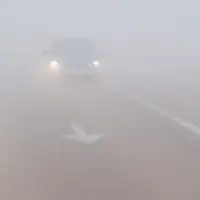
Con niebla que reduce sensiblemente la visibilidad, ¿está permitido conducir solo con los alumbrados de posición y corto alcance?
In fog that greatly reduces visibility, are you allowed to drive with only the sidelights and dipped headlights?
- ANo, debe encender la luz antiniebla delantera en todos los casos.No, you must switch on the front fog light in all cases.
- BSí, cuando el vehículo no dispone de luces antiniebla delanteras.Yes, when the vehicle has no front fog lights.
- CNo, debe encender obligatoriamente la luz antiniebla delantera y trasera.No, you must switch on both the front and the rear fog lights.
ExplanationArticle 106 of the General Traffic Regulations allows you, in fog, to use the front fog light or dipped headlights or main beam. So if the vehicle has no front fog light, sidelights and dipped headlights are enough. The rear one is only for dense fog.
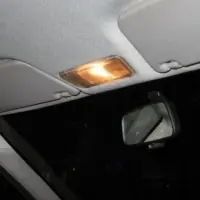
¿Para qué sirve la luz de alumbrado interior?
What is the interior light for?
- APara iluminar el maletero cuando se abreTo light up the boot when it is opened
- BPara iluminar el habitáculo del vehículoTo light up the inside of the vehicle
- CPara iluminar el capó cuando se abreTo light up the bonnet when it is opened
ExplanationThe interior light is the light used to light up the inside of the vehicle without dazzling or bothering other road users.
Cuando llueve mucho, ¿es obligatorio usar las luces?
When it rains a lot, is it compulsory to use lights?
- ANo, si es de día.No, if it is daytime.
- BSí.Yes.
- CSolo por la noche.Only at night.
ExplanationIn Spain, you must use lights in weather conditions that greatly reduce visibility, such as heavy rain. This is set out in Article 106 of the General Traffic Regulations, which says drivers must switch on their lights when visibility is poor, for safety on the road. Driving without lights in these conditions is a serious offence. So the correct answer is that you must use some lights when driving in heavy rain.
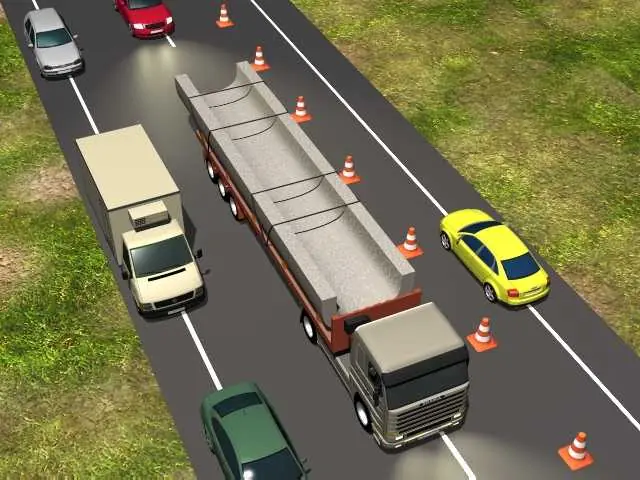
Por un arcén que se utiliza como carril adicional, ¿qué luces deben llevar encendidas los vehículos que circulan por él?
On a hard shoulder being used as an additional lane, which lights must the vehicles driving on it have on?
- ADeben llevar el alumbrado de cruce, pero solo durante el día.They must have dipped headlights on, but only during the day.
- BDeben llevar el alumbrado de cruce, tanto de noche como de día.They must have dipped headlights on, both at night and during the day.
- CDeben llevar las luces de cruce de noche y las luces de posición durante el día.They must have dipped headlights on at night and sidelights during the day.
ExplanationWhen the hard shoulder is opened as an additional lane, those driving on it and in that lane must have at least dipped headlights on, both by day and by night (Articles 42 and 104 of the General Traffic Regulations). Sidelights are not enough during the day.
En un túnel suficientemente iluminado, ¿qué luces debe llevar encendidas en su vehículo?
In a sufficiently lit tunnel, which lights must you have on in your vehicle?
- ASólo las luces de posición.Only the sidelights.
- BNinguna.None.
- CLas luces de posición y las de cruce, obligatoriamente.The sidelights and the dipped headlights; this is compulsory.
ExplanationArticle 101.1 of the General Traffic Regulations requires every motor vehicle driving through a sufficiently lit tunnel, at any time of day, to have its dipped (short-range) headlights on as well as its sidelights. Sidelights alone are not enough, and the tunnel lighting does not exempt you from switching on your lights.
¿Puede una motocicleta llevar instalada la señal de emergencia?
Can a motorcycle be fitted with hazard warning lights?
- ASí, es opcional.Yes, they are optional.
- BNo, está prohibido.No, they are prohibited.
- CSí, es obligatorio.Yes, they are compulsory.
ExplanationUnder Article 17 of the General Vehicle Regulations, direction indicators with a hazard warning function are among the optional devices for motorcycles. So a motorcycle may be fitted with hazard warning lights, but it does not have to be.
¿Podrá llevar un ciclomotor dos proyectores de luz de corto alcance o de cruce?
May a moped have two dipped headlights?
- ANo, en ningún caso, el ciclomotor sólo puede llevar una luz de cruce.No, never; a moped may only have one dipped headlight.
- BSí.Yes.
- CSí, pero solo si es un cuadriciclo ligero.Yes, but only if it is a light quadricycle.
ExplanationAccording to the General Vehicle Regulations, a two-wheeled moped may have one or two dipped headlights, and on three-wheeled mopeds and light quadricycles more than 1,300 mm wide, two are compulsory. So a moped may have two dipped headlights.
All topics
- Definitions
- Documents and penalty points
- The driver's condition
- Duties of drivers and pedestrians
- Vehicle safety devices
- Vehicle controls and equipment
- Traffic signs, markings and signals
- The road and its lanes
- Speed and distances
- Manoeuvres
- Right of way
- Carrying passengers and loads
- Driving safely in difficult conditions
- Vehicle mechanics and maintenance
- Road accidents and first aid
- Defensive and eco-driving
Independent app: not affiliated with or endorsed by the DGT (Spain's Directorate-General for Traffic) or the Ministry of the Interior. The official exam is booked with the DGT and taken at its test centres. The questions here are practice material; the DGT's official question bank is not public.
Basado en datos de la Agencia Estatal Boletín Oficial del Estado (https://www.boe.es). Textos consolidados de carácter meramente informativo. La AEBOE no patrocina ni respalda este sitio.
Parte de las preguntas procede de los tests de la revista «Tráfico y Seguridad Vial» de la DGT, reproducidos con indicación de la fuente.