
DGT test · 839 questions
Vehicle lights and horn · Page 3 of 17
Side, dipped, main-beam, fog and hazard lights, and the horn: when each one is compulsory and when it is forbidden.
Questions in this topic, with answers
839 questions, 50 per page, with the correct answer and the explanation. Page 3 of 17.
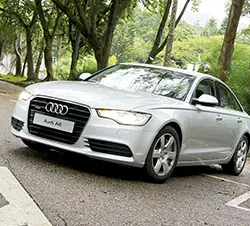
De día es obligatorio encender el alumbrado que corresponda cuando se circule...
During the day, it is compulsory to switch on the appropriate lights when driving...
- Apor un puente móvil.over a movable bridge.
- Bpor un carril reservado a vehículos con alta ocupación (VAO).in a lane reserved for high-occupancy vehicles (HOV lane, VAO).
- Cpor pasos inferiores o tramos de vía afectados por la señal "Túnel".through underpasses or stretches of road covered by the 'Tunnel' sign.
ExplanationThe Regulations require you to drive with lights on during the day as well through tunnels, underpasses and stretches covered by the 'Tunnel' sign; there is no such specific requirement on movable bridges or in HOV lanes (VAO).
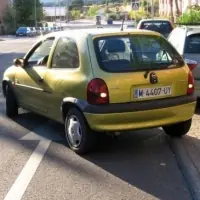
¿Cuantas luces de estacionamiento debe tener un vehículo?
How many parking lights must a vehicle have?
- AÚnicamente dos luces traserasOnly two rear lights.
- BTres delanteras y tres traserasThree at the front and three at the rear.
- CDos delanteras y dos traserasTwo at the front and two at the rear.
ExplanationThe parking lights consist of two white lights at the front and two red lights at the rear, in the same place as the position lights. Parking lights may only be used instead of the position lights on poorly lit travesías (stretches of road through a town) when the vehicle is parked parallel to the kerb.
El alumbrado, los neumáticos y los frenos forman parte del sistema de...
The lights, tyres and brakes are part of the system of...
- Aconducción eficiente.eco-driving.
- Bseguridad pasiva.passive safety.
- Cseguridad activa.active safety.
ExplanationIn the General Traffic Regulations and the Traffic and Road Safety Code, the elements that allow the driver to control the vehicle and prevent accidents while driving are classed as 'active safety'. The lights, tyres and brakes are essential devices that ensure visibility, grip and stopping of the vehicle; so they are part of active safety. Passive safety, on the other hand, includes devices that protect the occupants once a collision happens (seat belts, energy-absorbing structures, airbags). Eco-driving refers to systems aimed at reducing fuel consumption and emissions, but it does not directly affect control of the vehicle.
¿Es obligatorio usar la luz antiniebla trasera cuando la lluvia es muy intensa?
Is it compulsory to use the rear fog light when the rain is very heavy?
- ASí.Yes.
- BNo, es opcional.No, it is optional.
- CNo, sólo debo usarla en caso de niebla muy densa.No, I should only use it in very dense fog.
ExplanationUnder Article 106.2 of the RGC, the rear fog light must be switched on in especially unfavourable conditions, such as thick fog, very heavy rain, heavy snowfall or dense clouds of dust or smoke. It is not used in moderate rain or drizzle, because it dazzles those driving behind.
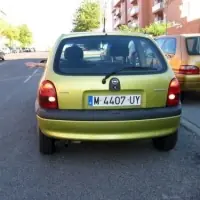
¿Como debe ser la luz de marcha atrás?
What must the reversing light be like?
- ADeslumbrante y visibleDazzling and visible.
- BNo deslumbrante y visibleNot dazzling and visible.
- CNo deslumbrante y no visibleNot dazzling and not visible.
ExplanationThe reversing light consists of one or two lights, not dazzling and visible both by day and at night, which must be placed at the rear of the vehicle. Its purpose is to warn other road users that the vehicle is reversing.
¿Cuándo se considera que una vía está mal iluminada?
When is a road considered poorly lit?
- ACuando no se puede leer la matrícula a 10 metros.When you cannot read a number plate at 10 metres.
- BCuando no se puede distinguir un vehículo oscuro a 100 metros.When you cannot make out a dark vehicle at 100 metres.
- CCuando no se puede leer la matrícula a 50 metros.When you cannot read a number plate at 50 metres.
ExplanationA road is considered poorly lit when you cannot read a number plate at 10 metres. This rule is set out in the General Traffic Regulations, in the article that defines adequate road lighting. Not being able to read at this distance shows that visibility is poor, which can put road safety at risk.
Circulando durante la noche por una vía dentro de poblado, ¿qué alumbrado utilizaremos?
When driving at night on a road in a built-up area, which lights should we use?
- AEl de posición solamente.Only the position lights.
- BEl de corto alcance.Dipped headlights.
- CEl de largo alcance.Main beam.
ExplanationOn a road in a built-up area we do not use main beam; at night we always use dipped headlights.
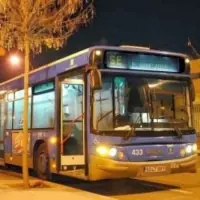
¿Puede un vehículo de 1,90 metros de ancho llevar la luz de gálibo?
Can a vehicle 1.90 metres wide have end-outline marker lights?
- ASi, pero es opcionalYes, but they are optional.
- BNo, solo deben llevarla los vehículos de mas de 2 metros de anchoNo, only vehicles more than 2 metres wide may have them.
- CSi, es obligatorioYes, they are compulsory.
ExplanationEnd-outline marker lights must be fitted on vehicles more than 2.10 metres wide, as close as possible to the highest outer edge of the vehicle. Fitting them is optional on vehicles between 1.80 and 2.10 metres wide.
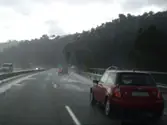
Al circular con lluvia intensa, ¿es obligatorio utilizar algún alumbrado?
When driving in heavy rain, is it compulsory to use any lights?
- ANo, cuando es de día.No, when it is daytime.
- BSí.Yes.
- CSólo durante la noche.Only at night.
ExplanationDipped headlights must be used together with the position lights at any time of day, on roads inside and outside built-up areas, in weather or environmental conditions that greatly reduce visibility, such as fog, heavy rain, snowfall, clouds of smoke or dust, or any similar situation. In these cases, dipped headlights may be used alone or together with the front fog light.
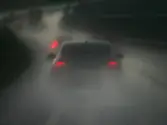
¿Es obligatorio que un turismo tenga instalada la luz posterior antiniebla?
Must a car be fitted with a rear fog light?
- ANo, pero es aconsejable.No, but it is advisable.
- BSí.Yes.
- CSí, pero su uso es opcional.Yes, but using it is optional.
ExplanationAll cars must be fitted with a rear fog light. Using it is also compulsory in thick fog, very heavy rain, heavy snowfall or dense clouds of dust or smoke.
El sistema de alumbrado de los vehículos...
The vehicle lighting system...
- Asirve para ver bien de noche.is for seeing well at night.
- Bsirve para que el conductor vea bien la carretera.is for the driver to see the road well.
- Csirve para que el conductor vea bien la carretera, y su vehículo sea visto por los demás conductores.is for the driver to see the road well and for the vehicle to be seen by other drivers.
ExplanationVehicles have lights that make up the so-called lighting and light-signalling devices or systems. Their purpose is to let the driver see and to let their vehicle be seen by other road users.
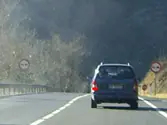
El vehículo de la imagen está circulando con la luz antiniebla posterior, ¿es correcto?
The vehicle in the picture is driving with the rear fog light on. Is this correct?
- ASí, porque hay niebla.Yes, because there is fog.
- BNo, porque la niebla no es densa.No, because the fog is not dense.
- CSí, se podrá usar opcionalmente cuando exista un poco de niebla.Yes, it may be used optionally when there is a little fog.
ExplanationFRONT FOG LIGHT: - Fitting and using it is NOT compulsory. - It is white or selective yellow. - It may be used, if you choose, in fog, heavy rain, snowfall, clouds of smoke or dust, or in similar conditions. - It may also be used on narrow roads with many bends, that is, roads with a carriageway 6.5 m wide or less that are marked with 'dangerous bends' signs. REAR FOG LIGHT: - Fitting and using it is compulsory. - It is red. - It must be used in THICK fog, VERY heavy rain, HEAVY snowfall or DENSE clouds of smoke or dust (it is prohibited to use it in other situations). During the day, the front fog light may be on with just the position lights, but it can also be used together with dipped headlights or main beam. At night, it must be used at least with dipped headlights. During the day, the rear fog light must be used at least together with the front fog light or dipped headlights. At night, at least with dipped headlights.
Dentro de un túnel es obligatorio circular con…
Inside a tunnel it is compulsory to drive with…
- Aluz de cruce (cortas), como mínimo.dipped headlights, at least.
- Bluz de carretera (largas).main beam headlights.
- Csolo las luces de posición, si el túnel está bien iluminado.only the sidelights, if the tunnel is well lit.
ExplanationThe 'Tunnel' sign (S-5) means lights must be on at any time of day (Article 98.1 of the General Traffic Regulations). Even if the tunnel is well lit, you must use dipped headlights as well as sidelights (Article 101.1); main beam only if the tunnel is poorly lit, you are driving at more than 40 km/h and you will not dazzle anyone.
Al conducir con visibilidad muy reducida, ¿es obligatorio encender la luz antiniebla trasera?
When driving with very reduced visibility, is it compulsory to switch on the rear fog light?
- ANo, es opcional.No, it is optional.
- BSí, pero solo si circula por autopista o autovía.Yes, but only if you are driving on a motorway (autopista) or dual carriageway (autovía).
- CSí, para señalar su posición a otros usuarios de la vía.Yes, to show your position to other road users.
ExplanationWhen conditions are especially unfavourable and visibility is very reduced (thick fog, very heavy rain, heavy snowfall), the rear fog light must be on, on any type of road (Article 106.2 of the General Traffic Regulations), so that those behind can see the vehicle.
Si dos vehículos se cruzan en una curva con las luces largas encendidas, ¿cuál de los dos pasará antes a las luces de cruce?
If two vehicles with main beam on meet on a bend, which of them will switch to dipped headlights first?
- AEl que circula por la parte exterior de la curva.The one on the outside of the bend.
- BEl que circula por la parte interior de la curva.The one on the inside of the bend.
- CNinguno de los dos.Neither of them.
ExplanationArticle 102 of the General Traffic Regulations requires you to switch to dipped headlights as soon as you could dazzle someone else. On a bend, the headlights of the vehicle on the inside point towards the opposite lane and dazzle sooner, so it is that vehicle that must switch first.
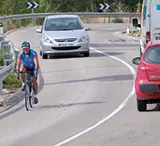
Si es necesario avisar a un ciclista con señales acústicas, ¿cómo deben realizarse?
If you need to warn a cyclist with the horn, how should you do it?
- AA cierta distancia del ciclista, para evitar que se asuste.At some distance from the cyclist, so as not to frighten them.
- BEs indiferente.It makes no difference.
- CCerca del ciclista.Close to the cyclist.
ExplanationWe should avoid using the horn close to cyclists. If we do use it, it must be at a sufficient distance so as not to frighten them.
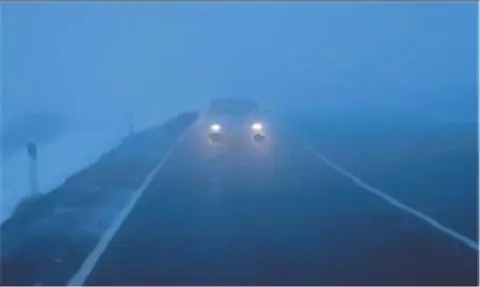
En caso de niebla, si el vehículo no dispone de luz antiniebla delantera, ¿qué alumbrado debe utilizar?
In fog, if the vehicle has no front fog light, which lights must you use?
- AEl de posición y el de corto o largo alcance.Sidelights and dipped headlights or main beam.
- BEl de posición y las luces de emergencia.Sidelights and hazard warning lights.
- CEl de corto y el de largo alcance, junto a las luces de emergencia.Dipped headlights and main beam, together with hazard warning lights.
ExplanationIn fog you must have your lights on. If the vehicle has no front fog light, you use the sidelights together with the dipped headlights or the main beam (Articles 99 and 106 of the General Traffic Regulations). Hazard warning lights do not replace headlights.
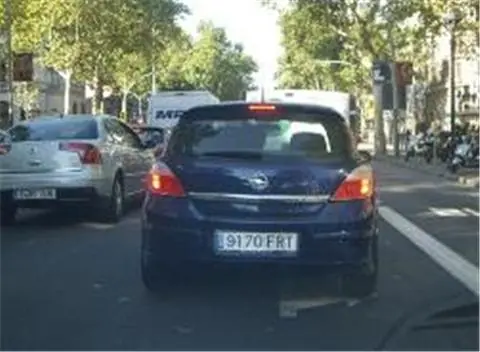
Un catadióptrico es...
A reflector is...
- Aun dispositivo que refleja la luz de otros vehículos.a device that reflects the light of other vehicles.
- Bun dispositivo de alumbrado del vehículo.a vehicle lighting device.
- Cuna placa de matricula reflectante.a reflective number plate.
ExplanationA reflector is a reflective device: it does not give out its own light, but sends back the light that reaches it from other vehicles' headlights, which makes the vehicle visible at night even with its lights off.
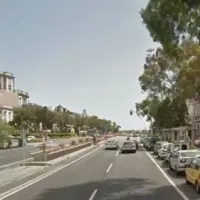
En una travesía con iluminación insuficiente, ¿es necesario llevar encendidas las luces de cruce?
On a poorly lit travesía (stretch of road through a town), is it necessary to have dipped headlights on?
- ANo, se deberán utilizar las luces de largo alcance.No, main beam must be used.
- BNo, las luces de cruce únicamente se deben encender en travesías suficientemente iluminadas.No, dipped headlights must only be switched on in well-lit travesías.
- CSí.Yes.
ExplanationAll motor vehicles and mopeds driving between sunset and sunrise on poorly lit roads in built-up areas and travesías must have dipped headlights on.
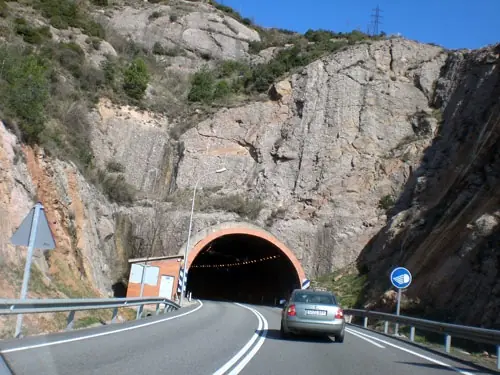
A partir de esta señal es obligatorio llevar encendido, al menos, el alumbrado de…
From this sign onwards, which lights must you at least have switched on?
- APosición.Sidelights.
- BLargo alcance.Main beam.
- CCorto alcance.Dipped headlights.
ExplanationThis is the compulsory dipped headlights sign (R-413), common at tunnel entrances. From this sign you must have at least your dipped headlights on, by day or by night, until the end sign; sidelights alone do not meet this requirement.
Circulando de noche por una vía interurbana suficientemente iluminada, además de las luces de posición, ¿debemos encender alguna otra luz?
When driving at night on a well-lit road outside a built-up area, must we switch on any other lights as well as the position lights?
- ASí, las luces de cruce.Yes, dipped headlights.
- BNo, porque la vía está iluminada.No, because the road is lit.
- CSí, las de carretera.Yes, main beam.
ExplanationDipped headlights must be switched on, as well as the position lights, on a well-lit road outside a built-up area, to ensure better visibility and to be seen by other drivers.
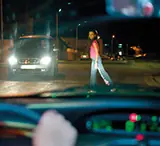
Para circular de noche por una travesía. ¿Qué luces son obligatorias?
To drive at night on a travesía (stretch of road through a town), which lights are compulsory?
- ALas de posición y las cortas.Position lights and dipped headlights.
- BLas de posición y las largas.Position lights and main beam.
- CLas de posición solamente.Only position lights.
ExplanationAt night on a travesía, it is compulsory to have the position lights and dipped headlights on. Main beam must not be used on urban stretches because it would dazzle other road users.
Circulando por un paso inferior suficientemente iluminado ¿es necesario encender algún tipo de alumbrado?
When driving through a well-lit underpass, is it necessary to switch on any lights?
- ASí, el alumbrado de posición y el de corto alcanceYes, the position lights and dipped headlights.
- BNo, no se deberá encender alumbrado ya que la vía está suficientemente iluminadaNo, no lights need to be switched on because the road is well lit.
- CSí, el alumbrado de posición únicamente, para que los demás usuarios de la vía nos veanYes, only the position lights, so that other road users can see us.
ExplanationEvery motor vehicle or moped driving through well-lit underpasses or tunnels must have dipped headlights on as well as the position lights.
Una motocicleta ¿cuántas luces de corto alcance llevará?
How many dipped headlights will a motorcycle have?
- AUna.One.
- BDos.Two.
- CUna o dos.One or two.
ExplanationMotorcycles may have 1 or 2 white lights, both for dipped beam and for main beam.
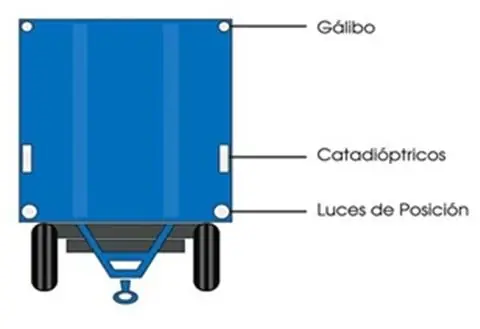
¿Qué vehículos deben llevar encendidas las luces de gálibo cuando sea obligatorio su uso?
Which vehicles must have the end-outline marker lights on when their use is compulsory?
- ALos que transporten mercancías peligrosas.Those carrying dangerous goods.
- BLos que tengan una anchura superior a 2,10 metros.Those more than 2.10 metres wide.
- CLos de asistencia en carretera.Roadside assistance vehicles.
ExplanationAccording to Article 99 of the General Traffic Regulations, when lights are compulsory, vehicles more than 2.10 metres wide must have the end-outline marker lights on, as well as the position lights. These lights show the vehicle's size so that other drivers can see it.
Si circulamos de día con niebla espesa, ¿qué luces debemos llevar encendidas como mínimo?
If we are driving during the day in thick fog, which lights must we have on as a minimum?
- ALuces de cruce o luces largas.Dipped headlights or main beam.
- BLuz antiniebla trasera y luces de cruce.Rear fog light and dipped headlights.
- CLuz antiniebla trasera y delantera, más luces de cruce.Rear and front fog lights, plus dipped headlights.
ExplanationIn thick fog the rear fog light is compulsory, and at the front you must use the front fog light or the dipped headlights or main beam (Article 106.2 of the General Traffic Regulations). So the minimum required is the rear fog light plus dipped headlights; the front fog light is optional.
¿Qué alumbrado usaremos para circular por una travesía insuficientemente iluminada?
Which lights should we use to drive on a poorly lit travesía (stretch of road through a town)?
- AAlumbrado de posición.Position lights.
- BAlumbrado de corto alcance.Dipped headlights.
- CAlumbrado de largo alcance.Main beam.
ExplanationA travesía is inside a built-up area, so the same rules apply as on a road in a built-up area: we use dipped headlights together with the position lights.
Con lluvia no intensa, ¿qué alumbrado antiniebla usaremos?
In rain that is not heavy, which fog lights should we use?
- AEl alumbrado antiniebla delantero.The front fog light.
- BEl alumbrado antiniebla posterior.The rear fog light.
- CNo usaremos ningún alumbrado antiniebla.We will not use any fog lights.
ExplanationArticle 106 of the General Traffic Regulations keeps the front fog light for fog, heavy rain, snowfall or clouds of smoke or dust, and the rear fog light for especially unfavourable conditions. In rain that is not heavy, neither is used: dipped headlights are enough.
Al entrar en un túnel suficientemente iluminado situado fuera de poblado, ¿qué alumbrado debe encenderse?
When entering a sufficiently lit tunnel outside a built-up area, which lights must be switched on?
- AEl alumbrado de posición y la luz antiniebla delantera.The sidelights and the front fog light.
- BEl alumbrado de posición y el de cruce.The sidelights and the dipped headlights.
- CSolamente el alumbrado de posición.Only the sidelights.
ExplanationIn a sufficiently lit tunnel you must have the sidelights and the dipped headlights on, at any time of day (Article 101 of the General Traffic Regulations). Sidelights alone are not enough, and fog lights do not replace dipped headlights.
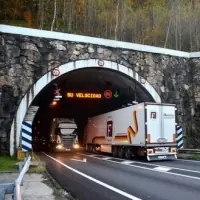
¿Qué luces hay que encender cuando se conduce en un túnel suficientemente iluminado fuera de poblado?
Which lights must be switched on when driving through a sufficiently lit tunnel outside built-up areas?
- ASolo la luz de posición.Only the sidelights.
- BLa luz de posición y la luz antiniebla delantera.The sidelights and the front fog light.
- CLa luz de posición y la luz corta.The sidelights and the dipped headlights.
ExplanationUnder Article 101.1 of the RGC, in tunnels, underpasses and road sections marked with the “Tunnel” sign that are sufficiently lit, the sidelights and the dipped headlights must be switched on at any time of day. The parking light only marks a parked vehicle.
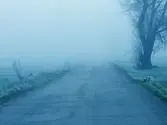
Circulando con niebla muy espesa, ¿deberemos llevar encendido obligatoriamente el alumbrado delantero antiniebla?
When driving in very thick fog, must we have the front fog lights on?
- ANo.No.
- BSí, junto con el alumbrado de carretera.Yes, together with main beam.
- CSí.Yes.
ExplanationFront fog lights are optional to fit and to use: they may be switched on in fog, heavy rain or snowfall, but they are not compulsory. In very thick fog what is compulsory is to have the rear fog light on, together with the sidelights and dipped headlights.
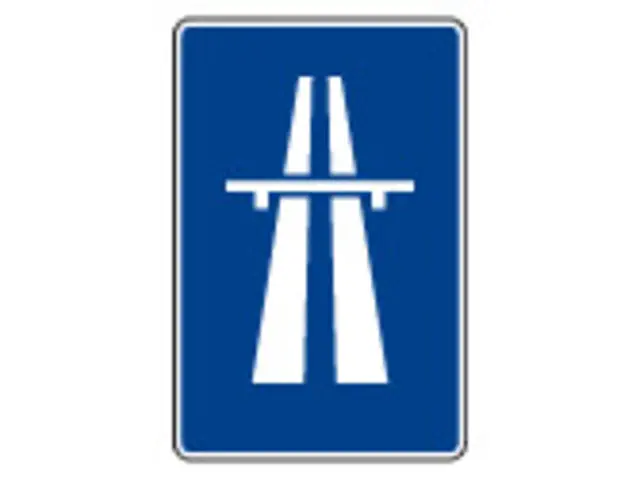
Por una avería y de día, ¿qué debe hacer si su vehículo queda inmovilizado en una autopista?
During the day, what must you do if your vehicle breaks down and comes to a standstill on a motorway (autopista)?
- AColocar 2 triángulos de señalización a 50 metros y visibles desde 100 metros.Place 2 warning triangles 50 metres away, visible from 100 metres.
- BColocar el dispositivo de señalización en la parte más alta posible del vehículo para que sea bien visible y encender las luces de emergencia.Place the warning device as high as possible on the vehicle so that it can be seen clearly, and switch on the hazard warning lights.
- CAvisar lo antes posible desde un poste SOS.Call for help as soon as possible from an SOS post.
ExplanationSince 2026 the hazard warning device is the V-16 light, which is placed on the highest part of the vehicle without having to step onto the carriageway. Article 130 of the General Traffic Regulations requires you to use it and to switch on the hazard warning lights if the vehicle comes to a standstill because of a breakdown.
Es de día, hay niebla y el vehículo no tiene luces antiniebla delanteras. ¿Qué luces debe encender?
It is daytime, there is fog and the vehicle has no front fog lights. Which lights must you switch on?
- ANinguna, porque es de día.None, because it is daytime.
- BSolo las luces de posición.Only the sidelights.
- CLuces de cruce (cortas).Dipped headlights.
ExplanationIn fog you must switch on your lights even during the day: the front fog lights or, if there are none, dipped headlights or main beam (Article 106 of the General Traffic Regulations (RGC)). Dipped headlights are the right choice because they reflect less in the fog; sidelights alone are not enough.
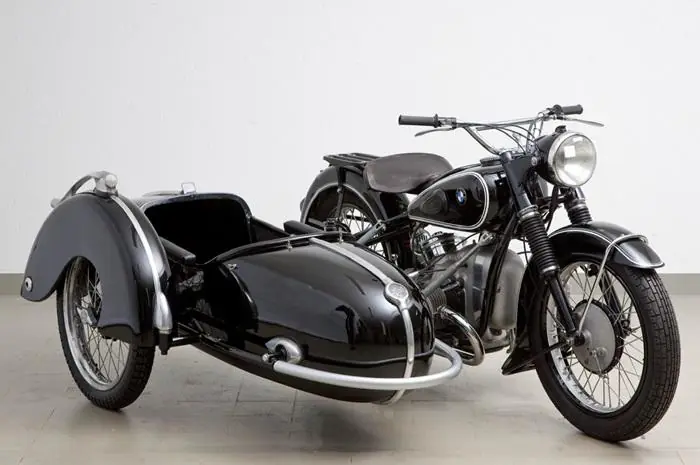
Las motocicletas con sidecar, ¿cuántas luces de corto alcance deben llevar instaladas?
How many dipped headlights must motorcycles with a sidecar have fitted?
- ASólo una.Only one.
- BUna o dos.One or two.
- CDos, obligatoriamente.Two, compulsorily.
ExplanationUnder Article 16 of the General Vehicle Regulations, motorcycles with a sidecar, like those without one, must be fitted with a dipped headlight (short-range light). The technical regulations allow them to have one or two.
¿Cuantas luces de largo alcance debe tener un cuadriciclo?
How many main beam lights must a quadricycle have?
- AUna o dosOne or two.
- BMínimo tres y máximo cincoAt least three and at most five.
- CDos obligatoriamenteTwo, compulsorily.
ExplanationQuadricycles, like motorcycles and three-wheeled vehicles, may have one or two main beam lights. On motor cars, on the other hand, the lights are fitted in pairs.
El alumbrado de posición sirve principalmente para:
Sidelights are mainly used to:
- AIluminar la calzada a gran distancia.Light up the carriageway at a great distance.
- BHacer visible el vehículo a los demás, sin alumbrar apenas la vía.Make the vehicle visible to others, while hardly lighting up the road.
- CSustituir a la luz de cruce en carretera.Replace the dipped headlights on the open road.
ExplanationAccording to the definitions in Annex X of the General Vehicle Regulations (RGV), sidelights show the presence and width of the vehicle when seen from the front or rear, but they hardly light up the road. To see the carriageway you need dipped headlights or main beam.
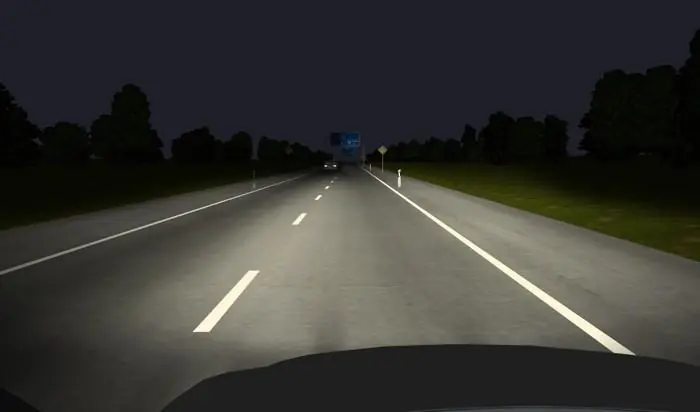
Usted debe utilizar las luces de carretera si circula a más de 40 kilómetros por hora ...
You must use the main beam if you are driving at more than 40 kilometres per hour…
- APor una vía interurbana insuficientemente iluminada.On an insufficiently lit road outside built-up areas.
- BPor una vía insuficientemente iluminada, dentro o fuera de poblado.On an insufficiently lit road, in or outside built-up areas.
- CPor una vía interurbana suficientemente iluminada.On a sufficiently lit road outside built-up areas.
ExplanationThe main beam is compulsory when driving at more than 40 km/h between sunset and sunrise on insufficiently lit roads outside built-up areas, and in poorly lit tunnels (Article 100 of the General Traffic Regulations). In built-up areas or on well-lit roads you use dipped headlights.
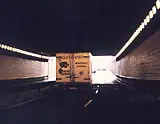
¿Qué alumbrado se debe utilizar en un túnel insuficientemente iluminado, si éste se encuentra dentro de poblado?
Which lights must be used in an insufficiently lit tunnel if it is in a built-up area?
- ASolo las luces de posición.Only the sidelights.
- BLas luces de posición y el alumbrado de corto alcance.The sidelights and the dipped headlights.
- CLas luces de posición y el alumbrado de largo alcance, o carretera.The sidelights and the main beam.
ExplanationUsing the main beam is prohibited in built-up areas. If a tunnel is insufficiently lit, you must have the sidelights and the dipped headlights on, which light up the road without dazzling other road users.
¿De qué color será la luz antiniebla trasera?
What colour will the rear fog light be?
- ABlanco.White.
- BRojo.Red.
- CAmarillo auto.Amber.
ExplanationThe rear fog light is red and brighter than the position light.
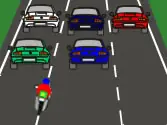
¿Qué debe hacer si por circunstancias del tráfico tiene que disminuir considerablemente la velocidad?
What must you do if traffic conditions mean you have to reduce your speed considerably?
- AFrenar bruscamente.Brake sharply.
- BSeñalizarlo con el alumbrado de posición.Signal it with the position lights.
- CAsegurarse de que puede hacerlo sin peligro y señalizarlo con las luces de frenado.Make sure you can do it without danger and signal it with the brake lights.
ExplanationExcept in case of imminent danger, a driver who wants to reduce speed considerably must make sure they can do so without danger and warn others by repeatedly using the brake lights or by moving their arm up and down with short, quick movements.
¿Qué luces son obligatorias para circular entre el ocaso y la salida del sol?
Which lights are compulsory for driving between sunset and sunrise?
- ALas de posición.Position lights.
- BLas de posición más corto o largo alcance, dependiendo del tráfico y de la vía.Position lights plus dipped headlights or main beam, depending on the traffic and the road.
- CLas de posición más las antiniebla.Position lights plus fog lights.
ExplanationPosition lights are never enough for driving. At night they must always be used together with dipped headlights or main beam, depending on whether we are inside or outside a built-up area.
¿Podrá una motocicleta utilizar la luz antiniebla delantera si circula de día, con lluvia intensa?
Can a motorcycle use the front fog light when riding during the day in heavy rain?
- ANo, las motocicletas no pueden usar la luz antiniebla.No, motorcycles cannot use fog lights.
- BSí.Yes.
- CSí, obligatoriamente.Yes, compulsorily.
ExplanationA motorcycle may use the front fog light, if the rider chooses, in the same situations as a car, so it may use it in heavy rain.
Circulando por un túnel suficientemente iluminado fuera de poblado, ¿qué alumbrado utilizaremos?
When driving through a well-lit tunnel outside a built-up area, which lights should we use?
- APosición y corto alcance.Position lights and dipped headlights.
- BPosición y largo alcance.Position lights and main beam.
- CPosición y antiniebla delantera.Position lights and front fog light.
ExplanationIf we are driving through a well-lit tunnel, we use the position lights and dipped headlights.

Esta señal obliga a circular dentro del túnel con el alumbrado de...
This sign requires you to drive inside the tunnel with...
- Acorto alcance, al menos.at least dipped headlights.
- Blargo alcance.main beam.
- Ccorto y largo alcance, según la iluminación del tramo.dipped headlights and main beam, depending on the lighting of the stretch.
ExplanationThis blue mandatory sign requires you to drive with at least dipped headlights. So you may also use main beam when appropriate, but you must never drive with only the position lights or with no lights.
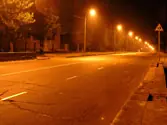
Si dentro de poblado y estando la vía insuficientemente iluminada, hemos de inmovilizar nuestro vehículo por avería, ¿qué alumbrado usaremos?
If, in a built-up area on a poorly lit road, we have to stop our vehicle because of a breakdown, which lights should we use?
- ANo usaremos ningún alumbrado por ser dentro de poblado.We will not use any lights, because we are in a built-up area.
- BUsaremos solamente el alumbrado de emergencia.We will use only the hazard warning lights.
- CUsaremos la señal de emergencia junto el alumbrado de posición.We will use the hazard warning lights together with the position lights.
ExplanationAny vehicle that, for any reason, is immobilised between sunset and sunrise, or in weather conditions that reduce visibility, on the carriageway or hard shoulder of a road must have its position lights on. In addition, as it is a breakdown, we must use the hazard warning lights together with the position lights.
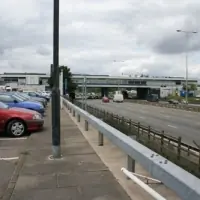
¿Deben llevarse encendidas las luces de posición entre el ocaso y la salida del sol?
Must the position lights be on between sunset and sunrise?
- ASí.Yes.
- BNoNo.
- CÚnicamente en vías fuera de pobladoOnly on roads outside built-up areas.
ExplanationAll vehicles must have the position lights on between sunset and sunrise on all types of road, and when driving through tunnels, underpasses or stretches of road covered by the 'Tunnel' sign.
Cuando sea obligatorio el uso del alumbrado se deben llevar encendidas las luces de posición y las de gálibo los vehículos...
When the use of lights is compulsory, the position lights and end-outline marker lights must be switched on by vehicles...
- ACon una anchura superior a 2,10 metros.more than 2.10 metres wide.
- BCon una anchura superior a 2,10 metros y una altura superior a 4 metros.more than 2.10 metres wide and more than 4 metres high.
- CCon una anchura superior a 1,80 metros.more than 1.80 metres wide.
ExplanationAccording to Article 99 of the General Traffic Regulations, when lights are compulsory, vehicles more than 2.10 metres wide must have the end-outline marker lights on, as well as the position lights; these show the vehicle's width.
Mientras se reposta carburante en una motocicleta, ¿es obligatorio apagar el alumbrado?
While refuelling a motorcycle, is it compulsory to switch off the lights?
- ASí.Yes.
- BNo, se debe dejar encendida la luz de cruce.No, the dipped headlight must be left on.
- CNo, se debe dejar encendida la luz de posición.No, the position light must be left on.
ExplanationTo put fuel in a vehicle's tank, the engine, lights, radio, mobile phone and other electronic devices must be switched off, as a precaution and to prevent a possible short circuit or interference.
¿Se pueden usar las señales acústicas para evitar un accidente?
Can the horn be used to avoid an accident?
- ASí, pero solo en carreteras estrechas con muchas curvas.Yes, but only on narrow roads with many bends.
- BSí, en cualquier tipo de vía.Yes, on any type of road.
- CNo.No.
ExplanationAccording to Article 110 of the General Traffic Regulations, the horn may be used to avoid a possible accident. This applies to any type of road, not only to narrow roads with bends, although it must be exceptional and justified. So the correct answer is yes, it can be used on any type of road, as long as the aim is to prevent an accident.
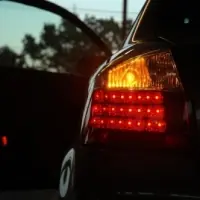
¿Deben ser las luces reflectantes con la misma finalidad del mismo color (p.ej los intermitentes)?
Must lights and reflectors with the same purpose be the same colour (e.g. the indicators)?
- ASolo serán del mismo color en los turismosThey will only be the same colour on cars.
- BPor lo general cada una es de un color para que se puedan distinguirGenerally each one is a different colour so that they can be told apart.
- CSi, deben ser siempre del mismo colorYes, they must always be the same colour.
ExplanationLights and reflective devices that come in pairs and have the same purpose must be the same in colour and brightness on all vehicles and be placed symmetrically on the vehicle, for example the indicators.
All topics
- Definitions
- Documents and penalty points
- The driver's condition
- Duties of drivers and pedestrians
- Vehicle safety devices
- Vehicle controls and equipment
- Traffic signs, markings and signals
- The road and its lanes
- Speed and distances
- Manoeuvres
- Right of way
- Carrying passengers and loads
- Driving safely in difficult conditions
- Vehicle mechanics and maintenance
- Road accidents and first aid
- Defensive and eco-driving
Independent app: not affiliated with or endorsed by the DGT (Spain's Directorate-General for Traffic) or the Ministry of the Interior. The official exam is booked with the DGT and taken at its test centres. The questions here are practice material; the DGT's official question bank is not public.
Basado en datos de la Agencia Estatal Boletín Oficial del Estado (https://www.boe.es). Textos consolidados de carácter meramente informativo. La AEBOE no patrocina ni respalda este sitio.
Parte de las preguntas procede de los tests de la revista «Tráfico y Seguridad Vial» de la DGT, reproducidos con indicación de la fuente.