
DGT test · 839 questions
Vehicle lights and horn · Page 14 of 17
Side, dipped, main-beam, fog and hazard lights, and the horn: when each one is compulsory and when it is forbidden.
Questions in this topic, with answers
839 questions, 50 per page, with the correct answer and the explanation. Page 14 of 17.
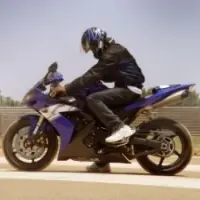
¿Deben llevar las motocicletas la luz antiniebla trasera?
Must motorcycles have a rear fog light?
- ANo, está prohibido que la llevenNo, they are not allowed to have one
- BSi, pero únicamente en vías fuera de pobladoYes, but only on roads outside built-up areas
- CSi, pero es opcionalYes, but it is optional
ExplanationThe rear fog light is optional for motorcyclists on all types of road, but it is never compulsory; it is left to the rider's choice.
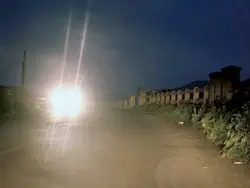
Debe cambiar el alumbrado de carretera por el de cruce...
You must switch from main beam to dipped headlights...
- ACuando circule por una vía interurbana.when driving on a road outside built-up areas.
- BCuando pueda deslumbrar a cualquier usuario de la vía.when you could dazzle any road user.
- CCuando pueda deslumbrar sólo a los vehículos que circulen en sentido contrario.when you could dazzle only vehicles coming in the opposite direction.
ExplanationAccording to Article 102 of the General Traffic Regulations, main beam must be switched to dipped headlights as soon as it could dazzle any road user: oncoming traffic, the driver in front through their mirror, or users of other nearby roads.
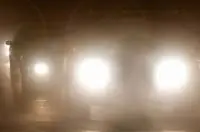
Usted circula con niebla, si su vehículo no dispone de alumbrado antiniebla delantero,¿Qué luces debe utilizar?
You are driving in fog. If your vehicle has no front fog light, which lights must you use?
- ALa de posición junto con la de corto alcance.The sidelights together with dipped headlights.
- BSólo las de posición.Only the sidelights.
- CSólo las de corto alcance y la de largo alcance.Only dipped headlights and main beam.
ExplanationIn fog you must use the front fog light or dipped headlights or main beam, as well as the sidelights. If there is no fog light, dipped headlights are the right choice, because main beam reflects off the fog and dazzles the driver.
¿Cuándo es obligatorio usar las luces de cruce?
When is it compulsory to use dipped headlights?
- ASolo de nocheOnly at night
- BEntre la puesta y la salida del sol, y en condiciones meteorológicas adversasBetween sunset and sunrise, and in bad weather conditions
- CSolo cuando llueveOnly when it rains
ExplanationDipped headlights are compulsory from sunset to sunrise and in bad conditions.
Va Ud. a entrar en un túnel señalizado y suficientemente iluminado. ¿Qué alumbrado debe utilizar?
You are about to enter a signed, sufficiently lit tunnel. Which lights must you use?
- ABasta con el alumbrado de posición.Sidelights alone are enough.
- BEl de posición y el de corto alcance o de cruce.Sidelights and short-range (dipped) headlights.
- CEl de posición y el de corto alcance o la luz delantera de niebla.Sidelights and short-range headlights or the front fog light.
ExplanationIn tunnels and on stretches with the 'Tunnel' sign (S-5), lights are compulsory at any time. If the tunnel is sufficiently lit, Article 101.1 of the General Traffic Regulations requires dipped (short-range) headlights as well as sidelights. The fog light is only used in fog or other conditions that reduce visibility.
¿Se considera el alumbrado un sistema de seguridad del vehículo?
Is lighting considered a vehicle safety system?
- ASí, es seguridad activa.Yes, it is active safety.
- BSí, es seguridad pasiva.Yes, it is passive safety.
- CNo, sirve solo para ver y ser visto.No, it is only for seeing and being seen.
ExplanationYes, lighting is considered an active safety system of the vehicle, because its main job is to make sure the driver can see and to make the vehicle visible to other drivers. According to Article 16 of the General Vehicle Regulations, lighting devices are compulsory and essential for road safety, especially in poor visibility. This fits the definition of active safety, which covers systems designed to prevent accidents.
¿Dónde está permitido hacer ráfagas con las luces de corto alcance?
Where are you allowed to flash your dipped headlights?
- ASólo en vías interurbanas.Only on interurban roads.
- BTanto en vías urbanas como en vías interurbanas.On both urban and interurban roads.
- CSólo en vías urbanas.Only on urban roads.
ExplanationLight warnings, briefly alternating the dipped headlights and the main beam without dazzling anyone, may be used on both urban and interurban roads, including in built-up areas, instead of sound warnings (Article 109 of the General Traffic Regulations).
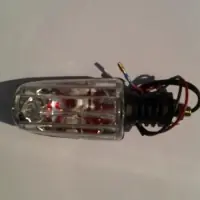
¿Qué vehículos se exceptúan de llevar repuesto de la luz de cruce?
Which vehicles do not have to carry a spare dipped headlight bulb?
- ALos que lleven repuesto del resto de lucesThose that carry spares for all the other lights
- BLos que lleven lamparas de encendido permanente de la luz de cruceThose fitted with permanent dipped headlight lamps
- CLos vehículos destinados a servicio públicoVehicles used for public service
ExplanationVehicles fitted with permanent dipped headlight lamps do not have to carry a spare dipped headlight bulb because, as this device is permanent, the lamps will not go out, so there is no need to replace them.
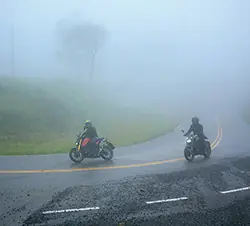
Si conduce una motocicleta y hay niebla ligera, ¿qué alumbrado debe utilizar, además del de posición?
If you are riding a motorcycle in light fog, which lights must you use as well as the sidelight?
- ALa luz antiniebla delantera, si la lleva, o la luz de corto o largo alcance.The front fog light, if fitted, or the dipped headlight or main beam.
- BLa luz antiniebla delantera y trasera, si las lleva, y la luz de corto alcance.The front and rear fog lights, if fitted, and the dipped headlight.
- CLa luz antiniebla trasera, si la lleva, y la luz de largo alcance.The rear fog light, if fitted, and main beam.
ExplanationIn light fog, the front fog light is enough, if the vehicle has one, or otherwise the dipped headlight or main beam. The rear fog light is kept for dense fog or other conditions that greatly reduce visibility.
¿Para qué vehículos es obligatoria la luz de gálibo?
For which vehicles are end-outline marker lights compulsory?
- AVehículos con anchura superior a 2,10 metros.Vehicles more than 2.10 metres wide.
- BVehículos con una anchura entre 1,80 y 2,10 metros.Vehicles between 1.80 and 2.10 metres wide.
- CPara todos los camiones.All lorries.
ExplanationEnd-outline marker lights are compulsory on trailers, semi-trailers and motor cars more than 2.10 metres wide, and optional on motor cars between 1.80 and 2.10 metres wide.
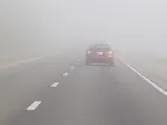
Al circular bajo condiciones de visibilidad especialmente desfavorables, ¿es obligatorio encender la luz antiniebla trasera?
When driving in especially poor visibility, must you switch on the rear fog light?
- ANo, es sólo opcional.No, it is only optional.
- BSí, siendo también obligatorio encender la luz de largo alcance.Yes, and you must also switch on main beam.
- CSí, para indicar su posición al resto de los usuarios.Yes, to show your position to other road users.
ExplanationFRONT FOG LIGHT: - Fitting and using it are NOT compulsory. - It must be white or selective yellow. - It may be used, voluntarily, in fog, heavy rain, snowfall, clouds of smoke or dust, or similar conditions. - It may also be used on narrow roads with many bends, that is, roads with a carriageway 6.5 m wide or less that are signposted with ‘dangerous bends’ signs. REAR FOG LIGHT: - Fitting and using it are compulsory. - It must be red. - It must be used in DENSE fog, VERY heavy rain, HEAVY snowfall or THICK clouds of smoke or dust. During the day, the front fog light may be on with just the sidelights, but it may also be used together with dipped headlights or main beam. At night, it must be used at least with dipped headlights. During the day, the rear fog light must be used at least together with the front fog light or dipped headlights. At night, at least with dipped headlights.
¿Se debe reglar periódicamente el alumbrado?
Should the headlights be adjusted regularly?
- ASí, cada vez antes de iniciar la marcha.Yes, every time before setting off.
- BNo, porque las luces no pueden desequilibrarse puesto que vienen revisadas de fábrica.No, because the lights cannot go out of adjustment, as they are checked in the factory.
- CSí, porque las luces pueden desequilibrarse por diferentes motivos.Yes, because the lights can go out of adjustment for various reasons.
ExplanationHeadlights can go out of adjustment because of potholes, knocks, bulb changes or changes in the load, and then they dazzle others or light up the road less well. That is why you should check and adjust their aim regularly, although you do not need to do it every time you set off.
Circulando durante la noche con lluvia intensa, ¿qué alumbrado llevaremos obligatoriamente?
When driving at night in heavy rain, which lights must we have on?
- ALas luces antiniebla delantera y trasera.The front and rear fog lights.
- BLas luces antiniebla traseras.The rear fog lights.
- CLa luz de posición, con la de corto alcance.The sidelights with dipped headlights.
ExplanationIn heavy rain, the compulsory lights are the sidelights with dipped headlights. The rear fog light is only compulsory in very heavy rain.
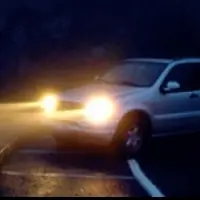
¿Debe llevar encendidas las luces de posición un vehículo parado de noche en una travesía insuficientemente iluminada?
Must a vehicle that is stopped at night on an insufficiently lit travesía (stretch of road through a town) have its sidelights on?
- AÚnicamente si se trata de un autobúsOnly if it is a bus
- BNoNo
- CSí.Yes.
ExplanationEvery vehicle stopped or parked on the carriageway or hard shoulder of an insufficiently lit travesía must keep its sidelights on, which may be replaced by the parking lights.
Un ciclista que circula durante la noche ¿tendrá que llevar alguna luz encendida?
A cyclist riding at night: must they have any light on?
- ANo, cuando lleve chaleco reflectante homologado.No, if they are wearing an approved reflective vest.
- BSí, siempre.Yes, always.
- CNo, nunca.No, never.
ExplanationWhen a cyclist rides at night, they must have their sidelights on: a white light at the front and a red light at the rear.
En un tramo señalizado con la señal de curvas peligrosas, ¿está permitido utilizar la luz antiniebla delantera entre la puesta y la salida del sol?
On a stretch marked with the dangerous bends sign, is it allowed to use the front fog light between sunset and sunrise?
- ASí, y es obligatorio utilizarla junto con la luz de cruce o la de carretera.Yes, and it must be used together with dipped headlights or main beam.
- BNo, si no hay condiciones meteorológicas o ambientales adversas.No, if there are no adverse weather or environmental conditions.
- CSí, cuando la vía sea muy estrecha.Yes, when the road is very narrow.
ExplanationUnder Article 106.2 of the General Traffic Regulations (RGC), the front fog light may only be used in conditions that reduce visibility or on narrow stretches of road with many bends, that is, with a carriageway 6.50 metres wide or less and marked with signs showing a series of bends close together.
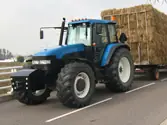
¿Cómo debe advertir su presencia en la vía este conjunto de vehículos?
How must this vehicle combination warn others that it is on the road?
- AUtilizando la señalización de emergencia.By using the hazard warning lights.
- BEmpleando tanto de día como de noche una luz rotativa de color amarillo.By using a rotating amber light, both by day and by night.
- CCon una luz intermitente amarilla.With a flashing amber light.
ExplanationSpecial vehicles or vehicles under special transport rules, among others, must use a rotating amber light, visible from all directions at 100 m, both by day and by night, whenever they travel on public roads at no more than 40 kilometres per hour. If this V-2 light signal breaks down, they must use dipped headlights together with the hazard warning lights. This light only shows where the vehicles are; it does not give them priority.
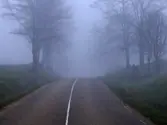
En caso de niebla, ¿se podrá usar la luz de largo alcance?
In fog, may main beam be used?
- ASí, fuera de poblado y si no hay peligro de deslumbramiento.Yes, outside built-up areas and if there is no danger of dazzling.
- BNo.No.
- CSí, siempre que sea entre el ocaso y la salida del sol.Yes, as long as it is between sunset and sunrise.
ExplanationWe could use main beam as long as we do not dazzle other road users and are not in a built-up area. The problem is that in dense fog we may not be able to see other road users and may end up dazzling them, or even dazzling ourselves, because fog is made of tiny drops in the air and the light beam can bounce off them. In heavy rain something similar happens: the light usually reflects off the road markings and can be annoying. The best thing is to switch on dipped headlights or the appropriate fog light.
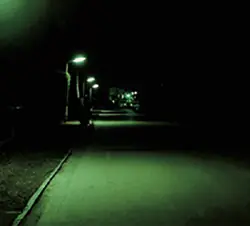
Circula de noche con el alumbrado interior encendido. ¿Es peligroso?
You are driving at night with the interior light on. Is this dangerous?
- ANo, porque descansa la vista.No, because it rests your eyes.
- BSí, porque veo peor.Yes, because I see less well.
- CNo, porque evita deslumbramiento.No, because it prevents dazzling.
ExplanationAn interior light on at night creates reflections on the windscreen and makes it harder for your eyes to adapt to the dark, so you see less well outside, which is dangerous.
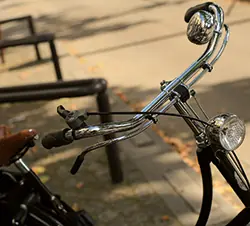
Los ciclistas, ¿están obligados a encender el alumbrado cuando circulan de noche?
Must cyclists switch on their lights when riding at night?
- ASí.Yes.
- BNo, si llevan puestas prendas reflectantes.No, if they are wearing reflective clothing.
- CSolo cuando circulan por vías interurbanas.Only when riding on roads outside built-up areas.
ExplanationCyclists must switch on their lights at night and in conditions that reduce visibility, just like other vehicles. Reflective clothing or items are an extra that improves their visibility, but they do not replace lights.
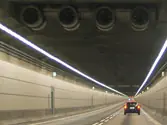
Si nos detenemos bajo un paso elevado por saturación de tráfico, ¿qué luces dejaremos encendidas?
If we stop under an overpass because of heavy traffic, which lights will we leave on?
- APosición y cruce.Sidelights and dipped headlights.
- BPosición y emergencia temporalmente.Sidelights, and hazard warning lights for a short time.
- CPosición.Sidelights.
ExplanationIf you stop your vehicle in a tunnel or underpass because of traffic, you must: - Stop as far as possible from the vehicle in front. - Stop the engine if you have to wait for more than 2 minutes (also in any enclosed place). - Keep the sidelights on and switch on the hazard warning lights for a short time. When we stop under an overpass or in a tunnel because of heavy traffic, we must keep the sidelights on and also switch on the hazard warning lights.
Circulando durante la noche dentro de poblado, ¿qué alumbrado usaremos?
When driving at night inside a built-up area, which lights will we use?
- AEl de posición.The sidelights.
- BEl de posición y cruce o carretera según las circunstancias.The sidelights and dipped headlights or main beam, depending on the circumstances.
- CPosición y cruce.Sidelights and dipped headlights.
ExplanationAt night in a built-up area you drive with the sidelights and dipped headlights, whether the road is sufficiently lit or not. Main beam is only used outside built-up areas, on insufficiently lit roads and at more than 40 km/h; in town it would dazzle others.
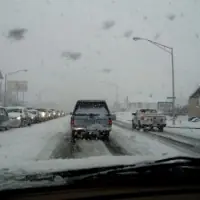
¿Se debe encender el alumbrado con condiciones meteorológicas que disminuyan la visibilidad?
Must you switch on your lights in weather conditions that reduce visibility?
- ANo, ya que los dispositivos de alumbrado no podrán realizar su función en éstas condicionesNo, because lights cannot do their job in these conditions
- BSi, siempreYes, always
- CNo, ya que podrían deslumbrar de día al resto de conductoresNo, because they could dazzle other drivers during the day
ExplanationWhen we are driving and the weather reduces our visibility, we must switch on the appropriate lights.
¿Qué son los catadióptricos reflectantes, de los vehículos?
What are a vehicle's reflectors?
- ADos proyectores de luz blanca por delante y dos rojos por detrás.Two white lamps at the front and two red ones at the rear.
- BHitos reflectantes que delimitan el borde de la calzada.Reflective posts that mark the edge of the carriageway.
- CUnos dispositivos reflectantes, que indican la presencia de un vehículo, al proyectar un haz de luz sobre ellos.Reflective devices that show the presence of a vehicle when a beam of light shines on them.
ExplanationThe job of reflectors is to warn of our vehicle's presence by reflecting light. They must be white at the front (only for trailers), amber on the sides and red at the rear, and not triangular. The triangular shape is reserved for trailers and semi-trailers.
En vías urbanas que no sean travesías.¿es obligatorio dejar las luces de posición en los vehículos estacionados?
On urban roads that are not travesías, must parked vehicles have their sidelights on?
- ANo,si la iluminación permite distinguirlos a una distancia suficiente.No, if the street lighting lets others see them from a sufficient distance.
- BSí, siempre.Yes, always.
- CSí, si la vía sólo tiene un carril de circulación.Yes, if the road has only one traffic lane.
ExplanationAccording to Article 105 of the General Traffic Regulations, on urban roads that are not travesías, parked vehicles do not need their sidelights on if the lighting lets others see them from a sufficient distance.
Las luces de posición serán de color...
Sidelights must be...
- ABlanco las delanteras y rojo siempre, las traseras y las laterales.white at the front, and always red at the rear and on the sides.
- BBlanco o amarillo auto las delanteras, rojo las traseras y, como norma general, amarillo auto las laterales.white or amber at the front, red at the rear and, as a general rule, amber on the sides.
- CBlanco las delanteras, rojo las traseras y, como norma general, amarillo auto las laterales.white at the front, red at the rear and, as a general rule, amber on the sides.
ExplanationThis is correct because the front sidelights must be white, the rear ones red and, as a general rule, the side ones amber. This matches the current rules on vehicle lighting.
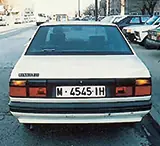
Este vehículo está averiado y circula a velocidad anormalmente reducida con la luz de emergencia encendida; ¿es correcto su comportamiento?
This vehicle has broken down and is travelling at an abnormally low speed with its hazard warning lights on. Is this correct?
- ASí, porque el vehículo está averiado.Yes, because the vehicle has broken down.
- BNo; las luces de emergencia se usan solo con el vehículo detenido.No; hazard warning lights are only used when the vehicle is stopped.
- CNo; está prohibido el uso de este alumbrado en vías urbanas.No; these lights are prohibited on urban roads.
ExplanationAccording to Article 49 of the General Traffic Regulations, if a vehicle cannot reach the minimum speed and there is a risk of being hit from behind, it must drive with its hazard warning lights on. They are not only for stopped vehicles, and they are not prohibited on urban roads.
Si por circunstancias especialmente graves un conductor transporta en su coche particular a una persona enferma, ¿cómo avisará de su presencia?
If, in especially serious circumstances, a driver takes a sick person in their private car, how will they make their presence known?
- AAgitando el brazo de arriba abajo con movimientos cortos y rápidos.By waving an arm up and down with short, quick movements.
- BInstalando en el techo de su vehículo una señal luminosa especial.By fitting a special light signal on the roof of the vehicle.
- CHaciendo sonar el claxon y encendiendo las luces de emergencia.By sounding the horn and switching on the hazard warning lights.
ExplanationUnder Article 70.1 of the General Traffic Regulations (RGC), the driver of a non-priority vehicle forced to carry out an emergency service signals the situation by sounding the horn intermittently and using the hazard warning lights, or by waving a handkerchief. They may not fit special light signals.
¿Está permitido circular utilizando solamente el alumbrado deposición del vehículo entre la puesta y la salida del sol?
Is it allowed to drive using only the vehicle's sidelights between sunset and sunrise?
- ASí, en cualquier vía suficientemente iluminada.Yes, on any sufficiently lit road.
- BSí, en vías de poblado suficientemente iluminadas.Yes, on sufficiently lit roads in built-up areas.
- CNo, debe utilizarse además el alumbrado de cruce o carretera.No, you must also use the dipped headlights or the main beam.
ExplanationBetween sunset and sunrise, sidelights are not enough on any road: you must also have the dipped headlights on, or the main beam outside built-up areas on poorly lit roads. This way the vehicle can see and be seen.

¿Qué luces antiniebla es obligatorio llevar en caso de fuerte nevada durante el día?
Which fog lights must you use in heavy snowfall during the day?
- ALuz antiniebla trasera.The rear fog light.
- BLuz antiniebla delantera.The front fog light.
- CLuz antiniebla delantera y trasera.The front and rear fog lights.
ExplanationThe only compulsory fog light is the rear one, and it must be used by day and by night when weather conditions are especially bad, such as VERY heavy rain, dense fog, heavy snowfall or clouds of dust or thick smoke.
¿Qué alumbrado utilizará para circular por un túnel suficientemente iluminado, que se encuentre en una carretera convencional?
Which lights will you use to drive through a sufficiently lit tunnel on a conventional road?
- APosición y corto alcance.Sidelights and dipped headlights.
- BPosición y largo alcance.Sidelights and main beam.
- CPosición aisladamente es suficiente, aunque se puede añadir la de corto o largo alcance.Sidelights alone are enough, although dipped headlights or main beam may be added.
ExplanationUnder Article 101 of the General Traffic Regulations, in a sufficiently lit tunnel you must have the sidelights and dipped headlights on at any time. The main beam is used only if the tunnel is insufficiently lit.
Ud. circula, fuera de poblado, con las luces de largo alcance o carretera encendidas. Si transitan peatones a los que puede deslumbrar, ¿qué debe hacer?
You are driving outside a built-up area with your main beam on. If there are pedestrians walking whom you might dazzle, what must you do?
- AMantener las luces de carretera y reducir la velocidad.Keep the main beam on and slow down.
- BNada, la prohibición de deslumbrar se refiere a los conductores de otros vehículos, no a los peatones.Nothing; the ban on dazzling refers to the drivers of other vehicles, not to pedestrians.
- CCambiar a las luces de corto alcance o cruce.Switch to dipped headlights.
ExplanationUnder Article 101 of the General Traffic Regulations, outside built-up areas you must use dipped headlights whenever you might dazzle other road users, and pedestrians are road users too. So you must switch to dipped headlights.
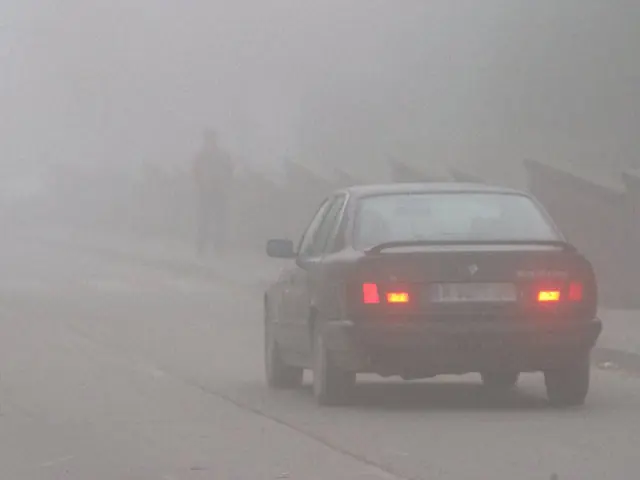
¿Cuándo se utiliza la luz antiniebla trasera?
When is the rear fog light used?
- ACuando se circula a una velocidad muy lenta.When driving very slowly.
- BCuando llueve o nieva mucho.When it is raining or snowing heavily.
- CCuando se circula por carreteras de alta montaña.When driving on high mountain roads.
ExplanationThe rear fog light must only be switched on in especially bad conditions, such as dense fog, very heavy rain, heavy snowfall or thick clouds of dust or smoke (Article 106 of the General Traffic Regulations). Using it when it is not needed dazzles the driver behind.
Cuando sea obligatorio el uso del alumbrado, el conductor de una bicicleta, ¿Debe llevar alguna prenda o elemento reflectante?
When lights must be used, must a cyclist wear any reflective clothing or item?
- ANo.No.
- BSí, cuando circule por vías urbanas e interurbanas.Yes, when riding on urban and interurban roads.
- CSólo cuando circule por vías interurbanas.Only when riding on interurban roads.
ExplanationA cyclist riding at night or in poor visibility on an interurban road must wear at least one lit or reflective item visible from 150 metres (Article 118 of the General Traffic Regulations). On urban roads this requirement does not apply, although the bicycle must have its lights.
Las bombillas del coche deben cambiarse...
The car's bulbs should be changed...
- Asolo si están rotas.only if they are broken.
- Bantes de pasar la inspección técnica del vehículo.before the vehicle inspection (ITV).
- Cen cuanto disminuya su intensidad luminosa.as soon as their brightness decreases.
ExplanationBulbs lose brightness with use, and a weak light lights up the road less well and makes the vehicle less visible. So you must check the lights and change the bulbs as soon as they shine less brightly, without waiting for them to blow or for the vehicle inspection (ITV).
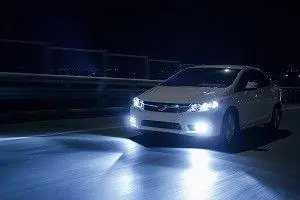
Para un uso adecuado del alumbrado, el conductor…
To use the lights properly, the driver…
- ASólo debe revisar su regulación y altura.only needs to check their aim and height.
- BNo debe revisar el alumbrado, si dispone de la última tecnología.does not need to check the lights if the vehicle has the latest technology.
- CDebe revisar la regulación, el funcionamiento y el estado del sistema.must check the aim, the operation and the condition of the system.
ExplanationTo use the lights properly, you must regularly check that they work, the condition of the bulbs and lenses, and the height the headlights are aimed at, which changes with the load. The vehicle's technology does not excuse you from these checks.
¿Cuántas luces de cruce deben llevar instaladas las motocicletas sin sidecar?
How many dipped headlights must motorcycles without a sidecar have?
- AUna o dos delante.One or two at the front.
- BSolo una delante.Only one at the front.
- CDos obligatoriamente: una delante y otra detrás.Two compulsory: one at the front and one at the rear.
ExplanationUnder Annex X of the General Vehicle Regulations, motorcycles must have one or two dipped headlights, white and at the front. At the rear they have sidelights and brake lights, but no dipped headlight.
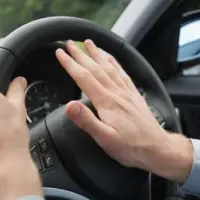
Las señales acústicas ¿se pueden utilizar para evitar un posible accidente?
May the horn be used to avoid a possible accident?
- ANo.No.
- BSí, en cualquier clase de vía.Yes, on any type of road.
- CSí, pero solo en vías estrechas con muchas curvas.Yes, but only on narrow roads with many bends.
ExplanationThe horn may only be used as an exception: to avoid a possible accident, especially on narrow roads with many bends; outside built-up areas, to warn that you intend to overtake; or to warn other road users that you are there when on an emergency call.
¿En que circunstancias se usará solo el alumbrado de posición?
In which situation will only the sidelights be used?
- ACirculando por una vía urbana suficientemente iluminada.When driving on a sufficiently lit urban road.
- BCirculando por una carretera suficientemente iluminada.When driving on a sufficiently lit road outside built-up areas.
- CCon el vehículo inmovilizado entre la puesta y la salida del sol en una vía interurbana.When the vehicle is immobilised between sunset and sunrise on a road outside built-up areas.
ExplanationWhen a vehicle is immobilised for any reason between sunset and sunrise, it must have its sidelights on. If it were moving, it would also have to use at least dipped headlights.
De día, es obligatorio encender las luces correspondientes...
During the day, you must switch on the appropriate lights...
- Asolo cuando haya condiciones que reduzcan la visibilidad.only when conditions reduce visibility.
- Bal circular por carriles para VAO.when driving in HOV lanes (VAO).
- Ccuando se circule por pasos inferiores o tramos de vía señalizados con la señal de túnel.when driving through underpasses or stretches of road marked with the tunnel sign.
ExplanationUnder Article 98.1 of the RGC, at any time of day you must have your lights on in tunnels, underpasses and stretches marked with the 'Tunnel' sign. It is also compulsory when the weather reduces visibility, but not only then, and driving in a VAO lane does not require it.
En ciudad de noche con alumbrado público suficiente, ¿qué luz es obligatoria?
In town at night, with enough street lighting, which light is compulsory?
- ALuz de posiciónSidelights
- BLuz de cruce (cortas)Dipped headlights
- CNo es obligatorio llevar lucesYou do not need to have any lights on
ExplanationUnder Article 101.1 of the RGC, at night on sufficiently lit roads in built-up areas you must have the dipped headlights on, as well as the sidelights. Sidelights alone are not enough, however much street lighting there is.
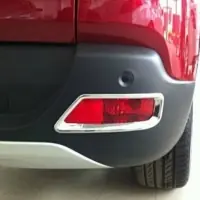
¿Cual es la finalidad de la luz antiniebla trasera?
What is the purpose of the rear fog light?
- AHacer visible el vehículo ante fuerte lluviaTo make the vehicle visible in heavy rain
- BHacer visible el vehículo con niebla densaTo make the vehicle visible in dense fog
- CAdvertir a los demás conductores de un accidenteTo warn other drivers of an accident
ExplanationThe front fog light is used to light the road better in fog, snowfall, storms or dust clouds. The rear fog light is used to make the vehicle more visible from behind in dense fog.
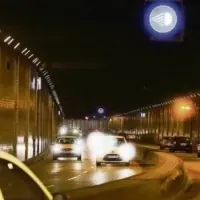
Si circula por un túnel suficientemente iluminado, ¿qué alumbrado debe encender?
If you are driving through a sufficiently lit tunnel, which lights must you switch on?
- AEl alumbrado de largo alcance.Main beam.
- BSolamente el alumbrado de posición.Only the sidelights.
- CEl alumbrado de posición y de corto alcance.The sidelights and dipped headlights.
ExplanationEvery motor vehicle must have dipped headlights on, as well as the sidelights, at any time of day in sufficiently lit tunnels and other stretches of road covered by the ‘tunnel’ sign.
¿Puede una motocicleta llevar luces delanteras antiniebla?
May a motorcycle have front fog lights?
- ASí, pero sólo las motocicletas con sidecar.Yes, but only motorcycles with a sidecar.
- BSí, 1 ó 2 luces tanto las motocicletas con sidecar como las motocicletas sin sidecar.Yes, 1 or 2 lights, on motorcycles with or without a sidecar.
- CNo, las luces antiniebla están prohibidas en las motocicletas.No, fog lights are prohibited on motorcycles.
ExplanationMotorcycles may optionally have one or two white or selective yellow front fog lights.
¿Qué alumbrado llevará encendido una motocicleta durante el día?
Which lights will a motorcycle have on during the day?
- AEl de corto alcance o cruce.The dipped headlight.
- BEl de posición o el de corto alcance.The sidelight or the dipped headlight.
- CNinguno.None.
ExplanationMotorcycles riding during the day on any public road, urban or outside built-up areas, must have the dipped headlight on, whatever the visibility.
¿Qué alumbrado utilizaremos al circular por una travesía insuficientemente iluminada?
Which lights will we use when driving through an insufficiently lit travesía (stretch of road through a town)?
- APosición y corto alcance.Sidelights and dipped headlights.
- BPosición y largo alcance.Sidelights and main beam.
- CPosición aisladamente.Sidelights on their own.
ExplanationIn this case, because it is a travesía, that is, inside a built-up area, we will drive with the sidelights together with dipped headlights. We will never drive with the sidelights on their own.
¿Cuántas luces de largo alcance debe llevar un cuadriciclo?
How many main beam headlights must a quadricycle have?
- AUna o dosOne or two
- BDos obligatoriamenteTwo, as a requirement
- CMínimo tres y máximo cincoAt least three and at most five
ExplanationThree-wheeled vehicles and quadricycles must have one or two main beam headlights. If there is only one, it must be on the vehicle's centre line. Two lights at the outer edges are required on vehicles more than 1.3 metres wide.
Para que se encienda la luz de frenado en su motocicleta, será preciso...
For the brake light on your motorcycle to come on, you need to...
- APresionar el pedal del freno trasero, ya que con el freno delantero no se enciende la luz del freno.press the rear brake pedal, because the front brake does not switch on the brake light.
- BAccionar cualquiera de los dos frenos, de forma simultánea o separadamente.use either of the two brakes, together or separately.
- CAccionar siempre y al mismo tiempo el freno delantero y el trasero.always use the front and rear brakes at the same time.
ExplanationThe correct answer is: use either of the two brakes, together or separately. This is because both the front brake and the rear brake are connected to the brake light. Using either brake switches on the brake light to show other road users that the service brake is being used.
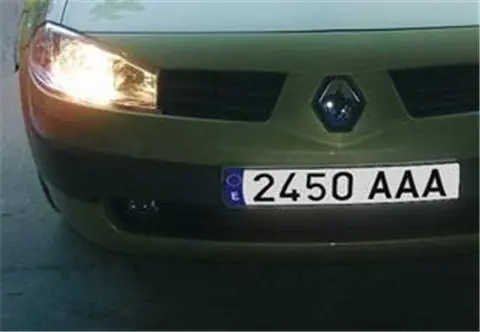
Durante el día, el conductor de un turismo, ¿cuándo está obligado a circular con el alumbrado de corto alcance encendido?
During the day, when must the driver of a car drive with dipped headlights on?
- ASiempre que llueva.Whenever it rains.
- BCuando circule por un carril para vehículos con alta ocupación(VAO).When driving in a lane for high-occupancy vehicles (VAO).
- CCuando circule por un carril reversible.When driving in a reversible lane.
ExplanationDuring the day you must have at least the dipped headlights on when driving in a reversible lane, in a temporary additional lane or in a lane opened for traffic in the opposite direction to normal (Article 104 of the General Traffic Regulations). There is no such specific obligation in VAO lanes or in light rain.
Si circulamos por un carril contiguo a uno habilitado para circular en sentido contrario al habitual, ¿qué obligación tenemos?
If we are driving in a lane next to one opened to traffic in the opposite direction to normal, what must we do?
- ANinguna en especial porque circulamos en el sentido normal de circulación.Nothing special, because we are driving in the normal direction of traffic.
- BTendremos que utilizar la luz de corto alcance.We must use dipped headlights.
- CTendremos que utilizar la luz de corto alcance y circular a 80 km/h como máximo.We must use dipped headlights and drive at a maximum of 80 km/h.
ExplanationIf we are driving in the lane next to the one opened in the opposite direction to normal, we must have at least dipped headlights on, both by day and by night. We would have to drive at a maximum of 80 km/h only if there were just one lane in our direction.
All topics
- Definitions
- Documents and penalty points
- The driver's condition
- Duties of drivers and pedestrians
- Vehicle safety devices
- Vehicle controls and equipment
- Traffic signs, markings and signals
- The road and its lanes
- Speed and distances
- Manoeuvres
- Right of way
- Carrying passengers and loads
- Driving safely in difficult conditions
- Vehicle mechanics and maintenance
- Road accidents and first aid
- Defensive and eco-driving
Independent app: not affiliated with or endorsed by the DGT (Spain's Directorate-General for Traffic) or the Ministry of the Interior. The official exam is booked with the DGT and taken at its test centres. The questions here are practice material; the DGT's official question bank is not public.
Basado en datos de la Agencia Estatal Boletín Oficial del Estado (https://www.boe.es). Textos consolidados de carácter meramente informativo. La AEBOE no patrocina ni respalda este sitio.
Parte de las preguntas procede de los tests de la revista «Tráfico y Seguridad Vial» de la DGT, reproducidos con indicación de la fuente.