
DGT test · 839 questions
Vehicle lights and horn · Page 5 of 17
Side, dipped, main-beam, fog and hazard lights, and the horn: when each one is compulsory and when it is forbidden.
Questions in this topic, with answers
839 questions, 50 per page, with the correct answer and the explanation. Page 5 of 17.
¿Las motocicletas deben llevar luces de frenado?
Must motorcycles have brake lights?
- ANo.No.
- BSí.Yes.
- CPodrán llevar luces de frenado de manera opcional.They may have brake lights as an option.
ExplanationMotorcycles, like mopeds and other motor cars, trailers and semi-trailers, must have brake lights.
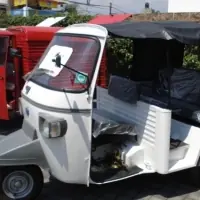
¿Cuantas luces de largo alcance deben llevar los vehículos de tres ruedas con anchura superior a 1300mm?
How many main beam lights must three-wheeled vehicles more than 1,300 mm wide have?
- AUna, en el plano longitudinal medioOne, on the longitudinal centre line.
- BDos en los laterales y una centralTwo at the sides and one in the centre.
- CDos en los extremosTwo, at the outer edges.
ExplanationThree-wheeled vehicles and motorcycles must have one or two lights. Two lights at the outer edges are required for vehicles wider than 1.3 metres (1,300 mm), while a single light must be placed on the vehicle's longitudinal centre line.
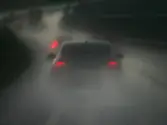
Con lluvia muy intensa, ¿es obligatorio llevar encendido el alumbrado antiniebla?
In very heavy rain, is it compulsory to have the fog lights on?
- ANo, el uso del alumbrado antiniebla es siempre opcional.No, fog lights are always optional.
- BSí, tanto el anterior como el posterior.Yes, both the front and the rear ones.
- CSí, será obligatorio usar el alumbrado posterior antiniebla.Yes, the rear fog light must be used.
ExplanationFRONT FOG LIGHT: - Fitting and using it is NOT compulsory. - It is white or selective yellow. - It may be used, if you choose, in fog, heavy rain, snowfall, clouds of smoke or dust, or in similar conditions. - It may also be used on narrow roads with many bends, that is, roads with a carriageway 6.5 m wide or less that are marked with 'dangerous bends' signs. REAR FOG LIGHT: - Fitting and using it is compulsory. - It is red. - It must be used in THICK fog, VERY heavy rain, HEAVY snowfall or DENSE clouds of smoke or dust. During the day, the front fog light may be on with just the position lights, but it can also be used together with dipped headlights or main beam. At night, it must be used at least with dipped headlights. During the day, the rear fog light must be used at least together with the front fog light or dipped headlights. At night, at least with dipped headlights.
Al conducir con lluvia muy intensa, ¿es correcto encender la luz antiniebla trasera?
When driving in very heavy rain, is it correct to switch on the rear fog light?
- ASí.Yes.
- BNo. Solo debe usarse con niebla densa o con fuertes nevadas.No. It should only be used in dense fog or heavy snowfall.
- CSí, pero su uso no es obligatorio.Yes, but using it is not compulsory.
ExplanationThe rear fog light must be used in weather conditions that greatly reduce visibility, such as very heavy rain. According to Article 106 of the General Traffic Regulations, it is compulsory to use lights in such situations, and this includes the rear fog light. So the correct answer is yes, it is right to switch it on in these circumstances.
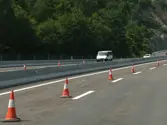
¿Qué luces debe llevar encendidas un vehículo que circula por un carril en sentido normal, cuando el carril contiguo está habilitado para la circulación en sentido contrario al habitual?
Which lights must a vehicle have on when driving in a lane with the normal direction of traffic, when the lane next to it is opened for traffic in the opposite direction to normal?
- AEl alumbrado de corto alcance o cruce, al menos.At least dipped headlights.
- BEl alumbrado de corto alcance, pero sólo entre la puesta y salida del sol.Dipped headlights, but only between sunset and sunrise.
- CNinguno, aunque la velocidad máxima de circulación es 60km/h.None, although the maximum speed is 60 km/h.
ExplanationVehicles driving in a lane opened in the opposite direction must have at least dipped headlights on, both by day and at night, with a maximum speed of 80 kilometres per hour and a minimum of 60, or lower if so established or signposted; they may not move sideways into the lane or lanes for the normal direction of traffic, not even to overtake. Vehicles driving in lanes for the normal direction of traffic, next to the lane opened for traffic in the opposite direction, may not move sideways into the lanes opened in the opposite direction either. They must have at least dipped headlights on, both by day and at night, and, if they have only one lane in their direction, they must drive at a maximum speed of 80 kilometres per hour and a minimum of 60, or lower if so established or signposted.
En poblado, ¿le está permitido circular con las luces de largo alcance o carretera de su vehículo encendidas?
In a built-up area, are you allowed to drive with your vehicle's main beam on?
- ANo, porque está prohibido.No, because it is prohibited.
- BSí, pero sólo en travesías, porque son vías interurbanas.Yes, but only on travesías, because they are roads outside built-up areas.
- CSí, cuando la vía esté insuficientemente iluminada.Yes, when the road is poorly lit.
ExplanationIn a built-up area, driving with main beam on is prohibited because it can dazzle other drivers and pedestrians. In urban areas, street lighting is usually sufficient, so these lights are not needed. The rules aim to ensure the safety of all road users.
La luz de gálibo es obligatoria para los vehículos...
End-outline marker lights are compulsory for vehicles…
- ACuya anchura supere los 1,80 metros.More than 1.80 metres wide.
- BCuya anchura supere los 2,10 metros.More than 2.10 metres wide.
- CDestinados a servicios de urgencia.Used for emergency services.
ExplanationEnd-outline marker lights are compulsory on vehicles more than 2.10 metres wide, to show their width; they must be switched on together with the sidelights whenever these are compulsory (Article 99 of the General Traffic Regulations).
Con lluvia muy intensa, ¿Puede llevar encendido el alumbrado antiniebla?
In very heavy rain, can you have the fog lights on?
- ANo, el uso del alumbrado antiniebla es siempre opcional.No, fog lights are always optional.
- BSí, tanto el anterior como el posterior, siendo este ultimo obligatorio.Yes, both the front and the rear ones, the rear one being compulsory.
- CSí, será obligatorio usar el alumbrado posterior antiniebla.Yes, the rear fog light must be used.
ExplanationFRONT FOG LIGHT: - Fitting and using it is NOT compulsory. - It is white or selective yellow. - It may be used, if you choose, in fog, heavy rain, snowfall, clouds of smoke or dust, or in similar conditions. - It may also be used on narrow roads with many bends, that is, roads with a carriageway 6.5 m wide or less that are marked with 'dangerous bends' signs. REAR FOG LIGHT: - Fitting and using it is compulsory. - It is red. - It must be used in THICK fog, VERY heavy rain, HEAVY snowfall or DENSE clouds of smoke or dust. During the day, the front fog light may be on with just the position lights, but it can also be used together with dipped headlights or main beam. At night, it must be used at least with dipped headlights. During the day, the rear fog light must be used at least together with the front fog light or dipped headlights. At night, at least with dipped headlights.
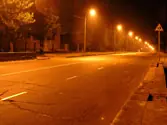
Al estacionar nuestro vehículo de noche en una vía urbana suficientemente iluminada, ¿qué alumbrado utilizaremos?
When parking our vehicle at night on a well-lit road in a built-up area, which lights should we use?
- AEl alumbrado de posición.The position lights.
- BLas dos luces de posición del lado más próximo al centro de la calzada.The two position lights on the side nearest the centre of the carriageway.
- CNinguna.None.
ExplanationWhen parking the vehicle on a well-lit road in a built-up area, you do not need to leave any lights on. When the road is poorly lit and other road users cannot see the vehicle from a sufficient distance, we must leave the parking lights or the position lights on.
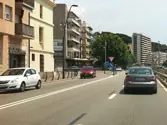
¿Está permitido circular por una travesía con las luces antiniebla encendidas en condiciones normales de visibilidad?
Are you allowed to drive on a travesía (stretch of road through a town) with the fog lights on in normal visibility?
- ANo.No.
- BNo, porque en travesía están prohibidas.No, because they are prohibited on travesías.
- CSí.Yes.
ExplanationFog lights may only be used in fog, heavy rain or snow, clouds of smoke or dust, or other situations that greatly reduce visibility. In normal visibility they must not be on, whether on a travesía or on any other road.
De noche y con lluvia muy intensa ¿es obligatorio llevar las luces antiniebla traseras?
At night and in very heavy rain, is it compulsory to have the rear fog lights on?
- ASí.Yes.
- BSí, y además las delanteras antiniebla.Yes, and the front fog lights as well.
- CSí, y además las de corto alcance o de cruce.Yes, and dipped headlights as well.
ExplanationWhen driving at night, we must use at least dipped headlights. In very heavy rain we must also use the rear fog lights; the front fog lights are optional.
En caso de lluvia muy intensa, ¿será obligatorio el uso del alumbrado antiniebla trasero?
In very heavy rain, is it compulsory to use the rear fog light?
- ASí.Yes.
- BNo, es opcional.No, it is optional.
- CSolo si además hay niebla.Only if there is also fog.
ExplanationThe rear fog light is compulsory when conditions are particularly unfavourable: thick fog, very heavy rain, heavy snowfall or dense clouds of smoke or dust. So in very heavy rain it must be switched on.
¿En qué supuesto será obligatorio el uso de la luz antiniebla trasera?
In which case is it compulsory to use the rear fog light?
- AEn caso de nevada.In snowfall.
- BEn caso de nubes de polvo o de humo.In clouds of dust or smoke.
- CEn caso de lluvia muy intensa.In very heavy rain.
ExplanationREAR FOG LIGHT: - Fitting and using it is compulsory. - It is red. - It must be used in THICK fog, VERY heavy rain, HEAVY snowfall or DENSE clouds of smoke or dust. FRONT FOG LIGHT: - Fitting and using it is NOT compulsory. - It is white or selective yellow. - It may be used, if you choose, in fog, heavy rain, snowfall, clouds of smoke or dust, or in similar conditions. - It may also be used on narrow roads with many bends, that is, roads with a carriageway 6.5 m wide or less that are marked with 'dangerous bends' signs.
¿Qué luz deberán llevar encendida como mínimo los vehículos que circulen por un carril reversible?
What is the minimum light that vehicles driving in a reversible lane must have on?
- ALa luz de corto alcance.Dipped headlights.
- BLa luz de posición.Position lights.
- CLa luz de largo alcance.Main beam.
ExplanationDuring the day, dipped headlights must be on for motorcycles on any road, inside or outside built-up areas, and for all vehicles driving in: - a reversible lane; - a temporary additional lane, and also vehicles driving on the hard shoulder; - a lane opened for traffic in the opposite direction to normal, whether the lane is reserved only for them or opened to traffic in that direction as an exception; - a lane with the normal direction of traffic next to a lane opened for traffic in the opposite direction to normal.
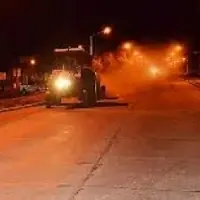
Estacionas tu vehículo al anochecer en el arcén de una travesía insuficientemente iluminada. ¿Qué alumbrado deberemos dejar encendido?
You park your vehicle at nightfall on the hard shoulder of a poorly lit travesía (stretch of road through a town). Which lights must we leave on?
- ALas luces de posición.The position lights.
- BLa señal de emergencia y la luz de estacionamiento.The hazard warning lights and the parking light.
- CLas luces de cruce y la señal de emergencia.Dipped headlights and the hazard warning lights.
ExplanationAccording to Article 105 of the General Traffic Regulations, a vehicle stopped or parked at night on the carriageway or hard shoulder of a poorly lit travesía must have its position lights on; these may be replaced by the parking lights. Dipped headlights and hazard warning lights are not used.
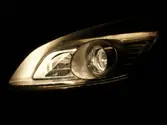
¿En qué circunstancias podremos circular con el alumbrado de largo alcance?
In which circumstances can we drive with main beam?
- ADentro de poblado en vías insuficientemente iluminadas.Inside built-up areas, on poorly lit roads.
- BFuera de poblado en vías insuficientemente iluminadas.Outside built-up areas, on poorly lit roads.
- CEn travesías insuficientemente iluminadas.On poorly lit travesías (stretches of road through a town).
ExplanationVehicles fitted with main beam must use it when driving at more than 40 km/h: - between sunset and sunrise, on poorly lit roads outside built-up areas; - at any time of day, in poorly lit tunnels, underpasses and stretches of road covered by the 'Tunnel' sign. However, dipped headlights must be used by: - vehicles that do not have main beam; - vehicles driving with main beam that could dazzle other road users. When driving at no more than 40 km/h, you can use dipped headlights or main beam. It is prohibited to use main beam when the vehicle is stopped, parked or in a built-up area. Both the answer about roads inside built-up areas and the one about travesías refer to urban roads, where main beam is prohibited.
¿Está permitido utilizar el alumbrado de largo alcance, en vía interurbana insuficientemente iluminada, al cruzarse con un peatón?
Is it allowed to use the main beam on an insufficiently lit interurban road when passing a pedestrian coming the other way?
- ASí.Yes.
- BSí, si el peatón circula por el arcén.Yes, if the pedestrian is walking on the hard shoulder.
- CNo, se debe sustituir por el alumbrado de corto alcance, para no deslumbrarle.No, you must switch to the dipped headlights so as not to dazzle them.
ExplanationThe main beam must be replaced by the dipped headlights as soon as it could dazzle other road users, and pedestrians are road users too, whether they are on the carriageway or on the hard shoulder (Article 102.1 of the General Traffic Regulations).
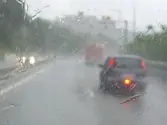
En caso de lluvia muy intensa, ¿es aconsejable utilizar las luces de largo alcance?
In very heavy rain, is it advisable to use main beam?
- ASe podrán utilizar pero no es aconsejable.It may be used, but it is not advisable.
- BSe podrán utilizar y es altamente aconsejable.It may be used, and it is highly advisable.
- CNo se podrán utilizar ya que está prohibido.It may not be used, as it is prohibited.
ExplanationIn bad weather we may use main beam as long as we are not inside a built-up area. However, we must bear in mind that it is not usually advisable to have it on, as it can make vision worse rather than better.
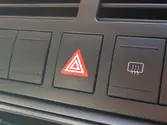
¿Es obligatorio que los automóviles dispongan de señal de emergencia?
Is it compulsory for motor vehicles to have hazard warning lights?
- ANo es obligatorio, pero sí recomendado.It is not compulsory, but it is recommended.
- BSí, es obligatorio para los automóviles, remolques y semirremolques y opcional para las motocicletas.Yes, it is compulsory for motor cars, trailers and semi-trailers, and optional for motorcycles.
- CSí, es obligatorio para todos los vehículos.Yes, it is compulsory for all vehicles.
ExplanationThe hazard warning signal, which is all the vehicle's direction indicators flashing at the same time, is compulsory for motor cars, trailers and semi-trailers, and optional for motorcycles.
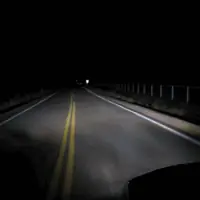
¿Cuando se entiende que una vía está insuficientemente iluminada?
When is a road considered poorly lit?
- ACuando no se puede leer la matricula a cincuenta metrosWhen you cannot read the number plate at fifty metres.
- BCuando no se puede leer la matricula a diez metrosWhen you cannot read the number plate at ten metres.
- CCuando no se puede leer la matricula a cien metrosWhen you cannot read the number plate at a hundred metres.
ExplanationThe Traffic Regulations say that a road is considered poorly lit when you cannot read the number plate at 10 metres or cannot make out a dark car at 50 metres.
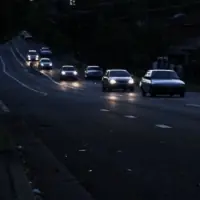
Circular de noche con el alumbrado interior encendido, ¿es peligroso?
Is it dangerous to drive at night with the interior light on?
- ANo, porqué evita el deslumbramiento.No, because it prevents dazzle.
- BNo, porqué descansa la vista.No, because it rests your eyes.
- CSí, porqué veo peor.Yes, because I see less well.
ExplanationDriving at night with the interior light on is dangerous: it causes reflections on the windows, makes it harder to see outside and forces your eyes to adjust to two different light levels. It can also be distracting. It should only be switched on when the vehicle is stopped.
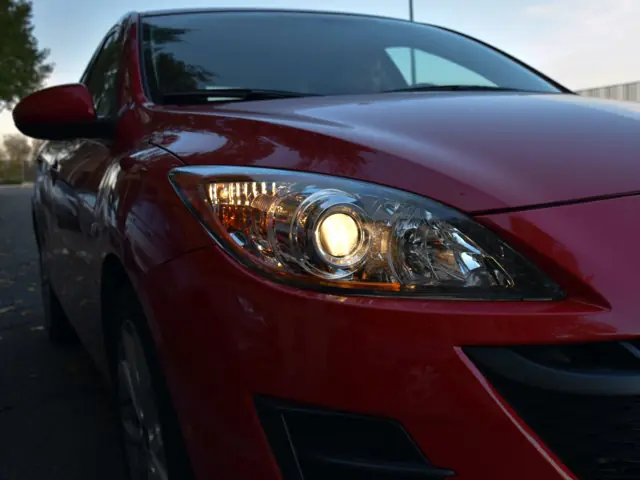
Durante el día y con tiempo soleado, deberá llevar encendida la luz de corto alcance cuando...
During the day and in sunny weather, you must have dipped headlights on when...
- Acircule a una velocidad inferior a 40 km/h.driving at less than 40 km/h.
- Bcircule por un carril reversible.driving in a reversible lane.
- Ccircule en tramos de vías estrechas con muchas curvas.driving on stretches of narrow road with many bends.
ExplanationOn carriageways with two-way traffic, when double broken lines mark a lane on both sides, they show that it is a reversible lane, that is, a lane where traffic can be directed in one direction or the other by lane traffic lights or other means. Drivers using this lane must have dipped headlights on, both by day and at night.
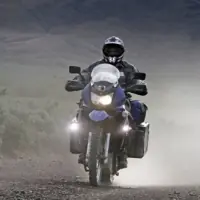
¿Cuantas luces de largo alcance debe tener una motocicleta?
How many main beam lights must a motorcycle have?
- ALas que el conductor desee siempre que cumpla la normativa de colocaciónAs many as the rider wants, as long as they meet the rules on placement.
- BUna o dos lucesOne or two lights.
- CUna luz únicamenteOnly one light.
ExplanationMotorcycles may be fitted with one or two main beam lights.
¿Qué alumbrado es obligatorio utilizar al circular por un túnel insuficientemente iluminado que se encuentra dentro de poblado?
Which lights are compulsory when driving through a poorly lit tunnel inside a built-up area?
- AEl alumbrado de largo alcance, salvo que existan usuarios a los que se pueda deslumbrar, en cuyo caso se sustituiría por el alumbrado de corto alcance.Main beam, unless there are road users who could be dazzled, in which case you would switch to dipped headlights.
- BEl alumbrado de corto alcance en todo momento.Dipped headlights at all times.
- CEl alumbrado de corto o largo alcance, según estime conveniente el conductor.Dipped headlights or main beam, as the driver thinks best.
ExplanationIn a built-up area, when the road or tunnel is poorly lit, Article 101 of the General Traffic Regulations requires dipped headlights. Main beam is kept for poorly lit roads outside built-up areas.
Ud. circula, fuera de poblado, por una vía insuficientemente iluminada con las luces de largo alcance o carretera encendidas. Si transitan peatones a los que pueda deslumbrar, ¿qué debe hacer?
You are driving outside built-up areas on a road that is not sufficiently lit, with main beam on. If there are pedestrians you could dazzle, what must you do?
- AMantener las de largo alcance y reducir la velocidad.Keep main beam on and slow down.
- BCambiar a las luces de corto alcance o cruce.Switch to dipped headlights.
- CNada, la prohibición de deslumbrar se refiere a los conductores de otros vehículos, no a los peatones.Nothing; the ban on dazzling refers to drivers of other vehicles, not to pedestrians.
ExplanationMain beam must be replaced by dipped headlights as soon as it could dazzle other road users, and pedestrians are road users too; so when you meet pedestrians you must switch to dipped headlights (Article 102.1 of the General Traffic Regulations).
Debe cambiar el alumbrado de carretera por el cruce cuando…
You must switch from main beam to dipped headlights when...
- Ase pueda deslumbrar sólo a los vehículos que circulen en sentido contrario.you could dazzle only oncoming vehicles.
- Bse circule por una vía interurbana.you are driving on a road outside a built-up area.
- Cse aprecie que puede deslumbrar a cualquier usuario de la vía.you notice that you could dazzle any road user.
ExplanationAccording to Article 102 of the General Traffic Regulations, main beam must be switched to dipped headlights as soon as it could dazzle any road user, whether an oncoming vehicle, a vehicle in front or a user of another road, not only those coming the other way.
¿Cuándo es obligatorio encender el alumbrado antiniebla trasero?
When is it compulsory to switch on the rear fog light?
- ASiempre que llueva o caiga nieve ligera.Whenever it rains or there is light snow.
- BÚnicamente en condiciones meteorológicas o ambientales especialmente desfavorables (niebla espesa, lluvia muy intensa o fuerte nevada).Only in especially unfavourable weather or environmental conditions (thick fog, very heavy rain or heavy snowfall).
- CDe noche en cualquier vía interurbana oscura.At night on any dark road outside a built-up area.
ExplanationThe rear fog light gives out a very bright red light that dazzles; it is only compulsory in especially unfavourable or extreme weather.
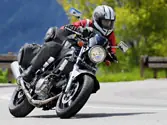
¿Qué alumbrado usaremos durante el día para circular con una motocicletas?
Which lights should we use during the day to ride a motorcycle?
- ANo es necesario usar ningún alumbrado.No lights need to be used.
- BEl alumbrado de posiciónThe position light.
- CEl alumbrado de corto alcance o cruce.The dipped headlight.
ExplanationOn a motorcycle we always use at least the dipped headlight, in all conditions.
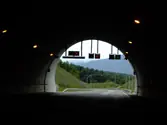
Por un túnel insuficientemente iluminado, se debe circular con las luces de...
Through a poorly lit tunnel, you must drive with...
- Aposición solamente.only the position lights.
- Bposición y las de corto alcance.the position lights and dipped headlights.
- Cposición y antiniebla delantera.the position lights and front fog light.
ExplanationEvery motor vehicle and moped driving between sunset and sunrise on well-lit roads, inside or outside built-up areas, or at any time of day in well-lit tunnels and other stretches of road covered by the 'Tunnel' sign, must have dipped headlights on as well as the position lights. It must also have these lights on in built-up areas when the road is poorly lit.
Si aparca de noche en una travesía poco iluminada, ¿qué luces debe dejar encendidas?
If you park at night in a poorly lit travesía (stretch of road through a town), which lights must you leave on?
- ALuces de posición y de cruce.Sidelights and dipped headlights.
- BNinguna.None.
- CLuces de posición; pueden sustituirse por las de aparcamiento si el vehículo está estacionado en línea.Sidelights; they may be replaced by parking lights if the vehicle is parked parallel to the kerb.
ExplanationUnder Article 105.2 of the General Traffic Regulations, a vehicle stopped or parked at night in a travesía that is not well enough lit must have its sidelights on; they may be replaced by parking lights when it is parked parallel to the kerb.
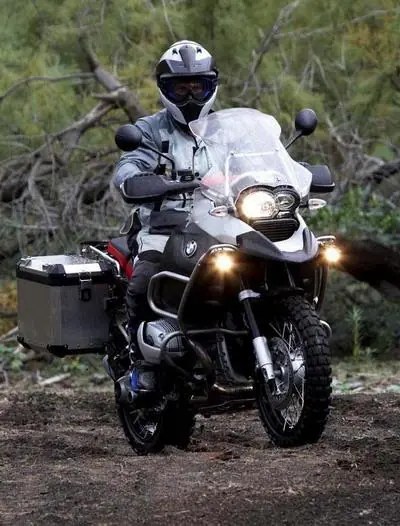
¿Pueden llevar las motocicletas la luz antiniebla delantera?
Can motorcycles have a front fog light?
- ASí, todas las motocicletas, con o sin sidecar.Yes, all motorcycles, with or without a sidecar.
- BSí, pero sólo las motocicletas con sidecar.Yes, but only motorcycles with a sidecar.
- CNo, las motocicletas no pueden llevar luces antiniebla.No, motorcycles cannot have fog lights.
ExplanationThe front fog light is not compulsory on any type of vehicle, but all motor vehicles may have one. Two-wheel tractors and mopeds may not have one. The rear fog light, on the other hand, is compulsory for motor cars, except for motorcycles and three-wheeled vehicles, for which it is optional.
Si tiene que reducir mucho la velocidad del vehículo que conduce, ¿cómo debe avisar a los vehículos que van detrás?
If you have to slow down a lot, how must you warn the vehicles behind you?
- AEncendiendo las luces de posición.By switching on the sidelights.
- BSolo con el intermitente derecho.Only with the right indicator.
- CMediante el uso repetido de las luces de freno.By using the brake lights repeatedly.
ExplanationBefore slowing down considerably you must give warning (Article 53.1 of the General Traffic Regulations (RGC)), and this is signalled, whenever possible, by using the brake lights repeatedly (Article 109.2.c). Sidelights or indicators do not signal it.
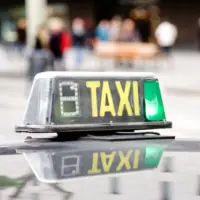
¿Cuál es la finalidad del alumbrado de taxímetro?
What is the purpose of the taximeter light?
- AIluminar el taxímetro cuando se baja la banderaTo light the taximeter when the meter is started.
- BIluminar la calzada en caso de que el resto no funcionenTo light the carriageway if the other lights do not work.
- CIluminar el habitáculo interior del taxiTo light the inside of the taxi.
ExplanationThe main purpose of the taximeter light in a taxi is to light the taximeter itself, the device taxis use to calculate the fare to charge the customer, when the taxi driver starts the meter.
Entre el ocaso y la salida del sol, ¿qué luces de matrícula tenemos que llevar?
Between sunset and sunrise, which number plate lights must we have?
- ALas dos, la delantera y la posterior.Both, front and rear.
- BLa delantera.The front one.
- CSolo la posterior.Only the rear one.
ExplanationThe number plate light comes on automatically when the position lights are switched on, and it is only at the rear of the vehicle.
¿En qué caso usaremos el alumbrado de largo alcance?
When should we use main beam?
- ACuando la vía esté insuficientemente iluminada, tanto dentro como fuera de poblado.When the road is poorly lit, both inside and outside built-up areas.
- BCuando la vía esté insuficientemente iluminada, fuera de poblado.When the road is poorly lit, outside built-up areas.
- CFuera de poblado, durante la noche, tanto si la vía está suficiente como insuficientemente iluminada.Outside built-up areas at night, whether the road is well lit or poorly lit.
ExplanationMain beam is only used on poorly lit roads outside built-up areas.
Debido a que la niebla es muy densa, un vehículo lleva encendidas las luces de cruce y las luces antiniebla delantera y posterior. ¿Es correcto?
Because the fog is very thick, a vehicle has its dipped headlights and its front and rear fog lights on. Is this correct?
- ANo, porque la luz delantera de niebla debe utilizarse aisladamente de la de cruce.No, because the front fog light must be used on its own, without the dipped headlights.
- BSí.Yes.
- CNo, porque las luces de niebla sólo pueden utilizarse simultáneamente con las de carretera.No, because fog lights may only be used together with main beam.
ExplanationAccording to Article 106.2 of the General Traffic Regulations, in fog you must use the front fog light or the dipped or main beam headlights, and the front fog light may be used on its own or together with dipped headlights, or even with main beam. In thick fog the rear fog light must also be switched on, so this combination is correct.
En una travesía insuficientemente iluminada, ¿Qué alumbrado llevará encendido?
On a poorly lit travesía (stretch of road through a town), which lights will you have on?
- AEl alumbrado de cruce.Dipped headlights.
- BEl alumbrado de posición, como mínimo.At least the position lights.
- CEl alumbrado de carretera.Main beam.
ExplanationA travesía is a stretch of road inside a built-up area. If it is poorly lit, at night you must have dipped headlights on as well as the position lights. Main beam is only used outside built-up areas.
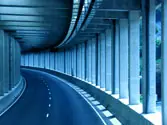
Durante el día en un paso inferior, ¿es obligatorio usar algún alumbrado?
During the day, in an underpass, is it compulsory to use any lights?
- ANo, si hay buena visibilidad.No, if visibility is good.
- BSí, como mínimo el alumbrado de corto alcance.Yes, at least dipped headlights.
- CSí, como mínimo el alumbrado de posición.Yes, at least the position lights.
ExplanationIn underpasses and stretches covered by the 'Tunnel' sign, it is compulsory, both by day and at night, to switch on at least dipped headlights.
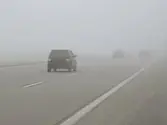
Circulando durante el día con niebla y sin disponer de alumbrado antiniebla delantero, ¿qué alumbrado utilizaremos?
When driving during the day in fog without a front fog light, which lights should we use?
- AUsaremos la luz de posición junto la luz cruce o corto alcance.We will use the position lights together with dipped headlights.
- BUsaremos solamente la luz de posición.We will use only the position lights.
- CUsaremos el alumbrado posterior antiniebla.We will use the rear fog light.
ExplanationFront fog lights are optional, so when driving on any type of road in conditions where visibility is much lower than normal, such as fog, heavy rain, snowfall, clouds of smoke or dust or any similar situation, dipped headlights must be used. Position lights cannot be used on their own for driving; they must always be used together with some other light.
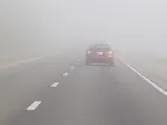
Durante el día y con niebla densa, ¿podremos usar el alumbrado de largo alcance?
During the day in dense fog, can we use main beam?
- ANo, sólo podremos usar el alumbrado delantero y posterior antiniebla.No, we may only use the front and rear fog lights.
- BSí, y además junto con el posterior antiniebla.Yes, and also together with the rear fog light.
- CNo, cuando hay niebla densa está prohibido usar el alumbrado de largo alcance.No, main beam is prohibited in dense fog.
ExplanationMain beam can be used as long as we do not dazzle other road users and are not in a built-up area. In dense fog it is allowed but not recommended, because the light beam can reflect off the water droplets in the air. This can dazzle other road users whom we may not see, or even dazzle ourselves. Something similar happens in heavy rain, because the light reflects off the road markings and can be a nuisance. So the best thing is always to use dipped headlights, and the rear fog light, which is compulsory.
¿Usaremos la señal de emergencia para realizar una parada en doble fila?
Should we use the hazard warning lights when stopping briefly in double file?
- ASí, para advertir a los demás conductores de la presencia de nuestro vehículo en la vía.Yes, to warn other drivers that our vehicle is on the road.
- BSí, conjuntamente con el alumbrado de posición.Yes, together with the position lights.
- CNo.No.
ExplanationWe use the hazard warning lights when the vehicle is immobilised, on the carriageway or on the hard shoulder, because of an emergency.
¿Cuál es la anchura máxima que puede tener un vehículo para que le esté permitido llevar la luz de estacionamiento?
What is the maximum width a vehicle can have to be allowed to have parking lights?
- A2 metros.2 metres.
- B1 metro.1 metre.
- C3 metros.3 metres.
ExplanationParking lights are optional for vehicles less than 6 metres long and less than 2 metres wide. If the vehicle is larger than this, it is prohibited from having them.
¿Qué alumbrado usaremos al circular por una travesía insuficientemente iluminada?
Which lights should we use when driving on a poorly lit travesía (stretch of road through a town)?
- AEl de posición y de corto alcance.Position lights and dipped headlights.
- BEl de posición y de largo alcance.Position lights and main beam.
- CSólo el de posición.Only position lights.
ExplanationTravesías are roads that run through built-up areas, so main beam may not be used. You cannot drive with only the position lights either; they must always be used together with some other light. We must drive with the position lights plus dipped headlights.
¿Qué alumbrado dejaremos encendido al estacionar en poblado, si la vía está suficientemente iluminada?
Which lights should we leave on when parking in a built-up area, if the road is well lit?
- AEl de posición.The position lights.
- BEl de posición o el de estacionamiento si es una travesía.The position lights, or the parking lights if it is a travesía.
- CNinguno.None.
ExplanationWhen parking inside a built-up area, both on urban roads and on well-lit travesías, you do not need to leave any lights on.
Un vehículo especial que carece de luz de freno, circulará como máximo a...
A special vehicle without a brake light will travel at a maximum of...
- A40 km/h.40 km/h.
- B25 km/h.25 km/h.
- C70 km/h.70 km/h.
ExplanationSpecial vehicles without a brake light, those towing a trailer, and two-wheel tractors travel at a maximum of 25 km/h.
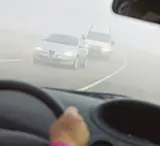
Durante el día, con niebla densa o lluvia intensa, ¿se puede circular con la luz de largo alcance encendida?
During the day, in dense fog or heavy rain, can you drive with main beam on?
- ANo, sólo puede encenderse la luz de corto alcance.No, only dipped headlights may be switched on.
- BNo, la luz de largo alcance sólo puede encenderse de noche.No, main beam may only be switched on at night.
- CSí, pero es aconsejable encender la luz de cruce.Yes, but it is advisable to switch on dipped headlights.
ExplanationIn dense fog or heavy rain you must have your lights on, during the day too, and Article 106 of the General Traffic Regulations allows you to use the front fog light, dipped headlights or main beam. However, in fog main beam reflects back and dazzles the driver, which is why dipped headlights are advised.
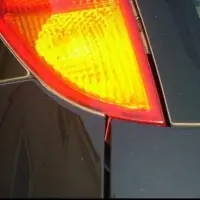
¿De qué color deben ser las luces indicadoras de dirección?
What colour must direction indicators be?
- AAmarillo-autoAmber.
- BRojoRed.
- CBlancoWhite.
ExplanationDirection indicators, which vehicles have at the sides to show that they intend to move sideways to the left or right, must always be amber.
¿Se pueden usar las luces de emergencia al estacionar en doble fila?
May you use the hazard warning lights when double-parking?
- ASí, es obligatorioYes, it is compulsory
- BNo, no autorizan el estacionamiento ilegalNo, they do not make illegal parking legal
- CSolo de nocheOnly at night
ExplanationHazard warning lights do not make improper parking legal.
¿Se puede circular desde el atardecer hasta el amanecer solo con las luces de posición encendidas?
Can you drive from dusk to dawn with only the position lights on?
- ASí, en una vía dentro de un poblado suficientemente iluminado.Yes, on a road in a well-lit built-up area.
- BNo.No.
- CSí, en un tramo de vía suficientemente iluminado.Yes, on a well-lit stretch of road.
ExplanationAccording to Article 101 of the General Traffic Regulations, every vehicle driving between sunset and sunrise must have dipped headlights on as well as the position lights, even on well-lit roads. This is because position lights alone do not give the visibility needed for safe driving, especially where visibility may be affected. Driving with only the position lights on would be a serious offence, because more light is needed to prevent accidents.
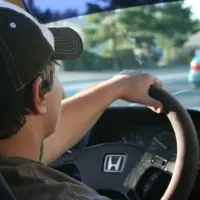
¿Cuál de éstos NO ayuda a proporcionar una buena visibilidad dentro del vehículo?
Which of these does NOT help to give good visibility from inside the vehicle?
- ALos espejos retrovisoresThe mirrors.
- BEl tablero de instrumentosThe instrument panel.
- CLos dispositivos de alumbradoThe lighting devices.
ExplanationThe vehicle's lighting devices and mirrors are parts of the vehicle that give the driver good visibility from inside the vehicle. The purpose of the instrument panel is to hold items that help the driver in other ways, but not to improve visibility.
All topics
- Definitions
- Documents and penalty points
- The driver's condition
- Duties of drivers and pedestrians
- Vehicle safety devices
- Vehicle controls and equipment
- Traffic signs, markings and signals
- The road and its lanes
- Speed and distances
- Manoeuvres
- Right of way
- Carrying passengers and loads
- Driving safely in difficult conditions
- Vehicle mechanics and maintenance
- Road accidents and first aid
- Defensive and eco-driving
Independent app: not affiliated with or endorsed by the DGT (Spain's Directorate-General for Traffic) or the Ministry of the Interior. The official exam is booked with the DGT and taken at its test centres. The questions here are practice material; the DGT's official question bank is not public.
Basado en datos de la Agencia Estatal Boletín Oficial del Estado (https://www.boe.es). Textos consolidados de carácter meramente informativo. La AEBOE no patrocina ni respalda este sitio.
Parte de las preguntas procede de los tests de la revista «Tráfico y Seguridad Vial» de la DGT, reproducidos con indicación de la fuente.