
DGT test · 839 questions
Vehicle lights and horn · Page 13 of 17
Side, dipped, main-beam, fog and hazard lights, and the horn: when each one is compulsory and when it is forbidden.
Questions in this topic, with answers
839 questions, 50 per page, with the correct answer and the explanation. Page 13 of 17.
Si circulamos por una vía suficientemente iluminada dentro de poblado, ¿qué alumbrado utilizaremos?
If we are driving on a sufficiently lit road inside a built-up area, which lights will we use?
- AÚnicamente las luces de posición para indicar la presencia de nuestro vehículo.Only the sidelights, to show that our vehicle is there.
- BLas luces de posición con las de corto alcance.The sidelights with dipped headlights.
- CLas luces de posición con las de largo alcance.The sidelights with main beam.
ExplanationInside a built-up area, whether the road is sufficiently or insufficiently lit, we must always use the sidelights with dipped headlights.
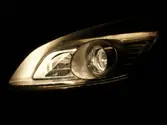
¿En qué caso de los citados usaremos el alumbrado de largo alcance o carretera?
In which of these cases will we use main beam?
- AEn travesías insuficientemente iluminadas.On insufficiently lit travesías (roads through towns).
- BEn autopistas suficientemente iluminadas.On sufficiently lit autopistas (motorways).
- CEn vías para automóviles insuficientemente iluminadas.On insufficiently lit motor roads (vías para automóviles).
ExplanationMain beam may not be used on travesías, because they are considered urban roads and main beam is prohibited there. On an autopista, if the road is sufficiently lit we do not need to use it, because we will have good visibility. On insufficiently lit motor roads we must use it when there is no risk of dazzling other road users. MAIN BEAM: Vehicles fitted with main beam must use it when travelling at more than 40 km/h: - Between sunset and sunrise, on insufficiently lit roads outside built-up areas. - At any time of day, in insufficiently lit tunnels, underpasses and stretches of road covered by the ‘tunnel’ sign. However, the following will use dipped headlights: - Vehicles that do not have main beam. - Vehicles using main beam that could dazzle other road users. At a speed of no more than 40 km/h, you may use dipped headlights or main beam. Main beam is prohibited when the vehicle is stopped or parked, or inside a built-up area.
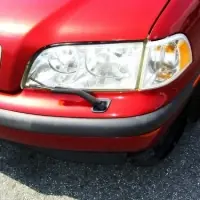
¿Es obligatorio que un vehículo lleve limpiafaros?
Must a vehicle have headlight washers?
- ASi, pero únicamente en vías secundariasYes, but only on minor roads
- BSi, para mantener los faros limpios y que alumbren mejorYes, to keep the headlights clean so they light up better
- CNo es obligatorio, pero si recomendableThey are not compulsory, but they are advisable
ExplanationA headlight washer system is not compulsory on any type of road, but it is advisable, because it keeps the headlights clean so they light up better, which helps the driver see.
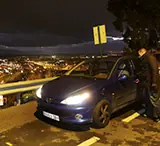
Es de noche y necesita inmovilizar su vehículo en el arcén de una carretera por avería. ¿Qué luces debe encender?
It is night and you need to stop your vehicle on the hard shoulder of a road because of a breakdown. Which lights must you switch on?
- ASólo las luces de posición.Only the sidelights.
- BLas luces de emergencia y las luces cortas.The hazard warning lights and dipped headlights.
- CLas de posición y las de emergencia.The sidelights and the hazard warning lights.
ExplanationAt night, every vehicle immobilised on the carriageway or hard shoulder must have its sidelights on so it can be seen, and the breakdown is also signalled with the hazard warning lights. That is why both must be used at the same time.
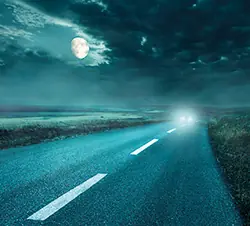
En una vía interurbana insuficientemente iluminada, un turismo circula a menos de 40 km/h; ¿puede circular utilizando solo la luz de posición y la de corto alcance?
On an insufficiently lit road outside built-up areas, a car is travelling at less than 40 km/h. May it drive using only the sidelights and dipped headlights?
- ASí, aunque puede encender la de largo alcance si no deslumbra a otros usuarios.Yes, although it may switch on main beam if it does not dazzle other road users.
- BNo; es obligatorio que circule con la luz de largo alcance encendida.No, it must drive with main beam on.
- CSolo cuando circule por una travesía.Only when driving through a travesía.
ExplanationMain beam is only required outside built-up areas, on roads without enough lighting, when driving at more than 40 km/h. Below that speed dipped headlights are enough, and you may use main beam if it does not dazzle anyone.
¿De qué color serán las luces de niebla delanteras?
What colour must front fog lights be?
- ABlancas.White.
- BAmarillo selectivo.Selective yellow.
- CBlancas o amarillo selectivo.White or selective yellow.
ExplanationFront fog lights may be white or selective yellow, depending on their type approval. The rear fog light, on the other hand, is always red.
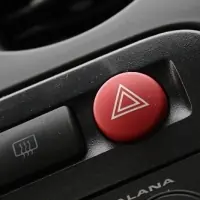
¿Para que sirve la luz de emergencia?
What are hazard warning lights for?
- APara advertir de que se ha pinchado un neumáticoTo warn that a tyre has a puncture
- BPara advertir de que el vehículo constituye algún peligroTo warn that the vehicle is some kind of danger
- CPara advertir de un accidente con heridosTo warn of an accident with injured people
ExplanationThe main purpose of a vehicle's hazard warning lights is to warn other road users that the vehicle using them is some kind of danger to other vehicles or pedestrians on the road.
Las motocicletas de dos ruedas, ¿están obligadas a llevar las luces indicadoras de dirección?
Must two-wheeled motorcycles have indicators?
- ANo, pero las pueden llevar.No, but they may have them.
- BSí.Yes.
- CNo.No.
ExplanationTwo-wheeled motorcycles must have indicators.
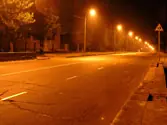
¿Está permitido el uso del alumbrado de largo alcance al circular por una travesía?
Is main beam allowed when driving through a travesía (stretch of road through a town)?
- ANo.No.
- BSi, en travesías insuficientemente iluminadas.Yes, on insufficiently lit travesías.
- CSólo si se circula a una velocidad superior a 40 km/h.Only if driving at more than 40 km/h.
ExplanationA travesía is a stretch of public road inside a built-up area, so we will use the sidelights together with dipped headlights, whether the travesía is sufficiently or insufficiently lit. Remember that main beam is prohibited in built-up areas, because we could dazzle a road user we are unable to see. Driving with sidelights alone is prohibited; they must always go with some other light.
¿Deben llevar obligatoriamente los motocultores la luz de marcha atrás?
Must walk-behind tractors (motocultores) have a reversing light?
- ANoNo.
- BSíYes.
- CÚnicamente los que tengan licencia para elloOnly those licensed for it.
ExplanationUnder Article 16 of the General Vehicle Regulations (RGV), a reversing light is not among the compulsory devices for walk-behind tractors; those fit to be driven at night must have, among others, dipped headlights, sidelights and direction indicators. No licence changes this rule.
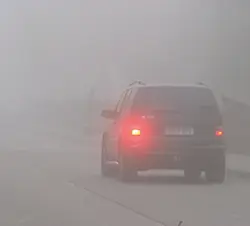
La luz antiniebla trasera deberá utilizarse en caso de...
The rear fog light must be used in the case of...
- ANiebla espesa.Dense fog.
- BCircular de noche por una vía sin asfaltar.Driving at night on an unsurfaced road.
- CCircular al anochecer por una vía sin arcén.Driving at dusk on a road with no hard shoulder.
ExplanationThe rear fog light is very bright and dazzles the driver behind, so it must only be switched on in dense fog, very heavy rain or heavy snowfall; in normal conditions it is prohibited.

A partir de esta señal está obligado a llevar encendido, al menos, el alumbrado de...
From this sign onwards, you must have at least the following lights on:
- Alargo alcance.main beam.
- Bcorto alcance.dipped headlights.
- Cposición.sidelights.
ExplanationDrivers must drive with at least dipped headlights on, whatever the visibility and road lighting, from the place where the sign is until another sign marking the end of this obligation.
Con lluvia muy intensa, ¿se pueden usar las luces antiniebla delanteras y traseras?
In very heavy rain, may you use the front and rear fog lights?
- ANo, solo se pueden usar con niebla.No, they may only be used in fog.
- BSí, y además es obligatorio usar la luz antiniebla trasera.Yes, and the rear fog light is in fact compulsory.
- CSí, pero solo la luz antiniebla delantera.Yes, but only the front fog light.
ExplanationIn heavy rain you may use the front fog light, and in very heavy rain the rear one must be on (Article 106.2 of the General Traffic Regulations). So in very heavy rain you may use both and the rear one is compulsory; they are not only for fog.
¿Qué luz antiniebla se debe usar con niebla densa durante el día?
Which fog light should be used in dense fog during the day?
- ALuz antiniebla trasera.The rear fog light.
- BLuz antiniebla delantera.The front fog light.
- CLuz antiniebla delantera y trasera.The front and rear fog lights.
ExplanationUnder Article 106.2 of the RGC, in thick fog the rear fog light must be switched on, also during the day, so that those driving behind can see you. The front fog light is optional: dipped headlights or main beam can be used instead.
Si su vehículo está detenido en un túnel, ¿qué alumbrado utilizará?
If your vehicle is stopped in a tunnel, which lights will you use?
- AEl alumbrado de posición con el de cruce.The sidelights with dipped headlights.
- BEl alumbrado de cruce con el de emergencia.Dipped headlights with the hazard warning lights.
- CSi la detención dura más de dos minutos podrá apagar todas las luces.If the stop lasts more than two minutes, you may switch off all the lights.
ExplanationWhen driving through a tunnel we will use dipped headlights. If we stop inside the tunnel, we will use the hazard warning lights to warn the vehicles behind us.
¿Qué tipo de alumbrado es el más eficaz en caso de niebla?
Which lights work best in fog?
- ALuces de corto alcanceDipped headlights
- BLuces de largo alcanceMain beam
- CLuces de emergenciaHazard warning lights
ExplanationThe best lights in fog are dipped headlights, because main beam not only does not help us see the road better, but can even make things worse. This is because such strong light reflects off the fog itself, making the already poor visibility even worse. We can also bother or dazzle other drivers.
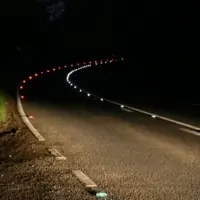
Bajo condiciones de luminosidad desfavorables, el alumbrado…
In poor light conditions, lights…
- APermite darse cuenta de posibles peligros con suficiente tiempo para reaccionar.let you notice possible dangers with enough time to react.
- BNo es demasiado útil.are not very useful.
- CPermite darse cuenta de posibles peligros solo cuando se circula con la luz de carretera.let you notice possible dangers only when driving with main beam.
ExplanationGood lighting reduces the negative effects of driving in poor light. This means always keeping the headlight glass clean and the vehicle's lights in good working order and properly aimed, so that when you use them you do not dazzle others and the area you light up is the right one. This way you can see the carriageway and any obstacles on it better.
¿Se pueden utilizar las luces de largo alcance para advertir de un adelantamiento en poblado?
May main beam be used to warn that you are going to overtake in a built-up area?
- ASí, pero en intervalos cortosYes, but at short intervals
- BSí, con ráfagas prolongadasYes, with long flashes
- CNoNo
ExplanationMain beam may be used as short flashes, to avoid a possible accident or to warn, on roads both outside and inside built-up areas, that you intend to overtake another vehicle. On roads outside built-up areas, you may also sound the horn to warn that you are overtaking.
¿En qué vías debe usar las luces de largo alcance?
On which roads must you use main beam?
- AEn vías interurbanas con poca iluminación.On poorly lit roads outside built-up areas.
- BEn cualquier tipo de vía, cuando sea necesario.On any type of road, when necessary.
- CEn vías urbanas, incluidas las travesías.On roads in built-up areas, including travesías (stretches of road through a town).
ExplanationUnder Article 100 of the General Traffic Regulations, main beam is compulsory between sunset and sunrise outside built-up areas, on roads that are not lit well enough, at more than 40 km/h, and in poorly lit tunnels, unless it could dazzle others. In built-up areas you use dipped headlights.
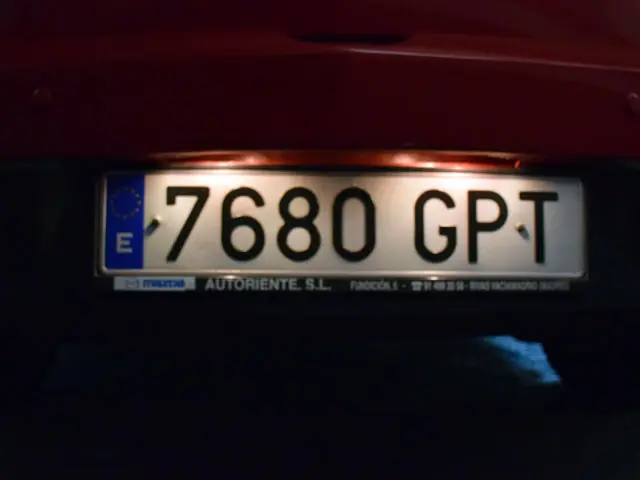
Un turismo que circula entre la puesta y la salida del sol, ¿debe llevar iluminadas las placas de matrícula?
Must a car driving between sunset and sunrise have its number plates lit?
- ASí, tanto la placa delantera como la trasera.Yes, both the front and the rear plate.
- BSolo la placa trasera.Only the rear plate.
- CSolo la placa delantera.Only the front plate.
ExplanationVehicles must have a number plate light that, without dazzling other road users, lets you read the plate at night in clear weather from 20 metres away when the vehicle is stopped. It must come on whenever the vehicle is using its sidelights, dipped headlights or main beam.
Un vehículo averiado circula muy despacio con las luces de emergencia encendidas. ¿Es correcto?
A broken-down vehicle is moving very slowly with its hazard warning lights on. Is this correct?
- ANo, porque las luces de emergencia solo se encienden cuando el vehículo está parado.No, because hazard warning lights are only switched on when the vehicle is stationary.
- BNo, porque está prohibido utilizarlas en vías urbanas.No, because they may not be used in built-up areas.
- CSí, porque está averiado.Yes, because it has broken down.
ExplanationAccording to Article 49.3 of the General Traffic Regulations, when a vehicle cannot reach the required minimum speed and there is a risk of being hit from behind, it must keep its hazard warning lights on while moving. So they can be used while the vehicle is moving, and also in built-up areas; they are not only for stationary vehicles.
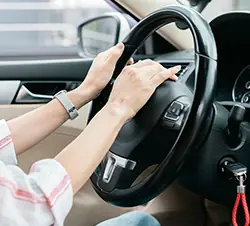
En poblado, ¿está permitido usar las advertencias acústicas?
In a built-up area, are you allowed to use the horn?
- ASí, para evitar un accidente o avisar a los demás usuarios de que se realiza un servicio de urgencia.Yes, to avoid an accident or to warn other road users that you are on an emergency call.
- BSí, exclusivamente para evitar un accidente.Yes, only to avoid an accident.
- CNo.No.
ExplanationIn a built-up area the horn may only be used as an exception: to avoid a possible accident, or by priority vehicles to warn that they are on an emergency call.
Los conductores deben avisar con señales luminosas...
Drivers must use light signals to warn of...
- Asolo maniobras que impliquen movimiento lateral.only manoeuvres involving sideways movement.
- Bsolo maniobras que no impliquen movimiento lateral.only manoeuvres not involving sideways movement.
- Ccualquier maniobra que implique un movimiento lateral o marcha atrás.any manoeuvre involving sideways movement or reversing.
ExplanationArticle 109.1 of the RGC requires drivers to use light signals to warn of any manoeuvre involving a sideways or backward movement, as well as the intention to stop the vehicle or brake considerably.
Las señales acústicas deben ser ...
Horns must have...
- Ade cualquier sonido.any sound.
- Bde sonido muy agudo.a very high-pitched sound.
- Cde sonido no estridente.a sound that is not shrill.
ExplanationShrill horns, horns that play different sounds or musical notes, and sirens are prohibited; sirens are reserved for priority vehicles. We may use the horn inside and outside built-up areas to avoid accidents or hitting someone, when on an emergency call, and on narrow roads with many bends. Outside built-up areas we may use it to warn that we are going to overtake.
¿Qué alumbrado deberá utilizar una motocicleta durante el día?
Which lights must a motorcycle use during the day?
- AEl de posición o el de cruce.The sidelight or the dipped headlight.
- BEl de cruce o corto alcance.The dipped headlight.
- CNinguno.None.
ExplanationMotorcycles must always use the dipped headlight, by day and by night; they may not ride with only the sidelight.
¿Qué alumbrado se debe utilizar al circular por una vía urbana insuficientemente iluminada, si no hay posibilidad de deslumbrar a otros usuarios?
Which lights must be used when driving on an insufficiently lit urban road, if there is no chance of dazzling other road users?
- ABastará con la luz de posición.Sidelights will be enough.
- BLa luz de posición y corto alcance.Sidelights and dipped headlights.
- CLa luz de posición, pudiendo acompañarla con la luz de corto o largo alcance, según las circunstancias de la vía.Sidelights, which may be combined with dipped headlights or main beam, depending on the road conditions.
ExplanationIn a built-up area, when the road is insufficiently lit, you must have the sidelights and dipped headlights on. Main beam is meant for roads outside built-up areas, and sidelights alone do not let you see or be seen well enough.
De día y con tiempo claro, ¿existe alguna circunstancia especial que le obligue a circular con las luces de cruce encendidas en su turismo?
During the day and in clear weather, is there any special situation in which you must drive your car with dipped headlights on?
- ASí, cuando circule por un carril habilitado para circular en sentido contrario al habitual, un carril adicional o un carril reversible.Yes, when driving in a lane opened to traffic in the opposite direction to normal, an additional lane or a reversible lane.
- BNo, porque sólo deben encenderse entre la puesta y la salida del sol o cuando las condiciones ambientales o meteorológicas sean adversas.No, because they must only be switched on between sunset and sunrise or in bad weather or environmental conditions.
- CSí, cuando por motivos de emergencia circule por el arcén de una autopista o autovía.Yes, when you drive on the hard shoulder of an autopista (motorway) or autovía (dual carriageway) because of an emergency.
ExplanationIt is correct that you must switch on dipped headlights when driving in a lane opened in the opposite direction to normal, an additional lane or a reversible lane. This is because these situations can confuse other drivers, and having your lights on makes you more visible and helps prevent accidents.
¿Es obligatorio que el remolque disponga de luz antiniebla trasera?
Must a trailer have a rear fog light?
- ASolo si su MMA supera los 750 kg.Only if its MAM is over 750 kg.
- BSí.Yes.
- CNo.No.
ExplanationA trailer must have a rear fog light.
¿Es obligatorio que un remolque disponga de señal de emergencia?
Must a trailer have hazard warning lights?
- ANo.No.
- BSí.Yes.
- CSí, pero solo los remolques de más de 750 kg.Yes, but only trailers over 750 kg.
ExplanationHazard warning lights are compulsory both on motor cars and on their trailers and semi-trailers. They are not compulsory on motorcycles; on motorcycles fitting them is optional.
Circulando bajo condiciones ambientales adversas tendremos que usar como mínimo...
When driving in bad environmental conditions, we must use at least...
- ALas luces antiniebla delanteras.the front fog lights.
- BLas luces de corto alcance.dipped headlights.
- CLas luces de largo alcance.main beam.
ExplanationWhen driving in bad environmental conditions that reduce visibility, we must use at least dipped headlights.
De día, ¿es obligatorio circular con las luces de posición encendidas en su ciclomotor?
During the day, must you ride your moped with the sidelights on?
- ANo, porque está prohibido.No, because it is prohibited.
- BSí, deben llevarse siempre encendidas, tanto de día como de noche.Yes, they must always be on, both by day and by night.
- CNo, sólo cuando las condiciones de visibilidad no son buenas.No, only when visibility is not good.
ExplanationYou must switch on your moped's sidelights only when visibility is not good, such as in rain, fog or snow, even during the day. In normal daytime visibility you do not have to ride with the sidelights on.
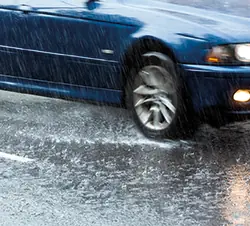
En caso de condiciones meteorológicas muy desfavorables, como lluvia muy intensa, ¿se puede circular con la luz antiniebla trasera encendida?
In very bad weather, such as very heavy rain, may you drive with the rear fog light on?
- ANo, solo puede utilizarse con niebla densa.No, it may only be used in dense fog.
- BSí.Yes.
- CSí, aunque su uso es opcional.Yes, although using it is optional.
ExplanationThe rear fog light is used in dense fog and also in other very bad conditions, such as very heavy rain or heavy snowfall; because it is so bright, it is kept for these cases.
Con niebla densa, ¿qué luces antiniebla está obligado a usar un coche?
In dense fog, which fog lights must a car use?
- ASolo la luz antiniebla trasera.Only the rear fog light.
- BLa luz antiniebla trasera y la delantera, si está instalada.The rear fog light and the front one, if fitted.
- CLa luz antiniebla delantera y las luces de cruce (cortas).The front fog light and dipped headlights.
ExplanationIn dense fog the rear fog light is compulsory (Article 106.2 of the General Traffic Regulations). The front one is optional: it can be used instead of, or together with, dipped headlights or main beam, but it is not compulsory even if the car has one.
En caso de lluvia ligera, ¿se permite usar las luces antiniebla?
In light rain, are you allowed to use fog lights?
- ASí, tanto las delanteras como la trasera.Yes, both the front ones and the rear one.
- BSí, pero sólo la trasera.Yes, but only the rear one.
- CNo.No.
ExplanationAccording to Spain's General Traffic Regulations, specifically Article 106, the rear fog light is only allowed in especially bad weather or environmental conditions, such as dense fog or very heavy rain. In rain that is not heavy, using it is not justified, so the correct answer is ‘No’. Using fog lights in the wrong conditions can confuse other drivers and create dangerous situations. So it is considered an offence.
En caso de niebla espesa, ¿podremos utilizar el alumbrado antiniebla trasero?
In dense fog, may we use the rear fog light?
- ASí, de forma opcional.Yes, optionally.
- BSí, de forma obligatoriaYes, it must be used.
- CNo.No.
ExplanationREAR FOG LIGHT: - Fitting and using it are compulsory. - It must be red. - It must be used in DENSE fog, VERY heavy rain, HEAVY snowfall or THICK clouds of smoke or dust. FRONT FOG LIGHT: - Fitting and using it are NOT compulsory. - It must be white or selective yellow. - It may be used, voluntarily, in fog, heavy rain, snowfall, clouds of smoke or dust, or similar conditions. - It may also be used on narrow roads with many bends, that is, roads with a carriageway 6.5 m wide or less that are signposted with ‘dangerous bends’ signs.
En un túnel de carretera insuficientemente iluminado, ¿qué alumbrado deberemos utilizar?
In an insufficiently lit road tunnel, which lights must we use?
- AEl alumbrado de cruce o de corto alcance.Dipped headlights.
- BEl alumbrado de carretera o de largo alcance.Main beam.
- CEl alumbrado de posición o el de corto alcance.Sidelights or dipped headlights.
ExplanationWhen we drive outside built-up areas through an insufficiently lit tunnel, we must use main beam, unless it could dazzle someone, in which case we will use dipped headlights.
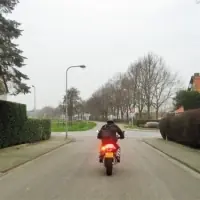
¿Es obligatoria la luz de emergencia en las motocicletas?
Are hazard warning lights compulsory on motorcycles?
- ASíYes
- BNo, es opcionalNo, they are optional
- CSí, es obligatorio para los conductores novelesYes, they are compulsory for novice drivers
ExplanationHazard warning lights are optional on motorcycles but compulsory on tricycles and quadricycles.
¿Debe hacer uso del sistema de alumbrado en caso de una detención por emergencia en una carretera durante el día?
Must you use your vehicle's lights if you stop because of an emergency on a road during the day?
- ANo, solo es obligatorio de noche o con poca visibilidad.No, they are only compulsory at night or in poor visibility.
- BSí, debe encender las luces de emergencia o intermitentes.Yes, you must switch on the hazard warning lights.
- CNo, basta con señalizar con los triángulos de emergencia.No, signalling with the warning triangles is enough.
ExplanationDuring the day and in clear weather, you must use the hazard warning lights when a vehicle stops on the road because of an emergency. These lights warn other drivers that the vehicle is immobilised in an abnormal situation, which helps prevent accidents. Also, if the stop happens at night or in poor visibility, you must also switch on the sidelights so that the vehicle can be seen from a suitable distance, especially if it is in a place where it could be a danger to other road users.
Un vehículo que circula a menos de 40 km/h por una carretera insuficientemente iluminada, ¿podrá utilizar el alumbrado de largo alcance?
May a vehicle travelling at less than 40 km/h on an insufficiently lit road use main beam?
- ANo nunca porque deslumbra.No, never, because it dazzles.
- BNo, sólo puede usar el de cruce, porque va muy despacio.No, it may only use dipped headlights, because it is going very slowly.
- CSí.Yes.
ExplanationWhen driving on an insufficiently lit road outside built-up areas at no more than 40 km/h, we may use either main beam or dipped headlights.
Si circula por una vía interurbana insuficientemente iluminada a una velocidad superior a 40 km/h., ¿qué luces deberá de llevar encendidas?
If you are driving on an insufficiently lit road outside built-up areas at more than 40 km/h, which lights must you have on?
- ALas luces de corto alcance, en todo caso.Dipped headlights, in all cases.
- BLas luces de largo alcance, en el caso de no deslumbrar.Main beam, if it does not dazzle.
- CLas luces de posición.The sidelights.
ExplanationVehicles fitted with main beam must use it when travelling at more than 40 km/h: - Between sunset and sunrise, on insufficiently lit roads outside built-up areas. - At any time of day, in insufficiently lit tunnels, underpasses and stretches of road covered by the ‘tunnel’ sign. However, the following will use dipped headlights: - Vehicles that do not have main beam. - Vehicles using main beam that could dazzle other road users. At a speed of no more than 40 km/h, you may use dipped headlights or main beam. Main beam is prohibited when the vehicle is stopped or parked, or inside a built-up area.
Entre la puesta y la salida de sol, ¿es obligatorio señalizar una carga que sobresale lateralmente más de 0,40 metros de los bordes exteriores de las luces de posición?
Between sunset and sunrise, must a load that sticks out sideways more than 0.40 metres beyond the outer edges of the sidelights be signalled?
- ANo.No.
- BSí.Yes.
- CSí, con un panel reflectante en cada extremidad.Yes, with a reflective panel at each end.
ExplanationAccording to Article 15 of the General Traffic Regulations, at night a load that sticks out sideways more than 0.40 metres beyond the sidelights must be signalled at each end with a white light and a white reflector facing forwards, and a red light and a red reflector facing backwards, not with a simple panel.
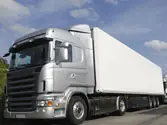
¿Para qué sirve la luz de galibo?
What are end-outline marker lights for?
- APara indicar la anchura total del vehículo.To show the full width of the vehicle.
- BPara mejorar el alumbrado de la carretera.To improve the lighting of the road.
- CPara indicar la presencia del vehículo.To show the presence of the vehicle.
ExplanationEnd-outline marker lights show the full width of the vehicle and are fitted as close as possible to the highest outer edge of the vehicle. There are two white lights at the front and two red lights at the rear. They are compulsory on vehicles more than 2.10 metres wide, optional between 1.80 m and 2.10 m, and prohibited on all other vehicles. To show the presence of the vehicle, there are the sidelights.
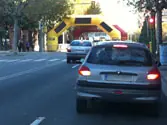
Si el vehículo de delante enciende las luces de freno varias veces seguidas, ¿qué nos está indicando?
If the vehicle in front switches on its brake lights several times in a row, what is it telling us?
- AQue va a reducir considerablemente la velocidad.That it is going to slow down considerably.
- BQue va a circular hacia detrás.That it is going to reverse.
- CQue las luces de freno se han averiado.That its brake lights have broken.
ExplanationExcept in case of immediate danger, a driver who wants to slow down considerably must warn other road users by using the brake lights repeatedly or by moving the arm up and down with short, quick movements.
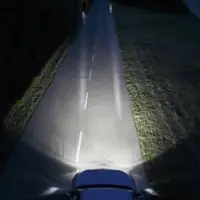
¿Cuantas luces de larga distancia debe llevar un automóvil (salvo excepciones como las motocicletas)?
How many main-beam lights must a motor car have (except in cases such as motorcycles)?
- AUn número par de lucesAn even number of lights
- BDos pares de luces uno trasero y otro delanteroTwo pairs of lights, one at the rear and one at the front
- CUna única luz delanteraA single front light
ExplanationMotor cars must have main-beam lights in an even number, usually two or four, fitted at the front. Motorcycles are the exception and may have one or two. These lights are not fitted at the rear.
Una motocicleta debe llevar encendidas las luces de corto alcance o cruce…
A motorcycle must have its dipped headlight on…
- ADe noche o en condiciones meteorológicas adversas.at night or in bad weather.
- BTanto de día como de noche.both by day and by night.
- CDe día, sólo por carriles reversibles, adicionales y habilitados en sentido contrario.during the day, only in reversible lanes, additional lanes and lanes opened in the opposite direction.
ExplanationAccording to Article 104 of the General Traffic Regulations, motorcycles must have their dipped headlight on on any road, by day and by night, so they are more visible. For other vehicles this daytime duty only applies in special lanes.
¿Qué debe hacer para avisar de que va a disminuir la velocidad?
What must you do to warn that you are going to slow down?
- APisar varias veces el pedal de freno.Press the brake pedal several times.
- BIndicarlo con el intermitente de la izquierda.Show it with the left indicator.
- CEncender el alumbrado de posición.Switch on the sidelights.
ExplanationTo warn the vehicle behind us that we are going to slow down, we must press the brake pedal on and off so that the brake lights come on, warning the other vehicles in this way.
Con niebla poco densa, ¿es correcto que un vehículo circule con la luz antiniebla trasera encendida?
In light fog, is it correct for a vehicle to drive with the rear fog light on?
- ASí, porque hay niebla.Yes, because there is fog.
- BNo, porque la niebla no es densa.No, because the fog is not thick.
- CSí, se puede usar opcionalmente cuando haya poca niebla.Yes, it may be used optionally when there is light fog.
ExplanationAccording to Article 106.2 of the RGC, the rear fog light may only be switched on in especially unfavourable conditions, such as thick fog. In light fog it is not justified: it dazzles drivers behind and can be confused with the brake lights.
¿Por qué son mejores las luces de xenón?
Why are xenon headlights better?
- APorque alumbran más cerca por delante del vehículo.Because they light up a shorter distance in front of the vehicle.
- BPorque consiguen una mejor iluminación del lado de la calzada.Because they light up the side of the carriageway better.
- CPorque consumen más energía que las halógenas.Because they use more energy than halogen lights.
ExplanationXenon headlights let you see further and light up the carriageway better, which reduces eye strain.
Las motocicletas deben llevar encendida la luz de cruce...
Motorcycles must have their dipped headlights on...
- Asolo entre la puesta y la salida del sol.only between sunset and sunrise.
- Bdurante todo el día en cualquier vía.all day on any road.
- Cdurante el día en vías interurbanas y solo entre la puesta y la salida del sol en vías urbanas.during the day on roads outside built-up areas, and only between sunset and sunrise on roads in built-up areas.
ExplanationUnder Article 104.a) of the General Traffic Regulations (RGC), motorcycles must have their dipped headlights on during the day on any road, inside or outside built-up areas. This makes them easier to see, because their narrow outline is easily overlooked.
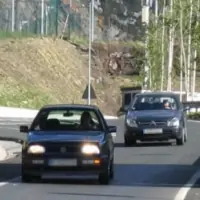
¿Cuantas luces de corto alcance debe llevar un automóvil?
How many dipped headlights must a motor car have?
- ADos, en los bordes lateralesTwo, at the side edges
- BDos, una central y otra lateralTwo, one in the centre and one at the side
- CUna, situada en el centro de la parte delanteraOne, in the centre of the front
ExplanationMotor cars must have two white dipped headlights at the front, near the side edges, so that other road users can clearly see how wide the car is. A single central light is typical of mopeds or motorcycles.
All topics
- Definitions
- Documents and penalty points
- The driver's condition
- Duties of drivers and pedestrians
- Vehicle safety devices
- Vehicle controls and equipment
- Traffic signs, markings and signals
- The road and its lanes
- Speed and distances
- Manoeuvres
- Right of way
- Carrying passengers and loads
- Driving safely in difficult conditions
- Vehicle mechanics and maintenance
- Road accidents and first aid
- Defensive and eco-driving
Independent app: not affiliated with or endorsed by the DGT (Spain's Directorate-General for Traffic) or the Ministry of the Interior. The official exam is booked with the DGT and taken at its test centres. The questions here are practice material; the DGT's official question bank is not public.
Basado en datos de la Agencia Estatal Boletín Oficial del Estado (https://www.boe.es). Textos consolidados de carácter meramente informativo. La AEBOE no patrocina ni respalda este sitio.
Parte de las preguntas procede de los tests de la revista «Tráfico y Seguridad Vial» de la DGT, reproducidos con indicación de la fuente.