
DGT test · 839 questions
Vehicle lights and horn · Page 17 of 17
Side, dipped, main-beam, fog and hazard lights, and the horn: when each one is compulsory and when it is forbidden.
Questions in this topic, with answers
839 questions, 50 per page, with the correct answer and the explanation. Page 17 of 17.
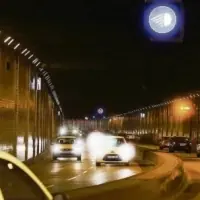
Circulando de día por un túnel suficientemente iluminado ¿se debe encender algún alumbrado?
When driving during the day through a sufficiently lit tunnel, must any lights be switched on?
- ANo.No.
- BSí, solamente el alumbrado de posición.Yes, only the sidelights.
- CSí, el alumbrado de posición y el de cruce.Yes, the sidelights and dipped headlights.
ExplanationIn a tunnel you must have lights on at any time. If it is sufficiently lit, you must have the sidelights and dipped headlights on; sidelights alone are not enough. Only in insufficiently lit tunnels may main beam be used when it does not dazzle.
La luz de estacionamiento debe usarse...
Parking lights should be used...
- Aal estacionar en calles poco iluminadas.when parking in poorly lit streets.
- Ben las paradas en doble fila.when stopping alongside parked vehicles (double stopping).
- Cal detenerse en vías urbanas, estén bien o mal iluminadas.when stopping on urban roads, whether well or poorly lit.
ExplanationUnder Article 105 of the RGC, a vehicle stopped or parked at night in a poorly lit travesía (stretch of road through a town) must have its sidelights on, which may be replaced by parking lights. That is what this light is for.
Durante una detención por motivos de tráfico en un túnel, ¿qué alumbrado usaremos?
When held up by traffic in a tunnel, which lights will we use?
- ASolo el de posición.Only the sidelights.
- BEl de posición con el de corto alcance.The sidelights with dipped headlights.
- CEl de posición con el de emergencia.The sidelights with the hazard warning lights.
ExplanationWhen held up by traffic in a tunnel, we must use the sidelights together with the hazard warning lights.
¿Cómo deben avisar los tractores y demás vehículos especiales agrícolas de que están en la vía?
How must tractors and other special agricultural vehicles warn that they are on the road?
- AUsando las luces de emergencia.By using the hazard warning lights.
- BCon la señal luminosa V-2 (luz amarilla auto), tanto de día como de noche.With the V-2 light signal (amber light), both by day and at night.
- CSolo con las luces de posición, y únicamente de noche.Only with the sidelights, and only at night.
ExplanationArticle 113 of the General Traffic Regulations requires drivers of tractors, agricultural machinery and other special vehicles to warn of their presence with the V-2 light signal, made up of amber lights visible from all directions. According to Article 71.3, it must be used both by day and at night when they are travelling at 40 km/h or less.
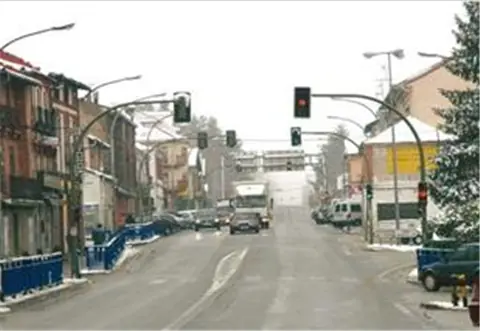
En las travesías, ¿está permitido circular con la luz de largo alcance?
On travesías (stretches of road through a town), are you allowed to drive with main beam?
- ANo.No.
- BSí, cuando la vía esté insuficiente iluminada.Yes, when the road is insufficiently lit.
- CSí, siempre que no se deslumbre a ningún usuario.Yes, as long as you do not dazzle any road user.
ExplanationTravesías are stretches of road that go through a town, and in built-up areas you may not use main beam, which is only for insufficiently lit roads outside built-up areas. On a poorly lit travesía you use dipped headlights.
Circulando por una vía interurbana insuficientemente iluminada, ¿con qué alumbrado lo haremos?
When driving on an insufficiently lit road outside built-up areas, which lights will we use?
- ACon las luces de posición más las de corto alcance.The sidelights plus dipped headlights.
- BCon las luces de posición más las de largo alcance.The sidelights plus main beam.
- CSólo con las de posición.Only the sidelights.
ExplanationWhen driving on an insufficiently lit road outside built-up areas, we must use the sidelights plus main beam, unless there is a risk of dazzling other road users or we are travelling at no more than 40 km/h.
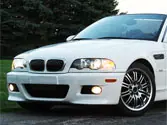
En un tramo recto, de noche, sin condiciones atmosféricas adversas, ¿es correcto el alumbrado que lleva encendido este vehículo?
On a straight stretch, at night, with no bad weather, is this vehicle using the correct lights?
- ANo.No.
- BSí.Yes.
- CÚnicamente cuando circule por una calzada estrecha.Only when driving on a narrow carriageway.
ExplanationFront fog lights, if the vehicle has them, may be used by day and by night, on urban roads or roads outside built-up areas, when driving in bad weather or environmental conditions that greatly reduce visibility. As this is not the case here, it is not correct to drive with the front fog lights on. Front fog lights may also be used on narrow roads with many bends, that is, roads with a carriageway 6.5 m wide or less that are signposted with ‘dangerous bends’ signs. The answer ‘only when driving on a narrow carriageway’ is not correct, because it only mentions a narrow carriageway and says nothing about bends.
Si un turismo circula por una carretera convencional con niebla muy espesa, ¿puede circular, exclusivamente, con la luz de posición, la luz antiniebla posterior y el alumbrado de corto alcance?
If a car is driving on a conventional road in very dense fog, may it drive with only the sidelights, the rear fog light and dipped headlights?
- ASí.Yes.
- BNo, es obligatoria la utilización de la luz de niebla delantera.No, the front fog light must be used.
- CNo, es obligatoria la utilización de la luz de niebla delantera, y no lo es la luz de niebla trasera.No, the front fog light must be used, and the rear fog light is not compulsory.
ExplanationIn very dense fog, the sidelights, dipped headlights and the rear fog light are enough. The front fog light may be used, but it is not compulsory, because the regulations let you choose between it and dipped headlights or main beam.
¿Cuántas luces de corto alcance o cruce tendrá que llevar obligatoriamente una motocicleta con sidecar?
How many dipped headlights must a motorcycle with a sidecar have?
- ASólo una.Only one.
- BUna o dos.One or two.
- CDos.Two.
ExplanationMotorcycles, with or without a sidecar, must have 1 or 2 white dipped headlights at the front. If they have two, they must be placed symmetrically on either side of the vehicle's centre line.
¿Es obligatorio el uso del alumbrado de corto alcance durante el día si conducimos una motocicleta?
Is it compulsory to use the dipped headlight during the day if we are riding a motorcycle?
- ANo, pero es aconsejable.No, but it is advisable.
- BSí.Yes.
- CSí, pero sólo en carreteras convencionales y autopistas.Yes, but only on conventional roads and autopistas (motorways).
ExplanationA motorcycle must have at least the dipped headlight on, both during the day and at night.
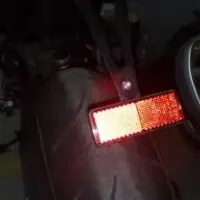
¿De qué color son los catadióptricos traseros?
What colour are rear reflectors?
- ARojoRed
- BAmarilloYellow
- CBlancoWhite
ExplanationThe job of reflectors is to warn of the vehicle's presence by reflecting the light from a light source. Number plates and retro-reflective markings are not reflectors. Front reflectors must be white, side ones amber and rear ones red.

El conductor de un turismo se ve obligado a realizar el traslado de un enfermo en servicio de urgencia; ¿qué luces debe llevar encendidas?
The driver of a car has to take a sick person somewhere on an emergency call. Which lights must be on?
- ALas de emergencia.The hazard warning lights.
- BLas largas.Main beam.
- CLas de posición.The sidelights.
ExplanationA driver who has to carry out an emergency service, such as taking a sick person somewhere, must warn others by switching on the hazard warning lights, and in this way ask to be let through, without gaining absolute priority.
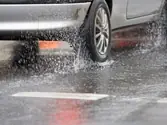
Con lluvia ligera, ¿qué luz antiniebla podemos llevar?
In light rain, which fog light may we use?
- ALa delantera.The front one.
- BLa posterior junto con la delantera.The rear one together with the front one.
- CNinguna.None.
ExplanationTo be able to use the front fog light, we would have to be driving in heavy rain. If the rain were very heavy, we would also have to use the rear fog light.
Al tomar una curva durante la noche por una vía fuera de poblado, ¿qué conductor debe sustituir primero el alumbrado de largo alcance por el de cruce?
When taking a bend at night on a road outside built-up areas, which driver must switch from main beam to dipped headlights first?
- AEs indiferente.It does not matter.
- BEl conductor que encuentre el interior de la curva a su izquierda.The driver who has the inside of the bend on their left.
- CEl conductor que encuentre el interior de la curva a su derecha.The driver who has the inside of the bend on their right.
ExplanationOn a bend, the driver who has the inside of the bend on their right must be the first to switch to dipped headlights, because their headlights point towards the opposite lane and dazzle the oncoming vehicle sooner.
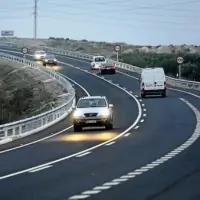
¿Cuantas luces de posición laterales debe llevar un automóvil?
How many side marker lights must a motor vehicle have?
- AMínimo 3 y máximo dependiendo de su longitudAt least 3, and at most depending on its length
- BMínimo 2 y máximo 4At least 2 and at most 4
- CMínimo 2 y máximo dependiendo de su longitudAt least 2, and at most depending on its length
ExplanationOn motor vehicles, the minimum number of side marker lights is two, while on trailers and semi-trailers the number of lights depends on their length.
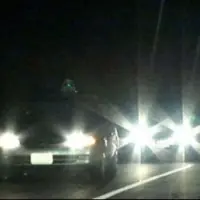
¿En que situación se podrá utilizar la luz de cruce con cortos destellos intermitentes?
In which situation may you use short, intermittent flashes of the dipped headlights?
- APara advertir de conductor novel al mandoTo warn that a novice driver is at the wheel
- BPara advertir de condiciones meteorológicas adversasTo warn of bad weather
- CPara advertir el propósito de adelantarTo warn that you intend to overtake
ExplanationA driver may flash the dipped headlights intermittently, at very short intervals, to warn other road users that they intend to overtake the vehicle in front.
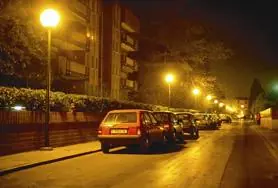
En vías urbanas que no sean travesías, ¿es obligatorio que los vehículos estacionados tengan encendido el alumbrado de posición?
On urban roads that are not travesías, must parked vehicles have their sidelights on?
- ASí, cuando la vía sólo tiene un carril de circulación.Yes, when the road has only one traffic lane.
- BSí, cuando la vía forma intersección con una travesía.Yes, when the road meets a travesía at a junction.
- CNo, cuando la iluminación permita distinguirlos a una distancia suficiente.No, when the street lighting lets others see them from a sufficient distance.
ExplanationAccording to Article 105 of the General Traffic Regulations, on urban roads that are not travesías, parked vehicles do not need their sidelights on if the lighting lets other road users see them from a sufficient distance.
Circulando de día por un túnel suficientemente iluminado, ¿se debe utilizar algún alumbrado?
When driving during the day through a sufficiently lit tunnel, must any lights be used?
- ASi, solamente el de posición.Yes, only the sidelights.
- BNoNo
- CSi, el de posición y el de cruce.Yes, the sidelights and dipped headlights.
ExplanationIn a tunnel, lights are compulsory at any time of day. If it is sufficiently lit, you must have the sidelights and dipped headlights on; sidelights alone are not enough.
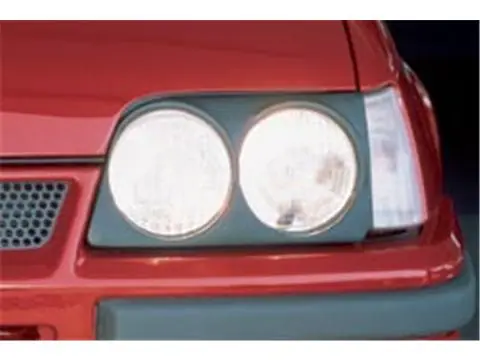
El alumbrado, los neumáticos y los frenos pertenecen al sistema de...
Lights, tyres and brakes are part of the system of...
- Aseguridad activa.active safety.
- Bconducción eficiente.eco-driving.
- Cseguridad pasiva.passive safety.
ExplanationLights, tyres and brakes are active safety features: when they are in good condition they help prevent an accident from happening. Passive safety, such as the seat belt or airbag, works once an accident has happened, to reduce its consequences.
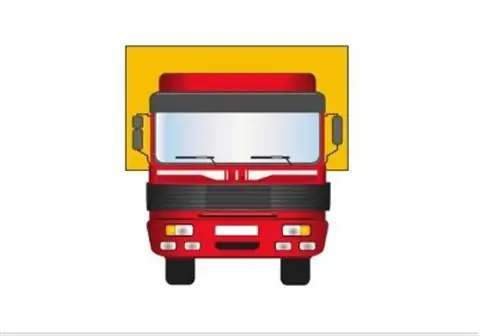
De noche, ¿es obligatorio señalizar una carga que sobresale lateralmente más de 0,40 metros respecto al borde exterior de las luces de posición del vehículo?
At night, must a load that sticks out sideways more than 0.40 metres beyond the outer edge of the vehicle's sidelights be signalled?
- ASí, en cada una de sus extremidades laterales.Yes, at each of its side ends.
- BSolo si la carga sobresale también por la parte delantera o trasera del vehículo.Only if the load also sticks out at the front or rear of the vehicle.
- CNo.No.
ExplanationAccording to Article 15 of the General Traffic Regulations, if the load sticks out sideways more than 0.40 metres beyond the outer edge of the sidelights, at night or in poor visibility it must be signalled at each side end: facing forwards with a white light and a white reflector, and facing backwards with a red light and a red reflector.
Circulando por un carril reversible dentro de poblado, ¿tendrá que llevar el alumbrado de corto alcance encendido?
When driving in a reversible lane in a built-up area, must you have your dipped headlights on?
- ASí, tanto de día como de noche.Yes, both by day and by night.
- BNo.No.
- CSí, y además la velocidad máxima estará limitada a 80 km/h y la mínima a 60 km/h.Yes, and in addition the maximum speed will be limited to 80 km/h and the minimum to 60 km/h.
ExplanationUnder Articles 40.1 and 104 of the General Traffic Regulations (RGC), anyone driving in a reversible lane must have at least the dipped headlights on, by day and by night, including in built-up areas. The limits of 60 and 80 km/h apply to lanes opened to traffic in the opposite direction to normal.
¿Cuándo debe usar las luces de emergencia mientras circula?
When should you use the hazard warning lights while driving?
- APara advertir de un peligro inminenteTo warn of an imminent danger
- BSiempre que lluevaWhenever it rains
- CAl adelantarWhen overtaking
ExplanationTo warn of an imminent danger.
Con lluvia no intensa, ¿qué alumbrado utilizaremos?
In rain that is not heavy, which lights will we use?
- AEl de antiniebla delantera.The front fog light.
- BEl de antiniebla delantera con el posterior.The front fog light with the rear one.
- CEl de corto alcance.Dipped headlights.
ExplanationIn rain that is not heavy you must drive with dipped headlights; the front fog light would never be compulsory. If the rain were very heavy, we would also use the rear fog light.
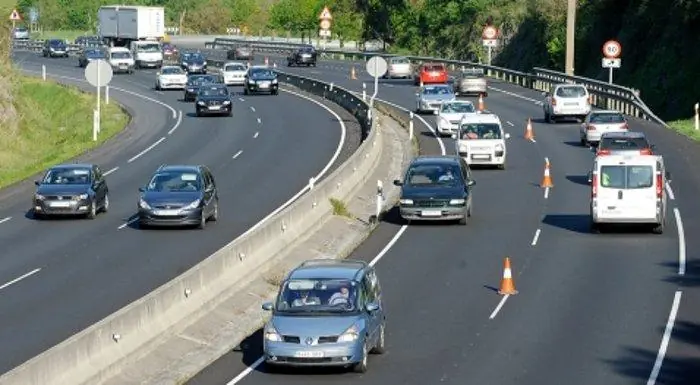
¿Cómo debe circular por un carril habilitado en sentido contrario al habitual?
How must you drive in a lane opened in the opposite direction to normal?
- AComo máximo a 100 km/h y mínimo a 80 km/h y, al menos, con la luz de cruce encendida.At a maximum of 100 km/h and a minimum of 80 km/h and with at least dipped headlights on.
- BA una velocidad moderada y, de noche, con la luz de cruce encendida en todo momento.At a moderate speed and, at night, with dipped headlights on at all times.
- CComo máximo a 80 km/h y mínimo a 60 km/h y, al menos, con la luz de cruce encendida.At a maximum of 80 km/h and a minimum of 60 km/h and with at least dipped headlights on.
ExplanationAccording to Article 41 of the General Traffic Regulations, in a lane opened in the opposite direction to normal you drive at a maximum of 80 km/h and a minimum of 60 km/h, unless lower limits are signposted, and with at least dipped headlights on, by day and by night.
En caso de niebla densa, ¿es obligatorio el uso del alumbrado posterior antiniebla?
In dense fog, is it compulsory to use the rear fog light?
- ANo, es solo opcional.No, it is only optional.
- BSí, en caso de disponer de él.Yes, if the vehicle has one.
- CSí.Yes.
ExplanationIn dense fog, very heavy rain, heavy snowfall and clouds of dust or thick smoke, you must use the rear fog light.
Si estaciona en una travesía insuficientemente iluminada, ¿qué luces debe dejar encendidas?
If you park on an insufficiently lit travesía (stretch of road through a town), which lights must you leave on?
- ALas de posición y las de corto alcance.The sidelights and dipped headlights.
- BNinguna.None.
- CLas de posición, pudiendo sustituirlas por las de estacionamiento si el vehículo está estacionado en línea.The sidelights, which may be replaced by the parking lights if the vehicle is parked parallel to the kerb.
ExplanationYou must switch on the sidelights when stopping or parking on the carriageway or hard shoulder of an insufficiently lit travesía. The sidelights may be replaced by the parking lights, or by the two sidelights on the side facing the carriageway, when parked parallel to the kerb.
¿Es recomendable usar la luz interior del vehículo cuando se circula de noche por una vía poco iluminada?
Is it advisable to use the vehicle's interior light when driving at night on a poorly lit road?
- ANo, porque en estas circunstancias puede afectar negativamente a la visibilidad.No, because in these circumstances it can reduce visibility.
- BSí, porque permite ver mejor el interior del vehículo.Yes, because it lets you see the inside of the vehicle better.
- CSí, debe utilizarse entre la puesta y la salida del sol.Yes, it must be used between sunset and sunrise.
ExplanationAt night, with the interior light on, the driver's eyes adjust to the brightness inside the vehicle, so they see less of what is outside, and reflections appear on the windows. That is why it is not advisable to use it while driving on a poorly lit road; no rule requires it to be switched on.
¿Se podrá utilizar la luz de largo alcance circulando por una travesía?
Can main beam be used when driving through a travesía (stretch of road through a town)?
- ASí, si no deslumbramos a otros usuarios de la vía.Yes, if we do not dazzle other road users.
- BNo, circularemos solo con el alumbrado de posición.No, we will drive with sidelights only.
- CNo.No.
ExplanationA travesía is inside a built-up area, so using main beam there is prohibited.
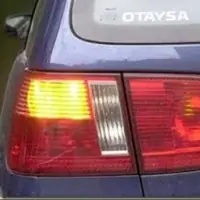
¿Están los vehículos de tres ruedas obligados a llevar la luz indicadora de dirección?
Must three-wheeled vehicles have direction indicator lights?
- AÚnicamente en vías fuera de pobladoOnly on roads outside built-up areas
- BNoNo
- CSíYes
ExplanationThree-wheeled vehicles must have direction indicator lights, to warn other road users when they are going to move sideways or make a U-turn.
Circulando por una vía urbana insuficientemente iluminada, ¿qué alumbrado deberemos utilizar?
When driving on an insufficiently lit urban road, which lights must we use?
- AAlumbrado de posición.Sidelights.
- BAlumbrado de largo alcance.Main beam.
- CAlumbrado de corto alcance.Dipped headlights.
ExplanationWhen driving at night on an urban road, whether it is sufficiently or insufficiently lit, we must use dipped headlights.
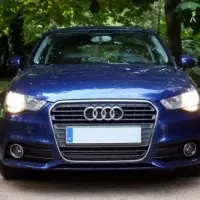
¿De que color deben ser las luces de corto alcance?
What colour must dipped headlights be?
- ARojoRed
- BNaranjaOrange
- CBlancoWhite
ExplanationDipped headlights are white and are fitted at the front of the vehicle. On motorcycles, a single light is placed on the vehicle's central longitudinal plane, and two lights are placed symmetrically on either side of that plane. On all other vehicles, they are placed at the outer edges.
¿Para que están destinadas las luces de posición?
What are sidelights for?
- APara indicar la longitud y anchura del vehículoTo show the length and width of the vehicle
- BPara indicar la capacidad y longitud del vehículoTo show the capacity and length of the vehicle
- CPara indicar la presencia y anchura del vehículoTo show the presence and width of the vehicle
ExplanationThe main purpose of a vehicle's sidelights is to show its presence and width on the carriageway, so that other road users can see it and know its dimensions.
Las luces de cruce, ¿en algún caso podrán resultar deslumbrantes para los demás usuarios de la vía?
Can dipped headlights ever dazzle other road users?
- ASí, si están mal regladas.Yes, if they are badly adjusted.
- BNo, sólo deslumbran las de carretera.No, only main beam dazzles.
- CNo, sólo deslumbran las de carretera y las antiniebla posteriores.No, only main beam and rear fog lights dazzle.
ExplanationDipped headlights should not dazzle other road users unless they are badly adjusted. Main beam, however, does bother them, so we must switch to dipped headlights as soon as we notice that we may dazzle another road user.
¿Qué alumbrado debe utilizar un turismo circulando por un túnel, suficientemente iluminado, situado en vía interurbana, siendo de día?
Which lights must a car use when driving in the daytime through a sufficiently lit tunnel on an interurban road?
- ANo será necesario utilizar ningún alumbrado.No lights are needed.
- BEl alumbrado de corto alcance.The dipped headlights.
- CEl alumbrado de largo alcance, salvo que existieran usuarios a los que pudiese deslumbrar, en cuyo caso sustituiría este alumbrado por el de corto alcance.The main beam, unless there are road users it could dazzle, in which case it would be replaced by the dipped headlights.
ExplanationIn sufficiently lit tunnels you must have the dipped headlights on, as well as the sidelights, at any time of day. The main beam is used only in insufficiently lit tunnels and when there is no risk of dazzling.
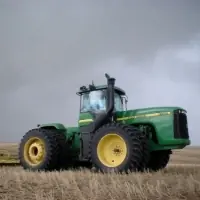
¿Qué velocidad no deben superar los tractores agrícolas para utilizar sus señales luminosas?
What speed must agricultural tractors not exceed for them to use their light signals?
- A80 km/hora80 km/h
- B60 km/hora60 km/h
- C40 km/hora40 km/h
ExplanationSpecial agricultural vehicles such as tractors must use the V-2 light signal, by day and by night, when driving on public roads whenever their speed does not exceed 40 km/h.
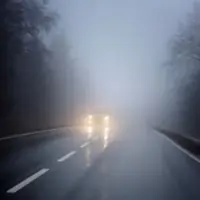
Si un automóvil lleva luces antiniebla delanteras, ¿cuántas debe llevar?
If a motor car has front fog lights, how many must it have?
- AUna única luz delantera.A single front light.
- BNo puede llevar luces antiniebla delanteras en ningún caso.It may not have front fog lights under any circumstances.
- CDos luces.Two lights.
ExplanationUnder Annex X of the General Vehicle Regulations (Reglamento General de Vehículos), front fog lights are optional on motor cars; if fitted, there must be two, white or selective yellow, at the front. The rear fog light, however, is compulsory.
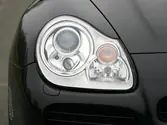
¿Debe el conductor revisar el correcto funcionamiento del sistema de alumbrado?
Must the driver check that the lighting system works properly?
- ASolo cuando se vaya a pasar la ITV.Only when the vehicle is going for its inspection (ITV).
- BNo, si dispone de luces led.No, if it has LED lights.
- CSi, y deberá asegurarse de que funciona correctamente.Yes, and they must make sure it works properly.
ExplanationChecking that the lighting system works properly is part of the vehicle's preventive maintenance; the driver must make sure it is working correctly.
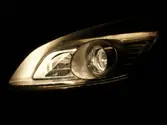
¿Está permitido dejar encendida la luz de largo alcance durante una parada?
Is it permitted to leave main beam on during a stop?
- ANo, está prohibido.No, it is prohibited.
- BSí, pero únicamente en carreteras interurbanas.Yes, but only on interurban roads.
- CSí, siempre que la vía esté insuficientemente iluminada.Yes, as long as the road is insufficiently lit.
ExplanationUsing main beam is prohibited whenever the vehicle is stopped or parked.
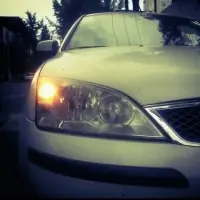
¿En qué tipo de vehículos no será necesario llevar indicadores de dirección?
Which vehicles do not need to have direction indicators?
- AEn las motocicletasMotorcycles
- BEn los camiones de gran tonelajeHeavy lorries
- CEn aquellos que se puede señalar con el brazo el cambio de direcciónThose in which a change of direction can be signalled by arm
ExplanationAll motor vehicles must have direction indicators, except those in which changes of direction can be signalled by arm.
All topics
- Definitions
- Documents and penalty points
- The driver's condition
- Duties of drivers and pedestrians
- Vehicle safety devices
- Vehicle controls and equipment
- Traffic signs, markings and signals
- The road and its lanes
- Speed and distances
- Manoeuvres
- Right of way
- Carrying passengers and loads
- Driving safely in difficult conditions
- Vehicle mechanics and maintenance
- Road accidents and first aid
- Defensive and eco-driving
Independent app: not affiliated with or endorsed by the DGT (Spain's Directorate-General for Traffic) or the Ministry of the Interior. The official exam is booked with the DGT and taken at its test centres. The questions here are practice material; the DGT's official question bank is not public.
Basado en datos de la Agencia Estatal Boletín Oficial del Estado (https://www.boe.es). Textos consolidados de carácter meramente informativo. La AEBOE no patrocina ni respalda este sitio.
Parte de las preguntas procede de los tests de la revista «Tráfico y Seguridad Vial» de la DGT, reproducidos con indicación de la fuente.