
DGT test · 982 questions
Manoeuvres · Page 20 of 20
Joining traffic, overtaking, turning, U-turns, reversing, stopping and parking: how and where to do them and when they are forbidden.
Questions in this topic, with answers
982 questions, 50 per page, with the correct answer and the explanation. Page 20 of 20.
¿Podremos circular marcha atrás por una autopista?
May we reverse on a motorway (autopista)?
- ASí, por el arcén y con la luz de emergencia encendida.Yes, on the hard shoulder and with the hazard warning lights on.
- BSí, si nos hemos pasado la salida.Yes, if we have missed our exit.
- CNo.No.
ExplanationReversing on a motorway (autopista) is prohibited.
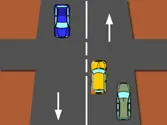
El vehículo amarillo va a girar a la izquierda, ¿está permitido adelantarle por la derecha?
The yellow vehicle is about to turn left. Is it permitted to overtake it on the right?
- ANo, porque el adelantamiento siempre debe efectuarse por la izquierda.No, because overtaking must always be done on the left.
- BSolo cuando suponga un riesgo para la seguridad vial el no adelantar.Only when not overtaking would be a risk to road safety.
- CSí, porque está indicando claramente su propósito de girar a la izquierda.Yes, because it is clearly indicating its intention to turn left.
ExplanationAs an exception to the general rule of overtaking on the left, overtaking shall be done on the right, if there is enough room for it and with the greatest care, when the driver of the vehicle to be overtaken is clearly indicating their intention to turn left or to stop on that side.
Un vehículo que sale de una vía particular,¿qué precauciones debe tomar para incorporarse a la vía de uso público?
A vehicle is coming out of a private road. What precautions must it take to join the public road?
- AIncorporarse con precaución, pudiendo llegar a detenerse al acto en caso de ser necesario.Join with caution, being able to stop at once if necessary.
- BNinguna, ya que tiene preferencia.None, because it has right of way.
- CCeder el paso a los vehículos que se acerquen por la derecha.Give way to vehicles approaching from the right.
ExplanationWhenever a driver comes out onto a public road from a purely private road, they must first make sure they can do so without danger to anyone, and do it at a speed that allows them to stop at once, giving way to vehicles travelling on the public road, whichever direction they are travelling in.
¿Está prohibido adelantar en los pasos para peatones y sus proximidades?
Is overtaking prohibited on pedestrian crossings and near them?
- ASi adelantamos a vehículos de 2 ruedas, no.If we are overtaking two-wheeled vehicles, no.
- BSí en los pasos para peatones, pero no en sus proximidades.Yes on pedestrian crossings, but not near them.
- CSí.Yes.
ExplanationUnder Article 87.1.b of the General Traffic Regulations (as worded by RD 518/2026), overtaking is prohibited on marked pedestrian crossings and near them, whatever the type of vehicle being overtaken and whatever the speed.
¿Está permitido adelantar en una curva o en una zona con visibilidad reducida (por ejemplo, un cambio de rasante)?
Is overtaking allowed on a bend or in an area with reduced visibility (for example, the brow of a hill)?
- ASí, si se hace con rapidez.Yes, if you do it quickly.
- BSí, si no hay señal de prohibido adelantar.Yes, if there is no ‘no overtaking’ sign.
- CNo, a menos que los dos sentidos estén claramente separados y la maniobra se pueda hacer sin invadir el sentido contrario.No, unless the two directions of traffic are clearly separated and the manoeuvre can be made without entering the opposite side of the road.
ExplanationOvertaking is prohibited on bends and brows of hills with reduced visibility, and wherever visibility is not sufficient, even if there is no sign, unless the two directions are clearly marked off and the manoeuvre can be made without entering the opposite side of the road (Article 87.1.a of the General Traffic Regulations (RGC)).
Su remolque está equipado con freno de inercia. ¿Qué debe hacer si desea dar marcha atrás?
Your trailer is fitted with an overrun brake. What must you do if you want to reverse?
- AHacer la maniobra lo más rápido posible.Do the manoeuvre as quickly as possible.
- BCon este tipo de remolques no se puede dar marcha atrás.You cannot reverse with this type of trailer.
- CBloquear el freno de inercia.Lock out the overrun brake.
ExplanationThe correct answer is to lock out the overrun brake because, when reversing with a trailer fitted with an overrun brake, you need to make sure the brake is disabled so that it does not come on and make the manoeuvre difficult. Locking out the overrun brake stops the trailer from braking automatically when you reverse.
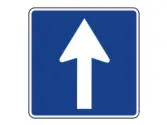
¿Podrá efectuar un cambio de dirección a la derecha o a la izquierda en la intersección así señalizada?
Can you turn right or left at a junction with this sign?
- ANo.No.
- BSí.Yes.
- CA la derecha no, a la izquierda sí.Not to the right, but you can turn left.
ExplanationThe sign indicates that the carriageway is one-way, so it does not prohibit turning.
En una vía de doble sentido, ¿dónde se colocará con su vehículo para cambiar de dirección hacia la izquierda?
On a two-way road, where will you position your vehicle to turn left?
- AJunto al borde izquierdo de la calzada.Next to the left edge of the carriageway.
- BJunto al borde derecho de la calzada.Next to the right edge of the carriageway.
- CJunto a la línea longitudinal que separa los dos sentidos.Next to the longitudinal line separating the two directions of traffic.
ExplanationIf the carriageway is two-way, to turn left we position ourselves next to the line separating the two directions of traffic.
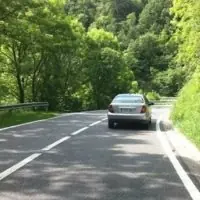
Si el turismo quiere girar a la izquierda deberá...
If the car wants to turn left, it must...
- Agirar desde su carril sin invadir el sentido contrario.turn from its lane without crossing into the oncoming side.
- Bgirar desde su carril invadiendo el sentido contrario.turn from its lane, crossing into the oncoming side.
- Csituarse fuera de la calzada y realizarlo desde allí.move off the carriageway and turn from there.
ExplanationTo turn left we must position ourselves as follows: - If the road is one-way, keep close to the left edge. - On a two-way carriageway, keep close to the longitudinal marking separating the two directions of traffic or, if there is none, to the centre of the carriageway, without entering the area for the opposite direction. - If the carriageway is two-way and has 3 lanes, position ourselves in the centre lane and turn from there. All this applies as long as there is no lane specially set aside for turning left.
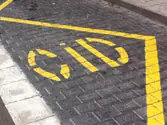
En una zona señalizada para carga y descarga, ¿está permitido estacionar como norma general?
In an area marked for loading and unloading, is parking permitted as a general rule?
- ASí, en cualquier caso.Yes, in any case.
- BSí, siempre que permanezca dentro vehículo.Yes, as long as you stay inside the vehicle.
- CNo.No.
ExplanationA yellow zigzag marking shows the place on the carriageway where parking is prohibited for vehicles in general, because it is reserved for a special use that does not involve any vehicle staying for a long time. It is generally used at bus stops (stopping, not parking) or in loading and unloading areas, as in this question. In loading and unloading areas parking is prohibited as a general rule, unless signs show the hours when the area is in use; in that case parking is allowed outside those hours.
¿Está permitido detenerse en una autovía o en una autopista?
Is stopping permitted on a dual carriageway (autovía) or a motorway (autopista)?
- ASí, pero solo en el arcén, si se puede usar.Yes, but only on the hard shoulder, if it can be used.
- BSí, en la mediana o en el arcén, tanto da.Yes, in the central reservation or on the hard shoulder, it makes no difference.
- CNo, solo se puede detener en zonas habilitadas, como las áreas de descanso.No, you can only stop in designated areas, such as rest areas.
ExplanationOn dual carriageways (autovías) and motorways (autopistas) stopping is prohibited except in areas set aside for it, such as rest areas. The General Traffic Regulations allow stopping only in these designated places, which keeps the vehicle's occupants and other road users safe. So the correct answer is that stopping on an autovía or autopista is not permitted except in designated areas.
¿Dentro de poblado se podrá estacionar en la calzada?
In a built-up area, can you park on the carriageway?
- ANo, está prohibido estacionar en la calzada.No, parking on the carriageway is prohibited.
- BSí.Yes.
- CNo, porque entorpecería la circulación de otros vehículos.No, because it would obstruct other vehicles.
ExplanationOn an urban road you can park on the carriageway, whereas on an interurban road you must always park off the carriageway and off the hard shoulder.
¿Se puede dar marcha atrás para incorporarse a la circulación?
May you reverse to join traffic?
- ASí, está permitido.Yes, it is allowed.
- BNo, en ningún caso.No, never.
- CSí, pero sólo en vías urbanas.Yes, but only on urban roads.
ExplanationReversing is allowed as a manoeuvre that complements joining traffic, over no more than 15 metres and without entering a junction (Article 80.2 of the General Traffic Regulations). It is prohibited on motorways (autopistas) and dual carriageways (autovías).
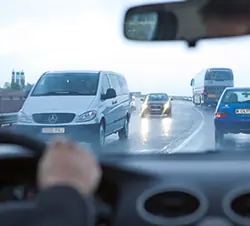
Para adelantar a este vehículo...
To overtake this vehicle...
- Aes obligatorio esperar a un tramo en el que la calzada esté seca.you must wait for a stretch where the carriageway is dry.
- Bdebe tenerse especial cuidado, pues las salpicaduras pueden impedir la visibilidad.you must take special care, because spray can block your view.
- Cno deben tomarse precauciones especiales.you do not need to take any special precautions.
ExplanationThe carriageway is wet: when you overtake, the van's wheels throw up water that can splash the windscreen and block your view for a few moments, so you must take extra care and use the windscreen wipers.
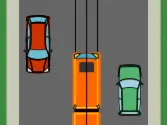
Circulando por una vía de doble sentido, ¿podremos adelantar por la derecha a un tranvía que circule por el centro?
Driving on a two-way road, can we overtake on the right a tram running in the centre of the road?
- ANo, está prohibido adelantar por la derecha.No, overtaking on the right is prohibited.
- BNo, porque el tranvía tiene preferencia.No, because the tram has right of way.
- CSí, porque la vía tiene dos sentidos de circulación.Yes, because the road has two directions of traffic.
ExplanationAs a general rule you must overtake on the left. As an exception, you may overtake on the right: - When the driver of the vehicle to be overtaken is clearly indicating their intention to turn left or to stop on that side, as long as there is room to do it safely. - On roads with traffic in both directions, trams running in the central part of the road. - In built-up areas, on carriageways with at least two lanes for traffic in the same direction, marked by longitudinal lines.
¿En un paso a nivel y sus proximidades está prohibido adelantar?
Is overtaking prohibited at a level crossing and near it?
- AEn el paso a nivel está prohibido, pero no en sus proximidades.It is prohibited at the level crossing, but not near it.
- BSí, está prohibido adelantar, tanto en el paso a nivel como en sus proximidades.Yes, overtaking is prohibited both at the level crossing and near it.
- CCuando exista suficiente visibilidad, se podrá adelantar en un paso nivel.When there is enough visibility, you may overtake at a level crossing.
ExplanationUnder Article 87.1.b of the General Traffic Regulations (as worded by RD 518/2026), overtaking is prohibited at level crossings and near them; the exception that allowed overtaking two-wheeled vehicles after giving sound or light warnings has been removed.
¿Se puede adelantar por la derecha circulando por vías dentro de poblado?
Can you overtake on the right when driving on roads in built-up areas?
- ANo se puede adelantar por la derecha en ningún caso.You cannot overtake on the right in any case.
- BSe podrá adelantar por la derecha cuando exista al menos dos carriles en el mismo sentido de la marcha delimitados por marcas longitudinales.You may overtake on the right when there are at least two lanes in the same direction, marked by longitudinal lines.
- CSe podrá adelantar por la derecha cuando exista al menos dos carriles en el mismo sentido de la marcha estén o no delimitadosYou may overtake on the right when there are at least two lanes in the same direction, whether or not they are marked.
ExplanationOn roads in built-up areas with at least two lanes in the same direction marked by longitudinal lines, overtaking on the right is allowed as long as it does not endanger other road users.
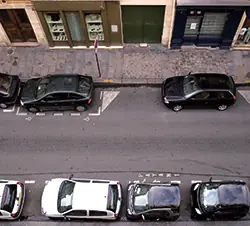
Un vehículo va a incorporarse a la circulación; ¿cuándo debe ceder el paso?
A vehicle is about to join the traffic. When must it give way?
- ACuando entre en el carril de circulación desde el lado izquierdo, solamente.Only when it enters the traffic lane from the left side.
- BSiempre.Always.
- CCuando entre en el carril de circulación desde el lado derecho, solamente.Only when it enters the traffic lane from the right side.
ExplanationA driver joining the traffic must always give way to vehicles already travelling on the road, whichever side they enter from, and make sure they do not force them to brake or swerve.
¿Cuándo se puede adelantar por la derecha en carretera?
When may you overtake on the right on an interurban road?
- ACuando la calzada tiene más de dos carriles en el mismo sentido.When the carriageway has more than two lanes in the same direction.
- BCuando el vehículo al que se va a adelantar vaya a girar a la izquierda y haya espacio suficiente.When the vehicle to be overtaken is going to turn left and there is enough room.
- CCuando esté libre el carril de la derecha.When the right-hand lane is free.
ExplanationAs a general rule you overtake on the left. As an exception, you overtake on the right a vehicle that clearly shows it is going to turn left or stop on that side, if there is enough room, and trams running in the middle of the road (Article 82.2 of the General Traffic Regulations). Having several lanes in the same direction only allows it in built-up areas.
Al adelantar a un ciclomotor en vía urbana, ¿cómo debe hacerlo?
When overtaking a moped on an urban road, how must you do it?
- ASin salir de su carril, si el ciclomotor le deja espacio suficiente.Without leaving your lane, if the moped leaves you enough room.
- BDejando una distancia lateral de seguridad suficiente, proporcional a la velocidad, anchura y características de la vía.Leaving a sufficient safe lateral distance, in proportion to the speed and to the width and features of the road.
- CDejando una distancia lateral mínima de 1,50 metros.Leaving a lateral distance of at least 1.50 metres.
ExplanationUnder Article 85.4 of the General Traffic Regulations (as worded by RD 518/2026), when overtaking mopeds, cyclists, pedestrians or personal mobility vehicles you must occupy part or all of the adjacent or opposite lane and keep a safety gap of at least 1.5 metres, also on urban roads. If the carriageway has more than one lane in each direction, you must change lanes completely.
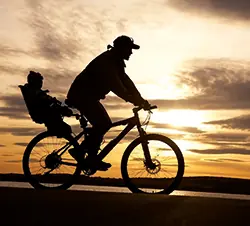
¿Qué debe hacer cuando vaya a adelantar a un ciclista que lleva un pasajero?
What must you do when you are going to overtake a cyclist carrying a passenger?
- AAumentar la precaución ya que la bicicleta se puede desestabilizar con mayor facilidad.Take more care, because the bicycle can become unstable more easily.
- BAumentar la velocidad y circular lo más cerca posible del borde derecho de la calzada.Speed up and drive as close as possible to the right edge of the carriageway.
- CHacer señales acústicas al llegar a su altura para advertir de nuestra presencia.Sound the horn when level with the cyclist to warn them that we are there.
ExplanationA bicycle with a passenger is less stable and may wobble while being overtaken: take extra care, leave the required lateral gap and do not startle the cyclist with the horn.
En una calzada de doble sentido, si el tranvía circula por el centro, ¿es obligatorio adelantarlo por la derecha?
On a two-way carriageway, if a tram is running along the middle, is it compulsory to overtake it on the right?
- ASí, en todo caso.Yes, in all cases.
- BNo, se le puede adelantar por la derecha o por la izquierda.No, you may overtake it on the right or on the left.
- CNo, se le debe adelantar por la izquierda.No, you must overtake it on the left.
ExplanationOn roads with traffic in both directions, trams running along the middle of the road are overtaken on the right (Article 82.2 of the General Traffic Regulations). Overtaking them on the left would mean entering the side for the opposite direction.
¿Como advertiremos el propósito de adelantar dentro de poblado?
How do we signal our intention to overtake in a built-up area?
- ACon el claxon.With the horn.
- BCon claxon o con ráfagas de luces.With the horn or by flashing the headlights.
- CCon ráfagas de luces.By flashing the headlights.
ExplanationIn built-up areas you cannot use the horn to warn that you are overtaking; you can only do so outside built-up areas (Article 110 of the General Traffic Regulations). Instead, you can flash your lights, briefly switching between dipped headlights and main beam without dazzling anyone (Article 109).
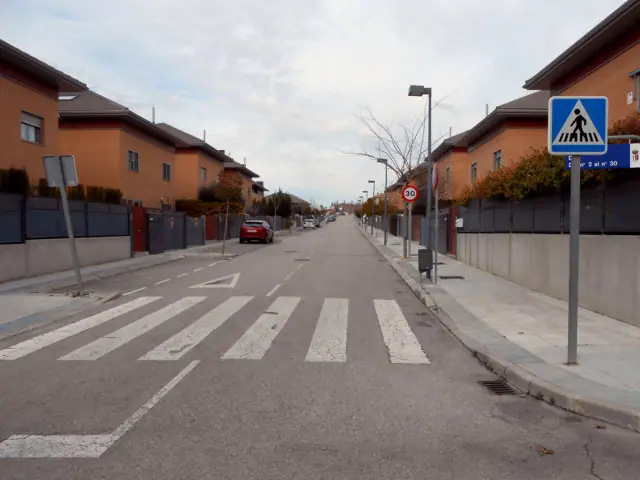
En los pasos para peatones y en sus proximidades, ¿está permitido adelantar?
On pedestrian crossings and near them, is overtaking permitted?
- ASí, a una velocidad tan reducida que permita detenerse si surge peligro de atropello.Yes, at a speed low enough to stop if there is a danger of hitting someone.
- BSí, siempre que no haya peatones cruzando.Yes, as long as there are no pedestrians crossing.
- CNo, está prohibido.No, it is prohibited.
ExplanationUnder Article 87.1.b of the General Traffic Regulations (as worded by RD 518/2026), overtaking is prohibited on marked pedestrian crossings, at junctions with cycle paths and at level crossings, and also near them. The old exception that allowed overtaking at very low speed on a pedestrian crossing has been removed.
Para efectuar una parada tendremos que colocar el vehículo como norma general,...
To stop, as a general rule we will have to position the vehicle...
- APerpendicular al borde de la calzada.At right angles to the edge of the carriageway.
- BParalelo al borde de la calzada.Parallel to the edge of the carriageway.
- COblicuamente respecto al borde de la calzada.At an angle to the edge of the carriageway.
ExplanationThe driver must position the vehicle parallel to the edge of the carriageway; however, it may be positioned differently when the features of the road make this advisable.
Aunque esté prohibido adelantar, un turismo podrá adelantar, incluso invadiendo el sentido contrario...
Even where overtaking is prohibited, a car may overtake, even entering the opposite side of the road...
- Aa cualquier camión.any lorry.
- Ba los ciclistas.cyclists.
- Ca cualquier autobús o camión que vaya despacio.any slow-moving bus or lorry.
ExplanationUnder Article 88.2 of the General Traffic Regulations (as worded by RD 518/2026), where overtaking is prohibited you may overtake, using the part of the carriageway reserved for the opposite direction, cyclists and other cycles, mopeds, personal mobility vehicles, pedestrians, animals, animal-drawn vehicles and agricultural special vehicles, when their speed allows this to be done without risk. Lorries and buses are not included. When overtaking cyclists you must leave at least 1.5 metres (Article 85.4).
¿Pueden estacionar las motocicletas sobre la acera?
Can motorcycles park on the pavement?
- ANo, como norma general.No, as a general rule.
- BSí, los días festivos.Yes, on public holidays.
- CSí, los días laborables.Yes, on working days.
ExplanationAs a general rule, motorcycles must park on the carriageway, as close as possible to the edge. Under Article 156.2 of the General Traffic Regulations (as worded by RD 518/2026), town councils can regulate, by local by-law, the parking of two-wheeled vehicles on pavements, as long as this does not harm or obstruct pedestrians.
Para salir de una vía en la que no podemos cambiar de dirección ni de sentido, se puede...
To get out of a road where we cannot turn or make a U-turn, we may...
- ADar marcha atrás un máximo de 15 metros.Reverse a maximum of 15 metres.
- BDar marcha atrás la distancia mínima imprescindible.Reverse the minimum distance that is essential.
- CDar marcha atrás sin invadir un cruce de vías.Reverse without entering a junction.
ExplanationAs a general rule, reversing is prohibited. As an exception, if it is not possible to go forwards, turn or make a U-turn, you may reverse the minimum distance that is essential, even if this means reversing more than 15 metres and entering a junction.
¿Tendremos alguna precaución con los vehículos pesados y voluminosos?
Should you take any precautions with heavy and bulky vehicles?
- ANo, son los conductores de estos vehículos los que deben tomar las precauciones necesarias.No, it is the drivers of these vehicles who must take the necessary precautions.
- BLos vehículos voluminosos pueden ocupar el sentido contrario para cambiar de dirección a la derecha.Bulky vehicles may move into the opposite side of the road to turn right.
- CSí, tienen preferencia de paso en las intersecciones sin señalizar.Yes, they have right of way at unmarked junctions.
ExplanationHeavy and bulky vehicles have more difficulty moving in traffic, and when turning right they may have to swing wide and enter the left-hand part of the carriageway.
Estaciona su vehículo en pendiente descendente (en bajada). ¿Qué velocidad debe dejar puesta?
You park your vehicle on a downhill slope. Which gear must you leave it in?
- ANinguna, el freno de mano solamente.None, only the handbrake.
- BLa marcha atrás.Reverse gear.
- CLa primera velocidad.First gear.
ExplanationIn a vehicle with a manual gearbox, as well as leaving the parking brake on, the driver must leave it in reverse gear on downhill slopes and in first gear on uphill slopes.
En una vía urbana, ¿debe ceder el paso a un autobús que quiere incorporarse a la circulación desde una parada señalizada?
On an urban road, must you give way to a bus that wants to pull out from a marked bus stop?
- ASí, en la medida de lo posible, llegando incluso a detener el vehículo.Yes, as far as possible, even stopping your vehicle.
- BNo, porque se trata de una vía urbana.No, because it is an urban road.
- CNo, porque los coches tienen preferencia.No, because cars have priority.
ExplanationIn built-up areas, so that buses can pull out from marked stops, other drivers must move over sideways if possible or reduce speed, even stopping if necessary (Article 73.2 of the RGC). Cars do not have priority over them in this case.
Como norma general, ¿dónde está prohibido adelantar?
As a general rule, where is overtaking prohibited?
- AEn las vías de un carril para cada sentido.On roads with one lane in each direction.
- BEn los pasos para peatones y cerca de ellos.On pedestrian crossings and near them.
- CEn las vías de menos de 6 metros de anchura.On roads less than 6 metres wide.
ExplanationUnder Article 87.1.b of the General Traffic Regulations (as worded by RD 518/2026), overtaking is prohibited on marked pedestrian crossings, at junctions with cycle paths and at level crossings, and also near them. The ban no longer allows overtaking on the crossing even when driving at very low speed.
All topics
- Definitions
- Documents and penalty points
- The driver's condition
- Duties of drivers and pedestrians
- Vehicle safety devices
- Vehicle controls and equipment
- Vehicle lights and horn
- Traffic signs, markings and signals
- The road and its lanes
- Speed and distances
- Right of way
- Carrying passengers and loads
- Driving safely in difficult conditions
- Vehicle mechanics and maintenance
- Road accidents and first aid
- Defensive and eco-driving
Independent app: not affiliated with or endorsed by the DGT (Spain's Directorate-General for Traffic) or the Ministry of the Interior. The official exam is booked with the DGT and taken at its test centres. The questions here are practice material; the DGT's official question bank is not public.
Basado en datos de la Agencia Estatal Boletín Oficial del Estado (https://www.boe.es). Textos consolidados de carácter meramente informativo. La AEBOE no patrocina ni respalda este sitio.
Parte de las preguntas procede de los tests de la revista «Tráfico y Seguridad Vial» de la DGT, reproducidos con indicación de la fuente.