
DGT test · 982 questions
Manoeuvres · Page 17 of 20
Joining traffic, overtaking, turning, U-turns, reversing, stopping and parking: how and where to do them and when they are forbidden.
Questions in this topic, with answers
982 questions, 50 per page, with the correct answer and the explanation. Page 17 of 20.
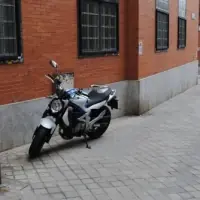
Con carácter general ¿está permitido estacionar una motocicleta en la acera?
As a general rule, is it allowed to park a motorcycle on the pavement?
- ANo, porque está prohibido estacionar en la acera.No, because parking on the pavement is prohibited.
- BSí, únicamente los días festivos.Yes, only on public holidays.
- CSí, los días laborables.Yes, on working days.
ExplanationStopping or parking is considered to be in a dangerous place, or to seriously obstruct traffic, when it creates a risk or obstacle for any user of the public road. As a general rule, motor vehicles may not park on pavements, unless parking there is expressly signed. There are local by-laws that may allow parking on pavements under particular rules, but as a general rule it is prohibited.
Una vez detenido el vehículo, las personas deberán entrar o salir...
Once the vehicle has stopped, people must get in or out...
- Asiempre por el lado del conductor.always on the driver's side.
- Bpor cualquier lado, tomando las debidas precauciones.on either side, taking due care.
- Ccomo norma general, por el lado más cercano a la acera o al arcén.as a general rule, on the side nearest the pavement or hard shoulder.
ExplanationUnder Article 114.2 of the General Traffic Regulations, as a general rule you get in and out of the vehicle on the side nearest the edge of the road, that is, the pavement or hard shoulder side, and only when the vehicle is stationary. That way you do not step into the area where others are driving.
Adelantar a varios vehículos a la vez, ¿está permitido?
Is it allowed to overtake several vehicles at once?
- ANo.No.
- BSí, cuando se puede volver a la derecha sin peligro en caso de encontrar vehículos en sentido contrario.Yes, when you can move back to the right safely if you meet vehicles coming the other way.
- CSí, únicamente cuando los vehículos adelantados circulan a velocidad lenta.Yes, only when the vehicles being overtaken are travelling slowly.
ExplanationNo driver may overtake several vehicles unless they are completely sure that, if another vehicle appears from the opposite direction, they can move over to the right without harming or endangering any of the vehicles being overtaken (Article 84.1 of the General Traffic Regulations, RGC).
Si el conductor permanece dentro del vehículo, ¿puede estacionar en doble fila?
If the driver stays inside the vehicle, may they double-park?
- ASí.Yes.
- BSí, durante un máximo de cinco minutos.Yes, for up to five minutes.
- CNo.No.
ExplanationDouble parking is never allowed.
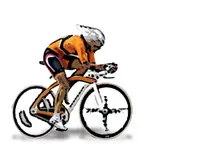
Usted pretende adelantar a un ciclista en una carretera convencional con línea continua. ¿Cuánto espacio deberá dejar?
You intend to overtake a cyclist on a conventional road with a continuous line. How much space must you leave?
- ALo proporcional a la vía.Space in proportion to the road.
- B1,50 m, aunque para ello tenga que invadir el sentido contrario, si no viene nadie en ese sentido.1.50 m, even if you have to move onto the opposite side of the road to do so, if nobody is coming the other way.
- C1,50 m como máximo.1.50 m at most.
ExplanationWhen overtaking a cyclist you must leave a lateral gap of at least 1.5 metres. Under Article 88 of the RGC, on a stretch with a continuous line you may move onto the opposite side of the road if nobody is coming and the manoeuvre is safe. Outside built-up areas you must also reduce your speed by at least 20 km/h.
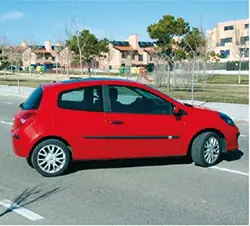
Como norma general se prohíbe cambiar el sentido de la marcha...
As a general rule, making a U-turn is prohibited...
- AEn las calzadas con prioridad.on priority carriageways.
- BEn las plazas de circulación giratoria.at roundabouts.
- CEn los tramos de vía en los que esté prohibido adelantar.on stretches of road where overtaking is prohibited.
ExplanationAs a general rule, U-turns are prohibited on stretches where overtaking is prohibited: if visibility is not enough to overtake safely, it is not enough for a manoeuvre that takes up the whole carriageway either.
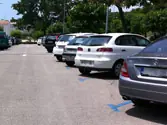
Para estacionar, ¿cuántos metros puede recorrer marcha atrás?
To park, how many metres can you reverse?
- ALos que sean necesarios, sin límite, en vía urbana.As many as necessary, with no limit, on an urban road.
- BLos mínimos indispensables, y como máximo 15 metros.The minimum necessary, and 15 metres at most.
- CSiempre que no invada un cruce de vías, los que sean necesarios.As many as necessary, as long as you do not enter a road junction.
ExplanationAs a general rule, reversing is prohibited, except in the following cases, exceptionally and always for the shortest distance necessary: 1. As an additional manoeuvre when stopping, parking or joining the traffic. In this case you may not reverse more than 15 metres or enter a road junction. 2. When it is not possible to move forwards, turn or make a U-turn. In this case there is no limit on the reversing distance, and you may even enter a road junction if necessary. Reversing is prohibited on dual carriageways (autovías) and motorways (autopistas).
¿Desde dónde miraremos, si nos encontramos en un carril de aceleración, para tener mayor ángulo de visibilidad antes de incorporarnos al carril principal?
If we are in an acceleration lane, from where should we look to have the widest angle of view before joining the main lane?
- AAl principio del carril.From the beginning of the lane.
- BAl final del carril.From the end of the lane.
- CEs indiferente.It makes no difference.
ExplanationWe should look from the beginning of the acceleration lane, as it is the best place to assess the traffic and road conditions. Once we have assessed them, we decide whether to accelerate and join or to wait at the end of the lane.
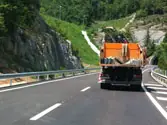
En el caso de que el camión no pueda ceñirse al borde derecho de la calzada, ¿cómo indicará su conductor que puede ser adelantado con seguridad?
If the lorry cannot keep close to the right-hand edge of the carriageway, how will its driver show that it can be overtaken safely?
- AMoviendo el brazo extendido de atrás hacia adelante.By moving the outstretched arm from back to front.
- BCon el intermitente izquierdo.With the left indicator.
- CReduciendo bruscamente la marcha.By slowing down sharply.
ExplanationHeavy vehicles, large vehicles or vehicles that must keep to a specific speed limit that cannot keep fully to the right-hand edge of the carriageway will show that they can be overtaken safely by holding the arm out horizontally and moving it back and forth several times, with the back of the hand facing backwards, or by switching on the right indicator when they think the arm signal is not suitable.
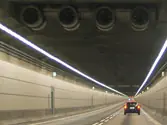
¿En un túnel podremos efectuar un adelantamiento?
Can we overtake in a tunnel?
- ANo, en ningún caso.No, never.
- BSí, si no invadimos el sentido contrario y disponemos de más de un carril en nuestro sentido.Yes, if we do not move into the opposite direction and have more than one lane in our direction.
- CSí, si las circunstancias de la circulación lo permiten.Yes, if traffic conditions allow it.
ExplanationAs a general rule, overtaking is prohibited in tunnels. If there is more than one lane in our direction of travel, it is allowed as long as we do not move into the opposite direction.
¿Se puede parar en el arcén si está delimitado por líneas discontinuas?
Can you stop on the hard shoulder if it is marked with broken lines?
- ASí, pero solo durante el día.Yes, but only during the day.
- BSí.Yes.
- CNo.No.
ExplanationStopping and parking on the hard shoulder are prohibited, whether it is marked with solid or broken lines; you may only stop and park outside its driveable part.
En una autopista, ¿dónde puede realizar un cambio de sentido?
On a motorway (autopista), where can you make a U-turn?
- AEn una autopista no está permitido nunca el cambio de sentido.A U-turn is never allowed on a motorway.
- BEn aquellos lugares habilitados por la señalización.In the places set up for it and shown by signs.
- CEn cualquier mediana o paso abierto.At any opening in the central reservation.
ExplanationA U-turn is prohibited in any situation where you cannot check that you will not endanger or obstruct other road users, for example on bends and brows of hills with reduced visibility, or in fog or heavy rain. A U-turn is also prohibited: - On level crossings (it is not prohibited near them). - In tunnels, underpasses and stretches of road covered by the 'Tunnel' sign. - On motorways (autopistas) and dual carriageways (autovías), except in the places provided for it. - On one-way carriageways and stretches of road. - On all stretches of road where overtaking is prohibited, unless the U-turn is expressly allowed.
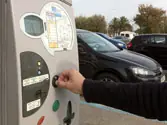
En un estacionamiento con limitación horaria, ¿está permitido estacionar sin colocar el ticket correspondiente?
In a parking area with time limits, is it allowed to park without displaying the corresponding ticket?
- ANo, y únicamente puede ser sancionado.No, and you can only be fined.
- BNo, y además de la sanción, los agentes pueden inmovilizar el vehículo.No, and as well as the fine, the police can immobilise the vehicle.
- CSí, si es por un corto espacio de tiempo.Yes, if it is for a short time.
ExplanationTo park in these places you must display inside the vehicle, next to the windscreen and clearly visible, the corresponding proof (a ticket, card, etc.) showing the time the parking starts and when it must end; after that time, parking is considered prohibited. If you do not do this, you can be fined and the vehicle can also be immobilised.
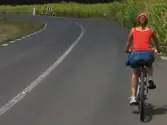
Al adelantar al ciclista que aparece en la fotografía, ¿es obligatorio invadir el carril de sentido contrario de la calzada?
When overtaking the cyclist in the photograph, must you move into the lane for the opposite direction?
- ANo.No.
- BNo, porque está prohibido adelantar a los ciclistas.No, because overtaking cyclists is prohibited.
- CSí.Yes.
ExplanationAccording to Article 85.4 of the General Traffic Regulations (RGC) (as worded by RD 518/2026), to overtake cyclists you must use part or all of the next lane or the opposite lane, keeping a safety gap of at least 1.5 metres and, outside built-up areas, reduce your speed by at least 20 km/h below the road's speed limit. Even if the solid line prohibits overtaking, Article 88.2 allows overtaking cyclists by moving into the opposite direction when, because of their speed, it can be done without risk.
¿Podemos parar y estacionar fuera de la parte transitable del arcén de una carretera convencional?
Can we stop and park off the usable part of the hard shoulder of a conventional road?
- AParar sí, estacionar no.Stopping yes, parking no.
- BNo, ni parar ni estacionar.No, neither stopping nor parking.
- CSí.Yes.
ExplanationOff the carriageway and off the usable part of the hard shoulder, you may stop and park.
Con tráfico tan denso que los vehículos ocupan todos los carriles de su sentido, si por el carril derecho avanza más rápido que por el izquierdo, ¿se considera adelantamiento?
With traffic so heavy that vehicles fill all the lanes in their direction, if the right-hand lane is moving faster than the left-hand one, is this considered overtaking?
- ASí. Fuera de una población se considera adelantamiento, pero no dentro de una población.Yes. Outside a town it is considered overtaking, but not inside a town.
- BSí. Se considera adelantamiento tanto dentro como fuera de una población.Yes. It is considered overtaking both inside and outside towns.
- CNo. En este caso, no se considera adelantamiento.No. In this case it is not considered overtaking.
ExplanationWhen traffic density means vehicles fill the whole width of the carriageway and each one depends on the one in front, one lane moving faster than another is not considered overtaking (Article 83.2 of the General Traffic Regulations), inside or outside built-up areas.
Un turismo, ¿qué debe hacer para incorporarse a la circulación?
What must a car do to join the traffic?
- AAsegurarse de que puede hacerlo sin peligro para los demás usuarios.Make sure it can do so without danger to other road users.
- BSeñalizar la maniobra porque los demás tienen que ceder el paso.Signal the manoeuvre, because others have to give way.
- CSeguir siempre las indicaciones de otra persona.Always follow another person's directions.
ExplanationRemember that a vehicle joining the traffic does not normally have right of way, for example when starting to drive, pulling out of a parking space, joining another road, etc. For this reason, the driver must always make sure they can do so without danger to other road users. We must also signal the manoeuvre with the vehicle's lights (indicators) or, if that is not possible, with the arm.
¿Cómo debe incorporarse a la vía un vehículo que sale de un camino sin pavimentar?
How must a vehicle coming out of an unpaved track join the road?
- ACediendo el paso y circulando a una velocidad que permita detenerse de inmediato.Giving way and driving at a speed that lets it stop immediately.
- BAcelerando para alcanzar la velocidad máxima permitida en la vía.Speeding up to reach the maximum speed allowed on the road.
- CCediendo el paso a los vehículos que circulan por la derecha.Giving way to vehicles coming from the right.
ExplanationVehicles on a paved road have priority over those coming from an unpaved one (Article 57.1.a of the General Traffic Regulations). That is why you must give way to everyone, wherever they are coming from, and pull out at a speed that lets you stop at once.
¿Puede adelantar una motocicleta a otra en una curva de visibilidad reducida?
Can a motorcycle overtake another motorcycle on a bend with reduced visibility?
- ANo, porque para adelantar siempre debe invadir el sentido contrario.No, because to overtake it must always enter the opposite side of the road.
- BNo, en curvas de visibilidad reducida está prohibido adelantar siempre.No, overtaking is always prohibited on bends with reduced visibility.
- CSí, cuando mantiene la separación lateral reglamentaria y no ocupa el sentido contrario.Yes, when it keeps the required side clearance and does not enter the opposite side of the road.
ExplanationUnder Article 87.1 of the General Traffic Regulations, overtaking is prohibited on bends with reduced visibility, unless the two directions of traffic are clearly separated and the manoeuvre can be done without entering the part of the road for the opposite direction. A motorcycle can overtake another within its own lane if it keeps the required side clearance.
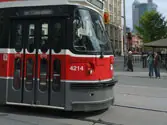
Sobre raíles del tranvía...
On tram rails...
- Aestá prohibido parar.stopping is prohibited.
- Bestá prohibido parar y estacionar.stopping and parking are prohibited.
- Cestá prohibido circular.driving is prohibited.
ExplanationOn tram rails, stopping and parking are prohibited.
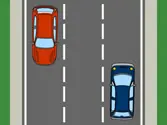
Para cambiar de dirección a la izquierda en esta intersección, nos situaremos...
To turn left at this junction, we will position ourselves...
- Aa la derecha de la calzada.on the right of the carriageway.
- Ba la izquierda de la calzada.on the left of the carriageway.
- Cen el centro de la calzada.in the centre of the carriageway.
ExplanationOn a two-way carriageway with three lanes separated by road markings, to turn left we will position ourselves in the centre lane.
Al salir de una autovía, debe…
When leaving a dual carriageway (autovía), you must…
- AReducir la velocidad a 60 km/h.Reduce speed to 60 km/h.
- BSeguir en su carril hasta la salida.Stay in your lane until the exit.
- CCambiar al carril de desaceleración con suficiente antelación.Move into the deceleration lane in good time.
ExplanationUnder Article 77 of the RGC, to leave a dual carriageway you must drive in good time in the lane closest to the exit and enter the deceleration lane as soon as possible, where you reduce speed without slowing down those who remain on the carriageway.
¿Se puede dar la vuelta en un lugar donde esté prohibido adelantar?
May you turn round in a place where overtaking is prohibited?
- ASí, excepto de noche, porque la visibilidad es menor.Yes, except at night, because visibility is lower.
- BNo, a menos que el cambio de sentido esté expresamente permitido.No, unless the U-turn is expressly permitted.
- CSí, cuando el tráfico en sentido contrario lo permita.Yes, when oncoming traffic allows it.
ExplanationArticle 79.1 of the General Traffic Regulations prohibits U-turns on all stretches where overtaking is prohibited, unless the U-turn is expressly authorised. It makes no difference whether it is day or night or whether anyone is coming.
¿Se podrá realizar un cambio de dirección a la izquierda en una curva sin visibilidad?
Can you turn left on a bend with no visibility?
- ASí, si la línea de separación de sentidos es discontinua.Yes, if the line separating the two directions of traffic is broken.
- BNo, porque está prohibido.No, because it is prohibited.
- CSí.Yes.
ExplanationTurning left is always prohibited in places or circumstances where visibility is not sufficient, even if there is a broken line.
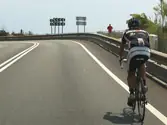
¿Qué puede hacer para evitar el atropello a ciclistas?
What can you do to avoid hitting cyclists?
- AAvisarles de las maniobras con señales acústicas.Warn them of manoeuvres with sound signals.
- BEvitar las señales luminosas para no deslumbrarles.Avoid light signals so as not to dazzle them.
- CEvitar las señales acústicas cerca de ellos.Avoid sound signals near them.
ExplanationBicycles are very unstable vehicles. If we sound the horn near a cyclist, they may be startled, which can cause sudden movements and make them lose their balance. That is why you should avoid sound signals. Remember that when overtaking cyclists, both in and outside built-up areas, we must keep a side gap of at least 1.50 metres.
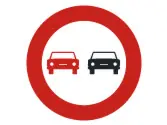
¿Dónde está prohibido el adelantamiento, como norma general?
Where is overtaking prohibited, as a general rule?
- AEn todas las curvas y cambios de rasante.On all bends and brows of hills.
- BEn los pasos para peatones y sus proximidades.On pedestrian crossings and near them.
- CEn carreteras de menos de 8 metros de ancho.On roads less than 8 metres wide.
ExplanationAccording to Article 87.1.b of the General Traffic Regulations (RGC) (as worded by RD 518/2026), overtaking is prohibited on marked pedestrian crossings and near them, as well as at junctions with cycle paths and on level crossings. On bends and brows of hills it is only prohibited when they have reduced visibility (Article 87.1.a).
Si nos vemos obligados a inmovilizar el vehículo en la autopista por circunstancias del tráfico...
If we have to bring the vehicle to a stop on the motorway (autopista) because of traffic conditions...
- AEncenderemos las luces de emergencia.We will switch on the hazard warning lights.
- BLo advertiremos con el uso reiterado de las luces de frenado.We will warn others by repeatedly using the brake lights.
- CLo advertiremos con el indicador de dirección derecho.We will warn others with the right indicator.
ExplanationWe will signal our intention to stop the vehicle or to slow down considerably by repeatedly using the brake lights, and once stopped, if we are on the motorway, we will signal the vehicle's presence with the hazard warning lights.
Si estaciona un turismo con un remolque ligero en una pendiente sensible, debe...
If you park a car with a light trailer on a steep slope, you must…
- Aaccionar solo el freno de mano.only apply the handbrake.
- Bcolocar calzos o apoyar las ruedas delanteras en el bordillo.put wheel chocks in place or rest the front wheels against the kerb.
- Ccalzar el vehículo con cualquier elemento que sirva.chock the vehicle with any item that will do the job.
ExplanationA vehicle combination parked on a steep slope must be secured with wheel chocks, without using stones or other items not meant for this, or by resting a steering wheel against the kerb (Article 92.3 of the General Traffic Regulations). The handbrake alone is not enough.
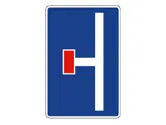
¿Cuál es la forma correcta de realizar la maniobra de marcha atrás al encontrarnos en una calle sin salida y necesitar salir de ella?
What is the correct way to reverse when you are in a dead-end street and need to get out of it?
- ALimitando el recorrido a un máximo de 15 metros.Limiting the distance to a maximum of 15 metres.
- BRecorriendo la distancia necesaria, sin ocupar un cruce de vías.Covering the distance needed, without entering a junction.
- CRecorriendo la distancia mínima indispensable e incluso invadiendo un cruce de vías.Covering the shortest distance needed, even entering a junction.
ExplanationDriving backwards is only allowed if it is not possible to go forwards or to change direction, and always covering the shortest distance needed (Article 80.1 of the General Traffic Regulations). The 15-metre limit without entering a junction only applies when reversing is part of stopping, parking or joining traffic.
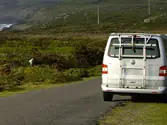
¿Está correctamente parado este vehículo?
Is this vehicle stopped correctly?
- ASí, porque no existe ninguna línea continua.Yes, because there is no solid line.
- BSí, porque ocupa el espacio mínimo de la calzada.Yes, because it takes up the minimum space on the carriageway.
- CNo, debería estar fuera de la calzada.No, it should be off the carriageway.
ExplanationOn roads outside built-up areas you cannot park or stop on the carriageway; it must be done off the carriageway or the usable part of the hard shoulder, and always on the right-hand side, even if the road is one-way.
Los agentes de la autoridad encargados de vigilar el tráfico podrán inmovilizar un vehículo cuando ...
Officers responsible for traffic enforcement may immobilise a vehicle when...
- Ael vehículo tenga más de diez años de antigüedad.the vehicle is more than ten years old.
- Bsupere los niveles permitidos de gases, humos y ruidos.it exceeds the permitted levels of gases, fumes and noise.
- Csu conductor sea sancionado dos veces el mismo día.its driver is fined twice on the same day.
ExplanationAccording to Article 7.2 of the General Traffic Regulations, officers may immobilise a vehicle that exceeds the legally permitted levels of gases, fumes and noise. Neither the age of the vehicle nor being fined twice in one day is, in itself, a reason for immobilisation.
¿Podrá una motocicleta efectuar una parada en el arcén transitable de una carretera convencional?
May a motorcycle stop on the passable hard shoulder of a conventional road?
- ASí.Yes.
- BNo.No.
- CSí, si la parada no supera los dos minutos.Yes, if the stop does not last more than two minutes.
ExplanationNo vehicle may park or stop on the passable hard shoulder of a conventional road. If the hard shoulder were not passable, both would be possible.
Antes de realizar la maniobra de marcha atrás...
Before reversing...
- Aefectuaremos indicaciones con el claxon, de forma corta y frecuente, para que los peatones se aparten.we will give short, frequent signals with the horn so that pedestrians move out of the way.
- Btendremos presente que lo tenemos que hacer de forma rápida y fluida.we will bear in mind that we must do it quickly and smoothly.
- Ctendremos que asegurarnos incluso apeándonos del vehículo, que no va a constituir un peligro.we must make sure, even by getting out of the vehicle, that it will not be a danger.
ExplanationBefore starting to reverse, the driver must make sure, even by getting out of the vehicle or following another person's directions, that it will not be a danger to other road users.
¿Le está permitido parar su motocicleta en la parte transitable del arcén de una vía interurbana?
Are you allowed to stop your motorcycle on the usable part of the hard shoulder of a road outside built-up areas?
- ASí, siempre que sea para tomar o dejar a una persona.Yes, as long as it is to pick up or drop off a person.
- BSí, pero solo por tiempo inferior a dos minutos.Yes, but only for less than two minutes.
- CNo.No.
ExplanationRemember that the hard shoulder of roads outside built-up areas is where various kinds of vehicles travel, such as bicycles, mopeds and animal-drawn vehicles, among others. If we stop our vehicle on the hard shoulder, we will get in the way of their normal traffic. That is why, to stop, we must do it on the right-hand side of the road, off the usable part of the hard shoulder. Do not confuse stopping or parking, which is a voluntary manoeuvre by the driver and must be done correctly, with an emergency stop: if we have to stop (not by the driver's choice) because of an emergency, we should try to do it in the most suitable place without getting in the way of other road users, but this is not always possible.
Dentro de poblado podemos circular por el carril que mejor convenga a nuestro destino, y lo podemos abandonar...
In built-up areas we can drive in the lane that best suits our destination, and we can leave it...
- ASólo para cambiar de dirección.Only to turn.
- BPara cambiar de dirección, adelantar, parar o estacionar.To turn, overtake, stop or park.
- CNo podemos abandonarlo.We cannot leave it.
ExplanationA car driving in a built-up area on a road with at least 2 lanes reserved for the same direction, separated by longitudinal markings, may use the lane that best suits its destination and must not leave it except to turn, overtake, stop or park. This rule does not apply to motorways (autopistas) and dual carriageways (autovías) that run through built-up areas.
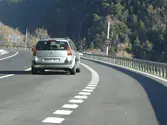
Si circulamos a más velocidad que el vehículo gris de nuestra izquierda, ¿podremos adelantarlo?
If we are going faster than the grey vehicle on our left, can we overtake it?
- ASí, porque no se considera adelantamiento.Yes, because it is not considered overtaking.
- BSí, porque se considera un rebasamiento.Yes, because it is considered passing.
- CNo.No.
ExplanationAs a general rule, overtaking must be done on the left. Exceptionally, we may overtake on the right: - When the driver of the vehicle we want to overtake is clearly signalling that they intend to stop or turn left, if there is enough space to do so. - On two-way roads, when overtaking trams running in the centre of the carriageway. - On urban roads with more than one lane in the same direction, separated by longitudinal markings. In the picture, you can see a road outside a built-up area (there are no buildings, pedestrian areas, parking areas, etc.), so overtaking must be done on the left.
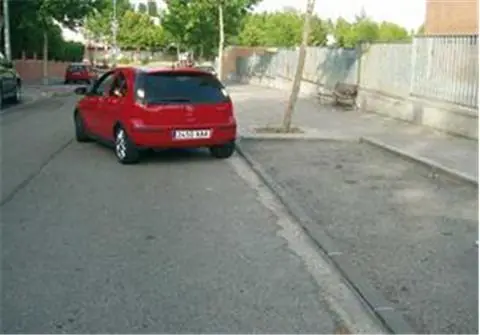
Para estacionar, ¿cuántos metros puede circular marcha atrás?
To park, how many metres may you reverse?
- ASiempre que no invada un cruce de vías, los que sean necesarios.As many as necessary, as long as you do not enter a junction.
- BLos que sean necesarios, sin límite en vía urbana.As many as necessary, with no limit on urban roads.
- CLos mínimos indispensables, y como máximo 15 metros.The minimum needed, and no more than 15 metres.
ExplanationWhen reversing as part of parking, you must reverse only the minimum distance needed, no more than 15 metres, and without entering a junction (Article 80.2 of the General Traffic Regulations (RGC)).
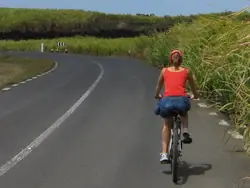
Al adelantar al ciclista que aparece en la fotografía, ¿Se permite invadir el carril de sentido contrario?
When overtaking the cyclist in the photograph, are you allowed to move into the lane for the opposite direction?
- ANo, porque está prohibido adelantar a los ciclistas.No, because overtaking cyclists is prohibited.
- BNo.No.
- CSí.Yes.
ExplanationYes. To overtake a cyclist you must move partly or fully into the next lane or the opposite lane and leave at least 1.5 metres of lateral clearance, as long as the manoeuvre can be done without danger (Article 85 of the General Traffic Regulations). Outside built-up areas you must also reduce your speed by at least 20 km/h below the limit.
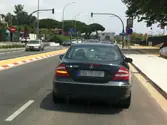
El vehículo negro al que pretende adelantar señaliza su propósito de desplazarse para adelantar, ¿puede adelantarle?
The black vehicle that you intend to overtake signals that it is going to move out to overtake. Can you overtake it?
- ASí, si lo advierte con señales ópticas o acústicas.Yes, if you warn it with light or sound signals.
- BNo, en ningún caso.No, under no circumstances.
- CNo, porque al señalizar tiene preferencia.No, because by signalling it has priority.
ExplanationBefore overtaking, you must check that the vehicle in front of you in the same lane has not signalled its intention to move to the same side; if it has, it has priority (Article 84.2 of the General Traffic Regulations). Only if it has not done so after a reasonable time may we overtake it, warning it first.
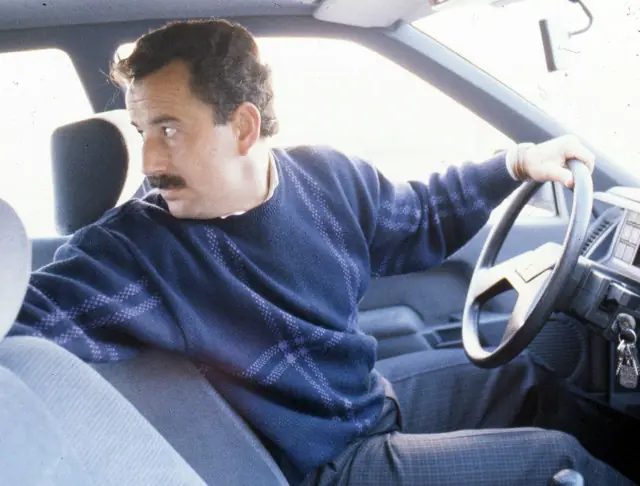
Al dar marcha atrás para estacionar, ¿se puede invadir un cruce de vías?
When reversing to park, can you enter a road junction?
- ASí.Yes.
- BNo.No.
- CSí, siempre que no se recorran más de 15 metros.Yes, as long as you do not travel more than 15 metres.
ExplanationAs a general rule, reversing is prohibited, except in the following cases, exceptionally and always for the shortest distance necessary: 1. As an additional manoeuvre when stopping, parking or joining the traffic. In this case you may not reverse more than 15 metres or enter a road junction. 2. When it is not possible to move forwards, turn or make a U-turn. In this case there is no limit on the reversing distance, and you may even enter a road junction if necessary. Reversing is prohibited on dual carriageways (autovías) and motorways (autopistas).
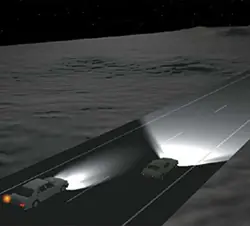
Cuando termine el adelantamiento, el vehículo adelantado deberá...
When the overtaking is finished, the vehicle that has been overtaken must...
- ACircular igual que lo está haciendo, con la luz de largo alcance encendida.Carry on as before, with main beam on.
- BReducir la velocidad, obligatoriamente.Reduce speed, as a requirement.
- CCambiar la luz de largo alcance por la luz de cruce.Switch from main beam to dipped headlights.
ExplanationWhen overtaking at night is finished, the overtaken driver must switch from main beam to dipped headlights so as not to dazzle, through the mirrors, the vehicle that has just passed and is now in front.
¿Tenemos que ceder el paso a un vehículo que se incorpora a la circulación saliendo de un estacionamiento?
Do you have to give way to a vehicle that is pulling out of a parking space into traffic?
- ASí, si ha señalizado la maniobra con el intermitente.Yes, if it has signalled the manoeuvre with its indicator.
- BSí, en la medida de lo posible.Yes, as far as possible.
- CNo.No.
ExplanationWhenever a vehicle joins the traffic, you should make it easier for it to do so as far as possible, but you do not have to give way to it. It is that vehicle that must give way to you.
¿Está permitido señalizar con el brazo que se vamos a efectuar una maniobra?
May you use your arm to signal that you are going to make a manoeuvre?
- ASí.Yes.
- BNo.No.
- CSí, pero solo dentro de poblado.Yes, but only in a built-up area.
ExplanationYou may use your arm to signal the manoeuvres you are going to make, as long as you are sure other drivers can see the signal.
¿Cuándo se considera que un vehículo estacionado es un grave obstáculo para la circulación?
When is a parked vehicle considered a serious obstacle to traffic?
- ACuando el tiempo de estacionamiento supera los 15 minutos.When it has been parked for more than 15 minutes.
- BCuando se estacione en una zona reservada a carga y descarga fuera de las horas señaladas.When it is parked in an area reserved for loading and unloading outside the signed hours.
- CCuando el vehículo esté estacionado en doble fila sin conductor.When the vehicle is double-parked without the driver.
ExplanationA vehicle is considered a serious obstacle to traffic when it is double-parked without the driver, because it can block other vehicles and seriously obstructs traffic. This is covered by the Traffic and Road Safety Code, which says that double parking is a serious offence because it interferes with the flow of traffic.
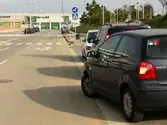
¿Deberá ceder el paso a un vehículo que quiere incorporarse a la circulación saliendo de un estacionamiento y lleva el indicador de dirección izquierdo encendido?
Must you give way to a vehicle that wants to join the traffic from a parking space and has its left indicator on?
- ASí, porque sale de la derecha y tiene preferencia.Yes, because it is coming from the right and has priority.
- BNo, aunque le facilitaré la incorporación en la medida de lo posible.No, although I will make it easier for it to join as far as possible.
- CSí, porque se está incorporando a la circulación.Yes, because it is joining the traffic.
ExplanationWhen a vehicle wants to join the traffic after stopping or parking, it must move at a speed that lets it stop immediately to give way to approaching road users. Other vehicles must make it easier for it to join as far as possible, but this does not mean they lose their priority. Indicators do not give priority either; they only warn other road users of our intentions.
Al estacionar un vehículo con remolque en una pendiente ascendente, si no dispones de calzos, ¿qué debe hacer?
When parking a vehicle with a trailer on an uphill slope, if you do not have wheel chocks, what must you do?
- AEs suficiente que deje engranada la marcha atrás o la primera velocidad.It is enough to leave it in reverse or first gear.
- BUtilizar como calzos elementos naturales como piedras, maderos, etc.Use natural objects such as stones, pieces of wood, etc. as chocks.
- CApoyar una de las ruedas delanteras en el bordillo, orientada hacia el centro de la calzada.Rest one of the front wheels against the kerb, turned towards the centre of the carriageway.
ExplanationUnder Article 92 of the General Traffic Regulations, a combination with a trailer parked on a noticeable slope must be secured with chocks or by resting a steering wheel against the kerb, turned towards the centre of the carriageway if the slope is uphill. Stones or other objects are not valid as chocks.
Un vehículo se va a incorporar a la circulación. ¿Cuándo debe ceder el paso a los vehículos que ya circulan?
A vehicle is going to join traffic. When must it give way to vehicles already on the road?
- ACuando se incorpora desde la izquierda.When it joins from the left.
- BCuando se incorpora desde la derecha.When it joins from the right.
- CSiempre.Always.
ExplanationUnder Article 72.1 of the General Traffic Regulations (RGC), a driver joining traffic, whether from a standstill or from an access road or adjoining property, must make sure it is safe to do so and give way to other vehicles, wherever they come from.
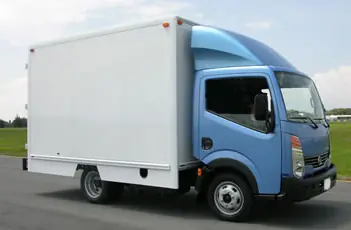
Usted conduce un camión de 3.500 kg de m.m.a. ¿Está obligado a utilizar calzos al estacionar en una pendiente?
You are driving a lorry with a MAM of 3,500 kg. Must you use wheel chocks when parking on a slope?
- ASí, siempre.Yes, always.
- BSí, si es una pendiente sensible.Yes, if it is a significant slope.
- CNo.No.
ExplanationThe obligation to chock the vehicle when parking on a significant slope applies to vehicles with a maximum authorised mass of more than 3,500 kg, to buses and to vehicle combinations. A 3,500 kg lorry without a trailer is not obliged to, although it must leave the parking brake on and a gear engaged.
Al adelantar a un grupo de ciclistas, ¿qué debe hacer?
When overtaking a group of cyclists, what must you do?
- AReducir la velocidad y dejar al menos 1,5 m de separación lateral.Reduce speed and leave at least 1.5 m of side gap.
- BTocar el claxon para que se coloquen en fila.Sound the horn so that they get into single file.
- CAdelantarles de uno en uno, volviendo a su carril entre ellos.Overtake them one at a time, returning to your lane between them.
ExplanationAccording to Article 85.4 of the General Traffic Regulations (RGC) (as worded by RD 518/2026), when overtaking cyclists you must keep a safety gap of at least 1.5 metres and, outside built-up areas, reduce your speed by at least 20 km/h below the road's speed limit. A group of cyclists is treated as a single moving unit, so you overtake them all at once.
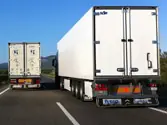
¿Se puede adelantar a dos camiones a la vez en esta vía?
Can you overtake two lorries at once on this road?
- ANo, porque son camiones.No, because they are lorries.
- BSí, si puede hacerlo con seguridad.Yes, if you can do it safely.
- CNo, está prohibido.No, it is prohibited.
ExplanationYou may overtake several vehicles at once if you are sure that, if another vehicle comes from the opposite direction, you can return to the right-hand side without putting any of the overtaken vehicles in danger.
All topics
- Definitions
- Documents and penalty points
- The driver's condition
- Duties of drivers and pedestrians
- Vehicle safety devices
- Vehicle controls and equipment
- Vehicle lights and horn
- Traffic signs, markings and signals
- The road and its lanes
- Speed and distances
- Right of way
- Carrying passengers and loads
- Driving safely in difficult conditions
- Vehicle mechanics and maintenance
- Road accidents and first aid
- Defensive and eco-driving
Independent app: not affiliated with or endorsed by the DGT (Spain's Directorate-General for Traffic) or the Ministry of the Interior. The official exam is booked with the DGT and taken at its test centres. The questions here are practice material; the DGT's official question bank is not public.
Basado en datos de la Agencia Estatal Boletín Oficial del Estado (https://www.boe.es). Textos consolidados de carácter meramente informativo. La AEBOE no patrocina ni respalda este sitio.
Parte de las preguntas procede de los tests de la revista «Tráfico y Seguridad Vial» de la DGT, reproducidos con indicación de la fuente.