
DGT test · 982 questions
Manoeuvres · Page 2 of 20
Joining traffic, overtaking, turning, U-turns, reversing, stopping and parking: how and where to do them and when they are forbidden.
Questions in this topic, with answers
982 questions, 50 per page, with the correct answer and the explanation. Page 2 of 20.
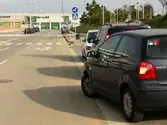
Si el vehículo de la imagen pretende incorporarse a la circulación...
If the vehicle in the picture intends to join the traffic…
- ADebemos cederle el paso.We must give way to it.
- BDeberemos facilitarle la incorporación en la medida de lo posible.We must make it easier for it to join as far as possible.
- CDeberemos detenernos para cederle el paso.We must stop to give way to it.
ExplanationA vehicle that intends to join the traffic must give way to those already travelling on the road. Other drivers will make it easier for it to join as far as possible, especially if it is a public passenger transport vehicle trying to join the traffic from a marked stop.
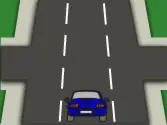
En una vía de 3 carriles para el mismo sentido, ¿en qué carril se situará un vehículo para efectuar el cambio de dirección hacia la izquierda?
On a road with 3 lanes in the same direction, which lane should a vehicle be in to turn left?
- AEn el carril central.In the centre lane.
- BEn el carril de la izquierda.In the left-hand lane.
- CEn el carril de la derecha.In the right-hand lane.
ExplanationOn a one-way carriageway, to turn left you must keep to the left-hand edge, so with three lanes in the same direction you must move into the left-hand lane in advance. The centre lane is used for turning left only on two-way carriageways with three lanes.
Circulando por una vía de sentido único, ¿dónde se colocará para girar a la izquierda?
When driving on a one-way road, where will you position yourself to turn left?
- AEn el centro de la calzada.In the centre of the carriageway.
- BEn el borde izquierdo de la calzada.At the left-hand edge of the carriageway.
- CEn el borde derecho de la calzada.At the right-hand edge of the carriageway.
ExplanationUnder Article 75 of the General Traffic Regulations (RGC), to turn left on a one-way carriageway you must keep as close as possible to the left-hand edge. Positioning yourself in the centre only applies on two-way carriageways, next to the marking that separates the two directions.
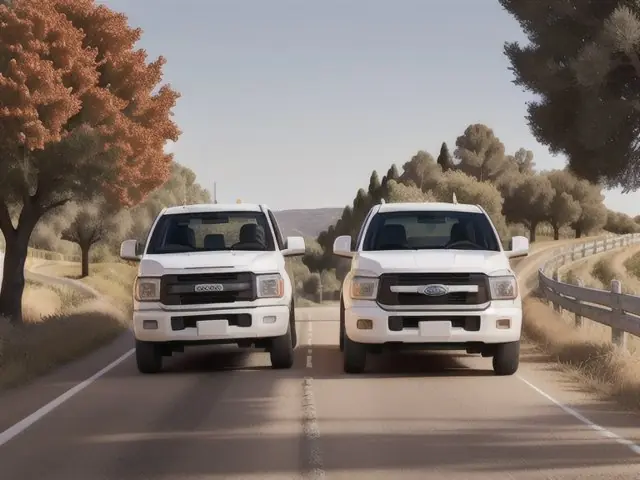
¿Está permitido adelantar a varios vehículos a la vez?
Is it allowed to overtake several vehicles at once?
- ASí, si hay suficiente visibilidad y espacioYes, if there is enough visibility and space
- BNo, solo uno a la vezNo, only one at a time
- CSolo en autopistaOnly on a motorway (autopista)
ExplanationYou may overtake several vehicles if there is enough visibility and space.
Para salir marcha atrás de una calle sin salida, ¿cuántos metros se podrán recorrer como máximo?
To reverse out of a dead-end street, what is the maximum distance you may reverse?
- A20 metros.20 metres.
- B15 metros.15 metres.
- CEl mínimo imprescindible.The minimum necessary.
ExplanationTo reverse out of a dead-end street, you may reverse the distance needed to get out of that street.
¿Se podrá adelantar por la derecha al vehículo que nos precede si su conductor indica claramente que va a girar a la izquierda?
May we overtake the vehicle in front on the right if its driver clearly shows they are going to turn left?
- ANo, porque está prohibido.No, because it is prohibited.
- BSí, si existe espacio suficiente.Yes, if there is enough room.
- CNo, nunca se puede adelantar por la derecha.No, you may never overtake on the right.
ExplanationAs an exception, you overtake on the right, with the greatest care and if there is enough room, a vehicle whose driver clearly shows that they are going to turn left or stop on that side (article 82.2 of the General Traffic Regulations).
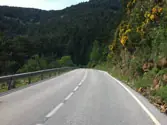
Si un vehículo nos quiere adelantar en una carretera convencional con un carril para cada sentido, ¿qué deberemos hacer?
If a vehicle wants to overtake us on a conventional road with one lane in each direction, what must we do?
- ANos ceñiremos al borde derecho de la calzada.We will keep to the right-hand edge of the carriageway.
- BAumentaremos nuestra velocidad.We will increase our speed.
- CDisminuiremos nuestra velocidad.We will reduce our speed.
ExplanationWhen we are going to be overtaken, we are obliged to keep to the right-hand edge of the carriageway, without entering the hard shoulder, and we do not have to change our speed, although we must reduce it if a dangerous situation arises, unless the overtaking driver slows down, in which case we must make it easier for them to return to their lane. The driver of the vehicle being overtaken is prohibited from increasing speed or making manoeuvres that prevent or hinder the overtaking. Drivers of heavy or large vehicles, or of vehicles that must keep to a specific speed limit, must slow down or move onto the hard shoulder as soon as possible, if it is usable, to let those behind pass when the density of oncoming traffic, the insufficient width of the carriageway, or its profile or condition do not allow them to be overtaken easily and without danger. If these drivers cannot keep fully to the right-hand edge of the carriageway, but overtaking can still be done safely, they will show this to the driver approaching from behind by extending their arm horizontally and moving it repeatedly from back to front, or with the right indicator.
En una vía de doble sentido, un vehículo va a girar a la izquierda. ¿Debe permitir que otros vehículos lo adelanten por la derecha?
On a two-way road, a vehicle is going to turn left. Must it allow other vehicles to overtake it on the right?
- ASí — colocándose lo más a la izquierda posible de la calzada.Yes — by moving as far to the left of the carriageway as possible.
- BNo — los adelantamientos deben efectuarse por la izquierda.No — overtaking must be done on the left.
- CSí — colocándose a la izquierda de su carril lo más posible, sin entorpecer a los vehículos que circulan en sentido contrario.Yes — by moving as far as possible to the left of its lane, without obstructing oncoming vehicles.
ExplanationOn a two-way road, when a vehicle is going to turn left, it must make it easier for other vehicles to overtake it on the right, as long as it does not obstruct oncoming traffic. This rule is based on Article 82 of the General Traffic Regulations (RGC), which states that overtaking must be done on the left, but allows overtaking on the right if the vehicle being overtaken is signalling its intention to turn left. In addition, the vehicle making the manoeuvre must move as far to the left as possible without obstructing oncoming vehicles.
¿Se podrá realizar un cambio de sentido en una intersección?
Can a U-turn be made at a junction?
- ASí, cuando pueda realizarse la maniobra en un solo giro sin obstaculizar.Yes, when the manoeuvre can be done in a single turn without obstructing anyone.
- BNo, como norma general.No, as a general rule.
- CNo, en ningún caso.No, never.
ExplanationAs a general rule, U-turns are prohibited at junctions. As an exception, they may be made when we have priority at the junction and this is shown by signs.
¿Se podrá parar en el arcén de una carretera convencional?
Can you stop on the hard shoulder of a conventional road?
- ANo, en ningún caso.No, never.
- BParar sí, estacionar no.You can stop, but not park.
- CSí, en el caso de que sea no transitable.Yes, if it is not usable.
ExplanationOn the non-usable part of the hard shoulder you may stop and even park. If the hard shoulder were usable, you could not stop there; you could only stop in an emergency.
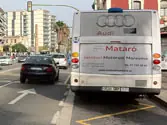
¿Puede parar en una zona de parada y estacionamiento de uso exclusivo para transporte público urbano?
Can you stop in a stopping and parking area reserved exclusively for urban public transport?
- ANo.No.
- BSí.Yes.
- CParar sí, pero no estacionar.You can stop, but not park.
ExplanationStopping is prohibited in areas reserved exclusively for the parking and stopping of urban public transport.
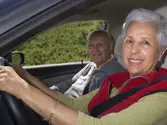
¿Por qué las personas mayores corren más peligro en el tráfico?
Why are older people at greater risk in traffic?
- APorque suelen valorar correctamente la velocidad de los vehículos.Because they usually judge the speed of vehicles correctly.
- BPorque son menos ágiles, aunque suelen reaccionar más rápidamenteBecause they are less agile, although they usually react more quickly
- CPorque suelen ver y oír peor.Because they usually see and hear less well.
ExplanationIn general, older people suffer a loss of their physical and mental abilities: problems with vision, hearing, etc. This makes it harder for them to drive in complex situations that require quick action, such as joining and leaving roads where traffic moves at high speed.
Se considera que una parada o un estacionamiento obstaculiza gravemente la circulación cuando:
Stopping or parking is considered to seriously obstruct traffic when:
- Ase realiza en una vía pública con prioridad de paso.it is done on a public road with right of way.
- Bdificulta el uso normal de los pasos rebajados para personas con discapacidad física.it hinders normal use of dropped kerbs for people with physical disabilities.
- Cse realiza junto al bordillo y en paralelo a él.it is done next to the kerb and parallel to it.
ExplanationUnder Article 91.2.d of the RGC, stopping or parking is considered to seriously obstruct traffic when it hinders normal use of dropped kerbs for people with physical disabilities. It is a serious offence and may lead to the vehicle being removed.
¿Cómo se debe cambiar de carril en una vía saturada?
How should you change lanes on a congested road?
- AUsando el arcén.Using the hard shoulder.
- BHacer la maniobra rápidamente para no molestar.Carry out the manoeuvre quickly so as not to bother others.
- CSeñalizar con suficiente antelación.Signal well in advance.
ExplanationAny sideways movement must be signalled well in advance (Article 109.1 of the RGC) and must respect the priority of those driving in the lane you want to move into (Article 74.2). In heavy traffic, signalling early lets others adjust; the hard shoulder is not for this.
Un vehículo reduce la velocidad porque el que le está adelantando lo hace de forma peligrosa mientras otro se aproxima en sentido contrario. ¿Es correcto?
A vehicle slows down because the vehicle overtaking it is doing so dangerously while another vehicle is approaching from the opposite direction. Is this correct?
- ANo, el vehículo adelantado no debe cambiar su velocidad.No, the vehicle being overtaken must not change its speed.
- BNo, porque el vehículo que se aproxima en sentido contrario ya le avisa del peligro con las luces.No, because the oncoming vehicle is already warning of the danger with its lights.
- CSí, para que el vehículo que adelanta vuelva lo antes posible a la derecha.Yes, so that the overtaking vehicle can return to the right as soon as possible.
ExplanationThe driver being overtaken must reduce speed when, once the overtaking has started, a dangerous situation arises for them, for the overtaking vehicle or for oncoming traffic (Article 86.2 of the General Traffic Regulations). This lets the overtaking vehicle get back into its lane sooner.
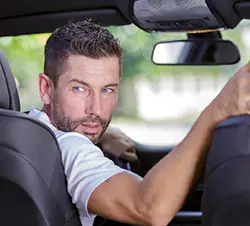
Para incorporarse a la circulación, ¿se puede dar marcha atrás?
To join the traffic, can you reverse?
- ASí, es una de las maniobras en las que está permitido.Yes, it is one of the manoeuvres for which it is permitted.
- BNo, en ningún caso.No, never.
- CSí, pero solo en vías urbanas.Yes, but only on urban roads.
ExplanationAs a general rule, reversing is prohibited, except: if you cannot move forwards, change direction or make a U-turn (there is no limit on the reversing distance for this manoeuvre); and to stop, park or join the traffic, without entering a junction and for a maximum of 15 metres.
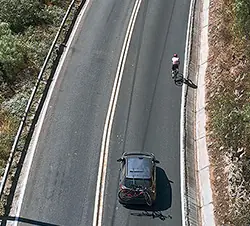
En esta situación, ¿está permitido adelantar al ciclista?
In this situation, is overtaking the cyclist permitted?
- ASí, aunque para ello haya que invadir el carril de sentido contrario.Yes, even if you have to enter the lane for the opposite direction.
- BSólo si al adelantar no se invade el carril de sentido contrario.Only if you do not enter the lane for the opposite direction when overtaking.
- CNo, porque la señalización prohíbe el adelantamiento.No, because the signs prohibit overtaking.
ExplanationEven if there is a solid line, you are allowed to enter the opposite direction to overtake a cyclist if there is enough visibility and space and you leave a minimum side gap of 1.5 metres.
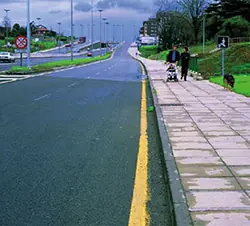
En el carril de circulación de la derecha, ¿se puede estacionar?
Can you park in the right-hand traffic lane?
- ASí, porque es una vía con poca circulación.Yes, because it is a road with little traffic.
- BNo, porque lo prohíbe la marca vial.No, because the road marking prohibits it.
- CNo, porque hay acera.No, because there is a pavement.
ExplanationThe solid yellow line painted next to the kerb prohibits stopping and parking along its whole length on that side of the carriageway, so you cannot park in that lane.
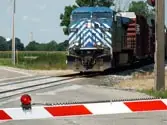
Como norma general, ¿está permitido adelantar en los pasos a nivel?
As a general rule, is overtaking allowed at level crossings?
- ANo.No.
- BSí, cuando se haga a una velocidad que permita detener el vehículo a tiempo.Yes, when done at a speed that allows you to stop the vehicle in time.
- CSí.Yes.
ExplanationOvertaking is prohibited at level crossings and near them (Article 87.1.b of the General Traffic Regulations, RGC). From 1 October 2026 this ban no longer has an exception for two-wheeled vehicles, and driving slowly does not make it allowed either.
En un carril reservado para uso exclusivo del transporte público urbano fuera del horario de servicio, ¿se puede estacionar?
Can you park in a lane reserved exclusively for urban public transport outside its hours of service?
- ANo.No.
- BSí, parar y estacionar.Yes, you can stop and park.
- CSí, si conocemos perfectamente el horario de la línea de autobuses.Yes, if we know the bus route timetable perfectly.
ExplanationArticle 94 of the General Traffic Regulations prohibits stopping, and therefore also parking, in lanes reserved exclusively for urban public transport. The prohibition does not depend on whether buses are passing at that moment or on knowing their timetable.
Al estacionar en una pendiente un turismo que arrastra un remolque, ¿tendrá que ser calzado convenientemente?
When parking a car towing a trailer on a slope, must it be properly chocked?
- ASí.Yes.
- BSolo si el remolque supera los 750 kg.Only if the trailer weighs more than 750 kg.
- CNo, esta obligación es solo para los camiones.No, this obligation applies only to lorries.
ExplanationVehicle combinations left immobilised on a slope must be chocked. The chock may be replaced by resting a steering wheel against the kerb.
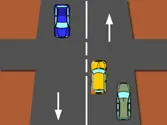
¿Podrá el vehículo gris adelantar al vehículo amarillo?
Can the grey vehicle overtake the yellow vehicle?
- ANo, en esta vía está prohibido.No, it is prohibited on this road.
- BNo, siempre se adelanta por la izquierda.No, you always overtake on the left.
- CSí, cuando el conductor del vehículo amarillo a indicado expresamente su intención de cambiar de dirección a la izquierda.Yes, when the driver of the yellow vehicle has expressly signalled their intention to turn left.
ExplanationAs an exception, you may overtake on the right when the vehicle you intend to overtake wants to turn left and is clearly signalling its intention.
¿Dónde debe situarse para girar a la izquierda en una vía sin marcas que separen los dos sentidos de circulación?
Where must you position yourself to turn left on a road without markings separating the two directions of traffic?
- AObligatoriamente en el arcén, para realizar la maniobra desde allí.Always on the hard shoulder, making the manoeuvre from there.
- BEn el centro de la calzada, invadiendo parte del sentido contrario si es preciso.In the centre of the carriageway, entering part of the opposite direction if necessary.
- CJunto al eje de la calzada, sin invadir el sentido contrario.Close to the centre line of the carriageway, without entering the opposite direction.
ExplanationTo turn left on a road without markings separating the directions of traffic, the driver must move close to the centre line of the carriageway, without entering the opposite direction. This is set out in the General Traffic Regulations (RGC), which state that when turning left on two-way carriageways you must keep close to the centre line without entering the area meant for the opposite direction. This is the correct answer because it keeps the road safe, allowing the manoeuvre to be made without obstructing oncoming traffic.
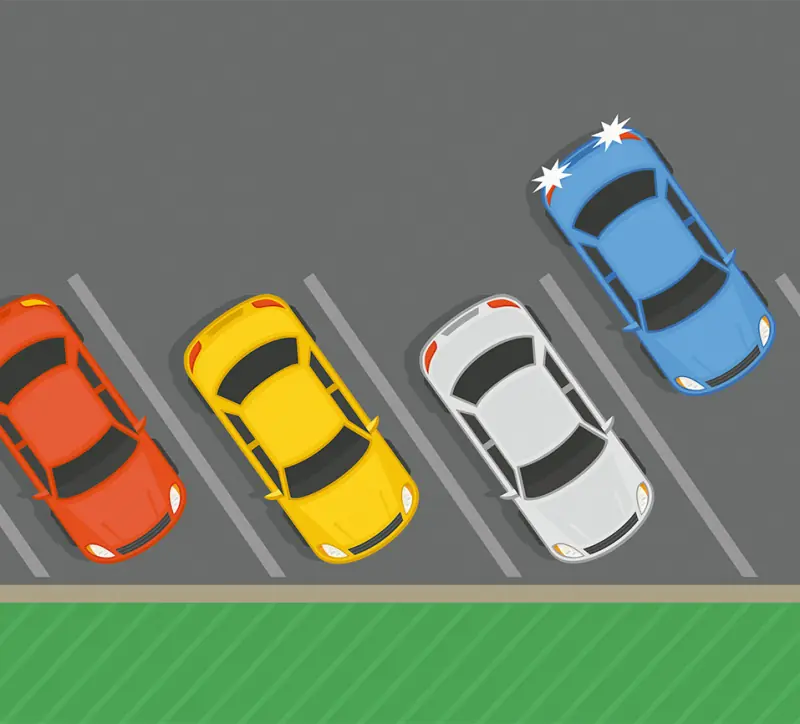
¿Puede incorporarse a la circulación desde un estacionamiento circulando marcha atrás?
Can you join the traffic from a parking space by reversing?
- ASí, mientras no invada un cruce de vías.Yes, as long as you do not enter a junction.
- BSí, mientras que el recorrido no sea superior a 20 metros.Yes, as long as the distance is not more than 20 metres.
- CSí, aunque el recorrido sea superior a 20 metros.Yes, even if the distance is more than 20 metres.
ExplanationReversing is allowed as a manoeuvre that complements leaving a parking space: over the minimum distance necessary (never more than 15 metres) and without entering a junction.
¿Por qué es peligroso el viento que viene por la derecha al adelantar a vehículos grandes?
Why is wind coming from the right dangerous when overtaking large vehicles?
- APorque puedo perder el control y salir de la carretera.Because I may lose control and leave the road.
- BPorque me dificulta ver correctamente la carretera.Because it makes it hard for me to see the road properly.
- CPorque aumenta el consumo de combustible del vehículo.Because it increases the vehicle's fuel consumption.
ExplanationWhile we are overtaking, the large vehicle shelters us from the wind blowing from the right. When we get past it, we suddenly receive the full force of the wind, which can push our vehicle sharply to the side, make us lose control and take us off the road. You must hold the steering wheel firmly.
¿Cómo saldremos de una calle sin salida donde no se puede dar la vuelta?
How will we get out of a dead-end street where it is not possible to turn around?
- ARecorriendo el mínimo necesario para salir.Travelling the minimum distance needed to get out.
- BSin recorrer más de 15 metros y sin invadir un cruce de vías.Travelling no more than 15 metres and without entering a junction.
- CRecorriendo el mínimo necesario y sin invadir un cruce de vías.Travelling the minimum distance needed and without entering a junction.
ExplanationIn a dead-end street, the General Traffic Regulations (RGC) state that the driver must travel the minimum distance necessary to get out of it, without making a U-turn, as this is not allowed. This is because making a U-turn on roads where it cannot be done may be a risk to other road users. Therefore, the correct answer is 'travelling the minimum necessary to be able to get out'.
¿Podrá adelantar por la derecha a un vehículo que se dispone a cambiar de dirección a la izquierda?
May you overtake on the right a vehicle that is about to turn left?
- ASí, si existe espacio suficiente y adoptando las máximas precauciones.Yes, if there is enough space and taking the greatest care.
- BSí, pero solo en poblado.Yes, but only in built-up areas.
- CNo, está prohibido adelantar por la derecha.No, overtaking on the right is prohibited.
ExplanationAs an exception, if there is enough space, you may overtake on the right when the vehicle you want to overtake is clearly signalling that it intends to turn left.
¿Cuántos metros podremos recorrer en marcha hacia atrás como máximo?
What is the maximum distance we may reverse?
- A20 metros.20 metres.
- B15 metros.15 metres.
- C10 metros.10 metres.
ExplanationYou may not reverse more than 15 metres or enter a junction.
En una vía de doble sentido, si un coche quiere girar a la izquierda, debe...
On a two-way road, if a car wants to turn left, it must...
- Asituarse fuera de la calzada y hacerlo desde allí.move off the carriageway and turn from there.
- Bmantenerse en el borde izquierdo de la calzada.keep to the left-hand edge of the carriageway.
- Cmantenerse en el centro de la calzada sin invadir el carril contrario.keep to the centre of the carriageway without entering the opposite lane.
ExplanationAccording to Article 75.1.b) of the General Traffic Regulations, to turn left on a two-way carriageway you must keep close to the line separating the two directions or, if there is none, to the centre line of the carriageway, without entering the side for the opposite direction. The left-hand edge is only used on one-way carriageways, and turning from off the carriageway is for cycles and mopeds.
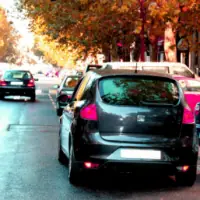
Cuando ejecute la maniobra de parada, ¿debe señalizarlo de alguna manera?
When you carry out the manoeuvre of stopping, must you signal it in any way?
- ASí, con las luces de posición o de estacionamiento.Yes, with the sidelights or parking lights.
- BNo, no es necesario.No, it is not necessary.
- CSí, con el indicador de dirección del lado donde vaya a parar.Yes, with the indicator on the side where you are going to stop.
ExplanationOnce we have checked that it is possible to stop on the road we are travelling on, we must signal the manoeuvre with the right indicator if stopping or parking on the right-hand side, or with the left indicator if on the left-hand side, to warn other road users.
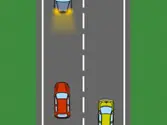
Un vehículo le está adelantando y no puede terminar la maniobra con seguridad, ¿qué debe hacer?
A vehicle is overtaking you and cannot complete the manoeuvre safely. What must you do?
- AAumentar la velocidad, para evitar el adelantamiento.Speed up, to prevent the overtaking.
- BSeguir con normalidad, ya que es un problema del vehículo que adelanta.Carry on as normal, because it is the overtaking vehicle's problem.
- CFacilitar la finalización de la maniobra de adelantamiento.Make it easier for the overtaking vehicle to complete the manoeuvre.
ExplanationUnder Article 86.2 of the General Traffic Regulations (RGC), the driver being overtaken may not speed up or make overtaking difficult, and must slow down if a danger arises during the manoeuvre. If the overtaking driver gives up, the driver being overtaken does not have to slow down if that is dangerous, but must help the other driver return to their lane.
¿Podrá usted adelantar dentro de un túnel que dispone de 2 carriles en el mismo sentido?
May you overtake inside a tunnel that has 2 lanes in the same direction?
- ASí.Yes.
- BNo, salvo a ciclos y ciclomotores.No, except cycles and mopeds.
- CNo.No.
ExplanationOvertaking inside a tunnel is allowed if there are 2 lanes in our direction of travel, because we can then overtake without going into the opposite direction.
Si el vehículo que va detrás se acerca demasiado, conviene...
If the vehicle behind you gets too close, it is advisable to...
- Amantener la misma distancia con el vehículo que va delante.keep the same distance from the vehicle in front.
- Breducir la distancia con el vehículo que va delante.reduce the distance from the vehicle in front.
- Caumentar la distancia con el vehículo que va delante.increase the distance from the vehicle in front.
ExplanationIf the vehicle behind is too close, it is advisable to increase the distance from the one in front: that way, if you have to brake, you can do so more gently and gradually, and the vehicle behind has more room to stop. Article 54 of the RGC requires you to leave enough space to stop without a collision.
Un estacionamiento se considerará que perturba gravemente la circulación cuando:
Parking will be considered to seriously disrupt traffic when:
- Apermita incorporarse a la circulación a otro vehículo debidamente parado o estacionado.it allows another properly stopped or parked vehicle to join the traffic.
- Bobstaculice un paso rebajado para disminuidos físicos.it obstructs a dropped kerb for people with physical disabilities.
- Cse realice en una vía pública calificada de atención preferente (VP).it is done on a public road classed as a priority-attention road (VP).
ExplanationParking will seriously disrupt traffic when it prevents another properly stopped or parked vehicle from joining the traffic, when it obstructs a dropped kerb for people with physical disabilities, and when it is done in a prohibited area of a public road classed as a priority-attention road (VP).
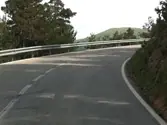
¿En qué curvas está prohibido adelantar?
On which bends is overtaking prohibited?
- AEn todas las curvas.On all bends.
- BEn curvas a la derecha.On right-hand bends.
- CEn curvas de visibilidad reducida.On bends with reduced visibility.
ExplanationOvertaking is prohibited when there is not enough visibility to carry out the manoeuvre safely, for example: - On bends and brows of hills with reduced visibility. - In weather or environmental conditions that reduce visibility. - Behind another vehicle if it blocks our view of the road. In all these cases we may overtake if the two directions are separated and we do not enter the opposite direction.
¿Se puede adelantar en un cambio de rasante de visibilidad reducida?
Can you overtake on a brow of a hill with reduced visibility?
- ANo.No.
- BSí, si no se invade el sentido contrario y ambos sentidos están delimitados.Yes, if you do not enter the opposite direction and both directions are separated.
- CSí, si lo hacemos rápidamente manteniendo una separación mínima de 1,50 metros si adelantamos a una motocicleta.Yes, if we do it quickly, keeping a minimum gap of 1.50 metres if we are overtaking a motorcycle.
ExplanationYou can overtake on a brow of a hill with reduced visibility if the two directions are clearly separated and as long as the overtaking can be done without entering the area reserved for the opposite direction.
En un estacionamiento con límite de tiempo, ¿se permite aparcar sin colocar el ticket correspondiente?
In a time-limited parking area, are you allowed to park without displaying the corresponding ticket?
- ANo. Puede ser sancionado.No. You can be fined.
- BNo. Además de la sanción, los agentes pueden inmovilizar el vehículo.No. As well as the fine, officers can immobilise the vehicle.
- CSí, si es por un corto periodo de tiempo.Yes, if it is for a short time.
ExplanationIn a time-limited parking area you must display the ticket or permit that authorises parking. Under Article 156.1.b of the General Traffic Regulations (RGC), as worded by RD 518/2026, municipal by-laws may provide for the vehicle to be removed or immobilised when it has no permit to park in time-limited areas or when it stays for more than three times the time paid for, in addition to the corresponding fine.
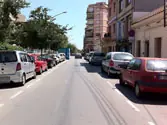
¿Podemos estacionar en la parte izquierda de una calzada de sentido único dentro de poblado?
May we park on the left-hand side of a one-way carriageway in a built-up area?
- ANo, en la calzada no se puede estacionar.No, parking on the carriageway is not allowed.
- BSí.Yes.
- CNo podemos estacionar, pero sí parar.We may not park, but we may stop.
ExplanationUnder article 90.2 of the RGC, on urban roads stopping and parking are done as close as possible to the right-hand edge, except on one-way roads, where the left-hand side may also be used, in line with local by-laws.
¿Podrá ir marcha atrás para estacionar?
Can you reverse to park?
- ASí, pero sin recorrer más de 20 m.Yes, but without reversing more than 20 m.
- BSí, pero sin invadir un cruce de vías.Yes, but without entering a junction.
- CNo, en ningún caso.No, never.
ExplanationWhen parking, stopping or joining the traffic, you may reverse as a complementary manoeuvre, as long as you do not reverse more than 15 metres or enter a junction.
Por regla general, ¿se puede adelantar en los pasos a nivel?
As a general rule, may you overtake at level crossings?
- ANo.No.
- BSí, si se adelanta a una velocidad que permita detener el vehículo a tiempo.Yes, if you overtake at a speed that lets you stop the vehicle in time.
- CSí.Yes.
ExplanationUnder Article 87.1.b of the General Traffic Regulations, overtaking is prohibited at level crossings and near them, even when driving slowly. A train may appear at any moment and the vehicle being overtaken might have to stop at the barriers.
¿Qué debe hacer un conductor cuando va a ser adelantado por otro vehículo?
What must a driver do when they are going to be overtaken by another vehicle?
- ANo modificar la velocidad.Not change speed.
- BDisminuir la velocidad.Reduce speed.
- CCeñirse al borde derecho y aumentar la velocidad.Keep to the right-hand edge and increase speed.
ExplanationA driver who notices that a vehicle behind intends to overtake them is obliged to keep to the right-hand edge of the carriageway without entering the hard shoulder, except in cases where they must keep to the left. They must not change the speed at which they are travelling, although they must reduce it if a dangerous situation arises, unless the overtaking driver slows down, in which case they must make it easier for that driver to return to their lane. The driver of the vehicle being overtaken is prohibited from increasing speed or making manoeuvres that prevent or hinder the overtaking.
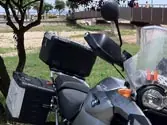
¿Dónde deberá estacionar una motocicleta en una vía urbana de doble sentido de circulación?
Where must a motorcycle park on a two-way urban road?
- AJunto al borde derecho de la vía.Next to the right-hand edge of the road.
- BJunto al borde derecho o izquierdo de la vía,Next to the right-hand or left-hand edge of the road.
- CEn el borde derecho o en la acera si esta tiene anchura suficiente,At the right-hand edge or on the pavement if it is wide enough.
ExplanationOn two-way urban roads, stopping and parking are done as close as possible to the right-hand edge of the carriageway. Under Article 156.2 of the General Traffic Regulations (RGC), as worded by RD 518/2026, only local councils, by municipal by-law, can regulate the parking of two-wheeled vehicles on pavements, as long as pedestrian traffic is not harmed or obstructed; the width of the pavement alone does not allow it.
¿Podemos estacionar en doble fila?
Can we double-park?
- ASí, si no existe sitio en las inmediaciones.Yes, if there is no space nearby.
- BNo, está prohibido.No, it is prohibited.
- CSólo por tiempo inferior a 2 minutos y señalizándolo con la luz de emergencia.Only for less than 2 minutes and signalling it with the hazard warning lights.
ExplanationDouble parking is always prohibited. On urban roads you may stop in a double row as long as traffic is not seriously obstructed and there is no space nearby. Remember that stopping means the driver deliberately halts the vehicle for less than 2 minutes without leaving it. If either of these 2 conditions is not met, it is parking and it cannot be done in a double row.
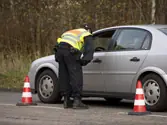
¿Pueden los agentes de tráfico inmovilizar un vehículo que supere el límite de humos establecidos?
Can traffic officers immobilise a vehicle that exceeds the set smoke emission limit?
- ANo, cuando el vehículo sea antiguo.No, when the vehicle is old.
- BNo, cuando circule por carretera.No, when it is travelling on an interurban road.
- CSí.Yes.
ExplanationTraffic officers have the authority to immobilise a vehicle if it emits more polluting gases than the law allows. This matters because the gases that vehicles emit, especially in excess, are harmful to both the environment and people's health.
Si nuestro vehículo va a ser adelantado por otro, ¿qué haremos?
If our vehicle is going to be overtaken by another, what will we do?
- APoner intermitente del lado derecho.Switch on the right indicator.
- BDisminuir la velocidad.Reduce speed.
- CCeñirme a la derecha de la calzada.Keep to the right of the carriageway.
ExplanationWhen a driver sees that they are going to be overtaken, they must leave as much space as possible, so generally they must keep to the right-hand edge of the carriageway.
Como norma general, al cambiar de dirección a la izquierda, el centro de la intersección debe quedar ...
As a general rule, when turning left, the centre of the junction must be…
- Aa la derecha.on your right.
- Ba la izquierda.on your left.
- Ces indiferente derecha o izquierda.on either side, it does not matter.
ExplanationAt junctions, when we want to turn left, we must leave the centre of the junction on our left.
¿Cómo avisará a los demás conductores de su intención de detenerse en el lado derecho de la calzada?
How will you let other drivers know that you intend to stop on the right-hand side of the carriageway?
- ALevantando el brazo con la palma hacia atrás.By raising your arm with the palm facing backwards.
- BEncendiendo el intermitente derecho.By switching on the right indicator.
- CEncendiendo las luces de emergencia.By switching on the hazard warning lights.
ExplanationUnder Article 109.2.c of the General Traffic Regulations (RGC), if you are coming to a halt in order to stop or park, besides warning that you are slowing down you must switch on the indicator on the side where you will stop, in this case the right. An arm with the palm facing backwards signals reversing.
En una autopista, ¿le está permitido parar el vehículo que conduce si desea descansar?
On a motorway (autopista), may you stop the vehicle you are driving if you want to rest?
- ASí, siempre que lo haga fuera de la calzada y de la parte transitable del arcén.Yes, provided you do so off the carriageway and off the usable part of the hard shoulder.
- BNo, excepto en los lugares habilitados al efecto.No, except in places provided for this purpose.
- CSí, en el arcén, con las luces de emergencia encendidas.Yes, on the hard shoulder, with the hazard warning lights on.
ExplanationUnder Article 94 of the RGC, stopping on motorways (autopistas) and dual carriageways (autovías) is prohibited except in areas provided for it, such as rest or service areas. To rest you must leave the road at one of these places and not stop on the hard shoulder.
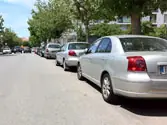
¿Podrá estacionar su vehículo en la calzada de una vía urbana?
Can you park your vehicle on the carriageway of an urban road?
- ANo, en la calzada no se puede estacionar nunca.No, you can never park on the carriageway.
- BSí.Yes.
- CSí, siempre que exista señal que lo permita.Yes, as long as there is a sign that allows it.
ExplanationOn urban roads you may stop and park on the carriageway and on the hard shoulder, even if it is usable, as long as a clear space of at least 3 metres is left. On interurban roads, this may only be done off the carriageway and off the usable part of the hard shoulder.
Para girar a la izquierda, es obligatorio acercarse al borde izquierdo de la calzada en las vías ...
To turn left, you must move close to the left-hand edge of the carriageway on roads…
- Ade doble sentido de circulación.with two-way traffic.
- Bde un solo sentido de circulación.with one-way traffic.
- Ccon más de un carril para uno de los sentidos de circulaciónwith more than one lane for one of the directions of traffic
ExplanationOn one-way roads, as a general rule, to turn left you must keep as close as possible to the left-hand edge of the carriageway, unless the road is laid out or signposted in a different way that shows how to make the turn. On two-way roads, however, when turning left the vehicle must position itself as close as possible to the centre line of the carriageway or to the line separating the two directions, without entering the opposite direction. And if the carriageway has three lanes with broken lines, the centre lane will be used to make the turn.
All topics
- Definitions
- Documents and penalty points
- The driver's condition
- Duties of drivers and pedestrians
- Vehicle safety devices
- Vehicle controls and equipment
- Vehicle lights and horn
- Traffic signs, markings and signals
- The road and its lanes
- Speed and distances
- Right of way
- Carrying passengers and loads
- Driving safely in difficult conditions
- Vehicle mechanics and maintenance
- Road accidents and first aid
- Defensive and eco-driving
Independent app: not affiliated with or endorsed by the DGT (Spain's Directorate-General for Traffic) or the Ministry of the Interior. The official exam is booked with the DGT and taken at its test centres. The questions here are practice material; the DGT's official question bank is not public.
Basado en datos de la Agencia Estatal Boletín Oficial del Estado (https://www.boe.es). Textos consolidados de carácter meramente informativo. La AEBOE no patrocina ni respalda este sitio.
Parte de las preguntas procede de los tests de la revista «Tráfico y Seguridad Vial» de la DGT, reproducidos con indicación de la fuente.