
DGT test · 982 questions
Manoeuvres · Page 15 of 20
Joining traffic, overtaking, turning, U-turns, reversing, stopping and parking: how and where to do them and when they are forbidden.
Questions in this topic, with answers
982 questions, 50 per page, with the correct answer and the explanation. Page 15 of 20.
¿Está permitido que el conductor de un turismo utilice el carril reservado para autobuses cuando la marca que lo delimita es discontinua?
Is a car driver allowed to use the bus lane when the line marking it is broken?
- ASí, pero sólo para girar a la derecha.Yes, but only to turn right.
- BNo, en ningún caso.No, never.
- CSí, para realizar alguna maniobra que no sea parar, estacionar, cambiar el sentido de la marcha o adelantar.Yes, to carry out a manoeuvre other than stopping, parking, making a U-turn or overtaking.
ExplanationIf the bus lane is marked by a broken line, other vehicles may enter it only to carry out permitted manoeuvres, such as turning or entering a garage, but not to stop, park, make a U-turn or overtake. If the line is solid, they may not enter it.
Si Ud. conduce un turismo arrastrando un remolque ligero por una carretera convencional, ¿qué velocidad no debe rebasar?
If you are driving a car towing a light trailer on a conventional road, what speed must you not exceed?
- A70 kilómetros por hora.70 kilometres per hour.
- B80 kilómetros por hora.80 kilometres per hour.
- C90 kilómetros por hora.90 kilometres per hour.
ExplanationSince the January 2019 reform, the maximum speed for cars with a trailer on all conventional roads is a single limit of 80 km/h.
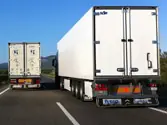
¿Cuándo podremos adelantar tras un vehículo que ya está adelantando a otro?
When can we overtake behind a vehicle that is already overtaking another?
- ANunca podremos hacerlo.We can never do it.
- BSiempre, si hay línea discontinua.Always, if there is a broken line.
- CCuando tengamos suficiente visibilidad de los vehículos que se acercan de frente.When we have enough visibility of oncoming vehicles.
ExplanationYou may overtake behind another vehicle that is already overtaking when you have enough visibility of oncoming vehicles.
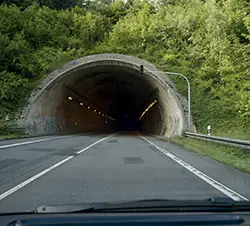
¿Puede adelantar en un túnel con un solo carril para cada sentido?
Can you overtake in a tunnel with only one lane in each direction?
- ANo, ya que su sentido de la marcha sólo dispone de un carril.No, because your direction of travel has only one lane.
- BSí, si en sentido contrario no circula ningún vehículo.Yes, if no vehicle is coming from the opposite direction.
- CNo; en los túneles siempre está prohibido adelantar.No; overtaking in tunnels is always prohibited.
ExplanationOvertaking is prohibited in tunnels with only one lane in each direction: the manoeuvre would mean moving into the opposite direction in an enclosed space with no escape route. With two or more lanes in each direction it is allowed.
En vías con más de un carril por sentido. ¿Es obligatorio el cambio completo de carril al adelantar a un ciclista?
On roads with more than one lane in each direction, must you move completely into the next lane when overtaking a cyclist?
- ASí, tanto en vías urbanas como interurbanas.Yes, both on urban roads and on roads outside built-up areas.
- BNo es necesario, siempre que se mantenga la distancia lateral de 1,5 metros.It is not necessary, as long as you keep the side distance of 1.5 metres.
- CEn vía urbana no, pero en vía interurbana sí es obligatorio.Not on urban roads, but it is compulsory on roads outside built-up areas.
ExplanationAccording to Article 85.4 of the General Traffic Regulations (RGC) (as worded by RD 518/2026), when overtaking cyclists on a carriageway with more than one lane in each direction, you must move completely into the next lane; the rule does not distinguish between urban roads and roads outside built-up areas.
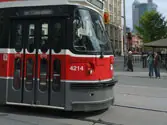
¿Se podrá en algún caso adelantar por la derecha a un tranvía?
Can you ever overtake a tram on the right?
- ASí, solo en el caso de una vía urbana de dos sentidos de circulación y en la que el tranvía circule por el centro.Yes, only on a two-way urban road where the tram runs in the centre.
- BSí, en cualquier vía, si el tranvía circula por el centro y es obligatorio, si ésta es de doble sentido.Yes, on any road, if the tram runs in the centre, and it is compulsory if the road is two-way.
- CNo, en ningún caso podemos adelantar por la derecha.No, we can never overtake on the right.
ExplanationAs an exception to the general rule of overtaking on the left, you must overtake on the right when, on two-way roads, the tram runs in the centre, both in and outside built-up areas; or when the road is one-way, in which case you may overtake on either the right or the left.
Al salir de una autopista después de haber circulado por ella un largo tiempo...
When you leave a motorway after driving on it for a long time...
- ADisminuye la sensación de velocidad.your sense of speed is reduced.
- BAumenta la sensación de velocidad.your sense of speed increases.
- CLa sensación de velocidad será la real, es decir la que marca el velocímetro.your sense of speed will be accurate, that is, what the speedometer shows.
ExplanationOne of the features of motorway driving is monotony, and it leads drivers to keep high speeds for a long time. This reduces the sense of speed, so we often do not slow down enough when leaving the motorway and joining a road where we must drive more slowly.
Al incorporarse a una autopista, los conductores deben...
When joining a motorway (autopista), drivers must...
- Adetenerse siempre al final del carril.always stop at the end of the lane.
- Baumentar la velocidad para incorporarse rápidamente y no ceder el paso a los vehículos que circulan por la autopista.speed up to join quickly and not give way to vehicles on the motorway.
- Ctener en cuenta la posición, trayectoria y velocidad de los vehículos que puedan aproximarse.take into account the position, path and speed of vehicles that may be approaching.
ExplanationA driver joining a motorway must make sure they can do so safely, giving way and taking into account the position, path and speed of other vehicles (Article 72.1 of the General Traffic Regulations). You stop only if necessary, and at the start of the acceleration lane, not always at the end (Article 72.4).
Va a adelantar a un ciclista en una carretera convencional estrecha con línea continua. ¿Qué es lo correcto?
You are going to overtake a cyclist on a narrow conventional road with a solid line. What is the correct thing to do?
- AEsperar a poder dejar la separación de seguridad, aunque implique invadir en parte el otro sentido si es seguro y no hay tráfico de frente.Wait until you can leave the safe side gap, even if this means partly moving into the other direction, if it is safe and there is no oncoming traffic.
- BAdelantar pegado al ciclista sin separación para no invadir el otro carril.Overtake close to the cyclist with no gap so as not to move into the other lane.
- CTocar el claxon y adelantar rápido.Sound the horn and overtake quickly.
ExplanationTo overtake a cyclist you must keep the safe side gap, and you may use part of the opposite direction when it is safe.
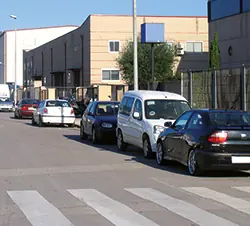
Una vez inmovilizado el vehículo, los usuarios deberán entrar o salir...
Once the vehicle has stopped, people must get in or out...
- APor cualquier lado del vehículo, tomando las debidas precauciones.On any side of the vehicle, taking due care.
- BPor el lado más próximo a la acera o al arcén, como norma general.On the side nearest the pavement or the hard shoulder, as a general rule.
- CPor el lado del conductor, siempre.On the driver's side, always.
ExplanationAs a general rule, you get in and out on the side nearest the pavement or the hard shoulder: this way you avoid stepping onto the carriageway and the risk of being hit by another vehicle when opening the door.
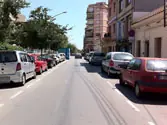
¿Se podrá efectuar una parada en doble fila habiendo sitio en las inmediaciones para aproximarnos a la acera?
May we stop double-parked if there is space nearby to pull in to the kerb?
- ASí, siempre que no esté más de dos minutos.Yes, as long as you are there no more than two minutes.
- BNo.No.
- CSí, siempre que no esté más de dos minutos y no abandone el vehículo.Yes, as long as you are there no more than two minutes and do not leave the vehicle.
ExplanationStopping double-parked is allowed as long as it does not obstruct traffic and there is no space nearby. Remember that stopping must be for less than 2 minutes and without leaving the vehicle. If these 2 conditions are not met, it becomes parking and is therefore prohibited when double-parked.
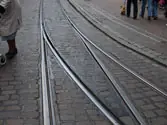
Sobre los raíles de tranvía, ¿qué está prohibido?
On tram rails, what is prohibited?
- AParar y estacionar.Stopping and parking.
- BEstacionar, solamente.Only parking.
- CCircular.Driving.
ExplanationOn level crossings, on tram rails, or in places where it would get in the way of trams, stopping and parking are prohibited.
Por lo general, al girar a la izquierda, el centro de la intersección debe quedar ...
In general, when turning left, the centre of the junction must be...
- Aa la derecha.on your right.
- Ba la izquierda.on your left.
- CDa igual, a la derecha o a la izquierda.It does not matter, on the right or on the left.
ExplanationWhen turning left, the driver must keep the centre of the junction on their left. This is because the General Traffic Regulations (RGC), in the article setting the rules for turning, say that 'if the turn is to the left, the driver will keep the centre of the junction on their left'. This rule is designed to keep traffic safe and flowing, stopping vehicles from moving into the opposite direction.
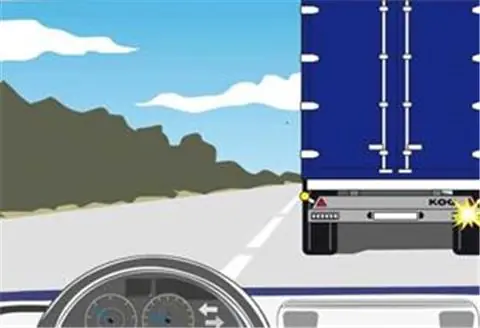
Antes de iniciar un adelantamiento, el conductor está obligado a comprobar que...
Before starting to overtake, the driver must check that...
- Ael vehículo que circule delante nos avise con señales acústicas de la posibilidad de hacerlo.the vehicle in front tells us with sound signals that we can do so.
- Bla calzada tiene más de un carril para su sentido.the carriageway has more than one lane in their direction.
- Cdispone de velocidad suficiente.they have enough speed.
ExplanationBefore overtaking you must check that you have enough space and enough speed to complete the manoeuvre quickly and without risk, and that nobody has started to overtake you. There does not need to be more than one lane, and the vehicle in front does not need to tell you.
Está prohibido girar a la izquierda cuando no hay...
Turning left is prohibited when there is no...
- Auna señal que lo permita.sign allowing it.
- Bvisibilidad suficiente.sufficient visibility.
- Cun lugar especialmente habilitado para hacerlo.specially designated place to do it.
ExplanationA driver who wants to turn left must refrain from doing so when there is not enough visibility (Article 74.1 of the RGC). You do not need a sign allowing it or a specially designated place to be able to turn.
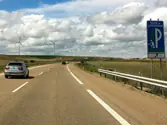
¿Puede adelantar por la derecha al vehículo gris?
May you overtake the grey vehicle on the right?
- ASí.Yes.
- BNo.No.
- CSí, si el vehículo gris circula por debajo de la velocidad mínima.Yes, if the grey vehicle is travelling below the minimum speed.
ExplanationOutside built-up areas, overtaking must be done on the left. Overtaking on the right is allowed only when the vehicle being overtaken is signalling that it is going to turn or stop on its left, or in built-up areas on carriageways with two or more lanes in each direction, and neither case applies here.
Si un camión no puede acercarse al borde derecho de la calzada, ¿cómo indica su conductor que se le puede adelantar con seguridad?
If a lorry cannot move over to the right-hand edge of the carriageway, how does its driver show that it can be overtaken safely?
- AMoviendo el brazo extendido hacia adelante.By moving their outstretched arm forwards.
- BCon el intermitente izquierdo.With the left indicator.
- CReduciendo bruscamente la marcha.By slowing down sharply.
ExplanationUnder Article 86.1 of the General Traffic Regulations (RGC), if the driver of a heavy vehicle cannot keep fully to the right-hand edge but overtaking can be done safely, they show this by extending their arm horizontally and moving it repeatedly from back to front, or with the right indicator. The left indicator announces a move to the left.
Circulando por una vía interurbana, ¿dónde se situará un ciclomotor para cambiar de dirección a la izquierda?
On an interurban road, where must a moped position itself to turn left?
- ASiempre en el carril más próximo al lado izquierdo.Always in the lane closest to the left side.
- BSiempre a la derecha, fuera de la calzada, aunque exista un carril acondicionado para el giro.Always on the right, off the carriageway, even if there is a lane set up for the turn.
- CSi existe un carril especialmente acondicionado para el giro a la izquierda, desde allí.If there is a lane specially set up for turning left, in that lane.
ExplanationOn interurban roads, if there is a lane specially set up for turning left, the moped must use it. Only when there is none must it position itself on the right, off the carriageway whenever possible, and start the turn from there (Article 76.2 of the General Traffic Regulations, RGC).
¿Se puede conducir marcha atrás en una autopista?
May you reverse on a motorway (autopista)?
- ANo.No.
- BSí, para salir de la autopista.Yes, to leave the motorway.
- CSí, si se ha pasado la salida y el arcén está libre.Yes, if you have missed the exit and the hard shoulder is clear.
ExplanationNo. Article 80.3 of the General Traffic Regulations prohibits reversing on motorways and dual carriageways, including to get back to an exit you have missed; in that case you must continue to the next exit.
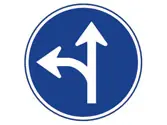
En una intersección así señalizada, ¿se podrá realizar un cambio de sentido de la marcha?
At a junction with these signs, may you make a U-turn?
- ASí.Yes.
- BNo.No.
- CSí, si se realiza con precaución.Yes, if you do it with care.
ExplanationThe arrows show the only directions vehicles may take, and they prohibit making a U-turn.
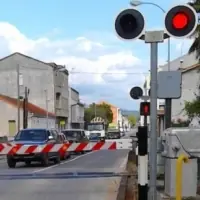
En un paso a nivel, ¿está permitido realizar un cambio de sentido?
On a level crossing, is it allowed to make a U-turn?
- ASí, cuando las barreras no estén en movimiento.Yes, when the barriers are not moving.
- BSí, en los pasos a nivel sin barreras.Yes, on level crossings without barriers.
- CNo.No.
ExplanationA U-turn is prohibited in any situation where you cannot check that you will not endanger or obstruct other road users, for example on bends and brows of hills with reduced visibility, or in fog or heavy rain. A U-turn is also prohibited: - On level crossings (it is not prohibited near them). - In tunnels, underpasses and stretches of road covered by the 'Tunnel' sign. - On motorways (autopistas) and dual carriageways (autovías), except in the places provided for it. - On one-way carriageways and stretches of road. - On all stretches of road where overtaking is prohibited, unless the U-turn is expressly allowed.
¿Podremos efectuar un cambio de sentido en una intersección así señalizada?
May we make a U-turn at a junction with this sign?
- ASí, por permitirlo la señal.Yes, because the sign allows it.
- BNo, por prohibirlo la señal.No, because the sign prohibits it.
- CSí, por obligarlo la señal.Yes, because the sign requires it.
ExplanationThe sign in the question shows that the only directions allowed at the junction are going straight ahead or turning left. It does not allow making a U-turn.
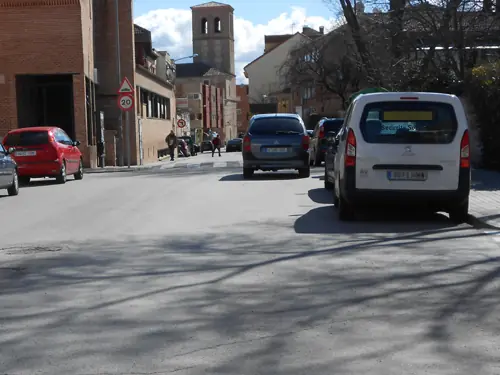
¿Dónde está prohibido parar?
Where is stopping prohibited?
- ADelante de los vados señalizados de forma correcta.In front of properly marked vehicle entrances.
- BDonde provoques riesgo a otros usuarios.Where you create a risk for other road users.
- CCerca de los pasos de peatones.Near pedestrian crossings.
ExplanationYou cannot stop where stopping creates a risk or obstacle for others, for example on bends or brows of hills with no visibility. In front of a vehicle entrance you may stop, but not park, and the ban applies to the pedestrian crossing itself, not to the area near it.
En los carriles para bicicletas está prohibido...
In cycle lanes, it is prohibited…
- Aestacionar solamente.only to park.
- Bparar y estacionar.to stop and to park.
- Cparar únicamente.only to stop.
ExplanationStopping is prohibited in lanes reserved for bicycles (Article 94.1.h of the General Traffic Regulations) and, wherever stopping is prohibited, parking is prohibited too (Article 94.2.a). So in a cycle lane you may neither stop nor park.
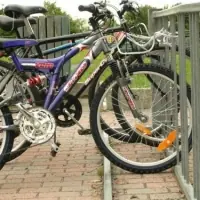
¿Cuál es el principal problema de los vehículos de dos ruedas respecto de los de cuatro?
What is the main problem with two-wheeled vehicles compared with four-wheeled ones?
- ASon menos frágiles los de 2 ruedasTwo-wheelers are less fragile
- BSon más estables los de 2 ruedasTwo-wheelers are more stable
- CSon menos visibles los de 2 ruedasTwo-wheelers are less visible
ExplanationOne of the main problems with two-wheeled vehicles, such as motorcycles or bicycles, is that they are less visible than four-wheeled vehicles because of their size. They are also less stable and more fragile, so you must take special care when turning and overtaking.
¿Los conductores están obligados a advertir al resto de usuarios de la vía las maniobras que van a efectuar?
Must drivers warn other road users of the manoeuvres they are about to make?
- ASí, con la señalización luminosa del vehículo.Yes, using the vehicle's light signals.
- BSí, mediante el alumbrado del vehículo pero sólo durante la noche.Yes, using the vehicle's lights, but only at night.
- CNo, solo están obligados en las autopistas.No, they only have to do so on motorways (autopistas).
ExplanationDrivers must warn other road users of the manoeuvres they are about to make. As a general rule, these warnings are given with the vehicle's light signals or, if not possible, with the arm.
Ud. ha adelantado a otro turismo en una intersección regulada con un semáforo en verde. ¿Es correcto su comportamiento?
You have overtaken another car at a junction controlled by a green traffic light. Is this correct?
- ASí, porque en este caso tengo prioridad de paso en la intersección.Yes, because in this case I have right of way at the junction.
- BNo, porque en las intersecciones está prohibido adelantar siempre.No, because overtaking at junctions is always prohibited.
- CNo, porque sólo está permitido adelantar en las intersecciones con circulación giratoria o en las glorietas.No, because overtaking is only allowed at junctions with circular traffic or at roundabouts.
ExplanationIt is correct to overtake at a junction controlled by a green traffic light because, in this case, the traffic light shows that you have right of way. This means you can continue and overtake another vehicle as long as you do it safely and without putting other road users at risk.
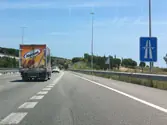
Al incorporarse a una autopista, los conductores deberán...
When joining a motorway (autopista), drivers must...
- Adetenerse siempre al final del carril.always stop at the end of the lane.
- Baumentar la velocidad para incorporarse rápidamente, no siendo obligatorio ceder el paso a los vehículos que circulen por la autopista.speed up to join quickly; they do not have to give way to vehicles travelling on the motorway.
- Ctener en cuenta la posición, trayectoria y velocidad de los vehículos que puedan aproximarse.take into account the position, path and speed of vehicles that may be approaching.
ExplanationA driver who wants to use the acceleration lane to join a motorway (autopista) or dual carriageway (autovía), or any other road with an acceleration lane, must watch the traffic, making sure at the start of that lane that they can join without danger to other drivers and users on the carriageway, taking into account their position, path and speed, and even stopping at the start of the lane, if necessary, to give way.
¿Los conductores están exentos de usar el cinturón de seguridad al efectuar la maniobra de marcha atrás o de estacionamiento?
Are drivers exempt from wearing a seat belt when reversing or parking?
- ANo, el uso del cinturón de seguridad es obligatorio en todo caso.No, wearing a seat belt is compulsory in all cases.
- BSí, pero solo en vías dentro de poblado.Yes, but only on roads in built-up areas.
- CSí, en todo tipo de vías.Yes, on all types of road.
ExplanationDrivers are exempt from wearing a seat belt when reversing or parking, both on urban roads and on roads outside built-up areas.
¿Se permite adelantar por la derecha si hay suficiente espacio?
Is overtaking on the right allowed if there is enough space?
- ANo, en ningún caso.No, never.
- BSí, en vías urbanas que tengan dos o más carriles marcados.Yes, on urban roads with two or more marked lanes.
- CSolo para tranvías.Only for trams.
ExplanationIn built-up areas, on carriageways with at least two lanes in the same direction marked out by longitudinal lines, overtaking on the right is allowed after checking that there is no danger (Article 82.3 of the General Traffic Regulations). It is also allowed when overtaking a vehicle that is about to turn left, and trams running along the middle of the road.
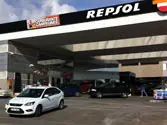
El turismo blanco sale de una gasolinera para incorporarse a la circulación, en caso necesario, ¿cuándo tiene que ceder el paso?
The white car is leaving a petrol station to join the traffic. If necessary, when must it give way?
- ACuando se incorpora por la derecha.When it joins from the right.
- BCuando se incorpora por la izquierda.When it joins from the left.
- CCuando se incorpore por la derecha o por la izquierda.When it joins from the right or from the left.
ExplanationWhen we join a public road from a service area, we will give way to vehicles travelling on that road, whether they are approaching from the right or from the left. As a general rule, joining the traffic after being stopped or parked, from a service area or from an adjoining property, must be done: - Without getting in the way of other drivers and road users, to whom you must give way, taking into account their position, path and speed. - Without forcing approaching vehicles to swerve sharply. - At a suitable speed. - Without creating danger for other road users.
Circulando por poblado por el carril que mejor convenga a mi destino, ¿en qué circunstancias podremos abandonarlo?
When driving in a built-up area in the lane that best suits my destination, in what circumstances can we leave it?
- ASiempre que lo creamos conveniente.Whenever we see fit.
- BSólo para cambiar de dirección.Only to turn.
- CPodré abandonarlo para cambiar de dirección, adelantar, parar o estacionar.I can leave it to turn, overtake, stop or park.
ExplanationWhen we are driving in the lane that best suits our destination, we must not leave it except to get ready to turn, overtake, stop or park.
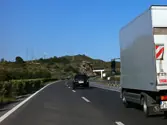
¿Hacia dónde tiende a irse su vehículo al adelantar a otro de grandes dimensiones, si sopla fuerte viento lateral de la derecha?
Which way does your vehicle tend to move when overtaking a large vehicle if a strong side wind is blowing from the right?
- AHacia el vehículo al que adelanto.Towards the vehicle I am overtaking.
- BHacia la izquierda de la calzada.Towards the left of the carriageway.
- CEl viento no afectaría en este caso, ya que el vehículo al que adelanto me oculta del viento.The wind would have no effect in this case, because the vehicle I am overtaking shields me from the wind.
ExplanationWith a strong wind from the right, the driver compensates by turning the steering wheel slightly to the right. When overtaking a large vehicle, it suddenly shields you from the wind, and that correction makes your vehicle tend to veer towards the vehicle being overtaken.
En una vía urbana, para advertir al conductor del vehículo de delante su intención de adelantarlo, ¿puede utilizar las señales acústicas?
On an urban road, can you use sound signals to warn the driver in front that you intend to overtake?
- ASólo si las luces de mi vehículo están averiadas.Only if my vehicle's lights are faulty.
- BSí, salvo cuando hay una señal que lo prohíbe.Yes, except when a sign prohibits it.
- CNo, está prohibido.No, it is prohibited.
ExplanationOn an urban road, to warn the driver in front that you intend to overtake, you may only use light signals, usually by flashing your headlights. Using sound signals for this purpose is not allowed in built-up areas. Outside built-up areas, however, you may use both forms of warning: lights and sound signals, always in moderation and without disturbing or confusing other road users.
¿Una motocicleta puede parar en la parte transitable del arcén en una vía interurbana?
Can a motorcycle stop on the driveable part of the hard shoulder on a road outside built-up areas?
- ASí.Yes.
- BSí, porque ocupa poco espacio.Yes, because it takes up little space.
- CNo.No.
ExplanationYou must always stop outside the carriageway and outside the driveable part of the hard shoulder.
¿Se puede entrar en la circulación marcha atrás invadiendo una intersección?
May you join traffic in reverse by entering a junction?
- ASí, si la distancia no supera los 15 metros.Yes, if the distance does not exceed 15 metres.
- BSí, pero a una velocidad reducida que permita detenerse si existe algún peligro.Yes, but at a low speed that lets you stop if there is any danger.
- CNo, en marcha atrás no se puede invadir una intersección.No, you may not enter a junction in reverse.
ExplanationReversing as a manoeuvre that complements joining traffic may not exceed 15 metres or enter a junction (Article 80.2 of the General Traffic Regulations). Going slowly or covering less than 15 metres does not make it allowed.
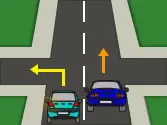
En esta vía de doble sentido de circulación, ¿es correcta la posición del coche azul claro si va a girar a la izquierda?
On this two-way road, is the light blue car in the correct position if it is going to turn left?
- ASí.Yes.
- BNo.No.
- CSí, porque así facilita el paso a los que siguen de frente.Yes, because this way it lets the vehicles going straight on get past.
ExplanationOn a two-way road, to turn left you must keep close to the centre line without moving into the opposite lane. The light blue car has moved into the lane for the opposite direction, so its position is not correct.
El conductor que estacione un conjunto de vehículos formado por un turismo y un remolque, ¿está obligado a dejarlo debidamente calzado?
Must a driver parking a combination of vehicles made up of a car and a trailer leave it properly chocked?
- ASólo cuando estacione en una pendiente sensible.Only when parking on a noticeable slope.
- BNo, porque solamente es obligatorio calzar los vehículos de más de 3.500 kg de MMA y los autobuses.No, because only vehicles with a MAM over 3,500 kg and buses must be chocked.
- CSí, en todo caso.Yes, in all cases.
ExplanationCombinations of vehicles, such as a car with a trailer, must be left chocked when parked on a noticeable slope, as must vehicles over 3,500 kg and buses. On flat ground or a slight slope it is not compulsory.
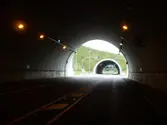
¿Está permitido adelantar en el interior de un túnel?
Is overtaking allowed inside a tunnel?
- ANo.No.
- BSí, si hay más de un carril en el mismo sentido de la marcha.Yes, if there is more than one lane in the same direction.
- CSí, cuando los sentidos están separados.Yes, when the directions are separated.
ExplanationEven if there is no sign prohibiting it, in two-way tunnels or underpasses overtaking is prohibited, unless there is more than one lane in your direction, in which case you may overtake without moving into the opposite direction. So overtaking is always prohibited in tunnels, underpasses and stretches of road covered by the 'Tunnel' sign where there is only one lane in the direction of the vehicle that wants to overtake.
En una vía urbana de doble sentido de circulación, ¿en qué lado podremos efectuar una parada?
On a two-way urban road, on which side can we stop?
- ATanto en el lado derecho como en el lado izquierdo.On either the right-hand or the left-hand side.
- BSolo en el lado derecho.Only on the right-hand side.
- CSolo en el lado izquierdo.Only on the left-hand side.
ExplanationOn two-way urban roads, you stop by placing the vehicle as close as possible to the right-hand edge of the carriageway. When the carriageway is one-way, we may also stop on the left-hand side.
¿Cómo debe adelantar a un ciclomotor en una vía urbana?
How must you overtake a moped on an urban road?
- ASin salir de su carril, si la anchura de la calzada lo permite.Without leaving your lane, if the width of the carriageway allows it.
- BManteniendo una distancia lateral proporcional a la velocidad y a la anchura de la vía.Keeping a side distance in proportion to the speed and the width of the road.
- CManteniendo una distancia lateral mínima de 1,50 metros.Keeping a minimum side distance of 1.50 metres.
ExplanationAccording to Article 85.4 of the General Traffic Regulations (RGC) (as worded by RD 518/2026), when overtaking a moped you must use part or all of the next lane or the opposite lane and keep a safety gap of at least 1.5 metres, also on urban roads.
Antes de dar marcha atrás, debe comprobar que...
Before reversing, you must check that...
- Apuede hacerlo sin poner en peligro a otros usuarios de la vía. Si es necesario, otra persona puede darle indicaciones.you can do so without endangering other road users. If necessary, another person can give you directions.
- Bno va a recorrer más de 50 metros.you are not going to cover more than 50 metres.
- Ctiene visibilidad suficiente.you have enough visibility.
ExplanationReversing must be done slowly, after signalling and after checking, even by getting out or following another person's directions if necessary, that it will not endanger other road users (Article 81.1 of the RGC).
¿Está permitido adelantar a un ciclista dejando 1 metro de separación?
Is it allowed to overtake a cyclist leaving a gap of 1 metre?
- ASí, es suficienteYes, it is enough
- BNo, deben dejarse 1,5 metrosNo, you must leave 1.5 metres
- CNo, deben dejarse 2 metrosNo, you must leave 2 metres
ExplanationWhen overtaking cyclists you must leave a minimum gap of 1.5 metres.
Si estacionamos en llano, ¿qué tenemos que hacer?
If you park on level ground, what must you do?
- ADejar colocada la primera velocidad, parar el motor y dejar accionado el freno de estacionamiento.Leave it in first gear, switch off the engine and apply the parking brake.
- BDejar una de las ruedas directrices apoyadas en el bordillo de la acera.Rest one of the steering wheels against the kerb.
- CParar el motor, dejar accionado el freno de estacionamiento y adoptar las precauciones necesarias para impedir su uso sin autorización.Switch off the engine, apply the parking brake and take the necessary precautions to prevent unauthorised use.
ExplanationYou must switch off the engine, take the necessary precautions to prevent unauthorised use and apply the parking brake. If you park on an uphill slope, leave it in first gear; on a downhill slope, leave it in reverse. As in this case you are parking on level ground, you do not need to leave it in any gear.
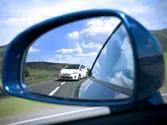
Si observa que el vehículo blanco acaba de iniciar un desplazamiento al carril de la izquierda, ¿puede iniciar la maniobra de adelantamiento?
If you see that the white vehicle has just started moving into the left lane, may you start overtaking?
- ANo, porque tiene preferencia.No, because it has priority.
- BSí, si he señalizado mi maniobra antes que él.Yes, if I signalled my manoeuvre before it did.
- CSí, debe realizar la maniobra lo antes posible para no entorpecer al otro vehículo.Yes, you must do it as soon as possible so as not to obstruct the other vehicle.
ExplanationBefore overtaking, you must make sure that no driver behind you in the same lane has already started to overtake you (Article 84.3 of the General Traffic Regulations). The white vehicle, which is behind you, has priority: you must wait for it to finish.
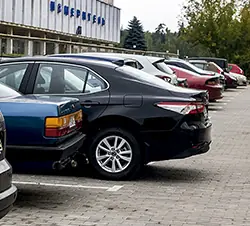
Cuando la luz de marcha atrás esté averiada, ¿cómo debe indicar que va a dar marcha atrás?
When the reversing light is faulty, how must you show that you are going to reverse?
- AMoviendo el brazo de arriba abajo.By moving the arm up and down.
- BCon el brazo extendido y la palma de la mano hacia atrás.With the arm held out and the palm of the hand facing backwards.
- CAdvirtiéndolo con el claxon.By warning with the horn.
ExplanationIf the reversing light is faulty, the manoeuvre is signalled with the arm held out and the palm of the hand facing backwards: arm signals replace light signals when these fail.
En un túnel con más de un carril en el mismo sentido de circulación, ¿se permite adelantar?
In a tunnel with more than one lane in the same direction, is overtaking allowed?
- ANo. En los túneles no se permite adelantar.No. Overtaking is not allowed in tunnels.
- BSí. Se permite adelantar.Yes. Overtaking is allowed.
- CSí, pero solo a camiones y autobuses.Yes, but only lorries and buses.
ExplanationUnder Articles 87.1.d and 95.6 of the General Traffic Regulations, in tunnels overtaking is only prohibited when there is a single lane in your direction. If there is more than one lane in the same direction, you may overtake any vehicle without going into the opposite direction.
¿En qué caso el estacionamiento perturba gravemente el tráfico?
In which case does parking seriously obstruct traffic?
- ACuando la distancia entre el vehículo y el borde contrario de la calzada es menor de 5 metros.When the distance between the vehicle and the opposite edge of the carriageway is less than 5 metres.
- BCuando se estaciona en la mediana, en los separadores, en las isletas u otros elementos destinados a canalizar el tráfico.When parking on the central reservation, on dividers, on traffic islands or on other features used to channel traffic.
- CCuando se aparca en una zona reservada para carga y descarga fuera de las horas de uso.When parking in a loading and unloading area outside its hours of use.
ExplanationArticle 91.2 of the General Traffic Regulations considers that parking on central reservations, dividers, traffic islands or other traffic channelling features seriously obstructs traffic. The minimum distance to the opposite edge is 3 metres, not 5, and loading and unloading areas only count during their hours of use.
¿Podremos advertir nuestro propósito de adelantar usando las señales acústicas?
Can we use sound signals to warn that we intend to overtake?
- ANo, en ningún caso.No, never.
- BSí, en algunos casos, tanto dentro como fuera de poblado.Yes, in some cases, both in and outside built-up areas.
- CSí, en algunos casos pero solo fuera de poblado.Yes, in some cases, but only outside built-up areas.
ExplanationAccording to Article 110 of the General Traffic Regulations (RGC), sound signals may only be used in specific cases, including, outside built-up areas, to warn the driver of another vehicle that you intend to overtake them.
¿En algún caso se puede adelantar por la derecha?
Can you ever overtake on the right?
- ANo, en ningún caso.No, never.
- BSí, dentro de poblado.Yes, in built-up areas.
- CSolo fuera de poblado, en las autopistas con mucho tráfico.Only outside built-up areas, on motorways (autopistas) with heavy traffic.
ExplanationAs a general rule, you overtake on the left of the vehicle you want to overtake. As an exception, overtaking on the right is allowed in the following cases: - If there is enough space, when the driver of the vehicle you want to overtake is clearly signalling that they intend to turn left or stop on that side. - On two-way roads, when overtaking trams running in the central area. - In built-up areas, when there is more than one lane in the same direction, marked out by road markings.
All topics
- Definitions
- Documents and penalty points
- The driver's condition
- Duties of drivers and pedestrians
- Vehicle safety devices
- Vehicle controls and equipment
- Vehicle lights and horn
- Traffic signs, markings and signals
- The road and its lanes
- Speed and distances
- Right of way
- Carrying passengers and loads
- Driving safely in difficult conditions
- Vehicle mechanics and maintenance
- Road accidents and first aid
- Defensive and eco-driving
Independent app: not affiliated with or endorsed by the DGT (Spain's Directorate-General for Traffic) or the Ministry of the Interior. The official exam is booked with the DGT and taken at its test centres. The questions here are practice material; the DGT's official question bank is not public.
Basado en datos de la Agencia Estatal Boletín Oficial del Estado (https://www.boe.es). Textos consolidados de carácter meramente informativo. La AEBOE no patrocina ni respalda este sitio.
Parte de las preguntas procede de los tests de la revista «Tráfico y Seguridad Vial» de la DGT, reproducidos con indicación de la fuente.