
DGT test · 982 questions
Manoeuvres · Page 12 of 20
Joining traffic, overtaking, turning, U-turns, reversing, stopping and parking: how and where to do them and when they are forbidden.
Questions in this topic, with answers
982 questions, 50 per page, with the correct answer and the explanation. Page 12 of 20.
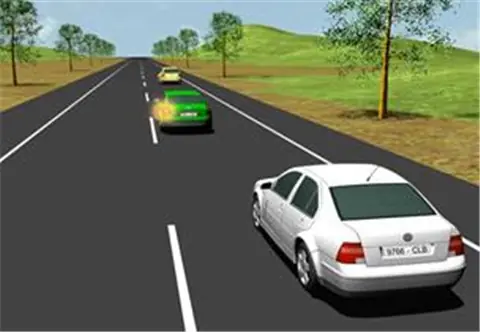
Al realizar una maniobra, ¿cuándo debe avisar a los usuarios de la vía?
When making a manoeuvre, when must you warn other road users?
- ANo es obligatorio avisar.It is not compulsory to warn them.
- BUna vez iniciada la maniobra.Once the manoeuvre has started.
- CAntes de iniciar la maniobra y con tiempo suficiente.Before starting the manoeuvre and in good time.
ExplanationUnder Article 109 of the General Traffic Regulations, manoeuvres must be signalled before starting them and early enough for others to adjust. Signalling once the manoeuvre has already started does not help to prevent danger.
¿Se debe facilitar la incorporación a la circulación de otros vehículos?
Should you make it easier for other vehicles to join the traffic?
- ANo.No.
- BSí, pero sólo en vías urbanas.Yes, but only on urban roads.
- CSí, especialmente a los vehículos de transporte colectivo de viajeros a la salida de una parada señalizada.Yes, especially public passenger transport vehicles pulling out of a marked stop.
ExplanationWhen we see a driver trying to join the traffic, we must make the manoeuvre easier for them as far as possible, especially if it is a bus trying to pull out of a marked stop. In built-up areas, to help public passenger transport vehicles pulling out of marked stops, drivers of other vehicles must: - move sideways when possible, - reduce their speed, as long as they can do so without risk, without braking sharply and signalling correctly, and - stop, if necessary, so that they can join the traffic. Making the manoeuvre easier does not mean we have to stop to let the other vehicle go; we can adjust our speed or change lane to help it join.
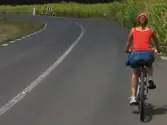
¿Se podrá adelantar a un ciclista donde esté prohibido el adelantamiento?
Can you overtake a cyclist where overtaking is prohibited?
- ANo, en ningún caso.No, never.
- BSí, pero sin invadir el sentido contrario.Yes, but without moving into the opposite direction.
- CSí.Yes.
ExplanationEven where overtaking is prohibited, you may overtake cyclists, keeping a side distance of 1.50 metres, moving into the opposite direction.
¿Está permitido dar la vuelta en un tramo con visibilidad reducida?
Are you allowed to turn round on a stretch with reduced visibility?
- ASí, si no hay tráfico en sentido contrario.Yes, if there is no oncoming traffic.
- BSí, señalizando la maniobra.Yes, if you signal the manoeuvre.
- CNo, está prohibido.No, it is prohibited.
ExplanationArticle 79.1 of the General Traffic Regulations prohibits U-turns in any situation that prevents you from checking that the manoeuvre can be done safely, and on stretches where overtaking is prohibited. With reduced visibility it is prohibited even if you signal or cannot see anyone.
Si el vehículo que circula detrás de nosotros señaliza su intención de adelantarnos, debemos…
If the vehicle behind us signals that it intends to overtake us, we must…
- ADisminuir la velocidad.Slow down.
- BApartarnos al arcén.Move onto the hard shoulder.
- CCeñirnos al borde derecho de la calzada.Keep close to the right-hand edge of the carriageway.
ExplanationWe must allow overtaking and make it easier as soon as we notice that we are about to be overtaken. To do this, we will keep close to the right of the carriageway.
¿Podemos señalizar con el brazo que nos disponemos a realizar una maniobra?
Can we use our arm to signal that we are about to make a manoeuvre?
- ANo, si no se hace conjuntamente con las luces.No, unless it is done together with the lights.
- BSí.Yes.
- CNo en ningún caso.No, never.
ExplanationThe driver must use visual signals to warn of their intention to make a manoeuvre. These signals can be made either with the indicator or with the arm.
¿Podrá una motocicleta parar en el arcén transitable de una vía interurbana?
May a motorcycle stop on the passable hard shoulder of an interurban road?
- ASí.Yes.
- BNo.No.
- CSí, si lleva encendidas las luces de emergencia.Yes, if it has its hazard warning lights on.
ExplanationStopping and parking on the passable hard shoulder of an interurban road are prohibited.
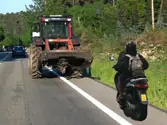
El ciclomotor, ¿podría adelantar al tractor?
Could the moped overtake the tractor?
- ASí, pero sin salirse del arcén.Yes, but without leaving the hard shoulder.
- BNo, en ningún caso.No, never.
- CSí, siempre que la duración de la marcha de los vehículos colocados paralelamente no exceda de 15 segundos, o el recorrido efectuado en dicha forma no supere los 200 metros.Yes, as long as the vehicles do not travel side by side for more than 15 seconds or cover more than 200 metres like that.
ExplanationVehicles that must travel on the hard shoulder, except bicycles, are prohibited from overtaking if they travel side by side for more than 15 seconds or for more than 200 metres.
Al estacionar nuestro vehículo en una pendiente ascendente ¿qué marcha dejaremos colocada?
When parking our vehicle on an uphill slope, which gear will we leave engaged?
- ALa primera velocidad.First gear.
- BLa marcha atrás.Reverse gear.
- CLa segunda velocidad.Second gear.
ExplanationWhen parking our vehicle on an uphill slope, we will leave first gear engaged. When the slope is downhill, we will leave it in reverse. For vehicles with an automatic gearbox, we will leave it in position P, whether the slope is uphill or downhill.
En una vía urbana de sentido único, ¿se permite estacionar en el lado...?
On a one-way urban road, on which side are you allowed to park?
- Aa la derecha o a la izquierda, fuera de la calzada o del arcén.On the right or the left, off the carriageway or hard shoulder.
- Ba la derecha.On the right.
- Ca la derecha o a la izquierda.On the right or the left.
ExplanationOn urban roads, when stopping or parking on the carriageway, the vehicle is placed next to the right-hand edge, except on one-way roads, where it may also be placed on the left-hand side (Article 90.2 of the General Traffic Regulations).
Cuando se circula marcha atrás para estacionar...
When reversing to park...
- Adebe conectar la señal de emergencia.you must switch on the hazard warning lights.
- Bno está permitido recorrer más de 15 metros ni invadir un cruce de vías.you may not reverse more than 15 metres or enter a road junction.
- Cla maniobra no puede durar más de 15 segundos.the manoeuvre may not last more than 15 seconds.
ExplanationAs a general rule, reversing is prohibited, except in the following cases, exceptionally and always for the shortest distance necessary: 1. As an additional manoeuvre when stopping, parking or joining the traffic. In this case you may not reverse more than 15 metres or enter a road junction. 2. When it is not possible to move forwards, turn or make a U-turn. In this case there is no limit on the reversing distance, and you may even enter a road junction if necessary. Reversing is prohibited on dual carriageways (autovías) and motorways (autopistas).
¿Se puede aparcar una motocicleta en la acera?
Can you park a motorcycle on the pavement?
- ANo, como regla general.No, as a general rule.
- BSí, si la aseguramos mediante cadena al mobiliario urbano.Yes, if we lock it with a chain to street furniture.
- CSí, siempre que no sea un obstáculo para los peatones.Yes, as long as it is not an obstacle for pedestrians.
ExplanationAs a general rule, no vehicle is allowed to stop or park on the pavement.
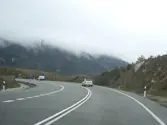
¿Podremos realizar un adelantamiento en una curva sin visibilidad si los sentidos están claramente delimitados y no invadimos el sentido contrario?
Can we overtake on a bend with no visibility if the directions of traffic are clearly marked out and we do not move into the opposite direction?
- ASí.Yes.
- BNo, ya que no disponemos de visibilidad.No, because we do not have visibility.
- CSólo si adelantamos a un vehículo de dos ruedas.Only if we are overtaking a two-wheeled vehicle.
ExplanationOvertaking is prohibited on bends and brows of hills with reduced visibility and, in general, in any place or situation where the available visibility is not enough to carry out the manoeuvre or to abandon it once started, unless the two directions of traffic are clearly marked out and the manoeuvre can be done without moving into the area reserved for the opposite direction.
¿Se puede usar una rotonda para cambiar de sentido?
May you use a roundabout to make a U-turn?
- ANo, no se pueden usar las rotondas para hacer un cambio de sentido.No, roundabouts may not be used to make a U-turn.
- BSolo si la glorieta está regulada por semáforos.Only if the roundabout is controlled by traffic lights.
- CSí, las rotondas son un lugar adecuado para cambiar de sentido.Yes, roundabouts are a suitable place to make a U-turn.
ExplanationYes, you may make a U-turn on a roundabout, because this type of junction is a suitable place for it. Under the General Traffic Regulations, any U-turn must be made in a suitable place, and roundabouts are one. The driver can enter the roundabout and go round to the exit in the opposite direction, as long as they respect the right-of-way rules and make sure they do not affect other drivers.
En una vía urbana con dos sentidos de circulación, ¿en qué lado de la calzada podemos estacionar?
On a two-way urban road, on which side of the carriageway can we park?
- AEn la calzada no se puede estacionar nunca.You can never park on the carriageway.
- BTanto en el lado derecho como en el izquierdo de la calzada.On either the right-hand or the left-hand side of the carriageway.
- CSolo en el lado derecho de la calzada.Only on the right-hand side of the carriageway.
ExplanationOn a two-way urban road, we may only park on the right-hand side. When the road is one-way, we may park on either the right-hand or the left-hand side.
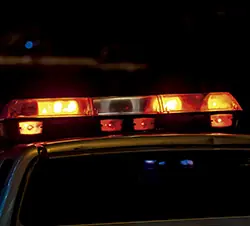
Si un vehículo de la policía de tráfico se sitúa detrás de usted y enciende un dispositivo con una luz roja destellante hacia delante, ¿qué debe hacer?
If a traffic police vehicle positions itself behind you and switches on a device with a flashing red light facing forwards, what must you do?
- ADetenerse y, en su caso, seguir las instrucciones del agente.Stop and, where appropriate, follow the officer's instructions.
- BReducir la velocidad y apartarse a la derecha, para facilitar el adelantamiento.Reduce speed and move to the right to make it easier for it to overtake.
- CDetenerse en el lado izquierdo de la calzada, delante del vehículo policial.Stop on the left-hand side of the carriageway, in front of the police vehicle.
ExplanationA flashing red light facing forwards from a police vehicle behind you is an order to stop: you must stop carefully on the right-hand side, in front of the police vehicle, and follow the officer's instructions (Article 69 of the General Traffic Regulations, RGC).
Si va a iniciar otro adelantamiento, ¿está permitido quedarse en el carril izquierdo?
If you are about to start another overtaking manoeuvre, are you allowed to stay in the left-hand lane?
- ASí, si no impide el paso a los vehículos más rápidos que vengan por detrás.Yes, if you do not block faster vehicles coming from behind.
- BSí, si circula a la velocidad máxima permitida en la vía.Yes, if you are driving at the maximum speed allowed on the road.
- CNo, debe volver obligatoriamente al carril derecho.No, you must return to the right-hand lane.
ExplanationUnder Article 83.1 of the General Traffic Regulations, on carriageways with at least two lanes in the same direction, a driver who is about to overtake again may stay in the lane they have used, as long as they do not unduly hinder faster vehicles coming from behind.
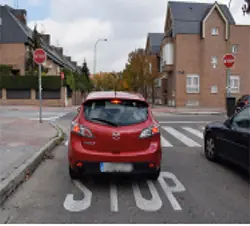
Quiere girar a la derecha. ¿Cómo debe avisar a los demás conductores?
You want to turn right. How must you warn other drivers?
- ACon las luces o con el claxon.With the lights or with the horn.
- BCon el intermitente o con el brazo.With the indicator or with the arm.
- CCon el brazo o con el claxon.With the arm or with the horn.
ExplanationArticle 109 of the General Traffic Regulations (RGC) requires sideways movements, such as a right turn, to be signalled with the indicator on the relevant side or, failing that, with the arm. The horn and flashing headlights cannot be used to signal a turn.
El conductor que efectúe un adelantamiento...
A driver who is overtaking...
- Apuede rebasar la velocidad máxima fijada para las autopistas y autovías en 20 kilómetros por hora.may exceed the maximum speed set for motorways (autopistas) and dual carriageways (autovías) by 20 kilometres per hour.
- Bdebe mantener una velocidad moderada, sin importar el tiempo que emplee en el adelantamiento.must keep a moderate speed, no matter how long the overtaking takes.
- Cdebe llevar su vehículo a una velocidad notoriamente superior a la del vehículo que pretende adelantar.must drive at a speed clearly higher than that of the vehicle they intend to overtake.
ExplanationOnce they have moved out, to carry out the overtaking the driver of the overtaking vehicle must drive at a speed clearly higher than that of the vehicle being overtaken, but without exceeding the maximum speed limits, and must overtake quickly, in the shortest possible distance and time.
En una carretera, ¿se puede cambiar de sentido?
On a road, may you make a U-turn?
- ASí, en cualquier lugar.Yes, anywhere.
- BNo, está siempre prohibido.No, it is always prohibited.
- CSí, en los lugares adecuados.Yes, in suitable places.
ExplanationUnder Article 78 of the RGC, to make a U-turn you must choose a suitable place, signal it in advance and make sure you do not endanger anyone. Article 79 prohibits it, among other places, at level crossings, in tunnels and on stretches where overtaking is prohibited.
El conductor del ciclomotor ha adelantado al ciclista. ¿Debe volver a circular por el arcén?
The moped rider has overtaken the cyclist. Must they return to the hard shoulder?
- ASí.Yes.
- BNo, porque no circulan vehículos por la calzada.No, because no vehicles are travelling on the carriageway.
- CNo, puede seguir por la calzada hasta la próxima salida.No, they may stay on the carriageway until the next exit.
ExplanationThe moped rider must return to the hard shoulder because they have overtaken the cyclist.
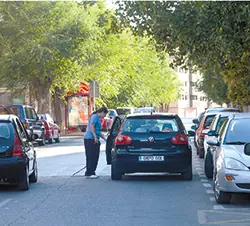
El conductor de la furgoneta, ¿puede hacer una parada en doble fila para descargar?
Can the van driver stop double-parked to unload?
- ANo, está prohibido.No, it is prohibited.
- BSí, excepcionalmente y respetando las normas sobre paradas.Yes, exceptionally and following the rules on stopping.
- CSolo si la parada tiene una duración igual o inferior a 1 minuto.Only if the stop lasts 1 minute or less.
ExplanationDouble parking is prohibited, but stopping is not on the list of prohibited places and can be done exceptionally to load or unload if there is no space nearby. It must be short, the driver must not move away from the vehicle, and it must not create danger or seriously obstruct traffic.
¿Cómo advertirá un conductor de su intención de circular marcha hacia atrás?
How will a driver warn of their intention to reverse?
- ACon la señalización de emergencia.With the hazard warning lights.
- BCon señales acústicas.With sound signals.
- CCon el brazo extendido horizontalmente con la palma de la mano hacia atrás.With the arm held out horizontally, palm facing backwards.
ExplanationReversing is signalled with the reversing lights, but if there are none, we will signal it with the arm held out horizontally, palm facing backwards.
Dentro de poblado, ¿se podrá adelantar por la derecha?
In a built-up area, can you overtake on the right?
- ASí, siempre que haya dos carriles en el mismo sentido.Yes, as long as there are two lanes in the same direction.
- BSí, cuando haya al menos dos carriles en el mismo sentido y estén delimitados por marcas longitudinales.Yes, when there are at least two lanes in the same direction and they are separated by longitudinal markings.
- CNo, en ningún caso.No, never.
ExplanationIn built-up areas, when there are at least two lanes in the same direction and they are separated by longitudinal markings, you may overtake on the right, always making sure it can be done without danger to other road users.
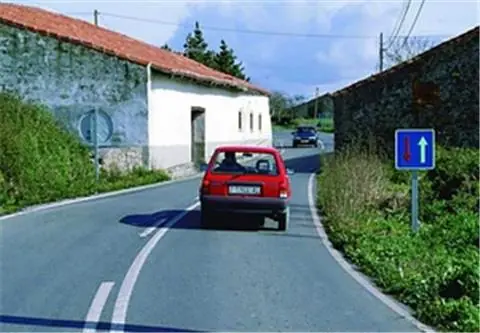
El vehículo rojo, ¿puede girar a la izquierda?
Can the red vehicle turn left?
- ASí.Yes.
- BSí, una vez que pase el vehículo que se acerca.Yes, once the approaching vehicle has passed.
- CNo.No.
ExplanationWhen a solid line runs next to a broken line, each driver follows the one closest to them. The red vehicle has the solid line on its side, so it cannot cross it to turn left, even if nothing is coming from the other direction.
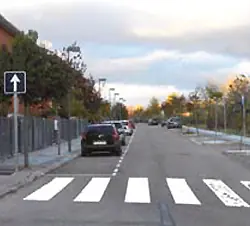
En una vía urbana de sentido único, está permitido estacionar en el lado...
On a one-way urban road, you are allowed to park on the...
- ADerecho.Right.
- BDerecho o izquierdo, fuera de la calzada o del arcén.Right or left, off the carriageway or the hard shoulder.
- CDerecho o izquierdo.Right or left.
ExplanationOn one-way urban roads you may park on both sides, right and left, as long as you do not get in the way of traffic and you follow the other parking rules.
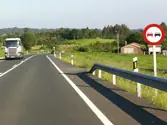
¿Está permitido realizar un cambio de sentido en un lugar donde esté prohibido adelantar?
Is it allowed to make a U-turn where overtaking is prohibited?
- ASí, excepto entre la puesta y la salida de sol, porque disminuye la visibilidad.Yes, except between sunset and sunrise, because visibility is reduced.
- BNo, salvo que el cambio de sentido esté expresamente autorizado.No, unless the U-turn is expressly allowed.
- CSí, cuando la circulación en sentido contrario lo permita.Yes, when oncoming traffic allows it.
ExplanationA U-turn is prohibited in any situation where you cannot check that you will not endanger or obstruct other road users, for example on bends and brows of hills with reduced visibility, or in fog or heavy rain. A U-turn is also prohibited: - On level crossings (it is not prohibited near them). - In tunnels, underpasses and stretches of road covered by the 'Tunnel' sign. - On motorways (autopistas) and dual carriageways (autovías), except in the places provided for it. - On one-way carriageways and stretches of road. - On all stretches of road where overtaking is prohibited, unless the U-turn is expressly allowed.
¿Se podrá adelantar a una motocicleta de dos ruedas en un paso a nivel?
Can you overtake a two-wheeled motorcycle on a level crossing?
- ANo, está prohibido.No, it is prohibited.
- BSí, previas las oportunas señales acústicas u ópticas.Yes, after giving the appropriate sound or light signals.
- CSí, a una velocidad tan reducida que permita frenar con seguridad.Yes, at a speed low enough to brake safely.
ExplanationAccording to Article 87.1.b of the General Traffic Regulations (RGC) (as worded by RD 518/2026), overtaking is prohibited on level crossings and near them; the exception that allowed overtaking two-wheeled vehicles after giving sound or light signals has been removed.
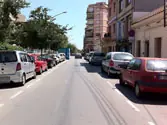
Cuando en un estacionamiento el conductor deje su puesto, deberá...
When the driver leaves the driver's seat after parking, they must...
- ADejar colocada la primera velocidad y el freno de mano accionado, unicamente.Only leave first gear engaged and the handbrake on.
- BAdoptar las precauciones necesarias para impedir el uso del vehículo sin autorización, apagar el motor, desconectar el sistema de arranque y dejar accionado el freno de estacionamiento.Take the necessary precautions to prevent the vehicle being used without permission, switch off the engine, disconnect the starting system and leave the parking brake on.
- CDejar las ruedas directrices orientadas hacia la calzada.Leave the steering wheels turned towards the carriageway.
ExplanationWhen the driver leaves the driver's seat after parking, they must leave the parking brake on, switch off the engine and disconnect the starting system. If we park a car on a slope, as well as leaving the parking brake on, we must: - Engage the right gear: first gear on an uphill slope and reverse on a downhill slope, or, where applicable, the parking position. Also, if the driver moves away from the vehicle (a situation the question does not mention), they will take the necessary precautions to prevent anyone else from using the vehicle without their permission.
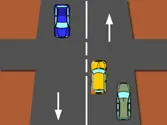
Si desea girar a la izquierda, debe saber que está prohibido cuando no exista...
If you want to turn left, you should know that it is prohibited when there is no...
- Aseñal que autorice expresamente el giro.sign expressly allowing the turn.
- Bvisibilidad suficiente.sufficient visibility.
- Cun carril especialmente acondicionado para realizar el giro.lane specially designed for making the turn.
ExplanationTurning left usually means crossing the opposite direction of traffic, so you must not do it when there is not enough visibility (Article 74.1 of the General Traffic Regulations), even if no sign prohibits it. No sign or special lane is needed to allow it.
¿En una autopista está prohibido efectuar un cambio de sentido?
Is making a U-turn prohibited on an autopista (motorway)?
- ASí, siempre.Yes, always.
- BSí, salvo en los lugares habilitados al efecto.Yes, except at places provided for that purpose.
- CNo, cuando la mediana esté abierta podremos realizar un cambio de sentido.No, when the central reservation is open we may make a U-turn.
ExplanationMaking a U-turn is prohibited on autopistas (motorways) and autovías (dual carriageways), except at places provided for that purpose. Even if there is an open gap in the central reservation, it must not be used to make a U-turn. We may only use these gaps when they are specially signed for joining a lane set up in the opposite direction to the usual one.
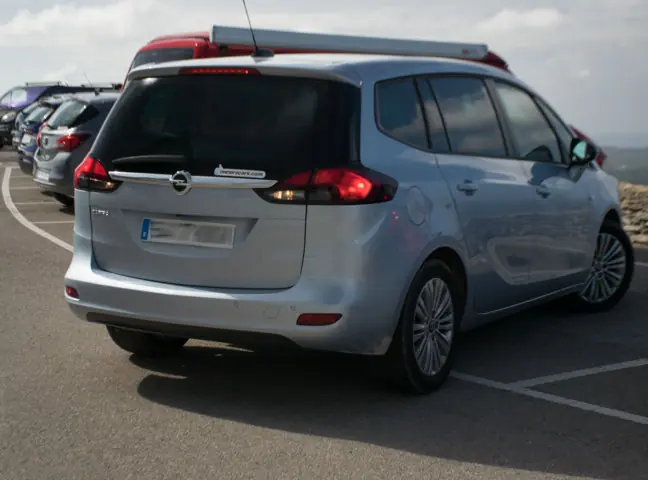
¿Es obligatorio avisar de que vas a hacer una maniobra?
Must you warn others that you are going to make a manoeuvre?
- ASí. Pero solo con señales de luz.Yes, but only with light signals.
- BNo. Pero sí es recomendable.No, but it is advisable.
- CSí. Con señales de luz y si no puedes, haciendo señales con el brazo.Yes, with light signals and, if you cannot, with arm signals.
ExplanationArticle 109 of the General Traffic Regulations (RGC) requires you to warn in advance of any manoeuvre involving moving sideways, reversing, stopping or braking sharply. This is done with the vehicle's lights and, if that is not possible, with the arm.
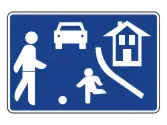
¿Se podrá estacionar en una zona de estancia y juego (antigua calle residencial)?
May you park in a residential and play area (formerly «residential street»)?
- ASí.Yes.
- BNo.No.
- CSolo en los lugares designados.Only in the places marked.
ExplanationIn a residential and play area (sign S-28, formerly «residential street»), vehicles may park only in the places marked by signs or road markings.
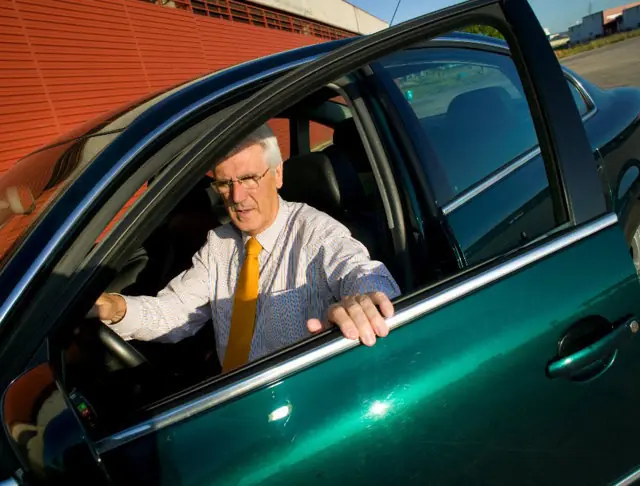
Un vehículo aparcado, ¿cuándo estorba de forma grave a la circulación?
When does a parked vehicle seriously obstruct traffic?
- ACuando está en doble fila y sin conductor.When it is double-parked without the driver.
- BCuando en una vía interurbana aparca fuera del arcén.When, on a road outside built-up areas, it is parked off the hard shoulder.
- CCuando está en una zona de carga y descarga, fuera del horario de carga y descarga.When it is in a loading and unloading area, outside the loading and unloading hours.
ExplanationAccording to Article 91 of the General Traffic Regulations (RGC), double parking without the driver seriously obstructs traffic, because it blocks a lane and nobody can move the vehicle. A loading and unloading area only counts as a serious obstruction during its hours of use.
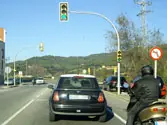
En cuanto a los demás usuarios de la vía, usted deberá...
With regard to other road users, you should...
- AConfiar en que siempre respetarán las normas.Trust that they will always obey the rules.
- BAdelantarse a lo que van a hacer los demás usuarios de la vía.Anticipate what other road users are going to do.
- CCuidar de que cumplan las normas.Make sure that they obey the rules.
ExplanationDefensive driving requires you to foresee and anticipate what other road users may do, including their possible mistakes, so that you can react in time and safely. It is not the driver's job to make sure that others obey the rules.
¿Podemos efectuar un cambio de dirección a la izquierda en una curva sin visibilidad?
Can we turn left on a bend with no visibility?
- ASí, si no hay señal que lo prohíba.Yes, if there is no sign prohibiting it.
- BNo, porque no hay visibilidad.No, because there is no visibility.
- CSí, si en este momento no vemos vehículos en sentido contrario.Yes, if at that moment we do not see any oncoming vehicles.
ExplanationTurning left is prohibited on bends with reduced visibility. This manoeuvre is very dangerous, because we cannot see early enough whether vehicles are approaching from the opposite direction.
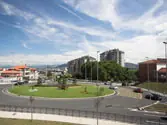
¿Está permitido adelantar a otro vehículo dentro de una glorieta?
Is it allowed to overtake another vehicle inside a roundabout?
- ANo, porque una glorieta es una intersección y en las intersecciones está prohibido adelantar, por seguridad.No, because a roundabout is a junction and overtaking is prohibited at junctions for safety reasons.
- BSí.Yes.
- CSí, siempre que el adelantamiento se efectúe por la derecha y en condiciones de seguridad.Yes, as long as the overtaking is done on the right and safely.
ExplanationOvertaking is prohibited at junctions and near them, except at roundabouts, where you may overtake safely (article 87.1.c of the General Traffic Regulations). You may overtake on the right only in the cases provided for, not just because you are in a roundabout.
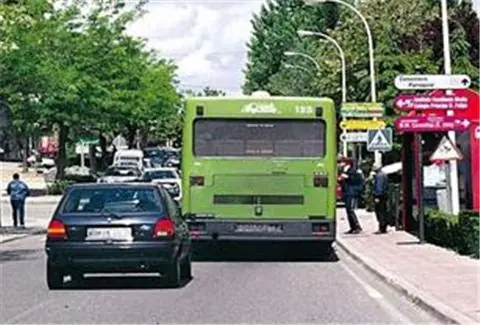
Al aproximarse a un autobús en situación de parada, ¿qué precauciones se deben tomar?
When approaching a bus stopped at a bus stop, what precautions should you take?
- AMantener la velocidad y estar atento al cumplimiento de la señalización vertical.Keep your speed and pay attention to the road signs.
- BNinguna si no vienen vehículos en sentido contrario.None, if no vehicles are coming the other way.
- CModerar la velocidad y si fuera preciso, detener el vehículo.Slow down and, if necessary, stop the vehicle.
ExplanationNear a bus stopped at a bus stop, pedestrians may cross in front of it or behind it, and the bus itself may pull out into traffic. That is why you must slow down and, if necessary, stop.
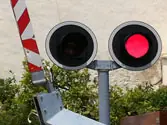
¿Se podrá adelantar en un paso a nivel?
Can you overtake on a level crossing?
- ASí, a velocidad muy reducida.Yes, at a very low speed.
- BNo, ni en el paso a nivel ni en sus proximidades.No, neither on the level crossing nor near it.
- CNo en el paso a nivel, pero sí en sus proximidades.Not on the level crossing, but it is allowed near it.
ExplanationAccording to Article 87.1.b of the General Traffic Regulations (RGC) (as worded by RD 518/2026), overtaking is prohibited on level crossings and near them; the exception that allowed overtaking two-wheeled vehicles after giving sound or light signals has been removed.
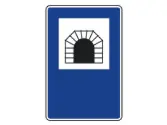
¿Podremos adelantar en el interior de un túnel de dos sentidos de circulación y un carril para cada sentido?
Can we overtake inside a two-way tunnel with one lane in each direction?
- ASí, si ambos sentidos están delimitados mediante líneas discontinuas.Yes, if both directions are separated by broken lines.
- BNo, al existir un solo carril en mi sentido.No, because there is only one lane in my direction.
- CNo, en los túneles no se podrá adelantar en ningún caso.No, overtaking in tunnels is never allowed.
ExplanationIn two-way tunnels or underpasses, overtaking is prohibited unless there is more than one lane in your direction, in which case you may overtake without moving into the opposite direction.
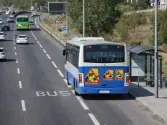
En una autovía, un autobús quiere incorporarse a la circulación desde una parada señalizada. ¿Los otros conductores están obligados a facilitar la maniobra?
On a dual carriageway (autovía), a bus wants to pull out from a marked stop. Must other drivers make the manoeuvre easier?
- ASólo si para ello no deben reducir la velocidad ni cambiar de carril.Only if they do not have to slow down or change lane to do so.
- BNo; sólo es necesario facilitar la maniobra en zona urbana.No; you only need to make the manoeuvre easier in urban areas.
- CSí, en la medida de lo posible.Yes, as far as possible.
ExplanationThe rules say that outside built-up areas, such as on a dual carriageway (autovía), drivers must, as far as possible, make it easier for buses leaving marked stops to join the traffic. In built-up areas, however, this obligation is greater, because other drivers must even slow down or stop if necessary to let the bus move off again.
¿Cómo se debe señalizar un desplazamiento lateral?
How must a sideways movement be signalled?
- ACon los intermitentes o, si no es posible, con la mano.With the indicators or, if that is not possible, with the hand.
- BSolo con los intermitentes.Only with the indicators.
- CPreferiblemente con la mano.Preferably with the hand.
ExplanationA sideways movement must be signalled with the indicators or, if they are not available, with the arm held out. This is set out in Article 109 of the General Traffic Regulations (RGC), which says that manoeuvres involving moving sideways or backwards must be announced with suitable visual signals well in advance. Although the arm can be used, the lights are preferred; however, the correct option is the one that allows both signals, which makes sure other drivers are properly warned of this change of course.
Para realizar un cambio de dirección a la izquierda en esta calzada de 2 sentidos, ¿dónde nos situaremos?
To turn left on this two-way carriageway, where will we position ourselves?
- AA la izquierda de la calzada.On the left of the carriageway.
- BA la derecha de la calzada.On the right of the carriageway.
- CNos ceñiremos al eje de la calzada.We will keep close to the centre line of the carriageway.
ExplanationTo turn left on a two-way road, if there is no longitudinal marking between the two directions, the driver will keep close to the centre line of the carriageway, without moving into the area for the opposite direction.
En una carretera interurbana, ¿puede un ciclomotor adelantar a un tractor que circula por el arcén?
On a road outside built-up areas, may a moped overtake a tractor travelling on the hard shoulder?
- ASí, siempre que el adelantamiento no supere los 200 metros ni los 15 segundos.Yes, as long as the overtaking does not take more than 200 metres or 15 seconds.
- BSí, pero solo de día.Yes, but only during the day.
- CNo, no se pueden adelantar los vehículos que circulan por el arcén.No, vehicles travelling on the hard shoulder may not be overtaken.
ExplanationUnder Article 36.5 of the General Traffic Regulations, drivers of vehicles that must use the hard shoulder, such as mopeds and tractors, may not overtake each other if travelling side by side lasts more than 15 seconds or covers more than 200 metres. This does not apply to bicycles.
¿Se podrá cambiar de sentido en un cambio de rasante?
Can you make a U-turn at the brow of a hill?
- ASí, si no ponemos en peligro ni obstaculizamos a otros usuarios.Yes, if we do not endanger or obstruct other road users.
- BNo, está siempre prohibido.No, it is always prohibited.
- CNo se podrá cambiar de sentido pero si de dirección.You cannot make a U-turn, but you can turn.
ExplanationYou cannot make a U-turn at a brow of a hill with reduced visibility or if it endangers or obstructs other road users.
Circulamos con un ciclomotor de dos ruedas por una vía interurbana en la que no existe un carril especialmente acondicionado para girar a la izquierda, ¿dónde nos colocaremos para realizarlo?
We are riding a two-wheeled moped on a road outside built-up areas with no lane specially set up for turning left. Where will we position ourselves to turn?
- ASiempre en el centro de la calzada, junto al eje longitudinal de la misma.Always in the centre of the carriageway, next to its centre line.
- BA la derecha, fuera de la calzada, siempre que sea posible.On the right, off the carriageway, whenever possible.
- CSiempre a la izquierda de la calzada.Always on the left of the carriageway.
ExplanationBicycles and mopeds on roads outside built-up areas must position themselves on the right, off the carriageway, whenever possible, to turn left. This is because there is no lane specially set up for these vehicles. Positioning yourself on the right, off the carriageway, gives you enough space to start the turn safely.
Si quiere girar a la izquierda, debe saber que está prohibido cuando no haya...
If you want to turn left, you should know that it is prohibited when there is no...
- Auna señal que permita girar a la izquierda.sign allowing you to turn left.
- Bsuficiente visibilidad.sufficient visibility.
- Cun carril especialmente señalizado para realizar el giro.lane specially marked for the turn.
ExplanationTurning left is prohibited if there is not enough visibility. This rule is essential to avoid risky situations, because the driver must make sure that the manoeuvre is safe. Reduced visibility can be caused by sharp bends, hills, buildings or other obstacles. If the driver cannot see approaching vehicles, they risk a collision. At junctions with limited visibility, there may be traffic lights or signs controlling traffic. In some areas there are special turning lanes, but this does not remove the need to follow the visibility rules.
Al estacionar un vehículo con remolque en una cuesta hacia arriba, si no tiene calzos, ¿qué debe hacer?
When parking a vehicle with a trailer on an uphill slope, if you do not have wheel chocks, what must you do?
- AColocar una de las ruedas delanteras contra el bordillo, apuntando hacia el centro de la calzada.Place one of the front wheels against the kerb, pointing towards the centre of the carriageway.
- BColocar una de las ruedas delanteras contra el bordillo, apuntando hacia fuera de la calzada.Place one of the front wheels against the kerb, pointing away from the carriageway.
- CColocar piedras detrás de las ruedas a modo de calzos.Place stones behind the wheels as chocks.
ExplanationA vehicle combination parked on a steep slope must be secured with wheel chocks, never with stones, or by resting a steering wheel against the kerb: turned towards the centre of the carriageway if the slope goes uphill and away from it if it goes downhill (Article 92.3 of the General Traffic Regulations).
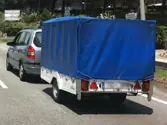
Si estaciona un turismo con un remolque ligero en una pendiente sensible, debe...
If you park a car with a light trailer on a noticeable slope, you must...
- Aaccionar el freno de mano, únicamente.only apply the handbrake.
- Bcolocar calzos o apoyar las ruedas directrices en el bordillo.place wheel chocks or rest the steering wheels against the kerb.
- Ccalzar el vehículo con cualquier elemento que sirva para ello.chock the vehicle with any object that can be used for it.
ExplanationWhen a vehicle with a maximum authorised mass (MAM) over 3,500 kilograms, a bus or a combination of vehicles is parked on a noticeable slope, its driver must leave it properly chocked, either by placing wheel chocks or by resting one of the steering wheels against the kerb. If we park a car on a slope, as well as leaving the parking brake on, we must: - Engage the right gear: first gear on an uphill slope and reverse on a downhill slope, or, where applicable, the parking position.
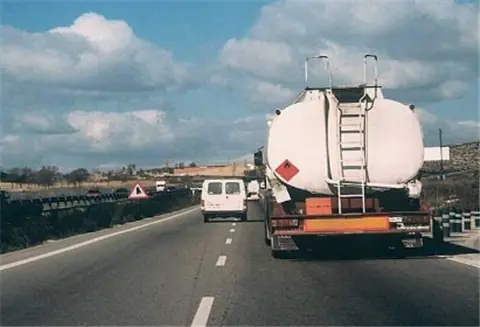
En esta situación, usted no quiere adelantar al camión. ¿Qué distancia debe dejar?
In this situation, you do not want to overtake the lorry. What distance must you leave?
- A50 metros.50 metres.
- BLa distancia de seguridad.The safe distance.
- CLa distancia para que otro vehículo pueda adelantar.Enough distance for another vehicle to overtake.
ExplanationIf you are not going to overtake, it is enough to keep a safe distance that allows you to stop without hitting the vehicle in front. As there is more than one lane in the same direction, you do not need to leave space for others to overtake, and the 50 metres is only required of vehicles over 3,500 kg or over 10 metres long.
All topics
- Definitions
- Documents and penalty points
- The driver's condition
- Duties of drivers and pedestrians
- Vehicle safety devices
- Vehicle controls and equipment
- Vehicle lights and horn
- Traffic signs, markings and signals
- The road and its lanes
- Speed and distances
- Right of way
- Carrying passengers and loads
- Driving safely in difficult conditions
- Vehicle mechanics and maintenance
- Road accidents and first aid
- Defensive and eco-driving
Independent app: not affiliated with or endorsed by the DGT (Spain's Directorate-General for Traffic) or the Ministry of the Interior. The official exam is booked with the DGT and taken at its test centres. The questions here are practice material; the DGT's official question bank is not public.
Basado en datos de la Agencia Estatal Boletín Oficial del Estado (https://www.boe.es). Textos consolidados de carácter meramente informativo. La AEBOE no patrocina ni respalda este sitio.
Parte de las preguntas procede de los tests de la revista «Tráfico y Seguridad Vial» de la DGT, reproducidos con indicación de la fuente.