
DGT test · 982 questions
Manoeuvres · Page 6 of 20
Joining traffic, overtaking, turning, U-turns, reversing, stopping and parking: how and where to do them and when they are forbidden.
Questions in this topic, with answers
982 questions, 50 per page, with the correct answer and the explanation. Page 6 of 20.
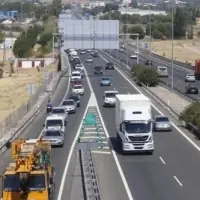
Al salir de una autovía deberá ...
When leaving a dual carriageway (autovía), you must...
- Aseguir en su carril hasta la salida.stay in your lane until the exit.
- Bcambiarse al carril más cercano a la salida y entrar lo antes posible en el carril de desaceleración.move to the lane nearest the exit and enter the deceleration lane as soon as possible.
- Creducir la velocidad a 60 kilómetros por hora.reduce your speed to 60 kilometres per hour.
ExplanationUnder Article 77 of the General Traffic Regulations (RGC), to leave a dual carriageway you must move in good time into the lane nearest the exit and enter the deceleration lane as soon as possible, slowing down there. You do not have to slow to 60 km/h on the carriageway.
¿A quién debe ceder el paso un vehículo que se incorpora a la circulación saliendo de un inmueble?
Who must a vehicle joining the traffic from a property give way to?
- ASolo a los vehículos que se aproximan por su derecha.Only to vehicles approaching from the right.
- BSolo a los vehículos que se aproximan por su izquierda.Only to vehicles approaching from the left.
- CA todos los vehículos tanto si se aproximan por la derecha como por la izquierda.To all vehicles, whether they approach from the right or from the left.
ExplanationWhen a vehicle joins the traffic, it must give way to all vehicles travelling on the road, whether they are approaching from the right or from the left.
¿Se podrá realizar un cambio de sentido en un cambio de rasante de visibilidad reducida?
Can you make a U-turn on the brow of a hill with reduced visibility?
- ASí, si se señaliza con antelación suficiente.Yes, if you signal it well in advance.
- BSí, si dispone de línea discontinua.Yes, if there is a broken line.
- CNo.No.
ExplanationU-turns are prohibited on bends and brows of hills with reduced visibility and, in general, in any place or circumstance where you do not have enough visibility.
¿En una autopista se puede efectuar un cambio de sentido?
Can you make a U-turn on a motorway (autopista)?
- ANo, en ningún caso.No, never.
- BNo, solo en los lugares habilitados al efecto.No, only at places provided for this.
- CSí, cuando la mediana está abierta y no existe peligro.Yes, when there is a gap in the central reservation and there is no danger.
ExplanationMaking a U-turn is prohibited: - In tunnels. - On stretches of road covered by the tunnel sign. - In underpasses. - On motorways and dual carriageways, except at places provided for this. - On all stretches of road where overtaking is prohibited, unless the U-turn is expressly authorised. - In any place and circumstance where you cannot check whether another vehicle is approaching.
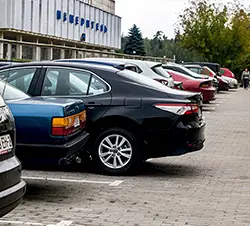
Al circular marcha atrás debe tener en cuenta que…
When reversing, you must bear in mind that…
- Ano debe recorrer más de 10 metros.you must not reverse more than 10 metres.
- Bdebe hacerlo con precaución, ya que pueden pasar personas por detrás del vehículo.you must do it carefully, as people may pass behind the vehicle.
- Ctiene prioridad sobre los peatones.you have priority over pedestrians.
ExplanationReversing requires extreme care because visibility is limited and pedestrians may pass behind the vehicle, in the blind spot. It must be done slowly and over the minimum distance necessary.
¿Tienen la consideración de adelantamientos los producidos entre ciclistas que circulan en grupo?
Is it considered overtaking when cyclists riding in a group pass each other?
- ANoNo
- BPor lo general sí aunque depende del número de integrantesGenerally yes, although it depends on the number of riders
- CSíYes
ExplanationNo. Under traffic rules, cyclists riding in a group are considered a single moving unit for right-of-way purposes. Therefore, changes of position or passing between them within the group are not legally classed as overtaking. This means that the same strict rules on side distance and signalling that apply to overtaking another vehicle do not apply, although they must ride carefully to avoid colliding with each other.
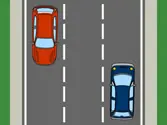
En esta vía de doble sentido de circulación y tres carriles, ¿dónde debe colocarse el vehículo azul para cambiar de dirección a la izquierda?
On this two-way road with three lanes, where must the blue vehicle position itself to turn left?
- AEn el carril situado más a la derecha.In the far-right lane.
- BEn el carril central.In the centre lane.
- CEn el carril situado más a la izquierda, si no está ocupado.In the far-left lane, if it is not occupied.
ExplanationOn two-way carriageways with three lanes separated by broken longitudinal markings, you drive in the right-hand lane and never in the far-left lane. On these carriageways, the centre lane is only used for necessary overtaking and for turning left, taking extreme care.
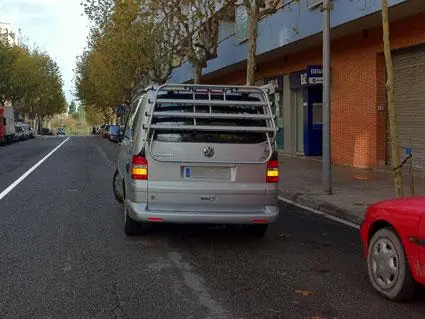
¿Está permitida la parada de este vehículo?
Is this vehicle allowed to stop here?
- ASí, siempre que se trate de una parada por una emergencia.Yes, as long as it is an emergency stop.
- BSí, ya que está correctamente señalizado y no obstaculiza el paso.Yes, because it is correctly signalled and does not block the way.
- CNo, ya que entre la vehículo y la marca continua hay una distancia inferior a 3 metros.No, because the distance between the vehicle and the solid line is less than 3 metres.
ExplanationYou cannot stop where traffic is seriously obstructed, and this happens when there are less than 3 metres between the vehicle and a solid longitudinal marking that may not be crossed: other vehicles cannot pass without crossing it. It makes no difference whether the vehicle has its hazard warning lights on.
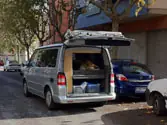
¿Se podrá efectuar un estacionamiento en doble fila?
Can you double-park?
- ASí, si no se obstaculiza la circulación.Yes, if traffic is not obstructed.
- BSí, menos de 2 minutos.Yes, for less than 2 minutes.
- CNo, en ningún caso.No, never.
ExplanationDouble parking is always prohibited. Stopping would be possible if there were no space to do it properly nearby. Even if it lasts less than 2 minutes, if it is parking, it is prohibited.
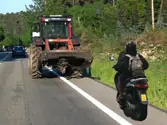
Conduciendo un ciclomotor, ¿podremos adelantar a un vehículo especial de 2.500 kg que circula a velocidad inferior a la nuestra?
When riding a moped, may we overtake a 2,500 kg special vehicle that is travelling more slowly than us?
- ASí, siempre que el recorrido en paralelo no sea superior a 100 metros y la duración no exceda de 30 segundos.Yes, provided that we do not travel side by side for more than 100 metres or for longer than 30 seconds.
- BNo, los vehículos obligados a circular por el arcén no se pueden adelantar entre ellos.No, vehicles that are obliged to travel on the hard shoulder may not overtake each other.
- CSí, siempre que el recorrido en paralelo no sea superior a 200 metros y la duración no exceda de 15 segundos.Yes, provided that we do not travel side by side for more than 200 metres or for longer than 15 seconds.
ExplanationWhen vehicles that are obliged to travel on the hard shoulder overtake each other, they may not travel side by side for more than 200 metres or for longer than 15 seconds.
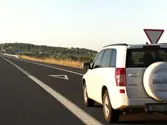
Si circula por un carril de aceleración, ¿debe ceder el paso a los vehículos que circulan por la vía a la que pretende incorporarse?
If you are in an acceleration lane, must you give way to vehicles travelling on the road you intend to join?
- ANo, si me incorporo por la derecha.No, if I join from the right.
- BSí.Yes.
- CNo, porque tengo prioridad.No, because I have priority.
ExplanationOn roads with an acceleration lane, a driver who intends to use it to join the carriageway must make sure, at the start of that lane, that they can do so without danger to other users travelling on the carriageway, taking into account their position, path and speed, and even stopping if necessary to give way. They will then accelerate to reach a suitable speed at the end of the acceleration lane in order to join the traffic on the carriageway.
¿Se podrá parar o estacionar en una autopista?
Can you stop or park on a motorway (autopista)?
- ANo se puede estacionar pero sí parar.You cannot park, but you can stop.
- BNo se puede parar ni estacionar.You cannot stop or park.
- CSe puede parar y estacionar pero únicamente en los lugares habilitados para ello.You can stop and park, but only in places provided for this.
ExplanationStopping and parking are prohibited on motorways and dual carriageways, except in areas provided for this.
¿Qué estacionamiento se considera que obstaculiza gravemente la circulación?
Which kind of parking is considered to seriously obstruct traffic?
- AEstacionar cerca de un paso para peatones.Parking near a pedestrian crossing.
- BEstacionar en una zona de carga y descarga fuera de las horas de utilización.Parking in a loading and unloading area outside its hours of use.
- CEstacionar en doble fila sin conductor.Double parking without a driver.
ExplanationDouble parking without a driver is considered dangerous or to seriously obstruct traffic, as it creates a risk or an obstacle.
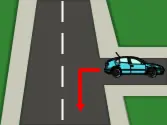
Si la luz de marcha atrás no funciona, ¿cómo vamos a señalizar la maniobra de marcha atrás?
If the reversing light does not work, how will we signal that we are reversing?
- ACon el brazo extendido y la palma de la mano hacia abajo.With the arm stretched out and the palm facing down.
- BCon el brazo extendido con la palma de la mano hacia atrás.With the arm stretched out and the palm facing backwards.
- CCon el brazo extendido y moviéndolo de arriba a abajo.With the arm stretched out, moving it up and down.
ExplanationWe must signal it with the left arm stretched out and the palm facing backwards.
El vehículo que usted quiere adelantar ha indicado que va a adelantar. ¿Puede usted adelantarlo?
The vehicle you want to overtake has signalled that it is going to overtake. May you overtake it?
- ASí, siempre que lo haga con rapidez.Yes, as long as you do it quickly.
- BNo, en ningún caso.No, never.
- CNo, porque al señalizar tiene preferencia.No, because by signalling it has priority.
ExplanationUnder Article 84.2 of the General Traffic Regulations (RGC), if the vehicle in front has signalled that it is going to move to the same side to overtake, you must respect its priority. Only if it does not start the manoeuvre after a reasonable time may you overtake it, first warning it with your horn or by flashing your lights.
¿Puede un vehículo estacionado en batería incorporarse a la circulación marcha atrás?
Can a vehicle parked side by side with others, perpendicular to the kerb (en batería), join the traffic by reversing?
- ANo, la marcha hacia atrás está prohibida.No, reversing is prohibited.
- BSí, pero sin invadir un cruce de vías.Yes, but without entering a junction.
- CSí, pero el recorrido máximo no podrá ser superior a 25 metros.Yes, but the maximum distance may not be more than 25 metres.
ExplanationReversing may be done as a manoeuvre that complements joining the traffic, as long as the reversing distance is not more than 15 metres and you do not enter a junction.
El conductor de un vehículo se quiere incorporar a la vía por la que usted circula. ¿Qué obligación tiene Ud. con respecto a dicho vehículo?
The driver of a vehicle wants to join the road you are driving on. What obligation do you have towards that vehicle?
- ANinguna, porque es el conductor de dicho vehículo quien tiene que ceder el paso.None, because it is the driver of that vehicle who must give way.
- BFacilitarle, en la medida de lo posible, dicha maniobra de incorporación.To make it easier for them to join, as far as possible.
- CCederle el paso porque se incorpora desde la derecha.To give way to them, because they are joining from the right.
ExplanationAlthough the driver who is joining must give way, Article 73.1 of the General Traffic Regulations requires other drivers to make joining easier as far as possible, especially for buses pulling out of a signed stop, for example by adjusting their speed or changing lane if it is safe.
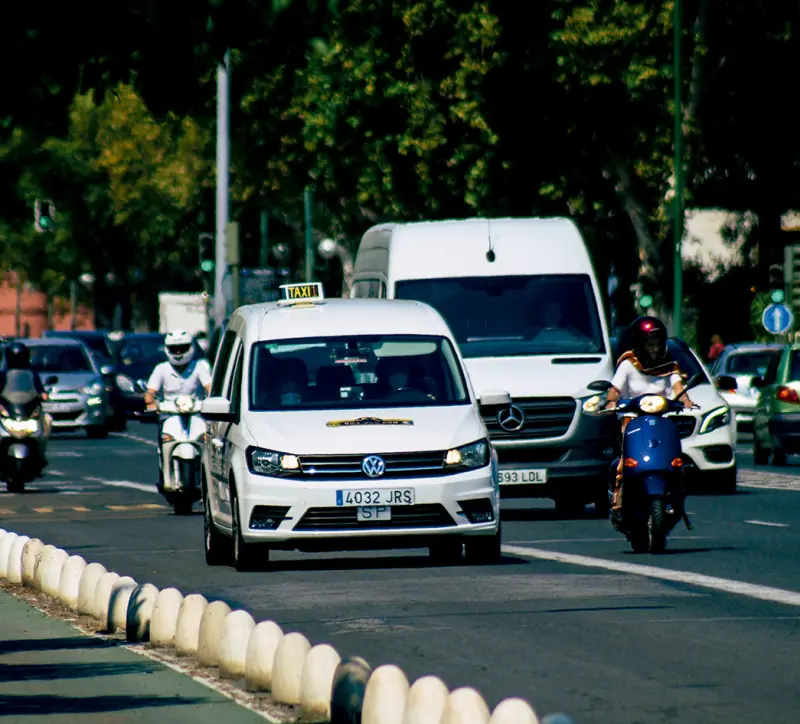
El conductor de una motocicleta, ¿tiene permitido realizar una parada en un carril reservado para autobuses?
Is a motorcycle rider allowed to stop in a lane reserved for buses?
- ASí, mientras no obstaculice la circulación de autobuses.Yes, as long as it does not obstruct buses.
- BNo, está prohibido.No, it is prohibited.
- CEstá permitido parar, pero no estacionar.Stopping is allowed, but not parking.
ExplanationReserved lanes may only be used by the vehicles they are intended for: stopping a motorcycle in a bus lane is prohibited, because it gets in the way of a service with priority traffic.
¿Está permitido adelantar en un túnel?
Is overtaking permitted in a tunnel?
- ASí, excepto a los vehículos de grandes dimensiones.Yes, except large vehicles.
- BSi, cuando exista más de un carril para cada sentido de circulación.Yes, when there is more than one lane in each direction.
- CNo, independientemente del número de carriles.No, whatever the number of lanes.
ExplanationOvertaking is prohibited in tunnels, underpasses and stretches of road covered by the 'Tunnel' sign where there is only one lane in the direction of the vehicle that intends to overtake.
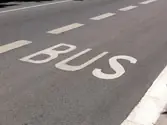
¿Puede parar en un carril bus?
May you stop in a bus lane?
- ANo.No.
- BSí, cuando sea por un tiempo inferior a 2 minutos.Yes, when it is for less than 2 minutes.
- CSí, si utiliza la señal de emergencia.Yes, if you use the hazard warning lights.
ExplanationStopping, and therefore parking, is prohibited in lanes for the exclusive use of urban public transport. There is no exception for doing it for less than two minutes or for switching on the hazard warning lights. Where the line is broken, the lane may be used only for permitted manoeuvres, such as turning.
¿Se puede estacionar en un carril reservado exclusivamente para el transporte público urbano?
May you park in a lane reserved exclusively for urban public transport?
- ASolo fuera del horario de servicio.Only outside service hours.
- BNo.No.
- CSí, se puede parar y estacionar.Yes, you may stop and park.
ExplanationUnder Article 94.1.h of the RGC, stopping is prohibited in lanes reserved exclusively for urban public transport and therefore so is parking (Article 94.2.a). Stopping or parking in them is a serious offence.
¿Se podrá adelantar en la próxima intersección?
Can you overtake at the next junction?
- ANo, porque está prohibido.No, because it is prohibited.
- BSí, si disponemos de suficiente visibilidad.Yes, if we have enough visibility.
- CSí, si no invadimos el sentido contrario.Yes, if we do not enter the opposite direction.
ExplanationOvertaking is prohibited at and near junctions, unless it is a roundabout, you are overtaking on the right, you have priority at the junction, or you are overtaking 2-wheeled vehicles.
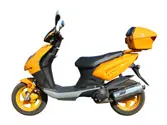
¿Puede un ciclomotor que circula por el arcén, adelantar a un tractor, invadiendo la calzada?
Can a moped travelling on the hard shoulder overtake a tractor by moving onto the carriageway?
- ANo, ya que está obligado a circular por el arcén, cuando exista y sea transitable.No, because it is obliged to use the hard shoulder when there is one and it is usable.
- BSi, esta es una situación en la que puede circular por la calzada.Yes, this is a situation in which it can use the carriageway.
- CSi, cuando las demás circunstancias lo permitan y la maniobra no dure más de 15 segundos o 200 m recorridos.Yes, when other circumstances allow it and the manoeuvre does not last more than 15 seconds or cover more than 200 m.
ExplanationThe driver of any of the vehicles obliged to use the hard shoulder, except bicycles, may not overtake another if travelling side by side lasts more than 15 seconds or covers more than 200 metres.
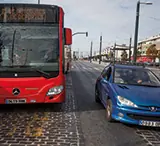
Al rebasar al autobús, ¿qué peligro debe preverse?
When passing the bus, what danger should you expect?
- AQue puedan cruzar peatones ocultos por el propio autobús.That pedestrians hidden by the bus itself may cross.
- BQue los viajeros bajen por la parte izquierda.That passengers may get off on the left-hand side.
- CNinguno, no es una situación de riesgo.None, it is not a risky situation.
ExplanationThe stopped bus creates a screen that hides passengers who have just got off and may cross in front of it or behind it. That is why you must pass it at reduced speed, ready to stop.
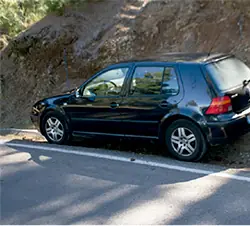
Como norma general, en una vía interurbana de doble sentido de la circulación está permitido parar fuera de la calzada...
As a general rule, on a two-way interurban road, you are allowed to stop off the carriageway…
- Aen el lado izquierdo y dejando libre la parte transitable del arcén.on the left-hand side, leaving the usable part of the hard shoulder clear.
- Ben el lado derecho y dejando libre la parte transitable del arcén.on the right-hand side, leaving the usable part of the hard shoulder clear.
- Cen el lado derecho y sobre la parte transitable del arcén.on the right-hand side, on the usable part of the hard shoulder.
ExplanationOn a two-way interurban road, you stop off the carriageway, on the right-hand side, leaving the usable part of the hard shoulder clear, because pedestrians and vehicles required to use it must be able to do so.
En una vía interurbana, ¿se puede estacionar ocupando la parte transitable del arcén?
On a road outside built-up areas, may you park on the usable part of the hard shoulder?
- ASí, si no molesto.Yes, if I am not in anyone's way.
- BNo, debe quedar libre la parte transitable del arcén.No, the usable part of the hard shoulder must be left free.
- CSí, si enciendo las luces de emergencia.Yes, if I switch on the hazard warning lights.
ExplanationUnder article 90.1 of the RGC, on roads outside built-up areas stopping and parking are always done off the carriageway, on the right-hand side and leaving the usable part of the hard shoulder free, because it is used by pedestrians, cyclists and broken-down vehicles. A different position is allowed only in an emergency.
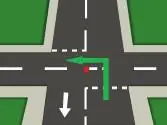
¿Dónde debemos de dejar el centro de la intersección para cambiar de dirección a la izquierda?
Where must we leave the centre of the junction when turning left?
- AA la derecha.On our right.
- BA la izquierda.On our left.
- CIndistintamente a la derecha o a la izquierda.On either side.
ExplanationAt junctions, when we want to turn left, we must leave the centre of the junction on our left.
¿Está permitido adelantar dentro de un túnel?
Is overtaking allowed inside a tunnel?
- ANo.No.
- BSí, si existe más de un carril en el mismo sentido.Yes, if there is more than one lane in the same direction.
- CSí, cuando los sentidos de circulación están separados.Yes, when the two directions of traffic are separated.
ExplanationUnder Article 87.1.d) of the RGC, overtaking is prohibited in tunnels, underpasses and stretches with the “Tunnel” sign where there is only one lane in your direction of travel. If there is more than one lane in the same direction, you may overtake, even if the two directions are not separated.
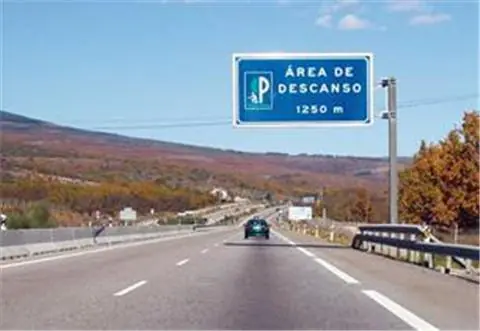
En esta vía, ¿está permitido parar en la zona transitable del arcén?
On this road, is it allowed to stop on the usable part of the hard shoulder?
- ANo, como norma general.No, as a general rule.
- BSÍ, siempre que se enciendan las luces de emergencia.Yes, as long as the hazard warning lights are switched on.
- CSolo si la parada tiene un duración inferior a dos minutos.Only if the stop lasts less than two minutes.
ExplanationOn motorways (autopistas) and dual carriageways (autovías), stopping is prohibited, including on the hard shoulder, except in the areas provided, such as rest or service areas. You may only stop on the hard shoulder in an emergency, such as a breakdown or feeling unwell.
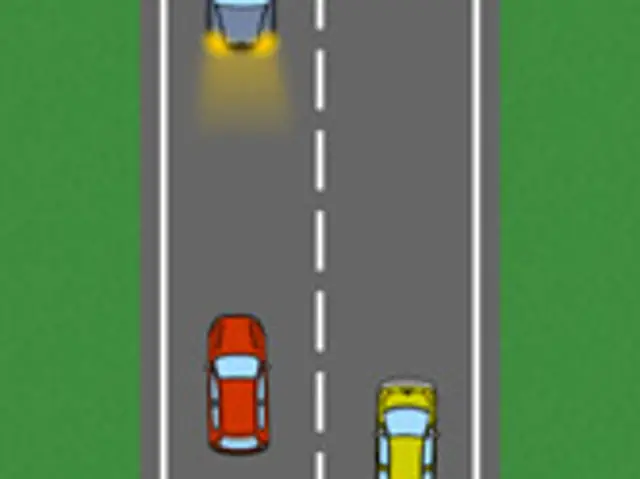
Una vez iniciado el adelantamiento, si se producen circunstancias que dificulten terminarlo sin riesgos, ¿qué debe hacer el conductor?
Once overtaking has started, if circumstances arise that make it difficult to finish without risk, what must the driver do?
- ADesistir del adelantamiento, reducir la velocidad y volver a su carril sin obstaculizar.Abandon the overtaking, slow down and return to their lane without getting in anyone's way.
- BTerminar el adelantamiento acelerando rápidamente.Finish overtaking by accelerating quickly.
- CFrenar bruscamente para incorporarse a la derecha cuanto antes.Brake sharply to get back to the right as soon as possible.
ExplanationUnder Article 85.2 of the General Traffic Regulations (RGC), if after starting to overtake circumstances arise that may make it difficult to finish without risk, you must quickly slow down, return to your own lane and warn those behind with the required signals, without braking sharply.
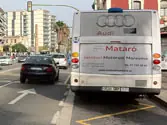
A este autobús que sale de una parada señalizada dentro de poblado, debemos...
When this bus is leaving a marked stop in a built-up area, we must…
- Acederle el paso, deteniéndonos.give way to it by stopping.
- Bfacilitarle la incorporación en la medida de lo posible.make it easier for it to join the traffic as far as possible.
- Chacerle señales ópticas o acústicas para que se incorpore.give it light or sound signals so that it pulls out.
ExplanationWe must make it easier for a bus leaving a marked stop in a built-up area to join the traffic (not give way to it) as far as possible, even stopping if necessary.
Después de iniciar el adelantamiento comprueba que no podrá terminar la maniobra con seguridad porque se acerca un vehículo de frente; ¿qué debe hacer?
After starting to overtake, you realise that you will not be able to finish the manoeuvre safely because a vehicle is coming towards you. What must you do?
- AAdvertir con ráfagas al otro conductor para que reduzca su velocidad.Flash your lights at the other driver so that they slow down.
- BMantenerse en el carril de sentido contrario y terminar la maniobra.Stay in the lane for the opposite direction and finish the manoeuvre.
- CReducir la marcha y volver a mi carril tan pronto como sea posible.Slow down and return to my lane as soon as possible.
ExplanationWhenever there is a risk when overtaking, we must abandon the manoeuvre, slowing down and returning to our lane as soon as possible.
El conductor de un vehículo que ve que otro vehículo va a adelantarle debe...
A driver who sees that another vehicle is going to overtake them must...
- AColocarse lo más a la derecha posible en la calzada para facilitar la maniobra.keep as far to the right of the carriageway as possible to make the manoeuvre easier.
- BAumentar la velocidad.speed up.
- CEncender el intermitente derecho para indicar que va a permitir el adelantamiento.switch on the right indicator to show that they will allow the overtaking.
ExplanationUnder Article 86 of the RGC, a driver who notices that another wants to overtake them must keep to the right-hand edge of the carriageway and may not speed up or make manoeuvres that hinder the overtaking. The right indicator is only used by some vehicles to show that it is possible to overtake.
Al circular marcha atrás para estacionar, ¿se puede entrar en una intersección?
When reversing to park, may you enter a junction?
- ASí, si la marcha atrás no supera los 15 metros.Yes, if you reverse no more than 15 metres.
- BSí, pero a baja velocidad, para poder detenerse si hay peligro.Yes, but slowly, so that you can stop if there is danger.
- CNo. No se puede invadir una intersección yendo marcha atrás.No. You may not enter a junction while reversing.
ExplanationReversing as a manoeuvre that complements stopping, parking or joining traffic may not exceed 15 metres or enter a junction (Article 80.2 of the General Traffic Regulations). Neither a short distance nor a low speed makes it allowed.
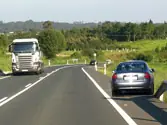
El vehículo del arcén, ¿está bien estacionado?
Is the vehicle on the hard shoulder parked correctly?
- ASí, porque no molesta.Yes, because it is not bothering anyone.
- BNo, porque en el arcén no se puede estacionar.No, because you cannot park on the hard shoulder.
- CNo, porque no está señalizado.No, because it is not signalled.
ExplanationAs a general rule, on interurban roads stopping or parking must always be done off the carriageway, on its right-hand side, leaving the usable part of the hard shoulder clear. In this case the hard shoulder is usable and must be kept clear for certain vehicles, such as cycles, mopeds, animal-drawn vehicles, vehicles for people with reduced mobility, special vehicles with a maximum authorised mass of up to 3,500 kg and vehicles accompanying cyclists.
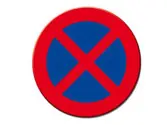
Un vehículo obstruye gravemente la circulación cuando realiza una parada o estacionamiento en...
A vehicle seriously obstructs traffic when it stops or parks…
- Auna vía de atención preferente.on a priority-attention road.
- Blos separadores u otros elementos utilizados para canalizar el tráfico.on separators or other features used to channel traffic.
- Czonas de carga y descarga fuera de las horas de utilización.in loading and unloading areas outside their hours of use.
ExplanationStopping or parking in dangerous places or places that seriously obstruct traffic includes cases that create a risk or obstacle to traffic, such as on central reservations, separators, traffic islands or other traffic channelling features. It would also be considered to seriously obstruct traffic when done in a PROHIBITED place on a road classed as a priority-attention road. In loading and unloading areas, stopping is allowed during their hours of use, and outside those hours both stopping and parking are allowed.
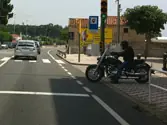
Cuando se incorporen a la circulación, es obligatorio facilitar la maniobra a...
When they are joining the traffic, you must make the manoeuvre easier for…
- Alos taxis, pero únicamente en poblado.taxis, but only in built-up areas.
- Btodos los vehículos.all vehicles.
- Clos vehículos de transporte público de viajeros, únicamente.public passenger transport vehicles only.
ExplanationWhen you see a driver trying to join the traffic, you must make the manoeuvre easier as far as possible, especially if it is a bus trying to pull out from a marked stop. In built-up areas, to help public passenger transport vehicles when leaving marked stops, drivers of other vehicles must: - move sideways when possible, - reduce their speed, as long as they can do so without risk, not abruptly and signalling it properly, and - stop if necessary, so that they can join the traffic.
Si Ud. desea cambiar de dirección a la izquierda, debe saber que no le estará permitido cuando...
If you want to turn left, you should know that it will not be allowed when…
- ANo exista señal que autorice expresamente la maniobra.There is no sign expressly allowing the manoeuvre.
- BNo exista visibilidad suficiente.There is not enough visibility.
- CNo exista un carril especialmente acondicionado para realizarlo.There is no lane specially set up for it.
ExplanationVisibility is crucial when turning. If you cannot see properly where you are going to turn, there is a high risk of an accident. That is why you must not turn left if there is not enough visibility, as you might not see other vehicles or pedestrians approaching.
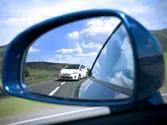
¿Tiene alguna obligación cuando su vehículo va a ser adelantado?
Do you have any obligation when your vehicle is going to be overtaken?
- ASí, señalizar con el intermitente derecho para indicar que puede realizar la maniobra con seguridad.Yes, signal with the right indicator to show that the manoeuvre can be done safely.
- BNo, la responsabilidad es del vehículo que adelanta.No, the responsibility lies with the overtaking vehicle.
- CSí, ceñirse al borde derecho de la calzada para facilitar la maniobra.Yes, keep to the right-hand edge of the carriageway to make the manoeuvre easier.
ExplanationA driver who notices that a vehicle behind intends to overtake them is obliged to keep to the right-hand edge of the carriageway to make the overtaking vehicle's manoeuvre easier, except when turning or changing direction to the left or stopping on that side. The driver of the vehicle being overtaken is obliged to reduce speed when, once overtaking has started, a situation arises that is dangerous for their own vehicle, for the overtaking vehicle, for oncoming traffic or for any other road user.
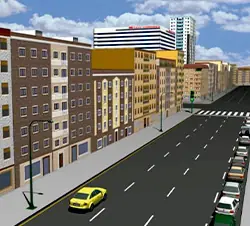
En una calzada de un solo sentido de circulación, ¿dónde debe situarse para cambiar de dirección a la izquierda?
On a one-way carriageway, where must you position yourself to turn left?
- AJunto al borde izquierdo de la calzada.Next to the left-hand edge of the carriageway.
- BJunto al borde derecho de la calzada.Next to the right-hand edge of the carriageway.
- CEn una calzada de un solo sentido no se puede cambiar de dirección.You cannot turn on a one-way carriageway.
ExplanationOn a one-way carriageway, to turn left you must move close to the left-hand edge in advance: as there is no oncoming traffic, this position shortens the path and does not cross the line of other vehicles.
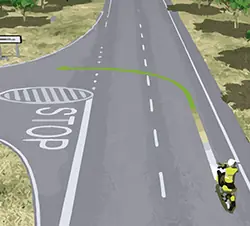
En una vía interurbana con un carril por sentido, ¿dónde se colocará un ciclomotor para girar a la izquierda, si no existe carril específico para realizar el giro?
On an interurban road with one lane in each direction, where will a moped position itself to turn left if there is no specific lane for turning?
- AEn el eje de la calzada, sin invadir el carril de sentido contrario.On the centre line of the carriageway, without entering the opposite lane.
- BEn la parte central del carril por el que circule.In the middle of the lane it is travelling in.
- CA la derecha, fuera de la calzada siempre que sea posible.On the right, off the carriageway whenever possible.
ExplanationMopeds may not position themselves on the centre line of the carriageway to turn: on an interurban road with one lane in each direction, they must move over to the right, off the carriageway if possible, and turn from there when there is no traffic.
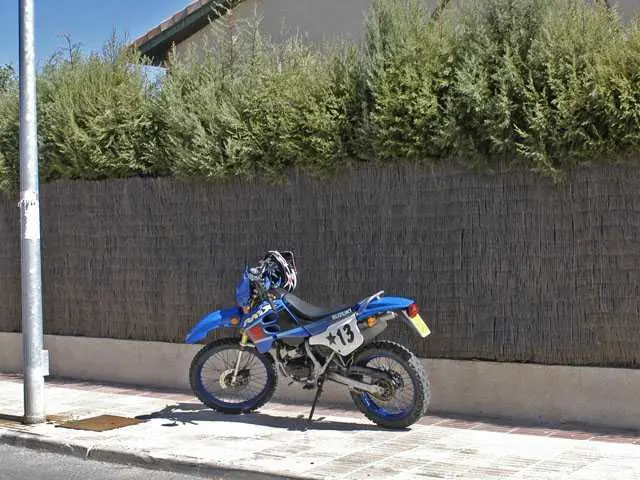
Como norma general, ¿puedes aparcar una motocicleta en la acera?
As a general rule, can you park a motorcycle on the pavement?
- ASí. Las motocicletas siempre se pueden aparcar en la acera.Yes. Motorcycles can always be parked on the pavement.
- BSi. Pero solo cuando la motocicleta tiene 125 centímetros cúbicos o menos.Yes. But only when the motorcycle is 125 cc or less.
- CNo. Está prohibido aparcar en la acera.No. Parking on the pavement is prohibited.
ExplanationThe pavement is a space reserved for pedestrians and, as a general rule, no vehicle may be driven or parked on it, including motorcycles. Only a municipal by-law can allow two-wheeled vehicles to be parked on the pavement in specific cases, and engine size does not change this rule.
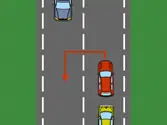
El vehículo rojo se detiene a la espera de poder realizar el cambio de sentido una vez haya pasado el vehículo gris. ¿Actúa de forma correcta?
The red vehicle stops, waiting to make a U-turn once the grey vehicle has passed. Is it acting correctly?
- ASí, siempre que pueda realizar el cambio de sentido sin efectuar marcha atrás.Yes, as long as it can make the U-turn without reversing.
- BNo.No.
- CNo, el cambio de sentido solo está permitido en lugares habilitados especialmente.No, U-turns are only permitted at specially provided places.
ExplanationThe red vehicle is not acting correctly. By staying on the carriageway while waiting to make the U-turn, it prevents the vehicles behind it from continuing, so it must leave the carriageway on its right-hand side, if possible, and wait until traffic conditions allow it to make the U-turn.
Al realizar una parada para descargar el equipaje...
When stopping to unload luggage…
- Aapagaremos el motor, sacaremos la llave del contacto y accionaremos el freno de mano.we will switch off the engine, take the key out of the ignition and apply the handbrake.
- Bdejaremos el motor encendido con el freno de mano.we will leave the engine running with the handbrake on.
- Cdejaremos el motor encendido.we will leave the engine running.
ExplanationA driver who stops and leaves their seat to unload must switch off the engine and make sure the vehicle cannot be used without their permission, by taking the key out of the ignition and also applying the handbrake.
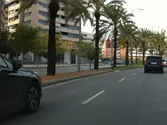
Circulando por una vía urbana, ¿se podrá adelantar por la derecha?
When driving on an urban road, can you overtake on the right?
- ASí, en todo caso.Yes, in all cases.
- BNo, adelantaremos siempre por la izquierda.No, we will always overtake on the left.
- CSí, cuando existan al menos dos carriles en el mismo sentido y estén delimitados.Yes, when there are at least two lanes in the same direction and they are marked.
ExplanationAs a general rule, you overtake on the left, but on urban roads, if there are at least two lanes in the direction of travel and they are marked, you may overtake on the right.
El autobús sale de la parada. ¿Es obligatorio dejarle pasar?
The bus is pulling out of the stop. Is it compulsory to let it out?
- ASolo si es transporte escolar.Only if it is school transport.
- BNo.No.
- CSí.Yes.
ExplanationUnder Article 73 of the General Traffic Regulations (RGC), other drivers must make way for public passenger transport vehicles joining the traffic from a marked stop. This is because these vehicles are responsible for picking up and dropping off passengers at specific stops, and to keep passengers safe it is essential that they are allowed to continue without obstacles. The rules aim to protect public transport users, considering its social role and the need to prevent accidents.
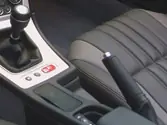
¿Sobre qué ruedas actúa el freno de estacionamiento?
Which wheels does the parking brake act on?
- ASobre las ruedas traseras.On the rear wheels.
- BSobre las ruedas delanteras.On the front wheels.
- CSobre todas las ruedas.On all the wheels.
ExplanationThe handbrake or parking brake generally brakes the vehicle's rear wheels, and it is used to keep the vehicle stationary when parked.
Para incorporarse a la circulación realizando marcha hacia atrás, ¿se puede invadir un cruce de vías?
When joining the traffic by reversing, can you enter a junction?
- ASí, siempre que no se recorran más de 15 metros.Yes, as long as you do not reverse more than 15 metres.
- BNo.No.
- CSí, siempre que se realice muy lentamente.Yes, as long as you do it very slowly.
ExplanationAs a general rule, reversing is prohibited, except in the following cases, as an exception and always over the minimum distance necessary: 1. As a manoeuvre that complements stopping, parking or joining traffic. In this case, you may not reverse more than 15 metres or enter a junction. 2. When it is not possible to move forwards or to change direction or make a U-turn. In this case there is no limit on the reversing distance, and you may even enter a junction if necessary. Reversing is prohibited on dual carriageways (autovías) and motorways (autopistas).
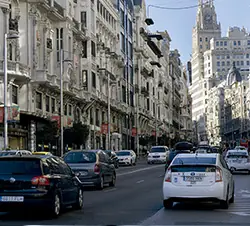
En vía urbana, cuando utilice el carril que más convenga a su destino, ¿puede abandonar dicho carril?
On an urban road, when you are using the lane that best suits your destination, can you leave that lane?
- ASí, para prepararse a cambiar de dirección, adelantar, parar o estacionar.Yes, to prepare to change direction, overtake, stop or park.
- BNo, en ningún caso.No, never.
- CSí, pero sólo para cambiar de dirección.Yes, but only to change direction.
ExplanationThe chosen lane can be left when a manoeuvre requires it: to prepare to change direction, overtake, stop or park, always signalling in advance.
Si un vehículo quiere adelantarnos en una carretera convencional de un carril por sentido, ¿qué debemos hacer?
If a vehicle wants to overtake us on a conventional road with one lane in each direction, what must we do?
- ANos acercaremos al borde derecho de la calzada.Move over to the right-hand edge of the carriageway.
- BAumentaremos nuestra velocidad.Increase our speed.
- CDisminuiremos nuestra velocidad.Reduce our speed.
ExplanationUnder Article 86.1 of the General Traffic Regulations (RGC), when another vehicle wants to overtake us, we must keep close to the right-hand edge of the carriageway. Increasing speed is prohibited; we only need to slow down if a dangerous situation arises once the manoeuvre has started.
All topics
- Definitions
- Documents and penalty points
- The driver's condition
- Duties of drivers and pedestrians
- Vehicle safety devices
- Vehicle controls and equipment
- Vehicle lights and horn
- Traffic signs, markings and signals
- The road and its lanes
- Speed and distances
- Right of way
- Carrying passengers and loads
- Driving safely in difficult conditions
- Vehicle mechanics and maintenance
- Road accidents and first aid
- Defensive and eco-driving
Independent app: not affiliated with or endorsed by the DGT (Spain's Directorate-General for Traffic) or the Ministry of the Interior. The official exam is booked with the DGT and taken at its test centres. The questions here are practice material; the DGT's official question bank is not public.
Basado en datos de la Agencia Estatal Boletín Oficial del Estado (https://www.boe.es). Textos consolidados de carácter meramente informativo. La AEBOE no patrocina ni respalda este sitio.
Parte de las preguntas procede de los tests de la revista «Tráfico y Seguridad Vial» de la DGT, reproducidos con indicación de la fuente.