
DGT test · 982 questions
Manoeuvres · Page 10 of 20
Joining traffic, overtaking, turning, U-turns, reversing, stopping and parking: how and where to do them and when they are forbidden.
Questions in this topic, with answers
982 questions, 50 per page, with the correct answer and the explanation. Page 10 of 20.
¿Está permitido adelantar si al hacerlo dificulta la circulación de ciclistas?
Is overtaking allowed if it hinders cyclists?
- ASí, siempre que se haga con precaución y se avise a los ciclistas con antelación.Yes, as long as it is done carefully and the cyclists are warned in advance.
- BSí, siempre, aunque suponga un peligro para los ciclistas.Yes, always, even if it puts the cyclists in danger.
- CNo, está prohibido.No, it is prohibited.
ExplanationUnder Article 85.4 of the General Traffic Regulations (as worded by RD 518/2026), when overtaking cyclists you must take special care not to put them in any danger, and it is prohibited to overtake in a way that endangers or hinders those travelling in the opposite direction, even if they are on the hard shoulder.
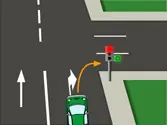
¿Qué hará el vehículo de la imagen?
What will the vehicle in the picture do?
- AAvanzar hacia la derecha por estar situado en el carril reservado para efectuar este cambio de dirección.Move forward to the right, because it is in the lane reserved for this turn.
- BAvanzar hacia la derecha, aun estando el semáforo contiguo en rojo, teniendo prioridad de paso por ser la flecha de color verde.Move forward to the right, even with the traffic light next to it on red, having right of way because the arrow is green.
- CEsperar a que la luz del semáforo contiguo esté en verde, si pretende continuar de frente.Wait for the traffic light next to it to turn green, if it intends to go straight on.
ExplanationThe vehicle faces a traffic light with a green arrow in the lane used for the turn, so it must continue, doing so carefully, letting through the vehicles in the lane it is joining and without endangering pedestrians.
Usted ha estacionado su ciclomotor en una intersección dificultando el giro a otros vehículos. ¿Es correcto su comportamiento?
You have parked your moped at a junction, making it difficult for other vehicles to turn. Is your behaviour correct?
- ASí, si no obstaculiza el paso de los peatones.Yes, if it does not block pedestrians.
- BNo.No.
- CSí, salvo que haya señal que lo prohíba.Yes, unless there is a sign prohibiting it.
ExplanationNo, it is wrong to park a moped at a junction, because it makes it difficult for other vehicles to turn.
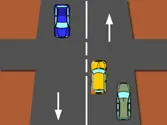
¿Dónde se colocará para cambiar de dirección la izquierda en una vía de doble sentido de circulación con dos carriles?
Where will you position yourself to turn left on a two-way road with two lanes?
- AAl lado derecho de la calzada, sin invadir el sentido contrario.On the right-hand side of the carriageway, without entering the opposite side of the road.
- BAl lado derecho del eje de la calzada o línea central de la vía por dónde circula, sin invadir el sentido contrario.Just to the right of the centre line of the road you are on, without entering the opposite side of the road.
- CAl lado izquierdo de la calzada, invadiendo el sentido contrario.On the left-hand side of the carriageway, entering the opposite side of the road.
ExplanationIf you intend to turn left on a two-way road with two lanes, keep close to the longitudinal line separating the two directions or, if there is none, to the centre of the carriageway, without entering the area intended for the opposite direction.
En una vía con un carril para cada sentido, delimitados por una línea discontinua, al pretender adelantar, otro vehículo que ya está adelantando, impide la visibilidad hacia delante. ¿Qué debe hacer?
On a road with one lane in each direction, separated by a broken line, you want to overtake, but another vehicle that is already overtaking blocks your view ahead. What must you do?
- AEstá prohibido adelantar, ya que el otro vehículo impide la visibilidad de la vía.Overtaking is prohibited, because the other vehicle blocks the view of the road.
- BSe puede adelantar siempre que mantenga una distancia mínima de 50 m. con el otro vehículo.You may overtake as long as you keep a minimum distance of 50 m from the other vehicle.
- CAdelantar, ya que el conductor de delante no adelantaría si no fuese segura la maniobra.Overtake, because the driver in front would not overtake if the manoeuvre were not safe.
ExplanationThe correct answer is that overtaking is prohibited because the other vehicle blocks the view of the road: when another vehicle that is already overtaking blocks your view ahead, you must stay safe and avoid risky manoeuvres. Lack of visibility can increase the risk of collisions and accidents, so overtaking is prohibited in these circumstances.
¿Puede circular en moto por un carril de autobuses?
May you ride a motorcycle in a bus lane?
- ANo, en general.No, in general.
- BSí, pero sólo para adelantar y para el paso imprescindible.Yes, but only to overtake and when strictly necessary to get past.
- CSí, en caso de tráfico muy denso.Yes, in very heavy traffic.
ExplanationAs a general rule, motorcycles may not use bus lanes, as laid down in the General Traffic Regulations. This is because these lanes are reserved for public transport and authorised vehicles, for example in specific situations, so motorcycles are prohibited from using them in order to keep traffic flowing smoothly and safely.
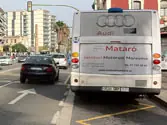
En zona urbana, ¿es obligatorio facilitar a un autobús la incorporación desde una parada señalizada?
In urban areas, is it compulsory to make it easier for a bus to pull out from a signed bus stop?
- ANo, no es obligatorio, pero sí recomendable.No, it is not compulsory, but it is advisable.
- BSí, pero solo reduciendo la velocidad, nunca deteniéndose.Yes, but only by reducing speed, never by stopping.
- CSí, y además es obligatorio detenerse en caso necesario.Yes, and you must also stop if necessary.
ExplanationIn built-up areas, to make it easier for a bus to leave a signed stop, other drivers must move over to the side if possible or reduce speed, and even stop if necessary (Article 73.2 of the General Traffic Regulations).

En este tramo de carretera, ¿está permitido hacer un cambio de sentido?
On this stretch of road, is it permitted to make a U-turn?
- ANo, solo está permitido en las intersecciones.No, it is only permitted at junctions.
- BSí.Yes.
- CNo.No.
ExplanationU-turns are prohibited where there is not enough visibility, at level crossings, in tunnels, on motorways (autopistas) and dual carriageways (autovías) (except at places set up for it), on one-way roads and on stretches where overtaking is prohibited. None of these cases applies on this stretch of conventional road.
En una vía de doble sentido un vehículo va a girar a la izquierda, ¿debe facilitar el adelantamiento por la derecha a los demás vehículos?
On a two-way road a vehicle is going to turn left. Must it make it easier for other vehicles to overtake it on the right?
- ASí, arrimándose todo lo posible al lado izquierdo de la calzada.Yes, by moving as far as possible to the left-hand side of the carriageway.
- BNo, ya que deben adelantar por la izquierda.No, because they must overtake on the left.
- CSí, arrimándose a la izquierda de su carril todo lo posible, pero sin obstaculizar a los vehículos que circulen en sentido contrario.Yes, by moving as far as possible to the left of its lane, but without obstructing vehicles travelling in the opposite direction.
ExplanationIf the road has two-way traffic, the driver places the vehicle next to the longitudinal marking or line, continuous or broken, that separates the two directions, without crossing it. Keeping close to the longitudinal line or to the centre of the carriageway is essential for safe and smooth traffic and allows, if possible, other vehicles to overtake on the right, avoiding unnecessary hold-ups.
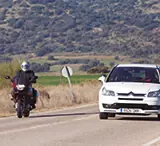
Aunque esté prohibido el adelantamiento, un turismo podrá rebasar, incluso invadiendo el sentido contrario, a...
Even where overtaking is prohibited, a car may pass, even entering the opposite side of the road...
- ACualquier camión.Any lorry.
- BConductores de bicicletas.Cyclists.
- CCualquier autobús o camión que circule lentamente.Any bus or lorry travelling slowly.
ExplanationUnder Article 88.2 of the General Traffic Regulations (as worded by RD 518/2026), where overtaking is prohibited you may still overtake, using the part of the carriageway reserved for the opposite direction, cyclists and other cycles, mopeds, personal mobility vehicles (PMVs), pedestrians, animals, animal-drawn vehicles and agricultural special vehicles, when their speed allows this to be done without risk. Lorries and buses are not included. When overtaking cyclists you must leave at least 1.5 metres (Article 85.4).
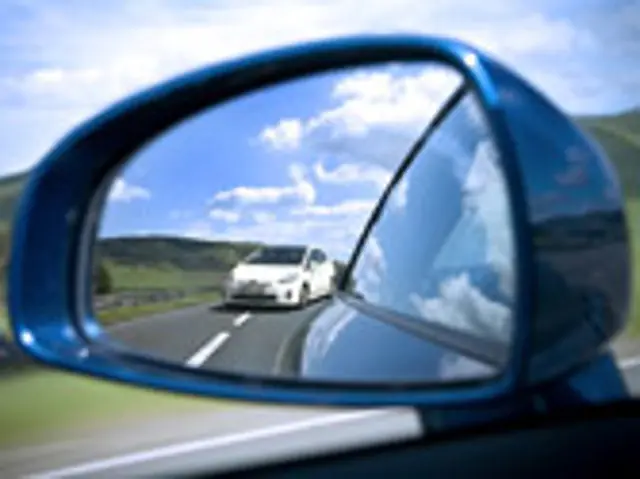
¿Tiene alguna obligación cuando otro vehículo le adelanta?
Do you have any obligation when another vehicle is overtaking you?
- ASí, usar el intermitente derecho para indicar que el adelantamiento es seguro.Yes, to use the right indicator to show that it is safe to overtake.
- BNo, la responsabilidad es del vehículo que adelanta.No, the responsibility lies with the overtaking vehicle.
- CSí, mantenerse lo más a la derecha posible para facilitar el adelantamiento.Yes, to keep as far to the right as possible to make the overtaking easier.
ExplanationA driver who notices that another driver wants to overtake them must keep to the right-hand edge of the carriageway and may not speed up or make manoeuvres that hinder the overtaking (Article 86 of the General Traffic Regulations).
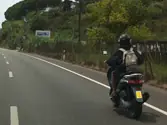
Si en vía interurbana un ciclomotor de dos ruedas quiere girar a la izquierda y no hay carril acondicionado para ello:
If, on a road outside built-up areas, a two-wheeled moped wants to turn left and there is no lane set up for this:
- ANo puede realizar el giro.It may not make the turn.
- BDebe situarse a la derecha, e iniciarlo siempre desde el centro de la calzada.It must move to the right and always start the turn from the centre of the carriageway.
- CDebe situarse a la derecha, e iniciarlo fuera de la calzada siempre que sea posible.It must move to the right and start the turn off the carriageway whenever possible.
ExplanationOn roads outside built-up areas, if there is no lane specially set up for turning left, cycles and mopeds must move to the right, off the carriageway whenever possible, and start the turn from there.
¿Se puede pisar la zona del cebreado para realizar la incorporación?
May you drive over a hatched area (chevron markings) to join the road?
- ANo, porque está prohibido.No, because it is prohibited.
- BSí, para hacerlo más rápidamente.Yes, to do it more quickly.
- CSí, si voy a baja velocidad.Yes, if I am going at low speed.
ExplanationNo driver may enter a hatched area with their vehicle to stop, park or drive, except vehicles that are required to use the hard shoulder.
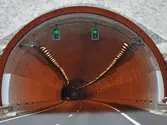
¿En un túnel podremos realizar un cambio de sentido?
May we make a U-turn in a tunnel?
- ANo, porque está prohibido.No, because it is prohibited.
- BSí, si no tengo que maniobrar.Yes, if I do not have to manoeuvre.
- CSí, teniendo suficiente visibilidad.Yes, if there is enough visibility.
ExplanationIn tunnels, underpasses or stretches of road marked with the tunnel sign, making a U-turn is prohibited.
Está prohibido estacionar...
It is prohibited to park...
- AEn las proximidades de un paso para peatones.Near a pedestrian crossing.
- BEn los vados correctamente señalizados.At properly signed vehicle entrances (vados).
- CEn las vías interurbanas.On roads outside built-up areas.
ExplanationArticle 94 of the General Traffic Regulations prohibits parking in front of properly signed vehicle entrances (vados), because it blocks vehicles from going in and out. On roads outside built-up areas you may park off the carriageway, and what is prohibited at a pedestrian crossing is stopping or parking on it.
¿Cuándo se puede adelantar por la derecha en la carretera?
When may you overtake on the right on an open road?
- ACuando la carretera tiene más de dos carriles en el mismo sentido.When the road has more than two lanes in the same direction.
- BCuando el vehículo al que se va a adelantar vaya a girar a la izquierda y haya espacio suficiente para hacerlo.When the vehicle you are going to overtake is about to turn left and there is enough space to do so.
- CCuando el carril derecho esté libre.When the right-hand lane is clear.
ExplanationOn an open road you may overtake on the right, taking the utmost care and if there is enough space, a vehicle whose driver is clearly signalling that they are going to turn left or stop on that side (Article 82.2 of the General Traffic Regulations). Having several lanes only allows it in built-up areas.
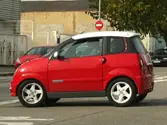
¿Dónde será más peligroso dejar el coche parado?
Where would it be most dangerous to leave your car stopped?
- AEn una isleta.On a traffic island.
- BEn el arcén.On the hard shoulder.
- CEn una zona de carga y descarga.In a loading and unloading area.
ExplanationStopping and parking on central reservations, dividers, traffic islands or other traffic channelling features are considered dangerous. In built-up areas the hard shoulder is used for parking, and outside built-up areas we may also use it if it is not usable for traffic. In loading and unloading areas you may stop, and outside their hours of use you may park.
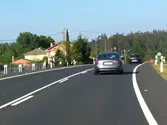
¿Se podrá estacionar en el arcén transitable de una vía interurbana?
Can you park on the driveable part of the hard shoulder on a road outside built-up areas?
- ASí.Yes.
- BSí, pero solo durante el día.Yes, but only during the day.
- CNo.No.
ExplanationOn the driveable part of the hard shoulder on a road outside built-up areas you may not stop or park, although you may do so on the part of the hard shoulder that is not driveable.
¿Está permitido aparcar en doble fila?
Is double parking allowed?
- ASí, por menos de 2 minutos.Yes, for less than 2 minutes.
- BNo.No.
- CSí, si no hay espacio cerca para dejar el vehículo junto al borde de la calzada.Yes, if there is no space nearby to leave the vehicle next to the edge of the carriageway.
ExplanationDouble parking is prohibited in all cases (Article 94.2.g of the RGC). Stopping alongside parked vehicles is only accepted if there is no space nearby, for less than two minutes and without leaving the vehicle.
En una intersección sin línea de detención, ¿dónde hay que parar?
At a junction with no stop line, where must you stop?
- AAl menos 5 metros antes de la intersección.At least 5 metres before the junction.
- BDentro de la intersección.Inside the junction.
- CAntes de entrar en la intersección.Before entering the junction.
ExplanationWith the red traffic light on the far side of the junction and no stop line, you must stop before entering the junction: vehicles must not go into it (Annex I of the General Traffic Regulations, traffic lights). There is no fixed distance of 5 metres.
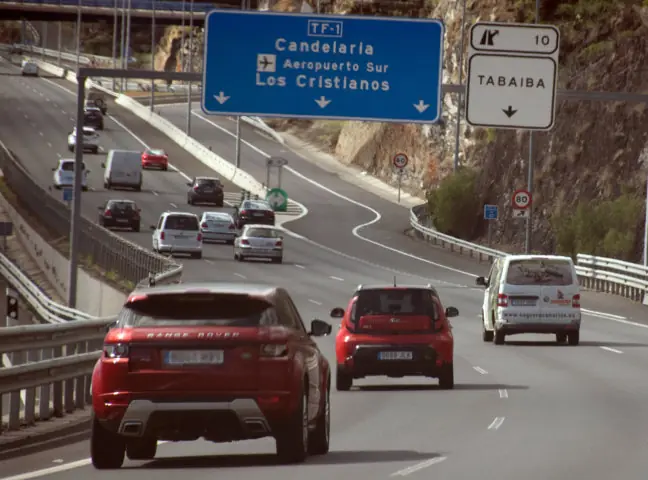
En esta vía, ¿puedes parar tu vehículo en el arcén para ver el paisaje?
On this road, can you stop your vehicle on the hard shoulder to look at the scenery?
- ASí. Porque el arcén es ancho.Yes, because the hard shoulder is wide.
- BNo. Está prohibido.No, it is prohibited.
- CSolo puedes parar menos de 1 minuto.You can only stop for less than 1 minute.
ExplanationOn motorways (autopistas) and dual carriageways (autovías) stopping is prohibited, except in the areas provided for it (Article 94 of the General Traffic Regulations, RGC), and the hard shoulder is not one of them. You may only stop on it in an emergency, such as a breakdown or feeling unwell; stopping to look at the scenery is not allowed, even if the hard shoulder is wide or the stop is short.
¿Se puede estacionar en un tramo de carril con una línea amarilla continua pintada junto al bordillo?
May you park on a stretch of lane with a continuous yellow line painted next to the kerb?
- ASí, porque es una vía con poca circulación.Yes, because the road has little traffic.
- BNo, porque la marca en la calzada lo prohíbe.No, because the road marking prohibits it.
- CNo, porque hay una acera.No, because there is a pavement.
ExplanationA continuous yellow line (M-7.8) prohibits stopping and parking along its whole length on the side of the carriageway where it is painted (Annex I of the General Traffic Regulations). It does not matter that there is little traffic, and the pavement on its own does not prohibit it.
Circulando por un túnel, sin intención de adelantar, deberá mantener con el vehículo que circula delante una distancia...
When driving through a tunnel with no intention of overtaking, you must keep a distance from the vehicle in front...
- Asuficiente para no colisionar con él, y que permita que me adelanten con seguridad.large enough not to collide with it, and that allows others to overtake me safely.
- Bde, al menos, 100 metros o 4 segundos.of at least 100 metres or 4 seconds.
- Cque permita al que circule detrás adelantar con seguridad.that allows the vehicle behind to overtake safely.
ExplanationIn tunnels, when you do not intend to overtake, you must keep a safe distance from the vehicle in front at all times of at least 100 metres or a minimum gap of four seconds.
Está prohibido realizar un cambio de dirección a la izquierda cuando no hay...
Turning left is prohibited when there is no...
- Aun lugar acondicionado expresamente para hacerlo.place specially set up for it.
- Buna señal que lo autorice expresamente.sign specifically allowing it.
- Cvisibilidad suficiente.sufficient visibility.
ExplanationA driver who wants to turn left from the road they are on must not carry out the manoeuvre when there is not enough visibility to do it safely.
Cuando un vehículo efectúe un cambio de carril, ¿quién tendrá prioridad?
When a vehicle changes lane, who has priority?
- AEl vehículo que se cambia porque circula a mayor velocidad.The vehicle changing lane, because it is going faster.
- BEl vehículo que ya circula por dicho carril.The vehicle already travelling in that lane.
- CEl vehículo que tenga la derecha libre.The vehicle that has the right side clear.
ExplanationWhen a vehicle moves sideways to change lane, it must follow these steps: look, give way if necessary, signal the manoeuvre it is going to make, and finally change lane.
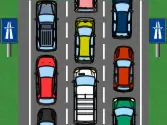
¿Se considera adelantamiento si los vehículos de un carril circulan más rápido que los del otro?
Is it considered overtaking if the vehicles in one lane are moving faster than those in the other?
- ANo.No.
- BSí.Yes.
- CSí, si los vehículos cambian de carril.Yes, if the vehicles change lane.
ExplanationPassing a vehicle is not considered overtaking: - When traffic is so dense that vehicles take up the whole width of the carriageway and you can only move at the speed of the vehicle in front. - When you are travelling in lanes or parts of the road reserved for certain vehicles or for certain manoeuvres, or the other way round (acceleration lane, deceleration lane, bus lane, turning lane, etc.).
¿Podremos atravesar la zona cebreada al incorporarnos a la autopista?
Can we drive across the hatched area when joining the motorway (autopista)?
- ANo, porque está prohibido.No, because it is prohibited.
- BSí, porque ya tenemos suficiente carril de aceleración para incorporarnos con seguridad.Yes, because we already have enough acceleration lane to join safely.
- CSí, si no entorpecemos la circulación a otros vehículos.Yes, if we do not get in the way of other vehicles.
ExplanationA hatched area made of diagonal stripes framed by a solid line means that no driver may enter it with their vehicle, except those who are required to drive on the hard shoulder.
¿Dónde estacionaremos una motocicleta en una vía de doble sentido dentro de poblado?
Where do we park a motorcycle on a two-way road in a built-up area?
- ATanto a la derecha como a la izquierda.Either on the right or on the left.
- BA la derecha.On the right.
- CA la izquierda.On the left.
ExplanationOn a two-way road, you may only stop and park on the right-hand side.
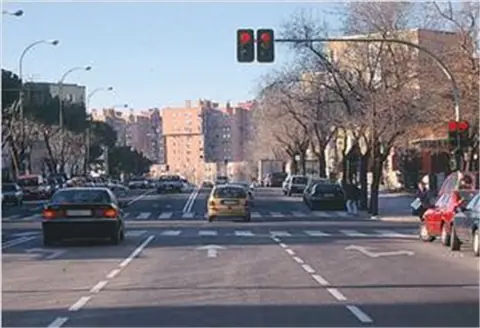
En esta vía, ¿dónde se colocará para cambiar de dirección a la derecha?
On this road, where should you position yourself to turn right?
- AEn cualquier carril.In any lane.
- BDonde no moleste a otros vehículos que sigan de frente.Where you do not disturb other vehicles going straight on.
- CEn el carril de la derecha.In the right-hand lane.
ExplanationTo turn right, you must move in good time into the right-hand lane, keeping as close as possible to the right-hand edge of the carriageway, as set out in Article 75 of the General Traffic Regulations, unless the road is signed otherwise.
Si un conductor se dispone a realizar un adelantamiento en una carretera convencional, ¿a qué distancia debe situarse del vehículo que pretende adelantar?
If a driver is about to overtake on a conventional road, how far should they stay from the vehicle they intend to overtake?
- AA una distancia que le permita detenerse en caso de frenado brusco del vehículo que pretende adelantar.At a distance that allows them to stop if the vehicle they intend to overtake brakes sharply.
- BLo más cerca posible, para que la maniobra de adelantamiento dure lo menos posible.As close as possible, so that the overtaking takes as little time as possible.
- CA 50 metros, como mínimo.At least 50 metres.
ExplanationWhile preparing to overtake, you must keep a gap that allows you to stop without hitting the vehicle in front if it brakes sharply (Article 54.1 of the General Traffic Regulations). Driving right behind it reduces your view and your margin to react, and there is no general minimum of 50 metres for cars.
En una vía urbana de sentido único, ¿en qué lado de la misma podremos efectuar un estacionamiento?
On a one-way urban road, on which side can we park?
- ASolo en el lado derecho.Only on the right-hand side.
- BEn el lado derecho o izquierdo indistintamente.On either the right-hand or the left-hand side.
- CSiempre en el lado derecho pero fuera de la calzada.Always on the right-hand side, but off the carriageway.
ExplanationOn one-way urban roads and travesías (stretches of road through a town), you may stop or park on either the right-hand or the left-hand side of the carriageway.
¿Está permitido detenerse en un carril de autobús?
Is it permitted to stop in a bus lane?
- ANo.No.
- BSí, si no obstruyo el paso de autobuses y taxis.Yes, if I do not block buses and taxis.
- CSí, en cualquier caso.Yes, in any case.
ExplanationNo. Article 94.1 of the RGC prohibits stopping in lanes for the exclusive use of urban public transport, even if you do not block buses or taxis. To stop, you must find a place where it is allowed.
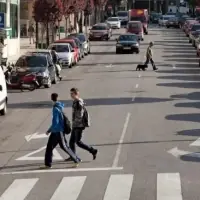
En un paso de peatones, ¿está permitido cambiar el sentido de la marcha?
Is it allowed to make a U-turn on a pedestrian crossing?
- ASí.Yes.
- BNo, pero si en sus alrededores.No, but it is allowed near it.
- CNo, ni tampoco en sus alrededores.No, and not near it either.
ExplanationThe Traffic Regulations say that it is completely prohibited to make a U-turn in underpasses, tunnels or on marked pedestrian crossings and near them. We also cannot make a U-turn when oncoming vehicles and their speed do not let us do it safely, or on motorways (autopistas) and dual carriageways (autovías) unless a sign allows it.
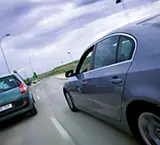
Es obligatorio finalizar un adelantamiento...
You must finish overtaking...
- AIncorporándose al carril derecho a la mayor velocidad posible.By moving back into the right-hand lane as fast as possible.
- BÚnicamente señalizando el desplazamiento lateral.Only by signalling the sideways movement.
- CIncorporándose al carril de forma gradual sin obstaculizar.By moving back into the lane gradually, without getting in the way.
ExplanationThe Traffic Regulations require you to finish overtaking by moving back into the lane gradually, without making the overtaken driver brake or change course.
Un conductor que indica que va a cambiar de carril, ¿tiene prioridad sobre los vehículos que ya circulan por el carril al que quiere cambiar?
Does a driver who signals that they are going to change lanes have priority over vehicles already in the lane they want to move into?
- ASí.Yes.
- BSolo si va a adelantar a un vehículo de gran tamaño.Only if they are going to overtake a large vehicle.
- CNo.No.
ExplanationSwitching on the indicator only announces the manoeuvre; it does not give priority. Any lane change must respect the priority of vehicles already in the lane you want to move into (Article 74.2 of the General Traffic Regulations (RGC)).
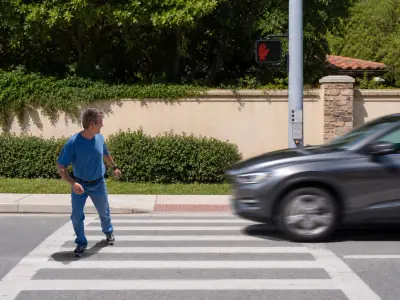
¿Qué precaución debe adoptar todo conductor para reducir el riesgo de atropello a peatones?
What precaution should every driver take to reduce the risk of hitting pedestrians?
- AEstar muy atento al circular marcha atrás.Pay close attention when reversing.
- BAumentar la velocidad ante un semáforo con luz amarilla encendida.Speed up at a traffic light showing amber.
- CCircular sin alumbrado en poblado entre la puesta y la salida del sol.Drive without lights in built-up areas between sunset and sunrise.
ExplanationTo reduce the risk of hitting pedestrians, you must keep your speed down in towns and near pedestrians, take extreme care when reversing or pulling out of a parking space, and slow down when approaching a stopped school bus. It is not a good idea to signal to a pedestrian to cross: another vehicle could hit them.
El conductor, al circular marcha atrás para estacionar, ¿debe llevar puesto el cinturón de seguridad?
When reversing to park, must the driver wear a seat belt?
- ANo.No.
- BSí, cuando la velocidad sea superior a 20 km/h.Yes, when the speed is over 20 km/h.
- CSí, sólo están exentos los taxistas en vía urbana.Yes, only taxi drivers on urban roads are exempt.
ExplanationAccording to Article 119 of the General Traffic Regulations (RGC) (as worded by RD 518/2026), in built-up areas only drivers and passengers of vehicles on an emergency call are exempt from wearing a seat belt; taxi drivers, delivery drivers and those accompanying pupils are no longer exempt. The general exemptions remain: the driver while reversing or parking, and people with a medical exemption certificate.
En zona urbana, ¿es obligatorio ceder el paso a un autobús que se incorpora desde una parada señalizada?
In an urban area, must you give way to a bus pulling out from a marked bus stop?
- ANo, no es obligatorio, pero sí recomendable.No, it is not compulsory, but it is advisable.
- BSí, pero solo reduciendo la velocidad, nunca deteniéndose.Yes, but only by slowing down, never by stopping.
- CSí. Además, debe detenerse si es necesario.Yes. You must also stop if necessary.
ExplanationIn built-up areas, to help a bus pull out from a marked stop, other drivers must move over sideways if possible or slow down, stopping if necessary (Article 73.2 of the General Traffic Regulations (RGC)). It is not just a recommendation.
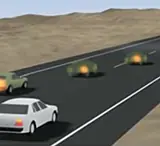
Al adelantar, ¿cuándo debe volver al carril derecho?
When overtaking, when should you move back into the right-hand lane?
- ADespués de recorrer 200 metros por delante del turismo.After travelling 200 metres ahead of the car.
- BDespués de 15 segundos.After 15 seconds.
- CDespués de ver en el espejo la parte delantera del vehículo adelantado.After seeing the front of the overtaken vehicle in the mirror.
ExplanationAfter overtaking you must move back into the right-hand lane gradually, without making the overtaken driver brake. A practical guide is to see the front of the overtaken vehicle in the interior mirror: this means there is already enough distance. There is no fixed distance or time.
En un paso de peatones, ¿está permitido cambiar de sentido?
Are you allowed to make a U-turn at a pedestrian crossing?
- ANo, ni siquiera en las cercanías.No, not even near it.
- BSí.Yes.
- CNo, pero sí en las cercanías.No, but you may near it.
ExplanationU-turns are prohibited wherever overtaking is prohibited (Article 79.1 of the General Traffic Regulations), and overtaking is prohibited at marked pedestrian crossings and near them (Article 87.1.b). That is why you may not make a U-turn near the crossing either.
¿Cómo avisará a los conductores que circulan por detrás de usted de que va a detenerse en el carril derecho?
How will you warn drivers behind you that you are going to stop in the right lane?
- AEncendiendo las luces de emergencia.By switching on the hazard warning lights.
- BEncendiendo el intermitente derecho.By switching on the right indicator.
- CEncendiendo el intermitente izquierdo.By switching on the left indicator.
ExplanationIf you are going to come to a halt to stop or park, you must use the indicator on the side you are moving towards, here the right, as well as your brake lights (Article 109.2.c of the General Traffic Regulations (RGC)). Hazard warning lights are for vehicles immobilised on a motorway or in poor visibility.
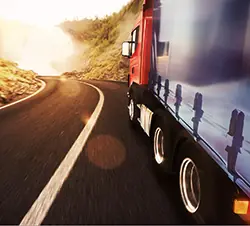
La marca vial es continua; ¿está permitido adelantar?
The road marking is solid. Is overtaking allowed?
- ASí, porque el camión circula despacio.Yes, because the lorry is going slowly.
- BNo, porque la marca vial lo prohíbe.No, because the road marking prohibits it.
- CNo, porque la vía no tiene arcén.No, because the road has no hard shoulder.
ExplanationA solid longitudinal line must not be crossed or driven on: it prohibits any overtaking that requires moving into the opposite direction, even if the vehicle in front is going slowly.
Un vehículo obstruye gravemente la circulación cuando se detiene o estaciona en...
A vehicle seriously obstructs traffic when it stops or parks...
- Aun carril preferente.in a priority lane.
- Blos separadores u otros elementos usados para canalizar el tráfico.on dividers or other features used to channel traffic.
- Czonas de carga y descarga fuera del horario de uso.in loading and unloading areas outside their hours of use.
ExplanationArticle 91.2 of the General Traffic Regulations considers that stopping or parking on central reservations, dividers, traffic islands or other traffic channelling features seriously obstructs traffic (letter e). A loading and unloading area only counts during its hours of use.
El conductor de un turismo circula por un túnel en el que está prohibido adelantar, ¿qué distancia de seguridad debe mantener con el vehículo que le precede?
The driver of a car is driving through a tunnel where overtaking is prohibited. What safe distance must they keep from the vehicle in front?
- AAl menos 50 metros, o un intervalo mínimo de 2 segundos.At least 50 metres, or a minimum gap of 2 seconds.
- BAl menos 150 metros, o un intervalo mínimo de 6 segundos.At least 150 metres, or a minimum gap of 6 seconds.
- CAl menos 100 metros, o un intervalo mínimo de 4 segundos.At least 100 metres, or a minimum gap of 4 seconds.
ExplanationIn tunnels, if you are not going to overtake, a car must keep at least 100 metres or a 4-second gap from the vehicle in front. The distance of 150 metres or 6 seconds is for vehicles over 3,500 kg.
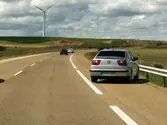
¿Está prohibido parar o estacionar en la parte transitable del arcén de una vía interurbana?
Is it prohibited to stop or park on the usable part of the hard shoulder of a road outside built-up areas?
- ASolamente parar.Only stopping.
- BTanto parar como estacionar.Both stopping and parking.
- CSolamente estacionar.Only parking.
ExplanationRemember that the hard shoulder of roads outside built-up areas is where various kinds of vehicles travel, such as bicycles, mopeds and animal-drawn vehicles, among others. If we stop our vehicle on the hard shoulder, we will get in the way of their normal traffic. That is why, to stop or park, we must do it on the right-hand side of the road, off the usable part of the hard shoulder. Do not confuse stopping or parking, which is a voluntary manoeuvre by the driver and must be done correctly, with an emergency stop: if we have to stop (not by the driver's choice) because of an emergency, we should try to do it in the most suitable place without getting in the way of other road users, but this is not always possible.
¿Está permitido adelantar en los pasos para peatones?
Is overtaking allowed on pedestrian crossings?
- ASí, a una velocidad tan reducida que permita detenerse a tiempo si surgiera peligro de atropello.Yes, at a speed low enough to stop in time if there is a risk of hitting someone.
- BSí, pero únicamente en vías urbanas.Yes, but only on urban roads.
- CNo, está prohibido.No, it is prohibited.
ExplanationAccording to Article 87.1.b of the General Traffic Regulations (RGC) (as worded by RD 518/2026), overtaking is prohibited on marked pedestrian crossings and near them; the exception that allowed overtaking at a very low speed has been removed.
Tras iniciar un adelantamiento, si comprueba que se aproxima un vehículo en sentido contrario, ¿qué debe hacer?
After starting to overtake, you see a vehicle coming the other way. What must you do?
- AReducir la velocidad y volver a su carril si no puede completar la maniobra con seguridad.Slow down and return to your lane if you cannot complete the manoeuvre safely.
- BAcelerar al máximo para terminar el adelantamiento cuanto antes.Accelerate as hard as possible to finish overtaking as quickly as you can.
- CHacer ráfagas con las luces para que el otro vehículo se aparte.Flash your lights so that the other vehicle moves over.
ExplanationIf, after you start overtaking, circumstances arise that make it hard to finish without risk, you must quickly slow down, return to your own lane and warn the drivers behind (Article 85.2 of the General Traffic Regulations (RGC)).
En una carretera con un carril por cada sentido, un camión está adelantando y me impide ver la carretera. ¿Puedo adelantar por detrás del camión?
On a road with one lane in each direction, a lorry is overtaking and blocks my view of the road. May I overtake behind the lorry?
- ANo, porque el camión no me protege.No, because the lorry does not protect me.
- BNo, porque no hay visibilidad.No, because there is no visibility.
- CSí, si el camión circula despacio.Yes, if the lorry is travelling slowly.
ExplanationOvertaking behind a vehicle that is doing the same manoeuvre is prohibited when its size blocks the view of the road ahead (Article 87.1.a of the General Traffic Regulations (RGC)). The lorry hides oncoming traffic, so there is not enough visibility.
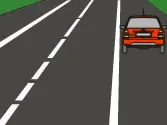
El vehículo rojo está parado en el arcén transitable de esta vía, ¿lo hace de forma correcta?
The red vehicle is stopped on the usable hard shoulder of this road. Is it doing this correctly?
- ASí, porque está parado. No sería correcto si estuviese estacionado.Yes, because it is stopped. It would not be correct if it were parked.
- BNo, en la parte transitable del arcén no se puede parar ni estacionar.No, you cannot stop or park on the usable part of the hard shoulder.
- CSí, en el arcén se puede parar y estacionar siempre que no estorbemos.Yes, you can stop and park on the hard shoulder as long as you do not get in the way.
ExplanationOn the usable hard shoulder of a road outside built-up areas we cannot stop or park. We could do so off the usable part of it. We can, however, use it for an emergency stop, which is a stop not by the driver's choice (breakdown, feeling unwell, etc.).
En una autovía, ¿puede adelantar por la derecha a un coche que circula por el carril izquierdo?
On a dual carriageway (autovía), may you overtake on the right a car that is driving in the left lane?
- ANo, porque está prohibido.No, because it is prohibited.
- BSí, porque es una autovía.Yes, because it is a dual carriageway.
- CSí, porque circula de forma incorrecta.Yes, because it is driving incorrectly.
ExplanationAccording to Article 82 of the General Traffic Regulations, you overtake on the left. Overtaking on the right is only allowed if the other driver is signalling that they are turning left or stopping on that side, or in built-up areas with two lanes in each direction. The fact that the other car is in the left lane does not allow it.
All topics
- Definitions
- Documents and penalty points
- The driver's condition
- Duties of drivers and pedestrians
- Vehicle safety devices
- Vehicle controls and equipment
- Vehicle lights and horn
- Traffic signs, markings and signals
- The road and its lanes
- Speed and distances
- Right of way
- Carrying passengers and loads
- Driving safely in difficult conditions
- Vehicle mechanics and maintenance
- Road accidents and first aid
- Defensive and eco-driving
Independent app: not affiliated with or endorsed by the DGT (Spain's Directorate-General for Traffic) or the Ministry of the Interior. The official exam is booked with the DGT and taken at its test centres. The questions here are practice material; the DGT's official question bank is not public.
Basado en datos de la Agencia Estatal Boletín Oficial del Estado (https://www.boe.es). Textos consolidados de carácter meramente informativo. La AEBOE no patrocina ni respalda este sitio.
Parte de las preguntas procede de los tests de la revista «Tráfico y Seguridad Vial» de la DGT, reproducidos con indicación de la fuente.