
DGT test · 982 questions
Manoeuvres · Page 5 of 20
Joining traffic, overtaking, turning, U-turns, reversing, stopping and parking: how and where to do them and when they are forbidden.
Questions in this topic, with answers
982 questions, 50 per page, with the correct answer and the explanation. Page 5 of 20.
¿Se puede adelantar en un paso para peatones y sus proximidades?
Can you overtake on and near a pedestrian crossing?
- ANo, está prohibido.No, it is prohibited.
- BSí, siempre que no pasen peatones.Yes, as long as no pedestrians are crossing.
- CSí, a velocidad tan reducida que permita detener el vehículo si hay peligro de atropello.Yes, at a speed low enough to stop the vehicle if there is a risk of hitting a pedestrian.
ExplanationUnder Article 87.1.b of the General Traffic Regulations (RGC), as worded by RD 518/2026, overtaking is prohibited at and near marked pedestrian crossings; the exception that allowed overtaking at very low speed has been removed.
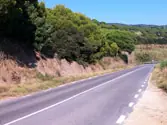
¿Está permitido parar su vehículo, en una vía interurbana?
Is it permitted to stop your vehicle on an interurban road?
- ASi, siempre que lo haga fuera de la calzada, en el lado derecho de la misma y dejando libre la parte transitable del arcén.Yes, as long as you do it off the carriageway, on its right-hand side, leaving the usable part of the hard shoulder clear.
- BSi, pero solo, cuando el arcén sea transitable y suficiente.Yes, but only when the hard shoulder is usable and wide enough.
- CNo, en ningún caso.No, never.
ExplanationOn interurban roads, you may only stop or park off the carriageway and off the usable part of the hard shoulder, and always on its right-hand side.
¿Qué debe hacer un coche para incorporarse a la circulación?
What must a car do to join traffic?
- AAsegurarse de que puede incorporarse sin poner en peligro a los demás.Make sure it can join without putting others in danger.
- BSeñalizar la maniobra, pero sólo si no obliga a otros a ceder el paso.Signal the manoeuvre, but only if it does not force others to give way.
- CNo seguir automáticamente las indicaciones de otra persona.Not follow another person's directions automatically.
ExplanationUnder Article 72.1 of the General Traffic Regulations, a driver joining traffic must first make sure they can do so safely, even following another person's directions if necessary, giving way and always signalling the manoeuvre.
¿Se puede parar en una isleta?
May you stop on a traffic island?
- ASí. Se puede parar en una isleta, pero no estacionar.Yes. You may stop on a traffic island, but not park.
- BNo. Además, se considera que se obstaculiza gravemente la circulación.No. In addition, it is considered to seriously obstruct traffic.
- CSí, si enciende las luces de emergencia.Yes, if you switch on the hazard warning lights.
ExplanationArticle 91 of the General Traffic Regulations treats stopping or parking on central reservations, separators, traffic islands or other traffic channelling features as stopping or parking in a dangerous place or one that seriously obstructs traffic. It is punished as a serious offence.
Un vehículo quiere girar a la derecha en una intersección con el semáforo en rojo. ¿Está obligado a detenerse?
A vehicle wants to turn right at a junction where the traffic light is red. Must it stop?
- ANo. Las indicaciones del semáforo le afectan solo si va a continuar de frente.No. The traffic light only applies if it is going straight on.
- BNo. Puede seguir con precaución.No. It may continue with care.
- CSí, debe obedecer las indicaciones del semáforo.Yes, it must obey the traffic light.
ExplanationA steady red light on a round traffic light prohibits all approaching vehicles from passing, whatever direction they are going to take (Annex I of the General Traffic Regulations, section 4.2). Only a lit green arrow would allow you to turn.
Los conductores están exentos de utilizar el cinturón de seguridad cuando efectúen la maniobra de marcha atrás o de estacionamiento...
Drivers are exempt from wearing a seat belt when reversing or parking…
- ASolamente cuando estén dentro de poblado.Only in built-up areas.
- BTanto si están dentro como fuera de poblado.Both in and outside built-up areas.
- CSolo en el caso de que dispongan de un certificado médico de exención.Only if they have a medical exemption certificate.
ExplanationDrivers are exempt from wearing a seat belt, both in and outside built-up areas, when reversing or parking. People with an exemption certificate for serious medical reasons or disability are also exempt.
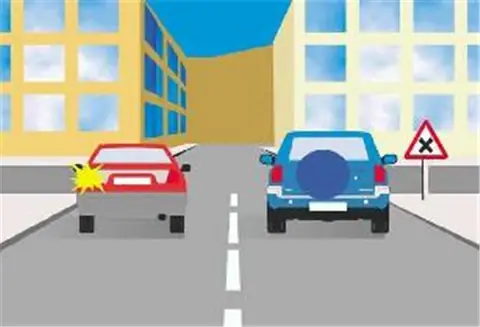
En esta vía de doble sentido, el vehículo rojo, ¿adelanta correctamente?
On this two-way road, is the red vehicle overtaking correctly?
- ANo , porque la calzada no tiene prioridad en la intersección.No, because the carriageway does not have priority at the junction.
- BSí , porque la calzada por la que circula tiene prioridad en la intersección.Yes, because the carriageway it is on has priority at the junction.
- CSolo si el vehículo azul ha indicado su intención de girar a la derecha.Only if the blue vehicle has signalled its intention to turn right.
ExplanationOvertaking is prohibited at and near junctions, with exceptions such as when the carriageway has signposted priority or when overtaking a two-wheeled vehicle. Here the sign indicates priority to the right, so the carriageway does not have priority and the overtaking is incorrect.
¿Está obligado el conductor de un camión a apartarse al arcén para permitir que otros vehículos lo adelanten?
Must a lorry driver move onto the hard shoulder to let other vehicles overtake?
- ANormalmente no.Not normally.
- BSí, cuando el camión circule a menos de 70 km/h.Yes, when the lorry is travelling at less than 70 km/h.
- CSí, cuando el camión sea un vehículo pesado.Yes, when the lorry is a heavy vehicle.
ExplanationHeavy or large vehicles only need to slow down or move onto the hard shoulder, if it is usable, when oncoming traffic, the width, the profile or the condition of the carriageway do not allow them to be overtaken easily and safely (Article 86.3 of the General Traffic Regulations (RGC)).
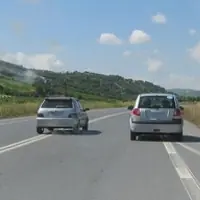
Adelantar a otro vehículo que ya está adelantando, ¿cuándo está prohibido?
When is it prohibited to overtake a vehicle that is already overtaking?
- ASiempre.Always.
- BNunca.Never.
- CCuando haya que invadir el sentido contrario o no se tenga suficiente visibilidad.When you would have to enter the opposite side of the road or do not have enough visibility.
ExplanationUnder Article 84.2 of the General Traffic Regulations (RGC), overtaking a vehicle that is already overtaking is prohibited if you would have to enter the opposite side of the road. In addition, Article 87.1.a prohibits it when the first overtaking vehicle blocks the view of the road ahead. With several lanes in each direction it is allowed.
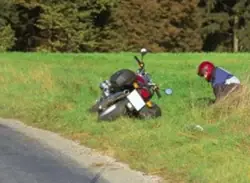
El conductor de una motocicleta que sufre una caída procurará...
A motorcyclist who falls should try to…
- ADeslizarse por el suelo lo más relajadamente posible hasta quedar detenido.Slide along the ground as relaxed as possible until coming to a stop.
- BRodar el cuerpo rápidamente para provocar mayor rozamiento y detenerse lo antes posible.Roll the body quickly to create more friction and stop as soon as possible.
- CLevantarse antes de haberse detenido totalmente, para evitar ser golpeado contra el suelo.Get up before coming to a complete stop, to avoid being thrown against the ground.
ExplanationIf you fall, the safest thing is to slide along the ground with your body as relaxed as possible until you come to a complete stop. Rolling or trying to get up before stopping increases the risk of hitting the ground, other vehicles or obstacles.
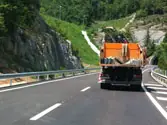
¿Qué deberá hacer usted para adelantar al vehículo que le precede?
What must you do to overtake the vehicle in front of you?
- AAcercarme a él lo máximo posible para adelantarlo utilizando el menor tiempo posible.Get as close to it as possible so I can overtake in the shortest possible time.
- BLe realizaré ráfagas con las luces de carretera para que disminuya la velocidad.I will flash my main beam at it so that it slows down.
- CMantendré la distancia frontal de seguridad e iniciaré el adelantamiento desde dicha posición.I will keep a safe distance behind it and start overtaking from that position.
ExplanationYou must always keep a safe distance from the vehicle in front, because if it brakes suddenly we could collide with it.
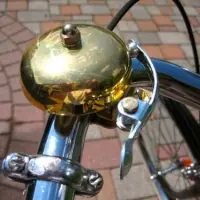
¿Qué tipo de aparato acústico deberán utilizar los ciclos?
What kind of audible warning device must cycles use?
- ACampanillaA small hand bell (campanilla)
- BTimbreA bicycle bell (timbre)
- CBocinaA horn
ExplanationCycles and bicycles will use a bell as their audible warning device, and may not have any other device. They will use it to warn other road users of any manoeuvres they make and of dangers on the road.
En un túnel, ¿se puede hacer una parada?
Can you stop in a tunnel?
- ASí, pero fuera del arcén.Yes, but not on the hard shoulder.
- BNo, porque es peligroso.No, because it is dangerous.
- CSí, pero menos de 2 minutos.Yes, but for less than 2 minutes.
ExplanationArticle 94.1 of the General Traffic Regulations prohibits stopping in tunnels, underpasses and stretches covered by the tunnel sign, because a vehicle stopped in an enclosed space with limited visibility is a serious danger to others.
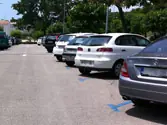
Si quiero incorporarme a la circulación efectuando marcha atrás, ¿qué precauciones debo tomar?
If I want to join the traffic by reversing, what precautions must I take?
- ANo recorrer una distancia mayor de 15 metros.Not reverse more than 15 metres.
- BIncorporarme aunque invada un cruce de vías.Join the traffic even if I enter a junction.
- CNo recorrer más de 40 metros.Not reverse more than 40 metres.
ExplanationAs a general rule, reversing is prohibited, except in the following cases, as an exception and always over the minimum distance necessary: 1. As a manoeuvre that complements stopping, parking or joining traffic. In this case, you may not reverse more than 15 metres or enter a junction. 2. When it is not possible to move forwards or to change direction or make a U-turn. In this case there is no limit on the reversing distance, and you may even enter a junction if necessary. Reversing is prohibited on dual carriageways (autovías) and motorways (autopistas).
¿Está prohibido detenerse en las intersecciones y cerca de ellas en vías interurbanas?
Is stopping prohibited at and near junctions on interurban roads?
- ASí, en cualquier vía.Yes, on any road.
- BNo.No.
- CSí, cuando se crea peligro por falta de visibilidad.Yes, when it creates danger due to lack of visibility.
ExplanationArticle 94.1.d of the General Traffic Regulations prohibits stopping at junctions and near them if it makes it difficult for other vehicles to turn or, on interurban roads, if it creates danger due to lack of visibility. It is not an absolute ban on every road.
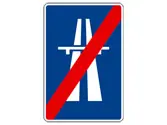
¿Al salir de una autopista o autovía se debe readaptar la conducción a las características de las carreteras convencionales?
When leaving a motorway (autopista) or dual carriageway (autovía), should you adapt your driving again to the features of conventional roads?
- ANo, basta con mantener la misma velocidad que en la autopista.No, it is enough to keep the same speed as on the motorway.
- BNo, la conducción del vehículo es la misma en todo tipo de vías.No, driving a vehicle is the same on all types of road.
- CSí, por ejemplo, existe tendencia a pensar que se conduce despacio aunque realmente se haga deprisa.Yes. For example, you tend to think you are driving slowly even when you are actually driving fast.
ExplanationDriving on a motorway or dual carriageway can be monotonous and reduce your attention. After driving at high speed for a long time, you can lose the real sense of that speed. So we must check the speedometer carefully to adapt our speed to the new circumstances.
El conductor está obligado a advertir mediante señales ópticas...
The driver is obliged to signal with visual signals…
- Asólo las maniobras que no impliquen un desplazamiento lateral.only manoeuvres that do not involve a sideways movement.
- Bel propósito de inmovilizar su vehículo o frenar su marcha de modo considerable.the intention to bring the vehicle to a standstill or to slow down considerably.
- Cúnicamente el propósito de frenar su vehículo.only the intention to brake the vehicle.
ExplanationDrivers must signal their manoeuvres, whether or not they involve a sideways movement, and not only when braking, so the answers 'only manoeuvres without a sideways movement' and 'only the intention to brake' are wrong. Drivers are obliged to signal with visual signals the intention to bring the vehicle to a standstill or to slow down considerably. We will do this by repeatedly using the brake lights or by moving the arm up and down with short, quick movements.
Si quiero incorporarme al tráfico dando marcha atrás, ¿qué precauciones debo tomar?
If I want to join traffic by reversing, what precautions must I take?
- ANo recorrer más de 15 metros.Not travel more than 15 metres.
- BIncorporarme aunque invada un cruce.Join even if I enter a junction.
- CNo recorrer más de 40 metros.Not travel more than 40 metres.
ExplanationUnder Article 80.2 of the General Traffic Regulations, reversing as a manoeuvre that complements stopping, parking or joining traffic may not exceed 15 metres or enter a junction.
Queda prohibido parar en...
Stopping is prohibited…
- Acurvas y cambios de rasante.on bends and brows of hills.
- Btramos de vías afectados por la señal túnel.on stretches of road covered by the tunnel sign.
- Ctodas las vías interurbanas.on all interurban roads.
ExplanationAs for location, stopping is prohibited in tunnels, underpasses and stretches of road covered by the 'Tunnel' sign. On bends and brows of hills, stopping and parking are prohibited, but only where visibility is reduced.
En una vía interurbana, ¿Puede adelantar un ciclomotor a una bicicleta que circula por el arcén?
On an interurban road, can a moped overtake a bicycle travelling on the hard shoulder?
- ASí, pero sólo de día.Yes, but only during the day.
- BSí, siempre que el recorrido en paralelo no supere 200 m o 15 seg.Yes, as long as travelling side by side does not exceed 200 m or 15 seconds.
- CNo, los vehículos que circulan por el arcén no se pueden adelantar.No, vehicles travelling on the hard shoulder cannot be overtaken.
ExplanationUnder Article 36 of the General Traffic Regulations (RGC), a moped rider travelling on the hard shoulder may overtake another user of the hard shoulder, such as a bicycle, as long as travelling side by side does not last more than 15 seconds or cover more than 200 metres.
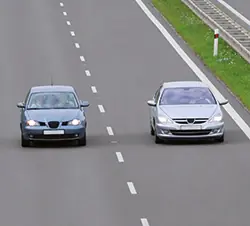
¿En qué caso no le está permitido adelantar detrás de otro vehículo que ya está adelantando?
In which case are you not allowed to overtake behind another vehicle that is already overtaking?
- ANunca está permitido adelantar cuando otro vehículo ya esté adelantando.It is never allowed to overtake when another vehicle is already overtaking.
- BCuando circule por una glorietaWhen driving on a roundabout
- CCuando no tenga visibilidad suficiente de la parte delantera de la vía.When you do not have enough visibility of the road ahead.
ExplanationYou can overtake behind another vehicle that is also overtaking, but Article 87 of the General Traffic Regulations (RGC) prohibits it when that vehicle's size prevents you from seeing the road ahead. Without enough visibility, you cannot overtake or abandon the manoeuvre safely.
¿Se podrá adelantar en un túnel?
May you overtake in a tunnel?
- ASí, como norma general.Yes, as a general rule.
- BSí, si el túnel dispone de iluminación.Yes, if the tunnel is lit.
- CNo, como norma general.No, as a general rule.
ExplanationAs a general rule, you may not overtake in a tunnel, unless it has two lanes in the same direction and you can overtake without going into the opposite lane.
En las intersecciones y sus alrededores, cuando se dificulta el giro o la visibilidad de otros vehículos, está prohibido...
At and near junctions, when it makes turning or the visibility of other vehicles difficult, it is prohibited to...
- Aparar.stop.
- Bestacionar.park.
- Cparar y estacionar.stop and park.
ExplanationUnder Article 94.1.d of the General Traffic Regulations (RGC), stopping is prohibited at and near junctions if it makes turning difficult for other vehicles or, outside built-up areas, if it creates danger through lack of visibility. Where stopping is prohibited, parking is also prohibited (Article 94.2.a).
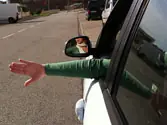
Si observamos el conductor de un vehículo con la palma de la mano hacia atrás, ¿qué nos indica?
If we see a vehicle's driver with the palm of their hand facing backwards, what are they telling us?
- AQue va a girar a la izquierda.That they are going to turn left.
- BQue va a girar a la derecha.That they are going to turn right.
- CQue va a dar marcha atrás.That they are going to reverse.
ExplanationUnder Article 109 of the General Traffic Regulations (RGC), reversing is signalled with the reversing light or by stretching the arm out horizontally with the palm facing backwards. Turns are signalled with the arm stretched out or bent upwards and the palm facing down or forwards.
En general, ¿se permite aparcar una motocicleta en la acera?
In general, is it permitted to park a motorcycle on the pavement?
- ANo, está prohibido aparcar en la acera.No, parking on the pavement is prohibited.
- BSí, en días laborables.Yes, on working days.
- CSí, solo los días festivos.Yes, only on public holidays.
ExplanationParking on the pavement is prohibited in Spain, unless specific signs or municipal rules say otherwise. Pavements are meant only for pedestrians, and breaking this rule can lead to a fine. In some cities, two-wheeled vehicles (bicycles, motorcycles) may be parked on the pavement, but only if local rules allow it and they do not block pedestrians.
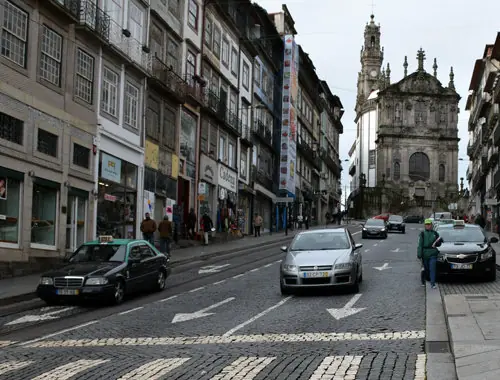
En esta vía urbana, ¿está permitido adelantar por la derecha?
On this urban road, is overtaking on the right allowed?
- ASí. Porque es una vía de un sentido y los carriles están señalizados.Yes, because it is a one-way road and the lanes are marked.
- BNo. Siempre se adelanta por la izquierda.No. You always overtake on the left.
- CSí. Pero solo cuando el vehículo de delante va a girar a la izquierda.Yes, but only when the vehicle in front is going to turn left.
ExplanationIn built-up areas, on carriageways with at least two lanes in the same direction separated by longitudinal markings, you may overtake on the right after making sure it can be done without danger (Article 82.3 of the General Traffic Regulations, RGC). So it is not true that this is only allowed when the vehicle in front is going to turn left.
¿Está permitido adelantar en los pasos de peatones y en sus inmediaciones?
Is overtaking permitted on and near pedestrian crossings?
- ANo, está prohibido.No, it is prohibited.
- BSí, si se hace a muy baja velocidad y permite detenerse a tiempo si hay peligro.Yes, if it is done at a very low speed that allows you to stop in time if there is danger.
- CSí, al adelantar a vehículos de dos ruedas si no dificultan la visibilidad.Yes, when overtaking two-wheeled vehicles if they do not block visibility.
ExplanationUnder Article 87.1.b of the General Traffic Regulations (RGC), as worded by RD 518/2026, overtaking is prohibited at and near marked pedestrian crossings; the exception that allowed overtaking at very low speed has been removed.
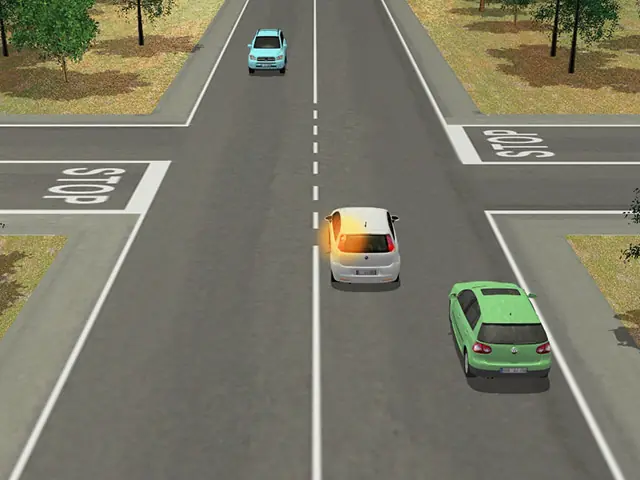
El vehículo blanco va a girar a la izquierda; el conductor del vehículo verde, ¿puede circular por el arcén para adelantarlo por la derecha?
The white vehicle is going to turn left. Can the driver of the green vehicle drive on the hard shoulder to overtake it on the right?
- ASí, siempre que el conductor del vehículo verde siga de frente o gire a la derecha.Yes, as long as the driver of the green vehicle goes straight on or turns right.
- BSí, siempre que el conductor del vehículo verde gire a la derecha.Yes, as long as the driver of the green vehicle turns right.
- CNo.No.
ExplanationYou may overtake on the right a vehicle that is signalling a left turn, but always on the carriageway. Cars may not drive on the hard shoulder except for emergency reasons (Article 31 of the General Traffic Regulations (RGC)), so using the hard shoulder to overtake is prohibited, whether you go straight on or turn.
Si ve que un vehículo quiere incorporarse desde el carril de aceleración, ¿qué debe hacer?
If you see a vehicle wanting to join from the acceleration lane, what should you do?
- ANada, porque tengo prioridad.Nothing, because I have priority.
- BFacilitar la incorporación cuando sea posible.Make it easier for it to join when possible.
- CCederle el paso.Give way to it.
ExplanationUnder Article 73.1 of the RGC, although the driver joining from the acceleration lane must give way, other drivers will make the manoeuvre easier as far as possible, for example by changing lanes if the next lane is free or by adjusting their speed. It is not about giving way to them, but about helping.
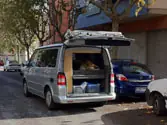
¿Se puede estacionar en doble fila?
Can you double-park?
- ANo.No.
- BSí, siempre y cuando lo hagamos por un tiempo inferior a dos minutos.Yes, as long as we do it for less than two minutes.
- CSí.Yes.
ExplanationWe can never double-park, not even for a short time. In a double row, only stopping is allowed, and only when there is no space nearby and traffic is not obstructed. Remember that stopping means standing still for less than 2 minutes, and the driver cannot leave the vehicle.
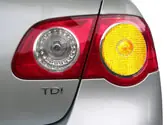
El intermitente derecho se utilizará para indicar...
The right indicator will be used to show…
- Acambio del sentido de la marcha.a U-turn.
- Bcambio de dirección a la izquierda.a turn to the left.
- Cel desplazamiento lateral a la derecha.a sideways movement to the right.
ExplanationThe right indicator will be used for sideways movements to the right: to turn right, stop, park, turn, or return to the right-hand lane after overtaking a vehicle, to change lanes, or to make a sideways movement even if it does not involve changing lanes.
¿Podremos adelantar en un túnel con doble sentido de circulación?
Can we overtake in a two-way tunnel?
- ANo, en ningún caso.No, never.
- BSí, si hay más de 1 carril en mi sentido y no invado el sentido contrario.Yes, if there is more than 1 lane in my direction and I do not enter the opposite direction.
- CSí, si no se acercan vehículos en sentido contrario y hay línea discontinua.Yes, if no vehicles are approaching from the opposite direction and there is a broken line.
ExplanationAs a general rule, overtaking is prohibited in a tunnel, but it may be done if there is more than one lane in our direction and we do not enter the opposite direction.
¿Qué debe hacer al adelantar a un ciclista que lleva a un pasajero?
What must you do when overtaking a cyclist who is carrying a passenger?
- AAumentar la precaución, porque la bicicleta puede volverse inestable.Take extra care, because the bicycle may become unstable.
- BAumentar la velocidad y acercarse lo más posible al borde derecho de la calzada.Increase speed and move as close as possible to the right-hand edge of the carriageway.
- CHacer señales acústicas al llegar a su altura para advertir de su presencia.Sound the horn when you are alongside to warn them you are there.
ExplanationUnder Article 85.4 of the General Traffic Regulations (RGC), as worded by RD 518/2026, when overtaking cyclists you must take special care with the manoeuvre and leave at least 1.5 metres; a bicycle carrying a passenger is less stable and it is not a good idea to surprise the cyclist with the horn.
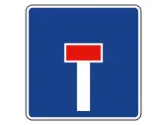
En una calle sin salida en la que no puede realizarse un cambio de sentido, ¿cómo saldremos de ella?
In a dead-end street where you cannot make a U-turn, how will we get out of it?
- ARecorriendo el mínimo indispensable para poder salir.Travelling the minimum distance necessary to get out.
- BNo recorriendo más de 15 metros y sin invadir un cruce de vías.Travelling no more than 15 metres and without entering a junction.
- CRecorriendo el mínimo indispensable y sin invadir un cruce de vías.Travelling the minimum distance necessary and without entering a junction.
ExplanationAs a general rule, reversing is prohibited, except in the following cases, as an exception and always over the minimum distance necessary: 1. As a manoeuvre that complements stopping, parking or joining traffic. In this case, you may not reverse more than 15 metres or enter a junction. 2. When it is not possible to move forwards or to change direction or make a U-turn. In this case there is no limit on the reversing distance, and you may even enter a junction if necessary. Reversing is prohibited on dual carriageways (autovías) and motorways (autopistas).
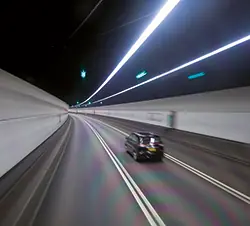
El conductor de un vehículo podrá adelantar en un túnel cuando...
A driver may overtake in a tunnel when…
- Aexista más de un carril en el sentido contrario de su marcha.there is more than one lane in the opposite direction.
- Bexista más de un carril en su sentido de circulación.there is more than one lane in their direction of travel.
- Cexista un carril para cada sentido, siempre que el túnel esté bien iluminado.there is one lane in each direction, as long as the tunnel is well lit.
ExplanationIn a tunnel you can overtake when there is more than one lane in your own direction of travel: this way the manoeuvre is done without entering the opposite direction, which is especially dangerous in an enclosed space.
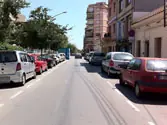
Cuando no se puede colocar el vehículo paralelo al borde de la calzada, ¿está permitido parar o estacionar?
When the vehicle cannot be placed parallel to the edge of the carriageway, is stopping or parking permitted?
- ANo, en ningún caso.No, never.
- BSólo si el estacionamiento está marcado en batería.Only if the parking bays are marked side by side, perpendicular to the kerb (en batería).
- CSí, si las características de la vía u otras circunstancias lo permiten.Yes, if the characteristics of the road or other circumstances allow it.
ExplanationWhen stopping or parking, the driver must place the vehicle parallel to the edge of the carriageway as a general rule (in line). However, it may be placed differently when the characteristics of the road or other circumstances make this advisable (side by side or at an angle).
Teniendo en cuenta que la línea de la derecha que delimita el borde de la calzada es discontinua, ¿le está permitido estacionar o parar en el arcén?
Given that the line on the right marking the edge of the carriageway is broken, are you allowed to park or stop on the hard shoulder?
- ASí, pero únicamente para realizar una parada.Yes, but only to stop.
- BSí, porque la línea discontinua permite parar en el arcén.Yes, because a broken line allows stopping on the hard shoulder.
- CNo, porque está prohibido parar o estacionar en la parte transitable del arcén.No, because it is prohibited to stop or park on the usable part of the hard shoulder.
ExplanationOn roads outside built-up areas, stopping and parking must be done off the carriageway, on the right-hand side, leaving the usable part of the hard shoulder clear (Article 90 of the General Traffic Regulations). Whether the edge line is solid or broken does not change how the hard shoulder may be used.
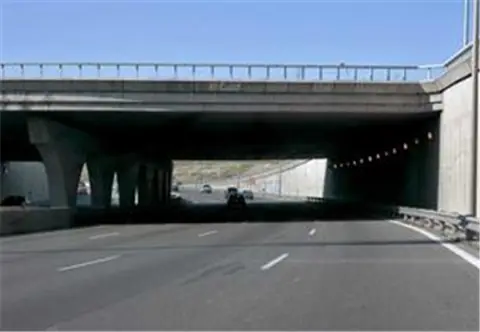
¿Está permitido parar y estacionar en un paso inferior?
Is stopping and parking permitted in an underpass?
- ANo.No.
- BParar, sí; estacionar, no.Stopping yes, parking no.
- CSólo si está suficientemente iluminado.Only if it is sufficiently lit.
ExplanationUnder Article 94 of the General Traffic Regulations (RGC), stopping is prohibited in tunnels, underpasses and stretches covered by the tunnel sign, and where stopping is prohibited, parking is too. Lighting does not change this prohibition.
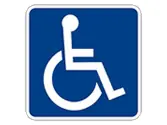
En las zonas señalizadas para uso exclusivo de personas con movilidad reducida está prohibido...
In areas marked for the exclusive use of people with reduced mobility, it is prohibited to...
- AParar y estacionar.stop and park.
- BEstacionar más de dos horas.park for more than two hours.
- CEstacionar.park.
ExplanationIn areas marked for the exclusive use of people with reduced mobility, both parking and stopping are prohibited.
¿Podemos efectuar una parada en el arcén de la autopista?
Can we stop on the hard shoulder of a motorway (autopista)?
- ASí, en caso de ser no transitable.Yes, if it is not usable.
- BNo, sólo podemos parar en los lugares habilitados para ello.No, we can only stop in places provided for this.
- CSí podemos parar pero no estacionar.We can stop but not park.
ExplanationOn dual carriageways and motorways, stopping and parking are prohibited except in areas provided for this. A halt in an emergency on the hard shoulder would be allowed.
¿Cuál es la finalidad de la cámara de marcha atrás instalada en el vehículo?
What is the purpose of the reversing camera fitted to the vehicle?
- ARealizar la maniobra de estacionamiento de forma rápida y segura.To park quickly and safely.
- BTener una vista clara y en tiempo real de la zona situada detrás del vehículo.To have a clear, real-time view of the area behind the vehicle.
- CPoder circular más de 15 metros para realizar un estacionamiento.To be able to reverse more than 15 metres when parking.
ExplanationReversing camera, 360° camera and/or parking sensors: the purpose of these cameras is to give the driver a better view and awareness of their surroundings, whether parking, reversing or manoeuvring in spaces with reduced visibility. The 360° system takes the images from the cameras around the vehicle and sends them to the control unit, which processes them to simulate a bird's-eye view of the vehicle and shows it on the display, as well as giving warnings when approaching an obstacle.
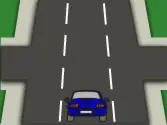
En esta calzada de sentido único y tres carriles, ¿está bien situado el vehículo para realizar un cambio de dirección a la izquierda?
On this one-way carriageway with three lanes, is the vehicle correctly positioned to turn left?
- ASí, si no circulan otros vehículos.Yes, if there is no other traffic.
- BNo, porque debe colocarse en el carril izquierdo.No, because it must move into the left-hand lane.
- CSí, porque no hay flechas en el pavimento.Yes, because there are no arrows on the road surface.
ExplanationUnless the road is laid out or signposted for making the turn in another way, the vehicle will keep as close as possible to the left-hand edge if the carriageway is one-way. On two-way carriageways with 3 lanes, we would have to move into the centre lane to turn left.
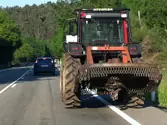
Circula con su turismo por el arcén detrás del tractor para facilitar el adelantamiento a un camión. ¿Es correcto?
You are driving your car on the hard shoulder behind the tractor to make it easier for a lorry to overtake. Is this correct?
- ASí, si el arcén fuera más ancho.Yes, if the hard shoulder were wider.
- BSí, si lleva encendidas las luces de emergencia.Yes, if you have your hazard warning lights on.
- CNo.No.
ExplanationThe driver of a motor vehicle must drive on the carriageway and not on the hard shoulder, except in an emergency. So in a car we will not drive on the hard shoulder to make overtaking easier.
¿Podremos usar la marcha hacia atrás para efectuar un cambio de sentido?
Can we reverse to make a U-turn?
- ASí, como máximo 15 metros.Yes, 15 metres at most.
- BNo.No.
- CSí, la distancia que se considere necesaria.Yes, whatever distance is considered necessary.
ExplanationReversing may not be used to make a U-turn; we must find a suitable place to do it.
¿Dónde podremos efectuar una parada en una autovía?
Where can we stop on a dual carriageway (autovía)?
- AEn el arcén.On the hard shoulder.
- BEn la calzada.On the carriageway.
- CEn los lugares habilitados para este fin.In places provided for this purpose.
ExplanationOn motorways and dual carriageways we may only stop and park in places specifically provided for this purpose.
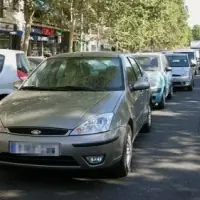
Un vehículo estacionado, ¿Cuándo obstruye gravemente la circulación?
When does a parked vehicle seriously obstruct traffic?
- ACuando está en una zona reservada para carga y descarga fuera de las horas de uso.When it is in an area reserved for loading and unloading outside its hours of use.
- BCuando está en doble fila y sin conductor.When it is double-parked without a driver.
- CCuando está cerca de un paso de peatones.When it is near a pedestrian crossing.
ExplanationParking (not stopping) in dangerous places or places that seriously obstruct traffic includes cases that create a risk or obstacle to traffic, such as double parking without a driver. You cannot stop or park on pedestrian crossings, but you can near them. In loading and unloading areas, parking is prohibited during their hours of use, but not outside them.
La ejecución de incorporación desde un carril de aceleración se hará...
Joining the traffic from an acceleration lane will be done…
- AAl final del carrilAt the end of the lane
- BAl principio del carril.At the start of the lane.
- CDonde se crea conveniente.Wherever you think best.
ExplanationJoining the traffic from an acceleration lane will be done at the end of the lane. If we must stop to give way to vehicles on the main road we want to join, we must do so at the start of the lane, so that we have the whole acceleration lane to match our speed to that of the main road.
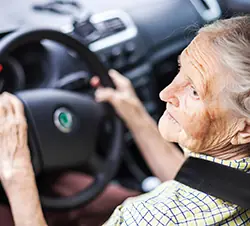
Debido al deterioro psicofísico consecuencia del envejecimiento, ¿qué situaciones de tráfico ofrecen más dificultades a las personas mayores?
Because of the physical and mental decline caused by ageing, which traffic situations are most difficult for older people?
- ALos giros a la izquierda, especialmente en vías urbanas.Left turns, especially on urban roads.
- BLos estacionamientos, sobre todo cuando se realizan a la derecha de la calzada.Parking, especially on the right-hand side of the carriageway.
- CLas situaciones complejas, como incorporarse a una vía en la que se circula a alta velocidad.Complex situations, such as joining a road where traffic moves at high speed.
ExplanationWith age, perceptual agility and reaction speed decrease, so older people find it harder to deal with complex situations that require quick decisions, such as joining a road where traffic moves at high speed.
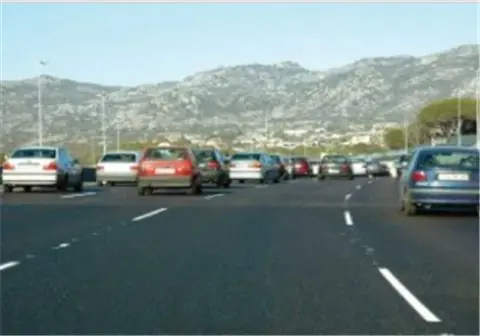
¿Qué es una detención?
What is a 'detención' (halt)?
- AUn estacionamiento sin bajarse del vehículo.Parking without getting out of the vehicle.
- BUna parada por cualquier causa.A stop for any reason.
- CLa inmovilización del vehículo por necesidades de la circulación.Bringing the vehicle to a standstill because of traffic needs.
ExplanationA 'detención' (halt) is when the vehicle is brought to a standstill because of an emergency, because of traffic needs, such as a traffic jam or a traffic light, or to comply with a rule. Stopping ('parada') and parking ('estacionamiento'), on the other hand, are voluntary.
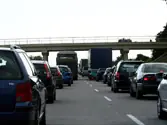
¿Cómo se indicará la intención de reducir la marcha considerablemente?
How will you signal the intention to slow down considerably?
- ACon la luz de posición.With the sidelights.
- BCon el intermitente del lado derecho.With the right indicator.
- CCon la luz de frenado.With the brake lights.
ExplanationThe intention to slow down considerably will be signalled by repeatedly using the brake lights or by moving the outstretched arm up and down.
All topics
- Definitions
- Documents and penalty points
- The driver's condition
- Duties of drivers and pedestrians
- Vehicle safety devices
- Vehicle controls and equipment
- Vehicle lights and horn
- Traffic signs, markings and signals
- The road and its lanes
- Speed and distances
- Right of way
- Carrying passengers and loads
- Driving safely in difficult conditions
- Vehicle mechanics and maintenance
- Road accidents and first aid
- Defensive and eco-driving
Independent app: not affiliated with or endorsed by the DGT (Spain's Directorate-General for Traffic) or the Ministry of the Interior. The official exam is booked with the DGT and taken at its test centres. The questions here are practice material; the DGT's official question bank is not public.
Basado en datos de la Agencia Estatal Boletín Oficial del Estado (https://www.boe.es). Textos consolidados de carácter meramente informativo. La AEBOE no patrocina ni respalda este sitio.
Parte de las preguntas procede de los tests de la revista «Tráfico y Seguridad Vial» de la DGT, reproducidos con indicación de la fuente.