
DGT test · 982 questions
Manoeuvres · Page 9 of 20
Joining traffic, overtaking, turning, U-turns, reversing, stopping and parking: how and where to do them and when they are forbidden.
Questions in this topic, with answers
982 questions, 50 per page, with the correct answer and the explanation. Page 9 of 20.
Al dar marcha atrás para estacionar...
When reversing to park...
- Adebe poner las luces de emergencia.you must switch on the hazard warning lights.
- Bno está permitido recorrer más de 15 metros ni invadir un cruce de vías.you may not cover more than 15 metres or go into a junction.
- Cla maniobra no puede durar más de 15 segundos.the manoeuvre may not last more than 15 seconds.
ExplanationReversing to park may not exceed 15 metres or go into a junction (Article 80.2 of the RGC). It is signalled with the reversing light or by arm, not with the hazard warning lights, and the rules do not set a duration in seconds.
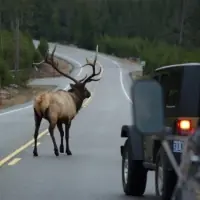
¿Se debe ocupar el carril contiguo para adelantar a un animal fuera de poblado?
Outside built-up areas, must you use the adjacent lane to overtake an animal?
- ANo, basta con adelantarlo sin salir de su carril.No, it is enough to overtake it without leaving your lane.
- BSí, ocupando parte o la totalidad del carril contiguo.Yes, occupying part or all of the adjacent lane.
- CSolo cuando se adelanta a vehículos de dos ruedas.Only when overtaking two-wheeled vehicles.
ExplanationUnder Article 85.4 of the General Traffic Regulations (as worded by RD 518/2026), when overtaking animals you must occupy part or all of the adjacent or opposite lane and leave a safety distance of at least 1.5 metres. Outside built-up areas, you must also reduce your speed by at least 20 km/h below the speed limit of the road.
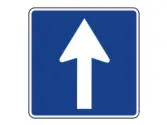
¿Se podrá efectuar un cambio de sentido en la vía así señalizada?
Can you make a U-turn on a road marked like this?
- ASí.Yes.
- BNo.No.
- CSí, si no circulan vehículos detrás de nosotros.Yes, if no vehicles are travelling behind you.
ExplanationThe sign shows that this is a one-way road, so it is not possible to make a U-turn.
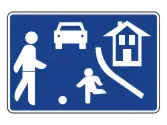
¿Está permitido el estacionamiento en las zonas de estancia y juego debidamente señalizadas?
Is parking allowed in properly signed residential and play areas?
- ANo, excepto en los lugares señalizados.No, except in the places marked.
- BNo, excepto en horas nocturnas.No, except at night.
- CSí, en cualquier lugar de la vía.Yes, anywhere on the road.
ExplanationAreas signed in this way are mainly for pedestrians: vehicles move very slowly, let pedestrians pass and may park only in places shown by signs or road markings, never anywhere on the road.
Si Ud. estaciona su vehículo junto al borde de la calzada en el que está pintada una línea amarilla longitudinal discontinua, debe saber que su comportamiento es...
If you park your vehicle next to the edge of the carriageway where a broken yellow longitudinal line is painted, your behaviour is...
- ACorrecto, porque es un lugar reservado para estacionar.Correct, because it is a place reserved for parking.
- BAntirreglamentario, porque está prohibido parar y estacionar.Against the rules, because stopping and parking are prohibited.
- CAntirreglamentario, porque está prohibido estacionar.Against the rules, because parking is prohibited.
ExplanationThis option is correct because a broken yellow longitudinal line means that parking is prohibited. Therefore, if you park there, you are committing an offence.
¿Se permite parar o estacionar si el vehículo no puede colocarse paralelo al borde de la calzada?
Is stopping or parking allowed if the vehicle cannot be placed parallel to the edge of the carriageway?
- ANo, en ningún caso.No, in no case.
- BSolo si el estacionamiento está en batería.Only if it is angled or perpendicular parking.
- CSí, si las características de la vía u otras circunstancias lo permiten.Yes, if the features of the road or other circumstances allow it.
ExplanationUnder Article 92 of the General Traffic Regulations, the vehicle must be placed parallel to the edge of the carriageway. However, parking in another way is also allowed if the features of the road or other circumstances make it advisable. That is why the correct option is that, yes, stopping or parking is allowed if conditions permit, which could include situations where there is not enough space or where the type of road requires a different position to ensure safety.
Por el deterioro físico y mental que trae el envejecimiento, ¿qué situaciones de tráfico resultan más difíciles para las personas mayores?
Because of the physical and mental decline that comes with ageing, which traffic situations are most difficult for older people?
- ALos giros a la izquierda, especialmente en vías urbanas y con tráfico intenso.Left turns, especially on urban roads with heavy traffic.
- BLas maniobras de estacionamiento, sobre todo cuando se hacen en batería o en paralelo a la derecha de la calzada.Parking manoeuvres, especially perpendicular or parallel parking on the right-hand side of the carriageway.
- CLas situaciones complejas, como incorporarse a una vía en la que se circula a alta velocidad.Complex situations, such as joining a road where traffic moves at high speed.
ExplanationWith age, eyesight, hearing, speed of reaction and the ability to pay attention to several things at once all decline. That is why older people find complex situations that require quick decisions harder, such as joining a road where traffic moves at high speed.
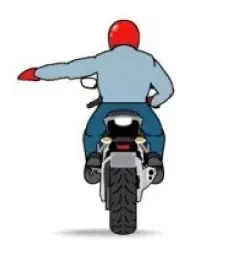
El conductor de una motocicleta que va a girar a la izquierda, ¿cómo debe señalizar la maniobra?
How must a motorcycle rider signal that they are going to turn left?
- ACon el brazo izquierdo hacia abajo y la palma de la mano hacia atrás.With the left arm pointing down and the palm of the hand facing backwards.
- BCon el brazo izquierdo doblado hacia arriba.With the left arm bent upwards.
- CCon el brazo izquierdo extendido horizontalmente y la palma de la mano hacia abajo.With the left arm stretched out horizontally and the palm of the hand facing down.
ExplanationTo signal the intention to turn left, if there are no indicators, use the left arm held horizontally with the palm of the hand open and facing down. To move to the right or turn right, use the left arm bent upwards with the palm of the hand facing forwards. To slow down or stop, signal it by moving the arm up and down with short movements.
¿Cómo advertirá a los demás conductores su intención de detener el vehículo en el lado derecho de la calzada?
How will you warn other drivers that you intend to stop your vehicle on the right-hand side of the carriageway?
- ADoblando el brazo hacia arriba con la palma de la mano hacia atrás.By bending the arm upwards with the palm of the hand facing backwards.
- BEncendiendo el intermitente derecho.By switching on the right indicator.
- CEncendiendo las luces de emergencia.By switching on the hazard warning lights.
ExplanationTo signal a stop, we must use the indicator on the side where we are going to stop. A move to the right can be signalled with the right indicator or with the left arm bent upwards with the palm of the hand open.
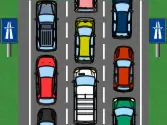
En caso de congestión del tráfico, ¿se considera adelantamiento si los vehículos de un carril circulan más rápido que los del otro?
In congested traffic, is it considered overtaking if the vehicles in one lane move faster than those in another?
- ANo.No.
- BSí.Yes.
- CSí, si los vehículos cambian de carril.Yes, if the vehicles change lanes.
ExplanationMoving past a vehicle is not considered overtaking: - When traffic is so heavy that vehicles occupy the whole width of the carriageway and you can only travel at the speed of the vehicle in front. - When one vehicle travels in lanes or parts of the road intended for certain vehicles or certain manoeuvres and the other does not, or vice versa (acceleration lane, deceleration lane, bus lane, turning lane, etc.).
¿Cómo puede avisar su intención de adelantar fuera de poblado?
How can you signal that you intend to overtake outside built-up areas?
- ASolo con las luces (cortas o largas).Only with the lights (dipped headlights or main beam).
- BCon señales ópticas y acústicas.With visual and audible signals.
- CSolo con señales acústicas.Only with audible signals.
ExplanationOutside built-up areas you may warn the driver of another vehicle that you intend to overtake with an audible signal (Article 110.2 of the General Traffic Regulations) or replace it with short flashes of the dipped headlights or main beam without dazzling (Article 109.3). In addition, the move to the side is signalled with the indicator.
¿Podemos parar sobre una línea amarilla en zig-zag?
May we stop on a yellow zigzag line?
- AParar si, estacionar no.Stopping yes, parking no.
- BNo se puede ni parar ni estacionar.You may neither stop nor park.
- CEstacionar si, pero parar no.Parking yes, but stopping no.
ExplanationOn a yellow zigzag line we may stop but not park.
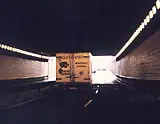
Distancia entre vehículos si no pretende adelantar al vehículo que le precede, en un túnel para un turismo.
Distance between vehicles for a car in a tunnel, if you do not intend to overtake the vehicle in front.
- ALa suficiente para no colisionar con él.Enough not to collide with it.
- B100 metros o un intervalo de 4 segundos.100 metres or a gap of 4 seconds.
- C50 metros.50 metres.
ExplanationUnder Article 95 of the General Traffic Regulations, in a tunnel, if you are not going to overtake, a car must keep at least 100 metres or 4 seconds from the vehicle in front. Vehicles over 3,500 kg must keep 150 metres or 6 seconds.
¿Cómo se ha de estacionar un turismo en una pendiente ascendente?
How should a car be parked on an uphill slope?
- ACon el freno de mano y la 1ª velocidad.With the handbrake on and in 1st gear.
- BCon el freno de mano y la marcha atrás.With the handbrake on and in reverse gear.
- CCon el freno de mano y la marcha más larga posible.With the handbrake on and in the highest possible gear.
ExplanationOn uphill slopes, in addition to the handbrake, we must leave the car in 1st gear. If the slope is downhill, we leave it in reverse gear.
¿Está permitido adelantar en un túnel con más de un carril por sentido?
Is overtaking allowed in a tunnel with more than one lane in each direction?
- ANo, nunca en túnelesNo, never in tunnels
- BSí, si hay visibilidad y carril suficienteYes, if there is enough visibility and lane space
- CSolo motosOnly motorcycles
ExplanationIn tunnels with two or more lanes in each direction, the general overtaking rules apply. It is only prohibited in tunnels with one lane in each direction.
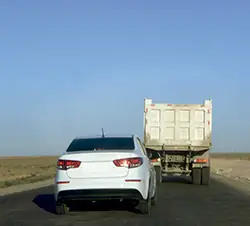
Si un conductor inicia un adelantamiento y se producen circunstancias que hacen difícil finalizar la maniobra...
If a driver starts to overtake and circumstances arise that make it difficult to finish the manoeuvre...
- Adebe regresar a su carril y advertirlo a los que circulen por detrás.they must return to their lane and warn those behind.
- Bel conductor del vehículo adelantado está obligado a apartarse al arcén.the driver of the vehicle being overtaken must move onto the hard shoulder.
- Cdebe acelerar y terminar la maniobra, aunque genere una situación de riesgo.they must speed up and finish the manoeuvre, even if it creates a risk.
ExplanationIf circumstances arise that make it difficult to finish overtaking, the safe thing is to give up: return to your own lane and warn the vehicles behind; never force the manoeuvre.
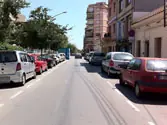
¿Cómo debe colocar su vehículo al parar o estacionar?
How must you position your vehicle when stopping or parking?
- AEs indiferente, siempre que pare el motor y accione el freno de estacionamiento.It does not matter, as long as you stop the engine and apply the parking brake.
- BColocando el vehículo en paralelo a la vía, siempre.Always parallel to the road.
- CDe manera que permita la mejor utilización del espacio disponible.So that the available space is used as well as possible.
ExplanationEvery driver who stops or parks must do so in a way that allows the best use of the remaining available space. As a general rule, we place the vehicle parallel to the edge of the carriageway, in line, unless the features of the road or other circumstances make another position advisable (angled or perpendicular).
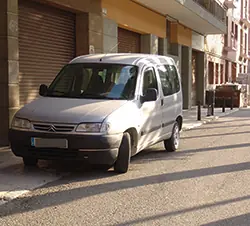
Necesita hacer una parada en una calle estrecha; ¿puede ocupar parte de la acera con su vehículo?
You need to stop in a narrow street. May your vehicle take up part of the pavement?
- ASí.Yes.
- BNo.No.
- CSolo si no hay señal que lo prohíba expresamente.Only if there is no sign that expressly prohibits it.
ExplanationStopping on the pavement, even partly, is prohibited: it is a space reserved for pedestrians, and taking it over forces them to step into the carriageway, where they risk being hit.
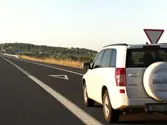
Circulando por una autopista, ¿estamos obligados a facilitar la incorporación a los vehículos que se quieren acceder a ella?
When driving on a motorway (autopista), are we obliged to help vehicles that want to join it?
- ASí, en la medida de lo posible.Yes, as far as possible.
- BSí, cambiándonos siempre de carril.Yes, always by changing lanes.
- CNo, ya que tenemos preferencia al circular por una autopista.No, because we have priority when driving on a motorway.
ExplanationWhen we see a driver trying to join the traffic, we must make the manoeuvre easier for them as far as possible, especially if it is a bus trying to pull out from a marked stop. In built-up areas, to help public passenger transport vehicles pull out from marked stops, drivers of other vehicles must: - move sideways when possible, - reduce speed, whenever they can do so without risk, without sudden movements and signalling correctly, and - stop, if necessary, so that the bus can join the traffic. Helping the manoeuvre does not mean we have to stop to let the other vehicle in; we can adjust our speed or change lanes to help it join.
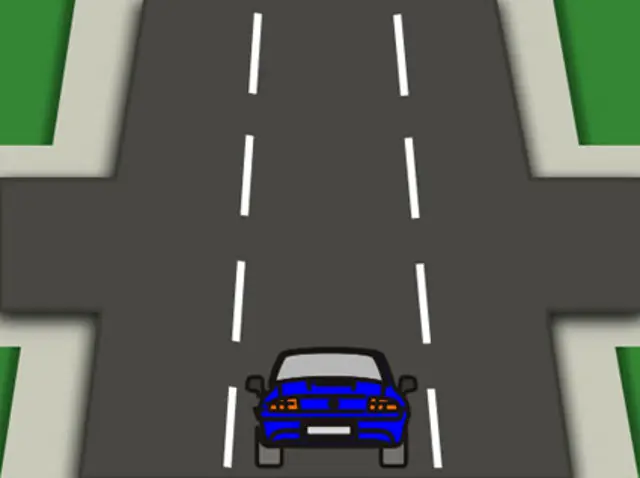
En esta vía de sentido único con tres carriles, ¿está bien colocado el vehículo para girar a la izquierda?
On this one-way road with three lanes, is the vehicle correctly positioned to turn left?
- ASí, si no hay otros vehículos circulando.Yes, if no other vehicles are travelling.
- BNo, debe situarse en el carril izquierdo.No, it must be in the left lane.
- CSí, porque no hay flechas en la calzada.Yes, because there are no arrows on the carriageway.
ExplanationOn a one-way carriageway, when you want to turn left, the vehicle must be in the left lane. The rules state that, unless the road is designed or signed for doing it another way, the driver must keep as close as possible to the left edge of the carriageway when turning left. In this case, the correct answer is the one that says it must be in the left lane, because the vehicle is not in the right position to make the manoeuvre safely and legally.
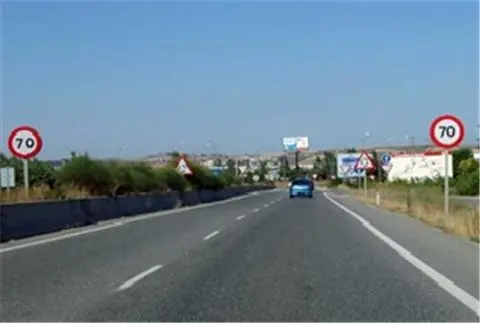
¿Puede adelantar a un vehículo que circule en esta vía a 70 kilómetros por hora?
May you overtake a vehicle travelling at 70 km/h on this road?
- ANo.No.
- BSí, a 90 kilómetros por hora.Yes, at 90 km/h.
- CSí, cuando no coincida esa velocidad con la genérica de la vía.Yes, when that speed is not the same as the road's general limit.
ExplanationOn this stretch, the maximum speed is 70 km/h. If the vehicle in front is already travelling at 70 km/h, overtaking it would mean exceeding that limit, and there is no margin for exceeding it when overtaking. So you may not overtake it.
Muchos atropellos a peatones se producen...
Many pedestrians are hit by vehicles...
- Adurante la noche.at night.
- Bcuando los vehículos circulan marcha atrás.when vehicles are reversing.
- Cen autopistas.on motorways (autopistas).
ExplanationA significant number of pedestrians are hit when vehicles are reversing, because drivers do not take the necessary precautions to make sure they can do the manoeuvre without endangering pedestrians.
¿Se puede parar o estacionar en las isletas de canalización situadas en la calzada?
May you stop or park on the traffic islands placed on the carriageway?
- ANo se puede ni parar ni estacionar.You may neither stop nor park.
- BSólo se puede parar.You may only stop.
- CSólo se puede estacionar.You may only park.
ExplanationUnder Article 91 of the General Traffic Regulations, stopping and parking in places that are dangerous or seriously obstruct traffic, such as traffic channelling islands, are prohibited. These islands are designed to improve road safety and help traffic flow, so stopping or parking on them would affect traffic and could put other road users at risk.
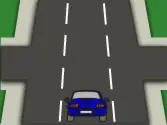
Para cambiar de dirección a la izquierda en una vía de sentido único, ¿se ceñirá todo lo posible al borde izquierdo de la calzada?
To turn left on a one-way road, must you keep as close as possible to the left edge of the carriageway?
- ASí, pero sólo en vías de doble sentido de circulación.Yes, but only on two-way roads.
- BSí, salvo que la vía esté acondicionada o señalizada para realizarlo de otra manera.Yes, unless the road is designed or signed for doing it another way.
- CNo, como norma general.No, as a general rule.
ExplanationUnless the road is designed or signed otherwise, to turn left on a one-way carriageway you must keep as close as possible to its left edge. If the carriageway is two-way, you must keep close to the line separating the two directions or, if there is none, to the centre of the carriageway (Article 75.1 of the General Traffic Regulations).
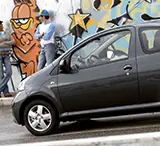
Al estacionar en una pendiente descendente, ¿qué precauciones debe adoptar?
When parking on a downhill slope, what precautions must you take?
- ADejar colocada la primera marcha.Leave it in first gear.
- BParar el motor, poner el freno de estacionamiento y dejar colocada la marcha atrás si la caja de cambios es manual.Stop the engine, apply the parking brake and leave it in reverse gear if the gearbox is manual.
- CParar el motor y poner el freno de estacionamiento, únicamente.Stop the engine and apply the parking brake, and nothing else.
ExplanationOn a downhill slope you stop the engine, apply the parking brake and leave reverse gear engaged: it is the gear opposite to the direction of the slope and acts as a brake if the handbrake fails.
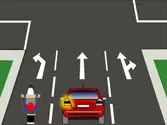
¿Hasta cuándo rige la prohibición de adelantar?
Until when does a no-overtaking restriction apply?
- AHasta pasado el peligro.Until the danger has been passed.
- BHasta la próxima señal de fin de prohibición.Until the next end-of-restriction sign.
- CHasta que encontremos una línea discontinua.Until we reach a broken line.
ExplanationThe restriction applies from the place where the prohibition sign is located until the next end of no-overtaking sign or end of all restrictions sign.
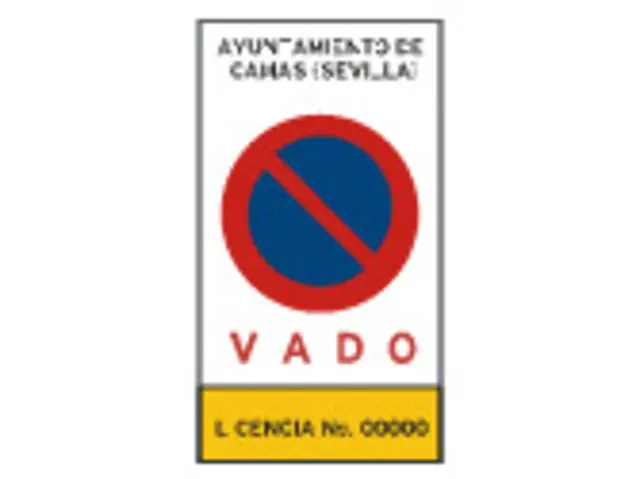
¿Está permitido estacionar en la entrada de un garaje?
Is parking allowed at the entrance to a garage?
- ASí.Yes.
- BSí, pero debo encender las luces de emergencia.Yes, but I must switch on the hazard warning lights.
- CNo.No.
ExplanationParking in front of a garage entrance stops vehicles getting in or out: parking in front of properly signed vehicle entrances (vados) is prohibited (Article 94.2.f of the RGC), and blocking their use counts as dangerous or seriously obstructive parking (Article 91.2.c).
¿Se podrá efectuar una parada en una isleta?
May you stop on a traffic island?
- ASí.Yes.
- BNo.No.
- CSí, si dura menos de 2 minutos.Yes, if it lasts less than 2 minutes.
ExplanationStopping on central reservations, dividers, traffic islands or other traffic channelling features is considered stopping in a dangerous place that seriously obstructs traffic, so it is completely prohibited.
¿Puede adelantar un ciclomotor que circula por el arcén a un vehículo de tracción animal?
May a moped riding on the hard shoulder overtake an animal-drawn vehicle?
- ANo, ya que está prohibido.No, because it is prohibited.
- BSolamente en caso de que el adelantamiento no superare el tiempo de 10 segundos, y la distancia necesaria para efectuarlo no supere los 100 metros.Only if the overtaking does not take more than 10 seconds and the distance needed to do it does not exceed 100 metres.
- CSolamente en caso de que el adelantamiento no superare el tiempo de 15 segundos, y la distancia necesaria para efectuarlo no supere los 200 metros.Only if the overtaking does not take more than 15 seconds and the distance needed to do it does not exceed 200 metres.
ExplanationRiders of mopeds and other vehicles that must use the hard shoulder, except bicycles, may not overtake another vehicle if travelling side by side lasts more than 15 seconds or the distance covered in that position exceeds 200 metres (Article 36.5 of the RGC).
Cuando por tráfico denso, un carril circula más rápido que el otro, ¿se considera adelantamiento?
When, because of heavy traffic, one lane moves faster than another, is it considered overtaking?
- ANo, se considera rebasamiento.No, it is considered passing.
- BSí.Yes.
- CNo.No.
ExplanationWhen, because of traffic density, the speed at which we can travel depends on the vehicles in front, one lane moving faster than another is considered neither overtaking nor passing.
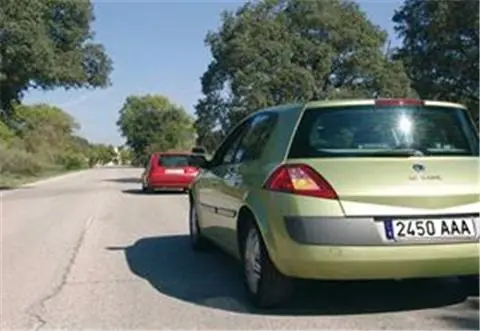
Debe señalizar toda maniobra que suponga realizar...
You must signal every manoeuvre that involves...
- Adesplazamientos laterales o inmovilizar el vehículo, únicamente.moving sideways or bringing the vehicle to a stop, and nothing else.
- Bun desplazamiento lateral o marcha atrás, inmovilizar el vehículo o frenar su marcha.moving sideways or reversing, bringing the vehicle to a stop or slowing down.
- Cdesplazamientos laterales, únicamente.moving sideways, and nothing else.
ExplanationThe normal movement of a vehicle in the flow of traffic is simply to follow the general pace of that flow, without changing its position relative to others. On the carriageway, this is normal progress. If we interrupt this normal progress to change our situation or position, we are making a manoeuvre. Whenever we are going to make a manoeuvre, we must warn other road users of our intention clearly and well in advance, using the vehicle's lights or, if these are not available, our arm.
¿Hay que señalizar la maniobra de marcha atrás?
Must you signal a reversing manoeuvre?
- ASí, usando las luces de emergencia o pulsando varias veces el pedal del freno.Yes, using the hazard warning lights or by pressing the brake pedal several times.
- BNo, no es obligatorio señalizar la maniobra de marcha atrás.No, it is not compulsory to signal reversing.
- CSí, usando la luz de marcha atrás.Yes, using the reversing light.
ExplanationArticle 109, section 2, of the General Traffic Regulations states that every manoeuvre involving a sideways move or reversing must be signalled with light signals. Specifically, reversing must be signalled with the reversing light if the vehicle has one, or otherwise with the palm of the hand open and facing backwards, under section 2.b. The use of the hazard warning lights or the brake light is not provided for as a compulsory signal for this purpose. Therefore, the correct answer is that the manoeuvre must be signalled with the reversing light.
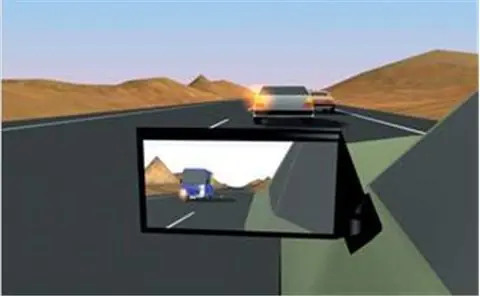
Antes de iniciar un adelantamiento, ¿qué debe hacer?
Before you start overtaking, what must you do?
- AComprobar que los vehículos de detrás no tienen los intermitentes encendidos.Check that the vehicles behind do not have their indicators on.
- BComprobar que los vehículos que circulan detrás por el mismo carril, no han iniciado el adelantamiento.Check that the vehicles behind in the same lane have not started overtaking.
- CComprobar que los vehículos de detrás mantienen la distancia de seguridad.Check that the vehicles behind are keeping a safe distance.
ExplanationBefore starting to overtake, we must check that the vehicle in front of us has not signalled its intention to overtake, and that the vehicle behind us has not started the manoeuvre.
Si al aprosimarme al interior de un túnel que cuenta con un semáforo en verde en su entrada, y que veo que en su interior hay vehículos parados usted...
If, as you approach a tunnel with a green traffic light at its entrance, you see that there are stopped vehicles inside, you...
- AEntraré en dicho túnel ya que el semáforo me lo permite.Will enter the tunnel, because the traffic light allows it.
- BEntraré en el túnel y apagaré el motor si estuviese mucho tiempo detenido.Will enter the tunnel and switch off the engine if stopped for a long time.
- CNo entraré en túnel.Will not enter the tunnel.
ExplanationEven if the traffic light is green, you must not enter a tunnel if you can see stopped vehicles inside, because you would be stuck inside, which increases the risk in case of fire or an accident. You must wait outside until traffic moves on.
¿Se puede parar en una parada de autobús?
Can you stop at a bus stop?
- ASí.Yes.
- BNo.No.
- CSí, si no hay ningún autobús a la vista.Yes, if there is no bus in sight.
ExplanationStopping and parking are prohibited in areas set aside for the stopping and parking of urban public transport only.
Si va a adelantar y el vehículo que va delante ha puesto el intermitente izquierdo para indicar que va a adelantar, ¿quién tiene preferencia al adelantar?
You are going to overtake, and the vehicle in front has switched on its left indicator to show that it is going to overtake. Who has priority to overtake?
- AEl que empiece primero a cambiar de carril.Whoever starts changing lanes first.
- BEl que circule a mayor velocidad.Whoever is travelling faster.
- CEl conductor del vehículo que ya ha puesto el intermitente.The driver of the vehicle that has already switched on its indicator.
ExplanationBefore overtaking, you must check that the vehicle in front in the same lane has not signalled that it intends to move to the same side; if it has, you must respect its priority (Article 84.2 of the General Traffic Regulations (RGC)). Who is going faster does not matter.
¿Puede efectuarse un cambio de sentido en un túnel?
May you make a U-turn in a tunnel?
- ANo, nunca.No, never.
- BSí, si hay dos carriles para el mismo sentido.Yes, if there are two lanes in the same direction.
- CSí, si no hay peligro.Yes, if there is no danger.
ExplanationA U-turn in a tunnel is prohibited in all cases; there is no exception that allows it.
¿Se podrá efectuar una parada en un paso para peatones?
May you stop on a pedestrian crossing?
- ANo, porque está prohibido.No, because it is prohibited.
- BSí, si no molesta a ningún peatón.Yes, if it does not disturb any pedestrian.
- CSí, siempre que esté el menor tiempo posible.Yes, as long as you stay for the shortest possible time.
ExplanationStopping on a pedestrian crossing is prohibited, even if it does not block pedestrians.
¿Se puede parar en una zona reservada exclusivamente al transporte público urbano?
May you stop in an area reserved exclusively for urban public transport?
- ANo.No.
- BSí.Yes.
- CSe puede parar, pero no estacionar.You may stop, but not park.
ExplanationStopping, and therefore also parking, is prohibited in areas for parking and stopping used exclusively by urban public transport (Article 94.1.i of the General Traffic Regulations). These spaces are only for buses and other authorised vehicles.
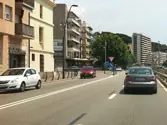
En una travesía de dos carriles para cada sentido, ¿puede circular por el segundo carril para girar a la izquierda?
On a travesía (stretch of road through a town) with two lanes in each direction, may you drive in the second lane to turn left?
- ASí, porque en la travesía debo circular igual que en las vías urbanas.Yes, because on a travesía I must drive the same way as on urban roads.
- BNo, porque la travesía es una vía interurbana.No, because a travesía is a road outside built-up areas.
- CNo, porque en la travesía siempre debo circular por la derecha.No, because on a travesía I must always drive on the right.
ExplanationOn carriageways in built-up areas with at least two lanes reserved for the same direction, marked by longitudinal lines, except on motorways (autopistas) or dual carriageways (autovías), you may use whichever lane best suits your destination, but you must not leave it except to get ready to turn, overtake, stop or park.
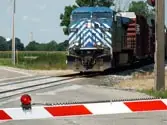
¿Se podrá efectuar un cambio de sentido en un paso a nivel?
May you make a U-turn on a level crossing?
- ANo, en ningún caso.No, in no case.
- BSí, cuando exista visibilidad suficiente.Yes, when there is enough visibility.
- CSí, si no es necesario usar la marcha atrás.Yes, if it is not necessary to reverse.
ExplanationMaking a U-turn on a level crossing is prohibited in all cases.
Se considera que una parada o estacionamiento obstaculiza gravemente la circulación cuando...
Stopping or parking is considered to seriously obstruct traffic when...
- Ase realiza en una vía pública calificada de atención preferente.it is done on a public road classed as a priority-attention road.
- Bse obstaculiza la utilización normal de los pasos rebajados para disminuidos físicos.it obstructs the normal use of dropped kerbs for people with physical disabilities.
- Cse efectúa en doble fila.it is done in a double line (double parking).
ExplanationStopping or parking in dangerous places, or in places where it seriously obstructs traffic, means stopping or parking that creates a risk or an obstacle for traffic, such as when it obstructs the normal use of dropped kerbs for people with reduced mobility.
Un vehículo averiado está inmovilizado en la calzada, en un tramo con línea longitudinal continua. ¿Puede adelantarlo el vehículo que circula detrás?
A broken-down vehicle is stationary on the carriageway, on a stretch with a solid longitudinal line. May the vehicle behind pass it?
- ASí, siempre.Yes, always.
- BSí, si comprueba que puede hacerlo con seguridad.Yes, if the driver makes sure it can be done safely.
- CNo, porque la marca longitudinal lo prohíbe.No, because the longitudinal line prohibits it.
ExplanationAccording to Article 88.2 of the General Traffic Regulations, a stationary vehicle occupying the lane on a stretch where overtaking is prohibited may be passed, even if you have to use the side for the opposite direction, after making sure it can be done without danger. If it has broken down, you must leave at least 1.5 metres of space and reduce your speed by at least 20 km/h (Article 88.1, as worded by RD 518/2026).
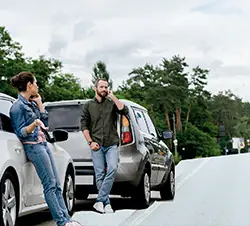
Como norma general, en la parte transitable del arcén de una vía interurbana, ¿está permitida la parada o el estacionamiento?
As a general rule, on the usable part of the hard shoulder of a road outside built-up areas, is stopping or parking allowed?
- AEstá permitida la parada, pero no el estacionamiento.Stopping is allowed, but parking is not.
- BEstá prohibida tanto la parada como el estacionamiento.Both stopping and parking are prohibited.
- CEstá permitida tanto la parada como el estacionamiento.Both stopping and parking are allowed.
ExplanationOn roads outside built-up areas you must stop or park off the carriageway, but leave the usable part of the hard shoulder clear (Art. 90 RGC): as a general rule, both stopping and parking on it are prohibited.
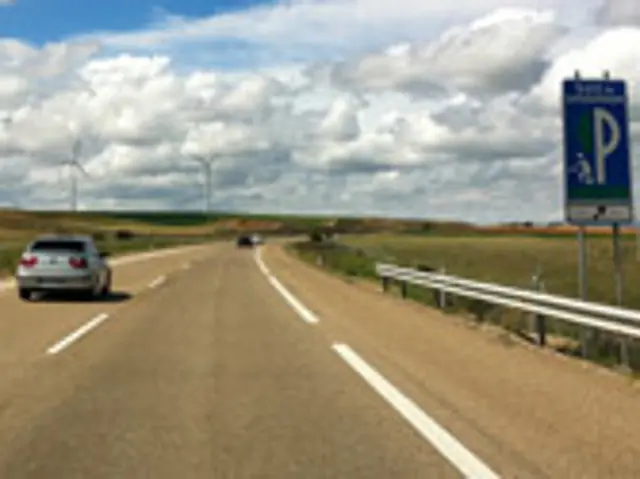
¿Puede adelantar al coche gris por la derecha?
May you overtake the grey car on the right?
- ASí.Yes.
- BNo.No.
- CSí, si el coche gris circula más despacio que usted.Yes, if the grey car is going slower than you.
ExplanationOutside built-up areas you overtake on the left (Article 82 of the RGC). Overtaking on the right is only allowed if the other driver indicates they are going to turn left or stop on that side or, in built-up areas, on carriageways with two lanes in each direction. None of these cases applies on this dual carriageway (autovía).
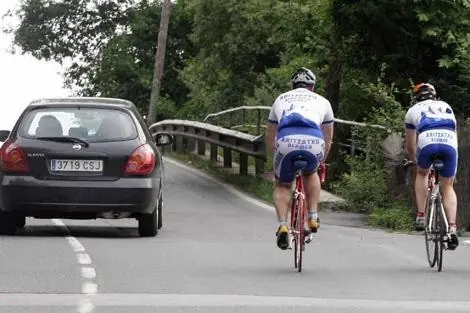
Al adelantar a los ciclistas que aparecen en la fotografía, ¿es obligatorio invadir el carril de sentido contrario de la calzada?
When overtaking the cyclists in the photo, is it compulsory to enter the lane for oncoming traffic?
- ANo, porque está prohibido adelantar a los ciclistas.No, because overtaking cyclists is prohibited.
- BNo.No.
- CSí.Yes.
ExplanationUnder Article 85 of the General Traffic Regulations, to overtake cyclists you must occupy part or all of the opposite lane and leave at least 1.5 metres of distance. On this narrow road that is not possible without entering the opposite side of the road, so you may only overtake if it is clear.
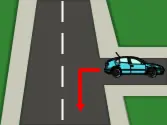
Estacionando marcha atrás...
When reversing to park...
- Apodemos recorrer la distancia indispensable aunque sean más de 15 metros.we may cover the necessary distance even if it is more than 15 metres.
- Bnunca recorreremos más de 15 metros ni invadiremos un cruce de vías.we will never cover more than 15 metres or enter a junction.
- Cno podemos recorrer más de 25 metros.we may not cover more than 25 metres.
ExplanationWhen reversing to park, we may not cover more than 15 metres or enter a junction, unless we find ourselves in a dead-end street with no other way out; in that case we may cover more than 15 metres and may even enter a junction.
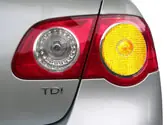
¿Cuándo quitaremos el intermitente al adelantar?
When should we switch off the indicator when overtaking?
- AUna vez rebasado al vehículo que estamos adelantando.Once we have passed the vehicle we are overtaking.
- BAntes de llegar a la altura del vehículo que estamos adelantando.Before drawing level with the vehicle we are overtaking.
- CUna vez finalizado el desplazamiento lateral.Once the sideways move has been completed.
ExplanationWe use the indicator to show that we are moving sideways. Once that move is finished, we switch it off, so we pass the vehicle in front without the indicator on. Once we have passed the overtaken vehicle, we signal the sideways move to the right to show that we are returning to our lane.
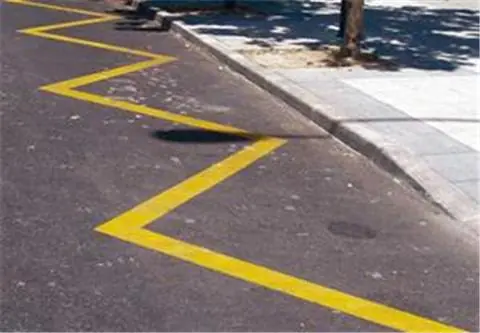
En esta zona destinada a carga y descarga, ¿está permitido parar y estacionar?
In this loading and unloading area, may you stop and park?
- AÚnicamente está permitido parar.Only stopping is allowed.
- BÚnicamente pueden parar y estacionar los camiones.Only lorries may stop and park.
- CNo, ni parar ni estacionar.No, neither stopping nor parking.
ExplanationA yellow zigzag marking shows the part of the carriageway where parking is prohibited for vehicles in general, because it is reserved for a special use that does not involve any vehicle staying for a long time. It is generally used at bus stopping (not parking) areas or at areas for loading and unloading vehicles, as in this question.
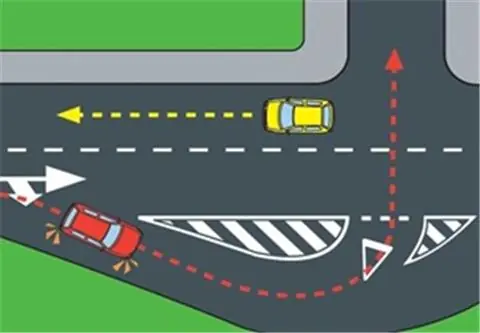
Si la vía está acondicionada con una raqueta u otro elemento similar, ¿debe utilizar dicho elemento para realizar un giro?
If the road has a turning loop (raqueta) or a similar feature, must you use it to turn?
- ASí, pero sólo si lo indica una señal.Yes, but only if a sign says so.
- BSí, aunque no haya señal que lo indique.Yes, even if there is no sign saying so.
- CNo, es indiferente.No, it makes no difference.
ExplanationIf there is a place set up for turning left or making a U-turn, as shown in the photo, you must use it if you intend to make these manoeuvres, whether or not the junction is signed as such.
All topics
- Definitions
- Documents and penalty points
- The driver's condition
- Duties of drivers and pedestrians
- Vehicle safety devices
- Vehicle controls and equipment
- Vehicle lights and horn
- Traffic signs, markings and signals
- The road and its lanes
- Speed and distances
- Right of way
- Carrying passengers and loads
- Driving safely in difficult conditions
- Vehicle mechanics and maintenance
- Road accidents and first aid
- Defensive and eco-driving
Independent app: not affiliated with or endorsed by the DGT (Spain's Directorate-General for Traffic) or the Ministry of the Interior. The official exam is booked with the DGT and taken at its test centres. The questions here are practice material; the DGT's official question bank is not public.
Basado en datos de la Agencia Estatal Boletín Oficial del Estado (https://www.boe.es). Textos consolidados de carácter meramente informativo. La AEBOE no patrocina ni respalda este sitio.
Parte de las preguntas procede de los tests de la revista «Tráfico y Seguridad Vial» de la DGT, reproducidos con indicación de la fuente.