
DGT test · 982 questions
Manoeuvres · Page 7 of 20
Joining traffic, overtaking, turning, U-turns, reversing, stopping and parking: how and where to do them and when they are forbidden.
Questions in this topic, with answers
982 questions, 50 per page, with the correct answer and the explanation. Page 7 of 20.
¿Podremos efectuar un adelantamiento en una intersección con un paso de ciclistas?
Can we overtake at a junction with a cycle crossing?
- ANo, nunca.No, never.
- BSí, pero solo a velocidad muy reducida.Yes, but only at very low speed.
- CSí, siempre que exista suficiente visibilidad.Yes, as long as there is enough visibility.
ExplanationOvertaking at a cycle crossing is prohibited in all cases.
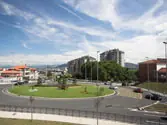
En las glorietas, ¿está prohibido adelantar?
Is overtaking prohibited on roundabouts?
- ASí, porque son intersecciones.Yes, because they are junctions.
- BSí, en vías interurbanas solamente.Yes, but only on interurban roads.
- CNo.No.
ExplanationAs a general rule, overtaking is prohibited at junctions and close to them, but the prohibition does not apply on roundabouts (Article 87.1.c of the General Traffic Regulations), on both urban and interurban roads.
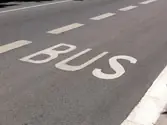
¿Podrá un turismo circular por el carril bus?
May a car use the bus lane?
- ANo, en ningún caso, es exclusivo para el BUS.No, never; it is only for buses.
- BSí, siempre que la marca blanca longitudinal sea discontinua y para realizar cualquier maniobra.Yes, as long as the white longitudinal marking is broken, and for any manoeuvre.
- CEn los tramos en que la marca blanca longitudinal sea discontinua, para cambiar de dirección y dando prioridad a los autobuses.On the stretches where the white longitudinal marking is broken, to turn, giving priority to buses.
ExplanationThe bus lane is a lane reserved (sign S-51a) for the vehicles whose symbol appears on the sign. Where the line marking it is broken, other vehicles may use it only for manoeuvres other than stopping, parking, making a U-turn or overtaking, such as turning, giving way to buses.
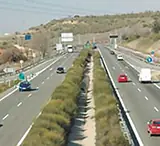
En un tramo de vía con un carril de aceleración, ¿se considera adelantamiento que un vehículo avance más rápidamente que otro que lo hace por el carril normal?
On a stretch of road with an acceleration lane, is it considered overtaking when a vehicle moves faster than another travelling in the normal lane?
- ANo.No.
- BSí, como otro adelantamiento cualquiera.Yes, like any other overtaking.
- CSí, porque se trata de una vía interurbana.Yes, because it is an interurban road.
ExplanationThe acceleration lane exists precisely to gain speed and join the traffic: moving along it faster than vehicles on the main carriageway is not considered overtaking under the General Traffic Regulations (RGC).
En autopistas y autovías, ¿está prohibido el cambio de sentido?
Is it prohibited to make a U-turn on motorways (autopistas) and dual carriageways (autovías)?
- ASí, salvo en los lugares habilitados al efecto.Yes, except at places provided for that purpose.
- BNo.No.
- CSí, siempre.Yes, always.
ExplanationMaking a U-turn on motorways (autopistas) and dual carriageways (autovías) is prohibited, except at places provided for that purpose (Article 79.1 of the General Traffic Regulations). It is also prohibited at level crossings, in tunnels and, in general, wherever overtaking is prohibited, unless expressly authorised.
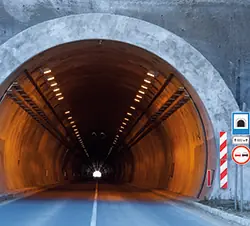
¿Cuándo está permitido estacionar en un túnel?
When is parking in a tunnel permitted?
- ACuando el túnel está suficientemente iluminado.When the tunnel is sufficiently lit.
- BCuando la calzada tiene dos carriles de circulación para cada sentido.When the carriageway has two lanes in each direction.
- CNunca.Never.
ExplanationParking in tunnels is always prohibited: a stationary vehicle in an enclosed space greatly increases the risk of rear-end collisions and fire and gets in the way of any evacuation.
¿Puede estacionar su motocicleta en la acera?
Can you park your motorcycle on the pavement?
- ASí, como norma general.Yes, as a general rule.
- BNo, como norma general.No, as a general rule.
- CSolo si es una motocicleta de pequeña cilindrada.Only if it is a motorcycle with a small engine.
ExplanationThe pavement is a space reserved for pedestrians and, as a general rule, parking any vehicle on it is prohibited, including motorcycles. Only a municipal by-law can allow two-wheeled vehicles to be parked on the pavement in specific cases.
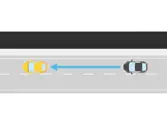
En vías urbanas, si no pretende adelantar, ¿qué distancia de seguridad se debe mantener con el turismo que circula delante?
On urban roads, if you do not intend to overtake, what safe distance must you keep from the car in front?
- AAquella que permita que una motocicleta adelante con seguridad.One that allows a motorcycle to overtake safely.
- BLa que permita detenerse sin colisionar con el vehículo que va delante en caso de que frene bruscamente.One that allows you to stop without colliding with the vehicle in front if it brakes suddenly.
- CSiempre 50 metros.Always 50 metres.
ExplanationWhen driving behind another vehicle, you must leave a space that allows you to stop without colliding with it if it brakes suddenly, taking into account speed, grip and braking conditions. In addition, if you are driving without signalling an intention to overtake, this gap must allow the vehicle following you to overtake you safely. For this purpose, drivers of vehicles with a maximum authorised mass (MAM) of more than 3,500 kg and of vehicles and combinations of vehicles more than 10 metres long will keep a minimum gap of 50 metres. It is enough to keep a distance that avoids a collision (there is no need to leave space for others to overtake us): - In built-up areas. - Where overtaking is prohibited. - Where there is more than one lane in the same direction. - When traffic is congested. - When you intend to overtake. So, as we are in an urban area, we will leave enough space so that if that vehicle stops suddenly, we can also stop without colliding with it.
Para estacionar, ¿cuántos metros se puede retroceder?
To park, how many metres can you reverse?
- ALos necesarios, sin límite, en vía urbana.As many as necessary, without limit, on urban roads.
- BLo mínimo necesario y, como máximo, 15 metros.The minimum necessary and 15 metres at most.
- CLos necesarios, siempre que no invada un cruce de vías.As many as necessary, as long as you do not enter a junction.
ExplanationUnder the General Traffic Regulations (RGC), the reversing distance when parking must not exceed 15 metres and must be the minimum necessary. This is to keep other road users safe and avoid potentially dangerous situations that can arise when reversing. This rule is set out in the article on reversing manoeuvres, which also requires you to warn other drivers of your intention and act with care.
¿Está permitido dar la vuelta en un tramo recto de carretera con buena visibilidad y línea central discontinua?
Are you allowed to turn round on a straight stretch of road with good visibility and a broken centre line?
- ASí.Yes.
- BNo.No.
- CNo, solo se puede cambiar de sentido en una intersección.No, you may only make a U-turn at a junction.
ExplanationOn a straight stretch with good visibility and a broken centre line nothing prohibits a U-turn; U-turns are only prohibited where overtaking is prohibited, in tunnels, at level crossings or on motorways (Article 79 of the General Traffic Regulations). It must be done safely and signalled.
¿Es recomendable parar y descansar durante un viaje?
Is it advisable to stop and rest during a journey?
- ASí, parar y descansar 20 o 30 minutos cada 2 horas de conducción o cada 200 kilómetros.Yes, stop and rest for 20 or 30 minutes every 2 hours of driving or every 200 kilometres.
- BNo, porque alarga el viaje y provoca más cansancio.No, because it makes the journey longer and causes more tiredness.
- CNo, si el viaje se realiza por vías interurbanas.No, if the journey is on interurban roads.
ExplanationThe DGT recommends stopping to rest for about 20 or 30 minutes every 2 hours or every 200 kilometres of driving, on any type of road. It is advice, not a rule in the Regulations, but it prevents fatigue, which increases reaction time and the risk of an accident.
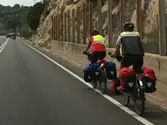
¿Es correcto rebasar una doble línea continua para adelantar a un ciclo?
Is it correct to cross a double solid line to overtake a cycle?
- ASí.Yes.
- BNo.No.
- CSí, pero solo en poblado.Yes, but only in a built-up area.
ExplanationAccording to Article 88 of the General Traffic Regulations (RGC), as worded by Royal Decree 518/2026, even where overtaking is forbidden, you may move into the opposite side of the road to overtake cycles, mopeds, pedestrians or animals when their speed allows you to do so without risk, keeping a side gap of 1.5 metres.
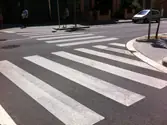
En un paso para peatones, ¿está permitido cambiar el sentido de la marcha?
Is making a U-turn permitted on a pedestrian crossing?
- ANo, ni siquiera en sus proximidades.No, not even near it.
- BSí.Yes.
- CNo, pero sí en sus proximidades.No, but it is permitted near it.
ExplanationAs a general rule, U-turns are prohibited wherever overtaking is prohibited, unless expressly authorised by the corresponding sign. Overtaking is prohibited on and near marked pedestrian crossings, so U-turns are also prohibited there. Remember that the no-left-turn sign also prohibits U-turns.
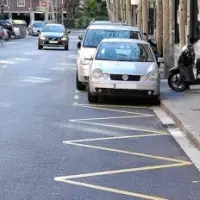
¿Está permitido parar o estacionar en el área que está destinada para carga y descarga?
Is it allowed to stop or park in an area set aside for loading and unloading?
- ASolamente los camiones pueden estacionar y aparcar.Only lorries may park there.
- BSolo se permite parar.Only stopping is allowed.
- CNo, ni parar ni aparcar.No, neither stopping nor parking.
ExplanationParking is prohibited in areas marked for loading and unloading (Article 94 of the General Traffic Regulations), but stopping is allowed, that is, standing for less than two minutes without the driver leaving the vehicle. The yellow zigzag line on the road means the same.
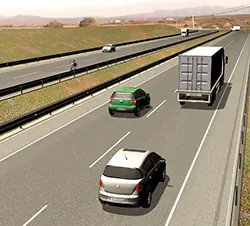
Una vez termine de adelantar el vehículo verde, ¿puede seguir circulando por el carril izquierdo?
Once the green vehicle has finished overtaking, can it keep driving in the left-hand lane?
- ANo, debe circular por el carril derecho.No, it must drive in the right-hand lane.
- BNo, porque por el segundo carril sólo se puede circular para adelantar.No, because the second lane can only be used for overtaking.
- CSí, porque en autopista se puede circular por cualquier carril.Yes, because on a motorway (autopista) you can drive in any lane.
ExplanationThe general rule requires you to drive in the right-hand lane: the left-hand lane is used for overtaking or other manoeuvres and, once overtaking is complete, you must return to the right-hand lane as soon as possible.
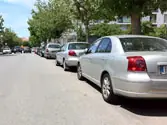
¿Un vehículo podrá estacionar más de 2 minutos en doble fila si no perturba la circulación?
Can a vehicle double-park for more than 2 minutes if it does not disrupt traffic?
- ASí.Yes.
- BNo.No.
- CSí, si deja encendidas las luces de emergencia.Yes, if it leaves its hazard warning lights on.
ExplanationDouble parking is always prohibited (Article 94.2 of the General Traffic Regulations (RGC)), regardless of the time, the amount of traffic or whether the hazard warning lights are on. If the vehicle is also left without a driver, it is considered to seriously obstruct traffic.
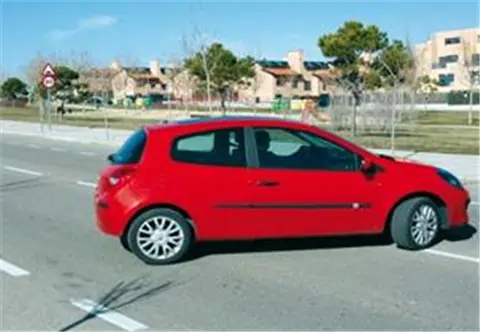
Como norma general, está prohibido cambiar el sentido de la marcha...
As a general rule, making a U-turn is prohibited...
- Aen los tramos de vía en los que esté prohibido el adelantamiento.on stretches of road where overtaking is prohibited.
- Ben las glorietas con un solo carril.at roundabouts with a single lane.
- Cen los casos en los que no sea posible marchar hacia adelante.when it is not possible to go forwards.
ExplanationArticle 79 of the General Traffic Regulations prohibits, as a general rule, U-turns on stretches where overtaking is prohibited, unless the U-turn is expressly authorised. They are also not allowed in tunnels, on level crossings, or on motorways (autopistas) and dual carriageways (autovías).
¿En algún caso podremos adelantar por la derecha?
Can we ever overtake on the right?
- ANo, en ningún caso.No, never.
- BDentro de poblado, en calzadas con al menos dos carriles delimitados en el mismo sentido.In built-up areas, on carriageways with at least two marked lanes in the same direction.
- CEn autopistas, cuando el vehículo que nos preceda circule por el carril central a velocidad reducida.On motorways (autopistas), when the vehicle in front is travelling slowly in the centre lane.
ExplanationWe may overtake on the right: - In built-up areas, on carriageways with at least two lanes in the same direction marked by longitudinal markings. - On two-way roads, when overtaking a tram running in the central area. - When the driver of the vehicle in front signals their intention to turn left or stop on that side.
En un paso inferior con un solo carril para cada sentido de circulación, ¿se podrá adelantar?
In an underpass with only one lane in each direction, may you overtake?
- ASí.Yes.
- BNo.No.
- CSí, si el paso inferior está iluminado.Yes, if the underpass is lit.
ExplanationOvertaking is prohibited in tunnels and underpasses that have only one lane in each direction.
¿Se puede girar a la izquierda en una intersección si no hay visibilidad?
Can you turn left at a junction if there is no visibility?
- ASí, con precaución.Yes, with care.
- BNo, aunque la señal lo permita.No, even if the signs allow it.
- CSí, siempre.Yes, always.
ExplanationTurning left without visibility: if there is no visibility at a junction, turning left is prohibited, even if the signs allow it. This avoids: - Collisions with vehicles you cannot see, especially on main roads. - Dangerous situations with pedestrians and cyclists. The driver must wait until they have safe visibility before turning.
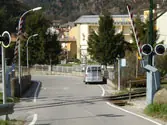
¿Está prohibido adelantar a un turismo en un paso a nivel?
Is overtaking a car on a level crossing prohibited?
- ASí.Yes.
- BSólo cuando existan señales de prohibición.Only when there are no-overtaking signs.
- CNo.No.
ExplanationUnder Article 87.1.b of the General Traffic Regulations (RGC), as worded by RD 518/2026, overtaking is prohibited on and near level crossings; the exception that allowed overtaking two-wheeled vehicles after giving audible or light signals has been removed.
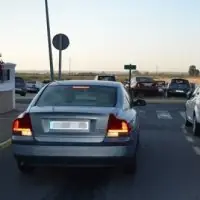
¿Está prohibido circular marcha atrás?
Is reversing prohibited?
- ANo, excepto en autopistas y autovías.No, except on motorways and dual carriageways.
- BSí, salvo que no pueda marchar hacia delante o cambiar de dirección o sentido.Yes, unless you cannot move forwards or change direction or make a U-turn.
- CSí, si hay otros usuarios en las proximidades.Yes, if there are other road users nearby.
ExplanationAs a general rule, reversing is prohibited, except in the following cases, as an exception and always over the minimum distance necessary: 1. As a manoeuvre that complements stopping, parking or joining traffic. In this case, you may not reverse more than 15 metres or enter a junction. 2. When it is not possible to move forwards or to change direction or make a U-turn. In this case there is no limit on the reversing distance, and you may even enter a junction if necessary. Reversing is prohibited on dual carriageways (autovías) and motorways (autopistas).
En una calle sin salida en la que no se puede continuar hacia delante ni cambiar de dirección ni de sentido, ¿se podrá circular marcha atrás?
In a dead-end street where you cannot continue forwards, change direction or make a U-turn, can you reverse?
- ASí, pero como máximo 15 metros y sin invadir un cruce de vías.Yes, but 15 metres at most and without entering a junction.
- BSí, el recorrido mínimo imprescindible, sin invadir un cruce de vías.Yes, the minimum distance necessary, without entering a junction.
- CSí, el recorrido mínimo imprescindible, pudiendo invadir un cruce de vías.Yes, the minimum distance necessary, and you may enter a junction.
ExplanationIf it is impossible to continue straight on, change direction or make a U-turn, you may get out by reversing, and in this case you may enter a junction and reverse more than 15 metres, as there is no other way to continue.
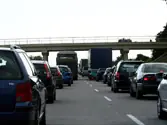
Si circula en esta vía con tráfico denso, no puede cambiar de carril para ...
If you are driving on this road in heavy traffic, you cannot change lanes to…
- Asalir de la calzada.leave the carriageway.
- Badelantar.overtake.
- Cgirar a la derecha.turn right.
ExplanationUnder Article 83 of the General Traffic Regulations (RGC), when traffic is so heavy that vehicles occupy the whole carriageway and move at the pace of the vehicle in front, you must not change lanes to overtake. It is only allowed to prepare to turn, leave the carriageway or take a particular direction.
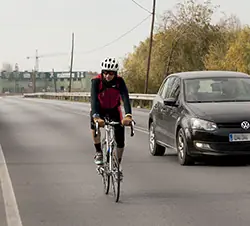
En los adelantamientos a ciclistas en vías con un carril para cada sentido, ¿está permitido ocupar el carril de sentido contrario?
When overtaking cyclists on roads with one lane in each direction, is it permitted to occupy the lane for the opposite direction?
- ASí, siempre que el adelantamiento se pueda realizar con seguridad.Yes, as long as the overtaking can be done safely.
- BNo.No.
- CSolo si ambos sentidos están separados por línea blanca discontinua.Only if the two directions are separated by a broken white line.
ExplanationTo overtake cyclists you must leave a side gap of at least 1.5 metres, and the rules allow you to occupy the opposite lane, even crossing a solid line, as long as the manoeuvre is done safely.
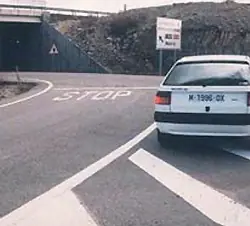
En las isletas de canalización del tráfico situadas en la calzada, ¿se puede parar o estacionar?
Can you stop or park on the traffic islands on the carriageway?
- ASe puede parar.You can stop.
- BSe puede estacionar.You can park.
- CNo se puede parar ni estacionar.You cannot stop or park.
ExplanationTraffic islands channel and organise traffic: stopping on them or next to them obstructs the movements they regulate and creates danger, so the regulations prohibit both stopping and parking on them.
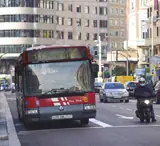
Por el "carril BUS", ¿se puede circular para adelantar?
Can you drive in the bus lane to overtake?
- ANo, porque está prohibido.No, because it is prohibited.
- BSí, pero debo adelantar rápidamente.Yes, but I must overtake quickly.
- CSí, cuando no circulan autobuses cerca.Yes, when no buses are nearby.
ExplanationThe bus lane is reserved for buses and for vehicles expressly authorised to use it. Other vehicles may not drive in it, not even to overtake, even if there are no buses nearby or it is done quickly.
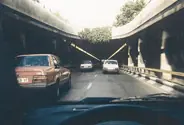
¿Está permitido realizar una parada en un túnel suficientemente iluminado que se encuentra dentro de poblado?
Is stopping permitted in a sufficiently lit tunnel in a built-up area?
- ANo.No.
- BNo, salvo que presente algún ensanchamiento donde pudiésemos realizar la maniobra sin poner en peligro a la circulación.No, unless it has a widened section where we could stop without endangering traffic.
- CDentro de poblado está permitida la parada en todas las vías, incluido el túnel, salvo que exista señalización que lo prohíba expresamente.In built-up areas stopping is permitted on all roads, including tunnels, unless there are signs expressly prohibiting it.
ExplanationArticle 94 of the General Traffic Regulations (RGC) prohibits stopping in tunnels, underpasses and stretches covered by the tunnel sign, whether or not they are well lit and whether inside or outside built-up areas. A widened section in the tunnel does not change this prohibition.
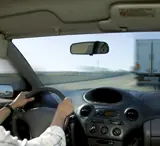
El viento por la derecha en los adelantamientos a vehículos grandes, ¿por qué es peligroso?
Why is wind from the right dangerous when overtaking large vehicles?
- APorque frena mi vehículo y no me deja adelantar.Because it slows my vehicle down and does not let me overtake.
- BPorque puedo perder el control del vehículo y salirme de la calzada.Because I can lose control of the vehicle and leave the carriageway.
- CPorque no me deja ver la calzada.Because it does not let me see the carriageway.
ExplanationWhen overtaking heavy, bulky vehicles such as lorries and buses with a side wind from the right, the screen effect occurs. When we are level with the lorry, our vehicle will be pushed towards it, because the lorry creates a protective screen that removes the side force of the wind, and because of the force to the right that we had been applying to the steering wheel. We stop applying this force while both vehicles are side by side and apply it again when we finish overtaking.
En una vía interurbana de doble sentido, ¿está permitido parar o estacionar en el lado izquierdo?
On a two-way road outside built-up areas, may you stop or park on the left-hand side?
- ASí, para programar el sistema de navegación.Yes, to programme the navigation system.
- BSí, para atender una llamada telefónica urgente.Yes, to answer an urgent phone call.
- CNo, en ningún caso.No, never.
ExplanationOutside built-up areas, stopping and parking must always be done off the carriageway, on the right-hand side, leaving the usable part of the hard shoulder clear (Article 90.1 of the General Traffic Regulations (RGC)). Programming the sat nav or answering a call does not justify stopping on the left.
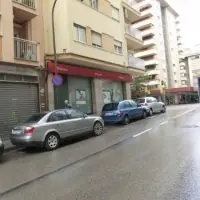
Entre otros lugares, ¿dónde está prohibido estacionar en zona urbana?
Among other places, where is parking prohibited in urban areas?
- Aen vías calificadas de atención preferente.On roads classed as priority attention roads (vías de atención preferente).
- Ben curvas y cambios de rasante.On bends and brows of hills.
- Csobre las aceras y paseos.On pavements and promenades.
ExplanationParking is prohibited on pavements, promenades and other areas intended for pedestrians (Article 94.2 of the General Traffic Regulations (RGC)). On priority attention roads it is prohibited only where signposted, and on bends and brows of hills only when they have reduced visibility.
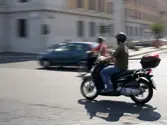
¿Qué distancia lateral dejaremos al adelantar a un ciclomotor en poblado?
What side gap will we leave when overtaking a moped in a built-up area?
- A1 metro.1 metre.
- B1,5 metros como mínimo.At least 1.5 metres.
- CProporcional a la velocidad, anchura y características de la calzada.In proportion to the speed, width and characteristics of the carriageway.
ExplanationUnder Article 85.4 of the General Traffic Regulations (RGC), as worded by RD 518/2026, when overtaking a moped you must occupy part or all of the adjacent or opposite lane and leave a safety gap of at least 1.5 metres, also in built-up areas.
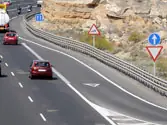
Si un vehículo se incorpora por un carril de aceleración circulando más rápido que los vehículos que circulan por la autopista, ¿se considera un adelantamiento?
If a vehicle joining from an acceleration lane is travelling faster than the vehicles on the motorway (autopista), is it considered overtaking?
- ANo.No.
- BSí.Yes.
- CNo, es un rebasamiento.No, it is passing.
ExplanationA vehicle travelling faster in the acceleration lane than the vehicles already on the motorway will not be considered overtaking, nor passing.
¿Pueden los agentes de tráfico inmovilizar un vehículo que supere el límite de humos establecido?
Can traffic officers immobilise a vehicle that exceeds the set smoke emission limit?
- ANo, si el vehículo es antiguo.No, if the vehicle is old.
- BNo, si el vehículo esté circulando por la vía.No, if the vehicle is being driven on the road.
- CSí.Yes.
ExplanationYes, traffic officers can immobilise a vehicle that exceeds the set smoke emission limit, whether or not the vehicle is old. This is backed by Article 7 of the General Traffic Regulations (RGC), which states that vehicles may not be driven if they emit gases or smoke above the permitted limits.
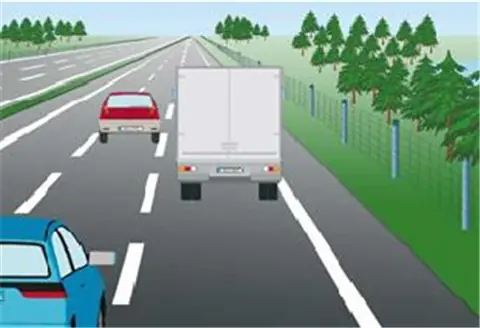
El vehículo rojo, ¿debe apartarse a la derecha cuando termine el adelantamiento?
Must the red vehicle move back to the right when it finishes overtaking?
- ASí, para no obstaculizar al vehículo que le sigue.Yes, so as not to obstruct the vehicle behind it.
- BNo, porque existe un carril a la izquierda que está libre.No, because there is a free lane to the left.
- CNo, puede seguir circulando por el carril central.No, it can keep driving in the centre lane.
ExplanationYes. After overtaking, the driver must return to their lane, the right-hand one, as soon as possible and gradually (Article 85 of the General Traffic Regulations), so as not to obstruct those coming behind. The left lane being free does not allow you to stay in the centre lane.
En una carretera estrecha quiere dar la vuelta. ¿Dónde debe colocarse para no molestar a otros vehículos?
You want to make a U-turn on a narrow road. Where should you position yourself so as not to hinder other vehicles?
- AEn el centro de la calzada, sin invadir el carril contrario.In the middle of the carriageway, without entering the opposite lane.
- BEn el arcén izquierdo, para no molestar a los que le siguen.On the left-hand hard shoulder, so as not to hinder those behind you.
- CEn el borde derecho y esperar hasta poder hacerlo sin peligro.At the right-hand edge, and wait until you can do it safely.
ExplanationArticle 78 of the General Traffic Regulations (RGC) requires you to choose a suitable place to make a U-turn. If, while you wait on the carriageway, you block vehicles behind you, you must leave the carriageway on your right-hand side and wait until you can do it safely.
¿Está permitido entrar en una intersección marcha atrás para incorporarse a la circulación?
Are you allowed to enter a junction in reverse to join traffic?
- ASí, si no impide el paso a otros vehículos.Yes, if you do not block other vehicles.
- BNo, porque está prohibido entrar en una intersección marcha atrás.No, because entering a junction in reverse is prohibited.
- CSí, si no se retrocede más de 15 metros.Yes, if you do not reverse more than 15 metres.
ExplanationReversing as a manoeuvre that complements joining traffic may not exceed 15 metres or enter a junction (Article 80.2 of the General Traffic Regulations). Even if you do not bother anyone or you only cover a short distance, entering a junction this way is prohibited.
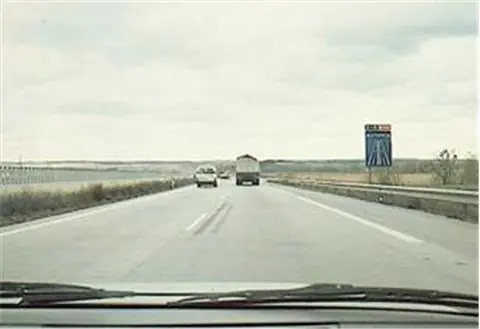
En esta vía, ¿puede parar su vehículo en el arcén para contemplar el paisaje?
On this road, may you stop your vehicle on the hard shoulder to look at the view?
- ASí, porque el arcén es ancho.Yes, because the hard shoulder is wide.
- BNo, está prohibido.No, it is prohibited.
- CSolo si la parada es inferior a un minuto.Only if the stop lasts less than a minute.
ExplanationOn motorways (autopistas) and dual carriageways (autovías), stopping is prohibited except in the areas provided for it (Article 94 of the General Traffic Regulations). The hard shoulder may only be used to stop in an emergency; looking at the view is not an emergency, even if the stop is short.
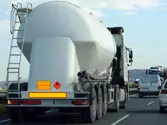
Al adelantar al camión de la imagen tendrá en cuenta...
When overtaking the lorry in the picture, you will bear in mind…
- AQue su masa autorizada es superior a 3.500 kg.That its authorised mass is more than 3,500 kg.
- BQue mide más de 2,50 metros de altura.That it is more than 2.50 metres high.
- CQue mide más de 12 metros de longitud.That it is more than 12 metres long.
ExplanationThe rectangular plate we can see at the rear of the lorry tells us that it is more than 12 metres long. It is important to bear this in mind when overtaking it, as the manoeuvre will take longer than overtaking a smaller vehicle.
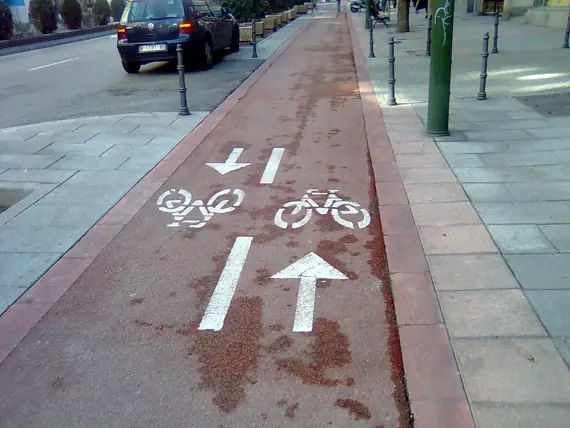
Debemos saber que en un paso para ciclistas está prohibido...
You should know that on a cycle crossing it is prohibited to…
- AParar, pero no está prohibido estacionar.Stop, but parking is not prohibited.
- BEstacionar, pero no está prohibido parar.Park, but stopping is not prohibited.
- CParar y estacionar.Stop and park.
ExplanationStopping, and therefore also parking, is prohibited on cycle crossings (Article 94 of the General Traffic Regulations), because the vehicle would block the cyclists' way and reduce their visibility. Not even a short stop is allowed.
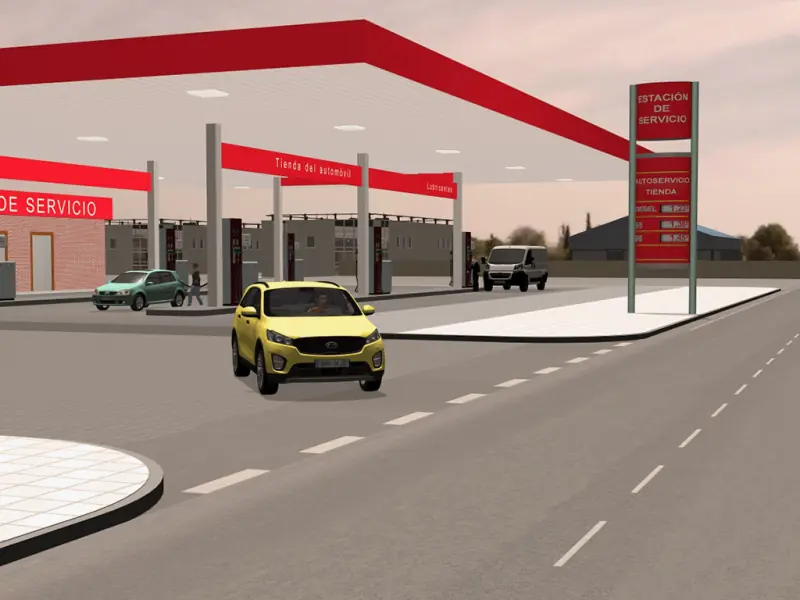
El turismo amarillo sale de una gasolinera y va a incorporarse a la circulación. ¿Cuándo tiene que ceder el paso?
The yellow car is leaving a petrol station and is going to join the traffic. When must it give way?
- ACuando se incorpora por la derecha.When it joins from the right.
- BSiempre que se incorpora, ya sea por la derecha o por la izquierda.Whenever it joins, whether from the right or from the left.
- CCuando se incorpora por la izquierda.When it joins from the left.
ExplanationLeaving a petrol station means joining the traffic, and anyone joining the traffic must give way to vehicles travelling on the road, whether entering from the right or from the left (Article 72 of the General Traffic Regulations (RGC)). In addition, they must signal the manoeuvre and make sure they do not create danger.
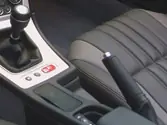
El freno de mano o estacionamiento actúa...
The handbrake or parking brake acts…
- ANormalmente solo sobre las ruedas traseras.Normally only on the rear wheels.
- BSobre las ruedas motrices.On the driving wheels.
- CSobre las ruedas delanteras.On the front wheels.
ExplanationThe handbrake or parking brake normally acts on the two rear wheels. These may also be the driving wheels, but not necessarily.
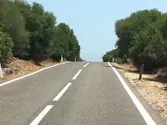
¿Podremos efectuar un cambio de sentido en un cambio de rasante sin visibilidad?
May we make a U-turn on the brow of a hill with no visibility?
- ASí, si se realiza con precaución y sin detenerse.Yes, if it is done with care and without stopping.
- BSí.Yes.
- CNo.No.
ExplanationWe may not make a U-turn in any place or situation where the available visibility is not enough.
Circulando por una carretera, ¿dónde podremos efectuar una parada?
When driving on an interurban road (carretera), where can we stop?
- AEn el arcén de la derecha.On the right-hand hard shoulder.
- BEn el arcén de la izquierda.On the left-hand hard shoulder.
- CFuera del arcén, en el lado derecho.Off the hard shoulder, on the right-hand side.
ExplanationOn an interurban road, stops must be made on the right-hand side, off the carriageway and off the usable part of the hard shoulder.
Al adelantar a un ciclista en una subida, es importante...
When overtaking a cyclist going uphill, it is important to…
- ADejar una separación lateral suficiente, por las posibles oscilaciones al pedalear.Leave enough side space, because of the possible swaying when pedalling.
- BAl estar cerca de ellos hacer señales acústicas para indicar nuestra presencia.Sound the horn when close to them to show we are there.
- CMantener la velocidad y estar atento al cumplimiento de la señalización vertical.Keep your speed and pay attention to the road signs.
ExplanationWhen going uphill, a cyclist pedals with more effort and goes more slowly, so they often sway from side to side. When overtaking, you must leave a wide side gap of at least 1.5 metres. Sounding the horn close to them can startle them and make them lose their balance.
¿Está permitido adelantar en un paso para peatones?
Is overtaking permitted at a pedestrian crossing?
- ANo, está prohibido.No, it is prohibited.
- BSí, cuando se adelante a un vehículo de 2 ruedas.Yes, when overtaking a 2-wheeled vehicle.
- CSí, cuando se haga muy lentamente, pudiéndose detener si surgen peatones.Yes, when it is done very slowly, being able to stop if pedestrians appear.
ExplanationUnder Article 87.1.b of the General Traffic Regulations (RGC), as worded by RD 518/2026, overtaking is prohibited at and near marked pedestrian crossings; the exception that allowed overtaking at very low speed has been removed.
En una vía urbana de un solo sentido de circulación, ¿en qué lado podremos efectuar un estacionamiento?
On a one-way urban road, on which side can we park?
- ASiempre realizaremos los estacionamientos en el lado derecho de la calzada.We will always park on the right-hand side of the carriageway.
- BTanto en el lado derecho como en el izquierdo.On either the right-hand or the left-hand side.
- CEn las vías urbanas está prohibido estacionar en la calzada.On urban roads, parking on the carriageway is prohibited.
ExplanationOn a one-way urban road we may park on either the right-hand or the left-hand side.
Para realizar la maniobra de marcha hacia atrás el conductor deberá...
To reverse, the driver must…
- AGirarse hacia atrás, colocar el brazo sobre el asiento del acompañante y tocar el claxon.Turn round, put their arm on the passenger seat and sound the horn.
- BHacerlo lentamente señalizando con las luces de emergencia.Do it slowly, signalling with the hazard warning lights.
- CManiobrar lentamente y con la máxima precaución, y activar la señalización correspondiente.Manoeuvre slowly and with the greatest care, and use the corresponding signal.
ExplanationReversing must be done slowly and with the greatest care. It is signalled with the reversing light or by stretching the arm out with the palm facing backwards.
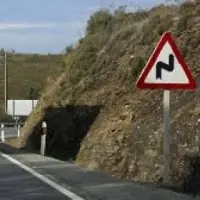
En ésta curva, usted, ¿puede adelantar a éste vehículo?
On this bend, may you overtake this vehicle?
- ASí, porque no hay ninguna señal vertical de prohibido adelantar.Yes, because there is no ‘no overtaking’ sign.
- BNo, porqué para adelantarlo necesito ocupar el carril del sentido contrario.No, because to overtake it I would need to use the lane for the opposite direction.
- CSí, porque no hay una línea continua.Yes, because there is no solid line.
ExplanationOvertaking is prohibited on bends with reduced visibility when you would have to enter the opposite side of the road to do it (Article 87.1.a of the General Traffic Regulations (RGC)), even if there is no solid line or ‘no overtaking’ sign. The dangerous bends sign warns you of that stretch.
Si circula por un carril de aceleración, ¿debe ceder el paso a los vehículos de la vía a la que se quiere incorporar?
If you are in an acceleration lane, must you give way to vehicles on the road you want to join?
- ANo, si me incorporo por la derecha.No, if I am joining from the right.
- BSí, debe cederles el paso.Yes, you must give way to them.
- CNo, porque tengo prioridad.No, because I have right of way.
ExplanationUnder Article 72 of the General Traffic Regulations (RGC), a driver joining traffic, including from an acceleration lane, must make sure it is safe to do so and give way to vehicles on the carriageway, taking into account their position, path and speed, even stopping if necessary.
All topics
- Definitions
- Documents and penalty points
- The driver's condition
- Duties of drivers and pedestrians
- Vehicle safety devices
- Vehicle controls and equipment
- Vehicle lights and horn
- Traffic signs, markings and signals
- The road and its lanes
- Speed and distances
- Right of way
- Carrying passengers and loads
- Driving safely in difficult conditions
- Vehicle mechanics and maintenance
- Road accidents and first aid
- Defensive and eco-driving
Independent app: not affiliated with or endorsed by the DGT (Spain's Directorate-General for Traffic) or the Ministry of the Interior. The official exam is booked with the DGT and taken at its test centres. The questions here are practice material; the DGT's official question bank is not public.
Basado en datos de la Agencia Estatal Boletín Oficial del Estado (https://www.boe.es). Textos consolidados de carácter meramente informativo. La AEBOE no patrocina ni respalda este sitio.
Parte de las preguntas procede de los tests de la revista «Tráfico y Seguridad Vial» de la DGT, reproducidos con indicación de la fuente.