
DGT test · 982 questions
Manoeuvres · Page 8 of 20
Joining traffic, overtaking, turning, U-turns, reversing, stopping and parking: how and where to do them and when they are forbidden.
Questions in this topic, with answers
982 questions, 50 per page, with the correct answer and the explanation. Page 8 of 20.
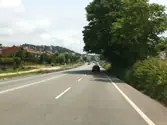
¿Está permitido, parar en una carretera convencional?
Is stopping permitted on a conventional road?
- ASi. En el arcén u ocupando la parte imprescindible de la calzada y por un tiempo inferior a dos minutos-Yes. On the hard shoulder or occupying the essential part of the carriageway, for less than two minutes.
- BSi, pero únicamente, a la derecha, fuera de la calzada y dejando completamente libre la parte transitable del arcén.Yes, but only on the right, off the carriageway and leaving the usable part of the hard shoulder completely clear.
- CNo, en vías interurbanas, se prohíbe la parada y el estacionamiento.No, stopping and parking are prohibited on interurban roads.
ExplanationOn interurban roads other than motorways or dual carriageways, you may only stop and park at the right-hand edge, off the carriageway and off the usable part of the hard shoulder.
¿En qué situaciones tienen más dificultades las personas mayores?
In which situations do older people have most difficulty?
- AEn situaciones complejas de incorporaciones y salidas de vías donde se circula a alta velocidad.In complex situations of joining and leaving roads where traffic moves at high speed.
- BEn las maniobras de estacionamiento.When parking.
- CEn los giros a la izquierda.When turning left.
ExplanationIn general, older people suffer a loss of their physical and mental abilities: problems with vision, hearing, etc. This makes it harder for them to drive in complex situations that require quick action, such as joining and leaving roads where traffic moves at high speed.
Si circula por una carretera con dos carriles en su sentido, ¿puede permanecer en el carril izquierdo después de adelantar?
If you are driving on a road with two lanes in your direction, may you stay in the left lane after overtaking?
- ASí, puesto que no hay tráfico en sentido contrario.Yes, since there is no oncoming traffic.
- BNo. Debe volver al carril derecho, excepto si va a realizar otro adelantamiento.No. You must return to the right lane, unless you are going to overtake again.
- CSí, en cualquier caso.Yes, in any case.
ExplanationUnder Article 83 of the General Traffic Regulations (RGC), after overtaking on a road with at least two lanes in the same direction, the driver must return to the right lane, unless they are going to overtake again. This is because the left lane should be used mainly for overtaking, not as a lane to stay in. Staying in the left lane for no good reason can obstruct other vehicles that want to overtake.
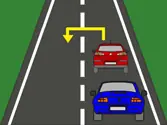
¿Es correcto circular marcha atrás para cambiar el sentido de la marcha?
Is it correct to reverse in order to make a U-turn (change of direction)?
- ASí, si no se obstaculiza a otros conductores.Yes, if you do not obstruct other drivers.
- BNo.No.
- CSí, si no se recorren marcha atrás más de 15 metros.Yes, if you do not reverse more than 15 metres.
ExplanationA driver who intends to turn round and go back the other way must choose a suitable place for the manoeuvre, so that the road is blocked for as short a time as possible, signal the intention with the required signals well in advance, and make sure that the manoeuvre will not endanger or obstruct other road users. Otherwise, the driver must not make the manoeuvre and must wait for the right moment. If, while waiting on the carriageway to make the manoeuvre, the vehicle prevents the vehicles behind from continuing, the driver must leave the carriageway on the right, if possible, until traffic conditions allow the manoeuvre. The manoeuvre must be done in a single turn and without reversing. If this is not possible, the U-turn is prohibited.
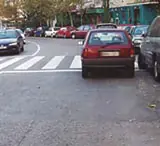
¿Está permitido estacionar en doble fila?
Is double parking allowed?
- ASí, cuando no haya espacio libre en las proximidades.Yes, when there is no free space nearby.
- BSí, en las vías urbanas, por un tiempo inferior a dos minutos.Yes, in built-up areas, for less than two minutes.
- CNo está permitido en ningún caso.It is not allowed in any case.
ExplanationDouble parking is prohibited in all cases, because the vehicle obstructs traffic and prevents the correctly parked vehicle from leaving; neither a short stay nor staying inside the car makes it allowed.
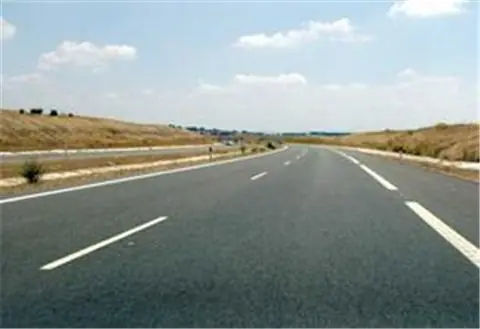
En esta autopista, ¿dónde está permitido estacionar?
On this motorway (autopista), where is parking allowed?
- ASólo en las zonas habilitadas para ello.Only in the areas provided for it.
- BEn el lado derecho o izquierdo, si se realiza fuera de la calzada y el arcén.On the right or left, if it is done off the carriageway and the hard shoulder.
- CFuera de la calzada, en el lado derecho, dejando libre la parte transitable del arcén.Off the carriageway, on the right, leaving the usable part of the hard shoulder clear.
ExplanationUnder Article 94 of the General Traffic Regulations, stopping and parking are prohibited on motorways (autopistas) and dual carriageways (autovías), except in the areas provided for it, such as service areas or rest areas. Neither the carriageway nor the hard shoulder is a valid place.
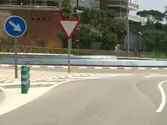
¿Podremos cambiar de dirección hacia la izquierda, en la intersección de la imagen?
May we turn left at the junction in the picture?
- ASi, tanto de dirección como de sentido.Yes, and we may also make a U-turn.
- BNo, ya que la señal obliga a girar a la derecha.No, because the sign requires a right turn.
- CNo.No.
ExplanationThe round sign shows the side on which vehicles must pass. Once past this sign, we may turn or make a U-turn, as long as no other signs indicate otherwise.
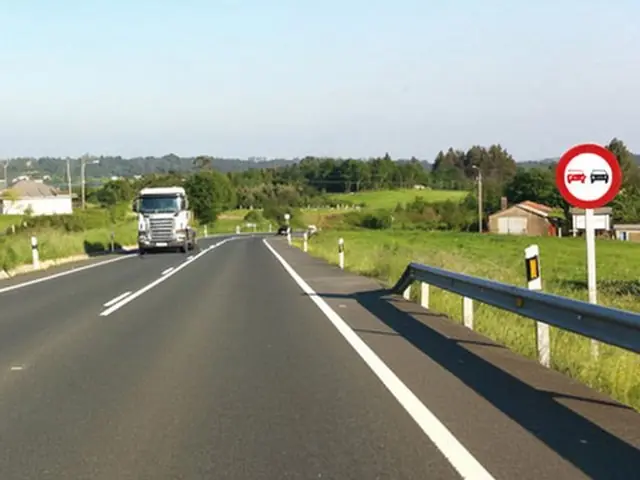
¿Se puede hacer un cambio de sentido antes de la curva?
May you make a U-turn before the bend?
- ASí, si tengo suficiente visibilidad.Yes, if I have enough visibility.
- BNo, porque es una curva sin visibilidad.No, because it is a blind bend.
- CNo, por la presencia de la señal que prohíbe adelantar.No, because of the sign that prohibits overtaking.
ExplanationU-turns are prohibited on stretches where overtaking is prohibited, unless the U-turn is expressly authorised (Article 79.1 of the General Traffic Regulations). Here the sign prohibits overtaking, so you may not make a U-turn either.
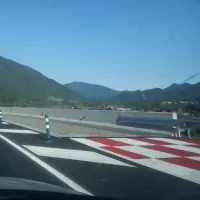
¿Se puede realizar una parada en un damero (cuadrícula de marcas blancas y rojas)?
May you stop on a chequered marking (a grid of red and white squares)?
- ANo, ni parar ni estacionarNo, you may neither stop nor park
- BSí, se puede parar y estacionar si es necesarioYes, you may stop and park if necessary
- CSí, se puede parar pero NO estacionarYes, you may stop but NOT park
ExplanationThe chequered marking is a road marking that shows where an emergency escape (braking) area begins. It is prohibited to stop, park or use it for any other purpose. You may only stop there in an emergency.
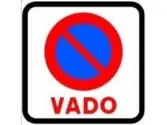
La incorporación desde un inmueble a la vía pública, debe realizarse...
When joining the public road from a property, you must do it...
- Aa una velocidad que permita la detención en el acto, y cediendo el paso a peatones y vehículos.at a speed that allows you to stop immediately, giving way to pedestrians and vehicles.
- Badvirtiendo con la señal acústica y la señal de emergencia.warning others with the horn and the hazard warning lights.
- Crápidamente para no entorpecer a peatones y vehículos.quickly so as not to hinder pedestrians and vehicles.
ExplanationAs a general rule, moving off after stopping or parking, or joining the road from a service area or an adjoining property, must be done: - Without obstructing other drivers and road users, to whom you must give way, taking into account their position, path and speed. - Without forcing approaching vehicles to swerve suddenly. - At a suitable speed. - Taking special care with pedestrians walking on the hard shoulder or in pedestrian areas, to whom you must give way.
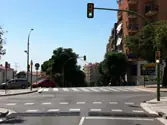
En las intersecciones y sus proximidades, si se dificulta el giro o la visibilidad a otros vehículos, está prohibido...
At junctions and near them, if other vehicles would find it difficult to turn or to see, it is prohibited to...
- Aparar, únicamente.stop, only.
- Bestacionar, solamente.park, only.
- Cparar y estacionar.stop and park.
ExplanationAmong other situations, it is prohibited to park and to stop at junctions and near them if this makes it difficult for other vehicles to turn, or on roads outside built-up areas if it creates danger because of lack of visibility.
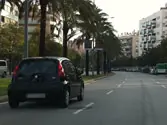
¿Circula correctamente este vehículo por el carril de la izquierda si pretende cambiar de dirección hacia ese lado en una intersección todavía lejana?
Is this vehicle driving correctly in the left-hand lane if it intends to turn left at a junction that is still far away?
- ANo, debería circular por la derecha.No, it should drive on the right.
- BSí.Yes.
- CNo, solo puede cambiar de carril al llegar a la intersección.No, it can only change lane when it reaches the junction.
ExplanationIn a built-up area, we will use the lane that best suits where we are going. If the driver intends to turn left, even at a junction that is still far away, driving in the left-hand lane is correct.
Cuando se impida incorporarse a la circulación a otro vehículo debidamente estacionado, estará prohibido...
When another, correctly parked vehicle would be prevented from moving off into traffic, it is prohibited to...
- AEstacionar, pero no parar.Park, but not stop.
- BParar, pero estará permitido estacionar.Stop, but parking is allowed.
- CParar y estacionar.Stop and park.
ExplanationWhen a correctly parked vehicle would be prevented from moving off into traffic, stopping and parking are prohibited. If we do so, we are considered to be seriously obstructing traffic.
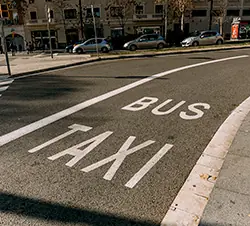
En un carril reservado para uso exclusivo del transporte público urbano, ¿se puede estacionar?
In a lane reserved exclusively for urban public transport, may you park?
- ASólo fuera del horario de servicio.Only outside its hours of operation.
- BNo.No.
- CSí, se puede parar y estacionar.Yes, you may stop and park.
ExplanationLanes reserved for urban public transport must always be kept clear: other vehicles may not drive, stop or park in them.
¿Se puede adelantar por la derecha?
May you overtake on the right?
- ANo en ningún caso.No, in no case.
- BSolo a los tranvías cuando circulen por el centro.Only trams, when they run in the middle of the road.
- CEn vías dentro de poblado con más de un carril delimitado para el mismo sentido.On roads in built-up areas with more than one marked lane in the same direction.
ExplanationBesides overtaking a tram, you may also overtake on the right a vehicle that is going to turn left, and on roads outside built-up areas in the case provided for by the rules.
¿Podremos adelantar en un túnel con un carril para cada sentido?
May we overtake in a tunnel with one lane in each direction?
- ASí, si el túnel mide menos de 500 metros.Yes, if the tunnel is less than 500 metres long.
- BSí.Yes.
- CNo.No.
ExplanationTo overtake in a tunnel, there must be at least 2 lanes in our direction of travel.
¿Se podrá circular hacia atrás para incorporarse desde un estacionamiento?
May you reverse in order to move off from a parking space?
- ASí, sin invadir un cruce.Yes, without entering a junction.
- BSí, hasta un máximo de 20 metros.Yes, up to a maximum of 20 metres.
- CSí, pudiendo recorrer más de 20 metros.Yes, and you may cover more than 20 metres.
ExplanationReversing as a manoeuvre that is part of moving off into traffic may not exceed 15 metres and may not enter a junction.
¿Cómo debemos advertir de nuestra intención de adelantar cuando circulamos fuera de poblado?
How should we signal our intention to overtake when driving outside built-up areas?
- ACon las señales ópticas (destellos) y acústicas.With light signals (flashes) and sound signals.
- BSólo con los destellos.Only with flashes.
- CSólo con la señal acústica.Only with the horn.
ExplanationOutside built-up areas we may signal our intention to overtake with the horn or with light signals, by flashing between main beam and dipped headlights. In built-up areas, however, we may only use light signals.
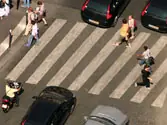
¿Cómo estacionaremos nuestro vehículo en poblado?
How should we park our vehicle in a built-up area?
- AComo norma general, perpendicularmente al borde de la calzada.As a general rule, at right angles to the edge of the carriageway.
- BComo norma general, paralelamente al borde de la calzada.As a general rule, parallel to the edge of the carriageway.
- CSiempre en el lado derecho de la calzada.Always on the right-hand side of the carriageway.
ExplanationAs a general rule, in a built-up area, unless otherwise indicated, we park our vehicle parallel to the edge of the carriageway. It does not have to be the right-hand edge.
¿Puede adelantar por la derecha en una autopista?
May you overtake on the right on a motorway (autopista)?
- ASí, a un vehículo que circule a una velocidad reducida.Yes, a vehicle travelling at reduced speed.
- BNo.No.
- CSí, si no supera la velocidad máxima permitida.Yes, if you do not exceed the maximum permitted speed.
ExplanationAs a general rule you overtake on the left (Article 82.1 of the RGC). On a motorway you may not overtake a slow vehicle on the right; only when traffic is dense in all lanes is one lane moving faster than another not considered overtaking (Article 83.2).
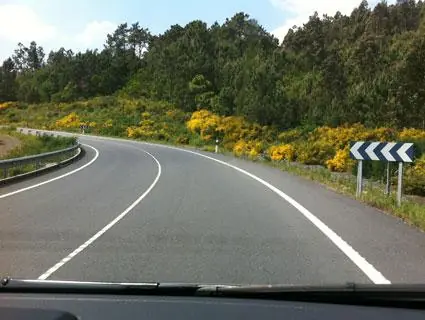
¿Puede adelantar una motocicleta a otra en esta curva de visibilidad reducida?
May a motorcycle overtake another motorcycle on this bend with reduced visibility?
- ANo, porque para adelantar siempre debe invadir el sentido contrario.No, because to overtake it must always enter the opposite side of the road.
- BNo, en curvas de visibilidad reducida está prohibido adelantar siempre.No, overtaking on bends with reduced visibility is always prohibited.
- CSí, cuando mantenga la separación lateral reglamentaria y no ocupe el sentido contrario.Yes, if it keeps the required lateral distance and does not enter the opposite side of the road.
ExplanationOvertaking on bends with reduced visibility is prohibited, unless the two directions of traffic are clearly separated and the manoeuvre can be done without entering the opposite side of the road (Article 87 of the General Traffic Regulations). A motorcycle may overtake another within its own lane if, outside built-up areas, it leaves a lateral distance of at least 1.5 metres.
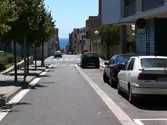
Cuando al estacionar su vehículo el conductor tenga que dejar su puesto, deberá...
When parking, if the driver has to leave the driving seat, they must...
- AAdoptar las precauciones necesarias para impedir el uso del vehículo sin su autorización.Take the necessary precautions to prevent the vehicle from being used without their permission.
- BDejarlo debidamente calzado.Leave it properly chocked.
- CDejar el cambio de marchas en posición de estacionamiento.Leave the gear lever in the park position.
ExplanationBefore leaving the driving seat we must: - Stop the engine and switch off the ignition. If you go away from the vehicle, prevent it from being used without permission. - Leave the parking brake on. - If the vehicle is left on a slope, we must: - Engage the right gear: first gear on an uphill slope and reverse gear on a downhill slope, or, where applicable, the park position. Vehicle combinations, buses and vehicles with a maximum authorised mass (MAM) over 3,500 kg must be properly chocked: - by resting one of the steering wheels against the kerb, turned towards the centre of the carriageway on uphill slopes and outwards on downhill slopes, or - by using suitable chocks; stones or other objects not designed for this purpose may not be used. The chocks must be removed before moving off.
¿Se podrá estacionar en doble fila si el conductor permanece dentro del vehículo?
May you double park if the driver stays inside the vehicle?
- ASí.Yes.
- BNo.No.
- CSí, si no entorpece gravemente la circulación.Yes, if it does not seriously hinder traffic.
ExplanationDouble parking is prohibited in all cases, even if the driver stays inside the vehicle.
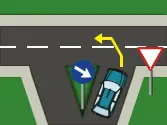
El vehículo de la imagen, ¿efectúa correctamente un cambio de dirección a la izquierda?
Is the vehicle in the picture turning left correctly?
- ANo, porque la señal circular le obliga a ir a la derecha.No, because the round sign requires it to go right.
- BSí, pues la señal circular es de paso obligatorio.Yes, because the round sign shows which side to pass on.
- CSí, podrá ir a la izquierda y no tendrá que respetar la señal de ceda el paso, puesto que gira hacia la izquierda.Yes, it may go left and does not have to obey the give way sign, since it is turning left.
ExplanationThe round sign in the picture is a compulsory passing side sign: it shows on which side of the traffic island vehicles must pass. If it were instead a compulsory direction sign, it would require us to follow the direction shown and turning left would be prohibited.
¿Se podrá adelantar en una curva de visibilidad reducida?
May you overtake on a bend with reduced visibility?
- ANo, en ningún caso.No, in no case.
- BSí, cuando para hacerlo no se tenga que invadir el sentido contrario y ambos sentidos estén claramente delimitados.Yes, when this can be done without entering the opposite side of the road and both directions of traffic are clearly separated.
- CSólo los ciclistas.Only cyclists.
ExplanationAs a general rule, overtaking on a bend with reduced visibility is prohibited, but it is allowed if it can be done without entering the opposite side of the road and the two directions are clearly separated.
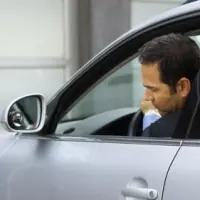
Debe comprobar antes de circular marcha atrás que...
Before reversing, you must check that...
- ATiene visibilidad suficiente, únicamente.You have enough visibility, and nothing else.
- BNo va a recorrer más de 50 metros.You will not reverse more than 50 metres.
- CPuede hacerlo sin ocasionar peligro a otros usuarios de la vía, ayudándose de las indicaciones de otras personas, si es necesario.You can do it without endangering other road users, with the help of another person's directions if necessary.
ExplanationVehicles are designed to move forwards. When reversing, the driver usually does not have a good view of the outside. For this reason, the driver must make sure that there is no danger or obstacle in the way, with the help, if necessary, of another person giving directions. As a general rule, reversing is prohibited, except in the following cases, exceptionally and always over the shortest distance necessary: 1. As a manoeuvre that is part of stopping, parking or moving off into traffic. In this case you may not reverse more than 15 metres or enter a junction. 2. When it is not possible to go forwards, turn or make a U-turn. In this case there is no limit on the reversing distance, and you may even enter a junction if necessary. Reversing is prohibited on dual carriageways (autovías) and motorways (autopistas).
En una carretera con un solo carril para cada sentido, al adelantar a un ciclista, ¿es obligatorio entrar en el carril de sentido contrario?
On a road with only one lane in each direction, when overtaking a cyclist, is it compulsory to move into the lane for oncoming traffic?
- ANo.No.
- BNo, está prohibido adelantar a ciclistas.No, overtaking cyclists is prohibited.
- CSí.Yes.
ExplanationAccording to Article 85.4 of the General Traffic Regulations (as worded by RD 518/2026), to overtake a cyclist you must occupy part or all of the next lane or the opposite lane and leave at least 1.5 metres of space to the side. Outside built-up areas you must also reduce your speed by at least 20 km/h below the road's speed limit.
Circulando por una autopista con tráfico muy denso, ¿se considera adelantamiento que un carril circule más rápido que otro?
When driving on a motorway (autopista) in very heavy traffic, is it considered overtaking if one lane moves faster than another?
- ANo, se considera un rebasamiento.No, it is considered passing.
- BSí, se considera un adelantamiento.Yes, it is considered overtaking.
- CNo, no se considera un adelantamiento.No, it is not considered overtaking.
ExplanationWhen, in heavy traffic, vehicles in one lane move faster than those in another, this is considered neither overtaking nor passing.
Un conductor que indica que va a cambiar de carril, ¿tiene prioridad sobre los conductores que circulan por el carril al que pretende moverse?
Does a driver who signals a lane change have priority over drivers already in the lane they want to move into?
- ASí.Yes.
- BNo.No.
- CSolo si va a adelantar a un vehículo de gran tamaño.Only if they are going to overtake a large vehicle.
ExplanationIn Spain, a driver who signals a lane change does not have priority over the vehicles already travelling in the lane they want to move into. The indicator only shows the intention to manoeuvre; it does not automatically give the right to do so. Before changing lanes, the driver must make sure the manoeuvre is safe and give way to the vehicles already in that lane. Example: if a driver switches on the indicator and changes lanes without giving way to a car already in that lane, it creates a dangerous situation.
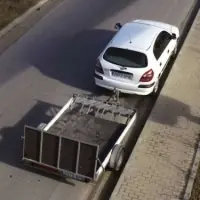
Si estaciona un vehículo con remolque en una pendiente ascendente, y no dispone de calzos, ¿qué debe hacer?
If you park a vehicle with a trailer on an uphill slope and you have no chocks, what must you do?
- AUtilizar como calzos elemento naturales como piedras, madera etc...Use natural objects such as stones, wood, etc. as chocks.
- BEs suficiente con que deje puesta la marcha atrás o la primera marcha.It is enough to leave it in reverse or first gear.
- CApoyar una de las ruedas delanteras en el bordillo, orientada hacia el centro de la calzada.Rest one of the front wheels against the kerb, turned towards the centre of the carriageway.
ExplanationAll vehicles with a trailer that stop or park on a considerable uphill slope must be chocked with suitable chocks. If we have no chocks, we must rest one of the front steering wheels against the kerb, turned towards the centre of the carriageway. Using stones or similar objects instead of chocks is completely prohibited.
Una vez finalizado el adelantamiento, ¿ cómo deberá volver al carril derecho?
Once you have finished overtaking, how should you return to the right lane?
- AUna vez recorridos al menos 100m.After covering at least 100 m.
- BTan pronto aparezca la parte delantera del vehículo adelantado en nuestro espejo retrovisor, de una forma gradual y progresiva.As soon as the front of the overtaken vehicle appears in our rear-view mirror, gradually and smoothly.
- CInmediatamente por delante del vehículo adelantado, de forma rápida, para no molestar.Immediately in front of the overtaken vehicle, quickly, so as not to disturb anyone.
ExplanationOnce the overtaking is finished, the driver of the overtaking vehicle must return to the right lane as soon as the front of the overtaken vehicle appears in their rear-view mirror, and must do so gradually and smoothly.
No debe iniciar un adelantamiento sin asegurarse primero de que...
You must not start overtaking without first making sure that...
- Ahay suficiente espacio para volver al carril derecho cuando termine la maniobra.there is enough space to return to the right-hand lane when you finish the manoeuvre.
- Blos vehículos que circulan detrás mantienen la distancia de seguridad.the vehicles behind are keeping a safe distance.
- Cel vehículo que va delante reduzca la velocidad para facilitar la maniobra.the vehicle in front slows down to make the manoeuvre easier.
ExplanationBefore overtaking, the driver must make sure there is enough space to move back into their lane when the manoeuvre is finished (Article 84.3 of the General Traffic Regulations). It does not depend on the vehicle in front slowing down or on the distance kept by those behind.
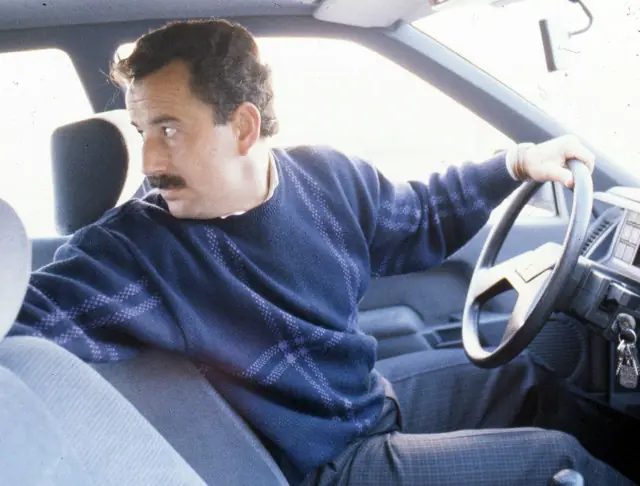
¿Puede incorporarse a la circulación dando marcha atrás invadiendo una intersección?
May you move off into traffic by reversing into a junction?
- ASí, pero a una velocidad reducida que permita detenerse en caso de peligro.Yes, but at a low speed that allows you to stop if there is danger.
- BNo, marcha atrás no se puede invadir una intersección.No, you may not reverse into a junction.
- CSí, cuando el recorrido no sea superior a 15 metros.Yes, when the distance is not more than 15 metres.
ExplanationAs a general rule, reversing is prohibited, except in the following cases, exceptionally and always over the shortest distance necessary: 1. As a manoeuvre that is part of stopping, parking or moving off into traffic. In this case you may not reverse more than 15 metres or enter a junction. 2. When it is not possible to go forwards, turn or make a U-turn. In this case there is no limit on the reversing distance, and you may even enter a junction if necessary. Reversing is prohibited on motorways (autopistas) and dual carriageways (autovías).
Dentro de poblado, ¿se podrá efectuar un adelantamiento por la derecha?
In a built-up area, may you overtake on the right?
- ANo, en ningún caso.No, in no case.
- BSí, cuando existan al menos dos carriles en el mismo sentido.Yes, when there are at least two lanes in the same direction.
- CSí, cuando existan al menos dos carriles para el mismo sentido y estén delimitados.Yes, when there are at least two lanes for the same direction and they are marked.
ExplanationIn a built-up area you may overtake on the right when there are at least two lanes for the same direction and these lanes are marked.
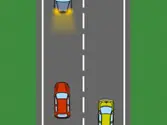
Una vez iniciado el adelantamiento se producen circunstancias que pueden hacer difícil su finalización sin provocar riesgos, ¿qué está obligado a hacer el conductor?
After you have started overtaking, circumstances arise that may make it difficult to finish without creating risks. What must the driver do?
- ADesistir del adelantamiento, reduciendo rápidamente la marcha y regresando a su carril sin obstaculizar.Abandon the overtaking, slowing down quickly and returning to their lane without obstructing others.
- BTerminar el adelantamiento aumentando rápidamente la velocidad.Finish the overtaking by speeding up quickly.
- CFrenar bruscamente para volver a su derecha cuanto antes.Brake sharply to get back to the right as soon as possible.
ExplanationIf, after starting to overtake, we notice circumstances that may make it difficult to finish the manoeuvre without creating risks, we must slow down quickly and return to our lane, warning those behind us with the required signals.
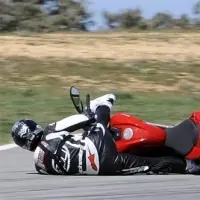
¿Qué debe realizar el conductor de una motocicleta al sufrir una caída?
What should a motorcycle rider do when they fall off?
- ALevantarse antes de quedar detenido por completo para evitar ser golpeado contra el suelo.Get up before coming to a complete stop, to avoid being struck against the ground.
- BRodar el cuerpo rápidamente para provocar mayor rozamiento y detenerse lo antes posible.Roll the body quickly to create more friction and stop as soon as possible.
- CDeslizarse por el pavimento de forma relajada hasta quedar completamente detenido.Slide along the road surface in a relaxed way until coming to a complete stop.
ExplanationAfter a fall, the safest thing is to let yourself slide along the road surface with your body relaxed until you come to a complete stop. Trying to get up before stopping, or rolling to slow down, increases the risk of impacts and serious injuries.
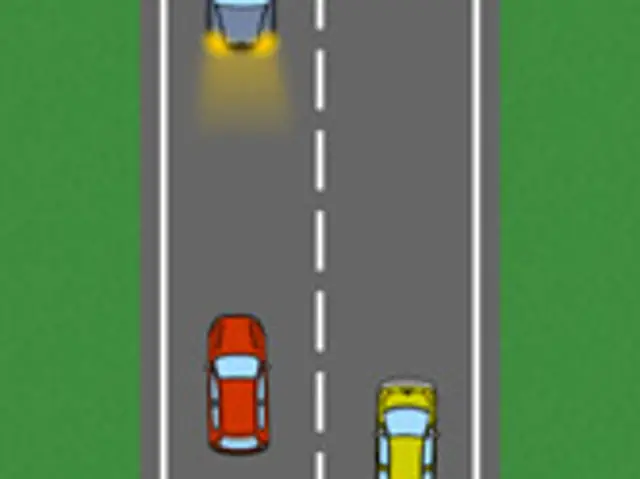
Está adelantando y ve peligro. ¿Qué debe hacer?
You are overtaking and see a danger. What should you do?
- AReducir la velocidad, usar el intermitente y volver a su carril.Reduce speed, use the indicator and return to your lane.
- BAumentar la velocidad y adelantar rápidamente.Speed up and overtake quickly.
- CPedir ayuda al conductor del vehículo al que está adelantando.Ask the driver of the vehicle you are overtaking for help.
ExplanationIf, after starting to overtake, circumstances arise that make it difficult to finish without risk, you must quickly reduce speed, return to your own lane and warn those behind you with the required signals (Article 85.2 of the RGC).
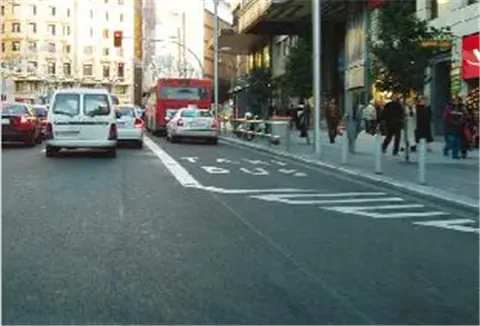
¿Está permitido realizar una parada en un carril reservado para autobuses?
Is it allowed to stop in a lane reserved for buses?
- ANo, en ningún caso.No, never.
- BSolo cuando la línea que lo delimita es discontinua.Only when the line marking it is broken.
- CSí, se puede parar con el fin de subir o bajar viajeros.Yes, you may stop to let passengers get on or off.
ExplanationArticle 94 of the General Traffic Regulations forbids stopping in lanes reserved for certain vehicles, such as a bus lane, even to let passengers get on or off. Only authorised buses may do so, at their stops.
¿Qué debe hacer el conductor de un coche para incorporarse a la circulación?
What must a car driver do to join traffic?
- ASolo señalizar la maniobra, porque los demás deben cederle el paso.Just signal the manoeuvre, because the others must give way.
- BSeguir siempre las indicaciones de otra persona.Always follow another person's directions.
- CAsegurarse de que puede incorporarse sin peligro para los demás.Make sure they can join without danger to others.
ExplanationA driver joining traffic must first make sure they can do so without danger to others, giving way and taking into account the position, path and speed of other vehicles, and must signal the manoeuvre (Article 72.1 of the General Traffic Regulations).
En una vía urbana con dos carriles para el mismo sentido, ¿Le está permitido a un ciclista adelantar por la derecha a un turismo?
On an urban road with two lanes in the same direction, is a cyclist allowed to overtake a car on the right?
- ANo, deberá adelantarle por la izquierda.No, the cyclist must overtake it on the left.
- BSí, siempre que no exista peligro para los demás usuarios.Yes, as long as there is no danger to other road users.
- CSólo si el turismo se encuentra detenido o en caso de retención.Only if the car is stopped or in a traffic jam.
ExplanationYes. In built-up areas, on carriageways with at least two lanes in the same direction, overtaking on the right is allowed if it can be done without danger (Article 82 of the General Traffic Regulations), and since 2026 cyclists may overtake on the right or on the left, whichever is safer for them (Article 153).
Un turismo que arrastra un remolque, ¿debe utilizar calzos al estacionar?
Must a car towing a trailer use chocks when parking?
- ANo, sólo los deben usar los camiones.No, only lorries must use them.
- BSí, al estacionar en un lugar con pendiente.Yes, when parking on a slope.
- CSí, siempre.Yes, always.
ExplanationA car towing a trailer that is stopped or parked on a noticeable slope must be properly chocked. This is not necessary if the vehicle is parked on level ground.
En una carretera de doble sentido con tres carriles, ¿dónde debe situarse un vehículo para girar a la izquierda?
On a two-way road with three lanes, where must a vehicle position itself to turn left?
- AEn el carril más a la derecha.In the lane furthest to the right.
- BEn el carril central.In the centre lane.
- CEn el carril más a la izquierda, si no está ocupado.In the lane furthest to the left, if it is not occupied.
ExplanationAccording to Article 75.1.b of the General Traffic Regulations, to turn left on a two-way carriageway with three lanes separated by broken lines, you must move into the centre lane in good time. The lane furthest to the left is for traffic in the opposite direction and may not be used.
Si pretende cambiar de carril al lado izquierdo y el indicador de dirección está averiado, ¿cómo lo señalizará?
If you want to move to the lane on your left and your indicator is broken, how will you signal it?
- ANo podré cambiar de carril.I will not be able to change lanes.
- BCon el brazo izquierdo extendido y la palma de la mano hacia abajo.With the left arm stretched out and the palm of the hand facing down.
- CCon el brazo izquierdo en ángulo hacia arriba.With the left arm bent upwards.
ExplanationTo signal manoeuvres with the arm: to move to the left, hold the arm horizontal with the palm facing down; to move to the right, bend the arm upwards with the hand open.
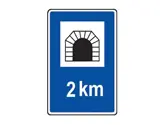
¿Está permitido los adelantamientos en los túneles que disponen de un sólo carril para cada sentido de la marcha?
Is overtaking allowed in tunnels that have only one lane for each direction of travel?
- ASí.Yes.
- BSí, si el túnel está bien iluminado.Yes, if the tunnel is well lit.
- CNo.No.
ExplanationOvertaking is prohibited in tunnels, underpasses and stretches covered by the tunnel sign where there is only one lane for the direction of travel of the vehicle that intends to overtake (Article 87.1 of the General Traffic Regulations).
Al adelantar a un ciclista en una carretera convencional:
When overtaking a cyclist on a conventional road:
- ADebe dejarse al menos 1,5 m de separación lateral, pudiendo ocupar parte del sentido contrario si es seguro.You must leave at least 1.5 m of lateral distance, and you may use part of the opposite side of the road if it is safe.
- BHay que pasar lo más cerca posible.You must pass as close as possible.
- CNo es necesario cambiar de carril.You do not need to change lanes.
ExplanationYou must leave at least 1.5 m; to do so, you are allowed to use part of the opposite lane, even over a continuous line, if there is no risk.
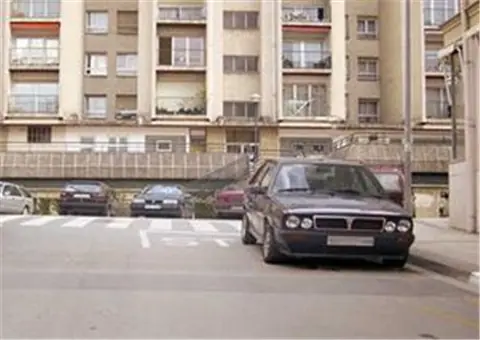
Este vehículo, ¿está correctamente parado?
Is this vehicle stopped correctly?
- ASí, porque deja espacio libre suficiente para pasar.Yes, because it leaves enough room to pass.
- BSólo es correcta la parada si el conductor no baja del vehículo.Stopping is correct only if the driver does not get out of the vehicle.
- CNo, porque impide la visibilidad de la señalización.No, because it blocks the view of the signs.
ExplanationStopping is prohibited where it blocks the view of signs for the road users they apply to (Article 94.1 of the General Traffic Regulations (RGC)). In the picture the car, stopped next to the junction, hides the signs; leaving room to pass or staying inside does not make it correct.
¿Cómo indicaremos nuestra intención de efectuar una parada?
How should we signal our intention to stop?
- ACon las luces de posición o con las de estacionamiento.With the sidelights or with the parking lights.
- BCon el indicador de dirección del lado al que se pretenda parar.With the indicator on the side where we intend to stop.
- CCon la señal de emergencia.With the hazard warning lights.
ExplanationWe signal our intention to stop with the indicator on the side where we are going to stop.
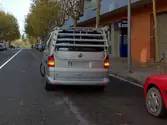
Está prohibido parar y estacionar cuando la distancia entre el vehículo y el borde opuesto de la calzada o una marca longitudinal continua es…
It is prohibited to stop and park when the distance between the vehicle and the opposite edge of the carriageway or a continuous longitudinal line is…
- AInferior a 3 metros.Less than 3 metres.
- BIgual a 3 metros.Exactly 3 metres.
- CSuperior a 3 metros.More than 3 metres.
ExplanationThe rules prohibit stopping or parking when the distance between the vehicle and the opposite edge of the carriageway or a continuous longitudinal line is less than 3 metres or, in any case, when it does not allow other vehicles to pass. This is because enough space must be left for other vehicles to drive past safely.
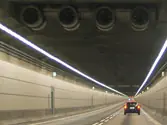
En un túnel con más de un carril en el sentido de la marcha, ¿está permitido adelantar?
In a tunnel with more than one lane in your direction of travel, may you overtake?
- ANo, en los túneles no está permitido adelantar.No, overtaking is not allowed in tunnels.
- BSí.Yes.
- CSí, pero sólo a camiones y autobuses.Yes, but only lorries and buses.
ExplanationIn tunnels or underpasses with two-way traffic, overtaking is prohibited, unless there is more than one lane for your direction of travel; in that case you may overtake without entering the opposite side of the road.
Si no se puede avanzar ni cambiar de dirección, ¿está permitido dar marcha atrás?
If you cannot move forward or change direction, are you allowed to reverse?
- ANo.No.
- BSí, pero la marcha atrás no puede ser superior a 15 metros y no se puede invadir un cruce de vías.Yes, but you may not reverse more than 15 metres or enter a junction.
- CSí, pero solo la distancia mínima indispensable.Yes, but only the minimum distance necessary.
ExplanationWhen it is not possible to move forward or change direction, you are allowed to drive backwards, but always over the minimum distance necessary (Article 80.1 of the General Traffic Regulations). The 15-metre limit only applies to reversing as part of stopping, parking or joining traffic.
All topics
- Definitions
- Documents and penalty points
- The driver's condition
- Duties of drivers and pedestrians
- Vehicle safety devices
- Vehicle controls and equipment
- Vehicle lights and horn
- Traffic signs, markings and signals
- The road and its lanes
- Speed and distances
- Right of way
- Carrying passengers and loads
- Driving safely in difficult conditions
- Vehicle mechanics and maintenance
- Road accidents and first aid
- Defensive and eco-driving
Independent app: not affiliated with or endorsed by the DGT (Spain's Directorate-General for Traffic) or the Ministry of the Interior. The official exam is booked with the DGT and taken at its test centres. The questions here are practice material; the DGT's official question bank is not public.
Basado en datos de la Agencia Estatal Boletín Oficial del Estado (https://www.boe.es). Textos consolidados de carácter meramente informativo. La AEBOE no patrocina ni respalda este sitio.
Parte de las preguntas procede de los tests de la revista «Tráfico y Seguridad Vial» de la DGT, reproducidos con indicación de la fuente.