
DGT test · 961 questions
Speed and distances · Page 2 of 20
Speed limits by road and vehicle type, adapting speed to conditions, safe following distance and stopping distance.
Questions in this topic, with answers
961 questions, 50 per page, with the correct answer and the explanation. Page 2 of 20.
Si Ud. con su turismo quiere adelantar, fuera de poblado, en una vía con un carril para cada sentido a un ciclomotor, ¿qué separación lateral debe dejar?
If you want to overtake a moped in your car, outside a built-up area, on a road with one lane in each direction, what lateral distance must you leave?
- AUn margen lateral de seguridad proporcional a la velocidad y a la anchura y características de la calzada.A lateral safety margin in proportion to the speed and to the width and features of the carriageway.
- BUn metro y medio, como máximo.One and a half metres at most.
- CUn metro y medio, como mínimo, ocupando parte o la totalidad del carril de sentido contrario de la calzada.One and a half metres at least, occupying part or all of the lane for the opposite direction.
ExplanationUnder Article 85.4 of the General Traffic Regulations (as worded by RD 518/2026), when overtaking a moped you must occupy part or all of the adjacent or opposite lane and keep a safety gap of at least 1.5 metres. Outside built-up areas you must also reduce your speed by at least 20 km/h below the road's limit.
¿A qué velocidad máxima podrá circular un conductor novel?
What is the maximum speed for a novice driver?
- AA 80 km/h.80 km/h.
- BA 80 km/h más 20 km/h para adelantar.80 km/h, plus 20 km/h for overtaking.
- CSegún el tipo de vía, a la misma que el resto de conductores.The same as for other drivers, depending on the type of road.
ExplanationNovice drivers may use the same roads and have the same speed limits as other drivers.
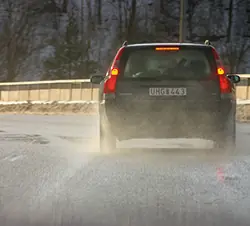
¿Qué separación deberemos mantener con el vehículo que nos precede en un túnel?
What gap should we keep from the vehicle in front in a tunnel?
- A100 m.100 m.
- B150 m.150 m.
- C70 m.70 m.
ExplanationIn tunnels and underpasses, when you do not intend to overtake, you must keep a distance of at least 100 metres, or a gap of at least 4 seconds. Vehicles with a MAM of more than 3500 kg must keep a safe distance of 150 metres, or a gap of at least 6 seconds.
¿Cómo puede reducir la velocidad de su vehículo?
How can you reduce your vehicle's speed?
- ASolo con el sistema de frenado.Only with the braking system.
- BSolo con el motor.Only with the engine.
- CTanto con el sistema de frenado como con el motor.Both with the braking system and with the engine.
ExplanationSpeed can be reduced with the brakes and also with the engine: when you lift your foot off the accelerator or change down a gear, engine braking holds the vehicle back. Combining both, especially going downhill, stops the brakes from overheating and losing effectiveness.
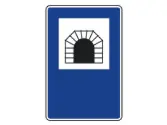
En un túnel, el conductor de una motocicleta, ¿qué distancia debe dejar con el vehículo de delante en caso de que no pretenda adelantarlo?
In a tunnel, what distance must a motorcyclist keep from the vehicle in front if they do not intend to overtake it?
- A150 metros.150 metres.
- B50 metros.50 metres.
- C100 metros.100 metres.
ExplanationWhen not intending to overtake, you must keep a safe distance from the vehicle in front of at least 100 metres or a minimum gap of four seconds at all times. For vehicles with a maximum authorised mass over 3,500 kilograms, the safe distance from the vehicle in front must be at least 150 metres or a minimum gap of six seconds.
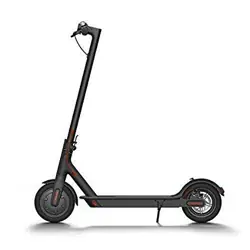
Los motores eléctricos que propulsan los VMP pueden proporcionarles una velocidad máxima comprendida entre...
The electric motors that power personal mobility vehicles (PMVs) can give them a maximum speed of between…
- A25 y 50 km/h.25 and 50 km/h.
- B25 y 45 km/h.25 and 45 km/h.
- C6 y 25 km/h.6 and 25 km/h.
ExplanationPersonal mobility vehicles, such as e-scooters, are single-seat vehicles with one or more wheels, powered by an electric motor, whose maximum design speed is between 6 and 25 km/h.
Si la velocidad máxima que alcanza una motocicleta es inferior a 100 kilómetros por hora, ¿cuántos retrovisores debe llevar?
If a motorcycle's maximum speed is less than 100 km/h, how many rear-view mirrors must it have?
- AUno obligatorio en el lado derecho y opcionalmente otro en el lado izquierdo.One compulsory mirror on the right and, optionally, another on the left.
- BDos, uno a cada lado de la motocicleta.Two, one on each side of the motorcycle.
- CUno obligatorio en el lado izquierdo, y opcionalmente otro en el lado derecho.One compulsory mirror on the left and, optionally, another on the right.
ExplanationMotorcycles, with or without a sidecar, with a maximum speed of no more than 100 km/h must have at least one exterior rear-view mirror on the left. When their maximum speed is over 100 km/h, they must have one on the left and another on the right.
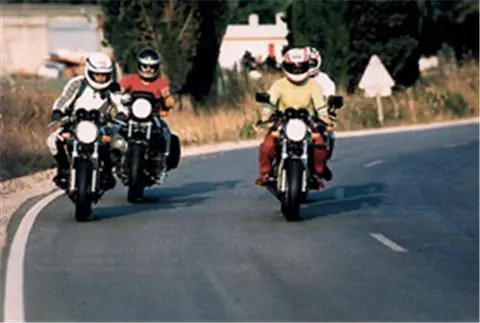
Fuera de poblado, ¿qué separación lateral debe dejar el conductor de una motocicleta con respecto a los salientes de otra motocicleta a la que está adelantando?
Outside built-up areas, what lateral clearance must a motorcyclist leave from the protruding parts of another motorcycle they are overtaking?
- AUna distancia no superior a 1,5 metros.A distance of no more than 1.5 metres.
- B1,5 metros como mínimo.At least 1.5 metres.
- CUna distancia proporcional a la velocidad de circulación.A distance in proportion to the driving speed.
ExplanationUnder Article 85.5 of the General Traffic Regulations, the driver of a two-wheeled vehicle overtaking any other vehicle outside built-up areas must leave a space of no less than 1.50 metres between the two, measured to their most protruding parts.
¿Cuál será la velocidad máxima de una autocaravana de hasta 3500 kg cuando circula por una autovía?
What is the maximum speed of a motorhome of up to 3,500 kg when it is travelling on a dual carriageway (autovía)?
- A120 km/h.120 km/h.
- B100 km/h.100 km/h.
- C90 km/h.90 km/h.
ExplanationUnder Article 48.1.a of the RGC, motorhomes with a maximum authorised mass (MAM) of 3,500 kg or less have the same limits as cars: 120 km/h on motorways (autopistas) and dual carriageways (autovías) and 90 km/h on conventional roads. Those of more than 3,500 kg are limited to 90 km/h on motorways and dual carriageways.
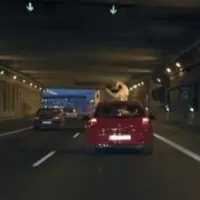
Conduce atravesando un túnel con un vehículo de menos de 3500 kg de Masa Máxima Autorizada. ¿Qué distancia de seguridad deberá dejar con el vehículo que le precede?
You are driving through a tunnel in a vehicle with a maximum authorised mass of less than 3,500 kg. What safe distance must you leave from the vehicle in front?
- AMantener por lo menos 150 metros de distancia con respecto al vehículo que circula delante.Keep at least 150 metres from the vehicle in front.
- BMantener por lo menos 50 metros de distancia con respecto al vehículo que circula delante.Keep at least 50 metres from the vehicle in front.
- CMantener por lo menos 100 metros de distancia con respecto al vehículo que circula delante.Keep at least 100 metres from the vehicle in front.
ExplanationUnder Article 95 of the General Traffic Regulations, in tunnels and underpasses, if you are not going to overtake, you must keep at least 100 metres or 4 seconds from the vehicle in front. The 150 metres or 6 seconds apply to vehicles over 3,500 kg.
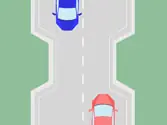
Circulando por esta autopista, ¿cual será la velocidad máxima conduciendo un vehículo mixto?
Driving on this motorway (autopista), what is the maximum speed when driving a dual-purpose vehicle?
- A120 km/h.120 km/h.
- B100 km/h.100 km/h.
- C90 km/h.90 km/h.
ExplanationThe maximum speed on a motorway (autopista) or dual carriageway (autovía) for an adaptable dual-purpose vehicle is 100 km/h. In a car or on a motorcycle the maximum speed is 120 km/h.
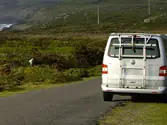
Al rebasar un vehículo inmovilizado por avería que ocupa en parte la calzada, ¿es obligatorio reducir la velocidad?
When passing a broken-down (immobilised) vehicle that is partly occupying the carriageway, is it compulsory to reduce speed?
- ASólo en vías fuera de poblado.Only on roads outside built-up areas.
- BSí, en al menos 20 km/h respecto al límite existente en la vía.Yes, by at least 20 km/h below the speed limit in force on the road.
- CNo, si se deja una separación lateral de al menos 1,5 metros.No, if you leave a lateral clearance of at least 1.5 metres.
ExplanationAccording to Article 88.1 of the General Traffic Regulations (as worded by RD 518/2026), drivers passing a vehicle immobilised by a breakdown or accident that fully or partly occupies their lane must keep a safety clearance of at least 1.5 metres and reduce speed by at least 20 km/h below the limit in force on that road. The rule is not limited to roads outside built-up areas.
¿Cuál es la velocidad máxima genérica en una vía urbana con dos o más carriles por sentido de circulación?
What is the general maximum speed on an urban road with two or more lanes in each direction?
- A50 km/h, pudiendo rebasar esta velocidad en 20 km/h para efectuar un adelantamiento.50 km/h, and you may exceed it by 20 km/h to overtake.
- B50 km/h.50 km/h.
- C60 km/h.60 km/h.
ExplanationUnder Article 50.1 of the General Traffic Regulations, the general limit on urban roads is 50 km/h on roads with two or more lanes in each direction, 30 km/h on roads with one lane in each direction and 20 km/h on single-level (shared) streets. The 20 km/h margin for overtaking no longer exists.
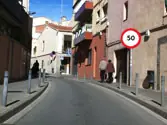
A la vista de la imagen, ¿a qué velocidad como máximo podremos circular en esta vía de sentido único con un solo carril?
Looking at the picture, what is the maximum speed at which we may drive on this one-way road with a single lane?
- A20 km/h.20 km/h.
- B30 km/h.30 km/h.
- C50 km/h.50 km/h.
ExplanationWithout signs, an urban road with a single lane in each direction has a general limit of 30 km/h (Article 50.1.b of the RGC). The municipal authority may raise it to 50 km/h with specific signs (Article 50.3), such as the sign in the picture, and then the maximum is 50 km/h.
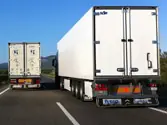
En una carretera convencional, ¿a qué velocidad máxima puede circular un camión?
On a conventional road, what is the maximum speed for a lorry?
- AA 80 km/h.80 km/h.
- BA 100 km/h.100 km/h.
- CA 120 km/h.120 km/h.
ExplanationOn conventional roads, the maximum speed for lorries, even when overtaking, is 80 km/h.
¿Cuál será la velocidad máxima para un conjunto de vehículos formado por un camión con un remolque de más de 750 kg de MMA circulando en una autopista dentro de poblado?
What is the maximum speed for a combination made up of a lorry and a trailer with a MAM of more than 750 kg on a motorway (autopista) inside a built-up area?
- A80 km/h.80 km/h.
- B70 km/h.70 km/h.
- C90 km/h.90 km/h.
ExplanationUnder Article 50.6 of the General Traffic Regulations, the general limit on motorways (autopistas) and dual carriageways (autovías) running through built-up areas is 80 km/h. As this combination has a maximum of 90 km/h outside built-up areas, the 80 km/h limit applies inside built-up areas.
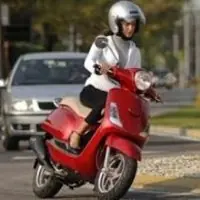
En vía urbana, ¿cuál es la velocidad máxima permitida para motocicletas?
On a road in a built-up area, what is the maximum speed allowed for motorcycles?
- A50 km/h.50 km/h.
- B45 km/h.45 km/h.
- C60 km/h.60 km/h.
ExplanationMotorcycles do not have their own urban limit: the general limits in Article 50 of the General Traffic Regulations apply. The maximum on roads in built-up areas is 50 km/h on roads with two or more lanes in each direction; with a single lane in each direction it drops to 30 km/h, and on single-level (shared) streets to 20 km/h.
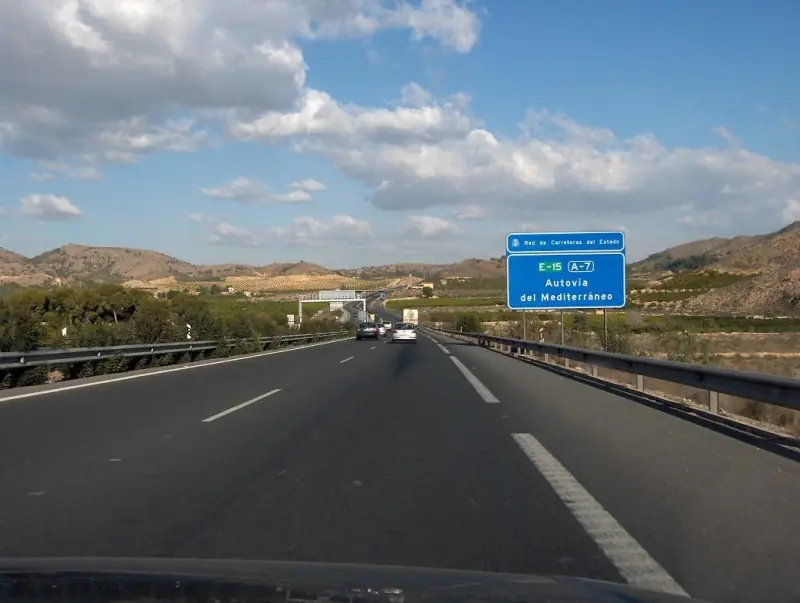
¿A qué velocidad como máximo puede circular por esta autovía un turismo con un remolque de 800 kg de MMA?
What is the maximum speed at which a car towing a trailer with a MAM of 800 kg may travel on this dual carriageway (autovía)?
- AA 90 km/h.90 km/h.
- BA 100 km/h.100 km/h.
- CA 80 km/h.80 km/h.
ExplanationA car towing a trailer, whether light or not, has a maximum speed of 90 km/h on motorways (autopistas) and dual carriageways (autovías), compared with 120 km/h for a car on its own. On conventional roads the limit for the combination is 80 km/h.
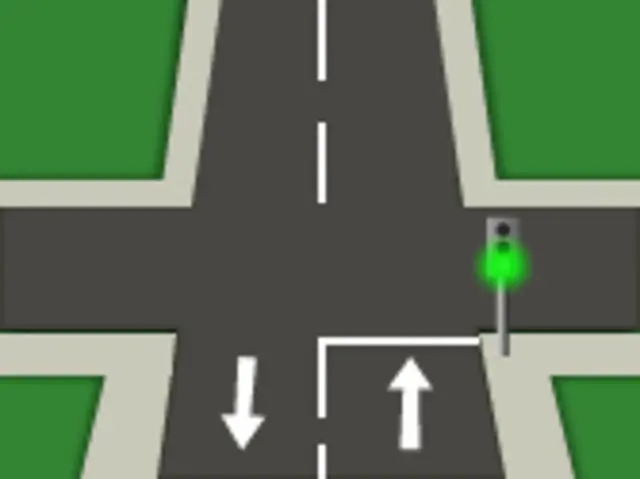
¿Cuál es la velocidad máxima en una vía urbana con un solo carril por sentido?
What is the maximum speed on an urban road with only one lane in each direction?
- A20 km/h20 km/h
- B30 km/h30 km/h
- C50 km/h50 km/h
ExplanationSince 2021, the maximum speed on urban roads with only one lane in each direction has been 30 km/h.

¿Qué distancia lateral deberemos dejar al adelantar a un peatón por una carretera convencional?
What sideways distance should we leave when overtaking a pedestrian on a conventional road?
- A1,5 metros como mínimo.At least 1.5 metres.
- BLa proporcional a la anchura y características de la calzada.One in proportion to the width and features of the carriageway.
- C1 metro como máximo.No more than 1 metre.
ExplanationWhen overtaking pedestrians, cyclists, mopeds or animals, you must leave a sideways gap of at least 1.5 metres, using part or all of the opposite lane if necessary. Outside built-up areas, you must also reduce your speed by at least 20 km/h below the road's speed limit.
La velocidad mínima de un turismo con remolque en carretera convencional es de.....
The minimum speed for a car towing a trailer on a conventional road is…
- A40 km/h40 km/h
- B45 km/h45 km/h
- C60 km/h60 km/h
ExplanationOn roads that are not motorways (autopistas) or dual carriageways (autovías), the minimum speed is half the vehicle's general maximum speed. A car towing a trailer has a maximum of 80 km/h on a conventional road, so its minimum is 40 km/h.
¿En qué caso la distancia de detención es mayor?
In which case is the stopping distance longer?
- ACuando la carretera está mojada.When the road is wet.
- BCuando la carretera está seca.When the road is dry.
- CCuando hay viento lateral.When there is a crosswind.
ExplanationStopping distance is the distance a vehicle needs to stop completely after the driver perceives a danger. It varies with the condition of the road surface: when the road is wet, tyre grip is reduced, which increases the stopping distance. So the stopping distance is longer when the road is wet.
¿Cuál es la velocidad máxima a la que puede circular un conductor novel por una travesía?
What is the maximum speed for a novice driver on a travesía?
- A80 km/h.80 km/h.
- B50 km/h.50 km/h.
- C40 km/h.40 km/h.
ExplanationThe maximum speed for a novice driver is the same as for other drivers. A travesía is inside a built-up area, so the maximum speed there is 50 km/h.
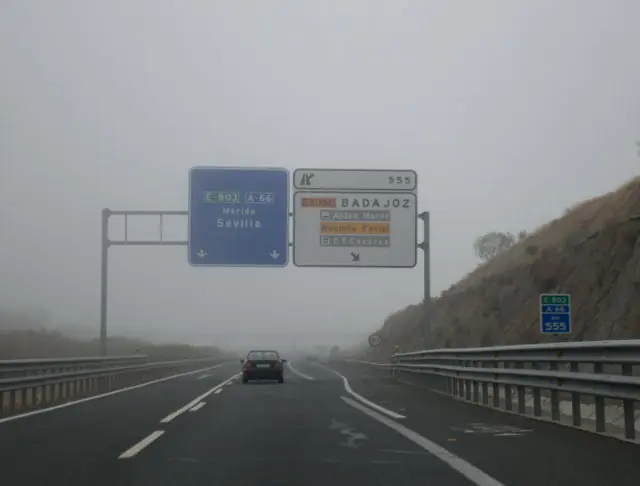
En una autopista, ¿está permitido circular a una velocidad anormalmente reducida con niebla espesa?
On a motorway (autopista), is it permitted to drive at an abnormally low speed in thick fog?
- ANo, porque es una autopista y es una vía de gran seguridad.No, because it is a motorway, which is a very safe road.
- BSí, si la circulación es escasa, pero está prohibido si el tráfico es denso.Yes, if there is little traffic, but it is prohibited if traffic is heavy.
- CSí.Yes.
ExplanationFog sharply reduces visibility. Sometimes it even makes it impossible to keep driving, even with good lights. In this case, driving below the minimum speed is justified, because we must always adapt our speed to the field of vision we have, so that we can stop our vehicle within it if anything unexpected happens.
El carril que se observa a la izquierda está abierto para circular en sentido contrario. ¿Cuál es la velocidad máxima permitida en ese carril?
The lane you can see on the left is open for traffic in the opposite direction. What is the maximum permitted speed in that lane?
- A100 kilómetros por hora100 kilometres per hour
- B90 kilómetros por hora90 kilometres per hour
- C80 kilómetros por hora80 kilometres per hour
ExplanationArticle 41 of the General Traffic Regulations limits the speed in lanes opened in the opposite direction to the usual one to a maximum of 80 km/h and a minimum of 60 km/h, unless lower speeds are signed. In addition, at least the dipped headlights must be switched on.
En una autopista que transcurre dentro de poblado, ¿a qué velocidad máxima puede circular con una motocicleta?
On a motorway (autopista) that runs within a built-up area, what is the maximum speed at which you may ride a motorcycle?
- AA 50 kilómetros por hora.50 kilometres per hour.
- BA 80 kilómetros por hora.80 kilometres per hour.
- CA 100 kilómetros por hora.100 kilometres per hour.
ExplanationOn motorways (autopistas) and dual carriageways (autovías) that run within a built-up area the general limit is 80 km/h, the same for motorcycles as for cars (Article 50 of the General Traffic Regulations). It can be higher only if signs say so.
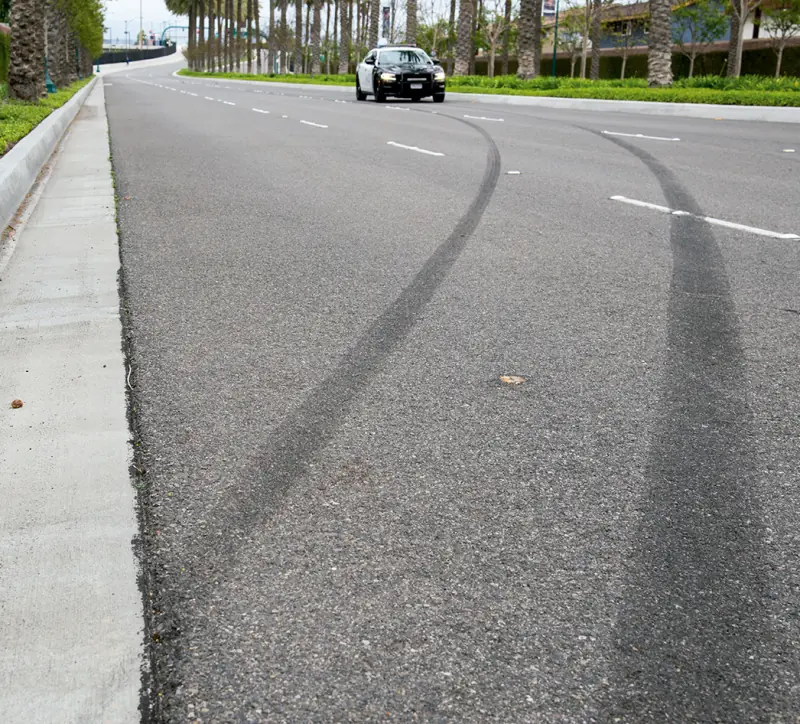
La distancia de frenado está determinada por...
Braking distance is determined by...
- Aun único factor, la velocidad a la que se circula.a single factor, the speed you are travelling at.
- Bvarios factores, como la velocidad, el estado de la vía o el del vehículo.several factors, such as speed, the condition of the road or of the vehicle.
- Cun único factor, el estado del vehículo.a single factor, the condition of the vehicle.
ExplanationBraking distance does not depend on a single factor: speed, the condition and grip of the road, the vehicle's tyres and brakes, its load and even the weather all have an effect.

En el caso de un vehículo muy cargado, ¿cómo será su distancia de frenado en comparación a cuando circula sin carga?
How will the braking distance of a heavily loaded vehicle compare with its braking distance when it is unloaded?
- AMayor.Longer.
- BMenor.Shorter.
- CSera la misma.It will be the same.
ExplanationWith more weight, it is harder to stop the vehicle, so its braking distance will be longer.
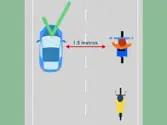
¿Qué separación lateral mantendremos al adelantar una bicicleta dentro de poblado?
What sideways gap should we keep when overtaking a bicycle in a built-up area?
- A1,5 metros como mínimo.At least 1.5 metres.
- B1.5 metros como máximo.No more than 1.5 metres.
- CUna separación lateral, suficiente para realizar la maniobra con seguridad, que deberá ser proporcional, a la anchura de la vía y a la velocidad a la que se adelanteA sideways gap large enough to carry out the manoeuvre safely, in proportion to the width of the road and the overtaking speed.
ExplanationWhen overtaking cyclists, you must leave a sideways gap of at least 1.5 metres, also in built-up areas. It is a minimum distance, not a maximum. If the road has more than one lane in each direction, you must move completely into the other lane to overtake.
Se prohíbe circular por la autopista...
Driving on a motorway (autopista) is prohibited for...
- AA los vehículos que transportan mercancías peligrosas.Vehicles carrying dangerous goods.
- BA los vehículos que no pueden alcanzar los 60 km/h.Vehicles that cannot reach 60 km/h.
- CA todos los vehículos especiales.All special vehicles.
ExplanationThe minimum speed on a motorway (autopista) is 60 km/h. Vehicles that cannot reach this speed on level ground are not allowed on these roads.
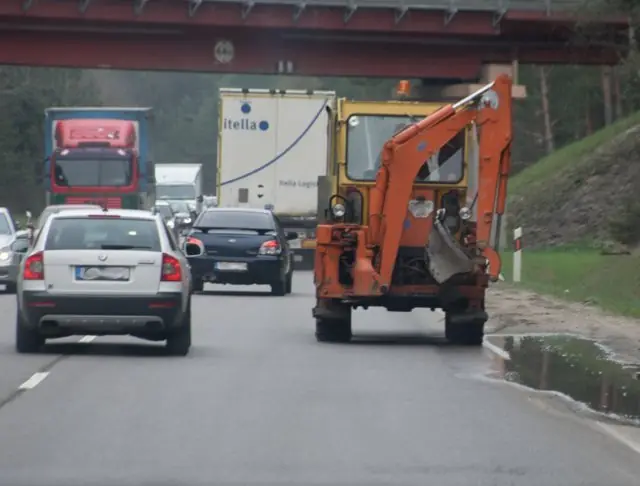
Los vehículos especiales que no tienen luces de frenado, ¿a qué velocidad máxima deben ir?
What is the maximum speed for special vehicles that do not have brake lights?
- AA 25 kilómetros por hora.25 kilometres per hour.
- BA 70 kilómetros por hora.70 kilometres per hour.
- CA 40 kilómetros por hora.40 kilometres per hour.
ExplanationThe General Traffic Regulations limit to 25 km/h special vehicles that have no brake lights, that tow a trailer or that are two-wheel tractors (motocultores). Without brake lights, the drivers behind cannot tell when they are braking, so they must go very slowly.
Si tienes un reventón mientras circulas a alta velocidad, ¿es recomendable frenar de golpe?
If you have a blowout while driving at high speed, is it advisable to brake hard?
- ASí, para detener el vehículo cuanto antes.Yes, to stop the vehicle as soon as possible.
- BNo, el frenado debe ser suave y progresivo.No, braking must be gentle and progressive.
- CSí, pero solo si ha reventado una rueda trasera.Yes, but only if a rear tyre has burst.
ExplanationAfter a blowout you must hold the steering wheel firmly to keep your course, take your foot off the accelerator and brake gently and progressively. Braking hard destabilises the vehicle and can make you lose control, whichever tyre is affected.
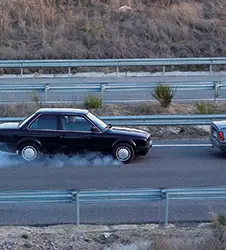
¿Qué debe tener especialmente en cuenta para dejar con el vehículo de delante una distancia que le permita, en caso de frenada brusca, detenerse con seguridad?
What must you particularly take into account in order to leave a distance to the vehicle in front that allows you to stop safely if it brakes suddenly?
- ALa velocidad de circulación, únicamente.Only the speed you are travelling at.
- BLa velocidad y las condiciones de adherencia y frenado.Your speed and the grip and braking conditions.
- CLas condiciones climatológicas y el tipo de vehículo que nos sigue.The weather and the type of vehicle behind you.
ExplanationThe Regulations define the safe distance as the distance that allows you to stop if the vehicle in front brakes suddenly, taking into account speed and the grip and braking conditions, not just speed.
¿Está usted obligado a moderar la velocidad al aproximarse a una intersección?
Are you obliged to slow down when approaching a junction?
- ASí, en todo caso.Yes, in all cases.
- BSolamente si no tengo prioridad de paso.Only if I do not have right of way.
- CSí, siempre que la intersección se encuentre dentro de poblado.Yes, whenever the junction is inside a built-up area.
ExplanationIf you do not have right of way, you must slow down when approaching a junction. This lets you assess the situation and make sure you can cross safely, giving way to other vehicles or pedestrians if necessary.
Para evitar un accidente en caso de frenada brusca, ¿debe adaptar la velocidad y la distancia de seguridad con el vehículo de delante si circula con una furgoneta cargada?
To avoid an accident in case of sudden braking, must you adapt your speed and your safe distance from the vehicle in front if you are driving a loaded van?
- ASí, el peso de la carga hace que aumente la distancia de frenado.Yes, the weight of the load makes the braking distance longer.
- BNo, el peso de la carga no influye en la distancia de frenado.No, the weight of the load does not affect the braking distance.
- CSi, el peso de la carga hace que disminuya la distancia de frenado.Yes, the weight of the load makes the braking distance shorter.
ExplanationBraking distance is the distance the vehicle travels from when the driver applies the brake until the vehicle stops. This distance may vary depending on the speed, the condition of the tyres, suspension and brakes, the vehicle's load, road conditions and the weather. The more load, the more kinetic energy (the energy built up by the vehicle's movement), and the harder it is to stop the vehicle.
¿Qué separación dejarán los vehículos de MMA superior a 3.500 kg cuando no pretendan adelantar?
What gap must vehicles with an MAM over 3,500 kg leave when they do not intend to overtake?
- AUna separación mínima de 40 m.A minimum gap of 40 m.
- B50 metros, en vías de un solo carril por sentido y esté permitido el adelantamiento.50 metres, on roads with one lane in each direction where overtaking is allowed.
- CUna separación mínima de 60 m.A minimum gap of 60 m.
Explanation50 metres, on roads with one lane in each direction where overtaking is allowed: this is the safe distance set for vehicles with an MAM over 3,500 kg when they are not overtaking. This distance keeps traffic safe and helps to avoid collisions or dangerous situations on the road.
Si por una avería circula por una autopista a una velocidad anormalmente baja que dificulta la circulación, ¿qué debe hacer?
If a breakdown makes you drive on a motorway (autopista) at an abnormally low speed that obstructs traffic, what must you do?
- ACircular por el arcén y salir de la autopista en la primera salida disponible.Drive on the hard shoulder and leave the motorway at the first available exit.
- BDetenerse en el arcén y solicitar asistencia.Stop on the hard shoulder and call for assistance.
- CCircular por el arcén hasta la zona de servicio más cercana.Drive on the hard shoulder to the nearest service area.
ExplanationUnder the General Traffic Regulations, a vehicle must not travel at an abnormally low speed on a motorway, as this disrupts normal traffic. The correct option is to drive on the hard shoulder and leave the motorway at the first exit, in line with the rules stating that, in the event of a breakdown, you must avoid interfering with traffic by using the hard shoulder as a safe escape route.
Los límites de velocidad específicos establecidos mediante señalización, ¿tendrán que respetarse siempre?
Must specific speed limits set by signs always be respected?
- ANo, en carreteras convencionales podrán sobrepasarse en 20 km/h para adelantar.No, on conventional roads they may be exceeded by 20 km/h to overtake.
- BSí, siempre.Yes, always.
- CEn autopistas y autovías no, pero en las demás vías sí.Not on motorways and dual carriageways, but yes on other roads.
ExplanationUnder Article 52 of the General Traffic Regulations (RGC), speeds set by signs take precedence over the general limits and must always be respected. Since 21 March 2022 there is no longer a 20 km/h margin for overtaking on conventional roads.
Para facilitar los adelantamientos, ¿qué vehículos deberán guardar una distancia mínima de 50 m con el vehículo que les precede?
To make overtaking easier, which vehicles must keep a minimum distance of 50 m from the vehicle in front?
- ALos camiones de hasta 3500 kg.Lorries of up to 3,500 kg.
- BLos conjuntos de vehículos de más de 10 metros.Combinations of vehicles more than 10 metres long.
- CLos turismos.Cars.
ExplanationVehicles over 3,500 kg and combinations of vehicles more than 10 metres long, when not intending to overtake, must keep a minimum distance of 50 metres from the vehicle in front.
¿Puede montar en su vehículo unos neumáticos con un código de velocidad máxima mayor al que recomienda el fabricante?
May you fit tyres to your vehicle with a higher speed rating than the one the manufacturer recommends?
- ANo, ha de ser igual o inferior.No, it must be the same or lower.
- BSí, puede ser mayor o igual.Yes, it may be higher or the same.
- CHa de ser igual al que recomienda el fabricante.It must be the same as the one the manufacturer recommends.
ExplanationEvery tyre has a maximum speed at which it can be driven safely. This is shown by the speed rating. When changing tyres, we must buy new ones with a speed rating higher than or equal to the one the manufacturer recommends.
¿Se podrá circular a velocidad anormalmente reducida sin causa justificada?
May you drive at an abnormally low speed without a good reason?
- ASí.Yes.
- BNo.No.
- CSí, si se circula por el carril de la derecha.Yes, if you are in the right-hand lane.
ExplanationYou may not drive at an abnormally low speed, below the minimum allowed, without a good reason.
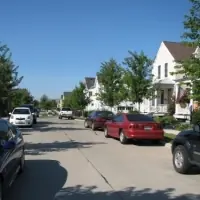
¿Cuál es la velocidad máxima en una zona de estancia y juego (señal S-28, antigua calle residencial)?
What is the maximum speed in a stay and play zone (zona de estancia y juego, sign S-28, formerly 'residential street')?
- A50 km por hora50 km per hour
- B10 km por hora10 km per hour
- C20 km por hora20 km per hour
ExplanationThe former residential street is now the stay and play zone (sign S-28): pedestrians have priority and the maximum speed for vehicles is 10 km/h. The 20 km/h limit applies to the shared-space (coexistence) zone (S-47) and to single-level (shared) streets in built-up areas.
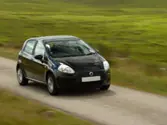
Conforme vamos aumentando la velocidad con la que circulamos, tenemos que...
As we increase the speed at which we are driving, we must...
- AMirar hacia atrás con más frecuencia.Look behind more often.
- BObservar más veces por los espejos laterales.Check the side mirrors more often.
- CMirar más lejos por delante de nuestro vehículo.Look further ahead of our vehicle.
ExplanationWhen speed increases, the braking and reaction distances are also greater, so we must anticipate more what we will need to do, because the distance covered every second will be greater. For example, in one second at 40 km/h we travel 11 metres, whereas at 80 km/h we travel 22 metres.
¿Qué es la distancia de frenado?
What is braking distance?
- ALa que recorre el vehículo desde que percibimos el peligro hasta que pisamos el freno.The distance the vehicle travels from when we notice the danger until we press the brake.
- BLa que recorre el vehículo desde que percibimos el peligro hasta que se detiene.The distance the vehicle travels from when we notice the danger until it stops.
- CLa que recorre el vehículo desde que pisamos el freno hasta que éste se detiene.The distance the vehicle travels from when we press the brake until it stops.
ExplanationBraking distance is the distance the vehicle travels from the moment the driver presses the brake until it comes to a complete stop. The distance covered while noticing the danger and reacting is the reaction distance, and the two added together are the stopping distance.
Ud. circula con su turismo por una carretera convencional que tiene más de un carril para alguno de los sentidos de circulación. ¿A qué velocidad máxima le está permitido circular?
You are driving your car on a conventional road that has more than one lane in at least one direction. What is the maximum speed at which you may drive?
- AA 80 kilómetros por hora.80 kilometres per hour.
- BA 90 kilómetros por hora.90 kilometres per hour.
- CA 100 kilómetros por hora.100 kilometres per hour.
ExplanationSince 29 January 2019 the general limit for cars and motorcycles on conventional roads has been 90 km/h, regardless of the hard shoulder or the number of lanes. Only if the two directions are physically separated may the road authority set a limit of 100 km/h.
¿Cuál es la velocidad máxima que no puede sobrepasar una motocicleta al circular por una autovía?
What is the maximum speed that a motorcycle must not exceed when travelling on a dual carriageway (autovía)?
- A90 km/h.90 km/h.
- B100 km/h.100 km/h.
- C120 km/h.120 km/h.
ExplanationThe general speed limit on motorways (autopistas) and dual carriageways (autovías) is 120 km/h for cars, motorcycles, motorhomes with a maximum authorised mass (MAM) of 3,500 kg or less, and pick-ups.
En caso de circular a velocidad anormalmente reducida, perturbando con ello gravemente la circulación, ¿podrá circular por el arcén si arrastra un remolque de más de 3.500 kg de MMA?
If you are driving at an abnormally low speed and seriously disrupting traffic as a result, may you drive on the hard shoulder if you are towing a trailer with a MAM of more than 3,500 kg?
- ASí, si lleva encendida la señal de emergencia.Yes, if the hazard warning lights are on.
- BSí, si el arcén es transitable.Yes, if the hard shoulder is usable.
- CNo.No.
ExplanationUnder Article 36.1 of the General Traffic Regulations (as worded by RD 518/2026), only vehicles with a maximum authorised mass of no more than 3,500 kg may use the hard shoulder when driving at an abnormally low speed because of an emergency; with a trailer of more than 3,500 kg you may not.
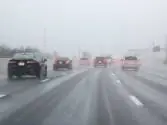
¿Cómo será la distancia de frenado si la calzada está mojada?
How will the braking distance be if the carriageway is wet?
- AMayor que seca.Longer than when dry.
- BMenor que seca.Shorter than when dry.
- CIgual que seca.The same as when dry.
ExplanationThe braking distance is the distance the vehicle travels from the moment the driver applies the brake until the vehicle stops. This distance can vary depending on the speed, the condition of the tyres, suspension and brakes, the vehicle's load, the condition of the road and the weather. On an icy surface the braking distance can be up to 10 times longer. On a wet surface it can be up to twice as long.
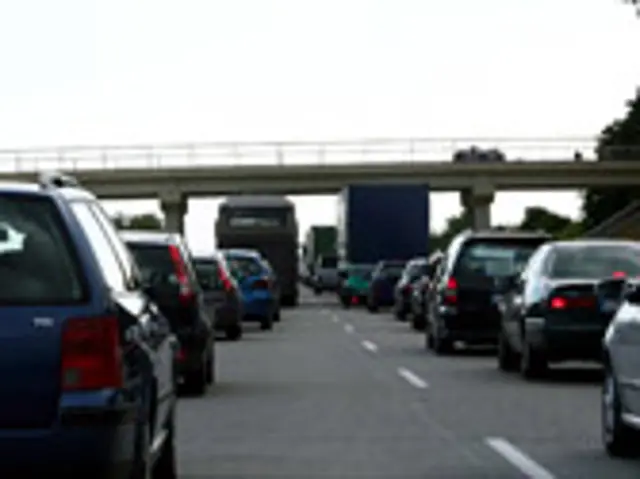
Si está parado en un atasco, ¿qué distancia es recomendable mantener con el coche de delante?
If you are stopped in a traffic jam, what distance is it advisable to keep from the car in front?
- AUn metro como máximo.One metre at most.
- BUn espacio mínimo para ocupar menos sitio.A minimum gap, to take up less space.
- CDos o tres metros para no chocar con el coche de delante si nos golpean por detrás.Two or three metres, so as not to hit the car in front if we are hit from behind.
ExplanationWhen stopped in a traffic jam, it is best to leave two or three metres to the vehicle in front. If another vehicle hits us from behind, this space stops us from hitting the one in front, and it also lets us manoeuvre out if the vehicle ahead breaks down.
Adelantando con una motocicleta por una vía fuera de poblado mantendremos una separación lateral...
When overtaking on a motorcycle on a road outside built-up areas, we will keep a lateral clearance of...
- A1 metro como mínimo.at least 1 metre.
- B1,50 metros como mínimo.at least 1.50 metres.
- C1,50 metros como máximo.at most 1.50 metres.
ExplanationWhen riding a motorcycle on a road outside built-up areas, you must leave a lateral clearance of at least 1.50 metres when overtaking any other vehicle.
All topics
- Definitions
- Documents and penalty points
- The driver's condition
- Duties of drivers and pedestrians
- Vehicle safety devices
- Vehicle controls and equipment
- Vehicle lights and horn
- Traffic signs, markings and signals
- The road and its lanes
- Manoeuvres
- Right of way
- Carrying passengers and loads
- Driving safely in difficult conditions
- Vehicle mechanics and maintenance
- Road accidents and first aid
- Defensive and eco-driving
Independent app: not affiliated with or endorsed by the DGT (Spain's Directorate-General for Traffic) or the Ministry of the Interior. The official exam is booked with the DGT and taken at its test centres. The questions here are practice material; the DGT's official question bank is not public.
Basado en datos de la Agencia Estatal Boletín Oficial del Estado (https://www.boe.es). Textos consolidados de carácter meramente informativo. La AEBOE no patrocina ni respalda este sitio.
Parte de las preguntas procede de los tests de la revista «Tráfico y Seguridad Vial» de la DGT, reproducidos con indicación de la fuente.