
DGT test · 961 questions
Speed and distances · Page 12 of 20
Speed limits by road and vehicle type, adapting speed to conditions, safe following distance and stopping distance.
Questions in this topic, with answers
961 questions, 50 per page, with the correct answer and the explanation. Page 12 of 20.
La distancia de detención aumentará ...
Stopping distance will increase...
- Asólo al aumentar la distancia de reacción.only when the reaction distance increases.
- Bsólo al aumentar la distancia de frenado.only when the braking distance increases.
- Ctanto si aumenta la distancia de reacción como la distancia de frenado.if either the reaction distance or the braking distance increases.
ExplanationStopping distance is the reaction distance plus the braking distance. If either of them (reaction or braking) increases, the stopping distance also increases. So the stopping distance, or overall stopping distance, is the distance the vehicle travels from when the driver perceives a danger until the vehicle comes to a complete stop.
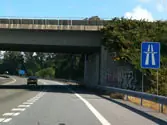
Circulando por un carril de aceleración el conductor deberá acelerar hasta alcanzar la velocidad adecuada...
When driving in an acceleration lane, the driver must speed up until reaching a suitable speed...
- AAl principio del carril de aceleración.at the start of the acceleration lane.
- BAl final del carril de aceleración.at the end of the acceleration lane.
- CCuando ya nos hayamos incorporado a la vía.once we have joined the road.
ExplanationTo join from an acceleration lane, we must make sure at the start of the lane that we can do so without danger to other drivers, even stopping to give way if necessary, and then speed up to reach a suitable speed at the end of the acceleration lane.

En carreteras convencionales sin separación física de los dos sentidos de circulación, ¿cuál es la velocidad máxima a la que le está permitido circular a un vehículo derivado de turismo?
On conventional roads with no physical separation between the two directions of traffic, what is the maximum speed at which a car-derived van may travel?
- A90 km/h.90 km/h.
- B100 km/h.100 km/h.
- C80 km/h.80 km/h.
ExplanationOn conventional roads with no physical separation between the two directions of traffic, the rules set lower speed limits than on high-capacity roads, because of the greater risk of head-on collisions. For car-derived vans, the maximum speed permitted on this type of road is 90 km/h.
Un vehículo de hasta 9 plazas que realiza transporte escolar, ¿cuál será su velocidad máxima en una travesía?
A vehicle with up to 9 seats used for school transport: what is its maximum speed in a travesía (a stretch of road through a town)?
- A40 km/h.40 km/h.
- B50 km/h.50 km/h.
- C60 km/h.60 km/h.
ExplanationAccording to Article 50.5 of the General Traffic Regulations, the general limit in a travesía is 50 km/h for all types of vehicles. The 10 km/h reduction for school transport in Article 48.1.b) applies to the limits on roads outside built-up areas.
En una carretera convencional con arcén de más de 1,50 metros, ¿a qué velocidad máxima puede circular un turismo con remolque ligero?
On a conventional road with a hard shoulder wider than 1.50 metres, what is the maximum speed at which a car towing a light trailer may travel?
- AA 80 km/hora.80 km/h.
- BA 90 Km/hora.90 km/h.
- CA 100 Km/hora.100 km/h.
ExplanationOn conventional roads, motor cars towing a trailer may travel at a maximum of 80 km/h. A wide hard shoulder no longer allows a higher speed: that advantage was abolished in 2019.
¿Qué separación lateral debe dejar con su turismo al adelantar a un ciclo dentro de poblado?
What sideways gap must you leave with your car when overtaking a cycle in a built-up area?
- AUna distancia proporcional a la velocidad a la que se circule.A distance in proportion to the speed you are travelling at.
- BLa separación que considere segura en función de las circunstancias del momento.The gap you consider safe, depending on the circumstances at the time.
- CUn espacio no inferior a 1,50 metros.A space of no less than 1.50 metres.
ExplanationUnder Article 85.4 of the General Traffic Regulations (RGC) (as worded by RD 518/2026), when overtaking cyclists, mopeds, pedestrians, animals or personal mobility vehicles, you must leave a safety gap of at least 1.5 metres, also in built-up areas, using part or all of the next lane or the opposite lane.

Este autocar circula a velocidad anormalmente reducida perturbando gravemente la circulación, ¿lo podemos adelantar?
This coach is moving at an abnormally low speed and seriously disrupting traffic. May we overtake it?
- ASí, si no se acercan vehículos en sentido contrario.Yes, if no vehicles are coming the other way.
- BSí, porque obstaculiza a los demás vehículos.Yes, because it is holding up the other vehicles.
- CNo, porque hay una prohibición expresa.No, because it is expressly prohibited.
ExplanationThe solid line means overtaking is prohibited if we would have to drive over it. If the coach were stationary, we could pass it.
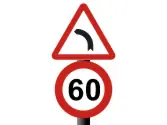
¿Cuándo terminará la prohibición de circular a velocidad superior a 60 km/h?
When will the ban on driving faster than 60 km/h end?
- ACuando encuentre la señal de fin de prohibición.When you find the end of prohibition sign.
- BCuando termine la curva.When the bend ends.
- CCuando encuentre otra señal de velocidad máxima distinta.When you find another, different maximum speed sign.
ExplanationWhen a maximum speed sign is on the same post as a danger sign, the limit only applies while that danger lasts. So the ban on going faster than 60 km/h ends when the signposted bend ends, without the need for an end of prohibition sign.
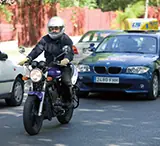
Mantener la distancia de seguridad adecuada, sobre todo en ciudad, ¿es una recomendación válida para evitar accidentes con las motocicletas?
Is keeping a proper safe distance, especially in town, valid advice for avoiding accidents with motorcycles?
- ASí, porque se pueden evitar alcances.Yes, because rear-end collisions can be avoided.
- BNo, porque la distancia de seguridad no influye en los accidentes de moto.No, because the safe distance has no effect on motorcycle accidents.
- CNo, porque esta recomendación carece de sentido circulando.No, because this advice makes no sense when driving.
ExplanationMany motorcycle accidents in town are rear-end collisions: keeping a safe distance gives you room to brake without hitting the motorcycle, which can stop in a very short distance.
Por una carretera convencional, ¿cuál es la velocidad máxima para una motocicleta?
On a conventional road, what is the maximum speed for a motorcycle?
- A90 km/h para circular y 110 km/h para adelantar.90 km/h for driving and 110 km/h for overtaking.
- B100 km/h para circular y 120 km/h para adelantar.100 km/h for driving and 120 km/h for overtaking.
- C90 km/h para circular y adelantar.90 km/h for both driving and overtaking.
ExplanationOn conventional roads the general limit for motorcycles is 90 km/h (Article 48.1.a of the General Traffic Regulations), and it may not be exceeded even to overtake: the 20 km/h margin was abolished on 21 March 2022.
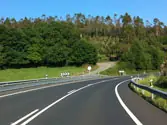
¿A qué velocidad máxima podrá circular una furgoneta por esta vía?
What is the maximum speed for a van on this road?
- A90 km/h.90 km/h.
- B80 km/h.80 km/h.
- C100 km/h.100 km/h.
ExplanationOn conventional roads, the maximum speed allowed for vans is 80 km/h.
El tiempo que transcurre desde que vemos un peligro hasta que reaccionamos se llama...
The time that passes from when we see a danger until we react is called...
- Atiempo de reacción.reaction time.
- Btiempo de frenado.braking time.
- Cdistancia de reacción.reaction distance.
ExplanationThe time that passes from when we perceive a danger until we react is called reaction time. For most drivers, this reaction time is 3/4 of a second.
¿Cuál es la velocidad máxima genérica en vías urbanas con dos carriles por sentido?
What is the general maximum speed on roads in built-up areas with two lanes in each direction?
- A30 km/h30 km/h
- B40 km/h40 km/h
- C50 km/h50 km/h
ExplanationRoads in built-up areas with 2 or more lanes in each direction: 50 km/h.
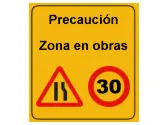
¿Cuando finalizará la prohibición de circular como máximo a 30 km/h?
When will the ban on driving faster than 30 km/h end?
- ACuando encuentre la señal de fin de prohibiciones.When you come to the end-of-prohibitions sign.
- BCuando finalice el peligro indicado en el mismo panel.When the danger shown on the same panel ends.
- CCuando encuentre otra señal distinta de limitación de velocidad.When you come to a different speed limit sign.
ExplanationWhen the maximum speed sign is on the same panel or post as a danger warning sign, the ban ends when the danger shown ends. In this case the speed is limited because the carriageway narrows due to roadworks.
Usted circula con su turismo por un túnel que tiene un carril para cada sentido de circulación. ¿Qué distancia de seguridad mínima debe mantener con el vehículo que circula delante de su turismo?
You are driving your car through a tunnel with one lane in each direction. What is the minimum safe distance you must keep from the vehicle in front of your car?
- A200 metros.200 metres.
- B100 metros.100 metres.
- C50 metros.50 metres.
Explanation100 metres is correct because it is the minimum safe distance recommended in tunnels with one lane in each direction. This distance gives you enough margin to react to anything unexpected, such as the vehicle in front braking suddenly.
¿Cuál es la velocidad máxima al adelantar en autopista?
What is the maximum speed when overtaking on a motorway (autopista)?
- A120 km/h, no se puede superar el límite120 km/h; the limit may not be exceeded
- B130 km/h, superando el límite130 km/h, exceeding the limit
- C140 km/h si no hay radares140 km/h if there are no speed cameras
ExplanationOn a motorway you may not exceed the 120 km/h limit, not even when overtaking.
Al aproximarse a un grupo de ciclistas por detrás en una carretera estrecha, el conductor debe:
When coming up behind a group of cyclists on a narrow road, the driver must:
- AReducir la velocidad y adelantar solo cuando pueda dejar 1,5 m con seguridad.Slow down and only overtake when a 1.5 m gap can be left safely.
- BTocar el claxon insistentemente y adelantar pegado.Keep sounding the horn and overtake close to them.
- CAcelerar para pasar rápido.Speed up to get past quickly.
ExplanationYou must slow down and wait until you can overtake safely, leaving a lateral gap of at least 1.5 m.
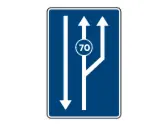
En una vía así señalizada, ¿circularemos correctamente por el carril central a 80 km/h si no circulan otros usuarios por la vía?
On a road with these signs, are we driving correctly in the central lane at 80 km/h if there are no other road users?
- ASí, podremos circular indistintamente por el carril central o el carril de la derecha.Yes, we may drive in either the central lane or the right-hand lane.
- BSí, en este caso es el carril que debemos usar obligatoriamente ya que circulamos a más de 70 km/h.Yes, in this case it is the lane we must use, because we are driving at more than 70 km/h.
- CNo, como norma general usaremos el carril derecho, pudiendo usar el central cuando las circunstancias lo precisen.No, as a general rule we use the right-hand lane, and may use the central one when circumstances require it.
ExplanationThe sign shown in the question, lane reserved according to the signposted speed, tells us that the lane with the minimum speed sign over it may only be used by vehicles driving at the speed shown or faster, although, if circumstances allow, you must drive in the right-hand lane.
Un ciclomotor, ¿tiene permitido circular por un carril para VAO?
Is a moped allowed to use an HOV lane (VAO)?
- ASí, moderando la velocidad.Yes, at a moderate speed.
- BNo, está prohibido.No, it is prohibited.
- CSí, pero sólo si va ocupado por una persona.Yes, but only if one person is on it.
ExplanationNo. HOV lanes (VAO) may only be used by motorcycles, cars and adaptable mixed-use vehicles; they are closed to mopeds, cycles, pedestrians and cars towing a trailer (Article 35 of the General Traffic Regulations), whatever the number of occupants.
Fuera de poblado, ¿qué distancia lateral debe mantener la motocicleta al adelantar a un camión?
Outside built-up areas, what lateral distance must a motorcycle keep when overtaking a lorry?
- AAl menos 1,5 metros.At least 1.5 metres.
- BMenos de 1,5 metros.Less than 1.5 metres.
- CUna distancia proporcional a la velocidad a la que circule.A distance in proportion to the speed at which it is travelling.
ExplanationAccording to Article 85.5 of the General Traffic Regulations (RGC), the rider of a two-wheeled vehicle who overtakes any other vehicle outside built-up areas must leave a space of no less than 1.50 metres between them, whatever their speed.
¿Cuál será la velocidad máxima conduciendo un turismo por una autovía?
What is the maximum speed when driving a car on a dual carriageway (autovía)?
- A120 km/h.120 km/h.
- B100 km/h.100 km/h.
- C90 km/h.90 km/h.
ExplanationThe maximum speed for a car on a motorway (autopista) or a dual carriageway (autovía) is 120 km/h.
¿Cuál es la velocidad máxima a la que podrá circular un conductor novel conduciendo un turismo por autopista?
What is the maximum speed for a novice driver driving a car on a motorway (autopista)?
- A80 km/h.80 km/h.
- B90 km/h.90 km/h.
- C120 km/h.120 km/h.
ExplanationNovice drivers may use the same roads and have the same speed limits as other drivers.
¿A qué velocidad como mínimo podrá circular con su automóvil si circula por una autopista?
What is the minimum speed at which you may drive your motor car on a motorway (autopista)?
- AA 50 km/hora.50 km/h.
- BA 60 km/hora.60 km/h.
- CNo hay velocidad mínima.There is no minimum speed.
ExplanationOn motorways (autopistas) and dual carriageways (autovías), it is prohibited to drive motor vehicles at less than 60 km/h, even if there are no other vehicles behind, unless there is a justified reason (Article 49 of the General Traffic Regulations). So there is a minimum speed.
La distancia de seguridad en un túnel, cuando no se pretenda adelantar será de...
In a tunnel, when you do not intend to overtake, the safe distance must be...
- A150 metros como mínimo.at least 150 metres.
- B100 metros como mínimo.at least 100 metres.
- C50 metros como mínimo.at least 50 metres.
ExplanationThe safe distance we must keep inside a tunnel, when we do not intend to overtake, is at least 100 metres.
Circulando por el interior de un túnel, si no deseamos adelantar al vehículo que nos precede, ¿qué distancia de seguridad debemos mantener con él?
Driving inside a tunnel, if we do not want to overtake the vehicle in front, what safe distance must we keep from it?
- A100 metros como mínimo.At least 100 metres.
- B150 metros como mínimo.At least 150 metres.
- CLa distancia que me permita frenar sin colisionar con él.The distance that allows me to brake without hitting it.
ExplanationDriving inside a tunnel we must keep a distance of at least 100 metres from the vehicle in front. If the maximum authorised mass (MAM) of the vehicle we are driving is over 3,500 kg, the safe distance must be at least 150 metres.
¿Qué distancia lateral debe mantener un ciclomotor al adelantar a un turismo fuera de poblado?
What sideways distance must a moped leave when overtaking a car outside built-up areas?
- A0,5 metros como máximo.No more than 0.5 metres.
- B1 metro como máximo.No more than 1 metre.
- C1,5 metros como mínimo.At least 1.5 metres.
ExplanationArticle 85 of the General Traffic Regulations (RGC) requires the rider of a two-wheeled vehicle, such as a moped, overtaking outside built-up areas to leave a gap of at least 1.5 metres from the parts of the overtaken vehicle that stick out most. It is a minimum distance, not a maximum.
En una carretera convencional, ¿a qué velocidad máxima le está permitido circular conduciendo su turismo con un remolque no ligero?
On a conventional road, what is the maximum speed at which you may drive your car when it is towing a trailer that is not a light trailer?
- A100 kilómetros por hora.100 kilometres per hour.
- B90 kilómetros por hora.90 kilometres per hour.
- C80 kilómetros por hora.80 kilometres per hour.
ExplanationUnder Article 48.1.a) of the General Traffic Regulations (RGC), motor cars with a trailer, whether light or not, may drive at a maximum of 80 km/h on conventional roads and 90 km/h on autopistas and autovías.
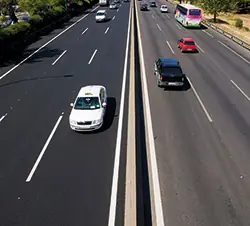
En las autovías, ¿cuál es la velocidad mínima permitida para turismos?
On dual carriageways (autovías), what is the minimum permitted speed for cars?
- A40 km/h40 km/h
- B50 km/h50 km/h
- C60 km/h60 km/h
ExplanationArticle 49.1 of the General Traffic Regulations prohibits driving motor vehicles on motorways (autopistas) and dual carriageways (autovías) at less than 60 km/h, unless there is a justified reason. This is a fixed figure for these roads; the rule of half the general limit applies on other roads.
¿Cómo se denomina la distancia que recorre el vehículo desde que el conductor percibe un peligro hasta que reacciona?
What is the name of the distance the vehicle travels from the moment the driver sees a danger until they react?
- ADistancia de frenado.Braking distance.
- BDistancia de detención.Stopping distance.
- CDistancia de reacción.Reaction distance.
ExplanationThe reaction distance is the distance the vehicle travels from the moment the driver sees a danger until they react. The braking distance is the distance the vehicle travels from the moment the driver presses the brake pedal until the vehicle comes to a complete stop. The stopping distance is the sum of these two: reaction distance plus braking distance.
En una autopista dentro de poblado, ¿qué velocidad máxima no se podrá rebasar?
On a motorway (autopista) in a built-up area, what maximum speed must not be exceeded?
- A80 km/h.80 km/h.
- B50 km/h +20 km/h para adelantar.50 km/h, plus 20 km/h to overtake.
- C60 km/h.60 km/h.
ExplanationOn a motorway in a built-up area, the maximum speed is 80 km/h. If the motorway is outside a built-up area, the maximum speed is 120 km/h.
La velocidad máxima segura que se puede mantener en un tramo de carretera en condiciones favorables es la velocidad...
The maximum safe speed that can be kept on a stretch of road in favourable conditions is the...
- Adel flujo del tráfico.speed of the traffic flow.
- Badecuada para la vía.appropriate speed for the road.
- Cdel diseño de la vía.design speed of the road.
ExplanationThe design speed is the maximum speed that can be kept safely on a stretch of road when conditions are so favourable that only the features of the road itself limit it. The appropriate speed, by contrast, depends on the circumstances at each moment.
Al adelantar a un peatón en una vía fuera de poblado, ¿qué distancia lateral de seguridad debe dejar?
When overtaking a pedestrian on a road outside built-up areas, what lateral safety distance must you leave?
- A1,5 metros como máximo.No more than 1.5 metres.
- BUn margen de seguridad proporcional a la anchura y características de la vía.A safety margin in proportion to the width and features of the road.
- C1,5 metros como mínimo, ocupando de forma parcial o total el carril contiguo y siempre que existan las condiciones necesarias.At least 1.5 metres, moving partly or fully into the next lane, as long as the necessary conditions exist.
ExplanationWhen overtaking a pedestrian outside built-up areas, the driver must leave a lateral safety gap of at least 1.5 metres, as stated in the General Traffic Regulations (RGC), specifically in the paragraph that says the manoeuvre must be carried out by moving partly or fully into the next lane, as long as the necessary conditions exist. This is essential for the pedestrian's safety and to avoid accidents. The correct option is the one about at least 1.5 metres and using the next lane, because it reflects this legal obligation.
¿A qué velocidad máxima puede circular un turismo con un remolque por una autovía?
What is the maximum speed for a car with a trailer on a dual carriageway (autovía)?
- A100 km/h100 km/h
- B90 km/h90 km/h
- C120 km/h120 km/h
ExplanationAccording to the table in Article 48.1.a of the General Traffic Regulations, motor vehicles with a trailer have a maximum speed of 90 km/h on motorways (autopistas) and dual carriageways (autovías), compared with 120 km/h for a car without a trailer. On conventional roads their limit is 80 km/h.
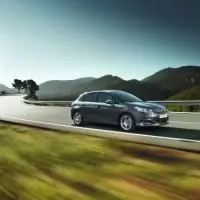
¿Qué le puede suceder a un conductor que circula a velocidad inadecuada?
What can happen to a driver who drives at an inappropriate speed?
- AQue no sea capaz de controlar su vehículo ante una situación de emergencia.They may be unable to control their vehicle in an emergency.
- BQue su tiempo de reacción disminuya.Their reaction time may decrease.
- CQue sea capaz de controlar mejor su vehículo ante una situación de emergencia.They may be better able to control their vehicle in an emergency.
ExplanationWhen we drive at a speed that is not adapted to the weather or to the circumstances of the road, the traffic, the vehicle or the driver's condition, we are driving at an inappropriate speed. Our speed may be within the limits allowed for the road, but in a difficult situation we may find it very hard to control the vehicle. For example, there are usually more crashes on rainy days because many drivers drive at the same speed as on a sunny day; that is, they drive at a speed that is allowed but inappropriate for rainy days.
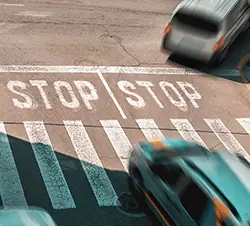
¿Cómo se llama la distancia que recorre un vehículo desde que el conductor percibe un estímulo hasta que se responde al mismo?
What is the name of the distance a vehicle travels from the moment the driver perceives a stimulus until they respond to it?
- ADistancia de frenado.Braking distance.
- BDistancia de reacción.Reaction distance.
- CDistancia de detención.Stopping distance.
ExplanationIt is the reaction distance: the distance the vehicle travels during the time the driver takes to perceive the stimulus and respond. After that the braking distance begins, and the two added together make the stopping distance.
Al aproximarnos con nuestro vehículo a niños o personas mayores, ¿cómo actuaremos?
How should we act when approaching children or elderly people in our vehicle?
- ALes advertiremos de nuestra presencia haciendo uso de las señales acústicas del vehículo.We will warn them that we are there by using the vehicle's horn.
- BLes cederemos siempre el paso, deteniéndonos para ello.We will always give way to them, stopping to do so.
- CExtremaremos la precaución moderando la velocidad, deteniéndonos en caso necesario.We will take extra care, slowing down and stopping if necessary.
ExplanationWhen we see children or elderly people near the carriageway, bearing in mind that their reactions may be less predictable, we must slow down so that we can stop if necessary.
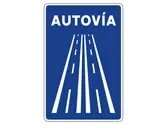
¿Cuál es la velocidad mínima en una autovía?
What is the minimum speed on a dual carriageway (autovía)?
- A120 km/h.120 km/h.
- B60 km/h.60 km/h.
- C90 km/h.90 km/h.
ExplanationThe maximum speed on motorways (autopistas) and dual carriageways (autovías) is 120 km/h and the minimum speed is 60 km/h. We must not drive below that speed without a justified reason.
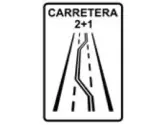
¿Cuál es la velocidad máxima genérica a la que puede circular un turismo en este tipo de vía así señalizada?
What is the general maximum speed for a car on this type of road with this sign?
- A120 km/h.120 km/h.
- B100 km/h.100 km/h.
- C90 km/h.90 km/h.
ExplanationThe sign in the picture shows the start of a 2+1 road: a road with three lanes and traffic in both directions. The centre lane is used by each direction in turn to make overtaking easier. On this type of road, the general maximum speed for cars is usually 90 km/h, and that is also the maximum speed for overtaking.
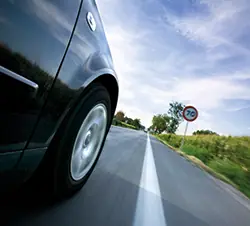
Circular por debajo del límite máximo de velocidad, ¿puede causar accidentes?
Can driving below the maximum speed limit cause accidents?
- ASí, cuando la velocidad no se adapte a las circunstancias del tráfico.Yes, when the speed is not adapted to the traffic conditions.
- BNo, sólo se pueden causar accidentes circulando por encima de ese límite.No, accidents can only be caused by driving above that limit.
- CNo.No.
ExplanationThe limit sets the maximum speed, not the suitable speed. Speed must be adapted to the condition of the road, the traffic, visibility and the weather, so driving below the limit can also cause an accident if it is too fast for those conditions.
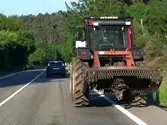
Con carácter general, la velocidad máxima para un vehículo especial es de....
As a general rule, the maximum speed for a special vehicle is...
- A60 km/h.60 km/h.
- B45 km/h.45 km/h.
- C40 km/h.40 km/h.
ExplanationThe maximum speed of a special vehicle is 40 km/h. When it has no brake light, is towing a trailer or is a motor cultivator, its maximum speed is 25 km/h.
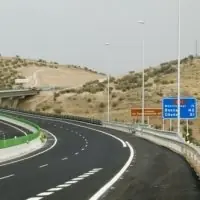
Un turismo por una autovía, ¿a qué velocidad máxima puede circular?
What is the maximum speed at which a car may travel on a dual carriageway (autovía)?
- AA 120 km/h.120 km/h.
- BA 100 km/h.100 km/h.
- CA 140 km/h.140 km/h.
ExplanationThe maximum speed for a car on motorways (autopistas) and dual carriageways (autovías) is 120 km/h.
¿Cuál es la velocidad máxima para un turismo que arrastra un remolque de 600 kg circulando por una autovía?
What is the maximum speed on a dual carriageway (autovía) for a car towing a 600 kg trailer?
- A100 km/h.100 km/h.
- B90 km/h.90 km/h.
- C80 km/h.80 km/h.
ExplanationOn motorways (autopistas) and dual carriageways (autovías), motor vehicles towing a trailer have a general limit of 90 km/h, whatever the mass of the trailer (Article 48.1.a of the General Traffic Regulations, RGC). Since 2019 there is no longer an 80 km/h limit for trailers over 750 kg.
¿Son lo mismo la distancia de reacción y la distancia de frenado?
Are reaction distance and braking distance the same thing?
- ASí, pero solo en vehículos con ABS.Yes, but only in vehicles with ABS.
- BSí.Yes.
- CNo.No.
ExplanationReaction distance is the distance travelled from the moment the driver perceives an obstacle until they react, so it depends on speed and reaction time. Braking distance is the distance travelled from the moment the driver applies the brake until the vehicle stops.
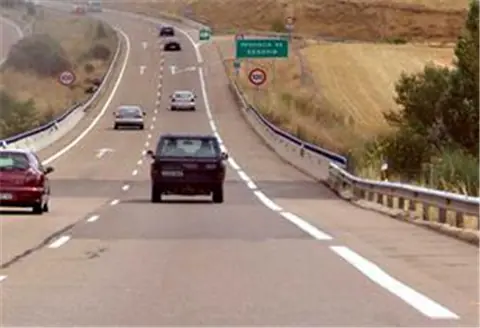
Una de las consecuencias de la velocidad es que según aumenta ésta...
One of the consequences of speed is that, as it increases...
- Ase reduce el tiempo de reacción.reaction time is reduced.
- Bmayor es la gravedad de las lesiones en un accidente.injuries in a crash are more serious.
- Cse pierde coordinación de movimientos.coordination of movements is lost.
ExplanationThe higher the speed, the greater the energy of the impact and the more serious the injuries in a crash. The braking distance and the distance travelled during the reaction time also increase, and the reaction time itself does not get shorter with speed.
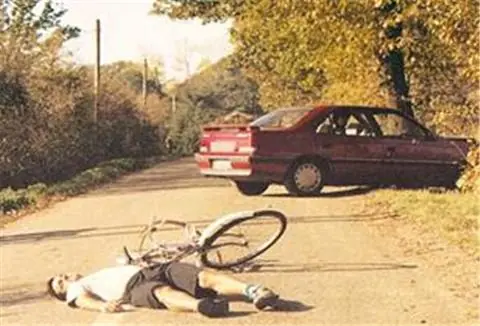
¿Cómo podemos evitar el atropello de ciclistas?
How can we avoid hitting cyclists?
- AAvisando de nuestra presencia con el claxon cuando estemos cerca.By sounding the horn to warn them when we are close.
- BDejando en los adelantamientos una separación lateral de seguridad suficiente.By leaving a sufficient lateral safety gap when overtaking.
- CAdelantándoles rápidamente, incluso cuando vienen ciclistas en sentido contrario.By overtaking them quickly, even when cyclists are coming the other way.
ExplanationThe best way to avoid hitting a cyclist is to overtake leaving a lateral gap of at least 1.5 metres and at a moderate speed. Sounding the horn close to them can startle them, and it is prohibited to overtake if this endangers cyclists coming the other way.
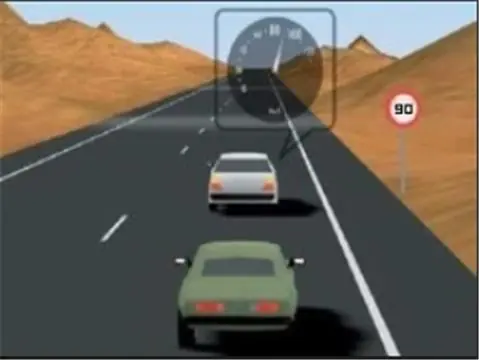
¿Cuál es la principal causa de los accidentes por alcance?
What is the main cause of rear-end collisions?
- ALas velocidades anormalmente reducidas.Abnormally low speeds.
- BNo guardar la distancia de seguridad con el vehículo que circula delante.Not keeping a safe distance from the vehicle in front.
- CLas velocidades superiores a 100 km. por hora.Speeds over 100 km/h.
ExplanationYou must always keep a safe distance from the vehicle in front so that, if its driver brakes sharply, you have enough time and space to react, brake and avoid a rear-end collision.
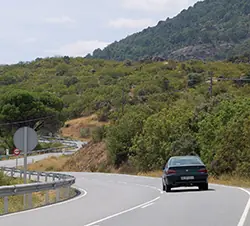
En una carretera cuya velocidad genérica es de 90 km/h, ¿qué velocidad se considera anormalmente reducida para un turismo?
On a road with a general speed limit of 90 km/h, what speed is considered abnormally low for a car?
- ALa inferior a 55 km/hBelow 55 km/h
- BLa inferior a 60 km/hBelow 60 km/h
- CLa inferior a 45 km/hBelow 45 km/h
ExplanationAn abnormally low speed is one below half the road's general limit: half of 90 km/h is 45 km/h.
¿Cuál es la velocidad máxima genérica permitida para un vehículo mixto adaptable que circula por una autopista o autovía?
What is the general maximum speed for an adaptable mixed-use vehicle (vehículo mixto adaptable) on a motorway (autopista) or dual carriageway (autovía)?
- A120 km/hora120 km/h
- B100 km/hora100 km/h
- C90 km/hora90 km/h
ExplanationThe correct answer is 100 km/h. Under the Spanish General Traffic Regulations, the speed limits on motorways and dual carriageways are grouped by type of vehicle: 1. 120 km/h: cars and motorcycles. 2. 100 km/h: buses, adaptable mixed-use vehicles and car-derived vans. 3. 90 km/h: lorries, tractor units, large vans, small vans and articulated vehicles. A common mistake is to think these vehicles may drive at 120 km/h like a car, but because of their technical and load characteristics their limit is reduced to 100 km/h.
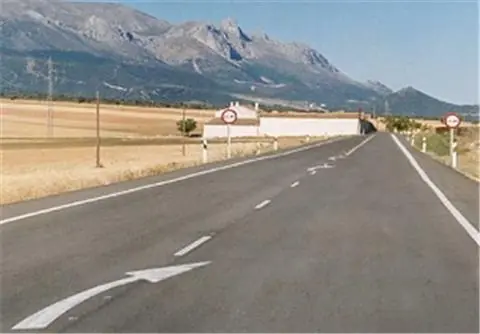
El efecto túnel provocado por una velocidad excesiva es especialmente peligroso en...
The tunnel effect caused by excessive speed is especially dangerous...
- Alas autopistas y autovías.on motorways and dual carriageways.
- Blos adelantamientos.when overtaking.
- Clas intersecciones.at junctions.
ExplanationThe higher the speed, the narrower the field of vision, and the driver only sees what is straight ahead: this is the tunnel effect. It is especially dangerous at junctions, because vehicles and pedestrians coming from the sides go unnoticed.
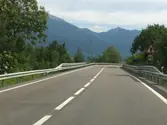
¿Cuál es la velocidad máxima a la que podemos circular por esta carretera?
What is the maximum speed at which we may drive on this road?
- A100 km/h.100 km/h.
- B100 km/h + 20 km/h para adelantar.100 km/h, plus 20 km/h for overtaking.
- C90 km/h.90 km/h.
ExplanationOn conventional roads, the general limit for cars and motorcycles is 90 km/h, whatever the hard shoulder is like, and it may not be exceeded to overtake (Article 48.1.a of the General Traffic Regulations, RGC). The old 100 km/h limit for roads with a 1.5-metre hard shoulder was abolished in 2019.
All topics
- Definitions
- Documents and penalty points
- The driver's condition
- Duties of drivers and pedestrians
- Vehicle safety devices
- Vehicle controls and equipment
- Vehicle lights and horn
- Traffic signs, markings and signals
- The road and its lanes
- Manoeuvres
- Right of way
- Carrying passengers and loads
- Driving safely in difficult conditions
- Vehicle mechanics and maintenance
- Road accidents and first aid
- Defensive and eco-driving
Independent app: not affiliated with or endorsed by the DGT (Spain's Directorate-General for Traffic) or the Ministry of the Interior. The official exam is booked with the DGT and taken at its test centres. The questions here are practice material; the DGT's official question bank is not public.
Basado en datos de la Agencia Estatal Boletín Oficial del Estado (https://www.boe.es). Textos consolidados de carácter meramente informativo. La AEBOE no patrocina ni respalda este sitio.
Parte de las preguntas procede de los tests de la revista «Tráfico y Seguridad Vial» de la DGT, reproducidos con indicación de la fuente.