
DGT test · 961 questions
Speed and distances · Page 19 of 20
Speed limits by road and vehicle type, adapting speed to conditions, safe following distance and stopping distance.
Questions in this topic, with answers
961 questions, 50 per page, with the correct answer and the explanation. Page 19 of 20.
En vías urbanas de plataforma única (calzada y acera al mismo nivel), la velocidad máxima es:
On single-level streets in built-up areas (carriageway and pavement at the same level), the maximum speed is:
- A20 km/h.20 km/h.
- B30 km/h.30 km/h.
- C50 km/h.50 km/h.
ExplanationOn single-level streets, where the carriageway and pavement are at the same level, the general limit is 20 km/h.
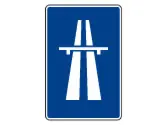
En cuanto a la velocidad anormalmente reducida, ¿a qué velocidad mínima, salvo causa justificada, deberá circular una furgoneta por una autovía?
Regarding abnormally low speed, what is the minimum speed at which a van must travel on a dual carriageway (autovía), unless there is a justified reason?
- A45 km/h.45 km/h.
- B50 km/h.50 km/h.
- C60 km/h.60 km/h.
ExplanationDriving below the minimum speed allowed on a road is considered abnormally low speed. On motorways (autopistas) and dual carriageways (autovías), the minimum speed is 60 km/h for all vehicles.
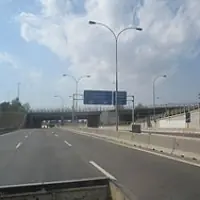
¿Puede ser rebasada la velocidad máxima genérica en autopista o vía urbana para adelantar?
May the general maximum speed on a motorway (autopista) or urban road be exceeded in order to overtake?
- ASí, se podrá rebasar en 20 km/hora.Yes, it may be exceeded by 20 km/h.
- BSí, a cualquier velocidad.Yes, at any speed.
- CNo.No.
ExplanationYou may not exceed the maximum speed in order to overtake on any type of road. It was never allowed on motorways or urban roads, and the old 20 km/h margin on conventional roads was abolished on 21 March 2022 by Law 18/2021.
La velocidad a la que circula un vehículo, ¿influye en la distancia de reacción del conductor?
Does the speed at which a vehicle is travelling affect the driver's reaction distance?
- ANo.No.
- BSí porque durante el tiempo de reacción el vehículo recorrerá más distancia.Yes, because during the reaction time the vehicle will travel a greater distance.
- CNo, sólo afecta a la distancia de detención.No, it only affects the stopping distance.
ExplanationReaction time is the time from when the driver sees an obstacle until they react. It varies with the driver's physical and mental state, never with speed or the condition of the road. Although it may seem that the reaction to an obstacle or unexpected situation should be instant, a driver's average reaction time is about 0.75 seconds. The reaction distance is the number of metres the vehicle travels during the reaction time. This distance depends on the reaction time and on the speed (the higher the speed, the more metres travelled in the same time).
¿Cuál es la velocidad máxima, por regla general, para un vehículo especial?
As a general rule, what is the maximum speed for a special vehicle?
- A45 kilómetros por hora.45 kilometres per hour.
- B60 kilómetros por hora.60 kilometres per hour.
- C40 kilómetros por hora.40 kilometres per hour.
ExplanationUnder Article 48.1.c of the General Traffic Regulations, special vehicles are generally limited to 40 km/h. If they have no brake lights, are towing a trailer or are single-axle tractors (motocultores), the limit is 25 km/h; if they can exceed 60 km/h on the level and meet the requirements, it is 70 km/h.
¿A qué velocidad máxima podrá circular un vehículo mixto por la autopista?
What is the maximum speed for a mixed-use vehicle on a motorway (autopista)?
- A100 km/h.100 km/h.
- B120 km/h.120 km/h.
- C80 km/h.80 km/h.
ExplanationA mixed-use vehicle may travel at a maximum of 100 km/h on a motorway (autopista).
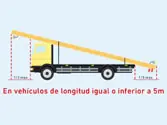
En una autopista con tres carriles para cada sentido, ¿qué distancia de seguridad debemos dejar con el vehículo que nos precede?
On a motorway (autopista) with three lanes in each direction, what safe distance must we keep from the vehicle in front?
- A50 metros.50 metres.
- BLa que nos permita detener el vehículo en caso de frenado brusco y que los demás usuarios puedan adelantarnos con seguridad.One that lets us stop in case of sudden braking and lets other road users overtake us safely.
- CLa que nos permita detener el vehículo en caso de frenado brusco del vehículo que nos precede sin colisionar con él.One that lets us stop, if the vehicle in front brakes suddenly, without hitting it.
ExplanationIn all cases we must leave a clear space that lets us stop without hitting the vehicle in front if it brakes suddenly. But in this case we do not need to keep a distance that lets others overtake us, because we are on a road with more than one lane in each direction.
¿A qué velocidad máxima puede circular un turismo en una vía urbana con dos carriles por sentido de circulación?
What is the maximum speed for a car on a road in a built-up area with two lanes in each direction?
- A30 km/h30 km/h
- B50 km/h50 km/h
- C40 km/h40 km/h
ExplanationOn roads in built-up areas with two or more lanes in each direction, the general limit is 50 km/h.
¿A qué velocidad máxima puede circular un vehículo con un remolque de 700 Kg de MMA en una autovía?
What is the maximum speed at which a vehicle towing a trailer with a maximum authorised mass of 700 kg may travel on a dual carriageway (autovía)?
- AA 90 km/h90 km/h
- BA 100 km/h100 km/h
- CA 80 km/h80 km/h
ExplanationUnder Article 48 of the General Traffic Regulations, motor vehicles with a trailer may travel at a maximum of 90 km/h on motorways (autopistas) and dual carriageways (autovías), whatever the trailer's mass. On conventional roads, at 80 km/h.
En un tramo en el que está prohibido adelantar, ¿qué distancia debemos mantener con el vehículo que va delante?
On a stretch where overtaking is prohibited, what distance must we keep from the vehicle in front?
- AAl menos 50 metros.At least 50 metres.
- BUna distancia suficiente para poder detenernos sin chocar con ese vehículo.Enough distance to be able to stop without hitting that vehicle.
- CUna distancia suficiente para poder detenernos sin chocar con ese vehículo y que además permita que nos adelanten.Enough distance to be able to stop without hitting that vehicle and also to let others overtake us.
ExplanationArticle 54.1 of the General Traffic Regulations requires you to leave a space that allows you to stop without hitting the vehicle in front. The extra gap that lets others overtake you (Article 54.2) does not apply where overtaking is prohibited (Article 54.3.b).
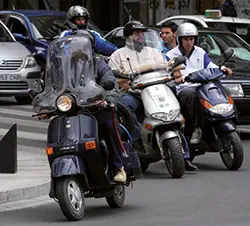
En vías urbanas de dos o más carriles por sentido de circulación, ¿cuál es la velocidad máxima permitida para motocicletas?
On urban roads with two or more lanes in each direction, what is the maximum speed allowed for motorcycles?
- A50 km/h.50 km/h.
- B60 km/h.60 km/h.
- C45 km/h.45 km/h.
ExplanationOn urban roads with two or more lanes in each direction the general limit is 50 km/h, and it applies equally to cars and motorcycles. Urban limits depend on the type of road, not the type of vehicle.
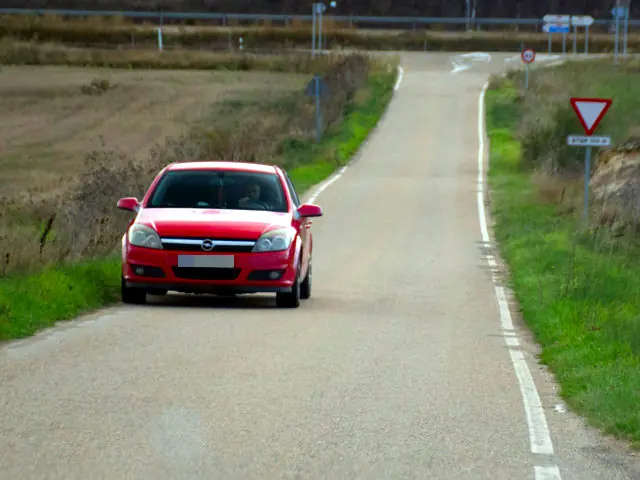
Una carretera convencional no tiene marcas de separación en el suelo entre los 2 sentidos. ¿A qué velocidad máxima puede ir un turismo?
A conventional road has no markings on the surface separating the two directions. What is the maximum speed for a car?
- AA 90 kilómetros por hora.90 kilometres per hour.
- BA 100 kilómetros por hora.100 kilometres per hour.
- CA 90 kilómetros por hora, aunque podría ser también a 100 kilómetros por hora cuando lo decida el responsable de la carretera.90 kilometres per hour, although it could also be 100 kilometres per hour if the road authority decides so.
ExplanationOn conventional roads the general speed limit for cars is 90 km/h (Article 48 of the General Traffic Regulations). The road authority may only raise it to 100 km/h when the two directions are physically separated, which is impossible if there are not even markings separating them.
Una motocicleta que puede alcanzar más de 100 km/h debe llevar obligatoriamente...
A motorcycle that can reach more than 100 km/h must have...
- Asolo un espejo retrovisor en el lado derecho.only one rear-view mirror, on the right-hand side.
- Bsolo un espejo retrovisor en el lado izquierdo.only one rear-view mirror, on the left-hand side.
- Cdos espejos retrovisores, uno a cada lado.two rear-view mirrors, one on each side.
ExplanationAnnex III of the General Vehicle Regulations requires all motorcycles to have an exterior left-hand mirror. If the motorcycle can exceed 100 km/h, the right-hand one is also compulsory, so it must have two mirrors, one on each side.
¿A qué velocidad debe ir al entrar en una autopista?
At what speed must you drive when joining a motorway (autopista)?
- AA la velocidad máxima permitida.At the maximum speed allowed.
- BSiempre muy despacio para entrar con seguridad.Always very slowly, to join safely.
- CA la velocidad adecuada que permita incorporarse con seguridad.At an appropriate speed that lets you join safely.
ExplanationWhen joining a motorway (autopista), you must use the acceleration lane to reach a speed suited to that of the vehicles already on it and check that there is a gap. Joining very slowly, or at maximum speed without looking, is dangerous; you must join safely.
Si circulamos por la autopista a velocidad anormalmente reducida, ¿deberemos abandonarla por la primera salida?
If we are driving on a motorway (autopista) at an abnormally low speed, must we leave it at the first exit?
- ASí.Yes.
- BNo, si circulamos con la luz de emergencia encendida.No, if we have the hazard warning lights on.
- CNo, porque no perturbamos gravemente la circulación.No, because we are not seriously disrupting traffic.
ExplanationIf we are driving at an abnormally low speed on a motorway (autopista), we must leave it straight away at the first exit. Until we reach it, we drive on the hard shoulder whenever our low speed seriously disrupts traffic.
Un ciclomotor es un vehículo de dos o tres ruedas cuya velocidad máxima por construcción no supera los...
A moped is a two- or three-wheeled vehicle whose maximum design speed does not exceed...
- A45 km/h y con cilindrada no superior a 50 cc.45 km/h, with an engine capacity of no more than 50 cc.
- B45 km/h y con cilindrada no superior a 125 cc.45 km/h, with an engine capacity of no more than 125 cc.
- C50 km/h y con cilindrada no superior a 50 cc.50 km/h, with an engine capacity of no more than 50 cc.
ExplanationUnder Annex II of the General Vehicle Regulations, a two- or three-wheeled moped has a maximum design speed of no more than 45 km/h and, if it has an internal combustion engine, an engine capacity of no more than 50 cm³. Above that, it is a motorcycle.
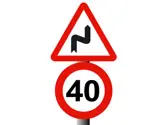
¿Cuándo finaliza la prohibición de circular como máximo a 40 km/h?
When does the ban on driving faster than 40 km/h end?
- ACuando termine el peligro indicado.When the danger shown ends.
- BHasta que encuentre una señal de fin de prohibición.When you come to an end-of-prohibition sign.
- CHasta que encuentra una señal de fin de obligación.When you come to an end-of-obligation sign.
ExplanationWhen the maximum speed sign is on the same post as a danger warning sign, the limit only applies while that danger lasts. It ends once you have passed the danger, without the need for an end-of-prohibition sign.
Si el vehículo va más rápido, ¿aumenta la probabilidad de que un peatón muera?
If a vehicle goes faster, does the probability of a pedestrian dying increase?
- ANo. La velocidad no influye mucho en la probabilidad de muerte de un peatón.No. Speed has little effect on the probability of a pedestrian dying.
- BSí. Si un vehículo va más rápido, aumenta la probabilidad de que un peatón muera en caso de atropello.Yes. If a vehicle goes faster, the probability of a pedestrian dying if hit increases.
- CNo. La probabilidad no depende solo de la salud del peatón.No. The probability does not depend only on the pedestrian's health.
ExplanationThe energy of an impact grows with the square of the speed, so small increases in speed greatly raise the probability of a pedestrian dying if hit. That is why you must drive especially slowly in areas with pedestrians.

Con esta señal, ¿a qué velocidad circularemos?
With this sign, at what speed will we drive?
- AA más de 30 km/h.At more than 30 km/h.
- BComo mínimo a 30 km/h.At least 30 km/h.
- CA menos de 30 km/h.At less than 30 km/h.
ExplanationThis sign requires drivers to drive at a speed of at least 30 km/h.
¿Cuál es la velocidad máxima permitida para un turismo que circula por una autopista dentro de poblado?
What is the maximum speed allowed for a car on a motorway (autopista) inside a built-up area?
- A50 km/h.50 km/h.
- B80 km/h.80 km/h.
- C60 km/h.60 km/h.
ExplanationThe maximum speed on a motorway (autopista) inside a built-up area is 80 km/h.

Cuando se adelante a vehículos de tracción animal, la separación lateral...
When overtaking animal-drawn vehicles, the lateral clearance...
- Ano debe ser inferior a 1,5 metros, solo cuando el adelantamiento se realice fuera de poblado.must not be less than 1.5 metres, only when overtaking outside built-up areas.
- Bdebe ser de al menos 1,5 metros, tanto en poblado como fuera de poblado.must be at least 1.5 metres, both in and outside built-up areas.
- Cdebe ser proporcional a la anchura y características de la vía.must be in proportion to the width and characteristics of the road.
ExplanationAccording to Article 85.4 of the General Traffic Regulations (as worded by RD 518/2026), when overtaking animal-drawn vehicles, pedestrians, animals, cyclists, mopeds or personal mobility vehicles, you must keep a safety clearance of at least 1.5 metres, with no distinction between built-up areas and outside them.
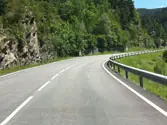
¿Cuál será la velocidad mínima en esta vía para un turismo?
What is the minimum speed on this road for a car?
- A50 km/h.50 km/h.
- B45 km/h.45 km/h.
- C60 km/h.60 km/h.
ExplanationThe minimum speed on motorways (autopistas) and dual carriageways (autovías) is 60 km/h. On all other roads, it is half the general maximum speed set for each category of vehicle. So, since the maximum speed on conventional roads is 90 km/h, the minimum is 45 km/h.
Circular por una autopista a 120 km/h con lluvia intensa, es circular a una velocidad...
Driving on a motorway (autopista) at 120 km/h in heavy rain is driving at a speed that is...
- Ainadecuada.inappropriate.
- Bprohibida.prohibited.
- Cadecuada.appropriate.
ExplanationWhen we drive at a speed that is not adapted to the weather or to the conditions of the road, the traffic, the vehicle or the driver, we are driving at an inappropriate speed. Our speed may be within the limits for the road, but in a difficult situation we may find it very hard to control the vehicle. For example, there are usually more accidents on rainy days because many drivers drive at the same speed as on a sunny day: the speed is permitted, but it is inappropriate in the rain.
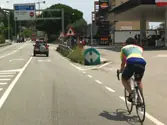
Para evitar atropellos a los ciclistas es conveniente...
To avoid hitting cyclists, it is advisable to...
- Aaumentar la velocidad para adelantarlos cuanto antes.speed up to overtake them as quickly as possible.
- Bal adelantarlos dejar en todo momento una separación lateral suficiente.leave enough side clearance at all times when overtaking them.
- Chacerles señales acústicas para que se aparten.sound the horn so they move out of the way.
ExplanationWhen overtaking cyclists, it is very important to leave enough safe side clearance at all times. This is especially important when driving large vehicles (because of the gusts of air we can create). When overtaking bicycles, you must move partly or fully into the next lane of the carriageway, unless there are two lanes in our direction, in which case we must move completely into the next lane, provided the conditions for overtaking are met. In any case, the side clearance must not be less than 1.50 metres. It is best not to sound the horn near cyclists, as they could be startled and lose their balance.
Si su vehículo va muy cargado...
If your vehicle is heavily loaded...
- AAfectará solo al consumo de combustible.It will only affect fuel consumption.
- BAfectará al consumo de combustible y a la distancia de frenado.It will affect fuel consumption and braking distance.
- CAfectará al consumo de combustible, a la distancia de frenado y a la estabilidad del vehículo.It will affect fuel consumption, braking distance and the vehicle's stability.
ExplanationA heavily loaded vehicle uses more fuel, needs a longer distance to brake because it has more mass, and loses stability, especially on bends and in sudden manoeuvres, because the load raises the centre of gravity and can shift.
¿A qué velocidad máxima podrá circular un vehículo que transporta mercancías peligrosas por una travesia?
What is the maximum speed on a travesía for a vehicle carrying dangerous goods?
- A30 kilómetros por hora.30 kilometres per hour.
- B40 kilómetros por hora.40 kilometres per hour.
- C50 kilómetros por hora.50 kilometres per hour.
ExplanationThe general speed limits on urban roads depend on the type of carriageway: a) 20 km/h on single-level streets where the carriageway and pavement are at the same level; b) 30 km/h on roads with only one lane in each direction; c) 50 km/h on roads with two or more lanes in each direction (40 km/h for vehicles carrying dangerous goods). Lanes reserved for certain users or only for public transport are not counted for this purpose.
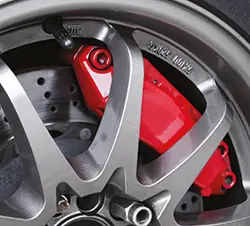
La eficacia del frenado aumenta, entre otras circunstancias, cuando...
Braking efficiency increases, among other things, when...
- ALa masa del vehículo es mayor, ya que a mayor masa menor distancia de frenado.The vehicle's mass is greater, because the greater the mass, the shorter the braking distance.
- BSe pisa el pedal de embrague al mismo tiempo que el pedal de freno.You press the clutch pedal at the same time as the brake pedal.
- CLa adherencia de los neumáticos al suelo es mayor.The grip of the tyres on the road is greater.
ExplanationBraking efficiency depends on the grip of the tyres on the road: the more grip, the better the braking. More mass makes the braking distance longer, and pressing the clutch removes engine braking.
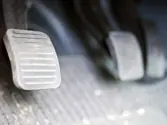
El freno de pie sirve para...
The foot brake is used to...
- Ainmovilizar el vehículo, como el freno de mano.hold the vehicle stationary, like the handbrake.
- Bdisminuir la velocidad del vehículo actuando solamente sobre las ruedas motrices.reduce the vehicle's speed by acting only on the driving wheels.
- Cdisminuir la velocidad y llegar a detenerlo totalmente si es necesario.reduce speed and bring the vehicle to a complete stop if necessary.
ExplanationThe foot brake or service brake acts on all 4 wheels of the vehicle and is used to reduce speed and bring the vehicle to a stop safely and effectively.
Si circula con una motocicleta por una carretera convencional, ¿puede rebasar la velocidad máxima genérica en algún caso?
If you are riding a motorcycle on a conventional road, can you exceed the general maximum speed in any case?
- ANo, solo la pueden rebasar en 20 Kilómetros por hora para adelantar los turismos.No, only cars may exceed it by 20 kilometres per hour to overtake.
- BSí, en 20 Kilómetros por hora para adelantar.Yes, by 20 kilometres per hour to overtake.
- CNo, en ningún caso.No, never.
ExplanationNo. Since 2022 no vehicle may exceed the road's maximum speed to overtake, neither motorcycles nor cars: the old option of exceeding it by 20 km/h on conventional roads has been abolished.
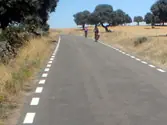
¿Cuál será la velocidad mínima en esta vía para un turismo con remolque?
What is the minimum speed on this road for a car towing a trailer?
- A40 km/h.40 km/h.
- B45 km/h.45 km/h.
- C60 km/h.60 km/h.
ExplanationMotor cars towing a trailer have a maximum permitted speed of 80 km/h on conventional roads, so the minimum, which is half the maximum, is 40 km/h.
¿En qué circunstancias está obligado a moderar la velocidad?
In what circumstances must you slow down?
- AAl pasar junto a vehículos correctamente estacionados en una vía urbana.When passing vehicles correctly parked on an urban road.
- BAl acercarse a vehículos inmovilizados en la calzada en vías fuera de poblado.When approaching broken-down vehicles on the carriageway on roads outside built-up areas.
- CEn intersecciones señalizadas donde se goza de prioridad.At signed junctions where you have priority.
ExplanationAccording to Article 46.1.f of the General Traffic Regulations (RGC), outside built-up areas you must drive at a moderate speed when approaching broken-down vehicles on the carriageway. In addition, Article 88.1 (as worded by Royal Decree 518/2026) requires you, on any road, to reduce your speed by at least 20 km/h below the limit when passing a vehicle that has broken down or been in an accident and is blocking the lane.
Para evitar atropellar a los ciclistas, es conveniente...
To avoid hitting cyclists, it is advisable to...
- AAumentar la velocidad para adelantarlos lo antes posible.Speed up to overtake them as soon as possible.
- BAl adelantarles, dejar siempre una separación lateral suficiente.Always leave enough space to the side when overtaking them.
- CHacerles señales acústicas para que se aparten.Sound the horn to make them move aside.
ExplanationAccording to Article 85.4 of the General Traffic Regulations (RGC), as worded by RD 518/2026, when overtaking cyclists you must take special care not to create dangerous situations, moving partly or fully into the next lane or the opposite lane and keeping a safety gap of at least 1.5 metres. Speeding up or using the horn to make them move aside increases the risk.
¿Cuál será el límite máximo de velocidad en una travesía?
What is the maximum speed limit on a travesía (stretch of road through a town)?
- A60 km/h.60 km/h.
- B50 km/h.50 km/h.
- C20 km/h.20 km/h.
ExplanationA travesía is a road inside a built-up area, so its speed limit is 50 km/h.
En una calle de poblado con un único carril por sentido y aceras a distinto nivel que la calzada, ¿a qué velocidad máxima se puede circular si no hay señalización específica?
On a street in a built-up area with a single lane in each direction and pavements at a different level from the carriageway, what is the maximum speed if there are no specific signs?
- A30 km/h.30 km/h.
- B20 km/h.20 km/h.
- C50 km/h.50 km/h.
ExplanationOn urban roads the general limit depends on the number of lanes in each direction: 30 km/h with a single lane in each direction, 50 km/h with two or more, and 20 km/h on single-level streets where the carriageway and pavement share one surface (Article 50.1 of the General Traffic Regulations).
¿Cuál es la velocidad máxima de un cuatriciclo pesado en una carretera convencional?
What is the maximum speed for a heavy quadricycle on a conventional road?
- A70 km/h.70 km/h.
- B80 km/h.80 km/h.
- C90 km/h.90 km/h.
ExplanationUnder Article 48.1.h of the General Traffic Regulations, three-wheeled vehicles and quadricycles have a limit of 70 km/h on any type of road they are allowed to use, including conventional roads.
Frenar mucho y muy seguido...
Braking hard and very often...
- AMejora la eficacia de los frenos.makes the brakes work better.
- BEs la forma correcta de hacerlo.is the correct way to brake.
- CPuede provocar que los frenos se sobrecalienten y pierdan eficacia.can make the brakes overheat and lose effectiveness.
ExplanationBecause of the friction during braking, brakes always heat up, but if we overuse them, they can overheat and brake less effectively.
¿Están obligados los agentes de la autoridad y el personal de obras a usar dispositivos retrorreflectantes que permitan identificarlos desde una distancia mínima de 150 metros?
Are traffic officers and road workers required to wear retroreflective items that allow them to be identified from at least 150 metres away?
- ASí, siempre.Yes, always.
- BSí, pero solo de noche.Yes, but only at night.
- CNo.No.
ExplanationArticle 141.1 of the General Traffic Regulations requires officers directing traffic and road workers to wear brightly coloured clothing and retroreflective items that allow them to be seen from at least 150 metres away. The rule does not limit this to night-time.
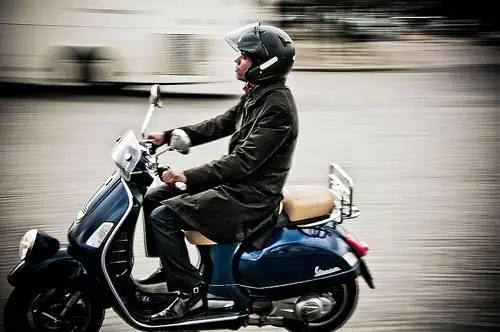
En vías urbanas con dos carriles para cada sentido, ¿cuál es la velocidad máxima permitida para motocicletas?
On urban roads with two lanes in each direction, what is the maximum speed allowed for motorcycles?
- A50 km/h.50 km/h.
- B45 km/h.45 km/h.
- C30 km/h.30 km/h.
ExplanationOn urban roads the general limit depends on the number of lanes: 50 km/h with two or more lanes in each direction, 30 km/h with one, and 20 km/h on single-level (shared) streets (Article 50 of the General Traffic Regulations). It is the same for motorcycles and cars; there is no special 45 km/h limit.
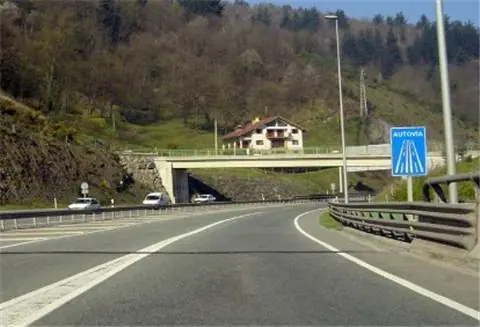
En autovía, ¿puede un turismo aumentar la velocidad máxima permitida para adelantar?
On a dual carriageway (autovía), may a car exceed the maximum speed allowed in order to overtake?
- ASí, en 20 kilómetros por hora.Yes, by 20 km/h.
- BNo, está prohibido.No, it is prohibited.
- CEn autopista si, en autovía no.On a motorway (autopista) yes, on a dual carriageway no.
ExplanationNo. Since 2022 you may not exceed the maximum speed allowed in order to overtake on any type of road, either on a motorway or on a dual carriageway. The old 20 km/h exception only existed on conventional roads and was abolished.
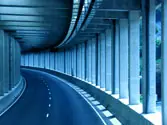
La distancia de seguridad en un túnel, será de...
In a tunnel, the safe distance must be...
- A150 metros como mínimo.at least 150 metres.
- B100 metros en todo caso.100 metres in all cases.
- C100 metros si no se pretende adelantar.100 metres if you do not intend to overtake.
ExplanationThe safe distance we must keep in a tunnel or an underpass when we do not intend to overtake must be at least 100 metres or a minimum gap of 4 seconds.
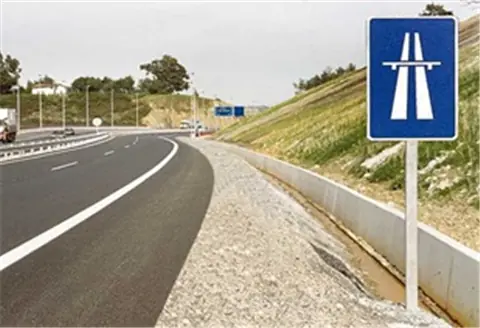
Circula con un turismo por una autopista; ¿qué velocidad se considera anormalmente reducida?
You are driving a car on a motorway (autopista). What speed is considered abnormally low?
- ALa inferior a 70 km/h.Below 70 km/h.
- BLa inferior a 60 km/h.Below 60 km/h.
- CLa inferior a 80 km/h.Below 80 km/h.
ExplanationOn motorways (autopistas) and dual carriageways (autovías), a speed below 60 km/h is considered abnormally low, and it is prohibited to drive like this without a justified reason (Article 49 of the General Traffic Regulations). If an emergency means you cannot keep to it, you must leave at the first exit.
Si un vehículo circula por una autopista a velocidad anormalmente reducida, ¿por dónde lo hará?
If a vehicle is travelling at an abnormally low speed on a motorway (autopista), where should it travel?
- APor el carril de la derecha.In the right-hand lane.
- BPor el arcén.On the hard shoulder.
- CTendrá que detenerse en el arcén no podrá circular.It will have to stop on the hard shoulder; it may not travel.
ExplanationA vehicle travelling on a motorway (autopista) at an abnormally low speed, below 60 km/h, must use the right-hand lane, and the hard shoulder if it seriously disrupts traffic.
¿Cuál será el límite de velocidad circulando por una travesía?
What is the speed limit when driving on a travesía (stretch of road through a town)?
- A60 km/h.60 km/h.
- B80 km/h.80 km/h.
- C50 km/h.50 km/h.
ExplanationThe general speed limits on urban roads, depending on the features of the carriageway, are: a) 20 km/h on single-level streets where the carriageway and pavement are at the same level; b) 30 km/h on roads with a single lane in each direction; c) 50 km/h on roads with two or more lanes in each direction (40 km/h for vehicles carrying dangerous goods). For this purpose, lanes reserved for certain users or only for public transport are not counted. The municipal authority may lower or raise these limits with specific signs. On travesías a limit of 50 km/h applies to all types of vehicle, except vehicles carrying dangerous goods, for which it is 40 km/h. This limit may be lowered by agreement between the municipal authority and the road owner, with specific signs.
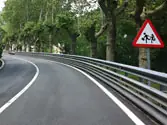
Si un vehículo circula por esta vía a 90 km/h, ¿lo está haciendo a una velocidad adecuada?
If a vehicle is travelling on this road at 90 km/h, is its speed appropriate?
- ASí, ya que es la máxima permitida.Yes, because it is the maximum allowed.
- BNo, porque es inferior a la velocidad mínima exigida.No, because it is below the required minimum speed.
- CNo, ya que es excesiva debido a las circunstancias.No, because it is too fast for the circumstances.
ExplanationOn this road the maximum speed is 90 km/h, but the appropriate speed depends on the circumstances: the bend and the sign warning of children mean you must drive more slowly. Adapting your speed means adjusting it at every moment to the road, the traffic and the dangers.
En una autopista, conduciendo un camión con masa máxima autorizada de 3000 kg, ¿qué distancia hay que mantener respecto al vehículo que circula delante?
On a motorway (autopista), driving a lorry with a maximum authorised mass of 3,000 kg, what distance must you keep from the vehicle in front?
- A50 metros.50 metres.
- BLa distancia de seguridad.The safe distance.
- C100 metros.100 metres.
ExplanationOn a motorway (autopista), the safe distance in Article 54.1 of the General Traffic Regulations (RGC) is enough: one that lets you stop without hitting the vehicle in front. The minimum gap of 50 metres only applies to vehicles over 3,500 kg or over 10 metres long, and does not apply where there is more than one lane in each direction.
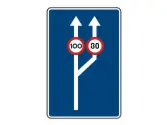
Como norma general y a la vista de la señal, ¿circula correctamente un vehículo por el carril de la izquierda si su velocidad es de 70 km/h?
As a general rule and in view of the sign, is a vehicle driving correctly in the left-hand lane if its speed is 70 km/h?
- ASí.Yes.
- BNo, tendría que ir por el carril de la derecha.No, it should be in the right-hand lane.
- CSí, puede circular por cualquiera de los dos carriles.Yes, it may use either of the two lanes.
ExplanationIf some circumstance made it advisable to drive in the left-hand lane, it could do so at 70 km/h, but as a general rule you should normally drive in the right-hand lane. Using the left-hand lane is justified if you want to go faster than 80 km/h, because that is the maximum speed set for the right-hand lane.
¿Cuál será la velocidad máxima de una autocaravana de hasta 3.500 kg de MMA circulando por una autovía?
What is the maximum speed on a dual carriageway (autovía) of a motorhome with a maximum authorised mass (MAM) of up to 3,500 kg?
- A100 km/h.100 km/h.
- B120 km/h.120 km/h.
- C90 km/h.90 km/h.
ExplanationUnder Article 48.1.a of the General Traffic Regulations (RGC), on motorways (autopistas) and dual carriageways (autovías) motorhomes with a MAM of 3,500 kg or less have the same limit as cars, 120 km/h. Those of more than 3,500 kg, which cannot be driven with a B licence, may travel at 90 km/h.
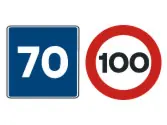
Al encontrar estas dos señales, ¿a qué velocidad máxima podremos circular?
When you see these two signs, what is the maximum speed at which we may drive?
- A100 km/h.100 km/h.
- B120 km/h.120 km/h.
- C70 km/h.70 km/h.
ExplanationOn this stretch of road it is advisable not to exceed about 70 km/h, even if weather, road and traffic conditions are favourable; this is a recommendation. The maximum limit at which we may drive is 100 km/h.
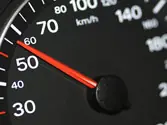
¿Cuándo tendremos sensación de mayor velocidad?
When will we have the feeling of going faster?
- AAl circular por una autopista.When driving on a motorway (autopista).
- BAl circular por una vía en buen estado con varios carriles.When driving on a road in good condition with several lanes.
- CAl circular por una vía estrecha con el pavimento en mal estado.When driving on a narrow road with the surface in poor condition.
ExplanationIf the road is wide and the surface is in good condition, we will feel that we are going slower than we really are. On a narrow road in poor condition, we will feel the opposite, that is, that we are going faster than we really are, either because of the tyre noise caused by the poor surface or because the edges of the narrow road are so close.
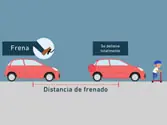
Circulando con hielo en la calzada la distancia de frenado...
When driving with ice on the road, the braking distance...
- APodría ser como máximo el doble de la distancia que en seco.could be at most double the distance on a dry road.
- BPodría llegar a ser 10 veces mayor a la normal.could become 10 times longer than normal.
- CSería inferior a la recorrida en condiciones normales.would be shorter than in normal conditions.
ExplanationWhen there is ice on the road, the friction between the tyre and the road is reduced to a minimum, so the braking distance increases a great deal and may become up to 10 times longer. For this reason you must drive with more care and adapt the safe distance to these conditions.
All topics
- Definitions
- Documents and penalty points
- The driver's condition
- Duties of drivers and pedestrians
- Vehicle safety devices
- Vehicle controls and equipment
- Vehicle lights and horn
- Traffic signs, markings and signals
- The road and its lanes
- Manoeuvres
- Right of way
- Carrying passengers and loads
- Driving safely in difficult conditions
- Vehicle mechanics and maintenance
- Road accidents and first aid
- Defensive and eco-driving
Independent app: not affiliated with or endorsed by the DGT (Spain's Directorate-General for Traffic) or the Ministry of the Interior. The official exam is booked with the DGT and taken at its test centres. The questions here are practice material; the DGT's official question bank is not public.
Basado en datos de la Agencia Estatal Boletín Oficial del Estado (https://www.boe.es). Textos consolidados de carácter meramente informativo. La AEBOE no patrocina ni respalda este sitio.
Parte de las preguntas procede de los tests de la revista «Tráfico y Seguridad Vial» de la DGT, reproducidos con indicación de la fuente.