
DGT test · 961 questions
Speed and distances · Page 4 of 20
Speed limits by road and vehicle type, adapting speed to conditions, safe following distance and stopping distance.
Questions in this topic, with answers
961 questions, 50 per page, with the correct answer and the explanation. Page 4 of 20.
Cuando adelantemos a otro vehículo con una motocicleta, circulando fuera de poblado, ¿qué separación lateral deberemos mantener?
When we overtake another vehicle on a motorcycle outside built-up areas, what lateral clearance must we keep?
- AAl menos 1,50 metros.At least 1.50 metres.
- BMenos de 1,50 metros.Less than 1.50 metres.
- CLa proporcional a la velocidad, anchura y características de la calzada.A clearance in proportion to speed and to the width and characteristics of the carriageway.
ExplanationAccording to Article 85.5 of the General Traffic Regulations, the driver of a two-wheeled vehicle who overtakes any other vehicle outside built-up areas must leave a space of at least 1.50 metres between the two vehicles.
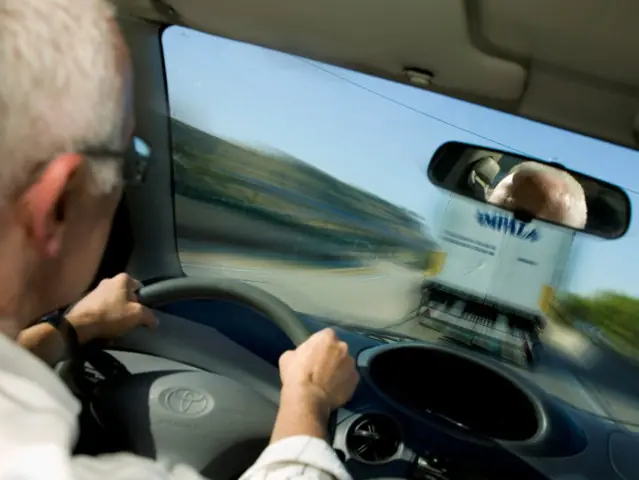
Al aumentar la velocidad...
When speed increases...
- Aaumenta la capacidad de reacción.reaction capacity increases.
- Baumenta la distancia de reacción.reaction distance increases.
- Cdisminuye el tiempo de reacción.reaction time decreases.
ExplanationWhen speed increases, the reaction distance increases. The reaction distance is the distance the vehicle travels from the moment the driver perceives a hazard until they start to apply the brakes. The higher the speed, the greater the distance travelled during the driver's reaction time.
Cuando una motocicleta adelante a un turismo, en vía interurbana, ¿qué distancia debe mantener con él?
When a motorcycle overtakes a car on an interurban road, what distance must it keep from it?
- AUna distancia proporcional a la velocidad y a la anchura y características de la calzada.A distance in proportion to the speed and to the width and features of the carriageway.
- B1,50 m. como mínimo.At least 1.50 m.
- CLas motocicletas no pueden adelantar a los turismos.Motorcycles cannot overtake cars.
ExplanationUnder Article 85 of the General Traffic Regulations, the rider of a two-wheeled vehicle overtaking any other vehicle outside built-up areas must leave a side gap of at least 1.5 metres.
Un ciclomotor puede circular como máximo a una velocidad de…
The maximum speed at which a moped may travel is…
- A45 km/h pudiendo superarla en 20 km/h para adelantar.45 km/h, and it may exceed this by 20 km/h to overtake.
- B70 km/h.70 km/h.
- C45 km/h.45 km/h.
ExplanationMopeds have a maximum speed of 45 km/h on any road (Article 48 of the General Traffic Regulations). Since 2022 no vehicle may exceed the speed limit to overtake, and 70 km/h is the limit for other vehicles, not for mopeds.
¿Cuál será la velocidad máxima para una motocicleta en una travesía?
What is the maximum speed for a motorcycle on a travesía (stretch of road through a town)?
- A100 km/h.100 km/h.
- B50 km/h.50 km/h.
- C60 km/h.60 km/h.
ExplanationA travesía is a road inside a built-up area, so the maximum speed for a motorcycle is 50 km/h.
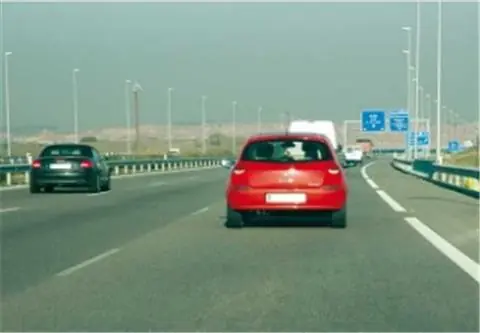
La distancia de reacción es:
Reaction distance is:
- Ala distancia que debe guardarse con el vehículo que va delante.the distance you must keep from the vehicle in front.
- Bla distancia que recorre el vehículo desde que empieza a frenar hasta que se detiene.the distance the vehicle travels from when it starts braking until it stops.
- CLa distancia que recorre el vehículo durante el tiempo de reacción.the distance the vehicle travels during the reaction time.
ExplanationReaction distance is the distance the vehicle travels during the reaction time, from when the driver perceives the danger until they start braking. The distance travelled while braking until the vehicle stops is the braking distance.
¿A qué velocidad máxima se puede adelantar en autopista?
What is the maximum speed at which you may overtake on a motorway (autopista)?
- A120 km/h, respetando el límite120 km/h, keeping to the limit
- B140 km/h140 km/h
- CNo hay límite al adelantarThere is no limit when overtaking
ExplanationWhen overtaking on a motorway, you may not exceed the general speed limit.
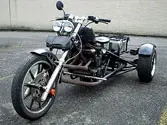
¿A qué velocidad máxima puede circular un cuadriciclo no ligero por una carretera convencional?
What is the maximum speed for a non-light quadricycle on a conventional road?
- A90km/h.90 km/h.
- B80km/h.80 km/h.
- C70km/h.70 km/h.
ExplanationThe maximum speed for a non-light (motor) tricycle or quadricycle is 70 km/h.
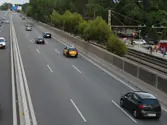
¿Qué vehículos podrán rebasar la velocidad máxima de 120 km/h. en autopista?
Which vehicles may go over the 120 km/h speed limit on a motorway (autopista)?
- ASolo motocicletas y turismos.Only motorcycles and cars.
- BVehículos con MMA no superior a 3.500 kg.Vehicles with a MAM of no more than 3,500 kg.
- CNinguno.None.
ExplanationThe speed limit on motorways (autopistas) and dual carriageways (autovías) is 120 km/h, and no vehicle may go over it.
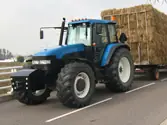
¿Cuál es la velocidad máxima establecida de manera general para un vehículo especial que arrastra un remolque?
What is the general maximum speed for a special vehicle towing a trailer?
- A25 kilómetros por hora.25 kilometres per hour.
- B40 kilómetros por hora.40 kilometres per hour.
- C60 kilómetros por hora.60 kilometres per hour.
ExplanationAs a general rule, the maximum speed for special vehicles is: 25 km/h for those that have no brake light, tow a trailer or are two-wheel tractors; 70 km/h for those that can reach 60 km/h on the flat; 40 km/h for all other special vehicles.
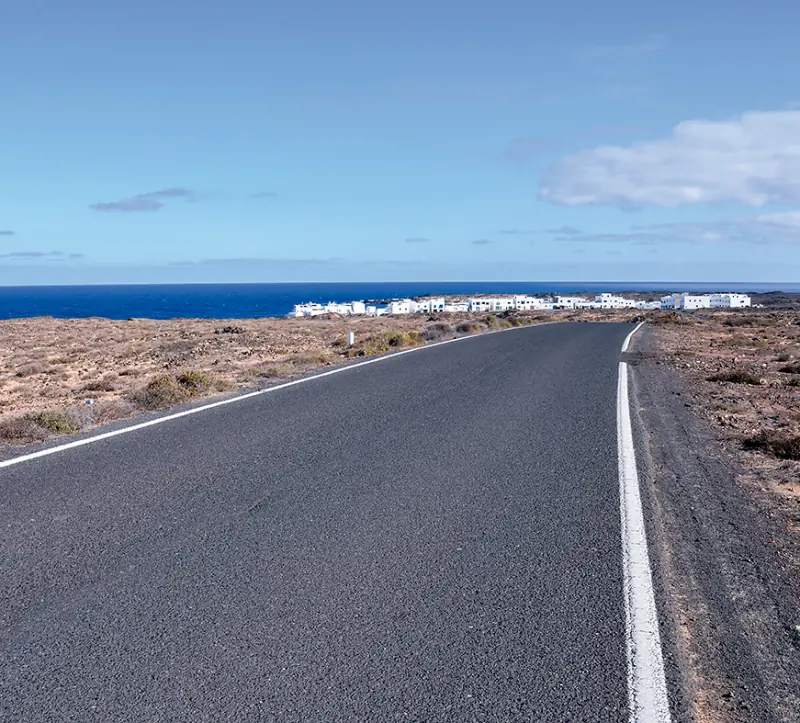
En esta vía de doble sentido, ¿qué vehículos deben guardar una separación mínima de 50 metros con el vehículo de delante cuando no pretendan adelantar?
On this two-way road, which vehicles must keep a minimum gap of 50 metres from the vehicle in front when they do not intend to overtake?
- ATodos los camiones, con independencia de su M.M.A.All lorries, whatever their maximum authorised mass (MAM).
- BLos conjuntos de vehículos de más de 10 metros de longitud.Vehicle combinations over 10 metres long.
- CLos turismos.Cars.
ExplanationOutside built-up areas, vehicle combinations over 10 metres long and abnormal loads (special transports) must leave at least 50 metres from the vehicle in front, so that an overtaking vehicle can pull in between them safely.
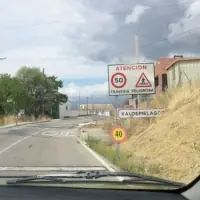
¿Cuál es, con carácter general, la velocidad máxima en una vía urbana con un único carril por sentido?
As a general rule, what is the maximum speed on an urban road with a single lane in each direction?
- A30 km/h.30 km/h.
- B50 km/h.50 km/h.
- C80 km/h.80 km/h.
ExplanationUnder Article 50 of the General Traffic Regulations, the general limit on urban roads with a single lane in each direction is 30 km/h. It is 50 km/h with two or more lanes in each direction and 20 km/h on single-level (shared) streets, unless another limit is signed.
Un turismo que arrastra un remolque ligero por carretera convencional ve su velocidad máxima reducida a:
A car towing a light trailer on a conventional road has its maximum speed reduced to:
- A80 km/h80 km/h
- B90 km/h90 km/h
- C70 km/h70 km/h
ExplanationWith a trailer, the car's general limit on a conventional road is reduced by 10 km/h, to 80 km/h.
Cuando la adherencia de la calzada es menor, debido a circunstancias atmosféricas, ¿qué ocurre con la distancia de frenado?
When the road surface has less grip because of weather conditions, what happens to the braking distance?
- ALa distancia de frenado es mayor.The braking distance is longer.
- BLa distancia de frenado es menor.The braking distance is shorter.
- CLa adherencia de la calzada no influye en la distancia de frenado.The grip of the road surface does not affect the braking distance.
ExplanationWhen grip is reduced by rain, snow or ice, the tyres grip worse and the braking distance increases. That is why in bad weather you must reduce your speed and increase your safe distance.
¿Qué separación lateral mínima debe dejar obligatoriamente un turismo al adelantar a un ciclista fuera de poblado?
What minimum lateral distance must a car leave when overtaking a cyclist outside a built-up area?
- AAl menos 1,5 metros, y cambiar por completo de carril si hay más de uno por sentido.At least 1.5 metres, and change lanes completely if there is more than one lane in each direction.
- B1 metro en calzadas rectas con buena visibilidad.1 metre on straight carriageways with good visibility.
- CUna distancia proporcional a la velocidad, sin necesidad de cambiar de carril aunque haya varios.A distance in proportion to the speed, with no need to change lanes even if there are several.
ExplanationUnder Article 85.4 of the General Traffic Regulations (as worded by RD 518/2026), when overtaking a cyclist you must keep at least 1.5 metres away, occupying part or all of the adjacent or opposite lane; if the carriageway has more than one lane in each direction, you must change lanes completely.
¿Qué distancia debemos mantener con el vehículo que nos precede?
What distance should we keep from the vehicle in front?
- ALa que permita detenernos en caso de frenado brusco sin colisionar con él.One that allows us to stop without hitting it if it brakes sharply.
- B50 metros como mínimo.At least 50 metres.
- CAl estar dentro de poblado no se tiene que mantener distancia de seguridad.In a built-up area, no safe distance needs to be kept.
ExplanationWhen driving behind another vehicle, you must always leave a clear space between them that lets you stop, if it brakes sharply, without hitting it, both in and outside built-up areas.
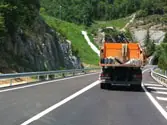
¿Puede adelantar al camión de la imagen que circula a una velocidad anormalmente reducida?
May you overtake the lorry in the picture, which is travelling at an abnormally low speed?
- ASí, porque circula por debajo de la mínima establecida.Yes, because it is travelling below the set minimum speed.
- BDepende de la visibilidad en la carretera y de la distancia disponible para adelantar.It depends on the visibility on the road and the distance available for overtaking.
- CNo, es peligroso adelantar en esta situación.No, overtaking is dangerous in this situation.
ExplanationIn the picture there is a solid line, which prohibits overtaking. You could pass the lorry, but for this to count as passing a stationary vehicle, in which case you may go past even crossing the solid line, the lorry would have to be completely stopped. If the lorry is moving, even at an abnormally low speed, it counts as overtaking, which you may not do.
¿Cuál es la velocidad mínima en una carretera convencional para un coche?
What is the minimum speed for a car on a conventional road?
- A50 km/h50 km/h
- B45 km/h45 km/h
- C60 km/h60 km/h
ExplanationUnder Article 49.1 of the General Traffic Regulations, outside motorways (autopistas) and dual carriageways (autovías) it is prohibited to drive at less than half the general speed limit for the road. On a conventional road the limit for a car is 90 km/h, so the minimum is 45 km/h.
La velocidad a la que circula el vehículo, ¿influirá en la distancia de reacción?
Will the speed at which the vehicle is travelling affect the reaction distance?
- ANo.No.
- BSí.Yes.
- CSí, disminuyéndola.Yes, it will reduce it.
ExplanationThe reaction distance is the number of metres travelled during the time it takes us to react. The faster the vehicle is travelling, the more metres it will cover during the reaction time.
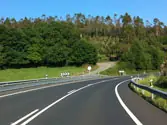
Si sufrimos una avería que nos obliga a circular a velocidad anormalmente reducida, aunque no perturbamos gravemente la circulación, ¿podemos circular por el arcén?
If a breakdown forces us to travel at an abnormally low speed, but we are not seriously disrupting traffic, may we use the hard shoulder?
- ASí, si lleva encendidas las luces de emergencia.Yes, if the hazard warning lights are on.
- BSí.Yes.
- CNo.No.
ExplanationThe hard shoulder is the part of the road next to the carriageway that is not meant for motor vehicles, except in special cases. To drive on the hard shoulder, it must be wide enough and passable, and the vehicle's MAM must not exceed 3,500 kg. If, because of an emergency, we are travelling at an abnormally low speed, that is, below the minimum speed, we may use the hard shoulder if we are seriously disrupting traffic; if not, we must stay on the carriageway.
En vías urbanas, si no va a adelantar, ¿qué distancia de seguridad debe mantener con el coche que circula delante?
On urban roads, if you are not going to overtake, what safe distance must you keep from the car in front?
- ALa que permita a una motocicleta adelantar con seguridad.One that allows a motorcycle to overtake safely.
- BLa que permita detenerse sin chocar con el vehículo que va delante si frena de repente.One that allows you to stop without hitting the vehicle in front if it brakes suddenly.
- CSiempre 50 metros.Always 50 metres.
ExplanationUnder Article 54.1 of the General Traffic Regulations, you must leave a space from the vehicle in front that allows you to stop without hitting it if it brakes sharply. The extra space so that another vehicle can overtake is not required in built-up areas (Article 54.3).
¿Puede aumentar el tiempo de reacción del conductor?
Can a driver's reaction time increase?
- ANo, sólo puede disminuir.No, it can only decrease.
- BSí, dependiendo por ejemplo de su estado físico.Yes, depending on, for example, their physical condition.
- CNo, siempre es menos de un segundo.No, it is always less than one second.
ExplanationReaction time is the time from the moment the driver sees an obstacle until they react. It varies with the driver's physical and mental condition, never with speed or the condition of the road. Reaction distance is the number of metres the vehicle travels during the reaction time. It depends on how long the driver takes to react and on speed.
¿Qué distancia debemos mantener con el vehículo que nos precede dentro de un túnel, si no tenemos intención de adelantar?
What distance should we keep from the vehicle in front inside a tunnel if we do not intend to overtake?
- A100 metros.100 metres.
- B150 metros.150 metres.
- C70 metros.70 metres.
ExplanationIn tunnels and underpasses, when you do not intend to overtake, you must keep a distance of at least 100 metres, or a gap of at least 4 seconds.
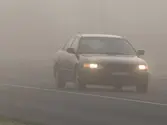
En caso de circular con niebla densa por una autopista, ¿se podrá hacer a velocidad anormalmente reducida?
When driving in thick fog on a motorway (autopista), may you drive at an abnormally low speed?
- ASí, adaptándola a las circunstancias.Yes, adapting it to the circumstances.
- BNo, en ningún caso.No, never.
- CNo, porque el mínimo es de 60 km/h.No, because the minimum is 60 km/h.
ExplanationEven though the minimum speed on motorways is 60 km/h, if there is a justified reason, in this case thick fog, you must drive at a speed suited to these circumstances that allows you to stop the vehicle within the area you can see.
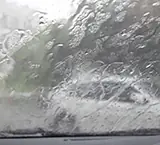
En caso de lluvia intensa, ¿es recomendable aumentar la distancia de seguridad y reducir la velocidad?
In heavy rain, is it advisable to increase the safe distance and reduce speed?
- ASí; mejora el agarre de los neumáticos, pero no es recomendable reducir la velocidad.Yes; it improves tyre grip, but reducing speed is not advisable.
- BNo; al reducir la velocidad mayor es la proporción de agua en el asfalto.No; when you reduce speed, there is more water on the road surface.
- CSí; ya que la adherencia es menor y, por consiguiente, la distancia de frenado aumenta.Yes; because grip is lower and, as a result, the braking distance increases.
ExplanationIn heavy rain, the grip between tyre and road decreases and the braking distance increases, so you must reduce your speed and increase the safe distance. There is also a risk of aquaplaning.
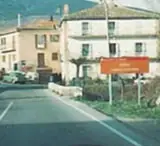
En una travesía sin limitación específica, ¿cuál es la velocidad máxima permitida para adelantar?
On a travesía (stretch of road through a town) with no specific speed limit, what is the maximum permitted speed for overtaking?
- A70 km/h.70 km/h.
- B90 km/h.90 km/h.
- C50 km/h.50 km/h.
ExplanationOn travesías the general limit is 50 km/h for all types of vehicle (Article 50.5 of the General Traffic Regulations), and it also applies when overtaking: since 21 March 2022 you may not exceed the maximum speed to overtake, because Law 18/2021 repealed Article 51.
Circula por una carretera y ve animales junto a la calzada. En esta situación:
You are driving on a road and see animals next to the carriageway. In this situation:
- ADebe detenerse hasta que pasen todos los animales.You must stop until all the animals have passed.
- BDebe alejarse de los animales y, si fuera necesario, ocupar al menos parte del carril contrario.You must keep away from the animals and, if necessary, move at least partly into the opposite lane.
- CSi prevé que los animales pueden salir a la calzada, debe reducir la velocidad y, si fuera necesario, detener el vehículo.If you expect the animals may come onto the carriageway, you must reduce speed and, if necessary, stop the vehicle.
ExplanationUnder Article 46 of the RGC, you must drive at a moderate speed and, if necessary, stop the vehicle when there are animals on the part of the road being used or when it can reasonably be expected that they will suddenly come onto it.
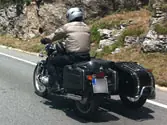
¿Cuál será la velocidad máxima para una motocicleta con sidecar al circular por una autovía?
What is the maximum speed for a motorcycle with a sidecar on a dual carriageway (autovía)?
- A120 km/h.120 km/h.
- B100 km/h.100 km/h.
- C90 km/h.90 km/h.
ExplanationA motorcycle with a sidecar has the same maximum speed limit as a motorcycle without a sidecar. The case of a motorcycle towing a trailer is different: its maximum speed is reduced by 10%.
En una vía convencional fuera de poblado, la velocidad máxima genérica para un turismo es:
On a conventional road outside a built-up area, the general maximum speed for a car is:
- A70 km/h.70 km/h.
- B90 km/h.90 km/h.
- C100 km/h.100 km/h.
ExplanationOn conventional roads the general limit for cars is 90 km/h.
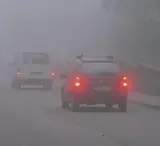
¿Se debe aumentar la distancia de seguridad cuando exista niebla?
Should you increase the safe distance when there is fog?
- ALa distancia no influye en la detención cuando hay niebla.Distance has no effect on stopping when there is fog.
- BSí, para tener más espacio para reaccionar ante cualquier frenada del vehículo que va delante.Yes, to have more room to react to any braking by the vehicle in front.
- CNo, si se llevan las luces encendidas.No, if your lights are on.
ExplanationWhen driving in fog, you must increase the safe distance. This gives you more room to react to any sudden braking, slowing down or manoeuvre by the vehicle in front, because you can only see the rear lights of the vehicle ahead, not the road or the obstacles and traffic situations its driver is facing.
Circulando por una autovía, ¿cuál será la velocidad máxima de un turismo que arrastra un remolque?
Driving on a dual carriageway (autovía), what is the maximum speed for a car towing a trailer?
- A90 km/h.90 km/h.
- B80 km/h.80 km/h.
- C100 km/h.100 km/h.
ExplanationUnder Article 48.1.a of the General Traffic Regulations (RGC), motor vehicles towing a trailer may drive at a maximum of 90 km/h on motorways (autopistas) and dual carriageways (autovías) and 80 km/h on conventional roads, whatever the mass of the trailer.
Si circula conduciendo una motocicleta en el interior de un túnel, ¿qué distancia de seguridad deberá guardar con el que le precede si no pretende adelantar?
If you are riding a motorcycle inside a tunnel, what safe distance must you keep from the vehicle in front if you do not intend to overtake?
- A150 metros como mínimo.At least 150 metres.
- BEl doble de la longitud del vehículo que va delante.Twice the length of the vehicle in front.
- C100 metros como mínimo.At least 100 metres.
ExplanationUnder Article 95 of the General Traffic Regulations, in a tunnel, if you do not intend to overtake, any vehicle of up to 3,500 kg, including a motorcycle, must keep at least 100 metres or 4 seconds from the one in front. Vehicles over 3,500 kg, 150 metres or 6 seconds.
Si delante de nosotros circula un camión a velocidad anormalmente reducida, perturbando gravemente la circulación, ¿podremos adelantarlo si para ello es necesario sobrepasar una línea continua?
If a lorry ahead of us is travelling at an abnormally low speed and seriously disrupting traffic, can we overtake it if we have to cross a continuous line to do so?
- ASí, porque se trataría de un rebasamiento.Yes, because it would count as passing, not overtaking.
- BNo.No.
- CSí, si el camión lleva encendida la señal de emergencia.Yes, if the lorry has its hazard warning lights on.
ExplanationWhile the lorry is moving, even at an abnormally low speed, the overtaking rules apply. If it were stationary, then we could pass it, even if we had to use the part of the carriageway for the opposite direction.
Si circulando percibimos la presencia de una persona invidente cerca de la calzada, ¿qué deberemos hacer?
If, while driving, we notice a blind person near the carriageway, what should we do?
- AAumentar la velocidad para pasar más pronto.Speed up to get past sooner.
- BTocar el claxon para indicar nuestra presencia.Sound the horn to show we are there.
- CModerar la velocidad.Slow down.
ExplanationWhen there are pedestrians near the carriageway, we must allow for the possibility that they may step onto it, so we must slow down and even stop the vehicle if necessary.
¿Qué distancia lateral debemos mantener al adelantar una bicicleta en un núcleo urbano?
What side distance must we keep when overtaking a bicycle in a built-up area?
- A1,5 metros como mínimo.At least 1.5 metres.
- B1,5 metros como máximo.At most 1.5 metres.
- CUna separación lateral suficiente para realizar la maniobra con seguridad, proporcional a la anchura de la vía y a la velocidad del adelantamiento.Enough side distance to do it safely, in proportion to the width of the road and the overtaking speed.
ExplanationArticle 85.4 of the General Traffic Regulations requires you to overtake cyclists leaving a safety gap of at least 1.5 metres, also in built-up areas. It is a minimum distance, not a maximum; if the carriageway has more than one lane in each direction, you must move completely into the other lane.
Un camión de hasta 3500 kg que circula por una carretera convencional, con arcén de 1,50 metros pavimentado, ¿a qué velocidad máxima podrá circular al adelantar?
A lorry of up to 3,500 kg is driving on a conventional road with a 1.50 m paved hard shoulder. What is its maximum speed when overtaking?
- A110 km/h.110 km/h.
- B100 km/h.100 km/h.
- C80 km/h.80 km/h.
ExplanationAccording to the table in Article 48.1.a of the General Traffic Regulations (RGC), a lorry may drive at a maximum of 80 km/h on a conventional road, whatever its mass and even if there is a hard shoulder. Since 21 March 2022 there is no longer a 20 km/h margin for overtaking, so it may not exceed 80 km/h when overtaking either.
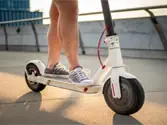
Conforme aumentamos la velocidad, la capacidad de percibir y reaccionar...
As we increase speed, our ability to perceive and react...
- ADisminuye.Decreases.
- BAumenta.Increases.
- CNo varía.Does not change.
ExplanationAs we increase speed, even though reaction time does not change, our ability to perceive and react to what happens on the road decreases, so the chances of making mistakes increase.
Circulando con un vehículo de hasta 3.500 kg sin remolque, si por una emergencia circula a velocidad anormalmente reducida y perturba la circulación, ¿debe utilizar el arcén?
You are driving a vehicle of up to 3,500 kg without a trailer. If, because of an emergency, you are driving at an abnormally low speed and disrupting traffic, must you use the hard shoulder?
- ANo, porque el vehículo pesa hasta 3.500 kg.No, because the vehicle weighs up to 3,500 kg.
- BSí, debe circular por el arcén si es transitable y suficiente.Yes, you must drive on the hard shoulder if it is usable and wide enough.
- CNo, el arcén solo puede utilizarse cuando se circula con remolque.No, the hard shoulder may only be used when towing a trailer.
ExplanationUnder Article 36 of the General Traffic Regulations, vehicles of up to 3,500 kg that, because of an emergency, are driving at an abnormally low speed and seriously disrupting traffic must use the hard shoulder on their right if it is usable and wide enough, or otherwise the part of the carriageway that is strictly necessary.
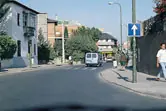
Si conduce su turismo por una travesía, ¿cuál será la velocidad máxima a la que puede circular?
If you are driving your car through a travesía (stretch of road through a town), what is the maximum speed at which you may travel?
- A40 km/hora.40 km/h.
- B50 km/hora.50 km/h.
- C60 km/hora.60 km/h.
ExplanationUnder Article 50 of the General Traffic Regulations, the general limit in travesías is 50 km/h for all types of vehicle. The local authority, in agreement with the road owner, may lower it with signs.
¿Cómo se llama la distancia que recorre un vehículo desde que se percibe un peligro hasta que pisamos el freno?
What is the name of the distance a vehicle travels from the moment a danger is seen until we press the brake?
- ADistancia de reacción.Reaction distance.
- BDistancia de frenado.Braking distance.
- CDistancia de parada.Stopping distance.
ExplanationThe time from when we notice a danger until we react is called the reaction time. So the distance travelled during that time is called the reaction distance. The braking distance is the distance we travel from the moment we press the brake, that is, from the end of the reaction distance, until the vehicle stops.
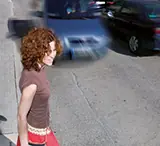
En ciudad, ¿es importante no circular a más de 50 kilómetros por hora?
In town, is it important not to drive at more than 50 kilometres per hour?
- ASí, para que, en caso de atropello, el peatón tenga más posibilidades de sobrevivir.Yes, so that if a pedestrian is hit, they have a better chance of surviving.
- BNo, sobre todo en las calles y avenidas anchas.No, especially on wide streets and avenues.
- CSí, pero sólo para no ser sancionado por exceso de velocidad.Yes, but only so as not to be fined for speeding.
ExplanationKeeping to the urban speed limit protects pedestrians above all: the higher the speed at which a pedestrian is hit, the more serious the injuries and the lower their chances of surviving. Also, 50 km/h is only the general limit on roads with two or more lanes in each direction; with a single lane in each direction it is 30 km/h (Article 50.1 of the RGC).
¿Qué cilindrada mínima deberán tener las motocicletas para ser consideradas como tal?
What is the minimum engine size for a motorcycle to be considered a motorcycle?
- AMás de 125 centímetros cúbicosMore than 125 cubic centimetres
- BMás de 1.000 centímetros cúbicosMore than 1,000 cubic centimetres
- CMás de 50 centímetros cúbicosMore than 50 cubic centimetres
ExplanationA motorcycle is considered a motorcycle, and not a moped, when its engine size is over 50 cubic centimetres. DGT definition: a two-wheeled motorcycle is a two-wheeled vehicle without a sidecar, with an engine of more than 50 cc if it is an internal combustion engine, and/or with a maximum design speed of more than 45 km/h.
Para conducir de forma más segura, es necesario...
To drive more safely, you need to...
- AConducir a una velocidad adecuada a las circunstancias.Drive at a speed appropriate to the circumstances.
- BInstalar más dispositivos de seguridad, como airbags.Fit more safety devices, such as airbags.
- CReducir la velocidad por debajo del mínimo establecido.Reduce your speed below the minimum set.
ExplanationTo drive more safely, it is essential to drive at an appropriate speed adapted to the road and environmental conditions. The traffic rules state that drivers must be able to control their vehicle at all times. Your speed must allow you to keep your attention and freedom of movement, which is essential for the safety of all road users. So the correct option is to drive at a speed appropriate to the circumstances, which lets you make safe decisions when conditions change.
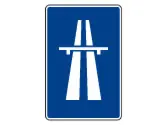
Para entrar en una autopista, ¿a qué velocidad debe circular?
To join a motorway (autopista), what speed should you drive at?
- AA la máxima velocidad permitida en la autopista.At the maximum speed allowed on the motorway.
- BSiempre muy despacio para entrar con seguridad.Always very slowly, to join safely.
- CA la velocidad adecuada que permita incorporarse con seguridad.At an appropriate speed that lets you join safely.
ExplanationA driver joining a motorway should do so at a speed suitable for the road, taking into account the position, path and speed of the road users already on it, and even stopping if necessary. They should then accelerate in the acceleration lane until reaching a suitable speed and join the motorway at the end of it.
¿Cuál es el límite máximo de velocidad circulando en una autovía dentro de poblado?
What is the maximum speed limit on a dual carriageway (autovía) inside a built-up area?
- A120 km/h.120 km/h.
- B80 km/h.80 km/h.
- C50 km/h.50 km/h.
ExplanationMaximum speed on a motorway (autopista) or dual carriageway (autovía): inside a built-up area, 80 km/h; outside built-up areas, 120 km/h.
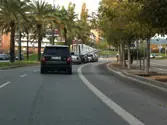
¿Qué distancia de seguridad debe dejar con el vehículo que circula delante en una vía urbana?
What safe distance must you leave from the vehicle in front on an urban road?
- A50 metros, como mínimo.At least 50 metres.
- BLa que además permita ser adelantado con seguridad.One that also allows you to be overtaken safely.
- CLa suficiente para no colisionar con él, en caso de frenazo brusco.Enough not to hit it if it brakes sharply.
ExplanationThe driver of a vehicle following another must leave a clear space between them that lets them stop, if the vehicle in front brakes suddenly, without hitting it, taking particular account of speed and grip and braking conditions. In addition, the gap kept by a driver following another vehicle without signalling an intention to overtake must be such that the vehicle behind them can in turn overtake them safely, except: in built-up areas; where overtaking is prohibited; where there is more than one lane in the same direction; when traffic is too heavy for overtaking; in the case of cyclists riding in a group.
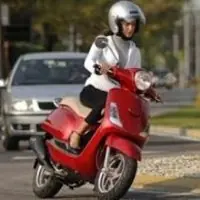
En una vía urbana con dos o más carriles por sentido, ¿cuál es la velocidad máxima permitida para motocicletas?
On an urban road with two or more lanes in each direction, what is the maximum speed allowed for motorcycles?
- A50 km/h.50 km/h.
- B30 km/h.30 km/h.
- C45 km/h.45 km/h.
ExplanationOn urban roads with two or more lanes in each direction the general limit is 50 km/h for all vehicles, including motorcycles (Article 50 of the General Traffic Regulations). The 30 km/h limit applies to roads with a single lane in each direction.
La velocidad a la que circula un vehículo, ¿influye en la distancia de reacción?
Does the speed at which a vehicle is travelling affect the reaction distance?
- ASí, será mayor.Yes, it will be longer.
- BSí, será menor.Yes, it will be shorter.
- CNo.No.
ExplanationThe reaction distance is the number of metres travelled during the reaction time. The higher the speed, the more metres are covered in the same time.
¿Por qué es recomendable respetar siempre el límite de velocidad en las vías urbanas?
Why is it advisable always to keep to the speed limit on urban roads?
- APorque el motor del vehículo consume menos combustible cuando funciona a altas revoluciones.Because the vehicle's engine uses less fuel when it runs at high revs.
- BPorque las sanciones por exceso de velocidad en vías urbanas suelen ser mayores que en vías interurbanas.Because fines for speeding on urban roads are usually higher than on non-urban roads.
- CPorque la mayoría de los atropellos mortales de peatones ocurren en vías urbanas.Because most fatal collisions with pedestrians happen on urban roads.
ExplanationMost fatal collisions with pedestrians happen on urban roads, where pedestrians, cyclists and junctions share the space. The lower the speed, the shorter the stopping distance and the less serious the injuries if a pedestrian is hit, so keeping to the limit in town saves lives.
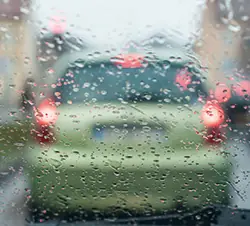
Cuando se circula con lluvia disminuye la visibilidad, sobre todo si la lluvia es fuerte. ¿Qué precauciones debe tomar?
When driving in rain, visibility is reduced, especially if the rain is heavy. What precautions must you take?
- ADebe aumentar la distancia de seguridad y reducir la velocidad.You must increase the safe distance and reduce your speed.
- BNo debe abrir las ventanillas para evitar que se empañen los cristales.You must not open the windows, to stop the glass from misting up.
- CDebe circular sobre las líneas o marcas blancas longitudinales de la carretera para mantener la trayectoria adecuada.You must drive on the white longitudinal lines or markings of the road to keep the right path.
ExplanationIn rain, visibility gets worse and water reduces grip, so the braking distance increases. You must reduce your speed and increase the safe distance. Driving on road markings is dangerous, because they become slippery when wet.
All topics
- Definitions
- Documents and penalty points
- The driver's condition
- Duties of drivers and pedestrians
- Vehicle safety devices
- Vehicle controls and equipment
- Vehicle lights and horn
- Traffic signs, markings and signals
- The road and its lanes
- Manoeuvres
- Right of way
- Carrying passengers and loads
- Driving safely in difficult conditions
- Vehicle mechanics and maintenance
- Road accidents and first aid
- Defensive and eco-driving
Independent app: not affiliated with or endorsed by the DGT (Spain's Directorate-General for Traffic) or the Ministry of the Interior. The official exam is booked with the DGT and taken at its test centres. The questions here are practice material; the DGT's official question bank is not public.
Basado en datos de la Agencia Estatal Boletín Oficial del Estado (https://www.boe.es). Textos consolidados de carácter meramente informativo. La AEBOE no patrocina ni respalda este sitio.
Parte de las preguntas procede de los tests de la revista «Tráfico y Seguridad Vial» de la DGT, reproducidos con indicación de la fuente.