
DGT test · 961 questions
Speed and distances · Page 20 of 20
Speed limits by road and vehicle type, adapting speed to conditions, safe following distance and stopping distance.
Questions in this topic, with answers
961 questions, 50 per page, with the correct answer and the explanation. Page 20 of 20.
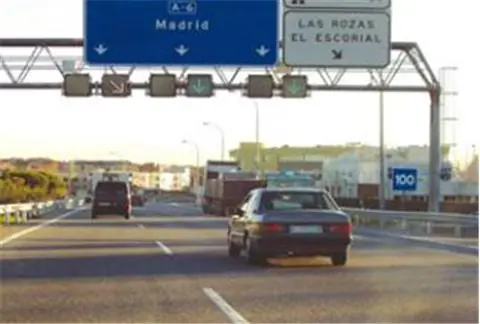
¿A qué velocidad como mínimo debe circular con un turismo en esta autovía?
What is the minimum speed at which you must drive a car on this dual carriageway (autovía)?
- AA una velocidad inferior a un tercio con respecto de la genérica de la vía.A speed lower than one third of the road's general speed limit.
- BA 80 km/h.80 km/h.
- CA 60 km/h.60 km/h.
ExplanationOn motorways (autopistas) and dual carriageways (autovías) you must not drive a motor vehicle at less than 60 km/h without a good reason (Article 49 of the General Traffic Regulations). The rule of half the general speed limit applies on other roads, not on these.
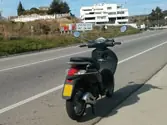
Un ciclomotor de dos ruedas es un vehículo con un motor de cilindrada...
A two-wheeled moped is a vehicle with an engine capacity of...
- Ano superior a 50 centímetros cúbicos y una velocidad máxima no superior a 45 km/h.no more than 50 cubic centimetres and a maximum speed of no more than 45 km/h.
- Binferior a 50 centímetros cúbicos.less than 50 cubic centimetres.
- Csuperior a 50 centímetros cúbicos si es de combustión interna.more than 50 cubic centimetres if it has an internal combustion engine.
ExplanationAccording to Annex II of the General Vehicle Regulations, a two-wheeled moped is a two-wheeled vehicle with an engine capacity of no more than 50 cm³, if it has an internal combustion engine, and a maximum design speed of no more than 45 km/h.
¿El nivel de capacidad del conductor viene determinado, en parte, por su formación?
Is the driver's level of ability determined, in part, by their training?
- ANo, sólo dependerá de su capacidad psicofísica.No, it only depends on their physical and mental ability.
- BNo, sólo dependerá de la velocidad.No, it only depends on speed.
- CSí.Yes.
ExplanationA driver's ability is determined by the training received while learning and by the experience gained over the kilometres driven and the situations they have faced. It also depends on the driver's physical and mental state at the time.
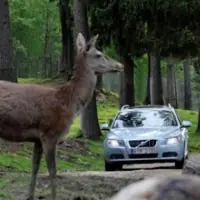
¿Cuál debe ser la separación lateral mínima al adelantar a un animal fuera de poblado?
What is the minimum lateral clearance when overtaking an animal outside built-up areas?
- A1,50 metros1.50 metres
- B2 metros2 metres
- C2,50 metros2.50 metres
ExplanationWhen overtaking pedestrians, animals, cyclists, mopeds or animal-drawn vehicles, you must leave a lateral clearance of at least 1.5 metres. Also, from 1 October 2026, outside built-up areas you must reduce your speed by at least 20 km/h below the road's limit during the manoeuvre.
¿Cuál es la velocidad máxima para adelantar circulando por un travesía?
What is the maximum speed for overtaking on a travesía?
- A70 km/h.70 km/h.
- B50 km/h.50 km/h.
- C80 km/h.80 km/h.
ExplanationOn a travesía, the maximum speed is 50 km/h in all cases.
¿Las motocicletas podrán rebasar la velocidad máxima para adelantar en las carreteras convencionales?
May motorcycles go over the speed limit to overtake on conventional roads?
- ASí, cuando adelanten a otros vehículos que circulen a velocidad inferior a la máxima permitida de la vía.Yes, when they overtake other vehicles travelling below the road's speed limit.
- BSí, siempre que puedan hacerlo con seguridad.Yes, as long as they can do so safely.
- CNo, en ningún caso.No, never.
ExplanationOn conventional roads, cars and motorcycles must not go over the set speed limit.
Una señal de velocidad máxima aconsejada colocada bajo una señal de curva peligrosa, ¿cuándo deja de aplicarse?
A recommended maximum speed sign placed under a dangerous bend sign: when does it stop applying?
- ACuando termine la curva.When the bend ends.
- BCuando encontremos una señal de fin de velocidad máxima aconsejada.When we find an end of recommended maximum speed sign.
- CCuando creamos conveniente.When we think it appropriate.
ExplanationWhen the recommended maximum speed sign is placed under a danger warning sign, the recommendation only refers to the stretch affected by that danger. So it stops applying when the bend ends, without the need for another sign.
Si nuestro vehículo circula por debajo de la velocidad mínima exigida, y hay peligro de alcance, pero no entorpece la circulación, usará la señal de emergencia y circulará por...
If our vehicle is travelling below the required minimum speed, there is a risk of being hit from behind, but it is not obstructing traffic, we use the hazard warning lights and drive on...
- Ala calzada.the carriageway.
- Bel arcén.the hard shoulder.
- Cno podremos circular.we may not drive.
ExplanationIf the vehicle cannot reach the required minimum speed and there is a risk of being hit from behind, it must be driven with the hazard warning lights on. If it is also obstructing traffic, we must drive on the hard shoulder; if not, we drive on the carriageway.
¿Cuál será la velocidad máxima permitida al circular por una vía dentro de poblado con dos o más carriles por sentido?
What is the maximum speed allowed on a road in a built-up area with two or more lanes in each direction?
- A60 km/h.60 km/h.
- B50 km/h.50 km/h.
- C40 km/h.40 km/h.
ExplanationOn urban roads the general limit depends on the number of lanes in each direction: 50 km/h with two or more, 30 km/h with a single lane, and 20 km/h on single-level streets where the carriageway and pavement are at the same level (Article 50.1 of the General Traffic Regulations (RGC)).
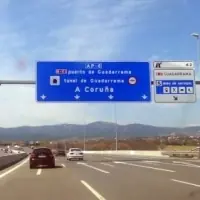
¿Qué vehículos pueden superar la velocidad máxima en autovías para adelantar?
Which vehicles may exceed the maximum speed on dual carriageways (autovías) to overtake?
- ASolamente los automóviles y las motocicletas.Only motor cars and motorcycles.
- BSolamente las motocicletas.Only motorcycles.
- CNingún vehículo puede superar la velocidad máxima.No vehicle may exceed the maximum speed.
ExplanationNo vehicle may exceed the road's maximum speed to overtake. The old possibility of exceeding it by 20 km/h (Article 51 of the General Traffic Regulations) was repealed by Law 18/2021.
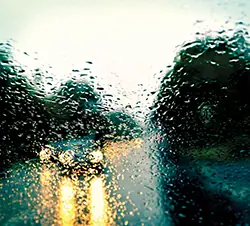
¿Está obligado a circular a una velocidad adecuada si las condiciones meteorológicas o ambientales son adversas?
Are you obliged to drive at an appropriate speed if the weather or environmental conditions are adverse?
- ASí, y si fuera preciso, debe detenerse sin riesgo para la circulación.Yes, and if necessary you must stop without creating a risk for traffic.
- BSí, siempre que se circule por vías de sentido único.Yes, as long as you are driving on one-way roads.
- CNo, si el vehículo dispone de todos los sistemas de seguridad más avanzados.No, if the vehicle has all the most advanced safety systems.
ExplanationThe Regulations require you to adapt your speed to adverse weather or environmental conditions and, if necessary, to stop in a safe place without creating a risk for traffic.
All topics
- Definitions
- Documents and penalty points
- The driver's condition
- Duties of drivers and pedestrians
- Vehicle safety devices
- Vehicle controls and equipment
- Vehicle lights and horn
- Traffic signs, markings and signals
- The road and its lanes
- Manoeuvres
- Right of way
- Carrying passengers and loads
- Driving safely in difficult conditions
- Vehicle mechanics and maintenance
- Road accidents and first aid
- Defensive and eco-driving
Independent app: not affiliated with or endorsed by the DGT (Spain's Directorate-General for Traffic) or the Ministry of the Interior. The official exam is booked with the DGT and taken at its test centres. The questions here are practice material; the DGT's official question bank is not public.
Basado en datos de la Agencia Estatal Boletín Oficial del Estado (https://www.boe.es). Textos consolidados de carácter meramente informativo. La AEBOE no patrocina ni respalda este sitio.
Parte de las preguntas procede de los tests de la revista «Tráfico y Seguridad Vial» de la DGT, reproducidos con indicación de la fuente.