
DGT test · 961 questions
Speed and distances · Page 5 of 20
Speed limits by road and vehicle type, adapting speed to conditions, safe following distance and stopping distance.
Questions in this topic, with answers
961 questions, 50 per page, with the correct answer and the explanation. Page 5 of 20.
¿Cuál es la velocidad máxima permitida en una vía urbana con dos carriles en el mismo sentido, si no existe señalización específica?
What is the maximum speed allowed on an urban road with two lanes in the same direction, if there are no specific signs?
- A30 km/h.30 km/h.
- B50 km/h.50 km/h.
- C60 km/h.60 km/h.
ExplanationOn urban roads without specific signs, the general limit depends on the road: 20 km/h on single-level streets where the carriageway and pavement are at the same level, 30 km/h with only one lane in each direction, and 50 km/h with two or more lanes in each direction (Article 50.1 of the General Traffic Regulations, RGC).
Desde 2022, para adelantar en una carretera convencional, ¿se puede superar en 20 km/h el límite de velocidad?
Since 2022, may you exceed the speed limit by 20 km/h to overtake on a conventional road?
- ASí, hasta 20 km/h por encima.Yes, by up to 20 km/h.
- BNo, ya no está permitido rebasar el límite para adelantar.No, exceeding the limit to overtake is no longer allowed.
- CSí, pero solo de noche.Yes, but only at night.
ExplanationSince March 2022 the +20 km/h margin for overtaking on conventional roads has been abolished; the limit must never be exceeded.
¿Cuál es la velocidad mínima a la que puede circular un turismo en una autovía?
What is the minimum speed at which a car may travel on a dual carriageway (autovía)?
- A80 km por hora80 km per hour
- B60 km por hora60 km per hour
- CA una velocidad inferior a un tercio respecto a la genérica de la víaA speed lower than one third of the road's general speed limit
ExplanationAccording to Article 49.1 of the General Traffic Regulations, on motorways (autopistas) and dual carriageways (autovías) you must not drive a motor vehicle at less than 60 km/h without a good reason. This is a fixed figure; the rule of half the general limit applies on other roads.
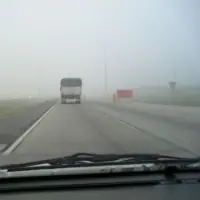
¿Cómo se llama el hecho de circular excesivamente despacio?
What is driving excessively slowly called?
- AVelocidad excesivamente reducidaExcessively reduced speed.
- BVelocidad ilimitadaUnlimited speed.
- CVelocidad anormalmente reducidaAbnormally reduced speed.
ExplanationDriving below the road's minimum speed without good reason, holding up others, is driving at an abnormally reduced speed (Article 49.1 of the General Traffic Regulations (RGC)). Exceeding the limits, on the other hand, is excessive speed.
¿El acusado desgaste de los neumáticos influye en la distancia de frenado?
Does heavy tyre wear affect the braking distance?
- ANo.No.
- BSí, aumenta la distancia de frenado así como la distancia de reacción.Yes, it increases the braking distance as well as the reaction distance.
- CSí, aumenta la distancia de frenado pero no aumenta la distancia de reacción.Yes, it increases the braking distance but not the reaction distance.
ExplanationWorn tyres grip less well, so they increase the braking distance. The reaction distance depends on the driver (their reaction time) and on speed, not on the condition of the tyres.
A 100 km/h se rompe el freno de pie. ¿Cómo puedes detener el vehículo?
At 100 km/h the footbrake fails. How can you stop the vehicle?
- ASolo con el freno de mano.Only with the handbrake.
- BBajando marchas y, al final, usando el freno de mano.By changing down through the gears and, at the end, using the handbrake.
- CPisar varias veces el pedal del embrague y el pedal del freno.By pressing the clutch pedal and the brake pedal several times.
ExplanationIf the service brake fails, you must reduce speed with engine braking, changing down through the gears progressively, and use the handbrake at the end and carefully so as not to lock the wheels. Pulling it at 100 km/h could cause a skid.
¿A qué velocidad máxima podrá circular una motocicleta por una carretera convencional con arcén afirmado y no pavimentado de 1,5 metros?
What is the maximum speed for a motorcycle on a conventional road with a 1.5-metre hard shoulder that is firm but not paved?
- AA 90 km/h.90 km/h.
- BA 100 km/h.100 km/h.
- CA 120 km/h.120 km/h.
ExplanationSince 2019 the general limit on conventional roads for cars and motorcycles has been 90 km/h, whatever the hard shoulder. The old limit of 100 km/h on conventional roads with a paved hard shoulder of 1.5 metres no longer exists (Article 48.1.a of the General Traffic Regulations).
En el interior de un túnel con varios carriles de circulación en su sentido, circula con su camión detrás de otro vehículo al que pretende adelantar, ¿qué separación deberá dejar entre ambos hasta iniciar el desplazamiento?
Inside a tunnel with several lanes in your direction, you are driving your lorry behind another vehicle that you intend to overtake. What gap must you leave between you until you start to pull out?
- A150 metros como máximo.150 metres at most.
- B100 metros como mínimo.At least 100 metres.
- CLa que permita detener el camión sin llegar a colisionar, en caso de frenado brusco del que va delante.One that allows you to stop the lorry without a collision if the vehicle in front brakes sharply.
ExplanationThe gap must allow you to stop the lorry without a collision if the vehicle in front brakes sharply. Inside a tunnel with several lanes in your direction, it is important to keep a proper safe distance so that you can stop the lorry without hitting the vehicle in front if it brakes sharply. Safety and accident prevention come first.
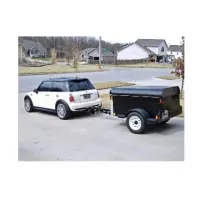
En una vía urbana con dos o más carriles por sentido, ¿cuál es la velocidad máxima permitida para un turismo con remolque?
On an urban road with two or more lanes in each direction, what is the maximum speed allowed for a car towing a trailer?
- A60 km/h.60 km/h.
- B50 km/h.50 km/h.
- C30 km/h.30 km/h.
ExplanationUnder Article 50 of the General Traffic Regulations, on urban roads with two or more lanes in each direction the general limit is 50 km/h for all vehicles, including those towing a trailer. With a single lane in each direction it is 30 km/h.
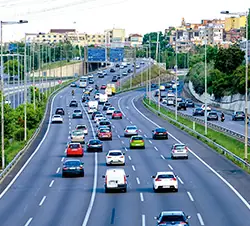
A falta de señalización, ¿cuál es la velocidad máxima permitida para una furgoneta cuando circule por una autovía que discurra dentro de poblado?
If there are no signs, what is the maximum permitted speed for a van on a dual carriageway (autovía) that runs through a built-up area?
- A80 km/h.80 km/h.
- B100 km/h.100 km/h.
- C90 km/h.90 km/h.
ExplanationOn motorways (autopistas) and dual carriageways (autovías) that run through built-up areas, the general limit is 80 km/h, which applies to the van because it is lower than the van's own maximum on these roads.
¿Qué distancia frontal mantendremos con el vehículo que nos precede dentro de poblado?
What distance in front should we keep from the vehicle ahead in a built-up area?
- A50 metros como mínimo.At least 50 metres.
- BLa distancia que nos permita detenernos sin colisionar con él.A distance that allows us to stop without hitting it.
- CDentro de poblado no es necesario mantener una distancia frontal de seguridad.In a built-up area, no safe distance in front needs to be kept.
ExplanationThe distance we keep from the vehicle ahead must be one that allows us, if we have to brake, to stop without hitting it.
En poblado, ¿qué distancia tenemos que mantener con el vehículo que nos precede?
In a built-up area, what distance must we keep from the vehicle in front?
- ALa que permita que una motocicleta nos adelante.A distance that allows a motorcycle to overtake us.
- B1,50 m. como mínimo.At least 1.50 m.
- CLa que permita detenerse en caso de frenado brusco sin colisionar con el vehículo que nos precede.A distance that allows us to stop if it brakes suddenly, without hitting the vehicle in front.
ExplanationIn built-up areas we must keep a safe distance from the vehicle in front that is enough to brake and stop without hitting it.
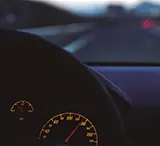
A mayor velocidad aumenta...
The higher the speed, the greater...
- ALa eficacia de los elementos de seguridad del vehículo.The effectiveness of the vehicle's safety features.
- BLa fatiga que puede aparecer durante la conducción.The fatigue that may appear while driving.
- CLa capacidad del conductor para anticiparse a las circunstancias del tráfico.The driver's ability to anticipate traffic situations.
ExplanationDriving fast requires a constant effort of attention and anticipation that tires you out sooner: high speed encourages fatigue, as well as narrowing the field of vision and reducing the time available to react.
Haciendo un trayecto largo en grupo, ¿qué tipo de motocicleta sería aconsejable que encabezara el grupo?
On a long group ride, which motorcycle should ideally lead the group?
- ASiempre la motocicleta más potente.Always the most powerful motorcycle.
- BLa de menor potencia.The least powerful one.
- CLa que disponga de mayor autonomía en cuanto a carburante.The one with the greatest fuel range.
ExplanationOn a long group ride, the least powerful motorcycle should ideally lead the group, because, being less powerful, it is easier to control and to keep at a steady speed. As it has less power, it is also less likely that dangerous overtaking situations will arise or that big speed differences will open up between the motorcycles in the group. This helps to keep the group together and safe during the journey.
¿Cuál es la velocidad máxima en vía urbana con dos carriles por sentido?
What is the maximum speed on a road in a built-up area with two lanes in each direction?
- A30 km/h30 km/h
- B40 km/h40 km/h
- C50 km/h50 km/h
ExplanationRoads in built-up areas with 2 or more lanes in each direction: 50 km/h.
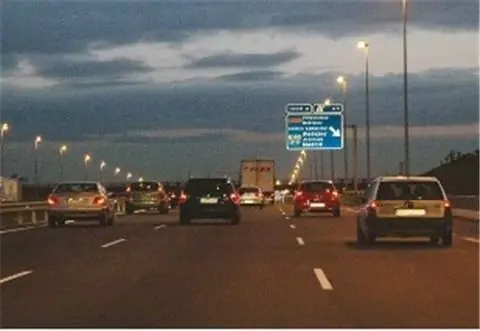
¿En qué caso debe aumentarse la distancia de seguridad?
In what case must the safe distance be increased?
- AAl preparar un adelantamiento.When preparing to overtake.
- BAl disminuir la velocidad de circulación de los vehículos.When vehicles' speed decreases.
- CAl aumentar la velocidad de circulación de los vehículos.When vehicles' speed increases.
ExplanationThe higher the speed, the more metres you travel during the reaction time and the longer the braking, so the safe distance must increase when speed goes up. It must also be increased in rain, fog or on a slippery surface.
¿Cuál es la velocidad máxima permitida para un vehículo especial que no tiene luces de freno al circular por una carretera convencional?
What is the maximum speed for a special vehicle without brake lights on a conventional road?
- A60 km/h.60 km/h.
- B40 km/h.40 km/h.
- C25 km/h.25 km/h.
ExplanationUnder Article 48.1.c of the General Traffic Regulations (RGC), a special vehicle that has no brake lights, is towing a trailer or is a two-wheel tractor (motocultor) may not exceed 25 km/h outside built-up areas, including on conventional roads.
¿Qué distáncia debe dejar un ciclomotor con el vehículo que le precede, cuando circule por poblado?
What distance must a moped leave from the vehicle in front when travelling in a built-up area?
- ALa suficiente para no colisionar con él.Enough not to collide with it.
- B50 metros.50 metres.
- CLa suficiente para no colisionar con él y además un espacio suficiente para otro vehículo en el caso de que sea adelantado.Enough not to collide with it, plus enough space for another vehicle in case the moped is overtaken.
ExplanationIn built-up areas you are not required to leave space for others to overtake or to keep 50 metres: the safe distance that lets you stop without crashing if the vehicle in front brakes suddenly is enough. This rule also applies to mopeds.
Si circulamos por una autopista a menos de 60 km/h...
If we are driving on a motorway (autopista) at less than 60 km/h...
- ANo podremos circular, debemos detenernos en el arcén y esperar a una grúa para que nos remolque.We may not drive; we must stop on the hard shoulder and wait for a tow truck.
- BCircularemos por el arcén.We drive on the hard shoulder.
- CCircularemos por la calzada siempre que no perturbemos gravemente la circulación.We drive on the carriageway, as long as we do not seriously disrupt traffic.
ExplanationIf we are driving at an abnormally low speed on a motorway (autopista), we do so on the carriageway. But if we seriously obstruct traffic, we must use the hard shoulder.

Cuando un conductor novel circule por una travesía, en su turismo, lo hará como máximo a una velocidad de...
When a novice driver drives their car through a travesía (stretch of road through a town), the maximum speed is…
- A50 Km/h.50 km/h.
- B40 Km/h.40 km/h.
- C80 Km/h.80 km/h.
ExplanationNovice drivers do not have their own speed limits: they must respect the general limits for each road. In travesías the general limit is 50 km/h for all types of vehicle (Article 50 of the General Traffic Regulations), unless a lower one is signed.
Un vehículo circula a velocidad inadecuada cuando...
A vehicle is travelling at an inappropriate speed when...
- Ano se adapta a las circunstancias ni del tráfico ni de la vía.it is not adapted to traffic or road conditions.
- Bse adapta a las condiciones de la vía pero supera los límites establecidos.it is adapted to road conditions but exceeds the set limits.
- Ccircula por debajo de la velocidad máxima y por encima de la mínima.it is below the maximum speed and above the minimum.
ExplanationWhen we drive at a speed that does not suit the weather, the road, the traffic, the vehicle or the driver's condition, we are driving at an inappropriate speed. Our speed may be within the limits allowed for the road, yet if a problem arises we may find it very hard to control the vehicle. For example, there are usually more accidents on rainy days because many drivers drive at the same speed as on a sunny day: the speed is permitted, but inappropriate for rain.
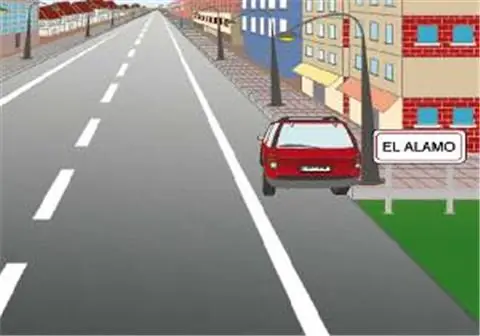
En una travesía sin señales de velocidad, ¿cuál es la velocidad máxima permitida?
On a travesía (stretch of road through a town) with no speed signs, what is the maximum speed allowed?
- A60 Km/h.60 km/h.
- B50 Km/h.50 km/h.
- C40 Km/h.40 km/h.
ExplanationAccording to Article 50 of the General Traffic Regulations (RGC), the general speed limit on travesías is 50 km/h for all types of vehicle. The local authority, in agreement with the road owner, may lower it with specific signs.
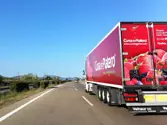
¿Qué separación respecto al vehículo que le precede, deberá mantener un vehículo de más de 3.500 kg de MMA, circulando por una carreta convencional, en un tramo en el que está permitido el adelantamiento?
What gap must a vehicle with a MAM of more than 3,500 kg keep from the vehicle in front on a conventional road, on a stretch where overtaking is allowed?
- ALa que le permita detenerse sin colisionar con el.One that allows it to stop without hitting it.
- B150m o 6 segundos.150 m or 6 seconds.
- CLa que le permita detenerse sin colisionar con él y que como mínimo será de 50m.One that allows it to stop without hitting it, and that will be at least 50 m.
ExplanationVehicles with a MAM of more than 3500 kg and those more than 10 m long must keep at least 50 m from the vehicle in front, except: when overtaking is prohibited; when there is more than one lane in each direction; when traffic is saturated; in built-up areas.
¿Cuál será la velocidad máxima a la que podrá circular por una autopista dentro de poblado un turismo que arrastre un remolque?
What is the maximum speed at which a car towing a trailer may travel on a motorway (autopista) inside a built-up area?
- A90 km/h.90 km/h.
- B80 km/h.80 km/h.
- C70 km/h.70 km/h.
ExplanationOn a motorway (autopista) or dual carriageway (autovía) inside a built-up area, the maximum speed is 80 km/h, whatever the vehicle.
¿Cuál es la velocidad máxima genérica a la que podemos circular con nuestro turismo en una vía urbana con un carril por sentido?
What is the general maximum speed at which we may drive our car on an urban road with one lane in each direction?
- A20 km/h.20 km/h.
- B30 km/h.30 km/h.
- C50 km/h.50 km/h.
ExplanationThe general speed limit on urban roads is: 20 km/h on single-level streets where the carriageway and pavement are at the same level; 30 km/h on roads with only one lane in each direction; 50 km/h on roads with two or more lanes in each direction. Lanes reserved for certain users or only for public transport are not counted for this purpose.
¿Se puede superar la velocidad máxima indicada en una señal de limitación de velocidad?
Can you go faster than the maximum speed shown on a speed limit sign?
- ASí, hasta 20 km/h para adelantar.Yes, by up to 20 km/h to overtake.
- BNo.No.
- CSí, si las circunstancias lo permiten.Yes, if the circumstances allow it.
ExplanationThe maximum speed sign (R-301) prohibits driving faster than the speed shown while it applies. You may not exceed it to overtake, because the 20 km/h margin in the former Article 51 of the RGC has been repealed, nor because the circumstances seem favourable: circumstances can only require you to go more slowly.
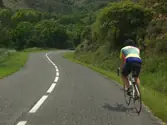
¿Es correcto adelantar a un ciclista fuera de poblado dejando 1,5 metros de separación lateral?
Is it correct to overtake a cyclist outside a built-up area leaving a side gap of 1.5 metres?
- ASí.Yes.
- BNo.No.
- CNo, la separación mínima es de 2 metros.No, the minimum gap is 2 metres.
ExplanationYes. According to Article 85.4 of the General Traffic Regulations (RGC), as worded by Royal Decree 518/2026, when overtaking cyclists you must leave a safe side gap of at least 1.5 metres, both inside and outside built-up areas. Outside built-up areas, you must also reduce your speed by at least 20 km/h below the road's limit.
¿Cuál será la velocidad máxima a la que podrá circular un turismo por una carretera convencional?
What is the maximum speed at which a car may travel on a conventional road?
- A90 km/h.90 km/h.
- B100 km/h.100 km/h.
- C120 km/h.120 km/h.
ExplanationOn a conventional road the speed allowed for cars is 90 km/h.
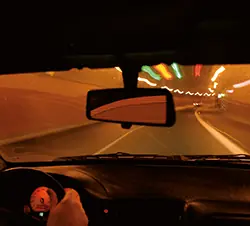
En un túnel, ¿qué distancia de seguridad mínima debe mantener el conductor de un turismo con el vehículo de delante si no pretende adelantar?
In a tunnel, what minimum safe distance must a car driver keep from the vehicle in front if they do not intend to overtake?
- A100 metros o un intervalo de 4 segundos.100 metres or a gap of 4 seconds.
- B50 metros o un intervalo de 3 segundos.50 metres or a gap of 3 seconds.
- C200 metros o un intervalo de 10 segundos.200 metres or a gap of 10 seconds.
ExplanationIn tunnels, if you do not intend to overtake, vehicles up to 3,500 kg must keep at least 100 metres or 4 seconds from the vehicle in front, so that they can stop safely in an enclosed space.
¿Cuál es la velocidad mínima genérica en autopista o autovía para turismos?
What is the general minimum speed for cars on a motorway (autopista) or dual carriageway (autovía)?
- A40 km/h.40 km/h.
- B60 km/h.60 km/h.
- C80 km/h.80 km/h.
ExplanationArticle 49.1 of the General Traffic Regulations prohibits driving motor vehicles at less than 60 km/h on motorways (autopistas) and dual carriageways (autovías). It is a fixed figure for these roads; on other roads, the minimum is half the general speed limit for each category of vehicle.
Circulando sin intención de adelantar, ¿en qué caso debemos mantener una distancia no inferior a 100 metros con el vehículo de delante?
When not intending to overtake, in which case must we keep a distance of no less than 100 metres from the vehicle in front?
- AAl circular por un paso a nivel sin barreras.When driving over a level crossing without barriers.
- BAl circular por un paso elevado.When driving over a flyover.
- CAl circular por un túnel.When driving through a tunnel.
ExplanationWhen driving through tunnels and underpasses, if we do not intend to overtake, we will keep a distance of at least 100 metres, or a minimum gap of 4 seconds, from the vehicle in front.
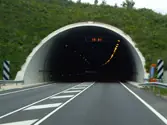
¿Cuál será la distancia de seguridad dentro de un túnel, cuando no se pretende adelantar?
Inside a tunnel, when you do not intend to overtake, what is the safe distance?
- A100 metros como mínimo.At least 100 metres.
- B150 metros como mínimo.At least 150 metres.
- C200 metros como mínimo.At least 200 metres.
ExplanationIn tunnels and underpasses, when you do not intend to overtake, you must keep a distance of at least 100 metres or a gap of at least 4 seconds.
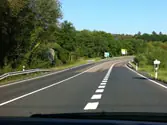
¿Qué distancia lateral tendremos que mantener al adelantar a un ciclomotor fuera de poblado?
What sideways distance must we keep when overtaking a moped outside built-up areas?
- ALa suficiente para hacer el adelantamiento con seguridad.Enough to overtake safely.
- B1,50 metros como mínimo.At least 1.50 metres.
- C1,50 metros como máximo.No more than 1.50 metres.
ExplanationUnder Article 85.4 of the General Traffic Regulations (RGC) (as worded by RD 518/2026), when overtaking a moped you must leave a safety gap of at least 1.5 metres. Outside built-up areas, you must also reduce your speed by at least 20 km/h below the road's speed limit.
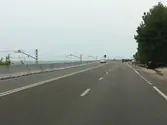
Por esta carretera convencional, ¿cuál es la velocidad máxima a la que puede adelantar un vehículo turismo?
On this conventional road, what is the maximum speed at which a car may overtake?
- AA 90 km/h.90 km/h.
- BA 100 km/h.100 km/h.
- CA 110 km/h.110 km/h.
ExplanationOn a conventional road, the general limit for a car is 90 km/h. Since 21 March 2022, under Law 18/2021, it is no longer allowed to exceed the maximum speed by 20 km/h to overtake, so you may not go over 90 km/h even when overtaking.
Circulando con lluvia la distancia de frenado...
When driving in the rain, the braking distance...
- AAumenta.increases.
- BDisminuye.decreases.
- CEs menor.is shorter.
ExplanationWhen driving in the rain, the distance needed to brake and stop the vehicle increases, because grip is reduced.
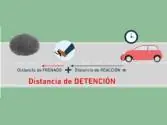
¿En qué caso es mayor la distancia de detención?
In which case is the stopping distance longer?
- ACuando la calzada está mojada.When the carriageway is wet.
- BCuando la calzada está seca.When the carriageway is dry.
- CCuando sopla viento lateral.When there is a side wind.
ExplanationThe stopping distance is longer when the carriageway is wet, because this makes the road surface more slippery and reduces the tyres' grip on the road. On a wet carriageway, a vehicle needs a longer distance to come to a complete stop after braking than on a dry one. This is because the friction between the tyres and the road is lower in wet conditions, which increases the time and distance needed to stop safely. So when driving in the rain, it is important to increase your safe distance and reduce your speed to make up for the longer stopping distance and drive safely.
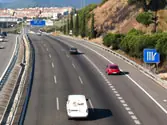
Si por una avería circulamos por la autopista a velocidad anormalmente reducida, perturbando gravemente la circulación...
If, because of a breakdown, we are driving on the motorway (autopista) at an abnormally low speed and seriously disrupting traffic...
- Acontinuaremos circulando por la calzada, y saldremos por la primera salida.we carry on driving on the carriageway and leave at the first exit.
- Bcontinuaremos circulando por la calzada, saliendo por la primera salida, si no hay peligro de alcance.we carry on driving on the carriageway and leave at the first exit, if there is no risk of being hit from behind.
- CContinuaremos circulando por el arcén, saliendo por la primera salida.we carry on driving on the hard shoulder and leave at the first exit.
ExplanationIf we are driving at an abnormally low speed and seriously disrupting traffic, we must drive on the hard shoulder and leave the motorway at the first exit.
Después de pasar una señal de entrada a poblado, por una vía urbana con dos o más carriles por sentido y sin otra señalización, ¿a qué velocidad máxima podremos ir?
After passing a sign marking the entrance to a built-up area, on an urban road with two or more lanes in each direction and no other signs, what is the maximum speed at which we may drive?
- A40 km/h.40 km/h.
- B50 km/h.50 km/h.
- C60 km/h.60 km/h.
ExplanationOnce you have passed the built-up area sign, the urban limits of Article 50 of the General Traffic Regulations apply: 50 km/h on roads with two or more lanes in each direction, 30 km/h with a single lane in each direction and 20 km/h on a single-level (shared) street.
¿Las condiciones meteorológicas pueden influir en la distancia de frenado?
Can weather conditions affect braking distance?
- ANo, la distancia de frenado solo depende de la velocidad.No, braking distance depends only on speed.
- BSí.Yes.
- CSi, en condiciones meteorológicas adversas la distancia de frenado disminuye.Yes, in bad weather braking distance gets shorter.
ExplanationBraking distance is the distance the vehicle travels from the moment the driver applies the brake until it stops. It can vary depending on: the speed you are travelling at; the condition of the vehicle's tyres, suspension and brakes; the vehicle's load; the condition of the road surface; the weather conditions on the road. On a wet surface, braking distance can be up to twice as long as on a dry surface, and up to ten times longer when there is ice on the carriageway.
Conforme vamos aumentando la velocidad a la que circulamos...
As we increase the speed at which we are driving...
- AMiraremos más lejos por delante de nuestro vehículo.We will look further ahead of our vehicle.
- BObservaremos más veces los espejos retrovisores exteriores.We will check the exterior rear-view mirrors more often.
- CMiraremos hacia atrás con más frecuencia.We will look behind more often.
ExplanationWhen speed increases, the reaction and braking distances also increase, so we will look further and further ahead of the vehicle in order to keep our ability to anticipate. For example, at 40 km/h we travel 11 metres in one second; at 80 km/h we travel 22 metres every second.
Al adelantar con una motocicleta a otro vehículo fuera de poblado, ¿qué separación lateral debe mantener?
When overtaking another vehicle on a motorcycle outside built-up areas, what side clearance must you keep?
- AUn espacio no inferior a 1,50 metros.A gap of no less than 1.50 metres.
- BUna distancia proporcional a la velocidad a la que circule.A distance in proportion to the speed you are travelling at.
- CUna separación que considere segura en función de las circunstancias del momento.A gap you consider safe given the circumstances at the time.
ExplanationUnder Article 85 of the General Traffic Regulations, the rider of a two-wheeled vehicle overtaking outside built-up areas must leave a gap of at least 1.5 metres between themselves and the vehicle being overtaken.
Si circulamos en grupo con otros conductores de motocicleta, ¿qué distancia de seguridad mantendremos con la motocicleta que circula delante de nosotros si no pretendemos adelantar?
If you are riding in a group with other motorcyclists, what safe distance should you keep from the motorcycle in front if you do not intend to overtake?
- AAquella que en caso de frenada brusca del conductor que va delante me permita detenerme sin colisionar y que permita adelantarme a otro vehículo que me siga.One that lets me stop without a collision if the rider in front brakes sharply, and that lets a vehicle behind me overtake me.
- BEl doble de la distancia aconsejada a mantener con un turismo.Twice the distance advised when following a car.
- CAquella que favorezca al máximo el control aerodinámico de la motocicleta.One that gives the motorcycle the best possible aerodynamic control.
ExplanationYou should keep a distance that lets you stop without a collision if the rider in front brakes sharply, and that also lets a vehicle behind you overtake you. This is important for your safety and the safety of other road users. Keeping a proper safe distance gives you the time and space you need to react to any unexpected situation.
¿El nivel de capacidad del conductor vendrá determinado en parte por su formación?
Is the driver's level of ability determined partly by their training?
- ANo, sólo dependerá de su capacidad psicofísica.No, it only depends on their physical and mental ability.
- BNo, sólo dependerá de la velocidad.No, it only depends on speed.
- CSí.Yes.
ExplanationA driver's ability is determined by several factors, including training and experience at the wheel, and also their physical and mental state.
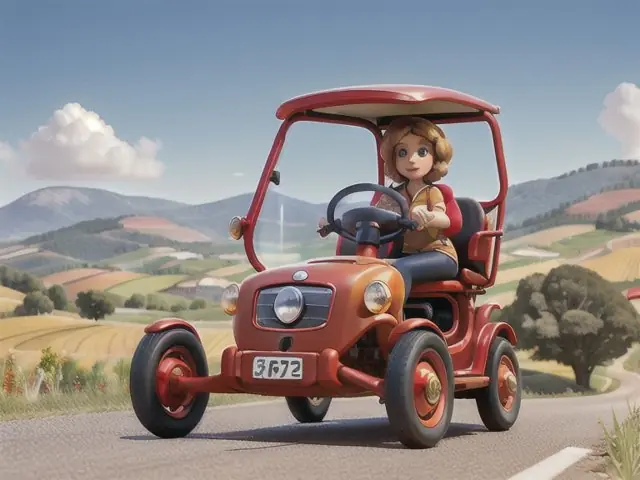
¿Cuál es la velocidad máxima a la que puede circular un cuadriciclo ligero fuera de poblado?
What is the maximum speed for a light quadricycle outside built-up areas?
- A45Km/h.45 km/h.
- B70Km/h.70 km/h.
- C60Km/h.60 km/h.
ExplanationThe maximum speed for a light quadricycle is 45 km/h. For three-wheeled vehicles, including non-light quadricycles, it is 70 km/h.
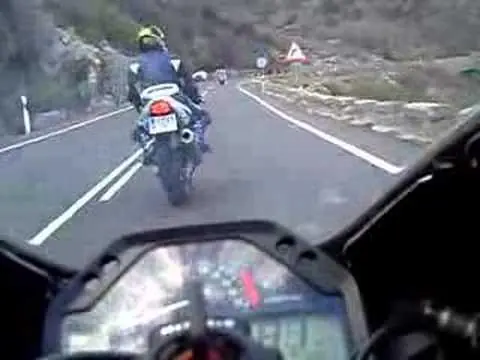
En una carretera convencional con separación física de los dos sentidos de circulación, ¿qué velocidad máxima puede fijar el titular de la vía para las motocicletas?
On a conventional road where the two directions of traffic are physically separated, what maximum speed may the road owner set for motorcycles?
- A80 kilómetros por hora.80 kilometres per hour.
- B100 kilómetros por hora.100 kilometres per hour.
- C90 kilómetros por hora.90 kilometres per hour.
ExplanationThe general limit on conventional roads for cars and motorcycles is 90 km/h. If the two directions are physically separated, the road owner may set a maximum of 100 km/h for these vehicles (Article 48 of the General Traffic Regulations).
En condiciones normales, la velocidad adecuada está siempre...
In normal conditions, the appropriate speed is always...
- Apor debajo de la velocidad mínima.below the minimum speed.
- Bpor encima de la velocidad máxima y por debajo de la mínima.above the maximum speed and below the minimum.
- Cpor encima de la velocidad mínima y por debajo de la máxima.above the minimum speed and below the maximum.
ExplanationThe appropriate speed can never exceed the maximum allowed and, in normal conditions, should not be below the minimum either, because driving abnormally slowly obstructs traffic and creates risks. Within that range, it is adapted to the road, the traffic and the conditions.
¿Cómo debe circular en la autopista?
How must you drive on the motorway (autopista)?
- AAdaptando la velocidad al tráfico y sin superar los 120 km/h.Adapting your speed to the traffic and without exceeding 120 km/h.
- BSiempre a la velocidad máxima permitida.Always at the maximum speed allowed.
- CA 110 km/h y, si es necesario, a mayor velocidad para adelantar.At 110 km/h and, if necessary, faster to overtake.
ExplanationOn a motorway (autopista) you must adapt your speed to the traffic and the conditions without exceeding the maximum of 120 km/h for cars (Articles 45 and 48 of the General Traffic Regulations). You are not required to drive at the maximum all the time, and the limit may not be exceeded to overtake either.
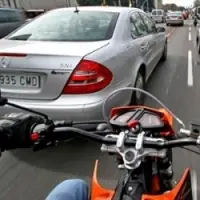
En vía urbana, si una motocicleta adelanta a un turismo, ¿qué separación lateral está obligada a dejar?
On an urban road, if a motorcycle overtakes a car, what lateral clearance must it leave?
- A2,50 metros como mínimo, por tratarse de vía urbana.At least 2.50 metres, because it is an urban road.
- B1,50 metros como mínimo, igual que fuera de poblado.At least 1.50 metres, the same as outside built-up areas.
- CUna separación lateral suficiente para realizarlo con seguridad.Enough lateral clearance to overtake safely.
ExplanationUnder Article 85.1 of the General Traffic Regulations, during overtaking you must leave enough lateral clearance between the two vehicles to do it safely. The minimum clearance of 1.50 metres applies to two-wheeled vehicles overtaking outside built-up areas (Art. 85.5) and when overtaking cyclists, mopeds, pedestrians or personal mobility vehicles (Art. 85.4).
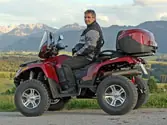
En una carretera convencional, ¿a qué velocidad máxima puede circular un cuatriciclo pesado?
On a conventional road, what is the maximum speed for a heavy quadricycle?
- AA 70 km/h.70 km/h.
- BA 80 km/h.80 km/h.
- CA 90 km/h.90 km/h.
ExplanationUnder Article 48.1.h of the General Traffic Regulations (RGC), quadricycles that are not light quadricycles have a limit of 70 km/h on any type of road where they are allowed. Light quadricycles, on the other hand, are limited to 45 km/h outside built-up areas (Article 48.1.e).
¿Cuál será la velocidad máxima para un vehículo mixto adaptable en una travesía?
What is the maximum speed for an adaptable mixed-use vehicle in a travesía (a stretch of road through a town)?
- A50 km/h.50 km/h.
- B60 km/h.60 km/h.
- C70 km/h.70 km/h.
ExplanationThe general limit in a travesía is 50 km/h for all types of vehicles, including adaptable mixed-use vehicles (Article 50.5 of the General Traffic Regulations). It can only be lowered by agreement between the local authority and the road owner, with signs.
All topics
- Definitions
- Documents and penalty points
- The driver's condition
- Duties of drivers and pedestrians
- Vehicle safety devices
- Vehicle controls and equipment
- Vehicle lights and horn
- Traffic signs, markings and signals
- The road and its lanes
- Manoeuvres
- Right of way
- Carrying passengers and loads
- Driving safely in difficult conditions
- Vehicle mechanics and maintenance
- Road accidents and first aid
- Defensive and eco-driving
Independent app: not affiliated with or endorsed by the DGT (Spain's Directorate-General for Traffic) or the Ministry of the Interior. The official exam is booked with the DGT and taken at its test centres. The questions here are practice material; the DGT's official question bank is not public.
Basado en datos de la Agencia Estatal Boletín Oficial del Estado (https://www.boe.es). Textos consolidados de carácter meramente informativo. La AEBOE no patrocina ni respalda este sitio.
Parte de las preguntas procede de los tests de la revista «Tráfico y Seguridad Vial» de la DGT, reproducidos con indicación de la fuente.