
DGT test · 961 questions
Speed and distances · Page 13 of 20
Speed limits by road and vehicle type, adapting speed to conditions, safe following distance and stopping distance.
Questions in this topic, with answers
961 questions, 50 per page, with the correct answer and the explanation. Page 13 of 20.
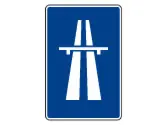
¿Cuál será la velocidad máxima en autopista para un camión que arrastra un remolque?
What is the maximum speed on a motorway (autopista) for a lorry towing a trailer?
- A100 km/h.100 km/h.
- B90 km/h.90 km/h.
- C80 km/h.80 km/h.
ExplanationOn a motorway (autopista), the maximum speed of any motor vehicle towing a trailer is 90 km/h, whether the trailer is light (MAM up to 750 kg) or heavy (MAM over 750 kg).
¿Cuál será la velocidad máxima a la que podrá circular por una travesía un camión de 3.500 kg de MMA?
What is the maximum speed at which a lorry with a maximum authorised mass (MAM) of 3,500 kg may travel on a travesía (stretch of road through a town)?
- A90 km/h.90 km/h.
- B50 km/h.50 km/h.
- C60 km/h.60 km/h.
ExplanationTravesías are roads inside built-up areas, so they have a maximum speed limit of 50 km/h.
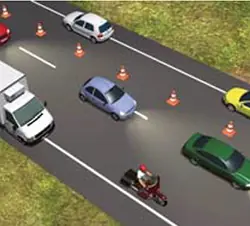
En esta vía se ha habilitado un carril adicional circunstancial, ¿a qué velocidad, como mínimo, deberán circular por dicho carril?
A temporary additional lane has been set up on this road. What is the minimum speed in that lane?
- A60 km/h o inferior si así estuviese señalizado.60 km/h, or lower if signed.
- B80 km/h.80 km/h.
- CA la mitad de la genérica señalada para cada categoría de vehículos.Half the general speed limit for each category of vehicle.
ExplanationUnder Article 42.1 of the General Traffic Regulations, in a temporary additional lane and on hard shoulders opened to traffic, the maximum speed is 80 km/h and the minimum is 60 km/h, or lower speeds if so established or signed, with at least the dipped headlights on day and night.
En una autopista de tres carriles por sentido, ¿qué distancia de seguridad debe dejar un turismo respecto al vehículo que circula delante?
On a motorway (autopista) with three lanes in each direction, what safe distance must a car leave from the vehicle in front?
- A50 metros.50 metres.
- BLa que permita detener el vehículo en caso de frenazo y que deje espacio para que otros lo adelanten con seguridad.One that allows you to stop if you brake sharply and leaves room for others to overtake you safely.
- CLa que permita detener el vehículo si el que va delante frena de forma brusca, sin colisionar con él.One that allows you to stop without hitting the vehicle in front if it brakes sharply.
ExplanationArticle 54.1 of the General Traffic Regulations requires you to leave a space from the vehicle in front that allows you to stop, if it brakes sharply, without hitting it. The extra space for others to overtake does not apply where there is more than one lane in the same direction (Article 54.3.c).
Por una autopista, ¿a qué velocidad máxima podrá circular un turismo que arrastra un remolque de más de 750 kilos?
On a motorway (autopista), what is the maximum speed for a car towing a trailer of more than 750 kg?
- AA 100 km/h.100 km/h.
- BA 90 km/h.90 km/h.
- CA 80 km/h.80 km/h.
ExplanationOn motorways (autopistas) and dual carriageways (autovías), the maximum speed for a car towing a trailer is 90 km/h, whatever the trailer weighs.
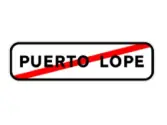
¿A qué velocidad como máximo podremos circular en el preciso instante en el que observamos esta señal?
What is the maximum speed we may drive at at the exact moment we see this sign?
- A50 km/h.50 km/h.
- B90 km/h.90 km/h.
- C110 km/h.110 km/h.
ExplanationUntil we pass the sign marking the end of the built-up area, we are still inside it, so the road limits for outside built-up areas do not apply yet. Of the options, only 50 km/h is possible: it is the general limit on travesías and on urban roads with two or more lanes in each direction (on roads with only one lane in each direction it would be 30 km/h).
¿Qué distancia tenemos que mantener con el vehículo que nos precede dentro de un túnel?
What distance must we keep from the vehicle in front inside a tunnel?
- ALa que permita detenernos sin colisionar con el vehículo que nos precede.One that allows us to stop without hitting the vehicle in front.
- B100 metros como mínimo.At least 100 metres.
- C150 metros como mínimo.At least 150 metres.
ExplanationThe safe distance we must keep inside a tunnel is at least 100 metres, which is the same as a gap of 4 seconds.
En caso de circular en condiciones de adherencia precarias, mantendremos una distancia de seguridad...
When driving in poor grip conditions, we will keep a safe distance that is...
- AComo mínimo de 100 metros.At least 100 metres.
- BMayor que en condiciones normales.Greater than in normal conditions.
- CMenor que en condiciones normales.Smaller than in normal conditions.
ExplanationIn general we must always keep a safe distance of at least 2 seconds from the vehicle in front in urban areas and 3 seconds on open roads. This safe distance lets us react in good time and make the most appropriate decisions in unexpected situations. However, in certain circumstances, such as driving in poor grip conditions, we must increase this safe distance by at least one more second.
¿En qué vías es obligatorio mantener una distancia de seguridad con el vehículo que nos precede para permitir que otro vehículo nos adelante?
On which roads must we keep a distance from the vehicle in front that allows another vehicle to overtake us?
- AEn vías interurbanas con más de 2 carriles por sentido.On interurban roads with more than 2 lanes in each direction.
- BEn autopistas y autovías.On motorways (autopistas) and dual carriageways (autovías).
- CEn carreteras con un carril para cada sentido.On roads with one lane in each direction.
ExplanationThe distance to make overtaking easier applies on roads outside built-up areas where overtaking is allowed, where there is no more than one lane in the same direction, and when traffic is not congested. In these cases, as well as the safe distance, we must leave a gap that lets the vehicle behind us overtake safely.
Al conducir por una carretera resbaladiza por la lluvia, ¿debe reducir la velocidad?
When driving on a road made slippery by rain, must you slow down?
- ASí, siempre.Yes, always.
- BNo, si hay poco tráfico.No, if there is little traffic.
- CSolo al cruzarse con otro vehículo que circula en sentido contrario.Only when passing another vehicle coming the other way.
ExplanationArticle 46.1.g of the General Traffic Regulations requires you to slow down when driving on a slippery surface or when water could be splashed onto other road users. On a wet road, grip is reduced and braking distance increases, whether or not there is traffic.
¿Cuál será la velocidad máxima de un turismo que arrastra un remolque de 700 kg de MMA, circulando por una autopista?
What is the maximum speed of a car towing a trailer with a maximum authorised mass (MAM) of 700 kg on a motorway (autopista)?
- A100 km/h.100 km/h.
- B90 km/h.90 km/h.
- C80 km/h80 km/h.
ExplanationOn motorways (autopistas) and dual carriageways (autovías), motor cars towing a trailer have a general limit of 90 km/h, whatever the mass of the trailer (Article 48.1.a of the General Traffic Regulations (RGC)). Since 2019 there is no longer an 80 km/h limit for trailers of more than 750 kg.
¿Qué distancia tenemos que mantener cuando circulamos detrás de otro vehículo?
What distance must we keep when driving behind another vehicle?
- A100 metros como mínimo .At least 100 metres.
- B150 metros como mínimo .At least 150 metres.
- CLa distancia que permita detenernos en caso de frenado brusco sin colisionar con el vehículo que nos precede.A distance that allows us to stop without hitting the vehicle in front if it brakes sharply.
ExplanationWhen driving behind another vehicle, we must leave a distance that allows us to stop without hitting it if it brakes sharply. When driving through a tunnel or underpass with no intention of overtaking, we must keep a distance of at least 100 metres, or a gap of four seconds, from the vehicle in front.
¿De qué factores dependerá la distancia de reacción?
What factors does the reaction distance depend on?
- ASolamente de la velocidad del vehículo.Only on the vehicle's speed.
- BSolamente del tiempo de reacción del conductor.Only on the driver's reaction time.
- CDe la velocidad del vehículo y del tiempo de reacción del conductor.On the vehicle's speed and the driver's reaction time.
ExplanationThe reaction distance is the number of metres travelled during the time it takes us to react, so both the speed and the time taken to react play a part. For example, if we are driving at 40 km/h and take 1 second to react, the reaction distance will be 11 metres.
Una autocaravana con una Masa Máxima Autorizada (MMA) de 3600 kg, ¿a qué velocidad máxima puede circular por una carretera convencional?
What is the maximum speed at which a motorhome with a maximum authorised mass (MAM) of 3,600 kg may travel on a conventional road?
- A100 km/h100 km/h
- B80 km/h80 km/h
- C90 km/h90 km/h
ExplanationOn a conventional road, motorhomes with a MAM of more than 3,500 kg, such as this one of 3,600 kg, have a general limit of 80 km/h. Those of 3,500 kg or less may travel at 90 km/h, the same as cars (Article 48.1.a of the General Traffic Regulations (RGC)).
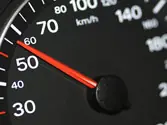
La pérdida de la sensación de velocidad...
Losing the sense of speed...
- AHace que disminuya la sensación de monotonía.reduces the feeling of monotony.
- BEs un síntoma de fatiga.is a symptom of fatigue.
- CEs consecuencia de una conducción deportiva.is the result of sporty driving.
ExplanationThere are many symptoms of fatigue, such as losing the sense of speed, not keeping a gap between vehicles, constantly shifting in the seat, or feeling pressure in the head and temples. The most important rules to avoid an accident caused by sleepiness or fatigue are: - If we feel tired or sleepy while driving, the best thing is to stop and rest in a suitable place and sleep for about 20 or 30 minutes. - Rest for 20 to 30 minutes at least every 2 hours or every 200 kilometres. - Always watch out for the signs and symptoms of sleepiness or fatigue.
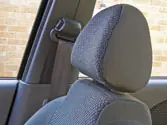
¿A qué distancia de la cabeza tendremos que regular el reposacabezas?
How far from the head should we adjust the head restraint?
- AComo mínimo tendrá que estar a 40 cm de la cabeza.It must be at least 40 cm from the head.
- BComo máximo tendrá que estar a 40 cm de la cabeza.It must be no more than 40 cm from the head.
- CComo máximo a 4 cm de la cabeza.No more than 4 cm from the head.
ExplanationThe gap between the head restraint and the driver's head must be as small as possible and never more than 4 centimetres.
Si su vehículo se avería en la autopista y tiene que circular a velocidad inferior a 60 km/h, ¿por dónde lo hará?
If your vehicle breaks down on the motorway (autopista) and has to travel at less than 60 km/h, where should it travel?
- APor la calzada si no perturbo gravemente la circulación.On the carriageway, if I do not seriously disrupt traffic.
- BPor el arcén siempre.Always on the hard shoulder.
- CNo podría circular tendría que pararme.I could not drive on; I would have to stop.
ExplanationIf we are travelling at an abnormally low speed on a motorway (autopista), that is, below 60 km/h, we must leave it at the nearest exit. Vehicles with a maximum authorised mass (MAM) of no more than 3,500 kg that, because of an emergency, travel at an abnormally low speed and seriously disrupt traffic must use the hard shoulder. If they do not disrupt traffic, they must use the carriageway.
Si un vehículo circula a 55 km/h y aumenta su velocidad a 110 km/h...
If a vehicle travelling at 55 km/h increases its speed to 110 km/h...
- ALa distancia de frenado aumentará el doble.The braking distance will double.
- BNo afectará a la distancia de frenado.It will not affect the braking distance.
- CLa distancia de frenado aumentará en mayor proporción que el aumento de la velocidad.The braking distance will increase by a greater proportion than the speed.
ExplanationBraking distance increases by a greater proportion than speed. For example, if the braking distance at 40 km/h were 9 metres, at 80 km/h it would be 36 metres: the speed would have doubled, while the braking distance would be four times as long.
¿Al aumentar la velocidad incrementa la probabilidad de muerte en caso de atropello a un peatón?
Does a higher speed increase the chance of death when a vehicle hits a pedestrian?
- ANo, la velocidad del vehículo no tiene impacto significativo en la probabilidad de muerte de un peatón atropellado.No, the speed of the vehicle has no significant effect on the chance that a pedestrian who is hit will die.
- BSí, al aumentar la velocidad de un vehículo se incrementa la probabilidad de fatalidad en caso de atropello a un peatón.Yes, when the speed of a vehicle increases, so does the chance of death when it hits a pedestrian.
- CLa probabilidad es la misma, dependerá exclusivamente del estado de salud del peatón.The chance is the same; it depends only on the pedestrian's state of health.
ExplanationThe higher the speed of the impact, the more energy the pedestrian's body receives, and the risk of death grows much faster than the speed itself. That is why the general limit on urban streets with one lane in each direction is 30 km/h.
Circula por una autovía y sufre una avería que le obliga a llevar una velocidad anormalmente reducida, ¿qué debe hacer?
You are driving on a dual carriageway (autovía) and your vehicle breaks down, forcing you to drive at an abnormally low speed. What should you do?
- AContinuar la marcha hasta llegar al destino encendiendo el alumbrado de cruce.Carry on to your destination with dipped headlights on.
- BNo detenerse en ningún caso.Not stop under any circumstances.
- CCircular hasta la primera salida por la que pueda abandonar la vía.Drive to the first exit where you can leave the road.
ExplanationDrivers who, because of an emergency, have to drive on a motorway (autopista) or dual carriageway (autovía) at an abnormally low speed, that is, below 60 km/h, must leave it at the first exit. Also, if they seriously disrupt the traffic, they must drive on the right-hand hard shoulder, if it is wide enough and usable.
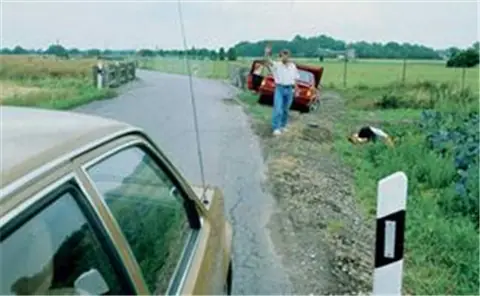
La probabilidad de que un accidente sea mortal es mayor cuando se circula a velocidad...
The probability of a crash being fatal is higher when driving at a speed that is...
- Amoderada.moderate.
- Binadecuada.inappropriate.
- Cadecuada.suitable.
ExplanationAt an inappropriate speed, too high for the circumstances or above the limit, both the chance of a crash and the energy of the impact increase, and with it the seriousness of the injuries. That is why fatal crashes are associated with inappropriate speeds.
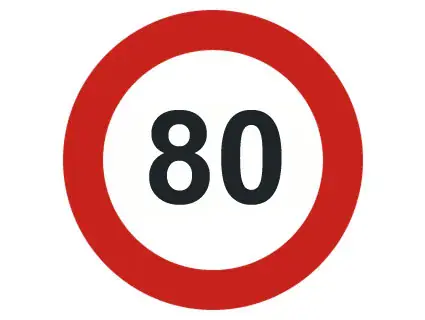
Circulando con nuestra motocicleta por un tramo de carretera que tiene limitada, por señal, la velocidad máxima a 80 km/h, ¿podremos superar dicha velocidad para efectuar un adelantamiento?
You are riding your motorcycle on a stretch of road where a sign limits the maximum speed to 80 km/h. May you exceed this speed to overtake?
- ANo.No.
- BSí, durante el adelantamiento puedo circular a 100 km/h, como máximo.Yes, while overtaking I may ride at up to 100 km/h.
- CSí, puedo superar el límite establecido en 20 km/h.Yes, I may exceed the set limit by 20 km/h.
ExplanationA speed limit set by a sign may not be exceeded, not even to overtake. In addition, the 20 km/h margin for overtaking on conventional roads, which never applied to signposted limits either, was abolished by Law 18/2021 with effect from 21 March 2022.
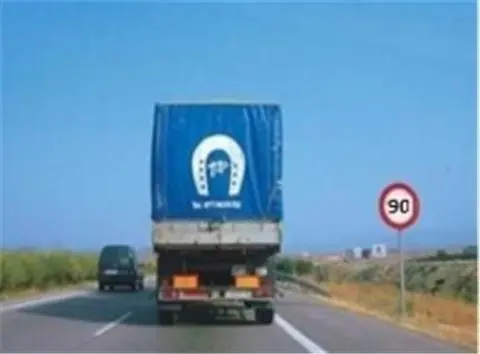
Un vehículo circula a velocidad anormalmente reducida cuando...
A vehicle is travelling at an abnormally reduced speed when...
- Acircula a velocidad inferior a la mínima permitida en esa vía.it is travelling below the minimum speed allowed on that road.
- Bcircula a velocidad inferior a la del resto de los conductores.it is travelling more slowly than other drivers.
- Cno se adapta a las circunstancias de la vía.it does not adapt to the road conditions.
ExplanationA vehicle is travelling at an abnormally reduced speed when it is below the road's minimum speed: 60 km/h on motorways and dual carriageways and, on other roads, half the general limit for that type of vehicle, even if there is no other traffic (Article 49.1 of the General Traffic Regulations (RGC)).
¿A qué velocidad máxima podrá circular un camión de hasta 3500 kg por una travesía?
What is the maximum speed for a lorry of up to 3,500 kg on a travesía?
- A50 km/h.50 km/h.
- B25 km/h.25 km/h.
- C60 km/h.60 km/h.
ExplanationThe general limit on travesías is 50 km/h for all types of vehicle, including a lorry of up to 3,500 kg (Article 50.5 of the General Traffic Regulations, RGC). Only vehicles carrying dangerous goods have a limit of 40 km/h.
¿A qué velocidad máxima podrá circular por una autopista un automóvil que arrastra un remolque de 700 kg?
What is the maximum speed on a motorway (autopista) for a motor vehicle towing a 700 kg trailer?
- A120 km/h.120 km/h.
- B100 km/h.100 km/h.
- C90 km/h.90 km/h.
ExplanationOn motorways (autopistas) and dual carriageways (autovías), motor vehicles towing a trailer have a general limit of 90 km/h, whatever the mass of the trailer (Article 48.1.a of the General Traffic Regulations, RGC). Since 2019 there is no longer an 80 km/h limit for trailers over 750 kg.
¿Cuál es la distancia de seguridad en túneles?
What is the safe distance in tunnels?
- A150 metros para los camiones de más de 3.500 kg de MMA.150 metres for lorries with a MAM of more than 3,500 kg.
- B100 metros para los camiones de más 3.500 kg de MMA.100 metres for lorries with a MAM of more than 3,500 kg.
- C50 metros para turismos.50 metres for cars.
ExplanationIn tunnels, if you are not going to overtake, you must keep at least 100 metres or 4 seconds from the vehicle in front. Vehicles with a maximum authorised mass of more than 3,500 kg must leave at least 150 metres or 6 seconds, because they need more space to brake.
¿Cuál es la velocidad máxima permitida en una autovía para una autocaravana cuya masa máxima autorizada (MMA) sea inferior a 3.500 kg?
What is the maximum speed allowed on a dual carriageway (autovía) for a motorhome with a maximum authorised mass (MAM) of less than 3,500 kg?
- A100 km/h.100 km/h.
- B120 km/h.120 km/h.
- C90 km/h.90 km/h.
ExplanationAccording to Article 48.1.a) of the General Traffic Regulations (RGC), motorhomes with a maximum authorised mass of 3,500 kg or less have the same limits as cars: 120 km/h on motorways (autopistas) and dual carriageways (autovías) and 90 km/h on conventional roads.
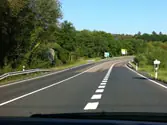
¿Cuál es la velocidad máxima permitida en esta vía para un camión de 3500 kg de MMA?
What is the maximum speed allowed on this road for a lorry with a maximum authorised mass (MAM) of 3,500 kg?
- A70 km/h.70 km/h.
- B90 km/h.90 km/h.
- C80 km/h.80 km/h.
ExplanationOn conventional roads, the maximum speed for lorries, tractor units, vans, motorhomes with a MAM over 3,500 kg, articulated vehicles and motor vehicles with a trailer is 80 km/h. Note that the MAM only matters for motorhomes. Lorries have a maximum speed of 80 km/h on conventional roads, whatever their MAM.
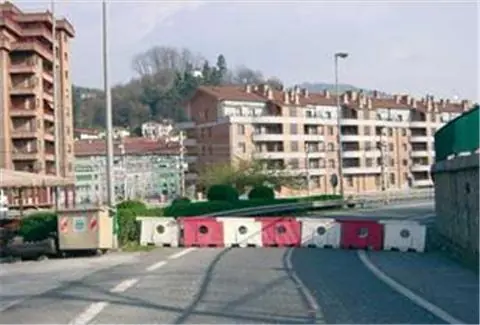
La distancia de detención es el espacio que recorre el vehículo...
Stopping distance is the distance the vehicle travels...
- Adesde que el conductor percibe un peligro hasta que el vehículo se detiene.from when the driver perceives a danger until the vehicle stops.
- Bdesde que el conductor frena hasta que se detiene el vehículo.from when the driver brakes until the vehicle stops.
- Cdurante el tiempo que pasa desde que el conductor reacciona hasta que pisa el pedal del freno.during the time from when the driver reacts until they press the brake pedal.
ExplanationStopping distance is the distance the vehicle travels from when the driver perceives a danger until the vehicle stops. It is the sum of the reaction distance, before pressing the brake, and the braking distance.
Conducir por debajo del límite máximo de velocidad, ¿puede causar accidentes?
Can driving below the maximum speed limit cause accidents?
- ANo.No.
- BSí, si la velocidad no se ajusta a las condiciones del tráfico.Yes, if the speed does not suit the traffic conditions.
- CNo, los accidentes sólo pueden ocurrir al circular por encima de ese límite.No, accidents can only happen when driving above that limit.
ExplanationDriving below the limit is not enough: your speed must suit the traffic and the road (Article 45 of the General Traffic Regulations). An abnormally low speed holds up others (Article 49) and causes sudden braking, rear-end collisions and risky overtaking.
¿De qué dependen los límites de velocidad en una vía?
What do the speed limits on a road depend on?
- APrincipalmente de criterios económicos.Mainly on economic criteria.
- BDel trazado de la vía y del tráfico que soporta.On the road layout and the traffic it carries.
- CDel trazado de la vía y del número de curvas.On the road layout and the number of bends.
ExplanationArticle 47 of the General Traffic Regulations makes road authorities responsible for setting specific limits according to the features of each stretch. These limits depend on the road layout (bends, visibility, junctions) and the traffic it carries, not on economic criteria.
Un vehículo especial que carece de señalización de frenada, ¿a qué velocidad máxima podrá circular?
What is the maximum speed of a special vehicle that has no brake lights?
- A25 km/h.25 km/h.
- B40 km/h.40 km/h.
- C70 km/h.70 km/h.
ExplanationSpecial vehicles without brake lights, those with a trailer and two-wheeled tractors have a maximum permitted speed of 25 km/h. Other special vehicles may reach a maximum of 40 km/h, and when they can exceed 60 km/h on level ground, their maximum permitted speed is 70 km/h.
¿Cuál es la velocidad máxima permitida a un turismo con remolque de más de 750 kg circulando por una autovía?
What is the maximum speed allowed on a dual carriageway (autovía) for a car with a trailer of more than 750 kg?
- A90 km/h.90 km/h.
- B100 km/h.100 km/h.
- C80 km/h.80 km/h.
ExplanationMaximum speeds for motor vehicles with a trailer (whatever its maximum authorised mass): motorways (autopistas) and dual carriageways (autovías), 90 km/h; conventional roads, 80 km/h; unpaved roads, 30 km/h. On urban roads, depending on the type of carriageway: a) 20 km/h on single-level streets where the carriageway and pavement are at the same level; b) 30 km/h on roads with only one lane in each direction; c) 50 km/h on roads with two or more lanes in each direction (40 km/h for vehicles carrying dangerous goods). Lanes reserved for certain users or only for public transport are not counted for this purpose. The local authority may lower or raise these limits with specific signs. On travesías the limit is 50 km/h for all vehicles, except vehicles carrying dangerous goods, which have a limit of 40 km/h. The local authority may lower this limit by agreement with the road owner, with specific signs.
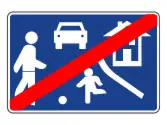
A partir de la señal de la imagen, ¿a qué velocidad máxima podremos circular?
From the sign in the picture onwards, what is the maximum speed we may drive at?
- A50 km/h si la vía tiene dos carriles en el mismo sentido.50 km/h if the road has two lanes in the same direction.
- B20 km/h si la vía tiene un único carril en el mismo sentido.20 km/h if the road has a single lane in the same direction.
- C30 km/h si la vía tiene dos carriles en el mismo sentido.30 km/h if the road has two lanes in the same direction.
ExplanationThis is sign S-29, End of stay and play zone (zona de estancia y juego): from this point the general rules apply again. On urban roads the general limits of Article 50.1 of the RGC apply: 50 km/h with two or more lanes in each direction, 30 km/h with a single lane in each direction and 20 km/h on a single-level (shared) street.
Si a causa de una avería no puede alcanzar la velocidad mínima en una autovía y existe peligro de alcance por otros vehículos, debe...
If, because of a breakdown, you cannot reach the minimum speed on a dual carriageway (autovía) and there is a risk of other vehicles running into you from behind, you must...
- Acircular sólo hasta la próxima salida, siempre por el arcén.drive only as far as the next exit, always on the hard shoulder.
- Bcircular con la luz de emergencia encendida.drive with the hazard warning lights on.
- Cdetener obligatoriamente el vehículo en el arcén.stop the vehicle on the hard shoulder in all cases.
ExplanationAny driver who, for emergency reasons, has to drive on a motorway (autopista) or dual carriageway (autovía) at an abnormally low speed must leave it at the first exit. Also, when a vehicle cannot reach the minimum speed required and there is a risk of being hit from behind, it must use the hazard warning lights (all four indicators) while driving, to warn other road users. If, because of its abnormally low speed, the vehicle seriously disrupts traffic and its maximum authorised mass (MAM) is no more than 3,500 kg, it must drive on the right-hand hard shoulder, as long as it is usable and wide enough. If it does not seriously disrupt traffic, it continues in the right-hand lane. In both cases, it must leave the motorway or dual carriageway at the first exit.
¿Cuál es la velocidad máxima para una motocicleta en una carretera convencional?
What is the maximum speed for a motorcycle on a conventional road?
- A110 km/h110 km/h
- B100 km/h100 km/h
- C90 km/h90 km/h
ExplanationOn a conventional road, the general maximum speed for motorcycles, as for cars, is 90 km/h (Article 48.1.a of the General Traffic Regulations). Only on roads with physical separation between the two directions may the road authority set a limit of up to 100 km/h, and it must show this with signs.
¿Cuál es la velocidad máxima en una carretera convencional con dos carriles en nuestro sentido?
What is the maximum speed on a conventional road with two lanes in our direction?
- A100 km/h.100 km/h.
- B90 km/h.90 km/h.
- C90 km/h, y 110 km/h para adelantar.90 km/h, and 110 km/h to overtake.
ExplanationOn conventional roads the general limit for cars and motorcycles is 90 km/h, even if there are two lanes in our direction, and it may not be exceeded to overtake. Only where the two directions are physically separated may the road authority signpost 100 km/h (Article 48.1.a of the General Traffic Regulations).
¿Cuál es la velocidad máxima genérica de un camión circulando por una autovía?
What is the general maximum speed for a lorry on a dual carriageway (autovía)?
- A100 km/h.100 km/h.
- B90 km/h.90 km/h.
- C110 km/h.110 km/h.
ExplanationThe maximum speed for a lorry on a dual carriageway (autovía) is 90 km/h.
Un vehículo de movilidad personal (VMP) está diseñado para alcanzar una velocidad máxima comprendida entre...
A personal mobility vehicle (PMV) is designed to reach a maximum speed of between...
- A6 y 25 km/h.6 and 25 km/h.
- B6 y 30 km/h.6 and 30 km/h.
- C5 y 25 km/h.5 and 25 km/h.
ExplanationUnder Annex II of the General Vehicle Regulations, a personal mobility vehicle has one or more wheels and a single seat, and is driven only by electric motors that give it a maximum design speed of between 6 and 25 km/h.
Al rebasar un vehículo inmovilizado por avería que ocupa parte de su carril, ¿debe reducir la velocidad?
When passing a broken-down (immobilised) vehicle that is partly blocking your lane, must you reduce speed?
- ASí, en al menos 20 km/h respecto al límite de la vía.Yes, by at least 20 km/h below the road's speed limit.
- BSolo al circular fuera de poblado.Only when driving outside built-up areas.
- CNo, basta con dejar una separación lateral de 1,5 metros.No, it is enough to leave a lateral clearance of 1.5 metres.
ExplanationAccording to Article 88.1 of the General Traffic Regulations (as worded by RD 518/2026), drivers passing a vehicle immobilised by a breakdown or accident that fully or partly occupies their lane must keep a safety clearance of at least 1.5 metres and reduce speed by at least 20 km/h below the limit in force on that road. The rule is not limited to roads outside built-up areas.
A causa de una avería, circula por una autopista a 50 km/h y dificulta la circulación. ¿Qué debe hacer?
Because of a breakdown, you are driving on a motorway (autopista) at 50 km/h and obstructing traffic. What must you do?
- ADetener siempre el vehículo en el arcén.Always stop the vehicle on the hard shoulder.
- BCircular por el carril derecho.Drive in the right lane.
- CCircular por el arcén y salir por la primera salida.Drive on the hard shoulder and leave at the first exit.
ExplanationUnder Article 36.1 of the General Traffic Regulations, vehicles of up to 3,500 kg that, because of an emergency, travel at an abnormally low speed and seriously disrupt traffic must use the hard shoulder on their right if it is usable. On a motorway, you should also leave it at the first exit.
Si por causa de una avería circulamos por una autopista a velocidad anormalmente reducida perturbando la circulación, ¿por dónde seguiremos circulando?
If, because of a breakdown, we are driving on a motorway (autopista) at an abnormally low speed and disrupting traffic, where do we carry on driving?
- APor la calzada hasta la próxima salida.On the carriageway until the next exit.
- BPor el arcén hasta la próxima salida.On the hard shoulder until the next exit.
- CNo podremos circular, tendremos que detenernos en el arcén.We may not drive; we must stop on the hard shoulder.
ExplanationIf you are driving at an abnormally low speed and seriously disrupting traffic, you must drive on the hard shoulder and leave the motorway at the next exit.
La velocidad mínima de un carril en sentido contrario al habitual es de....
The minimum speed in a lane used in the opposite direction to the usual one is....
- A90 km/h.90 km/h.
- B60 km/h.60 km/h.
- C80 km/h.80 km/h.
ExplanationUnder Article 41 of the General Traffic Regulations, in lanes opened for traffic in the opposite direction to the usual one, the minimum speed is 60 km/h and the maximum is 80 km/h, unless signs say otherwise, with the dipped headlights on by day and by night.
¿A qué velocidad máxima puede circular un vehículo de movilidad personal (patinete eléctrico)?
What is the maximum speed of a personal mobility vehicle (e-scooter)?
- AA 45 km/h.45 km/h.
- BA 25 km/h.25 km/h.
- CA 30 km/h.30 km/h.
ExplanationPMVs (e-scooters) have a maximum design speed of between 6 and 25 km/h.
¿Cuál es la velocidad máxima permitida para adelantar a otro coche en una carretera convencional?
What is the maximum speed allowed when overtaking another car on a conventional road?
- A110 km/h.110 km/h.
- B90 km/h.90 km/h.
- C120 km/h.120 km/h.
ExplanationThe general limit for a car on a conventional road is 90 km/h (Article 48.1.a of the General Traffic Regulations (RGC)), and it also applies when overtaking: since 2022 you may no longer exceed it by 20 km/h. 120 km/h is the limit on motorways (autopistas) and dual carriageways (autovías).
¿Qué separación lateral deberá dejar usted, si circula con su automóvil por fuera de poblado y adelanta a un vehículo de tracción animal?
What side clearance must you leave if you are driving your motor vehicle outside a built-up area and overtake an animal-drawn vehicle?
- A1,5 metros.1.5 metres.
- B1 metro.1 metre.
- CNo hay separación mínima en estos casos.There is no minimum clearance in these cases.
ExplanationWhen overtaking animal-drawn vehicles, as with pedestrians, cyclists or mopeds, you must move partly or fully into the next or opposite lane and keep a safety gap of at least 1.5 metres; outside built-up areas you must also reduce your speed by at least 20 km/h (Article 85.4, as worded by RD 518/2026).
¿A qué velocidad máxima puede circular un ciclomotor en autovía?
What is the maximum speed at which a moped may be ridden on a dual carriageway (autovía)?
- A45 km/h45 km/h
- BNo puede circular por autovíaIt may not be ridden on a dual carriageway
- C60 km/h60 km/h
ExplanationUnder Article 38.1 of the General Traffic Regulations, mopeds are prohibited on motorways (autopistas) and dual carriageways (autovías); the only exception in the article is for cyclists over 14, on the hard shoulder of dual carriageways. In addition, a moped cannot go faster than 45 km/h.
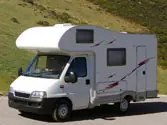
¿A qué velocidad máxima puede circular una autocaravana de más de 3.500 kg de MMA en una autovía?
What is the maximum speed on a dual carriageway (autovía) for a motorhome with a maximum authorised mass (MAM) over 3,500 kg?
- AA 100 km/h, pudiendo alcanzar los 120 km/h para adelantar.100 km/h, and up to 120 km/h to overtake.
- BA 90 km/h.90 km/h.
- CA 100 km/h.100 km/h.
ExplanationAccording to Article 48.1.a of the General Traffic Regulations (RGC), on motorways (autopistas) and dual carriageways (autovías) motorhomes with a MAM over 3,500 kg have a limit of 90 km/h, like lorries and vans. If their MAM is no more than 3,500 kg, they may travel at 120 km/h, like a car.
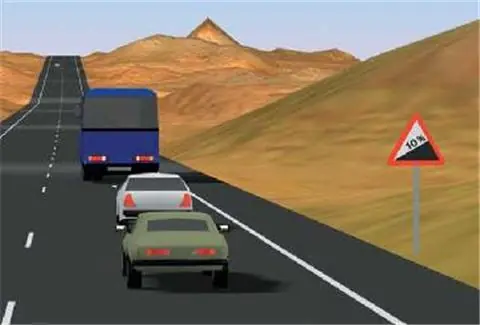
Si el vehículo de detrás se acerca demasiado, es conveniente...
If the vehicle behind comes too close, it is advisable to...
- Aaumentar la separación con el vehículo de delante.increase the gap to the vehicle in front.
- Bdisminuir la separación con el vehículo de delante.reduce the gap to the vehicle in front.
- Cmantener la misma separación con el vehículo de delante.keep the same gap to the vehicle in front.
ExplanationIf the vehicle behind comes too close, it is advisable to increase the gap to the vehicle in front. That way, if you have to brake, you can do so more gently and gradually, and the risk of the vehicle behind hitting you is reduced.
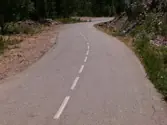
Una autocaravana de 3500 kg de MMA, ¿a qué velocidad máxima puede circular por esta carretera convencional?
What is the maximum speed of a motorhome with a MAM of 3,500 kg on this conventional road?
- A90 km/h.90 km/h.
- B80 km/h.80 km/h.
- C100 km/h.100 km/h.
ExplanationOn conventional roads the maximum speed for motorhomes with a MAM of 3,500 kg or less is 90 km/h. When their maximum authorised mass is more than 3,500 kg, their maximum permitted speed is 80 km/h.
All topics
- Definitions
- Documents and penalty points
- The driver's condition
- Duties of drivers and pedestrians
- Vehicle safety devices
- Vehicle controls and equipment
- Vehicle lights and horn
- Traffic signs, markings and signals
- The road and its lanes
- Manoeuvres
- Right of way
- Carrying passengers and loads
- Driving safely in difficult conditions
- Vehicle mechanics and maintenance
- Road accidents and first aid
- Defensive and eco-driving
Independent app: not affiliated with or endorsed by the DGT (Spain's Directorate-General for Traffic) or the Ministry of the Interior. The official exam is booked with the DGT and taken at its test centres. The questions here are practice material; the DGT's official question bank is not public.
Basado en datos de la Agencia Estatal Boletín Oficial del Estado (https://www.boe.es). Textos consolidados de carácter meramente informativo. La AEBOE no patrocina ni respalda este sitio.
Parte de las preguntas procede de los tests de la revista «Tráfico y Seguridad Vial» de la DGT, reproducidos con indicación de la fuente.