
DGT test · 961 questions
Speed and distances · Page 11 of 20
Speed limits by road and vehicle type, adapting speed to conditions, safe following distance and stopping distance.
Questions in this topic, with answers
961 questions, 50 per page, with the correct answer and the explanation. Page 11 of 20.
En condiciones climatológicas adversas, ¿debe aumentarse la distancia de seguridad?
In adverse weather conditions, should the safe distance be increased?
- ASí, en todo caso.Yes, in all cases.
- BNo, nunca.No, never.
- CSí, pero solo de noche.Yes, but only at night.
ExplanationIn adverse weather such as rain, fog, snow or ice, we must increase the safe distance. This is because visibility will be clearly worse than on a clear day, or tyre grip will be affected, making braking distances longer.

¿Cómo actuaremos si circulamos delante de un vehículo excesivamente pegado al nuestro?
What will we do if the vehicle behind us is following much too closely?
- AFrenaremos de forma brusca varias veces para que se dé cuenta de su acción y se aparte.We will brake sharply several times so that the driver realises and moves away.
- BActivaremos la luz de emergencia.We will switch on the hazard warning lights.
- CAumentaremos la distancia de seguridad al menos un segundo más respecto al vehículo que nos precede.We will increase our safe distance from the vehicle in front by at least one more second.
ExplanationIf the vehicle behind us is following much too closely, we must increase our safe distance from the vehicle in front by at least 1 second, so that we can react smoothly to anything unexpected.
Si circulamos a 90 km/h....
If we are driving at 90 km/h...
- ACircularemos por el carril de la derecha como norma general.As a general rule, we drive in the right-hand lane.
- BSolamente podemos utilizar el carril de la derecha.We may only use the right-hand lane.
- CEstá prohibido utilizar el carril de la derecha.Using the right-hand lane is prohibited.
ExplanationAs a general rule you must drive in the right-hand lane. We may use the other lanes when traffic or road conditions make it advisable.
¿Cuál es la velocidad máxima permitida en vías sin pavimentar?
What is the maximum speed allowed on unpaved roads?
- A30 km/h.30 km/h.
- B50 km/h.50 km/h.
- C80 km/h.80 km/h.
ExplanationOn unpaved roads, the maximum speed allowed is 30 km/h.
Cuando se adelante a un vehículo de tracción animal que circule por el arcén de una vía interurbana, ¿qué separación lateral se deberá mantener con él?
When overtaking an animal-drawn vehicle travelling on the hard shoulder of an interurban road, what side clearance must you keep from it?
- AUn margen lateral de seguridad, proporcional a la velocidad, anchura y características de la calzada.A safety margin at the side, in proportion to the speed, width and features of the carriageway.
- B1,50 metros, como mínimo.At least 1.50 metres.
- CEn vía interurbana está prohibido que circulen estos vehículos.These vehicles are not allowed on interurban roads.
ExplanationWhen overtaking animal-drawn vehicles, as with cyclists, mopeds or pedestrians, you must leave a side clearance of at least 1.5 metres (Article 85 of the General Traffic Regulations). Outside built-up areas you must also reduce your speed by at least 20 km/h.
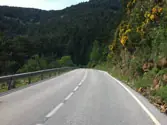
¿A qué velocidad máxima podremos adelantar en esta vía?
What is the maximum speed at which we may overtake on this road?
- A90 km/h.90 km/h.
- B100 km/h.100 km/h.
- C110 km/h.110 km/h.
ExplanationOn this conventional road, the general limit for a car is 90 km/h. Since 21 March 2022, under Law 18/2021, you may no longer exceed the maximum speed by 20 km/h to overtake, so you cannot go above 90 km/h even when overtaking.
¿Cuál es la velocidad máxima dentro de un pueblo en una vía con tres carriles en cada sentido?
What is the maximum speed within a town on a road with three lanes in each direction?
- A50 km/h50 km/h
- B45 km/h45 km/h
- C80 km/h80 km/h
ExplanationOn urban roads with two or more lanes in each direction, such as one with three lanes in each direction, the general limit is 50 km/h (Article 50.1.c of the General Traffic Regulations). The 80 km/h limit only applies on motorways (autopistas) and dual carriageways (autovías) that run through built-up areas.
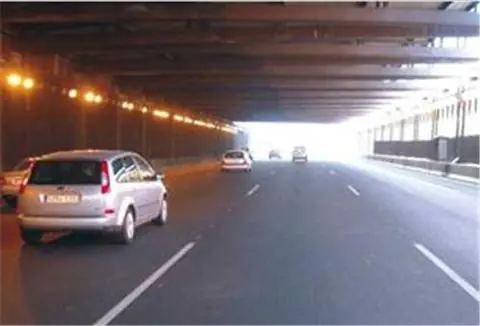
Si circula por un túnel con un conjunto de vehículos de menos de 3.500 kg de MMA, ¿qué separación debe de dejar con el vehículo de delante si no pretende adelantar?
If you are driving through a tunnel with a vehicle combination with an MAM under 3,500 kg, what gap must you leave from the vehicle in front if you do not intend to overtake?
- AAl menos 150 metros.At least 150 metres.
- BAl menos 50 metros.At least 50 metres.
- CAl menos 100 metros.At least 100 metres.
ExplanationArticle 95 of the General Traffic Regulations requires that, in tunnels and when you are not going to overtake, you keep at least 100 metres or 4 seconds from the vehicle in front. For vehicles over 3,500 kg the distance rises to 150 metres or 6 seconds.
¿Qué distancia deberá mantener con el vehículo que le precede si no tiene intención adelantarle?
What distance must you keep from the vehicle in front if you do not intend to overtake it?
- A100 metros como mínimo.At least 100 metres.
- BLa que me permita frenar sin colisionar con él en caso de emergencia.One that allows me to brake without hitting it in an emergency.
- C50 metros como mínimo.At least 50 metres.
ExplanationWhen driving behind another vehicle, you must keep a distance that lets you stop without hitting it in an emergency. In tunnels and underpasses, when you do not intend to overtake, this distance must be at least 100 metres.
En una población, ¿cuál es la velocidad máxima permitida para un coche con remolque en una vía con dos carriles por sentido?
In a town, what is the maximum speed allowed for a car towing a trailer on a road with two lanes in each direction?
- A40 kilómetros por hora.40 kilometres per hour.
- B60 kilómetros por hora.60 kilometres per hour.
- C50 kilómetros por hora.50 kilometres per hour.
ExplanationOn urban roads, the general limit does not depend on whether the car is towing a trailer, but on the road: with two or more lanes in each direction it is 50 km/h (Article 50.1.c of the General Traffic Regulations (RGC)). The 40 km/h limit is for vehicles carrying dangerous goods.
En una travesía sin señales que indiquen el límite de velocidad, ¿cuál es la velocidad máxima permitida?
On a travesía (stretch of road through a town) with no signs showing the speed limit, what is the maximum speed allowed?
- A40 km/h.40 km/h.
- B50 km/h.50 km/h.
- C60 km/h.60 km/h.
ExplanationIn Spain, the speed limit on travesías is 50 km/h for all types of vehicle, as set out in Article 50 of the General Traffic Regulations (RGC). When there are no specific signs showing a different limit, this is the value that applies. So the correct answer is 50 km/h.
En una vía urbana con un solo carril por sentido, ¿cuál suele ser la velocidad máxima si no hay señal que indique otra cosa?
On a road in a built-up area with a single lane in each direction, what is usually the maximum speed if no sign says otherwise?
- A30 km/h30 km/h
- B50 km/h50 km/h
- C90 km/h90 km/h
ExplanationOn roads in built-up areas with a single lane in each direction, the general reference is 30 km/h unless signs say otherwise.
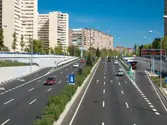
¿Cuál será la velocidad máxima para un turismo que circula por una autopista dentro de poblado?
What is the maximum speed for a car travelling on a motorway (autopista) inside a built-up area?
- A120 km/h.120 km/h.
- B80 km/h.80 km/h.
- C60 km/h.60 km/h.
ExplanationOn a motorway (autopista) inside a built-up area, the maximum speed is 80 km/h.
¿Cuándo se puede superar en 20 km/h la velocidad máxima para adelantar?
When can you exceed the maximum speed by 20 km/h in order to overtake?
- ASiempre, en carreteras convencionales.Always, on conventional roads.
- BNunca, en ninguna vía.Never, on any road.
- CEn autopista y autovía.On motorways (autopistas) and dual carriageways (autovías).
ExplanationThere is no margin at all for exceeding the maximum speed when overtaking. The option of going 20 km/h over the limit on conventional roads was abolished by Law 18/2021, in force since 21 March 2022, and it never applied to motorways or dual carriageways.
¿Qué debe hacer siempre al acercarse a un autobús del que bajan niños?
What must you always do when approaching a bus from which children are getting off?
- ADetenerse hasta que el autobús reanude su marcha.Stop until the bus moves off again.
- BHacer sonar el claxon varias veces para avisar de su presencia.Sound the horn several times to warn them you are there.
- CReducir la velocidad e incluso detenerse si fuera necesario.Reduce speed and even stop if necessary.
ExplanationThe correct answer is to reduce speed, and even stop if necessary, because when approaching a bus from which children are getting off, it is essential to keep them safe. Under the General Traffic Regulations (RGC), in particular point (e), which says that special care must be taken when approaching a bus that has stopped, this rule is designed to prevent accidents and make sure that children can get off the vehicle safely.
Circular por encima de la velocidad máxima de la vía se considera...
Driving above the maximum speed for the road is considered...
- AVelocidad excesiva.Excessive speed.
- BVelocidad adecuada.Suitable speed.
- CVelocidad anormalmente reducida.Abnormally low speed.
ExplanationDriving faster than the maximum speed allowed is driving at excessive speed.
Si la velocidad máxima de una motocicleta es menor de 100 km/h, ¿cuántos retrovisores debe llevar?
If a motorcycle's maximum speed is less than 100 km/h, how many rear-view mirrors must it have?
- AUno obligatorio en el lado derecho y otro opcional en el izquierdo.A compulsory one on the right and an optional one on the left.
- BDos, uno a cada lado de la motocicleta.Two, one on each side of the motorcycle.
- CUno obligatorio en el lado izquierdo y otro opcional en el derecho.A compulsory one on the left and an optional one on the right.
ExplanationAccording to Annex III of the General Vehicle Regulations, a motorcycle whose maximum speed is 100 km/h or less must have a compulsory exterior mirror on the left and may have an optional one on the right. If its speed exceeds 100 km/h, both are compulsory.
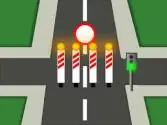
¿Cuál es la velocidad máxima permitida para un turismo circulando por una autovía, con un arcén de menos de 1,50 metros de anchura?
What is the maximum speed allowed for a car on a dual carriageway (autovía) with a hard shoulder less than 1.50 metres wide?
- A100 km/h.100 km/h.
- B90 km/h.90 km/h.
- C120 km/h.120 km/h.
ExplanationThe maximum speed for a car on a dual carriageway (autovía) is 120 km/h, whatever the width of the hard shoulder.
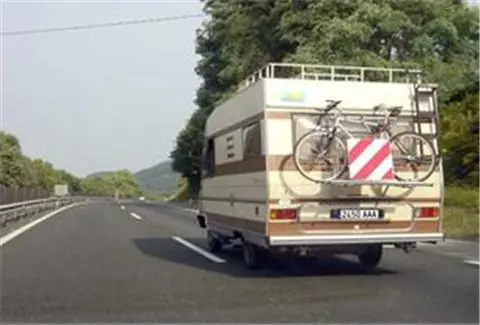
¿Cuál es la velocidad máxima a la que le está permitido circular por una autovía con una autocaravana de MMA inferior a 3.500 kg?
What is the maximum speed at which you may drive a motorhome with a MAM of less than 3,500 kg on a dual carriageway (autovía)?
- A90 km/h.90 km/h.
- B100 km/h.100 km/h.
- C120 km/h.120 km/h.
ExplanationAccording to the table in Article 48.1.a of the General Traffic Regulations (RGC), motorhomes with a MAM of 3,500 kg or less have the same limits as cars: 120 km/h on motorways (autopistas) and dual carriageways (autovías) and 90 km/h on conventional roads. If they are over 3,500 kg, the limits are 90 and 80 km/h.
Cuando conduce y adapta la velocidad a las circunstancias del tráfico, lo hace a una velocidad...
When you drive adapting your speed to the traffic conditions, you are driving at a speed that is...
- Ademasiado alta.too high.
- Bmás baja.lower.
- Cadecuada.appropriate.
ExplanationArticle 45 of the General Traffic Regulations requires you to adapt your speed to the traffic, road, vehicle and weather conditions, so that you can always stop the vehicle within your field of vision. That speed, adapted to the circumstances, is the appropriate speed.
Para conducir con más seguridad, es necesario...
To drive more safely, you need to...
- Acircular a una velocidad adecuada que se adapte a las circunstancias.drive at an appropriate speed adapted to the circumstances.
- Binstalar más dispositivos de seguridad, como los airbags.fit more safety devices, such as airbags.
- Creducir la velocidad por debajo de la mínima genérica.reduce your speed below the general minimum.
ExplanationBy driving at an appropriate speed, we will be able to react and control our vehicle if any obstacle or unexpected event comes up.
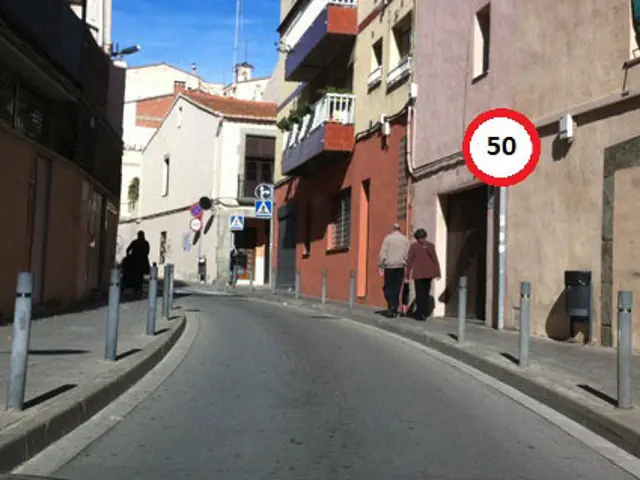
Según la imagen, ¿a qué velocidad máxima se puede circular por esta calle de sentido único y de un solo carril?
According to the picture, what is the maximum speed on this one-way, single-lane street?
- A20 km/h20 km/h
- B30 km/h30 km/h
- C50 km/h50 km/h
ExplanationOn urban roads with a single lane in each direction, the general limit is 30 km/h, but the municipal authority may raise it to 50 km/h with specific signs (Article 50.3 of the General Traffic Regulations). Here the sign sets 50 km/h.
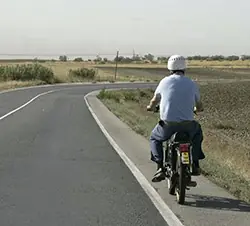
¿A qué velocidad máxima tiene permitido circular un ciclomotor por esta carretera convencional con un carril para cada sentido de la circulación?
What is the maximum speed at which a moped may travel on this conventional road with one lane in each direction?
- A45 kilómetros por hora.45 kilometres per hour.
- B80 kilómetros por hora.80 kilometres per hour.
- C60 kilómetros por hora.60 kilometres per hour.
ExplanationAccording to Article 48 of the General Traffic Regulations, the maximum speed of a moped is 45 km/h on any road outside built-up areas, even if the road allows higher speeds for other vehicles. It must also ride on the hard shoulder if it is passable.
En un túnel, ¿qué distancia de seguridad debe dejar con el vehículo que circula delante?
In a tunnel, what safe distance must you leave from the vehicle in front?
- AÚnicamente la distancia suficiente para no colisionar en caso de frenado brusco.Only enough distance not to crash if it brakes suddenly.
- B100 metros, al menos, cuando no se pretenda adelantar.At least 100 metres, when you do not intend to overtake.
- C200 metros.200 metres.
ExplanationUnder Article 95 of the General Traffic Regulations, in a tunnel, if you are not going to overtake, you must keep at least 100 metres or 4 seconds from the vehicle in front. Vehicles over 3,500 kg must leave 150 metres or 6 seconds.
Un vehículo circula a una velocidad anormalmente baja cuando...
A vehicle is travelling at an abnormally low speed when...
- Acircula a una velocidad inferior a la mínima permitida en esa vía.it is travelling below the minimum speed allowed on that road.
- Bcircula a una velocidad inferior a la del resto de conductores.it is travelling more slowly than other drivers.
- Cno se adapta a las circunstancias de la vía.it is not adapted to the road conditions.
ExplanationAn abnormally low speed is one below the road's minimum: 60 km/h on motorways (autopistas) and dual carriageways (autovías) and, on other roads, half the general limit for each type of vehicle, even if there are no other vehicles on the road (Article 49.1 of the General Traffic Regulations).
¿Cuándo se circula a una velocidad anormalmente baja?
When are you driving at an abnormally low speed?
- ACuando se circula a una velocidad por debajo de la mínima permitida.When you are driving below the minimum speed allowed.
- BCuando se circula a una velocidad por debajo de la máxima permitida.When you are driving below the maximum speed allowed.
- CCuando se circula a una velocidad por encima de la mínima permitida.When you are driving above the minimum speed allowed.
ExplanationArticle 49.1 of the General Traffic Regulations forbids holding up traffic by driving at an abnormally low speed without good reason: below 60 km/h on motorways (autopistas) and dual carriageways (autovías) and, on other roads, below half the general speed limit for each category of vehicle.
Si no pretende adelantar, ¿cuándo deberá mantener una distancia de seguridad de, al menos, 4 segundos (100m), con el vehículo que circula delante?
If you do not intend to overtake, when must you keep a safe distance of at least 4 seconds (100 m) from the vehicle in front?
- ACuando circule por un paso elevado.When driving over a flyover.
- BCuando circule por un túnel.When driving through a tunnel.
- CCuando circule por una autopista.When driving on a motorway (autopista).
ExplanationIn tunnels and underpasses, when you do not intend to overtake, you must keep a safe distance of at least 100 metres, or a gap of 4 seconds, from the vehicle in front. For vehicles with a MAM of more than 3,500 kg, the safe distance must be at least 150 metres, or a gap of at least 6 seconds.
Una de las consecuencias de aumentar la velocidad es que...
One of the consequences of increasing speed is that...
- AEl tiempo de reacción se reduce.Reaction time is reduced.
- BAumenta la gravedad de las lesiones en un accidente.Injuries in an accident are more serious.
- CSe pierde parte de la coordinación al moverse.You lose some coordination when moving.
ExplanationThe higher the speed, the greater the energy of the impact and therefore the more serious the injuries in an accident. Reaction time does not get shorter when you speed up: you cover more metres in the same time, and stopping distance increases.
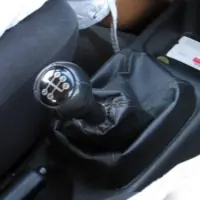
¿Cuál es la marcha que moverá el vehículo a menor velocidad?
Which gear will move the vehicle at the lowest speed?
- ALa quintaFifth
- BLa terceraThird
- CLa primeraFirst
ExplanationThe lowest gear ratio is first gear, which transmits the most driving force but moves the vehicle at the lowest speed. On the other hand, the highest gear transmits the least force and is the one with which the highest speed is reached.
En condiciones de poca visibilidad, ¿qué debe hacer un conductor cuando haya ciclistas en la vía?
In poor visibility, what should a driver do when there are cyclists on the road?
- AAl adelantar, acercarse todo lo posible al lado derecho de la vía.When overtaking, move as close as possible to the right-hand side of the road.
- BTocar el claxon cuando esté a la altura de los ciclistas para avisarles de su presencia.Sound the horn when level with the cyclists to warn them you are there.
- CAumentar la precaución para reducir el riesgo de accidente.Take extra care to reduce the risk of an accident.
ExplanationIn poor visibility (fog, rain, dusk), drivers must take extreme care when they meet cyclists on the road. Because cyclists are vulnerable and less visible, it is essential to keep a safe distance, avoid sudden manoeuvres and reduce speed so that you can react to the unexpected. Using the horn can frighten them and cause accidents, while overtaking without enough lateral space is a serious risk.
Un turismo destinado a servicio de taxi circula por una travesía, ¿cuál es la velocidad máxima que no podrá superar?
A car used as a taxi is driving through a travesía (a stretch of road through a town). What is the maximum speed it must not exceed?
- A60 kilómetros por hora.60 kilometres per hour.
- B50 kilómetros por hora.50 kilometres per hour.
- C40 kilómetros por hora.40 kilometres per hour.
ExplanationAccording to Article 50.5 of the General Traffic Regulations, the general limit in a travesía is 50 km/h for all types of vehicles, including taxis. On other urban roads it depends on the road: 50, 30 or 20 km/h depending on the lanes.
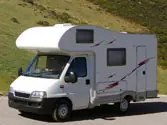
¿Cuál será la velocidad máxima de una autocaravana de 3.500 kg de MMA o menos circulando por una autopista?
What is the maximum speed on a motorway (autopista) of a motorhome with a maximum authorised mass (MAM) of 3,500 kg or less?
- A100 km/h.100 km/h.
- B120 km/h.120 km/h.
- C110 km/h.110 km/h.
ExplanationUnder Article 48.1.a of the General Traffic Regulations (RGC), on motorways (autopistas) and dual carriageways (autovías) motorhomes with a MAM of 3,500 kg or less have the same limit as cars, 120 km/h. If their MAM is over 3,500 kg, the limit is 90 km/h.
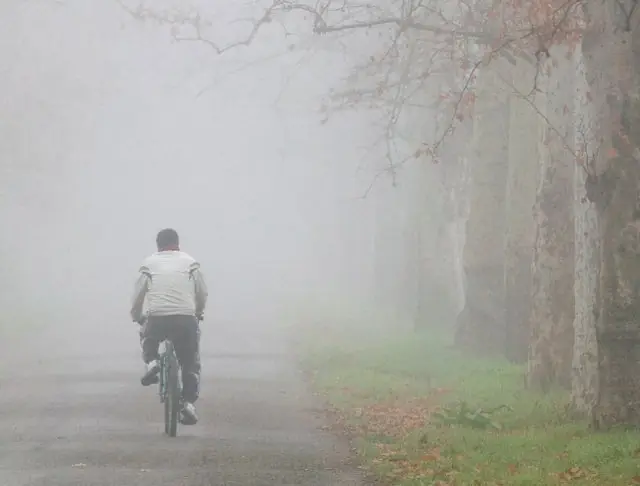
En condiciones de mala visibilidad, ¿qué debe hacer un conductor ante la presencia de ciclistas en la vía?
In poor visibility, what should a driver do when there are cyclists on the road?
- AExtremar la precaución para reducir el riesgo de accidente.Take extra care to reduce the risk of an accident.
- BHacer señales acústicas al llegar a su altura para advertir de su presencia.Sound the horn when level with them to warn them of your presence.
- CCircular lo más cerca posible del borde derecho de la calzada al adelantarles.Keep as close as possible to the right-hand edge of the carriageway when overtaking them.
ExplanationIn poor visibility, such as fog or heavy rain, cyclists are harder to spot and it is essential to put their safety first. This means reducing speed, keeping a sensible distance and watching out for any unexpected movement.
¿Qué es una velocidad inadecuada?
What is an inappropriate speed?
- ALa velocidad que no se ajusta a las condiciones del tráfico, de la vía o del conductor.A speed that does not suit the traffic, road or driver conditions.
- BLa velocidad permitida en la vía.The speed allowed on the road.
- CLa velocidad que no supera el límite máximo permitido en la vía.A speed that does not exceed the maximum limit allowed on the road.
ExplanationAn inappropriate speed is one that is not adapted to the traffic, road or driver conditions. The General Traffic Regulations require drivers to also take into account factors such as the state of the road, the weather and the type of traffic. This is essential to avoid accidents, because driving at an unsuitable speed can lead to risky situations and difficulty in controlling the vehicle.
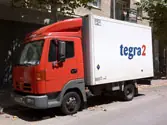
¿Cuál es la velocidad máxima para un camión de hasta 3500 kg circulando por una carretera convencional?
What is the maximum speed for a lorry of up to 3,500 kg on a conventional road?
- A100 km/h.100 km/h.
- B90 km/h.90 km/h.
- C80 km/h.80 km/h.
ExplanationMaximum speeds for lorries (whatever their maximum authorised mass and whether or not they tow a trailer): motorways (autopistas) and dual carriageways (autovías), 90 km/h; conventional roads, 80 km/h; unpaved roads, 30 km/h. On urban roads, depending on the type of carriageway: a) 20 km/h on single-level streets where the carriageway and pavement are at the same level; b) 30 km/h on roads with only one lane in each direction; c) 50 km/h on roads with two or more lanes in each direction (40 km/h for vehicles carrying dangerous goods). Lanes reserved for certain users or only for public transport are not counted for this purpose. The local authority may lower or raise these limits with specific signs. On travesías the limit is 50 km/h for all vehicles, except vehicles carrying dangerous goods, which have a limit of 40 km/h. The local authority may lower this limit by agreement with the road owner, with specific signs.
¿ qué distancia de seguridad tendremos que mantener en un paso inferior ?
What safe distance must we keep in an underpass?
- ALa distancia de seguridad solo se tendrá que mantener los túnelesA safe distance only has to be kept in tunnels.
- BMantendremos una distancia de al menos 100 m o un intervalo de cuatro segundosWe will keep a distance of at least 100 m or a gap of four seconds.
- CLa distancia de seguridad será la que permita detenernos en caso de frenado brusco sin colisionar con el vehículo que nos precedeThe safe distance will be the one that lets us stop without hitting the vehicle in front if it brakes suddenly.
ExplanationIn tunnels and underpasses, when you do not intend to overtake, the safe distance is at least 100 m or a gap of at least four seconds.
En una carretera convencional, ¿cuál es la velocidad máxima permitida para un coche si no va a adelantar?
On a conventional road, what is the maximum speed allowed for a car if it is not overtaking?
- A110 km/h.110 km/h.
- B100 km/h.100 km/h.
- C90 km/h.90 km/h.
ExplanationOn a conventional road the general limit for a car is 90 km/h (Article 48.1.a of the General Traffic Regulations), and it may not be exceeded even to overtake. 120 km/h only applies on motorways (autopistas) and dual carriageways (autovías).
En poblado, por una vía con dos o más carriles por sentido, ¿a qué velocidad máxima circularemos conduciendo un ciclomotor de dos ruedas?
In a built-up area, on a road with two or more lanes in each direction, what is the maximum speed when riding a two-wheeled moped?
- AA 40 kilómetros por hora.40 kilometres per hour.
- BA 45 kilómetros por hora.45 kilometres per hour.
- CA 50 kilómetros por hora.50 kilometres per hour.
ExplanationOn an urban road with two or more lanes in each direction the general limit is 50 km/h, but a two-wheeled moped has a maximum design speed of no more than 45 km/h (Annex II of the General Vehicle Regulations), so it may not go faster than 45 km/h.
¿Cuál es la velocidad máxima a la que puede circular un ciclomotor dentro de poblado, por una vía con dos o más carriles por sentido?
What is the maximum speed for a moped inside a built-up area, on a road with two or more lanes in each direction?
- A40 km/h.40 km/h.
- B45 km/h.45 km/h.
- C50 km/h.50 km/h.
ExplanationOn an urban road with two or more lanes in each direction, the general limit is 50 km/h, but a moped is built so that it cannot go faster than 45 km/h (Annex II of the General Vehicle Regulations). On roads with only one lane in each direction, the limit drops to 30 km/h.
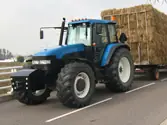
¿Cuál es la velocidad máxima para un vehículo especial, que arrastra remolque o carece de señalización de frenado?
What is the maximum speed for a special vehicle that tows a trailer or has no brake lights?
- A25 kilómetros por hora.25 kilometres per hour.
- B60 kilómetros por hora.60 kilometres per hour.
- C40 kilómetros por hora.40 kilometres per hour.
ExplanationAs a general rule, the maximum speed for special vehicles is: 25 km/h for those that have no brake light, tow a trailer or are two-wheel tractors; 70 km/h for those that can reach 60 km/h on the flat; 40 km/h for all other special vehicles.
Si Ud. conduce su turismo por un carril habilitado para circular en sentido contrario al habitual, ¿qué velocidad máxima no debe rebasar si no hay señal que la limite?
If you drive your car in a lane opened for traffic in the opposite direction to the usual one, what maximum speed must you not exceed if no sign sets a limit?
- A80 kilómetros por hora.80 kilometres per hour.
- B70 kilómetros por hora.70 kilometres per hour.
- C60 kilómetros por hora.60 kilometres per hour.
ExplanationUnder Article 41 of the General Traffic Regulations, in a lane opened for traffic in the opposite direction to the usual one you must drive with at least dipped headlights on, at a maximum of 80 km/h and a minimum of 60 km/h, unless lower limits are signposted.
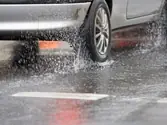
Al mojarse los frenos del vehículo...
When the vehicle's brakes get wet...
- AAumentará la distancia de frenado.The braking distance will increase.
- BDisminuirá la distancia de frenado.The braking distance will decrease.
- CSe producirán chirridos metálicos al frenar.There will be metallic squealing when braking.
ExplanationRain can have a negative effect on driving and calls for extra care. On a wet road the tyres lose part of their grip. The road becomes very slippery when the first drops fall. To avoid an accident on a wet road, as well as keeping the tyres at the right pressure and with enough tread, you should: - Reduce speed and increase the safe distance (up to double). - Brake earlier and more gently (the braking distance may double). - Test the brakes after driving through a flooded stretch or through puddles (if the brakes get wet, brake several times to dry them). - Take extra care at high speed, because aquaplaning may occur (the tyres cannot clear the layer of water on the road and lose their grip).
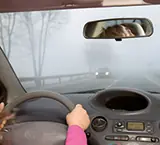
En esta autovía hay mucha niebla. ¿Se puede circular a menos de 60 km/h?
There is thick fog on this dual carriageway (autovía). May you drive at less than 60 km/h?
- ANo, porque es una vía para circulación rápida.No, because it is a road for fast traffic.
- BSí, porque con la niebla se debe moderar la velocidad.Yes, because in fog you must reduce your speed.
- CNo, en autovía nunca se debe circular a menos de la velocidad mínima permitida.No, on a dual carriageway (autovía) you must never drive below the minimum permitted speed.
ExplanationIn thick fog you must reduce your speed so that you can stop within the distance you can see (Articles 45 and 46.1.k of the General Traffic Regulations). The ban on driving on a dual carriageway (autovía) at less than 60 km/h applies to those who do so without a justified reason (Article 49.1), and thick fog is such a reason.
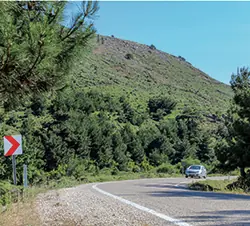
Si entra en una curva a la izquierda a velocidad excesiva, la fuerza centrífuga, ¿puede afectar a la trayectoria del vehículo?
If you enter a left-hand bend too fast, can centrifugal force affect the vehicle's path?
- ASí; se desplazará hacia la izquierda de la calzada.Yes; the vehicle will move towards the left of the carriageway.
- BSí; se desplazará hacia la derecha de la calzada.Yes; the vehicle will move towards the right of the carriageway.
- CNo; la fuerza centrífuga no afecta a la trayectoria del vehículo.No; centrifugal force does not affect the vehicle's path.
ExplanationCentrifugal force pushes the vehicle towards the outside of the bend: in a left-hand bend, towards the right of the carriageway. It increases with speed, which is why you must slow down before entering the bend.
Si en su vehículo lleva una carga,¿Cómo sera la distancia de frenado?
If your vehicle is carrying a load, what will the braking distance be like?
- AIgual.The same.
- BMayor.Longer.
- CMenor.Shorter.
ExplanationWith a load the vehicle weighs more and has more inertia, so at the same speed it needs more metres to stop. That is why, when you are carrying a load, you must increase your safe distance and brake earlier.
¿Puede un turismo superar en 20 km/h el límite de velocidad genérico?
May a car exceed the general speed limit by 20 km/h?
- ASí, en autopistas y autovías, cuando las condiciones de la carretera lo permitan.Yes, on motorways (autopistas) and dual carriageways (autovías), when road conditions allow.
- BSí, para adelantar en autopistas y autovías.Yes, to overtake on motorways and dual carriageways.
- CNo, en ningún caso.No, never.
ExplanationNo. The general limit for a car, 120 km/h on motorways and dual carriageways and 90 km/h on conventional roads, may never be exceeded. The option of going 20 km/h over it to overtake only existed on conventional roads and was repealed in 2022.

¿En qué tipo de vía su titular puede fijar una velocidad máxima de 100 km/h en turismos, motocicletas y autocaravanas de MMA no superior a 3.500 kg?
On which type of road may the road owner set a maximum speed of 100 km/h for cars, motorcycles and motorhomes with a maximum authorised mass (MAM) of no more than 3,500 kg?
- AEn las convencionales con tres o más carriles de circulación.On conventional roads with three or more traffic lanes.
- BEn las convencionales con separación física de los dos sentidos de circulación.On conventional roads where the two directions of traffic are physically separated.
- CEn las convencionales con arcenes de ancho superior a 1,5 metros.On conventional roads with hard shoulders more than 1.5 metres wide.
ExplanationOn conventional roads, the road owner may set a maximum speed of 100 km/h for cars, motorcycles and motorhomes with a MAM of up to 3,500 kg when the two directions of traffic are physically separated. This condition is the key point, because it improves safety by avoiding the risk of head-on collisions. So it does not depend on the number of lanes or the width of the hard shoulders, but on the directions being physically separated.
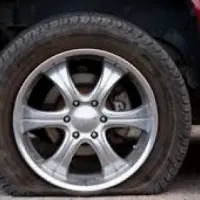
¿Qué hay que hacer si se revienta una rueda del eje delantero?
What must you do if a front-axle tyre bursts?
- AAcelerar rápidamente hasta la siguiente estación de servicioAccelerate quickly to the next service station
- BFrenar bruscamenteBrake sharply
- CRebajar la velocidad con suavidadReduce speed gently
ExplanationIf a front-axle tyre bursts while we are driving, we must reduce speed gradually so that the steering is not affected and we do not lose control of the vehicle. We must never brake sharply, and even less accelerate, as this could put our safety at risk.
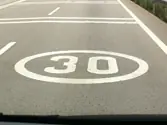
¿Cuándo finalizará la limitación de velocidad de la imagen?
When will the speed limit in the picture end?
- ASólo al encontrar otra señal horizontal de velocidad máxima distinta.Only when you find another speed limit road marking with a different speed.
- BAl encontrar una señal de «Fin de prohibiciones».When you find an «End of prohibitions» sign.
- CAl encontrar una señal de fin de obligación.When you find an end of obligation sign.
ExplanationThe speed limit set by the road marking in the question applies until the next «End of prohibitions» sign, «End of speed limit» sign or a different maximum speed sign. If the lanes are marked out, this limit applies only to the lane where it is painted. If they are not marked out, the limit applies to the whole carriageway.
¿Cuál será la velocidad máxima permitida al circular por una travesía con dos carriles para cada sentido?
What is the maximum speed allowed on a travesía (stretch of road through a town) with two lanes in each direction?
- A90 km/h.90 km/h.
- B80 km/h.80 km/h.
- C50 km/h.50 km/h.
ExplanationTravesías are inside built-up areas, so the maximum speed allowed is 50 km/h.
All topics
- Definitions
- Documents and penalty points
- The driver's condition
- Duties of drivers and pedestrians
- Vehicle safety devices
- Vehicle controls and equipment
- Vehicle lights and horn
- Traffic signs, markings and signals
- The road and its lanes
- Manoeuvres
- Right of way
- Carrying passengers and loads
- Driving safely in difficult conditions
- Vehicle mechanics and maintenance
- Road accidents and first aid
- Defensive and eco-driving
Independent app: not affiliated with or endorsed by the DGT (Spain's Directorate-General for Traffic) or the Ministry of the Interior. The official exam is booked with the DGT and taken at its test centres. The questions here are practice material; the DGT's official question bank is not public.
Basado en datos de la Agencia Estatal Boletín Oficial del Estado (https://www.boe.es). Textos consolidados de carácter meramente informativo. La AEBOE no patrocina ni respalda este sitio.
Parte de las preguntas procede de los tests de la revista «Tráfico y Seguridad Vial» de la DGT, reproducidos con indicación de la fuente.