
DGT test · 961 questions
Speed and distances · Page 14 of 20
Speed limits by road and vehicle type, adapting speed to conditions, safe following distance and stopping distance.
Questions in this topic, with answers
961 questions, 50 per page, with the correct answer and the explanation. Page 14 of 20.
¿Qué velocidad máxima no podrán rebasar los vehículos que circulen por un carril habilitado en sentido contrario al habitual?
What speed limit may vehicles using a lane opened in the opposite direction to usual not go over?
- ALa genérica en función del tipo de vía y vehículo.The general one for the type of road and vehicle.
- B60km/h.60 km/h.
- C80km/h.80 km/h.
ExplanationLanes opened in the opposite direction to keep traffic flowing may only be used by motorcycles and cars without a trailer. When the lane has been opened because of roadworks, all vehicles may use it, unless there is an express ban. Users of these lanes must have at least the dipped headlights on, both by day and by night, drive at no more than 80 km/h and no less than 60 km/h, or lower if set or signposted, and must not move sideways into the lane or lanes for the normal direction of traffic, not even to overtake.
¿Cuál será la velocidad mínima para un automóvil con remolque circulando por una autovía?
What is the minimum speed for a motor vehicle with a trailer on a dual carriageway (autovía)?
- A40 km/h.40 km/h.
- B60 km/h.60 km/h.
- C80 km/h.80 km/h.
ExplanationThe minimum speed for a motor vehicle with a trailer on a dual carriageway (autovía) is 60 km/h, because 60 km/h is the compulsory minimum speed on dual carriageways.
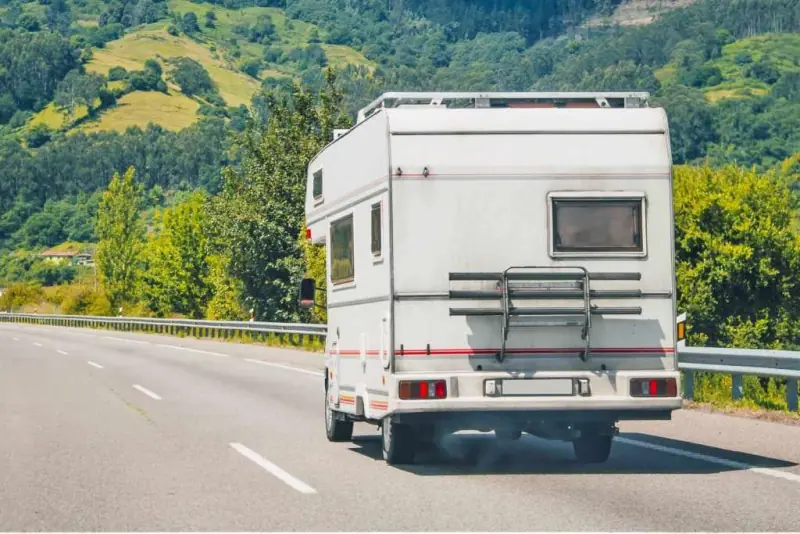
¿A qué velocidad máxima tiene permitido circular una autocaravana de hasta 3.500 kg de MMA en una autovía?
What is the maximum speed allowed for a motorhome with an MAM of up to 3,500 kg on a dual carriageway (autovía)?
- AA 100 km/h, pudiendo superarla en 20 km/h para adelantar.100 km/h, and it may exceed this by 20 km/h to overtake.
- BA 90 km/h.90 km/h.
- CA 120 km/h.120 km/h.
ExplanationThe maximum speed on a dual carriageway (autovía) or motorway (autopista) for cars, motorcycles and motorhomes with an MAM of up to 3,500 kg is 120 km/h. If the MAM is over 3,500 kilograms, the maximum speed is 90 km/h.
En esta carretera, ¿podrá circular a velocidad anormalmente reducida sin causa justificada para ello?
On this road, may you drive at an abnormally low speed without a justified reason?
- ASí.Yes.
- BSí, si se lleva encendida la señal de emergencia.Yes, if the hazard warning lights are on.
- CNo.No.
ExplanationIt is prohibited to drive at an abnormally low speed without a justified reason: on motorways (autopistas) and dual carriageways (autovías), below 60 km/h, and on other roads, below half the general limit for each vehicle (Article 49.1 of the RGC). It is only allowed, for example, with special vehicles or when the traffic, the vehicle or the road make it impossible to go faster without risk (Article 49.2).
Un turismo circula por una carretera convencional, ¿cuándo consideraremos su velocidad anormalmente reducida?
A car is travelling on a conventional road. When do we consider its speed abnormally low?
- ACuando sea menor de 60 km/h.When it is below 60 km/h.
- BCuando sea menor de 40 km/h.When it is below 40 km/h.
- CCuando sea menor de 45 km/h.When it is below 45 km/h.
ExplanationDriving below the minimum permitted speed means driving at an abnormally low speed. On conventional roads, where the maximum speed is 90 km/h, the minimum is 45 km/h, half the maximum, so any speed below 45 km/h is considered abnormally low. Minimum speeds must be respected just like maximum speeds, even if there is no specific sign. The minimum on motorways (autopistas) and dual carriageways (autovías) is 60 km/h, while on other roads it is half the maximum.
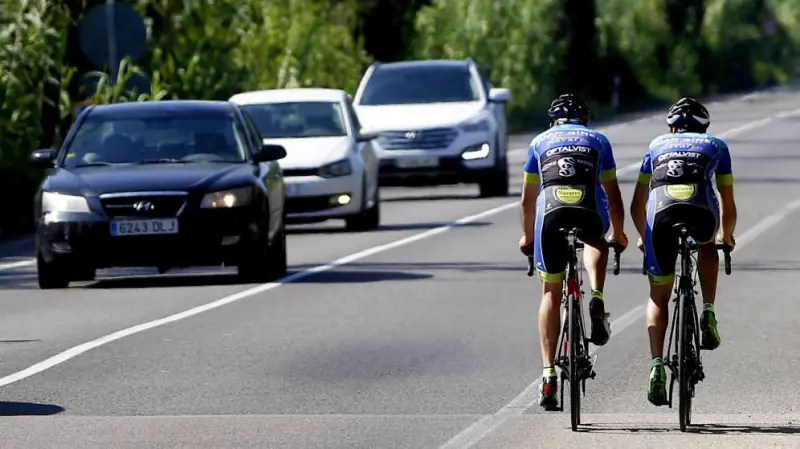
Si se dan las condiciones de seguridad precisas y va a adelantar a un ciclista en esta vía, ¿qué separación lateral debe dejar?
If the necessary safety conditions are met and you are going to overtake a cyclist on this road, what lateral clearance must you leave?
- AIgual o superior a 1,50 metros.1.50 metres or more.
- BDepende de la velocidad a la que circule el vehículo.It depends on the vehicle's speed.
- CAl menos 1 metro.At least 1 metre.
ExplanationWhen overtaking cyclists you must leave a lateral clearance of at least 1.5 metres, moving partly or fully into the opposite lane if necessary. Outside built-up areas you must also reduce your speed by at least 20 km/h below the road's limit.
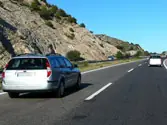
Como norma general, en una autopista, ¿está permitido circular a 50 km/h?
As a general rule, on a motorway (autopista), is it permitted to drive at 50 km/h?
- ANo, como mínimo hay que circular a 60 km/h.No, you must drive at least at 60 km/h.
- BSí, ya que es la velocidad mínima permitida.Yes, because it is the minimum speed allowed.
- CNo, como mínimo hay que circular a 100 km/h.No, you must drive at least at 100 km/h.
ExplanationNo driver may obstruct the normal flow of other vehicles by driving, without good reason, at an abnormally low speed. On motorways (autopistas) and dual carriageways (autovías) this means any speed below 60 km/h.
Si, a causa de una avería, no puede alcanzar la velocidad mínima en una autovía y existe riesgo de ser alcanzado por otros vehículos, debe...
If, because of a breakdown, you cannot reach the minimum speed on a dual carriageway (autovía) and there is a risk of being hit from behind, you must...
- Acircular por el arcén hasta su destino, aunque encuentre salidas antes.drive on the hard shoulder to your destination, even if you pass exits before it.
- Bcircular con las luces de emergencia encendidas.drive with the hazard warning lights on.
- Cdetener obligatoriamente el vehículo en el arcén.stop the vehicle on the hard shoulder, as this is compulsory.
ExplanationUnder Article 49.3 of the General Traffic Regulations (RGC), if you cannot reach the minimum speed and there is a risk of being hit from behind, you must drive with the hazard warning lights on. You must also leave the dual carriageway at the first exit (Article 38.2).

Circulando a 100 km/h se rompe el freno de pie. ¿Cómo se puede detener el vehículo?
You are driving at 100 km/h and the foot brake fails. How can you stop the vehicle?
- ACon el freno de mano solamente.With the handbrake only.
- BPoniendo velocidades más cortas y al final con el freno de mano.By changing down to lower gears and finally using the handbrake.
- CPisando varias veces el pedal del embrague y el pedal del freno.By pressing the clutch pedal and the brake pedal several times.
ExplanationTake your foot off the accelerator and let engine braking reduce the speed (together with rolling resistance). You can increase engine braking by changing down to lower gears and, if necessary, using the handbrake, but always smoothly and gradually.
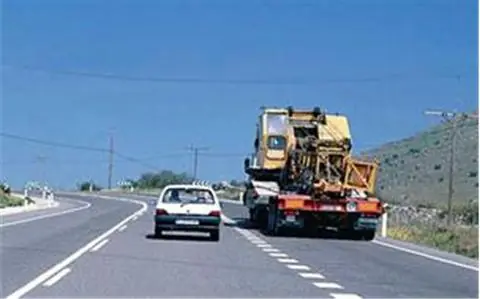
En esta vía, ¿cuál es la velocidad máxima permitida para una motocicleta?
On this road, what is the speed limit for a motorcycle?
- A100 km/h para el sentido de la marcha y 90 km/h para el sentido contrario.100 km/h in your direction of travel and 90 km/h in the opposite direction.
- B90 km/h para los dos sentidos.90 km/h in both directions.
- C80 km/h, porque el arcén es inferior a 1,5 metros.80 km/h, because the hard shoulder is narrower than 1.5 metres.
ExplanationOn a conventional road the speed limit for cars and motorcycles is 90 km/h in both directions (Article 48.1.a of the General Traffic Regulations). The width of the hard shoulder no longer matters, and only where the two directions are physically separated may the road authority set 100 km/h.
¿Cuál será la velocidad máxima para un vehículo especial que carece de luz de freno?
What is the maximum speed for a special vehicle that has no brake light?
- A40 km/h.40 km/h.
- B25 km/h.25 km/h.
- C45 km/h.45 km/h.
ExplanationA special vehicle that has no brake light must not go faster than 25 km/h. The same rule applies to single-axle tractors (motocultores) and to special vehicles towing a trailer.
¿A qué velocidad circulará como máximo un turismo que arrastra un remolque ligero por una autovía?
What is the maximum speed for a car towing a light trailer on a dual carriageway (autovía)?
- A100 km/h.100 km/h.
- B90 km/h.90 km/h.
- C80 km/h.80 km/h.
ExplanationOn motorways (autopistas) and dual carriageways (autovías), motor vehicles towing a trailer have a general limit of 90 km/h, whether the trailer is light or not (Article 48.1.a of the General Traffic Regulations, RGC). The 80 km/h limit for vehicles with a trailer applies on conventional roads.
Si los amortiguadores no funcionan correctamente, ¿cómo será la distancia de frenado del vehículo?
If the shock absorbers are not working properly, what will happen to the vehicle's braking distance?
- ASe detendrá antes, disminuyendo la distancia de frenado.It will stop sooner, reducing the braking distance.
- BSe detendrá más tarde, aumentando la distancia de frenado.It will stop later, increasing the braking distance.
- CNo afectará a la distancia de frenado.It will not affect the braking distance.
ExplanationThe job of the shock absorbers is to keep the tyres in contact with the ground for as long as possible. If the shock absorbers are not in good condition, the tyre will bounce in small jumps, so it will lose grip on the road surface and the braking distance will increase.
Cuando en una vía interurbana adelante a un peatón, ¿qué distancia lateral de seguridad debe dejar?
When you overtake a pedestrian on a road outside built-up areas, what safe lateral distance must you leave?
- AUn metro y medio, como mínimo.At least one and a half metres.
- BLa distancia que crea oportuna, según las características de la vía.The distance you think is right, depending on the road.
- CUn metro como máximo.One metre at most.
ExplanationAt least one and a half metres is the safe lateral distance you must leave when overtaking a pedestrian on a road outside built-up areas, according to the rules. This distance keeps the pedestrian safe and helps to avoid collisions.
Sin una causa justificada, una motocicleta no podrá circular a una velocidad inferior a...
Without a good reason, a motorcycle may not travel at a speed below...
- A60 km/h en autopista o autovía.60 km/h on a motorway (autopista) or dual carriageway (autovía).
- B60 km/h en carreteras convencionales.60 km/h on conventional roads.
- C60 km/h en poblado.60 km/h in built-up areas.
ExplanationAccording to Article 49.1 of the General Traffic Regulations, on motorways (autopistas) and dual carriageways (autovías) you must not drive a motor vehicle at less than 60 km/h without a good reason. On other roads the minimum is half the vehicle's general limit on that road.
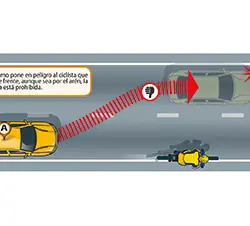
Quiere adelantar a un ciclista que circula por el arcén; ¿qué distancia lateral debe dejar?
You want to overtake a cyclist who is riding on the hard shoulder. What lateral distance must you leave?
- AUn metro, al menos.At least one metre.
- BAl menos metro y medio.At least one and a half metres.
- CNo importa la distancia porque circula por el arcén.The distance does not matter, because the cyclist is on the hard shoulder.
ExplanationWhen overtaking cyclists, a minimum lateral clearance of 1.5 metres is compulsory, also when they are riding on the hard shoulder, because of the serious risk they face if they are touched.
En el interior de un túnel, si no pretendemos adelantar, ¿qué distancia de seguridad tenemos que mantener con nuestro turismo respecto al vehículo que nos precede?
Inside a tunnel, if we do not intend to overtake, what safe distance must we keep in our car from the vehicle in front?
- A50 metros.50 metres.
- B150 metros si el vehículo que nos precede es de más de 3.500 kg de M.M.A.150 metres if the vehicle in front has a MAM of more than 3,500 kg.
- C100 metros.100 metres.
ExplanationAccording to Article 95.6 of the General Traffic Regulations, inside a tunnel and with no intention of overtaking, you must keep at least 100 metres or 4 seconds from the vehicle in front. The 150 metres or 6 seconds depend on the MAM of your own vehicle, not of the one in front.
No podremos conducir a más de 20 kilómetros por hora en...
We may not drive at more than 20 kilometres per hour on...
- Avías urbanas con un carril por sentido.urban roads with one lane in each direction.
- Bvías urbanas con plataforma única de calzada y acera.urban roads where the carriageway and the pavement are on a single level.
- Cvías urbanas con dos carriles por sentido.urban roads with two lanes in each direction.
ExplanationArticle 50.1 of the General Traffic Regulations (RGC) sets, when there are no specific signs, 20 km/h on urban roads where the carriageway and the pavement are on a single level, 30 km/h on roads with a single lane in each direction and 50 km/h on roads with two or more lanes in each direction.
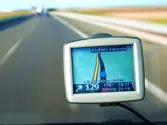
¿Pueden los sistemas de navegación contribuir al control de la velocidad de circulación?
Can satnav systems help you control your speed?
- ASolo cuando se superan los 100 km/h.Only above 100 km/h.
- BLos sistemas de navegación no influyen en el control de la velocidad.Satnav systems have no effect on speed control.
- CSí, aunque la fuente principal de información debe ser siempre el velocímetro.Yes, although the main source of information must always be the speedometer.
ExplanationAlthough a satnav can tell us the speed we are travelling at, it is not a good idea to rely on it, because it may give wrong readings. The vehicle's speedometer is a reliable source of information about speed, so we should always go by it.
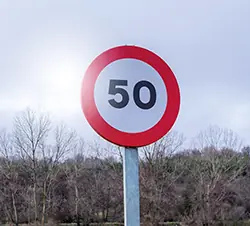
¿Con qué objetivo se establecen los límites de velocidad?
What is the purpose of speed limits?
- APara garantizar la máxima seguridad y fluidez.To ensure maximum safety and traffic flow.
- BPara garantizar la máxima fluidez, aunque disminuya la seguridad.To ensure maximum traffic flow, even if safety is reduced.
- CPara garantizar la máxima seguridad, aunque disminuya la fluidezTo ensure maximum safety, even if traffic flow is reduced.
ExplanationSpeed limits aim to balance maximum safety with the smoothest possible traffic flow: uniform, appropriate speeds reduce accidents without obstructing traffic.
Al adelantar a ciclistas en ascensos prolongados, ¿es aconsejable aumentar la separación lateral por encima de la mínima establecida por la norma?
When overtaking cyclists on long uphill stretches, is it advisable to increase the lateral clearance beyond the minimum set by the rules?
- ASi, pero solo en vías con más de un carril para cada sentido de la circulación.Yes, but only on roads with more than one lane in each direction.
- BNo; de hecho, es aconsejable reducir la separación lateral al mínimo posible.No; in fact, it is advisable to reduce the lateral clearance as much as possible.
- CSi, ya que debido al esfuerzo su trayectoria puede ser oscilante.Yes, because the effort may make their path unsteady.
ExplanationWhen overtaking cyclists on long uphill stretches, it is advisable to increase the lateral clearance beyond the minimum set by the rules. This is because on long climbs cyclists make an extra effort and their path may become more unsteady or less predictable. A wider lateral clearance when overtaking them therefore gives a greater safety margin and more room to manoeuvre if the cyclists make unexpected movements.
Para un turismo sin remolque, y salvo señalización, la velocidad máxima genérica en carretera convencional fuera de poblado es de:
For a car without a trailer, unless signs say otherwise, the general maximum speed on a conventional road outside a built-up area is:
- A80 km/h80 km/h
- B90 km/h90 km/h
- C100 km/h100 km/h
ExplanationThe correct answer is 90 km/h: 80 is for a car with a trailer, and 100 was the limit before the 2019 reform.
Cuando su ciclomotor arrastre un remolque, ¿podrá alcanzar los 45 kilómetros por hora?
When your moped is towing a trailer, may it reach 45 kilometres per hour?
- ASí.Yes.
- BNo.No.
- CSí, si el remolque va vacío.Yes, if the trailer is empty.
ExplanationAccording to Article 12.3 of the General Traffic Regulations, a moped towing a trailer may only do so during the day and must reduce its general maximum speed by 10%. Outside built-up areas this is 45 km/h, so with a trailer it may not go faster than 40.5 km/h.
En un tramo de vía donde las viviendas tienen acceso directo a la calzada, ¿hay que tomar alguna precaución?
On a stretch of road where houses have direct access to the carriageway, do you need to take any precautions?
- ANo.No.
- BSí, reducir la velocidad.Yes, reduce speed.
- CSí, realizar señales acústicas para advertir de la presencia del vehículo.Yes, use the horn to warn that the vehicle is there.
ExplanationArticle 46.1.d of the General Traffic Regulations requires you to drive at a moderate speed and, if necessary, stop on stretches with buildings that have direct access to the part of the road you are using, because people or vehicles may come out unexpectedly.
En una autopista dentro de una zona urbana, ¿cuál es la velocidad máxima permitida para un coche si no hay señales?
On a motorway (autopista) in an urban area, what is the maximum speed allowed for a car if there are no signs?
- A80 km/h80 km/h
- B120 km/h120 km/h
- C100 km/h100 km/h
ExplanationOn motorways (autopistas) that pass through urban areas in Spain, if there are no signs showing another limit, the maximum speed allowed for cars is 80 km/h. This limit is due to the higher risk linked to dense traffic, the number of exits and possible interaction with pedestrians or public transport. By comparison, on motorways outside urban areas the maximum speed allowed is 120 km/h, but in urban areas it is reduced because of the possible dangers.
En carretera, ¿qué velocidad máxima no podrá rebasar un ciclomotor?
On an open road, what maximum speed must a moped not exceed?
- A50 km/h.50 km/h.
- B40 km/h.40 km/h.
- C45 km/h.45 km/h.
ExplanationAccording to Article 48.1.e) of the General Traffic Regulations, cycles, two- and three-wheeled mopeds and light quadricycles may not exceed 45 km/h outside built-up areas. This figure is the same as a moped's maximum design speed.
Un turismo que arrastra un remolque ve reducida su velocidad máxima respecto a la de un turismo solo:
Is the maximum speed of a car towing a trailer lower than that of a car on its own?
- ANo, circula al mismo límite.No, it has the same limit.
- BSí, tiene límites de velocidad inferiores.Yes, it has lower speed limits.
- CSolo en ciudad.Only in town.
ExplanationCombinations of vehicles with a trailer have lower speed limits than the vehicle on its own.
¿Cuál es la principal causa de los choques por alcance?
What is the main cause of rear-end collisions?
- AVelocidades muy bajas.Very low speeds.
- BNo mantener la distancia de seguridad con el vehículo que va delante.Not keeping a safe distance from the vehicle in front.
- CVelocidades superiores a 100 km/h.Speeds over 100 km/h.
ExplanationMost rear-end collisions happen because a safe distance is not kept. Article 54.1 of the General Traffic Regulations requires you to leave a clear space behind the vehicle in front that allows you to stop, if it brakes sharply, without hitting it.
Si circulamos con un camión cargado....
If we are driving a loaded lorry...
- ADeberemos disminuir la distancia de seguridad ya que la distancia de frenado aumenta.We must reduce the safe distance, because the braking distance increases.
- BDeberemos aumentar la distancia de seguridad ya que la distancia de frenado disminuye.We must increase the safe distance, because the braking distance decreases.
- CDeberemos aumentar la distancia de seguridad ya que la distancia de frenado aumenta.We must increase the safe distance, because the braking distance increases.
ExplanationA loaded vehicle takes longer to stop, so the braking distance increases. Therefore we increase the safe distance.
¿Qué distancia de seguridad deberá mantener una motocicleta con el vehículo que le precede?
What safe distance must a motorcycle keep from the vehicle in front?
- A100 metros como mínimo.At least 100 metres.
- B50 metros como mínimo.At least 50 metres.
- CLa suficiente para detenerse en caso de frenado brusco.Enough to stop if the vehicle in front brakes sharply.
ExplanationA motorcycle must keep a safe distance long enough to stop if the vehicle in front brakes sharply.
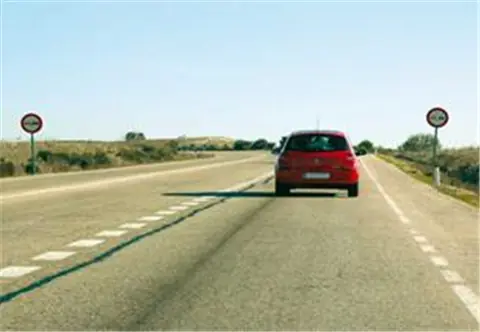
¿Cuál es la velocidad máxima permitida en esta vía para un camión de 3.500 kg de MMA?
What is the maximum speed allowed on this road for a lorry with a MAM of 3,500 kg?
- A90 kilómetros por hora.90 kilometres per hour.
- B70 kilómetros por hora.70 kilometres per hour.
- C80 kilómetros por hora.80 kilometres per hour.
ExplanationAccording to Article 48 of the General Traffic Regulations (RGC), lorries have a limit of 80 km/h on conventional roads and 90 km/h on motorways (autopistas) and dual carriageways (autovías), whatever their mass. This road is a conventional road, so the maximum is 80 km/h.
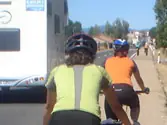
¿Deberá usted moderar la velocidad al aproximarse a bicicletas circulando?
Must you slow down when approaching bicycles on the road?
- ANo.No.
- BSí, llegando incluso a detenerme si las circunstancias lo exigen.Yes, and even stop if the circumstances require it.
- CSolo si circulan en grupo.Only if they are riding in a group.
ExplanationYou must slow down when approaching a bicycle on the road, and the regulations also state that we must stop if the circumstances require it.
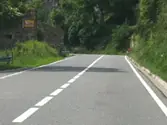
Un turismo en esta vía, ¿a qué velocidad máxima puede adelantar?
What is the maximum speed at which a car may overtake on this road?
- AA 90 km/h90 km/h
- BA 110 km/h.110 km/h.
- CA 120 km/h.120 km/h.
ExplanationOn this conventional road the general limit for a car is 90 km/h. Since 21 March 2022, under Law 18/2021, you may no longer exceed the maximum speed by 20 km/h to overtake, so you may not go over 90 km/h even when overtaking.
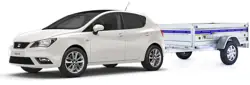
Un turismo con remolque de 750 kg de MMA, ¿A qué velocidad puede circular como máximo en una autovía?
What is the maximum speed at which a car with a trailer with a MAM of 750 kg may drive on a dual carriageway (autovía)?
- A120 km/h.120 km/h.
- B100 km/h.100 km/h.
- C90 km/h.90 km/h.
ExplanationUnder Article 48 of the General Traffic Regulations, motor cars towing a trailer have a limit of 90 km/h on motorways (autopistas) and dual carriageways (autovías) and 80 km/h on conventional roads, whatever the mass of the trailer. The 120 km/h limit only applies to cars without a trailer.
¿Cuál es la velocidad máxima en vía urbana con plataforma única de calzada y acera?
What is the maximum speed on a single-level street in a built-up area, where the carriageway and pavement are at the same level?
- A10 km/h10 km/h
- B20 km/h20 km/h
- C30 km/h30 km/h
ExplanationSingle-level street, with the carriageway and pavement at the same level: 20 km/h.
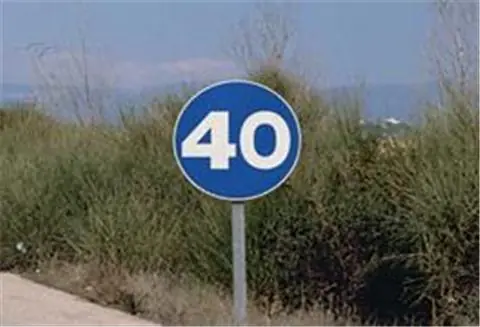
¿Es obligatorio cumplir los limites mínimos de velocidad?
Is it compulsory to comply with minimum speed limits?
- ASí.Yes.
- BSólo se deben cumplir los limites máximos.Only maximum limits must be complied with.
- CNo, porque son unas velocidades aconsejables.No, because they are advisory speeds.
ExplanationYes. Minimum speed limits, whether general or signed, are compulsory: driving below them without a justified reason hinders traffic and is an offence (Article 49 of the General Traffic Regulations). They are not just recommendations.
Se denomina distancia de reacción:
Reaction distance is:
- ALa distancia recorrida desde que se comienza a frenar hasta que se detiene el vehículo.The distance travelled from when you start braking until the vehicle stops.
- BLa distancia recorrida desde que se ve un peligro hasta que se actúa sobre los mandos del vehículo.The distance travelled from when you see a hazard until you operate the vehicle's controls.
- CLa distancia que debe dejarse entre dos vehículos cuando van circulando uno detrás del otro.The distance that must be left between two vehicles travelling one behind the other.
ExplanationReaction distance is the number of metres the vehicle travels during the reaction time. It depends on the reaction time and on the speed (the higher the speed, the more metres travelled in the same time). Reaction time is the time from when the driver sees an obstacle until they react. It varies with the driver's physical and mental state, never with the speed or the condition of the road. Although it may seem that reacting to an obstacle or an unexpected situation should be instant, a driver's average reaction time is about 0.75 seconds.
¿Qué debe hacer si, mientras circula, su vehículo no puede alcanzar la velocidad mínima exigida y existe el riesgo de ser alcanzado por otro vehículo desde atrás?
What must you do if, while driving, your vehicle cannot reach the required minimum speed and there is a risk of being hit from behind by another vehicle?
- AEncender las luces de emergencia.Switch on the hazard warning lights.
- BPisar el freno de forma intermitente para advertir con las luces de freno que va a reducir la velocidad.Press the brake intermittently to warn with the brake lights that you are going to slow down.
- CHacer destellos con las luces de carretera (luz larga).Flash your main beam.
ExplanationUnder Article 49.3 of the General Traffic Regulations (RGC), when a vehicle cannot reach the required minimum speed and there is a risk of being hit from behind, it must be driven with the hazard warning lights on. Braking in jerks or flashing your lights does not serve as a warning.
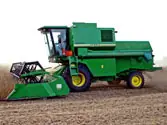
¿Cuál es la velocidad máxima de un vehículo especial que no dispone de luz de freno?
What is the maximum speed for a special vehicle that has no brake light?
- A25 km/h.25 km/h.
- B20 km/h.20 km/h.
- C40 km/h.40 km/h.
ExplanationSpecial vehicles that have no brake light, that tow a trailer, or that are two-wheel tractors have a maximum speed of 25 km/h.
¿A qué velocidad máxima puede circular un turismo con remolque por una travesía?
What is the maximum speed at which a car towing a trailer may drive in a travesía (stretch of road through a town)?
- AA 40 kilómetros por hora.40 kilometres per hour.
- BA 30 kilómetros por hora.30 kilometres per hour.
- CA 50 kilómetros por hora.50 kilometres per hour.
ExplanationIn travesías the general limit is 50 km/h for all types of vehicle, including cars towing a trailer (Article 50 of the General Traffic Regulations). It can be lower only if signs say so. The 40 km/h limit is the one for vehicles carrying dangerous goods.
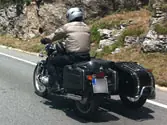
¿Cuál será la velocidad máxima de una moto con sidecar al circular por una autopista?
What is the maximum speed of a motorcycle with a sidecar on a motorway (autopista)?
- A120 km/h.120 km/h.
- B100 km/h.100 km/h.
- C90 km/h.90 km/h.
ExplanationThe maximum speed for a motorcycle on a motorway (autopista) is 120 km/h, whether or not it has a sidecar.
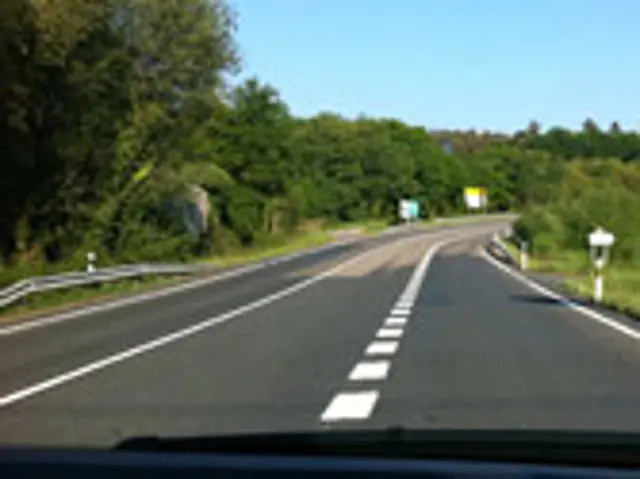
¿Cuál es la velocidad máxima permitida en una carretera convencional para un camión con masa máxima autorizada (MMA) de 3500 kg?
What is the maximum speed allowed on a conventional road for a lorry with a maximum authorised mass (MAM) of 3,500 kg?
- A70 km/h.70 km/h.
- B90 km/h.90 km/h.
- C80 km/h.80 km/h.
ExplanationAccording to the table in Article 48.1.a) of the General Traffic Regulations, lorries have a general limit of 80 km/h on conventional roads, whatever their maximum authorised mass, the same as vans and motor vehicles with a trailer. The 90 km/h limit applies to cars and motorcycles, among others.
¿Cuál es la velocidad máxima genérica dentro de poblado en una vía con tres carriles por sentido?
What is the general maximum speed inside a built-up area on a road with three lanes in each direction?
- A50 km/h.50 km/h.
- B45 km/h.45 km/h.
- C80 km/h.80 km/h.
ExplanationThe general speed limits on urban roads depend on the type of carriageway: a) 20 km/h on single-level streets where the carriageway and pavement are at the same level; b) 30 km/h on roads with only one lane in each direction; c) 50 km/h on roads with two or more lanes in each direction (40 km/h for vehicles carrying dangerous goods). Lanes reserved for certain users or only for public transport are not counted for this purpose. The local authority may lower or raise these limits with specific signs. On travesías the limit is 50 km/h for all vehicles, except vehicles carrying dangerous goods, which have a limit of 40 km/h. The local authority may lower this limit by agreement with the road owner, with specific signs.
Circulando por un túnel, si no pretende adelantar al vehículo que le precede, ¿qué distancia de seguridad debe mantener?
When driving through a tunnel, if you do not intend to overtake the vehicle in front, what safe distance must you keep?
- A100 metros como mínimo.At least 100 metres.
- B150 metros como mínimo.At least 150 metres.
- CLa distancia que me permita frenar sin colisionar con el vehículo que me precede.The distance that allows me to brake without hitting the vehicle in front.
ExplanationThe safe distance is the space that allows you to stop without hitting the vehicle in front if it brakes suddenly, taking into account speed, grip and braking conditions. Also, if we do not intend to overtake, we must leave room for the vehicle behind to overtake us. In tunnels and underpasses we must keep a safe distance of at least 100 metres or 4 seconds from the vehicle in front. Vehicles with a maximum authorised mass (MAM) over 3,500 kg: 150 metres or 6 seconds.
Un turismo circula por una carretera convencional. ¿Cuándo se considera que su velocidad está anormalmente reducida?
A car is travelling on a conventional road. When is its speed considered abnormally low?
- ACuando vaya a menos de 60 km/h.When it is below 60 km/h.
- BCuando vaya a menos de 40 km/h.When it is below 40 km/h.
- CCuando vaya a menos de 45 km/h.When it is below 45 km/h.
ExplanationOn a conventional road the general speed limit for a car is 90 km/h (Article 48.1.a of the General Traffic Regulations). On roads other than motorways (autopistas) and dual carriageways (autovías), a speed below half of the general limit is considered abnormally low (Article 49.1): half of 90 is 45 km/h.

¿Qué debe hacer siempre que se acerque a un autobús del que bajan niños?
What must you always do when approaching a bus from which children are getting off?
- ADetenerse hasta que el autobús reanude su marcha.Stop until the bus moves off again.
- BTocar el claxon repetidamente para advertir de su presencia.Sound the horn repeatedly to warn them you are there.
- CModerar la velocidad, e incluso detenerse si fuera necesario.Slow down, and even stop if necessary.
ExplanationChildren may cross unexpectedly when they get off the bus: the rules require you to slow down and even stop if necessary. You do not have to wait for the bus to move off.
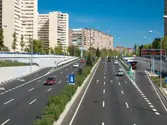
¿Cuál es la velocidad máxima a la que se podrá circular en una autovía dentro de poblado?
What is the maximum speed allowed on a dual carriageway (autovía) inside a built-up area?
- A120 km/h.120 km/h.
- B80 km/h.80 km/h.
- C100 km/h.100 km/h.
ExplanationOn a motorway (autopista) or dual carriageway (autovía) the maximum speed is 120 km/h, but inside a built-up area it is reduced to a maximum of 80 km/h.
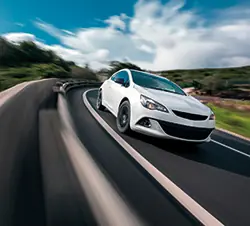
¿Cuál es, como norma general, la velocidad máxima a la que le está permitido circular a un turismo por una carretera convencional?
As a general rule, what is the maximum speed at which a car may travel on a conventional road?
- A80 km/h.80 km/h.
- B100 km/h.100 km/h.
- C90 km/h.90 km/h.
ExplanationSince 29 January 2019 (Royal Decree 1514/2018), the general maximum speed for cars on conventional roads is 90 km/h, whatever the width of the hard shoulder (Article 48.1.a of the General Traffic Regulations).
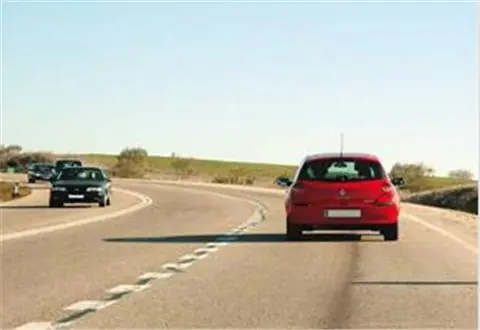
La velocidad, ¿influye en la distancia de reacción?
Does speed affect reaction distance?
- ASí, influye en la distancia de reacción.Yes, it affects reaction distance.
- BNo.No.
- CSólo afecta al tiempo de reacción.It only affects reaction time.
ExplanationSpeed does not change reaction time, but it does change reaction distance: the faster you drive, the more metres the vehicle travels during that time before it starts to brake.

Cuando se aproxime a niños o ancianos...
When you approach children or elderly people...
- Adebe adoptar las precauciones necesarias para no ponerles en peligro.you must take the necessary precautions so as not to put them in danger.
- Bles avisará con señales acústicas.you will warn them with the horn.
- Cse detendrá para cederles el paso.you will stop to give way to them.
ExplanationDrivers must drive at a moderate speed and, if necessary, stop when traffic, road or visibility conditions require it, and specifically when there are pedestrians on the part of the road being used or it can reasonably be foreseen that they may step into it, especially children, elderly people, blind people or people with obvious disabilities.
All topics
- Definitions
- Documents and penalty points
- The driver's condition
- Duties of drivers and pedestrians
- Vehicle safety devices
- Vehicle controls and equipment
- Vehicle lights and horn
- Traffic signs, markings and signals
- The road and its lanes
- Manoeuvres
- Right of way
- Carrying passengers and loads
- Driving safely in difficult conditions
- Vehicle mechanics and maintenance
- Road accidents and first aid
- Defensive and eco-driving
Independent app: not affiliated with or endorsed by the DGT (Spain's Directorate-General for Traffic) or the Ministry of the Interior. The official exam is booked with the DGT and taken at its test centres. The questions here are practice material; the DGT's official question bank is not public.
Basado en datos de la Agencia Estatal Boletín Oficial del Estado (https://www.boe.es). Textos consolidados de carácter meramente informativo. La AEBOE no patrocina ni respalda este sitio.
Parte de las preguntas procede de los tests de la revista «Tráfico y Seguridad Vial» de la DGT, reproducidos con indicación de la fuente.