
DGT test · 961 questions
Speed and distances · Page 18 of 20
Speed limits by road and vehicle type, adapting speed to conditions, safe following distance and stopping distance.
Questions in this topic, with answers
961 questions, 50 per page, with the correct answer and the explanation. Page 18 of 20.
¿Hay relación entre la velocidad y el daño corporal?
Is there a link between speed and bodily injury?
- ANo.No.
- BSí, la gravedad del accidente se relaciona con la energía acumulada con la velocidad.Yes, the severity of a crash is linked to the energy built up with speed.
- CNo, si es un atropello a peatones.No, if it is a pedestrian being hit.
ExplanationThe higher the speed, the more energy the vehicle builds up and the more serious the injuries in a collision or when a pedestrian is hit. An impact at 80 km/h is roughly the same as falling from a height of about 25 metres, the height of an eighth floor.
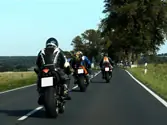
En una carretera convencional, el conductor de una motocicleta, ¿puede rebasar la velocidad máxima genérica en alguna circunstancia?
On a conventional road, may a motorcyclist exceed the general speed limit in any circumstances?
- ANo, sólo la pueden rebasar los turismos para adelantar.No, only cars may exceed it, to overtake.
- BNo, en ningún caso.No, never.
- CSí, para adelantar, en 20 km/hYes, by 20 km/h to overtake.
ExplanationOn a conventional road, the general limit for a motorcycle is 90 km/h. Since 21 March 2022, under Law 18/2021, no vehicle may exceed the maximum speed by 20 km/h to overtake, neither cars nor motorcycles.
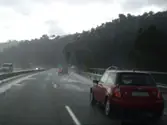
Circulando por una calzada mojada la distancia de seguridad que mantendremos con el vehículo que nos precede será...
When driving on a wet road, the safe distance we keep from the vehicle in front will be...
- ALa misma que con la calada seca, pues la distancia de seguridad depende de la velocidad y no del estado de la calzada.The same as on a dry road, because the safe distance depends on speed and not on the road surface.
- BMayor.Greater.
- CSerá menor, para poder observar mejor las maniobras del vehículo que nos precede.Shorter, so that we can better watch the manoeuvres of the vehicle in front.
ExplanationThe braking distance is the distance the vehicle travels from the moment the driver presses the brake until the vehicle stops. It can vary depending on speed, the condition of the tyres, suspension and brakes, the vehicle's load, the road and the weather. On a wet road the brakes lose effectiveness and the distance travelled while braking (braking distance) increases. So, to avoid possible collisions, the safe distance we keep from the vehicle in front will be greater than on a dry road.
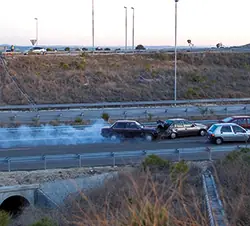
¿Qué puede aumentar la distancia de frenado?
What can increase the braking distance?
- AÚnicamente la velocidad.Only speed.
- BQue el vehículo lleve frenos de disco.The vehicle having disc brakes.
- CQue haya nieve o hielo en la calzada.Snow or ice on the carriageway.
ExplanationThe braking distance depends on speed, but also on the condition of the road, the tyres, the brakes and the load. With snow or ice, grip is much lower and the braking distance increases a lot. Disc brakes do not increase it.
La velocidad máxima por construcción de un ciclomotor, según su definición legal, es de:
According to its legal definition, the maximum design speed of a moped is:
- A45 km/h45 km/h
- B50 km/h50 km/h
- C40 km/h40 km/h
ExplanationBy design, a moped cannot go faster than 45 km/h.
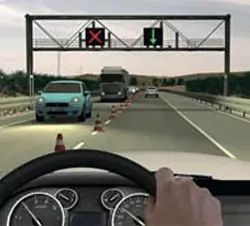
El carril izquierdo está abierto en sentido contrario al habitual; ¿a qué velocidad máxima pueden circular los vehículos que circulan por el carril derecho?
The left lane is open to traffic in the opposite direction to the usual one. What is the maximum speed for vehicles in the right lane?
- AA la velocidad máxima de la vía, 120 km/h.The road's maximum speed, 120 km/h.
- BA 60 km/h.60 km/h.
- CA 80 km/h.80 km/h.
ExplanationOn stretches with a lane opened in the opposite direction to the usual one, the maximum speed is limited to 80 km/h both in that lane and in the lane next to it, and dipped headlights must be switched on.
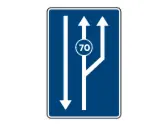
En una vía así señalizada, ¿circularemos correctamente por el carril central a 80 km/h?
On a road with these signs, are we driving correctly in the central lane at 80 km/h?
- ASí, podremos circular indistintamente por el carril central o el carril de la derecha.Yes, we may drive in either the central lane or the right-hand lane.
- BSí, en este caso es el carril que debemos usar obligatoriamente ya que circulamos a más de 70 km/h.Yes, in this case it is the lane we must use, because we are driving at more than 70 km/h.
- CComo norma general usaremos el carril de la derecha, pudiendo usar el central para adelantar.As a general rule we use the right-hand lane, and may use the central one to overtake.
ExplanationOn a road with these signs, the central lane may only be used by vehicles driving at 70 km/h or more, although, if circumstances allow, you must drive in the right-hand lane.
La distancia de reacción aumenta cuando...
Reaction distance increases when...
- AAumentamos la velocidad.we increase speed.
- BLos frenos no funcionan correctamente.the brakes are not working properly.
- CEl pavimento está mojado.the road surface is wet.
ExplanationReaction distance is the number of metres travelled during the reaction time. For example, if the reaction time is 1 second and we are driving at 40 km/h, the reaction distance would be 11 metres, so if we were driving at 80 km/h, we would travel 22 metres in 1 second. The condition of the brakes or the road has no effect at all.
¿A qué velocidad máxima puede circular un turismo en una autovía?
What is the maximum speed for a car on a dual carriageway (autovía)?
- A100 km/h.100 km/h.
- B110 km/h.110 km/h.
- C120 km/h.120 km/h.
ExplanationUnder Article 48.1.a of the General Traffic Regulations, the general maximum speed for cars on motorways (autopistas) and dual carriageways (autovías) is 120 km/h, unless a sign sets a lower one. On conventional roads it is 90 km/h.
En una pendiente descendente, ¿cuándo frena mejor el vehículo?
Going downhill, when does a vehicle brake better?
- ACuando lleva carga frena mejor.It brakes better when it is loaded.
- BCuando no lleva carga frena mejor.It brakes better when it is not loaded.
- CFrena igual con carga que sin carga.It brakes the same with or without a load.
ExplanationGoing downhill, a vehicle brakes better when it is not loaded. This is because a loaded vehicle has more mass, which increases inertia, so it needs more distance and more braking effort to stop. The load also increases the pressure and temperature in the braking system, which can reduce its effectiveness, especially on long descents. On the other hand, when the vehicle is not loaded, it weighs less, has less inertia and the brakes work more effectively, allowing safer, more controlled braking.
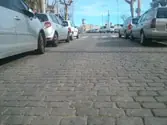
¿Cuál es la velocidad máxima permitida para un turismo en una vía urbana con plataforma única de calzada y acera?
What is the maximum speed allowed for a car on a single-level urban street, where the carriageway and pavement are at the same level?
- A45 km/h.45 km/h.
- B50 km/h.50 km/h.
- C20 km/h.20 km/h.
ExplanationThe general speed limits on urban roads depend on the type of carriageway: a) 20 km/h on single-level streets where the carriageway and pavement are at the same level; b) 30 km/h on roads with only one lane in each direction; c) 50 km/h on roads with two or more lanes in each direction (40 km/h for vehicles carrying dangerous goods). Lanes reserved for certain users or only for public transport are not counted for this purpose. The local authority may lower or raise these limits with specific signs. On travesías the limit is 50 km/h for all vehicles, except vehicles carrying dangerous goods, which have a limit of 40 km/h. The local authority may lower this limit by agreement with the road owner, with specific signs.
¿Qué distancia de seguridad se tendrá que mantener en un túnel?
What safe distance must be kept in a tunnel?
- A150 metros si el vehículo que nos precede tiene una M.M.A. superior a 3.500 kg.150 metres if the vehicle in front has a MAM of more than 3,500 kg.
- B100 metros como mínimo.At least 100 metres.
- CLa suficiente para no colisionar con el vehículo que nos precede.Enough not to hit the vehicle in front.
ExplanationThe safe distance we must keep in a tunnel is at least 100 metres. If the vehicle we are driving has a MAM of more than 3500 kg, the safe distance must be at least 150 metres. The MAM of the vehicle in front makes no difference.

En esta calle no hay señal de limitación de velocidad. ¿A qué velocidad máxima se puede circular?
There is no speed limit sign on this street. What is the maximum speed at which you may drive?
- A60 km/h.60 km/h.
- B40 km/h.40 km/h.
- C50 km/h.50 km/h.
ExplanationThe street in the picture has two lanes in each direction and, without signs, the general urban limit in that case is 50 km/h (Article 50.1.c of the General Traffic Regulations). With a single lane in each direction it would be 30 km/h, and 20 km/h on a single-level (shared) street where the carriageway and pavement are at the same level.
¿Cuál será la velocidad máxima de un vehículo que arrastra un remolque de 700 kg en autovía?
What is the maximum speed on a dual carriageway (autovía) of a vehicle towing a 700 kg trailer?
- A100 km/h.100 km/h.
- B90 km/h.90 km/h.
- C80 km/h.80 km/h.
ExplanationOn motorways (autopistas) and dual carriageways (autovías), motor cars towing a trailer have a general limit of 90 km/h, whatever the mass of the trailer (Article 48.1.a of the General Traffic Regulations (RGC)). Since 2019 there is no longer an 80 km/h limit for trailers of more than 750 kg.
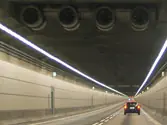
¿Cuál es la distancia mínima que tendremos que mantener con el vehículo que nos precede en un paso inferior?
What is the minimum distance we must keep from the vehicle in front in an underpass?
- A100 metros, aún en el caso de que se adelante.100 metres, even when overtaking.
- BLa que permita detenernos sin colisionar con el vehículo que nos precede.The distance that lets us stop without hitting the vehicle in front.
- C100 metros como mínimo, cuando no se pretenda adelantar.At least 100 metres, when you do not intend to overtake.
ExplanationIn an underpass or a tunnel, the distance we must keep from the vehicle in front is at least 100 metres. When we intend to overtake, we do not need to keep this distance.
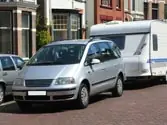
¿Cuál será la velocidad para un turismo que arrastra un remolque no ligero por una autopista?
What is the speed for a car towing a trailer that is not a light trailer on a motorway (autopista)?
- A120 km/h.120 km/h.
- B80 km/h.80 km/h.
- C90 km/h.90 km/h.
ExplanationSince 2019, Article 48.1.a of the General Traffic Regulations (RGC) sets 90 km/h on motorways (autopistas) and dual carriageways (autovías) for motor cars towing a trailer, whether the trailer is light or not. There is no longer an 80 km/h limit for trailers of more than 750 kg.
En los túneles y los pasos inferiores, ¿cuál será la distancia de seguridad entre vehículos?
In tunnels and underpasses, what is the safe distance between vehicles?
- A100 m.100 m.
- B150 m.150 m.
- C300 m.300 m.
ExplanationIn tunnels and underpasses, when you do not intend to overtake, you must keep a distance of at least 100 m, which is the same as a gap of 4 seconds. Vehicles with a maximum authorised mass over 3,500 kg must keep a distance of at least 150 m or a gap of at least 6 seconds.
¿Cuál será la velocidad mínima permitida para un camión que arrastra un remolque ligero en autopista?
What is the minimum speed allowed for a lorry towing a light trailer on a motorway (autopista)?
- A80 km/h.80 km/h.
- B60 km/h.60 km/h.
- C90 km/h.90 km/h.
ExplanationThe minimum speed for all vehicles on a motorway (autopista) is 60 km/h.
¿Qué distancia lateral debemos dejar al adelantar a un peatón en una carretera convencional?
What lateral distance must you leave when overtaking a pedestrian on a conventional road?
- A1,5 metros como mínimo.At least 1.5 metres.
- BProporcional a la anchura y características de la calzada.In proportion to the width and features of the carriageway.
- C1 metro como máximo.No more than 1 metre.
ExplanationAccording to the General Traffic Regulations (RGC), when overtaking a pedestrian on a conventional road you must leave a lateral distance of at least 1.5 metres. This is to ensure the pedestrian's safety, since the extra space reduces the risk of accidents and allows a safe manoeuvre. The rules also state that the lateral gap must not be less than this, which highlights the importance of protecting the most vulnerable road users.
¿Qué distancia de seguridad debemos mantener con el vehículo que nos precede en un túnel?
What safe distance should we keep from the vehicle in front in a tunnel?
- A150 metros.150 metres.
- B100 metros.100 metres.
- C75 metros.75 metres.
ExplanationWhen we do not intend to overtake, we must keep a safe distance of at least 100 metres, or a gap of at least 4 seconds, from the vehicle in front.
¿Qué riesgo puede implicar frenar excesivamente con nuestra motocicleta?
What risk can braking too hard on our motorcycle involve?
- AQue el peso se vaya hacia atrás.The weight shifting backwards.
- BQue el conductor se desequilibre.The rider losing balance.
- CQue se bloqueen los frenos.The brakes locking.
ExplanationIf you press the brake controls too hard, the brakes can lock, and so can the motorcycle's wheels, which would make the braking distance longer.
¿Cuál es la velocidad mínima permitida para circular por una autopista?
What is the minimum speed allowed on a motorway (autopista)?
- A80 km/h.80 km/h.
- B60 km/h.60 km/h.
- C120 km/h.120 km/h.
ExplanationSpeed limits on motorways (autopistas) and dual carriageways (autovías): outside built-up areas, maximum 120 km/h and minimum 60 km/h; in built-up areas, maximum 80 km/h and minimum 60 km/h.
Al adelantar en una carretera convencional, ¿qué vehículos pueden superar la velocidad máxima permitida en 20 km/h?
When overtaking on a conventional road, which vehicles may exceed the maximum speed allowed by 20 km/h?
- ACoches.Cars.
- BNinguno.None.
- CCoches, motocicletas y autocaravanas con MMA inferior a 3.500 kg.Cars, motorcycles and motorhomes with a MAM of less than 3,500 kg.
ExplanationNo vehicle may exceed the maximum speed in order to overtake. Article 51 of the General Traffic Regulations (RGC), which allowed cars and motorcycles to exceed it by 20 km/h on conventional roads, was repealed by Law 18/2021 with effect from 21 March 2022.

Circulando por un paso inferior, ¿cuál será la distancia de seguridad que mantendremos con el vehículo que nos precede?
When driving through an underpass, what safe distance will we keep from the vehicle in front?
- A150 metros, como mínimoAt least 150 metres.
- B100 metros, como mínimoAt least 100 metres.
- CLa distancia que nos permita detener en caso de frenado brusco del vehículo que nos precede.The distance that allows us to stop if the vehicle in front brakes suddenly.
ExplanationIn tunnels and underpasses, when not intending to overtake, we will keep a distance of at least 100 metres or a gap of four seconds from the vehicle in front.
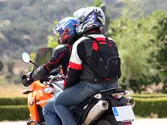
Si circulamos en moto llevando un pasajero, ¿influirá esta circunstancia en la distancia de frenado?
If we are riding a motorcycle with a passenger, does this affect the braking distance?
- ANo, no influye.No, it has no effect.
- BSí, aumenta.Yes, it increases.
- CSí, disminuye.Yes, it decreases.
ExplanationWith a passenger the motorcycle weighs more, so it is harder to stop and the braking distance increases.
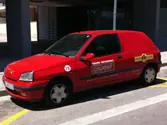
La velocidad máxima a la que puede circular un automóvil derivado de turismo en una carretera convencional es de...
The maximum speed at which a car-derived vehicle may travel on a conventional road is...
- A80 km/h.80 km/h.
- B90 km/h.90 km/h.
- C100 km/h.100 km/h.
ExplanationOn conventional roads, the maximum speed for car-derived vehicles, buses and adaptable mixed-use vehicles is 90 km/h.
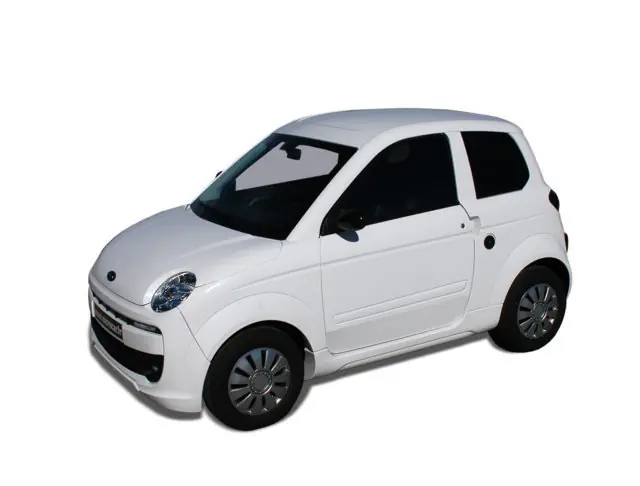
En una vía fuera de un poblado, ¿cuál es la velocidad máxima a la que puede ir un cuadriciclo ligero?
On a road outside a built-up area, what is the maximum speed of a light quadricycle?
- AA 45 kilómetros por hora.45 kilometres per hour.
- BA 90 kilómetros por hora.90 kilometres per hour.
- CA 70 kilómetros por hora.70 kilometres per hour.
ExplanationOutside built-up areas, Article 48.1.e of the General Traffic Regulations (RGC) sets 45 km/h for cycles, mopeds and light quadricycles. The 70 km/h limit is for quadricycles that are not light (Article 48.1.h), and 90 km/h is, for example, the limit for cars on conventional roads.
¿Cuál será la velocidad máxima de una autocaravana de hasta 3500 kg en una autovía?
What is the maximum speed of a motorhome of up to 3,500 kg on a dual carriageway (autovía)?
- A120 km/h.120 km/h.
- B100 km/h.100 km/h.
- C90 km/h.90 km/h.
ExplanationOn a motorway (autopista) or dual carriageway (autovía), a motorhome of up to 3,500 kg may travel at 120 km/h. When its MAM is over 3,500 kg, its maximum speed is 90 km/h.
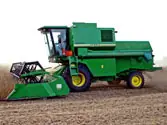
Un vehículo especial que carece de señalización de freno, no debe rebasar la velocidad máxima de...
A special vehicle that has no brake lights must not exceed a maximum speed of...
- A40 km/h.40 km/h.
- B70 km/h.70 km/h.
- C25 km/h.25 km/h.
ExplanationA special vehicle that has no brake light may drive at a maximum of 25 km/h. The same applies to those with a trailer and to two-wheeled tractors.
La velocidad del vehículo se puede reducir...
The vehicle's speed can be reduced...
- Asólo con el motor.only with the engine.
- Bcon los frenos y con el motor.with the brakes and with the engine.
- Csólo con los frenos.only with the brakes.
ExplanationThe vehicle's speed can be reduced by applying the brakes or by engine braking: when we take our foot off the accelerator (helped by rolling resistance) or change down to a lower gear, the engine itself holds the vehicle back.
El tiempo de reacción normalmente será de...
Reaction time will normally be...
- A0,75 segundos.0.75 seconds.
- B0,40 segundos.0.40 seconds.
- C1 minuto y medio.A minute and a half.
ExplanationA driver's normal reaction time is 0.75 seconds, during which, for example, if we are driving at 50 km/h, we will travel about 10 metres before we start to brake.
¿Cual es la velocidad máxima que no podrán rebasar los turismos cuando circulen por una autopista o autovía dentro de poblado?
What maximum speed may cars not exceed when driving on a motorway (autopista) or dual carriageway (autovía) inside a built-up area?
- A80 km/h.80 km/h.
- B80 km/h más 20 km/h para adelantar.80 km/h, plus 20 km/h for overtaking.
- C50 km/h.50 km/h.
ExplanationWhen driving on a motorway (autopista) or dual carriageway (autovía) inside a built-up area, the maximum speed is 80 km/h. Outside built-up areas, the maximum speed is 120 km/h.
¿Se puede exceder la velocidad máxima indicada en una señal de limitación de velocidad?
May you exceed the maximum speed shown on a speed limit sign?
- ASí, hasta 20 km/h para adelantar.Yes, by up to 20 km/h to overtake.
- BNo.No.
- CSí, mientras lo permitan las circunstancias.Yes, as long as the circumstances allow it.
ExplanationThe maximum speed sign (R-301) prohibits driving faster than the speed shown. There is no margin for overtaking: the old 20 km/h margin in Article 51 of the General Traffic Regulations was repealed with effect from 21 March 2022. Nor may you exceed the limit because the circumstances seem favourable.
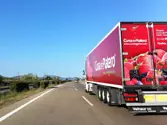
¿Podemos reducir la distancia de seguridad cuándo adelantemos a otro vehículo?
May we reduce the safe distance when overtaking another vehicle?
- ASí, en autopistas y autovías.Yes, on motorways (autopistas) and dual carriageways (autovías).
- BSí, para poder realizar el adelantamiento más rápido.Yes, so that we can overtake more quickly.
- CNo, la distancia de seguridad siempre se debe guardar.No, the safe distance must always be kept.
ExplanationThe safe distance is the space that lets you stop, if you have to brake suddenly, without hitting the vehicle in front, taking into account speed, grip and braking conditions. If we reduce it, even to overtake, the vehicle in front could brake suddenly and we would crash into it, so this distance must always be kept from other vehicles.
La distancia de detención, es...
Stopping distance is...
- AEs la distancia que recorre el vehículo desde que el conductor ve, un obstáculo, hasta que el vehículo se detiene.the distance the vehicle travels from when the driver sees an obstacle until the vehicle stops.
- BEs la distancia que recorre el vehículo desde que el conductor, ve un obstáculo, hasta que actúa sobre los mandos.the distance the vehicle travels from when the driver sees an obstacle until they operate the controls.
- CEs la distancia que recorre el vehículo, desde que el conductor frena hasta que se detiene.the distance the vehicle travels from when the driver brakes until it stops.
ExplanationStopping distance is the distance the vehicle travels from when an obstacle or danger is perceived until the vehicle comes to a complete stop. In other words, it is the reaction distance plus the braking distance. Braking and stopping distances depend on several factors, such as the condition of the vehicle and the road, the weather, or the driver's skill. Reaction distance depends directly on the driver and on the speed.
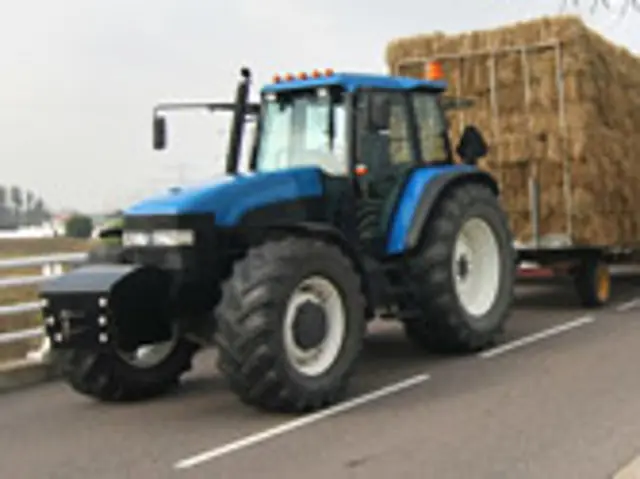
¿Cuál es la velocidad máxima general para un vehículo especial que arrastra un remolque?
What is the general maximum speed for a special vehicle towing a trailer?
- A25 kilómetros por hora.25 kilometres per hour.
- B40 kilómetros por hora.40 kilometres per hour.
- C60 kilómetros por hora.60 kilometres per hour.
ExplanationThe general maximum speed for special vehicles towing a trailer is 25 kilometres per hour, according to the General Traffic Regulations (RGC). This is set for road safety, since these vehicles may have limited manoeuvrability and braking ability. The rule aims to prevent accidents and make sure that drivers keep proper control of the moving vehicle and trailer.
¿Leer un periódico o mirar un mapa mientras conduce es peligroso?
Is reading a newspaper or looking at a map while driving dangerous?
- ASí.Yes.
- BLeer un periódico sí, pero no mirar un mapa.Reading a newspaper is, but looking at a map is not.
- CSolo si aparta la vista de la carretera más de dos segundos.Only if you take your eyes off the road for more than two seconds.
ExplanationArticle 18.1 of the General Traffic Regulations requires the driver to pay constant attention to driving. Reading or looking at a map takes your eyes off the road: at 100 km/h, in just 2 seconds you travel more than 55 metres without control.
En una autopista, ¿está permitido circular a una velocidad anormalmente reducida cuando las condiciones meteorológicas son especialmente desfavorables?
On a motorway (autopista), is it allowed to drive at an abnormally low speed when the weather conditions are especially bad?
- ANo, porque es una autopista y es una vía de gran seguridad.No, because it is a motorway and a very safe road.
- BSí.Yes.
- CSí, si la circulación es escasa, pero no, si es densa.Yes, if traffic is light, but not if it is heavy.
ExplanationFog suddenly reduces visibility. Sometimes it even makes it impossible to keep driving, even with good lights. In that case, driving below the minimum speed is justified, because we must always adapt our speed to our field of vision and be able to stop our vehicle within it if anything unexpected happens.
¿Cuál es el límite genérico de velocidad para las motocicletas en una travesía, es decir, en un tramo de carretera que atraviesa un poblado?
What is the general speed limit for motorcycles in a travesía, that is, a stretch of road that passes through a town?
- A80 km/hora.80 km/h.
- B45 km/hora.45 km/h.
- C50 km/hora.50 km/h.
ExplanationAccording to Article 50.5 of the General Traffic Regulations, the general limit in a travesía is 50 km/h for all types of vehicles, including motorcycles. The local authority, in agreement with the road owner, may lower it with signs.
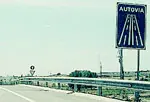
Los turismos, cuando circulen por una autovía que esté dentro de poblado, tienen como velocidad máxima permitida...
When cars are travelling on a dual carriageway (autovía) that runs through a built-up area, their maximum speed allowed is…
- A120 km/h.120 km/h.
- B50 km/h.50 km/h.
- C80 km/h.80 km/h.
ExplanationOn motorways (autopistas) and dual carriageways (autovías) that run through built-up areas, the general limit is 80 km/h (Article 50 of the General Traffic Regulations). It may only be raised if this is expressly signed; the 120 km/h limit is for these roads outside built-up areas.
¿Cuál es la velocidad máxima permitida para un camión circulando por una travesía?
What is the maximum speed allowed for a lorry in a travesía (a stretch of road through a town)?
- A40 km/h.40 km/h.
- B50 km/h.50 km/h.
- C80 km/h.80 km/h.
ExplanationThe general limit in a travesía is 50 km/h for all types of vehicles, including lorries (Article 50.5 of the General Traffic Regulations). It can be lowered by agreement between the local authority and the road owner, with signs.
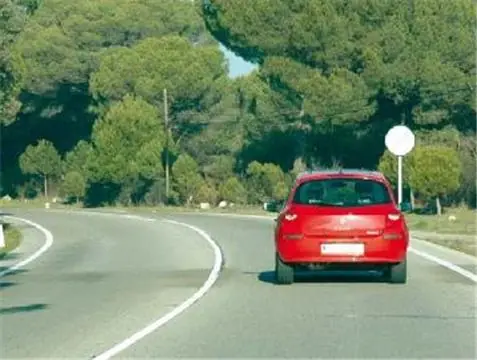
Conduce un camión de 3.000 kg. de MMA ¿Qué distancia debe dejar en este tramo de carretera?
You are driving a lorry with an MAM of 3,000 kg. What distance must you leave on this stretch of road?
- ALa distancia que permita a otros vehículos adelantarme.A distance that allows other vehicles to overtake me.
- B50 metros.50 metres.
- CLa distancia de seguridad.The safe distance.
ExplanationA lorry with an MAM of 3,000 kg must keep a safe distance that allows it to stop without hitting the vehicle in front. The minimum gap of 50 metres is only required for vehicles over 3,500 kg or over 10 metres long.
En una carretera convencional, ¿a qué velocidad máxima puede circular una motocicleta?
On a conventional road, what is the maximum speed at which a motorcycle may travel?
- AA 100 km/h.100 km/h.
- BA 90 km/h.90 km/h.
- CA 110 km/h.110 km/h.
ExplanationOn a conventional road the general maximum speed for cars and motorcycles is 90 km/h. Since 21 March 2022 it may not be exceeded by 20 km/h to overtake, and since 2019 there has no longer been a 100 km/h limit linked to the width of the hard shoulder.
Una de las principales causas de accidentes entre los jóvenes es...
One of the main causes of accidents among young people is...
- Afalta de confianza en su habilidad para conducir.a lack of confidence in their driving ability.
- Bfalta de reflejos.a lack of reflexes.
- Cel exceso de velocidad.speeding.
ExplanationSpeeding is one of the main causes of accidents among young drivers, because of lack of experience and overconfidence. As well as increasing the risk of an accident, it makes the consequences worse.
¿Qué distancia lateral debe dejarse al adelantar a un ciclista en carretera secundaria?
What lateral clearance must you leave when overtaking a cyclist on a secondary road?
- A1 metro1 metre
- B1,5 metros1.5 metres
- C2 metros2 metres
ExplanationLeave 1.5 metres of lateral clearance when overtaking cyclists.
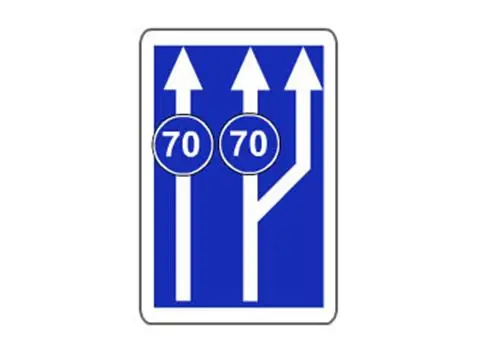
Circula a 80 kilómetros por hora, ¿por qué carril debe hacerlo?
You are driving at 80 km/h. Which lane should you use?
- APor el central, utilizando el derecho para facilitar los adelantamientos.The centre lane, using the right-hand lane to make overtaking easier.
- BPor cualquiera de ellos, ya que mi velocidad es superior a 70 kilómetros por hora.Any of them, because my speed is above 70 km/h.
- CPor el derecho, utilizando el resto cuando las circunstancias del tráfico o de la vía lo aconsejan.The right-hand lane, using the others when traffic or road circumstances make it advisable.
ExplanationOutside built-up areas you normally drive in the right-hand lane and use the others when traffic or road circumstances make it advisable (Article 31 of the General Traffic Regulations). Driving above the signed minimum speed does not require you to use the left-hand lanes.
Para adelantar a un ciclista en carretera debe dejar una separación lateral mínima de…
To overtake a cyclist on the road, you must leave a minimum lateral distance of...
- A1 metro1 metre
- B1,5 metros1.5 metres
- C2 metros2 metres
ExplanationUnder Article 85.4 of the General Traffic Regulations (as worded by RD 518/2026), when overtaking cyclists you must occupy part or all of the adjacent or opposite lane and keep at least 1.5 metres away; if the carriageway has more than one lane in each direction, you must change lanes completely.
¿Cuál será la velocidad máxima de un vehículo para personas de movilidad reducida?
What is the maximum speed of a vehicle for people with reduced mobility?
- A45 km/h.45 km/h.
- B60 km/h.60 km/h.
- C25 km/h.25 km/h.
ExplanationVehicles for people with reduced mobility are limited to 45 km/h, the same as cycles and mopeds.
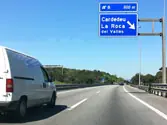
En esta vía, ¿está permitido superar la velocidad máxima genérica de la vía para adelantar?
On this road, is it permitted to go over the general maximum speed of the road in order to overtake?
- ASí, hasta los 140 km/h.Yes, up to 140 km/h.
- BSí, en 20 km/h.Yes, by 20 km/h.
- CNo.No.
ExplanationNo. Since 21 March 2022 you may not exceed the maximum speed to overtake on any road: Law 18/2021 repealed Article 51 of the General Traffic Regulations (RGC), which allowed cars and motorcycles to go 20 km/h over it when overtaking.
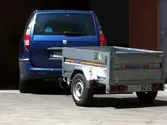
En poblado, ¿cuál es la velocidad máxima permitida para un turismo con remolque en una vía con dos carriles por sentido?
In a built-up area, what is the maximum speed permitted for a car towing a trailer on a road with two lanes in each direction?
- A40 kilómetros por hora.40 kilometres per hour.
- B60 kilómetros por hora.60 kilometres per hour.
- C50 kilómetros por hora.50 kilometres per hour.
ExplanationThe general urban limits apply to all types of vehicle, including cars towing a trailer: on roads with two or more lanes in each direction, 50 km/h (Article 50.1.c of the RGC). Only vehicles carrying dangerous goods have a lower limit, 40 km/h, on those roads and on travesías (Article 50.4).
All topics
- Definitions
- Documents and penalty points
- The driver's condition
- Duties of drivers and pedestrians
- Vehicle safety devices
- Vehicle controls and equipment
- Vehicle lights and horn
- Traffic signs, markings and signals
- The road and its lanes
- Manoeuvres
- Right of way
- Carrying passengers and loads
- Driving safely in difficult conditions
- Vehicle mechanics and maintenance
- Road accidents and first aid
- Defensive and eco-driving
Independent app: not affiliated with or endorsed by the DGT (Spain's Directorate-General for Traffic) or the Ministry of the Interior. The official exam is booked with the DGT and taken at its test centres. The questions here are practice material; the DGT's official question bank is not public.
Basado en datos de la Agencia Estatal Boletín Oficial del Estado (https://www.boe.es). Textos consolidados de carácter meramente informativo. La AEBOE no patrocina ni respalda este sitio.
Parte de las preguntas procede de los tests de la revista «Tráfico y Seguridad Vial» de la DGT, reproducidos con indicación de la fuente.