
DGT test · 1,397 questions
Traffic signs, markings and signals · Page 15 of 28
Road signs, road markings, traffic lights, police signals and temporary markings: what they mean and which one wins when they disagree. The topic with the most questions in the bank.
Questions in this topic, with answers
1,397 questions, 50 per page, with the correct answer and the explanation. Page 15 of 28.
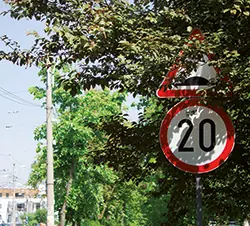
En los lugares donde se impida la visibilidad de la señalización a los usuarios a quienes les afecta está prohibido...
In places where the view of signs is blocked for the road users they apply to, it is prohibited to...
- Aparar, pero está permitido estacionar.stop, but parking is allowed.
- Bestacionar, pero está permitido parar.park, but stopping is allowed.
- Cparar y estacionar.stop and park.
ExplanationStopping is prohibited in places where it blocks the view of signs for the road users they apply to, and Article 94 of the General Traffic Regulations (RGC) extends the parking ban to all places where stopping is prohibited. So both are prohibited.
Si el conductor que nos precede mueve el brazo alternativamente de arriba abajo con movimientos cortos y rápidos, ¿qué nos está indicando?
If the driver in front moves their arm up and down with short, quick movements, what are they telling you?
- ALa intención de inmovilizar el vehículo o de frenar de modo considerable.The intention to stop the vehicle or to brake considerably.
- BLa existencia de un peligro en la calzada.That there is a danger on the carriageway.
- CQue va a cambiar de dirección a la izquierda.That they are going to turn left.
ExplanationMoving the arm up and down with short, quick movements, or repeatedly using the brake lights, shows the intention to stop the vehicle or to slow down considerably.
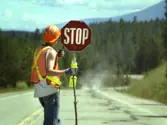
Cuando se señalizan tramos de obra, las señales verticales tendrán el fondo de color...
When roadworks are signposted, road signs will have a background that is...
- Ablanco.white.
- Bazul.blue.
- Camarillo.yellow.
ExplanationWhen roadworks are signposted, the road markings are yellow, and road signs also have a yellow background.
Si en una intersección encontramos señales distintas a la derecha y a la izquierda, ¿qué señal tendremos que respetar si pretendemos seguir de frente?
If, at a junction, you find different signs on the right and on the left, which sign must you obey if you intend to go straight on?
- ALa señal situada en nuestra derecha.The sign on your right.
- BLa señal situada en nuestra izquierda.The sign on your left.
- CLa señal mas restrictiva.The most restrictive sign.
ExplanationWhen there are different signs on the right and on the left at a junction, if you intend to go straight on or turn left you must obey the sign on your left. When you want to turn right, you obey the sign on the right.
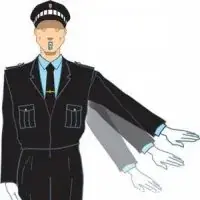
¿Qué señal está indicando un agente que mueve su brazo de arriba a abajo intermitentemente?
What signal is an officer giving by repeatedly moving their arm up and down?
- AObligación de ceder el paso al resto de vehículosYou must give way to all other vehicles
- BObligación de detener la marchaYou must stop
- CObligación de disminuir la velocidadYou must slow down
ExplanationUnder section 1.1 of Annex I of the General Traffic Regulations (RGC), an arm held out and moved alternately up and down requires drivers approaching the officer on the side of the arm giving the signal to slow down.
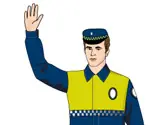
Este agente obliga a detenerse...
This officer requires the following to stop...
- Aúnicamente a los conductores de vehículos que se acerquen por detrás.only drivers of vehicles approaching from behind.
- Ba todos los usuarios que se acerquen al agente desde cualquier dirección.all road users approaching the officer from any direction.
- Csólo a los conductores que se aproximen de frente.only drivers approaching from the front.
ExplanationArm raised vertically: all road users approaching the officer must stop, except drivers who cannot do so safely. They must stop at the nearest stop line or, if there is none, immediately before the officer. At a junction, they must stop before entering it. After this signal, the officer may indicate, where appropriate, the place where they must stop.
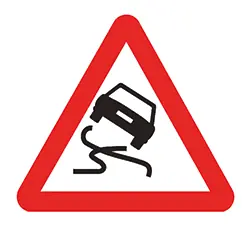
La señal triangular indica...
The triangular sign indicates...
- Aque hay un escalón lateral en la calzada.that there is a drop at the edge of the carriageway.
- Bque el pavimento de la calzada puede estar muy deslizante.that the road surface may be very slippery.
- Cque hay un tramo de curvas peligrosas.that there is a stretch of dangerous bends.
ExplanationThis sign (P-19) warns of a stretch where the road surface may be very slippery, for example because of rain, gravel or oil. You must reduce speed and avoid sudden braking, accelerating and steering. A drop at the edge of the road and dangerous bends have their own signs.
En una intersección hay una señal de ceda el paso y un semáforo en verde. ¿Puede seguir adelante?
At a junction there is a give-way sign and a green traffic light. May you go ahead?
- ANo, porque debe ceder el paso.No, because you must give way.
- BSí, pero sólo si no hay vehículos cerca.Yes, but only if there are no vehicles nearby.
- CSí, porque el semáforo está verde.Yes, because the light is green.
ExplanationUnder Article 133.1 of the RGC, traffic lights take precedence over road signs and road markings. With a green light you may go; the give-way sign only applies when the traffic light is off or flashing amber.
¿Se puede adelantar a un vehículo, en una curva de visibilidad reducida en la que la línea de separación de los dos sentidos es continua?
May you overtake a vehicle on a bend with reduced visibility where the line separating the two directions is continuous?
- ASí, cuando no vengan vehículos en sentido contrario.Yes, when no vehicles are coming the other way.
- BSí, cuando sea posible hacerlo sin invadir el sentido contrario.Yes, when it can be done without moving onto the opposite side of the road.
- CNo, en estas circunstancias está prohibido cualquier adelantamiento.No, in these circumstances any overtaking is prohibited.
ExplanationOn bends with reduced visibility it is prohibited to overtake by moving into the area for the opposite direction, but you may overtake if the manoeuvre is done without entering it or crossing the continuous line, for example overtaking a bicycle while leaving the required lateral gap. The fact that nobody is coming does not allow you to cross the line.
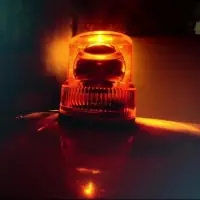
¿Qué vehículos especiales están obligados a llevar la señal luminosa rotativa amarilla?
Which special vehicles must carry the rotating yellow light signal?
- ALos camiones de mercancíasGoods lorries
- BLos autobuses de líneaRegular-service buses
- CLos vehículos grúaTow trucks
ExplanationUnder Article 113 of the General Traffic Regulations (RGC), vehicles used for works or services, tractors and agricultural machinery, special transports and roadside assistance vehicles, such as tow trucks, signal their presence with the yellow light signal V-2.
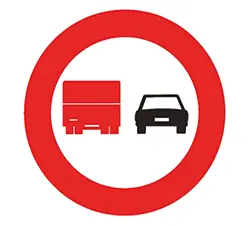
A partir de la señal, el conductor de un camión de menos de 3.500 kilos de M.M.A., ¿puede adelantar a otros vehículos?
After this sign, may the driver of a lorry with a maximum authorised mass (MAM) of less than 3,500 kg overtake other vehicles?
- ANo; la señal le prohíbe adelantar a todo tipo de vehículos a motor.No; the sign prohibits it from overtaking any kind of motor vehicle.
- BSí; la señal afecta a camiones cuya M.M.A. supere los 3.500 kilos.Yes; the sign applies to lorries with a MAM of more than 3,500 kg.
- CSolo puede adelantar a vehículos de dos ruedas.It may only overtake two-wheeled vehicles.
ExplanationThis sign prohibits overtaking only for lorries whose maximum authorised mass exceeds 3,500 kg. A lorry with a MAM of less than 3,500 kg is not affected and may overtake normally.
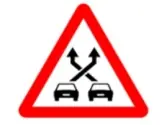
¿Qué debe hacer el conductor al encontrar esta señal?
What should the driver do on seeing this sign?
- AReducir la atención, ya que todos los vehículos llevan preferencia.Pay less attention, because all vehicles have right of way.
- BCambiar inmediatamente de carril para evitar la zona.Change lanes immediately to avoid the area.
- CExtremar la precaución y adaptar la velocidad ante posibles maniobras de cambio de carril.Take extra care and adapt their speed to possible lane changes by other vehicles.
ExplanationSign P-35 “Weaving section” warns of a stretch between a merge and a fork where vehicles change lanes and their paths cross, with a risk of collision. You must pay more attention, anticipate what others will do and adapt your speed.
¿Qué haremos si circulamos delante de un vehículo de policía que lleva activadas las señales luminosa y acústica y, además, una luz roja intermitente o destellante hacia delante?
What should you do if you are driving in front of a police vehicle that has its light and sound signals on and also a flashing red light facing forwards?
- ADetener el vehículo en el lado derecho, delante del vehículo de policía.Stop on the right-hand side, in front of the police vehicle.
- BDetener el vehículo detrás del vehículo de policía.Stop behind the police vehicle.
- CModerar la velocidad para facilitar el paso al coche de la policía.Slow down to let the police car pass.
ExplanationUnder Article 69.2 of the General Traffic Regulations (RGC), if a police vehicle on an emergency call positions itself behind you and also switches on a forward-facing flashing red light, you must stop carefully on the right-hand side, in front of the police vehicle, stay inside and follow the officer's instructions.
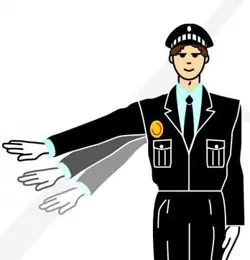
Se acerca al agente por el lado del brazo que está moviendo alternativamente de arriba abajo, ¿Qué indica?
You approach a traffic officer from the side of the arm they are moving up and down. What does this indicate?
- AQue se debe disminuir la velocidad.That you must reduce speed.
- BQue se debe girar hacia ese lado.That you must turn towards that side.
- CQue hay que detenerse.That you must stop.
ExplanationAn outstretched arm moving alternately up and down requires drivers approaching the officer from the side of that arm to reduce their speed. It does not require them to stop and does not show a direction to take.
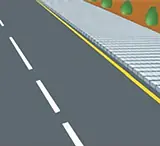
La marca amarilla continua...
The solid yellow marking...
- Aindica una zona reservada para un uso especial, donde sólo puedo parar.shows an area reserved for a special use, where I may only stop.
- Bindica una zona donde la duración del estacionamiento está limitada.shows an area where how long you may park is limited.
- Cindica la zona de la vía donde está prohibido parar y estacionar.shows the part of the road where stopping and parking are prohibited.
ExplanationA solid yellow line along the kerb or at the edge of the carriageway means stopping and parking are prohibited on that stretch. If it were broken, it would only prohibit parking; time-limited parking is shown by other markings.
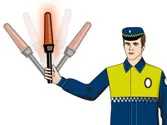
Un agente se dirige hacia su vehículo balanceando una luz roja. ¿Qué debe hacer?
A traffic officer is swinging a red light towards your vehicle. What must you do?
- ADetener el vehículo.Stop the vehicle.
- BCircular con precaución porque hay peligro.Drive with care because there is a danger.
- CCambiar de dirección.Change direction.
ExplanationAn officer swinging a red light requires the road users towards whom the light is directed to stop. When an officer holds out an arm and moves it up and down, you must slow down.
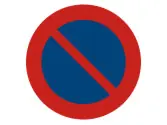
¿Podremos efectuar una parada a partir de esta señal?
May we stop after this sign?
- ASí.Yes.
- BSí, pero solo durante el día.Yes, but only during the day.
- CNo.No.
ExplanationThe sign in the question prohibits parking but allows stopping. Unless shown otherwise, the ban starts level with the sign and ends at the nearest junction.
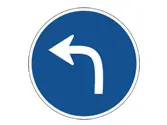
A la vista de esta señal, ¿se puede seguir de frente?
Given this sign, may you go straight on?
- ASí, obligatoriamente.Yes, it is compulsory.
- BSí, aunque también se permite el giro a la izquierda.Yes, although turning left is also allowed.
- CNo, se debe seguir la dirección y sentido indicado.No, you must follow the direction shown.
ExplanationCompulsory direction signs require us to follow the direction shown by the arrow. So you cannot go straight on.
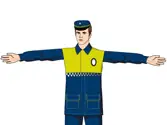
Este agente, ¿a quién manda detenerse?
Who is this officer ordering to stop?
- ASolo a los vehículos que se aproximan por delante.Only vehicles approaching from the front.
- BA los vehículos que se aproximan por delante y por detrás.Vehicles approaching from the front and from behind.
- CA todos los vehículos que se aproximan al agente.All vehicles approaching the officer.
ExplanationThe officer requires all road users approaching from directions that cross the one indicated by his or her outstretched arms to stop, whatever their direction of travel. In this case, both those approaching from the front and those approaching from behind.
En vías interurbanas, ¿qué infracción suelen cometer con más frecuencia los peatones que son atropellados?
Outside built-up areas, what offence do pedestrians who are hit by vehicles most often commit?
- ANo respetar los semáforos.Not obeying traffic lights.
- BEstar o caminar por la carretera de forma indebida.Standing or walking on the road improperly.
- CNo obedecer las señales de la policía.Not obeying police signals.
ExplanationOutside built-up areas, the most common offence by pedestrians who are hit is standing or walking on the carriageway improperly. Under Article 122 of the General Traffic Regulations (RGC), if there is no pedestrian area they must use the left-hand hard shoulder or, if there is none, the carriageway, keeping as far from traffic as possible.
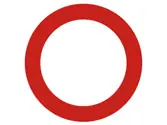
Esta señal ¿a qué vehículos va dirigida?
Which vehicles is this sign aimed at?
- AA los vehículos de motor.Motor vehicles.
- BA toda clase de vehículos.All kinds of vehicles.
- CA los vehículos de motor excepto motocicletas.Motor vehicles except motorcycles.
ExplanationThe sign in the picture, a white circle with a red border, is the 'no vehicles' sign (circulación prohibida): it prohibits all kinds of vehicles in both directions. It must not be confused with the no-entry sign, which only prevents entry from that end of the road.
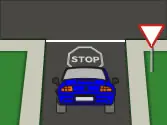
Al llegar a esta intersección, ¿qué señalización debemos respetar?
When you reach this junction, which signs must we obey?
- ALa señal de STOP, porque es la más restrictiva.The STOP sign, because it is the most restrictive.
- BLa señal de ceda el paso, porque las señales verticales prevalecen sobre las marcas viales.The give way sign, because road signs prevail over road markings.
- CSi cambio de dirección a la derecha respetaré el ceda el paso. Si sigo de frente o giro a la izquierda respetaré el STOP.If I turn right, I will obey the give way sign. If I go straight on or turn left, I will obey the STOP.
ExplanationUnder Article 133 of the General Traffic Regulations (RGC), the order of priority is: traffic officers; temporary signs and markers; traffic lights; road signs; road markings. So the give way road sign prevails over the STOP marking painted on the carriageway.
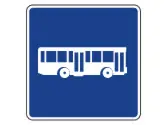
¿De qué nos informa esta señal?
What does this sign tell us?
- ACarril reservado para autobuses.A lane reserved for buses.
- BUna parada de autobuses.A bus stop.
- CProhibición de que pasen los autobuses.That buses are not allowed through.
ExplanationThe blue square with the white outline of a bus is sign S-19, «Bus stop»: it shows the place reserved for buses to stop. A reserved lane is shown with sign S-51a, which shows the lanes.
¿Cómo actuaremos ante una señal de STOP?
What should you do at a STOP sign?
- ADeteniéndonos y cediendo el paso.Stop and give way.
- BDeteniéndonos solamente si se aproximan vehículos.Stop only if vehicles are approaching.
- CDeteniéndonos si no disponemos de la suficiente visibilidad.Stop if you do not have enough visibility.
ExplanationAt a STOP sign you must always stop and give way to vehicles on the road you are approaching.
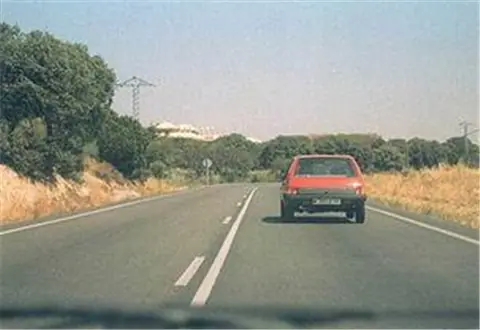
La línea blanca continua del centro de la calzada, ¿qué prohíbe?
What does the solid white line in the centre of the carriageway prohibit?
- ACambiar de carril a los vehículos que circulan por el carril derecho.Vehicles in the right lane from changing lanes.
- BEstacionar en ambos lados de la vía.Parking on both sides of the road.
- CCambiar de carril a los vehículos que circulan por el carril de la izquierda.Vehicles in the left lane from changing lanes.
ExplanationWhen a solid line runs next to a broken line, each driver must follow the one nearest to them. For those driving in the right lane the solid line is on their side, so they may not cross it; those driving in the opposite direction, with the broken line on their side, may cross.
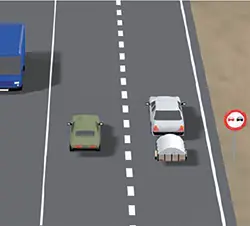
Una línea longitudinal discontinua con trazos más anchos que en el caso general, indica...
A broken longitudinal line with dashes wider than usual indicates...
- Ala existencia de un carril reversible.a reversible lane.
- Bla existencia de un carril especial para determinada clase de vehículos, de entrada o salida, u otro.a special lane for a certain class of vehicle, an entry or exit lane, or another special lane.
- Cla existencia de un carril que puede ser utilizado en sentido contrario al habitual.a lane that can be used in the opposite direction to the usual one.
ExplanationA road marking with broken dashes wider than usual marks out a special lane: reserved for certain vehicles (such as buses), or an entry or exit lane. It does not indicate a reversible lane, which is marked with a double broken line.
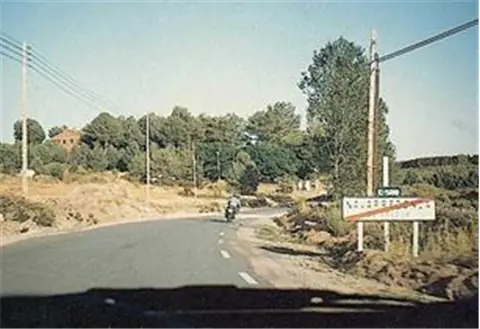
Después de la señal, ¿puedo circular a más de 50 km/h?
After this sign, may I drive faster than 50 km/h?
- ASí, al adelantar a otros vehículos.Yes, when overtaking other vehicles.
- BNo, porque la señal lo prohíbe.No, because the sign prohibits it.
- CSí, si las circunstancias lo permiten.Yes, if conditions allow.
ExplanationThis sign marks the end of the built-up area. From here urban limits no longer apply and the limits for roads outside built-up areas apply, for example 90 km/h for cars on a conventional road, if conditions allow. Exceeding the limit to overtake is no longer allowed.
¿Cómo indica un agente que te detengas?
How does a traffic officer tell you to stop?
- ACon toques de silbato cortos.With short whistle blasts.
- BCon toques de silbato largos.With long whistle blasts.
- CCon toques de silbato largos y frecuentes.With long, frequent whistle blasts.
ExplanationA traffic officer tells you to stop with a series of short, frequent whistle blasts. One long blast means move off again.
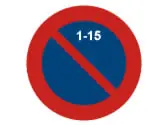
Si hoy es día 17, ¿podemos parar a partir de esta señal?
If today is the 17th, may you stop after this sign?
- ASí.Yes.
- BNo.No.
- CNo, porque la señal prohíbe también la parada.No, because the sign also prohibits stopping.
ExplanationThe sign prohibits parking in the first half of the month, from the 1st to the 15th, but it does not prohibit stopping, so you may stop in both the first and the second half of the month.
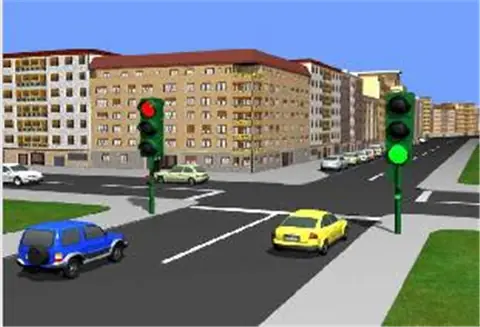
El semáforo de la derecha está en verde y el de la izquierda está en rojo, para continuar de frente, ¿qué debe hacer?
The traffic light on the right is green and the one on the left is red. To go straight on, what should you do?
- AEsperar a que se ponga verde el semáforo de la izquierda.Wait for the left-hand traffic light to turn green.
- BEsperar a que se pongan los dos en color verde.Wait for both traffic lights to turn green.
- CSeguir de frente porque me lo permite el de la derecha.Go straight on, because the right-hand light allows me to.
ExplanationWhen there is a traffic light on each side showing different signals, the right-hand one controls turning right and the left-hand one controls going straight on or turning left. To go straight on, you must wait for the left-hand traffic light to turn green.
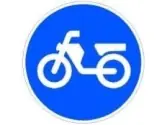
Esta señal indica que es una vía reservada a...
This sign indicates a route reserved for...
- Avehículos de 2 ruedas y prohibición de circular a los demás usuarios.two-wheeled vehicles, with other road users prohibited.
- Bciclos y ciclomotores.cycles and mopeds.
- Cúnicamente a ciclomotores.mopeds only.
ExplanationThe sign requires moped riders to use the route at whose entrance it is placed and prohibits other road users from using that route.
¿Con qué señal se indica una carga que sobresale por la parte trasera del vehículo?
Which sign is used to show a load sticking out from the back of the vehicle?
- ACon la señal V-20 (panel a rayas rojas y blancas).Sign V-20 (a panel with red and white stripes).
- BCon el triángulo de preseñalización de peligro.The warning triangle.
- CNo es necesaria ninguna señal si la carga es ligera.No sign is needed if the load is light.
ExplanationA load sticking out from the back is marked with the V-20 panel.
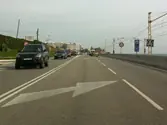
¿Qué le indica la flecha de la imagen?
What does the arrow in the picture tell you?
- AFin de carril.End of lane.
- BFlecha de retorno.«Move back in» arrow.
- CObligación de girar a la izquierda.Obligation to turn left.
ExplanationThis is the end-of-lane arrow (M-5.4): it shows that the lane it is painted in will end soon and that you must leave it in the direction the arrow points, respecting the priority of vehicles in the lane you are moving into.
¿Qué significa una línea discontinua con trazos muy juntos?
What does a broken line with dashes very close together mean?
- AIndica que hay un carril para vehículos lentos.It indicates a lane for slow vehicles.
- BIndica la cercanía de un tramo peligroso.It indicates that a dangerous stretch is coming up.
- CIndica la presencia de un carril especial.It indicates a special lane.
ExplanationUnder the road-marking catalogue in Annex I of the RGC, a broken longitudinal line with longer dashes and shorter gaps is an advance warning: it announces that a solid line or a stretch of road with a particular risk is coming up.
En una intersección con señal de STOP y línea de detención, ¿dónde deben detenerse los conductores?
At a junction with a STOP sign and a stop line, where must drivers stop?
- Aantes de la línea de parada, sin pasarla.before the stop line, without crossing it.
- Bjunto a la señal de 'STOP'.next to the 'STOP' sign.
- Cinmediatamente después de la línea de parada.immediately after the stop line.
ExplanationAccording to the road marking catalogue in Annex I of the RGC, a continuous transverse line is a stop line: no vehicle may cross it when it has to stop. You must stop before it, without driving onto it, and not level with the sign or beyond the line.
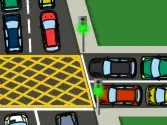
Ha quedado detenido en una intersección regulada por semáforos y obstaculiza la circulación, ¿qué debe hacer?
You have been stopped in a junction controlled by traffic lights and are obstructing traffic. What must you do?
- AEsperar a que el semáforo se ponga verde.Wait for the traffic light to turn green.
- BSalir del cruce lo antes posible, en condiciones de seguridad, sin esperar a que el semáforo se ponga verde.Leave the junction as soon as possible, safely, without waiting for the traffic light to turn green.
- CDar marcha atrás para dejar libre la intersección.Reverse to clear the junction.
ExplanationArticle 59 of the General Traffic Regulations requires anyone who has been stopped in a junction controlled by traffic lights and is obstructing traffic to leave it without waiting for the way to be opened for them, provided they do not hinder those travelling in the permitted direction. Reversing is dangerous.
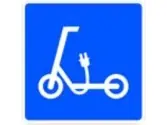
A la vista de la señal que se muestra en la imagen, ¿pueden los ciclos utilizar la vía?
Given the sign shown in the picture, may cycles use the road?
- ANo, la vía está destinada exclusivamente a vehículos de movilidad personal.No, the road is intended only for personal mobility vehicles.
- BSí, los ciclos pueden circular junto con los VMP.Yes, cycles may ride along with PMVs.
- CSolo se permite el paso de ciclos si hay baja densidad de tráfico.Cycles are only allowed when traffic is light.
ExplanationThe sign indicates that the road is only for personal mobility vehicles (PMVs, e-scooters), so cycles may not use it. This avoids conflicts between different types of vehicles and ensures the safety of road users.
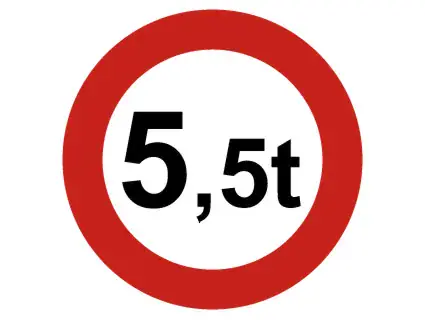
Si su conjunto de vehículos tiene una masa en carga de 5,5 toneladas, ¿puede circular por una vía en la que encuentra esta señal?
If your vehicle combination has a laden mass of 5.5 tonnes, may you drive on a road where you find this sign?
- ASí, pero únicamente si circula sin carga.Yes, but only if it is unladen.
- BNo, porque supera la masa permitida.No, because it exceeds the permitted mass.
- CSí.Yes.
ExplanationSign R-201 “Mass limit” prohibits vehicles whose laden mass exceeds the figure shown, here 5.5 tonnes. A combination with a laden mass of 5.5 tonnes does not exceed it, so it may use that road.
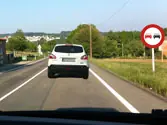
Dadas las circunstancias, ¿podremos adelantar al vehículo que nos precede?
Given the circumstances, can we overtake the vehicle in front?
- ASí, puesto que aún no hemos llegado a la altura de la señal que lo prohíbe.Yes, because we have not yet reached the sign that prohibits it.
- BSí, siempre que no se acerque ningún vehículo en sentido contrario.Yes, provided that no vehicle is coming in the opposite direction.
- CNo, porque hay una línea continua que nos prohíbe rebasarla.No, because there is a solid line that we must not cross.
ExplanationIn the picture, the line separating the two directions of traffic is solid. According to the road-marking catalogue in Annex I of the RGC, no driver may cross it or drive to the left of it, so you cannot start overtaking even if nobody is coming the other way.
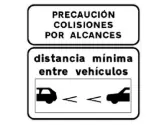
Esta señal indica que en un tramo de carretera convencional o multicarril:
This sign indicates that on a stretch of conventional road or multi-lane road:
- ASe recomienda mantener una separación prudencial sin referencia específica.It is advisable to keep a reasonable distance, with no specific reference.
- BSe debe dejar entre vehículos el número de marcas viales de galón que la señal indique.You must leave between vehicles the number of chevron road markings shown on the sign.
- CLa distancia mínima que deben guardar los vehículos en los adelantamientos.It shows the minimum distance vehicles must keep when overtaking.
ExplanationOn conventional or multi-lane roads, the sign shows the compulsory minimum distance between vehicles on stretches where rear-end collisions are frequent. To make compliance easier, the carriageway is usually marked with chevron symbols that the driver must use as a reference, keeping the minimum number set by the sign between their vehicle and the one in front. This helps ensure traffic safety and flow.
¿Pueden los animales que tiran de un vehículo rebasar la línea continua horizontal de stop?
May animals pulling a vehicle cross the continuous horizontal STOP line?
- ANoNo
- BSí, todos los vehículos deben rebasarlaYes, all vehicles must cross it
- CSí, los animales pueden, pero no los vehículos a motorYes, animals may, but motor vehicles may not
ExplanationThe STOP marking tells drivers that they must stop their vehicle at the next stop line or, if there is none, immediately before the carriageway they are approaching, first giving way to vehicles travelling on that carriageway. The continuous horizontal line must not be crossed by any vehicles or animals approaching it.
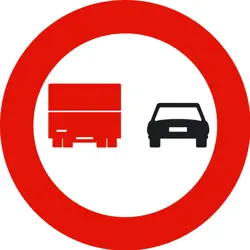
Si estando en posesión del permiso B conduce un camión que tiene la MMA para dicho permiso, ¿Le afecta esta señal?
If you hold a B licence and drive a lorry whose MAM is within the limit for that licence, does this sign apply to you?
- ASí, pero únicamente cuando la MMA sea el doble de la tara.Yes, but only when the MAM is twice the unladen weight (tare).
- BSí.Yes.
- CNo.No.
ExplanationThis is the no-overtaking sign for lorries, which only applies to those with a maximum authorised mass of more than 3,500 kg. A lorry that can be driven with a B licence does not exceed that mass, so the sign does not apply to it.

¿Están obligados los vehiculos a señalizar la carga que sobresale con esta señal? (panel blanco con rallas rojas)
Must vehicles mark a projecting load with this sign? (white panel with red stripes)
- ANo, ya que es opcional.No, because it is optional.
- BSí, siempre que sobresalga.Yes, whenever the load projects.
- CSi, es obligatorio señalizar cualquier carga. Sobresalga o no.Yes, any load must be marked, whether it projects or not.
ExplanationUnder Article 15 of the RGC, a load projecting at the rear must always be marked with this V-20 sign, placed at its rear end. It is not optional, and a load that does not project does not need to be marked.
¿Qué indica una línea longitudinal discontinua con trazos muy juntos?
What does a broken longitudinal line with dashes very close together indicate?
- ATramo peligroso.A dangerous stretch.
- BCarril especial.A special lane.
- CComienzo de la línea discontinua.The start of the broken line.
ExplanationA broken longitudinal line with dashes very close together indicates a dangerous stretch, as its main purpose is to warn drivers of a situation that calls for extra care. Under the General Traffic Regulations, broken longitudinal markings can have different purposes but, in this particular case, the closeness of the dashes signals that road conditions are about to change in a way that may affect safety. This matches the rule that these markings are also used as a warning for drivers to be more alert on higher-risk stretches.
Ud. circula por una vía que tiene varios carriles para el mismo sentido de circulación separados por líneas longitudinales discontinuas en la que la circulación está saturada, ¿le está permitido cambiarse de carril según observe que en uno u otro se circula más rápidamente?
You are driving on a road with several lanes in the same direction separated by broken longitudinal lines, and traffic is congested. Are you allowed to change lanes depending on which lane seems to be moving faster?
- ANo, en vías interurbanas; sí, en poblado.No on roads outside built-up areas; yes in built-up areas.
- BSí, en todo caso.Yes, in all cases.
- CSólo podré cambiar de carril para prepararme para girar, salir de la calzada o tomar determinada dirección, no para adelantar ni realizar otras maniobras distintas a las indicadas.I may only change lanes to get ready to turn, leave the carriageway or take a particular direction, not to overtake or carry out manoeuvres other than those mentioned.
ExplanationUnder Article 83.2 of the General Traffic Regulations (RGC), when traffic is so heavy that vehicles occupy the whole carriageway, no driver may change lanes to overtake or for any manoeuvre other than getting ready to turn, leave the carriageway or take a particular direction.
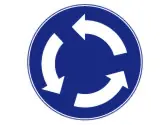
Al llegar a una glorieta encontramos esta señal, ¿qué debemos hacer si pretendemos cambiar de dirección a la izquierda?
When we reach a roundabout we find this sign. What must we do if we want to turn left?
- ANo podemos realizar el cambio de dirección a la izquierda por estar prohibido.We cannot turn left because it is prohibited.
- BGiraremos dejando la glorieta a nuestra izquierda.We will go round, keeping the roundabout on our left.
- CGiraremos dejando la glorieta a nuestra derecha.We will go round, keeping the roundabout on our right.
ExplanationSign R-402, compulsory direction at a roundabout, requires you to follow the circular movement shown by the arrows, keeping the centre of the roundabout on your left. To turn left you go round the central island on its right-hand side and leave by the road you want.
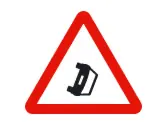
¿De qué advierte esta señal?
What does this sign warn of?
- ADel peligro por pavimento deslizante.Danger from a slippery road surface.
- BDel peligro por congestión en la calzada.Danger from congestion on the carriageway.
- CDel peligro por obstrucción en la calzada.Danger from an obstruction on the carriageway.
ExplanationThis sign warns of danger because you are approaching a place where vehicles are blocking the carriageway due to a breakdown, an accident or other causes.
Si me encuentro un semáforo en rojo situado en el lado izquierdo de la calzada y mi intención es seguir de frente, ¿cómo debo actuar?
If I find a red traffic light on the left-hand side of the carriageway and I intend to go straight on, what should I do?
- APasar.Go.
- BPasar con precaución cediendo el paso.Go with care, giving way.
- CDetenerme.Stop.
ExplanationA traffic light on the left of the carriageway applies to vehicles that intend to go straight on or turn left, but not to those that want to turn right.
En caso de contradicción entre señales de diferente tipo, ¿a cuál debemos obedecer?
If signs of different types contradict each other, which one must we obey?
- ALa más restrictiva.The most restrictive one.
- BLa más prioritaria.The one with the highest priority.
- CLa menos restrictiva.The least restrictive one.
ExplanationIf signs of different types contradict each other, we apply the order of priority between signs. For example, if we find a green traffic light and a STOP sign, we must follow the traffic light.
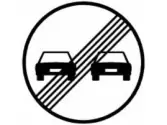
Si con anterioridad hemos encontrado una señal de limitación de velocidad, a partir de esta señal...
If you have earlier passed a speed limit sign, after this sign...
- AFinaliza la prohibición de velocidad.The speed restriction ends.
- BContinúa la prohibición de velocidad.The speed restriction continues.
- CEmpieza una prohibición nueva.A new restriction starts.
ExplanationThe sign in the picture shows the end of the overtaking ban, not the end of the speed limit. The maximum speed signed earlier still applies until you find an end-of-speed-limit sign, an end-of-all-restrictions sign or another, different maximum speed sign.
All topics
- Definitions
- Documents and penalty points
- The driver's condition
- Duties of drivers and pedestrians
- Vehicle safety devices
- Vehicle controls and equipment
- Vehicle lights and horn
- The road and its lanes
- Speed and distances
- Manoeuvres
- Right of way
- Carrying passengers and loads
- Driving safely in difficult conditions
- Vehicle mechanics and maintenance
- Road accidents and first aid
- Defensive and eco-driving
Independent app: not affiliated with or endorsed by the DGT (Spain's Directorate-General for Traffic) or the Ministry of the Interior. The official exam is booked with the DGT and taken at its test centres. The questions here are practice material; the DGT's official question bank is not public.
Basado en datos de la Agencia Estatal Boletín Oficial del Estado (https://www.boe.es). Textos consolidados de carácter meramente informativo. La AEBOE no patrocina ni respalda este sitio.
Parte de las preguntas procede de los tests de la revista «Tráfico y Seguridad Vial» de la DGT, reproducidos con indicación de la fuente.