
DGT test · 1,397 questions
Traffic signs, markings and signals · Page 20 of 28
Road signs, road markings, traffic lights, police signals and temporary markings: what they mean and which one wins when they disagree. The topic with the most questions in the bank.
Questions in this topic, with answers
1,397 questions, 50 per page, with the correct answer and the explanation. Page 20 of 28.
Un agente, desde su vehículo, le indica que debe detenerse en el lado derecho. ¿Cómo lo señala?
An officer in their vehicle signals that you must stop on the right-hand side. How do they signal it?
- ACon una bandera roja.With a red flag.
- BCon el brazo extendido hacia abajo, inclinado y fijo.With the arm stretched downwards, at an angle and held still.
- CCon una bandera amarilla.With a yellow flag.
ExplanationUnder Annex I of the RGC (signals from vehicles), an arm stretched downwards, at an angle and held still, means that the road users the signal is aimed at must stop on the right-hand side. The red flag closes the carriageway and the yellow one asks for extra care.
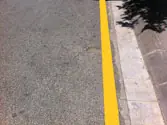
¿Qué significa una línea continua de color amarillo junto al bordillo?
What does a continuous yellow line along the kerb mean?
- AQue la parada y el estacionamiento están prohibidos.That stopping and parking are prohibited.
- BQue el estacionamiento está prohibido.That parking is prohibited.
- CQue está prohibido estacionar pero permitido parar menos de dos minutos.That parking is prohibited but stopping for less than two minutes is allowed.
ExplanationA continuous yellow line on the kerb or along the edge of the carriageway means that stopping and parking are prohibited along the whole length of the line and on the side where it is painted.
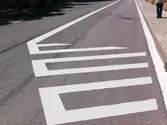
¿Qué indica esta marca vial?
What does this road marking show?
- AIndica el comienzo de un carril reservado exclusivamente al autobús.It shows the start of a lane reserved only for buses.
- BIndica el comienzo de un carril reservado para determinados vehículos.It shows the start of a lane reserved for certain vehicles.
- CIndica una isleta o cebreado.It shows a traffic island or hatched area.
ExplanationThe road marking shows the start of a lane reserved for certain vehicles; it may be a bus lane, but not necessarily.
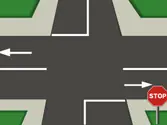
En esta intersección, los conductores están obligados a detenerse...
At this junction, drivers must stop...
- Aante la línea transversal, sin rebasarla.at the transverse line, without crossing it.
- Bjunto a la señal de stop.next to the STOP sign.
- Cinmediatamente después de la línea transversal.immediately after the transverse line.
ExplanationThe STOP road sign in the question requires every driver to stop the vehicle at the next stop line or, if there is none, immediately before the junction, and to give way to vehicles travelling on the road they are approaching. If, owing to exceptional circumstances, there is not enough visibility from the place where they stopped, the driver must stop again at a place where they have visibility, without endangering any road user.

¿Qué indica la señal que se muestra en la imagen?
What does the sign shown in the picture indicate?
- AProhibido pasar sin detenerse, según la inscripción que contenga.No passing without stopping, as stated in its text.
- BCirculación prohibida.No vehicles.
- CEntrada prohibida.No entry.
ExplanationThis sign prohibits all types of vehicles from travelling in either direction.
Los conos en la calzada indican...
Cones on the carriageway indicate...
- Aque está prohibido cruzar la línea imaginaria que los une.that it is prohibited to cross the imaginary line joining them.
- Bque refuerzan las líneas discontinuas del carril.that they reinforce the broken lane lines.
- Cnada, porque no son señales de tráfico.nothing, because they are not traffic signs.
ExplanationCones on the carriageway show that it is prohibited to cross the imaginary line they form. The RGC covers these temporary signs, which guide and regulate traffic, especially at roadworks or diversions. Ignoring them can cause accidents, as they mark an important restriction on traffic.

¿Qué significa una señal realizada por un agente de la circulación que consiste en tener el brazo levantado verticalmente?
What does a traffic officer's signal consisting of an arm raised vertically mean?
- AObliga a detenerse a todos los usuarios de la vía que se acerquen al agente sólo por el frente.All road users approaching the officer only from the front must stop.
- BObliga a detenerse a todos los usuarios de la vía que se acerquen al agente de frente o por su espalda, permitiendo el paso a los que se aproximen por sus costados.All road users approaching the officer from the front or from behind must stop, while those approaching from the sides may pass.
- CObliga a detenerse a todos los usuarios de la vía que se acerquen al agente desde cualquier dirección.All road users approaching the officer from any direction must stop.
ExplanationAn arm raised vertically requires all road users approaching the officer to stop, whatever direction they come from, except those who cannot do so safely (Annex I of the RGC). It is not limited to those coming from the front or from behind.
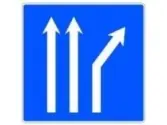
¿Qué le indica la señal que se muestra en la imagen?
What does the sign shown in the picture tell you?
- AMarca el inicio de un carril reservado para vehículos lentos.It marks the start of a lane reserved for slow vehicles.
- BIndica una bifurcación hacia la derecha para vehículos especiales.It shows a fork to the right for special vehicles.
- CQue el carril de la derecha se desvía hacia ese mismo lado.That the right-hand lane turns off to that same side.
ExplanationOn a carriageway with three traffic lanes in the same direction, the sign shows that on the next stretch the right-hand lane will fork off to that same side.
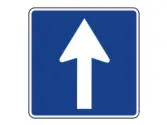
Esta señal, ¿prohíbe el cambio de dirección a la izquierda?
Does this sign prohibit turning left?
- ASí, solo podemos continuar de frente.Yes, we can only go straight on.
- BNo.No.
- CSí, tanto el cambio de dirección a la derecha como a la izquierda.Yes, it prohibits turning both right and left.
ExplanationThe sign indicates that the carriageway is one-way; it does not prohibit any turns.
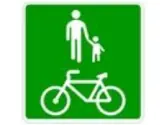
La vía señalizada de esta manera podrá ser utilizada...
A route signed like this may be used by...
- ASólo por ciclos y ciclomotores.Only cycles and mopeds.
- Bpeatones, ciclos y, en su caso, vehículos de movilidad personal.pedestrians, cycles and, where applicable, personal mobility vehicles.
- CSólo por ciclos.Only cycles.
ExplanationIt shows a route for pedestrians, cycles and, where applicable, personal mobility vehicles (PMVs), separated from motor traffic. It usually runs through open spaces, parks, gardens or woods, although outside built-up areas it may also run alongside the road. When people are walking there, cycles and, where applicable, PMVs must slow down to keep everyone safe and able to share the space. Pedestrians, in turn, must make it easy for cycles and, where applicable, PMVs to get past.
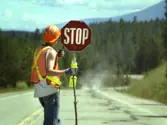
¿Deberemos obedecer las indicaciones realizadas por el personal de una obra en la vía?
Must we obey the instructions given by roadworks staff on the road?
- ASí.Yes.
- BNo.No.
- CSolo si van acompañados de un agente.Only if they are accompanied by a traffic officer.
ExplanationWhen there are no traffic officers, or to assist them, roadworks staff may control the passage of vehicles with signs on a paddle, such as STOP or «go», and drivers must obey their instructions.
Una señal de prohibición con una motocicleta significa:
A prohibition sign with a motorcycle on it means:
- AProhibido circular con motoNo motorcycles
- BProhibido adelantar motosNo overtaking motorcycles
- CProhibido aparcar motosNo parking for motorcycles
ExplanationThis is sign R-104 “No entry for motorcycles”, which prohibits access to motorcycles and to three-wheeled vehicles treated as motorcycles. It does not regulate overtaking or parking.
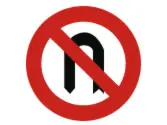
Esta señal, ¿permite efectuar un cambio de dirección a la izquierda?
Does this sign allow you to turn left?
- ANo.No.
- BSí.Yes.
- CNo, salvo en poblado.No, except in built-up areas.
ExplanationThe sign prohibits making a U-turn, but it does not prohibit turning.
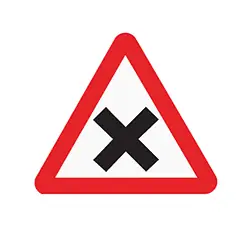
Si un conductor se encuentra esta señal, debe saber que en la próxima intersección...
If a driver comes across this sign, they should know that at the next junction...
- Atiene prioridad sobre los vehículos que se acerquen tanto por la derecha como por la izquierda.they have priority over vehicles approaching from both the right and the left.
- Bse aplica la regla general de prioridad de paso.the general rule of right of way applies.
- Cdebe ceder el paso a los vehículos que se acerquen tanto por la derecha como por la izquierda.they must give way to vehicles approaching from both the right and the left.
ExplanationThe cross inside the triangle warns of a junction without signposted priority: the general rule applies, which is to give way to vehicles approaching from the right.
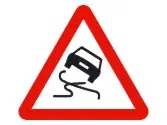
La señal de la imagen es la de advertencia de peligro por:
The sign in the picture is the danger warning sign for:
- APavimento deslizante.Slippery road surface.
- BPresencia de hielo o nieve.Ice or snow.
- CEscalón lateral.Side drop.
ExplanationThis is sign P-19 'Slippery road surface': danger because you are approaching an area of the carriageway whose surface may be slippery. P-34 'Ice or snow' warns of stretches with ice or snow in winter, and P-30 'Side drop' warns of a difference in level along the side of the road.
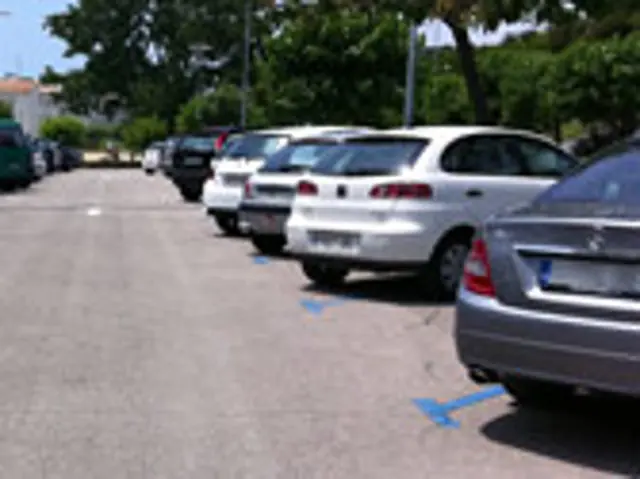
¿Qué indican las marcas de color distinto al blanco en una zona de aparcamiento?
What do markings in a colour other than white in a parking area indicate?
- AQue está prohibido estacionar en toda la zona.That parking is prohibited in the whole area.
- BQue el estacionamiento es gratuito y sin límite de tiempo.That parking is free and has no time limit.
- CAlguna limitación temporal, por tipo de usuario o para un fin concreto.Some restriction on time, on type of user or for a specific purpose.
ExplanationAccording to the road marking catalogue (M-7.3 and M-7.4), parking markings can be white or other colours to indicate restrictions on time, on the type of user or for a specific purpose, such as spaces reserved for people with reduced mobility.
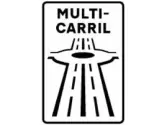
¿Qué indica la señal S-1b que se muestra en la imagen?
What does sign S-1b shown in the picture indicate?
- AEl inicio de una carretera multicarril, donde rigen normas especiales de circulación.The start of a multi-lane road, where special traffic rules apply.
- BEl final de una carretera convencional con un único carril por sentido.The end of a conventional road with a single lane in each direction.
- CEl inicio de una autopista o autovía.The start of an autopista (motorway) or autovía (dual carriageway).
ExplanationThe sign in the picture shows the start of a multi-lane road and therefore the place from which the special traffic rules for this type of road apply. This sign may also mark the slip road at an interchange that leads to a multi-lane road.
Está circulando por un carril y ve encima de él un semáforo con una cruz roja (X). ¿Qué significa?
You are driving in a lane and see a traffic light above it showing a red cross (X). What does it mean?
- ADebe abandonar ese carril lo antes posible, ya que está prohibido ocuparlo.You must leave that lane as soon as possible, because driving in it is prohibited.
- BDebe detenerse delante de él como si fuera un semáforo con luz roja circular.You must stop in front of it as if it were a round red traffic light.
- CDebe reducir la velocidad por circunstancias especiales de la circulación.You must slow down because of special traffic conditions.
ExplanationA traffic light with a red X-shaped light above a lane means that driving in that lane is prohibited. The driver must change lanes as soon as possible to avoid a fine. These signals are common on motorways with reversible or variable-use lanes.
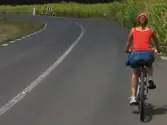
Si encuentra ciclistas en la calzada en un tramo de la vía donde está prohibido adelantar, ¿es correcto que los adelante si para ello es necesario atravesar la línea continua?
If you find cyclists on the carriageway on a stretch of road where overtaking is prohibited, is it correct to overtake them if this means crossing the continuous line?
- ANo, porque está prohibido adelantar a cualquier tipo de vehículo.No, because overtaking any type of vehicle is prohibited.
- BSí, cuando por la velocidad a que circulen puedan ser adelantados sin riesgo para ellos ni para la circulación en general.Yes, when their speed allows them to be overtaken without risk to them or to traffic in general.
- CNo, sólo se podría adelantar a los ciclistas si para ello no es necesario invadir el sentido contrario.No, you could only overtake cyclists if you do not need to move into the opposite direction.
ExplanationUnder Article 88.2 of the General Traffic Regulations (RGC) (as worded by RD 518/2026), even where overtaking is prohibited you may overtake cyclists by using the part of the carriageway reserved for the opposite direction, even crossing the continuous line, when their speed allows you to do so without risk. Article 85.4 requires you to occupy part or all of the adjacent or opposite lane, leaving at least 1.5 metres, both inside and outside built-up areas; if there is more than one lane in each direction, you must change lanes completely.
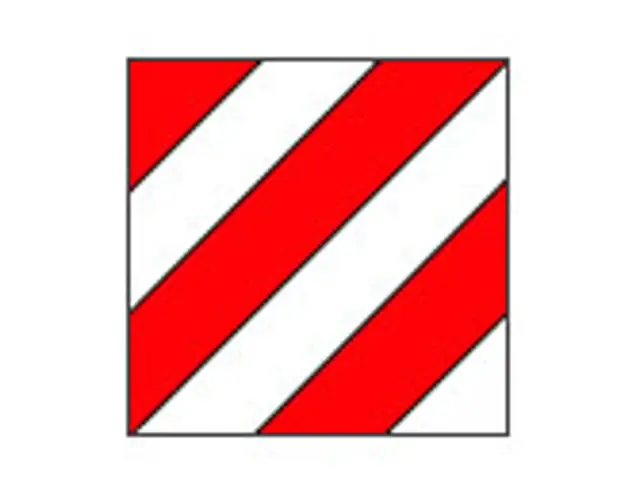
¿Qué indica este panel en un vehículo?
What does this panel on a vehicle indicate?
- AQue la carga sobresale por la parte trasera.That the load projects at the rear.
- BQue su longitud supera los 12 metros.That its length exceeds 12 metres.
- CQue transporta mercancías peligrosas.That it is carrying dangerous goods.
ExplanationThe square panel with red and white diagonal stripes is sign V-20. Under Annex XI of the General Vehicle Regulations, it shows that the load projects beyond the rear of the vehicle, and it is placed at the rear end of the load, at right angles to the vehicle's axis.
¿Para qué vehículos es obligatoria la señalización de galibo?
For which vehicles are end-outline marker lights compulsory?
- APara los de más de 2,10 metros de ancho.For those more than 2.10 metres wide.
- BPara los que midan más de 4 metros de alto.For those more than 4 metres high.
- CPara los de 2 o más metros de ancho y 6 o más metros de largo.For those 2 metres or more wide and 6 metres or more long.
ExplanationEnd-outline marker lights are compulsory for vehicles more than 2.10 metres wide and optional for those between 1.80 and 2.10 metres wide, when driving between sunset and sunrise or in conditions of reduced visibility.
Entre los distintos tipos de señales, ¿cuáles prevalecen sobre todas las demás?
Among the different types of signs, which ones prevail over all the others?
- ALas señales circunstanciales que modifican el régimen normal de utilización de la vía y señales de balizamiento fijo.Temporary signs that change the normal use of the road, and fixed markers (beacons).
- BLas señales y órdenes de los agentes de circulación.Signals and orders from traffic officers.
- CLas señales de los semáforos.Traffic light signals.
ExplanationThe order of priority between the different types of signs is as follows: 1. Signals and orders from traffic officers. 2. Temporary signs that change the normal use of the road, and fixed markers (beacons). 3. Traffic lights. 4. Road signs. 5. Road markings.
El conductor de un vehículo puede usar la señal acústica para avisar a otros usuarios de su presencia...
A driver may use the horn to warn other road users of their presence...
- Asolo en vías urbanasonly in built-up areas.
- Bsolo en vías interurbanasonly outside built-up areas.
- Ctanto en vías urbanas como interurbanasboth in and outside built-up areas.
ExplanationUnder Article 110 of the General Traffic Regulations (RGC), the horn may only be used exceptionally, for example to avoid a possible accident, and this is not limited to one type of road: it applies both in and outside built-up areas. Only the warning that you are about to overtake is restricted to roads outside built-up areas.
¿Qué indica la luz roja fija encendida en un semáforo circular?
What does a lit steady red light on a circular traffic light indicate?
- ANo prohíbe el paso pero exige a los conductores extremar la precaución.It does not prohibit passing but requires drivers to take extreme care.
- BProhíbe el paso.It prohibits passing.
- CProhíbe temporalmente el paso antes de un paso a nivel.It temporarily prohibits passing before a level crossing.
ExplanationA lit steady red light on a circular traffic light means that passing is prohibited. Drivers must stop their vehicle until the green light comes on. You must not go past the traffic light or its stop line.
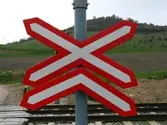
Esta señal nos advierte de...
This sign warns us of...
- APeligro por la presencia inmediata de un paso a nivel sin barreras.Danger from the immediate presence of a level crossing without barriers.
- BPeligro por la presencia inmediata de un paso nivel con o sin barreras.Danger from the immediate presence of a level crossing with or without barriers.
- CPeligro por la presencia inmediata de un paso a nivel sin barreras con más de una vía férrea.Danger from the immediate presence of a level crossing without barriers over more than one railway track.
ExplanationThis sign warns us of danger from the immediate presence of a level crossing without barriers over more than one railway track.
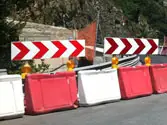
Los paneles direccionales provisionales, como los de la imagen, ¿qué indican?
What do temporary direction panels, like the ones in the picture, indicate?
- AProhíben el paso e informan del sentido de la circulación.They prohibit passing through and show the direction of traffic.
- BQue es un carril reversible.That it is a reversible lane.
- CQue la calzada está cerrada permanentemente.That the carriageway is permanently closed.
ExplanationUnder section 3.1.1 of Annex I of the General Traffic Regulations (RGC), the temporary direction panel is a delimiting device that prohibits passing through and also shows the direction of traffic. Reversible lanes, on the other hand, are marked out with double broken longitudinal lines.
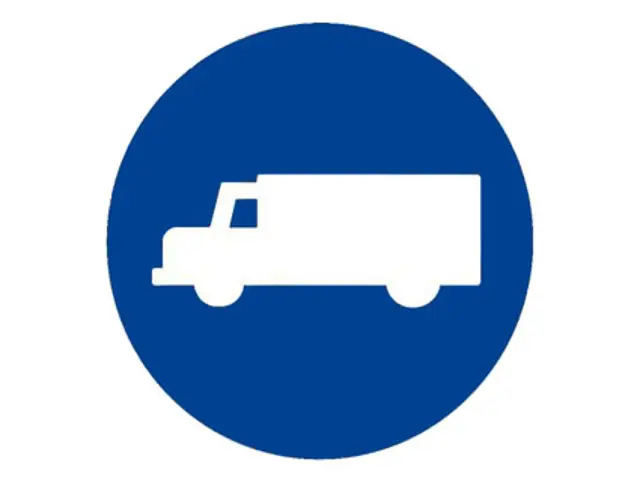
¿Qué vehículos están obligados a circular por la calzada cuya entrada está señalizada con esta señal?
Which vehicles must use the carriageway whose entrance is marked with this sign?
- ASolo camiones.Only lorries.
- BTodo tipo de camiones y furgones, independientemente de su masa.All lorries and vans, whatever their mass.
- CSolo furgones y camiones pesados.Only vans and heavy lorries.
ExplanationThe sign indicates a carriageway that must be used by all lorries and vans, whatever their mass. Under the General Traffic Regulations (RGC), drivers of these vehicles must use the carriageway at whose entrance the sign is placed. This rule exists for road safety and to keep these vehicles moving properly, especially in areas where their movement needs to be controlled.
El orden de prioridad entre los distintos tipos de señales es...
The order of priority between the different types of signs is...
- AAgentes, semáforos, balizamiento.Traffic officers, traffic lights, temporary markers.
- BAgentes, balizamiento, semáforos, verticales, marcas viales.Traffic officers, temporary markers, traffic lights, road signs, road markings.
- CAgentes, balizamiento, semáforos, marcas viales, señalización vertical.Traffic officers, temporary markers, traffic lights, road markings, road signs.
ExplanationThe order of priority between signs is as follows: traffic officers, temporary markers (beacons), traffic lights, road signs and road markings.
Una marca blanca longitudinal discontinua sensiblemente más ancha que en el caso general, indica...
A broken white longitudinal line that is noticeably wider than usual shows...
- ALa existencia de un carril especial para determinada clase de vehículos, de entrada o salida u otro.That there is a special lane: for a certain class of vehicle, for entering or leaving, or another kind.
- BDonde termina la calzada y empieza el arcén.Where the carriageway ends and the hard shoulder begins.
- CQue el carril contiguo es reversible.That the next lane is reversible.
ExplanationAccording to the catalogue of road markings in Annex I of the General Traffic Regulations (RGC), the wide broken line (M-1.6 and M-1.7) separates a special lane from the basic lanes: an entry or exit lane, a weaving lane, a lane reserved for certain vehicles or an additional lane. It does not mark the edge of the carriageway, and reversible lanes are marked with double broken lines.
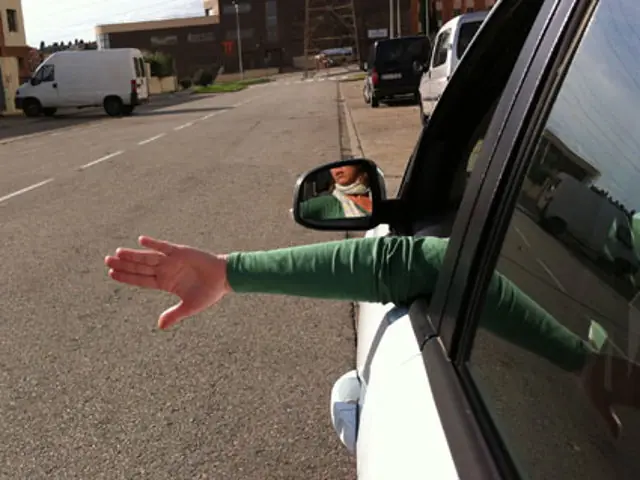
¿Qué indica este conductor con el brazo?
What is this driver indicating with their arm?
- AQue va a dar marcha atrás.That they are going to reverse.
- BQue va a iniciar la marcha.That they are going to move off.
- CQue va a girar a la izquierda.That they are going to turn left.
ExplanationUnder Article 109.2.b of the RGC, if the vehicle has no reversing light, this manoeuvre is signalled by stretching the arm out horizontally with the palm of the hand facing backwards, which is the gesture made by the driver in the picture.
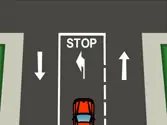
El vehículo rojo, ¿dónde se detendrá para realizar el STOP?
Where will the red vehicle stop to comply with the STOP sign?
- AJusto antes de llegar a la intersección.Just before reaching the junction.
- BAntes de la intersección sin pisar la marca vial de STOP.Before the junction, without driving over the STOP road marking.
- CAnte la línea de detención.At the stop line.
ExplanationIf there is a stop line at a STOP sign, we must make the compulsory stop at that line. If there is no such line, we will stop before the junction. You may drive over the STOP road marking.
Si un vehículo de policía se sitúa detrás del nuestro y, además de la señal luminosa y del aparato emisor de señales acústicas, activa un dispositivo de luz roja intermitente o destellante hacia delante, ¿qué haremos?
If a police vehicle positions itself behind yours and, as well as the light signal and the sound signal device, switches on a forward-facing flashing red light, what should you do?
- ADetenernos en el lado derecho, detrás del coche policial.Stop on the right-hand side, behind the police car.
- BDetenernos en el lado derecho, delante del coche policial.Stop on the right-hand side, in front of the police car.
- CEsperar a que nos den las oportunas instrucciones por el altavoz.Wait to be given instructions over the loudspeaker.
ExplanationUnder Article 69.2 of the General Traffic Regulations (RGC), when a police vehicle on an emergency call positions itself behind you and also switches on a forward-facing flashing red light, the driver must stop on the right-hand side, in front of the police car, in a safe place, and stay inside.
Si nos encontramos con dos señales del mismo tipo con indicaciones contradictorias ¿a cuál de ellas debemos obedecer?
If you find two signs of the same type with contradictory instructions, which one must you obey?
- AA la más prioritaria.The one with the highest precedence.
- BA la más restrictiva.The most restrictive one.
- CLas señales de los semáforos siempre prevalecerán.Traffic lights always take precedence.
ExplanationIf you find two signs with different instructions that contradict each other, the most restrictive one takes precedence; if they are of different types, the one with the highest precedence applies.
Los niños suelen tener problemas en la circulación porque...
Children often have problems in traffic because...
- Asu campo visual es mayor.their field of vision is wider.
- Bsu visión periférica es mayor.their peripheral vision is wider.
- Cno conocen todas las normas de circulación.they do not know all the traffic rules.
ExplanationAccording to the DGT manual, children are shorter, so they see less of the road and drivers see them less well; they pay less attention because they have less sense of danger; and they do not know the traffic rules. That is why you must take extreme care with them.
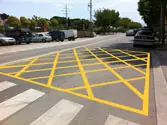
Si al llegar a una intersección, encuentra un semáforo en verde, prevé que puede quedar detenido obstaculizando la circulación, ¿Qué hará?
If, on reaching a junction, you find a green traffic light but expect that you may be stuck there, obstructing traffic, what should you do?
- ANo entrar en la intersección, aunque el semáforo este verde.Not enter the junction, even though the light is green.
- BContinuar puesto que el semáforo esta en verdeContinue, because the light is green.
- CDetenerme, solo si hay una señal de stop.Stop, but only if there is a stop sign.
ExplanationA grid of yellow markings reminds drivers that it is prohibited to enter the junction if, by doing so, they may be stuck inside it, blocking or obstructing cross traffic.
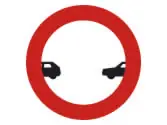
Circula con su turismo por un túnel, a la vista de la señalización, si no pretende adelantar al vehículo que le precede, ¿qué distancia de seguridad debe mantener?
You are driving your car through a tunnel. Given the signs, if you do not intend to overtake the vehicle in front, what safe distance must you keep?
- A50 metros.50 metres.
- B70 metros.70 metres.
- C100 metros.100 metres.
ExplanationSign R-300 without a figure is a reminder to keep the safe distance required by the regulations. In tunnels and underpasses, if you do not intend to overtake, that distance is at least 100 metres or 4 seconds, and 150 metres or 6 seconds for vehicles with a MAM of more than 3,500 kg.
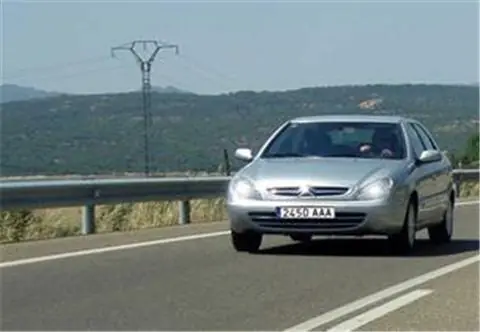
Las personas mayores...
Older people...
- Asuelen valorar correctamente la velocidad de los vehículos.usually judge the speed of vehicles correctly.
- Bsuelen reaccionar más rápidamente.usually react more quickly.
- Csuelen tener un deterioro de sus capacidades que afecta a la conducción.usually have a decline in abilities that affects driving.
ExplanationWith age, abilities that matter for driving, such as eyesight, hearing, judging speed and reaction time, usually decline. Older people make up for this with experience and caution, but they react more slowly.
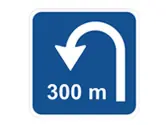
Esta señal informa de la distancia a un tramo en el que se puede efectuar un cambio de sentido...
This sign shows the distance to a place where you can make a U-turn...
- Aal mismo nivel.at the same level.
- Ba distinto nivel.at a different level.
- Cy un cambio de dirección.and a change of direction.
ExplanationThe sign in the picture indicates that you are approaching a place where you can make a U-turn at the same level, and the figure shows the distance to it. A U-turn at a different level, via a flyover or an underpass, is announced with a different sign.
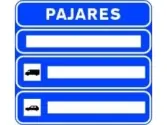
Al ver esta señal, un turismo que se dirige acceder al puerto de montaña, debe saber que…
On seeing this sign, a car heading for the mountain pass should know that...
- AEl puerto se encuentra cerrado al tráfico.the pass is closed to traffic.
- BPuede circular sin restricciones.it may drive without restrictions.
- CEs obligatorio el uso de neumáticos especiales.special tyres are compulsory.
ExplanationSign S-21 shows whether the mountain pass or stretch named at the top is passable. In this case no restriction appears, neither 'cerrado' (closed) nor 'cadenas' (chains), for any type of vehicle, so a car may drive without restrictions.
¿Se permite que los vehículos prioritarios en servicio de emergencia utilicen únicamente la señal luminosa?
May priority vehicles on an emergency call use only the light signal?
- ASí, cuando no suponga un peligro para los demás usuarios.Yes, when it does not endanger other road users.
- BNo, tienen que utilizar simultáneamente la señal luminosa y acústica.No, they must use the light and sound signals at the same time.
- CSí, cuando circulen por vía urbana.Yes, when driving in built-up areas.
ExplanationPriority vehicles on an emergency call may use only the light signal if they make sure they do not endanger other road users. This is laid down in the General Traffic Regulations (RGC), which say that, provided safety is not put at risk, they may do without the sound signal. So the correct answer is ‘Yes, when it does not endanger other road users’. Using only the light signal is an exception allowed in these specific circumstances.
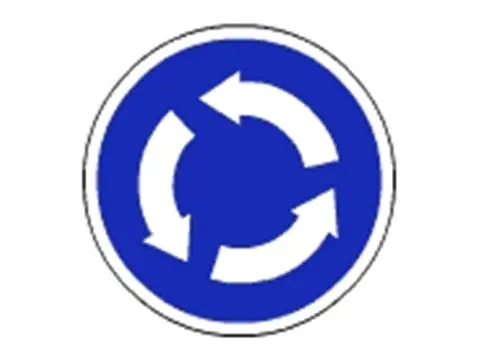
Esta señal permite...
This sign allows you to...
- Arealizar un cambio de dirección.change direction.
- Brealizar tanto un cambio de dirección como de sentido.both change direction and make a U-turn.
- Crealizar un cambio de sentido.make a U-turn.
ExplanationThis is sign R-402, ‘Compulsory direction at roundabout’: the arrows show the direction in which vehicles must go round. From the roundabout you may leave by any road (change of direction) or go all the way round to make a U-turn.
¿Cuál es el orden de prioridad entre señales?
What is the order of precedence between signs?
- ASeñales circunstanciales y de balizamiento, agentes, semáforos, señales verticales y marcas viales.Temporary signs and marker devices, traffic officers, traffic lights, upright signs and road markings.
- BAgentes, señales circunstanciales y de balizamiento, semáforos, marcas viales y señales verticales.Traffic officers, temporary signs and marker devices, traffic lights, road markings and upright signs.
- CAgentes, señales circunstanciales y de balizamiento, semáforos, señales verticales y marcas viales.Traffic officers, temporary signs and marker devices, traffic lights, upright signs and road markings.
ExplanationThe order of precedence between the different types of signs that appear to contradict each other is as follows: - Signals and orders from traffic officers. - Temporary signs that change the normal use of the road, and fixed marker devices. - Traffic lights. - Upright traffic signs. - Road markings. When signs of the same type contradict each other, the most restrictive one prevails. For example, if two upright signs contradict each other, a STOP and a give way, you must obey the STOP.
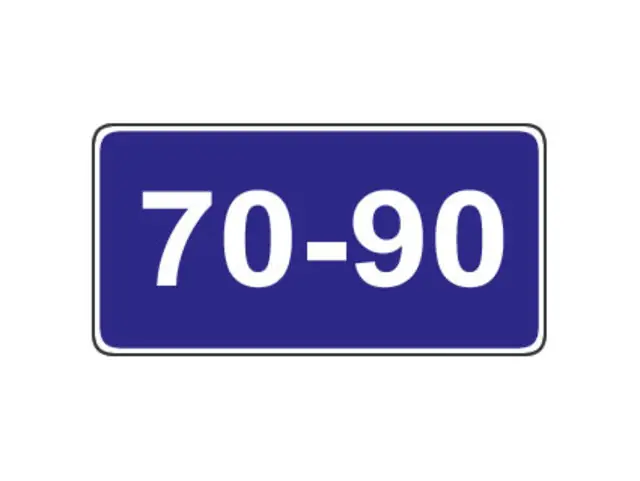
Esta señal indica un intervalo de velocidades.
This sign indicates a speed range.
- AIntervalo de velocidades recomendado, aunque las condiciones sean desfavorables.Recommended speed range, even if conditions are unfavourable.
- BIntervalo de velocidades recomendado, si las condiciones son favorables.Recommended speed range, if conditions are favourable.
- CIntervalo de velocidades obligatorio, si las condiciones son favorables.Compulsory speed range, if conditions are favourable.
ExplanationSign S-9, advised speed range, recommends keeping your speed between the values shown whenever the weather, environmental, road and traffic conditions are favourable. It is a recommendation, not an obligation.
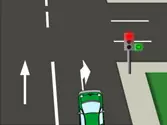
La flecha pintada sobre el carril, ¿qué indica cuando se circula sobre él?
What does the arrow painted on the lane indicate when you are driving in that lane?
- AObliga a seguir la dirección de la flecha.It requires you to follow the direction of the arrow.
- BObliga a seguir la dirección de la flecha, aunque permite ir en otra dirección si no hay peligro.It requires you to follow the direction of the arrow, although it allows you to go in another direction if there is no danger.
- CNo obliga, solo informa de la dirección a seguir.It is not compulsory; it only shows the direction to follow.
ExplanationAn arrow in a lane bounded by longitudinal lines indicates that you must follow the direction, or one of the directions, shown by the arrow or, if the markings allow it, move into another lane.
¿Qué está indicando el agente con los brazos?
What is the traffic officer indicating with their arms?
- AObliga a detenerse a todos los usuarios que se acerquen al agente.All road users approaching the officer must stop.
- BObliga a detenerse a todos los usuarios que se acerquen al agente desde direcciones que corten la indicada por los brazos extendidos.All road users approaching the officer from directions that cross the one shown by the outstretched arms must stop.
- CObliga a detenerse a todos los vehículos que se acerquen lateralmente al agente.All vehicles approaching the officer from the side must stop.
ExplanationA traffic officer with arms stretched out horizontally requires all road users approaching the officer from directions that cross the one shown by the outstretched arms to stop, whatever their direction of travel.
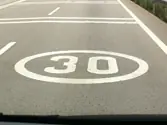
La señal colocada sobre la calzada le indica...
The sign on the carriageway tells you...
- ALa velocidad máxima a la que podremos circular.The maximum speed at which we may drive.
- BLa velocidad mínima a la que tendremos que circular.The minimum speed at which we must drive.
- CLa velocidad aconsejable a la que podremos circular.The advisable speed at which we may drive.
ExplanationThis sign prohibits all vehicles from driving faster than the speed shown by the road marking. It applies until the next 'End of prohibitions' or 'End of speed limit' sign, or another different 'Maximum speed' sign. If the marking is in a marked-out lane, as in the picture, the limit applies only to the lane where it is placed. If the lanes are not marked out, the speed limit applies to the whole carriageway.
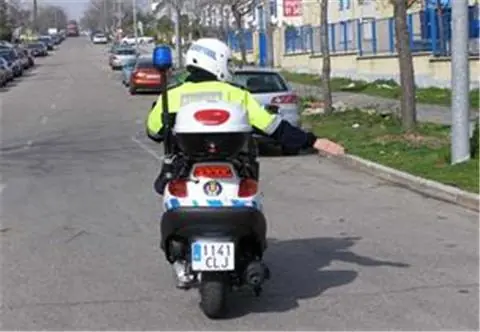
¿Qué le está indicando el agente desde el vehículo?
What is the officer in the vehicle telling you?
- AQue va a girar a la izquierda.That they are going to turn left.
- BQue me detenga en el lado derecho.That I must stop on the right-hand side.
- CQue me detenga detrás del coche policial.That I must stop behind the police car.
ExplanationAccording to the officers' signals in Annex I of the General Traffic Regulations (RGC), an arm held out downwards at an angle and kept still, from a vehicle, means that the road users it is directed at must stop on the right-hand side.
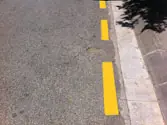
Una línea longitudinal discontinua de color amarillo, ¿qué significado tiene?
What does a broken yellow longitudinal line mean?
- AProhíbe parar y estacionarIt prohibits stopping and parking.
- BProhíbe estacionar.It prohibits parking.
- CPermite parar y estacionar por un tiempo máximoIt allows stopping and parking for a maximum time.
ExplanationA broken yellow longitudinal line prohibits parking but allows stopping. A continuous yellow longitudinal line, on the other hand, prohibits both parking and stopping.
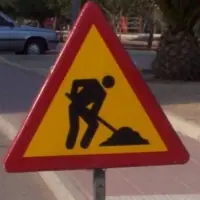
¿Es obligatorio obedecer las señales de tráfico verticales con el fondo amarillo?
Is it compulsory to obey road signs with a yellow background?
- ASí, haya obreros trabajando o no.Yes, whether or not workers are working there.
- BSí, pero solamente si hay obreros trabajando.Yes, but only if workers are working there.
- CNo.No.
ExplanationWhen stretches with roadworks or other work on the road are signposted, road signs such as the one in the picture have a yellow background. All drivers must obey these signs, whether or not road workers are present.
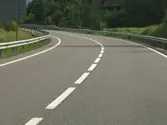
Cuando la separación entre los trazos de la línea longitudinal discontinua es sensiblemente más corta que en el caso general...
When the gaps between the dashes of a broken longitudinal line are noticeably shorter than normal...
- AIndica que se trata de un carril reversible.It indicates a reversible lane.
- BIndica que se trata de un carril especial.It indicates a special lane.
- CIndica que se aproxima un tramo con un peligro especial.It indicates that a stretch with a special hazard is approaching.
ExplanationAccording to the road-marking catalogue in Annex I of the RGC, broken warning lines, with the dashes closer together than normal, announce that a solid line or a stretch of road with a special risk is approaching. Reversible lanes are marked with double broken lines.
All topics
- Definitions
- Documents and penalty points
- The driver's condition
- Duties of drivers and pedestrians
- Vehicle safety devices
- Vehicle controls and equipment
- Vehicle lights and horn
- The road and its lanes
- Speed and distances
- Manoeuvres
- Right of way
- Carrying passengers and loads
- Driving safely in difficult conditions
- Vehicle mechanics and maintenance
- Road accidents and first aid
- Defensive and eco-driving
Independent app: not affiliated with or endorsed by the DGT (Spain's Directorate-General for Traffic) or the Ministry of the Interior. The official exam is booked with the DGT and taken at its test centres. The questions here are practice material; the DGT's official question bank is not public.
Basado en datos de la Agencia Estatal Boletín Oficial del Estado (https://www.boe.es). Textos consolidados de carácter meramente informativo. La AEBOE no patrocina ni respalda este sitio.
Parte de las preguntas procede de los tests de la revista «Tráfico y Seguridad Vial» de la DGT, reproducidos con indicación de la fuente.